Porsche 911 Turbo S Endures 50 Consecutive Launches Without Limp Mode
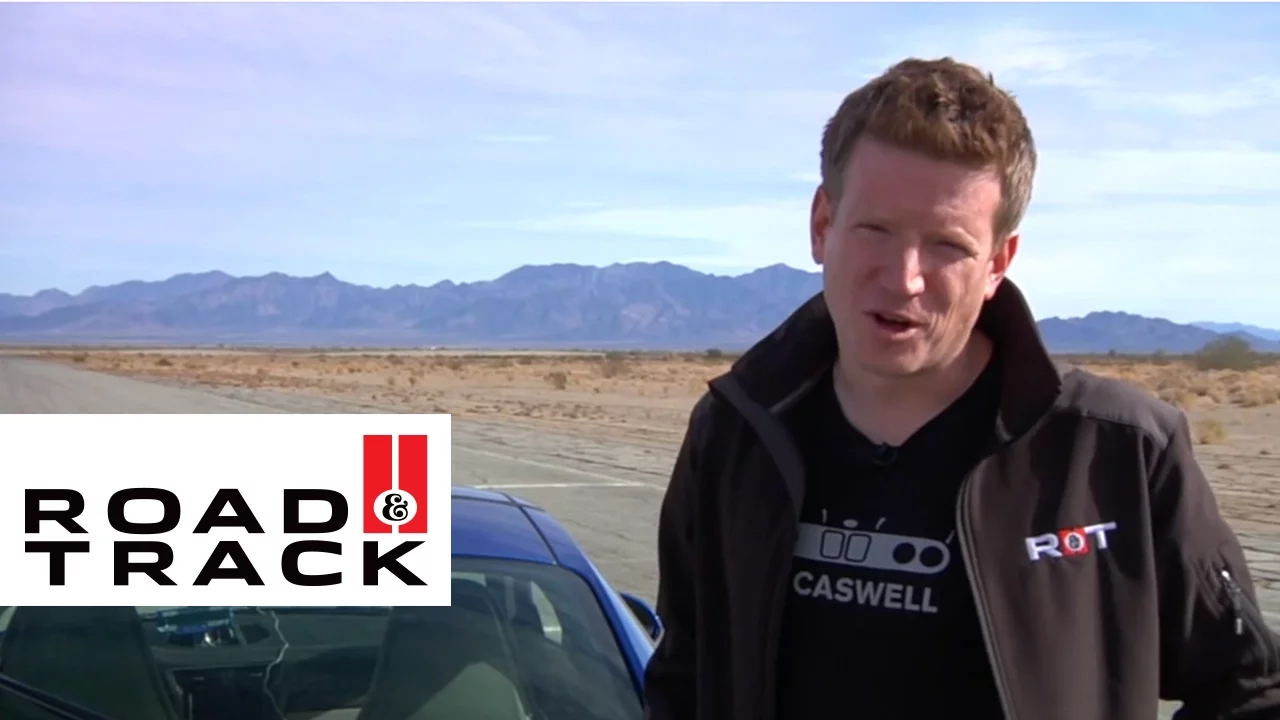
RoadandTrack
Porsche's ZF-engineered dual-clutch transmission avoids the thermal derating common to rival performance cars, maintaining identical acceleration across 50 consecutive full-throttle standing starts.
AI-assisted summary of THe 2014 Porsche 911 Turbo | Road & Track — original source. Check the original for full context.
Source published:
Key ideas
- The 2014 Porsche 911 Turbo S produces 560 hp and 516 lb-ft of torque, beating its factory 2.9-second 0–60 mph claim with observed runs as fast as 2.6 seconds. (0:04)
- Unlike competing sports cars that enter limp mode after limited launches, the Turbo S utilizes a ZF-manufactured dual-clutch engineered as a lifetime component rated beyond 100,000 miles. (0:04)
- Road & Track subjected the Turbo S to 50 consecutive back-to-back launch control runs on an airstrip without cool-down breaks, experiencing zero mechanical failures or performance degradation. (1:58)
Detailed notes
## Background Published on YouTube by RoadandTrack on March 11, 2014, this feature documents a torture test of the 2014 Porsche 911 Turbo S on a Southern California runway formerly used by General Patton. According to the page description, the crew aimed to subject the car to 50 back-to-back standing-start launches as a tribute to the 911's 50th anniversary—ultimately racking up 61 runs after acceleration-induced dizziness caused them to lose count.
## TL;DR Road & Track evaluates the extreme engineering and stamina of the 2014 Porsche 911 Turbo S, focusing on its ZF-manufactured PDK dual-clutch transmission designed as a lifetime component. Unlike competitor supercars that enter limp mode after one or two launches, the Turbo S is subjected to a brutal test of 50 consecutive standing-start launches with zero cooldown periods. The car beats its official 2.9-second 0–60 mph claim with 2.6-second sprints and completes the entire battery of launches without a single warning light, mechanical failure, or performance drop.
## Atmosphere & style Visceral, rapid-fire, and humorously relentless, the piece combines deep appreciation for automotive engineering with the pure theatricality of mechanical abuse. The host's tone shifts from analytical narration to giddy disbelief as the car repeatedly hammers into triple-digit speeds without breaking a sweat. The video captures the disorienting, blur-inducing rhythm of launch after launch, underscored by hands-off-the-wheel runway sprints that emphasize absurd levels of electronic stability and composure.
## Bulletin - [00:04](https://www.youtube.com/watch?v=A5DRCTW-Q7o&t=4s) The 2014 Porsche 911 Turbo S produces 560 hp and 516 lb-ft of torque, beating its factory 2.9-second 0–60 mph claim with observed runs as fast as 2.6 seconds. - [00:04](https://www.youtube.com/watch?v=A5DRCTW-Q7o&t=4s) Unlike competing sports cars that enter limp mode after limited launches, the Turbo S utilizes a ZF-manufactured dual-clutch engineered as a lifetime component rated beyond 100,000 miles. - [01:58](https://www.youtube.com/watch?v=A5DRCTW-Q7o&t=118s) Road & Track subjected the Turbo S to 50 consecutive back-to-back launch control runs on an airstrip without cool-down breaks, experiencing zero mechanical failures or performance degradation.
## Key takeaways - [00:04](https://www.youtube.com/watch?v=A5DRCTW-Q7o&t=4s) The 2014 Porsche 911 Turbo S features factory specifications of 560 hp, 516 lb-ft of torque, and a 198 mph top speed. - [00:04](https://www.youtube.com/watch?v=A5DRCTW-Q7o&t=4s) Real-world launch control testing recorded 0 to 60 mph sprints in 2.6 seconds, outperforming Porsche's official 2.9-second claim. - [00:04](https://www.youtube.com/watch?v=A5DRCTW-Q7o&t=4s) Launch control operates via coordinated computer management of engine output, clutch engagement, all-wheel-drive front axle torque split, and rear differential locking. - [00:04](https://www.youtube.com/watch?v=A5DRCTW-Q7o&t=4s) The dual-clutch unit was designed directly by Porsche and produced by ZF as a permanent lifetime vehicle part rated for over 100,000 miles. - [00:04](https://www.youtube.com/watch?v=A5DRCTW-Q7o&t=4s) Most performance competitors restrict launch control usage to one or two attempts before triggering thermal protection or limp-mode protocols. - [00:04](https://www.youtube.com/watch?v=A5DRCTW-Q7o&t=4s) To celebrate the 911's 50th anniversary, the testing team designed an abusive torture test consisting of 50 consecutive back-to-back standing-start launches. - [01:58](https://www.youtube.com/watch?v=A5DRCTW-Q7o&t=118s) Driveline computers maintained perfectly straight tracking across loose runway surface debris, even during hands-free launches. - [01:58](https://www.youtube.com/watch?v=A5DRCTW-Q7o&t=118s) Shifts and acceleration remained violent and fully engaged well into triple-digit speeds past 104 mph throughout the test. - [01:58](https://www.youtube.com/watch?v=A5DRCTW-Q7o&t=118s) The Turbo S finished the 50-launch gauntlet with zero warning lights, no limp mode activation, and identical performance between the first and final runs.
## Detailed walkthrough ### [00:04](https://www.youtube.com/watch?v=A5DRCTW-Q7o&t=4s) Engineering the Perfect Launch: The 2014 Porsche 911 Turbo S
The 2014 Porsche 911 Turbo S arrives with monumental performance figures from the factory: 560 horsepower, 516 lb-ft of torque, an official 0 to 60 mph time of 2.9 seconds, and a top speed reaching 198 mph. While Turbo-badged Porsches have possessed devastating straight-line speed for generations, this evaluation zeroes in on the underlying powertrain engineering—specifically the PDK transmission's launch control programming. Rather than merely being a party trick, the launch control system acts as a high-speed computer-managed sequence intended to propel the chassis off the line as rapidly as physical grip allows. The onboard control units actively regulate engine output, clutch engagement speed, torque distribution across the all-wheel-drive system's front axle, and lockup parameters at the rear differential.
```mermaid flowchart TD accTitle: Porsche Launch Control Architecture accDescr: Flow diagram showing how onboard computers orchestrate engine and driveline components during a standing start. subgraph Control ["Vehicle Telemetry & Control"] ECU["Engine Control Unit"] TCU["PDK Transmission Unit"] end subgraph Driveline ["Driveline Management"] ZFClutch["ZF Dual-Clutch Pack (Lifetime Component)"] AWD["Front Axle Torque Split"] Diff["Rear Differential Lockup"] end Control --> ZFClutch Control --> AWD Control --> Diff ZFClutch --> Wheels["Maximized Standing-Start Acceleration"] AWD --> Wheels Diff --> Wheels ```
While the computational software dictates the launch sequence, the mechanical dual-clutch assembly constitutes the most impressive hardware achievement. Designed directly by Porsche and manufactured by ZF, the clutch units are engineered as permanent lifetime vehicle components rated for well over 100,000 miles and practically unlimited standing starts. In test testing, this robust architecture routinely bests the manufacturer's own conservative claims: while factory specifications state a 2.9-second sprint to 60 mph, telemetry recorded acceleration numbers plummeting as low as 2.6 seconds.
The host emphasizes how starkly this durability contrasts with competitive performance machinery: “Most cars that have launch control let you do it once, maybe twice, then the computer shows up and says you're in limp mode, you're done playing for the day till the car cools down.” With Porsche, the powertrain allows continuous repeated cycles without mandatory thermal cool-downs. To honor the 50th anniversary of the 911 nameplate, the crew set up on a private runway to test the boundary of that claim by subjecting the Turbo S to 50 consecutive standing-start launches in immediate succession.
- **Engine Output:** 560 hp and 516 lb-ft of torque - **Factory Claimed Performance:** 0–60 mph in 2.9 seconds; 198 mph top speed - **Observed Performance:** 0–60 mph achieved in 2.6 seconds via launch control - **Clutch Hardware:** Engineered by Porsche, fabricated by ZF; classified as a lifetime part rated beyond 100,000 miles - **Objective:** Complete 50 consecutive full-power launches back-to-back without cooldown intervals
---
[01:58](https://www.youtube.com/watch?v=A5DRCTW-Q7o&t=118s) The 50-Launch Torture Test on the Runway
Lining up on the open airstrip, the testing routine begins with foot pinned to the brake, throttle matted to the floor to engage the launch parameters, followed by sudden brake release. Launch follows launch in rapid-fire succession: 40 mph, 60 mph, 80 mph, and beyond 100 mph blur past repeatedly. By the eighth consecutive run, the sheer repetition highlights the chassis’s tracking precision. Despite the degraded, loose runway surface scattered with debris, the car tracking remains unflinching. To demonstrate this stability, the driver executes full launches with hands completely off the steering wheel, proving the driveline computers and differential systems keep the car tracking dead straight without manual correction.
As the launch count climbs into double digits, the visceral intensity and mechanical stamina become comical. The shifts continue hammering home without softness or slippage, pulling relentlessly straight through triple-digit marks like 104 mph. The mechanical sympathy begins to wear on the driver, who laughs at the sheer absurdity of the abuse: “I mean, it is a Porsche, it should be able to just do this all day long.”
By the conclusion of the test, the Turbo S completed its full gauntlet of standing starts using the PDK launch control without exhibiting a single malfunction, thermal warning, or electronic intervention. The operational characteristics remained thoroughly identical across the entire run: wheelspin, initial hookup, burnout threshold, and shift velocity during the 30th run mirrored the first launch precisely. The host delivers a direct challenge to the rest of the industry at the conclusion: “Fifty launch controls non-stop—like to see someone else try that.”
- **Tracking Behavior:** Straight-line tracking remained true even during hands-free launches on a loose surface - **High-Speed Shift Consistency:** Full-throttle upshifts continued without lag or slippage beyond 104 mph - **Reliability Metric:** Completed all runs with zero overheating, zero error codes, and zero activation of limp-mode protocols - **Performance Degradation:** None; power delivery, wheel slip, and acceleration metrics remained identical from run 1 to run 50
## Notable quotes > [00:04](https://www.youtube.com/watch?v=A5DRCTW-Q7o&t=4s) Most cars that have launch control let you do it once, maybe twice, then the computer shows up and says you're in limp mode, you're done playing for the day till the car cools down. — Host
## Mentioned 2014 Porsche 911 Turbo S, Porsche, Road & Track, General George S. Patton, ZF, PDK
## Video description On a SoCal runway used by General Patton to train soldiers for WWII, we line up the Turbo for the first of 50 back-to-back launches. Porsche's PR man called this test "abusive." We think it's a fitting tribute to the 911's 50th anniversary. The Turbo, however, does not do 50 launches. It does 61, because we get woozy from acceleration and lose count. Read the rest of the story at http://www.roadandtrack.com/car-reviews/2014-porsche-911-turbo-s-65-7-roa0314
[Source](https://www.youtube.com/watch?v=A5DRCTW-Q7o)