Delta P Drives Two-Thirds of Commercial Diving Fatalities
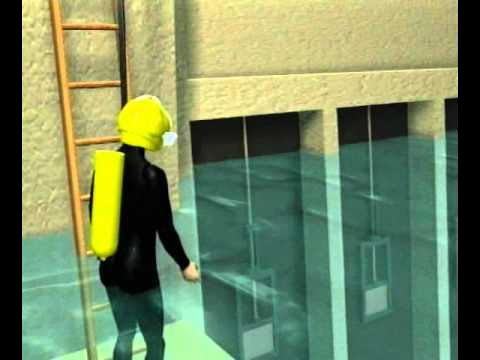
Sean Roos
Unequal water pressure generates thousands of pounds of suction that seals human bodies against open intakes, making pre-dive mechanical lockouts and engineered grates the only protection against irreversible entrapment.
AI-assisted summary of Delta P — original source. Check the original for full context.
Source published:
Key ideas
- Differential pressure (Delta P) accounts for two out of every three commercial diving fatalities over a fifteen-year review period, acting invisibly and without warning. (0:01)
- Delta P forces can exceed thousands of pounds: a 10-inch diameter opening under a 50-foot freshwater differential generates roughly 1,685 pounds of hydrostatic force, making self-rescue impossible as human tissue forms a watertight seal. (0:01)
- Entrapment incidents occur across all water depths—from 10-foot municipal swimming pools to 86-foot offshore well casings and massive hydroelectric dams. (3:07)
- Mitigation relies on strict lockout/tagout protocols, redundant hardwire communications, safety tethers, and engineered intake designs such as multi-port covers and relief slots that prevent total vacuum seals. (7:51)
Detailed notes
## Background Published by Sean Roos on YouTube on October 18, 2010, this presentation explores the lethal underwater hazard known as differential pressure, or Delta P. The video's show notes simply describe the piece as addressing diving pressure hazards.
## TL;DR Differential pressure, or 'Delta P,' is responsible for two out of three commercial diving fatalities, generating invisible and immense hydrostatic suction forces that instantly immobilize workers. The presentation explains the physics behind these forces, demonstrating how the human body forms an airtight seal over an opening that makes self-rescue physically impossible. Through five tragic real-world case studies spanning dam intakes, public swimming pools, municipal water towers, offshore well casings, and hydroelectric gate valves, the video analyzes recurrent failures in communication and isolation. It concludes by outlining vital safety protocols, including mandatory lockout/tagout enforcement, two-way surface communication, and physical engineering controls like slotted or multi-port drain covers.
## Atmosphere & style The presentation carries a grim, clinical urgency typical of serious industrial safety training, grounding its warnings in cold mathematical realities and fatal case reconstructions. The narration is somber, steady, and direct, building a quiet tension as mundane diving tasks suddenly pivot into horrifying, inescapable situations. Watching the material evokes a profound sense of claustrophobia and vulnerability, emphasizing that in a Delta P scenario, the physical forces of water leave virtually no margin for error or second chances.
## Bulletin - [00:01](https://www.youtube.com/watch?v=AEtbFm_CjE0&t=1s) Differential pressure (Delta P) accounts for two out of every three commercial diving fatalities over a fifteen-year review period, acting invisibly and without warning. - [00:01](https://www.youtube.com/watch?v=AEtbFm_CjE0&t=1s) Delta P forces can exceed thousands of pounds: a 10-inch diameter opening under a 50-foot freshwater differential generates roughly 1,685 pounds of hydrostatic force, making self-rescue impossible as human tissue forms a watertight seal. - [03:07](https://www.youtube.com/watch?v=AEtbFm_CjE0&t=187s) Entrapment incidents occur across all water depths—from 10-foot municipal swimming pools to 86-foot offshore well casings and massive hydroelectric dams. - [07:51](https://www.youtube.com/watch?v=AEtbFm_CjE0&t=471s) Mitigation relies on strict lockout/tagout protocols, redundant hardwire communications, safety tethers, and engineered intake designs such as multi-port covers and relief slots that prevent total vacuum seals.
## Key takeaways - [00:01](https://www.youtube.com/watch?v=AEtbFm_CjE0&t=1s) Differential pressure occurs when two bodies of water have unequal pressures, creating massive, invisible suction as water seeks to equalize through any connecting breach. - [00:01](https://www.youtube.com/watch?v=AEtbFm_CjE0&t=1s) Delta P suction force is calculated by multiplying opening area, water depth differential, and the fluid density constant (0.432 psi/ft for freshwater, 0.445 psi/ft for saltwater). - [00:01](https://www.youtube.com/watch?v=AEtbFm_CjE0&t=1s) A diver's body naturally deforms under differential pressure load, creating an airtight and watertight seal that permanently locks the diver in place. - [00:01](https://www.youtube.com/watch?v=AEtbFm_CjE0&t=1s) Attempting to pull a limb free from a typical Delta P opening is mechanically comparable to lifting an entire automobile off the ground with one hand. - [03:07](https://www.youtube.com/watch?v=AEtbFm_CjE0&t=187s) Secondary rescuers routinely become trapped in the same flow; a dam incident resulted in two fatalities and severe injuries to a third diver during a sequential entrapment. - [03:07](https://www.youtube.com/watch?v=AEtbFm_CjE0&t=187s) Shallow water provides no protection from Delta P: an ungrated suction drain at just 10 feet of depth fatally pinned a solo pool repair diver. - [04:45](https://www.youtube.com/watch?v=AEtbFm_CjE0&t=285s) Zero visibility in confined spaces like water storage towers can completely hide a Delta P entrapment from dive partners when lines and communications are absent. - [04:45](https://www.youtube.com/watch?v=AEtbFm_CjE0&t=285s) Hoisting tight-tolerance equipment through tubular structures generates a lethal piston-style vacuum capable of pulling a diver into the intake. - [06:28](https://www.youtube.com/watch?v=AEtbFm_CjE0&t=388s) Relying on manual crank resistance or dismissing faulty position indicators can lead to catastrophic gate valve breaches at industrial facilities. - [06:28](https://www.youtube.com/watch?v=AEtbFm_CjE0&t=388s) Hydrostatic draw forces can easily exceed the tensile limits of safety gear, capable of shearing umbilicals and lifelines directly off harnesses. - [07:51](https://www.youtube.com/watch?v=AEtbFm_CjE0&t=471s) Rigorous lockout/tagout (LOTO) protocols and mechanical isolation verification are the primary defense against unexpected valve and pump actuations. - [07:51](https://www.youtube.com/watch?v=AEtbFm_CjE0&t=471s) Continuous two-way voice communications, surface tenders, and anti-snag lifelines are vital to tracking diver status and positioning in real time. - [07:51](https://www.youtube.com/watch?v=AEtbFm_CjE0&t=471s) Cutting elongated relief slots rather than round holes prevents human limbs or torsos from forming continuous perimeter seals. - [07:51](https://www.youtube.com/watch?v=AEtbFm_CjE0&t=471s) Multi-port drainage designs and standoff screened cages ensure water can divert around an obstruction, preventing a full suction seal.
## Detailed walkthrough ### [00:01](https://www.youtube.com/watch?v=AEtbFm_CjE0&t=1s) The Invisible Hazard of Differential Pressure (Delta P)
Reviewing commercial diving fatalities over a fifteen-year period reveals a chilling, recurring common denominator: two out of every three commercial diving deaths involve differential pressure, universally known in the industry as "Delta P." Delta P is completely invisible in the water and strikes without warning. Once it takes hold, escaping its grasp is virtually impossible because the mechanical forces generated by unequal bodies of water are catastrophic. As the narrator warns, “Delta P stands for differential pressure; our discussion refers to situations where the pressures between two bodies of water are dramatically different.” When an opening connects two unequal water volumes, the water relentlessly seeks to equalize itself, exerting immense pressure against any valve, barrier, or body blocking the flow.
To illustrate the raw physical mechanics, consider two bodies of water connected by a 10-inch diameter pipe with a depth differential of 50 feet. The standing water exerts nearly 1,700 pounds of force against the closed valve. If that valve opens unexpectedly while a diver's arm is nearby, the limb is instantly sucked into the orifice. Freeing oneself from that force is physically impossible: the narrator stresses that “trying to remove your arm would be like trying to lift a car completely off the ground with one hand.” Furthermore, because human tissue deforms under load, the diver's own body forms an airtight and watertight seal over the breach, halting equalization and permanently locking the diver in place until external intervention occurs or life support runs out.
```mermaid flowchart TD accTitle: Delta P Force Calculation Mechanics accDescr: Process showing how water depth, area, and fluid density combine to create Delta P suction force. subgraph Calculation ["Calculation Factors"] A["Opening Area (sq in)"] B["Depth Difference (ft)"] C["Fluid Density Constant (PSI/ft)"] end subgraph Formula ["Differential Force"] D["Force = Area × Depth Delta × Fluid Constant"] E["Freshwater: 0.432 PSI/ft<br/>Saltwater: 0.445 PSI/ft"] end subgraph Outcome ["Hazard Impact"] F["Massive Suction Force (e.g. 1,685 lbs)"] G["Diver Forms Seal / Instant Entrapment"] end Calculation --> Formula Formula --> Outcome ```
- **Delta P Calculation Formula**: Force = Orifice Area ($\text{in}^2$) $\times$ Water Depth Differential ($\text{ft}$) $\times$ Pressure Gradient ($\text{psi/ft}$). - **Freshwater Factor**: $0.432\text{ psi}$ per foot of water depth. - **Saltwater Factor**: $0.445\text{ psi}$ per foot of water depth. - **Sample Calculation**: A 10-inch diameter opening ($78.54\text{ in}^2$) under a 50-foot freshwater differential generates roughly 1,685 pounds of hydrostatic force ($78.54 \times 50 \times 0.432 \approx 1,696\text{ lbs}$). - **Nature of the Hazard**: “You can't see or feel a Delta P situation as you dive near it; it grabs you suddenly and it doesn't let go until the pressure is equalized.”
---
[03:07](https://www.youtube.com/watch?v=AEtbFm_CjE0&t=187s) Case Studies: Dam Drain and Swimming Pool Entrapment
A series of real-world accident reconstructions demonstrates how quickly routine commercial and recreational diving operations can spiral into fatal Delta P entrapments. In one case, a commercial diver entered the shallow waters directly behind a dam structure with the objective of clearing debris from a drain strainer. The moment the obstruction was dislodged, the sudden, violent rush of water seized the diver, pulling him partially into the intake and pinning him fast. A second diver mobilized into the water to render aid, but upon reaching the intake, was immediately sucked into the same differential flow and trapped beside him. A third diver entered to attempt an emergency rescue. Although Diver 3 managed to free and bring both divers to the surface after forty agonizing minutes, both trapped men had already suffocated. Diver 3 required immediate hospitalization for severe physical trauma sustained during the rescue attempt.
The hazard is not confined to heavy industrial dams; it occurs even in shallow municipal or residential environments. In a second recreation, a scuba diver was carrying out repairs on the bottom of a public swimming pool at a depth of only 10 feet. While working along the floor, he inadvertently maneuvered directly over an ungrated main pool drain. The suction immediately pinned him flat against the suction opening, where his torso created a perfect hydrostatic seal. Working completely alone without a surface tender, no one on the deck was aware that he had been immobilized. Unable to overcome the pressure holding him down, he exhausted his cylinder's breathing gas and drowned in plain sight of an empty poolside.
- **Dam Strainer Incident**: - Two divers trapped sequentially by cleared drain intake. - diver 3 spent 40 minutes underwater attempting the extraction. - Divers 1 and 2 were recovered dead; Diver 3 suffered serious injuries requiring hospitalization. - **Pool Bottom Incident**: - Operating depth: only 10 feet. - Primary contributing factors: solo diving without a surface tender, absence of an anti-vortex drain grate. - The victim formed a complete suction seal, remained undetected, and ran out of breathing gas.
---
[04:45](https://www.youtube.com/watch?v=AEtbFm_CjE0&t=285s) Case Studies: Water Tower and Offshore Well Re-Entry
Differential pressure incidents frequently occur in zero-visibility confined spaces where divers are unaware of impending flow dynamics. Inside a municipal water storage tower, two scuba divers were deployed to clear accumulated mud and silt from a bottom drain using a high-pressure fire hose. As they blasted away the sediment, the drain plug abruptly gave way. A massive suction surge instantly dragged Diver 1 into the throat of the drain line. Because the disturbance caused immediate zero-visibility conditions, Diver 2 had no visual indication of what had happened, assumed his partner had finished and surfaced ahead of him, and ascended to the staging area. Upon discovering Diver 1 was missing, Diver 2 made repeated blind dives back into the murky tank, but could not locate him in time; Diver 1 exhausted his air supply and perished inside the pipe. Neither diver had been equipped with a safety tether, nor did they possess voice communications with the surface or with each other.
A commercial offshore incident illustrates the piston effect inside tight tubulars. An offshore diver working on surface-supplied gear at an 86-foot working depth was assigned to a subsea well re-entry project. His task was to guide a drill string to hook and retrieve an internal trash cap seated within a 13-inch well casing. After an initial attempt failed to seat the hook, topside requested that the diver stand directly over the casing opening to visually confirm engagement. The diver verified the hook and signaled that he was clearing the area, but the drill string was hoisted rapidly to the surface before he could move away. Because the trash cap fit snugly within the 13-inch casing, pulling it upward functioned like a syringe plunger, creating an immense vacuum beneath it. The rush of sea water into the low-pressure void sucked the diver into the casing opening, driving his leg inside up to his pelvis and killing him instantly.
- **Water Tower Fatality Factors**: - Clearing accumulated silt using a pressurized water nozzle caused an unexpected, catastrophic release of differential pressure. - Total lack of diver-to-diver and diver-to-surface hardwire communications. - Total absence of physical safety lines or tethers to track diver positioning in zero visibility. - **Offshore Well Casing Fatality Factors**: - Working depth: 86 feet of seawater. - Piston effect created by hoisting a tight-tolerance cap within a 13-inch well casing. - Diver stationed in the direct line of suction while hoisting gear was engaged topside.
---
[06:28](https://www.youtube.com/watch?v=AEtbFm_CjE0&t=388s) Case Study: Hydroelectric Plant Gate Valve Failure
Human error, poor maintenance communication, and misplaced trust in faulty instrumentation can produce fatal outcomes even when divers suspect danger. At a hydroelectric power generation station, a three-person diving team was hired to locate and pack leaks around a massive water control gate valve. Prior to entering the forebay, the dive team received verbal assurances from plant operating personnel that the valve was completely closed and locked down. Upon descending to the gate, Diver 1 noticed signs of movement and water draw, prompting him to surface and report that he believed the valve remained partially open.
Topside plant operators actuated a winch to drive the valve down, and a 30-inch sluice gate was manually cranked down until tight. However, the physical valve position indicator clearly showed that the gate had not traveled to its fully seated position. When the dive crew questioned the plant operators, the personnel dismissed the discrepancy, claiming that the mechanical position indicator was notoriously unreliable and that the gate was always considered shut once cranked to maximum resistance. Reassured by this technical guidance, Diver 1 descended back down to the valve. Within moments, horrified dive crew members heard him screaming over the hardwire radio. The tender and supervisor immediately attempted to pull him back via his umbilical and safety lifeline, but the tension was so intense that both lines sheared directly off their attachment points on the harness. The diver had been pulled through the partially cracked gate into the penstock. Two immediate penetration dives by backup divers failed to locate him; his body was finally recovered twelve hours later after the plant cycled the gates open.
- **Plant Facility Operations**: Hydroelectric power generation facility undergoing gate valve maintenance. - **Failure of Verification**: Plant operators relied on mechanical torque feel rather than verified mechanical isolation. - **Mechanical Discrepancy**: A 30-inch sluice gate indicated open on position instruments, but operations personnel brushed it off as "never correct." - **Failure of Rigging**: Tensile forces generated by the draw sheared the diver's umbilical and lifeline from their primary harness tie-offs. - **Recovery Time**: Diver 1's body was swept into the plant's hydraulic infrastructure and recovered 12 hours later.
---
[07:51](https://www.youtube.com/watch?v=AEtbFm_CjE0&t=471s) Prevention, Mitigation Techniques, and Job Safety
Preventing Delta P accidents requires an uncompromising approach to job planning, client communication, and operational engineering. Every commercial diving operation must begin with a thorough pre-job safety briefing where all divers and support staff inspect detailed, site-specific mechanical schematics of the piping, pumps, and valves. Dive supervisors must use exhaustive checklists to ensure that no penetrations or intake systems remain open or energized. Because industrial facility managers often do not fully appreciate the hydrodynamic forces exerted on a human diver, divers must proactively educate their clients: “If they take your concerns lightly, make sure they understand the life-threatening hazard.” Central to this discipline is the mandatory enforcement of lockout/tagout (LOTO) protocols, which eliminate machinery and valve movement when adhered to without exception.
```mermaid flowchart TD accTitle: Delta P Prevention and Safety Workflow accDescr: Systematic protocol for planning, operational controls, and physical engineering to mitigate Delta P risks. subgraph Planning ["Pre-Dive Planning"] A["Pre-Job Briefing & Schematics Review"] B["Rigorous Lockout/Tagout (LOTO)"] C["Client Safety Education"] end subgraph Operations ["Diver Tracking & Comms"] D["Continuous Two-Way Voice Communications"] E["Secure Lifelines & Diver Tracking"] F["Equipment Selection (Anti-Snag)"] end subgraph Engineering ["Engineering Controls"] G["Cut Relief Slots Instead of Round Holes"] H["Screened Covers & Multi-Port Intakes"] I["Ensure Inability to Form Continuous Seal"] end Planning --> Operations Operations --> Engineering ```
When operating near potential Delta P hazards, commercial dive crews must deploy equipment that minimizes risk and guarantees rapid recovery. Surface tenders and supervisors must maintain positive positioning awareness at all times through real-time, two-way communications and heavy-duty lifelines configured so they cannot foul in flowing water. In addition, physical engineering controls should be used whenever water must be drained or equalized near divers: - **Relief Slots Over Holes**: Cutting elongated slots instead of circular penetrations prevents a diver’s limbs or torso from forming a full perimeter seal against the opening. - **Screened Barriers**: Installing heavy-gauge screen cages over drains keeps divers at a safe standoff distance from the high-velocity intake. - **Multi-Port Drainage Covers**: Fabricating intake covers with multiple widely separated perforations ensures that if a diver's body blocks one port, water immediately diverts through the remaining openings, preventing a complete vacuum seal.
The narrator concludes with an urgent reminder of the permanence of Delta P entrapment: “The key is to recognize them beforehand and make sure you are prepared to deal with them, because when it's gotcha, it's gotcha—don't add your name to this list.”
## Notable quotes > [00:01](https://www.youtube.com/watch?v=AEtbFm_CjE0&t=1s) You can't see or feel a Delta P situation as you dive near it; it grabs you suddenly and it doesn't let go until the pressure is equalized. — Narrator
## Mentioned Sean Roos, Delta P
## Video description Diving Pressure Hazard
[Source](https://www.youtube.com/watch?v=AEtbFm_CjE0)