UW Researchers Synthesize Obama Video to Advance Forgery Detection
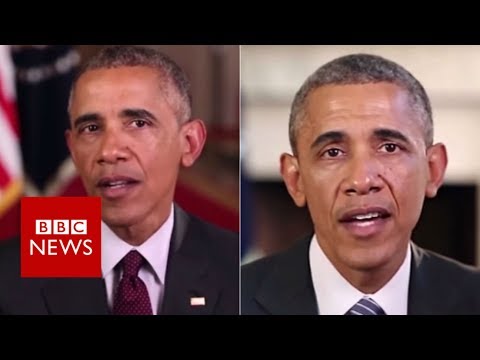
BBC News
Mastering the techniques used to generate photorealistic synthetic speech is essential to reverse-engineering the algorithmic artifacts needed to detect digital counterfeits.
AI-assisted summary of Fake Obama created using AI video tool - BBC News — original source. Check the original for full context.
Source published:
Key ideas
- University of Washington researchers demonstrated an AI video tool that synthesizes photorealistic footage of Barack Obama speaking words mapped from independent audio files. (0:00)
- The technology precisely models lip and mouth movements across diverse audio samples, ranging from economic statistics to condolences after the Orlando shooting. (0:00)
- To mitigate risks of disinformation, researchers argue that mastering video generation is essential to reverse-engineering automated methods for detecting manipulated media. (0:59)
Detailed notes
## Background Published by BBC News on YouTube on July 19, 2017, this report covers breakthrough research from the University of Washington that produced a photorealistic digital version of former US President Barack Obama. According to the description, the researchers used artificial intelligence to precisely model mouth movements, enabling them to realistically map any audio speech onto synthetic video of Obama.
## TL;DR The video showcases an artificial intelligence tool developed to synchronize archival footage of Barack Obama with varied speech recordings, seamlessly animating his mouth to fit different dialogues. Demonstration clips feature the synthetic Obama discussing topics such as minimum wage struggles in New York City, the Orlando mass shooting tragedy, healthcare protections under the Affordable Care Act, and economic job gains. The presentation also includes an audio track mimicking Obama's speech cadence and delivery style. In response to concerns regarding digital manipulation and disinformation, a researcher explains that mastering the generation process allows scientists to reverse-engineer synthetic media and create robust detection tools to distinguish real videos from fakes.
## Atmosphere & style The presentation carries an intriguing yet unsettling atmosphere, evoking the uncanny valley as viewers witness an eerily authentic digital replica of a world leader delivering disparate speeches with natural cadence. The demonstration clips evoke a mixture of technological awe and subtle disquiet regarding the potential manipulation of truth. By concluding with direct commentary from a researcher, the tone shifts from an alarming visual showcase into a calm, pragmatic reflection on digital ethics and detection methods.
## Bulletin - [00:00](https://www.youtube.com/watch?v=AmUC4m6w1wo&t=0s) University of Washington researchers demonstrated an AI video tool that synthesizes photorealistic footage of Barack Obama speaking words mapped from independent audio files. - [00:00](https://www.youtube.com/watch?v=AmUC4m6w1wo&t=0s) The technology precisely models lip and mouth movements across diverse audio samples, ranging from economic statistics to condolences after the Orlando shooting. - [00:59](https://www.youtube.com/watch?v=AmUC4m6w1wo&t=59s) To mitigate risks of disinformation, researchers argue that mastering video generation is essential to reverse-engineering automated methods for detecting manipulated media.
## Key takeaways - [00:00](https://www.youtube.com/watch?v=AmUC4m6w1wo&t=0s) Researchers at the University of Washington used artificial intelligence to generate photorealistic video of former US President Barack Obama. - [00:00](https://www.youtube.com/watch?v=AmUC4m6w1wo&t=0s) The AI tool precisely models mouth shapes and lip movements to match existing or synthesized audio inputs to archival video footage. - [00:00](https://www.youtube.com/watch?v=AmUC4m6w1wo&t=0s) The technique enables creators to put any arbitrary spoken words into synthetic footage of a subject. - [00:00](https://www.youtube.com/watch?v=AmUC4m6w1wo&t=0s) Demonstrated clips include commentary on low-wage workers struggling to survive on $8 an hour in New York City. - [00:00](https://www.youtube.com/watch?v=AmUC4m6w1wo&t=0s) The synthesis system successfully synchronizes sober public statements, such as mourning the loss felt by the people of Orlando after a mass shooting. - [00:00](https://www.youtube.com/watch?v=AmUC4m6w1wo&t=0s) The model was tested on complex policy rhetoric, accurately articulating benefits and protections under the Affordable Care Act. - [00:00](https://www.youtube.com/watch?v=AmUC4m6w1wo&t=0s) The system handled audio tracks parodying Obama's distinctive speech cadences and frequent pauses. - [00:00](https://www.youtube.com/watch?v=AmUC4m6w1wo&t=0s) Demonstrations integrated precise lip synchronization with economic talking points detailing 14.5 million jobs created across 75 straight months. - [00:59](https://www.youtube.com/watch?v=AmUC4m6w1wo&t=59s) The creators acknowledge that synthetic video technology carries inherent risks of being weaponized for disinformation. - [00:59](https://www.youtube.com/watch?v=AmUC4m6w1wo&t=59s) The research team calls for a shared responsibility across the technological community to safeguard against malicious misuse. - [00:59](https://www.youtube.com/watch?v=AmUC4m6w1wo&t=59s) Mastering the generation process allows scientists to reverse-engineer synthetic video artifacts to design reliable detection tools. - [00:59](https://www.youtube.com/watch?v=AmUC4m6w1wo&t=59s) Studying algorithmic patterns during video synthesis provides the foundation for automated systems capable of distinguishing real footage from edited counterfeits.
## Detailed walkthrough ### [00:00](https://www.youtube.com/watch?v=AmUC4m6w1wo&t=0s) AI-Generated Video of Barack Obama
Researchers showcase the capabilities of an artificial intelligence video tool by seamlessly mapping audio recordings to photorealistic footage of former US President Barack Obama. The synthetic clips demonstrate the system matching mouth movements to various speech samples, touching on disparate topics ranging from minimum wage to national tragedies and healthcare. In one clip, the synthesized Obama remarks on low-wage labor, reflecting that “it got me thinking about my full-time employees and their ability to survive on $8 an hour in New York City.” Another snippet addresses the public mourning following a mass shooting, noting that “foremost in all of our minds has been the loss and the grief felt by the people of Orlando.”
The demonstration also highlights policy rhetoric regarding healthcare reform, with the model articulating the real-world impact of legislation: “Most of us don't get our healthcare through the marketplace, we get it through our job or through Medicare or Medicaid, and what you should know is that thanks to the Affordable Care Act, your coverage is better today than it was before, women can get free checkups, and you can't get charged more just for being a woman.” Additional clips capture Obama's cadence and mannerisms during legal and political commentary, including an audio track mocking his distinctive delivery style: “Uh, President Barack Obama, uh, when you're giving a speech, make sure you use a lot of pauses.” A final sample features economic talking points, cleanly synchronizing the line: “America's businesses have created 14.5 million new jobs over 75 straight months.”
- The AI models precise mouth shapes and lip movements to match existing or synthesized audio to archival video footage. - Demonstrated topics include the $8 an hour minimum wage struggle in New York City, condolences for the Orlando shooting victims, and Affordable Care Act protections for women. - Economic data cited in the synthesized speech includes 14.5 million new jobs created across 75 consecutive months.
[00:59](https://www.youtube.com/watch?v=AmUC4m6w1wo&t=59s) Potential Misuse and Reverse-Engineering Detection Methods
Addressing the ethical implications of creating convincing synthetic video, a researcher acknowledges the inherent risks of deepfake technology while proposing ways to counter them. Because powerful digital manipulation tools can easily be weaponized for disinformation, the researchers argue that the community has a shared responsibility to safeguard against malicious use. However, understanding the exact mechanisms behind generating synthetic footage provides a distinct technical advantage for digital forensics.
The developer explains that mastering the generation process is the key to identifying counterfeits, stating: “Every technology can be used in some negative way, and so we all should work towards making sure that it's not going to happen, and even one of the interesting directions is that once you know how to create something, you know how to reverse engineer it, and so one could create methods for identifying edited videos versus real videos.” By studying the algorithmic artifacts and structural patterns produced during video synthesis, researchers can build automated detection tools capable of verifying authenticity and flagging manipulated media.
## Notable quotes > [00:59](https://www.youtube.com/watch?v=AmUC4m6w1wo&t=59s) once you know how to create something, you know how to reverse engineer it, and so one could create methods for identifying edited videos versus real videos. — Researcher
## Mentioned Barack Obama, University of Washington, BBC News, Affordable Care Act, Medicare, Medicaid, New York City, Orlando
## Video description Researchers at the University of Washington have produced a photorealistic former US President Barack Obama. Artificial intelligence was used to precisely model how Mr Obama moves his mouth when he speaks. Their technique allows them to put any words into their synthetic Barack Obama’s mouth.
Please subscribe HERE http://bit.ly/1rbfUog
World In Pictures https://www.youtube.com/playlist?list=PLS3XGZxi7cBX37n4R0UGJN-TLiQOm7ZTP Big Hitters https://www.youtube.com/playlist?list=PLS3XGZxi7cBUME-LUrFkDwFmiEc3jwMXP Just Good News https://www.youtube.com/playlist?list=PLS3XGZxi7cBUsYo_P26cjihXLN-k3w246
[Source](https://www.youtube.com/watch?v=AmUC4m6w1wo)