Japan Crows Use Car Tires to Crack Nuts, Crosswalk Lights to Feed
BBC Studios
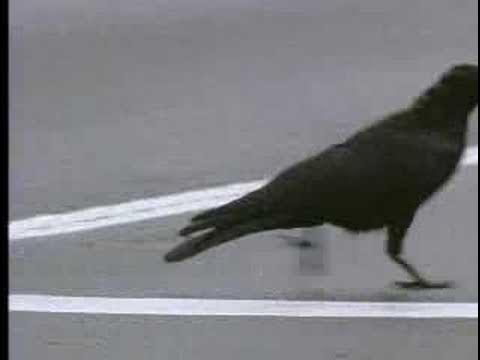
Urban crows overcome tough shells and traffic hazards by placing nuts under vehicle tires and timing food retrieval with pedestrian walk signals.
AI-assisted summary of Wild crows inhabiting the city use it to their advantage - David Attenborough - BBC wildlife — original source. Check the original for full context.
Source published:
Key ideas
- Wild crows in Japan have adapted to urban environments by utilizing human infrastructure to access hard-to-crack food sources. (0:02)
- When dropping nuts from great heights onto roads fails to crack tough shells, crows intentionally place nuts in traffic lanes for car tires to crush. (0:02)
- To solve the hazard of moving traffic during food retrieval, crows position themselves at pedestrian crosswalks and monitor traffic light cycles. (1:09)
- The birds safely harvest crushed nut pieces alongside pedestrians during red lights before vehicle traffic resumes. (1:09)
Detailed notes
## Background Published on YouTube by BBC Studios on February 12, 2007, this BBC wildlife clip features footage from the BBC Earth archive. The page description highlights how birds adapt to metropolitan life, focusing specifically on crows in Japan that have integrated city infrastructure directly into their foraging behavior.
## TL;DR Narrated by David Attenborough, the clip documents the ingenious foraging adaptations of wild crows living in urban Japan. When dropping hard-shelled nuts from high perches onto asphalt fails to break them, the crows place the nuts directly into roadway traffic to let passing car tires crush the shells. To solve the dangerous problem of collecting the food without being run over, the birds station themselves beside pedestrian crosswalks. They patiently wait for traffic lights to halt vehicles, stepping into the street alongside human walkers to safely retrieve their meal.
## Atmosphere & style The clip carries David Attenborough’s signature tone of gentle awe, measured curiosity, and calm observational humor. Watching mundane city infrastructure—traffic lights and pedestrian crossings—reimagined through an animal's sharp problem-solving creates a delightfully suspenseful and charming experience. It feels like an eye-opening glimpse into animal intelligence, blending classic natural history storytelling with the everyday bustle of urban street life.
## Bulletin - [00:02](https://www.youtube.com/watch?v=BGPGknpq3e0&t=2s) Wild crows in Japan have adapted to urban environments by utilizing human infrastructure to access hard-to-crack food sources. - [00:02](https://www.youtube.com/watch?v=BGPGknpq3e0&t=2s) When dropping nuts from great heights onto roads fails to crack tough shells, crows intentionally place nuts in traffic lanes for car tires to crush. - [01:09](https://www.youtube.com/watch?v=BGPGknpq3e0&t=69s) To solve the hazard of moving traffic during food retrieval, crows position themselves at pedestrian crosswalks and monitor traffic light cycles. - [01:09](https://www.youtube.com/watch?v=BGPGknpq3e0&t=69s) The birds safely harvest crushed nut pieces alongside pedestrians during red lights before vehicle traffic resumes.
## Key takeaways - [00:02](https://www.youtube.com/watch?v=BGPGknpq3e0&t=2s) Urban crows in Japan demonstrate high adaptability and foraging skill within metropolitan landscapes. - [00:02](https://www.youtube.com/watch?v=BGPGknpq3e0&t=2s) Tough-shelled nuts pose a physical barrier that crow beaks cannot penetrate on their own. - [00:02](https://www.youtube.com/watch?v=BGPGknpq3e0&t=2s) Crows initially attempt to break nuts open by dropping them from heights onto hard road surfaces. - [00:02](https://www.youtube.com/watch?v=BGPGknpq3e0&t=2s) Aerial impact alone is often insufficient to crack particularly durable shells. - [00:02](https://www.youtube.com/watch?v=BGPGknpq3e0&t=2s) Crows innovate by letting passing automotive traffic act as a heavy crushing mechanism. - [01:09](https://www.youtube.com/watch?v=BGPGknpq3e0&t=69s) Using moving vehicles to crush nuts creates the secondary danger of birds getting run over while retrieving the food. - [01:09](https://www.youtube.com/watch?v=BGPGknpq3e0&t=69s) Certain crows overcome this hazard by stationing themselves adjacent to designated pedestrian crossings. - [01:09](https://www.youtube.com/watch?v=BGPGknpq3e0&t=69s) The crows exhibit an understanding of traffic signals by waiting patiently for traffic lights to stop vehicles. - [01:09](https://www.youtube.com/watch?v=BGPGknpq3e0&t=69s) When pedestrian signals activate, crows walk into the crosswalk alongside humans to collect crushed nut fragments in complete safety. - [01:09](https://www.youtube.com/watch?v=BGPGknpq3e0&t=69s) This multi-step foraging strategy highlights the sophisticated integration of human urban patterns into wild animal behavior.
## Detailed walkthrough ### [00:02](https://www.youtube.com/watch?v=BGPGknpq3e0&t=2s) Urban Crows and the Challenge of Cracking Tough Nuts
In modern urban environments, crows have proven to be exceptionally resourceful, adapting their natural foraging behaviors to metropolitan human landscapes. Narrator David Attenborough observes this remarkable adaptability in action on the streets of Japan, pointing out: “Crows have become highly skilled at making a living in these new urban environments.” Faced with food sources that their beaks alone cannot easily breach, these Japanese city crows have engineered a clever solution to access a meal that would otherwise remain out of reach.
The birds naturally try to break open hard-shelled nuts by carrying them aloft and dropping them onto hard asphalt roadways from high above. While this aerial bombardment works on occasion, many nuts possess shells far too sturdy to crack upon impact alone. Recognizing the limitations of brute height, the crows turn the city itself into an anvil, altering their strategy to let passing automotive traffic do the heavy crushing for them.
```mermaid flowchart TD accTitle: Crow Nut-Cracking Strategy Evolution accDescr: Flowchart showing how crows adapted their method from aerial drops to utilizing traffic and pedestrian lights.
subgraph InitialMethods["Initial Attempts"] A["Drop nut from height onto hard road"] --> B{"Is shell too tough?"} B -->|"Yes"| C["Drop nut directly into roadway traffic"] end
subgraph RefinedStrategy["Traffic Safety Refinement"] C --> D{"Problem: Risk of getting run over"} D --> E["Station near pedestrian crossing"] E --> F["Wait for traffic light to turn red"] F --> G["Retrieve cracked nut in safety"] end ```
[01:09](https://www.youtube.com/watch?v=BGPGknpq3e0&t=69s) Mastering the Pedestrian Crossing
Dropping nuts directly in front of oncoming vehicles solves the cracking problem, but it immediately introduces a deadly hazard: retrieving the crushed fragments without being struck by cars. As David Attenborough explains, “The problem now is collecting the bits without getting run over.” To circumvent the dangerous moving traffic, several birds have developed an extraordinarily refined and calculated technique centered on human infrastructure.
Rather than darting recklessly among speeding tires, the crows position themselves right beside designated pedestrian crossings. They carefully monitor the flow of the intersection, waiting patiently for the traffic lights to change and bring vehicles to a complete halt. Once the pedestrian signal permits safe passage, the crows hop calmly into the crosswalk alongside walking humans, collecting their freshly cracked nut meat in total safety before the lights turn green again.
- **Initial foraging tactic**: Dropping hard nuts onto paved roads from a great height to crack them open. - **The mechanical upgrade**: Placing tough nuts directly into the roadway so vehicle tires crush the shells. - **The safety adaptation**: Utilizing pedestrian crosswalks and traffic light cycles to collect cracked nut fragments without risking injury from moving cars.
## Notable quotes > [00:02](https://www.youtube.com/watch?v=BGPGknpq3e0&t=2s) Crows have become highly skilled at making a living in these new urban environments. — David Attenborough
## Mentioned David Attenborough, BBC, BBC Earth, BBC Studios, Japan
## Video description Want more natural history and wildlife videos? Visit the official BBC Earth channel: http://bit.ly/BBCEarthWW
BBC Earth The BBC Earth YouTube channel is home to over 50 years-worth of the best animal videos from the BBC archive. With three new videos released every week there’s something for all nature loves from astounding animal behaviour to beautiful imagery. Click here to find our more: http://bit.ly/BBCEarthWW
Many birds adapt to metropolitan life, in this clip you can see how crows in Japan have integrated city life into their behaviour. From the BBC.
This is a channel from BBC Studios who help fund new BBC programmes. Service information and feedback: https://www.bbcstudios.com/contact/contact-us/
[Source](https://www.youtube.com/watch?v=BGPGknpq3e0)