Intellectual Ventures Builds Laser Fence to Kill Malaria Mosquitoes
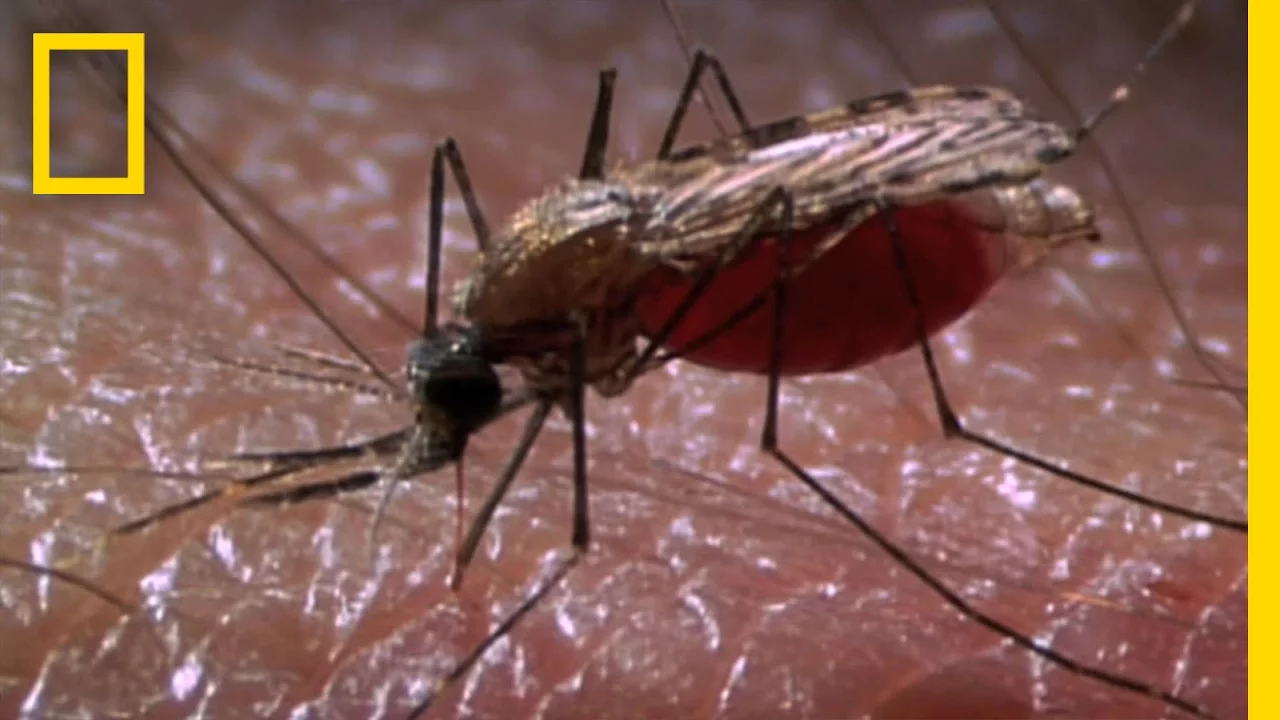
National Geographic
The optical system uses low-cost consumer electronics to track wing-beat frequencies and shoot disease-bearing female mosquitoes mid-flight while sparing harmless insects.
AI-assisted summary of New Laser Zaps Mosquitoes in SlowMotion | National Geographic — original source. Check the original for full context.
Source published:
Key ideas
- Intellectual Ventures developed a laser-based 'photonic fence' capable of neutralizing mosquitoes mid-flight to combat malaria. (0:01)
- Using high-speed cameras filming at up to 6,000 frames per second, researchers captured lethal strikes that take only approximately one-tenth of a second in real time. (0:01)
- The system distinguishes harmless insects and male mosquitoes from biting females by analyzing insect size and wing-beat frequencies. (1:12)
- Initiated via a challenge from the Bill & Melinda Gates Foundation, the system utilizes low-cost consumer electronics parts to remain feasible for malaria-endemic regions. (1:12)
Detailed notes
## Background Published on YouTube by National Geographic on February 17, 2010, this video showcases a newly engineered laser system capable of neutralizing mosquitoes without harming other insects. According to the page description, the high-speed slow-motion demonstration represents an innovative technological effort to combat malaria.
## TL;DR Spurred by a global health challenge from the Bill & Melinda Gates Foundation, technology firm Intellectual Ventures engineered a targeted laser system known as the 'photonic fence' to help eradicate malaria. Captured with high-speed cameras at up to 6,000 frames per second, the device delivers precise laser blasts in just a tenth of a second, causing immediate structural failure to mosquitoes in mid-air. Built using low-cost parts from consumer electronics, the fence establishes an infrared boundary that actively analyzes wing-beat frequencies and insect size. This allows the system to selectively exterminate dangerous biting female mosquitoes while safely ignoring beneficial pollinators like bumblebees and butterflies, as well as harmless male mosquitoes.
## Atmosphere & style The presentation carries a precise, clinical, and visually mesmerizing tone that pairs the calm authority of scientific narration with arresting physical destruction. Watching the extreme slow-motion footage feels both graceful and startling, as delicate aerodynamic airflow visualizations suddenly give way to explosive mid-air laser impacts. The overall mood is quietly optimistic and purposeful, framing advanced optical physics not merely as high-tech spectacle, but as a practical, life-saving intervention against a devastating humanitarian crisis.
## Bulletin - [00:01](https://www.youtube.com/watch?v=BKm8FolQ7jw&t=1s) Intellectual Ventures developed a laser-based 'photonic fence' capable of neutralizing mosquitoes mid-flight to combat malaria. - [00:01](https://www.youtube.com/watch?v=BKm8FolQ7jw&t=1s) Using high-speed cameras filming at up to 6,000 frames per second, researchers captured lethal strikes that take only approximately one-tenth of a second in real time. - [01:12](https://www.youtube.com/watch?v=BKm8FolQ7jw&t=72s) The system distinguishes harmless insects and male mosquitoes from biting females by analyzing insect size and wing-beat frequencies. - [01:12](https://www.youtube.com/watch?v=BKm8FolQ7jw&t=72s) Initiated via a challenge from the Bill & Melinda Gates Foundation, the system utilizes low-cost consumer electronics parts to remain feasible for malaria-endemic regions.
## Key takeaways - [00:01](https://www.youtube.com/watch?v=BKm8FolQ7jw&t=1s) Intellectual Ventures designed an automated laser weapon system to eliminate mosquitoes in large volumes. - [00:01](https://www.youtube.com/watch?v=BKm8FolQ7jw&t=1s) High-speed video recorded at up to 6,000 frames per second was used to verify and showcase the system's precision. - [00:01](https://www.youtube.com/watch?v=BKm8FolQ7jw&t=1s) Flight aerodynamics were mapped using green laser illumination on suspended micro-droplets of water to visualize wing vortices. - [00:01](https://www.youtube.com/watch?v=BKm8FolQ7jw&t=1s) Optical sensors trigger the lethal beam the moment an insect passes through the camera's focal plane. - [00:01](https://www.youtube.com/watch?v=BKm8FolQ7jw&t=1s) Each laser engagement lasts roughly one-tenth of a second in real time, causing immediate structural destruction to the insect's wings and appendages. - [01:12](https://www.youtube.com/watch?v=BKm8FolQ7jw&t=72s) The primary objective of the technology is combating malaria, which claims nearly one million lives each year in tropical regions. - [01:12](https://www.youtube.com/watch?v=BKm8FolQ7jw&t=72s) The initiative originated from a public health challenge issued by the Bill & Melinda Gates Foundation. - [01:12](https://www.youtube.com/watch?v=BKm8FolQ7jw&t=72s) The system is structured as a 'photonic fence' running continuous infrared beams between perimeter posts. - [01:12](https://www.youtube.com/watch?v=BKm8FolQ7jw&t=72s) To keep production costs low for developing countries, the device incorporates off-the-shelf consumer electronic components. - [01:12](https://www.youtube.com/watch?v=BKm8FolQ7jw&t=72s) Selective targeting allows benign insects like bumblebees and butterflies to pass through without harm. - [01:12](https://www.youtube.com/watch?v=BKm8FolQ7jw&t=72s) The optical tracking system identifies wing-beat frequencies to exclusively target female mosquitoes, which are the only ones that bite humans.
## Detailed walkthrough ### [00:01](https://www.youtube.com/watch?v=BKm8FolQ7jw&t=1s) Capturing Flight Dynamics and Laser Strikes in Extreme Slow Motion
In an effort to confront one of the world's most devastating diseases, scientists have engineered a laser system capable of neutralizing mosquitoes in high volume. To demonstrate the technology and capture the lethal precision of the device, the technology development company Intellectual Ventures utilized high-speed video cameras operating at speeds of up to 6,000 frames per second. Before deploying the weaponized beam, researchers thoroughly analyzed insect aerodynamics. The narrator notes that “a high-speed video camera that captures up to 6,000 frames per second was used by a company called Intellectual Ventures to show the invention in action.”
To record these intricate flight patterns, the team suspended tiny water droplets illuminated by a green laser inside a custom-designed chamber. This setup visualized the vortex of air moving across the insect's wings as sensors tracked when a specimen passed directly through the camera's focal plane. Once calibrated, the tracking system directs a lethal laser blast directly at the mosquito. Under extreme slow motion, the impact reveals catastrophic structural failure: parts of the mosquito's wings and appendages visibly shatter and break away mid-air before the lifeless insect drops to the ground. The narrator emphasizes the speed of the kill, explaining that “if played in real time these segments would be about 1/10 of a second.”
- **Frame rate:** High-speed capture at up to 6,000 frames per second. - **Flight dynamics imaging:** Green laser illumination on suspended micro-droplets of water reveals airflow and wing vorticity. - **Trigger mechanism:** Optical sensors detect when the insect crosses the camera's focal plane. - **Real-time duration:** Each lethal laser strike occurs within roughly a tenth of a second.
[01:12](https://www.youtube.com/watch?v=BKm8FolQ7jw&t=72s) The Photonic Fence: Selective Targeting to Combat Malaria
The ultimate goal driving this optical engineering project is the global eradication of malaria, a deadly parasitic disease prevalent across tropical regions that claims nearly a million human lives every year. The project was initially spurred by a public health challenge issued by the Bill & Melinda Gates Foundation. The narrator highlights this origin, explaining that “Intellectual Ventures says their involvement began with a challenge from the Bill and Melinda Gates Foundation.”
```mermaid flowchart TD accTitle: Photonic Fence Targeting Workflow accDescr: Step-by-step process used by the photonic fence to detect, filter, and shoot female mosquitoes.
subgraph Detection["Detection Phase"] A["Infrared beam between fence posts"] --> B["Insect crosses perimeter"] end
subgraph Analysis["Classification Phase"] B --> C["Analyze wing-beat frequency and size"] C --> D{"Target mosquito?"} end
subgraph Action["Engagement Phase"] D -- "Non-target (butterflies, bees, males)" --> E["Allow safe passage"] D -- "Female mosquito" --> F["Deploy laser strike"] end ```
The resulting field concept is known as the "photonic fence," a perimeter system designed to span between boundary posts using a continuous beam of infrared light. The inventors assembled the device using inexpensive parts sourced from off-the-shelf consumer electronics to keep production costs feasible for developing areas. Beyond raw firing power, the system features sophisticated optical targeting capable of species differentiation: it actively ignores non-threatening insects such as butterflies and bumblebees, firing solely at target pests. Furthermore, it measures the frequency of an insect's wing beats to distinguish harmless male mosquitoes from biting females, an essential distinction because “only female mosquitoes bite humans.”
- **Global impact:** Targets malaria vectors in tropical regions, where the disease claims roughly 1,000,000 lives annually. - **Hardware composition:** Assembled utilizing low-cost parts from consumer electronics. - **Safety filtering:** Discriminates target pests from beneficial pollinators such as bumblebees and butterflies. - **Acoustic/optical identification:** Measures wing-beat frequencies to identify and eliminate female mosquitoes while sparing harmless males.
## Mentioned National Geographic, Intellectual Ventures, Bill & Melinda Gates Foundation, Photonic Fence
## Video description A new laser system can kill mosquitoes without harming other insects, as shown in slowmotion video. It's all part of the effort to combat malaria. ➡ Subscribe: http://bit.ly/NatGeoSubscribe
#NationalGeographic #Mosquitoes #Lasers
About National Geographic: National Geographic is the world's premium destination for science, exploration, and adventure. Through their world-class scientists, photographers, journalists, and filmmakers, Nat Geo gets you closer to the stories that matter and past the edge of what's possible.
Get More National Geographic: Official Site: http://bit.ly/NatGeoOfficialSite Facebook: http://bit.ly/FBNatGeo Twitter: http://bit.ly/NatGeoTwitter Instagram: http://bit.ly/NatGeoInsta
New Laser Zaps Mosquitoes in SlowMotion | National Geographic https://youtu.be/BKm8FolQ7jw
National Geographic https://www.youtube.com/natgeo
[Source](https://www.youtube.com/watch?v=BKm8FolQ7jw)