Client Forces Engineer to Draw Perpendicular Red Lines in Green Ink
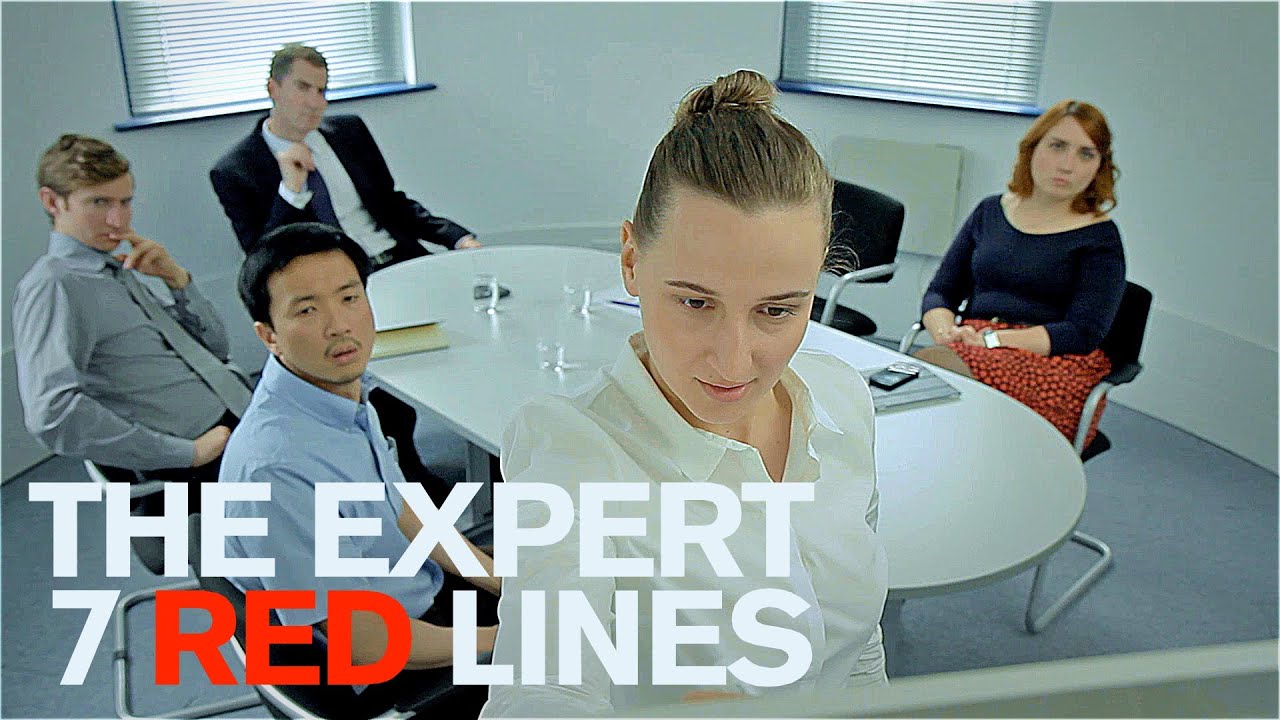
The Expert (Short Comedy Sketch) — Lauris Beinerts

Lauris Beinerts

Executive refusal to accept basic physical constraints forces technical experts to abandon scientific reality and accept impossible project deliverables.

AI-assisted summary of The Expert (Short Comedy Sketch) — original source. Check the original for full context.

Source published:

Key ideas

  • A corporate client commissions a strategic project requiring seven red lines that are all strictly perpendicular to each other, with several drawn in green and transparent ink. (0:00)
  • When the technical expert demonstrates that Euclidean geometry prevents seven lines from being mutually perpendicular, executives instruct him to ignore geometry and blame the color of his pen. (2:13)
  • Market research is leveraged to push for impossible aesthetic features, including shaping a geometric line into a cuddly kitten or a bird. (5:10)
  • The project scope expands to include an on-site business trip to inflate a red balloon in the shape of a kitten, driving the engineer into total psychological resignation. (5:10)

Detailed notes

## Background Published on YouTube by Lauris Beinerts on March 23, 2014, this short comedy sketch is based on the short story 'The Meeting' by Alexey Berezin. The page description characterizes it as a funny business meeting that illustrates the immense difficulty an engineer faces when trying to fit into the corporate world.

## TL;DR The sketch depicts a corporate meeting where a technical expert, Anderson, is tasked by a client with drawing seven red lines that must all be mutually perpendicular, with some drawn in green ink and others in transparent ink. Despite Anderson's persistent efforts to explain the physical and geometric impossibilities of these demands, both the client and his own project manager dismiss his logical objections as unconstructive. The absurd requirements escalate to drawing a line in the shape of a kitten and inflating a red balloon, eventually forcing a defeated Anderson to maniacally accept the impossible tasks.

## Atmosphere & style The tone of the sketch is highly satirical, dry, and agonizingly relatable, capturing the quiet desperation of a lone voice of reason trapped in a corporate echo chamber. The dynamic between the exasperated engineer and the cheerfully ignorant executives creates a tense, comedic atmosphere that slowly builds in absurdity. Watching it feels like a slow descent into madness, tracing an emotional arc from professional patience to complete, wide-eyed resignation in the face of corporate bureaucracy.

## Bulletin - [00:00](https://www.youtube.com/watch?v=BKorP55Aqvg&t=0s) A corporate client commissions a strategic project requiring seven red lines that are all strictly perpendicular to each other, with several drawn in green and transparent ink. - [02:13](https://www.youtube.com/watch?v=BKorP55Aqvg&t=133s) When the technical expert demonstrates that Euclidean geometry prevents seven lines from being mutually perpendicular, executives instruct him to ignore geometry and blame the color of his pen. - [05:10](https://www.youtube.com/watch?v=BKorP55Aqvg&t=310s) Market research is leveraged to push for impossible aesthetic features, including shaping a geometric line into a cuddly kitten or a bird. - [05:10](https://www.youtube.com/watch?v=BKorP55Aqvg&t=310s) The project scope expands to include an on-site business trip to inflate a red balloon in the shape of a kitten, driving the engineer into total psychological resignation.

## Key takeaways - [00:00](https://www.youtube.com/watch?v=BKorP55Aqvg&t=0s) High-level strategic objectives—such as increasing market penetration and maximizing brand loyalty—are arbitrarily tied to technically incoherent project requirements. - [00:00](https://www.youtube.com/watch?v=BKorP55Aqvg&t=0s) Vendor project management actively silences technical objections from domain experts to prevent appearing uncooperative or negative to clients. - [00:00](https://www.youtube.com/watch?v=BKorP55Aqvg&t=0s) The client treats physical realities—such as ink color determining line color—as flexible corporate negotiating positions. - [00:00](https://www.youtube.com/watch?v=BKorP55Aqvg&t=0s) Client executives twist an expert's minor concession regarding color blindness into proof that drawing red lines with green ink is feasible in principle. - [02:13](https://www.youtube.com/watch?v=BKorP55Aqvg&t=133s) A basic geometric demonstration shows that two lines can be mutually perpendicular, but a third perpendicular line runs parallel to the second, ruling out seven mutually perpendicular lines. - [02:13](https://www.youtube.com/watch?v=BKorP55Aqvg&t=133s) When confronted with geometric constraints, the client produces a rough triangle and deflects from structural impossibility by attacking the engineer's use of a blue pen. - [02:13](https://www.youtube.com/watch?v=BKorP55Aqvg&t=133s) Executives dismiss rigorous technical expertise as a narrow perspective that fails to appreciate the strategic 'overall picture.' - [02:13](https://www.youtube.com/watch?v=BKorP55Aqvg&t=133s) The client insists that physical and geometric laws should simply be ignored because the deliverable quantity is small. - [05:10](https://www.youtube.com/watch?v=BKorP55Aqvg&t=310s) Market research findings lead design specialists to demand categorical impossibilities, such as rendering a geometric line as a kitten or a bird. - [05:10](https://www.youtube.com/watch?v=BKorP55Aqvg&t=310s) Attempting to compromise by offering invisible transparent lines only prompts stakeholders to layer on additional contradictory demands, including green ink. - [05:10](https://www.youtube.com/watch?v=BKorP55Aqvg&t=310s) Scope creep introduces entirely unrelated tasks—such as inflating a balloon on-site—solely because of a superficial association with the color red. - [05:10](https://www.youtube.com/watch?v=BKorP55Aqvg&t=310s) Relentless corporate denial of objective reality eventually forces the technical expert into manic, resigned compliance with impossible demands.

## Detailed walkthrough ### [00:00](https://www.youtube.com/watch?v=BKorP55Aqvg&t=0s) The Brief: Seven Red Lines

The meeting opens in a corporate conference room where a client executive outlines an ambitious corporate mandate loaded with corporate buzzwords: “Our company has a new strategic initiative to increase market penetration, maximise brand loyalty, and enhance intangible assets.” To achieve these high-level corporate goals, the client announces that they have launched a project requiring exactly seven red lines and are engaging the vendor's specialized services. The vendor team eagerly assures the client of their capabilities, introducing Walter as the project manager and Anderson as their technical specialist and “expert in all matters related to drawing red lines.” The client then introduces their design specialist, Justine, who immediately delivers the core technical specifications for the assignment: “We need you to draw seven red lines. All of them strictly perpendicular; some with green ink and some with transparent. Can you do that?”

```mermaid flowchart TD accTitle: The Impossible Project Requirements accDescr: Flowchart showing the client's conflicting project requirements and constraints. subgraph ClientDemands["Client Specifications"] A["Deliver 7 Red Lines"] B["Mutually Perpendicular"] C["Green & Transparent Ink"] D["Line in Form of a Kitten"] end subgraph RealityChecks["Physical Constraints"] E["Ink Determines Color"] F["Euclidean Geometry (Max 3 in 3D)"] G["Lines are Not Animals"] end A -.->|"Contradicts"| C B -.->|"Violates"| F C -.->|"Impossible"| E D -.->|"Incompatible"| G ```

When Anderson reflexively begins to explain that such an outcome cannot be delivered, Walter cuts him off immediately, urging patience and warning against negativity: “Let's not rush into any hasty answers, Anderson! The task has been set and needs to be carried out. At the end of the day, you are an expert.” Anderson attempts to ground the conversation in basic physical reality, stating that a red line by definition must be red, and drawing one with green ink is essentially impossible. When the client challenges the very definition of "impossible," Anderson concedes that color-blind individuals might not distinguish the difference, though he points out that the target market cannot possibly consist solely of the color-blind. The client latches onto this concession as proof of feasibility, declaring, “So in principle this is possible.”

The exchange descends further into absurdity when the team suggests using blue ink instead. Anderson patiently explains that applying blue ink simply yields blue lines. When he asks Justine to describe how she envisions red lines drawn with invisible, transparent ink, the client dismisses his inquiry as childish stalling: “C'mon, Anderson! What do we have here, kindergarten? Let's not waste our time with these unproductive quarrels. The task has been set; the task is plain and clear.”

- Strategic business objectives cited: increase market penetration, maximize brand loyalty, and enhance intangible assets. - Project deliverables: seven red lines, all strictly perpendicular, drawn with a mix of red, green, and transparent ink. - Anderson's fundamental physical axiom: a line can be drawn with any ink, but producing a red line requires red ink.

[02:13](https://www.youtube.com/watch?v=BKorP55Aqvg&t=133s) The Perpendicularity Problem and the Triangle Demonstration

Anderson pivots from ink colors to examine the geometric constraints, asking how seven lines can be strictly perpendicular. Justine clarifies that she expects them to be perpendicular “to everything. Among themselves.” Taking a pen and paper to demonstrate elementary Euclidean geometry, Anderson draws a baseline and a second line perpendicular to it, which the room readily verifies. However, when he adds a third line perpendicular to the first, he points out that while it is perpendicular to the base, it runs parallel to the second line and will never cross it: “Two lines can be perpendicular. All seven can't be simultaneously perpendicular to each other.”

The client takes the pen to offer an alternative, sketching three intersecting lines across the sheet and asking, “How about this?” Anderson inspects the drawing and deadpans that it is a triangle, not perpendicular lines, and contains only three lines rather than the mandated seven. The clients immediately latch onto an irrelevant aesthetic detail, asking why the sketch is drawn in blue. When Anderson explains that he simply used his own blue pen for a rough demonstration, the client faults his materials instead of the geometry: “That's the problem, your lines are blue. Draw them with red ink!” Anderson insists that swapping the ink color will not alter geometric laws, only to be accused of contradicting his earlier claim that red lines require red ink. Desperately trying to articulate the core issue, Anderson identifies the barrier as geometry, to which the client instantly fires back: “Just ignore it! We have a task. Seven red lines. It's not twenty; it's just seven.”

- Anderson's geometric proof: two lines can intersect at 90 degrees, but a third line perpendicular to the first runs parallel to the second, proving all seven cannot be mutually perpendicular. - Client's counter-demonstration: a hand-drawn triangle consisting of three blue lines. - Management's evaluation of the engineer: accused of lacking a broad strategic perspective, with the client remarking, “Anderson, I understand; you're a specialist of a narrow field, you don't see the overall picture.” - The client's demand for constructive thinking: “Any fool can criticise, no offence, but you're an expert, you should know better!”

[05:10](https://www.youtube.com/watch?v=BKorP55Aqvg&t=310s) The Kitten Compromise and the Red Balloon

Faced with unwavering executive pressure, Anderson attempts an appeasing compromise: he offers to draw two genuinely perpendicular red lines and complete the remaining five with transparent ink, leaving them completely invisible. The clients agree to this concession provided that at least a couple are drawn in green ink. Justine then introduces an additional requirement derived from consumer research: “Can you draw one of the lines in the form of a kitten?” When Anderson objects that a drawing of a cat ceases to be a geometric line, Justine clarifies that she specifically wants a cuddly kitten rather than an adult cat, and the client reprimands Anderson for shooting down ideas before hearing her out. When Anderson stands firm on the impossibility of the request, Justine simply asks, “What about a bird?”

The project manager summarizes the final scope: seven red lines, two drawn with red ink, two with green ink, and three with transparent ink. Just as the meeting wraps up, the client remembers an additional deliverable: an actual red balloon that needs inflating. Anderson bewilderedly asks what inflating balloons has to do with his role, only to be told, “It's red.” Walter immediately accepts the task on Anderson's behalf, authorizing travel expenses for an on-site business trip to inflate the balloon. As the meeting concludes, Justine politely raises one final request: “When you inflate the balloon, could you do it in the form of a kitten?” Anderson, completely resigned to corporate absurdity, snaps into maniacal, wide-eyed compliance: “I can do anything, I can do absolutely anything. I'm an expert!”

- Final negotiated line distribution: two red ink lines, two green ink lines, and three transparent ink lines. - Justine's creative design rationale: “Market research tells our users like cute animals. It'd be really great if—” - New secondary project task: an all-expenses-paid business trip for Anderson to inflate a single red balloon on-site.

## Mentioned Lauris Beinerts, Alexey Berezin, Orion Lee, James Marlowe, Abdiel LeRoy, Ewa Wojcik, Tatjana Sendzimir, Connor Snedecor, Matthew Riley, Simon Oldham, Karina Beinerte, James Hanline, Emily Russell, James Bryant, Janis Stals, Benjamin Charles, Anderson, Walter, Justine, The Meeting, The Hospital Club, Canon 7D, Final Cut Pro 7, Libre Office Calc

## Video description Subscribe for more short comedy sketches & films: http://bit.ly/laurisb Buy Expert shirts & hoodies at https://laurisb.myshopify.com/ Funny business meeting illustrating how hard it is for an engineer to fit into the corporate world! Watch the next episodes: http://bit.ly/SquareProjectEp1, http://bit.ly/SquareProjectEp2 & http://bit.ly/SquareProjectEp3

Starring: Orion Lee, James Marlowe, Abdiel LeRoy, Ewa Wojcik, Tatjana Sendzimir.

Subtitles available in many, many languages (enable them using the "Subtitles/Closed Captions" button). A big thank-you to everyone who translated! You can add new subtitles here: http://www.youtube.com/timedtext_video?v=BKorP55Aqvg

Written & Directed by Lauris Beinerts Based on a short story "The Meeting" by Alexey Berezin Produced by Connor Snedecor & Lauris Beinerts Director of Photography: Matthew Riley Sound Recordist: Simon Oldham Production Designer: Karina Beinerte 1st Assistant Director: James Hanline Make-up Artist: Emily Russell Editor: Connor Snedecor Sound Designer: James Bryant Colourist: Janis Stals Animator: Benjamin Charles

The original short story about drawing seven red lines "The Meeting" (in Russian): http://alex-aka-jj.livejournal.com/66984.html

The Expert shirt campaign is over, but let me know if you'd be interested, you can check it here: https://bonfire.com/the-expert

We made this video using: - Canon 7D camera: http://amzn.to/1FuXXVv - Final Cut Pro 7: http://amzn.to/1Lt7UrZ - Web-based Cyrillic converter: http://2cyr.com/ - The Hospital Club premises for a stage test (only partially recorded...): http://thehospitalclub.com/ - Libre Office Calc to make sense of the shot list... - 7 different markers and an empty juice pack to get the right sound - 7 red lines - A bottle of single malt whiskey

Funny short comedy films / sketches / skits & any other videos / movies made by Lauris Beinerts.

If you like to laugh, subscribe for new (albeit irregular) videos!

Семь красных линий Гуманитарий и инженер Дизайнер и заказчик 工程师心里的痛只有工程师能懂 史上最悲催工程师 如何用透明笔画出红色线条

#ShortComedySketch #expert

[Source](https://www.youtube.com/watch?v=BKorP55Aqvg)

中文简报

客户强迫工程师用绿墨水绘制相互垂直的红线 管理层拒绝接受基本的物理限制,迫使技术专家脱离科学现实并接受不可能交付的项目成果。 该小品描绘了一场企业会议:客户要求技术专家安德森绘制七条必须严格相互垂直的红线,其中部分要用绿色墨水绘制,其余则用透明墨水绘制。尽管安德森不断努力解释这些要求在物理和几何学上根本无法实现,但客户以及他自己的项目经理均认为他的逻辑反驳毫无建设性。荒谬的要求随后进一步升级,甚至包括将线条画成小猫形状以及吹红气球,最终迫使备受挫折的安德森狂乱地接受了这些不可能完成的任务。 一家企业客户委托了一项战略项目,要求绘制七条严格相互垂直的红线,且其中数条需用绿色和透明墨水绘制。 (0:00) 当技术专家论证欧几里得几何学决定了七条线不可能相互垂直时,管理人员却指示他忽略几何学,并归咎于其笔的颜色。 (2:13) 市场研究被用来强推不可能实现的美学特征,包括将几何线条塑造成可爱的小猫或小鸟形状。 (5:10) 项目范围进一步扩大,增加了一项前往实地吹制小猫形状红气球的出差任务,致使该工程师心理彻底崩溃并放弃抵抗。 (5:10)

Reading summary

In Lauris Beinerts' comedy sketch 'The Expert,' corporate stakeholders and project management demand that a technical specialist execute physically and mathematically impossible tasks under the guise of strategic flexibility and customer focus. Contradictory Color and Visibility Mandates (0:00) The assignment is framed around high-level corporate objectives: increasing market penetration, maximizing brand loyalty, and enhancing intangible assets. To serve these goals, the client requires vendor specialist Anderson to deliver seven red lines, specifying that several must be drawn using green ink and others with transparent ink. When Anderson clarifies that drawing with green or invisible ink cannot yield a red line, project manager Walter cautions him against negativity, emphasizing his duty as an expert to fulfill assigned tasks. The client team rejects physical constraints by reframing edge cases as universal feasibility. After Anderson notes that only a color-blind observer would fail to distinguish red ink from green ink, the client takes this as proof that the requirement is viable in principle. Inquiries regarding how an audience is meant to view lines drawn in invisible ink are brushed aside by leadership as childish, unproductive stalling. Geometric Limits Reframed as Strategic Inflexibility (2:13) The technical conflict escalates over the client's requirement that all seven lines be strictly perpendicular to one another. Anderson provides an elementary Euclidean geometry demonstration, showing that while two lines can intersect at a 90-degree angle, a third line drawn perpendicular to the baseline runs parallel to the second, preventing all seven from being mutually perpendicular. Rather than accepting the mathematical limitation, the client sketches a three-line blue triangle and faults Anderson's materials, arguing that the demonstration failed solely because it was drawn in blue rather than red ink. When Anderson points out that changing colors cannot alter geometric laws, management accuses him of narrow-mindedness, claiming he lacks strategic vision and urging him to simply ignore geometry to meet project deliverables. Scope Creep and Surrender to Absurdity (5:10) In an attempt to appease the room, Anderson proposes drawing two perpendicular red lines and rendering the remaining five invisible with transparent ink. The client accepts on the condition that two lines use green ink, then immediately introduces new requirements: design specialist Justine cites market research favoring cute animals to request that one line be drawn in the form of a kitten, or alternatively, a bird. The meeting concludes with further scope creep when the client tasks Anderson with an on-site business trip to inflate a red balloon, also requested in the shape of a kitten. Realizing that empirical arguments are entirely disregarded in favor of managerial compliance, Anderson abandons technical pushback and adopts a manic declaration that an expert can achieve anything. The narrative illustrates the systemic breakdown between technical expertise and corporate hierarchy, showing how buzzwords, client appeasement, and relentless scope creep compel specialists to feign compliance with impossible demands.

精炼阅读摘要

短片《专家》(The Expert)通过一场荒谬的商务需求评审会议,讽刺了企业管理中外行领导内行的典型困境:客户提出了违背物理规律与几何公理的指标,而项目管理层则联合客户全力压制技术专家的客观论证,以空洞商业修辞强行推进不可行的项目。 商业辞令包装下的物理悖论 (0:00) 会议伊始,客户高管以“扩大市场渗透率、最大化品牌忠诚度及增强无形资产”等企业战略术语确立基调,随后提出了核心交付物要求:绘制七条“严格互相垂直”的红线,且部分必须使用绿墨水绘制,部分使用透明墨水绘制。技术专家 Anderson 立即指出该需求违背基本物理常识,强调线条颜色取决于所用墨水,用绿墨水不可能画出红线,而透明墨水在视觉上完全不可见。然而,项目经理 Walter 与客户代表将技术专家的专业说明定性为消极推诿与不耐烦,甚至借 Anderson 假设性承认“色盲人群可能无法分辨色差”为由,直接认定该方案在原则上切实可行,并指责 Anderson 探究透明墨水呈现方式的提问是浪费时间的争吵。 几何公理与管理层大局观的冲突 (2:13) 在讨论垂直性指标时,客户设计专家 Justine 要求七条红线“全部彼此互相垂直”。Anderson 现场进行纸笔演算并展示欧几里得几何常识:两条直线相交成直角后,第三条垂直于基线的直线必定与第二条直线平行,因而七条直线在三维几何限制下绝不可能同时两两垂直。面对确凿的数学定理,客户随手画出一个包含三条相交线的三角形作为反驳方案,并在 Anderson 指出其为三角形而非垂直线后,将问题归咎于 Anderson 使用了蓝色笔演示,宣称换成红墨水即可解决几何冲突。当 Anderson 再次重申几何学规律无法逾越时,客户不仅命令其直接“忽略几何学”,更指责 Anderson 作为专业技术人员“视野狭隘、缺乏纵观全局的大局观”,批评其只会挑刺而缺乏建设性解决问题的能力。 伪妥协方案与失控的需求蔓延 (5:10) 面对管理层与客户持续施压,Anderson 尝试做出折中退让,提议画两条真正垂直的红线,其余五条用透明墨水绘制为完全隐形的线条。然而客户在此基础上进一步扩大限制,强制要求其中必须有两条用绿墨水绘制,且 Justine 搬出“用户喜欢可爱动物”的市场调研依据,要求将其中一条线绘制成“小猫”或“小鸟”的形态。项目经理 Walter 随后拍板了由两条红线、两条绿线及三条透明线构成的交付范围,并在会议尾声全盘接下一项完全无关的新增任务——出资派遣 Anderson 出差前往现场吹一个红气球,仅仅因为气球“也是红色的”。在被追加要求将气球吹成小猫形状后,长期遭受理性压迫的 Anderson 彻底放弃专业防线,陷入狂躁式的绝对顺从与迎合。 该作品揭示了企业沟通中的荒诞现实:当非专业的管理意志与脱节的市场话语凌驾于科学事实之上时,理性论证往往被扣上“缺乏大局观”的帽子;而无原则的技术妥协不仅无法化解矛盾,反而会招致失控的需求蔓延与全面形式主义。

Detailed notes — zh

## Background 该短片由导演兼编剧 Lauris Beinerts 于 2014 年 3 月 23 日发布在 YouTube 平台上。视频改编自 Alexey Berezin 的短篇故事《The Meeting》,通过一场荒诞的企业业务会议,讽刺展现了技术工程师在充满官僚主义与商业黑话的职场环境中所遭遇的困境与无奈。 ## TL;DR 在一家公司的战略会议上,客户方提出了一个极其荒谬的需求:绘制七条全部互相垂直、且部分用绿墨水及透明墨水画出的“红线”。承接方的项目经理 Walter 为了迎合客户过度承诺,而工程师兼技术专家 Anderson 试图用色彩学与欧几里得几何规律解释这一需求在物理上根本无法实现。然而,外行客户不仅要求“忽略几何学”,还接连抛出“把线画成小猫形状”以及“帮客户吹红气球”等离奇要求。面对管理层的职场施压与客户的蛮不讲理,孤立无援的工程师心理防线最终彻底崩溃,只能在极度讽刺与癫狂中被迫全盘接受。 ## Atmosphere & style 全片充斥着浓郁的英式冷幽默、强烈的职场荒诞感与令人窒息的窒息感。随着外行管理层不断用空洞的商业词汇和逻辑谬误打压理性技术解释,工程师与周围众人之间的认知鸿沟被无限放大。观众能深切体会到技术人员面对“外行指导内行”时的极度挫败与无力,情绪弧线从最初的据理力争一路滑向最终彻底认命的精神癫狂,极具讽刺意味与戏剧张力。 ## Bulletin - [00:00](https://www.youtube.com/watch?v=BKorP55Aqvg&t=0s) 客户方提出极度违背物理常识的需求:绘制七条全部严格互相垂直、且部分使用绿色墨水与透明墨水的“红线”。 - [00:53](https://www.youtube.com/watch?v=BKorP55Aqvg&t=53s) 管理层为促成合作盲目迎合客户,反向用“专家”头衔对指出客观物理与几何限制的工程师 Anderson 进行职场PUA与施压。 - [05:10](https://www.youtube.com/watch?v=BKorP55Aqvg&t=310s) 荒谬需求持续层层加码,延伸到“把线条画成小猫形状”以及因气球是红色而强行派工程师去出差吹气球。 - [05:10](https://www.youtube.com/watch?v=BKorP55Aqvg&t=310s) 短片以工程师心理防线彻底崩溃、神经质地全盘迎合“我无所不能因为我是专家”作结,深刻讽刺了企业内部外行指导内行的官僚主义困境。 ## Key takeaways - [00:00](https://www.youtube.com/watch?v=BKorP55Aqvg&t=0s) 客户方开场使用宏大而空洞的商业行话(如提高渗透率、增强无形资产)来包装荒谬的交付物需求。 - [00:00](https://www.youtube.com/watch?v=BKorP55Aqvg&t=0s) 客户的核心需求是绘制七条互相垂直的红线,且部分指定用绿色墨水与透明墨水绘制,存在根本性的逻辑悖论。 - [00:00](https://www.youtube.com/watch?v=BKorP55Aqvg&t=0s) 项目经理 Walter 在技术可行性未经验证的情况下立刻打断技术专家的质疑,要求盲目执行交付。 - [00:53](https://www.youtube.com/watch?v=BKorP55Aqvg&t=53s) 客户代表试图用“色盲人群”和“换用蓝墨水”等诡辩来挑战“红线必须用红墨水画”的基础色彩逻辑。 - [00:53](https://www.youtube.com/watch?v=BKorP55Aqvg&t=53s) 设计专家 Justine 无法描述“透明墨水画出的红线”应如何视觉呈现,管理层反而斥责指出矛盾的工程师是在无理取闹。 - [02:13](https://www.youtube.com/watch?v=BKorP55Aqvg&t=133s) 在二维平面乃至欧几里得几何空间中,多条线无法同时做到彼此全部严格互相垂直,客观几何定律成为交付硬伤。 - [02:13](https://www.youtube.com/watch?v=BKorP55Aqvg&t=133s) 客户随手画出一个三角形来反驳 Anderson,并将几何错误归咎于 Anderson 拿了蓝墨水笔演示。 - [02:13](https://www.youtube.com/watch?v=BKorP55Aqvg&t=133s) 管理层要求工程师“直接忽略几何学”,并指责专家“眼界狭窄、缺乏大局观、只会批评不提方案”。 - [05:10](https://www.youtube.com/watch?v=BKorP55Aqvg&t=310s) 妥协方案(用透明墨水画隐藏线条)被采纳后立刻被加码,设计方提出要将其中一条线画成毛茸茸的小猫形状。 - [05:10](https://www.youtube.com/watch?v=BKorP55Aqvg&t=310s) 技术专家 Anderson 试图厘清“线条”与“猫”是两种完全不同的概念,但客户进一步追问能否换成小鸟。 - [05:10](https://www.youtube.com/watch?v=BKorP55Aqvg&t=310s) 管理层在彻底混乱的技术结论下宣布会议富有成效,并强行将“吹红色气球”包装为专家的出差任务。 - [05:10](https://www.youtube.com/watch?v=BKorP55Aqvg&t=310s) 当被要求“把气球吹成小猫形状”时,工程师 Anderson 放弃逻辑抵抗,以癫狂的“我什么都能做”宣告专业精神的毁灭。 ## Detailed walkthrough ### [00:00](https://www.youtube.com/watch?v=BKorP55Aqvg&t=0s) 荒诞需求的提出:七条互相垂直且用透明墨水画的红线 会议在一间充满典型企业官僚气息的会议室中展开。客户方代表开门见山地抛出一连串空洞的商业行话,宣称公司启动了一项全新的战略举措:“Our company has a new strategic initiative to increase market penetration, maximise brand loyalty, and enhance intangible assets.”(我们公司有一项新的战略举措,旨在提高市场渗透率、最大化品牌忠诚度并提升无形资产)。为了实现这些宏大目标,他们启动了一个新项目,其核心交付物极其荒唐:他们需要“7条红线”(7 red lines)。 承接方的业务主管立刻不假思索地满口答应,并将团队推上前台,声称 Walter 担任项目经理,而 Anderson 则是他们公司在“画红线”领域无所不知的资深专家(Expert),特意被带来提供专业意见。随后,客户方介绍了他们的设计专家 Justine,并抛出了令人瞠目结舌的具体技术指标:“We need you to draw seven red lines. All of them strictly perpendicular; some with green ink and some with transparent. Can you do that?”(我们需要你画七条红线。全部严格互相垂直;其中一些用绿色墨水画,一些用透明墨水画。你能做到吗?) 听到如此违背物理常识的要求,工程师 Anderson 当场愣住并试图立刻回绝:“No. I'm afraid we --”(不,恐怕我们……)。然而,他的经理 Walter 马上打断并制止了他,要求他不要草率下结论,甚至用权威压人:“Let's not rush into any hasty answers, Anderson! The task has been set and needs to be carried out. At the end of the day, you are an expert.”(别急着给出草率的答复,Anderson!任务已经布置下来了,就必须执行。不管怎么说,你是个专家)。 ```mermaid flowchart TD accTitle: 荒唐需求与死板管理的碰撞流程 accDescr: 展示客户提出违背物理常识的需求,管理层盲目迎合,最终压迫工程师解决不可行问题的过程。 subgraph Client["客户方 (商业诉求)"] C1["战略举措:提升渗透率与品牌忠诚度"] --> C2["项目需求:绘制 7 条红线"] C2 --> C3["严苛约束:互相垂直 / 绿墨水 / 透明墨水"] end subgraph Management["管理层 (过度承诺)"] M1["业务负责人:无脑接单,承诺必达"] --> M2["项目经理 Walter:催促推进,打压异议"] end subgraph Engineer["技术专家 Anderson"] E1["指出逻辑悖论:红线无法用绿/透明墨水绘制"] E2["指出几何悖论:多于3条线无法在欧氏空间均互相垂直"] end C3 --> M1 M2 -->|"施加‘专家’身份压力"| E1 E1 -.->|"被迫妥协"| E2 ``` --- ### [00:53](https://www.youtube.com/watch?v=BKorP55Aqvg&t=53s) 墨水颜色与“透明墨水”的认知鸿沟 Anderson 试图以最基础的逻辑向全场解释色彩的概念:“The term 'red line' implies the colour of the line to be red. To draw a red line with green ink is -- well if it is not exactly impossible, then it is pretty close to being impossible.”(‘红线’这个词意味着线条的颜色必须是红色的。用绿色墨水画红线——就算不是绝无可能,也几乎不可能)。 然而,客户代表却开始在字眼上诡辩,质问“不可能”到底是什么意思。他辩称,世界上存在色盲人群,对于他们来说线条是什么颜色根本无所谓;因此从理论上来说,这完全行得通。Anderson 绝望地澄清,项目的目标受众绝不可能全部是色盲,并把问题降维解释:任何墨水都可以用来画线,但如果想得到红线,就必须用红墨水。客户方随即又提出荒谬的替代方案:“如果我们用蓝墨水画呢?” Anderson 只能耐着性子指出:“It still won't work. If you use blue ink, you will get blue lines.”(那还是不行。如果用蓝墨水,你得到的会是蓝线)。 紧接着,讨论转向了更离谱的“透明墨水”。客户的设计专家 Justine 质问 Anderson 是否明白“透明”是什么意思,又是否明白“红线”是什么意思。在得到 Anderson 肯定的回答后,她竟然理所当然地总结道:“Well... You need to draw red lines with transparent ink.”(那不就结了……你需要用透明墨水画出红线)。当 Anderson 困惑地请她描述最终成品的视觉呈现时,会议组织者却斥责 Anderson 是在无理取闹:“C'mon, Anderson! What do we have here, kindergarten? Let's not waste our time with these unproductive quarrels.”(得了吧 Anderson!我们这是在幼儿园吗?别把时间浪费在这些无谓的争吵上)。 --- ### [02:13](https://www.youtube.com/watch?v=BKorP55Aqvg&t=133s) 现场画图演示与“垂直性”灾难 面对无法沟通的颜色问题,Anderson 决定暂时搁置墨水,转向另一个同样致命的技术硬伤——“互相垂直”(strictly perpendicular)。当 Anderson 询问究竟要和什么垂直时,客户竟然理直气壮地回答:“Erm, to everything. Among themselves.”(呃,和所有东西垂直。它们彼此之间互相垂直)。 Anderson 拿出一张纸和一支笔,试图通过现场作图向这群毫无几何常识的外行科普欧几里得几何。他画了第一条线,接着画了一条垂直于第一条线的纵线,全场一致认同它们互相垂直。然而,当 Anderson 画下第三条垂直于第一条线的平行线时,他指出现实规律:“Yes, it is! But it doesn't cross the second line. They're both parallel. Not perpendicular!”(没错,它是垂直于第一条!但它和第二条线不相交。它们两条是平行的。不垂直!)。 为了反驳 Anderson,客户代表抢过笔,在纸上画出了一个封闭图形并得意地展示。这一举动让专业讨论彻底滑向滑稽: | 客户现场所画图形特征 | 实际几何属性 | Anderson 的技术反驳 | 客户与管理层的荒谬反应 | |:--- |:--- |:--- |:--- | | **三角形** | 由三条相交线段组成,内角和为 180 度 | “This is a triangle. It's definitely not perpendicular lines. And there are three, not seven.” | 客户完全无视几何错误,反而质问:“为什么线条是蓝色的?” | | **蓝色线条** | Anderson 随手使用的普通蓝色圆珠笔痕迹 | “I have a blue pen with me. This was just a demonstration --” | 客户指责:“这就是问题所在,你的线是蓝色的。用红墨水画它们!”认为换成红笔就能让三角形变成相互垂直的线。 | 当 Anderson 解释即使换成红笔,几何规律也不会改变时,客户代表翻开笔记反咬一口,指责 Anderson 刚才信誓旦言地说过“红线只能用红墨水画”,现在却自己用蓝笔画图,甚至搞混了概念。另一位参会者更是把“垂直”(Perpendicularity)结结巴巴地说成“per-per, dick-dick”,反指 Anderson 把所有人都搞糊涂了。 当 Anderson 无奈地指出阻止他们完成这项任务的是客观的“几何学”(Geometry)时,业务代表给出了全场最荒谬的行政指令:“Just ignore it!”(那就忽略它!),并对 Anderson 进行职场规劝:“Anderson, I understand; you're a specialist of a narrow field, you don't see the overall picture. But surely it's not a difficult task to draw some seven lines!”(Anderson,我理解;你只是狭窄领域的专业人士,缺乏大局观。但画区区七条线肯定算不上什么难事!)。Walter 也在一旁帮腔,批评道:“Any fool can criticise, no offence, but you're an expert, you should know better!”(无意冒犯,但任何傻子都会挑刺批评,你可是个专家,你应该更有办法!)。 --- ### [05:10](https://www.youtube.com/watch?v=BKorP55Aqvg&t=310s) 小猫形状的线条、吹气球与专家的彻底崩溃 在被扣上“缺乏大局观”和“只会批评不提方案”的帽子后,Anderson 只好被迫提出一个荒唐的折中方案:他可以在纸上画两条真正垂直的红线,而剩下的线条全部用“透明墨水”画出来——虽然眼睛看不见,但他确实画了。出人意料的是,客户竟然欣然接受,但紧接着加码要求:至少其中几条得用绿色墨水。 此时,设计专家 Justine 又提出了一个更具毁灭性的需求:“Can you draw one of the lines in the form of a kitten?”(你能把其中一条线画成一只小猫的形状吗?)。她解释称市场调研显示用户喜爱可爱的小动物。Anderson 濒临崩溃地试图划清界限:“Look, I can of course draw you a cat. I'm no artist, but I can give it a try. But it won't be a line any more. It will be a cat. A line and a cat: those are two different things.”(听着,我当然可以给你画一只猫。我不是艺术家,但我可以试试。但这就不再是一条线了。它会是一只猫。线条和猫:那是两码事)。Justine 却纠正他那不是“猫”,而是毛茸茸、可爱的小猫(kitten),甚至在 Anderson 表示无法做到时退而求其次地追问:“那小鸟行不行?” 会议在彻底的混乱中强行达成“共识”。项目经理 Walter 总结道:七条红线,两条用红墨水,两条用绿墨水,其余用透明墨水。就在会议即将结束时,客户代表突然想起他们还有一个红色的气球,并询问 Anderson 能否把它吹起来。面对 Anderson“吹气球跟我有什么关系”的质问,客户给出了无懈可击的商业逻辑:“It's red.”(它是红色的)。 Walter 根本不给 Anderson 拒绝的机会,直接拍板决定为 Anderson 安排出差前往客户现场吹气球,并由公司报销差旅费,赞许这次会议“非常富有成效”。在视频的最后,Justine 追问了最后一个致命问题:“When you inflate the balloon, could you do it in the form of a kitten?”(你吹气球的时候,能把它吹成小猫的形状吗?)。此时的 Anderson 心理防线彻底瓦解,精神陷入癫狂与极度讽刺的顺从状态,他神经质地微笑着大喊:“Of course I can! I can do anything, I can do absolutely anything. I'm an expert!”(我当然可以!我什么都能做,我绝对什么事都办得到。我可是个专家!)。 ## Notable quotes > [02:13](https://www.youtube.com/watch?v=BKorP55Aqvg&t=133s) Any fool can criticise, no offence, but you're an expert, you should know better! — Walter > [00:53](https://www.youtube.com/watch?v=BKorP55Aqvg&t=53s) The term 'red line' implies the colour of the line to be red. To draw a red line with green ink is -- well if it is not exactly impossible, then it is pretty close to being impossible. — Anderson ## Mentioned Anderson, Walter, Justine, Lauris Beinerts, Alexey Berezin, Orion Lee, James Marlowe, Abdiel LeRoy, Ewa Wojcik, Tatjana Sendzimir, The Meeting, The Expert ## Video description Subscribe for more short comedy sketches & films: http://bit.ly/laurisb Buy Expert shirts & hoodies at https://laurisb.myshopify.com/ Funny business meeting illustrating how hard it is for an engineer to fit into the corporate world! Watch the next episodes: http://bit.ly/SquareProjectEp1, http://bit.ly/SquareProjectEp2 & http://bit.ly/SquareProjectEp3 Starring: Orion Lee, James Marlowe, Abdiel LeRoy, Ewa Wojcik, Tatjana Sendzimir. Subtitles available in many, many languages (enable them using the "Subtitles/Closed Captions" button). A big thank-you to everyone who translated! You can add new subtitles here: http://www.youtube.com/timedtext_video?v=BKorP55Aqvg Written & Directed by Lauris Beinerts Based on a short story "The Meeting" by Alexey Berezin Produced by Connor Snedecor & Lauris Beinerts Director of Photography: Matthew Riley Sound Recordist: Simon Oldham Production Designer: Karina Beinerte 1st Assistant Director: James Hanline Make-up Artist: Emily Russell Editor: Connor Snedecor Sound Designer: James Bryant Colourist: Janis Stals Animator: Benjamin Charles The original short story about drawing seven red lines "The Meeting" (in Russian): http://alex-aka-jj.livejournal.com/66984.html The Expert shirt campaign is over, but let me know if you'd be interested, you can check it here: https://bonfire.com/the-expert We made this video using: - Canon 7D camera: http://amzn.to/1FuXXVv - Final Cut Pro 7: http://amzn.to/1Lt7UrZ - Web-based Cyrillic converter: http://2cyr.com/ - The Hospital Club premises for a stage test (only partially recorded...): http://thehospitalclub.com/ - Libre Office Calc to make sense of the shot list... - 7 different markers and an empty juice pack to get the right sound - 7 red lines - A bottle of single malt whiskey Funny short comedy films / sketches / skits & any other videos / movies made by Lauris Beinerts. If you like to laugh, subscribe for new (albeit irregular) videos! Семь красных линий Гуманитарий и инженер Дизайнер и заказчик 工程师心里的痛只有工程师能懂 史上最悲催工程师 如何用透明笔画出红色线条 #ShortComedySketch #expert [Source](https://www.youtube.com/watch?v=BKorP55Aqvg)

Source quotes

[2:13] Walter: Any fool can criticise, no offence, but you're an expert, you should know better! [0:53] Anderson: The term 'red line' implies the colour of the line to be red. To draw a red line with green ink is -- well if it is not exactly impossible, then it is pretty close to being impossible.

Original transcript

[0:00] Our company has a new strategic initiative to increase market penetration, maximise brand loyalty, and enhance intangible assets. [0:08] In pursuit of these objectives, we've started a new project -- [0:11] for which we require 7 red lines. [0:14] I understand your company can help us in this matter. [0:16] Of course! [0:17] Walter here will be the Project Manager. Walter, we can do this, can't we? [0:22] Yes, of course. [0:23] Anderson here is our expert in all matters related to drawing red lines. [0:26] We brought him along today to share his professional opinion. [0:30] Nice to meet you! Well, you all know me. [0:32] This is Justine, our company's design specialist. [0:35] Hallo... [0:36] We need you to draw seven red lines. [0:39] All of them strictly perpendicular; some with green ink and some with transparent. Can you do that? [0:46] No. I'm afraid we -- [0:47] Let's not rush into any hasty answers, Anderson! The task has been set and needs to be carried out. [0:51] At the end of the day, you are an expert. [0:53] The term "red line" implies the colour of the line to be red. To draw a red line with green ink is -- [0:58] well if it is not exactly impossible, then it is pretty close to being impossible. [1:02] What does it even mean: "impossible"? [1:04] I mean, it is quite possible that there are some people, say suffering from colour blindness, [1:08] for whom the colour of the lines doesn't really make a difference. [1:10] But I am quite sure that the target audience of your project does not consists solely of such people. [1:15] So in principle this is possible. [1:19] I'll simplify. [1:21] A line as such can be drawn with absolutely any ink. [1:24] But if you want to get a red line, you need to use red ink. [1:28] What if we draw them with blue ink? [1:30] It still won't work. If you use blue ink, you will get blue lines. [1:37] And what exactly did you mean, when you talked about the transparent ink? [1:40] How to better explain? [1:42] I'm sure you know what "transparent" means? [1:44] Yes, I do. [1:45] And what a "red line" means, I hope I don't need to explain to you? [1:49] Of course not. [1:50] Well... You need to draw red lines with transparent ink. [1:55] Could you describe what you imagine the end result would look like? [1:58] C'mon, Anderson! What do we have here, kindergarten? [2:01] Let's not waste our time with these unproductive quarrels. [2:05] The task has been set; the task is plain and clear. [2:07] Now, if you have any specific questions, go ahead! [2:11] You're the expert here! [2:13] Alright, let's leave aside the colour for the moment. [2:16] You had something there also relating to perpendicularity?.. [2:20] Seven lines, all strictly perpendicular. [2:23] To what? [2:26] Erm, to everything. Among themselves. [2:30] I assumed you know what perpendicular lines are like! [2:32] Of course he does. He's an expert! [2:35] Two lines can be perpendicular. [2:36] All seven can't be simultaneously perpendicular to each other. [2:41] I'll show you. [2:45] This is a line, right? [2:48] Yes. [2:49] And another one. Is it perpendicular to the first line? [2:55] Well... [2:57] Yes, it is perpendicular. [2:59] Exactly! [3:00] Wait, wait, I'm not done. And a third one: is it perpendicular to the first line? [3:06] Yes, it is! But it doesn't cross the second line. They're both parallel. [3:12] Not perpendicular! [3:16] I suppose so. [3:17] There it is. Two lines can be perpendicular -- [3:21] Can I have the pen? [3:42] How about this? [3:48] This is a triangle. [3:49] It's definitely not perpendicular lines. [3:53] And there are three, not seven. [3:57] Why are they blue? [3:58] Indeed. Wanted to ask that myself. [4:01] I have a blue pen with me. This was just a demonstration -- [4:04] That's the problem, your lines are blue. Draw them with red ink! [4:07] It won't solve the problem. [4:09] How do you know before you've tried? [4:10] Lets draw them with red ink and then let's see. [4:12] I don't have a red pen with me, -- [4:13] but I am completely certain that with red ink the result will still be the same. [4:19] Didn't you tell us earlier that you can only draw red lines with red ink? [4:22] In fact, yes, I've written it down here! [4:24] And now you want to draw them with a blue ink. Do you want to call these red lines? [4:29] I think I understand. You're not talking about the colour now, right? [4:33] You're talking about that, what do you call it: per-per, dick-dick -- [4:37] Perpendicularity, yes! [4:38] That's it, now you've confused everyone. [4:41] So what exactly is stopping us from doing this? [4:44] Geometry. [4:46] Just ignore it! [4:47] We have a task. Seven red lines. It's not twenty; it's just seven. [4:52] Anderson, I understand; you're a specialist of a narrow field, you don't see the overall picture. [4:58] But surely it's not a difficult task to draw some seven lines! [5:01] Exactly. Suggest a solution! [5:03] Any fool can criticise, no offence, but you're an expert, you should know better! [5:10] OK. Let me draw you two perfectly perpendicular red lines, -- [5:15] and I will draw the rest with transparent ink. [5:18] They'll be invisible, but I'll draw them. [5:21] Would this suit us? [5:24] Yes, this will suit us. [5:26] Yes, but at least a couple with green ink. [5:28] Oh, and I have another question, if I may. [5:31] Can you draw one of the lines in the form of a kitten? [5:34] A what? [5:35] In the form of a kitten. [5:36] Market research tells our users like cute animals. It'd be really great if -- [5:40] No-oh... [5:42] Why? [5:43] Look, I can of course draw you a cat. [5:45] I'm no artist, but I can give it a try. [5:47] But it won't be a line any more. It will be a cat. [5:49] A line and a cat: those are two different things. [5:51] A kitten. Not a cat, but a kitten. [5:54] It's little, cute, cuddly. Cats, on the other hand -- [5:58] It doesn't make a difference. [5:59] Anderson, at least hear her out! [6:01] She hasn't even finished speaking, and you're already saying "No!" [6:04] I got the idea, but it is impossible to draw a line in the form of a cat...ten. [6:10] What about a bird? [6:15] So, where did we stop? What are we doing? [6:17] Seven red lines, two with red ink, two with green ink and the rest - with transparent. [6:21] Did I understand correctly? -- -- Yes. [6:23] Excellent! In which case that's everything, right? [6:26] Oh, oh, I almost forgot, we also have a red balloon. [6:28] Do you know if you could inflate it? [6:34] What do I have to do with balloons? [6:37] It's red. [6:38] Anderson, can you or can you not do this? A simple question. [6:42] As such, I can of course, but -- [6:43] Excellent. Organise a business trip, we'll cover the expenses, -- [6:47] go over to their location, inflate the balloon. [6:52] Well this was very productive, thank you all! [7:08] Can I ask one more question, please? [7:10] When you inflate the balloon, could you do it in the form of a kitten? [7:16] Of course I can! [7:17] I can do anything, I can do absolutely anything. [7:23] I'm an expert!