EU Treaty Carve-Outs Splinter Continental Border and Currency Pacts
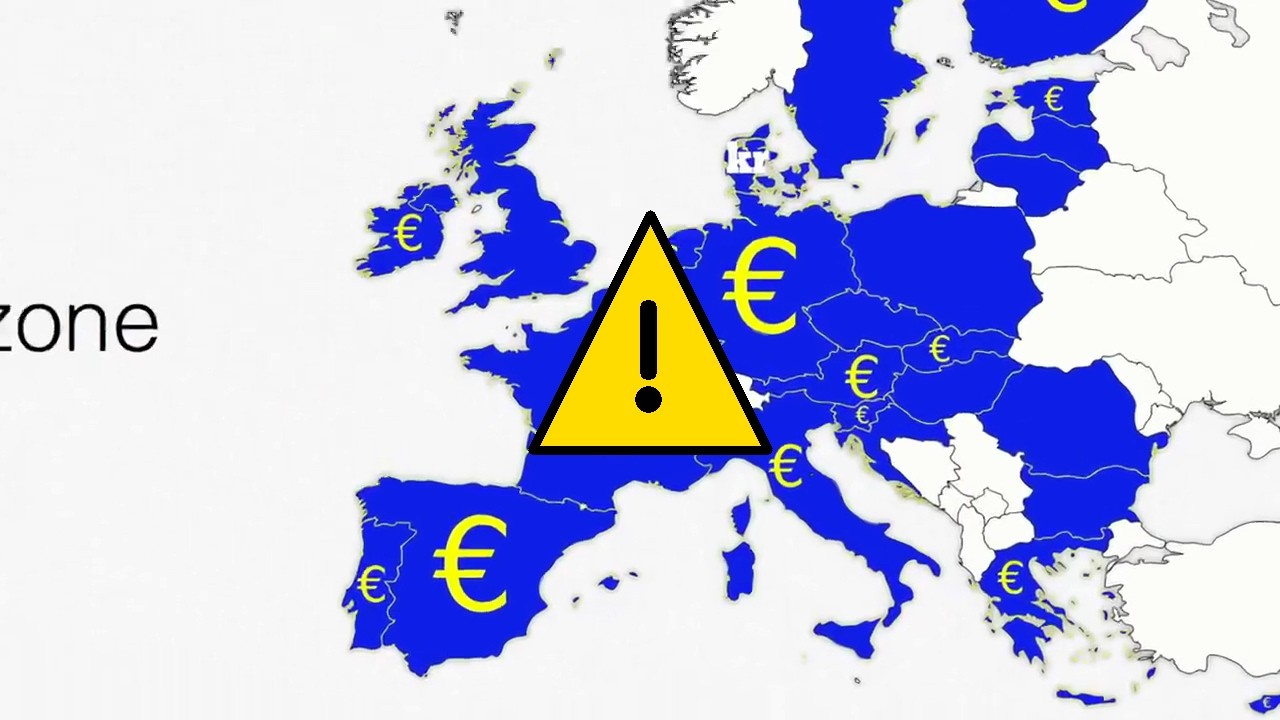
CGP Grey
Pervasive national opt-outs and lingering colonial holdings reduce European integration to an asymmetric patchwork of contradictory border, citizenship, and monetary rules rather than a uniform union.
AI-assisted summary of Europe Is Actually Five Different Groups of Countries — original source. Check the original for full context.
Source published:
Key ideas
- The European political landscape is defined by overlapping frameworks—including the European Union, the EEA, Schengen, and the Eurozone—riddled with exceptions and asterisks. (0:00)
- EEA members Norway, Iceland, and Liechtenstein pay EU dues and adopt laws without voting rights in exchange for single market access and exemptions on agriculture and fisheries. (0:00)
- Border and currency agreements do not align neatly: Schengen eliminates internal border checks across most of the continent while the UK and Ireland opt out, and the Eurozone excludes several EU nations while licensing four sovereign microstates to mint Euros. (1:47)
- Imperial legacies extend the EU's reach worldwide through directly integrated Outermost Regions like French Guiana, alongside semipermeable Overseas Territories where free movement rights are non-reciprocal. (3:33)
Detailed notes
## Background Published by CGP Grey on YouTube on July 2, 2013, this video examines the geopolitical complexity of European institutions. The description outlines the subject simply as 'The European Union with a lot of asterisks.'
## TL;DR Although the European Union appears to be a uniform political bloc at first glance, its actual implementation is defined by overlapping agreements and institutional exceptions. Frameworks like the European Economic Area, the Schengen Area, and the Eurozone allow both EU members and non-members to opt in or out of key policies, including free movement, passport control, and common currency rules. In addition, lingering colonial ties extend these complexities globally through fully integrated Outermost Regions and semipermeable Overseas Territories. Together, these boundless footnotes demonstrate that European integration functions as an intricate patchwork of historical compromises rather than a single cohesive entity.
## Atmosphere & style The presentation delivers CGP Grey's characteristic fast-paced, witty, and sharply analytical style, untangling bureaucratic webs with crisp clarity and dry humor. It feels like an energetic guided tour through an international legal maze, reveling in the absurdity of diplomatic paradoxes, bizarre jurisdictional boundaries, and endless footnotes. The brisk narrative momentum keeps dense political and geographic distinctions entertaining, engaging, and remarkably easy to parse.
## Bulletin - [00:00](https://www.youtube.com/watch?v=O37yJBFRrfg&t=0s) The European political landscape is defined by overlapping frameworks—including the European Union, the EEA, Schengen, and the Eurozone—riddled with exceptions and asterisks. - [00:00](https://www.youtube.com/watch?v=O37yJBFRrfg&t=0s) EEA members Norway, Iceland, and Liechtenstein pay EU dues and adopt laws without voting rights in exchange for single market access and exemptions on agriculture and fisheries. - [01:47](https://www.youtube.com/watch?v=O37yJBFRrfg&t=107s) Border and currency agreements do not align neatly: Schengen eliminates internal border checks across most of the continent while the UK and Ireland opt out, and the Eurozone excludes several EU nations while licensing four sovereign microstates to mint Euros. - [03:33](https://www.youtube.com/watch?v=O37yJBFRrfg&t=213s) Imperial legacies extend the EU's reach worldwide through directly integrated Outermost Regions like French Guiana, alongside semipermeable Overseas Territories where free movement rights are non-reciprocal.
## Key takeaways - [00:00](https://www.youtube.com/watch?v=O37yJBFRrfg&t=0s) Core European Union membership rests on three tenets: contributing membership dues, voting on binding joint laws, and granting reciprocal citizenship and free movement. - [00:00](https://www.youtube.com/watch?v=O37yJBFRrfg&t=0s) The European Economic Area (EEA) integrates Norway, Iceland, and Liechtenstein into the free movement zone alongside the EU. - [00:00](https://www.youtube.com/watch?v=O37yJBFRrfg&t=0s) EEA members must pay fees and obey EU rules despite lacking voting representation, but they retain sovereign control over domestic farming and fishing policies. - [01:47](https://www.youtube.com/watch?v=O37yJBFRrfg&t=107s) The Schengen Area dismantles internal border checkpoints across mainland Europe, allowing passport-free travel between participating states. - [01:47](https://www.youtube.com/watch?v=O37yJBFRrfg&t=107s) Switzerland is a Schengen member despite not belonging to the EU, allowing free entry to visitors while denying them automatic rights to permanent residency. - [01:47](https://www.youtube.com/watch?v=O37yJBFRrfg&t=107s) The United Kingdom and Ireland opted out of Schengen, maintaining physical border controls and passport checks due to their island geography. - [01:47](https://www.youtube.com/watch?v=O37yJBFRrfg&t=107s) Adopting the Euro is nominally mandatory for qualifying EU members, but Denmark, Sweden, and the United Kingdom secured formal treaty opt-outs. - [01:47](https://www.youtube.com/watch?v=O37yJBFRrfg&t=107s) Four European microstates—Andorra, San Marino, Monaco, and Vatican City—are entirely outside the EU but hold bilateral agreements to mint and circulate the Euro. - [03:33](https://www.youtube.com/watch?v=O37yJBFRrfg&t=213s) Outermost Regions—such as Spain's Canary Islands and Portugal's Azores and Madeira—are legally integral parts of their home countries and directly part of the EU. - [03:33](https://www.youtube.com/watch?v=O37yJBFRrfg&t=213s) French overseas departments like French Guiana and Réunion are treated identically to Paris under French law, extending the EU's reach across one-third of the globe's circumference. - [03:33](https://www.youtube.com/watch?v=O37yJBFRrfg&t=213s) Overseas Territories governed by Denmark, France, the Netherlands, and the UK remain outside the EU proper and are largely exempt from EU law. - [03:33](https://www.youtube.com/watch?v=O37yJBFRrfg&t=213s) Overseas Territories act as a semipermeable membrane: their residents hold EU citizenship and can settle on the European mainland, but mainland citizens lack automatic reciprocal settlement rights. - [03:33](https://www.youtube.com/watch?v=O37yJBFRrfg&t=213s) Special anomalies further complicate European geography, including the monastic exclusion of women on Mount Athos and the complete forfeiture of EU citizenship in the Faroe Islands.
## Detailed walkthrough ### [00:00](https://www.youtube.com/watch?v=O37yJBFRrfg&t=0s) Defining the EU and the European Economic Area
Locating the European Union on a map seems straightforward at first glance, but just like the physical continent of Europe, the political entity possesses distinctly fuzzy edges. At its core are its official sovereign members, which span from heavily populated nations down to tiny island states: Germany, France, the United Kingdom, Italy, Spain, Poland, Romania, the Kingdom of the Netherlands, Greece, Belgium, Portugal, the Czech Republic, Hungary, Sweden, Austria, Bulgaria, Denmark, Slovakia, Finland, Ireland, Croatia, Lithuania, Latvia, Slovenia, Estonia, Cyprus, Luxembourg, and Malta. While other candidate nations wait in various stages of accession to push those borders out even further, understanding the basic internal machinery requires only three core principles: member nations pay membership dues, they vote on laws that all members are bound to follow, and every citizen of a member nation automatically receives European Union citizenship. This grant of citizenship allows individuals to move freely, work, or retire across any member state—a welcome perk for anyone feeling their homeland is too hot, too cold, too large, or too small.
```mermaid flowchart TD accTitle: The Interlocking European Agreements accDescr: Diagram showing the overlapping relationships between the EU, EEA, Schengen Area, and Eurozone.
subgraph EuropeAgreements["European Institutional Groups"] EU["European Union (EU)<br/>Votes on laws, pays dues, common citizenship"] EEA["European Economic Area (EEA)<br/>Norway, Iceland, Liechtenstein<br/>Free movement, pay fees, skip farm/fish rules"] Schengen["Schengen Area<br/>Includes Switzerland; excludes UK & Ireland<br/>Abolished internal border controls"] Eurozone["Eurozone<br/>Common Euro currency<br/>Opt-outs: UK, Sweden, Denmark<br/>Monetary pacts: Microstates"] end
EU --- EEA EU --- Schengen EU --- Eurozone ```
However, European diplomacy is defined by its love of exceptions and footnotes. As CGP Grey remarks, “Well, get used to it: Europe loves asterisks that add exceptions to complicated agreements.” The primary example of this is the European Economic Area (EEA), which brings non-EU members Norway, Iceland, and Liechtenstein into the fold. Under the EEA agreement, citizens can freely move and reside between these three countries and the EU. In exchange for this freedom of movement, these nations must pay membership fees to the European Union and adhere to EU legislation, despite lacking any voting power or representation to shape the rules imposed on them. While this might appear to be an unfavorable compromise, it contains a vital asterisk: EEA members receive an exemption from specific EU policies, most notably farming and fishing regulations—matters of vital national interest to a country like Iceland.
[01:47](https://www.youtube.com/watch?v=O37yJBFRrfg&t=107s) The Schengen Area, the Eurozone, and Internal Opt-Outs
Outside the EEA framework stands Switzerland, a nation famously dedicated to neutrality and independence, yet tied into continental mobility through the Schengen Area. For travelers accustomed to heavily fortified, strictly monitored national borders, the Schengen Area represents a stark departure: participating nations take an entirely relaxed approach to border enforcement, eliminating checkpoint officers and passport control altogether. A traveler can walk unimpeded all the way from Lisbon to Tallinn without carrying identification or explaining whether their journey is for business or pleasure. Because Switzerland participates in Schengen without joining the European Union, cross-border travelers face a distinct paradox: non-Swiss travelers can enter easily at any time, but they have no legal right to settle permanently.
Not all European Union members embrace this boundary-free philosophy. The United Kingdom and Ireland actively opt out of Schengen, arguing that island geography demands a separate status; anyone traveling to these territories must present a passport and state a valid purpose for entry.
```mermaid flowchart LR accTitle: Border and Currency Arrangements accDescr: Flowchart illustrating the split between border-free travel and monetary union participation.
subgraph BorderPolicy["Border Framework"] SchengenZone["Schengen Zone<br/>(Mainland EU + Switzerland)"] BorderIslands["Passports Required<br/>(United Kingdom & Ireland)"] end
subgraph CurrencyPolicy["Currency Framework"] EuroZone["Eurozone Users<br/>(EU majority + 4 Microstates)"] EuroOptOut["Treaty Opt-Outs<br/>(UK, Sweden, Denmark)"] end ```
The division within the EU deepens over monetary integration. While the Eurozone links the majority of EU members under a shared currency, adopting the Euro requires meeting stringent financial criteria. Most non-Euro members are legally obligated to abandon their local currencies once they satisfy those economic targets, but Denmark, Sweden, and the United Kingdom secured treaty asterisks granting them permanent opt-outs. Conversely, four sovereign European microstates—Andorra, San Marino, Monaco, and Vatican City—maintain a mirror-image asterisk: despite not belonging to the European Union at all, they hold bilateral agreements granting them the legal right to mint and use the Euro as their official currency.
- Membership dues and common legislation define the core EU, while the EEA exchanges fee payments and rule adoption for market access without farming and fishing constraints. - The Schengen Agreement removes passport controls across most of the continent, though the UK and Ireland enforce standard border controls. - The Euro is the common currency of the Eurozone, but treaty exemptions protect the independent currencies of the UK, Sweden, and Denmark. - Four non-EU microstates (Andorra, San Marino, Monaco, and Vatican City) hold legal authorization to produce and circulate Euros.
[03:33](https://www.youtube.com/watch?v=O37yJBFRrfg&t=213s) Outermost Regions, Overseas Territories, and Lingering Asterisks
The geography of the European Union extends far past the European continent due to lingering imperial histories. When European powers built colonial empires, they incorporated or retained scattered territories across the globe. Portugal and Spain never relinquished their Atlantic possessions: Portugal retains the Azores and Madeira, while Spain holds the Canary Islands off the African coast. Because these territories are legally integral parts of Spain and Portugal, they are incorporated directly into the European Union.
France takes this integration even further. As CGP Grey puts it, France acts as “the queen of not-letting go.” France maintains full sovereignty over French Guiana in South America, Réunion off the coast of Madagascar, and multiple Caribbean islands. Under French law, these lands are considered just as fundamentally French as Paris itself. By treating these territories as direct extensions of the home nation, France single-handedly stretches the footprint of the European Union across one-third of the circumference of the globe. Together, these Spanish, Portuguese, and French areas form the EU's "Outermost Regions."
```mermaid flowchart TD accTitle: Territorial Classifications of Non-European Holdings accDescr: Flowchart contrasting fully integrated Outermost Regions with semipermeable Overseas Territories.
subgraph ImperialLegacy["Imperial Holdings"] direction TB subgraph Outermost["Outermost Regions (Full EU Members)"] FR["France: French Guiana, Réunion, Caribbean islands"] ES["Spain: Canary Islands"] PT["Portugal: Azores & Madeira"] end subgraph Overseas["Overseas Territories (Not in EU Proper)"] OCT["UK, Netherlands, Denmark, France dependencies<br/>Semipermeable membrane: Residents hold EU citizenship,<br/>EU laws mostly do not apply,<br/>Mainland EU citizens cannot freely settle"] end end ```
In contrast to direct integration, the United Kingdom, the Netherlands, Denmark, and France also oversee complex collections of "Overseas Territories." These holdings are formally excluded from the EU proper, functioning instead as a legal labyrinth of exceptions: - In general, European Union legislation does not apply inside these territories. - The inhabitants usually carry the national citizenship of their parent nation, meaning they are recognized as EU citizens and can move freely to the European mainland. - Conversely, mainland European Union citizens do not possess an automatic reciprocal right to pack up and move to these overseas lands.
This asymmetric arrangement turns these territories into a semipermeable membrane around the European Union. Beyond these broad structures lies an endless catalog of singular anomalies: the Isle of Man's unique status, the Spanish exclaves in North Africa, Gibraltar voting with Southwest England, the autonomous monastic peninsula of Mount Athos in Greece where women are banned, Caribbean islands like Saba that are municipalities of the Netherlands yet remain outside the EU, and Denmark's Faroe Islands, where residents forfeit EU citizenship status entirely. These boundless asterisks demonstrate that European integration is an intricate patchwork of historical compromises rather than a uniform union.
## Notable quotes > [00:00](https://www.youtube.com/watch?v=O37yJBFRrfg&t=0s) Europe loves asterisks that add exceptions to complicated agreements. — CGP Grey
## Mentioned CGP Grey, European Union, European Economic Area, Schengen Area, Eurozone, Germany, France, United Kingdom, Italy, Spain, Poland, Romania, Netherlands, Greece, Belgium, Portugal, Czech Republic, Hungary, Sweden, Austria, Bulgaria, Denmark, Slovakia, Finland, Ireland, Croatia, Lithuania, Latvia, Slovenia, Estonia, Cyprus, Luxembourg, Malta, Norway, Iceland, Liechtenstein, Switzerland, Andorra, San Marino, Monaco, Vatican City, Azores, Madeira, Canary Islands, French Guiana, Réunion, Isle of Man, Gibraltar, Mount Athos, Saba, Faroe Islands
## Video description The European Union with a lot of asterisks.
Support these videos: https://www.patreon.com/cgpgrey
[Source](https://www.youtube.com/watch?v=O37yJBFRrfg)