Apple Software Chief Rejects Backdoor Claims Over Child-Safety Scans
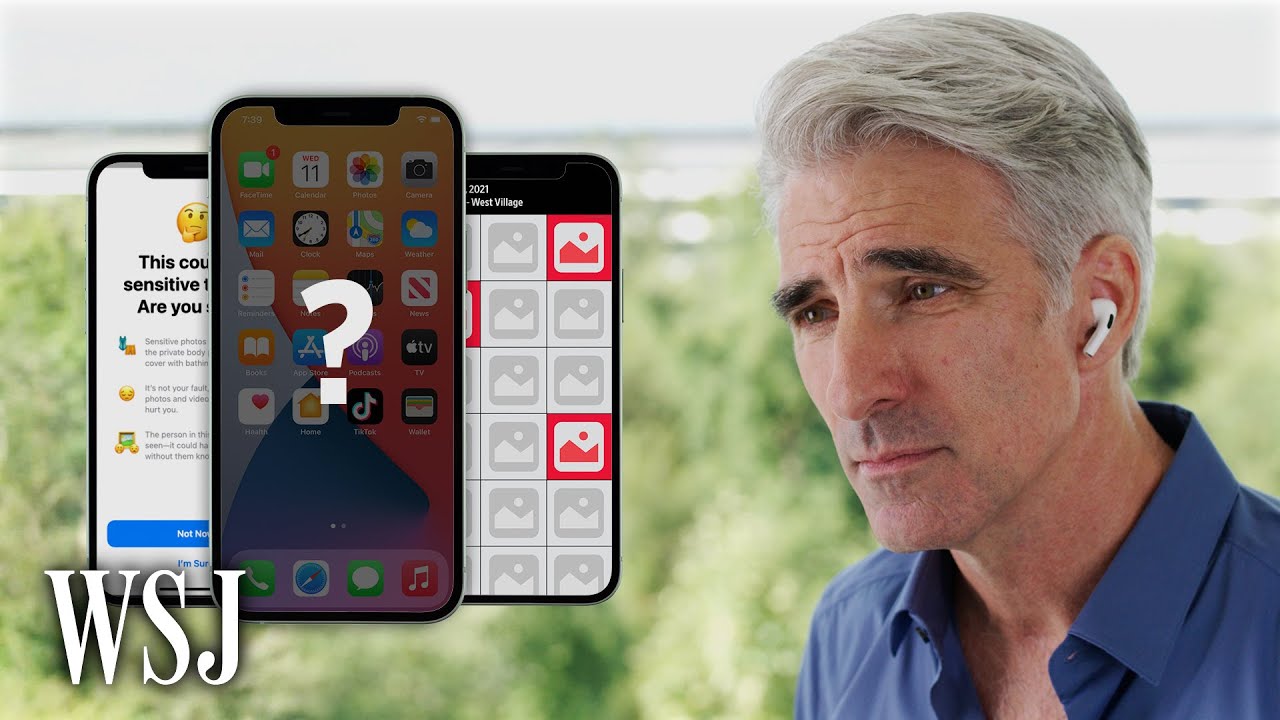
Apple’s Software Chief Explains ‘Misunderstood’ iPhone Child-Protection Features (Exclusive) | WSJ — The Wall Street Journal

The Wall Street Journal

Apple software chief Craig Federighi insists the company's child-protection tool is not an on-device surveillance backdoor because neural hash matching operates exclusively on photos uploaded to iCloud and requires roughly 30 confirmed matches before Apple can decrypt any account data.

AI-assisted summary of Apple’s Software Chief Explains ‘Misunderstood’ iPhone Child-Protection Features (Exclusive) | WSJ — original source. Check the original for full context.

Source published:

Key ideas

  • Apple software chief Craig Federighi conceded that simultaneously announcing two separate child safety features caused widespread public confusion and fueled the false narrative that iPhones were being scanned at rest. (0:00)
  • Apple's CSAM detection pipeline relies on on-device neural hashes and encrypted safety vouchers, triggering human review and law enforcement referral only after an account hits a threshold of around 30 matching illegal images. (1:37)
  • Federighi rejected characterizations of the system as a backdoor, emphasizing that a single universal global OS build allows external security researchers to audit the hash database against government manipulation. (5:49)
  • The Communication Safety feature in Messages operates entirely on-device via machine learning classifiers for managed child accounts, completely separate from the iCloud CSAM hash matching infrastructure. (8:04)

Detailed notes

## Background Published on YouTube by The Wall Street Journal on August 13, 2021, this video features an exclusive interview conducted by personal tech columnist Joanna Stern. According to the description, Apple software chief Craig Federighi sits down to defend and explain Apple's controversial new child-protection tools—addressing technical mechanisms like neural hashes and safety vouchers amid widespread public backlash and confusion.

## TL;DR In the wake of intense privacy outcry, Apple software chief Craig Federighi defends the company's dual child-protection initiatives, conceding that announcing both simultaneously led to widespread misunderstandings. He explains that the iCloud CSAM detection tool does not scan local device storage at rest, but instead utilizes client-side neural hashing and threshold-based encrypted safety vouchers for photos uploaded to iCloud before triggering human review. Federighi also distinguishes this system from the on-device machine learning nudity detection used in Messages for child accounts, rejecting accusations that Apple created a surveillance backdoor or compromised device ownership.

## Atmosphere & style The interview carries an intense, high-stakes journalistic tension balanced by Federighi’s poised, highly technical defense. Joanna Stern presses firmly with direct, skeptical questions that channel user anxieties and Apple's own past privacy marketing, preventing the conversation from slipping into corporate spin. Watching it feels like a transparent, rigorous post-mortem on a public relations crisis, marked by serious philosophical debate over data sovereignty, encryption, and the boundaries of corporate control.

## Bulletin - [00:00](https://www.youtube.com/watch?v=OQUO1DSwYN0&t=0s) Apple software chief Craig Federighi conceded that simultaneously announcing two separate child safety features caused widespread public confusion and fueled the false narrative that iPhones were being scanned at rest. - [01:37](https://www.youtube.com/watch?v=OQUO1DSwYN0&t=97s) Apple's CSAM detection pipeline relies on on-device neural hashes and encrypted safety vouchers, triggering human review and law enforcement referral only after an account hits a threshold of around 30 matching illegal images. - [05:49](https://www.youtube.com/watch?v=OQUO1DSwYN0&t=349s) Federighi rejected characterizations of the system as a backdoor, emphasizing that a single universal global OS build allows external security researchers to audit the hash database against government manipulation. - [08:04](https://www.youtube.com/watch?v=OQUO1DSwYN0&t=484s) The Communication Safety feature in Messages operates entirely on-device via machine learning classifiers for managed child accounts, completely separate from the iCloud CSAM hash matching infrastructure.

## Key takeaways - [00:00](https://www.youtube.com/watch?v=OQUO1DSwYN0&t=0s) Craig Federighi acknowledged that rolling out iCloud CSAM detection and Messages Communication Safety together created severe messaging confusion and intense backlash from civil-liberties groups. - [01:37](https://www.youtube.com/watch?v=OQUO1DSwYN0&t=97s) Apple pushed back against claims of local device surveillance, clarifying that image hashing is strictly tied to photos queued for upload to iCloud Photo Library. - [01:37](https://www.youtube.com/watch?v=OQUO1DSwYN0&t=97s) Unlike competitors like Google and Microsoft that scan cloud storage repositories directly, Apple designed a split architecture using client-side hashing and cryptographic cloud validation. - [01:37](https://www.youtube.com/watch?v=OQUO1DSwYN0&t=97s) Images uploaded to iCloud generate an on-device neural hash compared against a local NCMEC database, wrapping results into encrypted safety vouchers. - [01:37](https://www.youtube.com/watch?v=OQUO1DSwYN0&t=97s) Safety vouchers cannot be decrypted by Apple until an individual account reaches a threshold of approximately 30 matches of known CSAM material. - [01:37](https://www.youtube.com/watch?v=OQUO1DSwYN0&t=97s) Once the threshold is reached, Apple human moderators manually inspect the decrypted matches before escalating verified cases to NCMEC and law enforcement. - [05:49](https://www.youtube.com/watch?v=OQUO1DSwYN0&t=349s) Images kept solely on local device storage, in web browsers, or in third-party apps like Telegram are never processed by the CSAM upload pipeline. - [05:49](https://www.youtube.com/watch?v=OQUO1DSwYN0&t=349s) Federighi firmly rejected the accusation that the system creates an encryption backdoor, asserting that external auditability prevents clandestine surveillance. - [05:49](https://www.youtube.com/watch?v=OQUO1DSwYN0&t=349s) A universal global operating system build ensures no foreign or regional government can secretly inject customized target hashes into specific territories. - [08:04](https://www.youtube.com/watch?v=OQUO1DSwYN0&t=484s) Communication Safety in Messages uses local machine learning to detect nudity on child accounts, completely disconnected from the iCloud hash-matching database. - [08:04](https://www.youtube.com/watch?v=OQUO1DSwYN0&t=484s) Detected explicit images in Messages are blurred on the child's device, with optional Family Sharing notifications sent to parents for children aged 12 and under. - [08:04](https://www.youtube.com/watch?v=OQUO1DSwYN0&t=484s) No image content, blur notifications, or detection logs from Communication Safety are transmitted to Apple servers during normal operation. - [10:27](https://www.youtube.com/watch?v=OQUO1DSwYN0&t=627s) Addressing 1984-style Big Brother surveillance fears, Federighi maintained that users own their hardware and that the scanning system only triggers when electing to use iCloud storage. - [10:27](https://www.youtube.com/watch?v=OQUO1DSwYN0&t=627s) The controversy highlighted the broad technical leverage Apple maintains over its ecosystem, fueling ongoing debate over mission creep and device autonomy.

## Detailed walkthrough ### [00:00](https://www.youtube.com/watch?v=OQUO1DSwYN0&t=0s) Public Backlash and the “Jumbled” Rollout

Apple software chief Craig Federighi acknowledges right away that the company’s recent announcement of its new child-protection tools went poorly. As he admits to WSJ personal tech columnist Joanna Stern, “I grant you, in hindsight, introducing these two features at the same time was a recipe for this kind of confusion.” Apple introduced two distinct initiatives simultaneously: one system designed to detect known child sexual abuse material (CSAM) being uploaded to iCloud, and a separate messaging feature built to flag sexually explicit images sent to or from children. Combining both features into a single release triggered swift, fierce backlash across the tech community and civil-liberties organizations, who feared Apple was building invasive surveillance mechanisms directly into iPhones.

Stern points out that the uproar did not stem from anyone defending child sexual abuse, but rather from the perception that Apple had crossed an unacceptable privacy line by scanning users' personal devices. Federighi identifies the initial narrative as the core problem: “I do believe the soundbite that got out early was, oh my God, Apple is scanning my phone for images. This is not what is happening.” To unpack the confusion, Stern separates the discussion into two distinct halves: first, the mechanism for flagging CSAM in iCloud Photo Library, and second, the child-safety features built into Messages.

[01:37](https://www.youtube.com/watch?v=OQUO1DSwYN0&t=97s) How Apple Detects CSAM: The On-Device Hash and Safety Vouchers

Addressing Stern’s direct question about how Apple searches for illegal material, Federighi pushes back on the premise, arguing that Apple is not scanning iPhones at rest. Instead, the system is designed to detect illegal material intended for storage in iCloud. Other major technology companies (such as Google, Facebook, and Microsoft) analyze and scan every file residing in their cloud storage. Apple wanted to detect CSAM without performing broad cloud-side scans of user libraries, developing an architecture that uses both on-device cryptography and cloud-side validation.

When a user enables iCloud Photo Library, the upload pipeline computes an identifier called a "neural hash" on the device for each outbound image. This hash is compared against a local database derived from the National Center for Missing and Exploited Children (NCMEC). Rather than revealing a match immediately, the phone wraps the result into an encrypted payload called a "safety voucher." Neither the device nor Apple knows at that moment whether an image matched illegal material. The voucher is uploaded to iCloud alongside the encrypted photo. Only when an account accumulates a threshold—around 30 matches of known CSAM—can Apple mathematically decode the vouchers, exposing only the flagged illegal images to human moderators for manual verification before reporting the account to law enforcement.

```mermaid flowchart TD accTitle: Apple CSAM Detection Architecture accDescr: Step-by-step diagram showing on-device hashing, voucher generation, cloud aggregation, and human review.

subgraph Device["On-Device Pipeline"] A["Image to upload to iCloud"] --> B["Compute Neural Hash"] B --> C["Compare with on-device NCMEC database"] C --> D["Generate encrypted Safety Voucher"] end

subgraph Cloud["iCloud Processing"] D --> E["Upload photo and voucher"] E --> F{"Threshold reached?\n(~30 matches)"} F -->|"No"| G["Vouchers remain sealed; no data learned"] F -->|"Yes"| H["Decrypt safety vouchers for matched images only"] end

subgraph Human["Review & Escalation"] H --> I["Apple human moderators inspect matches"] I --> J["Escalate to NCMEC and authorities"] end ```

- Competitors scan cloud repositories directly; Apple’s architecture splits detection between client-side hashing and cloud-side cryptographic math. - The system checks exclusively against known CSAM hashes provided by NCMEC; it does not analyze casual family snapshots (such as a baby in a bathtub) or general adult pornography. - The threshold required before Apple's cloud can inspect any account details is approximately 30 matching vouchers. - If the threshold is never met, the cryptographic vouchers cannot be decrypted, leaving the contents unknown to Apple.

[05:49](https://www.youtube.com/watch?v=OQUO1DSwYN0&t=349s) Addressing the "Backdoor" Accusation and Auditability

Stern challenges Federighi on Apple's core brand promise, reminding him that Apple has spent years marketing the iPhone as an impenetrable vault where user data stays private and local. By running scanning logic inside the operating system, Stern argues, Apple gives users the unnerving impression that it can reach onto their physical hardware. Federighi calls that reaction “a common but really profound misunderstanding,” stressing that the process runs strictly within the iCloud Photo Library upload queue. If an image is stored in messages, third-party apps like Telegram, or downloaded via web browsing—and not uploaded to iCloud Photo Library—the pipeline never touches it.

When Stern asks whether Apple faced government pressure to deploy this technology now, Federighi denies it, insisting Apple acted simply because its engineering team finally devised a cryptographic method that avoided wholesale data scanning. Stern follows up by quoting CEO Tim Cook's public stance: “We've spoken out time and again for strong encryption without backdoors, recognizing that security is the foundation of privacy.” Confronted with the charge that this mechanism effectively functions as a backdoor, Federighi rejects the term entirely: “Think in no way is this a backdoor. I don't understand. I really don't understand that characterization.” He emphasizes that because the hash database is bundled directly on the device as a single global software build—identical in the United States, Europe, and China—it provides unprecedented transparency.

- Apple distributes a single universal operating system image globally, meaning no sovereign government can secretly insert regional target hashes without detection. - Multiple layers of external auditability are built in so security researchers can verify that Apple cannot alter the hash list to target political or non-CSAM material. - Federighi argues that client-side software is more verifiable than closed, opaque server-side cloud scanners run by competitors.

[08:04](https://www.youtube.com/watch?v=OQUO1DSwYN0&t=484s) Communication Safety in Messages: On-Device Machine Learning

Stern transitions to the second controversial feature, known as Communication Safety in Messages, asking for a plain-language explanation without industry jargon. Federighi clarifies that this tool operates under a completely different architecture from the iCloud CSAM system: “That's right, it is 100% different.” Rather than matching cryptographic hashes of known illegal files against a database, Communication Safety uses an on-device machine learning classifier to detect potential nudity in incoming or outgoing messages on a child’s account.

Under this feature, if an incoming message contains detected nudity, the image is automatically blurred, and the child is presented with a warning explaining that the content may be unsafe. If a child aged 12 or under chooses to bypass the warning and view the photograph, the system can notify the parents via Family Sharing (if the parent opted into that notification setting). Federighi explains that this protection is aimed at predatory grooming, noting that “parents more than anyone are in the best position to parent.” Stern asks about the classifier's accuracy and whether it might misidentify innocent objects like a rocket ship. Federighi acknowledges that machine learning classifiers can occasionally make mistakes, but he emphasizes that internal testing proved it remarkably difficult to fool.

- The Messages feature relies on local, on-device machine learning; no photos, blur notifications, or match data are transmitted to Apple or cloud servers during normal operation. - The feature is designed for managed child accounts within an Apple Family Sharing group, not adult accounts. - Parental alerts occur for children 12 and under only after explicit warnings when the child insists on viewing or sending the flagged material. - Federighi notes that during testing, Apple engineers struggled to find non-explicit images capable of tricking the vision model into a false positive.

[10:27](https://www.youtube.com/watch?v=OQUO1DSwYN0&t=627s) Big Brother, Phone Ownership, and the Cloud Storage Clarification

The announcement of Apple’s child safety measures sparked immediate alarm among privacy advocates and researchers, who argued that Apple was overreaching, building a potential backdoor, and establishing a scanning mechanism susceptible to severe abuse. Thousands of individuals and organizations signed an open letter protesting the tools. Joanna Stern brings up the philosophical core of the controversy by invoking Apple's own marketing history, asking Craig Federighi directly who actually owns the device: “Who owns this phone? There's this famous Apple ad, the 1984 ad where Apple is literally bashing Big Brother. Yet with these updates, there's this thought that Apple can reach into our pocket and change our phone in significant ways.”

Craig Federighi rejects the notion that Apple is violating device autonomy, insisting that users remain in full control of their hardware: “I think our customers own their phones. For sure.” He stresses that public anxiety was driven by an inaccurate narrative that Apple had installed a sweeping on-device snooping engine. He argues that users need to keep in mind that the system activates only when someone voluntarily uses Apple's online infrastructure: “I do believe the soundbite that got out early was, oh my God, Apple is scanning my phone for images. This is not what is happening. This is about images that are being stored in the cloud in an architecture for identifying in the most privacy-protecting way we can imagine performing that process and in the most auditable and verifiable way possible.”

In her closing reflection, Stern acknowledges the dual nature of the rollout: while the software could deliver potent capabilities to combat child sexual abuse material and protect children, the uproar serves as a stark reminder of the immense control Apple and its executives hold over the devices people buy, carry in their pockets, and rely on daily.

- **Advocate pushback**: Critics raised alarms that the system created an architecture primed for mission creep, foreign government pressure, and surveillance backdoors. - **Scope of the system**: Apple maintains the CSAM hash matching is strictly tied to iCloud Photos synchronization, operating only on photos staged for Apple's cloud servers rather than scanning general local device storage.

## Notable quotes > [05:49](https://www.youtube.com/watch?v=OQUO1DSwYN0&t=349s) We've spoken out time and again for strong encryption without backdoors, recognizing that security is the foundation of privacy. — Tim Cook

## Mentioned Apple, Craig Federighi, Joanna Stern, Tim Cook, The Wall Street Journal, National Center for Missing and Exploited Children (NCMEC), iCloud, iCloud Photo Library, Messages, Communication Safety, Family Sharing, Google, Facebook, Microsoft, Telegram, 1984 ad

## Video description Neural Hashes, Safety Vouchers and More Fun Terms Explained

Apple’s tools for flagging child pornography and identifying explicit photos in kids’ messages caused backlash and confusion. In an exclusive interview, Apple software chief Craig Federighi sat down with WSJ’s Joanna Stern to defend the technology and explain how it will work. Illustration: Laura Kammermann/The Wall Street Journal

Personal Technology With Joanna Stern Technology is overwhelming and making decisions about what gadget to buy is harder than ever. WSJ personal tech columnist Joanna Stern makes it all a bit easier in her lively and informative videos.

More from the Wall Street Journal: Visit WSJ.com: http://www.wsj.com Visit the WSJ Video Center: https://wsj.com/video

On Facebook: https://www.facebook.com/pg/wsj/videos/ On Twitter: https://twitter.com/WSJ On Snapchat: https://on.wsj.com/2ratjSM

#WSJ #Apple #Privacy

[Source](https://www.youtube.com/watch?v=OQUO1DSwYN0)

中文简报

苹果软件主管驳斥儿童安全扫描功能属于“后门”的指责 苹果软件主管克雷格·费德里吉坚称,该公司的儿童保护工具并非设备端监控后门,因为神经哈希匹配仅针对上传至iCloud的照片运行,且需要约30次确认匹配后苹果才能解密任何账户数据。 在引发强烈的隐私争议后,苹果软件主管克雷格·费德里吉为公司的两项儿童保护举措进行了辩护,并承认同时宣布这两项举措导致了广泛的误解。他解释称,iCloud的CSAM检测工具不会扫描本地设备的静态存储,而是在照片上传至iCloud之前,利用客户端神经哈希和基于阈值的加密安全凭证进行处理,之后才会触发人工审查。费德里吉还将该系统与“信息”应用中针对儿童账户的设备端机器学习裸露内容检测区分开来,驳斥了关于苹果创建监控后门或削弱设备所有权的指责。 苹果软件主管克雷格·费德里吉承认,同时宣布两项独立的儿童安全功能引发了广泛的公众困惑,并加剧了关于iPhone静态存储受到扫描的不实说法。 (0:00) 苹果的CSAM检测流程依赖于设备端神经哈希和加密安全凭证,仅在账户达到约30张匹配非法图片的阈值后,才会触发人工审查并移交执法部门。 (1:37) 费德里吉驳斥了将该系统定性为后门的说法,并强调全球通用的单一操作系统版本允许外部安全研究人员对哈希数据库进行审计,以防政府篡改。 (5:49) “信息”应用中的通信安全功能完全通过设备端机器学习分类器针对受管理的儿童账户运行,与iCloud CSAM哈希匹配架构完全分离。 (8:04)

Detailed notes — zh

## Background 该视频由《华尔街日报》(The Wall Street Journal)于 2021 年 8 月 13 日发布在其官方 YouTube 频道上。视频内容为科技专栏作家 Joanna Stern 对苹果软件工程高级副总裁 Craig Federighi 进行的独家专访,旨在探讨与澄清苹果此前宣布的儿童性虐待材料(CSAM)检测与信息安全功能所引发的巨大隐私争议与公众误解。 ## TL;DR 专访中,Craig Federighi 承认苹果同时宣布 CSAM 检测与 iMessage 儿童防裸露两项功能在沟通上引发了混乱,但他坚决否认苹果在本地手机上无差别扫描私人相册。他详细解释了 CSAM 检测仅在用户开启 iCloud 照片上传时触发,通过比对 NCMEC 数据库的神经哈希(Neural Hash)并生成安全凭证,只有在命中累积达到约 30 张阈值时才会在云端解密并触发人工审核;而 iMessage 的通信安全功能则是完全在本地运行的机器学习模型。针对外界对系统留有“后门”以及被极权政府滥用的担忧,Federighi 强调全球代码一致、架构不可篡改且支持独立审计,力证苹果并未逾越隐私底线。 ## Atmosphere & style 整场访谈充满交锋张力与严肃的辩护意味,Joanna Stern 提问犀利且直击要害,甚至搬出苹果经典的《1984》反极权广告来质问科技巨头的权力边界。Craig Federighi 则展现出防御性但极力保持克制与诚恳的态度,用生动的比喻和严密的技术逻辑试图拆解外界的恐慌情绪。观看体验宛如一场高层公关危机处置与技术哲学审判的碰撞,既有探讨系统漏洞时的幽默缓和,也始终笼罩着关于“谁真正拥有我们的手机”的深刻焦虑。 ## Bulletin - [00:00](https://www.youtube.com/watch?v=OQUO1DSwYN0&t=0s) 苹果软件工程高级副总裁 Craig Federighi 承认,同时推出 CSAM 检测和 iMessage 通信安全两项功能是引发公众混淆与抵触的沟通失误。 - [01:37](https://www.youtube.com/watch?v=OQUO1DSwYN0&t=97s) 苹果的 CSAM 检测机制并非无差别扫描本地手机相册,而仅在用户开启 iCloud 照片图库并将照片上传至云端的传输管道中触发神经哈希(Neural Hash)比对。 - [01:37](https://www.youtube.com/watch?v=OQUO1DSwYN0&t=97s) 系统设有严格的加密屏障与阈值机制,只有同一账户匹配约 30 张已知非法图像并生成安全凭证时,云端才能解密并交由人工审核上报,无法查看用户其他照片。 - [08:04](https://www.youtube.com/watch?v=OQUO1DSwYN0&t=484s) iMessage 的“通信安全”功能与 CSAM 检测完全独立,它专为儿童账户设计,完全在设备本地通过机器学习模型检测裸露内容,不上传任何云端数据。 - [05:49](https://www.youtube.com/watch?v=OQUO1DSwYN0&t=349s) 针对“后门”及政府滥用的质疑,Federighi 强调内置数据库全球统一且公开可审计,系统在数学架构上设计为杜绝任何外部政治施压或私自篡改。 ## Key takeaways - [00:00](https://www.youtube.com/watch?v=OQUO1DSwYN0&t=0s) 公众的主要恐慌并非反对打击儿童色情,而是担忧苹果打破一贯的隐私红线、将审查之手伸入用户的个人设备本地相册。 - [00:00](https://www.youtube.com/watch?v=OQUO1DSwYN0&t=0s) 苹果罕见承认公关与沟通策略存在失误,认为将两种运作逻辑完全不同的儿童保护功能打包发布是导致公众误解的直接诱因。 - [01:37](https://www.youtube.com/watch?v=OQUO1DSwYN0&t=97s) 与竞品在云端直接解密并分析全量照片的做法不同,苹果采用了基于密码学的“端云协同”神经哈希(Neural Hash)方案来保护隐私。 - [01:37](https://www.youtube.com/watch?v=OQUO1DSwYN0&t=97s) 若用户未开启 iCloud 照片图库备份功能,CSAM 检测流程将完全不会在设备上运行。 - [01:37](https://www.youtube.com/watch?v=OQUO1DSwYN0&t=97s) CSAM 检测数据库严格源自 NCMEC 等权威机构的已知确凿图像,绝不执行对婴儿沐浴照或普通成人裸照的通用内容分析。 - [01:37](https://www.youtube.com/watch?v=OQUO1DSwYN0&t=97s) 设备比对结果会被加密打包为“安全凭证”(Safety Voucher),且只有当该凭证在云端累积达到约 30 张的阈值时,苹果才能获知匹配结果并介入审核。 - [01:37](https://www.youtube.com/watch?v=OQUO1DSwYN0&t=97s) 即使达到审核阈值,苹果人工审核员也仅能解密查看命中的特定非法图像凭证,无法触碰或浏览用户的任何其他私人照片。 - [05:49](https://www.youtube.com/watch?v=OQUO1DSwYN0&t=349s) Federighi 坚决否认该技术属于“后门”,并强调此方案并非出于政府施压,而是苹果在强加密与打击犯罪之间取得的技术突破。 - [05:49](https://www.youtube.com/watch?v=OQUO1DSwYN0&t=349s) 内置哈希数据库随 iOS 系统向全球统一部署,防止任何特定国家或地区向数据库中私下塞入政治异见等非 CSAM 内容。 - [08:04](https://www.youtube.com/watch?v=OQUO1DSwYN0&t=484s) iMessage 通信安全功能属于端侧实时机器学习分类器,与 CSAM 云端比对机制在技术底层上完全独立,绝不向苹果服务器回传数据。 - [08:04](https://www.youtube.com/watch?v=OQUO1DSwYN0&t=484s) 当 12 岁及以下儿童在 iMessage 中执意查看被系统模糊处理的裸露图片时,系统会明确警示并将通知家长,以防止未成年人遭受诱导欺凌。 - [10:27](https://www.youtube.com/watch?v=OQUO1DSwYN0&t=627s) 面对《1984》式的“老大哥”监控指责和“谁真正拥有这台手机”的拷问,Federighi 重申用户绝对拥有自己的设备,新架构是在用户选择云存储时所能实现的最具隐私保护和可审计性的设计。 ## Detailed walkthrough ### [00:00](https://www.youtube.com/watch?v=OQUO1DSwYN0&t=0s) 舆论风暴与两项功能的“混为一谈” 苹果公司宣布推出用于打击儿童色情和保护未成年人的全新功能后,瞬间引发了巨大的舆论反弹与广泛困惑。苹果软件工程高级副总裁 Craig Federighi 在接受《华尔街日报》记者 Joanna Stern 专访时,罕见地承认了沟通上的失误:“I grant you, in hindsight, introducing these two features at the same time was a recipe for this kind of confusion.”(我向你承认,事后看来,同时推出这两项功能确实是导致这种混乱的根源。)公众的愤怒并非出于对打击儿童性虐待材料(CSAM)有异议,而是担忧苹果打破了长久以来的隐私界限,开始在用户的本地设备上扫描私人内容。 公众舆论迅速发酵,许多人认定苹果正在翻看用户的个人相册。对此,Craig Federighi 严正反驳了流传甚广的短平快观点:“I do believe the soundbite that got out early was, oh my God, Apple is scanning my phone for images. This is not what is happening.”(我确实相信早早传开的那句声音是:‘我的天哪,苹果正在我的手机里扫描照片。’实际情况根本不是这样。)为了厘清事实,专访将讨论拆分为两项本质完全不同的机制:其一是针对云端存储的已知 CSAM 识别系统,其二是针对信息应用中未成年人裸照拦截的保护机制。 - 苹果发布的两项独立功能: - **CSAM 检测**:旨在识别并向相关部门举报上传至 iCloud 照片库中的已知儿童性虐待材料。 - **信息安全(Communication Safety in Messages)**:旨在检测儿童通过 iMessage 发送或接收的包含裸露内容的图片。 - 用户反弹的核心焦点:认为苹果跨越了隐私红线,把审查监控的手伸进了本地个人手机里。 --- ### [01:37](https://www.youtube.com/watch?v=OQUO1DSwYN0&t=97s) 云端存储管道与神经哈希(Neural Hash)机制 在解释苹果到底如何在 iPhone 上寻找儿童色情内容时,Craig Federighi 直截了当地指出,这正是误解的根源所在:苹果并不是在 iPhone 上翻找儿童色情内容,而是针对存储在 iCloud 上的非法图像进行排查。与 Google、Facebook、微软等在云端直接解密并分析用户上传的每一张照片不同,苹果设计了一套“端云协同”的隐私架构。如果用户不开启 iCloud 照片图库功能,该流程完全不会运行;即使开启,也仅在照片上传到云端的那一刻触发多步骤算法。 这套系统的底层逻辑依托于美国国家失踪与被剥削儿童中心(NCMEC)维护的已知非法图像数据库。苹果将这些已知图像转换成密码学哈希字符串,即所谓的“神经哈希”(Neural Hash),并将该已知特征数据库内置在设备中。当用户上传照片至 iCloud 时,手机会计算该照片的哈希值,并与内置数据库做比对碰撞。碰后生成的数据并不直接暴露结果,连手机系统本身和苹果都无法得知是否命中。这些无法直接解读的加密数据被封装成“安全凭证”(Safety Voucher),随照片一同加密上传至 iCloud。 ```mermaid flowchart TD accTitle: CSAM 检测与安全凭证处理流程 accDescr: 展示用户照片在上传至 iCloud 时进行神经哈希比对并生成安全凭证,最终在云端达到阈值后触发人工审核的完整闭环。 subgraph Client["本地设备(iPhone)"] A["待上传照片"] --> B["计算 Neural Hash"] B --> C{"与本地 NCMEC 数据库交叉比对"} C --> D["生成加密的 Safety Voucher"] end subgraph Cloud["iCloud 云端"] D -->|"随照片一同上传"| E["存储安全凭证集合"] E --> F{"是否达到阈值?\n(约 30 张已知非法图像)"} F -->|"否"| G["保持加密锁定,苹果无法读取任何内容"] F -->|"是"| H["第二阶段解密计算,仅暴露命中图片凭证"] end subgraph Audit["人工审核与上报"] H --> I["苹果人工审核员验证"] I -->|"确认属实"| J["上报至 NCMEC 等执法机构"] end ``` - **比对性质**:仅比对数据库中已知的、确凿的儿童性虐待材料特征指纹,绝非通用内容分析(不会去识别普通家庭浴缸婴儿照,亦不识别其他成年人色情内容)。 - **隐私屏障与阈值机制**:在云端,只有同一个账户累积的安全凭证达到一定阈值(大约 30 张已知 CSAM 图像)时,第二阶段数学算法才能解开这批凭证。“And if, and only if you meet a threshold of something on the order of 30 known child pornographic images matching, only then does Apple know anything about your account and know anything about those images.”(只有当,且仅当你达到大约 30 张已知儿童色情图像匹配的阈值时,苹果才会对你的账户有所了解,才会对这些图像有所了解。) - **权限限制**:即使触发审核,苹果审核团队也只能看到那些命中的非法照片凭证,绝无法查阅该账户中的其他任何个人照片。 --- ### [05:49](https://www.youtube.com/watch?v=OQUO1DSwYN0&t=349s) “后门”质疑与端侧处理的边界 Joanna Stern 直言,苹果长期的营销宣传一直让用户深信“设备上的内容是完全属于我自己的隐私”,如今将算法下放到本地设备,难免让用户感觉苹果越界进入了个人领地。Craig Federighi 称这是一种“普遍但极深层次的误解”:“This is only being applied as part of the process of storing something in the cloud. This isn't some processing that's running over the images you store, you know, in your messages or in Telegram or anything else, you know, what you're browsing on the web.”(这仅仅是作为将内容存储在云端这一过程的一部分来应用的。它绝不是针对你保存在信息里、Telegram 里的图片,或者你在网络上浏览的任何内容运行的处理程序。) 面对“此时推出是否受到政府施压”的提问,Federighi 予以否认,表示这纯粹是因为苹果攻克了技术难题,找到了不必像竞品那样在云端扫描全量客户数据就能解决问题的方法。针对蒂姆·库克此前多次宣称坚决支持强加密、绝不留后门,Stern 质疑该方案是否在某种程度上构成了“后门”。Federighi 坚决予以回绝:“Think in no way is this a backdoor. I don't understand. I really don't understand that characterization.”(我认为这无论如何都不是后门。我无法理解,我真的无法理解这种定性。) - **防篡改与全球一致性**:内置数据库随操作系统推送,全球所有国家和地区(包括中国、美国、欧洲等)发布的代码和数据库完全一致,杜绝了某个国家私下添加异见内容的可能。 - **可审计性**:系统具备多重审计机制,外界安全专家可以对固件与数据库进行验证。 - **苹果的防御逻辑**:该设计的目标是即便苹果受到外部压力或哪天苹果自身动摇,系统数学架构也能确保“就算苹果想妥协也无法得逞”,彻底摒弃了对单一机构或单一国家的盲目信任。 --- ### [08:04](https://www.youtube.com/watch?v=OQUO1DSwYN0&t=484s) iMessage 通信安全:基于本地机器学习的拦截 随后访谈转向第二项完全独立的功能——“信息应用中的通信安全”(Communication Safety in Messages)。Craig Federighi 强调这套机制与 CSAM 图像哈希比对技术存在天壤之别:“That's right, it is 100% different.”(没错,它是 100% 不同的。)这项功能专为家庭共享中的儿童账户设计,其核心是依托端侧的实时机器学习分类器,对收发的媒体文件进行分析,过程中完全不涉及云端比对,也不上传任何数据。 在具体运作流程上,当未成年人收到可能含有裸露画面的图片时,系统会在本地直接将图片模糊处理,并弹出警示提示儿童该内容可能不安全。儿童可以选择直接忽略;若选择继续查看,系统会弹出风险提示。如果开启该功能的儿童年龄在 12 岁及以下,系统在他们执意查看时还会明确告诫:如果继续打开,家长将会收到通知。Federighi 指出,许多家长最担心的是孩子在遭受诱导和引诱(grooming)时被教唆瞒着父母,因此家长才是守护儿童安全的最关键防线。 - **算法准确率与误报**:针对 Stern 关于“系统会不会把火箭飞船误判成裸体”的幽默提问,Federighi 坦言机器学习分类器极其精准但也并非绝对完美。他笑谈在内部研发测试时,团队为了避免全员盯着真实裸照测试系统流转,费尽心思寻找能骗过算法的非裸体替代图片,结果发现极其困难,但极少数失误在理论上依然可能存在。 - **隐私保护原则**:所有图像识别与告警逻辑都在儿童手机本地运行,若没有触达向父母报警的触发条件,苹果和家长均对日常收发内容毫不知情。 ### [10:27](https://www.youtube.com/watch?v=OQUO1DSwYN0&t=627s) 谁拥有这台手机?公权力担忧与老大哥的隐喻 外界对苹果新功能的反弹迅速演变为一场关于权力和控制的辩论。反对者批评苹果过度越界,甚至在系统中开辟了一条可能被滥用的“后门”,众多安全专家和活动人士更是签署了联名信公开抵制这些功能。面对这股舆论浪潮,Joanna Stern 直截了当地抛出了一个触及本质的问题:“到底谁才拥有这台手机?”她特意提到了苹果标志性的《1984》广告——在那则著名的广告片中,苹果将自己塑造成打破“老大哥”极权统治的反叛者,然而眼下的这些更新却让人们产生了一种强烈的被侵入感,仿佛苹果能够随时把手伸进用户的口袋,在不经意间对设备做出重大改动。 Craig Federighi 对这一质疑给出了坚定辩解,他表示:“I think our customers own their phones. For sure.”(我认为我们的客户绝对拥有自己的手机。毫无疑问。)他强调外界的许多恐慌源自最初被断章取义的片面解读,当时甚至有人惊呼:“oh my God, apple is scanning my phone for images.”(天哪,苹果正在扫描我手机里的照片。)Federighi 澄清事实并非如此,他一再提醒大众,这套机制只针对用户主动选择存储到苹果服务器(iCloud)上的数据,本质上是一套在将照片上传至云端时运行的验证架构,并且苹果已经用他们所能构想出的最具隐私保护、最可审计且可验证的方式来实现这一过程。 节目最后,Joanna Stern 总结道,当这项更新真正推送到用户设备时,它确实有望成为打击侵害儿童行为的利器;但这起风波也同时敲响了警钟,让人们真切地意识到,苹果以及像 Federighi 这样的科技巨头高管,对用户每天握在手里的电子产品究竟拥有多么庞大的掌控权。 - 众多隐私安全倡导者和技术专家发起并签署了反对该儿童保护功能的联名公开信,指责其存在留后门和被恶意滥用的风险。 - Joanna Stern 援引苹果经典的《1984》反抗极权广告作为对比,质疑苹果是否正在变成当年自己所反对的控制者。 - Craig Federighi 明确划定界限:检测机制绝非在本地无差别扫描设备相册,而是在照片上传至 iCloud 照片库的流程中,以极高隐私保护和可验证性进行的比对。 ## Notable quotes > [01:37](https://www.youtube.com/watch?v=OQUO1DSwYN0&t=97s) And if, and only if you meet a threshold of something on the order of 30 known child pornographic images matching, only then does Apple know anything about your account and know anything about those images. — Craig Federighi ## Mentioned Apple, Craig Federighi, Joanna Stern, The Wall Street Journal, CSAM, Communication Safety in Messages, iCloud, Google, Facebook, Microsoft, NCMEC, Neural Hash, Safety Voucher, Tim Cook, Telegram, iMessage, 1984 ## Video description Neural Hashes, Safety Vouchers and More Fun Terms Explained Apple’s tools for flagging child pornography and identifying explicit photos in kids’ messages caused backlash and confusion. In an exclusive interview, Apple software chief Craig Federighi sat down with WSJ’s Joanna Stern to defend the technology and explain how it will work. Illustration: Laura Kammermann/The Wall Street Journal Personal Technology With Joanna Stern Technology is overwhelming and making decisions about what gadget to buy is harder than ever. WSJ personal tech columnist Joanna Stern makes it all a bit easier in her lively and informative videos. More from the Wall Street Journal: Visit WSJ.com: http://www.wsj.com Visit the WSJ Video Center: https://wsj.com/video On Facebook: https://www.facebook.com/pg/wsj/videos/ On Twitter: https://twitter.com/WSJ On Snapchat: https://on.wsj.com/2ratjSM #WSJ #Apple #Privacy [Source](https://www.youtube.com/watch?v=OQUO1DSwYN0)

Source quotes

[1:37] Craig Federighi: And if, and only if you meet a threshold of something on the order of 30 known child pornographic images matching, only then does Apple know anything about your account and know anything about those images.

Source quotes

[5:49] Tim Cook: We've spoken out time and again for strong encryption without backdoors, recognizing that security is the foundation of privacy.

Original transcript

[0:00] - We wish that this had come out a little more clearly [0:02] for everyone because we feel very positive [0:04] and strongly about what we're doing, [0:06] and we can see that it's been a widely misunderstood. [0:10] - [Joanna] It's not every day an Apple executive [0:12] admits to widespread confusion over new policies [0:15] related to fighting child pornography. [0:17] Yet, here we are. [0:19] - I grant you, in hindsight, [0:21] introducing these two features at the same time [0:24] was a recipe for this kind of confusion. [0:26] - [Joanna] Last week, Apple introduced [0:28] new child protection features, [0:30] one related to spotting and reporting [0:32] illegal child sexual abuse material, [0:34] AKA CSAM, or child pornography. [0:38] And another related to spotting nudes in text messages [0:41] sent to and often from children. [0:43] - It's really clear a lot of messages [0:45] got jumbled pretty badly. [0:48] - [Joanna] A lot of people got mad and got mad real fast. [0:51] Not because they don't think child pornography is horrible, [0:54] but because of the seemingly controversial way [0:56] Apple was spotting this content [0:58] and a feeling that the company was crossing the line [1:00] by scanning the contents of their phones. [1:03] - I do believe the soundbite that got out early [1:06] was, oh my God, Apple is scanning my phone for images. [1:11] This is not what is happening. [1:13] - I sat down with Apple software chief, [1:15] Craig Federighi, to ask some questions [1:18] that have been on my mind about these features. [1:20] - Good morning. [1:21] - Good to see you. [1:22] I broke the interview into two parts, [1:24] one, the features to spot CSAM. [1:27] Two, the messaging feature. [1:29] It's all confusing, but it's important to understand [1:32] what's happening and what control you do and don't have. [1:37] - In the simplest terms possible, [1:39] how is Apple looking for child pornography on iPhones? [1:43] - So to be clear, we're not actually looking [1:44] for child pornography on iPhones. [1:47] That's the first root of the misunderstanding. [1:49] What we're doing is we're finding illegal images [1:54] of child pornography stored in iCloud. [1:57] If you look at any other cloud service, [2:00] they currently are scanning photos [2:02] by looking at every single photo in the cloud [2:05] and analyzing it. [2:07] We wanted to be able to spot such photos in the cloud [2:10] without looking at people's photos [2:13] and came up with an architecture to do this, [2:15] and it's very important we felt [2:17] before we could offer this kind of capability [2:20] to do it in a way much, much more private [2:22] than anything that's been done in this area before. [2:25] - Okay, so let's break this down a little bit more simply. [2:28] So this is my iPhone. [2:29] I get this update. [2:31] What is happening to my iCloud Photo Library? [2:34] - So if you are a customer that is using [2:37] iCloud Photo Library, which you don't have to, [2:39] but if you're using iCloud Photo Library [2:40] to store your photos in the cloud, [2:43] then what's happening is a, [2:46] a multi-part algorithm [2:49] where there's a degree of analysis done on your device [2:53] as it uploads a photo to the cloud [2:56] so that the cloud then can do [2:57] the other half of the algorithm. [2:59] And if, and only if you meet a threshold [3:03] of something on the order of 30 known [3:07] child pornographic images matching, [3:09] only then does Apple know anything about your account [3:13] and know anything about those images. [3:15] And at that point, only knows about those images, [3:19] not about any of your other images. [3:21] And it should be clear this isn't doing some analysis for, [3:24] did you have a picture of your child in the bathtub [3:28] or for that matter, did you have a picture [3:30] of some pornography of any other sort? [3:32] This is literally only matching on the exact fingerprints [3:35] of specific known child pornographic images. [3:40] - [Joanna] Let's pause and talk about [3:41] what's been so controversial here. [3:43] The National Center for Missing and Exploited Children, [3:46] or NCMEC has a database of known CSAM. [3:50] Sorry for all the acronyms. [3:52] Other big tech companies, Google, Facebook, Microsoft [3:55] scan photos you upload to the cloud [3:57] to find images that match any in the repository [4:00] of NCMEC photos. [4:02] Instead, Apple decided it wanted to do this [4:04] on your device for privacy reasons, [4:07] and that's what a lot of this controversy is about. [4:10] - On your phone, when images are uploaded [4:13] to the iCloud Photo Library, [4:15] as part of that upload pipeline, [4:18] there is a what's called a neural hash [4:20] performed on the image, [4:22] and that neural hash is then intersected [4:24] against a database that's on your device. [4:28] - [Joanna] Okay, pause again. [4:29] Illegal photos have been converted into cryptographic codes, [4:33] or a string of numbers that identify the characteristics [4:36] of an image, what they call neural hashes. [4:39] When your own photo is about to be uploaded to iCloud, [4:42] the software generates a hash of it. [4:44] The device cross-references your image hash [4:47] to the CSAM hashes. [4:49] - And what comes out of that [4:50] is basically some gobbledygook that at that point, [4:53] your phone doesn't know whether it matched anything [4:57] and neither does Apple. [4:58] But that thing is wrapped up in what we call safety voucher, [5:02] and when the photo is stored, so is the safety voucher. [5:04] - [Joanna] Pause again. [5:06] The system makes a thing called a safety voucher, [5:08] which holds the match result. [5:10] That is uploaded with the photo to iCloud. [5:13] - Then the second half of the process [5:15] occurs in the cloud where these safety vouchers, [5:19] some math is done on the collection [5:21] of all the safety vouchers [5:22] and only if a threshold of matches are achieved [5:27] after a second pass of math, does anything get learned. [5:30] - [Joanna] One last pause. [5:31] In the cloud, if an account collects around 30 vouchers [5:35] that correspond to illegal images, [5:37] the account will be flagged to Apple's human moderators, [5:40] who then review the vouchers [5:42] and see if they actually contain illegal images. [5:45] If they do, Apple reports the account [5:47] to the proper authorities. [5:49] There's a sense of when I upload something to the cloud, [5:52] I sort of think, okay, I've got to trust this company, [5:55] but on my device, I've been really led to believe, [5:58] in a large part because of Apple's marketing efforts, [6:01] that this is mine. [6:02] The info that's on here is mine, it is private. [6:05] I think what's happening here is [6:07] you're coming onto the device. [6:09] You're making me feel a little bit like, [6:11] well, Apple can do things on your device. [6:14] - I think that's a common [6:16] but really profound misunderstanding. [6:19] This is only being applied as part of the process [6:22] of storing something in the cloud. [6:24] This isn't some processing that's running over [6:27] the images you store, you know, in your messages [6:30] or in Telegram or anything else, [6:32] you know, what you're browsing on the web. [6:34] And this literally is part of the pipeline [6:36] for storing images in iCloud. [6:38] - Why did you decide to release this right now? [6:40] Was there pressure to do it? [6:42] - No. [6:44] Really it came down to, we figured it out. [6:48] We've wanted to do something, [6:49] but we've been unwilling to deploy a solution [6:52] that would involve scanning all customer data. [6:56] - Tim Cook said earlier this year, [6:57] "We've spoken out time and again-" [6:59] - For strong encryption without backdoors, [7:01] recognizing that security is the foundation of privacy. [7:05] - But isn't this, in a way, a backdoor? [7:08] - Think in no way is this a backdoor. [7:10] I don't understand. [7:13] I really don't understand that characterization. [7:16] Imagine someone was scanning images in the cloud. [7:19] Well, who knows what's being scanned for? [7:22] In our case, the database is shipped on device. [7:24] People can see, and it's a single image [7:27] across all countries. [7:28] We ship the same software in China [7:30] with the same database as we ship in America, [7:33] as we ship in Europe. [7:35] If someone were to come to Apple, Apple would say no, [7:37] but let's say you aren't confident. [7:39] You don't want to just rely on Apple saying no. [7:42] You want to be sure that Apple couldn't get away with it [7:44] if we said yes. [7:45] Well that was the bar we set for ourselves [7:48] in releasing this kind of system. [7:49] There are multiple levels of auditability, [7:51] and so we're making sure that you don't have to trust [7:54] any one entity or even any one country, [7:58] as far as how these images are, [8:02] what images are part of this process. [8:04] - I want to just move on to the iMessage feature [8:07] which you guys are calling [8:08] Communication Safety in Messages. [8:10] Simplest way possible, explain it to me, [8:12] no acronyms, no jargon. [8:15] How does this work? [8:16] (laughs) [8:17] - I'll do my best. [8:18] The capability is you turn this feature on for your child [8:23] and your child received an image coming in [8:25] that was potentially, you know, pornographic content. [8:31] The image would be blurred out. [8:33] The child would be told this content may be unsafe. [8:36] And so the child can just ignore it. [8:37] That detection happened on device. [8:40] No one was told, it's just local processing. [8:44] If the child then says, oh, I want to look at it, [8:46] then it warns the child, it tells them about [8:49] that this could be unsafe. [8:51] These things can be harmful. [8:53] Are you sure you want to do this? [8:54] Child can say yes. [8:56] Now if the child is 12 or under, [8:58] and the parent has turned on this notification capability, [9:00] the child will then be told [9:02] if you choose to continue and view this, [9:04] your parent will be notified that this has happened [9:06] because I think a legitimate fear [9:08] of some parents with young children is [9:11] what's happening that my child is being coached [9:13] to keep from me while they're being groomed? [9:16] And really we think parents more than anyone [9:18] are in the best position to parent. [9:21] - Okay, so I just want to clarify. [9:22] This technology is different than the technology [9:26] you're using with the CSAM? [9:28] - That's right, it is 100% different. [9:30] - Okay, I lied. [9:31] Another pause. [9:32] This feature is using on-device machine learning [9:35] to look for photos that might contain nudity. [9:38] How confident are you in this, [9:40] the algorithms that are looking at these photos? [9:42] I mean, how confident are you guys gonna to be that [9:44] this is a nude image and not a rocket ship? [9:49] - Right? [9:50] So this is a machine learned classifier. [9:53] It's very good. [9:55] It's very accurate. [9:57] It can make a mistake, right? [10:00] It could say a photo that- [10:03] It's unlikely to be a rocket ship, [10:05] but, you know, we've had a tough time [10:08] coming up with images that we can fool it with [10:11] to do our testing with, [10:12] 'cause we wanted to be able to go through flows [10:14] in the feature without all looking at nudity, [10:16] and it's very hard to fool it, [10:18] but it can be fooled. [10:20] - Privacy experts spoke out [10:21] about both of these announcements this week. [10:23] With the CSAM feature, [10:25] the Electronic Frontier Foundation said Apple [10:27] was overreaching and creating a backdoor [10:29] and a technology that could be abused. [10:31] Many have signed a letter against these features. [10:35] Who owns this phone? [10:36] There's this famous Apple ad, [10:38] the 1984 ad where Apple is literally bashing Big Brother. [10:43] Yet with these updates, there's this thought [10:45] that Apple can reach into our pocket [10:47] and change our phone in significant ways. [10:50] - I think our customers own their phones. [10:53] For sure. [10:54] I think the feature we're talking about here, [10:56] one needs to just continue to be reminded [10:59] is about only applying to data customers [11:02] choose to store on Apple servers. [11:04] I do believe the soundbite that got out early [11:07] was, oh my God, apple is scanning my phone for images. [11:13] This is not what is happening. [11:15] This is about images that are being stored in the cloud [11:18] in an architecture for identifying [11:21] in the most privacy-protecting way we can imagine [11:25] performing that process [11:26] and in the most auditable and verifiable way possible. [11:30] - [Joanna] When this update arrives, [11:31] it could provide powerful tools [11:33] for preventing child endangerment, [11:35] but it's also a reminder of the control [11:37] that Apple and executives like Mr. Federighi [11:40] have over the products that we own.