Apple Authorized Shops Deny Modular Fixes to Force $300 Device Swaps
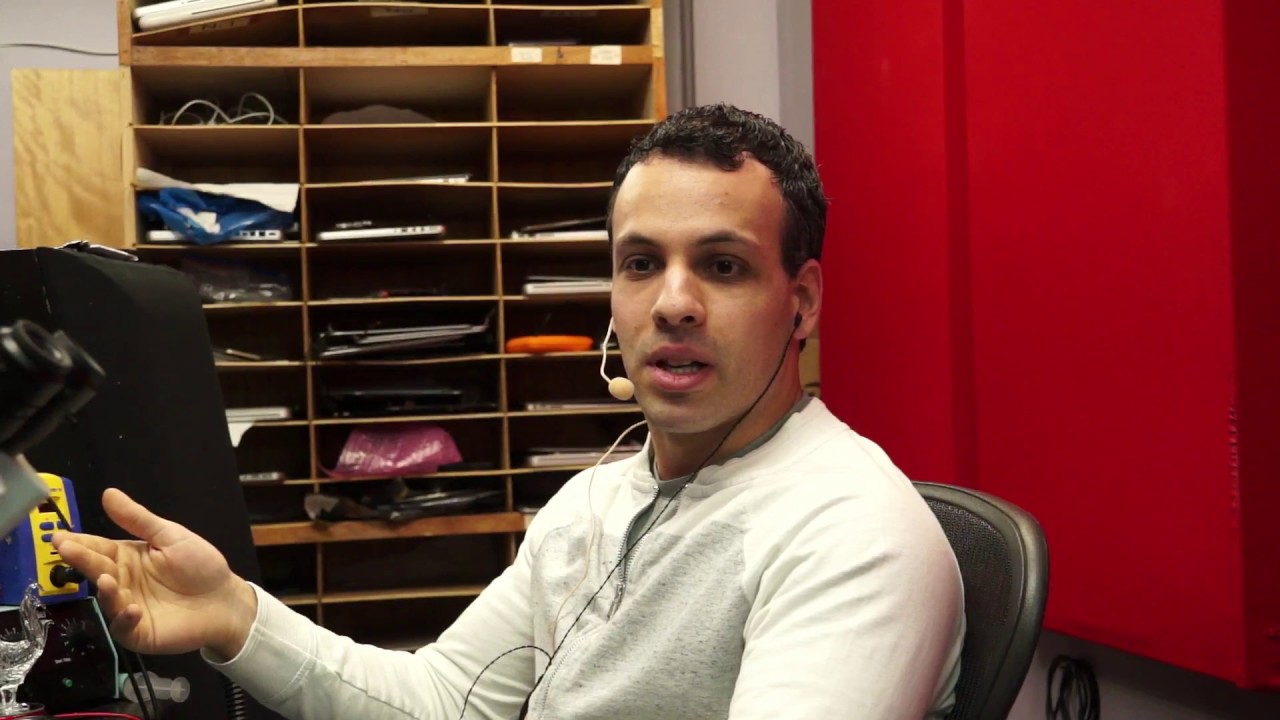
Louis Rossmann
Contractual rules bar Apple authorized providers from performing subcomponent fixes and board repairs, forcing consumers into whole-unit replacements that destroy user data while independent shops complete the same repairs for a fraction of the cost.
AI-assisted summary of What does authorized repair do? Let's find out! — original source. Check the original for full context.
Source published:
Key ideas
- Mystery-shopper calls reveal Apple Authorized Service Providers (AASPs) misrepresent modular iPhone 6 headphone jacks as soldered to the motherboard, quoting $299 for whole-unit swaps instead of inexpensive flex cable replacements. (1:28)
- The Apple authorized ecosystem offers zero pathways for data recovery on passcode-locked devices experiencing Touch IC failure, routinely discarding boards and directing desperate consumers to third-party recovery firms charging upwards of $1,500. (18:37)
- Independent micro-soldering technicians readily fix iPhone Touch IC defects and preserve customer data for $200–$245, disproving manufacturer claims that board-level component repair is impossible or unfeasible. (47:06)
- Many authorized repair centers operate merely as mail-forwarding depots that charge higher screen repair rates ($149 vs. $129) and take a week, while minor casing dents trigger mandatory $299–$329 device replacements. (30:18)
Detailed notes
## Background Published by Louis Rossmann on YouTube on February 22, 2017, this video investigates the real-world capabilities and restrictions of Apple Authorized Service Providers (AASPs). The description asks whether authorized repair shops actually fix devices or merely forward mail, noting that while technicians generally want to help, Apple's corporate policies prohibit component-level repairs like headphone jack replacements and board-level touch IC fixes, routinely resulting in unnecessary device swaps and data loss.
## TL;DR Louis Rossmann conducts mystery-shopper phone calls using voice modulation software to test how Apple Authorized Service Providers handle common iPhone hardware failures compared to independent repair shops. For a broken headphone jack, authorized facilities claim the modular flex assembly is permanently soldered to the board, refusing component swaps and quoting $299 for a full unit replacement, whereas an independent shop offers extraction or a $50 part replacement. When testing iPhone 'Touch Disease' board failures, AASPs uniformly reveal they cannot recover data from locked devices at any price and instead charge hundreds of dollars for unit swaps, while independent micro-soldering technicians can restore functionality and preserve user data for roughly $200. Concluding that authorized centers are largely reduced to mail-forwarding depots by restrictive manufacturer contracts, Rossmann urges viewers to contact legislators in support of Right to Repair legislation.
## Atmosphere & style The video carries an energetic, spontaneous livestream atmosphere that blends consumer-advocacy investigative work with sardonic humor. Rossmann's tone swings between disbelief and exasperation as automated IVRs and corporate service policies dismantle basic common-sense repairs, yet he maintains clear empathy for the frontline authorized technicians whose hands are tied by corporate mandates. Watching it feels like sitting beside a seasoned technician in a busy repair workshop, eavesdropping on real-world customer service calls that expose the stark divide between practical electronics troubleshooting and rigid manufacturer monopolies.
## Bulletin - [01:28](https://www.youtube.com/watch?v=OR5ZUl0Q-NI&t=88s) Mystery-shopper calls reveal Apple Authorized Service Providers (AASPs) misrepresent modular iPhone 6 headphone jacks as soldered to the motherboard, quoting $299 for whole-unit swaps instead of inexpensive flex cable replacements. - [18:37](https://www.youtube.com/watch?v=OR5ZUl0Q-NI&t=1117s) The Apple authorized ecosystem offers zero pathways for data recovery on passcode-locked devices experiencing Touch IC failure, routinely discarding boards and directing desperate consumers to third-party recovery firms charging upwards of $1,500. - [47:06](https://www.youtube.com/watch?v=OR5ZUl0Q-NI&t=2826s) Independent micro-soldering technicians readily fix iPhone Touch IC defects and preserve customer data for $200–$245, disproving manufacturer claims that board-level component repair is impossible or unfeasible. - [30:18](https://www.youtube.com/watch?v=OR5ZUl0Q-NI&t=1818s) Many authorized repair centers operate merely as mail-forwarding depots that charge higher screen repair rates ($149 vs. $129) and take a week, while minor casing dents trigger mandatory $299–$329 device replacements.
## Key takeaways - [00:17](https://www.youtube.com/watch?v=OR5ZUl0Q-NI&t=17s) Louis Rossmann employs voice-changing modulation to anonymously mystery-shop Apple Authorized Service Providers and evaluate their diagnostics, turnaround times, and honesty. - [01:28](https://www.youtube.com/watch?v=OR5ZUl0Q-NI&t=88s) An authorized service provider incorrectly claims the iPhone 6 headphone jack is hard-soldered to the logic board, mandating a $299 mail-in whole-unit replacement and total data loss. - [04:40](https://www.youtube.com/watch?v=OR5ZUl0Q-NI&t=280s) Independent repair shop The Device Shop clarifies that the headphone jack is on an inexpensive modular flex cable, offering extraction first and capping repair at $50 on the spot. - [06:16](https://www.youtube.com/watch?v=OR5ZUl0Q-NI&t=376s) Systemic misinformation within the authorized ecosystem stems from restrictive corporate supplier agreements rather than isolated rogue employee mistakes. - [13:14](https://www.youtube.com/watch?v=OR5ZUl0Q-NI&t=794s) Quest Technical Services accurately identifies Apple's $149 out-of-warranty replacement program for the iPhone 6 Plus Touch IC failure, earning praise for upfront honesty. - [17:13](https://www.youtube.com/watch?v=OR5ZUl0Q-NI&t=1033s) Apple's official multi-touch repair program excluded the standard iPhone 6, despite the device utilizing the identical touch IC controllers and suffering the same defect as the 6 Plus. - [18:37](https://www.youtube.com/watch?v=OR5ZUl0Q-NI&t=1117s) Mobile Kangaroo admits the authorized ecosystem cannot retrieve data from locked devices with failed touch response, referring customers to DriveSavers for upwards of $1,500. - [24:26](https://www.youtube.com/watch?v=OR5ZUl0Q-NI&t=1466s) Apple's warning that third-party soldering risks damaging boards presents a false dilemma, as Apple's official resolution discards the motherboard with a 100% guarantee of data loss. - [27:38](https://www.youtube.com/watch?v=OR5ZUl0Q-NI&t=1658s) Visual Dynamics confirms that no authorized option exists to extract user data from an unresponsive device regardless of customer budget, quoting around $300 for a replacement unit. - [30:18](https://www.youtube.com/watch?v=OR5ZUl0Q-NI&t=1818s) Authorized shop Core reveals they do not perform iPhone screen replacements on-site, requiring a one-week mail turnaround to Apple depots for $149. - [30:18](https://www.youtube.com/watch?v=OR5ZUl0Q-NI&t=1818s) A bent aluminum corner causes Apple depots to refuse standard display repairs, forcing customers into full unit replacements costing $299 to $329. - [35:45](https://www.youtube.com/watch?v=OR5ZUl0Q-NI&t=2145s) Independent repair shops routinely reshape bent aluminum enclosure corners using tools like the gTool or a flathead screwdriver and hammer to enable affordable screen repairs. - [39:39](https://www.youtube.com/watch?v=OR5ZUl0Q-NI&t=2379s) Tech Genius confirms Apple's policy prohibits authorized shops from replacing modular $5–$10 audio port flex cables, requiring full $299.99 device swaps instead. - [41:45](https://www.youtube.com/watch?v=OR5ZUl0Q-NI&t=2505s) Authorized technicians often experience cognitive dissonance because corporate mandates reduce willing, capable technicians to mere mail-forwarding clerks. - [47:06](https://www.youtube.com/watch?v=OR5ZUl0Q-NI&t=2826s) Independent technician Sunny demonstrates that board-level Touch IC data recovery is readily achievable for roughly $200 to $245 while preserving the original device data. - [48:10](https://www.youtube.com/watch?v=OR5ZUl0Q-NI&t=2890s) Rossmann calls on consumers to lobby state legislators for Right to Repair laws, warning that unchecked manufacturer repair monopolies will expand beyond phones to all consumer goods.
## Detailed walkthrough ### [00:17](https://www.youtube.com/watch?v=OR5ZUl0Q-NI&t=17s) Setting Up the Experiment
Louis Rossmann tests his microphone audio and voice-changing software as he prepares to conduct mystery-shopper phone calls to repair facilities. Explaining his setup, he notes that earlier in the day, when he attempted to make calls without masking his voice, technicians immediately recognized him. To preserve anonymity and get natural, unfiltered customer service responses, he configured vocal modulation plugins before dialing. His plan is to pose as a standard consumer with common hardware malfunctions to see how Apple Authorized Service Providers (AASPs) compare to independent, unauthorized repair shops in diagnostics, pricing, turnaround times, and honesty.
[01:28](https://www.youtube.com/watch?v=OR5ZUl0Q-NI&t=88s) Calling the Apple Authorized Service Provider: The "Soldered" Headphone Jack
Louis dials an Apple Authorized Service Provider named TechWise and speaks with a representative named Zyra. Posing as a customer with an out-of-warranty iPhone 6, he explains that he pulled too hard on his headphones and snapped the plug off inside the jack. When he asks if the stuck plug can be removed or repaired, the technician immediately dismisses the possibility of a component-level fix, claiming: “No, unfortunately not. The headphone jack is basically hard soldered directly into the logic board.”
When Louis gently pushes back, mentioning that he saw do-it-yourself guides online showing the headphone jack attached to a separate Lightning connector flex cable that plugs into the board, the technician brushes aside the online information, stating that Apple simply does not provide those individual sub-assemblies to authorized repair shops. The representative explains that Apple strictly controls which parts are shipped out and which are restricted, meaning the entire device must be mailed out to Apple. When asked about pricing, timeline, and data retention, the technician details a full unit replacement:
```mermaid flowchart TD accTitle: Apple Authorized Repair Flow for Stuck Headphone Jack accDescr: Flowchart showing the authorized service process where a phone with a stuck headphone jack is mailed away, costing 299 dollars, taking 4 to 5 days, and resulting in complete data loss via device replacement.
A["Customer: Stuck headphone plug in iPhone 6"] --> B["AASP Diagnosis: Jack is 'hard soldered' to logic board"] B --> C["AASP Mail-In: Sent directly to Apple"] C --> D["Turnaround: 4-5 business days"] C --> E["Cost: $299 replacement fee"] C --> F["Data Outcome: Total data loss / Logic board replaced"] ```
- The turnaround time quoted is 4 to 5 business days. - The cost to resolve the issue through Apple is $299. - Data is not preserved; the representative explicitly warns: “As far as I know, they're going to replace the logic board, which means your data is going to go with it.” - Customers are advised that Apple routinely wipes devices even when it appears unnecessary, leaving them with an entirely different replacement handset.
[03:27](https://www.youtube.com/watch?v=OR5ZUl0Q-NI&t=207s) Louis Analyzes the Authorized Provider's Claims
Directly following the call, Louis reacts with disbelief at the authorized shop's explanation. He points out the absurdity of charging $299 and wiping a customer's personal data over a mechanical headphone jack obstruction, particularly when the diagnosis hinges on an outright falsehood. On an iPhone 6, the headphone jack is housed on an inexpensive modular flex cable alongside the Lightning port and microphone, rather than being soldered onto the logic board. Remarking on the sheer wastefulness of swapping out an entire functional smartphone, Louis encourages viewers to look inside an iPhone 6 chassis themselves before dialing an independent repair shop to see how an unauthorized technician approaches the exact same failure.
[04:40](https://www.youtube.com/watch?v=OR5ZUl0Q-NI&t=280s) Calling an Independent Shop: An Honest Assessment
Louis contacts an independent repair business, The Device Shop, and presents the identical scenario: an iPhone 6 with a headphone plug broken off inside the port. The technician outlines a tiered, practical approach. First, the shop attempts to extract the broken tip using mechanical tools, explaining that fishing it out is the most cost-effective solution for the customer. If extraction fails, the shop's fallback solution is replacing the dock connector assembly.
When Louis asks for the worst-case replacement cost, the technician quotes $50 plus tax. Louis then asks whether the headphone jack is soldered onto the logic board, mentioning that an authorized center had insisted it could not be replaced independently. The technician immediately corrects the misconception: “It's not. On a 6, that's not true.”
The technician goes on to address why the authorized center gave that answer: “So basically, the way that like even the Genius Bar, they just kind of spread misinformation to make you use their services.” The independent technician adds that dock port replacements are routine everyday jobs, noting that their location had already replaced at least five charge port assemblies that week alone.
[06:16](https://www.youtube.com/watch?v=OR5ZUl0Q-NI&t=376s) Comparing Authorized vs. Unauthorized Service Standards
Reflecting on the stark contrast between the two calls, Louis underscores that the independent repair shop offered a faster, dramatically cheaper, and technically truthful service. Where the authorized provider demanded $299, a 4-to-5-day wait, and complete data destruction for a part that costs only a few dollars, the independent shop proposed a non-destructive fix starting with extraction, capped at a $50 part replacement.
Louis points out that this misinformation is not an isolated mistake by a single rogue employee. He references Jessa Jones of iPad Rehab, noting she received the exact same false claim from an Apple Authorized technician who insisted the iPhone 6 headphone jack was soldered to the board. Louis highlights the systemic nature of these narratives within the authorized ecosystem, where restrictive supplier contracts, lack of component-level training, and corporate policy converge to steer customers into costly whole-unit swaps.
[07:36](https://www.youtube.com/watch?v=OR5ZUl0Q-NI&t=456s) Dealing with Phone Menus and Automated Systems
Preparing to test repair shops on board-level issues—specifically the notorious "Touch Disease" affecting the iPhone 6 and 6 Plus—Louis pauses while his shop staff packs orders in the background, jokingly scolding them for making noise while working. He readjusts his pitch shifter plugin, venting about the burden of fame: “Dude, you made me spend a half hour looking for vocal changing plugins so I could do stuff like this. I liked it better when I was unknown.”
Louis then dials several other service providers, encountering frustrating interactive voice response (IVR) phone trees: - He dials Graphite, an Apple Premier Partner in Madison, Wisconsin, but cuts the call short when confronted with an extension directory, remarking that complex IVRs should only be used by businesses making so much money that they literally do not know where to park their third yacht. - He calls CityMac, an Apple and Verizon authorized partner in Washington, sitting through extended marketing recordings, multi-tiered store selection prompts, and hold music before moving on due to the excessive wait. - Another attempted authorized call connects to a store where the staff accidentally routes the incoming line to a back-office administration phone rather than the customer service intake desk, requiring Louis to hang up and redial.
[11:37](https://www.youtube.com/watch?v=OR5ZUl0Q-NI&t=697s) Calling Quest Tech: Diagnosing iPhone 6 Plus "Touch Disease"
Louis successfully reaches Jordan at Quest Tech to ask about an iPhone 6 Plus experiencing classic symptoms of Touch IC failure: gray flickering bars across the top of the display and total unresponsiveness to touch input. He explains that squeezing or slightly flexing the phone temporarily brings touch functionality back for about thirty minutes before it fails again.
Rather than recognizing the well-documented structural bending issue that causes the touch controller ICs to separate from the logic board, the technician's initial recommendation is software-based: “The first thing I would probably attempt to do is probably a hard reset to factory settings and then restore your phone.”
When Louis explains that he cannot back up the device or perform a restore because the unresponsive screen prevents him from entering his passcode, the technician pivots away from a software wipe. Unable to execute a reset, the technician suggests that their next diagnostic step would be opening the phone to check internal seating: “I guess the next step would be us taking it apart and making sure that all your wires are seated correctly and maybe reseat a few to see if that would fix the problem.”
[13:14](https://www.youtube.com/watch?v=OR5ZUl0Q-NI&t=794s) Calling Quest Technical Services: The iPhone 6 Plus Touch Disease Policy
Louis Rossmann poses as an everyday customer calling an Apple Authorized Service Provider (AASP) about an iPhone 6 Plus displaying classic "touch disease" symptoms: flickering gray bars along the top edge of the display and completely unresponsive touch functionality. Louis explains to the technician that he had previously brought the device to an unauthorized independent shop that swapped the screen, but because the issue persisted identically, they reinstalled his original display, diagnosed it as a motherboard fault related to a "touch IC thing," and explained they lacked the micro-soldering tools required to repair it. When Louis asks about the worst-case scenario, the technician initially hesitates, stating they do not perform board-level soldering and that replacing the entire logic board might be so pricey that buying a new phone would make more sense.
After stepping away to consult colleagues, the technician returns with a completely different, surprisingly accurate answer: the shop can mail the phone directly to Apple to handle the board replacement for approximately $150. Louis is genuinely pleased by the response, expressing surprise because previous authorized providers he contacted failed to mention Apple's official $149 out-of-warranty service program for the iPhone 6 Plus multi-touch issue. The technician laughs off the initial grim assessment, explaining that they were momentarily thinking about computer repair pricing rather than phones.
Louis gives strong credit to Quest Technical Services in Oklahoma, making a point to highlight their honesty and knowledge live on stream rather than editing out positive interactions with authorized shops.
> “You were so far the only Apple authorized place I've called that actually gave me the quote from their website; every other place we called yesterday did not know the 149 option existed.” — Louis Rossmann
- **Issue described:** Gray flickering bars at the top of the display and total loss of touch response on an iPhone 6 Plus. - **Initial diagnostic:** Logic board problem requiring replacement rather than soldering, initially assumed by the tech to be cost-prohibitive. - **Official resolution quoted:** Mail-in logic board swap via Apple for $150 ($149 official program fee). - **Service provider praised:** Quest Technical Services (Oklahoma).
---
[17:13](https://www.youtube.com/watch?v=OR5ZUl0Q-NI&t=1033s) The IVR Hassle and Switching Tactics to an iPhone 6
After hanging up with Quest Technical Services, Louis dials another authorized repair location named "Create More." He is immediately greeted by a automated Interactive Voice Response (IVR) phone tree prompting callers to press one for the showroom, two for repair, or three for on-site services. Losing patience with the automated system, Louis hangs up, declaring he will not click through another frustrating menu.
He decides to pivot his test strategy: instead of inquiring about an iPhone 6 Plus—which had a formal, publicized Apple multi-touch repair program—he will now call asking about a standard iPhone 6. Louis explains that the iPhone 6 utilizes the exact same touch IC controller chips and similar board architecture as the larger 6 Plus and experiences the exact same failure mechanism. However, Apple never officially included the smaller iPhone 6 in the repair program, making the authorized shops' handling of the standard 6 a revealing test of policy and consistency.
```mermaid flowchart TD accTitle: Touch Disease Repair Options Flowchart accDescr: Flowchart contrasting Apple Authorized Service Provider options with independent micro-soldering repair for iPhone touch IC failure.
subgraph UserProblem["Customer Problem"] A["iPhone 6 / 6 Plus Touch IC Failure<br>(Flickering bars, no touch response)"] end
subgraph AASPOptions["Apple Authorized Channel"] B{"AASP Assessment"} B -->|"6 Plus (Official Policy)"| C["Apple Mail-in Program: $149 Board/Unit Swap"] B -->|"Standard 6 (Discretionary)"| D["Screen Price Unit Replacement: $139 - $349"] C --> E["Total Data Loss<br>(Old board discarded)"] D --> E E --> F["Referral to DriveSavers: $1,500+"] end
subgraph IndependentOptions["Independent Micro-Soldering"] G["Direct Touch IC Repair / Jumper Wire"] G --> H["Original Board Preserved"] H --> I["Full Data Intact<br>Fraction of Replacement Cost"] end
A --> AASPOptions A --> IndependentOptions ```
---
[18:37](https://www.youtube.com/watch?v=OR5ZUl0Q-NI&t=1117s) Mobile Kangaroo and the Reality of Data Recovery Under Apple Authorization
Louis calls Mobile Kangaroo, an Apple Authorized Service Provider, detailing the same touch failure on a standard iPhone 6: flickering horizontal bars, intermittent touch failure, and locked-out access. The technician immediately identifies the symptoms, confirming it is indeed the touch IC failure related to the logic board. While noting that the flaw is far more prevalent on the 6 Plus, the technician explains that their authorized status allows them to replace the entire phone under Apple's screen repair pricing tier for $139, effectively exchanging the broken device for a new or refurbished replacement unit.
When Louis asks how to preserve his personal data since the touch screen prevents him from entering his passcode or pairing with iTunes, the conversation turns somber. The technician admits there is no authorized mechanism to rescue data from an unresponsive device if automated iCloud backups were not previously enabled. When asked about micro-soldering the touch ICs, the technician warns against independent board-level repairs, arguing that soldering carries the risk of damaging the board and destroying everything—though conceding that the customer has few alternatives if the data is trapped. Furthermore, the technician acknowledges that regardless of how much money a customer is willing to spend, no Apple Authorized Provider offers logic board soldering or data recovery, ultimately referring Louis to clean-room specialist DriveSavers at an estimated price exceeding $1,500.
> “There's pretty much no way in the Apple authorized ecosystem to get the data regardless of price.” — Louis Rossmann
> “The data is kind of just an unknown for us.” — Mobile Kangaroo Technician
- **Provider:** Mobile Kangaroo (Apple Authorized Service Provider). - **Replacement unit cost offered:** $139 (standard screen repair pricing tier applied to a full device exchange for an iPhone 6). - **Data retention policy:** Complete loss; exchange units do not carry over user storage from unbacked-up boards. - **Third-party referral:** DriveSavers for board-level extraction, quoted at upwards of $1,500.
---
[23:23](https://www.youtube.com/watch?v=OR5ZUl0Q-NI&t=1403s) Analyzing the Authorized Ecosystem's Blind Spot
Reflecting on the phone call, Louis admits that stepping into the shoes of a stranded customer genuinely brought on a brief wave of despair, contrasting the customer's vulnerability with his own setup using Android devices with expandable SD card storage. He points out a fascinating discrepancy in how authorized shops implement Apple policies: while some locations quote $349 for an iPhone 6 Plus repair that Apple mandates at $149, Mobile Kangaroo offered to replace an iPhone 6—a phone officially excluded from the touch service program—for just $139 under a screen-tier swap.
Louis stresses that the central, inescapable takeaway from this experiment is how the authorized repair network completely abandons user data. When a customer cannot use iCloud due to rural connectivity issues, power outages, lack of storage, or service disruptions, Apple's official resolution discards the motherboard entirely. Authorized shops warn customers that unauthorized micro-soldering might ruin their board, yet the authorized solution guarantees the board and its data are thrown in the trash. Louis argues that independent repair shops performing component-level touch IC replacements provide an indispensable service by saving the board and data for a reasonable fee, highlighting why independent technicians must not be locked out of schematics, parts, and technical documentation.
> “It's really interesting how the policy changes depending on which Apple authorized place you're talking to, but I guess the point I really want to hammer home here is that if you need the data off the phone... you're going to need a screen to access it.” — Louis Rossmann
[24:26](https://www.youtube.com/watch?v=OR5ZUl0Q-NI&t=1466s) The False Dilemma of Motherboard Risk and Data Loss
Louis dissects the official justification Apple Authorized Service Providers (AASPs) give for refusing micro-soldering and Touch IC repairs. Apple claims customers should not attempt chip-level rework because an inexperienced technician could damage the logic board containing their data. However, Louis points out the absurd contradiction at the heart of this policy: Apple’s own authorized resolution is to discard the original motherboard completely and perform a whole-unit swap, guaranteeing complete data loss anyway. By contrast, sending the device to independent specialists like Jessa Jones at iPad Rehab—who typically charges between $150 and $250 for micro-soldering—gives the customer a functional phone while keeping their personal data intact. As Louis puts it: “So with independent repair there's a there's a small chance of of getting screwed but with the authorized option there's a 110% chance that you're that you're getting screwed.”
Between checking chat comments—where viewers joke about undercutting board repairs from $999 down to $7.99—and expressing relief that his Time Warner internet connection has not cut out yet, Louis searches for other authorized facilities to call. While he praises an Oklahoma shop called earlier in the stream for their honest and accurate communication, he remains determined to see how other AASPs across the country handle board failures. He specifically skips over Best Buy listings, laughing that calling them to assess technical repair competence “is not even fair to Apple” and would just be needlessly cruel. Before dialing the next independent authorized repair franchise, he jokes with his chat about putting on his voice disguise, referencing the classic vintage BloodNinja internet chat meme: “I put on my robe and my wizard hat.”
```mermaid flowchart TD accTitle: Touch IC Repair Paths Comparison accDescr: Flowchart contrasting the outcomes between Apple Authorized Service Providers and Independent Repair for Touch IC failure. subgraph AASP["Apple Authorized Service Provider"] A1["Touch IC Failure"] --> A2["Refuse Component Rework"] A2 --> A3["Perform Whole Unit Swap ($300+)"] A3 --> A4["Original Board Trashed: 100% Data Loss"] end subgraph IND["Independent Micro-soldering"] B1["Touch IC Failure"] --> B2["Microsolder Touch IC ($150-$250)"] B3["Small Risk of Board Damage"] -.-> B2 B2 --> B4["Phone Restored & Data Preserved"] end ```
[27:38](https://www.youtube.com/watch?v=OR5ZUl0Q-NI&t=1658s) Calling Visual Dynamics: No Data Recovery at Any Price
Adopting his customer persona, Louis calls Visual Dynamics, an Apple Authorized Service Provider. He explains that his iPhone 6 displays flickering gray bars across the top of the display and the touchscreen is completely unresponsive, leaving him unable to enter his passcode. He mentions having already taken it to an unauthorized shop that tested a replacement screen to no avail, leading them to suspect an underlying board fault. The technician at Visual Dynamics warns that while Apple generally rejects devices previously opened by third parties, they might still process it as a whole-unit replacement through Apple for around $300 before tax, provided no internal damage was done and original parts remain inside.
When Louis asks if there is any pathway to recover the unbacked-up photos and files locked behind the unresponsive passcode screen, the technician delivers a blunt reality check. The representative explains that without a functioning touch interface to enter the PIN, no new backup can be created. Louis presses further, asking if the shop or Apple offers an advanced board repair service if a customer is willing to pay premium rates—floating hypothetical budgets of $1,000 or $2,000 specifically to retrieve irreplaceable data. The technician confirms that no such service exists within the official Apple ecosystem: “No, there's just there's no way to pull that data off, it doesn't exist anywhere else, it's only existing on the phone and there's no way pull that backwards off.”
- Visual Dynamics quotes an out-of-warranty unit exchange on an iPhone 6 at approximately $300 before tax. - Prior third-party tampering can disqualify a device from standard Apple exchange pricing unless returned with undamaged OEM parts. - Apple provides zero data recovery options for passcode-locked devices with failed touch logic, regardless of customer budget.
[30:18](https://www.youtube.com/watch?v=OR5ZUl0Q-NI&t=1818s) Calling Core in Tampa: Screen Mail-Forwarding and Bent Corners
Louis moves on to calling Core, an Apple Specialist facility based in Tampa, Florida. After navigating the automated phone tree, he connects with a technician named Ryan to ask about fixing a cracked iPhone 6 screen. To Louis's surprise, Ryan reveals that their authorized location does not perform iPhone screen replacements in-house at all: “So those we all have to send out to Apple, so if you're looking to the only place that's going to do an on-site repair is going to be the Apple Store.” Ryan clarifies that while he can swap batteries and a few internal components on-site, any display repair must be mailed off to an off-site Apple depot.
When Louis inquires about turnaround time and pricing, Ryan estimates the process takes approximately one week and costs $149 for a display-only repair through their shop. Louis then presents a common real-world complication: he mentions an Apple retail store had refused the repair because the phone's aluminum housing has a dented corner. Ryan explains that authorized shops cannot simply reform the corner; if sent to Apple's central depot with housing deformation, Apple will reject the simple display tier and re-quote the job as a full tier out-of-warranty unit swap at $299 or $329.
- Screen replacements through this authorized provider require a mail-in depot turnaround of about one full week. - Core charges $149 for the forwarded iPhone 6 screen replacement to cover overhead and shipping logistics. - An aluminum corner dent prevents standard screen installation under official protocol, triggering an automatic re-quote to a $299 to $329 unit replacement.
[33:37](https://www.youtube.com/watch?v=OR5ZUl0Q-NI&t=2017s) Authorized Centers as Mail-Forwarders Under Apple's Vice
Following the call with Core, Louis pulls up Apple’s official support locator directly on screen to demonstrate that he did not accidentally contact a third-party Mac specialist or select the wrong category. He navigated directly to Apple's service portal, filtered for Florida, selected iPhone, selected AT&T, and chose an official authorized provider explicitly advertised as supporting iPhone hardware. He highlights a viewer comment in the live chat summarizing the dynamic: authorized shops are frequently reduced to mere “mail forwarding” hubs rather than functional repair workshops.
Louis emphasizes that he does not blame individual franchise technicians like Ryan, acknowledging that their rigid operating guidelines and lack of repair latitude stem from Apple's strict contractual controls. Instead, he highlights the underlying absurdity in legislative debates where manufacturers argue that only authorized facilities should be legally permitted to perform repairs. In practice, Apple’s own authorized facilities charge more than Apple's retail pricing ($149 versus the official $129 out-of-warranty screen rate), take a week to ship the phone out, and refuse to perform minor mechanical fixes like straightening a bent aluminum corner—a trivial task independent repair shops routinely handle to save the customer hundreds of dollars. As Louis observes regarding the technician's constraints: “When you say that independent places should not be allowed to repair, only authorized should, it's really important to bring up the fact that the authorized place won't actually fix your phone.”
[035:45] Bent Enclosures and the Reality of Mail-In Service
Louis Rossmann explains that during the era of the iPhone 4 and 4S, technicians never had to bend out enclosure corners to fit replacement displays. Starting with the iPhone 5, 5s, and 6, Apple adopted softer aluminum housings where the corners bend inward upon impact, preventing replacement glass from seating properly. While independent repair shops routinely fix this issue using specialized tools like the $50–$100 gTool—or Rossmann’s preferred technique of a flathead screwdriver and hammer—an Apple Authorized Service Provider (AASP) will not reshape an enclosure.
Instead, authorized service providers mail the unit to a central depot. If the central facility sees a bent corner, they refuse a screen replacement and mandate an entire unit swap. Rossmann emphasizes the fundamental difference in approach: “really important point to bring up is that they're not actually doing a repair of your device they are replacing it for the slightest of reasons.” Looking over stream chat comments about updated pricing, he notes with a laugh that he wants to make more calls regarding headphone jacks, remarking, “this 349 for the headphone jack I don't know why I have so much fun with that but that is fun.” Preparing his digital audio disguises, he jokes about donning his “robe and my wizard hat” before dialing the next facility.
```mermaid flowchart TD accTitle: Bent Corner Repair Pathways accDescr: Comparison of how independent shops fix bent iPhone corners versus the Apple authorized mail-in replacement path.
subgraph Independent["Independent Repair Shop"] A["Bent Housing Corner"] --> B{"Reshape Enclosure"} B -->|"gTool ($50-$100)"| C["Restored Corner"] B -->|"Flathead & Hammer"| C C --> D["Install Replacement Screen"] end
subgraph Authorized["Apple Authorized Depot"] E["Bent Housing Corner"] --> F["Forward to Apple Depot"] F --> G{"Depot Inspection"} G -->|"Bent Corner Detected"| H["Refuse Screen Repair"] H --> I["Mandatory Full Unit Swap ($299+)"] end ```
[037:49] IVR Roadblocks and Failed Connections
Attempting to reach Gator Tech, an Apple Premier Partner, Rossmann runs into a convoluted Interactive Voice Response (IVR) phone tree. The automated recording loops through menu options for store hours, service, sales, commercial clients, and AppleCare phone support numbers before forcing callers back to the top menu. Frustrated by the inability to reach a live representative, he disconnects: “I'm just going to assume that the place that I called here uh there's no way to contact them because it's shitty ivr and hang up.”
He comments on automated phone trees, asserting that “there's no faster way to kill your sales than using an ivr” and that any business wanting to reduce its customer volume year over year should install one. He then dials another number from Apple's locator list, briefly catching himself when he realizes he nearly dialed an international number for Turkey by mistake.
[039:39] Tech Genius Call: The Broken Headphone Jack
Rossmann contacts Tech Genius to inquire about repairing an iPhone 6 with a severed headphone plug jammed inside the jack after a gym incident. The technician immediately opens with a telling disclaimer about their operational limitations: “we do but uh we're partnering with Apple so we have to follow certain policies that being uh we have to mail it out actually.”
The technician suggests trying tweezers to wiggle the plug out. When Rossmann says he already tried tweezers and even spent thirty minutes with an employee at Home Depot trying to extract it, the technician states that Apple does not allow them to replace audio ports:
- **Component Replacement Restriction:** The technician notes they can replace a battery, but cannot swap out the headphone jack assembly. - **Depot Mail-in Requirement:** The phone must be shipped to Apple; if Apple cannot pull the broken plug out, they will replace the entire device. - **Out-of-Warranty Replacement Fee:** A full unit swap for the iPhone 6 costs $299.99 plus tax. - **Separate Flex Cable:** When Rossmann asks whether the dock connector and headphone jack assembly can just be replaced independently without junking the whole phone, the technician puts him on hold to double-check their internal guidelines.
[041:45] The Constraints on Authorized Technicians
While on hold, Rossmann addresses his live stream audience (now exceeding 1,200 concurrent viewers), expressing genuine empathy for the authorized technician. He notes the obvious cognitive dissonance in the employee's voice: the technician wants to solve the customer's problem, but Apple's vendor restrictions make it impossible.
Rossmann argues that technicians are innately driven to help, yet corporate policy turns them into mail clerks: “This is not even just about independent repair centers this is about the own Apple this is about the authorized service centers themselves wishing that they could offer you better service he wants to replace the five or $10 cable.”
The technician returns to the line to confirm the policy: “unfortunately we can't do that um we can't just replace the audio ports even though they are separ[ate].” Rossmann politely thanks him and ends the call, noting that even authorized staff are forced to concede that the component is physically separate yet administratively unfixable.
- **Audio Port Flex Assembly:** An independent part costing approximately $5 to $10. - **Official Policy Outcome:** Customer is quoted $299.99 for an entire replacement device because Apple will not permit the authorized provider to install a modular flex cable.
[043:40] The Case for Right to Repair and Setting up the Final Call
Reflecting on the exchange, Rossmann summarizes the central lesson of his calls for viewers and advocates following the Right to Repair movement. While some authorized locations may be indifferent, many employ capable people whose hands are tied by restrictive agreements: “if you want to make any argument against independent repair call up authorized repair centers again I'm not I'm you know this this isn't made up [ __ ] I'm just going through Apple's site.” He emphasizes that independent repairers and schematics are necessary because the official system creates artificial waste and charges hundreds of dollars for minor, easily swappable subcomponents.
A viewer in the stream chat confirms that other authorized technicians report the exact same policy: Apple forces them to ship devices away rather than repairing them on-site. Rossmann reiterates that the criticism belongs squarely on Apple's corporate model, not the frontline workers: “it's not that the people at the Apple authorized place it's Apple that do this.” Deciding to make one final call about the infamous iPhone 6 "Touch Disease" (touch IC failure), Rossmann fiddles with his voice modulation software (Reaper / ReaVoice) to alter his pitch so the local shop won't recognize him. He dials another repair provider, introduces his phone's symptoms—flickering gray bars at the top of the display and an unresponsive touchscreen—and explains that the Apple Store claimed the device and its data were completely unfixable.
[47:06](https://www.youtube.com/watch?v=OR5ZUl0Q-NI&t=2826s) Calling Sunny for Independent Data Recovery
Continuing his test calls, Louis Rossmann reaches out to an independent repair shop technician named Sunny to see if data recovery is possible on a phone without replacing the whole device. Louis emphasizes that he does not even care about saving the handset itself—he just desperately needs the data. Sunny promptly answers that data recovery is entirely doable, estimating the cost at $245. He then clarifies that if it is just that specific board-level defect and the screen itself is not physically damaged, the price will likely be closer to $200.
```mermaid flowchart TD accTitle: Data Recovery Comparison accDescr: Comparison of Apple authorized response versus independent repair shop for board-level data recovery.
subgraph AppleAuthorized["Apple Authorized Route"] A["Logic Board / Touch IC Failure"] --> B["Official Apple Protocol"] B --> C["Cost: Up to $1,500 - $2,000"] C --> D["Data Recovery: Declared Impossible / Board Swapped"] end
subgraph IndependentShop["Independent Repair (Sunny)"] E["Logic Board / Touch IC Failure"] --> F["Component-Level Repair"] F --> G["Cost: $200 - $245"] G --> H["Data Recovery: Fixable with Data Preserved"] end ```
Once Sunny provides the quote and confirms the repair feasibility, Louis breaks character and admits he was conducting a live on-air verification. He lets Sunny know he just passed the test with flying colors: “I called the Apple guy and they said for 2,000 bucks they can't get my data so I wanted to call you just to to prove that you can.” After Sunny laughs and realizes he was caught in a friendly test, Louis thanks him enthusiastically and says goodbye. Feeling slightly guilty about taking up working hours for the demonstration, Louis remarks to the stream that he needs to buy Sunny something nice as an apology for wasting his time.
- Sunny quotes $245 for data recovery, dropping the estimate down to roughly $200 because the screen is undamaged. - Louis contrasts this directly with authorized centers and Apple-recommended options that quoted up to $2,000 while still failing to guarantee or provide data retrieval.
[48:10](https://www.youtube.com/watch?v=OR5ZUl0Q-NI&t=2890s) The Fight for Right to Repair
Wrapping up the stream, Louis reflects on the broader reality exposed by the calls. He emphasizes that his criticism is not directed at the individual workers staffing Apple Authorized Service Providers, many of whom genuinely want to help customers but find their hands completely tied by corporate restrictions. Louis shares his sympathy directly: “I for all you Apple authorized places who actually do want to offer good service I I feel for you I really do and I know it's not you I know it's I know it's your in my opinion very oppressive uh oppressive people above you.”
He concludes with a call to action regarding the Right to Repair movement, urging viewers to reach out to their state legislators, assembly members, and senators. Louis stresses that while the current fight might seem trivial because it revolves around smartphones and small consumer electronics, manufacturer-enforced monopolies on servicing will inevitably expand across all consumer goods. He warns: “This is important because again today it's the stupid little phone crap but someday it's going to be everything and that is not a world that I want to live in.”
## Notable quotes > [33:37](https://www.youtube.com/watch?v=OR5ZUl0Q-NI&t=2017s) When you say that independent places should not be allowed to repair, only authorized should, it's really important to bring up the fact that the authorized place won't actually fix your phone. — Louis Rossmann
> [48:10](https://www.youtube.com/watch?v=OR5ZUl0Q-NI&t=2890s) This is important because again today it's the stupid little phone crap but someday it's going to be everything and that is not a world that I want to live in. — Louis Rossmann
> [18:37](https://www.youtube.com/watch?v=OR5ZUl0Q-NI&t=1117s) There's pretty much no way in the Apple authorized ecosystem to get the data regardless of price. — Louis Rossmann
> [37:49](https://www.youtube.com/watch?v=OR5ZUl0Q-NI&t=2269s) there's no faster way to kill your sales than using an ivr — Louis Rossmann
## Mentioned Louis Rossmann, Apple, iPhone 6, iPhone 6 Plus, TechWise, The Device Shop, Jessa Jones, iPad Rehab, Graphite, CityMac, Quest Tech, Create More, Mobile Kangaroo, DriveSavers, Visual Dynamics, Core, Gator Tech, Tech Genius, gTool, Reaper, ReaVoice, Sunny
## Video description 👉 Discord: https://tinyurl.com/rossmatrix Do authorized repair places fix anything? Or just forward mail? Let's find out. Do keep in mind these are all likely good people who want to help their customers, but whose hands are tied. Highlights:
1:50 - iPhone 6 headphone jack is SOLDERED to the logic board & not fixable without spending $300 to replace board. News to me, I thought it was on a flex cable.. ?
2:21 - Apple won't make available, a charging port or a headphone jack, to an Apple Authorized Repair Center. This means that if your headphone jack stops working, even at an Apple Authorized repair center, their own technicians are not allowed to replace your broken headphone jack. To clarify: this part is under ten dollars http://amzn.to/2lIoEb5 and can be installed with no soldering required: http://bit.ly/1YVPQft
5:25 - The truth(IN MY OPINION) from an honest, unauthorized repair shop(the device shop on mercer st in Manhattan) that the headphone jack is NOT soldered onto the board, and can be fixed by replacing a flex cable at a cost of $50 on the spot.
5:49 - THIS IS THE TRUTH(IN MY OPINION INCASE AN ATTORNEY IS READING THIS)
21:20 - Apple advises against changing touch ICs because of possibility you will ruin the motherboard that has your data on it. 22:09 - Apple tech admits that *every* Apple solution will toss your old motherboard, and with it, your data. So it is imporrtant to fix it through an AASP so they don't ruin your old board, but the AASP throws away your old board. This begs the question: what is the upside of not *trying* touch IC replacement first? 22:40 - AASP finally suggests trying company that may charge $1500 for a touch IC replacement if data is necessary. AASP concedes that if data is required, you must go to a non-Apple authorized facility.
28:50 - Touch IC not fixable through Apple Authorized provider without losing data for any amount of money. Why should independent repair be kept out of the loop on schematics & parts when Authorized service providers do not offer data recovery at ANY price?
32:00 - Authorized service center listed on apple.com as servicing iPhones fixes iPhone 6 screen for $149 and has to mail phone out with *1 week* turnaround time for screen repair on an iPhone 6. If phone has a dent in the corner, they will replace the entire phone for $329.
👉 Rossmann Repair Group Inc is a participant in the Amazon Services LLC Associates Program, an affiliate advertising program designed to provide a means for sites to earn advertising fees by advertising and linking to amazon.com
✖ Buying on eBay? Support us while you shop! https://www.rossmanngroup.com/ebay
👉 https://store.rossmanngroup.com/blog - will be using this more often. eli the computer guy had his channel TERMINATED in the middle of a livestream recently, so it's time I get the message that trusting YouTube is a bad idea.
👉 Now selling Crest Ultrasonic cleaners! https://store.rossmanngroup.com/mac-laptop-repair/soldering-diy/crest-ultrasonic-cleaners.html (3-5 day processing time on orders, but amazing cleaners nonetheless!)
✖ Scroll down to find equipment we use ✖ Buy a right to repair mousepad or t-shirt! http://bit.ly/2eOkg8G ⊙ Need help? Check out our forum at http://www.rossmanngroup.com/boards where we answer Macbook logic board repair questions for $29/mo.
✖ Repair Service: ▶ Local to NYC? Our store offers free estimates on all Macbook problems. http://bit.ly/RossmannLocalBoardRepair ▶ Outside New York? We provide service to the entire U.S. via mail-in service! http://bit.ly/RossmannMailInRepair
✖ TOOLS USED: ● Flux: http://bit.ly/2cYIx7t ● Solder paste: http://bit.ly/2epK1JE ● Soldering Iron: http://amzn.to/2cKkMyO ● Preferred tip: Fine: http://amzn.to/2d5MgPn Flat: http://amzn.to/2xgrx6a GPU wicking: http://amzn.to/2w8chtB ● Micro Soldering Pencil: http://amzn.to/2d5MWUP ● Micro soldering tip: http://amzn.to/2eYrF4a ● Quick 861DW hot air station(UNDER $300): http://bit.ly/quick861dw ● Hot Air EXPENSIVE: http://amzn.to/2cYI6tY ● Tweezers: http://amzn.to/2d5NBpi ● Multimeter: http://amzn.to/2qtbkKd ● Multimeter Probes: http://amzn.to/2cKkvMh ● Fume Extractor: http://amzn.to/2d5MGoD ● Microscope: http://amzn.to/2iLrE16 ● Microscope LED light: http://amzn.to/2d5Mh5T ● Solder: http://amzn.to/2cKkxUp ● Desoldering wick/braid: http://ebay.to/2gfKqC1 --- JESSA JONES' FAVORITE WICK! ● Crest CP500HT Ultrasonic cleaner: http://bit.ly/2iv3aci ● Branson EC cleaning fluid: http://amzn.to/2cKlBrp ● Jumper wire THIN: http://amzn.to/2eqF5T7 ● Jumper wire THICK: http://amzn.to/2eAJ5AU ● Nitrile gloves: http://amzn.to/2iUfumS ● On-screen Bench PSU: http://amzn.to/2i0G8MI
✖ RECORDING EQUIPMENT: ● Work camera: http://amzn.to/2eA6i5f ● Home camera: http://amzn.to/2eAH0oT ● Work microphone: http://amzn.to/2e74PVF ● Home microphone: http://amzn.to/2eA7ndd ● Microscope camera: http://amzn.to/2icVQoG - mine is DISCONTINUED, this is the closest one I can find. ● HDMI capture: http://amzn.to/2iyGcle
[Source](https://www.youtube.com/watch?v=OR5ZUl0Q-NI)