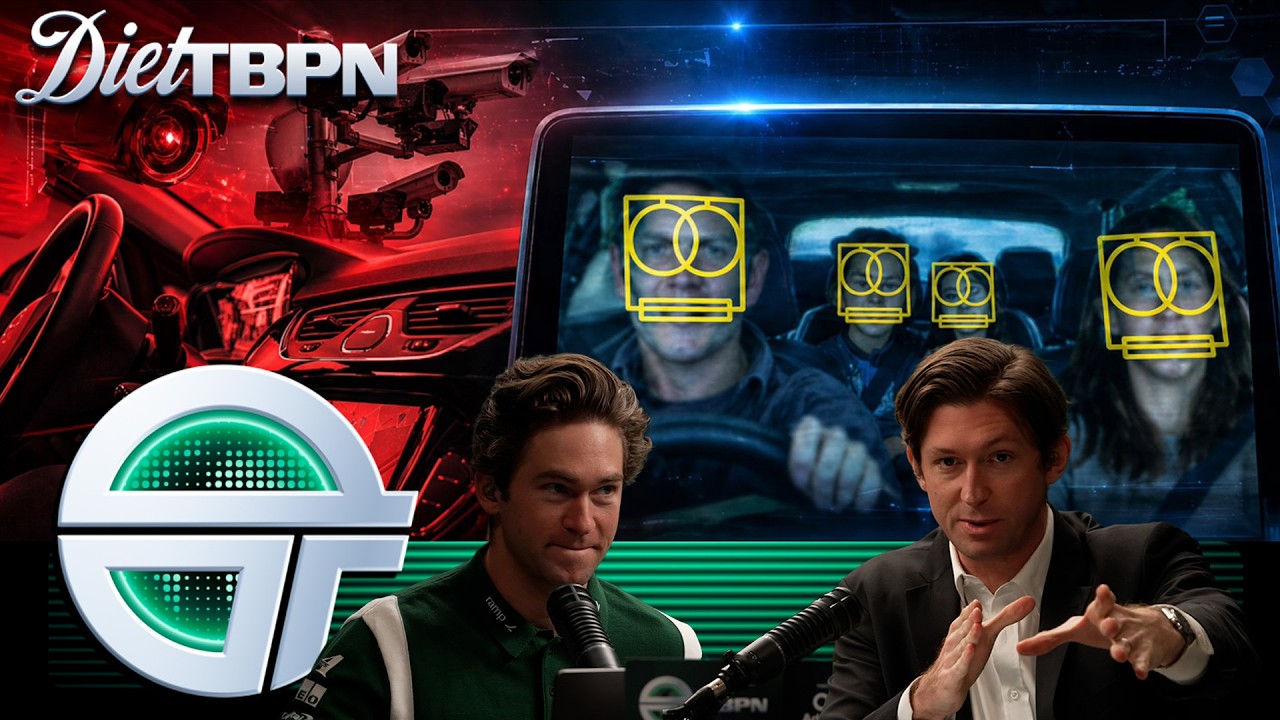
US AI Car Surveillance Rule Face False Positive Delays
TBPN
NHTSA is delaying mandatory in-car driver monitoring systems because even a 99.9% accuracy rate would trigger tens of millions of false-positive lockouts annually.
## Background
Published by TBPN on YouTube on April 28, 2026, this episode of Diet TBPN delivers a condensed 30-minute highlights reel from the daily live tech show hosted by John Coogan and Jordi Hays. According to the page description, the show covers top tech topics and high-profile industry news following guest appearances from major Silicon Valley executives.
## TL;DR
Hosts John Coogan and Jordi Hays unpack viral claims regarding mandatory in-car AI driver surveillance by 2027, explaining the technical limits, false-positive math, and NHTSA mandate realities behind the headlines. They also reveal a bizarre negative prompt rule in OpenAI's GPT-5.5 Codex designed to stop the model from injecting fantasy creatures into code. Additionally, the episode touches on practical AI tools in Hollywood VFX, technical glitches during high-profile courtroom live-blogging, and a podcast recommendation featuring macro trader Paul Tudor Jones.
## Atmosphere & style
The show carries a lighthearted, fast-paced, and banter-filled energy typical of a relaxed tech commentary podcast. Coogan and Hays blend pragmatic technical analysis with conversational humor, poking fun at broadcast audio bugs, absurd AI emergent behaviors, and dry judicial wit in equal measure. Watching feels like sitting in on an informal, high-signal coffee chat with knowledgeable Silicon Valley insiders who take the technology seriously without taking themselves too seriously.
## Key takeaways
- [00:02](https://www.youtube.com/watch?v=9TPkEybahB0&t=2s) Viral social media posts claim the U.S. government will require mandatory in-car AI surveillance cameras in all new vehicles by 2027.
- [00:02](https://www.youtube.com/watch?v=9TPkEybahB0&t=2s) Archival news clips demonstrate a long history of American cultural pushback against vehicle regulations like seatbelt and open-container laws.
- [02:29](https://www.youtube.com/watch?v=9TPkEybahB0&t=149s) Congress mandated NHTSA to set standards for passive drunk driving prevention technology, though the rumored 2027 deadline is not set in stone.
- [02:29](https://www.youtube.com/watch?v=9TPkEybahB0&t=149s) Passive alcohol detection systems face a steep technical barrier: even a 99.9% accuracy rate across 224 billion annual U.S. car trips would result in tens of millions of false positives.
- [06:19](https://www.youtube.com/watch?v=9TPkEybahB0&t=379s) Concerns over vehicle lockouts focus on pre-drive engine start prevention rather than dangerous highway-speed remote kill switches.
- [06:19](https://www.youtube.com/watch?v=9TPkEybahB0&t=379s) Upcoming driver-monitoring mandates may turn pre-surveillance cars (2026 models and earlier) into sought-after investment-grade vehicles.
- [11:15](https://www.youtube.com/watch?v=9TPkEybahB0&t=675s) OpenAI's system prompt for GPT-5.5 Codex explicitly forbids mention of fantasy creatures like goblins and gremlins to suppress base model hallucination tendencies.
- [13:07](https://www.youtube.com/watch?v=9TPkEybahB0&t=787s) AI in Hollywood is finding immediate commercial adoption in practical VFX tools and workflow automation rather than fully synthetic end-to-end media generation.
- [15:30](https://www.youtube.com/watch?v=9TPkEybahB0&t=930s) Technical glitches plagued defense counsel during high-profile legal proceedings covered live by The New York Times, prompting jokes from the judge.
- [16:30](https://www.youtube.com/watch?v=9TPkEybahB0&t=990s) The hosts recommend an hour-and-11-minute interview with macro trader Paul Tudor Jones on Patrick O'Shaughnessy's Invest Like the Best podcast.
## Detailed walkthrough
### [00:02](https://www.youtube.com/watch?v=9TPkEybahB0&t=2s) Debunking the In-Car Surveillance Hype
John Coogan and Jordi Hays open the segment discussing a viral post about mandatory in-car surveillance and AI driver monitoring. The viral claim—which the hosts describe as leaning toward "fake news"—warns that the federal government will soon mandate AI surveillance cameras inside every new vehicle sold in the United States by 2027. The fear centers on the idea that AI will constantly monitor drivers, evaluate whether they are fit or sober to drive, and automatically disable or shut off vehicles. Coogan points out that 2027 is essentially just around the corner, calling it the "real AI 2027 problem."
During the discussion, the show experiences audio syncing issues, which Hays jokingly blames on a nation-state attack that leaves the broadcast looking like a "dubbed foreign film." To highlight historical precedent for pushback against driving regulations, the hosts attempt to pull up an archival news video from the 1970s or 1980s showing American drivers reacting to early drunk driving and seatbelt laws. The broadcast clip features a worker complaining that after an 11- or 12-hour workday, having a beer or two in his truck is being branded as illegal, arguing that the country is stripping away basic democratic freedoms.
- The viral rumor claims mandatory in-car AI surveillance will go into effect in the U.S. by 2027.
- Archival footage demonstrates long-standing cultural backlash in the U.S. against driving restrictions, including early seatbelt laws and open-container bans.
[02:29](https://www.youtube.com/watch?v=9TPkEybahB0&t=149s) The Real Mandate, Technical Limits, and False Positives
Coogan breaks down the actual facts behind the headlines, clarifying that while the alarmist rumors are overblown, the core concept stems from real legislation. Congress passed a mandate directing the National Highway Traffic Safety Administration (NHTSA) to establish standards for advanced drunk driving prevention technology in new passenger vehicles. The driving rationale is solid: curbing alcohol-related crashes, which account for over 10,000 traffic fatalities in the U.S. every year. However, Coogan points out that the cited 2027 date is not a hard deadline. The law explicitly allows NHTSA to delay implementation until the technology is sufficiently mature, and NHTSA currently maintains that the technology is not yet ready for mass deployment.
The technical roadblock lies in transitioning from *active* systems (like traditional DUI breathalyzer ignition interlocks requiring an explicit blow into a tube) to *passive* systems. Proposed passive solutions include in-cabin breath sensors, steering wheel or start-button touch sensors measuring transdermal alcohol levels, and interior camera monitoring for driver impairment. Coogan presents back-of-the-envelope math on why accuracy is critical: Americans take roughly 224 billion vehicle trips per year (averaging two trips per day across 350 million people). Even if a passive detection system achieves 99.9% accuracy, it would still produce tens of millions of false positives annually—shutting down the cars of completely sober drivers suffering from fatigue or wearing alcohol-based cologne.
- More than 10,000 alcohol-related traffic fatalities occur annually in the United States.
- The U.S. traffic volume is estimated at ~224 billion vehicle trips per year.
- At 99.9% system accuracy, tens of millions of false-positive lockouts would still occur annually across the country.
[06:19](https://www.youtube.com/watch?v=9TPkEybahB0&t=379s) Pre-Drive Lockouts, Dystopian Edge Cases, and Vehicle History
The hosts discuss the potential risks and middle-ground solutions surrounding the mandate. Conservative and libertarian critics express concern over Orwellian overreach, specifically fearing remote "kill switches" that could cut engine power at highway speeds, potentially causing fatal crashes. Coogan notes that active remote shut-offs are not part of the current legislative proposal; the current consensus centers on "pre-drive lockouts," which merely prevent the engine from starting before a trip begins. Hays brings up edge cases where rigid lockouts could prove dangerous, such as a driver who has consumed two glasses of wine at the beach and receives an urgent tsunami warning, only for the car to refuse to start despite the emergency.
The conversation turns to how these regulations might impact the automotive market. Referring to automotive journalist Doug DeMuro's analysis of car eras—from air-cooled Porsches and pure manuals to modern hybrid supercars—Coogan and Hays predict that pre-surveillance vehicles will become a distinct class of "investment-grade" vintage cars. Consumers may rush to buy 2026 model-year vehicles to keep long-term specifically to avoid mandatory driver-monitoring tech.
> "In this case I'm okay with driving drunk because the tsunami's coming and I'm at the beach... and the car won't be able to deal with that nuance."
[11:15](https://www.youtube.com/watch?v=9TPkEybahB0&t=675s) GPT-5.5 Codex Prompt and Emergent "Creature" Behavior
The hosts turn to a discovery within the system prompt for OpenAI's GPT-5.5 Codex model, uncovered by producer Tyler. The prompt explicitly instructs the AI to refrain from bringing up odd creatures: *"Never talk about goblins, gremlins, raccoons, trolls, ogres, pigeons, or other animals or creatures unless it is absolutely and unambiguously relevant to the user's query."* Tyler notes that this appears to be a fix for an emergent behavior in the base model, which inexplicably tends to inject fantasy creatures, goblins, and animals into standard code generation and bug fixes.
The hosts joke about the absurdity of needing negative prompts reminiscent of early AI image generators (e.g., instructing models not to render extra fingers). They review social media posts from developers who confirmed the bug, including one user reporting that GPT-5.5 Codex referred to a software bug fix as a "goblin with a flashlight."
- Explicitly banned creatures in the GPT-5.5 Codex prompt: goblins, gremlins, raccoons, trolls, ogres, and pigeons.
- OpenAI team members and users on social media noted that the base model spontaneously inserts references to fantasy creatures into technical tasks.
[13:07](https://www.youtube.com/watch?v=9TPkEybahB0&t=787s) Viral AI Mashups vs. Practical VFX Tools in Hollywood
The segment closes with a reaction to a viral AI-generated video crossing over *Star Wars* and the reality show *Pawn Stars*, where a CGI alien attempts to pawn lightsabers for 100,000 credits, only to be offered $50. Coogan observes that while the visual rendering and lip-syncing are getting harder to spot, the unnatural audio cadence is still the primary giveaway that the clip is synthetic.
Coogan notes that while mashups combining copyrighted intellectual properties go viral because they exist in a "piracy grey area" that studios wouldn't commercially produce, the real short-term business impact of AI in Hollywood is far more practical. Pointing to Ben Affleck's recent project acquisition by Netflix, Coogan argues that the immediate future of AI in filmmaking centers on utility tools—such as automated green screen removal, background replacement, and visual effects (VFX) workflow acceleration—rather than fully AI-generated end-to-end entertainment.
[15:30](https://www.youtube.com/watch?v=9TPkEybahB0&t=930s) Courtroom Technical Issues and Legal Live-Blogging
The hosts discuss the ongoing legal proceedings being covered live by Mike Isaac and his team over at *The New York Times*. The live-blog has already delivered some wild moments straight from the courtroom, largely driven by technical glitches and comedic timing from the bench. During opening statements, the microphone for Elon Musk's lawyer repeatedly failed, turning off four separate times alongside reports that a display screen shut down as well.
The chaos on the defense side prompted the judge to start "doing bits" from the bench. When the equipment sputtered for roughly the fifth time, the judge dryly cracked, "What can I tell you? We're funded by the federal government." The hosts praise Isaac's coverage as "fantastic," noting that while sifting through hours of live posts is a massive undertaking, they plan to pull out the absolute highlights to break down on the following day's episode.
* **Journalistic Coverage:** Mike Isaac and *The New York Times* team covering the trial via live-blog.
* **Courtroom Glitches:** Defense counsel's microphone cut out 4 times during opening statements, accompanied by screen outages.
* **Bench Humor:** The judge joked about government funding in response to the recurring technical mishaps.
[16:30](https://www.youtube.com/watch?v=9TPkEybahB0&t=990s) Podcast Recommendations and Wrap-Up
Transitioning into recommendations, the hosts urge their audience to tune into a recent episode of *Invest Like the Best* hosted by Patrick O'Shaughnessy. The episode features Paul Tudor Jones—whom the hosts crown as "one of the greatest macro traders of all time"—in an hour-and-11-minute deep dive. The hosts highlight that despite pulling massive numbers, the interview deserves even higher engagement and belongs in everyone's immediate queue.
To wrap up the broadcast, the hosts call on their audience to add the recommended interview to their podcast apps before diving into their own show housekeeping. They ask listeners to drop five-star ratings on Apple Podcasts and Spotify, and to sign up for their newsletter at `tbpn.com`. The segment concludes with their signature upbeat sign-off, wishing the audience "the best afternoon of your life" before bowing out with "Flashbang. Out."
* **Featured Interview:** Patrick O'Shaughnessy interviewing macro trader Paul Tudor Jones on *Invest Like the Best*.
* **Episode Length & Metrics:** 1 hour and 11 minutes long, with 1.7 million views and 5,000 likes.
* **Show Plugs:** Newsletter subscription at `tbpn.com` and 5-star review requests across Apple Podcasts and Spotify.
## Notable quotes
> [06:19](https://www.youtube.com/watch?v=9TPkEybahB0&t=379s) In this case I'm okay with driving drunk because the tsunami's coming and I'm at the beach... and the car won't be able to deal with that nuance. — Jordi Hays
> [11:15](https://www.youtube.com/watch?v=9TPkEybahB0&t=675s) Never talk about goblins, gremlins, raccoons, trolls, ogres, pigeons, or other animals or creatures unless it is absolutely and unambiguously relevant to the user's query.
> [11:15](https://www.youtube.com/watch?v=9TPkEybahB0&t=675s) goblin with a flashlight
> [15:30](https://www.youtube.com/watch?v=9TPkEybahB0&t=930s) What can I tell you? We're funded by the federal government. — The Judge
> [16:30](https://www.youtube.com/watch?v=9TPkEybahB0&t=990s) the best afternoon of your life
## Mentioned
John Coogan, Jordi Hays, TBPN, Diet TBPN, National Highway Traffic Safety Administration, NHTSA, Doug DeMuro, OpenAI, GPT-5.5 Codex, Tyler, Star Wars, Pawn Stars, Ben Affleck, Netflix, Mike Isaac, The New York Times, Elon Musk, Invest Like the Best, Patrick O'Shaughnessy, Paul Tudor Jones, Apple Podcasts, Spotify, X, YouTube
TBPN hosts John Coogan and Jordi Hays push back against viral claims of mandatory in-car AI surveillance by 2027, explaining that technical false-positive hurdles and statutory nuances will delay implementation, while also evaluating emergent model bugs and practical AI adoption in Hollywood.
Legislative Reality and the Math of False Positives (2:29)
Coogan and Hays clarify that viral rumors claiming the federal government will mandate in-car AI surveillance cameras to shut down vehicles by 2027 overstate actual policy. While Congress did direct the National Highway Traffic Safety Administration (NHTSA) to establish standards for advanced drunk driving prevention to combat more than 10,000 annual alcohol-related fatalities, 2027 is not a rigid deadline. The statute authorizes delays until technology matures, and NHTSA currently considers the tech unready for mass deployment.
The core obstacle is shifting from active interlocks to passive detection, such as cabin breath sensors, transdermal touch sensors on steering wheels, or camera-based impairment monitors. Coogan calculates that across the roughly 224 billion vehicle trips taken annually in the United States (averaging two trips daily among 350 million people), even a system operating at 99.9% accuracy would trigger tens of millions of false-positive lockouts every year, penalizing sober drivers wearing cologne or exhibiting fatigue.
Pre-Drive Lockouts and Automotive Market Shifts (6:19)
Addressing public fears of Orwellian overreach, Coogan emphasizes that federal proposals do not involve active remote kill switches that shut down engines at highway speeds. Current regulatory discussions focus strictly on pre-drive lockouts that prevent an engine from turning on before a trip begins. Even so, the hosts observe that automated lockouts create severe edge-case risks, such as preventing an impaired person from driving away from a life-threatening beach tsunami.
Drawing on automotive journalist Doug DeMuro's analysis of distinct vehicle eras, the hosts forecast that mandatory monitoring could create a new category of "investment-grade" vintage automobiles. Consumers seeking to avoid in-cabin surveillance may deliberately purchase and preserve 2026 model-year vehicles, preserving non-monitored vehicles as high-demand collector assets.
Patching Emergent Behaviors in Frontier Code Models (11:15)
Turning to generative software, the hosts highlight an unusual constraint uncovered by producer Tyler in OpenAI's system prompt for GPT-5.5 Codex: "Never talk about goblins, gremlins, raccoons, trolls, ogres, pigeons, or other animals or creatures unless it is absolutely and unambiguously relevant to the user's query."
Developers and OpenAI team members confirmed this negative prompt was designed to suppress an unexplained emergent behavior in the base model, which repeatedly injected fantasy creatures into standard coding tasks and bug fixes, such as describing code adjustments as a "goblin with a flashlight." Coogan and Hays liken this blunt mitigation to early AI image generation prompts that explicitly forbade models from drawing extra fingers.
Hollywood Utility Tools Outpace Synthetic Mashups (13:07)
Reviewing an AI-generated video crossing Star Wars with Pawn Stars, Coogan notes that while visual fidelity and lip-syncing continue to advance, unnatural vocal cadence remains an obvious giveaway of synthetic media. He points out that while unauthorized mashups spread quickly because they inhabit an intellectual property grey area that studios will not commercialize, end-to-end synthetic video is not where AI's near-term commercial value lies.
Highlighting Ben Affleck's recent project acquisition by Netflix, Coogan argues that AI's immediate impact on Hollywood is practical and utility-driven. Rather than generating finished films out of whole cloth, the industry's real adoption centers on accelerating specialized visual effects pipelines, including automated green-screen keying and background replacements.
Across both automotive policy and artificial intelligence deployment, the hosts conclude that viral public perceptions—whether dystopian fears of remote vehicle shut-offs or expectations of fully automated filmmaking—diverge significantly from near-term technical limits, where statistical error rates and pragmatic workflow utilities remain the decisive factors.
[6:19] Jordi Hays: In this case I'm okay with driving drunk because the tsunami's coming and I'm at the beach... and the car won't be able to deal with that nuance.
[11:15] Never talk about goblins, gremlins, raccoons, trolls, ogres, pigeons, or other animals or creatures unless it is absolutely and unambiguously relevant to the user's query.
[11:15] goblin with a flashlight
[15:30] The Judge: What can I tell you? We're funded by the federal government.
[16:30] the best afternoon of your life
[16:30] Flashbang. Out.
Original transcript
[0:02] I wrote about this in-car surveillance
[0:03] thing. It's going viral. It's sort of
[0:05] fake news. We got to sort of truth zone
[0:07] it, but also it's coming and it might
[0:08] not matter because if you get in a
[0:10] robo-taxi, there's definitely going to
[0:11] be a camera on you. But, the fear is
[0:14] centered around this idea that there
[0:16] will be a requirement from the federal
[0:18] government
[0:19] that every new car sold in the United
[0:23] States will be required by law to have
[0:25] technology uh-oh that puts constant
[0:28] surveillance on the driver. And this is
[0:31] happening sooner than you think by 2027.
[0:34] That's just 12 months away. Uh AI in
[0:37] your car will determine if you're sober
[0:39] and fit to drive automatically turning
[0:42] off the vehicle.
[0:43] >> almost May, by the way. I know. We're
[0:45] we're we're what? 8 months away, I
[0:47] guess, from 2027. This is the real AI
[0:49] 2027 problem. This is this is a big
[0:52] deal.
[0:52] >> We are having audio issues. It's most
[0:56] likely a nation-state. Potentially.
[0:59] >> We are under attack, but we are working
[1:01] on it. So It's like watching a dubbed
[1:02] foreign film. Well, uh maybe we can play
[1:06] this video of what happened the last
[1:09] time America tried to pull back on
[1:13] driving a car while intoxicated and some
[1:15] of the some of the response some of the
[1:17] backlash from
[1:19] >> to restrict drinking and driving here is
[1:21] viewed Can we pull this up? Okay. We're
[1:23] working on it. Production team is being
[1:25] humbled this morning.
[1:26] >> Humbled. Uh anyway, let me read through
[1:28] some of my take and then we'll play that
[1:30] funny video. So, sounds scary. Yeah,
[1:32] let's play this video. drinking and
[1:33] driving here is viewed by some as
[1:35] downright undemocratic. It's kind of
[1:37] getting common this one of the fellas
[1:39] getting up putting in a hard day's work,
[1:40] putting in 11 12 hours a day, and then
[1:43] getting your truck and at least having
[1:44] one or two beers. They're making it laws
[1:46] where you can't drink when you want to.
[1:49] You can't You have to wear a seatbelt
[1:51] when you're driving and
[1:53] pretty soon we're going to become this
[1:54] country.
[1:55] >> [laughter]
[1:56] >> Become this country.
[1:58] What what when was that? Was that the
[2:00] Apparently that's real. I I always I saw
[2:02] I've seen that video before. I always
[2:04] thought it was fake. I didn't realize
[2:06] that that was real. That feels like 80s,
[2:08] 70s, something like that. 80s, okay.
[2:11] Well, there was backlash then and
[2:12] there's backlash now. Some of it's a
[2:14] little bit overblown. Uh this sounds
[2:17] very scary, you know, constant
[2:18] surveillance. The real the real is crazy
[2:21] version is camera that's watching you at
[2:23] all times. The government, the police,
[2:25] and the automaker can just turn off your
[2:26] car whenever they want. That sounds bad.
[2:29] What's actually being proposed? What's
[2:30] actually on the timetable? So, the
[2:32] rationale for this is good and I I think
[2:35] most people would agree that that it is
[2:37] a reasonable uh thing to do to try and
[2:40] curb alcohol-related uh vehicle
[2:42] accidents, drunk driving. Uh there's
[2:43] more than 10,000 alcohol-related deaths
[2:46] each year on US roads. That's a ton.
[2:49] Anything we can do to stop that, reduce
[2:51] that, totally worth working on, totally
[2:54] worth pursuing as long as it doesn't
[2:56] violate a whole bunch of other liberties
[2:58] or create more problems than it solves,
[2:59] right? We want net positive impact here.
[3:02] Technology is getting better at
[3:03] detecting intoxication and it's getting
[3:05] a lot cheaper. So, why not just ship
[3:08] drunk driver detection system with every
[3:09] car from the factory? That's the
[3:10] proposal. Uh there are a bunch of
[3:12] potential downsides that we can get
[3:13] into, but it's important to get set the
[3:14] fact straight about set the fact
[3:16] straight about where we actually stand
[3:17] today. So, the core concept here is
[3:19] generally correct. Congress did pass a
[3:21] mandate directing the NHTSA to create a
[3:25] standard for advanced drunk driving
[3:27] prevention technology in new passenger
[3:30] vehicles. Now, the 2027 date that people
[3:33] are citing, that's not a hard deadline.
[3:36] Um the law was passed back in 2024 and
[3:38] in the actual law it basically allowed
[3:40] for delays. So, they said you the NHTSA
[3:44] will only issue a binding mandate
[3:46] requiring automakers to actually roll
[3:47] out this tech when the tech is ready and
[3:50] the NHTSA currently says the technology
[3:52] is not ready. So, in theory, the tech
[3:54] feels close, but the scale of the
[3:56] problem is so big, you can see why
[3:57] there's a delay here. Alcohol detection
[3:59] systems exist and are typically deployed
[4:01] for drivers with DUIs. You're familiar
[4:03] with blowing in the tube, probably.
[4:05] Hopefully not personally. But, the
[4:07] problem is that those little hoses that
[4:08] you blow into, those are active systems.
[4:11] They require you to actually sit there
[4:12] and do that for a minute. The government
[4:14] doesn't want that. That's not what the
[4:16] proposal is.
[4:17] >> They want passive, which means breath
[4:18] sensing. So, there's just like
[4:20] smell-o-vision, basically. If it smells
[4:22] alcohol, it doesn't turn on the car. Uh,
[4:24] the other one is fingerprint reading.
[4:26] So, you put your finger on the start
[4:28] button and it scans into your finger and
[4:31] and and sees how many alcohol particles
[4:34] are inside, I guess. That I It sounds
[4:36] sci-fi, but we're close, I guess. Uh,
[4:38] there's a
[4:39] cup couple other ways you can solve
[4:40] that. Uh, and then camera system. Just
[4:43] look at the at the driver. If they look
[4:45] drunk, then don't turn on the car. So,
[4:47] uh, all of these seem like they could be
[4:49] close to being roughly accurate right
[4:51] now. Like, you can imagine an AI startup
[4:54] or a university lab putting something
[4:56] together at a hackathon that's 90% of
[4:58] the way there. Maybe 99% of the way
[5:00] there. Maybe even 99.9% of the way
[5:03] there. But, the problem is that
[5:04] Americans drive a lot. The rough
[5:06] estimate is that there are almost a
[5:07] quarter trillion driving trips per year
[5:11] in America. It's basically every
[5:14] American, all 350 million of them,
[5:16] basically, uh, taking an average of two
[5:19] trips every single day of the year. So,
[5:21] 224
[5:23] billion trips a year is what the rough
[5:25] back of the envelope I did was. And what
[5:27] that means in practice is that if if
[5:28] this system is 99.9%
[5:31] accurate, you're still looking at tens
[5:33] of millions of incorrect results every
[5:36] year. And the fact that probably 99.9%
[5:39] of these trips are not inebriated. Like,
[5:42] drunk driving is not 50% of trips. It's
[5:44] not 1% of trips. It's a very small
[5:46] amount.
[5:47] >> people would would abuse this new
[5:49] system. It'd be like students being
[5:50] like, "Sorry, I couldn't make it to the
[5:51] exam."
[5:52] >> Exactly. Dog ate my lunch. My car
[5:54] wouldn't start because of a false a
[5:56] positive on this. And so, even if you're
[5:59] at 99%, you're still looking at tens of
[6:00] millions of incorrect results. The vast
[6:02] majority of those are going to be people
[6:04] who are sober. Somebody wants to get in
[6:05] the car for their morning commute.
[6:06] They're a little sleepy or they wore
[6:07] some cologne that triggered some sensor.
[6:09] System flags them as intoxicated and
[6:11] prevents them from starting their car
[6:13] and it's infuriating. The tech will
[6:15] probably get there with enough time and
[6:16] effort. So, it's worth looking into who
[6:19] supports this and opposes it. The
[6:21] mandate was actually bipartisan, but
[6:23] they're starting to be a backlash from
[6:24] libertarian conservatives who are
[6:26] worried about Orwellian government
[6:27] controls. There's an idea that there
[6:30] will be a remote kill switch, which
[6:31] leads to a bunch of dystopian
[6:33] possibilities. That is not in the
[6:35] current provision. That's not what's
[6:37] actually being proposed right now.
[6:39] But, you know, it's possible that at the
[6:41] end that the end result of this process
[6:43] of back and forth, you do wind up with
[6:45] that exact capability. And so, people
[6:47] are worried about the system going off
[6:48] while you're driving at speed on the on
[6:50] the roads and then the car just shuts
[6:52] off and you get in a crash and that's
[6:53] like actually more dangerous than
[6:56] potentially the alternative. And so, the
[6:58] middle ground seems to be what's called
[6:59] pre-drive lockout.
[7:01] >> a tin foil expert. The tin foil
[7:03] enthusiasts have been saying that the
[7:06] sort of remote
[7:07] >> using tin foil enthusiast to mean
[7:09] conspiracy theorist?
[7:10] >> [laughter]
[7:11] >> I've never heard that before. It's good
[7:13] though. That's a That's a new one. Okay.
[7:15] Yes. So, tin foil enthusiasts Yes. have
[7:18] been claiming
[7:19] >> Yes. that the remote shut off button has
[7:21] existed forever.
[7:22] >> Oh, yeah. Since the Since the 1985 or
[7:26] so.
[7:26] >> when some sort of like, you know,
[7:28] witness or or something like that just
[7:31] gets in a very inconveniently timed
[7:34] high-speed wreck Oh. that is That's shut
[7:37] down. Oh, okay. I was on board with the
[7:38] conspiracy conspiracy theory. It's
[7:39] interesting though. But, yeah. So, I
[7:41] mean, the current the current like
[7:43] consensus is around maybe pre-drive
[7:45] lockout being the more moderate solution
[7:47] than actually shutting the car off once
[7:48] it's driving. Still incredibly uh
[7:50] incredibly inconvenient if there's false
[7:52] positives. And then you also do still
[7:54] run into some potential negatives
[7:56] outcomes where you go to the beach, you
[7:58] have a couple glasses of wine, you're
[7:59] not planning on leaving, but then the
[8:01] tsunami warning goes off, you need to
[8:02] get back in your car, and your car says,
[8:04] "No. Like, I don't care that there's a
[8:06] tsunami. Oh. I don't care that there's a
[8:08] tsunami. You have had two glasses of
[8:10] wine. You're at .08. You can't drive
[8:13] right now." And you need to tell the
[8:14] car, "Well, in this case I I'm okay with
[8:17] driving drunk because the tsunami's
[8:19] coming and I'm at the beach and I had a
[8:20] couple glasses of wine." And the car
[8:22] won't be able to, you know, potentially,
[8:24] you know, deal with that nuance, right?
[8:27] And there's a whole bunch of other Yeah,
[8:28] and there's a whole bunch of other
[8:29] scenarios that could potentially play
[8:30] out. Just judiciousness is uh is
[8:32] difficult, but potentially unlocked, you
[8:34] know, AI agents, I don't know. You know,
[8:36] you ask these models, what would they do
[8:37] in some certain scenario? Maybe uh
[8:40] there's a solution to Yeah, I think
[8:41] there's a much uh much stronger argument
[8:43] for rolling this out as soon as the
[8:46] average vehicle is just full
[8:48] self-driving. has has full self-driving
[8:51] capability.
[8:52] >> but then you don't need it, because you
[8:53] can be as drunk as you want. No, I still
[8:55] I still think there's going to be this
[8:56] big window where where where you're not
[8:59] going to be able to So so call
[9:01] specifically because if you need As long
[9:04] as somebody needs to sit in the front
[9:05] seat of their car eventually take over
[9:08] >> on in in any type of situation. I like
[9:11] the idea of level four self-driving. You
[9:13] get in the car, there's one button you
[9:15] push to say, "Hey, just put it in
[9:16] self-driving mode. I've had a couple
[9:18] drinks. Don't let me take the wheel.
[9:21] >> No matter how hard I try to negotiate.
[9:24] It's all disabled. It's just Play
[9:25] Playmobil level. But then there's a
[9:27] second button. And for that, you have to
[9:29] do a full blood transfusion. They take
[9:31] they they centrifuge your blood and make
[9:33] sure that you have the purest blood
[9:35] possible to take to take the wheel and
[9:37] be able to actually drive the vehicle.
[9:39] [laughter]
[9:40] Maybe something there.
[9:41] >> I did have I did have a take on this
[9:42] though, which is that Doug DeMuro,
[9:44] friend of the show,
[9:45] founder of carsandbids.com,
[9:47] has always talked about the eras of
[9:49] cars. You know, the air-cooled Porsches,
[9:51] then you have the the fully manual, no
[9:54] no electronic systems, no stability
[9:56] control, no traction control, those
[9:58] types of cars. Then you get into the the
[10:00] manual gearboxes, the no turbos, no
[10:04] hybrid systems. And then the modern
[10:06] supercar era is just a bonus if it's not
[10:08] a full electric car. It's like, you know
[10:10] it's going to be a hybrid, but is it is
[10:13] it is it at least there's an engine of
[10:15] some sort. And that's what car
[10:16] collectors are sort of marking these
[10:19] moments where it's like, it's the last
[10:20] manual, it's the last non
[10:24] you know, non-hybrid supercar made by
[10:26] Ferrari or something like that.
[10:27] >> Yeah. And there's going to be a world
[10:29] where you're like, oh, that was the last
[10:31] one that didn't have the camera that
[10:32] looked at you 24/7 or whatever. And I
[10:35] think it creates this like new class of
[10:36] like vintage cars.
[10:37] >> Investment investment grade vehicles.
[10:39] >> grade, but certainly something that
[10:41] people I mean, you can already see
[10:42] people reacting to this even though the
[10:43] post is like a little bit overhyped. You
[10:46] can already see people reacting to it
[10:48] being like, I got to buy a 2026 and hold
[10:50] on to it forever and keep it in great
[10:52] condition cuz I don't want that. But
[10:54] anyway, there's been a pushback on this
[10:55] stuff for a long time. Tyler, do you
[10:56] have anything on on cars? Are you old
[10:58] enough to drive?
[10:59] I was just thinking like like what do
[11:00] you think the premium is for a car that
[11:02] you can still like drunk drive in? I
[11:03] think I think your car it is is is going
[11:06] to go for a premium.
[11:07] >> not this is not this is not even worth
[11:09] joking about.
[11:09] >> Yeah. Yeah.
[11:11] Anyway,
[11:11] >> Bad joke. STOP THE CHARADE!
[11:15] MOVE ON.
[11:15] >> MOVING ON. What else is going on? We got
[11:18] to talk about the GPT 5.5 prompt for
[11:20] Codex, which seems to have a duplicated
[11:23] line trying to get it to not talk about
[11:25] creatures. Tyler, you dug into this.
[11:27] What is actually going on? Uh yeah, so
[11:29] it just seems like there's there's some
[11:30] like emergent property
[11:33] of the new model where it always tries
[11:34] to talk about like kind of creatures and
[11:36] goblins. Uh I Raccoons.
[11:38] >> ogres are in there.
[11:39] >> Trolls, ogres, pigeons. And so in
[11:43] >> to counteract this, right? You have to
[11:44] put it in the system prompt, tell it not
[11:45] to do this. Where is this? Creatures?
[11:48] Never talk about goblins, gremlins,
[11:50] raccoons, trolls, ogres, pigeons, or
[11:53] other animals or creatures unless it is
[11:55] absolutely and unambiguously relevant to
[11:57] the user's query. This reminds me of
[11:59] those old image prompts where like there
[12:01] would be a negative prompt that
[12:03] specifically said like do not put six
[12:05] fingers on the human's hand. But what a
[12:07] what a weird one and what an odd
[12:10] what an odd line to throw into a coding
[12:13] agent. Like do we know anything else
[12:15] about this? Have people dug into like
[12:17] what is actually going on here?
[12:20] Do we know that?
[12:20] >> it it might not be just the coding
[12:21] agent. It's probably just the model in
[12:22] general, but it's it's the It's the It's
[12:24] the model itself.
[12:26] >> mode. The model itself yearns
[12:29] to discuss creatures, goblins, raccoons.
[12:32] It is an emergent property of super
[12:34] intelligence. Uh Vi says they had to put
[12:38] this in due to my effect on the company.
[12:40] Goblins, creatures sort of followed me
[12:42] in through the front door when I joined
[12:43] and we are only just now starting to
[12:46] understand the downstream effects of
[12:48] their presence. And Tibo says, "Never
[12:50] talk about goblins, gremlins, raccoons,
[12:52] trolls, ogres, pigeons, or other animals
[12:54] or creatures unless it's absolutely no
[12:56] >> There's so many If you know, you know.
[12:58] Somebody says my my 5.5 Codex said
[13:02] "goblin with a flashlight" when
[13:03] referring to a bug fix yesterday. Star
[13:07] Wars meets Pong stars. Have you seen
[13:10] this video?
[13:11] Have you watched this, Jordi? I did see
[13:13] this.
[13:13] >> went crazy. I saw the first second. I
[13:14] haven't watched the full thing, but I
[13:16] think it's probably pretty good.
[13:19] >> I have items to pawn. All right, let's
[13:21] see what you got.
[13:27] Okay, so these are lightsabers. Correct.
[13:30] So, uh where'd you get them?
[13:34] Estate sale.
[13:35] Estate sale?
[13:37] It's so funny that you can clock it by
[13:39] the audio more than the video.
[13:41] >> It's very weird. I've been a collector
[13:42] for many years. It is a great passion of
[13:45] mine. Each lightsaber has a story, a
[13:48] history.
[13:50] There is a certain thrill
[13:51] >> Yeah, I guess the character is CGI to
[13:53] begin with.
[13:54] So, it's
[13:56] harder to clock. But, even if he's
[13:57] probably only AI and it's
[14:00] video or maybe it's edited together, I
[14:02] don't know. But, yeah, you're 100%
[14:04] right. It's the audio that's off.
[14:07] That's rough, man. How much are you
[14:08] looking to get for them?
[14:10] A hundred thousand credits.
[14:14] Look, I'll give you 50 bucks for them.
[14:15] You fool!
[14:18] It's interesting that
[14:20] why that's popular is because it's this
[14:22] mashup between two intellectual pieces
[14:25] of property and they're not being
[14:26] compensated for that. And so, there's
[14:28] like this thing that can only exist in
[14:30] the piracy world, basically. Like, if
[14:33] someone If you had recreated this
[14:36] without leveraging Star Wars IP or Pawn
[14:38] Stars IP, doesn't go viral, right? And
[14:41] so, the the business case for AI video
[14:44] is still a little bit more narrow and I
[14:46] think it will be talked in the tool
[14:49] section. I was I was uh
[14:52] yeah, looking a lot at like the the
[14:54] Affleck project that he sold to Netflix
[14:57] and some of the background replacement,
[14:58] some of the VFX stuff. Like, it feels
[15:01] like the way even though this is like
[15:03] this
[15:04] it's like one shotting entertainment, it
[15:07] feels like the next moment of like AI in
[15:10] Hollywood is very much like tool driven,
[15:13] you know,
[15:15] leveraging things like, you know, green
[15:17] screen removal and object replacement,
[15:20] VFX workflows, and just sort of speeding
[15:22] up remote like wrote tasks but people
[15:25] will continue to have fun with these
[15:28] mashups and I'm sure we'll see many more
[15:30] of them on the timeline. The other news
[15:33] Mike Isaac and his team over at the New
[15:35] York Times are in the courtroom live
[15:38] blog.
[15:39] >> They're blogging. Yeah. They're
[15:40] blogging. It is There's some crazy
[15:42] moments already, right?
[15:43] >> crazy crazy moments [clears throat]
[15:46] already. The judge is like doing bits.
[15:48] >> put some of them together. The judge is
[15:50] doing The judge is doing bits.
[15:52] Apparently Elon's lawyer's microphone
[15:55] turned off four times in the course of
[15:57] his opening statement.
[15:58] >> screen turned off at one point. I saw
[16:00] some different reporting on that.
[16:02] >> apparently on the There were technical
[16:03] issues. fifth or so time the judge says,
[16:05] "What can I tell you? We're funded by
[16:07] the federal government." So
[16:09] That's wild.
[16:10] >> She's running She's running bits.
[16:12] >> [laughter]
[16:12] >> Uh but uh highly recommend going over
[16:15] and
[16:16] >> Isaac has been doing fantastic coverage.
[16:18] >> posts are still
[16:20] rolling in.
[16:21] >> Yeah.
[16:22] Uh it's a lot to go through because it's
[16:24] it's it's hours and hours and hours of
[16:26] content but we'll try to pull out some
[16:27] of the highlights and and go through it
[16:29] on tomorrow's show. The other thing you
[16:32] should listen to is uh Patrick
[16:34] O'Shaughnessy had Paul Tudor Jones, one
[16:37] of the greatest macro traders of all
[16:38] time, on Invest Like the Best. It's an
[16:41] hour and 11 minutes and you should go
[16:43] listen to it. So go take a listen. It
[16:47] already has 5,000 likes, 1.7 million
[16:50] views, not nearly enough downloads. So
[16:52] go add it to your podcast player right
[16:55] now. Leave us five stars on Apple
[16:57] Podcast, Spotify. Sign up for our
[16:58] newsletter tbvn.com.
[17:00] >> Can't wait to see you tomorrow. Have the
[17:01] best afternoon of your life. We love
[17:02] you. Goodbye. Flashbang.
[17:05] Out. Goodbye.