SDI LEAP Interceptor Proves Autonomous Agility in Free-Flight Tests
CR0wm p
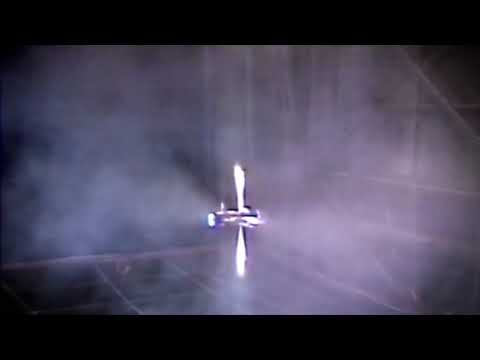
Omnidirectional pulse thrusters eliminate aerodynamic constraints, enabling miniaturized interceptors to execute rapid divert maneuvers no piloted aircraft can match.
AI-assisted summary of EKV/KV/KW/KKV/LEAP (Exoatmospheric Kill Vehicles) Hover Test - Compilation Video (SM-3, GBI, etc.) — original source. Check the original for full context.
Source published:
Key ideas
- Exoatmospheric Kinetic Kill Vehicles rely on high-response reaction thrusters and gyroscopic stabilization rather than aerodynamic lift, enabling instantaneous divert maneuvers to intercept ballistic missiles and orbital satellites. (0:00)
- The Strategic Defense Initiative transitioned kill vehicle development into the Lightweight Exo-Atmospheric Projectile (LEAP) program, achieving significant component miniaturization by late 1990. (0:47)
- Miniaturization directly supported the space-based Brilliant Pebbles concept by slashing launch costs and lowering interceptor observability in orbit. (0:47)
- Hover tests validated closed-loop autonomous capability, including seeker acquisition of thermal booster plumes and handoff to the missile hardbody for hit-to-kill intercepts. (0:47)
Detailed notes
## Background Published on YouTube by CR0wm p on August 17, 2020, this video is a compilation of hover tests featuring various exoatmospheric projectiles, including SM-3 and GBI interceptors. The description highlights early testing milestones at the NHTF with the KHIT experimental hover vehicle in April 1989, documenting a 24-second flight of a 200-pound prototype that maneuvered via bipropellant rocket engines before landing in a capture net.
## TL;DR The video showcases the development and testing of kinetic kill vehicles (KKVs) and Lightweight Exo-Atmospheric Projectiles (LEAP) designed to destroy ballistic missiles and orbital satellites without aerodynamic control surfaces. Relying on gyroscopic stabilization and violent omnidirectional reaction thruster pulses, these compact interceptors execute jarring, instantaneous divert maneuvers impossible for conventional piloted aircraft. The footage demonstrates critical hover tests conducted under the Strategic Defense Initiative's Brilliant Pebbles architecture, verifying closed-loop autonomous tracking, component miniaturization, and seamless sensor handoff from hot booster plumes to the target's hardbody.
## Atmosphere & style The compilation carries a sterile, clinical Cold War documentary vibe marked by retro test footage and steady, technical voiceover narration. Watching the compact, 12-inch mechanical interceptors hover mid-air feels uncanny and almost violent, punctuated by sharp bursts of fire, billowing smoke, and robotic thruster snaps. Tense control room callouts emphasize the razor-thin margin of error during free-flight tests, instilling a sense of awe at early autonomous guidance systems achieving unprecedented agility without human intervention.
## Bulletin - [00:00](https://www.youtube.com/watch?v=RnofCyaWhI0&t=0s) Exoatmospheric Kinetic Kill Vehicles rely on high-response reaction thrusters and gyroscopic stabilization rather than aerodynamic lift, enabling instantaneous divert maneuvers to intercept ballistic missiles and orbital satellites. - [00:47](https://www.youtube.com/watch?v=RnofCyaWhI0&t=47s) The Strategic Defense Initiative transitioned kill vehicle development into the Lightweight Exo-Atmospheric Projectile (LEAP) program, achieving significant component miniaturization by late 1990. - [00:47](https://www.youtube.com/watch?v=RnofCyaWhI0&t=47s) Miniaturization directly supported the space-based Brilliant Pebbles concept by slashing launch costs and lowering interceptor observability in orbit. - [00:47](https://www.youtube.com/watch?v=RnofCyaWhI0&t=47s) Hover tests validated closed-loop autonomous capability, including seeker acquisition of thermal booster plumes and handoff to the missile hardbody for hit-to-kill intercepts.
## Key takeaways - [00:00](https://www.youtube.com/watch?v=RnofCyaWhI0&t=0s) Kinetic kill vehicles operate free from human physiological constraints, enabling airframes engineered purely for radical exoatmospheric agility. - [00:00](https://www.youtube.com/watch?v=RnofCyaWhI0&t=0s) Primary operational objectives include the kinetic destruction of nuclear ballistic missiles and satellites without using aerodynamic control surfaces. - [00:00](https://www.youtube.com/watch?v=RnofCyaWhI0&t=0s) Compact interceptors measure roughly 12 inches in length and utilize perimeter-mounted pulse thrusters for omnidirectional axis translation. - [00:00](https://www.youtube.com/watch?v=RnofCyaWhI0&t=0s) Internal gyroscopic stabilization provides attitude control and precision alignment during violent thruster firings. - [00:00](https://www.youtube.com/watch?v=RnofCyaWhI0&t=0s) Hover test telemetry confirms real-time automated tracking and attitude stabilization in flight regimes no conventional aircraft could match. - [01:21](https://www.youtube.com/watch?v=RnofCyaWhI0&t=81s) The KHIT experimental hover vehicle performed early flight testing in April 1989, completing a 24-second preprogrammed hover before netting safely. - [00:47](https://www.youtube.com/watch?v=RnofCyaWhI0&t=47s) Development evolved into the Lightweight Exo-Atmospheric Projectile (LEAP) and Terrier LEAP programs under the Strategic Defense Initiative. - [00:47](https://www.youtube.com/watch?v=RnofCyaWhI0&t=47s) Late 1990 hover testing demonstrated radical mass and component reduction, making Brilliant Pebbles interceptors cheaper to launch and harder to detect. - [00:47](https://www.youtube.com/watch?v=RnofCyaWhI0&t=47s) Onboard infrared seekers proved autonomous acquisition and closed-loop tracking of simulated rocket stage thermal signatures. - [00:47](https://www.youtube.com/watch?v=RnofCyaWhI0&t=47s) Guidance algorithms successfully demonstrated the handoff sequence from tracking bright rocket booster plumes to targeting the cold missile hardbody.
## Detailed walkthrough ### [00:00](https://www.youtube.com/watch?v=RnofCyaWhI0&t=0s) Kinetic Kill Vehicles and High-Agility Thruster Flight
Free from the physical constraints and physiological limits of a human pilot, kinetic interceptors utilize radical airframe configurations and specialized propulsion systems designed strictly for exoatmospheric interception. Originally developed to neutralize incoming nuclear ballistic missiles and orbital satellites, these compact vehicles depend entirely on rapid kinetic divert maneuvers rather than aerodynamic lift. Measuring approximately 12 inches in length, the vehicle relies on internal gyroscopic stabilization paired with high-response reaction thrusters placed at critical points around its perimeter, allowing instantaneous, jarring changes in flight direction.
During tethered and free-flight hover trials, test engineers monitor telemetry as the guidance unit executes attitude stabilization and target acquisition sequences. Control room calls verify each milestone as the thruster pulses fire violently to stabilize the body mid-air: "Two, one, hover... tracking... hover... control." Highlighting the insurmountable disparity in agility between conventional aerodynamic platforms and reaction-control kill vehicles, the narrator emphasizes: “No airplane could ever catch this machine.”
- **Design Purpose:** Interception and destruction of nuclear ballistic missiles and orbital satellites in flight. - **Physical Envelope:** Approximately 12 inches in length with integrated gyroscopically balanced stabilization. - **Maneuverability:** Omnidirectional pulse thrusters capable of instantaneous axis translation and line-of-sight corrections without aerodynamic surfaces.
```mermaid flowchart TD accTitle: Kinetic Kill Vehicle Hover Test Architecture accDescr: Sequence diagram showing acquisition, tracking, thruster control, plume-to-hardbody handoff, and net recovery.
subgraph Sensors ["Sensor & Guidance Unit"] A["Gyroscopic Inertial Platform"] --> C["Guidance Computer"] B["Infrared Seeker"] --> C end
subgraph Flight ["Reaction Propulsion"] C --> D["Attitude Control Thrusters"] C --> E["Divert Thruster Pulses"] end
subgraph Engagement ["Target Tracking & Termination"] B -->|"Acquires"| F["Simulated Booster Plume"] F -->|"Handoff"| G["Missile Hardbody Track"] E --> H["Terminal Intercept / Net Capture"] end ```
[00:47](https://www.youtube.com/watch?v=RnofCyaWhI0&t=47s) Miniaturization, LEAP, and the Brilliant Pebbles Hover Tests
Through organizational restructuring and programmatic shifts, the technology progressed into the Lightweight Exo-Atmospheric Projectile (LEAP) program, accompanied by the Terrier LEAP demonstration phase. By late 1990, engineers conducted critical hover tests demonstrating substantial gains in component miniaturization. Compared to the massive initial prototype rigs, the refined test vehicle incorporated guidance, control, and lethality packages into a drastically reduced mass footprint. As the narrator explains the strategic value of this scale reduction, “This miniaturization reduces the cost of boosting into space and makes a brilliant Pebble truly a pebble and much more difficult to find.”
Conducted under the auspices of the Strategic Defense Initiative (SDI), the full-duration flight testing served as a vital milestone for the space-based interceptor architecture designated as Brilliant Pebbles. The free-flight hover envelope verified fully integrated autonomous tracking, attitude control, and target discrimination in an operational profile. Positioned inside the testing enclosure, the interceptor seeker autonomously acquired and tracked an active heat source simulating the thermal signature of a boosting rocket stage placed beyond a partition wall. Describing the seamless integration of subsystems operating without human intervention, the narrator observes: “This hover test brought together all the elements of acquisition tracking control and independent operation.”
- **Program Evolution:** Transition from early experimental hover vehicles into the Lightweight Exo-Atmospheric Projectile (LEAP) program and the Terrier LEAP flight demonstration phase. - **Payload Miniaturization:** Dramatically scaled-down vehicle mass, slashing booster launch requirements and reducing orbital observability. - **Autonomous Sensor Operation:** Unassisted acquisition and tracking of a high-temperature thermal target through closed-loop guidance logic. - **Handoff Sequence:** Seeker guidance transition from tracking the high-intensity rocket booster exhaust plume directly onto the cold missile hardbody to achieve hit-to-kill kinetic impact.
## Mentioned EKV, KV, KW, KKV, LEAP, SM-3, GBI, NHTF, KHIT, Terrier LEAP, Strategic Defense Initiative, Brilliant Pebbles
## Video description Compilation video of Exoatmospheric projectiles' hover test.
1:21 The first tests at the NHTF involved the KHIT experimental hover vehicle (EHV) and culminated in April 1989 with the first full up hover test of a KKV prototype. During the 24 second flight, the 200 pound EHV, using its bipropellant rocket engines, maneuvered through a preprogrammed hover flight trajectory and safely landed in the capture net.
[Source](https://www.youtube.com/watch?v=RnofCyaWhI0)