uBeam Demos Ultrasound Wireless Power at D9, Targets Fall Launch
Phạm Quốc Thiện
The startup claims dynamic beam steering will bypass acoustic line-of-sight limits after proving an 8-volt power transfer across open air.
AI-assisted summary of uBeam.flv — original source. Check the original for full context.
Source published:
Key ideas
- At the D9 conference, uBeam publicly demonstrated an ultrasound-based wireless charging bench setup that beams electrical power through the air to an acoustic receiver. (0:03)
- The prototype generated approximately 8 volts across a tabletop distance, surpassing the standard 5-volt threshold needed to charge USB devices and iPhones. (0:03)
- Acoustic power transfer strictly depends on an unobstructed path, with physical barriers such as a hand instantly cutting voltage to zero. (0:03)
- To bypass practical line-of-sight limitations in homes, uBeam announced plans for an automated tracking and steering system to follow roaming devices within a room. (1:32)
- The company outlined an aggressive development schedule, projecting the launch of its first commercial consumer product by late fall 2011. (1:32)
Detailed notes
## Background This video was published on YouTube by user Phạm Quốc Thiện on June 1, 2011. The upload provides no video description or show notes.
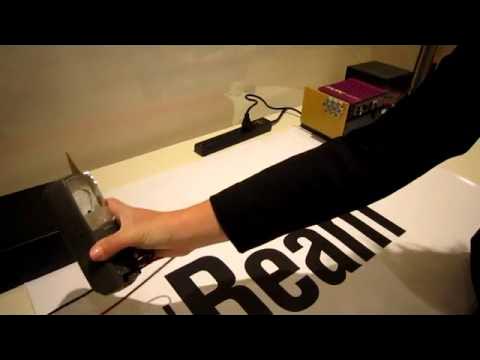
## TL;DR At the D9 conference, Darren from Engadget receives a live demonstration of uBeam's ultrasound-based wireless power system. The presenter demonstrates an acoustic transmitter sending power across a tabletop gap to a receiver, showing an output of around 8 volts on a meter—surpassing the 5-volt threshold required to charge mobile devices. The demo reveals the physical limitations of the technology when a hand blocks the line of sight and cuts the current instantly. Addressing practical use, the demonstrator explains plans for automated transmitter-receiver tracking to mitigate line-of-sight obstacles, projecting an ambitious commercial release by fall 2011.
## Atmosphere & style The presentation carries the candid, unvarnished energy of an impromptu conference-floor demo, characterized by benchtop wiring, direct hands-on testing, and the casual admission of a dead phone battery. The interaction between Darren and the uBeam presenter feels collaborative and curious, pairing journalistic skepticism with startup enthusiasm. It conveys the optimistic, fast-paced spirit of early-2010s hardware innovation where ambitious technical claims meet unpolished physical prototypes.
## Bulletin - [00:03](https://www.youtube.com/watch?v=RoHxyweJcZI&t=3s) At the D9 conference, uBeam publicly demonstrated an ultrasound-based wireless charging bench setup that beams electrical power through the air to an acoustic receiver. - [00:03](https://www.youtube.com/watch?v=RoHxyweJcZI&t=3s) The prototype generated approximately 8 volts across a tabletop distance, surpassing the standard 5-volt threshold needed to charge USB devices and iPhones. - [00:03](https://www.youtube.com/watch?v=RoHxyweJcZI&t=3s) Acoustic power transfer strictly depends on an unobstructed path, with physical barriers such as a hand instantly cutting voltage to zero. - [01:32](https://www.youtube.com/watch?v=RoHxyweJcZI&t=92s) To bypass practical line-of-sight limitations in homes, uBeam announced plans for an automated tracking and steering system to follow roaming devices within a room. - [01:32](https://www.youtube.com/watch?v=RoHxyweJcZI&t=92s) The company outlined an aggressive development schedule, projecting the launch of its first commercial consumer product by late fall 2011.
## Key takeaways - [00:03](https://www.youtube.com/watch?v=RoHxyweJcZI&t=3s) uBeam showcased functional over-the-air wireless power transmission using high-frequency ultrasound at the D9 conference. - [00:03](https://www.youtube.com/watch?v=RoHxyweJcZI&t=3s) The system operates by converting electrical power into acoustic waves that travel through the air to a dedicated receiver module. - [00:03](https://www.youtube.com/watch?v=RoHxyweJcZI&t=3s) The bench setup produced roughly 8 volts across the gap, exceeding the 5 volts required for standard smartphone USB charging. - [00:03](https://www.youtube.com/watch?v=RoHxyweJcZI&t=3s) The connected iPhone did not actively take charge during the demo because of a faulty replacement battery installed earlier that morning. - [00:03](https://www.youtube.com/watch?v=RoHxyweJcZI&t=3s) Voltage delivery varied inversely with distance, climbing higher as the receiver moved closer to the ultrasound transmitter. - [00:03](https://www.youtube.com/watch?v=RoHxyweJcZI&t=3s) Acoustic power transmission requires an unbroken line of sight; obstructing the path with a hand instantly dropped the power readout to zero. - [00:03](https://www.youtube.com/watch?v=RoHxyweJcZI&t=3s) Power transfer restored immediately once the physical obstruction was removed from between the transmitter and receiver. - [01:32](https://www.youtube.com/watch?v=RoHxyweJcZI&t=92s) Future consumer iterations were planned to incorporate dynamic tracking to automatically aim the acoustic beam at devices moving around a room. - [01:32](https://www.youtube.com/watch?v=RoHxyweJcZI&t=92s) Dynamic beam steering was designed to make the system feel non-line-of-sight to the end consumer despite physical acoustic line-of-sight constraints. - [01:32](https://www.youtube.com/watch?v=RoHxyweJcZI&t=92s) uBeam expressed confidence in an aggressive commercial roadmap, projecting a first product release by the end of fall 2011.
## Detailed walkthrough ### [00:03](https://www.youtube.com/watch?v=RoHxyweJcZI&t=3s) Demonstrating Ultrasound Wireless Power at D9
At the D9 conference, Darren from Engadget visits the uBeam booth for a live demonstration of the startup's ultrasound-based wireless charging technology. The demonstrator powers on the bench setup, pointing an ultrasound transmitter toward a receiver module connected to a voltage meter and an iPhone via a USB adapter. As the device activates, the meter immediately registers voltage transmitted wirelessly through the air. The presenter proves that power transfer relies on an uninterrupted acoustic beam by placing a hand directly between the units: the voltage instantly drops to zero, and it immediately restores when the path is cleared.
```mermaid flowchart LR accTitle: uBeam Acoustic Power Transfer Flow accDescr: Diagram showing power flowing from transmitter via ultrasound beam to receiver and USB device, interrupted by physical obstructions.
subgraph TX ["Transmitter Unit"] A["Ultrasound Transmitter"] end
subgraph RX ["Receiver Setup"] B["Acoustic Receiver"] C["Power Meter (~8V Generated)"] D["USB / Phone (5V Required)"] end
A -->|"Ultrasound beam (Line of Sight)"| B B --> C C --> D ```
While the demonstrator notes that the iPhone itself is not actively taking power because “the battery that I put in earlier this morning is isn't working right now,” the meter confirms that the acoustic transducer is outputting approximately 8 volts across the gap. Because standard USB devices and iPhones only require 5 volts to charge, the link is generating more than enough juice to power the phone. To illustrate the inverse relationship between distance and power transfer, the presenter slides the receiver closer to the transmitter, prompting the voltage readout to climb even higher before pulling it back to demonstrate consistent baseline delivery.
- The demonstration rig beams electrical power converted into high-frequency ultrasound through the air to an acoustic receiver. - Breaking the physical line of sight by placing a hand between the transmitter and receiver immediately halts the power stream. - The prototype produces roughly 8 volts across the displayed tabletop distance, comfortably exceeding the 5-volt threshold required for standard USB mobile charging.
---
[01:32](https://www.youtube.com/watch?v=RoHxyweJcZI&t=92s) Target Tracking and Product Release Timetable
Turning to consumer practicality, Darren asks about the strict line-of-sight requirement and whether future iterations will demand an unobstructed path between the wall and the device. The demonstrator clarifies that the underlying acoustic physics will technically always require a direct path, but uBeam intends to mask this constraint through an intelligent transmitter-receiver pairing and steering system. In a finished consumer setup, the base station will automatically track and target the receiver's location as a user moves naturally throughout a room. As the presenter explains, “so to the user it will effectively not be line of sight but it'll function as as line of sight.”
When pressed on commercial availability, the uBeam team expresses high confidence in their development roadmap. The presenter reveals an aggressive development schedule, stating, “expect to have our first product uh hopefully by the end of this fall,” before wrapping up the live hardware demonstration.
- Commercial hardware is planned to feature dynamic tracking between transmitter and receiver to continuously aim the beam at roaming devices within a room. - uBeam projected releasing its first consumer-ready ultrasound wireless charging product as early as the fall of 2011.
## Mentioned uBeam, D9 Conference, Darren, Engadget, iPhone, Phạm Quốc Thiện
[Source](https://www.youtube.com/watch?v=RoHxyweJcZI)