Long-Range EVs Produce More Lifetime CO2 Than Gas Cars, Conway Says
TEDx Talks
Heavy battery manufacturing emissions combined with fossil-fueled power grids cause long-range electric vehicles to emit more lifetime carbon than conventional cars, making hybrids the cleaner immediate alternative.
AI-assisted summary of The Contradictions of Battery Operated Vehicles | Graham Conway | TEDxSanAntonio — original source. Check the original for full context.
Source published:
Key ideas
- Evaluating vehicles solely by tailpipe emissions is fundamentally flawed because it ignores upstream electricity generation and heavy battery manufacturing footprints. (1:50)
- Roughly two-thirds of global electricity currently comes from fossil fuels, meaning battery electric vehicles largely shift emissions from tailpipes to power plant smokestacks. (4:53)
- A standard short-range EV requires 80,000 to 90,000 miles to offset its initial manufacturing carbon debt, while a 400-mile range EV can emit more total lifecycle CO2 than a conventional gasoline vehicle over its 180,000-mile lifetime. (6:48)
- Hybrid vehicles offer an immediate, superior climate solution under current grid conditions, requiring up to 450,000 miles for an EV to break even against them. (10:07)
Detailed notes
## Background Published on YouTube by the TEDx Talks channel on January 31, 2020, this presentation features Dr. Graham Conway speaking at TEDxSanAntonio. The video's description explains that the talk challenges the assumption that Battery Electric Vehicles (BEVs) are inherently environmentally friendly, arguing instead that rolling out BEVs before decarbonizing electricity grids and manufacturing chains is premature, while highlighting hybrid vehicles as an immediate alternative (accompanied by an editorial disclaimer from TED stating that several claims lack scientific support).
## TL;DR Dr. Graham Conway examines the life-cycle carbon footprint of battery electric vehicles compared to conventional and hybrid powertrains. He argues that measuring emissions solely at the tailpipe creates a misleading 'zero emissions' label while ignoring the heavy carbon debt incurred during battery manufacturing and upstream fossil-fuel electricity generation. Conway demonstrates that long-range electric vehicles on the current global grid can emit more lifetime CO2 than conventional cars over 180,000 miles. Consequently, he advocates for hybrid vehicles and renewable synthetic fuels as more effective immediate solutions while the energy grid undergoes long-term decarbonization.
## Atmosphere & style The presentation opens with intentional provocation before settling into an engaging, analytical engineering lecture. Conway balances sharp humor, such as comparing a horse's respiration to a Corvette's exhaust, with methodical life-cycle breakdowns that systematically challenge conventional green narratives. The mood feels intellectually disruptive yet pragmatic, taking the audience on an arc from initial skepticism through data-driven recalibration, culminating in a reflective closing challenge to reconsider simplistic technological solutions.
## Bulletin - [01:50](https://www.youtube.com/watch?v=S1E8SQde5rk&t=110s) Evaluating vehicles solely by tailpipe emissions is fundamentally flawed because it ignores upstream electricity generation and heavy battery manufacturing footprints. - [04:53](https://www.youtube.com/watch?v=S1E8SQde5rk&t=293s) Roughly two-thirds of global electricity currently comes from fossil fuels, meaning battery electric vehicles largely shift emissions from tailpipes to power plant smokestacks. - [06:48](https://www.youtube.com/watch?v=S1E8SQde5rk&t=408s) A standard short-range EV requires 80,000 to 90,000 miles to offset its initial manufacturing carbon debt, while a 400-mile range EV can emit more total lifecycle CO2 than a conventional gasoline vehicle over its 180,000-mile lifetime. - [10:07](https://www.youtube.com/watch?v=S1E8SQde5rk&t=607s) Hybrid vehicles offer an immediate, superior climate solution under current grid conditions, requiring up to 450,000 miles for an EV to break even against them.
## Key takeaways - [00:04](https://www.youtube.com/watch?v=S1E8SQde5rk&t=4s) The speaker affirms belief in climate change but argues that current classifications and the rushed market deployment of battery electric vehicles are counterproductive. - [01:50](https://www.youtube.com/watch?v=S1E8SQde5rk&t=110s) Tailpipe-only emissions regulations create the misleading illusion of 'zero emissions' by isolating the vehicle exhaust rather than accounting for total planetary carbon mass balance. - [01:50](https://www.youtube.com/watch?v=S1E8SQde5rk&t=110s) A working horse exhales as much CO2 per mile as a Chevrolet Corvette, illustrating how narrow localized emissions measurements fail to capture the difference between a closed biological carbon cycle and linear fossil fuel extraction. - [04:53](https://www.youtube.com/watch?v=S1E8SQde5rk&t=293s) Approximately 66% of utility-scale electricity worldwide is generated by burning fossil fuels, meaning charging an EV predominantly shifts combustion upstream rather than eliminating it. - [06:48](https://www.youtube.com/watch?v=S1E8SQde5rk&t=408s) Promotional carbon-offset charts often mislead consumers by assuming vehicles materialize at zero miles with zero carbon debt, ignoring resource-intensive manufacturing emissions. - [06:48](https://www.youtube.com/watch?v=S1E8SQde5rk&t=408s) Manufacturing an entry-level EV creates roughly 12 tons of CO2 compared to 6 tons for a conventional vehicle, requiring 80,000 to 90,000 miles of driving just to break even. - [06:48](https://www.youtube.com/watch?v=S1E8SQde5rk&t=408s) Equipping an EV with a 400-mile range battery inflates manufacturing emissions so severely that its total lifecycle emissions exceed those of a traditional gasoline car across an average 180,000-mile lifespan. - [10:07](https://www.youtube.com/watch?v=S1E8SQde5rk&t=607s) Hybrid vehicles provide an immediate carbon-reduction solution because their modest battery packs incur almost no manufacturing penalty while significantly cutting operational fuel consumption. - [10:07](https://www.youtube.com/watch?v=S1E8SQde5rk&t=607s) A long-range electric vehicle would need to drive approximately 450,000 miles to achieve carbon parity with a modern hybrid vehicle under current conditions. - [10:07](https://www.youtube.com/watch?v=S1E8SQde5rk&t=607s) Fully realizing the environmental promise of EVs will require decades of work and trillions of dollars in investments to decarbonize utility grids and battery supply chains. - [12:25](https://www.youtube.com/watch?v=S1E8SQde5rk&t=745s) Renewable synthetic fuels made from water and captured CO2 could create a closed-loop carbon cycle for combustion engines if powered by clean energy. - [13:12](https://www.youtube.com/watch?v=S1E8SQde5rk&t=792s) Rather than a dogmatic all-electric mandate, the sustainable path forward is an 'eclectic' transportation future combining internal combustion engines, hybrids, and EVs suited to their specific use cases.
## Detailed walkthrough ### [00:04](https://www.youtube.com/watch?v=S1E8SQde5rk&t=4s) Capturing Attention and Redefining the EV Debate
Dr. Graham Conway opens his presentation with a deliberate shock tactic designed to jolt the room: “Climate change is a hoax. And the electric vehicle is an abomination.” After letting the provocation land, he admits that someone once told him the best way to command an audience's attention is to offend them, and nothing offends modern sensibilities quite like dismissing climate change. In reality, he affirms that he genuinely believes in climate change and acknowledges that society shares a collective desire for the planet to survive. However, he explains that his real quarrel lies with how we classify and evaluate electric vehicles, warning that his analysis will still ruffle feathers and invite vitriol in the YouTube comments section.
Conway is quick to establish that he is not anti-EV on principle. He considers battery electric vehicles to be the inevitable future of personal mobility, praising their ability to clean up air quality in crowded urban cores, their responsiveness and driving dynamics, and everyday perks like preferential parking. Having personally owned an EV for three years, he speaks from experience when calling it a great car. Yet, he makes a critical distinction: while electric vehicles will unquestionably hold a vital place in our transportation future, rushing to deploy them today is misguided. To frame the dilemma, he poses a thought experiment to the audience, noting that there are roughly one billion passenger cars traversing the globe today and asking whether anyone given a magic button to instantly convert every single one of them into an electric vehicle would press it.
- There are currently approximately 1 billion passenger cars in operation worldwide. - Conway owned an electric vehicle for 3 years and speaks highly of its urban driving dynamics and local air-quality benefits.
---
[01:50](https://www.youtube.com/watch?v=S1E8SQde5rk&t=110s) The Tailpipe Box and the Horse Analogy
Conway approaches the climate crisis from a mass-balance perspective: if you placed an imaginary sealed box around the entire planet, the concentration of trapped greenhouse gases, specifically carbon dioxide, is undeniably climbing. A significant portion of this rise stems from the passenger cars and light trucks running on roads every day. Under current vehicle regulations and testing protocols, emissions are quantified by effectively placing a small box around the tailpipe and analyzing whatever comes out of it. Because a pure battery electric vehicle produces zero tailpipe emissions inside that narrow frame, the automotive industry and society have labeled it "zero emissions," while branding standard combustion vehicles as dirty.
```mermaid flowchart TD accTitle: Carbon Cycle Comparison accDescr: Comparing the cyclical biogenic emissions of a horse to the linear fossil emissions of a combustion car.
subgraph BiogenicCycle["Closed Biological Cycle"] Plants["Plants & Crops"] -->|"Photosynthesis (absorbs CO2)"| O2["Oxygen (O2)"] O2 -->|"Inhaled by"| Horse["Working Horse"] Horse -->|"Exhaled CO2"| Plants end
subgraph FossilCycle["Linear Fossil Extraction"] Ground["Crude Oil in Ground"] -->|"Extraction & Refining"| Fuel["Gasoline / Diesel"] Fuel -->|"Combustion"| Tailpipe["Vehicle Tailpipe"] Tailpipe -->|"Net Atmospheric Increase"| Atmos["CO2 Accumulation in Atmosphere"] end ```
To expose the fundamental flaw in this tailpipe-only accounting, Conway introduces an intentionally absurd alternative: what if, instead of turning those 1 billion cars into EVs, we replaced all of them with horses? A working horse inhales oxygen and exhales carbon dioxide, meaning that if you placed the same regulatory measurement box around a horse, you would detect clear CO2 emissions. In fact, if you rode a horse over the identical distance traveled by an automobile, the mathematical tailpipe measurement yields an astonishing result: the horse exhales as much carbon dioxide as a Chevrolet Corvette. Conway points out that under the industry's existing metric, one would have to deduce that replacing all automobiles with horses would blanket the earth in the carbon equivalent of one billion Corvettes.
Intuition instantly rejects that conclusion, and Conway validates the audience's skepticism. A horse's respiration operates within a closed biogenic carbon loop: the CO2 exhaled by the animal is absorbed by plants through photosynthesis, which in turn produce the oxygen the horse breathes. The carbon concentration does not rise because it remains trapped in a balanced cycle. Internal combustion engines, by contrast, pull fossil petroleum out of deep geological formations and burn it, pumping previously sequestered carbon into the open atmosphere where it continuously accumulates. Conway emphasizes how dangerous localized measuring can be, warning that “based on how we currently measure CO2, you could not possibly have come to this conclusion without doing this type of analysis.”
- Riding a horse generates the equivalent CO2 respiration output of driving a Chevrolet Corvette over the same travel distance. - Biological respiration exists within a closed carbon cycle, whereas burning fossil fuel introduces net-new carbon into the atmosphere.
---
[04:53](https://www.youtube.com/watch?v=S1E8SQde5rk&t=293s) Expanding the Box: Global Electricity and the Real EV Footprint
Turning the same critical lens back onto the electric vehicle, Conway highlights that an EV may not burn liquid hydrocarbon fuel within its chassis, but it relies entirely on electricity drawn from an external grid. To evaluate its actual impact, one must widen the regulatory boundary to incorporate the power stations supplying that energy. Vast amounts of coal, natural gas, and oil are extracted from the earth and incinerated in power plants to generate electricity, venting massive volumes of carbon dioxide straight into the sky. Just like petroleum refining, this power-plant carbon flow has no natural balancing arrow returning it to the earth; it is an open, cumulative fossil pipeline.
Conway anticipates the familiar objection from eco-conscious EV drivers who point out that their cars are charged using domestic rooftop solar arrays. While that may hold true for an individual homeowner in a developed suburb, greenhouse gas accumulation is an indifferent global phenomenon that requires looking at macro-level energy production. Across the planet as a whole, approximately two-thirds of all utility-scale electricity is generated directly by burning fossil fuels. When drivers connect their vehicles to the wall, they are, in the vast majority of cases, triggering fossil fuel combustion somewhere upstream. Conway argues that the sector has simply executed an accounting trick: “You see, the automotive industry has cleverly found a way to move the problem, not solve the problem.”
- Approximately two-thirds (around 66%) of all global electricity generation relies on burning fossil fuels such as coal, oil, and natural gas. - Tailpipe-only measurements conceal upstream power generation emissions, effectively shifting pollution from vehicle exhaust to power station smokestacks.
---
[06:48](https://www.youtube.com/watch?v=S1E8SQde5rk&t=408s) Manufacturing Penalties and the Range Dilemma
To determine whether an electric vehicle is genuinely cleaner than an internal combustion engine (ICE) counterpart, Conway looks at full life-cycle emissions across an average vehicle lifetime of 180,000 miles before scrappage. Standard marketing charts often depict EVs as massively cleaner over this lifespan, showing a traditional gasoline car producing roughly 30 tons of lifetime CO2 while the electric car produces significantly less thanks to electric motor efficiency and modest renewable grid contributions. However, Conway points out the fatal flaw in those promotional charts: they plot carbon emissions starting at zero tons when the vehicle odometer reads zero miles, implying that both vehicles miraculously materialize on the showroom floor out of thin air.
| Metric / Stage | Conventional Gasoline Vehicle | Small-Battery EV (125-mile range) | Long-Range EV (400-mile range) | Hybrid Vehicle | |:--- |:--- |:--- |:--- |:--- | | **Manufacturing CO2 (Showroom gate)** | ~6 tons | ~12 tons | Significantly higher than 12 tons | ~6–7 tons (similar to conventional) | | **Vehicle Range** | ~400 miles | ~125 miles | ~400 miles | Full conventional range | | **Carbon Break-Even Point** | Baseline | 80,000 – 90,000 miles | Exceeds vehicle lifetime (>180,000 mi) | Outperforms long-range EV up to ~450,000 mi | | **Lifetime CO2 (at 180,000 miles)** | ~30 tons | Lower than conventional | **Higher** than conventional | Substantially lower than conventional |
In the physical world, vehicle manufacturing carries a heavy carbon debt through resource mining, global supply lines, parts stamping, and assembly. A conventional combustion car rolls onto the dealership floor with an embedded manufacturing footprint of about 6 tons of CO2. For an electric vehicle, that initial manufacturing burden balloons: harvesting rare mineral chemistries and executing high-energy battery cell manufacturing pushes its showroom deficit to roughly 12 tons of CO2. Consequently, a small electric vehicle must be driven 80,000 to 90,000 miles just to break even with the initial carbon debt of a combustion vehicle.
Furthermore, this break-even calculation assumes an entry-level EV with an impractical 125-mile battery pack. In vast regions like Texas or across interstate corridors, consumers demand vehicles capable of matching a conventional car's 400-mile range. Quadrupling the battery pack's capacity to deliver 400 miles inflates the embedded manufacturing carbon penalty dramatically. Conway explains that when you account for an equivalent 400-mile range on the current global grid, the long-range EV never catches up: “Over its expected lifetime, it has emitted more CO2 than the conventional vehicle. It has contributed more to climate change than the conventional vehicle, and that is the crux of the problem.”
- Average vehicle operational life prior to scrappage is roughly 180,000 miles. - Conventional ICE car embedded manufacturing footprint: ~6 tons of CO2. - Short-range EV (125-mile range) embedded manufacturing footprint: ~12 tons of CO2, requiring 80,000 to 90,000 miles of driving to reach parity with an ICE car. - A 400-mile range EV incurs such a steep initial battery manufacturing carbon penalty that its total lifetime footprint surpasses that of a conventional gasoline car over 180,000 miles.
---
[10:07](https://www.youtube.com/watch?v=S1E8SQde5rk&t=607s) The Hybrid Solution and the Long Road to a Clean Future
Rather than clinging to the misleading promise of zero-emission battery electric vehicles, Conway insists that the automotive sector should deploy practical engineering solutions ready right now. The most effective bridge technology is the standard hybrid vehicle. Hybrids marry a small, efficient internal combustion engine with an electric motor that assists during low-speed driving and stop-and-go acceleration, precisely where combustion engines are least thermodynamically efficient. Because a hybrid carries a compact battery pack, its upfront manufacturing emissions are nearly identical to those of a standard ICE car (around 6 tons), yet its superior fuel economy dramatically lowers its slope of operational emissions. Conway notes that an EV would have to run for roughly 450,000 miles before overcoming its carbon deficit compared to a modern hybrid.
Conway reiterates that he does not want to demonize EVs, but cautions against aggressively mandating their adoption before cleaning up the primary supply chains. For electric cars to truly deliver on their environmental promise, the world must first invest trillions of dollars and commit several decades to constructing utility-scale wind and solar infrastructure to clean the grid, alongside pioneering low-carbon battery chemistries and extraction processes. Until that green infrastructure exists globally, rushing to push heavy battery packs onto a fossil-dominated grid is counterproductive. Conway urges transparency in public policy and consumer education, stressing that “what we need to do instead is continue to invest in the internal combustion engine.”
- Offsetting the initial carbon burden of a long-range EV compared to a hybrid requires driving approximately 450,000 miles. - Hybrid vehicles carry a negligible manufacturing carbon penalty over conventional cars while cutting lifetime operational emissions substantially. - Achieving a truly clean EV ecosystem will require trillions of dollars and decades of grid modernization, renewable build-outs, and advanced battery manufacturing techniques.
[12:25](https://www.youtube.com/watch?v=S1E8SQde5rk&t=745s) Renewable Fuels and the Case for Hybrids
Graham Conway explains that another viable pathway forward is the development and use of renewable fuels. This process involves taking water and combining it with captured waste carbon dioxide to synthesize liquid fuel for transportation. While there is a practical reason this technology is not widely implemented today—namely, that the conversion process demands an enormous amount of energy—it becomes a fully viable climate solution if that energy is supplied entirely by renewable sources. In doing so, a closed CO2 cycle is established, recycling ambient or industrial emissions rather than drawing new fossil carbon out of the ground.
When factoring in this closed carbon loop, the lifetime emissions profile for hybrid vehicles improves dramatically. Conway stresses that drivers do not even need to wait for the widespread rollout of synthetic renewable fuels to make a meaningful difference; hybrid vehicles already offer substantial climate advantages under current conditions. As Conway emphasizes: “Even without renewable fuels, we should still consider buying hybrids today if we want to impact climate change now.”
- **Renewable fuel synthesis**: Water is chemically combined with waste CO2 to produce drop-in vehicle fuels. - **Energy requirements**: While highly energy-intensive, the process has zero net negative impact on the climate as long as the inputs are powered by renewable energy. - **Immediate climate impact**: Choosing hybrid vehicles today reduces overall lifecycle emissions immediately, without relying on future grid decarbonization.
```mermaid flowchart LR accTitle: Closed-Loop Renewable Fuel Cycle accDescr: Diagram illustrating how water and waste CO2 are converted into vehicle fuel using renewable energy.
subgraph Inputs ["Inputs"] W["Water"] C["Waste CO2"] end
subgraph Process ["Synthesis"] E["Renewable Energy"] R["Fuel Synthesis"] end
subgraph Output ["Application"] F["Renewable Liquid Fuel"] H["Hybrid Vehicles"] end
W --> R C --> R E --> R R --> F F --> H H -.->|"Recycled Emissions"| C ```
[13:12](https://www.youtube.com/watch?v=S1E8SQde5rk&t=792s) An Eclectic Future and the Ultimate Question
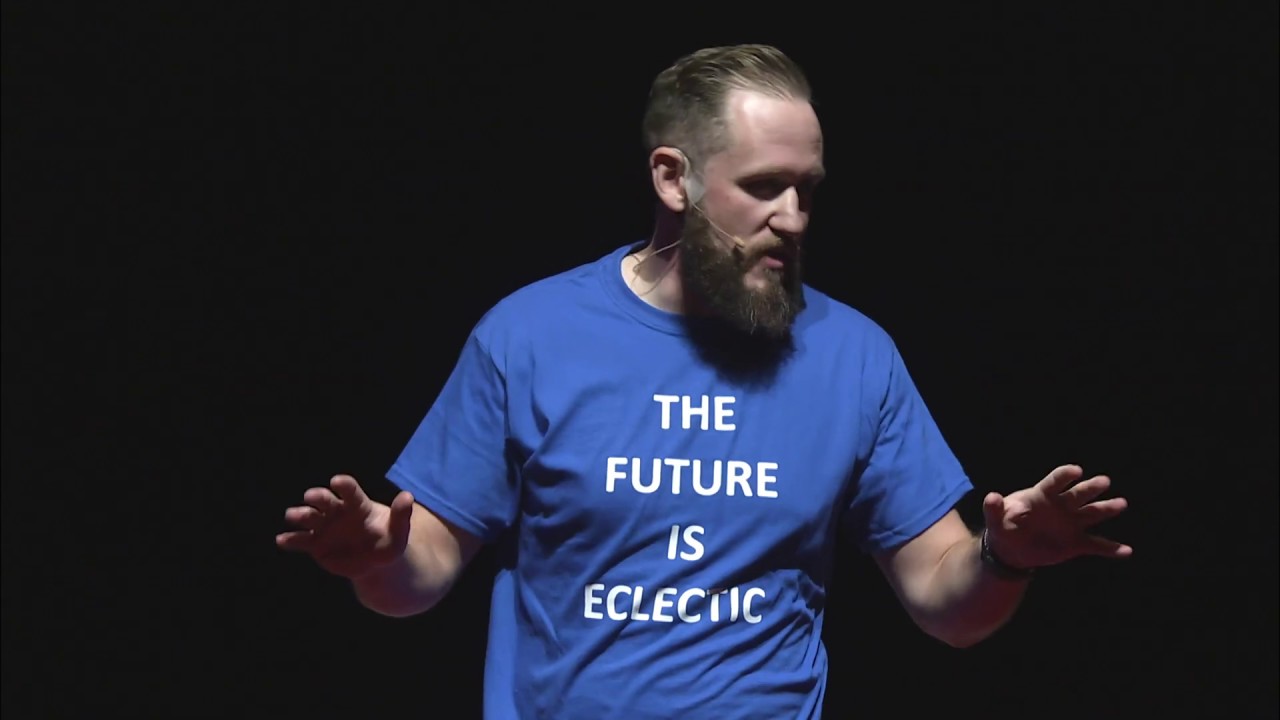
Looking ahead, Conway argues against a dogmatic, one-size-fits-all approach to personal mobility and climate policy. Rather than an abrupt, total transition where every car on the road is battery-powered, the realistic and ecologically sound transportation landscape will consist of a diverse mix of technologies tailored to specific use cases. Conventional internal combustion engines, hybrid powertrains, and full electric vehicles will each have a place where they make practical sense. Summarizing his core philosophy, Conway delivers his key takeaway: “The future is not just electric. The future is eclectic.”
In closing, Conway returns to the hypothetical thought experiment presented at the start of his talk, asking the audience to reconsider their assumptions about clean energy and zero-emissions claims. Conway leaves the crowd with a final challenge: “If I gave you that button, based on what you now know, would you push it?”
## Notable quotes > [13:12](https://www.youtube.com/watch?v=S1E8SQde5rk&t=792s) The future is not just electric. The future is eclectic. — Graham Conway
> [12:25](https://www.youtube.com/watch?v=S1E8SQde5rk&t=745s) Even without renewable fuels, we should still consider buying hybrids today if we want to impact climate change now. — Graham Conway
## Mentioned Graham Conway, TEDxSanAntonio, TED, YouTube, Southwest Research Institute, Chevrolet Corvette
## Video description NOTE FROM TED: This talk only reflects the speaker's personal views and interpretation. Several claims in this talk lack scientific support. We've flagged this talk because it falls outside the content guidelines TED gives TEDx organizers. TEDx events are independently organized by volunteers. The guidelines we give TEDx organizers are described in more detail here: http://storage.ted.com/tedx/manuals/tedx_content_guidelines.pdf
This talk will challenge the popular perception that Battery Electric Vehicles (BEVs) are environmentally friendly, and will argue that we are inappropriately rushing the market introduction of these vehicles. BEVs are commonly sold under the guise of being ‘Zero Emissions,’ an assertion that is not true by any definition. Brake pads produce emissions, as do tires and even interiors under sunlight. The electricity that powers BEVs is generated by power plants, 64% of which burn fossil fuels in the U.S.—fossil fuels that contribute to greenhouse gas emissions and global warming. Even more importantly, there are significant CO2 emissions created during the manufacture of the battery pack, meaning that in order to offset the carbon created during the production process, a BEV must drive 40,000 - 100,000 miles before being environmentally comparable to a gasoline-powered vehicle. Hybrid vehicles, on the other hand, which combine much smaller batteries with efficient internal combustion engines, have been shown to be a much better option for lowering global CO2. Unfortunately, they do not receive the same marketable ‘kudos’ or policy backing as full BEVs. We are headed down the wrong path by rolling out BEVs before making the manufacturing and electricity generation CO2 neutral. Dr. Graham Conway is a Principal Engineer in the Automotive Division at Southwest Research Institute. For the last ten years he has been immersed in evaluating automotive technologies and consulting for car companies and suppliers. This gives him unique insights and perspectives on the industry. He is passionate about making vehicles more efficient to ensure the future of the planet and has a message to share about some common misconceptions about electric and non-electric vehicles. This talk was given at a TEDx event using the TED conference format but independently organized by a local community. Learn more at https://www.ted.com/tedx
[Source](https://www.youtube.com/watch?v=S1E8SQde5rk)