Devon Contract Waste Automates Sorting Lines to Eliminate Landfill
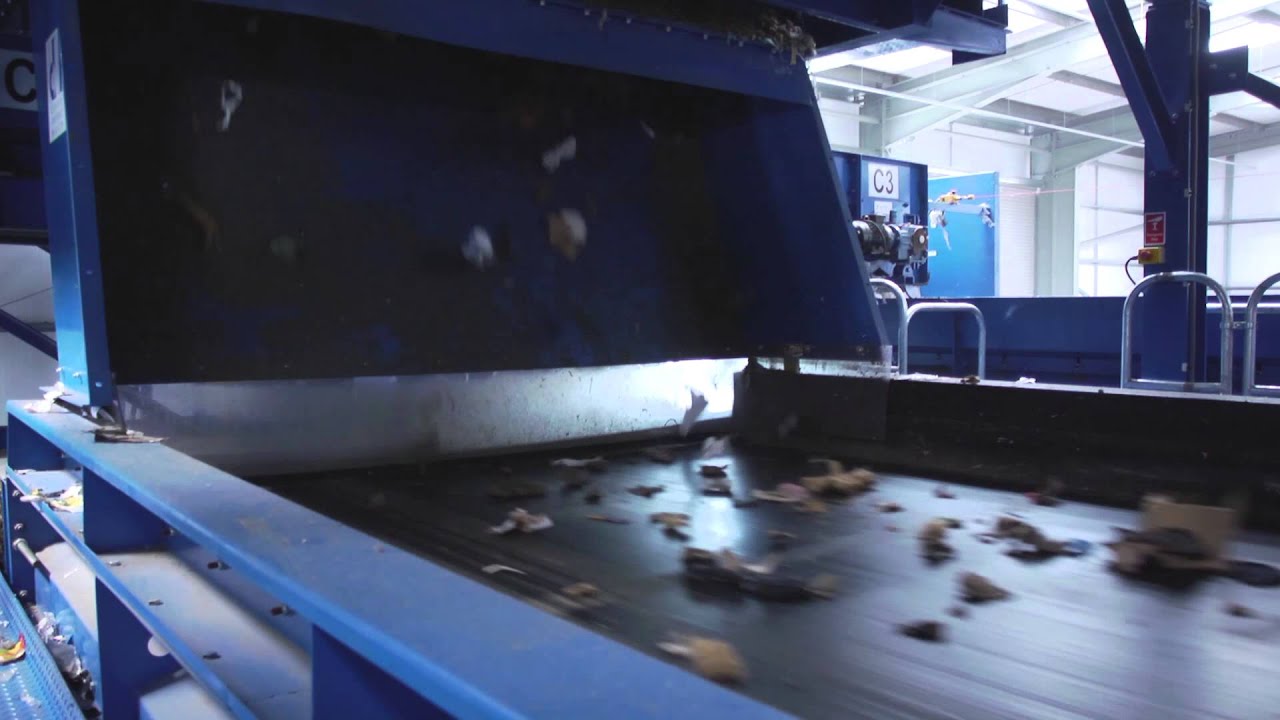
What happens at a Materials Recycling Facility? (MRF) - How does our sorting machine work? — Devon Contract Waste

Devon Contract Waste

Devon Contract Waste separates mixed packaging into clean commodities using ballistic paddles and optical air jets while diverting remaining residue to refuse-derived fuel.

AI-assisted summary of What happens at a Materials Recycling Facility? (MRF) - How does our sorting machine work? — original source. Check the original for full context.

Source published:

Key ideas

  • Incoming mixed waste is shredded to a maximum particle size of 300 mm to ensure the consistent, uniform spread required for advanced optical sorting downstream. (0:05)
  • A rotating trommel screen filters out fine contaminants, including dust, soil, and wet food waste, diverting them into refuse-derived fuel (RDF) to protect recyclable purity. (0:05)
  • Paddle-driven ballistic separation divides waste by geometry into climbing 2D flexible items (paper, film) and descending 3D rigid items (bottles, cans). (0:05)
  • Automated optical sorting and air jets isolate soft plastics and paper fiber along the 2D line, while overband magnets, eddy current separators, and dual-pass optical scans sort metals and rigid containers along the 3D line. (1:14)

Detailed notes

## Background Published on YouTube by Devon Contract Waste on August 27, 2013, this video offers an inside look at the company's Envirohub Materials Recycling Facility (MRF). The accompanying description explains that the tour illustrates how incoming recyclable materials are mechanically and optically separated across their sorting journey.

## TL;DR Unsorted mixed waste arriving at the Envirohub is first shredded to a maximum size of 300 millimetres, then passed through a trommel screen to divert organic debris and dust into refuse-derived fuel (RDF). A ballistic separator divides the remaining bulk stream into flexible two-dimensional items and rigid three-dimensional containers. The 2D circuit deploys optical sorters with air jets and manual quality control to isolate plastic films and clean paper, while the 3D line strips ferrous and aluminium metals with magnets and eddy currents before running plastics and cartons through a dual-pass optical sorter. Recaptured commodities are stored and baled for manufacturers, while non-recyclable residues are redirected to RDF production to avoid landfilling.

## Atmosphere & style The video has a methodical, industrial, and educational tone that highlights the clean precision of automated recycling technology. The measured voiceover walks through each mechanical transition in a steady, technical manner, lending an aura of reliable efficiency to the roaring conveyors, spinning trommels, and firing air jets. Watching the complex machinery systematically categorize chaotic waste into tidy, separated commodities provides a satisfying and reassuring look into modern zero-to-landfill waste management.

## Bulletin - [00:05](https://www.youtube.com/watch?v=SIVKmwzWSuc&t=5s) Incoming mixed waste is shredded to a maximum particle size of 300 mm to ensure the consistent, uniform spread required for advanced optical sorting downstream. - [00:05](https://www.youtube.com/watch?v=SIVKmwzWSuc&t=5s) A rotating trommel screen filters out fine contaminants, including dust, soil, and wet food waste, diverting them into refuse-derived fuel (RDF) to protect recyclable purity. - [00:05](https://www.youtube.com/watch?v=SIVKmwzWSuc&t=5s) Paddle-driven ballistic separation divides waste by geometry into climbing 2D flexible items (paper, film) and descending 3D rigid items (bottles, cans). - [01:14](https://www.youtube.com/watch?v=SIVKmwzWSuc&t=74s) Automated optical sorting and air jets isolate soft plastics and paper fiber along the 2D line, while overband magnets, eddy current separators, and dual-pass optical scans sort metals and rigid containers along the 3D line.

## Key takeaways - [00:05](https://www.youtube.com/watch?v=SIVKmwzWSuc&t=5s) Incoming unsorted municipal waste is fed via mechanical grabber into an industrial shredder capped at a 300 mm discharge size. - [00:05](https://www.youtube.com/watch?v=SIVKmwzWSuc&t=5s) Uniform dispersion of material off the shredder is critical for optical sensors to accurately scan individual items downstream. - [00:05](https://www.youtube.com/watch?v=SIVKmwzWSuc&t=5s) A perforated rotating trommel drum removes fine debris, dust, and organic food waste before they can contaminate dry paper and plastics. - [00:05](https://www.youtube.com/watch?v=SIVKmwzWSuc&t=5s) Screened fines and unrecoverable sorting residues are diverted into refuse-derived fuel (RDF) production rather than landfill. - [00:05](https://www.youtube.com/watch?v=SIVKmwzWSuc&t=5s) Ballistic separator paddles mechanically agitate materials, walking flat 2D items upward while rigid 3D containers roll backward under gravity. - [01:14](https://www.youtube.com/watch?v=SIVKmwzWSuc&t=74s) High-speed accelerator belts spread out the 2D stream to create clean spacing before items reach optical detection hoods. - [01:14](https://www.youtube.com/watch?v=SIVKmwzWSuc&t=74s) The primary optical sorter detects soft plastic films and uses precise bursts of compressed air to blast them off the main belt into a collection bay. - [01:14](https://www.youtube.com/watch?v=SIVKmwzWSuc&t=74s) The automated optical removal of plastic film is reliable enough that manual quality-control staffing on that line is generally unnecessary. - [01:14](https://www.youtube.com/watch?v=SIVKmwzWSuc&t=74s) A secondary optical sensor targets paper and cardboard, redirecting fiber onto a dedicated belt monitored by two manual quality-control pickers. - [02:16](https://www.youtube.com/watch?v=SIVKmwzWSuc&t=136s) The rigid 3D stream passes beneath an overhead magnet to extract ferrous steel cans and tins into a dedicated skip. - [02:16](https://www.youtube.com/watch?v=SIVKmwzWSuc&t=136s) An eddy current separator applies alternating magnetic repulsion to separate non-ferrous metals, notably aluminium cans. - [02:16](https://www.youtube.com/watch?v=SIVKmwzWSuc&t=136s) A third optical sorter performs a dual-pass scan on the remaining rigid stream, recovering rigid plastics on one side and paper/card on the other. - [02:16](https://www.youtube.com/watch?v=SIVKmwzWSuc&t=136s) Sorted non-metallic commodities collect in bays beneath the sorting floor, where they are baled and film-wrapped for transport to end reprocessors.

## Detailed walkthrough ### [00:05](https://www.youtube.com/watch?v=SIVKmwzWSuc&t=5s) Primary Processing: Shredding, Trommel Screening, and Ballistic Separation

The recycling journey begins as unsorted mixed waste collected from across the county is transported to Devon Contract Waste’s Envirohub and discharged onto the plant floor. A mechanical grabber lifts the incoming pile from the ground and deposits it directly into a hopper. Here, the waste is shredded down to a maximum particle size of 300 millimetres. The shredder operates with an adjustable setting configured to maintain an even, consistent spread and feed of material across the plant’s conveyor belts. The narrator explains that this uniform dispersion is critical for downstream performance: “This is necessary for the advanced optical technology used in the plant to view and sort the waste efficiently.”

From the shredder discharge, a long incline conveyor elevates the waste stream into a large rotating trommel screen. As the drum tumbles the load, smaller particles filter out through perforations in its base, isolating fine debris like dust and soil alongside wet organic matter such as food waste. Removing these elements early is vital, as they would otherwise degrade and contaminate clean recyclables. The screened fines collected beneath the trommel are routed into refuse-derived fuel (RDF) production.

The remaining bulk stream advances directly into a ballistic separator equipped with rotating paddles. These inclined paddles continuously agitate the material, walking light, two-dimensional items upward while three-dimensional objects roll backward under gravity. The mechanical motion neatly bifurcates the waste into two distinct sorting circuits: flexible 2D items clear the crest onto an upper sorting line, while rigid 3D items tumble down onto a dedicated lower conveyor.

```mermaid flowchart TD accTitle: Materials Recycling Facility Sorting Flow accDescr: Flowchart illustrating the separation of mixed waste into 2D materials, 3D materials, and RDF.

subgraph Prep ["Initial Separation"] A["Mixed Waste"] --> B["Hopper & Shredder<br/>(≤300 mm)"] B --> C["Trommel Screen"] C -->|"Fines & Organics"| RDF["Refuse-Derived Fuel (RDF)"] C -->|"Oversize Feed"| D["Ballistic Separator"] end

subgraph TwoD ["2D Stream (Flats)"] D -->|"2D Line (Climb)"| E["Optic 1: Soft Plastics"] E -->|"Air Jet"| F["Plastic Film Bay"] E -->|"Bypass"| G["Optic 2: Paper & Card"] G --> H["Hand-Picking Belt"] end

subgraph ThreeD ["3D Stream (Rigids)"] D -->|"3D Line (Fall)"| I["Overband Magnet"] I -->|"Ferrous Metal"| J["Ferrous Skip"] I --> K["Eddy Current Separator"] K -->|"Non-Ferrous Metal"| L["Aluminium Skip"] K --> M["Optic 3: Dual Pass"] M -->|"Plastics / Paper & Card"| N["Storage Bays & Baler"] M -->|"Residue"| RDF end ```

- Mixed waste is shredded down to a strict maximum sizing of 300 mm. - Trommel underflow separates out soil, dust, and food waste to prevent product contamination and generate RDF. - Ballistic paddles physically divide items by shape: flexible 2D surfaces travel over the top, while rigid 3D containers roll down the incline.

---

[01:14](https://www.youtube.com/watch?v=SIVKmwzWSuc&t=74s) The 2D Sorting Circuit: Optical Detection and Quality Control

Once over the peak of the ballistic separator, the 2D stream drops onto a high-speed accelerator belt feeding beneath the facility's first optical sorter. Positioned overhead, the optical sensor scans the passing stream to identify specific material compositions. At this initial checkpoint, the sensor is calibrated to target soft plastic films. As soon as the system registers an approaching film item, high-speed air nozzles fire precisely at the belt's discharge ledge, blasting the plastic upward and outward into a collection conveyor stationed behind the optical hood. This separated film moves to an inspection conveyor, though the automated detection is reliable enough that manual intervention is virtually obsolete: “However, the process is so effective that it isn't usually necessary for this to be manned.”

Materials that do not trigger the first optical jet carry forward off the belt and drop onto a secondary accelerator belt positioned directly underneath. This second run passes under another optical sorter tuned specifically to identify paper and cardboard. When detected, the paper fiber items are diverted into a collection bay behind the hood and onto an active manual quality-control line. To guarantee that downstream paper mills receive clean, market-ready fiber, this station relies on constant visual checks: “Usually there are two people working on this belt to ensure the highest possible quality.”

- Accelerator belts space out materials so optical sensors can distinguish individual items. - Optic 1 isolates flexible plastic films using targeted bursts of compressed air. - Optic 2 captures paper and cardboard packaging products. - Two manual pickers staff the paper quality-control belt to pick out residual non-paper contaminants.

---

[02:16](https://www.youtube.com/watch?v=SIVKmwzWSuc&t=136s) The 3D Sorting Circuit, Metal Recovery, and Baling

While paper and films are isolated along the upper belts, the rigid 3D stream rolling off the ballistic separator follows a heavy-duty mechanical recovery path. The conveyor first directs containers beneath an overband magnet, which extracts all ferrous metals like steel cans and tins. Immediately following magnetic separation, the remaining items pass through an eddy current separator; using alternating magnetic fields, this unit repels and throws non-ferrous metals, notably aluminium cans, into their own segregated collection skip below.

With all metals stripped away, the remaining rigid plastic, carton, and non-metallic packaging stream is routed through a third optical sorter configured for a dual-pass recovery routine. In this split setup, the scanner's first pass targets and separates rigid plastics on one side of the conveyor, while a second pass isolates paper and cardboard packaging on the opposite side. Any residual fraction failing recovery across these stages is routed into the plant's refuse-derived fuel stream, ensuring zero unnecessary landfill disposal. All sorted non-metallic commodities accumulate in high-capacity storage bays positioned beneath the sorting floor, where they are periodically compressed into dense bales and film-wrapped for transport to reprocessors.

- Ferrous metals are pulled out by an overhead magnet, and non-ferrous metals (such as aluminium) are separated via eddy current forces into dedicated skips. - The third optical sorter performs a split two-pass scan, sorting rigid plastics on one side and paper/card on the other. - Unrecovered rejects from the 3D optical line join the trommel screen fines in the RDF supply line. - Recovered commodities are held in designated ground bays, then baled and wrapped for delivery to end-market manufacturers.

## Mentioned Devon Contract Waste, Envirohub, Refuse-Derived Fuel (RDF), YouTube, Facebook

## Video description See what happens at the Devon Contract Waste's Materials Recycling Facility (MRF)

How does a Materials Recycling Facility work? This video gives an insight inside our Envirohub and shows how recyclable materials are sorted and separated by the MRF. Watch the journey the recyclable materials go through!

To see where the sorted waste goes, please watch this video - http://www.youtube.com/watch?v=iV4RrgU9RzQ

To find out what your waste could be turned into visit https://www.facebook.com/zerotolandfill

Please comment and like if you enjoyed this video, we would love to know what you think! Remember to subscribe to the Devon Contract Waste channel for more great videos. ----------------------------------------------------------

Connect with Devon Contract Waste

Like us on Facebook - https://www.facebook.com/zerotolandfill Subscribe to our Youtube channel - https://www.youtube.com/user/devoncontractwaste Find out more about Devon Contract Waste - http://www.dcw.co.uk

[Source](https://www.youtube.com/watch?v=SIVKmwzWSuc)

中文简报

Devon Contract Waste推行分拣线自动化以杜绝垃圾填埋 Devon Contract Waste利用弹跳筛叶片与光学气喷技术将混合包装分离为洁净商品料,同时将剩余残渣转化为垃圾衍生燃料。 运抵Envirohub的未分类混合垃圾首先被破碎至最大300毫米以内的尺寸,随后通过滚筒筛将有机碎屑和粉尘分流至垃圾衍生燃料(RDF)原料中。弹跳分选机接着将剩余的大宗料流划分为柔性二维物料和刚性三维容器。二维物料线利用配备气喷的光学分选机以及人工质检分离出塑料薄膜和洁净纸张;三维物料线则在利用双通道光学分选机处理塑料和纸盒前,先通过磁选机和涡电流分选机去除黑色金属与铝质金属。重新回收的商品物料经储存并打包后提供给制造商,不可回收的残渣则被转送用于生产RDF,从而避免填埋。 进厂混合垃圾被破碎至最大粒径300毫米,以确保下游先进光学分选所需的稳定、均匀摊铺。 (0:05) 旋转滚筒筛过滤出粉尘、泥土和湿厨余垃圾等微细杂质,并将其分流为垃圾衍生燃料(RDF),以保障可回收物的纯度。 (0:05) 叶片驱动的弹跳分选机根据几何外形将垃圾划分为向上爬升的二维柔性物料(纸张、薄膜)与向下滚落的三维刚性物料(瓶罐)。 (0:05) 自动化光学分选与气喷技术在二维分选线上分离软塑料和纸纤维,而悬挂式磁选机、涡电流分选机及双通道光学扫描设备则在三维线上对金属与刚性容器进行分选。 (1:14)

Reading summary

Devon Contract Waste details how its Envirohub facility processes mixed commercial and municipal waste into clean, marketable commodities through integrated mechanical, magnetic, and optical sorting systems. The automated plant divides materials by particle size, physical geometry, and chemical composition while channeling non-recyclable fractions into refuse-derived fuel. Mechanical Sizing and Ballistic Separation (0:05) Incoming mixed waste delivered to the Envirohub plant is loaded by mechanical grabber into a hopper and shredder, which reduces materials to a maximum particle size of 300 millimetres. Facility operators note that maintaining this size threshold and an even spread across the belts is essential for downstream optical sensors to detect items accurately. From the shredder, an incline conveyor feeds the waste into a rotating trommel screen that separates fine debris, including dust, soil, and organic food waste. Diverting these fines early prevents the contamination of clean recyclables and supplies material directly to refuse-derived fuel (RDF) processing. The remaining oversize stream enters a ballistic separator equipped with inclined, rotating paddles. The agitators leverage shape and weight to split the waste into two distinct circuits: flexible, two-dimensional items are propelled upward over the crest, while rigid, three-dimensional containers roll backward under gravity onto a separate lower belt. Optical Detection and Quality Control for 2D Materials (1:14) Materials routed onto the 2D sorting line pass onto high-speed accelerator belts that disperse items to allow individual overhead scanning. The first optical sorting unit identifies flexible plastic films and activates targeted high-velocity air nozzles at the conveyor discharge to blast film items onto an upper collection line. The operator states that this automated recovery is reliable enough that manual monitoring on the film inspection belt is usually unnecessary. Materials that bypass the first air jets drop onto a second accelerator belt monitored by an optical sorter calibrated for paper and cardboard. Detected fiber items are blown into a collection bay and routed across a manual quality-control belt. To meet downstream paper mill purity standards, this station is continuously staffed by two pickers who visually inspect the stream and remove any residual non-paper contaminants. 3D Stream Metal Recovery, Dual-Pass Optics, and Baling (2:16) Rigid containers descending from the ballistic separator proceed through mechanical metal recovery stages. An overband magnet extracts ferrous materials such as steel tins and cans, followed immediately by an eddy current separator that uses alternating magnetic fields to repel non-ferrous metals, such as aluminium cans, into separate collection skips. After metal extraction, the remaining rigid packaging passes through a third optical sorter configured for a split dual-pass operation. This unit isolates rigid plastics on one side of the conveyor and paper or cardboard packaging on the other. Recovered commodities accumulate in high-capacity storage bays below the floor before being compressed into dense bales and film-wrapped for transport to reprocessors. Unrecovered residuals from the 3D circuit join the trommel screen fines in the RDF stream to eliminate unnecessary landfill disposal. The Envirohub system demonstrates how mechanical agitation, pneumatic optical sorting, and targeted manual intervention can isolate diverse recyclable fractions from mixed collections. While automated sorting handles high-volume plastic and metal recovery, manual picking remains necessary for paper quality assurance, and non-recyclable residues depend on energy recovery channels rather than material reprocessing.

精炼阅读摘要

Devon Contract Waste 介绍了其 Envirohub 物料回收设施(MRF)的自动化分选系统,该工艺结合了机械粉碎、滚筒筛分、弹跳分选、光学探测与电磁分离技术,将混合废弃物高效拆分为再生原料与垃圾衍生燃料(RDF)。 预处理阶段与物理形态初分 (0:05) 未分类的混合垃圾首先被机械抓斗送入受料斗,并通过破碎机进行初步粉碎,最大颗粒尺寸严格控制在 300 毫米以内。该破碎机的可调节设置能确保物料在传送带上均匀平铺并稳定输送,为后续光学设备的精准识别提供关键保障。随后,物料经由倾斜输送机进入大型旋转滚筒筛,底部筛孔滤除灰尘、泥土等细小杂质以及湿性有机易腐物(如厨余垃圾),以防止洁净的可回收物受到污染,滤出的细料直接输往垃圾衍生燃料(RDF)生产环节。完成筛分的散装物料随即进入装有旋转叶片的倾斜弹跳分选机,利用物理运动特性,将轻质平面的二维物料向上推升至顶部管线,而三维立体物品则因重力向下滑落至下层传送带,实现废物的路径分流。 二维扁平物料的光学分选与质检 (1:14) 越过弹跳分选机顶部的二维轻质物料进入第一条高速加速皮带,该皮带能拉开物料间距以配合上方的第一台光学分选机工作。该设备经过校准专门用于识别软质塑料薄膜;一旦系统探测到薄膜目标,安装在皮带排料边缘的高速空气喷嘴便会精准喷射气流,将塑料吹飞至后方的收集皮带上。厂方表示,该自动化分选流程的稳定性极高,以至于该处的质检工位通常无需人工值守。未被第一道气流喷射的剩余物料则落入下层的第二条加速皮带,接受第二台光学分选机的扫描,该机专门针对纸张与纸板包装进行分选,将其吹入专用的收集料舱。为了确保向下游造纸厂交付达到市场标准的清洁纤维原料,该环节设有手动质检皮带,通常配备两名作业人员负责人工挑拣并清除残余的非纸类杂质。 三维立体物料的金属提取与双通分选 (2:16) 自弹跳分选机下滚的三维立体物料首先经过机械式重型金属回收工序。传送带上方的悬挂式带式永磁铁先行吸出铁罐、钢罐等所有铁类黑色金属;紧随其后的涡电流分选机利用交变磁场产生的排斥力,将铝罐等非铁有色金属弹飞至专用的分流料斗中。清除全部金属杂质后,剩余的硬质塑料、纸盒与非金属包装物料将输送至第三台光学分选机,该设备采用双通(Dual-Pass)分流配置,可在传送带一侧扫描分离硬质塑料,同时在另一侧分选纸张与硬纸板。经过多级分选后未能回收的残余物料,全部并入全厂的垃圾衍生燃料(RDF)流向,以避免不必要的填埋处置。最终,所有分选出的非金属商品物料集中储存于分选区下方的储料仓中,定期压实打包并缠膜,装车送往各再生加工企业。 该回收设施利用机械、光学及气流辅助工艺实现了多种复杂物料的精细化自动分选,但在纸质纤维等特定产品的高品质保障上,依然依赖人工质检环节作为关键补充;分选过程产生的不可回收残余物则全部转入垃圾衍生燃料系统。

Detailed notes — zh

## Background 该视频由 Devon Contract Waste 于 2013 年 8 月 27 日发布在 YouTube 平台上。页面简介说明,该视频带观众走进其名为 Envirohub 的材料回收设施(MRF),展示各类可回收废弃物在自动化分选流水线中被逐步分离与处理的全过程。 ## TL;DR 视频系统性地展示了一座现代化材料回收设施的分选工艺全流程。未分类废弃物进场后先经过破裂均匀化与滚筒筛除杂,分离出的有机杂物送去制成垃圾衍生燃料(RDF)。核心工艺通过弹跳分选机将垃圾拆解为平面(2D)与立体(3D)两条主线:2D 线利用两台光学分选机搭配气嘴精确喷击,依次分离出塑料薄膜与纸板;3D 线则相继通过强力磁选机提取黑色金属、涡电流分选机剥离有色金属,再经第三台双通道光学分选机分别回收立体塑料与硬纸板。分选后的纯净物料汇入各自储料区并打捆覆膜,而无法回收的残渣同样被加工为 RDF 实现资源化利用。 ## Atmosphere & style 全片呈现出工业科普片特有的干练、高效与高度秩序感。沉稳专业的旁白解说与机械运转的轰鸣相得益彰,画面在宏观传送带网络与微观高速气嘴喷击特写间流畅切换。自动化设备有条不紊地将原本杂乱无章的垃圾转变为整齐成捆的标准化再生资源,给观众带来一种充满科技美感与治愈感的现代工业视觉体验。 ## Bulletin - [00:05](https://www.youtube.com/watch?v=SIVKmwzWSuc&t=5s) Devon Contract Waste 旗下的 Envirohub 回收处理中心利用破碎机将混合废弃物粒径统一控制在 300 毫米以内,确保物料均匀平铺以适配后续高精度的光学分选。 - [00:35](https://www.youtube.com/watch?v=SIVKmwzWSuc&t=35s) 滚筒筛初筛与末端无法回收的残渣均被用于生产 RDF 固体垃圾衍生燃料,实现废弃物能源化利用。 - [00:57](https://www.youtube.com/watch?v=SIVKmwzWSuc&t=57s) 弹跳分选机通过物理外形差异高效分流扁平的二维材料(2D)与立体的三维材料(3D),分别导入专属的光学与电磁分选生产线。 - [01:20](https://www.youtube.com/watch?v=SIVKmwzWSuc&t=80s) 厂区配备多台光学分选机结合高速气嘴精准剔除塑料薄膜、纸张及塑料立体件,辅以关键工位的人工复检,确保分拣成品纯净度后打包外运。 ## Key takeaways - [00:05](https://www.youtube.com/watch?v=SIVKmwzWSuc&t=5s) 混合废弃物进场后首先经机械抓斗送入料斗,破碎机将其最大尺寸限制在 300 毫米,为光学分选铺平物料。 - [00:35](https://www.youtube.com/watch?v=SIVKmwzWSuc&t=35s) 大型滚筒筛翻滚过滤出泥土、碎屑及厨余等有机杂物,防止污染主回收流程,筛下物将制成 RDF 衍生燃料。 - [00:57](https://www.youtube.com/watch?v=SIVKmwzWSuc&t=57s) 弹跳分选机依靠运动桨叶将扁平轻质的 2D 材质向上推过机顶,立体结构的 3D 物品则滚落至下方专线。 - [01:20](https://www.youtube.com/watch?v=SIVKmwzWSuc&t=80s) 第一台光学分选机设定识别软质塑料薄膜,并在传送带末端通过高压气嘴精准将其吹离。 - [01:45](https://www.youtube.com/watch?v=SIVKmwzWSuc&t=105s) 由于软塑料薄膜光学分选精度极高,该工位的人工分拣台通常无需专人值守。 - [01:55](https://www.youtube.com/watch?v=SIVKmwzWSuc&t=115s) 第二台光学分选机扫描分离纸张与纸板制品,并在后段安排两名工人人工复检以保障出料品质。 - [02:16](https://www.youtube.com/watch?v=SIVKmwzWSuc&t=136s) 针对 3D 立体物料,强力磁选机优先吸出铁类黑色金属并收集入废料斗。 - [02:27](https://www.youtube.com/watch?v=SIVKmwzWSuc&t=147s) 涡电流分选机利用电磁排斥原理将铝罐等有色金属弹射分离。 - [02:40](https://www.youtube.com/watch?v=SIVKmwzWSuc&t=160s) 第三台光学分选机对非金属立体物料进行两次穿梭扫描,分别回收塑料立体件与厚纸板。 - [02:55](https://www.youtube.com/watch?v=SIVKmwzWSuc&t=175s) 历经多道物理与光学分选后的最终不可回收废料同样进入 RDF 燃料系统,实现物尽其用。 - [03:05](https://www.youtube.com/watch?v=SIVKmwzWSuc&t=185s) 分选合格的各类物料汇入独立储料舱,经打捆机压实覆膜后装车外运进行资源化再利用。 ## Detailed walkthrough ### [00:05](https://www.youtube.com/watch?v=SIVKmwzWSuc&t=5s) 垃圾进场、预破碎与滚筒筛初筛 来自全郡各地的未分类混合废弃物被统一运送至 Envirohub 处理中心并在车间倾倒卸货。地面的垃圾随后由机械抓斗(mechanical grabber)抓取并送入料斗。垃圾在此处先经过破碎机,被破碎至最大不超过 300 毫米的尺寸。这台破碎机配有可调设置,能够精准控制下料,确保物料在整个工厂的各个传送带上实现均匀进料与铺平。旁白特别强调了这一工序对后续环节的必要性:“This is necessary for the advanced optical technology used in the plant to view and sort the waste efficiently.” 破碎后的废弃物经由一条长长的倾斜传送带提升,进入滚筒筛(trommel screen)。这个巨大的圆柱形滚筒不断翻滚物料,筛除土壤、灰尘等细小杂物以及易造成回收料污染的厨余等有机物。这些被分离出的小颗粒与有机杂质从滚筒底部漏下,后续将被加工转化为名为 RDF(垃圾衍生燃料,refuse-derived fuel)的能源产品。至于未被筛除的主体物料,则继续向前输送至弹跳分选机(ballistic separator)。 ```mermaid flowchart TD accTitle: 混合废弃物预处理与粗筛流程 accDescr: 展示未分类废弃物从进场、抓料、破碎、滚筒筛分到弹跳分选的流程走向。 subgraph S1["进料与破碎阶段"] A["未分类混合废弃物"] --> B["机械抓斗与料斗"] B --> C["破碎机 (≤300mm)"] end subgraph S2["初级筛分阶段"] C --> D["倾斜传送带"] D --> E["滚筒筛 (Trommel)"] E -->|"筛下细料与有机物"| F["加工为 RDF 燃料"] E -->|"主体大料"| G["弹跳分选机"] end ``` - 破碎规格控制:最大粒径不超过 300 毫米,以满足光学分选所需的物料展开度。 - 滚筒筛下物用途:过滤出的细碎杂物与有机易腐物质用于生产 RDF 固体替代燃料。 --- ### [00:57](https://www.youtube.com/watch?v=SIVKmwzWSuc&t=57s) 弹跳分选与二维轻质物料的光学分选 主体废弃物进入弹跳分选机后,设备上不断旋转运动的桨叶将所有物料向上“驱赶”。由于物理特性不同,只有扁平轻质的“二维材料”(2D material)才能顺利翻越机顶进入下一级分选线;而瓶罐等具有立体结构的“三维材料”(3D items)无法爬上顶端,直接滚落跌回下方的 3D 物料线。从弹跳分选机顶部脱颖而出的 2D 物料会落到加速传送带上,首先穿过第一台光学分选机(optical sorter)。 架设在皮带上方的光学感应探头能够识别不同类别的材质,第一台光学分选机设定为专门识别软质塑料薄膜(soft plastic film)。一旦探头侦测到有塑料薄膜接近,系统便会触发精准的高速高压气嘴,在物料飞出皮带末端的一瞬间将其吹飞,送入光学罩后方专门的传送带上。随后该物料会进入人工分拣台剔除杂质。由于设备识别极为精准,旁白提到:“However, the process is so effective that it isn't usually necessary for this to be manned.” 穿过第一台光学分选机而未被吹飞的其余 2D 物料,则落到下方的第二条加速传送带,接受第二台光学分选机的扫描。第二台机器被设定为分选所有纸类和纸板(paper and card products),识别出的纸制品被喷入气罩后方的储料区,并顺着皮带流向人工分检台。为了严格保障最终成品的纯净度,该工位“Usually there are two people working on this belt to ensure the highest possible quality.” - 2D 分选靶向:第一台光学分选机针对塑料薄膜,第二台光学分选机针对纸张和纸板。 - 分选执行机制:光学传感器完成材质特征识别,并在末端通过气嘴喷射(jet of air)击落目标物料。 - 质量把控:塑料薄膜线极少需要人工值守;纸张分选线通常配备两名人工分拣员进行品质复检。 --- ### [02:16](https://www.youtube.com/watch?v=SIVKmwzWSuc&t=136s) 三维立体物料的分选、金属回收与打包输出 流程重新回到由弹跳分选机分离出的 3D 立体物料线上。这些立体废弃物首先被传送至强力磁选机下方,吸除其中的所有铁类黑色金属(ferrous metal)。剩余物料紧接着穿过涡电流分选机(eddy current machine),将铝罐等有色金属(non-ferrous metals)彻底弹射分离,所有回收的金属自动落入下方的废料收集斗(skips)。 处理完金属后的非金属立体残留物,随后会经过第三台光学分选机进行两次连续扫描通过(two passes)。在第一次通过时,机器在一侧定向回收立体塑料制品;第二次通过时,在另一侧定向回收剩余的立体纸张与纸板。经历这几轮严密分选后残留的剩余不可回收杂料,“Anything left will also go into RDF.” 最终,各类分选出的非金属材料汇集到厂区下方的多个独立储存区(bays)内,在此处由打包机定期进行压实打捆、覆膜包装,整齐码放后等待装车外运进行资源化再利用。 ```mermaid flowchart LR accTitle: 三维物料金属提取与光选流程 accDescr: 展示立体物料依次通过磁选、涡电流、双次光学分选并最终打包的流程。 subgraph Metal["金属分离"] M1["3D 物料"] --> M2["强磁机 (吸除铁金属)"] M2 --> M3["涡电流 (分离铝等有色金属)"] end subgraph Optic3["第三台光选 (双次通过)"] M3 --> O1["第一次通过: 塑料分选"] O1 --> O2["第二次通过: 纸类分选"] end subgraph EndStage["最终去向"] O2 -->|"剩余残渣"| E1["RDF 垃圾衍生燃料"] O2 -->|"合格物料"| E2["分类储料区 (Bays)"] E2 --> E3["打捆覆膜与外运"] end ``` - 黑色金属回收:强磁设备提取所有含铁金属。 - 有色金属回收:涡电流感应排斥分离铝类等非铁金属。 - 第三光选机功能:通过单机双通道两次穿梭作业,分别回收塑料瓶体以及厚纸板。 - 成品处理:分选物料汇入对应储存隔舱,定期打捆(baled)并裹膜(wrapped)外运。 ## Mentioned Devon Contract Waste, Envirohub, Materials Recycling Facility (MRF), Refuse-derived fuel (RDF) ## Video description See what happens at the Devon Contract Waste's Materials Recycling Facility (MRF) How does a Materials Recycling Facility work? This video gives an insight inside our Envirohub and shows how recyclable materials are sorted and separated by the MRF. Watch the journey the recyclable materials go through! To see where the sorted waste goes, please watch this video - http://www.youtube.com/watch?v=iV4RrgU9RzQ To find out what your waste could be turned into visit https://www.facebook.com/zerotolandfill Please comment and like if you enjoyed this video, we would love to know what you think! Remember to subscribe to the Devon Contract Waste channel for more great videos. ---------------------------------------------------------- Connect with Devon Contract Waste Like us on Facebook - https://www.facebook.com/zerotolandfill Subscribe to our Youtube channel - https://www.youtube.com/user/devoncontractwaste Find out more about Devon Contract Waste - http://www.dcw.co.uk [Source](https://www.youtube.com/watch?v=SIVKmwzWSuc)

Original transcript

[0:05] Unsorted mixed waste is transported to Envirohub from around the county and is emptied out [0:10] at the plant. [0:11] From the ground, it is lifted by a mechanical grabber and placed into the hopper where it [0:16] is shredded down to a maximum size of 300 millimetres. [0:19] The shredder is fitted with an adjustable setting to ensure an even feed and spread [0:25] of materials across the belts on the whole plant. [0:27] This is necessary for the advanced optical technology used in the plant to view and sort [0:32] the waste efficiently. [0:34] From the shredder the waste is fed via a long incline belt to the trommel screen. [0:39] This big drum tumbles the waste to separate all fine material such as soil and dust, and [0:44] organics such as food waste, which would otherwise contaminate the recycled products. [0:50] This filters out of the base of the trommel and will be turned into a refuse-derived fuel [0:54] product, known as RDF. [0:57] Everything else continues on to the ballistic separator. [1:00] The rotating paddles on this belt walk everything upwards but only the two dimensional material [1:05] makes it over onto the next sorting line. [1:08] The three dimensional items can't make it to the top and fall back onto the 3D line [1:13] below. [1:14] From the top of the separator, the 2D material now falls onto the accelerator belt passing [1:19] under the first optical sorter. [1:22] The optics are positioned over the belt and recognise the different classes of material. [1:26] Here, this optic is set to separate soft plastic film. [1:31] When it sees an item of soft plastic approaching, it triggers a jet of air which hits the item [1:36] as it crosses the end of the belt, blowing it on to the conveyor that sits behind the [1:40] optic hood. [1:42] From there, it passes to a hand-picking belt where any contamination is removed. [1:46] However, the process is so effective that it isn't usually necessary for this to be [1:52] manned. [1:53] The material that is still on the belt after the first optic drops down onto the second [1:57] accelerator belt beneath. [1:59] It then passes the second optic, which is set to select all paper and card products, [2:04] which fall into the bay behind the optic hood and down onto the hand picking belt where [2:08] any contamination is removed. [2:10] Usually there are two people working on this belt to ensure the highest possible quality. [2:16] So back to the 3D material. [2:18] Firstly, this is conveyed past a powerful magnet which removes all ferrous metal . What [2:23] remains is then passed through the eddy current machine which removes all non-ferrous metals [2:28] such as aluminium. [2:30] All metals are collected in the skips below. [2:33] The non-metallic material left on the belt then does two passes through the third optic. [2:39] The first pass recovers plastic on one side and the second pass recovers all paper and [2:44] card on the other. [2:45] Anything left will also go into RDF. [2:49] All the sorted non-metallic materials end up in these bays below the plant. [2:53] Periodically the contents will be baled and wrapped ready to be transported.