Sessions Scraps Forensic Commission as Courts Admit Flawed Evidence
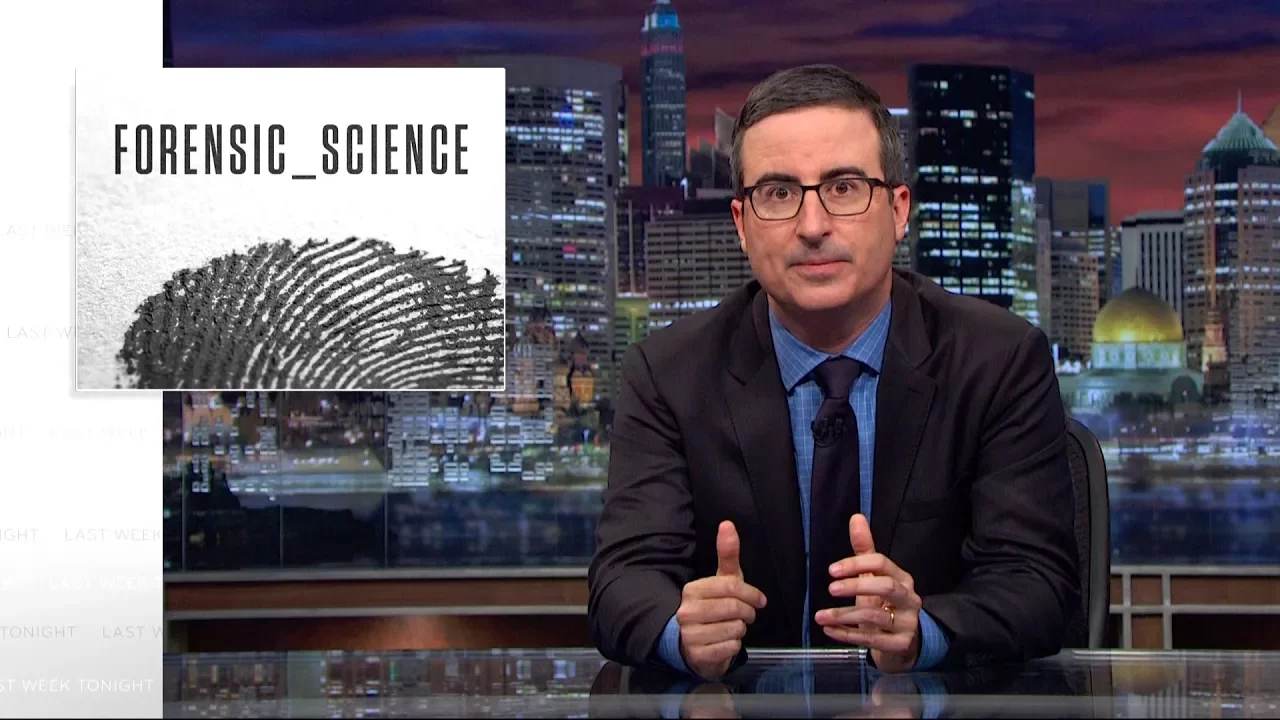
Forensic Science: Last Week Tonight with John Oliver (HBO) — LastWeekTonight

LastWeekTonight

Judicial adherence to legal precedent and prosecutorial bias keep unscientific methods in US courtrooms, driving wrongful convictions while federal oversight is dismantled.

AI-assisted summary of Forensic Science: Last Week Tonight with John Oliver (HBO) — original source. Check the original for full context.

Source published:

Key ideas

  • A landmark 2009 National Academy of Sciences report and a 2016 presidential council review established that numerous courtroom forensic disciplines lack foundational scientific validity and that experts systematically overstate their certainty. (0:03)
  • Flawed forensic analysis contributed to nearly half of all DNA exonerations since 1989, including systemic failures where 96% of 268 reviewed FBI microscopic hair comparison trials contained analytical errors. (2:27)
  • Judicial reliance on legal precedent rather than scientific testing allows debunked techniques like bite-mark analysis to remain admissible, while even established methods like fingerprinting exhibit false-positive error rates as high as 1 in 306. (7:27)
  • Federal momentum for forensic reform stalled in April 2017 when Attorney General Jeff Sessions disbanded the Department of Justice's National Commission on Forensic Science, even as states like Texas enacted pioneering 'junk science' statutes. (13:19)

Detailed notes

## Background This video was published on YouTube by the official LastWeekTonight channel on October 2, 2017. According to the page description, forensic science used in criminal trials can be surprisingly unscientific, and the program explores whether a new television procedural might help correct public perceptions.

## TL;DR John Oliver investigates how forensic science depicted as infallible in popular crime dramas is frequently ungrounded, subjective, and dangerously overstated in real courtrooms. He explores flawed practices such as microscopic hair comparison, bite-mark matching, and mishandled DNA mixtures, demonstrating how reliance on precedent and pro-prosecution institutional bias lead to wrongful convictions. While some states like Texas have enacted junk-science reforms, federal progress suffered a major setback when the Department of Justice dismantled the National Commission on Forensic Science. The segment wraps up with a parody procedural, 'CSI: Crime Scene Idiot,' skewering the public's naive trust in courtroom junk science.

## Atmosphere & style The presentation blends sharp investigative journalism with John Oliver's signature rapid-fire, exasperated satirical comedy. The tone shifts seamlessly between biting mockery of Hollywood crime tropes and sober, empathetic discussions of innocent people serving decades behind bars for junk science. It feels punchy, urgent, and deeply incredulous, leaving viewers both amused by the absurdity of forensic overreach and unsettled by systemic failures in the justice system.

## Bulletin - [00:03](https://www.youtube.com/watch?v=ScmJvmzDcG0&t=3s) A landmark 2009 National Academy of Sciences report and a 2016 presidential council review established that numerous courtroom forensic disciplines lack foundational scientific validity and that experts systematically overstate their certainty. - [02:27](https://www.youtube.com/watch?v=ScmJvmzDcG0&t=147s) Flawed forensic analysis contributed to nearly half of all DNA exonerations since 1989, including systemic failures where 96% of 268 reviewed FBI microscopic hair comparison trials contained analytical errors. - [07:27](https://www.youtube.com/watch?v=ScmJvmzDcG0&t=447s) Judicial reliance on legal precedent rather than scientific testing allows debunked techniques like bite-mark analysis to remain admissible, while even established methods like fingerprinting exhibit false-positive error rates as high as 1 in 306. - [13:19](https://www.youtube.com/watch?v=ScmJvmzDcG0&t=799s) Federal momentum for forensic reform stalled in April 2017 when Attorney General Jeff Sessions disbanded the Department of Justice's National Commission on Forensic Science, even as states like Texas enacted pioneering 'junk science' statutes.

## Key takeaways - [00:03](https://www.youtube.com/watch?v=ScmJvmzDcG0&t=3s) Television crime procedurals have generated the 'CSI effect,' distorting juror expectations by presenting forensic analysis as an infallible, instant matching process. - [00:03](https://www.youtube.com/watch?v=ScmJvmzDcG0&t=3s) Major scientific reviews in 2009 and 2016 concluded that multiple forensic disciplines fail to meet fundamental scientific standards of reliability and empirical testing. - [00:03](https://www.youtube.com/watch?v=ScmJvmzDcG0&t=3s) The authoritative courtroom phrase 'to a reasonable degree of scientific certainty' has no recognized scientific meaning or objective criteria. - [02:27](https://www.youtube.com/watch?v=ScmJvmzDcG0&t=147s) Almost half of all wrongful convictions overturned by post-conviction DNA testing since 1989 involved flawed or misapplied forensic science. - [02:27](https://www.youtube.com/watch?v=ScmJvmzDcG0&t=147s) An audit of 268 criminal trials involving FBI microscopic hair comparison revealed flawed testimony or analytical errors in 96% of cases, including nine cases where defendants had already been executed. - [05:23](https://www.youtube.com/watch?v=ScmJvmzDcG0&t=323s) Bite mark analysis has been determined by scientific advisory panels to lack foundational validity and objective standards, yet self-styled experts historically used it to secure multiple flawed convictions. - [07:27](https://www.youtube.com/watch?v=ScmJvmzDcG0&t=447s) Courts perpetuate the use of debunked forensic methods because judges rely on legal precedent rather than scientific consensus, admitting bad science simply because previous judges did. - [07:27](https://www.youtube.com/watch?v=ScmJvmzDcG0&t=447s) Fingerprint examination carries measurable error margins with false-positive rates reaching up to 1 in 306, as highlighted by the FBI's erroneous match of Oregon attorney Brandon Mayfield in the 2004 Madrid train bombings. - [09:35](https://www.youtube.com/watch?v=ScmJvmzDcG0&t=575s) While single-source DNA remains the scientific gold standard, real-world crime scenes often produce degraded, multi-person mixtures that are vulnerable to subjective over-interpretation and wildly inflated statistical claims. - [11:37](https://www.youtube.com/watch?v=ScmJvmzDcG0&t=697s) Forensic laboratories often suffer from institutional bias because they operate alongside law enforcement and prosecution teams rather than as independent, blind testing facilities. - [11:37](https://www.youtube.com/watch?v=ScmJvmzDcG0&t=697s) Texas enacted a pioneering 'junk science' law enabling prisoners to challenge convictions whenever the scientific evidence used against them has been altered or debunked. - [13:19](https://www.youtube.com/watch?v=ScmJvmzDcG0&t=799s) Federal oversight of forensic standards was abruptly dismantled in April 2017 when Attorney General Jeff Sessions terminated the National Commission on Forensic Science.

## Detailed walkthrough ### [00:03](https://www.youtube.com/watch?v=ScmJvmzDcG0&t=3s) The Illusion of TV Forensics and Scientific Overstatement

Forensic science has long been cemented in popular culture as the ultimate crime-solving tool, driven by countless TV procedurals where analysts point at computer screens and instantly announce a definitive match. Oliver highlights this ubiquitous trope with a montage of procedural clips shouting “It’s a match!” culminating in a bizarre fictional exchange determining which specific monkey bit a victim. This television depiction has fostered the real-world "CSI effect," where jurors walk into courtrooms expecting ironclad forensic proof for every criminal case.

The reality of forensic science, however, falls drastically short of its Hollywood reputation. A landmark 2009 report by the National Academy of Sciences concluded that many forensic disciplines fail to meet fundamental scientific standards. A subsequent 2016 report from the President’s Council of Advisors on Science and Technology reinforced those findings. As John Oliver explains, “It's not that all forensic science is bad, 'cause it's not, but too often, it's reliability is dangerously overstated and one sign of that is that forensic experts in court are often nudged to use one very convincing phrase.” Witnesses routinely take the stand and testify that evidence matches “to a reasonable degree of scientific certainty”—an authoritative-sounding phrase that sounds unassailable to jurors but, as the presidential council revealed, possesses no recognized scientific definition whatsoever.

- A 2009 National Academy of Sciences report revealed that many forensic methods lack basic scientific grounding. - A 2016 presidential science council report warned that expert witnesses routinely overstate evidence far beyond what actual science justifies. - The widely used courtroom phrase "to a reasonable degree of scientific certainty" has no standard scientific meaning or objective criteria.

[02:27](https://www.youtube.com/watch?v=ScmJvmzDcG0&t=147s) Microscopic Hair Comparison and Wrongful Convictions

Flawed forensic disciplines have had devastating real-world human costs. Nearly half of the hundreds of wrongful convictions overturned by DNA testing since 1989 involved the misapplication of forensic science. One striking example is Santae Tribble, who was wrongfully convicted of murder and served 26 years behind bars primarily because an FBI analyst claimed his hair matched samples found at the crime scene. Santae Tribble recalled the immense weight that testimony carried: “They said they matched my hair in all microscopical characteristics.” Tribble’s jury was told the odds of the hair belonging to anyone else were one in ten million.

When DNA testing finally advanced enough to examine the 13 hairs from Tribble's case, none belonged to him. Instead, nine came from a single individual, several from other people, and one strand was actually canine fur that two separate FBI agents failed to identify as animal hair. Tribble was exonerated, but his case was part of a systemic scandal. A joint investigation by the Innocence Project and the National Association of Criminal Defense Lawyers reviewed decades of FBI hair comparisons and uncovered shocking numbers: out of 268 trial cases where FBI hair analysis contributed to convictions, an astonishing 96 percent contained analytical errors, and nine of those defendants had already been executed.

- Almost half of all DNA exonerations since 1989 involved flawed forensic science. - Jurors in Santae Tribble’s trial were falsely told there was only a 1-in-10,000,000 chance that the crime-scene hair belonged to someone other than him. - Subsequent DNA tests revealed that an evidentiary hair analyzed by two FBI examiners came from a domestic dog. - A review of 268 trials from the 1970s through 1999 involving FBI microscopic hair comparison found analytical errors in 257 cases (96%).

[05:23](https://www.youtube.com/watch?v=ScmJvmzDcG0&t=323s) Bite Mark Analysis and "The Maestro"

Microscopic hair comparison is not an isolated problem; forensic techniques such as bloodstain pattern analysis, footwear analysis, firearm identification, and bite mark analysis all suffer from weak foundational science. Bite mark analysis in particular is notorious for being entirely subjective. While fictional forensic investigators use sleek 3D scans to instantly produce tooth matches, the presidential council established that bite mark analysis lacks foundational validity. Despite being scientifically ungrounded, self-styled experts built lucrative careers securing convictions with it.

Forensic odontologist Dr. Michael West dubbed himself "The Maestro" of bite mark analysis, professing that his methods were extraordinarily reliable. West claimed to discover bite marks on decomposed bodies submerged in swamps, on corpses exhumed after a year, and on a half-eaten bologna sandwich used to secure a murder conviction. That bologna case fell apart when an autopsy revealed the victim had eaten bologna before dying, matching the portion missing from the sandwich and rendering West's "bite analysis" completely irrelevant. At least five convictions based on West’s testimony have been overturned or dismissed, and West himself eventually conceded that he no longer believes bite mark analysis should be used in criminal trials to identify suspects.

- The President's Council found bite mark comparison fails to meet the foundational scientific validity required for courtroom evidence. - Dr. Michael West claimed to match dental patterns to a bite in a bologna sandwich, which was later debunked by an autopsy showing the victim had eaten bologna. - At least five cases in which Dr. West testified for the prosecution resulted in dismissed charges or overturned convictions. - Even Dr. West eventually recanted, stating he no longer believes bite mark analysis should be admitted in court to identify perpetrators.

[07:27](https://www.youtube.com/watch?v=ScmJvmzDcG0&t=447s) Judicial Precedent, Scientifically Illiterate Courts, and Fingerprint Flaws

Despite its lack of scientific validity, bite mark evidence continues to be admitted in courtrooms because judges heavily rely on legal precedent rather than scientific consensus. If an unverified technique was admitted in the past, judges routinely permit it again. Innocence Project co-founder Peter Neufeld captured the absurdity of the legal system's gatekeeping: “Historically, we had a situation where, two scientifically illiterate lawyers argued the bonafides of scientific evidence before a scientifically illiterate judge, so the 12 scientifically illiterate jurors could decide the weight of that evidence.” Oliver equates the legal dynamic to a toddler cooking competition judged by goats and hosted by a stray cat.

```mermaid flowchart TD accTitle: The Loop of Flawed Forensic Precedent accDescr: Diagram illustrating how junk science gets grandfathered into criminal trials through legal precedent rather than scientific testing. subgraph AdmissibilityCycle["The Precedent Feedback Loop"] A["Unvalidated Forensic Technique"] --> B["Prosecution Introduces Technique at Trial"] B --> C["Judge Admits Evidence Based on Past Precedent"] C --> D["Jury Convicts Defendant"] D --> E["Legal Precedent Reinforced for Future Cases"] E --> C end ```

Even forensic pillars widely considered rock-solid, such as fingerprint analysis, carry measurable error margins. FBI research indicates that fingerprint analysis can produce a false positive rate as high as one in 306 cases. The dangers of fingerprint overconfidence were demonstrated in 2004 following the Madrid train bombings, when the FBI arrested Brandon Mayfield, an Oregon attorney who had never visited Spain. Three veteran FBI fingerprint examiners declared his print an absolute match to a partial print found on a bag of detonators in Madrid. Mayfield was only cleared after Spanish authorities matched the print to an Algerian national living in Spain. The shocking misidentification demonstrated that partial prints from different people can share uncanny similarities, challenging the assumption that fingerprint analysis is foolproof.

- Judicial reliance on legal precedent allows debunked forensic methods to remain admissible simply because they were allowed in earlier trials. - FBI studies show fingerprint examination carries a false positive rate that could reach as high as one in 306 cases. - Oregon lawyer Brandon Mayfield was falsely arrested for the 2004 Madrid train bombings after three FBI examiners mistakenly matched his fingerprint to crime-scene evidence. - Spanish authorities subsequently matched the Madrid bombing fingerprint to a completely different suspect residing in Spain, completely disproving the FBI's "100% positive" match.

[09:35](https://www.youtube.com/watch?v=ScmJvmzDcG0&t=575s) Fingerprint Limits and the Fragility of DNA Evidence

Fingerprint analysis is far from foolproof: fingerprint patterns can be so remarkably alike that two different people can be matched to the exact same print, baffling even trained examiners. John Oliver jokes that this revelation brings him one step closer to proving his personal conspiracy theory: “There is only one Olsen twin. She's just moving very fast back and forth. She confuses your eye.” While forensic experts often present fingerprinting and DNA as unassailable proofs, crime-scene realities complicate the science. DNA is universally regarded as the gold standard of forensic science when preserved under pristine, ideal conditions, but messy real-world crime scenes yield volatile, degraded, and contaminated biological samples.

```mermaid flowchart TD accTitle: DNA Sample Complexity Comparison accDescr: Flowchart contrasting pristine DNA samples against degraded multi-contributor mixtures found at actual crime scenes. subgraph Ideal["Ideal Laboratory Conditions"] A["Single-Source DNA"] --> B["High-Reliability Profile"] end subgraph Reality["Crime Scene Conditions"] C["Degraded Sample / Multi-Person Mixture"] --> D["Complex Interpretation"] D --> E["Inflated Statistical Claims to Juries"] end ```

Forensic specialist Brad Hart illustrates this complication by noting that a pool of blood found at a homicide scene rarely belongs to just one individual: “The more contributors to that mixture of DNA, the more difficult it is to determine whose DNA it was.” Lower-quality mixtures are frequently presented to juries as bulletproof matches. Oliver cites a 2003 double-murder trial where the prosecutor claimed the statistical probability that the defendant’s DNA matched a glove recovered at the crime scene by chance was a staggering 1 in 1.1 billion. A subsequent, thorough re-analysis discovered that the glove actually carried the genetic material of at least three individuals, plummeting the actual statistical likelihood down to roughly 1 in 2. Oliver mocks this catastrophic analytical gap:

> “People do confuse the numbers 1.1 billion and two all the time. That's why I'm always mistakenly saying that my favorite R&B group is Boyz 1.1 Billion Men.”

[11:37](https://www.youtube.com/watch?v=ScmJvmzDcG0&t=697s) Institutional Bias and Texas's Pioneering Reform

Beyond technical flaws in testing, an insidious institutional problem corrupts forensic outcomes: the cozy, partisan relationship between crime laboratories and law enforcement agencies. Rather than operating as independent, objective institutions that evaluate evidence blind to investigative theories, many public labs work cheek-by-jowl with police departments and prosecutors. Analysts routinely receive extraneous case background, creating subconscious confirmation bias. A commentator points out that errors rarely stem from deliberate corruption, but rather from “the kind of bias that can come from feeling like you're part of a side, part of a team, that you're part of—you're attached to the prosecution and you wanna get, uh, get the bad guy.” Oliver counters that this collaborative mindset destroys judicial integrity:

> “If a referee started participating in a team's end zone celebration, you'd have some serious fucking questions, like, why have you picked a side? And, how long you've been practicing the dirty bird?”

Some jurisdictions have sought legislative remedies. Texas unexpectedly emerged as the national pioneer by enacting a groundbreaking "junk science" statute. This legislation grants convicted individuals the legal right to petition for a new trial whenever the underlying forensic science used to convict them has been debunked, modified, or discredited. Oliver notes the surprise of seeing Texas take the lead in science-based criminal justice reform, quipping that observers normally expect the state to lead the nation in “remembering the Alamo or naming their children 'Football.'”

[13:19](https://www.youtube.com/watch?v=ScmJvmzDcG0&t=799s) The Demise of the Federal Forensic Commission

At the federal level, corrective action has suffered disastrous setbacks. The National Commission on Forensic Science was formed to advise the Department of Justice on rigorous standard-setting and reform. Its final hearing included moving testimony from Keith Harward, an innocent man who spent 33 years behind bars after two forensic odontologists falsely matched his teeth to bite marks on a victim. Harward broke down on the record, pointing out that judges continue to permit disproven bite-mark testimony in capital trials:

> “How many people have to be wrongly convicted before they realize that this stuff's all bogus? It's all—made up.”

Despite Harward’s impassioned warning, that session was the commission’s final gathering. Attorney General Jeff Sessions—whom Oliver describes as a former prosecutor and a “xenophobic boss baby”—formally shut down the commission in April 2017. Oliver remarks that Sessions acts like someone watching *Dead Man Walking* shouting, “Hurry up! Let's kill the guy already! This movie should be called, 'Dead Man Dilly Dallying.'” With federal oversight dismantled, the justice system risks sliding backward, leaving flawed methodologies in courtrooms where they both wrongfully imprison the innocent and leave true offenders at large.

- Keith Harward lost over 33 years of his life in prison based entirely on discredited odontological bite-mark opinions. - Judges continue to admit debunked bite-mark analysis into evidence, including in active Pennsylvania capital cases. - Attorney General Jeff Sessions terminated the Department of Justice's National Commission on Forensic Science in April 2017.

[15:16](https://www.youtube.com/watch?v=ScmJvmzDcG0&t=916s) Parody: "CSI: Crime Scene Idiot"

To bridge the dangerous gap between television myths and forensic realities for prospective jurors, Oliver unveils a parody trailer for a blunt procedural titled *CSI: Crime Scene Idiot*. The sketch follows a blundering, sunglasses-wearing television investigator who tries to apply standard Hollywood crime-drama clichés to sober scientific realities. When he dramatically declares a bite mark on a discarded bologna sandwich to be “dead meat,” the real detectives around him are horrified by his tastelessness in front of the victim's grieving widow: “Whoa! The fuck is wrong with you? Dead meat? This is a murder. That's a human person.”

```mermaid flowchart LR accTitle: CSI Parody Evidence Chain accDescr: Humorous progression of absurd non-evidence offered by the fictional detective in CSI Crime Scene Idiot. A["Bite Mark on Bologna"] --> B["Five Random Hairs"] B --> C["Golden Retriever Blamed"] C --> D["Absurd Witness Panel"] ```

The detective repeatedly attempts to declare findings to a “reasonable degree of scientific certainty,” only to have an exasperated lab scientist shut him down with, “No. That's meaningless.” Microscopic hair analysis fares no better: a test on five collected hairs reveals that three originated from a coconut, one came from a Cabbage Patch Kid, and the last belonged to a golden retriever—prompting the detective to put on sunglasses indoors, declare the dog the killer, and promise the animal “woof justice.”

The detective's total lack of institutional neutrality is exposed when he panics that the District Attorney “is gonna have my ass,” forcing his lab colleagues to point out repeatedly that neutral lab technicians do not work for the prosecution. Finally, to secure a conviction, the investigator presents an absurd panel of expert witnesses:

- A forensic dentist - Twin boy detectives - An old-timey prospector holding a divining rod - A burlap sack stuffed with Magic 8 Balls - The county's foremost "crime-sniffing pony"

When a colleague points out that none of these absurd exhibits are legally admissible, the investigator retorts, “Actually, three of them have testified in court before and they all got convictions,” before greedily taking a bite out of the evidentiary bologna sandwich as the title card rolls: *CSI: Crime Scene Idiot*.

## Notable quotes > [07:27](https://www.youtube.com/watch?v=ScmJvmzDcG0&t=447s) Historically, we had a situation where, two scientifically illiterate lawyers argued the bonafides of scientific evidence before a scientifically illiterate judge, so the 12 scientifically illiterate jurors could decide the weight of that evidence. — Peter Neufeld

> [00:03](https://www.youtube.com/watch?v=ScmJvmzDcG0&t=3s) It's not that all forensic science is bad, 'cause it's not, but too often, it's reliability is dangerously overstated. — John Oliver

## Mentioned John Oliver, National Academy of Sciences, President’s Council of Advisors on Science and Technology, Santae Tribble, Federal Bureau of Investigation, Innocence Project, National Association of Criminal Defense Lawyers, Dr. Michael West, Peter Neufeld, Brandon Mayfield, Brad Hart, Boyz II Men, Keith Harward, Department of Justice, Jeff Sessions, National Commission on Forensic Science, CSI: Crime Scene Idiot

## Video description Forensic science used in criminal trials can be surprisingly unscientific. Maybe a new television procedural could help change the public perception.

Connect with Last Week Tonight online...

Subscribe to the Last Week Tonight YouTube channel for more almost news as it almost happens: www.youtube.com/user/LastWeekTonight

Find Last Week Tonight on Facebook like your mom would: http://Facebook.com/LastWeekTonight

Follow us on Twitter for news about jokes and jokes about news: http://Twitter.com/LastWeekTonight

Visit our official site for all that other stuff at once: http://www.hbo.com/lastweektonight

[Source](https://www.youtube.com/watch?v=ScmJvmzDcG0)

中文简报

塞申斯废除法医科学委员会,法庭仍采纳有缺陷证据 司法对判例的固守以及控方的偏见使缺乏科学依据的方法持续存在于美国法庭,在联邦监管被废除的同时不断导致冤假错案。 约翰·奥利弗探讨了在流行罪案剧中被描绘为万无一失的法医科学,在现实法庭中其实往往缺乏依据、主观性强且存在危险的过度夸大。他剖析了显微镜毛发比对、咬痕匹配以及处理不当的DNA混合物等存在缺陷的做法,揭示了对判例的依赖和偏向控方的体制性偏见如何导致冤假错案。尽管得克萨斯等一些州已经出台了针对“垃圾科学”的改革法案,但在美国司法部解散国家法医科学委员会后,联邦层面的进展遭遇了重大倒退。该节目最后以一部名为《CSI:犯罪现场笨蛋》的伪罪案剧收尾,讽刺了公众对法庭垃圾科学的天真信任。 美国国家科学院2009年的一份里程碑式报告和2016年总统顾问委员会的审查证实,法庭上的许多法医科学学科缺乏根本的科学有效性,且专家们系统性地夸大了其确定性。 (0:03) 自1989年以来的所有DNA平反案件中,有近半数与存在缺陷的法医分析有关,其中包括系统性失误——在审查的268起涉及FBI显微镜毛发比对的审判中,有96%存在分析错误。 (2:27) 司法对法律判例而非科学检验的依赖,使得诸如咬痕分析等已被证伪的技术依然具有可采性,而即便像指纹比对这样成熟的方法,其假阳性错误率也高达306分之一。 (7:27) 尽管得克萨斯等州颁布了开创性的“垃圾科学”法规,但随着司法部长杰夫·塞申斯于2017年4月解散司法部下属的国家法医科学委员会,联邦层面的法医改革势头陷入停滞。 (13:19)

Reading summary

Contrary to popular television depictions of infallible crime-solving tools, landmark scientific assessments and exoneration records demonstrate that many forensic methods lack rigorous scientific grounding, suffer from institutional bias, and are dangerously overstated in the courtroom. Subjective Disciplines and False Scientific Certainty (0:03) Reports by the National Academy of Sciences in 2009 and the President's Council of Advisors on Science and Technology in 2016 concluded that multiple forensic disciplines fail to meet fundamental scientific standards. Witnesses routinely testify that evidence matches "to a reasonable degree of scientific certainty," an authoritative phrasing that the presidential council revealed has no standard scientific meaning or objective criteria. Nearly half of the DNA exonerations overturned since 1989 involved flawed forensic science, exemplified by the case of Santae Tribble, who served 26 years after an FBI examiner falsely claimed a 1-in-10-million hair match that DNA testing later proved included canine fur. A joint review by the Innocence Project and the National Association of Criminal Defense Lawyers found analytical errors in 96 percent of 268 reviewed trials where FBI microscopic hair comparisons contributed to convictions, including nine cases where defendants had already been executed. Bite mark analysis similarly lacks foundational scientific validity. Forensic odontologist Dr. Michael West, who titled himself "The Maestro," secured numerous convictions using subjective bite mark comparisons—including an alleged match to a half-eaten bologna sandwich that was later discredited by autopsy findings. At least five convictions based on West's testimony have been overturned or dismissed, and West eventually conceded that bite mark analysis should not be admitted in court to identify perpetrators. Nonetheless, courts continue to admit bite mark testimony, including in active capital murder trials. Fallibility in Fingerprint Analysis and DNA Mixtures (7:27) Disciplines widely considered reliable also carry notable margins of error and severe real-world limitations. FBI studies show that fingerprint examinations can yield false positive rates as high as one in 306 cases. In 2004, three veteran FBI examiners mistakenly attributed a partial fingerprint from the Madrid train bombings to Oregon attorney Brandon Mayfield, who had never visited Spain; Spanish authorities later matched the print to an Algerian suspect, disproving the FBI's absolute match. While DNA testing serves as the gold standard under pristine laboratory conditions, real crime scenes frequently produce volatile, degraded, and multi-contributor samples. Forensic specialist Brad Hart noted that determining identity becomes increasingly difficult as the number of contributors to a DNA mixture rises. In a 2003 double-murder trial, prosecutors asserted a 1-in-1.1-billion statistical probability that a crime-scene glove matched the defendant; subsequent re-examination revealed the sample contained DNA from at least three contributors, which dropped the actual statistical probability to roughly 1 in 2. Legal Precedent and Prosecutorial Bias in Laboratories (11:37) Unvalidated forensic techniques remain admissible because courts rely on legal precedent rather than scientific consensus. As Innocence Project co-founder Peter Neufeld pointed out, trials historically featured scientifically untrained lawyers and judges arguing over evidence that juries were expected to evaluate. Once a judge admits an unverified technique based on earlier case law, resulting convictions reinforce the precedent, locking scientifically unsound methods into future trials. This structural failure is compounded by the lack of institutional independence in public crime laboratories. Many facilities work closely alongside police departments and prosecutors rather than operating as neutral evaluators. Because analysts routinely receive extraneous investigative context and feel invested in securing convictions, testing becomes vulnerable to subconscious confirmation bias and prosecutorial alignment. Diverging State Reforms and Federal Regulatory Rollbacks (13:19) Efforts to reform forensic standards have produced conflicting policy outcomes. Texas introduced a pioneering "junk science" statute granting convicted individuals the legal right to petition for a new trial if the forensic science underpinning their conviction has been debunked or substantially discredited. At the federal level, regulatory oversight suffered a significant reversal. The Department of Justice's National Commission on Forensic Science was established to formulate rigorous testing standards, hearing testimony from exonerees like Keith Harward, who served 33 years in prison based on discredited odontological bite-mark opinions. Despite ongoing systemic errors, Attorney General Jeff Sessions disbanded the federal commission in April 2017, eliminating a primary body dedicated to standardizing courtroom forensic evidence. While state-level initiatives provide isolated pathways to contest debunked methodologies, the dismantling of federal oversight leaves courts heavily reliant on legal precedent over scientific validity, ensuring that ungrounded forensic claims continue to jeopardize criminal convictions.

精炼阅读摘要

影视作品普遍将法医科学塑造为绝对可靠的破案铁证,但现实中诸多刑事鉴定技术严重缺乏科学支撑。受司法先例惯性、实验室体制偏见及联邦监管倒退的多重影响,被虚假夸大的法医证据已酿成大量冤假错案。 影视神话与缺乏科学依据的法庭术语 (0:03) 由影视剧催生的“CSI效应”使公众和陪审团形成误解,误以为法医技术能够迅速提供无懈可击的确定性结论。然而,2009年美国国家科学院(National Academy of Sciences)与2016年总统科技顾问委员会(PCAST)相继发布权威报告指出,诸多法医专业门类根本未达到基础科学标准,法庭上的专家证词常常远远超出实际科学所能支撑的范畴。 在法庭审理中,法医专家往往被引导使用看似权威的表述——“在合理科学确定性范围内”(to a reasonable degree of scientific certainty)提供证词。总统科技顾问委员会明确揭示,这一在陪审团面前极具说服力的术语在科学界没有任何公认的客观定义或判定标准,实质上只是为缺乏根基的推论披上科学外衣。 主观鉴定技术的破产与沉重冤案代价 (2:27) 不严谨的法医鉴定在司法实践中造成了灾难性的人间悲剧。自1989年以来因DNA证据而推翻的数百起冤案中,近半数涉及法医科学的不当应用。在Santae Tribble被误判谋杀一案中,联邦调查局(FBI)分析师声称现场毛发在微观特征上与他完全吻合,并向陪审团宣称毛发来自其他人的几率仅为千万分之一,致其蒙冤服刑26年;但随后的DNA检验表明,现场13根毛发无一属于Tribble,其中甚至包含一根被两名FBI专家共同误判为人类毛发的犬类毛发。无罪项目(Innocence Project)与美国全国刑事辩护律师协会的专项调查发现,在1970年代至1999年间FBI依靠显微毛发分析定罪的268起审判中,有高达96%(257起)存在分析错误,其中9名被告已被处决。 咬痕分析等完全依赖主观判断的技术同样缺乏基础有效性。自封为咬痕鉴定“大师”的法医牙医Michael West曾依据吃剩的博洛尼亚香肠咬痕锁定嫌疑人,但尸检最终证实所谓咬痕与死者生前食用部位吻合,使该鉴定彻底沦为笑柄。在West作证的案件中,已有至少5起被撤销或推翻,其本人最终也承认该技术不应作为在刑案中指认嫌疑人的依据;而另一名无辜者Keith Harward则因两名法医牙医的不实咬痕指控被剥夺了长达33年的自由。 传统支柱的客观局限与司法先例循环 (7:27) 即使是通常被视为主流支柱的指纹分析与DNA检测,在现实复杂环境下也存在显著的局限性与错误率。FBI自身的研究显示,指纹分析的假阳性率最高可达306分之一。2004年马德里火车爆炸案中,三名资深FBI分析师将现场雷管袋上的残缺指纹“百分之百确定”匹配给从未前往过西班牙的俄勒冈州律师Brandon Mayfield,直到西班牙警方比对出一名当地阿尔及利亚籍男子才查明真相,直接打破了局部指纹绝对唯一的迷信。 DNA虽是法医领域的黄金标准,但高度依赖无污染的理想样本。法医专家Brad Hart指出,真实犯罪现场的检材往往严重降解且包含多人混合成分,样本贡献者越多,解析难度越呈指数级上升。在2003年的一起双重谋杀案中,检方对陪审团声称现场手套DNA偶然匹配被告的概率仅为11亿分之一,而后续独立复核发现该手套包含至少三人的混合物,真实匹配概率骤降至约二分之一。面对这些科学硬伤,法官往往遵循法律先例而非科学共识——只要以往审判允许采纳,便继续予以认可,导致伪科学证据在不懂科学的法官、律师与陪审团之间持续循环。 检鉴一体的体制偏见与联邦监管倒退 (11:37) 除技术本身的缺陷外,法医机构与执法检控机关的利益绑定构成了严重的制度性隐患。许多公共犯罪实验室并非作为中立第三方运作,而是与警方及检察官协同办案。鉴定人员往往在测试前即获知案件背景与侦查预判,下意识地产生“协助检方团队抓获罪犯”的确认偏见,彻底破坏了鉴定的客观中立立场。 在改革层面,得克萨斯州虽然率先颁布了“垃圾科学”法案,允许被告在定罪法医依据被修改或推翻后申请重新审理,但联邦层面的规范工作却严重倒退。美国司法部原本组建了国家法医科学委员会(National Commission on Forensic Science)以推动统一标准建设,然而司法部长Jeff Sessions在2017年4月直接下令关停该委员会,使针对法医乱象的联邦监督机制戛然而止,司法系统面临倒退回无视证据科学缺陷的严峻风险。 法医科学的系统性危机揭示了司法惯性与科学严谨性之间的深层断层。虚构影视强化的绝对权威、检鉴不分的组织架构以及司法先例的主导地位,持续将未经严密验证的结论送入法庭。在联邦独立监督机制被取消后,司法体系如何在缺乏国家级硬性标准的情况下剔除伪科学证据,依然是悬而未决的制度难题。

Detailed notes — zh

## Background 该视频由 YouTube 频道 LastWeekTonight(《约翰·奥利弗上周今夜秀》官方频道)于 2017 年 10 月 2 日发布。视频简介指出,刑事审判中使用的法医科学实际上可能出人意料地缺乏科学性,或许需要一部新的警匪电视剧来扭转公众对此的错误认知。 ## TL;DR 节目深入剖析了刑事司法体系中法医科学被严重神化与滥用的危机。从漏洞百出的显微毛发比对、咬痕分析,到被公众视为黄金标准的指纹比对与混合 DNA 检验,许多关键技术在科学严谨度上均缺乏坚实基础,却因司法惯例与“CSI 效应”导致了大量冤假错案。尽管得克萨斯州通过了审查伪科学证据的改革法案,联邦层面却撤销了国家法医科学委员会;节目最后通过一段辛辣的短剧《CSI: 现场蠢蛋》恶搞了法庭采信伪科学证据的荒诞现状。 ## Atmosphere & style 全片充斥着 John Oliver 标志性的辛辣讽刺与快节奏幽默,在抛掷无厘头段子与流行文化梗的同时,穿插了令人窒息的真实冤案细节与数据报告。当播放到被误判入狱数十年的受害者声泪俱下的控诉时,原本轻松戏谑的氛围骤然变得凝重而压抑,充满对司法体制惰性的愤怒。最后以一段极尽夸张的恶搞警匪剧短片收尾,让观众在荒诞捧腹之后对司法滥用伪科学的现实产生强烈的荒凉感与警醒。 ## Bulletin - [00:03](https://www.youtube.com/watch?v=ScmJvmzDcG0&t=3s) 现实中的法医科学并不如影视剧所渲染的那样绝对可靠,自 1989 年以来全美通过 DNA 技术平反的冤案中,有近 50% 涉及法医学证据的滥用或错误。 - [02:39](https://www.youtube.com/watch?v=ScmJvmzDcG0&t=159s) 毛发分析等传统鉴定技术存在惊人失误,无辜者计划与 NACDL 审计发现,1970 至 1999 年间 FBI 专家以毛发分析定罪的 268 起案件中,高达 96% 存在分析错误,其中已有 9 人被执行死刑。 - [05:23](https://www.youtube.com/watch?v=ScmJvmzDcG0&t=323s) 咬痕分析被总统科学顾问委员会认定完全缺乏“基础有效性”,但法官受制于普通法先例惯性,至今仍频繁允许其作为有效证据呈庭。 - [08:34](https://www.youtube.com/watch?v=ScmJvmzDcG0&t=514s) 指纹鉴识与复杂 DNA 样本并非无懈可击,FBI 承认指纹存在最高达 1/306 的假阳性率,而司法部在 2017 年却倒退性地关停了旨在推行规范的国家法医科学委员会(NCFS)。 ## Key takeaways - [00:03](https://www.youtube.com/watch?v=ScmJvmzDcG0&t=3s) 流行刑侦剧带来的“C.S.I. 效应”让公众和陪审员对法医科学产生盲目信任,误以为所有罪案都能迅速匹配出确凿物证。 - [00:03](https://www.youtube.com/watch?v=ScmJvmzDcG0&t=3s) 法庭常用的“在合理科学确定性范围内”实际上是毫无科学界通用定义的套话,常被专家证人用来严重夸大证据价值。 - [02:39](https://www.youtube.com/watch?v=ScmJvmzDcG0&t=159s) Santae Tribble 案揭示了显微毛发鉴定的荒谬性,当年号称“非本人概率千万分之一”的 13 根物证毛发,经 DNA 重检后发现竟包含一根狗毛。 - [02:39](https://www.youtube.com/watch?v=ScmJvmzDcG0&t=159s) 全美毛发分析案件审计显示,FBI 专家在 96% 的定罪案例中存在分析错误或夸大陈述,已导致多名被误判死刑者无法挽回地被处决。 - [05:23](https://www.youtube.com/watch?v=ScmJvmzDcG0&t=323s) 咬痕分析在弹性人体皮肤上的主观形变极大,已被科学界彻底否定,但司法实践依靠“遵循先例”原则使其依然具备法庭可采性。 - [05:23](https://www.youtube.com/watch?v=ScmJvmzDcG0&t=323s) 法医牙医 Michael West 凭借虚构咬痕将多名无辜者送入监狱,目前其参与定罪的案件已有至少 5 起被彻底推翻。 - [05:23](https://www.youtube.com/watch?v=ScmJvmzDcG0&t=323s) 法庭审理科学证据面临体制性脱节:不懂科学的律师在不懂科学的法官面前辩论,由 12 名不懂科学的陪审员做裁决。 - [08:34](https://www.youtube.com/watch?v=ScmJvmzDcG0&t=514s) 指纹并非绝对独特与客观,2004 年马德里爆炸案中,三名 FBI 专家均误判现场残缺指纹与从未出国的 Brandon Mayfield 完全吻合。 - [09:35](https://www.youtube.com/watch?v=ScmJvmzDcG0&t=575s) DNA 样本在犯罪现场极易混杂,复杂的混合 DNA 常被控方误导性地包装为“数十亿分之一”的吻合概率,实测巧合率可能高达 50%。 - [11:37](https://www.youtube.com/watch?v=ScmJvmzDcG0&t=697s) 法医实验室与执法机构紧密依附,导致技术人员产生“协助检方抓坏人”的潜意识偏见,严重损害了科学应有的独立与中立。 - [11:37](https://www.youtube.com/watch?v=ScmJvmzDcG0&t=697s) 得克萨斯州通过全美首创的“垃圾科学法案”,赋予罪犯在定罪所依赖的科学方法被推翻时申请重审的权利。 - [13:19](https://www.youtube.com/watch?v=ScmJvmzDcG0&t=799s) 总检察长杰夫·塞申斯于 2017 年关停国家法医科学委员会(NCFS),在联邦层面上撤销了监督和规范伪科学证据的重要机制。 - [15:22](https://www.youtube.com/watch?v=ScmJvmzDcG0&t=922s) 节目通过恶搞短剧《CSI: Crime Scene Idiot》讽刺了法医自诩检方队友、采纳伪科学证物及法庭滥用荒谬专家证人的现实乱象。 ## Detailed walkthrough ### [00:03](https://www.youtube.com/watch?v=ScmJvmzDcG0&t=3s) 影视剧神话与现实法庭:被夸大的法医科学 犯罪侦查在现代社会越来越依赖法医物证,而这一现象很大程度上受到了流行罪案影视剧的渲染。在形形色色的刑侦剧集中,无论是从尸体躯干提取样本,还是在计算机屏幕上进行比对,系统总能在几秒钟内发出提示音并宣告“匹配成功”(That's a match),甚至连所谓“猴子咬痕比对”也能精确锁定作案的凶手。然而,现实中的司法实践深受这种影视文化的影响——检察官们经常抱怨法庭上出现了所谓的“C.S.I. 效应”(CSI effect),即陪审员受到电视剧误导,往往盲目期待每一桩案件都能拿出确凿无疑的法医科学证据。 问题的关键在于,现实中的法医科学并不像大众所坚信的那样绝对可靠。2009年,美国国家科学院(National Academy of Sciences)发布的一项重磅报告指出,许多法医学分支根本未能满足科学的基本规范要求;随后,总统科学技术顾问委员会在报告中也给出了严厉评估,指出法庭上的专家证人往往严重夸大其证据的科学价值,其结论远远超出了相关基础科学能够支撑的范畴。法医科学并非全盘皆伪,但其可靠性经常被极度夸大,甚至法庭还形成了一种行话惯例:专家证人总是被引导着说出“在合理科学确定性范围内”(to a reasonable degree of scientific certainty)这一极具说服力的词句。正如总统科学委员会所指出的那样,这个在法庭上听起来牢不可破的说法,在严谨的科学界其实根本没有被普遍接受的定义。 当不可靠的伪科学披着权威外衣在法庭上自信呈现时,就会酿成极其严重的冤假错案。自1989年以来,在全美通过 DNA 技术洗清冤屈的数百名服刑人员中,有将近一半的案件都存在法医科学被误用或滥用的情况。 - **C.S.I. 效应**:陪审员受到罪案剧熏陶,对法医证据产生过高且不切实际的期待。 - **国家科学院 2009 年报告**:许多法医检验学科缺乏坚实的科学基础与量化支撑。 - **DNA 平反数据**:自1989年以来因 DNA 检测获平反的数百起冤案中,近 50% 涉及法医学证据的错误应用。 > John Oliver 援引总统科学顾问委员会报告指出:“专家证人往往夸大了他们证据的价值,远远超出了相关科学能够证明的范围。”(“expert witnesses have often overstated the value of their evidence, going far beyond what the relevant science can justify,”) --- ### [02:39](https://www.youtube.com/watch?v=ScmJvmzDcG0&t=159s) 显微毛发比对的溃败:Santae Tribble 案与 FBI 的系统性错误 显微毛发比对(Microscopic hair comparison)是法医证据被严重夸大的典型重灾区。Santae Tribble 曾因谋杀罪被错误定罪并含冤服刑长达 26 年,而当时定罪的核心依据正是 FBI 显微分析专家的证词。庭审期间,联邦分析人员向陪审团斩截宣称,案发现场提取的毛发在“所有显微特征上”都与 Tribble 吻合,甚至声称这处毛发属于其他人的概率只有千万分之一。陪审团将这种貌似无懈可击的陈述视为铁证,最终做出了有罪判决。 直到 DNA 检验技术成熟之后,Tribble 的辩护律师 Sandra Levick 申请对当年案卷中的 13 根毛发进行了全面检测,真相才大白于天下。检测结果不仅证实没有任何一根毛发属于 Tribble,更令人荒谬的是:其中 9 根毛发来自同一人,另外几根来自不同个体,还有一根竟然根本不是人类毛发,而是家犬的狗毛(Canine hair)。这意味着当年两位所谓的 FBI 显微毛发顶级专家在反复检验后,连狗毛与人毛都无法准确区分。Tribble 获释后甚至自嘲只能推导出“是那条狗犯下了谋杀案”。 这种分析失误绝非个案。无辜者计划(Innocence Project)与全国刑事辩护律师协会(National Association of Criminal Defense Lawyers)对 1970 年代至 1999 年间 FBI 专家的涉案记录进行了全面审查,得出的调查结论令人触目惊心:在 FBI 毛发分析导致定罪的 268 起案件中,高达 257 起(即 96%)存在分析错误或夸大陈述。尤为惨烈的是,在这批被伪科学结论定罪的无辜者中,已有 9 人在真相查明之前被执行了死刑。 ```mermaid flowchart TD accTitle: 毛发分析错误导致冤案与翻案流程 accDescr: 展示从 FBI 专家夸大显微毛发证据,到 DNA 重新检测发现狗毛并最终平反的过程。 subgraph 庭审定罪阶段 A["现场提取 13 根毛发"] --> B["FBI 专家断言显微特征完全吻合<br/>声称非本人概率仅千万分之一"] B --> C["陪审团采信证据<br/>Tribble 被判谋杀入狱 26 年"] end subgraph 科学复核与平反 C --> D["DNA 现代分子检测复查"] D --> E["13 根毛发均不属于被告<br/>其中一根鉴定为家犬狗毛"] E --> F["Tribble 获得彻底平反"] end ``` - **Santae Tribble 冤案**:因毛发比对证据含冤入狱 26 年;重检证实 13 根送检毛发中含有一根狗毛。 - **FBI 错误率审计**:1970 至 1999 年间由 FBI 毛发分析定罪的 268 起案件中,多达 96%(257 起)存在分析错误。 - **无法挽回的后果**:在这批经证实存在毛发分析重大缺陷的定罪案件中,已有 9 名当事人被处决。 > 当事人 Santae Tribble 谈到当年的庭审过程时表示:“他们说现场毛发在所有显微特征上都和我的毛发一致,他们就是这么向陪审团陈述的,陪审团也理所当然地认为那就是我的头发。”(“They said they matched my hair in all microscopical characteristics. And that's the way they presented it to the jury and the jury took it for granted that, that was my hair.”) --- ### [05:23](https://www.youtube.com/watch?v=ScmJvmzDcG0&t=323s) 咬痕分析与伪科学“大师”:缺乏根基的司法准入 除了毛发比对,血迹喷溅形态分析、鞋印比对、枪弹痕迹鉴定以及咬痕分析(Bite mark analysis)等法医领域,在基础科学层面同样缺乏扎实的实证支撑。电视剧中常有将受害者伤口进行 3D 建模并与嫌疑人牙齿完美比对的炫酷桥段,但总统科学顾问委员会调查认定,咬痕分析这一整门学科完全不具备“基础有效性”(foundational validity)的科学标准。咬痕在人体弹性皮肤上的形变极大,其比对主观性极高且错误百出。 法医牙医界所谓的“大师” Michael West 博士便是咬痕伪科学的代表人物。他曾声称咬痕科学具有极高精度,并在沼泽沉尸、埋葬一年之久的尸体上屡屡“神奇”地找出咬痕;他甚至曾凭一块大红肠三明治上的咬痕作为关键指控证据成功给嫌疑人定罪。但该案随后发生反转并重审,因为尸检报告显示受害者胃部残留的红肠切片恰好与三明治缺失部分吻合,证明那口咬痕原本就是死者自己吃下的。截至目前,West 博士作为控方专家出庭作证的案件中,已有 5 起被彻底撤诉或改判无罪,就连他本人后来也不得不承认不再相信咬痕能够准确锁定凶手,并不应继续在法庭上使用。 荒谬的是,尽管咬痕分析在学术界已被彻底批驳,但每当辩方在法庭上质疑其有效性时,法官往往依然判定其具备证据可采性。这是因为普通法系法官高度依赖判例(Precedent):只要某种技术在过去的审讯中被接纳过,后来的法官就会顺理成章地继续放行。这导致司法审判陷入了一种危险的知识脱节:两名对科学一窍不通的律师,在一个不懂科学的法官面前辩论科学证据的可信度,最终交由 12 名同样不懂科学的普通陪审员来裁决。 - **科学审查结论**:总统顾问委员会裁定咬痕分析整门学科未达科学有效性标准。 - **Michael West 的定罪翻盘**:其经手的控方咬痕案件中至少有 5 起已被推翻或撤诉。 - **司法采纳悖论**:尽管咬痕分析已被科学界否定,法官仍借由司法先例将其持续作为合法证据引入庭审。 > 无辜者计划联合创始人尖锐地总结了法庭审理科学证据的荒谬现状:“从历史上看,我们面临的局面是:两名毫无科学常识的律师,在一个毫无科学常识的法官面前争论科学证据的真伪,好让 12 名毫无科学常识的陪审员来决定该证据的分量。”(“Historically, we had a situation where, two scientifically illiterate lawyers argued the bonafides of scientific evidence before a scientifically illiterate judge, so the 12 scientifically illiterate jurors could decide the weight of that evidence.”) --- ### [08:34](https://www.youtube.com/watch?v=ScmJvmzDcG0&t=514s) 指纹并非绝对神话:2004 年马德里爆炸案与 Brandon Mayfield 即便是被司法界和公众视为“黄金标准”的指纹与 DNA 检测,也并非绝对无懈可击。公众普遍潜意识里认为指纹鉴识准确无误,但 FBI 自身的研究数据揭示,指纹分析的假阳性率(False positive rate)在极端情况下可能高达 1/306。指纹并非机器自动得出的客观绝对值,残缺指纹的肉眼对比严重依赖专家的主观判断,因而极易受到认知偏差的影响。 这一系统性漏洞最震撼业界的案例,莫过于 2004 年西班牙马德里火车爆炸案(Madrid train bombings)。惨案发生后,FBI 在装有雷管的背包上提取到了部分残缺指纹,随后将其与美国数据库比对,逮捕了居住在俄勒冈州的美国律师 Brandon Mayfield。Mayfield 这一生甚至从未踏足过西班牙,但在联邦调查局内部,多达三名资深指纹分析专家经过独立检验,均斩钉截铁地确认该指纹与 Mayfield 的指纹完全匹配。Mayfield 随即陷入百口莫辩的绝境。 这一指控最终化险为夷纯属偶然——西班牙国家警方随后在该国境内锁定了另一名涉案的阿尔及利亚籍嫌疑人,并证实背包上的指纹与该嫌犯相符。这一乌龙重创了指纹学界,打破了百年来指纹具有绝对排他性、绝不可能出现局部重合匹配的教条。 ```mermaid flowchart LR accTitle: 2004 年马德里指纹错配案例分析 accDescr: 展示马德里爆炸案中残存指纹如何导致 FBI 三名专家共同误判 Brandon Mayfield。 A["马德里爆炸现场<br/>雷管袋残留指纹"] --> B["FBI 数据库比对"] B --> C["三名 FBI 独立专家确认:<br/>与 Brandon Mayfield 完全吻合"] C --> D["无辜公民 Mayfield 遭逮捕<br/>(终生未去过西班牙)"] D -->|"西班牙警方介入调查"| E["查明现场指纹属于<br/>另案阿尔及利亚籍嫌疑人"] E --> F["洗脱罪名<br/>打破指纹绝对独特性神话"] ``` - **指纹假阳性概率**:FBI 承认指纹鉴定的错误率最高可达 306 次检验中发生 1 次错误。 - **Brandon Mayfield 冤案**:2004 年马德里爆炸案中,三名 FBI 鉴定师一致误判其残存指纹与嫌疑人吻合,导致其遭到错误羁押。 - **专家认知颠覆**:该案向司法界证明,不同个体的部分指纹在现实中确实可能出现惊人的局部相似性。 > 指纹检验专家 Mark Acree 在反思 Mayfield 案带来的行业震动时指出:“我们过去总认为指纹是极其独特的,但 Mayfield 案证明了,不同人指纹的局部区域完全可能高度重合。”(“We always assume that fingerprints are very, very unique, but what the Mayfield case demonstrates, is that parts of a fingerprint can be...”) ### [09:35](https://www.youtube.com/watch?v=ScmJvmzDcG0&t=575s) 指纹误区与 DNA 证据的复杂现实 指纹识别长期以来被公众奉为圭臬,但现实是指纹可能会高度相似,甚至可能出现两个人被认定为同一个指纹的荒谬情况。专家有时也无法分清两个极度接近的指纹。John Oliver 顺势借题发挥开玩笑称,这终于快要证实他的荒唐理论了:“世上其实只有一个奥尔森姐妹(Olsen twin),她只是在两边以极快速度来回跑动,把大家的眼睛看花了”。 如果说指纹存在盲区,那么通常被视作法医学“黄金标准”的 DNA 证据同样存在巨大隐患。DNA 在完美条件下固然是最可靠的证据,但并非所有检测都具相同水准,且犯罪现场获取的样本质量参差不齐。Brad Hart 等专家指出,DNA 非常脆弱,在凌乱的案发现场极易混杂;若地上有一大滩血,可能混合了多名不同个体的血液,混合的贡献者越多,厘清属于谁就越困难。Oliver 调侃这简直像他刚开播就停播的无厘头新游戏节目:“《你觉得你能在一大滩血里分清谁是谁的血吗?》”。 核心问题在于:低质量或复杂的混合 DNA 样本,往往在法庭上被包装成“高度确定”推给陪审团。 - **2003 年双重谋杀案实例**:检察官曾信誓旦旦对陪审团声称,案发现场手套上的 DNA 与被告纯属巧合吻合的概率只有“11 亿分之一”。 - **后续重新检验真相**:那只手套上其实混有至少 3 个人的 DNA;经过重新严格计算,巧合概率根本不是 11 亿分之一,而是接近“二分之一”(50%)。 - Oliver 吐槽道,一般人根本分不清 11 亿和 2 的差距,就像他经常口误把偶像组合 Boyz II Men 叫成“Boyz 1.1 Billion Men”一样荒唐。 --- ### [11:37](https://www.youtube.com/watch?v=ScmJvmzDcG0&t=697s) 实验室体制偏见与州层面的改革突破 法医领域的另一个隐蔽杀手是法医实验室与执法机构之间不健康的依附关系。理想状态下,实验室应作为独立第三方,输入证据、客观输出结论;但在现实中,很多实验室与警方、检方联系过于紧密,甚至预先知晓详细案情与侦查方向。这种体制让法医人员潜意识里产生“站队”倾向,认为自己是检方惩恶扬善团队的一员。Oliver 对此严词驳斥:法医绝不该充当检方的队友,中立才是唯一天职;正如橄榄球比赛中如果裁判跑进达阵区跟着球员一起跳舞庆祝,“你肯定会产生一堆严重的疑问:你为什么要选边站?你到底练了多久那个‘脏鸟舞’(Dirty Bird)?”。 ```mermaid flowchart TD accTitle: 刑事法医中立性与偏见问题 accDescr: 对比法医实验室理想的中立运作模式与现实中偏向检方的潜在偏见流程 subgraph 理想模式["理想中立法庭科学模式"] A1["案发现场盲测证据"] --> B1["独立第三方实验室"] B1 --> C1["客观、中立检验结果"] end subgraph 现实偏差["现实执法依附现状"] A2["详细案情 / 侦查偏向"] --> B2["依附警方的法医实验室"] B2 -->|"潜意识偏见:'协助团队抓坏人'"| C2["迎合控方的倾斜结论"] end ``` 在制度纠偏方面,各州步伐不一,但得克萨斯州走在了前列: - **垃圾科学法案(Junk Science law)**:德州通过了全美首创的法案,允许在定罪依据的科学技术已被证实存在缺陷时,罪犯有权申请重审。 - Oliver 打趣表示,你绝想不到德州会在司法科学改革上领跑全美,“你原本以为他们只会带头‘铭记阿拉莫’(Remember the Alamo),或者直接给孩子取名叫‘橄榄球’”。 --- ### [13:19](https://www.youtube.com/watch?v=ScmJvmzDcG0&t=799s) 联邦倒退:被撤销的国家法医科学委员会 相比部分州的积极探索,联邦层面的进展却令人扼腕。原先成立的“国家法医科学委员会”(National Commission on Forensic Science, NCFS)旨在向司法部(DOJ)提供建议,以规范和整顿法医学乱象。在该委员会最后的会议上,因错误咬痕证据被冤狱关押了 33 年的 Keith Harward 发表了极为沉痛的演讲。Harward 强忍泪水说道: > “I spent more than half my life in prison behind the opinions and the expert egos of two odontologists.” > (“就因为两名法医牙科专家的主观意见和膨胀自负,我在监狱里耗费了半生以上的时间。”) Harward 指出,宾夕法尼亚州目前正在审理的一起死刑案件中,法官居然仍旧允许采纳咬痕证据。他愤怒发问:“到底还要有多少人被错误定罪,大家才能意识到这些东西全都是伪科学?全都是捏造出来的?” 然而,这篇振聋发聩的证词并未挽救委员会的命运。2017 年 4 月,时任总检察长杰夫·塞申斯(Jeff Sessions)正式关停了国家法医科学委员会。Oliver 讽刺曾任检察官的塞申斯是“仇外的老板宝宝”,看起来就像那种看电影《死囚漫步》(*Dead Man Walking*)都会不耐烦催促“快点杀了他、这电影应该叫《死人磨蹭》”的人。这种开倒车的做法极为危险:它不仅导致无辜者含冤入狱,也意味着真正的犯罪分子逍遥法外。 --- ### [15:22](https://www.youtube.com/watch?v=ScmJvmzDcG0&t=922s) 短剧恶搞:美剧《CSI:现场蠢蛋》 为了破除大众因流行刑侦罪案剧(如《CSI》)而产生的“法医神话”,Oliver 节目组打造了一支恶搞衍生剧短片——《CSI: Crime Scene Idiot》(犯罪现场蠢蛋)。短片由一名盲目模仿罪案剧套路、戴着墨镜狂耍帅的现场主管领衔,全方位讽刺了各类伪科学: - **冷笑话与荒唐的咬痕证据**:在凶案现场,探员在波洛尼亚香肠三明治上发现咬痕,戴上墨镜吐出警匪片俏皮话:“这就是所谓的……‘死肉’(Dead meat)”,引来身旁同事痛斥其在痛哭的死者遗孀面前冷血无理。当他追问咬痕是否具备“合理科学确定性”(reasonable degree of scientific certainty)时,专家直接回怼:“不具备,这个词毫无意义。” - **显微毛发对比的荒谬**:探员坚称毛发与死者妻子吻合,被法医当场戳穿“显微毛发比对就是狗屁科学”。法医进一步说明线粒体 DNA 检测结果:现场 5 根毛发里,3 根来自椰子、1 根来自椰菜娃娃(Cabbage Patch Kid),剩下的来自一只金毛寻回犬。探员竟立即将狗认定为枪杀案真凶,并再次戴上墨镜甩出烂梗:“它即将面临‘汪’法制裁(Woof justice)。” - **混淆中立立场与荒诞证人**:探员担心“明天拿不出硬证据,地方检察官(D.A.)非扒了我的皮不可”,同事震惊提醒:“我们根本不归地方检察官管,你到底明不明白法医不为检方工作?”不仅如此,为锁定证据,探员竟找来一帮所谓的“专家证人”:法医牙医、双胞胎小侦探、拿着寻水占卜杖的淘金老头、一整袋魔术 8 号球,以及一只“县里顶尖的查案嗅探矮种马”。当同事抗议这些在法庭上绝不能采信时,探员甚至洋洋自得地反驳:“事实上,他们里头有三位以前出过庭作证,而且全都成功给嫌犯定罪了!”整部短剧以此犀利揭示了法庭充斥伪科学证词的荒谬现实。 ## Notable quotes > [05:23](https://www.youtube.com/watch?v=ScmJvmzDcG0&t=323s) Historically, we had a situation where, two scientifically illiterate lawyers argued the bonafides of scientific evidence before a scientifically illiterate judge, so the 12 scientifically illiterate jurors could decide the weight of that evidence. — Innocence Project Co-founder > [13:19](https://www.youtube.com/watch?v=ScmJvmzDcG0&t=799s) I spent more than half my life in prison behind the opinions and the expert egos of two odontologists. — Keith Harward ## Mentioned John Oliver, National Academy of Sciences, President's Council of Advisors on Science and Technology, Santae Tribble, FBI, Sandra Levick, Innocence Project, National Association of Criminal Defense Lawyers, Michael West, Brandon Mayfield, Brad Hart, Keith Harward, National Commission on Forensic Science, Jeff Sessions, Boyz II Men, CSI, Dead Man Walking, Texas ## Video description Forensic science used in criminal trials can be surprisingly unscientific. Maybe a new television procedural could help change the public perception. Connect with Last Week Tonight online... Subscribe to the Last Week Tonight YouTube channel for more almost news as it almost happens: www.youtube.com/user/LastWeekTonight Find Last Week Tonight on Facebook like your mom would: http://Facebook.com/LastWeekTonight Follow us on Twitter for news about jokes and jokes about news: http://Twitter.com/LastWeekTonight Visit our official site for all that other stuff at once: http://www.hbo.com/lastweektonight [Source](https://www.youtube.com/watch?v=ScmJvmzDcG0)

Source quotes

[5:23] Innocence Project Co-founder: Historically, we had a situation where, two scientifically illiterate lawyers argued the bonafides of scientific evidence before a scientifically illiterate judge, so the 12 scientifically illiterate jurors could decide the weight of that evidence. [13:19] Keith Harward: I spent more than half my life in prison behind the opinions and the expert egos of two odontologists.

Source quotes

[7:27] Peter Neufeld: Historically, we had a situation where, two scientifically illiterate lawyers argued the bonafides of scientific evidence before a scientifically illiterate judge, so the 12 scientifically illiterate jurors could decide the weight of that evidence. [0:03] John Oliver: It's not that all forensic science is bad, 'cause it's not, but too often, it's reliability is dangerously overstated.

Original transcript

[0:03] JOHN OLIVER: Crime. [0:04] You know that thing that was almost solved [0:06] -by a flasher dog in 1980's. -(AUDIENCE LAUGHING) [0:09] But specifically this story is about [0:10] how we increasingly solve crimes using forensic evidence. [0:13] It's that thing that is just a staple [0:15] of TV crime shows. [0:17] Pull it from the torso on the left. [0:20] Pull it from the boat on the right. [0:23] Two hearts beat as one. [0:25] Matches up perfectly. [0:27] -(DISTORTED SOUND) -That's a match. [0:30] -(COMPUTER BEEPS) -MAN 1: We've got a match. [0:31] MAN 2: And it just found us a match. [0:32] WOMAN 1: Visible match. [0:34] -WOMAN 2: We've a match. -Match. [0:35] MAN 3: Were you able to determine [0:36] which monkey bit him? [0:37] The bite marks match [0:39] those of the monkey found at the scene. [0:40] -(AUDIENCE LAUGHING) -Wow! [0:42] That last one was presumably [0:44] from one of the crossover episodes where the team [0:46] from Law & Order, [0:47] worked a case with the cast of Monkey Law and Monkey Order. [0:50] -(AUDIENCE LAUGHING) -(MONKEY SCREECHES) [0:52] -But... -(AUDIENCE APPLAUDING) [0:54] on TV and in real life forensic science plays [0:57] an important role in criminal convictions. [0:59] Prosecutors often complain about a so called C.S.I. effect, [1:03] where jurors expect to see forensic evidence in every case. [1:06] The problem is, not all forensic science [1:08] is as reliable as we've become accustomed to believe. [1:11] A report in 2009, [1:13] by the National Academy of Sciences found that [1:14] many forensic scientists [1:16] do not meet the fundamental requirements of science. [1:19] And a report last year [1:20] by a Presidential Science Council agreed saying that, [1:22] "expert witnesses have often overstated [1:24] the value of their evidence, going far beyond [1:27] what the relevant science can justify," [1:29] and that's the thing here. [1:30] It's not that all forensic science is bad, [1:33] 'cause it's not, but too often, [1:35] it's reliability is dangerously overstated [1:38] and one sign of that is that forensic experts in court [1:40] are often nudged to use one very convincing phrase. [1:44] MAN 4: To a reasonable degree of the scientific certainty... [1:46] To a reasonable degree of scientific certainty... [1:48] MAN 5: To a reasonable degree of the scientific certainty... [1:50] Within reasonable scientific certainty... [1:53] To a reasonable degree of scientific certainty... [1:56] MAN 6: Are you able to say that within a reasonable degree [1:58] -of the scientific certainty? -Yes. [2:01] And here's the thing that phrase [2:02] does have a persuasive ring to it. Unfortunately, [2:05] as that Presidential Council pointed out, [2:07] it has no generally accepted meaning in science. [2:10] It's one of those terms like, basic or trill [2:13] that has no commonly understood definition. [2:16] -(AUDIENCE LAUGHING) -Am I trill? [2:17] Is that good or bad? [2:18] I mean I do feel trill, so I'm guessing it's awful. [2:21] -(AUDIENCE LAUGHING) -And-- when bad science [2:25] is confidently presented, terrible convictions can happen. [2:28] In fact, among the hundreds of people [2:30] who have been exonerated by DNA testing since 1989, [2:32] in nearly half of their cases, [2:35] there was some misapplication of forensic science [2:37] and there are people behind those numbers. [2:39] Take Santae Tribble, who was convicted of murder [2:42] and served 26 years. In large part, [2:44] thanks to an FBI analyst who testified that his hair [2:47] matched hairs found at the scene. [2:48] And as he will tell you, [2:49] the evidence was presented, as being rock solid. [2:53] They said they matched my hair [2:55] in all microscopical characteristics. [2:58] And that's the way they presented it to the jury [3:01] and the jury took it for granted that, that was my hair. [3:05] But you know, I can see, why they did. [3:07] Because who other than an FBI expert [3:10] would possibly know that much about hair? [3:12] Except of course, [3:13] whoever stalled Amanda Seyfried at the 2009 Oscars. [3:17] Breath taking waves, [3:18] without loosing any of their body or bounce. [3:21] -Stunning. -(AUDIENCE LAUGHING) [3:23] -Stunning! -(AUDIENCE APPLAUDING) [3:25] -Stunning. -(AUDIENCE APPLAUDING) [3:27] -Stunning. -(AUDIENCE APPLAUDING) [3:28] Stunning! Stunning! Stunning! Stunning! Stunning! Stunning! [3:31] (AUDIENCE LAUGHING) [3:32] The jurors in Tribble's case, were actually told [3:35] there was one chance in ten million [3:37] that it could be someone else's hair, and guess what? [3:40] He was exonerated. [3:41] Because once DNA analysis became available, his lawyer tested [3:44] the thirteen hairs from the case [3:46] and not only were none of them his, [3:48] some of what they found was incredible. [3:50] SANDRA LEVICK: Nine of the hairs had come from the same source, [3:53] a couple had come from different sources [3:55] and one was a dog. [3:56] INTERVIEWER: Two different FBI agents who had, eh, [3:58] looked at that and analyzed it, didn't recognize that it was [4:01] -dog hair? -It was a K9. [4:03] It was a domestic dog, yes. [4:05] My personal conclusion was, [4:08] -the dog committed the crime. -(AUDIENCE LAUGHING) [4:12] Okay. [4:13] So, first, it is amazing that he is able to laugh at that, [4:17] but second, if a dog did commit the crime [4:19] there's really no recourse there because there is actually no law [4:22] against dogs committing murder [4:24] and that's a fact that learned in Air Bud 9, [4:26] Fuck the Paw-lice! [4:27] -(AUDIENCE LAUGHING) -And-- [4:29] it turns out, [4:30] Tribble is not the only case where FBI experts [4:33] overstated their confidence in their results. [4:36] NEWSCASTER: The Innocence Project [4:37] and the National Association of Criminal Defense lawyers [4:40] found from the 1970's through 1999, [4:43] in 268 cases where FBI hair analysis led to a conviction, [4:48] 257 or 96 percent of them had errors in analysis. [4:54] -AUDIENCE: Wow. -Oh, it gets worse [4:55] because nine of those defendants had already been executed, [4:59] -(AUDIENCE SWOONING) -which is horrifying. [5:01] And you would expect FBI hair analysis [5:04] to have a high rate of accuracy than your friend's hair analysis [5:08] of you can totally pull off bangs, [5:10] -because you can't, -(AUDIENCE LAUGHING) [5:12] you absolutely can't, believe me I couldn't, [5:15] just learn-- [5:16] -learn from our mistakes kids. -(AUDIENCE APPLAUDING) [5:18] Save yourselves! [5:20] -(AUDIENCE APPLAUDING) -It's too late for me. [5:21] -(AUDIENCE APPLAUDING) -And look, [5:23] it's by no means, [5:24] just microscopic hair comparison which has had [5:26] the reliability of these results overstated. [5:28] Those reports that I showed earlier suggests [5:30] there is weak scientific support [5:32] for some aspects of techniques like [5:33] a blood pattern, footwear, firearm and bite mark analysis. [5:37] And you must be familiar with that last one from [5:40] cool scenes like this: [5:42] A little 3D magic for clarity and I give you [5:46] the killer's incisors. [5:47] (COMPUTER BEEPING) [5:53] Oh, Yo! [5:55] The computer rated it "Yellow rectangle." [5:57] And we all know yellow rectangle is the highest level of match [6:01] a computer can give you about teeth. [6:02] (AUDIENCE LAUGHING) [6:04] Look, in the real world, bite mark analysis [6:06] is highly subjective and unreliable. [6:08] The President's Council found the entire discipline, [6:10] does not meet the scientific standards [6:12] for foundational validity. [6:14] Which I believe, is science speak for "Bullshit!" [6:18] But people have been sent to prison [6:20] on the basis of bite mark testimony by experts like, [6:22] Dr. Michael West. [6:24] The science of bite marks analysis, is very accurate. [6:27] NARRATOR 1: When it comes to bite marks, [6:29] West consider himself "The maestro." [6:31] He's found bite marks on a decomposed body [6:34] submerged in a swamp, [6:35] on a corpse that had been buried for more than a year. [6:38] He's even used a bite mark [6:40] taken out of a bologna sandwich to get a conviction. [6:43] Now, that sounds impressive matching a killer's teeth [6:46] to a bite mark in a bologna sandwich, [6:47] although, you should know that the defendant in that case, [6:50] got a new trial after an autopsy report [6:52] found that the murder victim [6:53] had actually eaten a small amount of bologna [6:55] consistent with the amounts bitten off the sandwich. [6:58] -(AUDIENCE LAUGHING) -So, that sandwich, [6:59] was irrelevant to the case. [7:01] In fact, you could even argue that it was actually Dr. West, [7:04] who was full of, say it with me, [7:07] -shit. -(AUDIENCE LAUGHING) [7:08] And-- that is not the only issue [7:11] that has arisen from his testimony. [7:12] There are now five cases [7:14] where he testified for the prosecution [7:15] and where the charges were dropped [7:17] or the conviction was later over turned [7:19] and even West himself [7:20] has admitted that he no longer believes [7:22] in bite mark analysis for identifying perpetrators [7:25] and he doesn't think it should be used in court. [7:27] And yet, incredibly, [7:29] every time a defendant has challenged its validity [7:31] the court has ruled it admissible. [7:34] And a key reason for that [7:36] is that judges often rely on precedent [7:38] to decide what to allow in front of a jury. So, [7:40] if a particular discipline has been in court before [7:43] it is likely that a judge will admit it again. [7:45] All of which means that as the co-founder [7:47] of the Innocence Project points out, [7:49] decisions about the validity of science are being made [7:52] by people who don't necessarily know much about it. [7:55] Historically, we had a situation where, [7:58] two scientifically illiterate lawyers [8:01] argued the bonafides of scientific evidence [8:04] before a scientifically illiterate judge, [8:06] so the 12 scientifically illiterate jurors [8:09] could decide the weight of that evidence. [8:11] And if you think about it, that's absolutely terrifying. [8:14] Trials can often be a situation when no one [8:17] really knows what they are doing. [8:19] It's like a cooking competition for toddlers, [8:21] hosted by a stray cat and judged by goats. [8:24] -(AUDIENCE LAUGHING) -Oh. [8:25] The tuna was under cooked [8:27] and covered in cold spaghetti sauce. [8:28] You then for some reason [8:29] cover the whole dish in honey nut cheerios. [8:32] -I loved it. -(AUDIENCE LAUGHING) [8:34] And look, none of this is to say, [8:36] that there is not reliable forensic science out there. [8:39] Finger prints and DNA [8:41] are obvious examples but while we think of them as perfect, [8:43] it is important to know [8:45] they are by no means infallible. [8:47] The FBI has found fingerprint analysis [8:49] could have a false positive rate [8:50] as high as one error in 306 cases. [8:53] And a dramatic example of this [8:55] came after the Madrid's train bombings in 2004 [8:58] when the FBI arrested this Oregon man, Brandon Mayfield. [9:02] He had never even been to Spain in his life. [9:05] But, three separate examiners, matched his finger prints [9:09] to one on a bag of detonators. So, he was at that point, [9:12] completely fucked! [9:14] Until, investigators happen to determine that, [9:16] that fingerprint actually also matched someone else [9:19] who was in Spain at the time and that blew the minds [9:22] of finger print experts. [9:24] MARK ACREE: We always assume [9:25] that finger prints are very very unique, [9:28] but what the Mayfield case demonstrates, is that [9:32] parts of a fingerprint can be [9:35] so similar, it's possible for two people to be [9:38] identified to one print. [9:41] That's true. [9:42] It turns out that two people can have finger prints [9:44] that are so close that even experts can't tell them apart. [9:47] Meaning that we are now this close [9:49] to finally proving my theory. There is only one Olsen twin. [9:53] She's just moving very fast [9:55] -back and forth. -(AUDIENCE APPLAUDING) [9:57] She confuses your eye. [9:58] Now, I don't know how this new information helps me, yet, [10:01] but when it does, the end is-- No! You frauds! You frauds! [10:04] (AUDIENCE APPLAUDING) [10:08] And then-- there is DNA, [10:10] which is the gold standard in forensic science for a reason [10:13] because in perfect conditions [10:14] it's seen as the most reliable form of evidence, but [10:17] not all DNA tests are equal [10:19] and crime scenes can produce DNA of widely varying quality. [10:23] NARRATOR 2: DNA is very fragile and easily mixed up [10:27] at a messy scene. [10:28] BRAD HART: So, imagine you come across a crime scene. [10:30] You may have a pool of blood [10:31] but it may not just be one person's blood, right? [10:33] The more contributors to that-- mixture of DNA [10:36] the more difficult it is, to determine, whose DNA it was. [10:39] Whose blood it was. [10:41] Exactly, it can be difficult to tell whose blood is whose, [10:43] in a large pool of blood, which is coincidentally, [10:46] the premise of my new game show. [10:48] So, you think you can tell whose blood is whose [10:50] in a large pool of blood? [10:51] It premieres on Tuesday night and apparently, [10:53] -it's already been cancelled. -(AUDIENCE LAUGHING) [10:56] But the problem here is, [10:58] lower quality DNA samples are sometimes presented to juries [11:01] as if they are highly reliable. In 2003, [11:05] a prosecutor in a double murder told the jury that the odds, [11:08] the defendant's DNA match the glove found at the scene [11:10] by chance, was one in 1.1 billion. [11:13] So, that's pretty strikingly impressive, but [11:16] it turned out the glove actually contained at least [11:19] three people's DNA and a later analysis [11:21] put the odds closer, to one in two. [11:24] And you know what? That's close enough isn't it? [11:26] People do confuse [11:28] the numbers 1.1 billion and two all the time. [11:31] That's why I'm always mistakenly saying [11:33] that my favorite R&B group is Boyz 1.1 Billion Men. [11:36] (AUDIENCE LAUGHING) [11:37] And on top of all of this there is one more fact [11:40] that can be impossible to detect. [11:42] And it concerns the relationship between law enforcement [11:45] and the forensic labs themselves because you would hope [11:47] that those labs would work independently taking in evidence [11:51] and spitting out results. But many labs work closely [11:55] with law enforcement knowing details [11:57] of the case that they are working on [11:59] which can prejudice their work even subconsciously. [12:02] Sometimes it's not intentional fraud [12:05] but rather, something, um, much more, uh, inadvertent. [12:09] Uh, which is the kind of bias [12:11] that can come from feeling like you're part of a side [12:14] part of a team, that you-- you're part of-- [12:16] you're attached to the prosecution [12:18] and you wanna get, uh, get the bad guy. [12:21] Yeah, but that's not their job! [12:24] At all! They are supposed to be neutral. [12:26] If a referee, started participating [12:28] in a team's end zone celebration, [12:30] you'd have some serious fucking questions, [12:33] like, why have you picked a side? [12:35] And, how long you've been practicing the dirty bird? [12:37] (AUDIENCE LAUGHING) [12:39] So, clearly here a lot needs to be fixed [12:42] and some states have stepped up. One has done a lot. [12:45] Including passing a first of its kind Junk Science law. [12:48] Which enables convicts to request a new trial, [12:51] if the sides used to convict them was flawed, [12:53] and that sounds great and [12:55] the pioneering state that did that by the way, [12:58] -was Texas. -(AUDIENCE LAUGHING) [12:59] Yes, I know! [13:01] -Texas! -(AUDIENCE LAUGHING) [13:02] You don't expect Texas to lead the nation [13:05] in science-related criminal justice reform. [13:08] You expect them to lead the nation [13:09] in remembering the Alamo [13:11] or naming their children "Football." [13:13] (AUDIENCE LAUGHING) [13:14] "I love you Football but if you ever forget the Alamo [13:17] -we are done." -(AUDIENCE LAUGHING) [13:19] Now, sadly, at the federal level [13:21] progress has been slow. Although, one group, [13:23] the National Commission on Forensic Science [13:25] has tried to fix that. They were founded [13:27] to advise the DOJ on how to address many of the problems, [13:31] that you've seen tonight. [13:32] And their most recent meeting, [13:34] featured powerful remarks from Keith Harward, [13:36] who spent 33 years in prison [13:38] for a crime that he did not commit [13:40] based on faulty bite mark evidence. [13:42] Some would say, "Well you're a free man," well... [13:45] I will never be free of this. [13:49] There's no possibility-- Excuse me if I get emotional. [13:53] That... [13:55] I spent more than half my life in prison... [13:59] behind the opinions... [14:03] and the expert egos... [14:07] of two Odontologist. [14:09] There's a death penalty case in Pennsylvania [14:12] that's going on now [14:13] and the judge is going to allow [14:14] bite mark evidence. [14:17] How many people have to be [14:18] wrongly convicted before they realize [14:21] that this stuff's all bogus? [14:24] It's all-- made up. [14:26] That's a good question [14:28] and it's also the kind of speech [14:29] that could really inspire that commission [14:31] to do a lot of good work. Unfortunately, [14:34] that was actually their final meeting [14:36] because the commission was shut down in April [14:38] by Attorney General [14:39] and xenophobic boss baby, Jeff Sessions. [14:41] And know what? [14:42] That shouldn't really surprise you anyways. [14:44] Sessions is a former prosecutor [14:46] and he does seem like the kind of guy who watched [14:48] Dead Man Walking and was like, hurry up! [14:50] Let's kill the guy already! [14:52] This movie should be called, "Dead Man Dilly Dallying". [14:54] Let's go people, let's go! [14:57] So, we may honestly be actively going backwards on this issue, [15:00] which is dangerous, [15:01] because not only are innocent people getting convicted, [15:04] guilty criminals are being left on the streets as a result. [15:07] And if this administration does not see this as a problem [15:10] then we should at the very least, [15:12] do more to educate potential jurors [15:14] about some of the short comings in our system [15:16] and one small way to do that, might be this: [15:22] NARRATOR 3: In this city, [15:23] -when the heat rises... -(SIREN WAILING) [15:26] so does the murder rate. [15:28] ♪ (ROCK & ROLL MUSIC PLAYING) ♪ [15:33] Alright everybody, let's get this stuff back to the lab. [15:36] Hey chief, no need. Look what I found, bite mark. [15:40] Bologna sandwich. [15:43] Now, that's what I call... [15:46] -"Dead meat." -(AUDIENCE LAUGHING) [15:50] Whoa! The fuck is wrong with you? [15:53] Dead meat? This is a murder. [15:55] -That's a human person. -That is his wife over there. [15:58] -You're a fucking asshole. -(WIFE SOBBING) [16:01] NARRATOR 3: He's a crime solver, [16:03] who doesn't like to play by the rules. [16:05] I'm getting something on these bite marks here, [16:07] but it's far from conclusive. [16:09] Would you say there's a reasonable degree [16:11] of scientific certainty? [16:13] No. [16:14] -That's meaningless. -Right. [16:17] NARRATOR 3: And that's a problem [16:19] for absolutely everyone around him. [16:21] Chief, the hair matches the victim's wife. Case closed. [16:26] Slow down. [16:27] Microscopic hair comparison is bullshit science. [16:30] Chief, [16:31] I ran a mitochondrial DNA test on those hairs. [16:33] The wife did it right? Case closed. [16:36] Actually, there were five hairs. [16:38] -Three were from... a coconut. -And two were from... the wife. [16:42] One was from a Cabbage Patch Kid [16:44] and the remaining one was from-- [16:46] -The wife. -This Golden Retriever. [16:49] There's our killer right there, Chief. [16:51] -(AUDIENCE LAUGHING) -The victim was shot. [16:54] -How can a dog fire a gun? -(AUDIENCE LAUGHING) [16:57] -That's a bad dog right there. -(AUDIENCE LAUGHING) [17:00] And he's about to face some... [17:04] "Woof" justice. [17:07] We're in doors. Fuck you. [17:10] NARRATOR 3: And he won't stop asking the hard questions. [17:13] How 'bout a certainly reasonable science degree to-- [17:19] No. [17:20] Yeah, okay. [17:22] NARRATOR 3: Because he's passionate about his job. [17:25] Despite not fully understanding what that job is. [17:28] If we don't have something solid by tomorrow, [17:30] D.A. is gonna have my ass. [17:32] Why would the D.A. have your ass? [17:34] We don't work for the D.A. [17:37] -What? -We don't work for the D.A. [17:39] -(AUDIENCE LAUGHING) -You do understand that, right? [17:40] Please, tell us you understand that. [17:44] -Well, yeah. -(AUDIENCE LAUGHING) [17:46] I understand that. Totally. [17:47] NARRATOR 3: Oh, there's no way he understands that. [17:50] Because this guy, will not quit. [17:54] How about a certainly reasonable-- [17:57] -Stop talking. -Okay. [17:58] -Keep up the good work. -Okay. [18:00] NARRATOR 3: And even when his team abandons him [18:02] he's not afraid to call for back-up. [18:05] -This better be good. -Oh, it is. [18:07] I brought in some extra help. [18:08] Expert witnesses to help lock in this case. [18:11] Take a look. [18:12] We got, the Forensic Dentist, [18:15] Twin Boy Detectives, [18:16] an old timely prospector with a divining rod, [18:19] sack full of magic eight balls, [18:20] and the county's foremost crime sniffing pony. [18:23] -(PONY WHEEZING) -(AUDIENCE LAUGHING) [18:25] None of this is admissible in court. [18:27] Actually, three of them have testified in court before [18:30] and they all got convictions. [18:32] Is that the bologna evidence sandwich? [18:34] Oh my God! [18:36] NARRATOR 3: CSI, Crime Scene Idiot. [18:40] (AUDIENCE APPLAUDING)