Chemist Clones Coca-Cola Formula With Spectrometry, Wine Tannins
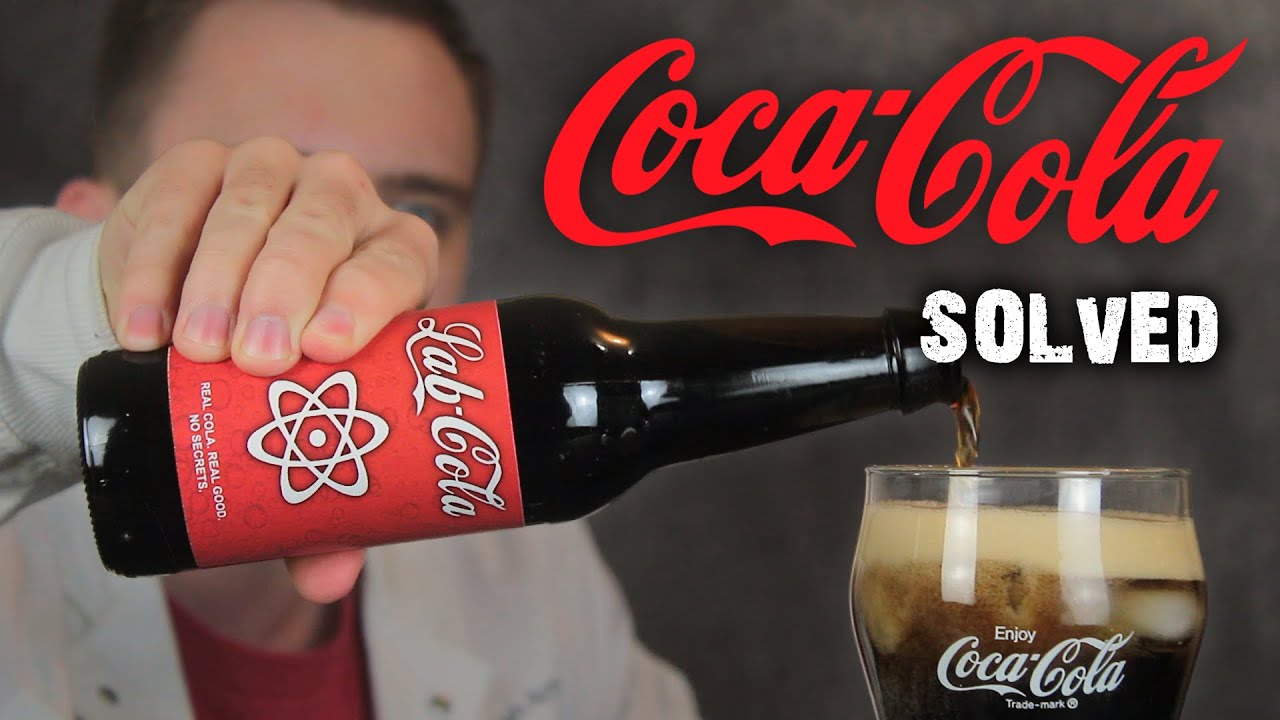
Perfectly Replicating Coca Cola (It Took Me A Year) — LabCoatz

LabCoatz

Replicating Coca-Cola requires no actual coca extract because oenological wine tannins match the leaf's astringent mouthfeel while tea tree oil and heat-driven acid hydrolysis supply the missing volatile chemistry.

AI-assisted summary of Perfectly Replicating Coca Cola (It Took Me A Year) — original source. Check the original for full context.

Source published:

Key ideas

  • Over 99% of Coca-Cola's physical composition consists of standard bulk ingredients—water, sugar, caffeine, caramel color, and phosphoric acid—leaving less than 1% to the proprietary natural flavor matrix. (2:58)
  • Gas and liquid chromatography-mass spectrometry combined with enantiomeric profiling ruled out historical candidates like neroli, lavender, and clove, revealing dominant S-linalool and confirming the presence of trace acetic acid. (7:27)
  • The flavor gap left by inaccessible decocainized coca leaf extract was bridged using Australian tea tree oil for 4-terpineol and pure wine tannins to provide non-volatile astringency. (14:26)
  • Heating the syrup before dilution is essential to drive acid-catalyzed sucrose inversion and break down monoterpenes like limonene and pinene into alpha-terpineol. (20:28)

Detailed notes

## Background Published on YouTube by the channel LabCoatz on January 8, 2026, this video documents a year-long quest to crack Coca-Cola's closely guarded trade secret. According to the description, the creator utilized mass spectrometry data and analytical chemistry to decipher the secret formula and formulate a chemically identical homemade replica.

## TL;DR After establishing that over 99% of Coca-Cola's bulk formula is already public knowledge, creator Zach tackles the elusive sub-1% natural flavor fraction by combining gas and liquid chromatography-mass spectrometry (GC-MS/LC-MS) data with peer-reviewed literature. By systematically eliminating persistent clone-recipe myths like lavender, neroli, and clove, he identifies key aromatic markers including alpha-terpineol, S-linalool, fenchol, and 4-terpineol (sourced via Australian tea tree oil). The missing astringent mouthfeel of proprietary coca leaf extract is solved using enological wine tannins, while vegetable glycerin supplies the body of high-fructose corn syrup and heat accelerates essential sucrose inversion and terpene degradation. The resulting two-part compounding formula yields a soda that blind sensory panelists consistently rate as virtually indistinguishable from authentic commercial Coca-Cola.

## Atmosphere & style The presentation is energetic, analytical, and distinctly maker-scientific, blending a college-level chemical engineering methodology with self-deprecating humor. Zach balances the obsessive rigor of pipetting microliters and building iterative spreadsheet models against relatable trial setbacks, such as burning out a SodaStream carbonator and enduring terrible early batches. The narrative carries a satisfying investigative arc that moves from analytical frustration to triumphant vindication during blind taste tests, leaving viewers with an inspiring sense that even commercial food science's deepest corporate secrets can be cracked in a home lab.

## Bulletin - [02:58](https://www.youtube.com/watch?v=TDkH3EbWTYc&t=178s) Over 99% of Coca-Cola's physical composition consists of standard bulk ingredients—water, sugar, caffeine, caramel color, and phosphoric acid—leaving less than 1% to the proprietary natural flavor matrix. - [07:27](https://www.youtube.com/watch?v=TDkH3EbWTYc&t=447s) Gas and liquid chromatography-mass spectrometry combined with enantiomeric profiling ruled out historical candidates like neroli, lavender, and clove, revealing dominant S-linalool and confirming the presence of trace acetic acid. - [14:26](https://www.youtube.com/watch?v=TDkH3EbWTYc&t=866s) The flavor gap left by inaccessible decocainized coca leaf extract was bridged using Australian tea tree oil for 4-terpineol and pure wine tannins to provide non-volatile astringency. - [20:28](https://www.youtube.com/watch?v=TDkH3EbWTYc&t=1228s) Heating the syrup before dilution is essential to drive acid-catalyzed sucrose inversion and break down monoterpenes like limonene and pinene into alpha-terpineol.

## Key takeaways - [00:00](https://www.youtube.com/watch?v=TDkH3EbWTYc&t=0s) Coca-Cola relies on trade secret protection rather than patents to avoid disclosing its exact chemical formula, making chemical reverse engineering legal. - [02:58](https://www.youtube.com/watch?v=TDkH3EbWTYc&t=178s) Legal coca leaf extract is commercially restricted to the Stepan Company, necessitating an essential oil and chemical analog approach to recreate the flavor profile. - [04:29](https://www.youtube.com/watch?v=TDkH3EbWTYc&t=269s) Dissolving essential oils in 95% food-grade ethanol serves as an effective carrier to prevent hydrophobic phase separation in the soda matrix. - [04:29](https://www.youtube.com/watch?v=TDkH3EbWTYc&t=269s) Mathematical Taguchi arrays failed to optimize flavor combinations due to complex human sensory perception, requiring empirical iterative testing instead. - [04:29](https://www.youtube.com/watch?v=TDkH3EbWTYc&t=269s) Contrary to common clone formulas, orange oil must be restricted to 1% to 2% to avoid completely overpowering the citrus and spice balance. - [07:27](https://www.youtube.com/watch?v=TDkH3EbWTYc&t=447s) Mass spectrometry identified key markers including alpha-terpineol, fenchol, furfural, and ethyl levulinate—the latter proving the syrup undergoes a commercial heating stage. - [10:08](https://www.youtube.com/watch?v=TDkH3EbWTYc&t=608s) Enantiomeric profiling of linalool demonstrated an S-linalool dominance matching coriander oil, effectively disproving the inclusion of lavender and neroli. - [10:08](https://www.youtube.com/watch?v=TDkH3EbWTYc&t=608s) Trace acetic acid in the parts-per-million range is an intentional component of Coca-Cola's flavor architecture rather than an accidental byproduct. - [11:57](https://www.youtube.com/watch?v=TDkH3EbWTYc&t=717s) Australian tea tree oil was identified as the optimal vector to provide 4-terpineol, restoring the missing green, fresh aromatic profile without introducing foreign markers. - [14:26](https://www.youtube.com/watch?v=TDkH3EbWTYc&t=866s) Wine tannins supply the critical non-volatile astringency naturally imparted by coca leaf tea, cutting perceived sweetness without appearing on GC-MS spectra. - [18:48](https://www.youtube.com/watch?v=TDkH3EbWTYc&t=1128s) Food-grade vegetable glycerin must be added to replicate the dense mouthfeel and body normally contributed by high-fructose corn syrup. - [18:48](https://www.youtube.com/watch?v=TDkH3EbWTYc&t=1128s) Reducing the sucrose charge from 110 grams to 104 grams per liter compensates for the mass gain caused by acid-catalyzed inversion into glucose and fructose. - [20:28](https://www.youtube.com/watch?v=TDkH3EbWTYc&t=1228s) Heating the syrup accelerates monoterpene cleavage into alpha-terpineol and prevents the finished soda from tasting like raw essential oils. - [21:42](https://www.youtube.com/watch?v=TDkH3EbWTYc&t=1302s) Blind sensory panels consistently failed to distinguish the chemically formulated replica from commercial Coca-Cola, while quickly rejecting older formulas like Pemberton's and OpenCola.

## Detailed walkthrough ### [00:00](https://www.youtube.com/watch?v=TDkH3EbWTYc&t=0s) Breaking the World's Most Guarded Trade Secret

Aside from coffee and tea, Coca-Cola is the most widely consumed non-alcoholic beverage on Earth. Despite being globally recognized for almost 140 years, only a tiny circle of people knows its true composition. The company protects its trade secret with measures bordering on the absurd: ingredients are shipped completely unlabeled from disparate, isolated facilities that remain in the dark about what they are synthesizing, and the formula is supposedly locked in a massive steel vault showcased during guided company tours.

Rather than accepting the 2016 premise of an article suggesting that only an industrial conglomerate like Pfizer would have the capital and instrumentation to decipher the beverage using mass spectrometry, modern science creators have the analytical tools to do it themselves. Furthermore, Coca-Cola intentionally avoids patenting the formula because patenting requires full public disclosure of the formulation; as long as an independent creator does not brand their soda under the Coca-Cola trademark, reverse-engineering the drink is entirely legal. When early blind taste testers sampled the initial replica batches, the results shocked them, prompting reactions like: “I wasn't expecting it to taste so much like Coke, oh my gosh...” Addressing skeptics who insist a home replica is impossible without true coca leaf inputs, Zach points out that flavoring is fundamentally chemistry:

> “I’m aware that whatever I make won’t be absolutely identical down to the trace contaminants, but if I add all of the major flavoring agents that are detected in real Coca Cola, I should get something that tastes like Coke, regardless of if it came from a coca plant.”

[02:58](https://www.youtube.com/watch?v=TDkH3EbWTYc&t=178s) The 99% Foundation and the Sourcing Roadblock

By weight, over 99% of Coca-Cola’s recipe is already well established through routine scientific analysis and pH testing: - **Sugar:** roughly 110 grams per liter - **Caffeine:** 96 milligrams per liter - **Phosphoric acid:** 0.64 grams per liter - **Caramel color:** provides both the iconic dark brown hue and key flavor compounds such as furfural

The unresolved battle lies entirely within the remaining fraction of a percent labeled generically as “natural flavors.” As of 2025, the sole officially acknowledged flavoring ingredient is decocainized coca leaf extract, processed legally in the United States exclusively by the Stepan Company in New Jersey. Other historic elements, like kola nut extract, were long ago abandoned in favor of purified, refined caffeine.

Efforts to purchase legal, cocaine-free coca extract through third-party vendors proved futile: companies such as Power Leaves failed to reply to inquiries, and an experimental shipment ordered from a questionable Peruvian website was promptly seized at the border by customs agents. Consequently, the flavor profile had to be rebuilt from scratch using pure commercial essential oils—a standard industrial beverage practice that guarantees reproducibility down to the microliter.

```mermaid flowchart TD accTitle: Base Cola Construction Flow accDescr: Flowchart illustrating the separation of known bulk ingredients from the elusive natural flavor formulation.

subgraph KnownBase["Known Bulk Matrix (>99% by weight)"] A["Water + Sugar (110 g/L)"] B["Phosphoric Acid (0.64 g/L)"] C["Purified Caffeine (96 mg/L)"] D["Caramel Color (Furfural source)"] end

subgraph MysteryFraction["Unknown Fraction (<1%)"] E["Decocainized Coca Leaf Extract (Stepan Co.)"] F["Proprietary Essential Oil Blend"] end

KnownBase --> G["Unflavored Base Soda"] MysteryFraction --> H["Natural Flavoring Concentrate"] G & H --> I["Finished Coca-Cola Replica"] ```

[04:29](https://www.youtube.com/watch?v=TDkH3EbWTYc&t=269s) Early Trials, Ethanol Emulsion, and the Taguchi Array Failure

To assemble early trial iterations, typical candidate oils drawn from historical recipes (including John Pemberton’s original 1886 formula) were metered out with a micropipette. These included orange, lemon, lime, coriander, nutmeg, cinnamon, vanilla, and neroli, alongside secondary candidates like black pepper, lavender, clove, and kaffir lime leaf.

```mermaid flowchart LR accTitle: Oil Dispersion Process accDescr: Step-by-step preparation of essential oils into the carbonated soda base.

A["Pure Essential Oils (Micropipetted)"] --> B["Combined Oil Blend"] B --> C["Dissolve in ~1 mL 95% Food-Grade Ethanol"] C --> D["Add to Carbonated Base (Sugar, Acid, Color, Caffeine)"] ```

Because raw hydrophobic essential oils tend to bead up and float on the surface of soda—an issue encountered during an earlier sassafras root beer project—the concentrated oil mixture was first dissolved in approximately 1 milliliter of 95% food-grade ethanol. The alcohol acts as an emulsifying carrier, distributing the oils evenly throughout the water base without altering the soda's taste.

To systematically identify which botanical notes drove the core profile, Zach attempted an optimization scheme using an orthogonal array (Taguchi array), a mathematical matrix designed to identify primary variables in complex systems with minimal test runs. The human palate, however, did not cooperate:

> “Unfortunately, the human mouth perceives flavor mixtures in really complicated ways, so my results were highly inconclusive…and often disgusting.”

Despite the failure of the mathematical array, empirical tasting yielded distinct guidelines for the flavor architecture: - **Core Pillars:** Nutmeg, cinnamon, and coriander provided the unmistakable spice heart, but only when supported by a massive citrus backbone of lemon and lime. - **Floral Mismatches:** Neroli and lavender ruined the profile by introducing strong floral top-notes absent in modern Coke, which tricked the palate into perceiving artificial sweeteners. - **The Orange Fallacy:** While nearly every published clone recipe calls for large volumes of orange oil, testing showed that keeping it strictly between 1% and 2% was ideal; any more overpowered and distorted the citrus balance. - **Spices and Herbs:** Kaffir lime leaf tasted like citronella bug spray, clove was overly harsh and clashed with the spice blend, black pepper merely underscored the earthy facets already present in nutmeg, and vanilla had little aromatic impact unless dosed heavily, where it mostly boosted perceived sweetness.

[07:27](https://www.youtube.com/watch?v=TDkH3EbWTYc&t=447s) Mass Spectrometry and Academic Profiling

To move beyond trial-and-error guesswork, analytical chemistry was deployed. Vince from *Neptunium* and Ben from *Mass Spec Everything* ran commercial samples of Coca-Cola, competitor sodas like Pepsi, and reference essential oil ingredients through gas and liquid chromatography-mass spectrometers (GC-MS / LC-MS). In these instruments, the soda sample is separated into its individual chemical constituents inside a chromatography column, ionized, and accelerated through an electromagnetic field to generate a mass spectrum "fingerprint" for each molecule.

The resulting spectrum revealed the hidden chemical fingerprints of Coca-Cola: - **Alpha-terpineol:** The most intense peak observed; it is produced largely via the acid-catalyzed hydrolysis of limonene and pinene within the acidic liquid, confirming a massive citrus oil presence. - **Limonene & 4-terpineol:** Prominent residual monoterpenes confirming citrus foundations. - **Fenchol:** A significant, unexpected aromatic terpene peak. - **Cinnamaldehyde, Sabinene, & Carene:** Clear chemical indicators confirming cassia/cinnamon and nutmeg. - **Furfural:** A byproduct tracing directly to the caramel coloring. - **Eucalyptol & Borneol:** Herbal, camphoraceous trace compounds. - **Ethyl Levulinate:** A critical indicator derived from levulinic acid, which only forms when hexose sugars like fructose are heated in an acidic environment, proving that the beverage undergoes a thermal cooking stage during commercial manufacture.

Because a mass spectrometer produces relative peak intensities rather than direct parts-per-million concentrations, interpreting raw spectra requires extensive calibration curves. To bridge this gap, Zach paired the spectrometer readings with quantitative peer-reviewed data from a paper in the *Journal of Agricultural and Food Chemistry*. While that published study omitted several key volatiles—most notably fenchol—it supplied verified base concentrations for markers like cinnamaldehyde, vanillin, limonene, alpha-terpineol, and aldehydes such as octanal, nonanal, and decanal, setting the stage for decoding unexpected compounds like linalool and specific forms of eugenol.

[10:08](https://www.youtube.com/watch?v=TDkH3EbWTYc&t=608s) Ruling Out Clove, Neroli, and Lavender via Chemical Profiling

Specific flavor molecules help rule out persistent rumors about Coca-Cola's recipe. While clove oil is frequently cited as a potential ingredient, its composition makes that highly improbable. Eugenol and its esters constitute 80 to 90 percent of clove oil, but analytical data shows that Coke only contains trace levels of eugenol—just enough to account for what is naturally contributed by cinnamon and nutmeg oils. Early recipe testing confirmed that adding clove oil distorted the flavor profile, justifying its complete exclusion.

The presence of linalool helps eliminate other widely suspected botanical candidates through enantiomeric profiling. Molecules like linalool possess two mirrored forms: the R-enantiomer and the S-enantiomer.

```mermaid flowchart TD accTitle: Linalool Enantiomers in Coca-Cola accDescr: Diagram showing how R and S enantiomers of linalool trace back to specific oils to rule out lavender and neroli while proving coriander content.

subgraph Enantiomers["Linalool Enantiomeric Breakdown"] R["R-Linalool (Mirrored form A)"] S["S-Linalool (Mirrored form B)"] end

subgraph Botanicals["Botanical Sources"] LavNer["Lavender & Neroli Oils (R-dominant)"] Citrus["Citrus Oils (Lemon/Lime) (Trace R)"] Coriander["Coriander Oil (S-dominant)"] end

LavNer -.->|"Excluded by low levels"| R Citrus -->|"Accounts for all trace levels"| R Coriander -->|"Source for majority detected"| S S --> CokeProfile["Detected in Coca-Cola: Majority S-Linalool"] ```

While R-linalool dominates lavender and neroli oils, S-linalool dominates coriander oil. The mass spectrometry study demonstrated that Coca-Cola contains predominantly S-linalool; the minor concentration of R-linalool present is fully accounted for by citrus oils. While some speculate that the detection of neral and nerol suggests neroli oil, those compounds originate naturally from citrus oils, firmly ruling out both lavender and neroli.

- Acetic acid is the third most prominent flavor component by mass in Coca-Cola. - Although initially suspected to be a byproduct of acid-catalyzed ester hydrolysis, discussions with Darcy from the *Art of Drink* channel and a historical 1950s recipe confirmed its intentional addition in parts-per-million levels. - “To be clear, the amounts being used are in the parts per million range, but I still find it funny that vinegar is probably one of the secret ingredients.”

[11:57](https://www.youtube.com/watch?v=TDkH3EbWTYc&t=717s) The Spreadsheet Model and the Missing Freshness

Tracking dozens of flavor constituents required building an iterative Excel mixing calculator. The spreadsheet calculated the exact mass contribution of each chemical component based on input oil volumes and compared the results directly against the Coca-Cola analytical data. Iterations were systematically logged on separate tabs with sensory notes and likeness scores. While most volatile compounds lined up with standard oils, two target markers remained missing on the mass spectrum: fenchol and 4-terpineol. A third molecule, alpha-terpineol, was resolved once the preparation technique incorporated heat. Fenchol was sourced directly as an isolated chemical, leaving 4-terpineol as the remaining mystery.

Coca-Cola's overall flavor profile consists of distinct tiers: primary citrus and brown warm spices, subtle background undertones of caramel and vanilla, and green, herbal, fresh notes traditionally imparted by coca leaf extract. Lacking these herbal notes causes a formulation to drift toward a spice-heavy profile resembling Pepsi. To reintroduce these characteristics, Australian tea tree oil (*Melaleuca alternifolia*) was selected as the 4-terpineol vector. Tea tree oil contains approximately 50 percent 4-terpineol by mass, and its auxiliary constituents closely mirror compounds naturally found in Coca-Cola without distorting the mass spectrum.

- While tea tree oil visibly improved the herbal profile, early batches still drank like diet cola rather than classic Coca-Cola. - Months of exhaustive testing included comparing cassia cinnamon to cinnamon leaf, testing different forms of nutmeg and lime, comparing aged/heated syrups against raw syrups, and evaluating trace additives like isopulegol. - The prolonged trial phase destroyed a SodaStream carbonator through overuse, requiring a full replacement. - “After a certain point, I was pretty close to throwing in the towel.”

[14:26](https://www.youtube.com/watch?v=TDkH3EbWTYc&t=866s) Cracking the Coca Leaf Secret with Wine Tannins

The realization that bridged the final flavor gap lay in the physical nature of the coca leaf itself. Because a coca leaf extract is essentially a tea, it introduces non-volatile plant tannins into the beverage. Tannins provide a drying, astringent mouthfeel that actively tempers and cuts through perceived sugar sweetness. Because tannins are completely non-volatile, they do not vaporize during gas chromatography-mass spectrometry (GC-MS), which explained why they were entirely absent from published spectra.

Pure oenological wine tannins, manufactured for winemaking, provided an accessible source to test the hypothesis. Adding them yielded an exact match:

```mermaid flowchart LR accTitle: Flavor Matching Comparison accDescr: Flow showing the analytical and sensory validation between the formulated replica and real Coca-Cola.

subgraph Analysis["Analytical & Sensory Convergence"] A["Chemical Formulation + Wine Tannins"] --> B["GC-MS Spectrum Match"] A --> C["Sensory Profiling"] end

subgraph Result["Final Assessment"] B & C --> D["Indistinguishable from Classic Coke"] end ```

A side-by-side comparison between the mass spectrum of commercial Coca-Cola and the replica's spectrum showed they were virtually identical. The resulting soda achieved a level of parity far surpassing Mexican glass-bottle varieties, diet alternatives, or existing public copycat recipes.

- “And the flavor…well, what can I say? It tastes like Coke!” - “There are tiny differences of course, but honestly, this stuff is closer to classic Coke than Coke’s own glass bottle or diet colas are, and infinitely closer than any other replica.”

[15:27](https://www.youtube.com/watch?v=TDkH3EbWTYc&t=927s) Essential Equipment and Sourcing Raw Materials

Replicating the recipe at home requires specific lab hardware to handle the tight tolerances of high-potency oils and acids.

```mermaid flowchart TD accTitle: Preparation Hardware Layout accDescr: Essential equipment grouped by measuring, reaction glassware, and handling tools.

subgraph Measuring["Precision Measurement"] M1["Analytical Mass Scale"] M2["Adjustable Micropipette (up to 1000 µL)"] M3["50 mL Graduated Cylinder"] M4["1 L Volumetric Flask"] end

subgraph Glassware["Syrup Prep & Storage"] G1["Borosilicate Glassware (Heat-resistant)"] G2["1 L Storage Bottles"] G3["Magnetic Stirrer (Optional)"] end ```

Metal cookware must be strictly avoided during syrup preparation; concentrated phosphoric acid rapidly attacks and leaches reactive metals into the solution—the very reason commercial beverage cans require internal polymer liners.

The formulation requires precise raw materials: pure essential oils, white cane sugar, carbonated water, food-grade 95% alcohol (ethanol), anhydrous caffeine, caramel color, 85% phosphoric acid, vegetable glycerin, wine tannins, 5% distilled vinegar, pure vanilla extract, and isolated alpha-fenchol. Fenchol solidifies at room temperature because its melting point sits just above ambient conditions, requiring a warm water bath to liquefy before pipetting. For coloring, Shank's brand caramel color was used; alternative brands such as Durkee work provided they consist of true caramel color rather than red and green dye blends. Safety gloves and strict measurements are mandatory when handling these pure chemicals.

- “No more paying a company that won’t even pay real animators!” - “So, for your own safety, wear gloves, measure accurately, and don’t taste any of the unmixed ingredients.”

[17:16](https://www.youtube.com/watch?v=TDkH3EbWTYc&t=1036s) Compounding Flavor Solution A (The 7X Oil Blend)

The alcohol-based concentrate represents an engineered analog to the historic "7X" secret formula. Because decocainized coca leaf extract cannot be sourced by individual consumers, this chemical recreation relies on an optimized botanical oil matrix:

- 45.8 mL Lemon oil - 36.5 mL Lime oil - 8.0 mL Australian tea tree oil (*Melaleuca alternifolia*) - 4.5 mL Cassia cinnamon oil - 2.7 mL Nutmeg oil - 1.2 mL Sweet orange oil - 0.7 mL Coriander oil - 0.6 mL Liquefied alpha-fenchol

This compounds roughly 100 mL of raw flavor oil—enough concentrate to flavor over 5,000 liters of finished soda (“or about as much as your mom drinks in a day”). The raw oil blend benefits significantly from resting and aging for one to two days, mirroring instructions recorded in John Pemberton’s original manufacturing notes to allow transesterification and aromatic rounding.

To yield the working **Flavor Solution A**, 20 mL of the aged raw oil mixture is diluted up to a final volume of 1.0 liter using 95% food-grade alcohol. The final concentration of ethanol introduced into a finished liter of soda is less than one-fifth that of non-alcoholic beer, acting strictly as an aromatic solvent without any intoxicating or perceptible flavor impact. For individuals avoiding ethanol entirely, gum arabic can be substituted to create a water-based emulsion, as popularized by *Glen and Friends Cooking*.

[18:48](https://www.youtube.com/watch?v=TDkH3EbWTYc&t=1128s) Preparing Solution B and Assembling the Soda

Flavor Solution B consolidates the dense water-soluble components, acids, and astringent modifiers into a single stable master batch. Beginning with approximately 200 mL of heated distilled water, the following ingredients are completely dissolved sequentially using magnetic stirring:

- 320 mL Shank's caramel color - 175 g Food-grade vegetable glycerin - 45 mL 85% Phosphoric acid - 10 mL 5% Distilled vinegar - 10 mL Pure vanilla extract (or 1.0 mL of a 9.5 g/L vanillin solution) - 9.65 g Anhydrous caffeine - 8.0 g Purified wine tannins

Vegetable glycerin acts as a densifying agent to match the full mouthfeel of high-fructose corn syrup; omitting it produces a thin, watery body characteristic of diet sodas. Once completely dissolved, water is added to bring Solution B to a total volume of 1.0 liter.

To mix a single finished liter of Coca-Cola, measure 104 grams of granulated sucrose into a glass vessel with the minimal volume of water required for dissolution. While standard commercial soda contains 110 grams of corn-derived monosaccharides (glucose and fructose) per liter, sucrose is a disaccharide. In the presence of phosphoric acid, sucrose undergoes acid-catalyzed hydrolysis (inversion), cleaving into glucose and fructose. Adding 110 grams of sucrose would generate nearly 116 grams of simple sugars after inversion, creating an overly sweet profile. Reducing the dry sucrose charge down to 104 grams offsets this chemical shift, setting the baseline before final compounding with Solutions A and B and cold carbonated water.

[20:28](https://www.youtube.com/watch?v=TDkH3EbWTYc&t=1228s) Assembling, Heating, and Diluting the Final Cola

To assemble the finished cola syrup, add 10 milliliters of the water-based flavor solution and 1 milliliter of the alcohol-based 7X solution directly into the sugar base. Depending on personal taste, a few extra drops of the 7X solution can be added. The moment everything is blended together, the syrup must be heated in a microwave or through another heat source until it is nearly boiling, then covered to prevent volatile aromatic flavor compounds from evaporating into the air.

```mermaid flowchart TD accTitle: Final Cola Syrup Assembly and Carbonation accDescr: Step-by-step process of mixing solutions A and B, heating, cooling, and diluting with carbonated water.

subgraph Preparation ["1. Syrup Mixing & Acid Cleavage"] A["Sugar Base<br/>(104g sugar + min water)"] --> C["Syrup Blend"] B1["Flavor Solution B<br/>(10 mL)"] --> C B2["7X Flavor Solution A<br/>(1 mL)"] --> C C --> D["Heat to Near-Boiling<br/>(Covered)"] end

subgraph Finishing ["2. Dilution & Maturation"] D --> E["Cool Completely"] E --> F["Dilute to 1 Liter with<br/>Cold Carbonated Water"] F --> G["Rest in Fridge<br/>(24 Hours for Best Flavor)"] end ```

This heating process serves two vital chemical functions driven by the phosphoric acid. LabCoatz emphasizes that “Heating like this helps the phosphoric acid break down compounds like limonene and citral, and it also accelerates that sugar hydrolysis reaction we just talked about, so it’s a fairly crucial step.” Once the syrup cools completely, it is diluted to a total volume of one liter using cold carbonated water, either store-bought or made with a SodaStream. However, carbonating the pre-mixed soda directly inside a carbonation machine is strongly discouraged, as the ingredients generate heavy foaming that creates contamination risks and fosters bacterial growth inside the appliance. While the freshly mixed soda can be enjoyed immediately, allowing it to rest in the refrigerator for about twenty-four hours produces the most authentic profile.

- Add 10 mL of water-based flavor solution B and 1 mL of alcohol-based flavor solution A (7X) to the prepared sugar syrup. - Microwave or heat the covered mixture until nearly boiling to accelerate sucrose inversion and promote acid-catalyzed terpene degradation. - Allow the syrup to cool completely before diluting to a final volume of 1 L with cold carbonated water. - Avoid running mixed syrup through home carbonators to prevent excessive foam and bacterial buildup in the nozzle mechanism. - Allow the finished drink to age for a day in the refrigerator for the best flavor balance.

---

[21:42](https://www.youtube.com/watch?v=TDkH3EbWTYc&t=1302s) Blind Taste Tests: Lab-Cola vs. Commercial Clones

To verify whether the resulting drink was a true replica or just another derivative clone, LabCoatz conducted both blind and non-blind sensory taste tests. Panelists consistently struggled to distinguish the homemade formulation from commercial Coca-Cola. When sampling the soda, one tester remarked, “Yeah, this is regular Coke. See, I can't even tell. Even though I know already I can't even tell.” Another participant awarded the beverage a “9.5 out of 10,” noting that it tasted so close that telling them apart side-by-side was almost impossible. Other testers were convinced it was an authentic bottling, with one stating, “Yeah no, that's definitely, you know, Coke or a Coke product. You know, if you said it was vanilla Coke or something like that I'd be like, 'yeah maybe, that's definitely Coke'” and adding, “If you sold this on the shelves, I'd buy it!”

While experienced, habitual Coca-Cola drinkers proved slightly more capable of identifying the replica in direct comparisons, the overall consensus was that Lab-Cola authentically mimicked Coca-Cola rather than alternative profiles like Pepsi. When tasted in isolation without an immediate reference sample, participants overwhelmingly judged it to be genuine Coca-Cola. This contrasted sharply with classic public recipes like the Pemberton formula or OpenCola, which testers instantly rejected as incorrect. When sipping the older clones, tasters reacted with immediate distaste, noting, “No, that's not even...like, it's a cola, but like...that's not Coke. That is just straight flower!” while another pointed out that alternative recipes tasted “like almost pure cinnamon.”

- Blind and non-blind panels confirmed that Lab-Cola closely matches the commercial flavor profile, unlike Pepsi or generic store brands. - Testers routinely rated the replica around 9.5 out of 10 for fidelity to authentic Coca-Cola. - Traditional open-source formulas like Pemberton’s recipe and OpenCola were universally identified as non-Coke, criticized for heavy floral notes and overwhelming cinnamon oil.

---

[23:28](https://www.youtube.com/watch?v=TDkH3EbWTYc&t=1408s) Channel Retrospective and Future Science Projects

Reflecting on the conclusion of 2025, LabCoatz recaps a banner year of hazardous and complex chemistry experiments, including synthesizing elemental fluorine gas at home, mixing dangerous oleum piranha cleaning solutions, and deploying a ruggedized 360-degree camera probe directly in the path of an oncoming tornado. Looking ahead to 2026, major personal milestones are approaching: graduating with a bachelor’s degree in chemical engineering in May, followed by relocating for an engineering internship and transitioning into a full-time career. Addressing the potential production slowdown, he assures viewers: “It’s hard to say how many videos I’ll be putting out at that time, but rest assured if there is, like, a little break in there, it's not going to be permanent, and I will be coming back!”

An ambitious slate of technical builds and experiments is lined up for the coming year. On the chemistry front, upcoming projects include synthesizing taurine from scratch to formulate an original energy drink, alongside tackling tellurium to finish long-standing work on super-stench organometallic compounds. On the physics and severe weather fronts, over $1,000 in high-voltage capacitors have been procured to construct a homebrew plasma gun, and a specialized high-speed drone has been acquired to intercept tornadoes at point-blank range—an effort inspired by the storm-chasing OTUS Project, awaiting drone licensing. LabCoatz closes the video by thanking channel members and Patreon patrons for financing these high-cost projects, offering Lab-Cola flavor samples, and signing off with his signature catchphrase: “LabCoatz, out!”

- Completed 2025 channel highlights: home fluorine gas synthesis, oleum piranha baths, and deploying a 360-degree camera probe into a tornado. - LabCoatz is completing a chemical engineering bachelor’s degree in May 2026 before beginning an industrial internship and transitioning to full-time work. - Planned chemistry builds include taurine synthesis for a custom energy drink and organotellurium stench chemistry. - Engineering and meteorology projects include an ultra-capacitor plasma gun and a high-speed storm-penetrating drone.

## Mentioned Coca-Cola, Pepsi, LabCoatz, Zach, Pfizer, Stepan Company, Power Leaves, John Pemberton, Vince, Neptunium, Ben, Mass Spec Everything, Darcy, Art of Drink, Glen & Friends Cooking, How To Cook That, Nighthawkinlight, Shank's, Durkee, SodaStream, OpenCola, Journal of Agricultural and Food Chemistry

## Video description The Coca Cola secret formula is one of the best kept secrets in recent history...and I hate secrets. So, naturally, I deciphered it with the help of mass spectrometry and created a chemically-identical replica!

Want to help support LabCoatz? Of course you do! Feel free to donate, become a channel member, or join my Patreon using the links below! https://www.youtube.com/channel/UCcT_WBynr2K8nANsVrR8BYw/join https://www.patreon.com/labcoatz https://www.paypal.com/paypalme/labcoatz

A massive thanks to Vince from @Neptunium and Ben from @MassSpecEverything, their mass spectrometry work is truly what made this video possible! Check out their videos here: https://www.youtube.com/watch?v=V45lSJJ-d-M https://www.youtube.com/watch?v=JYN5sNOiA6s

An additional shoutout to @GlenAndFriendsCooking and @HowToCookThat, who put out excellent videos on making cola, and especially to @Artofdrink, who has several highly educational beverage-related videos, as well as one of the best colas I've tasted! https://www.youtube.com/watch?v=KWaNiwcQK2M https://www.youtube.com/watch?v=_VG-gvzr-8g https://www.youtube.com/watch?v=o2yLvseG5UM

Finally, thanks to @Nighthawkinlight for demonstrating orthogonal (Taguchi) arrays in his video!

Be sure to check out these other videos from people who tried (or at least brought attention to) the recipe: https://www.youtube.com/watch?v=0usa0L5owbs https://www.youtube.com/watch?v=rphwEzFe6Jo https://www.youtube.com/watch?v=9f3ZO4N0RC8

CURRENT RECIPE: same as video, but use 10 grams of tannin, 150 grams of glycerin, and 43mL of 85% phosphoric acid. And if you use Durkee caramel color (since Shanks no longer seems to be available), use 185mL instead of 320mL, since it's much stronger.

New warning regarding tea tree oil: this ingredient is not FDA-approved from what I can tell, and can be toxic in high doses, so use at your own risk. That said, it does appear to be GRAS, and the amounts used here are over 5X less than the maximum allowable (10 ppm).

PER LITER OF SODA (VERSION 111C): 104 grams sugar (dissolved in a minimum volume of water) 1mL flavor solution A (alcohol-based) 10mL flavor solution B (water-based) Top off to 1 liter with cold carbonated water

FLAVOR SOLUTION A: dilute 20mL of the following oil mixture to a volume of 1 liter using food-grade 95% alcohol. 45.8mL lemon oil 36.5mL lime oil 8mL tea tree oil (from Australian tea tree, Melaleuca Alternifolia) 4.5mL cassia cinnamon oil 2.7mL nutmeg oil 1.2mL orange oil (regular sweet orange) 0.7mL coriander oil 0.6mL fenchol (any version of alpha-fenchol should work)

FLAVOR SOLUTION B: dilute the following mixture to a volume of 1 liter using water. 185mL Durkee caramel color 150 grams food-grade vegetable glycerin 43mL 85% phosphoric acid 10 grams wine tannin 9.65 grams caffeine 10mL 5% vinegar 10mL vanilla extract (or a solution containing 0.95 grams per liter of vanillin)

If you like glass bottle "Mexican" Coke, just increase the lime in the final mix. I haven't actually made an effort to replicate glass bottle Coca Cola, but that seems to be basically the only difference.

Here's the research paper I referenced throughout this project: https://pubs.acs.org/doi/pdf/10.1021/jf504954p?ref=article_openPDF

Regarding the types of essential oils to use, there is not a standard for "food grade" essential oils...as long as the sample is verifiably pure, that's as good as it gets. Brands like NOW and Aura Cacia seem to be reasonable. For the fenchol, different CAS numbers should be suitable as long as the sample is over 90% alpha-fenchol. There are no substitutes for fenchol, and despite what Wikipedia says, basil does not contain a significant amount of it...based on my research, it might have some fenchone or fenchyl acetate, but that's it, and these are minor components. Fenchol has a very distinct, heavily musty, earthy, or moldy smell, with some camphor or mint-like notes in high doses.

WARNING: concentrated phosphoric acid is mildly corrosive and undiluted flavors and essential oils can be irritating or toxic. Never consume, unless properly mixed and diluted to safe levels. Tea tree oil is toxic in high doses (same for a lot of flavors, honestly), but the few microliters used in this cola are well within the limits for beverage use. You will honestly absorb less by drinking this soda than you would by using a tea tree lotion or mouth wash, and as the data shows, it's all chemically the same as Coke!

0:00 Secrets secrets secrets 1:18 A fool's errand...or not? 2:56 What's in Coke? 3:29 Coca (but not cola) 4:10 Flavor basics and early trials 7:17 Mass spectrometry (thanks Vince and Ben!) 9:12 Research papers and key discoveries 11:54 Spreadsheet time 12:20 The missing flavors 13:44 A year of testing 14:23 A BIG discovery...we nailed it 15:27 How to make Coca Cola 17:16 Mixture A: 7X flavor 18:47 Mixture B: water-based ingredients 19:46 Mixing up the cola 21:41 What do other people think? 23:27 Looking forward

[Source](https://www.youtube.com/watch?v=TDkH3EbWTYc)

中文简报

化学家借助质谱分析与葡萄酒单宁成功复刻可口可乐配方 复制可口可乐无需真正的古柯提取物,因为酿酒用葡萄酒单宁能还原古柯叶的涩口感,而茶树精油和热驱动酸水解则补全了缺失的挥发性化学成分。 在确定可口可乐99%以上的基础配方已是公开信息后,创作者扎克(Zach)结合气相和液相色谱-质谱联用(GC-MS/LC-MS)数据以及同行评审文献,攻克了占比不足1%的难以捉摸的天然香料部分。通过系统性排除薰衣草、橙花和丁香等长期存在的克隆配方误区,他确认了包括α-松油醇、S-芳樟醇、茴香醇以及4-松油醇(提取自澳大利亚茶树精油)在内的关键芳香标志物。专有古柯叶提取物所缺失的收敛涩感通过酿酒用葡萄酒单宁得以解决,同时植物甘油提供了高果糖玉米糖浆的醇厚感,而加热则加速了关键的蔗糖转化和萜烯降解。由此配制出的两部分复合配方制成的汽水,在盲测品鉴中被评委一致认为与市售正品可口可乐几乎没有区别。 可口可乐99%以上的物理成分由水、糖、咖啡因、焦糖色素和磷酸等常见大宗原料组成,专有的天然风味基质占比不足1%。 (2:58) 气相和液相色谱-质谱联用结合对映体分析排除了橙花、薰衣草和丁香等历史推测成分,揭示了占主导地位的S-芳樟醇,并证实了微量乙酸的存在。 (7:27) 无法获取的去可卡因古柯叶提取物留下的风味空白,通过使用澳大利亚茶树精油提供4-松油醇以及纯葡萄酒单宁提供非挥发性涩感得以弥补。 (14:26) 在稀释前加热糖浆至关重要,这能促进酸催化的蔗糖转化,并将柠檬烯和蒎烯等单萜降解为α-松油醇。 (20:28)

Reading summary

Chemical creator Zach of LabCoatz reverse-engineered commercial Coca-Cola by pairing gas chromatography-mass spectrometry with targeted botanical substitutes, discovering that the drink's signature profile relies on non-volatile wine tannins and precise acid-catalyzed heating rather than inaccessible coca leaf extracts. Analytical Chromatography and Botanical Exclusions (7:27) While over 99% of Coca-Cola consists of known commodities—roughly 110 grams of sugar, 96 milligrams of caffeine, and 0.64 grams of phosphoric acid per liter—the sub-1% natural flavor fraction historically invited speculation. Collaborating with analytical chemists using GC-MS and LC-MS instrumentation, Zach matched mass spectrum fingerprints against peer-reviewed food chemistry literature. The data revealed prominent peaks for alpha-terpineol, limonene, cinnamaldehyde, sabinene, and ethyl levulinate, the latter proving that the commercial syrup undergoes thermal processing in an acidic environment. Spectrometric profiling systematically disproved persistent recipe rumors. Testing detected only trace levels of eugenol matching the background contributions of cinnamon and nutmeg, eliminating clove oil as an ingredient. Furthermore, enantiomeric analysis of linalool showed a heavy dominance of S-linalool from coriander, with only trace R-linalool attributable to citrus oils; this ruled out lavender and neroli oils, which are R-linalool dominant. The tests and empirical trials also showed orange oil must be limited strictly to 1% to 2% of the oil matrix to avoid overwhelming the citrus balance. Replicating Coca Leaf with Terpenes and Tannins (11:57) Because legal decocainized coca leaf extract is commercially inaccessible to independent researchers, early attempts to balance the formula drifted toward the spice-heavy profile of Pepsi. To restore the herbal, fresh top-notes without coca leaves, Zach identified Australian tea tree oil (Melaleuca alternifolia) as a vector for 4-terpineol, an essential target compound identified in spectral analysis that accounts for roughly 50% of tea tree oil by mass. The final breakthrough addressing the mouthfeel and flavor gap came from recognizing that coca extract functions as a brewed tea, delivering non-volatile plant tannins. Because tannins do not vaporize, they had failed to register on gas chromatography spectra. Integrating pure oenological wine tannins supplied the missing astringency required to temper sweetness, producing a GC-MS profile and sensory likeness virtually identical to authentic Coca-Cola. Two-Part Compounding and Acid-Catalyzed Inversion (17:16) The finished soda utilizes two concentrated master solutions. Flavor Solution A (the 7X analog) blends 45.8 mL lemon, 36.5 mL lime, 8.0 mL tea tree, 4.5 mL cassia cinnamon, 2.7 mL nutmeg, 1.2 mL sweet orange, 0.7 mL coriander, and 0.6 mL liquefied alpha-fenchol oils, diluted in 95% food-grade ethanol as an emulsifier. Flavor Solution B combines water-soluble ingredients: caramel color, anhydrous caffeine, phosphoric acid, vanilla extract, a trace amount of 5% distilled vinegar (providing acetic acid), wine tannins, and vegetable glycerin to emulate the heavy body of commercial high-fructose corn syrup. Assembly requires a specific chemical adjustment: 104 grams of dry sucrose are used rather than 110 grams. When combined with 10 mL of Solution B and 1 mL of Solution A, the syrup is heated to near-boiling. This critical step accelerates phosphoric acid-catalyzed inversion, cleaving sucrose into roughly 116 grams of monosaccharides (glucose and fructose) while degrading raw terpenes like limonene and citral into authentic flavor compounds before final carbonated dilution. Sensory Verification and Flaws in Legacy Clones (21:42) Blind and non-blind sensory panels confirmed the formulation's fidelity, with participants regularly scoring it 9.5 out of 10 and struggling to differentiate it from commercial Coca-Cola in direct comparisons. When tasted without a control sample, testers consistently judged the formulation to be factory-bottled Coca-Cola rather than a derivative clone. These results sharply diverged from historical open-source recipes. Sensory testers immediately rejected clones based on John Pemberton’s 1886 notes or OpenCola, criticizing them for overpowering floral notes and excessive cinnamon oil. The trials demonstrated that modern Coca-Cola requires a dominant lemon-lime backbone, carefully restrained spice fractions, and astringent tannins rather than traditional floral-heavy oil ratios. The project demonstrates that Coca-Cola's closely guarded trade secret can be replicated through open analytical chemistry and commercial botanical substitutes. Limitations remain regarding microscopic trace contaminants, and home compounders must observe safety precautions when handling concentrated phosphoric acid, isolated fenchol, and unmixed essential oils.

精炼阅读摘要

科普创作者 LabCoatz 通过气相及液相色谱-质谱联用技术与实验调配,耗时一年成功逆向复刻了可口可乐的风味与质感。该研究证实,即便缺乏受管制的脱古柯碱古柯叶提取物,依靠商用精油、单体化学分子、葡萄酒单宁及热酸催化反应,也能在化学与感官层面高度还原这一商业机密配方。 质谱分析指纹与传统配方谣言的化学证伪 (7:27) 依据常规分析,按重量计可口可乐99%以上的成分为已知基础基质,包括每升约110克糖、96毫克咖啡因、0.64克磷酸以及提供焦糖色泽和糠醛风味的焦糖色素。真正的技术壁垒在于占总量不足1%的“天然香料”。为摆脱盲目试错,创作者借助气相色谱与液相色谱-质谱联用仪(GC-MS/LC-MS)对商业可乐及原料进行了成分分离与分子指纹解析。质谱图谱中检测到了强烈的α-松油醇峰(由柠檬烯和蒎烯在酸性环境中水解生成)、柠檬烯、4-松油醇、小茴香醇、肉桂醛以及来自焦糖色素的糠醛。此外,样品中检出的乙酰丙酸乙酯证实饮料在生产中经历了加热过程,因为该物质仅在己糖与酸共热时生成。 质谱数据还彻底排除了外界对配方成分的长期猜测。对芳樟醇的手性对映异构体分析显示,可口可乐中主要为S-芳樟醇,源自芫荽籽油,微量的R-芳樟醇则完全可由柑橘油解释,从而排除了以R构型为主的橙花油和薰衣草油。针对丁香油的传闻,质谱显示可乐中的丁香酚仅处于极微量水平,完全属于肉桂油与肉豆蔻油自带的伴随成分,若额外添加丁香油会导致风味严重失衡。此外,分析确认乙酸是按质量计第三大风味组分,历史文献与相关专家讨论证实醋酸是以百万分率(ppm)级别被主动添加以构筑特征风味。 突破古柯叶限制:茶树油与葡萄酒单宁 (11:57) 美国法律规定脱古柯碱古柯叶提取物仅由新泽西州 Stepan 公司独家加工,独立创作者无法通过合法商业渠道购得。为填补缺失的草本清新感与4-松油醇特征峰,创作者在反复筛选后选用了澳大利亚茶树油(Melaleuca alternifolia)。茶树油含有约50%的4-松油醇,其伴生化合物与可乐天然质谱高度吻合,有效扭转了配方因缺乏草本基底而偏向类似百事可乐的过度辛辣感。针对早期批次口感发薄、类似无糖可乐的缺陷,创作者在配方中引入了食品级植物甘油,用以模拟高果糖玉米糖浆带来的丰满体态。 最终突破风味瓶颈的关键在于对古柯叶物理本质的认知:古柯叶提取物本质上是植物浸提液,含有大量非挥发性植物单宁。GC-MS仪器因仅能检测挥发性成分而完全遗漏了单宁的存在。单宁具有微涩与收敛性,能在口腔中有效平衡糖分的甜腻感。创作者通过添加酿酒用纯葡萄酒单宁,使配方在感官和质谱重叠度上达到了与原版高度一致的水平,成功破解了以往仿制方案无法企及的骨架感。 双溶液体系构建与热催化酸解转化工艺 (17:16) 最终配方被解构为浓缩风味溶液A(油溶性)与母液B(水溶性)。溶液A作为“7X”核心精油组分,按比例汇集了45.8毫升柠檬油、36.5毫升青柠油、8.0毫升澳大利亚茶树油、4.5毫升肉桂油、2.7毫升肉豆蔻油、1.2毫升甜橙油、0.7毫升芫荽油及0.6毫升液化小茴香醇,静置陈化一至两天后以95%食品级乙醇稀释至1升。溶液B则由水、320毫升焦糖色素、175克植物甘油、45毫升85%磷酸、10毫升5%蒸馏醋、香草精、9.65克无水咖啡因及8.0克葡萄酒单宁充分溶解定容至1升。 在调配1升成品可乐时,创作者将白砂糖用量调整为104克而非市售标注的110克。原因在于蔗糖作为二糖,在磷酸催化水解(转化)为葡萄糖与果糖后质量会增至近116克,造成甜度过高;104克蔗糖水解后恰好达到110克单糖的标称水平。将10毫升溶液B与1毫升溶液A注入糖浆后,必须加盖加热至接近沸腾。该热酸处理工艺具有双重关键作用:加速蔗糖的完全水解转化,并促进磷酸催化降解柠檬烯与柠檬醛等萜烯化合物,生成经典的陈化风味。完全冷却后,再注入低温碳酸水稀释并冷藏24小时完成熟化。 双盲感官评测验证与开源配方的缺陷 (21:42) 为验证成品的仿真度,创作者组织了多轮盲测与非盲品鉴。受试者在单独品尝或直接对比时普遍无法区分该复刻版(Lab-Cola)与市售原版可口可乐,多位测试者给出了9.5分(满分10分)的高度评价,甚至误认为其为官方瓶装新品。经验丰富的可乐饮用者在严苛的即时并排对比中虽能隐约察觉微小差异,但一致认定其风味极其贴近原版经典可乐,而非百事可乐或廉价代用汽水。 相比之下,公开流传的传统仿制配方如彭伯顿1886年原始配方与OpenCola方案在盲测中遭到一致差评。测试者指出早期配方存在过重且刺鼻的“纯花香”,或被过量的肉桂与丁香所主导,完全脱离了现代可乐的味觉架构。这印证了仅凭历史笔记试错的局限性,证明现代色谱定性与手性分析是精准还原复杂工业配方的决定性手段。 LabCoatz 的研究表明,通过现代分析化学手段能够打破长期笼罩在商业软饮料周围的配方神话,证实其核心壁垒可以通过多维色谱分析与精细工程手段进行逆向拆解。尽管由于缺乏大规模连续式工业碳化设备,家庭复刻在泡沫细腻度与器具抗腐蚀上仍存在操作限制,但该研究确立了一套利用非挥发性植物单宁与热酸水解反应精准重构工业风味的科学路径。

Detailed notes — zh

## Background 该视频由 YouTube 频道 LabCoatz 于 2026 年 1 月 8 日发布。视频简介说明,作者耗时整整一年,借助气相质谱联用分析(GC-MS)彻底逆向破解了世界上保密最严格的商业机密之一——可口可乐秘方,并成功调配出在化学成分与风味上完全一致的复刻品公之于众。 ## TL;DR 视频完整记录了作者从零开始逆向工程可口可乐的全过程。在传统开源配方与田口正交实验宣告失败后,作者联手专业化学博主利用质谱仪提取正品可乐的分子指纹,推翻了丁香、橙花与薰衣草等历史配方谣言,并证实了微量醋酸的刻意添加。随后,作者通过引入茶树油提供关键的萜品烯-4-醇、加入不可挥发的酿酒单宁模拟脱可卡因古柯叶提取物的骨架感,攻克了缺失的风味拼图。在将工艺标准化为耐储存的油相与水相预混液、并借助加盖微波加热促进风味转化后,双盲感官评测证实该复刻品在口感上已与原厂正品难分伯仲。 ## Atmosphere & style 整部视频洋溢着极客式的执着、严谨的硬核科学探索感以及毫不掩饰的讽刺幽默。作者一边以化工专业的高标准操作移液枪、推导 Excel 分子模型并解析质谱峰,一边辛辣吐槽可口可乐公司的神秘噱头与廉价 AI 广告,节奏明快紧凑。从多次失败、炸坏气泡机到灵光一现悟出单宁秘密的情感弧线极具张力,盲测环节更是让观众真切体验到“用科学知识打破消费神话”的巨大成就感。 ## Bulletin - [00:00](https://www.youtube.com/watch?v=TDkH3EbWTYc&t=0s) 经过长达一年的化学逆向工程与气相质谱联用(GC-MS)分析,博主成功破译了近140年历史的可口可乐风味骨架,公开了无需合法古柯叶的化学等效配方。 - [10:08](https://www.youtube.com/watch?v=TDkH3EbWTYc&t=608s) 手性对映异构体检测推翻了流传百年的民间配方:可口可乐中芳樟醇几乎全为来自芫荽籽油的S-构型,从而排除了含大量R-芳樟醇的橙花油与薰衣草油,同时证实痕量乙酸(食醋)是人为刻意添加的关键呈味剂。 - [11:57](https://www.youtube.com/watch?v=TDkH3EbWTYc&t=717s) 实验确定了由澳洲茶树精油提供4-萜品醇以还原古柯叶的“绿意清新感”,并首次引入无法在气相质谱出峰的酿酒单宁来提供涩感与醇厚度,一举攻克仿品偏向代糖可乐的质感缺陷。 - [20:28](https://www.youtube.com/watch?v=TDkH3EbWTYc&t=1228s) 制作工艺证实必须经过加盖加热微沸阶段,利用磷酸催化柠檬烯水解为α-松油醇并促成蔗糖水解转化,双盲盲测显示受试者几乎无法将其与市售原版可口可乐区分开来。 ## Key takeaways - [00:00](https://www.youtube.com/watch?v=TDkH3EbWTYc&t=0s) 可口可乐未申请专利以维持永久商业机密,因此在非商业侵权前提下进行成分逆向工程和配方公开完全合法。 - [02:58](https://www.youtube.com/watch?v=TDkH3EbWTYc&t=178s) 可乐超过99%的基础基底早已透明(每升约含104-110克糖、96毫克咖啡因及0.64克磷酸),真正的核心壁垒全在“天然香料”组分中。 - [02:58](https://www.youtube.com/watch?v=TDkH3EbWTYc&t=178s) 虽然美国斯特潘公司独家垄断了脱毒古柯叶的合法深加工,但通过精确重组其分子层面的呈味化合物,无需植物原料即可完全模拟其风味。 - [04:11](https://www.youtube.com/watch?v=TDkH3EbWTYc&t=251s) 基于传统经验与田口正交试验的调配往往难以下咽,人脑感官对复合辛香的感知极度复杂,必须借助仪器分析化学手段破局。 - [07:17](https://www.youtube.com/watch?v=TDkH3EbWTYc&t=437s) 气相质谱(GC-MS)显示最庞大的挥发峰α-松油醇并非直接投料,而是柑橘精油中的柠檬烯在强酸水相中经催化水解生成的次生转化物。 - [07:17](https://www.youtube.com/watch?v=TDkH3EbWTYc&t=437s) 样品中检出的乙酰丙酸乙酯属于高温强酸环境下的降解产物,直接证明了可乐工业糖浆在生产流程中必须经历加热熬煮工序。 - [10:08](https://www.youtube.com/watch?v=TDkH3EbWTYc&t=608s) 对映异构体分析确认体系内芳樟醇绝大多数为S-构型,彻底推翻了丁香油、苦橙花油及薰衣草油等传统开源老配方常驻成分。 - [10:08](https://www.youtube.com/watch?v=TDkH3EbWTYc&t=608s) 乙酸(醋酸)在香气质量占比中高居前列,非单纯酯类降解产物,而是配方中有意添加以平衡味觉维度的成分。 - [11:57](https://www.youtube.com/watch?v=TDkH3EbWTYc&t=717s) 选用澳洲茶树精油补充4-萜品醇,精准填补了缺失古柯叶提取物时所欠缺的草本绿意清香骨架。 - [11:57](https://www.youtube.com/watch?v=TDkH3EbWTYc&t=717s) 古柯提取物本质含有不可挥发的单宁,在气相质谱中完全隐形;通过补入酿酒单宁赋予微涩收敛感,彻底解决了复刻品风味发飘、缺乏厚重感的问题。 - [17:16](https://www.youtube.com/watch?v=TDkH3EbWTYc&t=1036s) 配方精确拆分为酒精助溶的7X油相精油母液(A液)与含酸、色素、甘油和单宁的水相调味液(B液),确保精油在冷水介质中彻底乳化分散。 - [17:16](https://www.youtube.com/watch?v=TDkH3EbWTYc&t=1036s) 考虑到浓磷酸会加速蔗糖水解为更甜的果糖与葡萄糖,单升糖量需从标称的110克调减至104克以维持一致的最终甜度。 - [20:28](https://www.youtube.com/watch?v=TDkH3EbWTYc&t=1228s) 糖浆调配后须加盖微沸熟化以加速糖分水解并转化尖锐的柑橘萜烯,随后必须先制备高压冰碳酸水再进行勾兑,严禁直接对糖浆加压充气。 - [21:42](https://www.youtube.com/watch?v=TDkH3EbWTYc&t=1302s) 多轮双盲对比测试中,受试者普遍无法分辨自制成品与市售原装可口可乐,而彭伯顿原版等早期历史配方在口感盲测中均因风味突兀彻底落败。 ## Detailed walkthrough ### [00:00](https://www.youtube.com/watch?v=TDkH3EbWTYc&t=0s) 挑战世界级商业机密:用质谱仪复刻可口可乐 可口可乐是全球最受欢迎的无酒精饮料之一(仅次于咖啡和茶)。然而,在这个畅销近 140 年的品牌背后,只有极少数人真正知晓它的配方细节。可口可乐公司对配方的保密手段堪称极端,不仅在导览游中展示充满噱头的巨型钢制保险库,其所有原料更是在无标签状态下由互不知情的不同工厂独立发货。面对这样一款极度神秘、同时又频繁使用脱离大众的 AI 广告进行宣传的汽水,主播萌生了一个近乎疯狂的念头:既然大家都觉得破解它是一场注定失败的堂吉诃德式冒险,为什么不直接借助质谱分析将其彻底逆向,做出一款在化学成分与风味上完全一致的复刻品,并将完整的配方公之于众? 对于“可口可乐含有古柯叶提取物,普通人绝不可能复制”的经典质疑,主播的回答直截了当:“听过化学物质吗?”即使在痕量杂质层面做不到百分之百严丝合缝,只要在配方中精准加入真实可口可乐中检测到的全部主要呈味化合物,无论它原本是来自古柯叶还是别的植物,都足以呈现出与原版别无二致的经典风味。至于法律风险,可口可乐从未为其绝密配方申请过专利,因为申请专利就必须公开技术细节。只要不在商业市场上使用可口可乐的注册商标进行销售,这种纯粹的化学复刻与技术分享完全不存在侵权障碍。 - **市场地位与历史**:拥有近 140 年历史,除茶和咖啡外全球消费量最高的无酒精饮品。 - **保密措施**:总部设有巨型钢质金库,原料跨厂无标化流通,供应链各环节信息完全隔离。 - **专利策略**:可口可乐放弃专利申请以维持永久商业机密,任何第三方均有合法逆向分析的风味自由。 --- ### [02:58](https://www.youtube.com/watch?v=TDkH3EbWTYc&t=178s) 拆解已知成分与追寻神秘古柯提取物 按质量比例计算,可口可乐超过 99% 的成分在科学界本就不是秘密。通过精准的酸碱度测定和既有分析数据,每升标准可乐包含约 110 克糖、96 毫克咖啡因以及 0.64 克磷酸。此外,焦糖色素不仅赋予了可乐浓郁的深棕色泽,还贡献了呋喃醛(Furfural)等极具辨识度的烘烤风味化合物。真正决定成败的唯一未知领域,是配料表上写着的最后几项——“天然香料”(Natural Flavors)。 截至 2025 年,唯一得到官方与行业明确证实的天然香料成分是“脱去可卡因的古柯叶提取物”。位于新泽西州的新泽西斯特潘公司(Stepan Company)是全美极少数拥有合法加工古柯叶执照的企业,提取出的活性麻醉成分移交医药用途,剩下的无活性提取物则全数供应给可口可乐。早期配方中的可乐果(Kola nut)提取物如今已被精制纯咖啡因完全取代。为了在实验室中还原这种风味,主播曾试图联络诸如 Power Leaves 等无毒古柯提取物供应商,但发出的邮件全部石沉大海;随后尝试从一家秘鲁网站订购样品,包裹却在海关入境时被直接扣押。这意味着无法通过商业渠道获取现成原料,整套风味骨架必须依靠基础化学组分从零逆向重构。 - **已知基础配比(每升可乐)**: - 糖(蔗糖或高果糖玉米糖浆):约 110 g - 纯咖啡因:约 96 mg - 85% 磷酸:折合纯磷酸约 0.64 g - 焦糖色素:提供特征色泽与呋喃醛(Furfural)等香味中间体 - **合规原料供应链障碍**: - 斯特潘公司(Stepan Company)独家垄断美国合法古柯叶深加工配额。 - 国际邮寄古柯相关衍生品极易触发海关查扣,必须寻找分子层面的风味替代物。 --- ### [04:11](https://www.youtube.com/watch?v=TDkH3EbWTYc&t=251s) 传统开源配方的破灭与田口正交试验的局限 民间流传着大量可乐配方,其中包括 1886 年彭伯顿(John Pemberton)留下的原始版本。绝大多数历史配方通常包含八大金刚:甜橙油(Orange)、柠檬油(Lemon)、青柠油(Lime)、芫荽籽油(Coriander)、肉豆蔻油(Nutmeg)、肉桂油(Cinnamon)、香草(Vanilla)以及苦橙花油(Neroli);部分配方还会推荐添加黑胡椒油、薰衣草油、丁香油或青柠叶油(Kaffir lime leaf)。在食品科学中,使用纯天然精油调味是标准工业操作,能确保加注计量的高度精确与批次重现性。 ```mermaid flowchart TD accTitle: 早期试验流程 accDescr: 展示将各单体精油调配至可乐基底中的分散与测试步骤 subgraph Oils["精油配制阶段"] A["微量移液枪取样<br/>柑橘/香辛料等精油"] --> B["小玻璃瓶混合"] end subgraph Dispersion["助溶分散阶段"] B --> C["加入约 1 mL 95% 食品级乙醇"] C --> D["精油均匀溶解<br/>彻底防止油滴聚集团聚"] end subgraph Formulation["基底测试阶段"] D --> E["加入预制可乐基底<br/>(水、糖、磷酸、焦糖色素、咖啡因)"] E --> F["感官品评与正交阵列数据记录"] end ``` 早期的调试方法是用微量移液枪精确测量各路精油,混合后溶解在约 1 毫升 95% 食品级乙醇中。如果不使用乙醇预溶,疏水性的精油在注入水相汽水时会聚集成漂浮的油珠,极大破坏口感与均一性。为了找出各香料贡献的权重,主播尝试引入了田口正交表(Orthogonal / Taguchi array)进行多因素变量优化。本以为借助这种工业工程数学模型能用极少批次摸清主效应,现实却泼了冷水:“人体口腔感知复杂混合风味的方式实在过于微妙复杂,我的正交测试结果不仅毫无规律,而且配出来的东西往往难以下咽。” 尽管正交优化在宏观感官上失败了,这一阶段依然摸清了几个决定性的风味边界: - **核心骨架**:肉豆蔻、肉桂与芫荽籽构建起标志性的“深层可乐辛香”,前提是必须以强有力的柠檬与青柠提供高扬的柑橘基底支撑。 - **排除不兼容香料**: - **苦橙花油(Neroli)与薰衣草油**:带来现代可乐中完全不存在的刺鼻粉质花香,甚至会产生类似人造甜味剂的不适后味。 - **甜橙油**:传统配方中用量普遍过大;实际最佳添加量仅占精油总量的 1% 至 2%,一旦超量就会彻底打乱酸亮清爽的柠檬-青柠骨架。 - **青柠叶油(Kaffir lime leaf)**:完全脱离可乐风味,品尝起来与香茅防蚊液(Citronella)如出一辙。 - **丁香油**:酚类辛香过于厚重霸道,掩盖其他精细层次。 - **黑胡椒油与香草**:黑胡椒在体系中几乎不可辨识,仅轻微加深肉豆蔻的泥土调;低浓度香草难以察觉,大幅提高香草添加量时虽可提升甜感,但易显腻滞。 --- ### [07:17](https://www.youtube.com/watch?v=TDkH3EbWTYc&t=437s) 气相质谱联用仪(GC-MS)揭示关键分子指纹 单靠经验调配陷入死胡同后,必须搬出严谨的分析化学武器。化学区博主 Vince(频道 Neptunium)与 Ben(频道 Mass Spec Everything)动用了各自实验室的质谱仪,对市售正品可口可乐、各路原料单体以及百事可乐等竞品展开了全成分色谱质谱联用(GC-MS)扫描。样品先经过色谱柱实现化学组分的分离分离,随后分子在高真空下被电离,碎片离子在电磁场中按质荷比(m/z)发生偏转分离,从而绘制出精准的“分子化学指纹谱图”。 在这张揭开可口可乐秘密的特征谱图上,涌现出一批极其核心的呈味化合物: 1. **α-松油醇(α-Terpineol)**:整个检测中峰值最庞大的特征峰。它并非直接由原料原生大量添加,而是由柑橘精油中的柠檬烯(Limonene)和蒎烯(Pinene)在可口可乐高酸性(磷酸)水溶液环境下,发生酸催化水解反应生成的标志性次生转化产物。 2. **残余柠檬烯(Limonene)**:紧随其后作为第二大挥发性峰,证实体系中注入了海量未经完全酸解的新鲜柑橘类果皮精油。 3. **萜品烯-4-醇(Terpinen-4-ol)与葑醇(Fenchol)**:质谱扫描中至关重要、却在几乎所有公开老配方中从未出现的特征醇类,赋予了复杂的草本与微弱樟脑泥土气息。 4. **辛香与坚果指示剂**:检出肉桂醛(Cinnamaldehyde,源自肉桂)、桧烯(Sabinene)与蒈烯(Carene,源自肉豆蔻)。 5. **微量特征物与工艺痕迹**:桉叶素(Eucalyptol)、冰片(Borneol)、来自焦糖色素降解的糠醛(Furfural),以及**乙酰丙酸乙酯(Ethyl levulinate)**。果糖等还原糖类在高温且强酸环境下反应才会产生乙酰丙酸及其各类酯,这一微量化合物的检出是无可辩驳的工业痕迹——“这直接证明可口可乐浓缩糖浆在生产工序的某个环节必须经历加热熬煮阶段。” --- ### [08:52](https://www.youtube.com/watch?v=TDkH3EbWTYc&t=532s) 质谱响应盲区与《农业与食品化学学报》定量数据对接 质谱仪绘制出的谱图纵坐标代表离子的相对检测丰度(Relative Intensity),并不等同于溶液中物质的真实物理质量浓度(Concentration)。由于不同分子在电离源下的离子化效率存在天壤之别,若想单凭原始质谱谱图实现定量逆向,需要引入大量内标物进行极其繁复的标准曲线拟合计算。 为了攻克从“定性发现”到“定量投料”的跨越,研究引入了一篇发表在《农业与食品化学学报》(*Journal of Agricultural and Food Chemistry*)上的经典权威分析文献。该论文系统测定了可口可乐中主要香气化合物的绝对质量浓度,文献数据与自测质谱结果形成了绝佳互补: | 化合物名称 | 对应香料来源 / 产生机制 | 在可乐风味中的角色与表征 | |:--- |:--- |:--- | | **肉桂醛 (Cinnamaldehyde)** | 肉桂精油 (Cassia/Cinnamon) | 核心辛香基底,提供暖甜温润的辨识度 | | **香草醛 (Vanillin)** | 香草提取物 (Vanilla) | 提升圆润底蕴与感知甜度 | | **柠檬烯 (Limonene)** | 柠檬油 / 青柠油 | 提供顶香中最为活泼的清新柑橘果香 | | **α-松油醇 (α-Terpineol)** | 柠檬烯在酸性环境中水解生成 | 赋予圆润、略带紫丁香调的重质柑橘醇香 | | **脂肪醛类 (辛醛、壬醛、癸醛)** | 压榨柑橘果皮精油微量组分 | 提供工业级苏打水特有的清冷穿透力与蜡质皂感顶香 | | **芳樟醇 (Linalool)** | 芫荽籽油 / 柑橘油 | 桥接柑橘顶香与深层香辛料的优雅木香-花香中段 | | **丁香酚类 (Eugenol variants)** | 辛香料复杂降解产物 | 赋予难以言表的陈年香料复杂感与温暖舌感 | 通过查阅这篇文献,绝大部分主力分子的浓度基准得以精准锚定。虽然学报论文的列表中意外遗漏了自测质谱中极度显眼的**葑醇(Fenchol)**等关键组分,但在核心骨架浓度完全透明的前提下,利用色谱图对照逼近补齐这些次要风味分子,已不再是毫无头绪的盲目猜测,真正的破译拼图自此进入最后收拢阶段。 ### [10:08](https://www.youtube.com/watch?v=TDkH3EbWTYc&t=608s) 排除丁香、橙花与薰衣草:对映异构体与醋酸的秘密 在梳理可口可乐的香气成分时,质谱数据清晰地推翻了流传多年的几大配方谣言。首先是丁香油(clove oil):丁香油中80%至90%的成分是丁香酚(eugenol)及其酯类,常被各类民间复刻版本列为核心原料。然而,质谱分析显示可乐中的丁香酚含量极低,完全仅对应肉豆蔻油和肉桂油所自带的微量背景杂质,早期测试中直接加入丁香油更是彻底破坏了风味平衡,因此丁香油被完全排除。 更决定性的证据来自芳樟醇(linalool)的手性对映异构体(enantiomers)。芳樟醇分子存在互为镜像的 R 型与 S 型: - R-芳樟醇主要存在于薰衣草油(lavender oil)和橙花油(neroli oil)中; - S-芳樟醇则占据芫荽籽油(coriander oil)的绝大部分。 研究数据表明,可口可乐中的芳樟醇绝大多数为 S-构型,残留的微量 R-芳樟醇完全能由柑橘类精油自然提供。尽管有人主张橙花醛(neral)和橙花醇(nerol)的存在证明了橙花油的添加,但这两种化合物同样是柑橘油的原生组分。由此可以断定,橙花油和薰衣草油均未进入配方。 最令实验者意外的发现是乙酸(acetic acid,即醋酸)。它在可乐香气质量占比中高居第三位。作者最初怀疑这是由于酯类在酸性环境下水解所致,但查阅1950年代的行业老配方并与饮品历史频道主 Darcy(Art of Drink)深入交流后确认,醋酸是人为刻意添加的。虽然其浓度仅在 ppm(百万分之一)量级,但作者仍不禁调侃道:“To be clear, the amounts being used are in the parts per million range, but I still find it funny that vinegar is probably one of the secret ingredients.”(需要澄清的是,用量仅在百万分之一的范围内,但我依然觉得很有趣:食醋大概真的是秘密配料之一。) ```mermaid flowchart TD accTitle: Flavor Compound Origin Deduction accDescr: Elimination of clove, lavender, and neroli based on mass spec isomers, and identification of deliberate acetic acid. subgraph Elimination["原料排查与剔除"] A["丁香酚 (Eugenol) 极低"] --> B["排除丁香油;仅来自肉桂与肉豆蔻"] C["S-芳樟醇占主导"] --> D["来自芫荽籽油"] E["R-芳樟醇极微量"] --> F["排除薰衣草油与橙花油;仅来自柑橘油"] end subgraph Deliberate["特殊确认成分"] G["乙酸 (醋酸) ppm 级"] --> H["非单纯酯类水解,系人工刻意添加"] end ``` --- ### [11:57](https://www.youtube.com/watch?v=TDkH3EbWTYc&t=717s) 4-萜品醇迷局、茶树油与单宁的顿悟 为了精准微调配方,作者搭建了一套 Excel 混配计算模型,输入各类精油的添加体积,程序会自动计算出每种化学单体的质量占比并与可口可乐的真实质谱线比对。在绝大多数分子顺利对齐后,有两个挥发物始终在自制样品中缺失:小茴香醇(fenchol)和 4-萜品醇(4-terpineol)。(注:α-萜品醇最初也曾短缺,但后来通过在糖浆制备环节引入加热工序,便催化生成了充足的量。) 对于小茴香醇,作者直接采购了纯化学品;而 4-萜品醇则将他引向了一条漫长的探索之路。可乐的风味可拆分为柑橘、棕色香料(肉桂、肉豆蔻)、焦糖与香草,以及最容易被忽略的“绿意清新感”(green, fresh flavors)。这种源自古柯叶的清香若缺失,饮料就会沦为类似百事可乐那种偏重香料厚重感的风味。为提供 4-萜品醇,作者选用了含量接近 50% 且其余组分高度契合可乐质谱的茶树精油(tea tree oil)。茶树油带来了即刻的改善,但样品喝起来依然更偏向无糖低卡可乐(Diet Coke),欠缺经典可乐的醇厚饱满。 在此后的数月里,实验陷入瓶颈。作者尝试了肉桂皮油对比肉桂叶油、各品种肉豆蔻与青柠、加热老化对比常温调配,甚至引入了微量异蒲勒醇(isopulegol)及完全随机的风味剂,打坏了一台 SodaStream 气泡水机并搭上了高额材料费,连家人们也被迫充当试喝小白鼠。就在即将放弃、怀疑“离开古柯叶绝不可能还原可乐”之际,灵感突现:古柯叶提取物本质上就是一种茶,而茶中富含单宁(tannins)。单宁具有干爽收敛的涩感,能有效平衡甜腻感,且因其不可挥发,在气相质谱(GC-MS)上根本不会出峰!作者迅速购入酿酒用单宁(wine tannins)进行验证,质谱与风味随即发生质的飞跃。作者感叹道:“Honestly, this stuff is closer to classic Coke than Coke’s own glass bottle or diet colas are, and infinitely closer than any other replica.”(老实说,这款复刻品比可口可乐自家的玻璃瓶版或无糖版都要更接近经典可乐,更是无限接近于现存的所有复刻配方。) --- ### [15:27](https://www.youtube.com/watch?v=TDkH3EbWTYc&t=927s) 复刻设备清单与化学安全须知 开始大规模制备前,作者坦言该项目初期门槛不低,需要高精度称量仪器和多种精油储备,但一旦配料到位,单次配置的风味原液足以使用数年,折算下来单杯成本仅需几美分。针对可口可乐近年饱受诟病的广告营销,作者毫不留情地讽刺道:“No more paying a company that won’t even pay real animators!”(再也不用给一家连真人动画师都舍不得付钱的公司送钱了!) 制作所需的核心工具与材料包括: - **硬件器材**:分析天平、量程达 1000 µL(微升)的可调微量移液器、50 mL 量筒、1 升装储存瓶、耐热玻璃器皿(绝对禁用金属锅具,因为磷酸会腐蚀金属并使重金属溶入饮料,这也是易拉罐内壁必须附着塑料保护衬膜的原因)、磁力搅拌器及 1 升容量瓶。 - **化学与安全警示**:涉及浓磷酸等轻度危险化学品,操作时务必佩戴防护手套、精确移液,严禁在未稀释前直接品尝任何原料单体。小茴香醇熔点略高于室温,操作前需置于温水中水浴融化。焦糖色素选用 Shank’s 牌(亦可用 Durkee 等纯焦糖色,避免选用红绿食用色素勾兑的劣质品)。 --- ### [17:16](https://www.youtube.com/watch?v=TDkH3EbWTYc&t=1036s) 7X 精油原液与水相调味液的精确配比 整个复制配方拆分为油相(7X 香精液)与水相(B 液)两大预混液体系。虽然受限于法规无法使用脱可卡因古柯叶提取液,但这套纯精油化学重组配方已无限逼近真实风味。 ```mermaid flowchart LR accTitle: Coca-Cola Replication Preparation Flow accDescr: Step-by-step assembly of Flavor Solution A, Flavor Solution B, and the final 1-liter soda base. subgraph SolutionA["香精 A 液 (油相 / 7X)"] A1["混合8种精油单体 (约100mL)"] --> A2["陈化 1-2 天"] A2 --> A3["取 20mL 用 95% 食品级酒精定容至 1L"] end subgraph SolutionB["调味 B 液 (水相)"] B1["200mL 热水"] --> B2["加入酸、单宁、咖啡因、焦糖色、甘油等"] B2 --> B3["用水定容至 1L"] end subgraph FinalMix["单升可乐调制"] SolutionA -->|"取 1 mL"| M["调配底物"] SolutionB -->|"取 10 mL"| M S["104g 白糖 + 微量水溶解"] --> M M --> F["注满极冷碳酸水至 1L"] end ``` **1. 7X 香精油母液(Flavor Oil Mixture)**: - 柠檬油(Lemon oil):45.8 mL - 青柠油(Lime oil):36.5 mL - 澳洲茶树油(Tea tree oil,*Melaleuca alternifolia*):8.0 mL - 优质肉桂油(Cassia cinnamon oil):4.5 mL - 肉豆蔻油(Nutmeg oil):2.7 mL - 甜橙油(Sweet orange oil):1.2 mL - 芫荽籽油(Coriander oil):0.7 mL - 小茴香醇(Fenchol):0.6 mL 混合后强烈建议密封陈化(aging)1至2天以促进风味融合。该母液约 100 mL,足够制作超过 5000 升可乐。 制作 7X 溶液时,取 20 mL 该香精油,用食品级 95% 酒精定容至 1 升。作者解释称,成品可乐中的最终酒精含量比无醇啤酒还要低 5 倍,完全不必担心致醉;若严格避讳酒精,可参考其他创作者使用阿拉伯胶(gum Arabic)进行水相乳化。 **2. 水相风味液(Flavor Solution B)**: 在约 200 mL 热水中依次溶解下列成分,充分混合后用水定容至 1 升: - 5% 酸度食醋:10 mL - 咖啡因粉:9.65 g - 食品级植物甘油(Glycerin):175 g(增稠并赋予顺滑饱满的触感,避免出现代糖可乐的单薄水感) - 85% 磷酸:45 mL - 酿酒用单宁:8 g - 香草精:10 mL(亦可用 0.95 g/L 香兰素水溶液替代) - Shank’s 焦糖色素:320 mL **3. 终产品调配与糖分化学换算**: 调配单升可乐时,取 104 g 白砂糖(蔗糖)置于耐热容器中,加极少量的水加热化开。作者特别澄清了为何不用常规标注的 110 g 糖:“If we add 110 grams of sucrose, or cane sugar, the phosphoric acid will cause it to react with water and form nearly 116 grams of those simpler sugars.”(如果我们加入110克蔗糖也就是蔗糖原料,磷酸会催化它与水发生水解反应,生成接近116克的单糖单体[果糖与葡萄糖]。)工业可乐采用高果糖玉米糖浆,若直接用 110 g 蔗糖经酸水解后甜度会显著超标,因此扣减至 104 g 以精准还原原本的甜度曲线。接着加入配好的香精溶液,便可准备最后的碳酸化混合。 ### [20:28](https://www.youtube.com/watch?v=TDkH3EbWTYc&t=1228s) 可乐糖浆调配、加热熟化与最终碳酸化 完成糖水底料的制备后,接下来需要将两种风味母液与糖浆融合。配比非常精确:向糖浆中加入 10 毫升水基风味溶液 B,以及 1 毫升基于 95% 食品级酒精的 7X 油相风味溶液 A。如果个人口味偏好更浓烈的风味,也可以额外滴入几滴 7X 溶液。混合均匀后,整个工艺中最关键的步骤之一是加热:将混合物放入微波炉或其他加热设备中,加热至接近沸腾的状态,期间必须加盖密封,防止挥发性强的芳香成分受热逃逸。这一加热过程具有双重核心作用:一方面,高温能促使磷酸有效分解柠檬烯(limonene)和柠檬醛(citral)等化合物;另一方面,它能大幅加速蔗糖水解为葡萄糖和果糖的转化过程。 ```mermaid flowchart TD accTitle: 可乐糖浆最终混合与碳酸化流程 accDescr: 展示糖浆与风味液A、B混合后加热水解,冷却并充入碳酸水稀释静置的全过程。 subgraph Blend["风味混合"] S["糖浆"] FA["1mL 酒精相 7X 溶液 A"] FB["10mL 水基溶液 B"] S --- FA S --- FB end subgraph React["熟化反应"] M["混合物加盖加热至接近沸腾"] M -->|"磷酸催化"| HYD["加速蔗糖水解并分解柠檬烯/柠檬醛"] end subgraph Dilute["稀释与定型"] C["完全冷却"] CARB["冷碳酸水定容至 1 升"] REST["冰箱冷藏静置 1 天"] C --> CARB --> REST end Blend --> React HYD --> Dilute ``` 待煮透的糖浆完全冷却后,用冰镇碳酸水将其稀释并定容至整整 1 升。碳酸水可以直接购买市售瓶装苏打水,也可以用家用汽水机(如 SodaStream)自行打气制作。主讲人特别给出了安全操作警告:绝对不要尝试将调配好糖浆的可乐直接放进汽水机里打气打泡,因为浓稠糖浆在加压碳酸化时会瞬间产生大量泡沫,喷溅残留极易引发细菌滋生。勾兑完成后就是成品的 Lab-Cola,虽然此时即可饮用,但为了达到极致还原的风味平衡,“如果你想体验最精准的最终风味,最好把汽水放进冰箱静置一天左右”。经历整整一年的逆向研发与测试,配方虽已无限接近真正的可口可乐,但仍保留了微调空间,最新的改动会持续同步在视频简介中。 - 每升成品配比:104 克糖(用极少水化开成浓糖浆)、10 毫升水基溶液 B、1 毫升 7X 酒精风味溶液 A。 - 加热细节:加盖微波或加热至微沸,利用磷酸促成蔗糖转化并平抑尖锐的柑橘烯类香气。 - 碳酸化禁忌:严禁直接用汽水机给含糖混合液充气,应先将纯水打成高碳酸水,再与冷却的糖浆混合。 --- ### [21:42](https://www.youtube.com/watch?v=TDkH3EbWTYc&t=1302s) 盲测验证与各路配方口感对决 主讲人不想仅凭一家之言判定成败,于是组织了多轮严格的双盲与非双盲盲测,邀请不同人群将自制的 Lab-Cola 与真正的市售可口可乐进行比对。测试结果极为惊艳,多数受试者在两杯饮品之间反复端详、细细品尝,根本无法分辨出谁是李鬼:“说实话,这杯就是普通可口可乐。你看,我根本分不出来,就算我提前知道有复制品,我也完全尝不出区别。”有人给出了高达 9.5 分(满分 10 分)的惊人评价,并赞叹两者的相似度甚至超越了不同批次原厂产品之间的差异;还有受试者直言:“如果把它放在货架上卖,我绝对会买单。” 测试中也展现了非常有趣的味觉规律:那些长期只喝原版经典可乐的资深老饕,确实更容易在细微处挑出破绽;但绝大多数人的共识是,Lab-Cola 绝不会被误认为百事可乐(Pepsi)或其他杂牌,它完完全全就是经典“可口可乐风味体系”内的产物。在没有市售可口可乐作为对照物的单杯试饮中,受试者几乎全员认定它就是正品可乐。相比之下,网络流传甚广的彭伯顿原始配方(Pemberton recipe)、开源可乐(OpenCola)等早期复刻版本则迅速败下阵来,受试者尝后纷纷皱眉摇头,直呼“这根本不是可口可乐”、“简直就像是在直接嚼花瓣”、“肉桂味太冲了,满嘴都是纯肉桂”,彻底证明了现代工业配方与早期药剂师配方的代差。 > “在没有可口可乐作为直接对照单独品尝时,人们压倒性地认为它就是正宗原版,完全不像他们尝过的彭伯顿配方、OpenCola 以及其他克隆品。” —— LabCoatz --- ### [23:28](https://www.youtube.com/watch?v=TDkH3EbWTYc&t=1408s) 年度项目盘点与 2026 年未来科学计划 随着可乐逆向工程的圆满收官,主讲人回顾了整个 2025 年频道的爆炸式发展。在观众和粉丝的大力支持下,他完成了多项硬核且危险的高难度实验,包括在家庭实验室自制剧毒的单质氟气(fluorine gas)、配制极具强氧化腐蚀性的发烟硫酸发色皮兰哈洗液(oleum piranha solution),甚至研制了 360 度全景全向探测器,迎面穿入龙卷风的核心区进行极端天气追踪摄影。 展望即将到来的 2026 年,LabCoatz 即将迎来个人生活与频道内容的双重转折点。如果学业顺利,他将于 5 月获得化学工程学士学位毕业,随后将搬迁至新城市开始实习,并争取转为全职工作。主讲人向粉丝承诺,即使在工作过渡期视频更新频率有所放缓,也绝非永久停更。同时,一系列野心勃勃的硬核新项目已经在筹备中: - **化学合成领域**:计划亲自全合成牛磺酸(taurine)以打造定制能量饮料;挑战臭味科学极限,接手极难处理的碲(tellurium)系“超级恶臭”化合物。 - **高能物理与气象**:花费上千美元采购高压储能电容器组,准备亲手打造一把电浆轨道枪(plasma gun);斥资购置了高机动性高速穿梭无人机,效仿 OTUS 气象项目以极近距离低成本追击跟拍龙卷风内部实况。 主讲人在视频尾声向 Patreon 会员与频道赞助者致以由衷谢意,强调没有这笔资助就绝无可能支撑起这种级别的科研实验,并表示有兴趣的粉丝可以获取调配好的 Lab-Cola 风味原料亲自验证配方,最终以标志性的口号向大家道别。 > “如果进展顺利,我将在五月份拿到化学工程学士学位毕业,并搬到一个新地方去实习,希望随后能拿到一份全职工作!” —— LabCoatz ## Mentioned LabCoatz, Coca-Cola, Pepsi, John Pemberton, Stepan Company, Power Leaves, Neptunium, Vince, Mass Spec Everything, Ben, Darcy, Art of Drink, Journal of Agricultural and Food Chemistry, SodaStream, Shank's, Durkee, OpenCola, Diet Coke, OTUS ## Video description The Coca Cola secret formula is one of the best kept secrets in recent history...and I hate secrets. So, naturally, I deciphered it with the help of mass spectrometry and created a chemically-identical replica! Want to help support LabCoatz? Of course you do! Feel free to donate, become a channel member, or join my Patreon using the links below! https://www.youtube.com/channel/UCcT_WBynr2K8nANsVrR8BYw/join https://www.patreon.com/labcoatz https://www.paypal.com/paypalme/labcoatz A massive thanks to Vince from @Neptunium and Ben from @MassSpecEverything, their mass spectrometry work is truly what made this video possible! Check out their videos here: https://www.youtube.com/watch?v=V45lSJJ-d-M https://www.youtube.com/watch?v=JYN5sNOiA6s An additional shoutout to @GlenAndFriendsCooking and @HowToCookThat, who put out excellent videos on making cola, and especially to @Artofdrink, who has several highly educational beverage-related videos, as well as one of the best colas I've tasted! https://www.youtube.com/watch?v=KWaNiwcQK2M https://www.youtube.com/watch?v=_VG-gvzr-8g https://www.youtube.com/watch?v=o2yLvseG5UM Finally, thanks to @Nighthawkinlight for demonstrating orthogonal (Taguchi) arrays in his video! Be sure to check out these other videos from people who tried (or at least brought attention to) the recipe: https://www.youtube.com/watch?v=0usa0L5owbs https://www.youtube.com/watch?v=rphwEzFe6Jo https://www.youtube.com/watch?v=9f3ZO4N0RC8 CURRENT RECIPE: same as video, but use 10 grams of tannin, 150 grams of glycerin, and 43mL of 85% phosphoric acid. And if you use Durkee caramel color (since Shanks no longer seems to be available), use 185mL instead of 320mL, since it's much stronger. New warning regarding tea tree oil: this ingredient is not FDA-approved from what I can tell, and can be toxic in high doses, so use at your own risk. That said, it does appear to be GRAS, and the amounts used here are over 5X less than the maximum allowable (10 ppm). PER LITER OF SODA (VERSION 111C): 104 grams sugar (dissolved in a minimum volume of water) 1mL flavor solution A (alcohol-based) 10mL flavor solution B (water-based) Top off to 1 liter with cold carbonated water FLAVOR SOLUTION A: dilute 20mL of the following oil mixture to a volume of 1 liter using food-grade 95% alcohol. 45.8mL lemon oil 36.5mL lime oil 8mL tea tree oil (from Australian tea tree, Melaleuca Alternifolia) 4.5mL cassia cinnamon oil 2.7mL nutmeg oil 1.2mL orange oil (regular sweet orange) 0.7mL coriander oil 0.6mL fenchol (any version of alpha-fenchol should work) FLAVOR SOLUTION B: dilute the following mixture to a volume of 1 liter using water. 185mL Durkee caramel color 150 grams food-grade vegetable glycerin 43mL 85% phosphoric acid 10 grams wine tannin 9.65 grams caffeine 10mL 5% vinegar 10mL vanilla extract (or a solution containing 0.95 grams per liter of vanillin) If you like glass bottle "Mexican" Coke, just increase the lime in the final mix. I haven't actually made an effort to replicate glass bottle Coca Cola, but that seems to be basically the only difference. Here's the research paper I referenced throughout this project: https://pubs.acs.org/doi/pdf/10.1021/jf504954p?ref=article_openPDF Regarding the types of essential oils to use, there is not a standard for "food grade" essential oils...as long as the sample is verifiably pure, that's as good as it gets. Brands like NOW and Aura Cacia seem to be reasonable. For the fenchol, different CAS numbers should be suitable as long as the sample is over 90% alpha-fenchol. There are no substitutes for fenchol, and despite what Wikipedia says, basil does not contain a significant amount of it...based on my research, it might have some fenchone or fenchyl acetate, but that's it, and these are minor components. Fenchol has a very distinct, heavily musty, earthy, or moldy smell, with some camphor or mint-like notes in high doses. WARNING: concentrated phosphoric acid is mildly corrosive and undiluted flavors and essential oils can be irritating or toxic. Never consume, unless properly mixed and diluted to safe levels. Tea tree oil is toxic in high doses (same for a lot of flavors, honestly), but the few microliters used in this cola are well within the limits for beverage use. You will honestly absorb less by drinking this soda than you would by using a tea tree lotion or mouth wash, and as the data shows, it's all chemically the same as Coke! 0:00 Secrets secrets secrets 1:18 A fool's errand...or not? 2:56 What's in Coke? 3:29 Coca (but not cola) 4:10 Flavor basics and early trials 7:17 Mass spectrometry (thanks Vince and Ben!) 9:12 Research papers and key discoveries 11:54 Spreadsheet time 12:20 The missing flavors 13:44 A year of testing 14:23 A BIG discovery...we nailed it 15:27 How to make Coca Cola 17:16 Mixture A: 7X flavor 18:47 Mixture B: water-based ingredients 19:46 Mixing up the cola 21:41 What do other people think? 23:27 Looking forward [Source](https://www.youtube.com/watch?v=TDkH3EbWTYc)

Original transcript

[0:00] Hey everyone, welcome back to LabCoatz!  Did you know Coca Cola is the world’s [0:06] most popular non-alcoholic beverage (aside from coffee and tea...sorry I forgot those)? That’s a little tid-bit I picked up as I studied [0:11] literally every aspect of this drink for  almost a year at the cost of my own sanity, [0:15] but I digress. The point is, Coca Cola is kind  of a big deal. Practically every human being on [0:22] the planet knows what it is. And yet, despite  existing for almost 140 years, only a handful [0:29] of people actually know what it’s made of. As a matter of fact, the Coca Cola secret [0:34] formula is one of the most tightly guarded trade  secrets to ever exist, with protective measures [0:39] so extreme that they’re almost laughable.  Seriously, they have a giant steel vault [0:44] that they show off on guided tours, does that NOT  sound like something straight out of SpongeBob? [0:49] And if that wasn’t enough, the ingredients  are all shipped unlabeled and from entirely [0:53] different facilities, who are kept almost  entirely in-the-dark about what they’re [0:57] making. So much effort, all for a soft drink that  the company half-heartedly promotes with horribly [1:03] out-of-touch AI commercials…wouldn’t it be funny  if somebody managed to steal the secret formula [1:08] right from under their noses, piece together  a chemically-identical beverage with the exact [1:12] same flavor, and then tell absolutely everyone  on the Internet how to make it themselves? [1:18] To most sane people, this probably seems like a  fool’s errand. After all, many have attempted the [1:23] quest, and invariably came up short…trust  me, I tried all of their formulations, [1:28] none of them tasted like real Coke. So, is this  even possible? Well, in theory, yes. One article [1:35] from 2016 theorized that the recipe could be  deciphered with the help of mass spectrometry, [1:40] although the author basically concluded that  only a major group like Pfizer would have [1:44] the time and resources to actually do so…guess  this was before science YouTubers got serious, [1:49] cuz I actually have TWO YouTube friends with  TWO different kinds of mass spectrometers, [1:53] and one even happens to be a college professor.  Yeah, we’re coming for you Coca Cola. [1:59] “Ooh, but Zach, Coca Cola uses coca leaves, you  can’t possibly replicate the flavor without…” [2:05] Have you heard…of chemicals? I’m aware that whatever I make won’t be absolutely [2:10] identical down to the trace contaminants, but if  I add all of the major flavoring agents that are [2:15] detected in real Coca Cola, I should get something  that tastes like Coke, regardless of if it came [2:19] from a coca plant. And spoiler alert: [2:22] Dude... [2:24] Yeah, I can't even tell. Even though I know already I can't even tell... [2:26] I wasn't expecting it to taste so much like Coke, oh my gosh... [2:30] This approach actually works pretty freaking  well. And in regards to legality, well…Coca Cola [2:36] hasn’t actually patented their recipe. Seriously.  Doing so would require them to expose what they’re [2:42] patenting, and that’s obviously not something  they want to do. Consequently, unless I try [2:47] marketing my own product under the Coca Cola name,  there’s really nothing they can do about it. So [2:52] what are we waiting for? Let’s get cooking! Now, believe it or not, we already know over [2:58] 99% of Coca Cola’s makeup, at least by weight. A  liter of Coke contains roughly 110 grams of sugar, [3:05] 96 milligrams of caffeine, and 0.64 grams of  phosphoric acid, based on pH measurements and [3:12] other scientific analysis. It also contains  caramel color, which contributes important [3:16] flavor compounds like furfural, in addition to  the cola’s rich brown hue. What we don’t know, [3:22] is what makes up the last ingredient: natural  flavors. This is where the real battle begins. [3:29] As of 2025, only one of the natural flavors can  be definitively verified: decocainized coca leaf [3:35] extract. The Stepan Company in New Jersey is  one of the only American companies licensed to [3:40] work with coca leaves, and guess who they sell  the extract to once the cocaine is removed… [3:46] Cola nut extract was also used at one point, but  it was phased out in favor of refined caffeine. [3:52] I tried finding my own source of cocaine-free  coca extract, but companies like Power Leaves [3:56] never returned my emails, and the package  I bought from this definitely-not-sketchy [4:00] Peruvian website got seized at the border.  So, basically I was at square one like every [4:05] other non-Coca Cola entity, which meant I had to  work up the entire flavor profile from scratch. [4:11] At first, I thought this might be fairly easy. I  mean, several cola recipes are already published, [4:16] included the original Pemberton Coca Cola from  1886, so I figured it’d simply be a matter of [4:21] tweaking these until I got something that fit.  Long story short, I was very VERY wrong. [4:29] As a starting point, most recipes call for the  following set of flavors: orange, lemon, lime, [4:35] coriander, nutmeg, cinnamon, vanilla, and neroli.  A few other ingredients that get suggested include [4:41] black pepper, lavender, clove, and kaffir  lime leaf, so I bought all of these flavors [4:46] as essential oils from reputable vendors. Using  essential oils in food might sound a bit strange, [4:52] but rest assured this is fairly standard  practice in the food and beverage industry, [4:56] as it allows for very precise and  repeatable combination of flavors. [5:00] To run my early trials, I would measure precise  volumes of each oil using a micropipette, [5:05] and combine them in a small vial. Once  mixed, the required amount of flavor [5:09] oil would be dissolved in roughly one  milliliter of 95% food-grade ethanol, [5:12] which helps it disperse into the soda  instead of clumping into droplets. This [5:16] was an issue I faced when I made root  beer from sassafras oil a few years ago, [5:20] and the ethanol practically eliminates it  without throwing off the flavor. Finally, the [5:25] flavor mixture would be measured and added to a  predetermined volume of soda, which was made with [5:29] the established proportions of acid, caffeine,  caramel color, and sugar. Pretty straightforward! [5:35] Initially, I attempted to use something called  an orthogonal array to perform my analysis. [5:40] NightHawkInLight has an excellent video explaining  how these work, which I highly recommend you check [5:44] out, but basically, an orthogonal or Taguchi array  is a type of mathematical table that allows you to [5:50] find meaningful correlations with a relatively  small number of trials. In my case, I was hoping [5:55] to determine which flavors contributed the  most to the flavor of cola. Unfortunately, [6:00] the human mouth perceives flavor mixtures  in really complicated ways, so my results [6:05] were highly inconclusive…and often disgusting. That said, I did actually learn a lot by doing [6:12] this. In terms of flavors, nutmeg, cinnamon, and  coriander seemed to contribute the most to the [6:17] iconic cola flavor, but not without a strong  citrus base composed of lemon and lime. At [6:23] the same time, flavors like neroli and lavender  just didn’t seem to work in the modern profile. [6:28] They added a strong floral note that isn’t  found in today’s Coke, and also made it [6:32] taste like artificial sweeteners were being  used. And despite showing up in most recipes, [6:37] orange didn’t really seem to fit either, at  least not in the large amounts that are usually [6:42] suggested. 1 to 2% ended up being the sweet spot,  and while modestly important to the flavor, higher [6:48] amount would begin to throw off the citrus notes. Of the other flavors I tested, kaffir lime leaf [6:54] was by far the most out-of-place, since  it basically tasted like citronella. Clove [6:59] was similarly overbearing, and noticeably  different from the spices found in Coke, [7:03] while black pepper and vanilla contrastingly  seemed to do very little. I mean, if I really [7:08] boosted the vanilla, it was detectable  and the perceived sweetness would go up, [7:12] but black pepper mostly just seemed to accentuate  the more earthy flavors already found in nutmeg. [7:17] Now, while I did gather at least a rough idea  of what’s in Coca Cola from these early trials, [7:22] I still had no idea what the correct ratios  were, or what ingredients I was missing. So [7:27] to find out, I cracked out my secret weapons:  scientific papers and chemical analysis! [7:33] In terms of chemical analysis, Vince from  “Neptunium” and Ben from “Mass Spec Everything” [7:37] agreed to analyze Coca Cola, my ingredients, and  a few similar sodas like Pepsi using their mass [7:42] spectrometers. These machines essentially  take a tiny sample of whatever you want, [7:46] split it into chemical fractions using either  a liquid or gas chromatography column, and then [7:51] analyze each fraction by ionizing and firing  its components through a magnetic field. Much [7:56] like a prism splitting up light, the magnetic  field splits up the ions based on their mass, [8:00] giving a sort of fingerprint that can be  used to identify what chemical was ionized. [8:05] That’s the explanation, and this…is the exact  chemical makeup of Coca Cola. Let’s dissect [8:11] its secrets, shall we? The dominant peak we  found was something called alpha-terpineol, [8:17] which mostly arises from the acid-catalyzed  hydrolysis of limonene and pinene, and it hints [8:21] that citrus oils do in fact make up a large  portion of Coke’s flavor. The next major peak [8:26] is actually the remaining limonene, followed by  4-terpineol and fenchol. Cinnamaldehyde, sabinene, [8:32] and carene were also detected, indicating the  presence of cinnamon and nutmeg, and finally, [8:37] we also found eucalyptol, borneol, furfural  from the caramel color, and ethyl levulinate. [8:42] Levulinic acid and its esters form when sugars  like fructose are heated under acidic conditions, [8:47] which suggests that Coca Cola undergoes  heating at some point during its production. [8:52] Now, this was all well and good, but  unfortunately, we couldn’t pin down the exact [8:57] concentration of each component using this data.  You see, a mass spectrometer’s output is given as [9:01] a plot of relative intensity, not concentration.  If you want concentration, you usually have to [9:07] do a lot of math and other testing to figure  out how different chemicals interact with the [9:10] machine. So instead of relying purely on the mass  spectrometry data we collected, I chose to also [9:16] lean on the data from this article in the Journal  of Agricultural and Food Chemistry. This table in [9:21] particular listed pretty much every major flavor  found in Coca Cola, and even gave their measured [9:26] concentration. There were a few flavors that  they left out, such as fenchol, but I figured [9:31] once the concentrations of other ingredients were  determined, these secondary flavors would be easy [9:35] to dial in with the help of mass spectrometry. I won’t be going through every chemical on this [9:40] list, but there are a few I’d like to point  out that reveal important information about [9:43] the secret formula. Obviously, cinnamaldehyde  and vanillin can be directly correlated with [9:48] cinnamon and vanilla, so we can check those  off as part of the Coke’s recipe. Limonene and [9:53] alpha-terpineol are also present, along with  aldehydes like octanal, nonanal, and decanal, [9:58] which collectively signal the strong presence  of citrus oils. This is all stuff we mostly [10:02] knew. Things get interesting though, with  linalool and the various forms of eugenol. [10:08] Eugenol and its esters make up  80 to 90 percent of clove oil, [10:12] which is one of the suggested ingredients that  people reference from time to time. However, [10:16] the concentrations found in Coke are only enough  to account for the traces contributed by nutmeg [10:21] and cinnamon oils, which are much more definitive  ingredients. And since clove oil threw off the [10:26] flavor in my early tests, I think it’s fairly  safe to rule it out as a potential flavor. [10:31] Sticking with ingredients we already discussed,  linalool also rules out a few potential flavors. [10:37] To explain how though, we need to talk about  enantiomers. Basically, for a molecule like [10:42] linalool, two mirrored versions exist: R and  S. You can flip them around all you want, [10:47] but no orientation will make them identical.  Interestingly, the R-enantiomer of linalool [10:53] makes up the majority of both lavender and  neroli oils, while the S-enantiomer makes up [10:57] the majority of coriander oil. And according to  the study, Coca Cola contains mostly S-linalool, [11:03] with the amount of R-linalool only being enough  to cover what would come from the citrus oils. [11:08] Some might argue that chemicals like neral  and nerol signify the presence of neroli, [11:12] but this simply isn’t the case. These compounds  are found in citrus oils just like linalool, [11:18] meaning we can pretty definitively say neroli  and lavender are not ingredients in Coke. [11:23] The last chemical I’m going to bring up is  acetic acid. To me, this one was kind of a shock, [11:28] especially with it being the third most prominent  flavor by mass. My first thought was that it was [11:33] simply arising from the acid-catalyzed  breakdown of acetate esters in the Cola, [11:37] but after talking with Darcy over on the  “Art of Drink” channel and seeing it in a [11:41] recipe from the 1950’s, I’m almost certain that  it’s being added deliberately. To be clear, the [11:47] amounts being used are in the parts per million  range, but I still find it funny that vinegar [11:52] is probably one of the secret ingredients. With the major flavoring compounds identified [11:57] and correlated with existing ingredients, I  set up an Excel spreadsheet to make iterating [12:01] my recipes a bit easier. A mixing calculator would  basically take the volume of each oil being added, [12:06] determine how much of each component was  present, and then compare that data with [12:10] the Coca Cola numbers. Once everything was  matching, I would take the recipe, log it on [12:14] a separate tab with notes about the soda it made,  and finally rank how close it was to real Coke. [12:20] Unfortunately, while most of the flavor compounds  could be easily connected to at least one of the [12:24] essential oils, there were a few that just weren’t  showing up on the mass spectrum. Specifically, [12:30] fenchol and 4-terpineol. Originally,  alpha-terpineol was also on this list, but [12:35] after modifying my soda preparation to including  heating, there was more than enough of it to go [12:39] around. For the fenchol, I simply resorted to  buying the raw chemical, but for 4-terpineol, [12:45] I started down a completely new rabbit hole. You see, the taste of Coca Cola can be [12:50] divided up into a few main groups. The two we’ve  tackled so far, and the two most people stop at, [12:56] are citrus and brown spices, along with less  pronounced subgroups like caramel and vanilla. [13:01] What people tend to overlook are the more green,  fresh flavors that seem to come from the coca [13:06] leaf. Without these flavors, you tend to end up  with a more spice-centered drink like Pepsi. [13:12] So, for my source of 4-terpineol, I decided  to go with an essential oil that I felt would [13:16] reintroduce those missing flavors: tea tree  oil. By mass, this stuff is close to 50% [13:22] 4-terpineol, and most of the other chemicals it  contains match up with those found in Coca Cola, [13:27] so it doesn’t really mess up the mass spectrum.  When I began using it, I noticed an immediate [13:32] improvement in the flavor, although it never fully  replenished in the missing freshness. Overall, [13:37] it was more like drinking diet Coke than  regular Coke, and no amount of tweaking [13:41] or adding essential oils seemed to change  that. I spent months adjusting the recipe, [13:46] testing new ingredients, and forcing family  members to taste my experiments. Eventually, [13:51] my original Soda Stream gave out,  and I had to buy a second one. [13:55] This is starting to become  unreasonably expensive! [13:58] I tested cassia cinnamon versus cinnamon  leaf, different versions of nutmeg and lime, [14:03] heating and aging versus not, even adding  trace flavors like isopulegol. Heck, [14:07] I even tested completely random flavors to see if  they’d fill in what was lacking…they never did. [14:13] After a certain point, I was pretty close to  throwing in the towel. Maybe people were right to [14:18] say Coca Cola is impossible to replicate without  coca leaves. And then, the answer finally hit me: [14:26] coca leaf extract is essentially a type of tea,  and teas contain tannins. These tannins possess [14:32] a dry, astringent taste that can help mask  sweet flavors, and since they’re non-volatile, [14:38] they don’t usually show up on gas-based  mass spectrums, explaining how I missed [14:41] them for so long. Best of all, they’re  sold in a purified state for wine-making, [14:46] meaning I could quickly get ahold of a sample  and test out my theory. And it was all worth it. [14:53] This, is the mass spectrum of Coca Cola.  And this…is the mass spectrum of one of my [14:59] replicas. They’re nearly identical. And the  flavor…well, what can I say? It tastes like [15:06] Coke! There are tiny differences of course, but  honestly, this stuff is closer to classic Coke [15:12] than Coke’s own glass bottle or diet colas are,  and infinitely closer than any other replica. It [15:18] definitely checks out as Coca Cola, at least  to me. We’ll get to other people’s reactions [15:22] and opinions here in a minute, but first, [15:27] let me show you EXACTLY how it’s made. Brief spoiler, the startup cost for this [15:33] recipe can be kinda high, unless you have  a preexisting stockpile of essential oils [15:37] and accurate measuring equipment. Once you have  everything though, you can easily produce a bulk [15:42] flavor solution that will last for years and allow  you to create a serving of Coke for mere pennies. [15:47] No more paying a company that  won’t even pay real animators! [15:50] In terms of hardware, we’ll need a mass scale,  an adjustable micropipette that can accurately [15:54] dispense up to 1000 microliters, a 50 milliliter  graduated cylinder, some 1-liter storage bottles, [16:01] and some kind of heat-resistant glassware for  preparing the syrup. Resist the temptation to [16:05] use metal cookware, since phosphoric acid can  attack it and dissolve less-than-healthy metals [16:09] into the soda. There’s a reason soda cans have  that plastic liner! Finally, you can also use a [16:15] magnetic stirrer for mixing, as well as a 1-liter  volumetric flask to make the dilution steps a [16:19] bit easier. For the ingredients, we have all the  essential oils seen here, sugar, carbonated water, [16:25] caffeine, caramel color, food-grade alcohol,  85% phosphoric acid, glycerin, wine tannins, [16:32] 5% vinegar, vanilla extract, and fenchol. Quick  note, fenchol melts just above room temperature, [16:39] so you might need to warm it up in some hot water  before beginning. I bought my sample on Amazon, [16:44] and after testing it, I can confirm its flavor  is present in Coke, so use it if you can! [16:50] For caramel color, I used Shank’s brand, but other  varieties like Durkee should work just as well, [16:55] as long as they’re composed of actual caramel  color and not a mix of red and green food dyes. If [17:00] you don’t use Shank’s though, try playing with the  amounts you add to get the right color. Also, keep [17:05] in mind that we are working with chemicals here,  including a few that are mildly hazardous. So, for [17:10] your own safety, wear gloves, measure accurately,  and don’t taste any of the unmixed ingredients. [17:16] The first step is to prepare what most people  call the 7X flavoring, which is the mixture [17:20] of essential oils in alcohol that make up  the Coca Cola secret formula. To be clear, [17:25] what I’m about to share is not THE Coca Cola  secret formula, since I failed to utilize [17:30] decocainized coca leaf extract. Chemically though,  it’s about as close as you can get without it, and [17:35] the real deal should be fairly similar. The recipe  is: 45.8 milliliters lemon, 36.5 milliliters lime, [17:44] 1.2 milliliters orange, 8 milliliters tea tree,  4.5 milliliters cassia cinnamon, 2.7 milliliters [17:51] nutmeg, 0.7 milliliters coriander, and 0.6  milliliters fenchol. And optimally, you’d let this [17:58] mixture age for a day or two before continuing…Art  of Drink has an excellent video explaining why, [18:03] and even the original Pemberton version of Coca  Cola includes this aging step. In the end, you’ll [18:08] be rewarded with about 100 milliliters of flavor  oil, which is enough for over 5000 liters of soda, [18:14] or about as much as your mom drinks in a day. To make the 7X solution, simply dilute 20 [18:19] milliliters of the flavor oil to a volume of one  liter using food grade alcohol. And before anyone [18:24] gets worried, the amount of alcohol being added  to the final soda is five times less than what [18:29] you get from a non-alcoholic beer, and far too  little to taste or make this drink intoxicating. [18:34] Other flavor extracts like vanilla or  almond use ethanol as the solvent; this [18:37] is no different. Still, if alcohol is an issue,  you can emulsify the oil into water with the [18:43] help of gum Arabic. Check out “Glen and Friend’s  Cooking” to see how he does this with his cola! [18:48] Anyway, next, we’ll need to make a secondary  water-based solution containing the other [18:52] ingredients, aside from sugar and carbonated  water. Into roughly 200 milliliters of hot water, [18:58] measure out 10 milliliters of 5% vinegar,  9.65 grams of caffeine, 175 grams of glycerin, [19:05] 45 milliliters of 85% phosphoric acid, 8g wine  tannins, 10 milliliters of vanilla extract, and [19:11] 320 milliliters of Shank’s caramel color. In case  you’re wondering, the glycerin is being added for [19:17] texture and mouthfeel. Without it, the drink tends  to feel a bit thinner and more like a diet soda. [19:23] Also, if using vanilla extract feels imprecise,  you can alternatively mix up a solution containing [19:28] 9.5 grams per liter of vanillin and use  one milliliter of that. Given the fairly [19:33] limited impact vanilla seems to have though, you  probably wouldn’t notice a major difference. [19:39] Give each ingredient time to fully incorporate  before adding the next, and once everything [19:42] is dissolved, dilute the mixture to a  final volume of one liter using water. [19:47] Now, let’s make some Coca Cola! For this demo,  I’ll be making one liter, just so scaling up or [19:53] down is a bit easier. Into a glass dish, add 104  grams of sugar and just enough water to dissolve [20:00] everything. I know I said 110 grams of sugar per  liter of soda at the beginning of the video, but [20:06] here’s the deal: that’s for a mixture of fructose  and glucose, like you’d find in corn syrup. If [20:11] we add 110 grams of sucrose, or cane sugar, the  phosphoric acid will cause it to react with water [20:17] and form nearly 116 grams of those simpler sugars.  That would throw off the sweetness of the drink, [20:23] so we use less sugar to compensate. Anyway, next, we add our flavor solutions [20:28] to the syrup: 10 milliliters of the water-based  solution, and one milliliter of the alcohol-based [20:33] 7X solution. You might need a few extra drops  of the 7X solution; it really depends on your [20:38] taste. As soon as everything is combined,  microwave or otherwise heat the mixture [20:43] until nearly boiling, and cover to prevent  the more volatile flavors from escaping. [20:47] Heating like this helps the phosphoric acid break  down compounds like limonene and citral, and it [20:52] also accelerates that sugar hydrolysis reaction we  just talked about, so it’s a fairly crucial step. [20:58] Once fully cooled, dilute the syrup to a volume  of one liter with cold carbonated water. This [21:03] can either be bought, or made yourself using a  Soda Stream. Just, don’t attempt to carbonate [21:07] the fully-mixed soda on the machine…it tends to  produce a lot of foam, which can lead to bacterial [21:12] growth if you’re not careful. And, this is our  finished Coca Cola! You can drink it directly, [21:19] but if you want the most accurate version of  the final flavor, allow the soda to rest for [21:23] a day or so in the fridge. And again, while the  flavor is as close as I could get to Coke after [21:28] a year of trying, and certainly closer than any  other clone I’ve tasted, there is still some room [21:33] for perfection. So if you have the ingredients,  feel free to experiment, and for future reference, [21:38] I’ll have the most up-to-date version  of the recipe in the video description. [21:42] Of course, I could go on and on about how I think  my cola tastes, but what did other people think? [21:48] Is this a convincing replica, or is it just  another clone or Pemberton knock-off? Well, [21:52] I set up several blind and non-blind  taste tests, and people actually had [21:57] trouble telling it apart from real Coke. [21:58] Yeah, this is regular Coke. See, I can't even tell. Even though I know already I can't even tell. [22:02] 9.5 out of 10 [22:04] 9.5 out of 10? That's pretty good! [22:07] That tastes pretty close! Like...I may not be able to tell if these were side-by-side with the original taste! [22:15] Yeah no, that's definitely, you know, Coke or a Coke product. You know, if you said it was vanilla Coke or something like that [22:21] I'd be like, "yeah maybe, that's definitely Coke" [22:24] I think this is more like...is more similar to this bottle than this is to that bottle [22:30] Which is crazy to think about now that I've said it out loud! [22:35] That's a Coke product. I wasn't expecting it to taste so much like Coke! Oh my gosh, I have to go again... [22:43] Yeah that's good. I mean, if you sold this on the shelves, I'd buy it! [22:46] Regular Coke drinkers were better at picking mine out from the mix, but the general consensus was that Lab-Cola could be mistaken for Coke, [22:54] and not other colas like Pepsi. When tasted on  its own, without Coca Cola as a direct reference, [22:59] people overwhelmingly thought it was the  real deal, unlike the Pemberton recipe, [23:03] OpenCola, and other clones I had them try. [23:06] Yeah, that's...that's not Coke. Ooh! [23:09] No, that's not Coke. No, that's not even...like, it's a cola, but like...that's not Coke. That is just straight flower! [23:18] It's very cinnamony, to me. That's like almost pure cinnamon. [23:28] Alright, I think that’s finally it! 2025 is coming  to a close, and it has been an insane year for [23:34] this channel. Thanks to everyone’s support, I  was able to take on crazy projects like making [23:39] fluorine gas at home, preparing oleum piranha  solution, and putting a 360 camera probe in front [23:45] of a tornado…stay tuned for that adventure! 2026 is shaping up to be another [23:50] great year for LabCoatz, although there are a few changes on the way. If all goes well, [23:56] I’ll be graduating in May with my bachelors degree  in chemical engineering, and moving [24:00] to a new location where I'll be doing an internship and hopefully getting a full-time job! It’s hard to say how many videos I’ll be [24:07] putting out at that time, but rest assured if there is, like, a little break in there, it's not going to be permanent, and I will be coming back! [24:14] Regarding projects, I have several  chemistry-themed ones planned out, including [24:18] making taurine for my own energy drink and finally  finishing a my work with super-stenches by taking [24:23] on tellurium. I also bought over a thousand  dollars worth of capacitors to build a plasma gun, [24:29] and for storm chasing, I got this high-speed drone  to film tornadoes up close and personal, kinda [24:34] like the OTUS Project, but cheaper. Now I just need a license… If you’d like to help support me and my channel, [24:41] feel free to donate, join my Patreon, or become a channel member! Or, pick yourself up a sample of the Lab-Cola flavor stuff! As always, a big [24:51] thanks goes out to all of the existing LabCoatz Patreon supporters and channel members! Without them, I would not be able to afford projects like this! [24:59] Remember to like, share, and subscribe,  and I’ll catch you next time! LabCoatz, out!