Bell Labs Debuts Voder Synthesizer, Rules Out Commercial Product
Brian Roemmele
Bell Telephone Laboratories developed the intricate voice synthesizer as an educational showcase of underlying speech compression research rather than a standalone commercial product.
AI-assisted summary of The Voder: 1939, the worlds first electronic voice synthesizer — original source. Check the original for full context.
Source published:
Key ideas
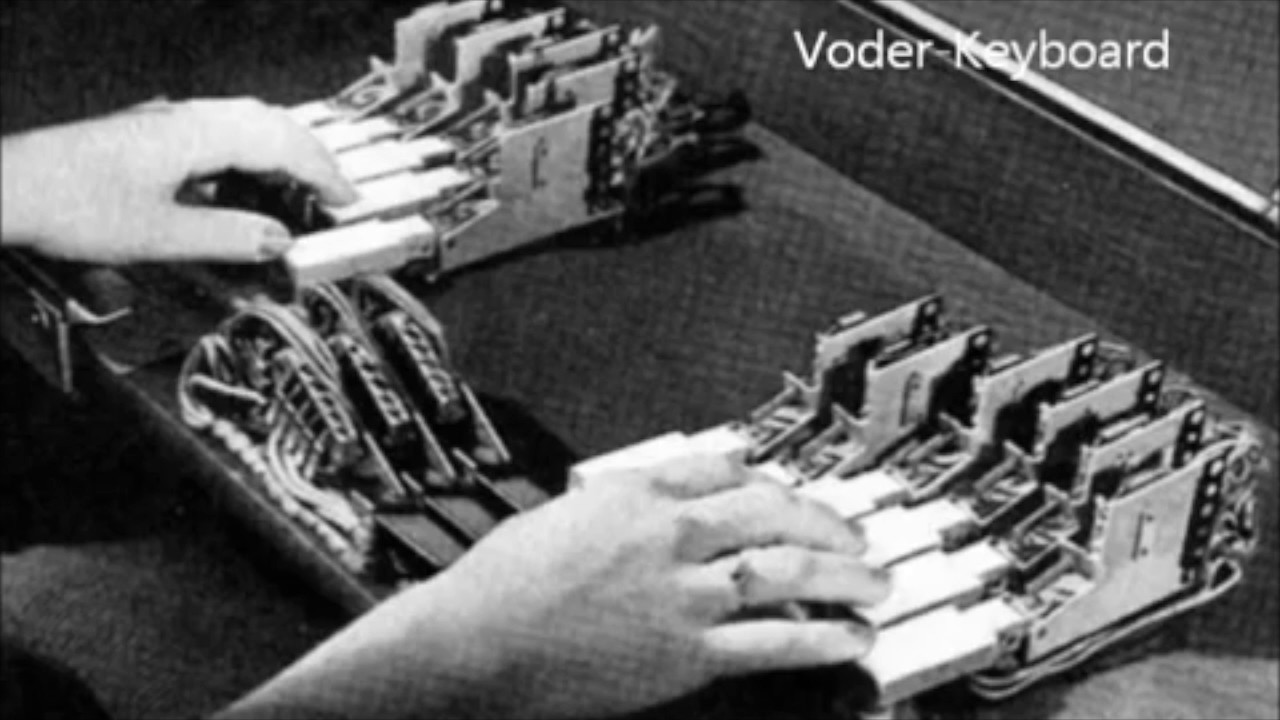
- Developed by Bell Telephone Laboratories for the 1939 World's Fair, the Voder generated synthetic human speech electronically using two energy sources and ten filter circuits to produce twenty acoustic components. (0:18)
- Operating the machine demanded extraordinary motor coordination; articulating a single word like 'concentration' required forming 13 successive sounds, five wrist bar strokes, and up to five foot pedal adjustments. (3:36)
- Training was exceptionally rigorous, requiring a full year of daily practice, with only 28 women qualifying as certified operators out of approximately 320 auditioned candidates. (3:36)
- Bell Labs did not intend to commercialize the Voder directly, positioning it as an educational showcase derived from broader telecommunications research into speech compression and transmission. (4:40)
Detailed notes
## Background Published on YouTube by Brian Roemmele on November 21, 2016, this archival recording captures a live radio broadcast demonstrating the Voder, the world's first electronic voice synthesizer developed in 1939 by Homer Dudley at Bell Telephone Laboratories. According to the description, the manually operated system was showcased at the 1939 New York World's Fair and required extensive physical coordination across finger keys, pedals, and levers to synthesize continuous human speech.
## TL;DR In this live radio demonstration, host Dr. Caldwell, Bell Labs representative Mr. Garrett, and expert operator Miss Helen Harper showcase the acoustic capabilities and underlying architecture of the Voder. Miss Harper demonstrates how the instrument manipulates pitch, emotional inflection, and vibrato to recite verses, laugh, and sing 'Auld Lang Syne,' before demonstrating its ability to speak French and mimic barnyard animals. The broadcast also highlights the grueling human skill needed to operate the synthesizer—requiring simultaneous coordination of fingers, wrist bars, and foot pedals mastered by only 28 of 320 auditioned operators—while explaining that the machine serves as an educational byproduct of telecommunications research into speech compression.
## Atmosphere & style The broadcast exudes the crisp, polite elegance of golden-age radio, balancing educational scientific inquiry with jaunty, lighthearted banter among the hosts. Listening to it creates a charmingly uncanny experience as the refined mid-century presenters interact naturally with the raspy, groaning, and occasionally eerie acoustic utterances of the machine. The mood oscillates between whimsical amusement during the Voder's dismal nursery rhymes and animal imitations, and genuine awe at the virtuosic physical dexterity required to operate the synthetic voice.
## Bulletin - [00:18](https://www.youtube.com/watch?v=TsdOej_nC1M&t=18s) Developed by Bell Telephone Laboratories for the 1939 World's Fair, the Voder generated synthetic human speech electronically using two energy sources and ten filter circuits to produce twenty acoustic components. - [03:36](https://www.youtube.com/watch?v=TsdOej_nC1M&t=216s) Operating the machine demanded extraordinary motor coordination; articulating a single word like 'concentration' required forming 13 successive sounds, five wrist bar strokes, and up to five foot pedal adjustments. - [03:36](https://www.youtube.com/watch?v=TsdOej_nC1M&t=216s) Training was exceptionally rigorous, requiring a full year of daily practice, with only 28 women qualifying as certified operators out of approximately 320 auditioned candidates. - [04:40](https://www.youtube.com/watch?v=TsdOej_nC1M&t=280s) Bell Labs did not intend to commercialize the Voder directly, positioning it as an educational showcase derived from broader telecommunications research into speech compression and transmission.
## Key takeaways - [00:18](https://www.youtube.com/watch?v=TsdOej_nC1M&t=18s) The Voder synthesizes speech electronically through two energy sources and a bank of ten filter circuits producing twenty acoustic components. - [00:18](https://www.youtube.com/watch?v=TsdOej_nC1M&t=18s) Operators could dynamically alter sentence stress and inflection to express nuanced contextual meanings, such as shifting emphasis across the words in 'She saw me.' - [00:18](https://www.youtube.com/watch?v=TsdOej_nC1M&t=18s) The synthesizer could readily adjust pitch registers, transitioning across standard, high-pitched, and resonant bass ranges. - [00:18](https://www.youtube.com/watch?v=TsdOej_nC1M&t=18s) Applying vibrato to sustained vowel outputs softens the raw, robotic buzz into a musical singing tone capable of performing songs like 'Auld Lang Syne.' - [03:36](https://www.youtube.com/watch?v=TsdOej_nC1M&t=216s) Synthesizing speech required intricate physical coordination across multiple limbs, using finger keys, foot pedals, and a wrist bar with split-second timing. - [03:36](https://www.youtube.com/watch?v=TsdOej_nC1M&t=216s) Mastering the Voder's control interface required a full year of continuous daily practice. - [03:36](https://www.youtube.com/watch?v=TsdOej_nC1M&t=216s) Out of roughly 320 candidates auditioned by Bell Telephone Laboratories, only 28 demonstrated the specialized aptitude needed to become certified operators. - [04:40](https://www.youtube.com/watch?v=TsdOej_nC1M&t=280s) Because the device synthesizes fundamental speech sounds rather than recorded words, it is capable of speaking foreign languages such as French. - [04:40](https://www.youtube.com/watch?v=TsdOej_nC1M&t=280s) The acoustic range of the system extended beyond speech to animal mimicry, including cow lowing and pig grunting. - [04:40](https://www.youtube.com/watch?v=TsdOej_nC1M&t=280s) The Voder was developed as a public exhibition piece for the 1939 New York World's Fair and the Golden Gate International Exposition rather than a commercial device. - [04:40](https://www.youtube.com/watch?v=TsdOej_nC1M&t=280s) The synthesizer served as a showcase for Bell Labs' foundational telecommunications research into speech compression, acoustic analysis, and electrical voice transmission.
## Detailed walkthrough ### [00:18](https://www.youtube.com/watch?v=TsdOej_nC1M&t=18s) Inflection, Voice Range, and the Singing Tone
The demonstration opens with an explanation of the core technical architecture of the Voder: ten filter circuits combined with two energy sources produce a total of twenty separate acoustic components utilized to assemble human speech sounds. To show how these building blocks operate in practice, Mr. Garrett and operator Miss Helen Harper demonstrate how individual words assemble into complete sentences. Helen commands the machine to utter the phrase, "She saw me." When the initial rendition sounds flat and robotic, Mr. Garrett requests varying shades of human expression by posing targeted questions. Helen subtly manipulates the controls to shift the sentence stress to fit the context: emphasizing the subject for *"Who saw you?"* (“*She* saw me”), shifting stress to the object for *"Whom did she see?"* (“She saw *me*”), and highlighting the verb when asked, *"Did she see you or hear you?"* (“She *saw* me”).
```mermaid flowchart LR accTitle: Voder Acoustic Architecture accDescr: Diagram showing how two energy sources and ten filter circuits combine into speech components. subgraph Sources["Energy Sources"] E1["Hiss / Noise Source"] E2["Buzz / Voice Pitch"] end subgraph Filtering["Filter Bank"] F["10 Filter Circuits"] end subgraph Output["Acoustic Output"] C["20 Speech Components"] S["Continuous Synthetic Speech"] end Sources --> F F --> C C --> S ```
The presenters show that the machine is not limited to a single register. By making a straightforward adjustment to the controls, Miss Harper switches the voice quality. The Voder delivers the greeting, "Greetings, everybody," first in a standard voice, then in a high pitch, and finally in a resonant bass register. Mr. Garrett jokes about the vocal awkwardness of adolescent boys:
> “When a boy's voice changes he's never quite sure whether it's going to be a tenor or a bass, and the Voder, being still a comparatively young man, also has his moments of uncertainty.”
The Voder is then asked to recite "Mary Had a Little Lamb," but recites it with such dreary, pitch-shifting inflections that Mr. Garrett remarks, "Gosh, Voder, you sounded awfully dismal! Snap out of it, let's hear you laugh!" The resulting synthetic laughter sounds so creaky and decrepit that Garrett playfully wonders whether he was mistaken about its youth, asking, "Do you really feel as old as you sound?" to which the synthesizer drolly groans, "Yes, I do."
Turning to more melodious capabilities, Garrett introduces vibrato into the Voder's sustained vowel output. Without pitch modulation, an extended vowel sounds stark, robotic, and unnatural, but adding vibrato instantly transforms the sustained buzz into a recognizable singing tone. Demonstrating this musicality, the Voder tests its vocal scale and performs a rendition of "Auld Lang Syne," prompting the narrator to remark that the machine sings the classic tune better than he ever could.
[03:36](https://www.youtube.com/watch?v=TsdOej_nC1M&t=216s) Operating Demands and the Rigors of Voder Training
The broadcast host, Dr. Caldwell, asks Miss Harper to explain the physical complexity required to produce a single synthesized word. Miss Harper reveals that operating the Voder demands immense motor coordination and concentration across multiple limbs:
> “Well, for example, in producing the word 'concentration' on the Voder, I have to form 13 different sounds in succession, make five up and down movements of the wrist bar, and vary the position of the foot pedals from three to five times, according to what expression I want the Voder to give the word.”
All of these intricate fingerings, wrist movements, and pedal adjustments must be executed with exact timing. Miss Harper explains that mastering the instrument required a full year of constant daily practice.
- Bell Telephone Laboratories auditioned roughly 320 candidates to find operators for the machine. - Out of those 320 women, only 28 attained the level of skill required to become certified expert operators. - As Mr. Garrett notes regarding the low qualification rate: “I can answer that, Dr. Caldwell, by saying that in operating the Voder, a girl needs a peculiar combination of particular talents which is not too common.”
[04:40](https://www.youtube.com/watch?v=TsdOej_nC1M&t=280s) Foreign Speech, Animal Mimicry, and Practical Applications
Dr. Caldwell asks whether the machine is limited to English or capable of foreign tongues. Mr. Garrett explains that the system can mimic any language spoken by the person at the controls, which Miss Harper demonstrates by having the Voder pronounce the French phrase *"Parlez-vous français?"* with clear articulation. Mr. Garrett asserts:
> “You see, Doctor, the Voder can do practically anything that can be done with a human voice.”
The demonstration tests the acoustic limits of the instrument with novel sounds: - Imitating barnyard animals, including the recognizable lowing of a cow and the grunting squeal of a pig. - Demonstrating the Voder's basic "education" by having it systematically recite the letters of the alphabet from *A* through *F*.
When Dr. Caldwell inquires about the eventual commercial applications of the machine, Mr. Garrett clarifies that Bell Telephone Laboratories does not foresee direct commercialization for the instrument itself. Instead, the Voder was created primarily as an educational showcase for the 1939 New York World's Fair and the Golden Gate International Exposition in San Francisco. Garrett explains that the synthesizer exists as a public-facing byproduct of Bell Labs' broader ongoing telecommunications research into speech compression, electrical voice transmission, and acoustic analysis.
The demonstration concludes with Miss Harper guiding the Voder to bid the radio audience farewell, delivering the sign-off: "Good evening, radio audience."
## Notable quotes > [04:40](https://www.youtube.com/watch?v=TsdOej_nC1M&t=280s) The Voder can do practically anything that can be done with a human voice. — Mr. Garrett
> [03:36](https://www.youtube.com/watch?v=TsdOej_nC1M&t=216s) In operating the Voder, a girl needs a peculiar combination of particular talents which is not too common. — Mr. Garrett
## Mentioned The Voder, Homer Dudley, Bell Telephone Laboratories, 1939 New York World's Fair, Golden Gate International Exposition, Dr. Caldwell, Mr. Garrett, Miss Helen Harper, Auld Lang Syne, Mary Had a Little Lamb
## Video description The Voder was the worlds first voice electronic synthesizer. In 1939 Homer Dudley working at Bell Telephone Laboratories in Murray Hill, New Jersey began to publicly demonstrate the Voder, the first electronic device that could generate continuous human speech electronically.
The Voder was designed for the 1939 World Fair in New York as a showcase of the advanced work being done at Bell Laboratories. It was a manually operated system requiring training, ten finger, two foot paddles, a knee leaver and arm switch to generate sounds. The sounds quality actually was better than most voice synthesizers all the way up to the late 1990s.
This is audio from a radio program recorded live during the broadcast.
[Source](https://www.youtube.com/watch?v=TsdOej_nC1M)