Cambridge Engineer Disproves Equal Transit Time Wing Lift Theory
Cambridge University
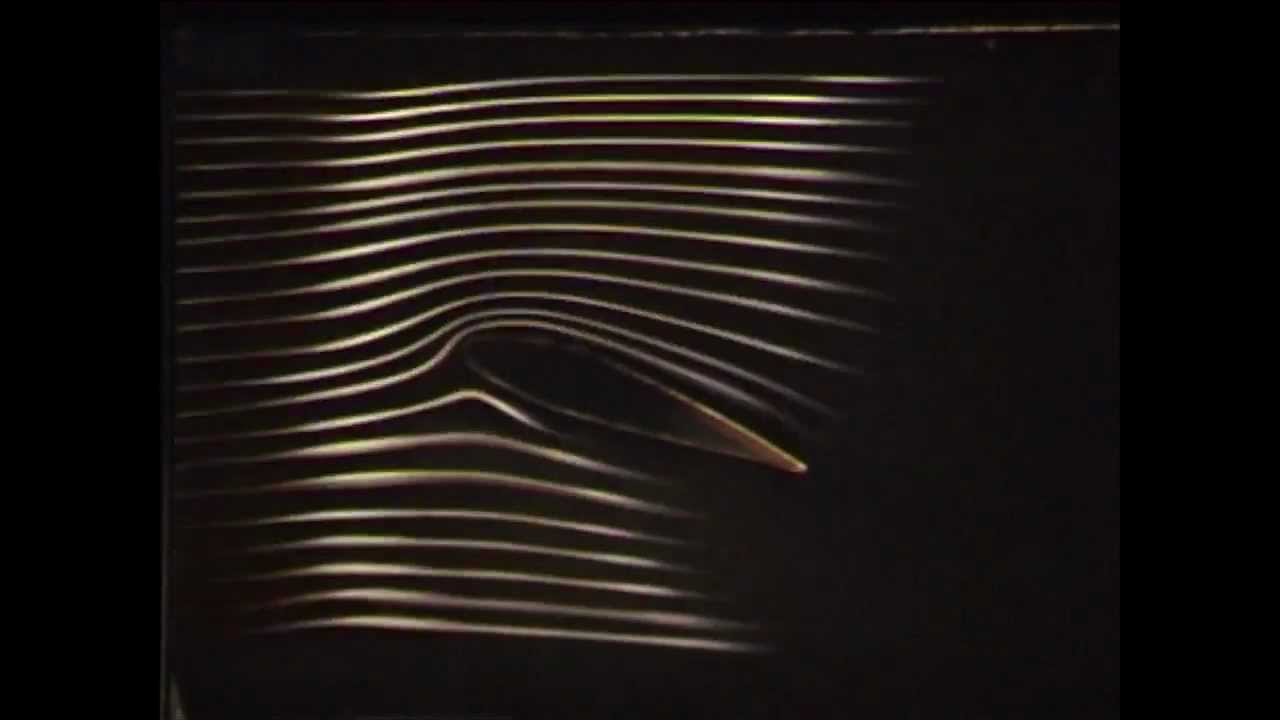
Pulsed-smoke visualizations show air traveling over an airfoil accelerates far faster than airflow underneath, reaching the trailing edge well ahead of the lower flow rather than meeting simultaneously.
AI-assisted summary of Airflow across a wing — original source. Check the original for full context.
Source published:
Key ideas
- Aerodynamics expert Professor Holger Babinsky refutes the popular 'equal transit time' explanation of aerodynamic lift, confirming that air traversing the upper wing does not synchronize with air passing underneath. (0:01)
- Pulsed smoke streamline visualization reveals that airflow over the top surface accelerates so significantly that it reaches the trailing edge far ahead of the air flowing along the bottom. (0:20)
- The experimental evidence disproves the common textbook claim that upper surface air accelerates simply because it has a longer physical distance to travel. (0:01)
Detailed notes
## Background Published on YouTube by Cambridge University on January 20, 2012, this video features aerodynamics expert Professor Holger Babinsky from the University of Cambridge's Department of Engineering. The video and its accompanying description address and debunk the common textbook fallacy that wings generate lift because air must travel faster over the longer upper surface to match the transit time of air underneath.
## TL;DR The video directly challenges the popular 'equal transit time' explanation of aerodynamic lift, which asserts that air parcels splitting at the leading edge must meet simultaneously at the trailing edge. To test this claim, an experiment uses pulsed smoke lines to track the speed of airflow around an airfoil in slow motion. The visual demonstration proves that although air over the upper surface accelerates significantly, it reaches the trailing edge far ahead of the air passing beneath the wing. Consequently, the footage clearly shows that simultaneous arrival is not the mechanism governing aerodynamic flow.
## Atmosphere & style The presentation has a concise, measured, and authoritative academic tone focused on clear visual evidence. Watching the pulsed smoke lines deform and glide past the airfoil in slow motion creates an immediate, satisfying clarity that dismantles a stubborn science myth in just over a minute. The atmosphere is that of a clean laboratory demonstration where quiet, definitive visual proof replaces abstract misconceptions.
## Bulletin - [00:01](https://www.youtube.com/watch?v=UqBmdZ-BNig&t=1s) Aerodynamics expert Professor Holger Babinsky refutes the popular 'equal transit time' explanation of aerodynamic lift, confirming that air traversing the upper wing does not synchronize with air passing underneath. - [00:20](https://www.youtube.com/watch?v=UqBmdZ-BNig&t=20s) Pulsed smoke streamline visualization reveals that airflow over the top surface accelerates so significantly that it reaches the trailing edge far ahead of the air flowing along the bottom. - [00:01](https://www.youtube.com/watch?v=UqBmdZ-BNig&t=1s) The experimental evidence disproves the common textbook claim that upper surface air accelerates simply because it has a longer physical distance to travel.
## Key takeaways - [00:01](https://www.youtube.com/watch?v=UqBmdZ-BNig&t=1s) A widespread popular science explanation incorrectly claims that lift is generated because air must travel faster over a longer top surface to match the transit time of lower-surface air. - [00:01](https://www.youtube.com/watch?v=UqBmdZ-BNig&t=1s) The assumption of simultaneous arrival, known as the equal transit time theory, is fundamentally false. - [00:01](https://www.youtube.com/watch?v=UqBmdZ-BNig&t=1s) While air over the upper camber of an airfoil does move faster, it does not wait for or synchronize with the air traveling along the underside. - [00:20](https://www.youtube.com/watch?v=UqBmdZ-BNig&t=20s) Pulsed smoke introduced into the flow field forms vertical lines that act as time markers to measure local flow velocities. - [00:20](https://www.youtube.com/watch?v=UqBmdZ-BNig&t=20s) Slow-motion video shows smoke lines deforming as the air over the upper surface accelerates significantly faster than the lower flow. - [00:20](https://www.youtube.com/watch?v=UqBmdZ-BNig&t=20s) The upper airflow reaches the trailing edge dramatically earlier than the airflow passing beneath the wing. - [00:20](https://www.youtube.com/watch?v=UqBmdZ-BNig&t=20s) By the time lower-surface flow reaches the trailing edge, the upper-surface flow has already traveled a significant distance past the wing. - [00:20](https://www.youtube.com/watch?v=UqBmdZ-BNig&t=20s) Visual experimental evidence clearly demonstrates that airflow over the top and bottom of a wing takes completely different amounts of time to traverse the airfoil.
## Detailed walkthrough ### [00:01](https://www.youtube.com/watch?v=UqBmdZ-BNig&t=1s) Debunking the Equal Transit Time Fallacy
A longstanding, widespread explanation in popular science suggests that aerodynamic lift occurs because the curved upper surface of a wing presents a longer path than the flatter lower surface. According to this traditional narrative, parcels of air that split at the leading edge must travel faster over the top to reach the trailing edge at the exact same moment as the air passing underneath. The narrator immediately tackles and rejects this textbook myth: “It's often said that lift on a wing is generated because the flow moving over the top surface has a longer distance to travel and therefore needs to go faster this common explanation is actually wrong.”
While it is true that air moves faster over the top surface of an airfoil, the underlying assumption of simultaneous arrival—known as the "equal transit time" theory—is entirely false. The video establishes right from the outset that air traversing the upper camber does not synchronize with or wait for the air traveling along the underside. Instead, the dynamics of the flow cause the upper air to arrive at the rear of the wing far ahead of the flow passing beneath it.
- The popular explanation claims lift is caused by air speeding up over a longer upper distance to match the bottom air's arrival time. - The video disproves the equal transit time requirement: air over the top surface does accelerate, but it does not arrive at the trailing edge at the same time as the air along the bottom.
```mermaid flowchart LR accTitle: Airflow Transit Comparison accDescr: Diagram contrasting the false equal transit time theory with actual observed airflow over an airfoil.
subgraph Myth["Equal Transit Time Myth"] M1["Leading Edge Split"] --> M2["Upper Air Accelerates"] M1 --> M3["Lower Air Moves Slower"] M2 --> M4["Simultaneous Arrival at Trailing Edge"] M3 --> M4 end
subgraph Reality["Observed Reality"] R1["Leading Edge Split"] --> R2["Upper Air Accelerates Drastically"] R1 --> R3["Lower Air Passes Underneath"] R2 --> R4["Reaches Trailing Edge Much Earlier"] R3 --> R5["Reaches Trailing Edge Much Later"] end ```
[00:20](https://www.youtube.com/watch?v=UqBmdZ-BNig&t=20s) Smoke Streamline Visualization and Transit Disparity
To visually prove the disparity in transit times, the experiment introduces pulsed smoke into the flow field around an airfoil. By briefly cutting and restoring the smoke supply, the apparatus generates discrete vertical lines of smoke that sweep through the streamlines. When the video playback is slowed down, these smoke pulses act as time markers, allowing observers to track the local velocity across different regions of the airflow.
As the smoke pulses approach the airfoil, they visibly accelerate. The air streaming over the upper surface accelerates to such a high speed that it completely outpaces the lower stream, reaching the trailing edge dramatically earlier. The narrator underscores this stark contrast: “In fact by the time it reaches the end on the lower surface the flows already gone a long way passed on the upper surface this shows very clearly that the flow doesn't take the same amount of time to reach the end of the wing.”
- **Visualization method:** Streamlines are illuminated using smoke; pulsed interruptions create traveling reference lines to reveal local flow velocities. - **Velocity differential:** The smoke lines deform as the upper flow accelerates far more aggressively than the underside flow. - **Observation:** By the time a smoke line on the lower surface reaches the trailing edge, the corresponding upper flow line has already traveled far downstream past the wing.
## Notable quotes > [00:01](https://www.youtube.com/watch?v=UqBmdZ-BNig&t=1s) It's often said that lift on a wing is generated because the flow moving over the top surface has a longer distance to travel and therefore needs to go faster this common explanation is actually wrong. — Professor Holger Babinsky
## Mentioned Holger Babinsky, University of Cambridge, Department of Engineering
## Video description "It is often said that the lift on a wing is generated because the flow moving over the top surface has a longer distance to travel and therefore needs to go faster. This common explanation is actually wrong." Here, aerodynamics expert Professor Holger Babinsky from the University of Cambridge's Department of Engineering debunks a popular, yet misleading, explanation of how wings lift. For more information, read the accompanying story published by the University of Cambridge http://www.cam.ac.uk/research/news/how-wings-really-work/
[Source](https://www.youtube.com/watch?v=UqBmdZ-BNig)