Yorkshire Elites Escalate Poverty Claims to Rebuke Modern Youth
onemediamusic
The men conclude that modern youth will never believe past hardships after their competitive nostalgia escalates to surviving nightly murders and working twenty-nine hours a day.
AI-assisted summary of The Four Yorkshiremen Sketch — original source. Check the original for full context.
Source published:
Key ideas
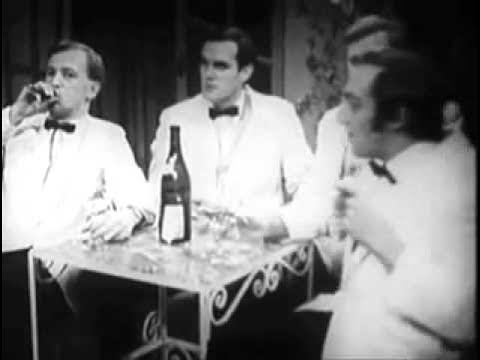
- The classic pre-Monty Python sketch from 'At Last The 1948 Show' satirizes competitive nostalgia through four wealthy Yorkshiremen drinking fine wine while boasting about past poverty. (0:07)
- The characters' claims of domestic deprivation escalate exponentially from leaky roofs and crowded rooms to living in an open lake, a cardboard shoe box, and a septic tank. (1:32)
- Work schedules and living conditions break the laws of physics, concluding with waking up before bedtime, working 29 hours a day, and facing nightly fatal violence from parents. (1:32)
- The dialogue highlights generational disconnect, as the men unite in lamenting that contemporary youth will never believe or appreciate their preposterous struggles. (1:32)
Detailed notes
## Background Published on YouTube by onemediamusic on November 2, 2011, this video presents "The Four Yorkshiremen Sketch." According to the video description, it is a pre-Monty Python sketch from the television show At Last The 1948 Show, starring Tim Brooke-Taylor, John Cleese, Graham Chapman, and Marty Feldman.
## TL;DR Four wealthy Yorkshiremen gather over fine wine to fondly reminisce about their impoverished childhoods, quickly devolving into an intense contest of competitive one-upmanship. As they debate their former hardships, their claims escalate from modest deprivations like drinking cold tea from rolled-up newspapers to absurd living conditions, including residing in cardboard shoeboxes and septic tanks. The contest peaks with preposterous work routines and daily patricidal violence, featuring 29-hour shifts and waking up before going to bed. The men ultimately conclude with self-righteous agreement that modern youth will never comprehend or believe the impossible struggles of their past.
## Atmosphere & style The sketch carries a razor-sharp, deadpan comedic tone, contrasting the men's refined, smug luxury with increasingly unhinged and surreal fabrications of misery. What begins as a polite, nostalgic chat quickly transforms into an aggressive game of narrative escalation delivered with utter earnestness and regional bravado. Watching the performance feels delightfully absurd, as the performers maintain straight faces while trading tales of impossible, cartoonish suffering before ending on a note of righteous, indignant solidarity.
## Bulletin - [00:07](https://www.youtube.com/watch?v=VKHFZBUTA4k&t=7s) The classic pre-Monty Python sketch from 'At Last The 1948 Show' satirizes competitive nostalgia through four wealthy Yorkshiremen drinking fine wine while boasting about past poverty. - [01:32](https://www.youtube.com/watch?v=VKHFZBUTA4k&t=92s) The characters' claims of domestic deprivation escalate exponentially from leaky roofs and crowded rooms to living in an open lake, a cardboard shoe box, and a septic tank. - [01:32](https://www.youtube.com/watch?v=VKHFZBUTA4k&t=92s) Work schedules and living conditions break the laws of physics, concluding with waking up before bedtime, working 29 hours a day, and facing nightly fatal violence from parents. - [01:32](https://www.youtube.com/watch?v=VKHFZBUTA4k&t=92s) The dialogue highlights generational disconnect, as the men unite in lamenting that contemporary youth will never believe or appreciate their preposterous struggles.
## Key takeaways - [00:07](https://www.youtube.com/watch?v=VKHFZBUTA4k&t=7s) Four affluent Yorkshiremen drink fine wine while nostalgic reflection rapidly morphs into an aggressive contest of competitive deprivation. - [00:07](https://www.youtube.com/watch?v=VKHFZBUTA4k&t=7s) Reflections on being grateful for a simple cup of tea forty years prior initiate the first round of escalating one-upmanship. - [00:07](https://www.youtube.com/watch?v=VKHFZBUTA4k&t=7s) Drinking vessels devolve from a luxury cracked cup to a rolled-up newspaper and finally to sucking moisture out of a damp cloth. - [00:07](https://www.youtube.com/watch?v=VKHFZBUTA4k&t=7s) The men romanticize extreme poverty, claiming emotional purity and that people were genuinely happier when they had no money. - [00:07](https://www.youtube.com/watch?v=VKHFZBUTA4k&t=7s) Living situations escalate from a dilapidated house with roof holes to twenty-six family members packed into a single room missing half its floor. - [00:07](https://www.youtube.com/watch?v=VKHFZBUTA4k&t=7s) Corridors are reframed as palaces compared to sleeping inside a municipal rubbish dump water tank showered in rotting fish. - [01:32](https://www.youtube.com/watch?v=VKHFZBUTA4k&t=92s) Housing escalates into pure absurdity, shifting from an open hole in the ground to a lake, a road-bound shoe box for 150 people, and a newspaper in a septic tank. - [01:32](https://www.youtube.com/watch?v=VKHFZBUTA4k&t=92s) Daily waking times absurdly push backward through the clock, starting at 6:00 AM, advancing to midnight, and culminating at 10:30 PM before going to bed. - [01:32](https://www.youtube.com/watch?v=VKHFZBUTA4k&t=92s) Breakfast diets transform from a crust of stale bread to hot gravel, road debris, and an outright lump of poison. - [01:32](https://www.youtube.com/watch?v=VKHFZBUTA4k&t=92s) Mill labor shifts defy temporal limits, progressing from 14 hours a day to impossible demands of 23 and 29 hours daily. - [01:32](https://www.youtube.com/watch?v=VKHFZBUTA4k&t=92s) Paternal discipline escalates from belt beatings to broken bottles, bisection with a bread knife, and nightly strangulation followed by dancing on graves. - [01:32](https://www.youtube.com/watch?v=VKHFZBUTA4k&t=92s) The four men conclude in self-righteous agreement that modern youth are too soft to ever believe how difficult their lives supposedly were.
## Detailed walkthrough ### [00:07](https://www.youtube.com/watch?v=VKHFZBUTA4k&t=7s) Reminiscing Over Fine Wine and the Joys of Extreme Poverty
Four affluent Yorkshiremen sit together enjoying fine wine and reminiscing about their humble beginnings, quickly turning fond nostalgia into a competitive contest of historical deprivation. One remarks favorably on the vintage, noting that there is nothing quite like a glass of Château de Chasselas. Another reflects on how far they have come, pointing out that forty years prior, nobody would have dreamed they would be sitting in such luxury when back then they would have been grateful simply to afford a cup of tea. That admission immediately sparks the first volley of one-upmanship: a simple cup of tea is countered by a memory of cold tea without milk, sugar, or actual tea leaves, served in a cracked cup. The next speaker dismisses the cup as an unobtainable luxury, claiming his family drank from a rolled-up newspaper, which is promptly trumped by the assertion that the best another could manage was merely sucking on a damp cloth.
Despite their supposed hardships, the conversation pivots toward romanticizing the emotional purity of their past. One of the men muses that despite having nothing, people were happier in those days precisely because they were poor, recalling a lesson from his father: “My old dad said to me, he said, 'Money won't bring you happiness, son.'” He elaborates on his childhood in a tiny, tumbledown house with gaping holes in the roof. His companions immediately scoff at the notion that having a house constituted hardship. The next insists his family had twenty-six people crammed into a single room with no furniture and half the floor missing, forcing them to huddle in a corner for fear of falling through. Another retorts that having a room was an extravagant privilege compared to living in a hallway, declaring, “I used to dream of living in a corridor, that would have been a palace to us.” He claims his family lived inside a water tank on a rubbish tip, routinely awakened each morning by heaps of rotting fish dumped over them.
- **Vessel of choice**: Stepping down from a cracked teacup to a rolled-up newspaper, and finally to sucking moisture out of a damp cloth. - **Initial housing escalations**: Moving from a dilapidated house with roof holes to twenty-six people sharing a single floorless room, to a hallway corridor, to an industrial water tank on a municipal rubbish dump.
[01:32](https://www.youtube.com/watch?v=VKHFZBUTA4k&t=92s) The Escalation of Squalor, Impossible Mill Shifts, and Modern Youth
```mermaid flowchart TD accTitle: Escalation of Deprivation in the Four Yorkshiremen Sketch accDescr: Diagram tracing the absurd escalation of living spaces, work conditions, and paternal punishments. subgraph Housing["Escalating Living Quarters"] H1["Hole in ground under canvas"] --> H2["Living in the lake"] H2 --> H3["Shoe box in middle of road (150 people)"] H3 --> H4["Rolled-up newspaper in septic tank"] end subgraph Routine["Daily Routine & Labor at Mill"] R1["Wake at 6:00 AM<br>Eat stale crust<br>14 hrs/day for 6d/week"] --> R2["Wake at 3:00 AM<br>Eat hot gravel<br>20 hrs/day for 2d/month"] R2 --> R3["Wake at midnight<br>Lick road clean, eat cold gravel<br>23 hrs/day for 1d every 4 years"] R3 --> R4["Wake at 10:30 PM (before bed)<br>Eat lump of poison<br>29 hrs/day for ha'penny lifetime"] end subgraph Violence["Paternal Nightly Discipline"] V1["Belt thrashing to sleep"] --> V2["Beaten with broken bottle"] V2 --> V3["Sliced in half with bread knife"] V3 --> V4["Strangled and danced on graves"] end H4 -.-> Routine R4 -.-> Violence ```
The competitive fabrication deepens as the first speaker clarifies that his "house" was merely a hole in the ground covered by a couple of feet of canvas. Another counters that his family was evicted from their hole in the ground and forced to live directly in a lake. The third speaker brands that pure luck, maintaining that one hundred and fifty members of his family were crammed inside a small cardboard shoe box situated in the middle of the road. Rejecting even that as comparatively soft, the fourth claims his family lived for three months inside a rolled-up newspaper submerged in a septic tank.
The dispute over domicile soon morphs into an escalating contest over waking hours, breakfasts, mill work, and severe domestic abuse:
- **Speaker 1**: Woke at 6:00 AM, cleaned out the rolled-up newspaper, ate a crust of stale bread, worked fourteen hours a day at the mill for sixpence a week, and was thrashed to sleep with a leather belt by his father. - **Speaker 2**: Deems that absolute luxury; his routine required waking at 3:00 AM, cleaning the lake, eating a handful of hot gravel, working twenty hours a day at the mill for twopence a month, and having his father beat him around the head and neck with a broken bottle—adding, “if we were lucky!” - **Speaker 3**: Considers that paradise, claiming he had to crawl out of his shoe box at midnight, lick the road clean, eat cold gravel, and endure twenty-three hours a day at the mill for a single penny every four years, only to be sliced in half with a bread knife upon arriving home. - **Speaker 4**: Outdoes all temporal and physical bounds, boasting: “We used to get up in the morning at half-past ten at night, half an hour before we'd gone to bed, eat a lump of poison, work twenty-nine hours a day at mill for a ha'penny in your lifetime, come home, and each night dad would strangle us and dance about on our graves.”
Having reached the absolute limit of surreal, impossible suffering, the men pause to bask in their collective self-pity and moral superiority. Reflecting on their preposterous tales of woe, they agree that younger generations are entirely incapable of appreciating how difficult life used to be, concluding with mutual resignation: “And when you try and tell that to the young people of today, will they believe you? No!”
## Mentioned The Four Yorkshiremen Sketch, At Last The 1948 Show, Monty Python, Tim Brooke-Taylor, John Cleese, Graham Chapman, Marty Feldman, Château de Chasselas, onemediamusic, YouTube
## Video description Pre Monty Python sketch from the TV who show At Last The 1948 Show starring Tim Brooke-Taylor, John Cleese, Graham Chapman and Marty Feldman.
[Source](https://www.youtube.com/watch?v=VKHFZBUTA4k)