Will McAvoy Rejects US Exceptionalism, Cites Lagging Global Ranks
AbuWadee3
Solving national decline requires acknowledging that the US is no longer the greatest country on Earth, having fallen behind peer democracies in health and education while leading only in incarceration and defense spending.
AI-assisted summary of Why America is NOT the greatest country in the world, anymore. — original source. Check the original for full context.
Source published:
Key ideas
- Challenging conventional bipartisan talking points at a college panel, news anchor Will McAvoy argues there is no empirical evidence supporting the claim that the United States is the greatest country in the world. (1:46)
- Will rejects the notion of unique American liberty, noting that roughly 180 out of 207 sovereign nations globally enjoy comparable democratic freedoms. (1:46)
- U.S. performance lags significantly in key metrics—ranking 27th in math, 22nd in science, 49th in life expectancy, and 178th in infant mortality—while leading globally in only per-capita incarceration, belief in angels, and defense spending. (1:46)
- Reflecting on an era marked by moral ambition, scientific breakthroughs, and informed civic trust, McAvoy concludes that acknowledging America's decline is the mandatory first step to resolving its problems. (3:11)
Detailed notes
## Background This video was published on YouTube by the channel AbuWadee3 on June 26, 2012. No show notes or description were provided on the video page.
## TL;DR During a college panel discussion, news anchor Will McAvoy is pressed by a moderator to genuinely answer a student's question about what makes America the greatest country in the world. After initially deflecting with sarcasm, Will abandons his polished, neutral persona and delivers a blistering critique of both liberal and conservative talking points. He directly dismantles the premise of American exceptionalism, reciting grim statistics regarding literacy, healthcare, and incarceration to prove the nation no longer leads the world. He concludes with an elegiac reflection on what the country once achieved when driven by shared purpose and informed citizens, stressing that acknowledging the decline is the first step toward fixing it.
## Atmosphere & style The exchange begins with polite, familiar panel banter before escalating into an explosive, confrontational dismantling of national mythology. Will's delivery transitions from sharp, biting sarcasm and aggressive statistical indictments to a quiet, melancholic reverence for what the country used to represent. The atmosphere shifts from stunned, uncomfortable shock in the room to a sobering and deeply reflective reality check.
## Bulletin - [01:46](https://www.youtube.com/watch?v=VMqcLUqYqrs&t=106s) Challenging conventional bipartisan talking points at a college panel, news anchor Will McAvoy argues there is no empirical evidence supporting the claim that the United States is the greatest country in the world. - [01:46](https://www.youtube.com/watch?v=VMqcLUqYqrs&t=106s) Will rejects the notion of unique American liberty, noting that roughly 180 out of 207 sovereign nations globally enjoy comparable democratic freedoms. - [01:46](https://www.youtube.com/watch?v=VMqcLUqYqrs&t=106s) U.S. performance lags significantly in key metrics—ranking 27th in math, 22nd in science, 49th in life expectancy, and 178th in infant mortality—while leading globally in only per-capita incarceration, belief in angels, and defense spending. - [03:11](https://www.youtube.com/watch?v=VMqcLUqYqrs&t=191s) Reflecting on an era marked by moral ambition, scientific breakthroughs, and informed civic trust, McAvoy concludes that acknowledging America's decline is the mandatory first step to resolving its problems.
## Key takeaways - [00:00](https://www.youtube.com/watch?v=VMqcLUqYqrs&t=0s) A student's query asking what makes America the greatest country draws standard soundbites from panelists: 'diversity and opportunity' from the left and 'freedom' from the right. - [00:00](https://www.youtube.com/watch?v=VMqcLUqYqrs&t=0s) Will McAvoy initially tries to evade the question with jokes and reverence for founding documents like the Constitution and Declaration of Independence before being pressured for a real answer. - [01:46](https://www.youtube.com/watch?v=VMqcLUqYqrs&t=106s) Will criticizes the political dysfunction of liberals, arguing that fixating on minor symbolic battles like NEA funding alienates voters and causes them to continually lose. - [01:46](https://www.youtube.com/watch?v=VMqcLUqYqrs&t=106s) Will dismantles the conservative myth of exclusive American liberty, observing that about 180 of the world's 207 sovereign states enjoy fundamental democratic freedoms. - [01:46](https://www.youtube.com/watch?v=VMqcLUqYqrs&t=106s) Empirical rankings contradict claims of American superiority, placing the nation 7th in literacy, 27th in math, 22nd in science, 49th in life expectancy, and 178th in infant mortality. - [01:46](https://www.youtube.com/watch?v=VMqcLUqYqrs&t=106s) The United States leads the world in only three categories: incarcerated citizens per capita, adults who believe angels are real, and defense spending that surpasses the next 26 nations combined. - [01:46](https://www.youtube.com/watch?v=VMqcLUqYqrs&t=106s) Will directly challenges the student and her cohort as the 'worst generation ever' for uncritically accepting the myth of national supremacy without grasping the facts. - [03:11](https://www.youtube.com/watch?v=VMqcLUqYqrs&t=191s) Will concedes that America 'sure used to be' great when it fought for moral reasons, sacrificed collectively, and waged war on poverty rather than poor people. - [03:11](https://www.youtube.com/watch?v=VMqcLUqYqrs&t=191s) Past American greatness was defined by monumental technological and medical achievements, exploring the universe, and creating the world's leading economy and art. - [03:11](https://www.youtube.com/watch?v=VMqcLUqYqrs&t=191s) Previous generations aspired to intellectual excellence instead of feeling belittled by intelligence or resenting it. - [03:11](https://www.youtube.com/watch?v=VMqcLUqYqrs&t=191s) Earlier generations of Americans did not reduce their identities purely to political affiliations, were not easily ruled by fear, and were kept informed by trusted leaders and journalists. - [03:11](https://www.youtube.com/watch?v=VMqcLUqYqrs&t=191s) National recovery requires confronting reality: the first step in solving any problem is recognizing that America is no longer the greatest country in the world.
## Detailed walkthrough ### [00:00](https://www.youtube.com/watch?v=VMqcLUqYqrs&t=0s) The College Panel and Will McAvoy's Initial Deflection
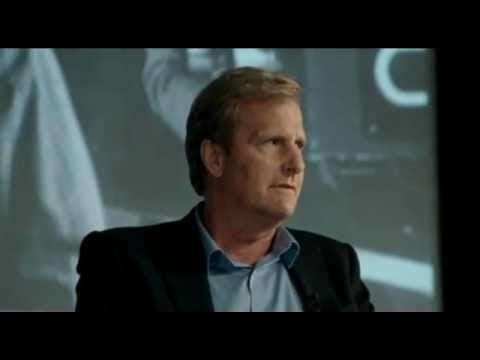
During a university panel discussion, a sophomore student named Jenny steps up to the microphone to pose a question to the three panelists, asking them to explain in one sentence or less why America is the greatest country in the world. The responses begin predictably along familiar political lines. Sharon, representing a liberal perspective, concisely offers, “Diversity and opportunity.” Lewis, speaking from the conservative viewpoint, follows with, “Freedom and freedom. So, let's keep it that way.” When the moderator turns to news anchor Will McAvoy, Will attempts to deflect the question with dry sarcasm, deadpanning, “The New York Jets.”
The moderator immediately refuses to accept the evasive joke, insisting on holding Will to a genuine answer and pressing him on what truly makes America the greatest country on earth. Will initially tries to echo his co-panelists by claiming that Sharon and Lewis already nailed it with diversity, opportunity, and freedom. Unmoved, the moderator makes it clear that Will will not be allowed to leave for the airport without providing a substantive response. Will then attempts a loftier, patriotic pivot, praising the nation's founding documents and architects: “Well, our Constitution is a masterpiece. James Madison was a genius. The Declaration of Independence is for me the single greatest piece of American writing.”
Seeing that the moderator remains utterly unsatisfied, Will asks what is lacking. The moderator pushes back, pointing out that one document is merely a set of laws and the other a declaration of war, demanding an authentic, personal answer about the American people themselves. Backed into a corner after repeated prodding, Will finally sheds his polished neutral television persona and erupts.
[01:46](https://www.youtube.com/watch?v=VMqcLUqYqrs&t=106s) The Reality Check: Debunking American Exceptionalism
Will dismantles both panelists before setting his sights on the premise of the student's question. He first turns on Sharon, dismissing liberal posturing over symbolic funding battles like the National Endowment for the Arts (NEA), arguing that while it costs taxpayers mere pennies, it continually hands conservatives an easy political weapon. As Will sharply summarizes the political dysfunction of the left: “You know why people don't like liberals? Because they lose. If liberals are so fucking smart, how come they lose so goddamn always?” He then pivots to Lewis, ridiculing the blind exceptionalism that portrays the United States as the sole beacon of liberty, rattling off a long list of democratic nations that enjoy basic civil freedoms—including Canada, Japan, the United Kingdom, France, Italy, Germany, Spain, Australia, and Belgium—pointing out that of roughly 207 sovereign states in the world, around 180 share those same fundamental liberties.
Turning directly to Jenny, whom he addresses as "sorority girl," Will delivers a harsh wake-up call to prepare her for the day she enters a voting booth. He directly dismantles the uncritical myth of American supremacy, stating: “There is absolutely no evidence to support the statement that we're the greatest country in the world.” He backs this claim by reciting a barrage of global rankings that place the nation far below the top tier across essential social, medical, and educational metrics. While acknowledging that an undergraduate student cannot be held responsible for systemic failures, he nonetheless chastises her cohort as the "worst generation ever," bluntly concluding that he has no idea what she is talking about when asking what makes the country the greatest.
- **International Rankings:** - 7th in literacy - 27th in math - 22nd in science - 49th in life expectancy - 178th in infant mortality - 3rd in median household income - 4th in labor force - 4th in exports - **The Only Three Categories Where America Leads:** - Number of incarcerated citizens per capita - Number of adults who believe angels are real - Defense spending, where the United States spends more than the next 26 countries combined (25 of which are American allies)
[03:11](https://www.youtube.com/watch?v=VMqcLUqYqrs&t=191s) What America Used to Be and the Path Forward
When the stunned moderator tries to grasp at national pride by asking about natural wonders like Yosemite, Will's blistering anger subsides into genuine melancholy. He quietly concedes, “Sure used to be,” before launching into an elegiac reflection on the country's former character and achievements. He recalls an era when Americans fought and changed laws for moral reasons, waged war on poverty rather than on poor people, made sacrifices, cared for their neighbors, and achieved monumental feats without chest-beating arrogance. During that time, the country built magnificent structures, engineered historic technological breakthroughs, explored the universe, cured devastating diseases, and fostered both the world's greatest economy and its finest artists.
Will emphasizes that past generations aspired to intellectual excellence instead of resenting it, never allowing intelligence to make them feel inferior. Citizens did not reduce their entire personal identities to their voting choices, nor were they so easily terrified by political rhetoric. Crucially, he explains, society functioned because citizens were kept genuinely informed by revered, trustworthy leaders and journalists. Bringing his critique to its sobering conclusion, Will offers the only realistic starting point for national recovery: “First step in solving any problem is recognizing there is one. America is not the greatest country in the world anymore.” He turns back to the stunned moderator with a terse final word: “Enough?”
## Notable quotes > [03:11](https://www.youtube.com/watch?v=VMqcLUqYqrs&t=191s) First step in solving any problem is recognizing there is one. America is not the greatest country in the world anymore. — Will McAvoy
## Mentioned Jenny, Sharon, Lewis, Will McAvoy, New York Jets, United States Constitution, James Madison, Declaration of Independence, National Endowment for the Arts, Canada, Japan, United Kingdom, France, Italy, Germany, Spain, Australia, Belgium, Yosemite
[Source](https://www.youtube.com/watch?v=VMqcLUqYqrs)