Manus AI Hits $100 Million Revenue as Agent Model Shifts Tech Paradigm
Stripe
Charging users from day one and delegating execution to cloud-based autonomous agents will replace traditional software development lifecycles while freeing human workers to define complex problems.
## Background
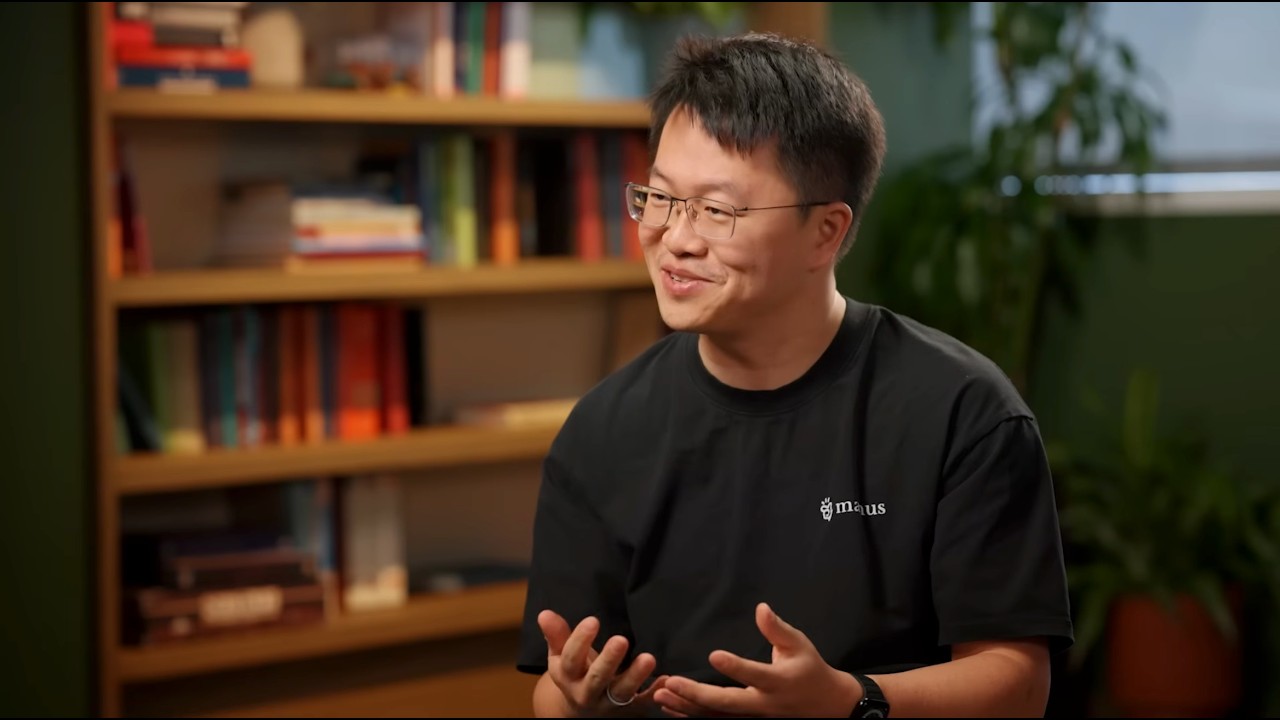
Published on YouTube by Stripe on May 8, 2026, this video features a conversation recorded on January 26, 2026, with Tao Zhang, cofounder and CPO of Manus AI. According to the page description, the episode provides an inside look at building and scaling an AI business across global markets.
## TL;DR
Tao Zhang shares the journey of Manus AI's viral March 2025 launch, which generated millions of waitlist signups without a traditional flashy press event or marketing budget. He details the technical philosophy behind Manus's cloud-based Virtual Sandbox, which pairs LLM brains with practical hands to execute asynchronous, end-to-end deliverables for non-technical users. Zhang also explores how AI flips traditional software development, Manus's unique operational model featuring a fluid single engineering pool, and their rapid scale to $100M ARR. Looking ahead, he emphasizes that as AI automates technical execution, human value will shift toward problem definition and creative oversight.
## Atmosphere & style
The conversation carries a pragmatic, sharp, and candid energy that contrasts with typical Silicon Valley hype. Tao Zhang speaks with unpretentious authenticity and quiet confidence, grounding unprecedented hyper-growth metrics in practical engineering decisions and raw human effort. The tone is deeply collaborative and founder-focused, punctuated by lighthearted humor about bootlegged launch videos and resold invite codes, creating an insightful and grounded reflection on building at the bleeding edge of AI.
## Key takeaways
- [00:35](https://www.youtube.com/watch?v=dTyL3T3_G-o&t=35s) Manus achieved viral success by launching with a raw, unedited product demonstration rather than a polished Silicon Valley keynote.
- [00:35](https://www.youtube.com/watch?v=dTyL3T3_G-o&t=35s) Demand for Manus skyrocketed immediately, generating over 3.5 million waitlist signups in the first month and driving invite code resales up to $14,000.
- [04:17](https://www.youtube.com/watch?v=dTyL3T3_G-o&t=257s) Manus shifted the AI paradigm from text-focused 'answer machines' to autonomous agents that execute complete, finished deliverables without human intervention.
- [06:15](https://www.youtube.com/watch?v=dTyL3T3_G-o&t=375s) The name Manus reflects MIT's motto 'Mens et Manus' (Mind and Hand), combining LLMs as the brain with cloud virtual computers as the hands to execute code and browse the internet.
- [06:15](https://www.youtube.com/watch?v=dTyL3T3_G-o&t=375s) By isolating AI tasks in cloud sandboxes, Manus allows asynchronous execution without requiring constant user approvals or keeping laptops open.
- [12:52](https://www.youtube.com/watch?v=dTyL3T3_G-o&t=772s) Building AI-native products flips traditional workflows upside down, prioritizing prompt engineering and functional prototyping before visual design.
- [15:33](https://www.youtube.com/watch?v=dTyL3T3_G-o&t=933s) Manus operates with a lean workforce of 100 employees across Singapore, Tokyo, and San Francisco, maintaining close physical proximity between product, engineering, and research.
- [20:19](https://www.youtube.com/watch?v=dTyL3T3_G-o&t=1219s) Instead of static product teams, Manus uses a single fluid engineering pool where developers rapidly context-switch between projects using AI code-reading tools.
- [24:23](https://www.youtube.com/watch?v=dTyL3T3_G-o&t=1463s) Manus scaled to $100M ARR in 8 months with zero marketing spend, driven by organic virality and features like 'Session Replay' that showcase AI actions step-by-step.
- [29:12](https://www.youtube.com/watch?v=dTyL3T3_G-o&t=1752s) High AI compute costs make free-tier business models obsolete, requiring AI startups to charge from day one to validate real Product-Market Fit.
- [31:12](https://www.youtube.com/watch?v=dTyL3T3_G-o&t=1872s) Usage-based top-ups revealed power users spending up to $5,000 monthly, highlighting how non-technical small businesses use AI agents to replace costly custom software development.
- [34:42](https://www.youtube.com/watch?v=dTyL3T3_G-o&t=2082s) As AI lowers the cost of technical execution, the primary human bottleneck shifts to problem definition, transforming individual workers into managers of multiple AI agents.
- [36:42](https://www.youtube.com/watch?v=dTyL3T3_G-o&t=2202s) Long-term AI adoption will mirror historical industrial breakthroughs by automating tedious execution and liberating humanity for creative and higher-level endeavors.
The host opens by highlighting the unprecedented speed of the current AI boom, noting that Stripe's data shows AI startups scaling to major revenue milestones years faster than legacy tech giants. Introducing Tao Zhang—cofounder and CPO of Manus AI—the conversation turns to the viral moment in March 2025 that put Manus on the global map. Unlike standard Silicon Valley keynotes with flashy stage setups, Manus launched with a plain, raw screen recording that captivated the tech community.
Zhang shares the humorous backstory behind that viral launch video. Just seven days before their planned launch, Zhang felt their website was far too simple and decided they needed a launch video. When video agencies told him it would take two to three weeks, he noted they only had six days—to which the agencies replied, "Oh, this is impossible." Unfazed, Zhang shot and edited the video himself using his own camera, casting Peak (Manus's Chief Scientist) to speak on camera for just one minute. The remaining runtime was pure product demonstration covering three real-world use cases. Zhang attributes their viral explosion to this no-nonsense approach: simply "showing the work" and demonstrating what an AI product could be beyond a basic chatbot.
The video segment features Peak introducing Manus as a "truly autonomous agent that bridges the gap between conception and execution" and a potential "glimpse into AGI." In the demo, Peak demonstrates Manus screening a zip file containing ten resumes—operating like a human with its own cloud virtual computer by unzipping files, browsing pages, and compiling summary documents asynchronously.
The impact was immediate and massive, leading to a frantic frenzy among prospective users online:
- **2 million signups** joined the private preview waitlist within the first week.
- **3.5 million waitlist signups** accumulated within the first month.
- **Up to $14,000** was being paid on secondary markets for resold Manus invite codes, as influencers sought access to drive massive traffic to their own channels (though Zhang jokes that Manus sadly "didn't get any money from that").
---
[04:17](https://www.youtube.com/watch?v=dTyL3T3_G-o&t=257s) Finding an Audience and the "Aha Moment"
When asked why the video struck such a deep chord globally, Zhang explains that prior to Manus, people treated AI as a mere "answer machine" where users asked a question, received text advice, and still had to manually execute the work themselves. Manus shifted the entire paradigm by focusing strictly on finished outcomes and deliverables—whether that meant generating functional websites, analyzing datasets, or outputting working code. Furthermore, Manus operated entirely without human intervention; users provided a high-level goal, and Manus autonomously planned and executed every step.
For Zhang and his small team, the product's capability was evident long before launch, even if the scale of public reaction was surprising:
- **40 team members** made up the entire Manus staff at the time of the launch.
- Daily development was defined by frequent "aha" moments in the office, with team members constantly amazed by complex problems Manus could solve on its own.
---
[06:15](https://www.youtube.com/watch?v=dTyL3T3_G-o&t=375s) Reinventing the AI Product Paradigm
The discussion pivots into product architecture, specifically Manus's "Virtual Sandbox" (referred to internally as a virtual machine). Zhang explains that traditional AI tools fail because they act solely as a "brain" without physical agency. He reveals the philosophical origin of the name **Manus**, derived from MIT's Latin motto *Mens et Manus* ("Mind and Hand"). In Zhang's framework, Large Language Models (LLMs) serve as the smart brain (*Mens*), but require hands (*Manus*) to operate tools and impact the physical world.
By assigning a dedicated cloud computer to each AI session, Manus allows the LLM to test its own hypotheses, write and execute code, browse the live internet, and read or write files to a file system. Another critical design choice was **transparency**—showing users the exact step-by-step actions (opening browsers, running terminal commands, editing scripts) in real time. Zhang stresses that because autonomous agents were so novel, making background operations fully visible was essential for building user trust during the industry's early transition phase.
This cloud sandbox architecture also enabled **Asynchronous (Async) Workflows**, solving a major pain point Zhang experienced as a longtime engineer using local developer tools:
- Local tools (like Cursor) require users to keep their laptops open and constantly click "Accept" permissions to prevent local system damage.
- Manus executes inside an isolated cloud sandbox, rendering it completely safe to perform actions without prompting the user for manual approvals.
- Users can assign a task, close their laptop or tuck their phone away, and receive a notification 10 to 20 minutes later when the final deliverable is ready.
Zhang uses Manus daily for functional prototyping. Instead of having designers create static Figma comps, Zhang prompts Manus to build full-stack, fully functional prototypes featuring front-end, back-end, and integrated AI logic. He then hands the live software directly to designers and engineers.
Targeting **"long-tail non-technical users"** was another deliberate strategy. While tools like Cursor, Windsurf, and Devin catered strictly to software engineers, Manus was built for mainstream professionals who lacked technical coding backgrounds but wanted to accomplish complex technical outcomes.
---
[12:52](https://www.youtube.com/watch?v=dTyL3T3_G-o&t=772s) Changing How Software is Built
Reflecting on his 30+ years of writing code and over 15 years in tech leadership, Zhang observes that building AI software flips the traditional product development lifecycle on its head:
In the AI paradigm, the traditional PRD (Product Requirement Document) and graphic interface are largely replaced by the conversational prompt itself. Product managers at Manus write the core prompts rather than leaving them to engineers or researchers. Zhang notes that once they experience the fully working functional prototype built by Manus, engineering figures out production stability, and visual design comes last.
The host brings up a favorite Pablo Picasso paraphrase used at Stripe: *"When art critics come together, they like to talk about form and function and meaning. When artists come together, they like to talk about where to buy the cheapest turpentine."* Zhang delights in the quote, revealing it is featured directly on his personal profile, agreeing that great founders must focus intensely on pragmatic execution and tools.
---
[15:33](https://www.youtube.com/watch?v=dTyL3T3_G-o&t=933s) Structuring Teams and Building Globally
Zhang details the operational reality of running a hyper-growth, multi-region AI company. Headquartered in Singapore with expanding hubs in Tokyo and San Francisco, the company stays lean while working intense hours across time zones:
- **100 employees** make up the total Manus workforce today.
- **400 hours** were spent in the air by Zhang over the past year traveling for international public speaking and user engagements.
- **1:00 AM – 2:00 AM** is the typical bedtime for the core engineering team, leading to a flexible office start time after **11:00 AM**.
Despite being a young startup, Manus expanded into global offices early to connect directly with users through face-to-face feedback. Just 15 days after launching, Zhang toured the U.S., conducting over 15 user meetups across six cities from the West Coast to the East Coast. Beyond user feedback, physical offices in regions like Japan and North America allowed Manus to adapt to distinct local business practices and corporate cultures.
When structuring these distributed offices, Zhang enforces a strict organizational rule: **Product, Engineering, and Research must sit closely together**. Recalling their early days, Zhang sat right alongside Chief Scientist Peak and full-stack builder Bin (who handled everything from system architecture to designing the official Manus logo). This physical proximity allows constant spontaneous communication, ensuring research breakthroughs instantly inform product development.
[19:39](https://www.youtube.com/watch?v=dTyL3T3_G-o&t=1179s) Co-Locating Product and Engineering for Small-Talk Innovation
Tao Zhang emphasizes the massive impact of physically sitting together as a team rather than siloing product and engineering into separate departments. He works side by side with co-founders Bin and Peak every day, engaging in constant "small talks" that spark new ideas. For a product like Manus—which is sweeping, cross-functional, and fast-evolving—they insist that proximity and spontaneous conversations form the core engine of their product innovation.
[20:19](https://www.youtube.com/watch?v=dTyL3T3_G-o&t=1219s) A Single Engineering Pool Powered by AI Context
Unlike typical tech organizations that split engineers into static product or journey-based teams, Manus runs a unique structure led by their CTO, Pan Pan. Their team of roughly 40 to 50 engineers operates as one single, fluid pool. When a new initiative arises, engineers are assigned temporarily, and once the task is finished, they return to the main pool rather than staying attached to a specific feature.
This fluid rotation is made possible entirely by AI-assisted code reading. Traditionally, keeping engineers on the same project was necessary because reading someone else's codebase and acquiring context took days. With AI tools, a developer joining an unfamiliar project can feed the existing codebase into AI and fully grasp a complex architecture in just 10 minutes, eliminating ownership bottlenecks and keeping the team maximally flexible.
[22:30](https://www.youtube.com/watch?v=dTyL3T3_G-o&t=1350s) Cultivating Global Culture Through Decisions and Messaging
When managing distributed teams across offices like Tokyo and San Francisco—which primarily house marketing and go-to-market staff under Tao's supervision—maintaining a consistent corporate culture is a top challenge. Tao explains that leadership culture isn't dictated by abstract rules, but by explicit decision-making. Whenever he makes a decision, he explicitly explains his thought process and the underlying trade-offs to the team so everyone learns how the company operates.
Additionally, they align their international branches on message consistency. During weekly alignment meetings, the global teams review how offline events are executed and refine the exact narrative conveyed to users across regions.
[24:23](https://www.youtube.com/watch?v=dTyL3T3_G-o&t=1463s) Organic Virality: From $0 Marketing to Hyper-Growth
Manus achieved an extraordinary growth trajectory—scaling from $0 to $100M ARR in just 8 months—with zero marketing spend. The initial growth was driven entirely by organic word-of-mouth and viral user-generated content. For instance, Manus randomly hit the #1 spot on the App Store in Egypt after an organic viral Facebook post written in Arabic. Similarly, a massive wave of adoption in Brazil was triggered by two YouTube influencers who created videos about the product completely unprompted.
Instead of treating growth as an isolated department, Manus views product quality as the primary growth engine.
- **Session Replay Feature:** Roughly 20 days before launch, Manus built a "Session Replay" feature. When users shared a completed task link, recipient friends wouldn't just see the final output; they could watch a video-like replay of the AI taking control of the browser and writing code step-by-step, driving intense virality.
- **Stripe Sandboxes:** For the launch of Manus 1.5, they introduced full-stack website generation (front-end, back-end database, and native AI). To let non-technical creators launch actual e-commerce businesses without understanding complex technical tokens, Manus integrated Stripe Sandboxes, allowing users to build first and easily migrate to a live environment later.
[29:12](https://www.youtube.com/watch?v=dTyL3T3_G-o&t=1752s) Key Metrics in the AI Era: Monetization and Task Ratings
In the AI era, free-tier growth models are no longer sustainable due to the high compute costs associated with running AI models. Reflecting on his 15+ years in the tech industry, Tao notes that the old strategy of building millions of free DAUs before monetizing no longer applies. Charging users from day one is essential—not just for revenue, but as the ultimate validation of Product-Market Fit (PMF), because users only pay when real value is delivered.
Manus tracks success using two core metrics every week:
1. **Monetization & Usage Signals:** Ensuring users are paying for the compute and value provided.
2. **Post-Task User Ratings:** Prompting users to rate every completed task on a 1-to-5 star scale, segmented by feature, country, and pricing tier to monitor performance and quality.
[31:12](https://www.youtube.com/watch?v=dTyL3T3_G-o&t=1872s) Usage-Based Billing and Discovering High-Value Workflows
Pricing in the rapidly evolving AI landscape requires constant adaptation and mutual learning across the industry. Tao highlights the necessity of incorporating usage-based billing alongside monthly subscriptions, as power users derive significantly higher value and are eager to pay for higher compute consumption.
When Manus launched its top-tier subscription plan at $200/month, they included an option to top up credits after hitting usage limits. They discovered that power users were voluntarily spending up to $5,000 a month on the platform. These high-spending signals prompted user interviews, revealing that small businesses in regions with severe developer shortages were using Manus to build full business websites, saving tens of thousands of dollars in traditional development costs. This direct customer insight directly inspired the full-stack architecture capabilities built into Manus 1.5.
[34:42](https://www.youtube.com/watch?v=dTyL3T3_G-o&t=2082s) The New Bottleneck: Defining Problems in an AI-Driven World
As AI eliminates coding and execution bottlenecks, the primary constraint shift from technical execution to problem definition. Tao asserts that modern professionals must cultivate the ability to observe real-world pain points within their organizations or customer bases and translate them into clear instructions for AI.
In this paradigm, every worker effectively transitions into a managerial role. Instead of managing human direct reports, individuals can now manage 10 to 100 AI agents.
[36:42](https://www.youtube.com/watch?v=dTyL3T3_G-o&t=2202s) Looking 20 Years Ahead: Releasing Human Potential
Addressing widespread fears regarding AI job displacement, Tao draws a historical parallel to the invention of automobiles and heavy industrial machinery. While machines eliminated tedious manual labor that previously required dozens of workers, they ultimately liberated human capability, opening up entirely new industries, business models, and artistic pursuits.
Looking 20 years into the future, Tao foresees AI handling mundane and tedious execution tasks, freeing humanity to focus on higher-level creative and meaningful endeavors.
## Notable quotes
> [00:35](https://www.youtube.com/watch?v=dTyL3T3_G-o&t=35s) Oh, this is impossible. — Video agencies
> [00:35](https://www.youtube.com/watch?v=dTyL3T3_G-o&t=35s) truly autonomous agent that bridges the gap between conception and execution — Peak
> [00:35](https://www.youtube.com/watch?v=dTyL3T3_G-o&t=35s) glimpse into AGI — Peak
> [00:35](https://www.youtube.com/watch?v=dTyL3T3_G-o&t=35s) didn't get any money from that — Tao Zhang
> [06:15](https://www.youtube.com/watch?v=dTyL3T3_G-o&t=375s) Mens et Manus — Tao Zhang
> [06:15](https://www.youtube.com/watch?v=dTyL3T3_G-o&t=375s) long-tail non-technical users — Tao Zhang
> [12:52](https://www.youtube.com/watch?v=dTyL3T3_G-o&t=772s) When art critics come together, they like to talk about form and function and meaning. When artists come together, they like to talk about where to buy the cheapest turpentine. — Host
## Mentioned
Manus AI, Tao Zhang, Stripe, Peak, Bin, Pan Pan, MIT, Cursor, Windsurf, Devin, Figma, App Store, Facebook, YouTube
Tao Zhang, cofounder and CPO of Manus AI, argues that the true utility of AI lies in autonomous execution rather than conversational advice. By combining large language models with dedicated cloud sandboxes, Zhang maintains that software creation is shifting from manual coding to prompt-driven orchestration, fundamentally transforming development workflows, engineering team structures, and software monetization.
Autonomous Execution via Cloud Sandboxes (6:15)
Zhang argues that earlier AI products functioned primarily as "answer machines" that offered text advice but still required users to execute the work manually. Drawing on MIT’s Latin motto Mens et Manus ("Mind and Hand"), Manus positions large language models as the brain (Mens) while providing them with hands (Manus) via an isolated cloud virtual machine. This sandbox environment allows the system to autonomously formulate plans, test hypotheses, write and execute code, browse the internet, and read or write files without manual intervention.
This cloud architecture enables asynchronous workflows, solving a key constraint of local developer tools like Cursor that require users to keep laptops open and repeatedly approve system permissions. In contrast, users can assign Manus a task, close their device, and receive a completed deliverable 10 to 20 minutes later. Zhang adds that displaying real-time operational steps—such as opening browsers and running terminal commands—was an intentional design choice to build user trust during the early market adoption of autonomous agents.
Inverting Development Through Prompt Prototyping (12:52)
Drawing on over 30 years of programming and 15 years in tech leadership, Zhang asserts that autonomous agents invert the traditional software development lifecycle. In conventional setups, teams progress linearly from concept to Figma mockups, design specifications, engineering architecture, coding, and quality assurance. Under the AI-native model, product managers bypass formal Product Requirement Documents (PRDs) by directly drafting core conversational prompts.
Using these prompts, Manus generates full-stack, functional software prototypes containing front-end interfaces, back-end infrastructure, and integrated AI logic. Rather than evaluating static mockups, teams directly test working software to assess the user experience. Engineering stabilization and refined UI/UX design are performed only after the functional prototype has proven successful.
Fluid Engineering Pools and Co-Located Teams (20:19)
Manus organizes its core engineering staff of roughly 40 to 50 developers into a single fluid pool overseen by CTO Pan Pan, rather than siloing engineers into static feature or journey teams. Engineers are assigned dynamically to new initiatives and return to the shared pool once a project concludes. Zhang states this fluidity is enabled by AI-assisted code reading, which allows a developer to feed an unfamiliar codebase into AI and comprehend complex system architectures within 10 minutes, removing traditional onboarding bottlenecks.
To drive continuous innovation across its 100-person global workforce, Zhang insists on physically co-locating product, engineering, and research leadership. Sitting together daily with Chief Scientist Peak and system architect Bin facilitates spontaneous discussions that allow research breakthroughs to translate immediately into production features.
Compute Costs, Virality, and Usage-Based Pricing (24:23)
Due to the substantial compute expenses inherent in running autonomous agents, Zhang argues that the traditional consumer tech strategy of amassing millions of free active users prior to monetization is unworkable. Charging users immediately is necessary to validate product-market fit, as users only pay when actual value is delivered. Manus scaled from zero to $100 million in ARR in eight months with zero marketing spend, propelled by organic word-of-mouth, raw demonstration videos, and a "Session Replay" feature that lets users share video-like replays of the agent operating tools.
Manus tracks two primary weekly metrics: monetization signals and post-task 1-to-5 star user ratings. In addition to a $200 monthly tier, Manus introduced usage-based credit top-ups, discovering that power users—such as small business owners in regions facing developer shortages—voluntarily spent up to $5,000 per month to build full business websites. These behavioral signals directly led to the integration of Stripe Sandboxes and full-stack generation capabilities in Manus 1.5.
Shifting Labor to Multi-Agent Management (34:42)
As autonomous systems eliminate traditional programming and mechanical bottlenecks, Zhang claims that technical execution will cease to be the primary constraint in knowledge work. Instead, corporate advantage will depend on an individual's capacity to identify real-world pain points and translate them into structured instructions for AI models.
In this framework, Zhang projects that individual professionals will increasingly function as managers overseeing 10 to 100 AI agents rather than human direct reports. Comparing this transition to historical mechanization through automobiles and industrial equipment, he forecasts that over the next 20 years, delegating repetitive execution to AI will liberate human labor to focus on higher-level creative and strategic initiatives.
Zhang envisions an ecosystem where autonomous agents absorb end-to-end technical execution, yet this operational model remains tied to the willingness of users to finance high compute costs and manage autonomous workflows. The sustainability of scaling agent-driven development across broader enterprise use cases will depend on continuous improvements in model reliability, safety, and infrastructure unit economics.
精炼阅读摘要
Manus AI联合创始人兼首席产品官Tao Zhang指出,AI产品正从提供建议的“问答机器”转向自主交付最终成果的执行智能体。通过云端沙盒、倒置的敏捷开发流程以及按用量收费的商业模式,Manus验证了自主智能体在无营销投入下的快速商业化路径。
产品范式重塑:云端沙盒与自主交付 (6:15)
传统AI工具多局限于文本对话,用户获取建议后仍需自行操作。Tao Zhang援引麻省理工学院校训“心脑并用”(Mens et Manus)阐释产品哲学:大语言模型是负责思考的“大脑”(Mens),而Manus则是操作工具并作用于数字世界的“手”(Manus)。系统为每个会话分配独立的云端虚拟计算机,使AI能够自主浏览互联网、编写并运行代码、读写文件系统,以无需人工干预的方式交付完整网站、数据分析报告等可运行结果。
与依赖本地环境且频繁请求权限确认的本地开发工具(如Cursor)不同,Manus依托云端隔离沙盒实现了异步工作流。用户下达目标后即可关闭电脑或手机,10至20分钟后接收交付通知。为在自主智能体发展初期建立用户信任,团队设计了实时透明的执行界面,向非技术长尾用户直观展示AI在后台打开浏览器、敲击终端命令和调试脚本的全过程。
研发与组织倒置:提示词原型与流体工程池 (12:52)
Tao Zhang结合30余年编程与15年技术管理经验指出,AI软件彻底颠覆了传统的开发生命周期。传统路径沿着“概念、Figma原型、设计规范、架构设计、编写代码、测试与反馈”线性推进;而在Manus的AI原生模式中,产品经理直接编写核心提示词,由Manus生成包含前后端与AI逻辑的全栈可用原型,团队在直接体验真实功能后再交由工程团队进行生产稳定性优化,视觉设计与传统PRD则退居末端。
这种敏捷模式依托于高度协同且流动的团队架构。公司坚持让产品、工程与研究人员紧密坐在一起,Tao Zhang与首席科学家Peak、全栈架构师Bin通过即时交流激发灵感。在CTO Pan Pan的带领下,40至50名工程师组成单一的共享工程池而非固定的功能孤岛。得益于AI代码阅读工具将开发者理解陌生架构的时间从数天缩短至10分钟,工程师可根据新项目灵活借调,任务完成后迅速重归公共池。
商业化路径:会话回放传播与首日收费 (24:23)
Manus在零市场营销费用的前提下,实现了8个月内从零增长至1亿美元ARR的成绩。2025年3月团队仅凭一部6天内自制、由Peak出镜演示的无修饰录屏视频引爆网络,首周积累200万预约,首月突破350万,二手邀请码更被炒至1.4万美元。产品核心的裂变杠杆在于上线前开发的“会话回放”(Session Replay)功能,受众通过分享链接可直观观看AI接管浏览器与编写代码的全过程,从而在埃及与巴西等海外市场引发自发式病毒传播。
由于高昂的AI算力成本使得传统互联网“以免费获取数百万DAU后再变现”的路径难以为继,Manus选择从首日开始收费以验证真实的产品市场契合度(PMF)。公司每周重点追踪变现指标与任务后1至5星的用户满意度评分。在200美元月费的高级订阅基础上,团队引入按用量计费机制,发现部分缺乏开发人员的中小企业重度用户自愿月付达5000美元以替代昂贵的外包研发,这一洞察直接推动了Manus 1.5全栈网站与Stripe Sandboxes电商集成功能的推出。
核心瓶颈转移:从技术执行走向问题定义 (34:42)
随着AI消除代码编写与技术实施层面的瓶颈,职场与组织中的核心制约因素已从“如何执行”转变为“如何定义问题”。Tao Zhang认为,现代从业者亟需培养敏锐捕捉组织内部及客户真实痛点并将其精准转化为AI指令的能力。在这一范式下,普通员工的角色逐渐转变为管理者,不再直接管理下属员工,而是负责协调和指挥10至100个AI智能体完成复杂任务。
针对AI技术引发的失业忧虑,Tao Zhang将当前的AI浪潮类比于历史上汽车与重型工业机械的诞生。机械化虽然淘汰了繁重的纯体力劳动,但释放了人类的能力并催生了全新的产业与商业生态。Tao Zhang预测,在未来20年内,AI将承担重复枯燥的执行性工作,从而推动人类将精力全面转向更高阶的创造性与高价值探索。
Tao Zhang的核心观点在于,自主智能体的真正价值在于越过对话界面直接交付确定性成果,但该模式对底层算力消耗、跨时区文化对齐以及复杂全栈系统的鲁棒性提出了持续挑战。当AI将执行门槛降至极低水平后,行业面临的长期未决问题在于:从业者能否建立足够深刻的问题定义能力,以支撑更高阶的人机协同生态。
Detailed notes — zh
## Background
该视频由 Stripe 于 2026 年 6 月 7 日发布在 YouTube 官方频道。内容围绕与 Manus AI 联合创始人兼首席产品官张涛(Tao Zhang)的独家对话展开,聚焦于跨全球市场构建和规模化拓展 AI 业务的底层实践与心得。
## TL;DR
本期访谈深度复盘了通用 AI Agent 产品 Manus 凭借未经修饰的真实录屏引爆全球、并在前 8 个月实现零营销预算自裂变的奇迹。张涛系统阐述了 Manus 如何告别传统对话机器人的“答题机”范式,依托云端虚拟机沙箱与异步工作流,直接向非技术大众交付可运行的完整成果。此外,他还分享了“Prompt 即新 PRD”的体验倒推研发流、打破部门壁垒的单一大工程池组织模型,以及集成 Stripe 沙盒带来的商业化闭环。最后,张涛探讨了 AI 赋能下人人皆可成为“超级管理者”的新分工,展望人类彻底告别繁冗杂活、回归深层价值创造的未来图景。
## Atmosphere & style
整场对话洋溢着一线创造者特有的敏锐与务实,既有“一线艺术家死磕松节油”式的硬核工程质感,又带着复盘现象级破圈时的坦诚与克制。张涛没有硅谷式的高谈阔论,而是用极具自嘲幽默的口吻拆解了自备相机录制演示、意外登顶海外榜单等真实幕后,与主持人形成了紧密而深刻的思维碰撞。整场交流在具体的沙箱交互细节与宏大的历史工业变革之间自如穿梭,听来既节奏紧凑、充满启发,又饱含对技术重塑人性价值的笃定与温情。
## Bulletin
- [00:00](https://www.youtube.com/watch?v=dTyL3T3_G-o&t=0s) 通用 AI Agent 平台 Manus 凭借极简无修饰的真实屏幕录制演示引发全球病毒式传播,上线首周候补名单突破 200 万人,二级市场邀请码炒至最高 14,000 美元。
- [24:21](https://www.youtube.com/watch?v=dTyL3T3_G-o&t=1461s) Manus 在前 8 个月未投入任何付费营销预算,完全依靠口碑裂变和杀手级功能“会话回放(Session Replay)”实现了从零到数亿美元 ARR 的爆发式增长。
- [08:26](https://www.youtube.com/watch?v=dTyL3T3_G-o&t=506s) 产品避开面向程序员的红海市场,定位于非技术背景的长尾用户;采用云端隔离虚拟机作为底层沙箱,打破本地执行的频繁确认,实现“合盖即走”的真异步体验。
- [12:52](https://www.youtube.com/watch?v=dTyL3T3_G-o&t=772s) 团队推行颠覆性的组织与研发模式:Prompt 取代传统 PRD 成为人机新界面,40-50 名工程师统一归入大池子协同攻坚,借助 AI 跨代码库理解消除交接壁垒。
## Key takeaways
- [00:00](https://www.youtube.com/watch?v=dTyL3T3_G-o&t=0s) 破圈宣传片由张涛自拍自剪,仅耗时 6 天完成,全片聚焦真实产品录屏与端到端任务执行,凭借“只展示真实工作”击中行业聊天框疲劳痛点。
- [04:17](https://www.youtube.com/watch?v=dTyL3T3_G-o&t=257s) Manus 核心颠覆在于告别仅输出建议的“答题机”模式,转而全自主交付可运行网站、验证过的代码与整合资产等最终成果。
- [06:12](https://www.youtube.com/watch?v=dTyL3T3_G-o&t=372s) 产品命名源自 MIT 校训“Mens et Manus”,通过为超级大脑配备云端虚拟机作为“双手”,赋予 AI 访问网络、运行代码与读写持久化文件的能力。
- [08:26](https://www.youtube.com/watch?v=dTyL3T3_G-o&t=506s) 早期将透明度确立为一等公民功能,完整展示后台执行细节以建立信任;将操作系统搬上云端沙箱,解决了本地运行频繁弹窗确认的痛点,提供纯粹的异步体验。
- [11:05](https://www.youtube.com/watch?v=dTyL3T3_G-o&t=665s) 创始人放弃 Figma 静态草图,改用 Manus 快速生成具备前端、后端及 AI 处理能力的可交互全功能原型,大幅降低与工程设计的沟通成本。
- [11:42](https://www.youtube.com/watch?v=dTyL3T3_G-o&t=702s) 避开 Cursor、Windsurf 等过度服务的工程师赛道,Manus 专注于服务缺乏编程基础的大众用户,切入更广阔的生产力蓝海。
- [12:52](https://www.youtube.com/watch?v=dTyL3T3_G-o&t=772s) AI 时代研发流程全面反转:Prompt 成为新时代 PRD 且必须由产品经理亲手撰写,流程从“先跑通实际交互体验,再做工程落地,最后交由设计师”逆向推进。
- [18:49](https://www.youtube.com/watch?v=dTyL3T3_G-o&t=1129s) 管理架构上推行 40-50 人的“单一工程大池子”模式,借助 AI 代码分析将跨项目上手时间从数天缩短至 10 分钟,打破传统业务线维护壁垒。
- [22:30](https://www.youtube.com/watch?v=dTyL3T3_G-o&t=1350s) 跨国多中心协同依赖决策逻辑的高透明度,通过拆解取舍逻辑与统一消息规范,维系新加坡、东京和旧金山办公室的企业文化一致性。
- [26:15](https://www.youtube.com/watch?v=dTyL3T3_G-o&t=1575s) 上线前 20 天临时敲定的“会话回放(Session Replay)”功能直观呈现 AI 自主操作全流程,成为点燃全球社交网络裂变的关键增长杠杆。
- [27:31](https://www.youtube.com/watch?v=dTyL3T3_G-o&t=1651s) Manus 1.5 深度整合 Stripe Sandbox,把复杂的支付和密钥配置隐藏于后台,让非技术用户零门槛搭建并上线具备真实交易功能的线上业务。
- [03:27](https://www.youtube.com/watch?v=dTyL3T3_G-o&t=207s) AI 时代人类最大的瓶颈在于洞察痛点和提出正确问题;由于执行边际成本骤降,单兵个体能够调度数十个 Agent,人人都需完成向超级管理者的转型。
- [03:39](https://www.youtube.com/watch?v=dTyL3T3_G-o&t=219s) 回顾汽车与起重机的历史,AI 的终局是将人类从繁琐冗余的重复性劳作中彻底解放,使精力重新聚焦于真正的艺术创作与深度价值探索。
## Detailed walkthrough
### [00:00](https://www.youtube.com/watch?v=dTyL3T3_G-o&t=0s) 缘起与病毒式传播:一部手持相机拍出的破圈演示
在过去几年里,AI 领域的演进速度超乎想象,初创企业跨越收入里程碑的速度远远甩开了上一代科技巨头。2025 年 3 月,正当全球用户已经习惯了与 ChatGPT 等对话机器人打字互动整整两三年、行业普遍陷入“聊天框疲劳”之际,一段未经任何精美舞台修饰、没有任何硅谷发布会光环的原始屏幕录制视频在互联网上悄然引爆。
谈及这段视频的诞生,Manus 联合创始人兼首席产品官张涛(Tao Zhang)回忆道,一切其实源于上线前 7 天的突发奇想。当时他看着团队搭建的上线官网,觉得实在太过单调简陋,便动了拍宣传片的念头。然而,他致电的几家专业视频制作机构均表示至少需要两到三周时间制作,当张涛告知对方“我们只剩 6 天”时,所有人都认为这绝不可能完成。面对僵局,团队索性决定自己操刀——张涛拿起自己的个人相机担任摄影与剪辑,首席科学家 Peak 则作为“出镜演员”负责讲解。由于团队缺乏专业制片经验,他们仅仅让 Peak 在镜头前讲了 1 分钟,随后的其余时间全部留给了真实的产品录屏,直接展示 Manus 在三个截然不同的实际场景中的端到端执行过程。正如张涛所言,视频之所以能引发全球疯传,核心就在于他们“只是把真正的工作展现了出来”("we just show the work"),让全世界第一次看到了聊天机器人之外的 AI 产品可能性。
- **筹备时间**:距离正式发布仅剩 6 天,因外包机构周期需要 2 至 3 周而被逼自主拍摄。
- **极简制作**:张涛自备相机拍摄并亲自剪辑,首席科学家 Peak 仅出镜解说 1 分钟,其余内容全为真实产品录屏。
### [02:23](https://www.youtube.com/watch?v=dTyL3T3_G-o&t=143s) 演示即产品:全自主通用 Agent 的震撼亮相
在这段被广为传播的预览演示中,Peak 代表团队向世界揭开了 Manus 的面纱,并将其定义为全球首款通用 AI Agent(General AI Agent)。他明确强调,Manus 绝非又一个聊天机器人或静态工作流,而是一个能够弥合“构想”与“执行”之间鸿沟的全自主智能体——当其他 AI 还在停留在提供灵感与文字回复时,Manus 已经在直接交付最终成果。
视频中最具说服力的演示从一个看似日常却繁琐的任务开始:简历筛选。Peak 向 Manus 发送了一个包含 10 份简历文档的压缩包(.zip 文件)。依托系统为每一次会话独立配置的虚拟电脑,Manus 能够像人类一样自主解压文件、逐页浏览简历内容,并将关键信息精准提炼录入新的文档中。更颠覆性的是,Manus 的所有操作均在云端异步进行,用户甚至可以直接合上笔记本电脑离开,任务完成后系统会自动发送通知。这段毫无花哨技巧、包含编写 Python 代码与自主操作浏览器的演示,彻底点燃了技术圈的热情。
发布后的数据增长达到了惊人的量级:仅在上线第一周,Manus 的候补名单(Waitlist)就涌入了 200 万人,首月更是突破 350 万人。在二级市场上,一枚甚至连官方都未曾参与变现的邀请码被炒到了最高 14,000 美元的天价。网红博主们争相购买,因为只要拿下一枚邀请码制作评测内容,所带来的巨额网络流量收益就足以轻松覆盖这笔昂贵的溢价成本。
- **候补规模**:首周申请量达 200 万人,首月累计注册等待人数达 350 万人。
- **市场溢价**:由于早期访问资格极度紧俏,单枚邀请码在第三方二手市场被炒至最高 14,000 美元。
### [04:17](https://www.youtube.com/watch?v=dTyL3T3_G-o&t=257s) 告别“答题机”:以结果为导向的 AI 新范式
回顾视频击中行业痛点的根本原因,张涛指出,在 Manus 问世之前,大众普遍把 AI 当作一种“答题机”(answer machine)——用户抛出问题,AI 给出回答;然而,AI 无论解释得多漂亮,它依然只是在教用户如何做事,最终的脏活累活仍然必须由人类亲自执行。Manus 的核心突破在于彻底将重心从“生成内容”转向了“交付结果”(deliveries/outcomes):它直接交付可运行的网站、交付经过验证的代码、交付整理好的实际资产。
更令全球用户震撼的是全自动化与零人工干预的执行过程。用户只需说出最终诉求,Manus 就会自主推理出完整规划,并一步一步拆解执行该方案。尽管上线前夕团队仅有 40 人左右,但大家内部研发时其实每天都在被产品自身的表现所折服。张涛笑谈,在办公室里大家每天几乎都会发出类似的惊叹:“太不可思议了,Manus 怎么连这种问题都能解决?”虽然团队深知产品实力过硬,但随后席卷全球的狂热浪潮与巨大成功,依然远远超出了这支仅 40 人的初创团队最初的预料。
```mermaid
flowchart TD
accTitle: 对话式 AI 与 Manus 交付模式对比
accDescr: 对比传统聊天机器人仅输出文本建议与 Manus 全自主交付最终结果的执行差异
subgraph Traditional["传统 Chatbot 模式:答题机"]
direction TB
A["用户提出问题"] --> B["LLM 生成回答与建议"]
B --> C["人类亲自手动操作与执行"]
end
subgraph ManusMode["Manus Agent 模式:结果交付"]
direction TB
D["用户下达最终目标"] --> E["云端自主拆解计划"]
E --> F["操控浏览器 / 运行代码 / 读写文件"]
F --> G["直接交付完整成果 (网站/文档/代码)"]
end
```
### [06:12](https://www.youtube.com/watch?v=dTyL3T3_G-o&t=372s) 给大脑装上双手:虚拟机与“Mens et Manus”的哲学
深入到产品架构时,张涛揭示了系统的核心底层支撑——虚拟沙箱(内部统称为虚拟机,Virtual Machine)。张涛认为,过去绝大多数所谓的 AI 产品之所以难以落地,是因为它们仅仅调用了“大脑”(模型本身)。
这也正是产品命名为“Manus”的渊源所在。这个词源自麻省理工学院(MIT)的校训拉丁语箴言“Mens et Manus”(心智与双手 / Mind and Hand)。在大语言模型时代,模型就是极其聪明的大脑,但仅仅依靠大脑,人类或 AI 都无法对物理实体世界产生真正的影响。Manus 团队的定位,正是要为这个超级大脑打造能够操控现实工具的“双手”。
传统 AI 工具只会在“脑袋”内部不断思考(Keep thinking inside the head),而 Manus 则直接为 AI 分配了一台完整的计算机。当 AI 思考并形成一个假设时,它能立即利用自己的这台计算机去访问互联网、运行一段代码来验证假设、将阶段性数据写入文件系统,甚至在半小时后再次调出该文档继续处理。虚拟机赋予了 AI 使用现代人类社会最强大工具——计算机的能力,这一决策彻底颠覆了过往的 Agent 设计模式。
- **命名释义**:源自 MIT 校训“Mens et Manus”(心智与手),寓意将 LLM 的纯思考能力(Mind)与操纵工具的执行实体(Hand)相结合。
- **底层基础设施**:每个 Agent 会话独享一套完整的云端虚拟机环境,具备独立的网络访问、代码运行环境与持久化文件系统。
### [08:26](https://www.youtube.com/watch?v=dTyL3T3_G-o&t=506s) 透明度与云端异步:从 Cursor 的“接受”痛点到无需看管的代理
在人机交互界面的设计上,Manus 早期做出了一个极为关键的决定:将透明度作为产品的一等公民功能("build transparency as a feature")。用户可以实时看到 Agent 正在执行的每一个微小动作——包括窗口如何弹出、浏览器如何点击、代码行如何被写下。张涛解释道,由于 Agent 是一个过于前沿的全新物种,普通用户最初毫无概念;在未来两到三年内,把后台运行全流程巨细靡遗地展现出来,是建立用户信任的必经之路。
```mermaid
flowchart LR
accTitle: 本地执行模式与 Manus 云端异步模式对比
accDescr: 展示 Cursor 本地频繁确认与 Manus 云端安全免干预的体验差异
subgraph Local["本地代码助手 (如 Cursor)"]
direction TB
L1["本地机器运行"] --> L2["安全风险与崩溃担忧"]
L2 --> L3["人类必须死守屏幕,反复点击 Accept"]
end
subgraph Cloud["Manus 云端虚拟机模式"]
direction TB
C1["隔离的云端沙箱"] --> C2["绝对安全,随意破坏重置"]
C2 --> C3["完全异步:合上电脑离开,完成自动通知"]
end
```
而“云端异步工作流”(Async workflow)的诞生,则直接源自团队自身的技术背景与使用痛点。Manus 的创始团队几乎全员由工程师组成,张涛本人虽然负责产品,但已有超过 30 年的编程经验。团队内部都是 Cursor 的重度用户,但在日常高强度使用 Cursor 时,他们发现了一个令人疲惫的机制:由于命令是在本地开发者电脑上执行,系统为了防止不可逆的脚本破坏机器,每隔一会儿就会弹窗强迫人类点击“Accept”(接受)。
这种本地运行带来的顾虑促使团队反思:为什么不把整个操作系统搬到云端?在 Manus 的架构中,计算机完全运行在隔离的云端沙箱里,哪怕执行最危险的操作也绝对安全,因此 Agent 可以在无人干预的情况下自主推进全部步骤。这也带来了巨大的产品红利——真正的异步体验。用户指派完复杂任务后,完全可以直接合上笔记本电脑或把手机揣回兜里去处理别的事情,十多分钟后任务圆满搞定,系统自然会推送完成提醒。
- **工程基因**:创始团队全员技术背景,张涛拥有逾 30 年编程经验,深受 Cursor 等本地工具交互局限的启发。
- **体验跃迁**:摒弃本地执行中“人类不断点确认”的安全妥协,以云端沙箱换取绝对的自主推进与“合盖即走”的异步体验。
### [11:05](https://www.youtube.com/watch?v=dTyL3T3_G-o&t=665s) 创始人的日常:用 Manus 取代 Figma 进行全栈原型开发
这种高度自主的执行能力,也彻底颠覆了 Manus 团队自身的内部工作流。当被问及自己在日常工作中如何使用 Manus 时,张涛直言自己“几乎把所有事情都交给 Manus 处理”。
对于掌管产品的他来说,Manus 已经成为他每天必用的原型开发(Prototyping)利器。以往每当冒出一个新灵感,产品经理通常需要找设计团队耗时画图,或者在 Figma 里拉出静态低保真草图;如今,张涛只需要把脑海中的想法巨细靡遗地倾倒给 Manus,后者就能在短时间内直接生成一个完整可运行的原型系统。这不再是浮于表面、缺乏互动的 UI 效果图,而是一个自带前端界面、后端逻辑乃至内置了完整 AI 处理能力的全功能产品原型。
### [11:42](https://www.youtube.com/watch?v=dTyL3T3_G-o&t=702s) 瞄准“非技术人群”:不为工程师造轮子,为所有人做 Manus
当原型开发完成后,陶芳(Tao Zhang)会直接把可交互的原型交付给设计师和工程师,由于原型本身已经具备完整的功能逻辑,团队成员几乎能瞬间领会意图。这种做法在陶芳看来“重新找回了软件开发的乐趣”。当被问及 Manus 的理想用户画像时,陶芳给出的定位是“非技术背景的长尾用户”(non-technical users)。在项目立项的首月,市场上早已涌现出 Cursor、Windsurf、Devin 等一系列专为程序员打造的精巧工具,工程师群体事实上已经被过度服务,而占据绝大多数的普通大众却被严重忽视——普通人既不会使用 Claude Code,也没有接触过 Codex 等高端生产力工具。
正因如此,Manus 从第一天起就立足于“为所有人打造 Manus”。它的核心受众是那些自身技术背景有限、却极度渴望借助 AI 创造更大价值的群体。这种定位不仅避开了工程师工具的红海互搏,更直接切入了规模庞大得多的蓝海市场。
- **市场定位差异化**:避开 Cursor、Windsurf、Devin 等面向工程师的拥挤赛道,专注服务缺乏专业开发技能的大众用户。
- **产品使命**:降低技术门槛,让无技术背景的人也能借助通用 Agent 实现复杂的生产力跃迁。
---
### [12:52](https://www.youtube.com/watch?v=dTyL3T3_G-o&t=772s) 范式彻底反转:Prompt 是新 PRD,从最终体验向后倒推研发
拥有超过 15 年软件行业经验的陶芳指出,AI 原生软件的研发逻辑与过去存在根本性断裂。传统模式下,产品经理先在 Figma 上画原型,再与设计师、工程师反复沟通需求文档(PRD)与技术架构,随后编码、测试、发布并根据用户反馈持续迭代。然而在 AI 时代,图形用户界面(UI)在很大程度上正在退场,取而代之的是纯粹的自然语言对话——“对话本身就是新的人机界面,这意味着 Prompt 本身就是界面,本质上就是新的 PRD”。陶芳特别强调,尽管许多团队仍习惯由算法工程师或研究员来编写 Prompt,但在 Manus,Prompt 必须由产品经理亲手撰写,正如十年前产品经理亲手绘制界面原型一样。
这种思维促使 Manus 彻底颠覆了传统的开发工序。团队一旦产生新点子,会直接使用 Manus 本身来快速原型化并调优体验;一旦确认功能运转顺畅且交互感觉对路,才会交由工程团队评估如何将其集成进生产环境;直到工程落地切实可行,最后一步才是交由设计师补充视觉设计。整个流程从“构思-设计-开发”完全反转为“先跑出最终交互体验,再做工程落地,最后才补界面设计”。
```mermaid
flowchart LR
accTitle: Manus AI 产品逆向开发流程
accDescr: 展示 Manus 从自身原型出发,经工程验证,最后交付视觉设计的反向流程。
subgraph S1["体验先行"]
A["产生新想法"] --> B["用 Manus 自身构建原型"]
B --> C["验证交互与功能体感"]
end
subgraph S2["工程落地"]
C --> D["工程团队评估生产化"]
D --> E["跑通生产环境交付"]
end
subgraph S3["视觉收尾"]
E --> F["交由设计师最终设计"]
end
```
---
### [15:33](https://www.youtube.com/watch?v=dTyL3T3_G-o&t=933s) 艺术家聊松节油:从新加坡到硅谷,飞行 400 小时的全球化野心
访谈中借用了巴勃罗·毕加索的一句名言:“艺术评论家聚在一起时,高谈阔论形式、功能与意义;而真正的艺术家聚在一起时,关心的则是哪里能买到最便宜的松节油。”陶芳坦言自己将这句话直接写在了个人社交简介中,因为他们本质上就是在一线死磕具体工程细节的“艺术家”。作为一家总部位于新加坡、并在东京和旧金山设立办公室的全球化公司,团队的实际运转节奏极为拼搏。陶芳本人因频繁奔波于全球进行公共演讲与交流,去年在飞机上度过了整整 400 个小时,只能在汽车、航班或任何零碎间隙抓紧补觉;而核心工程团队通常也会高强度工作至深夜凌晨 1 点至 2 点,第二天上午 11 点之后才陆续前往办公室。
尽管当前团队仅约百人规模,Manus 却在上线极早期就坚决推行多中心运作。上线仅 15 天,陶芳便飞赴美国展开横跨东西海岸的巡回,在 6 座不同城市连续举办了 15 场面对面的用户见面会。陶芳解释道,Manus 作为通用 AI Agent(General AI Agent)具备极强的延展性,甚至连创始团队最初都无法完全预料用户会将其用在哪些意想不到的场景中,唯有面对面沟通才能捕捉到真实世界的脉搏;同时,不同国家和地区具有截然不同的商业文化与生态,建立本地据点才能真正融入当地市场,而非做一个“漂浮在云端的抽象实体”。
- **出海节奏**:产品上线 15 天内即启动跨国调研,在美跨越 6 座城市主办超 15 场 Meetup。
- **团队作息**:支持深夜高强度开发,核心工程师通常凌晨 1:00-2:00 入睡,公司上午 11:00 后开始集中办公。
- **高管旅程**:陶芳在过去一年中累计空中飞行时间超 400 小时。
---
### [18:49](https://www.youtube.com/watch?v=dTyL3T3_G-o&t=1129s) 物理同频与 50 人工程大池子:AI 时代破除代码孤岛的新型组织架构
在办公室物理布局上,Manus 极度强调跨职能的紧密融合。在早期办公室里,陶芳与首席科学家 Peak 以及被誉为“真·全栈人员”的 Bin(Bin 负责包办包括 Manus 官方 Logo 设计在内的所有环节)紧挨着坐在一起。他们坚信,日常工位上看似随意的碎片化闲聊(small talks)是过去一年公司所有重大创新的真正孵化器。相比于许多企业将产品、研发与研究部门物理隔离的做法,Manus 始终坚持三者坐在同一张桌子前,确保任何突发奇想都能在几分钟内被验证。
更具颠覆性的是 CTO 潘攀(Pan Pan)主导的工程团队管理架构。与业内普遍按业务线或用户生命周期划分垂直部门的做法不同,Manus 现有的 40 至 50 名工程师全部归属于一个统一的“工程大池子”(Single engineering pool)。每当出现新项目,CTO 会灵活抽调工程师组队攻坚;项目交付后,所有人立即解散重回大池子,没有谁被永久绑定在某一特定功能上。
针对“项目完成后谁来长期维护代码”的经典难题,陶芳指出 AI 能力彻底打破了传统的认知壁垒。以往团队不敢轻易轮换人员,核心痛点在于跨项目理解他人代码的上下文成本极高;而现在,工程师借助 AI 分析整个代码库,仅需 10 分钟就能完全搞懂一个极度复杂的遗留项目,而在以往这往往需要耗费数天。这种模式不仅赋予组织极高的敏捷度,也让每位工程师在不断穿梭于各个模块的过程中沉淀出全盘全局视野。
- **组织形式**:摒弃传统部门墙,40-50 名工程师统一归入单一资源池,以敏捷项目制即插即用。
- **AI 赋能维护**:借助 AI 代码理解能力,将工程师接手陌生复杂代码的上手时间从“数天”压缩至“10 分钟”,大幅消除团队人员流动的上下文损耗。
---
### [22:30](https://www.youtube.com/watch?v=dTyL3T3_G-o&t=1350s) 跨越东京与旧金山:以决策逻辑维系全球企业文化
面对跨国多中心组织最棘手的文化稀释难题,尤其是如何让东京、新加坡与旧金山等不同文化背景的办公室保持统一的价值观与体验,陶芳给出了自己的底层管理逻辑。由于东京和旧金山的团队主要负责市场营销与业务拓展(GTM),直接向陶芳汇报,他强调跨地域管理绝非单纯依靠自上而下的行政管控,其本质在于传达清晰的决策逻辑。领导者需要让分布在全球各地的每一个团队成员深刻理解:当面临复杂抉择时,公司究竟是依据怎样的底层价值取向来观察和评判事物的。
### [23:19](https://www.youtube.com/watch?v=dTyL3T3_G-o&t=1399s) 决策透明度与跨国信息的统一对齐
在跨国多团队协作中,团队往往难以捉摸公司如何在不同业务场景下进行取舍。张涛指出,团队理解公司权衡逻辑的唯一途径就是“看具体的决策”。因此,每当他做出关键决策时,都会向所有相关成员详细拆解背后的思考路径:“为什么会做出这个决定,我当时的底层逻辑是什么。”这种高透明度不仅能让决策落地更顺畅,更能让全员自上而下地习得统一的判断标准。
除了内部决策逻辑的同步,跨地区团队在对外品牌发声上的高度一致也至关重要。无论在全球哪个国家或地区开展业务,团队都会在每周例会中严格复盘营销动作:“这是我们办线下活动的统一规范,这是我们必须传达给用户的核心信息。”通过在信息层面(Message level)牢牢保持对齐,确保遍布全球的业务网络对外始终发出同一种清晰、一致的声音。
### [24:21](https://www.youtube.com/watch?v=dTyL3T3_G-o&t=1461s) 8个月0营销预算的病毒式自传播奇迹
当主持人谈及 Manus 在短短 8 个月内实现 ARR(年度经常性收入)从零飞跃至数亿美元的惊人爆发力并追问“究竟是怎么做到的”时,张涛坦言不仅外界好奇,团队自己一开始也感到不可思议。在前 8 个月里,公司在市场营销上的预算投入完全是“零支出”,所有的流量几乎全部来自全球各地纯粹的自然流量(Organic Traffic)。
张涛分享了两次极具戏剧性的爆火经历。去年六月,团队突然发现 Manus 登顶了埃及的 App Store 榜首,内部全员一头雾水。他们用自家的 Manus 顺藤摸瓜进行调查,才发现是一位普通的埃及网友在 Facebook 上用阿拉伯语写了一篇推荐 Manus 的长文,意外引爆了当地社交网络。类似的奇遇也发生在巴西市场,当地庞大的用户群体源于两位 YouTube 博主自发制作的评测视频,而团队在视频走红前根本不认识这两位博主。张涛感慨,这一阶段的增长全靠口碑效应驱动:用户第一次看到产品展示时会被“这简直是全新物种”的冲击力惊艳到,随后便自发写长文、拍视频、并分享给身边的朋友。
- **零预算启动**:前 8 个月未投放任何付费广告或公关推广,全靠产品本身的惊艳感引发口碑传播。
- **全球自发破圈**:由于语言和区域隔阂,团队常常是在某个国家登顶应用商店后,才逆向追踪到引发病毒裂变的内容源头。
### [26:15](https://www.youtube.com/watch?v=dTyL3T3_G-o&t=1575s) 杀手级传播功能:Session Replay(会话回放)
许多公司往往把“增长(Growth)”当作一个独立的职能部门来对待,但张涛坚信“最好的增长杠杆就是产品本身”。在年末进行管理层复盘时,团队梳理出了数个对病毒式传播起到决定性作用的产品功能设计,其中最关键的一笔,是团队在正式上线前仅仅 20 天临时拍板决定的功能——“会话回放(Session Replay)”。
```mermaid
flowchart LR
accTitle: 会话回放对用户心理与裂变的影响
accDescr: 对比传统只看最终结果与会话回放展示全过程的不同用户反应
subgraph Traditional["传统静态结果展示"]
direction TB
A["生成最终结果"] --> B["用户感知平淡:又一个普通 AI 工具"]
end
subgraph SessionReplay["Session Replay 动态回放"]
direction TB
C["完整过程录屏式重现"] --> D["亲眼目睹 AI 实时操控浏览器与敲代码"] --> E["极度震撼并主动二次传播"]
end
```
用户使用 AI 完成某项任务后,把链接分享给好友时,好友看到的绝不是一张冷冰冰的最终输出卡片,而是如同看录屏一样,以回放模式完整目睹整个会话历程。张涛分析道,如果别人点开只看到最终答案,只会觉得“这不过又是一个普通的 AI 工具罢了”;但当大家在回放模式中眼睁睁看着 AI 自己打开浏览器、点击页面、行云流水地写下一行行代码时,那种“天哪,它到底在干什么?!”的直观震撼力是无与伦比的。正是这个在发布前夕紧急加入的功能,成了点燃全网自传播的导火索。
### [27:31](https://www.youtube.com/watch?v=dTyL3T3_G-o&t=1651s) Manus 1.5 进化与集成 Stripe Sandbox 的无缝商业化体验
谈及产品中“先体验构建、后注册绑定”(Build first, sign up later)的设计,张涛透露这极大助推了 Manus 1.5 版本的增长。在早期版本中,Manus 只能协助用户生成静态网页(仅限 HTML 结构);但在 Manus 1.5 中,产品演进为一个能生成包含前端、后端、数据库及原生 AI 能力的“全功能独立网站”。此时大量用户开始强烈呼吁:“能否在系统中直接整合 Stripe 支付?这样我们就能直接在 Manus 生成的网站上跑通真实商业了。”
然而,对于没有任何技术背景的目标客群来说,配置 API Token 和密钥简直是天方夜谭。团队引入了 Stripe Sandbox(沙盒模式),将整套复杂的支付接入逻辑完全封装进后台。小白用户无需理会任何技术参数,就能搭出一个具备支付功能的企业官网或电商网站。当整个站点调试满意、准备正式开门做生意时,再一键将 Stripe Sandbox 平滑切换到正式生产环境。这种极度降低门槛的设计,让大量原本绝无可能拥有自己线上业务的非技术用户,直接在 Manus 之上建立了商业闭环。
### [29:12](https://www.youtube.com/watch?v=dTyL3T3_G-o&t=1752s) AI 时代的两大核心指标:ARR
### [03:27](https://www.youtube.com/watch?v=dTyL3T3_G-o&t=207s) 从执行者到管理者:AI 时代的认知瓶颈与角色重塑
张涛指出,当前组织中最核心的能力在于洞察真实痛点并提出正确的问题。一个优秀的团队成员需要敏锐察觉“我们现在的组织到底缺什么”,无论是从用户的真实痛点中提炼问题,还是辨识出公司内部运转的关键诉求。一旦明确了这些问题,就能直接把任务下发给 AI,让它去高效执行和解决;但如果一个人根本看不清生活或工作中的问题所在,手里甚至没有一个可以分配给 AI 的具体任务,那么这种提出问题、定义问题的能力依然是人类最大的瓶颈。当被问及未来 AI 是否也能替人类发问并定义问题时,张涛认为“或许会有那一天”,但对人类自身而言,学习提问与认知依然至关重要。
这种转变正在从底层彻底颠覆人们学习与开展日常工作的方式。过去在传统企业架构中,往往只有极少数人能够担任管理者,因为如果人人都做管理,就会缺乏足够的基础劳动力去推动业务运转。然而在 AI Agent 时代,这个逻辑被彻底重构——“现在每个人都可以成为管理者”。只要懂得如何拆解目标、统筹规划,单兵作战的个体完全有能力同时指挥调度 10 个乃至 100 个 AI Agent 为自己工作。张涛强调,当执行的边际成本骤降,学会“如何成为一名优秀的管理者”,已经成为所有人必须迈进的一门新时代必修课。
```mermaid
flowchart LR
accTitle: AI时代个人角色的演进
accDescr: 展示人类如何从传统的底层执行者转变为管理多个AI Agent的高级管理者。
subgraph Problem["认知与定义"]
A["洞察真实业务痛点"] --> B["提出并抽象关键问题"]
end
subgraph Management["管理与调度"]
B --> C["人类充当超级管理者"]
C --> D["调度与分发任务"]
end
subgraph Execution["Agent 集群执行"]
D --> E1["Agent 1: 数据搜集"]
D --> E2["Agent 2: 报告起草"]
D --> E3["Agent N: 自动化交付"]
end
```
### [03:39](https://www.youtube.com/watch?v=dTyL3T3_G-o&t=219s) 展望未来二十年:从繁琐劳作中解放与真正的“人性回归”
在对谈的尾声,主持人抛出了最后一个关于终局的设想:如果快进到 20 年后,当 AI 已经接管绝大部分任务执行时,世界会呈现出怎样的面貌?张涛直言,现在许多人对未来充满恐惧,害怕“AI 会抢走我的饭碗”,但这种焦虑在人类历史上早已多次上演。回顾 100 多年前汽车刚刚被发明,或是起重机械最初诞生时,工人们同样恐慌地惊呼“我们要失业了”。以前搬运极端沉重的物体可能需要 20 个人合力抬起,而有了工程机械后,单凭一个人操作机器即可轻松完成。
历史反复证明,当汽车和机器将人类从繁重单调的体力劳动中彻底解放出来之后,人类并未陷入无所事事的困境,反而拓展出了无尽的新可能——艺术创作蓬勃发展,全新的商业模式层出不穷。张涛坚信 AI 的演进也是同样的逻辑:在 20 年之后的世界里,人们再也不需要把宝贵的时间消耗在那些繁琐冗余的重复性琐事上,取而代之的是,全人类将把精力投入到更多、更具深远价值的事情当中。主持人由衷感叹这是一个极其美妙的愿景,或许正是摆脱了琐碎杂务的束缚,人类才终于有机会更进一步去探索“何为真正的为人”,并由衷感谢张涛与 Manus 在通往这一未来进程中所带来的深刻启发。
- **历史技术变革的启示**:从起重设备替代 20 人的搬运苦力,到汽车替代传统人力交通,每一次底层生产工具的跃迁,本质上都是劳动力从繁重、枯燥劳动中的释放。
- **价值重心的转移**:未来 20 年消除的是无休止的“琐碎杂活”(tedious work),释放出来的精力将驱动艺术、文化以及前所未有的商业形态持续涌现。
## Notable quotes
> [00:00](https://www.youtube.com/watch?v=dTyL3T3_G-o&t=0s) 我们只剩 6 天 — 张涛
> [00:00](https://www.youtube.com/watch?v=dTyL3T3_G-o&t=0s) we just show the work — 张涛
> [04:17](https://www.youtube.com/watch?v=dTyL3T3_G-o&t=257s) 太不可思议了,Manus 怎么连这种问题都能解决? — 张涛
> [06:12](https://www.youtube.com/watch?v=dTyL3T3_G-o&t=372s) Keep thinking inside the head — 张涛
> [08:26](https://www.youtube.com/watch?v=dTyL3T3_G-o&t=506s) build transparency as a feature — 张涛
> [15:33](https://www.youtube.com/watch?v=dTyL3T3_G-o&t=933s) 艺术评论家聚在一起时,高谈阔论形式、功能与意义;而真正的艺术家聚在一起时,关心的则是哪里能买到最便宜的松节油。 — 巴勃罗·毕加索
> [12:52](https://www.youtube.com/watch?v=dTyL3T3_G-o&t=772s) 对话本身就是新的人机界面,这意味着 Prompt 本身就是界面,本质上就是新的 PRD — 陶芳
> [23:19](https://www.youtube.com/watch?v=dTyL3T3_G-o&t=1399s) 为什么会做出这个决定,我当时的底层逻辑是什么。 — 张涛
> [26:15](https://www.youtube.com/watch?v=dTyL3T3_G-o&t=1575s) 最好的增长杠杆就是产品本身 — 张涛
> [27:31](https://www.youtube.com/watch?v=dTyL3T3_G-o&t=1651s) 能否在系统中直接整合 Stripe 支付?这样我们就能直接在 Manus 生成的网站上跑通真实商业了。 — 用户
> [03:27](https://www.youtube.com/watch?v=dTyL3T3_G-o&t=207s) 现在每个人都可以成为管理者 — 张涛
> [03:39](https://www.youtube.com/watch?v=dTyL3T3_G-o&t=219s) AI 会抢走我的饭碗 — 大众
## Mentioned
Manus AI, Tao Zhang (张涛 / 陶芳), Peak, Pan Pan (潘攀), Bin, Pablo Picasso (巴勃罗·毕加索), Stripe, Stripe Sandbox, ChatGPT, Cursor, Windsurf, Devin, Claude Code, Codex, Figma, Python, Facebook, YouTube, App Store, MIT (麻省理工学院)
## Video description
Join Tao Zhang, Manus AI’s cofounder and CPO, for an inside look at building and scaling an AI business across global markets. For questions or more information, get in touch with a Stripe expert at https://stripe.com/contact/sales.
00:35 Manus goes viral
04:17 Finding audience
06:15 Product development
15:33 Structuring teams
22:30 Global office culture
24:23 $800M ARR in 8 months
29:12 Measuring success
34:42 Future challenges
Recorded January 26, 2026
[Source](https://www.youtube.com/watch?v=dTyL3T3_G-o)
Source quotes
[0:00] 张涛: 我们只剩 6 天
[0:00] 张涛: we just show the work
[4:17] 张涛: 太不可思议了,Manus 怎么连这种问题都能解决?
[6:12] 张涛: Keep thinking inside the head
[8:26] 张涛: build transparency as a feature
[15:33] 巴勃罗·毕加索: 艺术评论家聚在一起时,高谈阔论形式、功能与意义;而真正的艺术家聚在一起时,关心的则是哪里能买到最便宜的松节油。
[12:52] 陶芳: 对话本身就是新的人机界面,这意味着 Prompt 本身就是界面,本质上就是新的 PRD
[23:19] 张涛: 为什么会做出这个决定,我当时的底层逻辑是什么。
[26:15] 张涛: 最好的增长杠杆就是产品本身
[27:31] 用户: 能否在系统中直接整合 Stripe 支付?这样我们就能直接在 Manus 生成的网站上跑通真实商业了。
[3:27] 张涛: 现在每个人都可以成为管理者
[3:39] 大众: AI 会抢走我的饭碗
Source quotes
[0:35] Video agencies: Oh, this is impossible.
[0:35] Peak: truly autonomous agent that bridges the gap between conception and execution
[0:35] Peak: glimpse into AGI
[0:35] Tao Zhang: didn't get any money from that
[6:15] Tao Zhang: Mens et Manus
[6:15] Tao Zhang: long-tail non-technical users
[12:52] Host: When art critics come together, they like to talk about form and function and meaning. When artists come together, they like to talk about where to buy the cheapest turpentine.
Original transcript
[0:00] AI isn't just moving fast—
it's moving at a pace we've never seen before.
[0:05] At Stripe, we're seeing the data firsthand.
[0:09] AI startups are rewriting
the playbook and scaling
[0:12] to revenue milestones years faster
than the giants that came before them.
[0:16] But how are they doing it?
And how do you sustain that kind of momentum?
[0:20] In this series,
[0:21] we sit down with the founders behind this historic rise to find out.
[0:25] This is The AI Boom on Stripe.
[0:30] Tao, thank you so much
for being here with us today.
[0:33] Yeah, me too.
[0:35] I'd love to take us back to the first time
that I learned about Manus,
[0:38] and probably the whole world.
[0:40] So it's March 2025,
[0:43] we've had AI chatbots for 2–3 years,
[0:46] everyone's been interacting with chat,
but that's really it.
[0:50] And then a video starts
circulating the internet.
[0:52] No flashy stage,
no Silicon Valley keynote,
[0:56] just a raw screen recording
of your product, Manus.
[1:00] Tell us what this video shows the world.
[1:04] I think it's just
7 days before the launch day,
[1:07] and when I'm looking at our website,
[1:10] I think it's too simple.
[1:12] So, I was thinking maybe we
should make a video for our launch.
[1:17] So I called some video agency,
[1:19] and they all told me that it will take
them maybe 2 weeks or 3 weeks
[1:23] to build a launch video.
[1:26] I told them that we only have 6 days,
[1:28] and they said,
"Oh, this is impossible."
[1:30] So, we decided to shoot
the video by ourselves.
[1:34] I'm using my own camera,
[1:37] I shoot the video, and Peak,
our chief scientist, is the actor there,
[1:41] talking about the product.
[1:43] I shoot it, I edit it.
[1:46] Because we're not a very
professional launch studio team,
[1:52] we only put Peak
in the camera for only 1 minute
[1:57] talking about our product.
[1:58] Rest of the time is Peak demoing
our product for three use cases.
[2:06] That can be the main reason why
we went super viral in the first place,
[2:10] is because we just show the work.
[2:12] What an AI product
could be other than Chatbot.
[2:17] We actually have that video right here,
so let's take a look.
[2:23] Hi, I'm Peak from Manus AI.
[2:25] For the past year,
we've been quietly building
[2:26] what we believe
is the next evolution in AI,
[2:29] and today, we're launching
an early preview of Manus,
[2:31] the first general AI agent.
[2:33] This isn't just another
chatbot or workflow.
[2:36] It's a truly autonomous agent
[2:37] that bridges the gap
between conception and execution.
[2:40] While other AI stops at generating ideas,
Manus delivers results.
[2:43] We see it as the next paradigm
of human-machine collaboration,
[2:46] and potentially a glimpse into AGI.
[2:48] Now, let me show you Manus in action
across three completely different tasks.
[2:54] Let's start with an easy one.
[2:56] In this example,
we'll ask Manus to help screen resumes.
[2:59] I've just sent Manus a zip file
containing 10 resume documents.
[3:03] Since each Manus session
has its own computer,
[3:05] it can work like a human.
[3:06] First, unzipping the file,
then browsing through
[3:08] each resume page by page,
[3:10] and recording important
information in documents.
[3:13] Manus works asynchronously in the cloud,
[3:15] which means you can
close your laptop anytime,
[3:17] and Manus will notify
you when everything is complete.
[3:20] The video shows basically,
[3:22] that with Manus, you cannot just chat,
you can actually execute on tasks,
[3:25] and it writes Python code,
and it goes and opens browsers.
[3:28] Yeah, it does everything.
[3:30] And it goes entirely viral.
[3:31] I think you had 2 million signups
for the private preview after that.
[3:35] Yeah, we had 2 million
in the waitlist in the first week,
[3:40] and we got 3.5 million in the first month.
[3:42] A lot of people on the waitlist.
[3:44] I read somewhere
that people were reselling
[3:47] the invite codes for up to $14,000 online.
[3:50] Yeah.
At that time, if an influencer,
[3:53] got an invitation code to Manus,
he will attract much more traffic
[3:59] comparing to the price
he paid for the invitation code.
[4:02] But, unluckily,
we didn't get any money from that.
[4:07] No, of course not.
[4:09] That's a whole new…
[4:11] We can do a whole different podcast
[4:12] on the thought
of the Internet now with AI,
[4:14] but we'll leave that for a different time.
[4:17] What do you think was it
in the video about the product
[4:20] that struck such a nerve with people?
[4:22] What was the aha moment
for people in that time?
[4:24] Yeah, because before Manus,
[4:27] people treat AI just as an answer machine.
[4:32] I give you a question,
and you give me an answer.
[4:34] It's still telling you how to do things.
[4:36] But in the end, you have
to do things by yourself.
[4:40] But in our launch video, we always
focused on the outcome, on the deliveries.
[4:45] Maybe it delivers you sites,
it delivers you a website,
[4:50] or it delivers the actual code that works.
[4:54] I think people just get amazed.
[4:55] Another thing is that in the whole
process, when the AI is doing things,
[4:59] it's totally without human intervention.
[5:02] You're just telling Manus what you want,
and Manus will figure out what's the plan
[5:08] and how to execute the plan
step-by-step just by itself.
[5:11] It's all automatic.
[5:13] I think that's really something new
and amazing for the whole world to see.
[5:18] I remember thinking…
It was the first time where I felt,
[5:21] Oh, this can actually save me
time and help me do my job.
[5:24] Versus just a little bit
of a thought partner.
[5:26] It was really, really magical.
[5:28] Did you know it was going
to be so successful?
[5:31] The night before launch,
were you were like, yes,
[5:32] we've hit on something really special?
[5:34] Yeah.
We were a very small staff at that time.
[5:37] We only had 40 people there.
[5:41] We thought it's a very good product,
[5:44] because when we developed the product,
[5:47] we were getting amazed
by our product every day.
[5:52] Every day in our office,
it's a feel of, Oh, it's awesome.
[5:57] Oh, damn.
How can Manus solve this?
[5:59] Every day is somehow like this.
[6:01] So we think it's going to be successful,
[6:03] but I think nobody were expecting
[6:05] that we can be
at this level of success, where we are.
[6:09] -It's a high bar to clear.
-Yeah.
[6:12] This is a good time to talk
about the product, I think.
[6:14] From the very beginning of Manus,
[6:16] I feel like you really reinvented
what agentic AI products should look like.
[6:22] I wanted to maybe go over
some of these product areas with you,
[6:25] and talk through some of the thinking
that you had behind them,
[6:28] and why you developed them.
[6:30] Virtual sandbox,
tell us what is that?
[6:33] The virtual sandbox,
internally, we call it virtual machine.
[6:37] It's super important.
[6:39] As it's going to be somehow
as the fundamental part
[6:42] of the whole Manus system.
[6:44] Because for us, we think in the past,
why most AI wouldn't work
[6:49] is because they only use the brain.
[6:53] Maybe here is a time I can just share
[6:55] why we choose the name
Manus for this product.
[6:59] We take this word Manus
from MIT's motto,
[7:02] which is Mens et Manus.
[7:03] It's an old Latin word,
which means mind and hand.
[7:07] And mind, we think they are LLMs.
[7:09] They are the models,
they are super smart brains.
[7:13] But only with brain, us humans,
[7:16] we can make real impact
to the physical world.
[7:19] That's why we think
we have to be the one who build hands
[7:22] for this very smart brain,
then they can operate tools,
[7:26] and they can make impact
into the physical world.
[7:31] When I say what wouldn't work
for other AI tools is because
[7:35] they only have the brain.
[7:37] What they do is they keep thinking,
keep thinking inside the head.
[7:40] But what we do is that we
provide a computer to the AI.
[7:46] Anything the AI thinks,
[7:47] "Okay, maybe I should do something,
[7:53] or maybe I should run some code
to test my thesis."
[7:58] It can use its own computer
[8:00] to browse the internet,
to run the code,
[8:03] to store a file on the file system,
or maybe 30 minutes later,
[8:07] to retrieve the document
again from the file system.
[8:10] The virtual machine
really changes everything
[8:13] because it provides
maybe the most powerful tool,
[8:16] the computer, through the AI.
[8:20] Now you're building tools
for the AI to do its job.
[8:23] That's really, really incredible.
[8:26] One of the interesting product decisions
that I thought you guys made
[8:28] was for the user to be able
to see what was happening,
[8:33] like opening the browser,
writing the code, etc.
[8:36] What was behind that decision?
[8:38] Actually, that's the first important
decision we made
[8:43] after we kicked off the project,
[8:47] because we saw that agent is so new
[8:50] and people are not
very familiar with this product.
[8:55] So we think
it's very important at this stage,
[8:58] maybe it will last for 1, 2, or 3 years,
[9:01] to show every step,
the whole process to the users,
[9:05] to make users understand
what is happening in the background,
[9:09] and then they can trust the product.
[9:13] This is very important.
[9:14] We build transparency
as a feature in our product.
[9:19] It's an incredible feature.
[9:21] Tell me a little bit
about the Async workflow,
[9:23] because you create that trust,
[9:25] and now the user can step
away and not really worry.
[9:27] Where did that come from?
[9:28] In our founding team,
we're all engineers.
[9:33] I run the product team,
but I write code for more than 30 years.
[9:37] We all know coding,
we're all Cursor fans.
[9:41] We use Cursor a lot of times.
[9:43] But there's a problem
that when you are using Cursor,
[9:46] you have to keep your laptop
[9:48] open because it runs
locally on your computer.
[9:51] You have to keep it open and watch it.
[9:54] Because in the first
maybe 4 or 5 months,
[9:57] it needs you, us humans,
to click the accept button.
[10:02] Sometimes it will ask you,
accept, accept, accept.
[10:06] When we use the product,
[10:07] we say, "Oh, why does the Cursor
need me to click the accept button?"
[10:12] It's because it runs
locally on my computer.
[10:15] It needs my permission
to run this command,
[10:19] or it has a chance
to break the whole computer.
[10:25] But in Manus,
the computer is in the cloud.
[10:28] It's not in your computer.
[10:29] It's super safe to perform each
step just by the agent itself.
[10:35] We don't ask the users
to keep pressing the accept button.
[10:39] Instead of that, we let the agent
run everything in the cloud.
[10:43] Then it gives us another advantage,
which is the Async advantage,
[10:49] because everything
is running in the cloud,
[10:51] which means after you assign
your task to Manus,
[10:54] you can just leave it.
[10:55] You can just close your laptop,
[10:57] you can put your phone back
to your pocket and do your own things.
[10:59] After maybe 10 or 20 minutes,
when the work is done,
[11:02] we will give you a notification,
and you will see the outcome.
[11:05] What do you use Manus for?
[11:08] Nearly everything.
[11:10] For me, it's like I'm doing
prototyping every day with Manus.
[11:14] It's like whenever I have a new idea,
I will not just ask my designers to put
[11:20] the ideas alive to me,
I will use… Instead of that,
[11:23] I will just tell
Manus everything in my head,
[11:27] and the Manus will
build the first prototype to me,
[11:30] and this is not just something
we're prototyping in Figma,
[11:34] this is a fully functional prototype,
[11:37] which means
it has the front-end, back-end,
[11:39] and it has the AI capability inside that.
[11:42] In this prototype, actually,
[11:44] you can just try
and play with it and tweak it.
[11:47] After the prototype is done,
[11:48] I will give the prototype
to my designer, and the engineers,
[11:50] and they will instantly
understand what I want
[11:55] because this is the real thing.
[11:57] It's putting the fun back
in software development, I think.
[12:00] Who is your ideal Manus user?
[12:02] Right now, we describe
them as long tactical users.
[12:08] Because in the first month,
when we kick off the project,
[12:12] at that time, we already have
Cursor, Windsurf, Devin,
[12:16] all these fancy tools for engineers.
[12:20] We decided that we will not
build another fancy tool for engineers
[12:25] because they have enough.
[12:27] But for normal people, for average users,
they are underserved.
[12:31] They don't have these fancy tools.
[12:33] They don't have cloud code,
they don't have Codex.
[12:36] The way we built Manus
is build Manus for everyone.
[12:40] The ideal user is someone
who wants to achieve much more with AI,
[12:44] but with less technical background.
[12:47] I love that.
There's so many more of them.
[12:49] Yeah, so many more of them, exactly.
[12:51] A bigger market.
[12:52] -You've been coding for 30 years?
-Yeah.
[12:55] Do you think
it's different building for AI products,
[12:57] or do you think really fundamentally,
software is software?
[13:01] I think building
AI software is totally different.
[13:05] For me, I'm already
in this industry for more than 15 years.
[13:11] Before, the way we built product
is somehow like, I have an idea,
[13:17] and I just build the prototype on Figma,
and then I talk to my designer,
[13:22] talk to my engineer, and they will
just do the design,
[13:26] do the engineering design,
and then write code, we test it,
[13:30] we launch it, and we hear the feedback,
and then we just iterate.
[13:34] That's the way we did things before.
[13:36] But now it has changed.
[13:39] Because previously,
[13:41] product manager and designers,
what their job's outcome
[13:45] was somehow like a PRD or a design.
[13:49] It's about interface.
[13:50] But In AI world,
the interface doesn't exist anymore.
[13:55] For most AI product,
it's just about conversations.
[13:59] The conversation is the new interface,
[14:01] which means the prompt
itself is the interface.
[14:06] I know there are many companies.
[14:10] Today, their prompts are still written
by engineers or researchers.
[14:15] But I think a better way to do that,
[14:18] is the product manager,
write the prompt themselves.
[14:21] Because the way you write
your prompt, actually, it's just like
[14:26] the way you design
your interface like 10 years ago.
[14:30] -We do since before.
-It's the new PRD, essentially.
[14:32] Yeah, it's a new PRD,
it's a new interface.
[14:35] The way we do product here is that
[14:37] whenever we have a new idea,
[14:39] we will just use Manus itself
to prototype with our idea.
[14:45] After we feel
the function works really well,
[14:49] and this is the feel we want.
[14:52] Then we will go to our engineer,
[14:57] and ask them about how
to put this prototype
[15:00] in our production environment.
[15:03] Once the engineer told us,
[15:06] "This thing can be delivered
in our production environment,"
[15:09] the last step is to go to the designer.
[15:13] The whole process
is really in the opposite.
[15:16] -Wow, amazing.
-We have the final experience first.
[15:21] Then we have to make
it engineering ready.
[15:24] The last step is to ask the designer,
[15:26] "Everything is ready,
just do the design."
[15:29] You've completely changed the sequencing
[15:30] -and the process.
-Yeah, completely change it.
[15:32] Amazing.
[15:33] At Stripe, we like to paraphrase
this quote from Pablo Picasso,
[15:36] which is basically,
"When art critics come together,
[15:39] they like to talk about form
and function and meaning.
[15:43] When artists come together,
[15:44] they like to talk about where to buy
the cheapest turpentine."
[15:46] Yeah, definitely.
[15:47] Actually, I put that sentence
in my personal profile.
[15:50] -Really?
-Yeah, I really love that sentence.
[15:52] That's amazing.
[15:53] Well, we love it here, too.
[15:55] One of the reasons I love doing
these types of interviews
[15:58] is that the builders
and the co-founders of these companies,
[16:01] you guys are the artists.
[16:02] I want to talk real tactics now
about how you've built Manus
[16:08] and really built the company
and gone globally.
[16:12] -You're headquartered in Singapore.
-Yeah.
[16:14] You now have teams
in Tokyo and in San Francisco.
[16:18] My first question for you,
when do you sleep?
[16:22] For me, it's a harder question
[16:24] because I'm the one doing
all the public speeches around the world,
[16:28] so I really travel.
[16:29] So I will sleep whenever I can,
on the plane, on a car, and whatever.
[16:35] But I think for most of my team,
[16:37] it's like they will sleep
very late in the midnight.
[16:41] Usually,
I think our core engineering team,
[16:44] they will sleep
after maybe 1:00 AM, 2:00 AM.
[16:47] -That's very long.
-Wow.
[16:48] My question was meant in jest,
but I'm glad you answered.
[16:51] -You have a very hardworking team.
-That's very normal.
[16:53] But definitely,
they will wake up much later.
[16:58] So usually, our office starts
after 11:00 AM.
[17:03] Because most of us will come
to office after 11:00 AM
[17:08] because they sleep
very late in the midnight.
[17:11] You were saying you spent
400 hours on a plane last year.
[17:14] Oh, yeah.
I spent 400 hours in the air.
[17:16] I'd love to see
those travel rewards for you.
[17:21] You say there are about 100 people
working at Manus today.
[17:23] Yeah, 100 people.
[17:25] Most companies don't build global teams
until they're much, much bigger.
[17:28] Why did you decide
to build out different offices
[17:31] in different locations so early on?
[17:33] Because after we launched Manus,
we went super viral in the whole world,
[17:39] and we have a lot of Manus fans
in different countries,
[17:43] and we believe
it's super important to be there.
[17:47] We don't want to just be
like someone in the cloud.
[17:51] We just want to do face-to-face.
[17:52] So even after maybe just 15 days
after we launched Manus, I came to US,
[17:59] and I traveled
from West Coast to East Coast,
[18:01] and we do more than 15 user meetups
in six different cities.
[18:07] We just want to do that
because Manus is a general AI agent,
[18:11] which means we can do many things.
[18:14] But in the end, actually, even for us,
[18:16] we don't know what
the users are using us for.
[18:18] So we think it's super important
to get to know them,
[18:21] to do face-to-face communication.
[18:24] That's the initial intention
to open international offices.
[18:29] But later we found out
it's really important
[18:33] to open sites in different countries
because in different countries,
[18:37] there are different cultures,
different how people do business there.
[18:42] So opening an office there will make us
much easier to talk to local markets.
[18:48] You were telling me something interesting
right before this conversation
[18:51] that when you guys opened these offices,
it was very important to you that you kept
[18:56] the product and engineering
and research all together.
[18:59] Tell us a little bit more about that.
[19:01] In our company, it's that we think it's
very important to put the product guy,
[19:07] the engineering,
and also the researchers sitting together.
[19:12] I'll just give you an example.
[19:14] Back in our previous office,
I and Peak, our Chief Scientist,
[19:19] and Bin, which is our full stack guy.
[19:22] He's a real full stack guy
because he's not a full stack engineer.
[19:25] He does everything.
[19:28] -Our logo is also designed by him.
-Amazing.
[19:31] Yeah.
So he's a full stack guy.
[19:33] We sit together, and every day,
we will have many small talks.
[19:39] He's like, "Okay,
I saw something very interesting.
[19:43] Can we try that?"
[19:44] When we sit together,
it's very easy to try out some new ideas.
[19:50] I know there are some teams,
they will just separate different teams.
[19:53] This is a product part,
this is the engineering part.
[19:56] We insist that we should sit together.
[20:00] Right now, it's still me, Bin,
and Peak, we sit together,
[20:03] and every day, we have many small talks.
[20:07] We believe that those small talks leads
[20:10] to all the innovations we did
in the past year.
[20:13] Especially probably
for a product like Manus,
[20:15] which is so far-reaching
and so cross-functional.
[20:19] You said something interesting
[20:20] about how you structure
your engineering team.
[20:22] Most engineering teams
are structured by product areas
[20:25] or even the customer journey.
[20:28] How do you guys decide on who works
on what in the engineering team?
[20:31] Our CTO, Pan Pan,
he has his own philosophy
[20:34] about managing an engineering team.
[20:37] Right now, we think we have
maybe 40 or 50 engineers,
[20:42] and they are in a very big team.
[20:44] We only have one team,
the engineering team.
[20:47] -So whenever we have a-
-50% team.
[20:48] Yeah, when we have a new project,
[20:51] Pan Pan will just assign someone
to working on this project.
[20:55] But after that, they will
come back to the big pool.
[21:00] No one is specific,
just appointed to a feature or a project.
[21:07] We think it's very important
because it will make that much flexible.
[21:11] So a project comes up, and you're like,
"Who here is available?"
[21:14] People raise their hand, you're like,
[21:15] "Great, you two go work
on this particular project."
[21:17] They're done with the project,
they come back into the general pool,
[21:20] -and then it's the next project.
-Yeah, that's it.
[21:23] Who maintains the code and the product
after they're done with the project?
[21:26] That's a good question.
[21:29] I think the way we run
our engineering team
[21:32] is also somehow benefits
from the AI capabilities.
[21:38] Because I think before,
[21:39] why we should let the same engineer
keep working on the same project
[21:44] is because we need a context.
[21:47] It's really hard to read
others' code, right?
[21:50] But right now, with the help of AI,
it's really easy.
[21:54] If we give an engineer, we think,
"Okay, you should work on this,"
[21:58] and there are some existing code,
[22:00] he can just use the AI
to read all the code database
[22:02] and explain how the whole project works.
[22:06] So it only maybe took him 10 minutes
to understand a very complex project.
[22:10] But before that, it would take days.
[22:13] It's an incredible unlock
because now you have everyone,
[22:15] and also people just by definition
of having different projects
[22:18] and coming back,
they will have more context anyway,
[22:21] because they're working
on so many different pieces.
[22:24] I think that's amazing.
[22:25] I hope that's the future of product
development and building products.
[22:30] I run global teams.
[22:31] One of the things that I found the hardest
about running global teams,
[22:34] in addition to maintaining context,
[22:36] which I think maybe
may end up getting solved,
[22:39] is how you create a consistent culture.
[22:41] How do you think about that?
[22:43] How do you make sure that the Tokyo office
and the Singapore office
[22:49] and the San Francisco office,
they feel the same when you show up?
[22:52] What are your tips and tricks for that?
[22:54] Yeah, because for Tokyo and San Francisco,
[22:56] mostly the marketing
and the go-to-market team,
[22:59] and it's under my watch.
[23:00] So I might be the right person
to answer the question.
[23:04] I think it's always about how you lead
[23:08] because to do management
is not just to manage.
[23:12] It's always about making decisions.
[23:13] So you will let every team members know
how the company says things
[23:19] and how the company
treat different trade-offs
[23:23] is through decisions.
[23:24] So when I make every decision,
I will tell the related person
[23:30] about why I made that decision,
what's my thought behind the decision.
[23:36] It's very important
to telling employees about that.
[23:40] The second thing is about
we should have a consistent
[23:45] the way we do marketing and the way
we tell the users about our message.
[23:50] So whatever we do in different countries,
[23:54] we will review just in our weekly meeting
[23:57] about, "Okay, this is the way
we do offline events.
[24:01] This is the message
we should tell our users."
[24:03] That's how we align.
[24:05] We align on the message level.
[24:07] I love that because, like you said,
[24:10] so much of the culture is
just top down from the leadership.
[24:13] What are they showing,
and how are they behaving and acting?
[24:15] -That really shows a lot.
-Because everyone will learn.
[24:19] Yeah, exactly.
Everyone will learn from that.
[24:21] So you went from zero to 100 million
in ARR in just 8 months?
[24:26] -Yeah.
-How?
[24:28] Okay.
[24:29] I know a lot of people
are very curious about that.
[24:33] We are also curious about that, too.
[24:37] Because before last November,
which is in the first 8 months,
[24:43] we literally put zero marketing budget
into the whole product,
[24:47] which means most of the traffic
are organic traffic from everywhere.
[24:51] I can just give you some examples.
[24:53] I think it's back in last June,
[24:56] we were at the top place
in the app store of Egypt,
[25:03] and we don't know why.
[25:05] We just checked.
[25:06] We did some research with Manus,
[25:08] and we found out there is
some random guy on Facebook.
[25:12] He writes a post with Arabic language
talking about Manus,
[25:18] which made us somehow viral in Egypt,
and it makes us at the top place.
[25:24] We didn't know that before the post.
[25:27] Also in Brazil,
we have a huge user base there.
[25:32] The initial wave
is two influencers on YouTube.
[25:36] They made two videos about us,
and we went super viral.
[25:41] We didn't know
these two influencers until then.
[25:45] So for us, I think a lot of viral wave
just came from word of mouth
[25:52] because as you just mentioned,
the first time you saw our video,
[25:54] you think, "Oh,
this is something new," right?
[25:56] And they got amazed.
[25:58] They were like, maybe write something
or do a video about us
[26:01] and introduce us to their friends.
[26:04] I think in the whole first 8 months,
it's all about the product sales,
[26:09] it's about word of mouth.
[26:11] So your growth tactic is just build
an insanely good product?
[26:13] -Yeah.
-That's your feedback.
[26:15] Because I know in many teams,
[26:17] they will treat growth
as a separate sector in their company.
[26:22] But for us, we think
the best growth is the product sales.
[26:27] Yeah, it's super important.
[26:28] But definitely, after last year,
the management team,
[26:33] we just had some review
about the past year,
[26:37] and we saw there are
some important decisions
[26:40] in our product that made us more viral.
[26:44] The first thing is about just
maybe 20 days before the launch,
[26:49] we decided to build a feature,
we call it the Session Replay.
[26:53] You remember that?
[26:54] It's like every task, whenever it's done,
when you share the task to your friends,
[26:59] your friends will see
the whole session in replay mode.
[27:03] It's like a…
[27:04] -We think that's very important because-
-Very powerful.
[27:08] -when you share a session to your friends,
[27:10] if your friends only see the final step,
they will not get amazed.
[27:15] Just another AI product, right?
[27:18] But when they see the session,
you're in replay mode,
[27:21] it's like, "Oh, what is going on?"
[27:23] The AI is controlling the browser.
[27:24] The AI is writing a code.
[27:27] I think that feature
is really important for our growth.
[27:31] You also have the build first,
sign up later feature.
[27:34] It's using Stripe Sandboxes for that.
[27:36] So we love that.
[27:37] Has that helped at all with your growth?
[27:39] Oh, yeah, I think that part helped
the growth of our Manus 1.5 feature.
[27:45] Because in the version of Manus 1.5,
we introduced a new way to build websites.
[27:52] Because before that,
Manus can only build static web pages.
[27:57] It's just static HTMLs.
[27:59] But in Manus 1.5,
we can build a fully functional website
[28:02] with the front and back-end databases
and native AI capabilities.
[28:07] For that, many users are asking us about,
[28:11] can you integrate Stripe into the system?
[28:14] Then they can just run
their real business on Manus website.
[28:19] But as you know, Stripe has
the best developer experiences.
[28:25] But even as a leader,
because our ideal customer
[28:31] is a non-technical person, right?
[28:32] Oh, yeah.
It's work to integrate it, right?
[28:34] It's really hard for them
to understand what's a token,
[28:38] blah, blah, blah, a lot of things.
[28:39] We think the Stripe Sandbox really helped
us to make the whole process much simpler.
[28:46] Even for non-technical users,
they can build a functional business like
[28:51] an e-commerce website without
any knowledge about the technical details.
[28:56] Once he is done with the website,
[28:58] and then he can just translate
the Stripe Sandbox
[29:01] to the real environment.
[29:03] It's an incredible feature.
[29:04] I'm so excited to see all the businesses
that are going to just happen
[29:08] because tools like Manus.
[29:09] It's really amazing.
[29:12] One of the really cool things
about Stripe, actually,
[29:14] is that we get some insight into all
the businesses that build on top of Stripe
[29:18] and how fast they grow.
[29:20] One of the insights from us is
that these AI cohorts
[29:23] just have fundamentally
different growth curves.
[29:25] In this new world,
how do you measure your success?
[29:28] Because you don't have
that many benchmarks to go off of.
[29:31] I think for us,
it's like we care about two metrics.
[29:34] The first is about AI.
[29:36] It's a traditional metric,
but we think it's much more important
[29:40] in this AI era because right now
AI is still very expensive.
[29:46] You can't just make a free product.
[29:50] I work in this industry
for more than 15 years.
[29:52] In my early years in this industry,
what we were always talking about,
[29:56] don't care about the revenue.
[29:58] Just bring the users in.
[29:59] After you have millions
of daily active users,
[30:02] you can find a way to make money.
[30:04] But today, I think things are changing.
[30:06] You must just ask the users to pay
for the product in the first version.
[30:14] Because the AI is expensive right now.
[30:17] It's really important to earn money,
[30:19] not just for revenue,
but to prove your PMF.
[30:25] Someone will pay,
only they feel the value is real.
[30:29] We think it's super important to focus
on the AI because that means a lot,
[30:35] not just for revenue,
but also for your PMF.
[30:38] The second metric we are tracking
is about the user's rating
[30:44] -because after every task is done-
-User ratings?
[30:45] Yeah, we will ask the user
to rate the task 1-5 stars.
[30:50] That tells us a lot about our quality,
our performance,
[30:54] because you can always see these ratings
through different segments,
[30:59] by different features,
[31:01] by different countries,
by different pricing tier.
[31:04] -Super useful.
-That tells us a lot.
[31:07] Right now,
we are following these two metrics,
[31:09] and we are analyzing every week.
[31:12] Speaking of ARR,
how did you think about pricing?
[31:15] Pricing is actually pretty important,
[31:17] but we don't know what's
the best approach.
[31:21] We learn from each other.
[31:22] Actually, if you are looking
at today's cutting-edge AI applications,
[31:27] if you are looking
at them from a yearly scope,
[31:31] and you will see everyone changes.
[31:34] Sometimes we will learn from others,
and 6 months later,
[31:37] we found that they learn from us, too.
[31:39] Everyone has changed their pricing plans.
[31:42] Everyone's looking at the other.
[31:43] Yeah, so we don't know
the best practice here,
[31:47] but we think it's very important
that you keep something in your mind,
[31:51] which is, I think in today's AI world,
[31:55] there are some very heavy user,
very powerful user.
[31:59] They will feel like they will get
much more value than other users,
[32:06] so they're willing to pay more.
[32:08] So always leave a space there to make
the users can be charged by usage,
[32:14] like usage-based billing.
[32:16] It's very important.
[32:17] Even you have a monthly subscription plan,
[32:19] but always leave a space there
for users to pay more.
[32:23] It seems like it's unbounded in some ways.
[32:26] There are users who are willing
to pay a whole lot more, which is-
[32:30] Also, I think this is not
just about the revenue.
[32:33] It's also about signals.
[32:35] Because for us,
[32:39] our top plan when we launched
the pricing plan is $200.
[32:42] We think it's a lot.
[32:43] After we launched the plan,
and we leave an option for our users,
[32:48] which is that you can recharge
your account after you hit the limit.
[32:56] Luckily, we found out there are some users
who would pay us $5,000 a month.
[33:03] That's a super positive signal to catch
because someone pay $5,000 a month,
[33:09] which means the output
of the Manus may value 10 times more.
[33:14] We will do user interview,
and we will find out,
[33:17] "Okay, what are you using us for?
[33:19] Why do you think it's so valuable?"
[33:21] That provides us many insights
for the future product roadmap.
[33:26] Any insights you can share
from those conversations?
[33:28] Definitely.
Why we made Manus 1.5
[33:32] is because we are looking at there are
some users who will build web pages,
[33:36] even static web pages in Manus,
and they spend a lot.
[33:40] We ask them about, why do you want
to build these web pages there?
[33:44] They told us, in their country,
it's very hard to find engineers,
[33:49] even outsourcing engineers,
[33:50] to build a business website
for small-medium businesses for them.
[33:54] So for them, spend $1,000
on Manus is super cheap.
[34:02] That gave us some inspiration
because we live in a very big country,
[34:07] and every day we talk about US
is also full of tech people, right?
[34:12] So we don't feel that pain.
[34:14] But the pain exists in the real world.
[34:18] There are people we never met
that they have this pain.
[34:21] After we understand that, we think,
[34:22] "Okay, maybe we should make
our website builder much more powerful."
[34:26] That's why in Manus 1.5,
[34:28] we introduced
the fully functional website building.
[34:31] Yeah, front and back-end databases,
a lot of things.
[34:34] What a fantastic insight.
[34:35] You're just bringing access to parts
of the world that just never had it,
[34:38] and folks can just start their own
businesses entirely on top of Manus.
[34:41] Just even 5 years ago,
the bottleneck to being able to execute
[34:45] an idea like this or do a task
or be more efficient, it was coding.
[34:49] That's no longer the case anymore.
[34:51] What do you think is the bottleneck now?
[34:54] Is it people's imagination?
[34:55] Is it being able to prompt?
[34:57] Yeah, I think right now,
[34:59] the bottleneck is still
the capability of defining a problem.
[35:03] Because solving a program
is not a problem anymore.
[35:05] But to define a problem is somehow-
[35:08] I think that most people
still lack this capability.
[35:12] Because in today's world,
[35:15] the AI still needs you
to ask the question,
[35:18] to assign the task to them.
[35:20] So you have to be the one
to watch around like,
[35:24] what's the pain?
[35:25] What's my customer's pain?
[35:27] What's our organization
need right now?
[35:31] You can just generalize questions
from this real user's pain
[35:37] or what the real needs
inside your organization,
[35:40] and give the task to the AI,
ask it to solve it for you.
[35:44] But if you can't see these questions,
[35:47] problems in your life,
you don't have any task for the AI.
[35:51] So I think that's somehow
still being the bottleneck.
[35:54] Do you think eventually
AI will also help us
[35:56] ask the questions themselves
and define the problems?
[36:00] I say maybe, yeah, maybe.
[36:01] But it is still
very important for us to learn.
[36:06] I think actually it's fundamentally
changed the way we learn,
[36:10] and we execute on our daily jobs.
[36:15] I think before, it's like only
a few people can be the manager.
[36:19] Because definitely,
[36:21] not everyone can be the manager
because that won't make the company run.
[36:25] -You need people to do the work.
-Yeah, but right now,
[36:27] I think everyone
can be the manager, right?
[36:29] Because if you know how to manage,
[36:31] you can manage
10 or 100 agents working for you.
[36:34] I think this is a new era for everyone
to learn how to be a good manager.
[36:39] This is maybe a great moment
for my final question.
[36:42] So fast-forward 20 years in the future,
[36:44] AI is doing a lot
of the tasks and the execution.
[36:49] What do you hope the world will look like?
[36:51] I know a lot of people are afraid of
that future because AI is taking my job.
[36:57] But if you're looking maybe 100 years ago,
[37:01] when we just invented cars,
a lot of people were thinking that, too.
[37:05] When we invented machines
to lift the heavy things,
[37:08] we were like, "Oh, I don't have my job."
[37:10] Because before that,
[37:11] maybe we need
20 people to lift some very heavy things.
[37:16] Right now with a machine,
one man can do that.
[37:19] But let's just say in history,
after we have cars, we have machines,
[37:24] after we somehow release
[37:27] this labor from this tedious work.
[37:32] There are so many things
we found out to do.
[37:36] Like arts, many new things,
new business models.
[37:40] There are so many things.
[37:42] I think AI is somehow, we like to see.
[37:45] I think 20 years later,
[37:47] there are so many tedious works
we don't have to pay our attention on.
[37:51] But definitely there will be more
and more important things for us to do.
[37:59] I think it's a beautiful thought,
[38:00] maybe it'll get a little closer
to what it means to be really human.
[38:03] I'm so excited for you and Manus
to help us get to that future vision.
[38:08] Thank you so much, Tao,
this was fantastic.
[38:10] Really enjoyed chatting.
[38:11] Thank you, Eeke, me too.