GE Shelves Walking Truck as Operator Fatigue Halts Army Trials
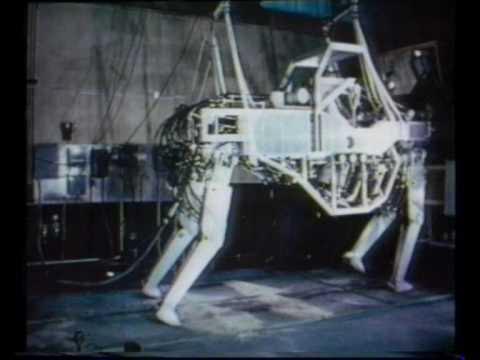
GE Walking Truck - Cybernetic Anthropomorphous Machine (CAM) 1969. — Reuben Hoggett

Reuben Hoggett

General Electric's quadruped demonstrated immense hydraulic power, but forcing human operators to consciously calculate every individual step caused disabling mental exhaustion within fifteen minutes.

AI-assisted summary of GE Walking Truck - Cybernetic Anthropomorphous Machine (CAM) 1969. — original source. Check the original for full context.

Source published:

Key ideas

  • General Electric began developing the Cybernetic Anthropomorphous Machine (CAM), or walking truck, as early as 1965 to replicate four-legged animal locomotion. (0:00)
  • A suspended human pilot directly commanded the quadruped's articulated limbs through hydraulic controls that mirrored the driver's own arm and leg motions. (0:00)
  • Severe cognitive strain from consciously planning every individual footstep exhausted operators within approximately 15 minutes of continuous operation. (0:00)
  • Intended as an experimental rough-terrain transport for the U.S. Army, the program was canceled due to defense budget cuts after producing only a single prototype. (1:17)

Detailed notes

## Background Published on YouTube by Reuben Hoggett on January 30, 2010, this archival video showcases the General Electric Cybernetic Anthropomorphous Machine (CAM) from 1969. The video description points viewers to cyberneticzoo.com and highlights the walking truck as an inspiration for Boston Dynamics' BigDog from decades earlier, noting how ahead of its time it was before microprocessors became available.

## TL;DR The video examines General Electric's 1965 quadruped 'walking truck,' an experimental transport vehicle developed for the U.S. Army to navigate rough terrain impassable to conventional vehicles. Inside, a suspended human operator directly maneuvered the four hydraulic limbs using arm and leg movements with bilateral force feedback, providing enough power to shove a Jeep aside while retaining delicate tactile control. However, the immense mental strain of manually coordinating every single step left drivers completely exhausted after about 15 minutes. Following defense budget cuts, only a single prototype was ever built, leaving the landmark machine preserved in a Detroit warehouse as an early precursor to modern walking robotics.

## Atmosphere & style The presentation carries the measured, educational tone of a mid-century scientific documentary, blending historical curiosity with technological awe. Watching the bulky, insectoid mechanical beast lumber forward conveys both an uncanny sense of raw industrial power and the fragile vulnerability of the exhausted human suspended within it. The narrative delivers a wistful retrospective, appreciating the ingenious master-slave engineering while reflecting on the computational limits of an era that ultimately cut short its future.

## Bulletin - [00:00](https://www.youtube.com/watch?v=ZMGCFLEYakM&t=0s) General Electric began developing the Cybernetic Anthropomorphous Machine (CAM), or walking truck, as early as 1965 to replicate four-legged animal locomotion. - [00:00](https://www.youtube.com/watch?v=ZMGCFLEYakM&t=0s) A suspended human pilot directly commanded the quadruped's articulated limbs through hydraulic controls that mirrored the driver's own arm and leg motions. - [00:00](https://www.youtube.com/watch?v=ZMGCFLEYakM&t=0s) Severe cognitive strain from consciously planning every individual footstep exhausted operators within approximately 15 minutes of continuous operation. - [01:17](https://www.youtube.com/watch?v=ZMGCFLEYakM&t=77s) Intended as an experimental rough-terrain transport for the U.S. Army, the program was canceled due to defense budget cuts after producing only a single prototype.

## Key takeaways - [00:00](https://www.youtube.com/watch?v=ZMGCFLEYakM&t=0s) General Electric initiated work on the walking truck in the United States as early as 1965 to duplicate animal quadruped locomotion. - [00:00](https://www.youtube.com/watch?v=ZMGCFLEYakM&t=0s) The vehicle seated an operator suspended inside the chassis, whose limb motions directly steered the machine's four legs. - [00:00](https://www.youtube.com/watch?v=ZMGCFLEYakM&t=0s) A hydraulic servo mechanism mirrored the physical movements of the operator's arms and legs to actuate the walking mechanism. - [00:00](https://www.youtube.com/watch?v=ZMGCFLEYakM&t=0s) Bilateral force feedback transmitted physical resistance back to the operator, enabling both delicate positioning and immense power. - [00:00](https://www.youtube.com/watch?v=ZMGCFLEYakM&t=0s) Laboratory demonstrations proved the machine's brute strength, including the ability to toss a full-sized Jeep out of its path. - [00:00](https://www.youtube.com/watch?v=ZMGCFLEYakM&t=0s) Operating the vehicle required immense concentration because the driver had to consciously calculate each individual step. - [00:00](https://www.youtube.com/watch?v=ZMGCFLEYakM&t=0s) Mental exhaustion forced operators to halt and take mandatory rest breaks after roughly 15 minutes of operation. - [01:17](https://www.youtube.com/watch?v=ZMGCFLEYakM&t=77s) The project was carried out in partnership with the U.S. Army to evaluate walking transport across terrain inaccessible to wheeled or tracked vehicles. - [01:17](https://www.youtube.com/watch?v=ZMGCFLEYakM&t=77s) Only a single prototype of the walking truck was ever constructed before defense budget cutbacks stalled development. - [01:17](https://www.youtube.com/watch?v=ZMGCFLEYakM&t=77s) Following project cancellation, the sole prototype was retired to storage in a Detroit military warehouse. - [01:17](https://www.youtube.com/watch?v=ZMGCFLEYakM&t=77s) The walking truck remains a landmark in master-slave teleoperation and mechanical human muscle augmentation.

## Detailed walkthrough ### [00:00](https://www.youtube.com/watch?v=ZMGCFLEYakM&t=0s) The GE Walking Truck and Operator Feedback

One of the earliest attempts to replicate the four-legged locomotion of animals was the walking truck, engineered in the United States by General Electric as early as 1965. Inside the machine's central body, a human operator hung suspended, directly controlling the four articulated limbs via a hydraulic system that tracked and mirrored the physical movements of the driver's own arms and legs. Inside the laboratory, the walking truck demonstrated remarkable physical capability, including dramatic feats of raw power such as tossing an entire Jeep out of its path.

```mermaid flowchart LR accTitle: GE Walking Truck Control and Feedback Loop accDescr: Diagram illustrating the cybernetic loop between the suspended human operator and the quadruped walking truck.

subgraph Operator ["Human Operator"] A["Suspended Operator"] -->|"Moves arms & legs"| B["Hydraulic Controls"] E["Tactile Sensation"] -->|"Perceives resistance"| A end

subgraph Machine ["Cybernetic Anthropomorphous Machine"] B -->|"Actuates commands"| C["Hydraulic Limbs"] C -->|"Encounters obstacles"| D["Force Resistance"] D -->|"Force feedback"| E end ```

Despite its impressive mechanical output, operating the apparatus proved overwhelmingly demanding on the human mind. The driver had to consciously plan every single step, actively calculating which leg to place next. This immense cognitive strain completely exhausted the pilot after roughly a quarter of an hour of continuous operation, forcing mandatory rest breaks. However, because the system incorporated sophisticated force feedback, the machine possessed a surprising degree of finesse: the operator could physically feel the external resistance the limbs encountered, allowing the vehicle to exhibit both extreme power and delicate control. As the narrator observes, “Nevertheless the walking truck was considered a landmark in the design of walking machines.”

- **Development timeline:** Built by General Electric in the United States as far back as 1965. - **Control mechanics:** The operator was suspended inside the chassis, commanding the four legs through a hydraulic servo linkage that duplicated arm and leg movements. - **Physical capability:** Demonstrated brute strength in lab trials, such as pushing aside a Jeep, alongside delicate handling enabled by bilateral force feedback. - **Operator fatigue limit:** Operators suffered severe mental exhaustion from planning every footstep and had to stop and rest after approximately 15 minutes.

---

[01:17](https://www.youtube.com/watch?v=ZMGCFLEYakM&t=77s) Army Development, Dormancy, and the Future of Augmentation

Developed in partnership with the United States Army, the quadruped was conceived as an experimental transport vehicle capable of traversing rough, unpaved terrain impassable to conventional wheeled or tracked units. Ultimately, only a single prototype of the machine was constructed. Following deep defense budget cutbacks, the project stalled, leaving the solitary walking truck parked in storage inside an Army warehouse in Detroit.

The underlying cybernetic and mechanical principles developed for the quadruped laid the groundwork for future generations of robotics and walking transport. Looking forward to how such mechanisms might merge with newer, autonomous controls, the narrator reflects on the vehicle's place in the evolution of technology: “All these machines marvelous and ingenious though they may be serve only to augment the human muscle it is the human muscles that guide these machines and the...”

- **Target customer and purpose:** Built experimentally for the U.S. Army to evaluate mechanical walking platforms over rugged terrain. - **Current status:** A single prototype was produced, which ended up stored in a Detroit military warehouse following budget cuts. - **Technological significance:** Served as an early milestone in human muscle augmentation and master-slave teleoperation, awaiting integration with advanced computing to move closer to a fully realized mechanical man.

## Notable quotes > [00:00](https://www.youtube.com/watch?v=ZMGCFLEYakM&t=0s) Nevertheless the walking truck was considered a landmark in the design of walking machines. — narrator

## Mentioned General Electric, United States Army, Cybernetic Anthropomorphous Machine (CAM), Big Dog

## Video description The GE Cybernetic Anthropomorphous Machine (CAM) from 1969. see http://cyberneticzoo.com/?p=2032 . See what inspired Big Dog from 30 years ago. If only microprocessors were available back then...

[Source](https://www.youtube.com/watch?v=ZMGCFLEYakM)

中文简报

因操作员极度疲劳导致军方试验中止,通用电气搁置“步行卡车”项目 通用电气的四足机器展现出巨大的液压动力,但迫使人类操作员有意识地计算每一步动作,导致其在十五分钟内便陷入难以支撑的精神疲惫。 该视频审视了通用电气于1965年研制的四足“步行卡车”,这是一款为美国陆军开发的实验性运输载具,旨在通行常规车辆无法逾越的复杂地形。在机器内部,一名悬挂就座的人类操作员通过自身手臂和腿部动作,借助双向力反馈直接操纵四条液压机械腿;它拥有足以推开一辆吉普车的充沛力量,同时保留了细腻的触觉控制。然而,人工协调每一个步伐所带来的巨大精神负荷,使驾驶员在持续操作约15分钟后便精疲力竭。随着国防预算的削减,该项目最终仅制造了一台原型机,这台具有里程碑意义的机器如今被保存在底特律的一处仓库中,成为了现代步行机器人的早期先驱。 通用电气早在1965年便开始研发控制论拟人机(CAM),即“步行卡车”,以模拟四足动物的移动方式。 (0:00) 一名悬挂就座的人类驾驶员通过液压控制系统直接指挥四足机械腿,该系统能够镜像映射驾驶员自身的手臂和腿部动作。 (0:00) 因有意识地规划每一步落脚点所带来的严重认知负荷,导致操作员在持续作业约15分钟后便精疲力竭。 (0:00) 该项目原定作为美国陆军的复杂地形实验性运输载具,但在仅生产了一台原型机后,便因国防预算削减而被取消。 (1:17)

Reading summary

Engineered by General Electric in partnership with the U.S. Army, the 1965 Walking Truck demonstrated the viability of four-legged locomotion and hydraulic force feedback, though extreme cognitive demands on the operator and defense budget cuts halted development after a single prototype. Cybernetic Control and Force Feedback Mechanics (0:00) The Cybernetic Anthropomorphous Machine (CAM) relied on a direct master-slave servo linkage to mimic human biomechanics. Suspended inside the central chassis, an operator directed the quadruped's four articulated limbs by moving their own arms and legs. Bilateral force feedback transmitted ground resistance directly back to the driver's limbs as tactile sensations, providing the finesse necessary for delicate control alongside the brute hydraulic force required to clear heavy obstacles, such as tossing an entire Jeep aside in laboratory tests. Cognitive Strain and Human Fatigue Limits (0:00) Despite the apparatus's mechanical agility, operational viability was severely constrained by human cognitive limitations. Because the system lacked automated gait sequencing, the pilot was forced to consciously calculate and execute every individual footstep. This continuous mental strain proved completely debilitating, causing severe exhaustion that restricted continuous operation to roughly 15 minutes before mandatory rest breaks were required. Military Objectives and Technological Dormancy (1:17) The project was commissioned by the U.S. Army as an experimental transport platform intended to traverse rough, unpaved terrain impassable to wheeled or tracked vehicles. Development ceased following severe defense budget cuts, leaving the single working prototype relegated to storage in a Detroit military warehouse. While programmatic progress stalled, the narrator notes that the system was recognized as a landmark achievement in walking machine design and muscle augmentation, anticipating later integrations with autonomous computer controls. While the Walking Truck successfully demonstrated that hydraulic teleoperation could augment human strength across rugged landscapes, it also exposed the limits of unassisted human coordination. The platform ultimately remained an experimental stepping stone, showing that viable walking transports require automated computation to relieve operators from the mental burden of foot placement.

精炼阅读摘要

通用电气(General Electric)于1965年起为美国陆军研发的“步行卡车”(Cybernetic Anthropomorphous Machine),通过液压系统同步模拟操作员四肢动作,虽在动力输出与力反馈控制上取得突破,但因繁重的认知负荷与军费削减最终仅止步于单台原型机。 水压伺服与双向力反馈控制 (0:00) 通用电气研发的这台四足机器旨在模拟动物的行走步态。驾驶员悬吊在机身核心内部,通过液压伺服联动装置直接操控四条铰接机械腿,系统能够实时追踪并同步复制驾驶员自身手臂与腿部的动作。在实验室测试中,该机器展现出极高的原始动力,甚至能将一辆完整的吉普车直接推移出通道。同时,系统配备了先进的双向力反馈机制,使驾驶员能切实感受到机械肢体触碰外界障碍物时的阻力,从而在展现庞大机械力量的同时兼具敏捷与精细的操控感。 单步规划引发的认知疲劳极限 (0:00) 尽管步行卡车拥有出色的机械性能,但实际操纵过程对驾驶员的精神负荷构成了极大考验。由于缺乏自动化步态协调机制,驾驶员必须完全依靠主观意识来规划每一次迈步,持续计算并决定下一条腿的落点。这种高强度的精神压力导致操作员在持续驾驶约15分钟后便会陷入极度疲劳,必须强制停机休息,从而极大地限制了该设备在实际任务中的作业持续性。 军方试验受阻与技术奠基价值 (1:17) 该项目由通用电气与美国陆军联合开展,目标是评估四足步行平台在传统轮式或履带式车辆无法通行的崎岖恶劣地形中的运输可行性。然而,该项目最终仅生产了一台原型机,随后便因美国军费的大幅度削减而被迫停滞,单台原型机最终被封存在底特律的陆军仓库中。尽管项目未能继续推进,但解说指出,步行卡车被视为步行机器设计领域的划时代里程碑;其开发的主从遥控操作和人体肌肉强化理论,为后续世代的仿生机器人及与自主控制计算相结合的行走运输系统奠定了基础。 通用电气的步行卡车证明了重型液压四足行走的力学可行性,但其依赖完全人工主观步态决策的设计导致了严重的生理与认知瓶颈。伴随原型机在底特律仓库闲置,这一技术路线表明纯粹的肌肉增强机械若要迈向实用,仍有待更高级自主计算与自动化控制机制的介入。

Detailed notes — zh

## Background 该视频由 Reuben Hoggett 于 2010 年 1 月 30 日发布在 YouTube 平台上。视频简介指出,这是 1969 年通用电气(GE)研发的控制论拟人机(CAM),它在三十年前便启发了后来的波士顿动力“大狗”(Big Dog),并感叹若当时就拥有微处理器该有多好。 ## TL;DR 视频回顾了通用电气于 1965 年为美国陆军研制的“步行卡车”(Walking Truck)四足机械系统。该设备通过全液压系统将机舱内悬吊操作员的四肢动作实时同步至四条机械腿,不仅力量惊人且具备精细的触觉力反馈功能。但由于缺乏微处理器进行步态算法辅助,极高的心智决策负荷导致驾驶员操作仅 15 分钟便会彻底力竭。受制于军费削减,这台独一无二的原型机最终被封存于底特律仓库,但它作为人类肌肉力量延展的先驱里程碑,为后世先进步行机器人的诞生奠定了技术基石。 ## Atmosphere & style 整部影片呈现出一种复古而肃穆的工业纪录片质感,沉稳清晰的旁白搭配黑白历史影像,营造出强烈的怀旧与纪实氛围。画面中钢铁巨兽的沉重踏步与操作员紧绷的精神状态形成鲜明张力,让人切身感受到早期人机工程探索的艰辛与极限。伴随着项目因预算削减而搁浅于仓库的结局,叙事流露出一抹时代落幕的唏嘘,但片尾对人机融合未来的坚定展望,又赋予了这段历史科技探索特有的诗意与崇高感。 ## Bulletin - [00:00](https://www.youtube.com/watch?v=ZMGCFLEYakM&t=0s) 通用电气(GE)于1965年研制出四足控制论拟人机(CAM)“步行卡车”,通过全液压系统将操作员四肢运动实时映射到四条机械腿上。 - [00:00](https://www.youtube.com/watch?v=ZMGCFLEYakM&t=0s) 由于缺乏微处理器或自动化步态算法,操作员需完全自主决策每一步协调动作,导致极高的认知负荷,连续操作约15分钟便会精疲力竭。 - [00:53](https://www.youtube.com/watch?v=ZMGCFLEYakM&t=53s) 该设备配备了高灵敏度的触觉力反馈系统,使驾驶员能切身感知外界阻力,既具备推开吉普车的巨大力量,又能实现细腻轻柔的操作。 - [00:53](https://www.youtube.com/watch?v=ZMGCFLEYakM&t=53s) 该项目最初为美国陆军复杂地形运输实验设计,后因军费预算大幅削减而中止,唯一原型机被封存于底特律的美军仓库中。 ## Key takeaways - [00:00](https://www.youtube.com/watch?v=ZMGCFLEYakM&t=0s) 通用电气于1965年打造的“步行卡车”是人类模仿动物四足运动形态的早期先驱与机械里程碑。 - [00:00](https://www.youtube.com/watch?v=ZMGCFLEYakM&t=0s) 该机械采用深度人机耦合设计,操作员悬吊于机身中央,通过全液压伺服传动系统控制四肢步态。 - [00:00](https://www.youtube.com/watch?v=ZMGCFLEYakM&t=0s) 步行卡车展现出极强的物理输出功率,在实验测试中可轻而易举地推翻或移开一辆吉普车。 - [00:00](https://www.youtube.com/watch?v=ZMGCFLEYakM&t=0s) 缺乏计算芯片与自主步态算法是其核心瓶颈,极度的精神疲倦迫使操作员每运行约15分钟就必须暂停休息。 - [00:53](https://www.youtube.com/watch?v=ZMGCFLEYakM&t=53s) 双向力反馈技术赋予了该四足机甲对自身力量的感知力,使其能够兼顾刚猛推力与精细轻柔的动作控制。 - [00:53](https://www.youtube.com/watch?v=ZMGCFLEYakM&t=53s) 该原型机专为美军在崎岖险峻地形中的物资运载需求而开发,属于早期军用特种装备的实验尝试。 - [00:53](https://www.youtube.com/watch?v=ZMGCFLEYakM&t=53s) 受限于国防预算削减,这一全球独一无二的原型机最终未能量产,而是长期存放于底特律军方仓库。 - [00:53](https://www.youtube.com/watch?v=ZMGCFLEYakM&t=53s) 步行卡车的工程哲学本质是人体机能与肌肉力量的物理放大器,机器的运动规划与高层控制完全依赖人类意志。 - [00:53](https://www.youtube.com/watch?v=ZMGCFLEYakM&t=53s) 虽然项目终止,但其沉淀的液压伺服与力觉感知技术为后续结合现代信息控制系统的先进机器人研发奠定了基础。 ## Detailed walkthrough ### [00:00](https://www.youtube.com/watch?v=ZMGCFLEYakM&t=0s) 通用电气“步行卡车”的诞生与人机协同挑战 通用电气公司(General Electric)早在1965年就在美国研制出了一台被称为“步行卡车”(Walking Truck)的四足机械设备,这是人类模仿动物四足运动形态的最早尝试之一。该机械的核心构想在于将人与机械紧密耦合:人类操作员被直接悬吊固定在机身内部,其手部与双腿的动作会通过一套复杂的液压系统,直接同步映射并传导至四条机械腿上,以此驱动庞大的机体实现行走与动作。 在实验环境的测试中,这台机器展现出了令人惊叹的机械力量与作业表现,甚至能够轻而易举地将一辆吉普车推到一旁。然而,这种纯粹依靠人脑直接调控四足动作的设计带来了巨大的认知负荷。由于缺乏现代微处理器或自动化步态算法的辅助,操作员必须在脑海中时刻神经高度紧绷地规划“下一步该迈哪条腿”,这种极度的精神疲劳往往让驾驶员在操作仅仅15分钟左右后便彻底精疲力竭,不得不暂停休息。即便存在严重的续航与人机工效限制,旁白依然指出:“尽管如此,步行卡车仍被视为步行机器设计领域的一座里程碑。” - **研制背景**:由美国通用电气(GE)于1965年启动并建造,属于控制论拟人机(Cybernetic Anthropomorphous Machine, CAM)的早期先驱。 - **控制机制**:操作员悬挂在机体中央,通过全液压联动系统将四肢的真实运动实时转化为机械腿的步态。 - **性能与负荷瓶颈**:机械力量足以搬动甚至掀翻一辆吉普车,但持续操纵15分钟就会导致人类驾驶员因高强度心智决策而体力不支。 ```mermaid flowchart LR accTitle: 通用电气步行卡车控制循环 accDescr: 展示操作员四肢动作如何通过液压系统转化为机械腿动作并反馈给操作员 subgraph Human["操作员(悬吊于机身内部)"] A["手臂与腿部运动"] B["高负荷步态决策"] end subgraph Machine["液压与机械执行机构"] C["液压伺服传动系统"] D["四足机械肢体输出力量"] end B --> A A -->|"实时位移指令"| C C -->|"液压驱动"| D D -.->|"高心智负荷反馈 (15分钟力竭)"| B ``` --- ### [00:53](https://www.youtube.com/watch?v=ZMGCFLEYakM&t=53s) 四足机器人的力反馈特性与未来前景 通用电气研发的这种四足机甲(Quadruped)不仅能精准复刻操作员双手和双脚的动作轨迹,还具备释放巨大推力的能力。更具突破性的是,这套机械系统融合了极其精妙的触觉力反馈设计,旁白评价道:“更为重要的是,四足机甲清楚自身的力量,并能够展现出极大的轻柔度,因为操作员能够切身感受到它所遭遇的任何阻力。”这种力觉感知让驾驶员能够根据阻力实时微调动作,使得钢铁巨兽既能进行粗暴的推举,也能完成非常精巧细腻的操作。 该四足机器人最初是作为美国陆军(US Army)在恶劣与复杂地形下的实验性运载工具而开发的。遗憾的是,受制于军费预算的大幅度削减,这台世界上独一无二的四足机器实体最终只能沉睡在底特律的一处美军仓库中。然而,贯穿其研发全过程的工程技术并未就此湮灭,随时可供未来的前沿探索借鉴与复用。旁白指出,将此类物理伺服技术与更加先进的信息控制系统相融合,将让人类距离创造真正意义上的“机械人”更近一步。片尾特别强调,不论这些机器看起来多么神妙非凡且充满巧思,其本质都只是在放大与延伸人类的肌肉力量,机器始终由人类的肌肉与意志主导引领。 - **力感知能力**:具备双向力反馈功能,操作员可感知外界反作用力,实现“既有万钧之力,亦能温柔操作”。 - **研发归属与现状**:为美国陆军崎岖地形运输实验而造;由于预算削减,全球仅存的唯一一台原型机长期封存于底特律的美军仓库。 - **技术哲学定位**:本质属于人体机能增强装置(Human Muscle Augmentation),依靠人类神经与肌肉进行高层级控制与导航。 ## Notable quotes > [00:53](https://www.youtube.com/watch?v=ZMGCFLEYakM&t=53s) 四足机甲清楚自身的力量,并能够展现出极大的轻柔度,因为操作员能够切身感受到它所遭遇的任何阻力。 — 旁白 ## Mentioned 通用电气 (General Electric / GE), 步行卡车 (Walking Truck / CAM), 控制论拟人机 (Cybernetic Anthropomorphous Machine), 美国陆军 (US Army), 底特律, Big Dog ## Video description The GE Cybernetic Anthropomorphous Machine (CAM) from 1969. see http://cyberneticzoo.com/?p=2032 . See what inspired Big Dog from 30 years ago. If only microprocessors were available back then... [Source](https://www.youtube.com/watch?v=ZMGCFLEYakM)

Source quotes

[0:53] 旁白: 四足机甲清楚自身的力量,并能够展现出极大的轻柔度,因为操作员能够切身感受到它所遭遇的任何阻力。

Source quotes

[0:00] narrator: Nevertheless the walking truck was considered a landmark in the design of walking machines.

Original transcript

[0:00] one of the earliest attempts to imitate [0:02] the four-legged motion of animals was [0:04] this walking truck built by General [0:07] Electric in the USA as far back as [0:11] 1965 a human operator was suspended in [0:13] the body and he gave the commands to [0:15] each of the legs through a hydraulic [0:17] system that followed the movements of [0:19] his arms and [0:25] legs this machine was capable of quite [0:28] impressive Feats in the laboratory [0:30] tossing a Jeep out of the way for [0:35] example but the strain of thinking about [0:38] which leg to move next exhausted the [0:40] operator after about 15 minutes and he [0:42] had to take a rest nevertheless the [0:45] walking truck was considered a landmark [0:47] in the design of walking [0:53] machines another GE invention is [0:55] quadraped duplicating the movements of [0:58] the operator's hands and feet it can [1:00] apply great force more important [1:02] quadruped knows its own strength and is [1:04] capable of great gentleness because the [1:06] operator can literally feel whatever [1:08] resistance it is [1:17] meeting the quadruped was developed for [1:19] the United States Army as an [1:21] experimental vehicle for rough [1:25] [Music] [1:28] Terrain [1:30] only one quadruped exists it is [1:32] currently dozing peacefully in a US Army [1:35] Warehouse in Detroit the temporary [1:37] victim of a budget slash the technology [1:40] that went into its creation is available [1:42] for future [1:44] applications the interfacing of this [1:46] technology with a more advanced one will [1:49] bring us that much closer to the [1:50] realization of a mechanical man all [1:53] these machines marvelous and ingenious [1:55] though they may be serve only to augment [1:57] the human muscle it is the human muscles [2:00] that guide these machines and the