OpenAI Expands GPT-3 to 175B Parameters as Performance Gains Persist
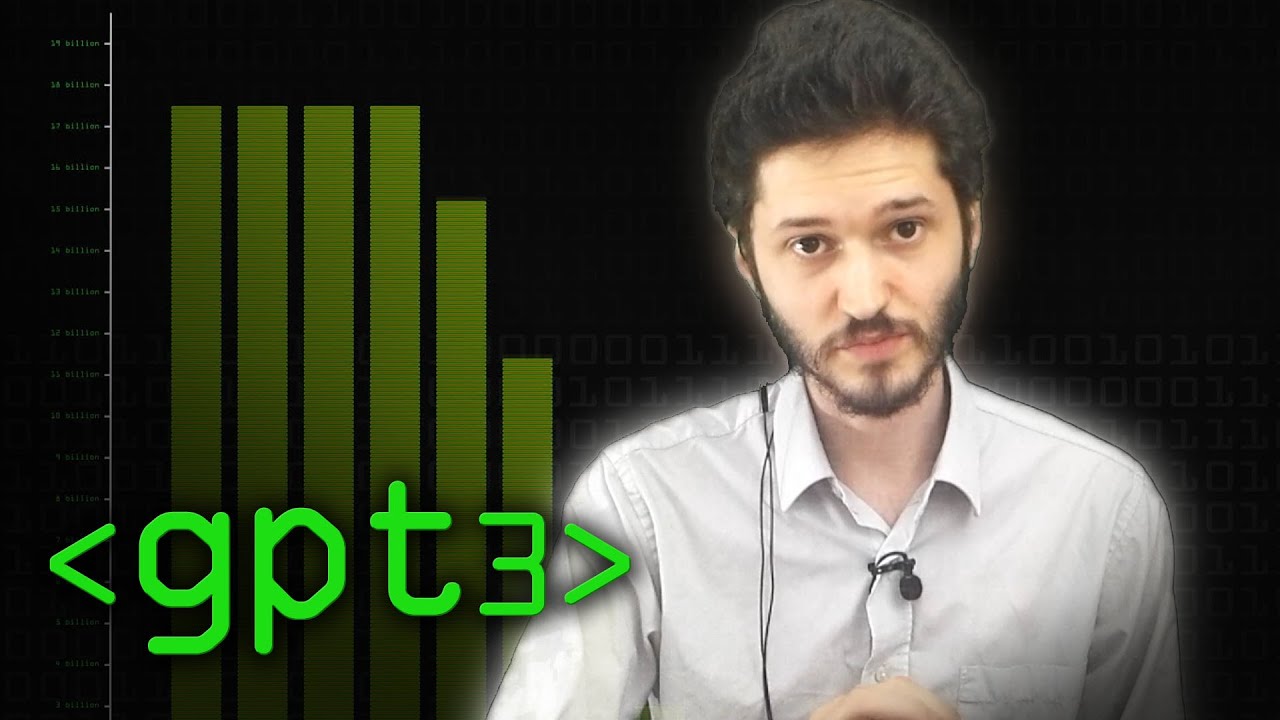
GPT3: An Even Bigger Language Model - Computerphile — Computerphile

Computerphile

OpenAI's 175-billion-parameter model demonstrates that brute-force scaling enables dynamic in-context learning and arithmetic execution without task-specific fine-tuning, defying expectations of diminishing returns.

AI-assisted summary of GPT3: An Even Bigger Language Model - Computerphile — original source. Check the original for full context.

Source published:

Key ideas

  • OpenAI's GPT-3 scales transformer models to 175 billion parameters—roughly 117 times larger than GPT-2—with performance scaling curves showing no signs of leveling off. (4:01)
  • Human evaluators distinguish 200-word synthetic news articles generated by the 175B model from genuine human writing with only 52% accuracy, approaching random chance. (4:01)
  • Despite having only 17 exact matches out of 2,000 tested addition problems in its training corpus, GPT-3 hits nearly 100% accuracy on two-digit addition and 80–90% on three-digit operations. (10:49)
  • GPT-3 functions as an effective few-shot learner through in-context adaptation, executing tasks dynamically across its 2,048-token context window without gradient updates or fine-tuning. (19:50)

Detailed notes

## Background Published on YouTube by Computerphile on July 1, 2020, this video features AI researcher Rob Miles discussing OpenAI's GPT-3. The show notes highlight the surprising emergence of basic mathematics in a language model, questioning how far scaling up model size can push machine capabilities.

## TL;DR Rob Miles details the leap from GPT-2 to the 175-billion-parameter GPT-3, illustrating how scaling transformer architectures without bespoke fine-tuning continues to drive performance gains across unbroken scaling curves. He highlights emergent capabilities such as multi-digit arithmetic and human-indistinguishable short-form text generation, explaining that these behaviors stem from in-context few-shot learning rather than brute-force memorization. While analyzing the model's human-like calculation errors and comparing dynamic prompt adaptation to robotics sim-to-real domain randomization, Miles frames GPT-3 as an impressive milestone in scaling laws rather than an abrupt leap into artificial general intelligence.

## Atmosphere & style Conducted remotely in front of a green screen during pandemic-era conditions, the conversation has the cozy, intellectually curious feel of an informal university seminar. Rob Miles delivers measured, articulate technical explanations punctuated by wry analogies, maintaining a grounded skepticism against overhyped AGI claims. The dynamic between Miles and the off-camera host remains playful and investigative, capped by a lighthearted twist when a stylistic poetry test reveals both presented samples were secretly generated by the AI.

## Bulletin - [04:01](https://www.youtube.com/watch?v=_8yVOC4ciXc&t=241s) OpenAI's GPT-3 scales transformer models to 175 billion parameters—roughly 117 times larger than GPT-2—with performance scaling curves showing no signs of leveling off. - [04:01](https://www.youtube.com/watch?v=_8yVOC4ciXc&t=241s) Human evaluators distinguish 200-word synthetic news articles generated by the 175B model from genuine human writing with only 52% accuracy, approaching random chance. - [10:49](https://www.youtube.com/watch?v=_8yVOC4ciXc&t=649s) Despite having only 17 exact matches out of 2,000 tested addition problems in its training corpus, GPT-3 hits nearly 100% accuracy on two-digit addition and 80–90% on three-digit operations. - [19:50](https://www.youtube.com/watch?v=_8yVOC4ciXc&t=1190s) GPT-3 functions as an effective few-shot learner through in-context adaptation, executing tasks dynamically across its 2,048-token context window without gradient updates or fine-tuning.

## Key takeaways - [00:00](https://www.youtube.com/watch?v=_8yVOC4ciXc&t=0s) GPT-2 disrupted the NLP paradigm by demonstrating that a simple next-token prediction objective on massive unstructured text could match bespoke fine-tuned models. - [00:00](https://www.youtube.com/watch?v=_8yVOC4ciXc&t=0s) Unlike standard machine learning models that hit diminishing returns, language model scaling curves follow a steady straight line on a log scale. - [04:01](https://www.youtube.com/watch?v=_8yVOC4ciXc&t=241s) At 175 billion parameters, GPT-3 is ten times larger than Microsoft's Turing-NLG and requires distributed compute clusters for inference. - [04:01](https://www.youtube.com/watch?v=_8yVOC4ciXc&t=241s) Human detection of model-generated text falls from 76% on small models to 52% on GPT-3 175B, making output virtually indistinguishable from human writing. - [07:30](https://www.youtube.com/watch?v=_8yVOC4ciXc&t=450s) Rob Miles remains skeptical that next-token prediction alone can enable models to construct abstract mental models for genuine scientific discoveries. - [10:49](https://www.youtube.com/watch?v=_8yVOC4ciXc&t=649s) While simple arithmetic like '2 + 2 =' can be memorized, high performance on multi-digit arithmetic indicates emergent procedural execution. - [10:49](https://www.youtube.com/watch?v=_8yVOC4ciXc&t=649s) GPT-3 demonstrates high accuracy on two- and three-digit arithmetic despite an empirical overlap rate of only 0.85% with its training dataset. - [15:22](https://www.youtube.com/watch?v=_8yVOC4ciXc&t=922s) The core hypothesis for GPT-3's generality is that optimizing next-token loss forces the network to 'learn how to learn' governing rules from context. - [15:22](https://www.youtube.com/watch?v=_8yVOC4ciXc&t=922s) A robotics sim-to-real domain randomization analogy illustrates how higher-capacity models shift from conservative heuristics to dynamic context-probing policies. - [19:50](https://www.youtube.com/watch?v=_8yVOC4ciXc&t=1190s) Rob characterizes GPT-3's few-shot capabilities as an incremental step along the path toward AGI rather than a dramatic leap. - [21:22](https://www.youtube.com/watch?v=_8yVOC4ciXc&t=1282s) The widening performance gap between zero-shot and few-shot conditions in larger models suggests active task inference rather than passive data retrieval. - [24:06](https://www.youtube.com/watch?v=_8yVOC4ciXc&t=1446s) GPT-3's arithmetic errors mirror human algorithmic mistakes, such as forgetting to carry a one across columns, rather than random digit hallucinations. - [25:12](https://www.youtube.com/watch?v=_8yVOC4ciXc&t=1512s) The primary takeaway of GPT-3 is that brute-force scaling of data, parameters, and compute continues to unlock capabilities without hitting a plateau.

## Detailed walkthrough ### [00:00](https://www.youtube.com/watch?v=_8yVOC4ciXc&t=0s) Scaling Up: From GPT-2 to GPT-3

Recording remotely under "strange times" in front of a green screen with slight network lag, Rob Miles joins Computerphile to follow up on their previous discussions of language models, transformers, and GPT-2. The big news is the arrival of OpenAI's GPT-3, which Rob summarizes concisely: it is both bigger and better. Reflecting on GPT-2, Rob explains that natural language processing (NLP) researchers had spent years devising intricate, highly specialized architectures and fine-tuning schemes for narrow benchmarks. OpenAI challenged that paradigm with a simpler question: what happens if you take a straightforward transformer architecture, avoid bespoke fine-tuning, and simply train a massive model on a giant, unstructured pile of internet text?

```mermaid flowchart LR accTitle: Language Model Pipeline accDescr: Unstructured text passes through a transformer to predict tokens across benchmarks. subgraph Data["Training Data"] A["Unstructured Internet Text"] end subgraph Architecture["Model Engine"] B["Transformer Architecture"] end subgraph Output["Inference"] C["Next-Token Prediction"] D["Multi-task NLP Benchmarks"] end A --> B B --> C C --> D ```

Without any task-specific modifications, GPT-2 achieved state-of-the-art or competitive results across a wide battery of NLP tasks merely by performing next-token prediction. Most strikingly, the performance curves showed no sign of flattening. In machine learning, one routinely expects diminishing returns—a point where scaling parameter counts yields marginal gains. Rob draws an analogy to aviation: while you can build remarkably large airplanes, eventually scaling an airplane hits a physical ceiling, and reaching greater heights requires switching paradigms entirely to a rocket. With GPT-2, however, the scaling curves remained a clean straight line on a log scale, suggesting that researchers were nowhere near the ceiling of brute-force scaling.

- GPT-2 demonstrated that an unstructured dataset coupled with a simple next-token objective could generalize widely without fine-tuning. - As Rob Miles summarized OpenAI's approach with GPT-2: “The point it was trying to make is like people in natural language processing have spent a tremendously long time working on the all of these clever things that you can do, getting in the nitty-gritty of the technical technical stuff for like detailed fine-tuning for these different benchmarks that they have and so on, and GPT-2 was OpenAI just saying, 'Well, what if we just made a really, really huge one? What would happen?'”

---

[04:01](https://www.youtube.com/watch?v=_8yVOC4ciXc&t=241s) 175 Billion Parameters and Human Indistinguishability

Following GPT-2, the broader machine learning community jumped on the "bigger language models train," steadily increasing model sizes and observing consistent gains. OpenAI's response with GPT-3 was to double down on that exact philosophy at an unprecedented scale. When GPT-2 was first introduced, OpenAI withheld its larger weights due to misuse concerns, initially sharing only a 117-million parameter variant before progressively releasing checkpoints up to the full 1.5-billion parameter model. GPT-3 dwarfs that ceiling entirely, weighing in at 175 billion parameters—roughly 117 times the size of GPT-2 and ten times larger than the previous record holder, Microsoft's Turing-NLG (around 17 billion parameters).

```mermaid flowchart TD accTitle: Growth in Model Parameter Sizes accDescr: Timeline comparison of GPT-2 variants to Turing-NLG and GPT-3. subgraph GPT2_Era["GPT-2 Releases"] M1["GPT-2 Small: 117M"] M2["GPT-2 Largest: 1.5B"] end subgraph Competitors["Intermediate Models"] M3["Turing-NLG: ~17B"] end subgraph GPT3_Era["GPT-3 Scale"] M4["GPT-3 Flagship: 175B"] end M1 --> M2 M2 --> M3 M3 --> M4 ```

Running a model of this magnitude requires enormous compute, capital, and non-trivial cluster engineering; unlike GPT-2, which can run locally on a single machine at inference time, GPT-3 demands a distributed cluster. Even at 175 billion parameters, the performance graphs still have not leveled off. To evaluate how human-like the model is, the paper tested human subjects on their ability to distinguish 200-word model-generated news articles from genuine human articles. When presented with outputs from the smallest GPT-3 variants (comparable to GPT-2 sizes), human evaluators successfully identified synthetic text roughly 76% of the time. By the time they evaluated the 175-billion parameter model, human accuracy plummeted to approximately 52%—virtually indistinguishable from a random 50/50 coin flip.

- GPT-3 contains 175 billion parameters, compared to GPT-2's maximum of 1.5 billion. - Human detection accuracy on 200-word synthetic articles dropped from 76% on the smallest model down to 52% on the 175B version. - When contemplating the unbending scaling charts, Rob Miles remarked: “What they find is when they look at the graphs, they're still going up.”

---

[07:30](https://www.youtube.com/watch?v=_8yVOC4ciXc&t=450s) The Wallace Stevens Poetry Test and the Limits of Language

To illustrate the model's fluency, Rob sets up an informal experiment with the audience using poetry samples from the paper. GPT-3 generates text conditionally: fed a prompt formatted like an anthology entry containing an author, an existing poem, and the title of a second poem, the model completes the verse. Rob selects two poems—one genuine piece by the American modernist poet Wallace Stevens, and one uncurated completion generated by GPT-3 mimicking Stevens' style—to see if listeners can detect the synthetic work without searching the web.

Rob recites the first poem, *Shadows on the Way*:

> "I must have shadows on the way if I am to walk. I must have each step taken slowly and alone to have it ready-made. And I must think in lines of grey to have dim thoughts to be my guide. Must look on blue and green and never let my eye forget that color is my friend, and purple must surround me too. The yellow of the sun is no more intrusive than the bluish snow that falls on all of us. I must have grey thoughts and blue thoughts walk with me if I am to go away at all."

He then reads the second poem, titled *Fabio of Florida*:

> "Bark of phosphor on the balmy beach, move outward into heaven into the alabasters and night blues. Foam and cloud are one. Sultry moon monsters are dissolving. Fill your black hull with white moonlight. There will never be an end to this droning of the surf."

The host remarks that poetry, being ethereal and not strictly grounded in factual reality, might be relatively natural for a predictive model to simulate, but asks whether feeding such a system vast libraries of scientific literature could ever lead it to discover genuine, novel scientific insights. Rob remains deeply skeptical, arguing that predicting the next token does not inherently supply the underlying mechanisms needed to construct abstract mental models of the world.

- The poetry prompt was formatted as an anthology entry to trigger stylistic completion without manual curation. - When asked if a next-token model could produce genuinely novel scientific discoveries, Rob Miles offered his assessment: “My instinct is to say no, it's just predicting the next word, right? It's just a language model; it doesn't have the ability to build the kind of abstract mental structures that you need.”

[10:49](https://www.youtube.com/watch?v=_8yVOC4ciXc&t=649s) Arithmetic Performance and the Limits of Memorization

Rob Miles points out an outside perspective regarding language models: tasks that people once assumed required synthesizing brand-new knowledge—and were therefore thought to be beyond models like these—are now being performed by them. A prime example where GPT-3 demonstrates tremendous improvement is basic arithmetic. Because GPT-3 is strictly a language model designed to predict the next token, it was never explicitly engineered to calculate math problems. Rob notes that if you fed the prompt `"2 + 2 ="` into GPT-2, it would successfully output `4`, but that is completely unimpressive because that exact character string appears countless times across the internet. In that regime, the model relies purely on rote memorization without any underlying grasp of numerical values.

```mermaid flowchart TD accTitle: Memorization versus Generalization in Arithmetic accDescr: Progression from simple memorized math strings to multi-digit operations requiring procedural rules. subgraph Memorization["Pure Memorization"] A["'2 + 2 ='"] -->|"Frequent in data"| B["Output '4'"] end subgraph Reasoning["Emergent Procedural Rules"] C["2- & 3-Digit Addition"] -->|"Rare in corpus"| D["Learned arithmetic rules"] D -->|"High accuracy"| E["80–100% on 2/3 digits"] end subgraph Ceiling["Model Capacity Limit"] F["10-Digit Addition"] -->|"Context / capacity ran out"| G["Performance collapses"] end ```

The task becomes substantially more difficult when evaluating problems like `23 + 48`, where the exact prompt is far less likely to exist verbatim in the training corpus. As the numbers grow larger, memorization becomes unviable; reliably adding 10-digit numbers together would serve as undeniable proof of genuine addition. As Rob puts it: “the longer the numbers get right if you can reliably add 10 digit numbers together then it's hard to deny that what you're really doing has you have to really be doing addition right you're not there's no way you could memorize to that”. While GPT-3 performs drastically better than its predecessors, Rob brings up a graph from the research paper showing that the model eventually runs out of steam as numbers expand toward 10 digits, much like a human reaching cognitive limits.

- In comparison to GPT-3, the 1.3-billion-parameter model (the closest equivalent to GPT-2) scores barely better than random chance on two-digit addition. - Three-digit addition involves 1,000,000 distinct input combinations; brute-force memorization of all combinations would consume an enormous share of network capacity. - The researchers scraped their dataset for 2,000 specific addition problems and discovered only 17 exact matches (a mere 0.85% occurrence rate in the training data). - Despite the lack of direct training data, GPT-3 hits essentially 100% accuracy on two-digit addition, performs nearly as well on two-digit subtraction, and achieves roughly 80% to 90% accuracy on three-digit addition and subtraction.

[15:22](https://www.youtube.com/watch?v=_8yVOC4ciXc&t=922s) Learning How to Learn: The Sim-to-Real Analogy

To explain how a model achieves such broad proficiency without explicit programming, Rob highlights the core hypothesis proposed in the OpenAI paper: the network has essentially learned how to learn. Under this view, achieving the lowest possible loss on next-token prediction incentivizes the model to analyze the provided context dynamically and deduce the local governing rules. As Rob explains: “in order to perform sufficiently well at this language modeling task the best thing to do is to actually while looking at the context learn specific rules for how the context behaves so that you can continue it more accurately”.

```mermaid flowchart LR accTitle: Adaptive Model Capacity in Sim-to-Real Training accDescr: Comparison of small model versus large model policies under domain randomization. subgraph SmallModel["Small Capacity Model"] A1["Domain Randomization"] --> B1["Lowest Common Denominator"] B1 --> C1["Safe shuffling walk"] end subgraph LargeModel["Large Capacity Model"] A2["Domain Randomization"] --> B2["Probe Context / Environment"] B2 --> C2["Dynamic adaptation & leap"] end ```

Rob illustrates this mechanism using an analogy from robotics and "sim-to-real" transfer. Training a physical robot directly in the real world is slow, so researchers run reinforcement learning in simulated physics engines. However, tiny unknown environmental parameters—such as the exact coefficient of friction of the floor—create a simulation mismatch. If researchers train a robot on a fixed friction estimate, it might adopt an optimal jumping policy that causes it to completely wipe out when transferred to a slightly slicker real surface. To combat this, roboticists use domain randomization, varying the simulated friction across a range (for example, between 0.9 and 1.1 of the estimated baseline) across different training episodes.

- A smaller, low-capacity model forced to handle random friction learns a cautious, "lowest common denominator" policy—such as shuffling along the floor rather than leaping—to avoid failing entirely, sacrificing peak performance for stability. - A sufficiently large, high-capacity model can learn a two-stage adaptive strategy: first sliding its foot across the surface to test the friction, and then executing the leap if the conditions allow. - Rob draws the parallel back to NLP: GPT-3's increased size gives it the capacity to inspect its prompt "online," infer what task it is being asked to perform, and adapt its output strategy dynamically.

[19:50](https://www.youtube.com/watch?v=_8yVOC4ciXc&t=1190s) Few-Shot Learning and the Road Toward AGI

When asked whether this capability nudges the field into Artificial General Intelligence (AGI) territory, Rob answers that it is an incremental step rather than a dramatic leap: “gradually i mean i think it's like it's a step on the path um it's not like us it's not dramatically closer than we would expect or anything like that”. The central focus of the paper is establishing GPT-3 as an effective "few-shot learner." Conventional machine learning paradigms demand thousands of labeled examples to optimize model parameters, but real-world tasks often demand rapid generalization from minimal cues.

Rob contrasts this standard paradigm with everyday few-shot tasks, such as configuring facial recognition on a smartphone. A phone classifier cannot require thousands of photos of the owner; it must establish an accurate identity boundary using only three or four snapshots. In an analogous fashion, presenting GPT-3 with a few demonstrations in its prompt context acts like feeding training data to an internal learning algorithm. By simply extending its forward pass across that context, the model adapts to the task without requiring any gradient updates or fine-tuning of its underlying weights.

[21:22](https://www.youtube.com/watch?v=_8yVOC4ciXc&t=1282s) In-Context Learning and Arithmetic: Learning vs. Locating

Rob Miles highlights how language models tackle tasks using dramatically fewer examples than standard machine learning techniques require. When examining arithmetic—specifically addition—the quantity of examples supplied directly in the prompt drastically alters the model's accuracy. If you simply give it a zero-shot prompt like asking what two numbers sum to, it succeeds only a modest fraction of the time. However, if you provide a few demonstration pairs first (such as $10 + 10 = 20$ and $25 + 30 = 55$), its accuracy jumps significantly. This phenomenon introduces a deep question about what is fundamentally occurring inside the network: is it genuinely learning the mechanics of addition on the fly from the prompt, or is it merely using those examples to identify and locate addition within its broad latent space of pre-existing capabilities?

```mermaid flowchart TD accTitle: In-Context Prompting and Model Capacity accDescr: Flow diagram showing how increasing context examples and model size improves performance.

subgraph PromptingSettings["Prompt Context Depth"] ZS["Zero-Shot: Direct Query"] OS["One-Shot: Single Example"] FS["Few-Shot: Multiple Examples"] ZS --> OS --> FS end

subgraph ModelProcessing["Model Scale Dynamics"] CT["Context Window (Up to 2,048 Tokens)"] FS --> CT CT --> LM["Small Language Models"] CT --> HM["Large Language Models (GPT-3)"] end

subgraph Outcomes["Performance Outcomes"] LM -->|"Modest Few-Shot Gain"| R1["Baseline Task Retrieval"] HM -->|"Massive Few-Shot Gain"| R2["In-Context Task Execution"] end ```

Across almost every benchmark evaluated in the paper, researchers tested the system across zero-shot, one-shot, and few-shot conditions up to the model's context window limit of 2,048 tokens—a context size substantially larger than that of preceding language models. While every model variant improves when given more context, the performance gap between zero-shot and few-shot expands noticeably as the model grows. Rob argues that this widening delta implies larger models are not simply retrieving memorized patterns:

> “Right, it's less about just like using the context to find the relevant parts of the training data to sort of parrot back that you've memorized and more about actually learning what to do from the context like recognizing that what's happening is addition and then actually doing addition.”

- Language models perform better as prompt examples increase up to the maximum context window of 2,048 tokens. - Across evaluations, the performance ratio between few-shot and zero-shot prompting grows larger in bigger models, demonstrating increased efficiency in extracting functional task instructions from context. - Because only a tiny fraction of the tested multi-digit addition problems could have appeared in the raw training corpus, memorization alone cannot explain the model's reliable arithmetic computation.

---

[24:06](https://www.youtube.com/watch?v=_8yVOC4ciXc&t=1446s) Human-Plausible Mistakes and Grammar-Like Rules

A particularly revealing aspect of GPT-3’s addition performance is the nature of its errors. When the model produces an incorrect sum, it does not output random gibberish or arbitrary digits; instead, it tends to make mistakes that look remarkably human, such as failing to carry a one across columns. This specific failure mode strongly suggests the network is executing an algorithmic routine akin to arithmetic rather than guessing blindly.

Rob explains that this operational competence likely mirrors the way the model acquires language structure. Just as it internalizes grammatical rules—learning that converting a statement into a question involves swapping word order and appending a question mark—it appears capable of treating multi-digit addition as a composable procedure of recalling small memorized facts and chaining them across columns. Reflecting on the significance of this emergent ability, Rob remarks:

> “And that is the kind of thing that you that I most people I didn't expect a transformer trained in this very straightforward way to be able to learn, right?”

---

[25:12](https://www.youtube.com/watch?v=_8yVOC4ciXc&t=1512s) Scaling Laws and Unbroken Curves

Rob identifies the primary takeaway of the entire GPT-3 research effort as the power of pure scaling. At roughly 117 times the parameter scale of GPT-2, OpenAI scaled up the architecture primarily because performance scaling curves showed no sign of flattening out. Even at this massive scale, the loss and capability curves have still not plateaued, leaving it an open question how far transformer-based language modeling can be pushed simply by increasing compute, parameters, and data.

> “We've gone 117 times bigger than GPT-2 and GPT-2 they started doing it because the curves aren't leveling off, they're still not leveling off so yeah we don't know how far we can push this type of language modeling, but a little bit further yet at least.”

The discussion winds down with a humorous callback to a generation test featured earlier in the session, where the prompt described snow. Both of the passages evaluated turned out to be generated by GPT-3. The off-camera host admits to being thrown off by GPT-3 describing "bluish snow," only to realize upon reflection that snow under a clear blue sky often appears bluish-white in real life, prompting a lighthearted concession to the model's perceptual nuance.

## Mentioned Rob Miles, Computerphile, Sean Riley, Brady Haran, Numberphile, OpenAI, GPT-2, GPT-3, Microsoft, Turing-NLG, Wallace Stevens, Shadows on the Way, Fabio of Florida, University of Nottingham

## Video description Basic mathematics from a language model? Rob Miles on GPT3, where it seems like size does matter!

More from Rob Miles: http://bit.ly/Rob_Miles_YouTube

https://www.facebook.com/computerphile https://twitter.com/computer_phile

This video was filmed and edited by Sean Riley.

Computer Science at the University of Nottingham: https://bit.ly/nottscomputer

Computerphile is a sister project to Brady Haran's Numberphile. More at http://www.bradyharan.com

[Source](https://www.youtube.com/watch?v=_8yVOC4ciXc)

中文简报

OpenAI将GPT-3扩展至1750亿参数,性能持续提升 OpenAI的1750亿参数模型表明,蛮力扩展能够在无需特定任务微调的情况下实现动态上下文学习和算术执行,打破了收益递减的预期。 Rob Miles详细介绍了从GPT-2到1750亿参数GPT-3的跨越,阐明了在没有专门微调的情况下扩展Transformer架构如何在持续不减的缩放曲线上继续推动性能提升。他重点指出了多位数算术以及与人类写作难以区分的短文本生成等涌现能力,并解释说这些行为源于上下文少样本学习,而非蛮力记忆。在分析该模型类似人类的计算错误并将动态提示适应比作机器人学中从仿真到现实(sim-to-real)的领域随机化时,Miles将GPT-3定性为缩放定律中一个令人印象深刻的里程碑,而非直接跃升至通用人工智能。 OpenAI的GPT-3将Transformer模型扩展至1750亿参数——大约是GPT-2的117倍——其性能缩放曲线未显示出趋于平缓的迹象。 (4:01) 人类评估者区分由175B模型生成的200字合成新闻文章与真实人类写作的准确率仅为52%,接近随机概率。 (4:01) 尽管在其训练语料库中,2000道测试加法题中仅有17道完全匹配,GPT-3在两位数加法上的准确率仍接近100%,在三位数运算上的准确率达到80%至90%。 (10:49) GPT-3通过上下文适应充当有效的少样本学习器,在其2048个token的上下文窗口中动态执行任务,而无需梯度更新或微调。 (19:50)

Detailed notes — zh

## Background 该视频由 YouTube 频道 Computerphile 于 2020 年 7 月 1 日发布。视频简介指出,本期节目由 Rob Miles 深入探讨 OpenAI 推出的 GPT-3 语言模型,重点解析其是否具备基础数学能力,以及为何在模型训练中“规模大小确实至关重要”。 ## TL;DR 节目围绕 OpenAI 当时最新发布的 1750 亿参数怪兽模型 GPT-3 展开探讨,剖析了其相较于 GPT-2 暴涨 117 倍的参数规模所带来的性能质变。Rob Miles 详细分析了模型在盲测诗歌生成、少样本提示(Few-shot prompting)以及多位数算术运算中的惊人表现,指出其计算能力绝非单纯依赖训练集死记硬背,而是展现出了类似人类掌握算法规则与上下文适应的推理特征。同时,节目讨论了缩放定律(Scaling Laws)至今未现平顶趋势的技术震撼,并借助机器人仿真思想实验深入解释了模型如何从底层“学会如何学习”。 ## Atmosphere & style 视频洋溢着技术极客之间心照不宣的兴奋与惊奇,疫情期间顶着绿幕的网络远程连线并没有削弱交流的火花,反而在偶有的网络延迟与互动笑声中增添了亲切随和的氛围。Rob Miles 的讲解深入浅出,善于用飞机与火箭、机器人地面摩擦力等精妙的比喻化繁为简,同时保持着学术研究者特有的严谨与克制。整场对话既有对人类被 AI 生成诗歌“蒙骗”的幽默自嘲,也有面对算力极限与技术边界不断被打破时所流露出的深邃震撼感。 ## Bulletin - [04:48](https://www.youtube.com/watch?v=_8yVOC4ciXc&t=288s) GPT-3 将模型参数量推向了 1750 亿(175B),达到 GPT-2 完整版的 117 倍以及此前最大模型 Turing-NLG 的约 10 倍,并且其性能提升曲线仍未出现边际效益递减或触顶放缓的迹象。 - [06:22](https://www.youtube.com/watch?v=_8yVOC4ciXc&t=382s) 在生成质量盲测中,人类受试者辨别 1750 亿参数 GPT-3 生成短文与人类真实文本的准确率骤降至 52%,基本上等同于随机掷硬币猜测的水平。 - [10:49](https://www.youtube.com/watch?v=_8yVOC4ciXc&t=649s) 针对测试集加法题的训练集重合度仅为 0.85%,但 GPT-3 在两位数加法上达成了近乎 100% 的准确率,且出错时常表现为类似人类的“漏掉进位”,表明模型习得了算法规则而非死记硬背语料。 - [21:22](https://www.youtube.com/watch?v=_8yVOC4ciXc&t=1282s) GPT-3 展现出显著的少样本学习(Few-shot Learning)能力,依托高达 2048 个 token 的上下文窗口,仅需在提示词中提供数个示例即可动态激活并大幅提升特定任务的推理表现。 ## Key takeaways - [00:00](https://www.youtube.com/watch?v=_8yVOC4ciXc&t=0s) OpenAI 延续了 GPT-2 的核心假设:放弃针对特定下游任务耗费高成本进行微调,仅凭海量无结构网络文本和预测下一个 token 的纯粹目标,单纯放大模型规模就能涌现通用能力。 - [02:35](https://www.youtube.com/watch?v=_8yVOC4ciXc&t=155s) 不同于传统工程技术易陷入边际收益递减的经验,GPT-2 到 GPT-3 的扩展定律(Scaling Laws)实验表明其性能曲线依然呈近乎笔直的上升趋势,并未触及理论天花板。 - [04:48](https://www.youtube.com/watch?v=_8yVOC4ciXc&t=288s) 1750 亿参数不仅使 GPT-3 的体量比 GPT-2 大出 117 倍,而且彻底打破了个人单机硬件运行的可能,必须依赖高昂且精密的大型计算集群才能支撑推理。 - [06:22](https://www.youtube.com/watch?v=_8yVOC4ciXc&t=382s) 在人类鉴别 AI 生成新闻文本的盲测实验中,受试者的准确率从最小模型的 76% 跌落至最大模型的 52%,显示出极高质量的自然语言生成逼真度。 - [06:22](https://www.youtube.com/watch?v=_8yVOC4ciXc&t=382s) GPT-3 能够创作意境与用词极其细腻的象征主义诗歌(如精准描述现实中泛着蓝光的雪),但其语言模型本质引发了能否真正具备严谨科学抽象思维的讨论。 - [10:49](https://www.youtube.com/watch?v=_8yVOC4ciXc&t=649s) 随着算术题位数增加,训练集中的字符串重合度断崖式下跌,三位数加减法可能产生百万种组合,排除了依靠网络容量强行死记硬背的可能。 - [10:49](https://www.youtube.com/watch?v=_8yVOC4ciXc&t=649s) GPT-3 在三位数加减法上能维持 80% 至 90% 的极高水准,与 13 亿参数较小模型接近随机瞎猜的水平形成了质的飞跃。 - [15:22](https://www.youtube.com/watch?v=_8yVOC4ciXc&t=922s) 机器人仿真(Sim-to-Real)的思想实验表明,容量不足的模型只能采用保守妥协策略,而大容量模型能够学会先主动感知环境再动态自适应的高阶策略。 - [15:22](https://www.youtube.com/watch?v=_8yVOC4ciXc&t=922s) 论文核心假说认为模型规模足够庞大后发生质变,GPT-3 可能在某种程度上“学会了如何去学习”,能够在推理阶段根据上下文实时领悟眼下需要执行的任务规则。 - [19:50](https://www.youtube.com/watch?v=_8yVOC4ciXc&t=1190s) 少样本学习机制类似手机人脸解锁,GPT-3 能够跳过更新权重的微调流程,仅靠上下文中的两三个范例即可迅速捕获规律并完成推理。 - [21:22](https://www.youtube.com/watch?v=_8yVOC4ciXc&t=1282s) 零样本(Zero-shot)与少样本(Few-shot)之间的表现存在巨大断层,在 2048 个 token 上下文窗口限制内,提供的示例越多,大模型的准确率与性能优势体现得越悬殊。 - [23:00](https://www.youtube.com/watch?v=_8yVOC4ciXc&t=1380s) GPT-3 在计算出错时频繁呈现“漏掉进位”等类似人类直觉疏漏的拟人化错误,反向证实其内部形成了类似于多步算法规则的推理表征。 - [25:12](https://www.youtube.com/watch?v=_8yVOC4ciXc&t=1512s) 即便跨越了 117 倍的参数鸿沟,大规模语言模型的损失函数下降与基准测试曲线依然没有出现放缓或平顶趋势,业界尚无法预测该路线能力的真正极限。 ## Detailed walkthrough ### [00:00](https://www.youtube.com/watch?v=_8yVOC4ciXc&t=0s) 缘起与回顾:从 GPT-2 到 GPT-3 的跨越 由于疫情期间的特殊录制环境,Rob Miles 顶着绿幕与主持人在偶有延迟的网络连线中展开了对话。两人此前曾制作过介绍语言模型、Transformer 架构以及 GPT-2 的视频,广受观众好评。而 OpenAI 最新推出的 GPT-3,再次引发了技术界的轰动。 ```mermaid flowchart LR accTitle: GPT-2 与 GPT-3 架构与目标对比 accDescr: 展示自回归语言模型的核心逻辑,即基于上文预测下一个 token,并通过单纯增加参数和数据带来性能跃升。 subgraph S1["语言模型核心机制"] A["无结构互联网文本数据"] --> B["Transformer 架构"] B --> C["自回归预测下一个 Token"] end subgraph S2["规模效应对比"] D["GPT-2\n最大 15 亿参数"] -->|"参数量扩大 117 倍"| E["GPT-3\n1750 亿参数"] end ``` 谈到 GPT-2 与 GPT-3 的关系时,Rob Miles 总结道:“它既更大,也更好,这就是核心看点。”GPT-2 诞生的初衷就是通过单纯扩大模型体量来挑战学界传统:长期以来,自然语言处理(NLP)领域的研究人员耗费海量精力深入技术细节,针对各种特定基准测试进行微调(fine-tuning)。而 OpenAI 提出的假设是:如果仅仅构建一个极其庞大的模型会发生什么?结果表明,即使没有任何下游任务的微调,仅仅依靠“根据已有上下文预测下一个词或 token”这一纯粹的目标,结合相对简单的 Transformer 架构和未经精细标注的互联网原始文本,GPT-2 就能在多项任务上达到令人瞩目的性能,部分甚至达到了最先进(State-of-the-Art)水平。 - GPT-2 的成功证明了无需针对具体 NLP 任务设计复杂的高成本结构化数据,仅凭海量无结构网络文本和纯粹的语言建模目标即可涌现出通用能力。 - Transformer 架构本身并不极其繁复,其威力在于对计算规模和数据规模的高效承载。 ### [02:35](https://www.youtube.com/watch?v=_8yVOC4ciXc&t=155s) 规模法则与打破“收益递减”的预期 按照工程和科学的通常经验,任何技术路线在持续做大时都会遭遇“收益递减”(diminishing returns)并逐渐触顶趋缓。Rob Miles 打了个形象的比方:“你能造出的最大飞机能有多大?它可以造得相当大,但总会存在一个极限,飞机的方法到那时就不管用了;如果你想飞得更高,你就需要火箭,需要一种完全不同的全新方法,而不是单纯放大已有的东西。” 然而,GPT-2 的实验图表展示出令人震惊的现象:性能曲线不仅没有平缓下降,反而近乎呈一条笔直上升的直线。这说明业界根本还没有触碰到模型参数和数据规模的理论天花板。随后其他研究团队纷纷跟进,制造越来越大的语言模型,而表现也如期稳步提升。OpenAI 则在 GPT-3 上将这个思路推到了极致。Rob Miles 调侃道,这就好比整个房间里的人都在看着那张曲线图,后面有个人兴奋地指着大喊:“‘它还在往上走!它还在往上走呢!’既然如此,我们到底能把这条路走多远?干脆测个究竟。” - 传统观点原本预期模型会因训练机制或数据中包含的信息上限而陷入性能瓶颈(plateau)。 - GPT-2 时代的数据曲线表明,缩放法则(Scaling Laws)下的性能提升速率在很宽的量级范围内依然保持稳定,并未出现预期中的骤降。 ### [04:48](https://www.youtube.com/watch?v=_8yVOC4ciXc&t=288s) 1750 亿参数怪兽:GPT-3 的惊人量级与算力门槛 在发布节奏上,OpenAI 最初发布 GPT-2 时仅推出了 1.17 亿(117M)参数的最小版本,因担忧潜在的技术滥用而对完整版进行了阶段性推迟,最终最大版本定格在 15 亿(1.5B)参数。而到了 GPT-3,模型参数量直接飙升至惊人的 1750 亿(175B),比 GPT-2 的完整版大了 117 倍,同时也达到了当时业内最大模型 Turing-NLG 的约 10 倍。 参数的爆炸式增长带来了残酷的工程挑战。GPT-2 在推理阶段(inference time)完全可以运行在单台机器上,但 1750 亿参数的 GPT-3 则彻底告别了消费级甚至单机硬件。Rob Miles 指出,GPT-3 需要极其庞大的计算资源、昂贵的资金投入以及精密的工程支持,必须依赖大型计算集群才能跑通推理。更为惊人的是,在分析 GPT-3 在各类基准上的表现时,研究人员发现性能曲线依然保持着昂扬向上的斜率,完全没有见顶的迹象,这再次让所有人忍不住遐想:如果继续做大,它还能变强多少? | 模型代际 / 名称 | 参数量 | 推理硬件要求 | |:--- |:--- |:--- | | GPT-2 (最小版本) | 1.17 亿 (117M) | 消费级个人电脑即可运行 | | GPT-2 (完整最大版本) | 15 亿 (1.5B) | 单台独立机器即可满足推理 | | Turing-NLG (此前最大) | 约 170 亿 (17B) | 需要小型集群或多卡专业服务器 | | GPT-3 (最大版本) | 1750 亿 (175B) | 约 117 倍于 GPT-2,必须依赖庞大的计算集群 | ### [06:22](https://www.youtube.com/watch?v=_8yVOC4ciXc&t=382s) 盲测诗歌实验:真假难辨的生成质量 GPT-3 到底有多强?论文中最具说服力的指标之一是让人类受试者区分 200 字左右的新闻短文究竟是由人类撰写还是由 AI 生成。GPT-3 同样训练了不同参数量的小、中、大等多个版本。在最小模型上,人类判断的正答率尚有 76%;但随着模型参数逐步放大,人类的辨别准确率一路直线下跌,到了 1750 亿参数的最大模型时,这一数字跌落到了 52%——这基本上等同于随机掷硬币瞎猜的水平(50%)。 为了直观展现它的文本质量,Rob Miles 在节目中现场做了一个盲测实验。GPT-3 的运作逻辑是在输入上下文(Prompt)后顺着补全。研究者向其投喂了一组类似诗集的格式:诗人名字、诗歌标题、正文,随后列出一个新的诗歌标题,由 GPT-3 自主续写。Rob Miles 从著名诗人华莱士·史蒂文斯(Wallace Stevens)的真实作品与 GPT-3 未经人工挑选的纯原始生成文本中各挑了一首,打乱顺序念给观众听: > 第一首:《路途之影》(Shadows on the Way) > “要前行,我脚下必须有阴影。我迈出的每一步,都必须缓慢且孤独,才能万事俱备;我必须用灰色的线条去思考,让昏暗的思想为我引路;必须注视着蓝与绿,绝不让双眼遗忘色彩是我的挚友,而紫色也必须将我环绕。太阳的明黄并不比落在我们所有人身上的微蓝雪花更具侵略性。若我要离去,灰暗的思绪与蔚蓝的念头必须与我同行。” > 第二首:《佛罗里达的法比奥》(Fabio of Florida) > “芬芳海滩上的磷光之舟,向外驶入天堂,驶入雪花石膏与夜色幽蓝之中。泡沫与云朵合二为一,闷热的月亮巨兽正在消融。用皎白的月光填满你黝黑的船体,这浪涛的低鸣将永无止境。” 两首诗都极具象征主义色彩,仅凭文学语感几乎无法辨别真伪。两人商定将谜底留到视频末尾揭晓,同时主持人提出质疑:诗歌本身较为虚无缥缈,缺乏客观事实的束缚,预测文字相对容易;但面对极其严谨的科学论文,如果喂给它海量的科学文献,它能否真正发现前所未见的崭新规律或提出真正的科学创新?对此,Rob Miles 直言:“我的第一反应是否定的,因为它仅仅是在预测下一个词,它只是一个语言模型,它并不具备构建我们在科学思考中所必需的那种抽象思维结构的能力。” ### [10:49](https://www.youtube.com/watch?v=_8yVOC4ciXc&t=649s) 算术任务与“记忆”对决“推理” 罗伯·迈尔斯(Rob Miles)指出,尽管人们之前认为语言模型必须具备某种综合新知识的能力才能完成复杂任务,但事实上一系列曾经被认为“不可能”的事情如今 GPT-3 似乎都做到了,因此他不敢断言模型绝对做不到。其中一个能力发生惊人飞跃的典型任务就是算术。这本身非常耐人寻味:它本质上只是一个语言模型,并没有专门去学算术,设计之初也根本不是用来算数的。 在 GPT-2 时代,如果输入 `2 + 2 =` 并让模型预测下一个 token,它确实能输出 `4`。但这并不能说明什么,因为在训练数据集中,`2 + 2` 后面紧跟着 `4` 的字符串出现过无数次,这纯粹是死记硬背。此时的模型对数字或字母毫无理解,它仅仅是在见到特定 token 序列后吐出下一个 token。然而,随着数字变得复杂,例如 `23 + 48`,特定算式在训练集中出现过的概率大幅下降,难度也随之飙升,任务形态开始越来越趋近于真正的“推理”。罗伯笑着比划了一个大大的空气引号,他强调,如果一个系统能够稳定计算 10 位数的加法,那就很难反驳它掌握了真实的加法法则,因为绝对不可能靠死记硬背覆盖所有 10 位数运算。 ```mermaid flowchart TD accTitle: Memorization versus Algorithmic Arithmetic accDescr: Diagram showing how token frequency in data shifts from memorization to genuine algorithmic reasoning as digit length increases. subgraph LowDifficulty["低难度(记忆主导)"] A["单数字算式:2 + 2 ="] --> B["训练集极高频出现"] B --> C["纯粹死记硬背输出 4"] end subgraph MediumDifficulty["中高难度(规则与泛化)"] D["多位数算式:38 + 49 ="] --> E["数据集中仅 0.85% 重合度"] E --> F["学习程序性进位与加法规则"] end subgraph HighDifficulty["超长数字(能力边界)"] G["10 位数加法"] --> H["无法依靠记忆"] H --> I["模型容量与推理耗尽"] end ``` 事实证明,GPT-3 的算术表现确实令人惊叹,但它仍旧无法计算 10 位数加法。当查看论文中的算术性能图表时,主持人插话形容这就像人类算复杂题目一样“开始有点后劲不足了”。罗伯详细拆解了图表数据: - 像拥有 13 亿参数(1.3B)的较小模型(与 GPT-2 最接近的规模),在两位数加法上的表现仅仅略高于随机瞎猜。 - 到了三位数加法,可能产生的问题多达一百万种,靠网络容量去强行死记硬背已经极不现实。 - 数据集清洗过程中,研究人员已经特意尝试剔除了九九乘法表之类的整张计算表格。 - 为了验证模型是否在“抄近道”,研究人员在整个海量训练集中检索了 2,000 道测试集加法算式,结果仅找到了 17 次匹配,重合率仅为 0.85%。 - 相比之下,GPT-3 在两位数加法上的准确率几乎达到 100%,两位数减法略低一点;而在三位数加减法上,GPT-3 依然能维持在 80% 到 90% 的极高水准,与早期小模型相比呈现出断崖式的巨大跨越。 正如罗伯·迈尔斯指出的那样:“The larger the numbers get the harder it is to memorize and they actually ran an analysis so they searched for the addition problems they search for 2000 of them just looking through the whole data set does 38 plus 49 exist anywhere in this data set and they found 17 matches right so 0.85 percent of the of these problems occurred in the database but GPT-3's performance on two-digit addition is extremely good it's basically 100 percent of the time.” --- ### [15:22](https://www.youtube.com/watch?v=_8yVOC4ciXc&t=922s) 学习如何学习:机器人仿真(Sim-to-Real)的思想实验 论文核心提出了一种更深层次的解释假说:模型可能在某种程度上“学会了如何去学习”。为了在纯粹的语言建模任务中尽可能降低损失、准确续写文本,模型最有效的策略并不是死记硬背静态语料,而是在观察上下文的过程中,实时提炼出该上下文所遵循的特定规则,进而更精确地进行推断。 为了通俗地阐释这一机制,罗伯抛出了一个来自机器人仿真(Sim-to-Real)的思想实验:假设研究人员正在训练一个机器人智能体,由于在实体硬件上运行极度缓慢昂贵,通常会先在物理引擎中构建高精度模拟环境。但现实世界充满了微小而关键的不确定性——尽管机器人各部件的重量已知,但地面某处的摩擦系数究竟是多少,仿真引擎只能靠预估。如果仅仅在固定设定的最佳猜测摩擦力下训练,智能体可能会学出一种极端高效却脆弱的策略(例如猛扑一跃)。一旦放到真实环境,如果现实摩擦系数有哪怕一点出入,机器人就会因为超出训练分布而狠狠摔倒。 为了解决这个问题,研究人员会在仿真训练的每个回合中,将摩擦系数在一定范围(如 0.9 到 1.1 倍之间)内随机扰动,迫使机器学习系统去应对未知变化。面对这种随机性,不同能力维度的模型会分化出两种截然不同的适应模式: * **模式一:妥协出最低公分母(保守策略)** 容量有限的小模型会发现,一旦盲目飞扑,某些情况下就会摔得一塌糊涂、丢尽颜面。为了在所有摩擦力场景下勉强达标,它只能退而求其次,退化成一种无论在光滑还是粗糙表面都行得通但效率平庸的“拖步挪动”策略。 * **模式二:主动试探并动态调整(自适应策略)** 容量更庞大、能力更强的大模型则可以发展出高度动态的策略:迈步之前先用脚在地面上轻轻摩擦滑动一下,感知出当下的摩擦系数,再根据实时判断决定是飞扑跳跃还是切换为其他步伐。 罗伯总结道,在这两种行为之间,模型底层的物理环境并无不同,纯粹是模型容量差异带来的能力质变:“If your model is too small then it's not going to be able to learn something as complicated as measure the friction and then do one of these five possible things depending on the friction right it's only going to be able to learn one thing that it could do and so it has to just learn one that does okay on all friction levels but if you have a larger model you can learn a better policy which actually adapts.” 同样地,OpenAI 论文的核心论点正是指出 GPT-3 内部发生了类似的质变:模型足够庞大之后,它开始在线根据输入的上下文实时领悟眼下需要执行的任务。 --- ### [19:50](https://www.youtube.com/watch?v=_8yVOC4ciXc&t=1190s) 迈向通用人工智能(AGI)?作为少样本学习者的 GPT-3 当被问及“我们是否正在逐步踏入通用人工智能(AGI)的领地”时,罗伯给出了谨慎的评价:这确实算得上前行道路上的一步,但并没有像大众想象的那样产生突变式接近。在论文中,作者们最核心关注的属性是 GPT-3 作为“少样本学习者”(Few-shot Learner)的惊人特质。 在传统的机器学习范式中,训练一个分类器往往需要喂入成千上万个带标签的数据点。但现实中大量的问题属于“少样本学习”。罗伯以手机人脸解锁为例:虽然底层系统已经利用海量人脸进行了预训练,但具体到识别机主这件事情上,用户最多只会在录入时给系统提供三张自拍照。系统必须仅凭这三张样本,构建出一个高精度的专属分类器,将机主与其他人区分开来。 罗伯指出,与 GPT-3 的交互在本质上非常类似:用户在输入上下文中给出两三个示例,这在机制上就如同在推理阶段动态给系统提供训练样本。以往的系统需要针对新任务重新微调权重,而 GPT-3 却能够仅凭提示词上下文中的几个例子迅速抓住规律,直接在新任务上发挥出优异性能,这种即时根据上下文推理的能力正是整个研究界为之震惊的原因。 ### [21:22](https://www.youtube.com/watch?v=_8yVOC4ciXc&t=1282s) 少样本提示机制与模型能力的本质探讨 Rob Miles 探讨了 GPT-3 在极少样本支持下完成复杂任务的卓越表现,这与传统机器学习方法动辄需要数千上万条标注数据的模式形成了极其强烈的反差。他以基础算术(特别是加法运算)为例指出,提供给模型的提示示例数量对最终表现起着决定性作用。如果仅仅采用零样本提示(Zero-shot),直接向模型提问“某个数字加某个数字等于多少”,模型虽然能蒙对一部分,但正确率相对有限;然而,一旦在提问前加入几个具体的范例(例如给出“10 + 10 = 20”、“25 + 30 = 55”等),模型的答题准确率便会大幅飙升。这种现象在研究者中引发了深刻的理论争论:模型究竟是在看到这几个示例后现场“学会”了加法,还是说它早已在预训练中掌握了加法,示例的作用仅仅是帮助它在其广袤的潜在能力空间中精确定位到“加法”这项任务? 在 GPT-3 的相关论文中,研究团队系统地测试了几乎所有任务在零样本(Zero-shot)、单样本(One-shot)以及少样本(Few-shot)设定下的表现。实验结果毫无悬念地表明,在上下文窗口允许的范围内,喂给模型的示例越多,模型的性能表现就越好。GPT-3 当时支持高达 2048 个 token 的上下文窗口长度,这在当时同类语言模型中是非常庞大的规格。 ```mermaid flowchart TD accTitle: Few-Shot Context Mechanism accDescr: 流程展示从零样本到少样本提示下模型性能如何递进提升 subgraph Prompt["提示设置 (Prompt Setup)"] A["Zero-shot 零样本<br>直接提问计算"] B["Few-shot 少样本<br>输入少量示例 (如 10+10=20)"] end subgraph ModelAction["模型处理 (Model Action)"] C["有限表现 / 仅靠先验猜测"] D["上下文利用与能力定位<br>(受限在 2048 tokens 窗口内)"] end subgraph Outcome["性能结果 (Performance Outcome)"] E["基础表现"] F["准确率大幅提升<br>更大模型差距更显著"] end A --> C --> E B --> D --> F ``` - **上下文窗口上限**:GPT-3 能够容纳多达 2048 个 token,使其能够容纳详尽的多步骤示例与长文本任务。 - **上下文利用假说**:关于少样本有效性存在双重解释——究竟是现场实时学习(In-context Learning),还是在庞大预存技能空间中进行模式识别与任务检索定位。 --- ### [23:00](https://www.youtube.com/watch?v=_8yVOC4ciXc&t=1380s) 算术逻辑推理与拟人化错误 更引人注目的发现是模型规模与少样本学习效率之间的协同效应。虽然所有规模的模型都会随着示例数量的增加而提高表现,但零样本与少样本之间的性能差距在体量更大的模型上体现得尤为悬殊。Rob Miles 解释称,这表明更大的模型更善于高效吸收并利用上下文中的信息去真正搞清楚任务逻辑,而不仅仅是把它当成索引去机械复述或检索预训练中死记硬背的训练片段。对于算术任务而言,死记硬背是站不住脚的,因为测试中出现的绝大多数加法题在模型的庞大语料库里根本没有出现过,模型必须依赖某种通用的推理机制来正确求解。 一个更有力的证据来自于 GPT-3 算错时的表现:当它做错加法时,所犯的错误往往表现出与人类极其相似的直觉偏差。例如,在进行多位数加法时,它最容易出现忘记进位(carry the one)等典型的算术疏漏。Rob Miles 认为这高度暗示了模型正在执行类似于算法规则的处理过程。正如模型可以通过语言结构理解语法规则(例如将陈述句变为疑问句只需调换词序并加上问号),它似乎也以同样的方式内化了加法的操作逻辑:先提取个位数相加,再推导十位数并处理进位。针对这一机制与预期差异,Rob Miles 评价道:“and that is the kind of thing that you that i most people i didn't expect a transformer trained in this very straightforward way to be able to learn right”(而这正是我、也是绝大多数人始料未及的事情——一个用如此简单直接的方式训练出来的 Transformer 架构,居然能够学会这种规则)。 - **算术非记忆性证明**:模型能够稳定计算未在网络语料库中出现过的数字组合,排除了单纯记忆语料的可能。 - **拟人化错误模式**:多位数计算中频繁出现因“漏掉进位”等人类式计算失误导致的偏差,反向证明了其存在分步规则运算的内部表征。 --- ### [25:12](https://www.youtube.com/watch?v=_8yVOC4ciXc&t=1512s) 扩展定律的极限与生成细节的趣味探讨 最后,Rob Miles 总结了 GPT-3 带来的核心行业启示:与 GPT-2 相比,GPT-3 的参数规模暴增了整整 117 倍,而从 OpenAI 最初启动扩展实验的原因来看,各项性能指标与损失函数的曲线自始至终都没有出现放缓(leveling off)的平顶趋势。Rob Miles 展望道:“we've gone we've gone 117 times bigger than gpt2 and gpt2 they started doing it because the curves aren't leveling off they're still not leveling off so yeah we don't know um how far we can push this type of language modeling”(我们已经把模型做到了比 GPT-2 大 117 倍的规模,当初他们从 GPT-2 开始这么做就是因为缩放曲线毫无放缓的迹象,现在它们依然没有放缓;所以我们根本不知道沿着这种语言模型路线究竟还能推进多远)。 在影片收尾的花絮互动中,现场人员探讨了此前环节中模型生成文本的幽默细节。在一段由模型生成的描写中,文字提到了“带蓝色的雪(bluish snow)”,令人一开始感到有些反直觉和奇怪,但随后大家便释然了——在现实世界的晴空与日光倒影下,雪地在视觉呈现上确实常常泛着一层蓝白色调;这不仅反衬出模型捕捉自然色彩语境的惊人细腻度,也印证了 GPT-3 对世界隐式常识的深层吸收。 - **规模倍率提升**:GPT-3 参数量达到了 GPT-2 的 117 倍,算力与模型容量的飞跃带来了能力的突变。 - **扩展定律未见顶**:在极大规模下,语言模型的损失下降与下游任务能力依然延续着线性或幂律式的成长轨迹,尚未触及能力瓶颈。 ## Notable quotes > [02:35](https://www.youtube.com/watch?v=_8yVOC4ciXc&t=155s) 你能造出的最大飞机能有多大?它可以造得相当大,但总会存在一个极限,飞机的方法到那时就不管用了;如果你想飞得更高,你就需要火箭,需要一种完全不同的全新方法,而不是单纯放大已有的东西。 — Rob Miles ## Mentioned GPT-2, GPT-3, Rob Miles, Computerphile, OpenAI, Transformer, Turing-NLG, Wallace Stevens, Sean Riley, Brady Haran, Numberphile ## Video description Basic mathematics from a language model? Rob Miles on GPT3, where it seems like size does matter! More from Rob Miles: http://bit.ly/Rob_Miles_YouTube https://www.facebook.com/computerphile https://twitter.com/computer_phile This video was filmed and edited by Sean Riley. Computer Science at the University of Nottingham: https://bit.ly/nottscomputer Computerphile is a sister project to Brady Haran's Numberphile. More at http://www.bradyharan.com [Source](https://www.youtube.com/watch?v=_8yVOC4ciXc)

Source quotes

[2:35] Rob Miles: 你能造出的最大飞机能有多大?它可以造得相当大,但总会存在一个极限,飞机的方法到那时就不管用了;如果你想飞得更高,你就需要火箭,需要一种完全不同的全新方法,而不是单纯放大已有的东西。

Original transcript

[0:00] rob welcome back to computer file in [0:01] these strange times that we find [0:03] ourselves recording in you've got the [0:04] green screen up there we're having a few [0:06] laggy problems with the communications [0:08] what are you going to talk about today [0:09] then [0:10] uh yeah i thought uh today it would make [0:12] sense to talk about gbt3 because before [0:15] we had those videos about language [0:16] models and transformers and gpt2 people [0:19] seemed to like i think those came out [0:20] quite well and now there's a new one [0:25] so is it so they get better what's the [0:28] what's the deal there then it is both [0:30] bigger and better that's um [0:33] that's the headline so like the thing [0:35] about [0:36] the thing about gpg2 [0:38] is [0:40] just that it was much bigger than [0:42] anything that came before right it was [0:43] more parameters and uh [0:45] just a larger language model [0:48] and that was kind of the point of that [0:50] paper right the point it was trying to [0:51] make is like [0:53] people in natural language processing [0:55] have spent a tremendously long time [0:56] working on the [0:59] all of these clever things that you can [1:01] do [1:02] uh getting in the nitty-gritty of the [1:04] technical technical stuff for like [1:06] detailed fine-tuning for these different [1:07] benchmarks that they have and so on um [1:11] and gpg2 was open ai just saying well [1:13] what if we just made a really really [1:15] huge one what would happen and it turns [1:18] out that [1:19] even without any fine tuning by which i [1:22] mean um [1:23] well we talked about all of this before [1:25] so i won't get into that detail but like [1:27] uh that it that gpt2 could do reasonably [1:31] well on all of these different tasks [1:33] even though it hadn't been trained on [1:35] those tasks it was trained purely as a [1:37] language model which means all it's [1:39] trying to do is [1:40] predict the next word or the next token [1:43] given what it's seen so far [1:46] um [1:47] and so that was kind of an interesting [1:48] finding that if you just took this like [1:52] quite simple architecture the [1:53] transformer is not that complicated an [1:56] architecture um [1:58] and the data set is not [2:01] like a fancy or sophisticated it's not [2:02] like a [2:03] highly [2:04] uh what am i saying it's not like a high [2:06] effort structured data set it's just [2:08] like a giant pile of text you're trying [2:10] to make sure it's good quality text [2:12] but [2:14] it's it's just unstructured just any [2:16] text you could get from the internet [2:19] and it's able to [2:21] perform reasonably well sometimes state [2:22] of the art sometimes not on [2:25] the all of these like specific [2:28] benchmarks for different natural [2:29] language processing tasks and that was [2:31] very impressive [2:34] and [2:35] the thing i think i said this at the [2:36] time [2:38] is that [2:39] the graphs were still curving upwards [2:41] you have these like we're not curving [2:43] upwards but they were straight they [2:44] weren't curving down so generally [2:46] speaking you start to get [2:48] diminishing returns right you can't just [2:51] keep making the model bigger forever it [2:53] was plateauing as it got bigger and [2:54] bigger [2:55] yeah that's the thing it's like you [2:57] usually would expect it to plateau [2:59] but at the level of gpd2 it was not [3:02] so not only was this model bigger than [3:05] anything that came before but also there [3:07] was an indication that like [3:10] that just scaling up is like we haven't [3:12] reached the limits of that yet [3:14] um [3:15] and that was kind of surprising because [3:18] yeah because you would generally expect [3:20] these things to plateau right you would [3:21] expect to hit the limits of [3:23] the data [3:25] like the information contained in the [3:27] data the data set size but also maybe [3:30] the [3:30] um [3:31] the training regime maybe the whole [3:33] approach right what's the biggest [3:34] airplane you can build it's pretty big [3:36] but there like comes a point where the [3:38] airplane approach doesn't work anymore [3:41] and if you want to go higher you need a [3:44] rocket right you need like a whole [3:45] different approach you can't just scale [3:47] up what you have what they found with [3:48] gpt2 was not only could you make the [3:50] model much bigger and uh it continued to [3:52] get better but also the rate at which it [3:55] continued to get better is still pretty [3:56] much a straight line with the scaling of [3:58] smaller models um [4:01] so since that time various people have [4:03] got on the [4:04] bigger language models uh train [4:07] and tried making new things [4:09] you know bigger and bigger language [4:10] models and they keep [4:12] doing [4:13] better and better kind of according to [4:14] what you would expect um [4:18] and then for gpthree [4:20] what openai has done is come along and [4:22] said [4:23] essentially the same thing they said for [4:25] gpt2 which is [4:27] okay but what if we made a bigger one [4:30] and everybody's like well we did we did [4:32] make a bigger one it's like no what if [4:33] we made like a bigger bigger now you [4:35] you've somebody's plotted this graph and [4:37] then there's somebody there at the back [4:38] of the room going [4:39] that's still going up that's still going [4:41] up there [4:42] yeah right like how far can we ride this [4:45] thing let's find out [4:46] so um [4:48] so you so you remember the the [4:50] gpg2 they released the 117 million [4:53] parameter model [4:55] and they didn't release the larger [4:56] models immediately right because there [4:58] were some concerns about possible misuse [5:01] and [5:02] over time they steadily released larger [5:04] and larger models the largest gpg2 model [5:06] was 1.5 billion parameters so gbt3 [5:11] is [5:12] 175 billion parameters wow [5:15] okay [5:17] yeah you need a lot of uh a lot of [5:18] compute and a lot of uh [5:21] money to run it [5:23] um so [5:25] so yeah they did have to do some clever [5:27] engineering [5:28] because like [5:30] gbt2 you can put it on a single machine [5:34] uh [5:35] at inference time um [5:37] whereas i don't think you can do that [5:38] with gpt3 i think you need a sort of a [5:41] cluster to run it um [5:44] but [5:46] yeah so the big finding with this giant [5:48] model which which is about 10 times [5:50] bigger it's 117 times bigger than gpt2 [5:53] and about 10 times bigger than the [5:55] previous biggest thing which was uh [5:57] turing nlg [5:59] which [6:00] um [6:02] and what they find is when they look at [6:03] the graphs [6:04] they're still going up [6:07] uh oh no [6:09] so that person [6:10] is going to be thinking still [6:13] what if what if right [6:15] we could we could we could still go [6:17] bigger and it does look like it would uh [6:18] continue to [6:20] get better so [6:22] how good is it [6:26] some of the main takeaways are [6:28] when you have it write an article [6:31] and you ask human beings to [6:33] differentiate [6:35] articles written by gbg3 from articles [6:37] written uh by humans [6:39] they get it right about 52 percent of [6:42] the time i'm looking at the table here [6:45] it says human accuracy in identifying [6:47] whether short news articles are model [6:49] generated these are articles of about [6:51] 200 words and basically they tried [6:54] generating uh with all of the different [6:56] sizes [6:57] so [6:59] gpt 3 small medium and large on this are [7:03] um [7:04] i think equivalent sizes to the gpt2 [7:07] ones [7:08] and then you can see how the accuracy [7:11] with which [7:12] humans are able to identify just [7:15] steadily goes down basically the small [7:17] model they are [7:19] 76 of the time able to tell [7:21] if correctly if it's human or or ai and [7:24] then just steadily drops down until you [7:25] get to the 175 billion parameter model [7:28] where they're at 52 what i thought was [7:30] it would be fun to run a little [7:31] experiment with everybody at home [7:33] because they had the thing generate some [7:35] poems and there are samples in the paper [7:37] the way that you get this model to [7:38] produce things is you give it some text [7:40] and then you say and now it's your turn [7:41] to continue from here so they gave it [7:43] something which kind of looks like it's [7:45] from a [7:47] compendium of poetry so it has you know [7:49] the title of the poem by this person [7:53] and then the full text of the poem and [7:55] then the title of another poem [7:56] so what i thought it would do because we [7:58] know this the poem we know the poet that [8:01] gpt3 is trying to imitate [8:04] uh that i could try reading like [8:06] randomly picking one of wallace stevens [8:08] actual poems and randomly picking one of [8:10] these uh i think these aren't [8:12] cherry-picked either [8:15] yeah uncurated completions yeah so uh [8:18] and then we'll see so i'm going to [8:20] randomly pick one of each and then i'm [8:21] going to randomly decide which one i'll [8:22] read first so that you don't get any [8:24] clues okay [8:27] so uh this time they're both by wallace [8:29] stevens this first poem is called [8:32] shadows on the way i must have shadows [8:35] on the way [8:36] if i am to walk i must have each step [8:39] taken slowly and alone to have it ready [8:42] made [8:43] and i must think in lines of grey to [8:45] have dim thoughts to be my guide must [8:48] look on blue and green and never let my [8:50] eye forget that color is my friend and [8:53] purple must surround me too [8:55] the yellow of the sun is no more [8:57] intrusive than the bluish snow that [8:59] falls on all of us [9:01] i must have grey thoughts and blue [9:03] thoughts walk with me if i am to go away [9:05] at all [9:07] that's one time [9:09] the other one is titled [9:12] fabio of florida [9:14] bark of phosphor on the balmy beach [9:17] move outward into heaven into the [9:19] alabasters and night blues [9:22] foam and cloud are one [9:24] sultry moon monsters are dissolving [9:27] fill your black hull with white [9:29] moonlight [9:30] there will never be an end to this [9:32] droning of the surf [9:36] everybody place your bets [9:37] [Applause] [9:38] the problem is people who know poetry [9:41] really well who would be well placed [9:43] to [9:45] decide you know which of these they [9:46] prefer or whatever the chances are [9:48] they'll they'll know the originals so [9:51] it's hard to get a fair test without [9:53] magical google i have no idea which is [9:56] which i mean i don't know should we [9:58] reveal it here on computer file or [9:59] should we let people have a think about [10:00] it or should we say at the end yeah [10:02] maybe at the end of the video poetry is [10:04] one thing and at the risk of offending [10:07] some poetry fans it can be thought of as [10:10] kind of ethereal and maybe not so [10:12] um grounded in fact and therefore it's [10:15] okay to predict that sort of stuff and [10:16] and to emulate a poet but what about [10:19] things like scientific papers if you've [10:21] fed it enough science enough scientific [10:23] papers do you think [10:25] could it come up with something that [10:26] we've not really realized before or [10:28] something new [10:31] yeah so [10:32] my instinct is to say [10:36] no it's just predicting the next word [10:39] right it's just a language model [10:41] it doesn't have the ability to [10:44] build the kind of abstract [10:46] uh mental structures that you need in [10:49] order to actually kind of synthesize new [10:52] um [10:53] knowledge [10:55] but [10:59] uh there's a kind of an outside view [11:01] that says that we thought that about a [11:03] bunch of things that it's now seems to [11:04] be doing so [11:06] i'm not going to say that he definitely [11:07] couldn't do that [11:08] um [11:09] so so one example uh of a task which it [11:13] got better at [11:14] tremendously better at is arithmetic [11:18] which [11:20] is kind of an interesting task because [11:22] again [11:23] it's a language model [11:25] it's not trying to do arithmetic it's [11:27] not designed to do arithmetic [11:29] but [11:30] so with gpt2 [11:32] if you put in two plus two equals [11:35] and get it to give you the next token it [11:37] will give you a four [11:40] but that's not very surprising like [11:41] that's not very impressive because you [11:43] would expect in its data set to see that [11:45] string two plus two followed by the [11:46] string four [11:48] very many times that's pure memorization [11:50] right the thing doesn't have to have any [11:52] understanding of what letters or what [11:54] numbers are at all it can just see the [11:56] sequence of tokens give you the next one [11:58] um [11:59] and then [12:00] the problem gets harder and harder [12:02] the more like [12:03] 23 plus 48 or something [12:06] that's more difficult because [12:08] it's less likely [12:10] that that specific string has appeared [12:13] in the uh in the training data set right [12:16] so this gets more and more [12:19] uh difficult and more and more like [12:21] actual reasoning [12:24] um you can see me doing big air quotes [12:25] there but [12:27] um [12:28] the the longer the numbers get right if [12:31] you can reliably add 10 digit numbers [12:33] together [12:34] then it's hard to deny that what you're [12:35] really doing has you have to really be [12:38] doing addition right you're not there's [12:40] no way you could memorize to that [12:42] yeah um [12:44] but it's kind of interesting because [12:45] gpt3 does way better [12:47] but it can't add 10 digit numbers [12:50] so let me find the let me find the graph [12:52] because they graph this [12:54] so it starts to run out steam [12:56] effectively right [12:58] much as a human does [13:00] yep [13:01] so what i'm looking at now is a graph of [13:03] performance on a bunch of different [13:05] arithmetic tasks and you can see that [13:08] just going up to like two-digit edition [13:11] gbt2 [13:12] does pretty poorly so the 1.3 [13:16] billion parameter model which i guess is [13:18] the closest equivalent better than [13:20] chance but not much at all [13:23] so the thing is so two-digit edition and [13:25] uh three-digit edition [13:27] are things which like by the time you're [13:30] at three-digit edition [13:32] you're not going to be memorizing from [13:34] the data set because firstly [13:36] um [13:37] i think that the cleaning of the data [13:38] set made some attempt to remove if there [13:40] was something that was just like a giant [13:42] table of the times tables or something [13:44] like that i think they tried to remove [13:46] that from the data set [13:48] and [13:50] secondly if you're if you're doing [13:52] three-digit edition [13:54] that's a million [13:56] different possible problems right [13:58] it's like quite a lot of network [14:00] capacity to do by memorization [14:02] people learn multiplication tables [14:05] um and this is like [14:07] apparently the most [14:09] effective way of teaching something that [14:11] works like a human brain [14:12] and then you have some procedural rules [14:15] for taking you like you you memorize [14:18] that three plus three is six [14:20] and then you have these procedural rules [14:22] about like carrying and uh and those [14:24] kinds of things to do [14:27] larger additions and then you [14:29] iteratively like systematically apply [14:31] that [14:32] um [14:33] but yeah the larger the numbers get [14:35] the harder it is to memorize and they [14:37] actually ran an analysis so they [14:39] searched [14:40] for [14:42] the addition problems they search for 2 [14:43] 000 of them [14:45] just looking through the whole data set [14:46] does 38 plus 49 exist anywhere in this [14:50] data set and they found 17 matches [14:53] right so 0.85 [14:55] of the of these problems [14:57] occurred in the database [14:59] but gpt three's performance [15:02] on [15:03] uh two-digit addition [15:06] is extremely good it's basically 100 of [15:08] the time 2d to subtraction only slightly [15:10] worse uh and then three digit addition [15:13] and subtraction again it's getting like [15:15] 80 [15:16] 90 percent and it's a big jump from the [15:20] smaller models [15:22] what they're kind of suggesting in the [15:23] paper [15:24] is [15:26] that [15:27] it has actually learned [15:30] how to learn [15:33] okay [15:34] like that's what that's that that's the [15:36] uh [15:38] the interpretation of this that they're [15:39] pushing that [15:41] the the [15:43] in order for [15:45] um [15:46] in order to perform sufficiently well at [15:48] this language modeling task [15:50] the best thing to do [15:52] is to actually while looking at the [15:54] context [15:56] learn [15:56] specific rules for how the context [15:58] behaves [16:00] so that you can continue it more [16:01] accurately okay [16:04] yeah [16:05] um [16:07] and so [16:08] i have an example [16:10] i have like a way of thinking about this [16:12] which is not that tight analogy but i [16:14] think it [16:15] might be helpful yep [16:17] which is okay so suppose you've got uh [16:19] you're doing like symtorial you have a [16:21] robotics task you're training an agent [16:23] to do some thing with a robot right [16:26] running things on the physical robot is [16:28] super slow so you're using a simulation [16:30] but you have a problem which is that the [16:31] simulation is not exactly the same as [16:32] reality you have this physics model that [16:35] you've built that is supposed to [16:38] simulate exactly how the robot and the [16:39] environment of the robot so that it can [16:41] learn in the simulation and transfer it [16:42] in practice that doesn't work very well [16:44] because it's really hard to know you [16:46] always have some uncertainty about just [16:48] little variables you know how much like [16:50] each part of the robot weighs or [16:51] whatever [16:52] because you built it but like what's the [16:55] what's the coefficient of friction on [16:57] the ground at the spot where the robot [16:59] is right now like you have to estimate [17:00] right and it might not be right and so [17:02] if you train something if you take your [17:04] best guess put it in and you train a [17:05] system it might find a policy which is a [17:08] policy of like doing some kind of leap [17:09] that that's the best way to achieve [17:11] whatever it is you've told it to do like [17:12] get from here to there quickly or [17:13] something [17:14] um [17:15] and then you have a problem because then [17:17] if the if it's relying on the current [17:18] efficient coefficient of friction being [17:20] this specific thing [17:22] and then you run it on the real robot [17:23] and the thing completely falls over [17:24] because the it's out of the distribution [17:26] that it was trained on [17:28] so one thing that people do is when [17:30] they're simulating it they randomly vary [17:33] it right you say we think that the [17:34] coefficient of friction here is around [17:36] this number but we're actually going to [17:38] give it every time every like episode [17:40] we're going to give it a random value [17:42] somewhere in the range from like 0.9 of [17:44] that to 1.1 of that you know [17:46] and then [17:48] um [17:49] the [17:50] the machine learning system is going to [17:52] learn a policy that's able to handle [17:54] any coefficient of friction within that [17:56] range so it's learning to adapt right [17:59] right well that's the thing so there's [18:00] two different things that could happen [18:01] here [18:02] one is [18:04] the model could learn [18:05] oh if i do this kind of leaping thing [18:08] then some of the time i completely stack [18:10] it and it's very embarrassing [18:12] so [18:13] uh i'm going to just do like a a [18:15] shuffling thing right that's like much [18:17] more reliable that works across a wide [18:19] range of um [18:21] friction values right that's one thing [18:23] you could do but [18:25] there you've kind of sacrificed some [18:27] performance right [18:28] but if your model is more is more [18:30] sophisticated [18:32] it could learn something like [18:34] okay first [18:36] just slide your foot along the ground a [18:37] bit [18:38] to get a feel for what the friction is [18:39] like yeah and then if it's correct [18:43] do the leap otherwise do something else [18:44] or like adjust how you're leaping so [18:46] that it always works so that's actually [18:48] being adapted rather than the lowest [18:50] common denominator which is the sort of [18:51] prior priority [18:54] exactly [18:55] and nothing necessarily changed for that [18:58] except the power of the model right [19:02] if your model is too small [19:04] then it's not going to be able to learn [19:05] something as complicated as [19:08] measure the friction and then do one of [19:09] these five possible things depending on [19:11] the friction right it's only going to be [19:13] able to learn one thing that it could do [19:15] and so it has to just learn one that [19:17] does okay on all friction levels but [19:19] if you have a larger model you can learn [19:21] a better policy which actually adapts [19:24] um [19:25] i don't know like this is this is purely [19:27] i'm not like talking about a specific [19:29] paper or anything this is just a thing [19:30] that i thought of [19:32] um [19:32] and so what they're suggesting i think [19:34] in this paper [19:36] is that [19:37] gpt3 is doing something similar that in [19:39] order to perform really well at this [19:40] language modeling task it's actually [19:44] learning online [19:46] from the context [19:48] what the task is that needs to be done [19:50] are we getting into agi territory here [19:54] gradually i mean i think it's like it's [19:56] a step on the path um it's not like us [19:59] it's not [20:01] dramatically closer than we would expect [20:03] or anything like that what they're [20:05] interested in mostly in this paper is [20:06] gpg3 as a few shot learner [20:11] which is [20:12] so you have um the standard machine [20:14] learning model is [20:15] you give the thing loads and loads of [20:17] data [20:18] right the more data points the better [20:20] but sometimes [20:21] you have [20:22] uh a few shot learning problem which is [20:25] where you have to learn using only a few [20:28] examples so let's say for example um [20:31] your [20:32] phone you want to unlock your phone [20:33] right [20:34] you can train a model that does all [20:36] kinds of face recognition and stuff [20:38] but [20:39] in this case you want to train a [20:41] classifier [20:42] to distinguish this face from other [20:44] faces [20:46] but it's only going to get you know [20:48] you're going to give it like three [20:49] pictures of yourself [20:51] whereas usually for a classifier you [20:52] would want to be giving them thousands [20:54] so that's like a few short learning [20:55] problem um [20:58] and and [20:59] so you can kind of you can kind of [21:01] imagine this is all kind of fuzzy [21:02] because [21:04] it's like [21:05] you can think of it as [21:07] when you're giving the thing the context [21:10] you can give it examples [21:12] and how many examples you give it [21:15] is a bit like just giving training [21:17] samples to a machine learning system [21:20] but what's impressive is that gpt3 seems [21:22] to be able to do these tasks [21:25] with what would be very very few [21:27] examples compared to standard machine [21:29] learning methods right [21:31] the thing that's kind of interesting is [21:32] when you look at um [21:35] we can stick with arithmetic stick with [21:36] addition the number of examples that you [21:38] give it [21:39] makes a big difference [21:40] if you just say [21:42] uh what's you know this number plus this [21:44] number equals [21:46] it will [21:47] uh get that right a certain percentage [21:49] of the time but if you say you know 10 [21:51] plus 10 equals 20 [21:52] uh you know 25 plus 30 equals 55 you [21:56] know and give it a few of those [21:58] then the performance gets much better [22:00] there's various different ways that you [22:01] could interpret this [22:04] is it actually learning [22:06] how to do addition [22:08] from [22:09] looking at your examples [22:11] or is it just figuring out that what you [22:14] want is edition [22:16] is it is it is it learning edition or is [22:18] it like locating addition [22:20] in the space of possible tasks that it [22:22] already knows how to do [22:24] kind of unclear for all pretty much [22:26] every task they try it in the zero shot [22:29] the one shot and the few shot settings [22:32] right okay um [22:33] and they they look at how well it [22:35] performs [22:36] and it consistently does you know better [22:38] the more examples you give it [22:40] um up to the size of the context [22:42] obviously you can't um [22:44] i think you can only give it 20 48 [22:47] tokens [22:48] which actually is a very large like [22:50] that's much bigger than [22:51] most other language models out there [22:55] but [22:56] they find it does better it does better [22:58] than what you give it but also [23:00] the [23:02] ratio seems to go up the larger the [23:04] language model is right [23:06] so so all of the models do better with [23:08] more examples [23:10] yes but [23:11] the difference between the zero shot and [23:14] the few shot [23:15] is bigger for the bigger models [23:17] so it suggests that [23:19] perhaps the larger models are actually [23:22] like making better use [23:24] of that information in the context to [23:26] actually learn things [23:28] okay um yeah so it's more efficient [23:30] right [23:32] right right it's less about just like [23:34] using the context to find the relevant [23:37] parts of the training data to sort of [23:39] power it back that you've memorized [23:42] and more about actually learning what to [23:44] do from the context like [23:47] recognizing that what's happening is [23:49] edition and then actually doing addition [23:51] yeah um [23:53] because [23:54] you have to have some way to account for [23:56] the fact that this thing is reliably [23:58] doing addition when [24:00] only a very small number of those [24:01] addition um [24:03] problems actually occurred in the [24:05] training data set yes okay um the other [24:07] thing that's interesting about it is [24:09] apparently when it gets them wrong [24:12] it tends to get them wrong in [24:14] sort of human plausible ways okay like [24:18] you want to carry the one or something [24:19] yeah exactly exactly [24:21] um [24:22] and that is another indication that what [24:23] it's doing here is is something like [24:25] actual [24:26] um [24:28] actual addition but that's pretty [24:30] exciting and there's a sense in which [24:33] you know it you could imagine it [24:34] learning the rules of addition [24:37] sort of in the same way that it learns [24:39] the rules of grammar in order to change [24:41] something into a question then you swap [24:43] these two words around and add a [24:44] question mark or whatever it is you know [24:46] in order to do addition then you [24:49] pull out the thing that you've memorized [24:51] for these two and add it and then do it [24:53] again to this one [24:54] or whatever um [24:58] and that is the kind of thing that you [25:00] that i most people i didn't [25:03] expect [25:05] a transformer trained in this very [25:07] straightforward way [25:09] to be able to learn right [25:12] and the big takeaway is [25:16] we've gone we've gone 117 times bigger [25:18] than gpt2 and gpt2 they started doing it [25:21] because the curves aren't [25:23] leveling off they're still not leveling [25:26] off so yeah we don't know um [25:30] how far we can push this type of [25:31] language modeling [25:33] but uh a little bit further yet at least [25:37] in this case the first one was gpg3 and [25:40] the second one was as well yeah so the [25:42] bluish snow and etc etc [25:45] that was the only thing i was thinking [25:46] about and then i started thinking well [25:48] no it's kind of bluish white great well [25:50] done duty-free and also it you know it's [25:53] often under a blue sky and so on you [25:55] need blue