Seattle Coffee Chain's Bureaucracy Defeats Mob Protection Racket
amigomac
Traditional neighborhood extortion rackets fail against modern corporate conglomerates because centralized inventory tracking and disposable management leave no room for off-the-books cash payouts.
AI-assisted summary of The Sopranos - Patsy and Burt failed extortion attempt at "Starbucks" — original source. Check the original for full context.
Source published:
Key ideas
- Patsy Parisi and Burt Gervasi attempt a traditional neighborhood protection racket against a newly opened corporate coffee chain under the guise of the 'North Ward Merchants Protective Cooperative.' (0:08)
- Manager Dale neutralizes threats of vandalism by citing corporate scale, noting that corporate headquarters in Seattle oversees 10,000 North American stores and would absorb the damage unnoticed. (0:08)
- Digitized corporate supply chains eliminate opportunities for extortion payoffs, as strict inventory systems account for every individual coffee bean. (1:01)
- Threats of physical violence fail against the corporate structure because retail store managers are entirely disposable and immediately replaceable by headquarters. (1:01)
Detailed notes
## Background This clip from The Sopranos was published on YouTube by the channel amigomac on August 31, 2014. No show notes or video description were provided by the uploader.
## TL;DR Mobsters Patsy Parisi and Burt Gervasi attempt to run a traditional neighborhood protection racket on a newly opened corporate coffee shop under the guise of a merchant cooperative. Store manager Dale calmly stonewalls their pitch, explaining that corporate headquarters in Seattle controls all funds and that he has zero discretionary cash. Even after Patsy escalates his threats to vandalism and violent assault, Dale explains that corporate scale will easily absorb the damage and computerized inventory tracking would instantly get him replaced if cash went missing. Powerless against an indifferent corporate conglomerate where violence provides no financial leverage, the mobsters leave empty-handed and lament that their era has passed.
## Atmosphere & style The scene carries a darkly comedic, satirical tone fueled by the clash between old-school mafia menace and sterile modern bureaucracy. Patsy's faux-affable neighborhood posturing is met with deadpan corporate detachment from Dale, who treats severe violent threats as mere supply-chain and human-resources inconveniences. The encounter feels briskly deflating, shifting from quiet criminal intimidation to bewildered helplessness as the mobsters are completely neutralized by corporate apathy.
## Bulletin - [00:08](https://www.youtube.com/watch?v=_Gsz7Gu6agA&t=8s) Patsy Parisi and Burt Gervasi attempt a traditional neighborhood protection racket against a newly opened corporate coffee chain under the guise of the 'North Ward Merchants Protective Cooperative.' - [00:08](https://www.youtube.com/watch?v=_Gsz7Gu6agA&t=8s) Manager Dale neutralizes threats of vandalism by citing corporate scale, noting that corporate headquarters in Seattle oversees 10,000 North American stores and would absorb the damage unnoticed. - [01:01](https://www.youtube.com/watch?v=_Gsz7Gu6agA&t=61s) Digitized corporate supply chains eliminate opportunities for extortion payoffs, as strict inventory systems account for every individual coffee bean. - [01:01](https://www.youtube.com/watch?v=_Gsz7Gu6agA&t=61s) Threats of physical violence fail against the corporate structure because retail store managers are entirely disposable and immediately replaceable by headquarters.
## Key takeaways - [00:08](https://www.youtube.com/watch?v=_Gsz7Gu6agA&t=8s) Patsy Parisi and Burt Gervasi target a corporate coffee chain to conduct a classic protection shakedown. - [00:08](https://www.youtube.com/watch?v=_Gsz7Gu6agA&t=8s) The mobsters operate under the front name 'North Ward Merchants Protective Cooperative' to present extortion as community security. - [00:08](https://www.youtube.com/watch?v=_Gsz7Gu6agA&t=8s) Patsy justifies round-the-clock private security by describing the area as a 'transitional neighborhood' filled with 'marginal types.' - [00:08](https://www.youtube.com/watch?v=_Gsz7Gu6agA&t=8s) Dale's suggestion to rely on local police is dismissed by Patsy on the grounds that law enforcement is perpetually overburdened. - [00:08](https://www.youtube.com/watch?v=_Gsz7Gu6agA&t=8s) Centralized corporate governance prevents local extortion because branch managers have zero discretionary funds to distribute. - [00:08](https://www.youtube.com/watch?v=_Gsz7Gu6agA&t=8s) Corporate decision-making is insulated thousands of miles away at headquarters in Seattle, preventing personal neighborhood arrangements. - [00:08](https://www.youtube.com/watch?v=_Gsz7Gu6agA&t=8s) Threats of vandalism are rendered ineffective by corporate scale, as 10,000 retail locations easily absorb localized property damage. - [01:01](https://www.youtube.com/watch?v=_Gsz7Gu6agA&t=61s) Patsy escalates intimidation tactics from breaking storefront windows to threatening Dale and his staff with physical assault. - [01:01](https://www.youtube.com/watch?v=_Gsz7Gu6agA&t=61s) Granular, computerized inventory tracking removes any financial slack or unrecorded cash that could be used for off-the-books mob payoffs. - [01:01](https://www.youtube.com/watch?v=_Gsz7Gu6agA&t=61s) Managerial expendability neutralizes personal threats, as corporate will simply fire and replace any manager whose accounts do not balance. - [01:01](https://www.youtube.com/watch?v=_Gsz7Gu6agA&t=61s) Traditional street-level mob extortion is rendered powerless when confronting faceless corporate bureaucracy. - [01:01](https://www.youtube.com/watch?v=_Gsz7Gu6agA&t=61s) Patsy's concluding remark, 'It's over for the little guy,' ironically frames traditional mobsters as obsolete small operators displaced by corporate conglomerates.
## Detailed walkthrough ### [00:08](https://www.youtube.com/watch?v=_Gsz7Gu6agA&t=8s) The Protection Pitch to Manager Dale
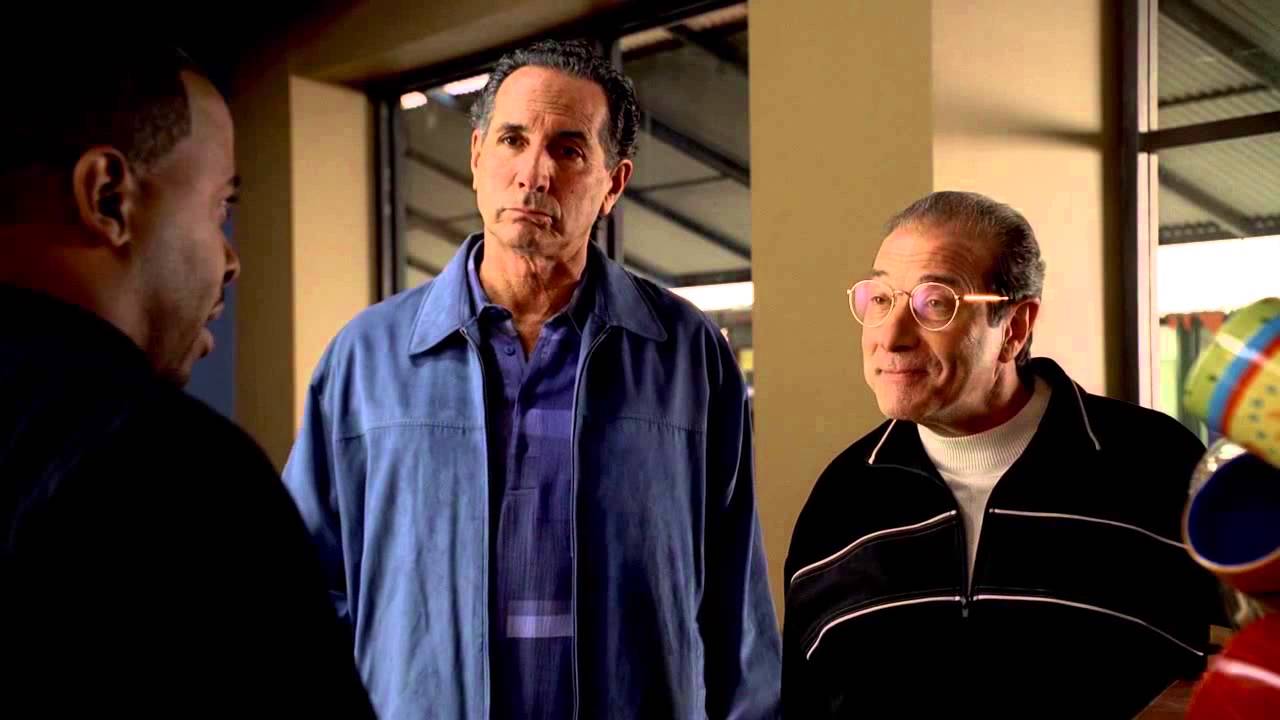
Patsy Parisi and Burt Gervasi stroll into a bustling, newly opened corporate coffee shop to run their traditional neighborhood protection racket. Reading the nametag of the man behind the counter, Patsy greets him with a mockingly warm “Manager Dale” and welcomes him to the neighborhood. Introducing themselves as representatives of the “North Ward Merchants Protective Cooperative,” they are met with polite disinterest from Dale, who is preoccupied setting up shop and casually asks if they are looking for a donation. Burt steps in to cut Dale off, telling him to let Patsy finish his pitch.
Patsy adopts a delicate, diplomatic tone to frame their extortion attempt as community awareness. He points out that while he does not want to denigrate anyone, the store has opened in a transitional neighborhood that, demographically speaking, still contains a significant number of “marginal types.” Because of this, Patsy argues that local merchants have collectively determined that the storefront requires round-the-clock security. Dale questions why local law enforcement would not handle that duty, asking, “Isn’t that what the police are for?” Patsy quickly dismisses the idea, countering that while the police try their best, their hands are perpetually full.
Instead, Patsy proposes that paying weekly dues to their cooperative will supply the coffee shop with all the supplemental safety net it could ever need. Dale immediately stonewalls them, explaining that he lacks the authority to approve such payouts because everything must go directly through corporate headquarters in Seattle. When Patsy counters that local merchants prefer a personal, one-on-one relationship, Dale remains completely unyielding, insisting that he has no discretionary funds at his disposal. Patsy shifts toward intimidation, asking how corporate would react if someone were to throw a brick through the front window. Dale responds with deadpan corporate detachment, bluntly noting corporate scale: “They’ve got 10,000 stores in North America. I don’t think they’d feel anything.”
```mermaid flowchart TD accTitle: Failed Extortion Attempt Diagram accDescr: Flowchart showing Patsy and Burt attempting to extort Manager Dale and hitting corporate Seattle's bureaucratic wall. subgraph MobApproach["Traditional Mob Racket"] A["Patsy & Burt ('North Ward Merchants')"] -->|"Demands weekly dues"| B["Offer 'supplemental security'"] B -->|"Threatens vandalism & assault"| C["Manager Dale"] end subgraph CorporateWall["Corporate Bureaucracy"] C -->|"Zero discretionary funds"| D["Seattle Corporate Headquarters"] D -->|"10,000 stores absorb damage"| E["Impenetrable corporate machine"] D -->|"Replaces manager immediately"| E end C -.->|"Extortion neutralized"| A ```
- **Front organization**: Patsy Parisi and Burt Gervasi pose as the "North Ward Merchants Protective Cooperative." - **Demographic rationale**: Patsy frames the neighborhood as "transitional" with "marginal types" to justify private round-the-clock security. - **Corporate scale**: Dale points out that the corporation has 10,000 stores across North America, making individual broken windows completely inconsequential to headquarters in Seattle.
---
[01:01](https://www.youtube.com/watch?v=_Gsz7Gu6agA&t=61s) Corporate Bureaucracy Defeats the Mob
Refusing to back down, Patsy escalates the implicit threat from simple property damage to severe physical violence. Leaning in closer, he asks Dale what would happen if the incident went beyond basic vandalism and an employee—or even the manager himself—were violently assaulted. Rather than displaying panic or fear, Dale sighs and lays out the cold, rigid mathematics of corporate retail management.
Dale explains that the modern corporate supply chain leaves no room for off-the-books mob payoffs or personal intimidation tactics. He looks Patsy in the eye and explains the reality of his inventory tracking: “Look, every last fucking coffee bean is in the computer and has to be accounted for.” Dale makes it clear that he is entirely disposable to his employers; if the store's numbers fail to balance out at the end of the day, corporate will simply fire him and immediately install a replacement manager to take his place.
Faced with an emotionless corporate system where intimidation carries zero leverage and violence offers no financial return, Patsy and Burt are rendered completely powerless. Leaving the shop empty-handed, they walk down the street forced to confront their own obsolescence in an era dominated by faceless chain conglomerates, with Patsy sullenly delivering the scene's final judgment: “It’s over for the little guy.”
- **Inventory tracking**: Every single coffee bean is logged in the company computer system, eliminating any ability to hide discretionary cash payouts or skim operational margins. - **Managerial expendability**: Dale is fully aware that physical assault or financial discrepancies will not prompt corporate payouts; the company will simply replace him with someone else. - **Racket obsolescence**: Patsy and Burt recognize that their traditional neighborhood extortion model cannot function against massive multi-store corporate conglomerates.
## Mentioned Patsy Parisi, Burt Gervasi, Dale, North Ward Merchants Protective Cooperative, Starbucks, The Sopranos
[Source](https://www.youtube.com/watch?v=_Gsz7Gu6agA)