Pat Kelly Exposes Stagecraft Tricks That Manufacture Authority
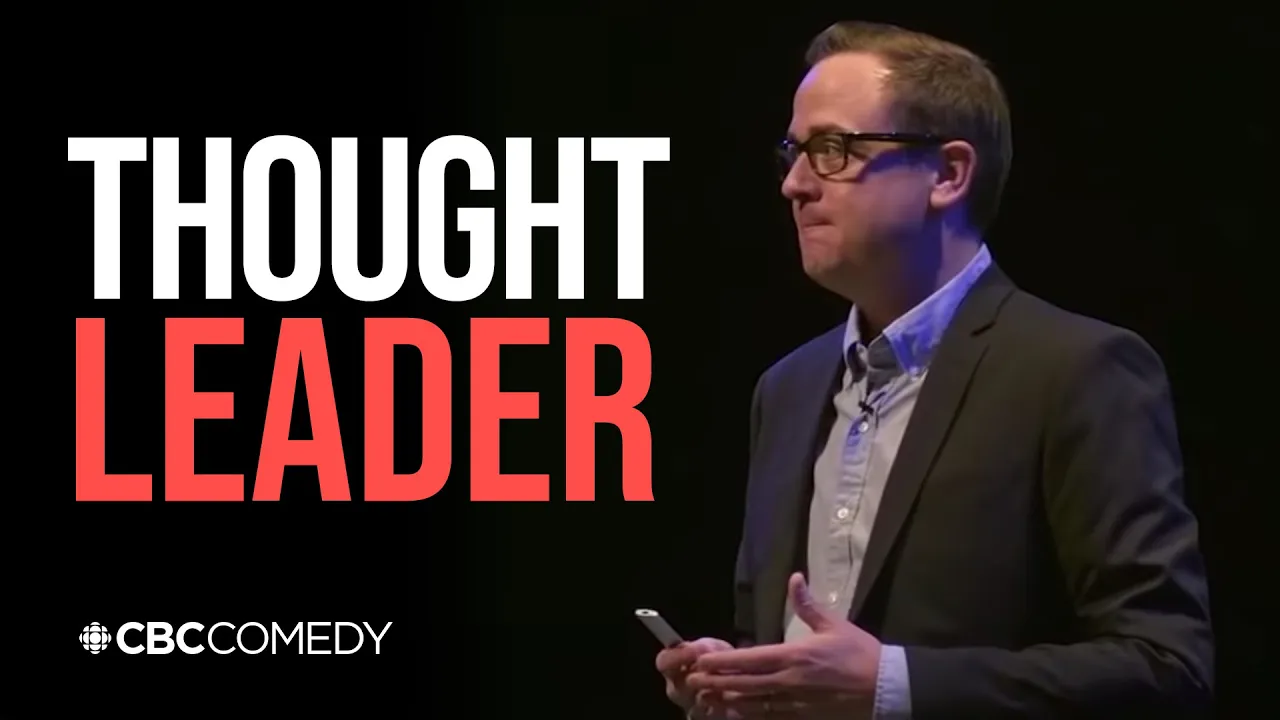
‘Thought Leader’ gives talk that will inspire your thoughts | CBC Radio (Comedy/Satire Skit) — CBC Comedy

CBC Comedy

Speakers can manipulate audiences into believing a presentation is profound by using calculated physical gestures, vocal pacing, and arbitrary visual aids instead of actual substance.

AI-assisted summary of ‘Thought Leader’ gives talk that will inspire your thoughts | CBC Radio (Comedy/Satire Skit) — original source. Check the original for full context.

Source published:

Key ideas

  • Pat Kelly deconstructs the visual and physical signifiers of 'thought leadership,' demonstrating how blazers, glasses, hand gestures, and interacting with a laptop manufacture unearned authority and legitimacy. (0:00)
  • Rhetorical tricks such as three-fold repetition, arbitrary numbers, and stock space photos can make unremarkable anecdotes appear profound without conveying any substantive information. (0:45)
  • Performative pacing adjustments, including stage chuckling, slowing vocal cadence, finger counting, and rapid-fire chart sequences, effectively manipulate audience engagement and emotion. (1:51)
  • Kelly orchestrates a standing ovation and emotional climax using sweeping rhetorical questions and rehearsed 'humble head nods' over lingering, exaggerated applause. (3:05)

Detailed notes

## Background Published by CBC Comedy on YouTube on June 8, 2016, this satirical sketch comes from the CBC Radio program 'This is That'. According to the description, self-proclaimed 'thought leader' Pat Kelly delivers a talk at the annual 'This Is That Talks' in Whistler, B.C., deconstructing how to talk with one's hands, earn a standing ovation, and inspire an audience while saying nothing of substance.

## TL;DR In a parody of TED-style keynote speeches, Pat Kelly systematically exposes the superficial stagecraft and rhetorical formulas used to manufacture authority. He demonstrates how wardrobe choices, hand gestures, and touching a laptop project expertise before delivering entirely empty personal anecdotes elevated solely by dramatic repetition. Kelly then breaks down the mechanics of emotional manipulation, showing how arbitrary graphics, graphs, vocal modulations, and finger-counting can simulate profundity. The presentation culminates in an empty, grand rhetorical plea and an orchestrated standing ovation paired with performative humble nods.

## Atmosphere & style The presentation is deadpan, meta-satirical, and clinically precise, stripping away the polish of high-concept keynote speaking by narrating every stage direction and psychological trick out loud. What feels on the surface like an uplifting, high-production conference quickly turns into an uncanny dissection of charisma, eliciting uncomfortable chuckles as the audience realizes they are participating in the very manipulation being described. The emotional arc swings deliberately from rehearsed gravitas to calculated intimacy and sweeping inspirational climax, creating a humorous disconnect between the presentation's profound packaging and complete lack of content.

## Bulletin - [00:00](https://www.youtube.com/watch?v=_ZBKX-6Gz6A&t=0s) Pat Kelly deconstructs the visual and physical signifiers of 'thought leadership,' demonstrating how blazers, glasses, hand gestures, and interacting with a laptop manufacture unearned authority and legitimacy. - [00:45](https://www.youtube.com/watch?v=_ZBKX-6Gz6A&t=45s) Rhetorical tricks such as three-fold repetition, arbitrary numbers, and stock space photos can make unremarkable anecdotes appear profound without conveying any substantive information. - [01:51](https://www.youtube.com/watch?v=_ZBKX-6Gz6A&t=111s) Performative pacing adjustments, including stage chuckling, slowing vocal cadence, finger counting, and rapid-fire chart sequences, effectively manipulate audience engagement and emotion. - [03:05](https://www.youtube.com/watch?v=_ZBKX-6Gz6A&t=185s) Kelly orchestrates a standing ovation and emotional climax using sweeping rhetorical questions and rehearsed 'humble head nods' over lingering, exaggerated applause.

## Key takeaways - [00:00](https://www.youtube.com/watch?v=_ZBKX-6Gz6A&t=0s) Perceived thought leadership relies heavily on superficial visual tropes, including wearing a blazer, sporting glasses, and executing deliberate steepled hand gestures. - [00:20](https://www.youtube.com/watch?v=_ZBKX-6Gz6A&t=20s) Interacting physically with a laptop on stage creates a psychological illusion that the speaker understands technology and establishes legitimacy via upcoming slides. - [00:35](https://www.youtube.com/watch?v=_ZBKX-6Gz6A&t=35s) Pacing across the stage is used as a deliberate theatrical device to heighten dramatic tension during unremarkable storytelling. - [00:45](https://www.youtube.com/watch?v=_ZBKX-6Gz6A&t=45s) Repeating an entirely mundane statement three times with varying inflection tricks audiences into believing it holds profound significance. - [01:10](https://www.youtube.com/watch?v=_ZBKX-6Gz6A&t=70s) Projecting a stock image of Earth from space and overlaying arbitrary words, numbers, and an open-ended question simulates expert knowledge. - [01:51](https://www.youtube.com/watch?v=_ZBKX-6Gz6A&t=111s) Audible laughter from a speaker manipulates social dynamics, cueing the audience to find an irrelevant story humorous despite confusing content. - [02:15](https://www.youtube.com/watch?v=_ZBKX-6Gz6A&t=135s) Slowing down speech cadence, dropping vocal volume, and making lists on fingers fabricate the appearance of a coherent central point. - [02:30](https://www.youtube.com/watch?v=_ZBKX-6Gz6A&t=150s) Theatrical pauses, such as taking a sip of water or glancing at a watch, are tactical signals that the presentation is entering its concluding phase. - [02:40](https://www.youtube.com/watch?v=_ZBKX-6Gz6A&t=160s) Rapidly flashing generic visual data—such as multiple graphs, a pie chart, and a statistic—creates an illusion of empirical rigor. - [02:50](https://www.youtube.com/watch?v=_ZBKX-6Gz6A&t=170s) Emotional climaxes are manufactured through sweeping, empty rhetorical questions paired with emotional callbacks to visual themes like the planet Earth. - [03:05](https://www.youtube.com/watch?v=_ZBKX-6Gz6A&t=185s) Audience standing ovations and emotional validation can be explicitly prompted through stage positioning and performative 'humble head nods.' - [03:25](https://www.youtube.com/watch?v=_ZBKX-6Gz6A&t=205s) Pretending to recognize acquaintances in the crowd and sustaining exaggerated applause as the video fades are final tools for engineering perceived triumph.

## Detailed walkthrough ### [00:00](https://www.youtube.com/watch?v=_ZBKX-6Gz6A&t=0s) Establishing Thought Leadership and the Illusion of Substance

To energetic background music and warm applause, Pat Kelly walks onto the stage while narrating his physical movements out loud: “Walk onstage, walk onstage, walk onstage, walk onstage.” He immediately establishes his identity and authority for the audience: “I am a thought leader.” He breaks down the visual shorthand that conveys this status, pointing out that the audience knows he is a thought leader simply because he is wearing a blazer, sporting glasses, and executing a deliberate, steepled hand gesture. Moving away from the center to touch his laptop, he explains that this physical action serves a dual psychological purpose: it proves to the crowd that he understands technology, and it signals that visual slides are imminent. As Kelly observes about conference expectations, “Because everybody knows that a presentation seems more legitimate than it actually is if there are slides.”

Returning to the center of the stage, Kelly announces his intention to share some thoroughly unremarkable context regarding his personal journey toward becoming a thought leader. Asking permission to pace across the stage to heighten the theatrical effect, he recounts an encounter from 2009 where he met an established thought leader and asked him how he had attained the title. The man replied simply, “I don't know.” Kelly openly acknowledges to the audience that this answer is entirely mundane: “Now, that doesn't sound important, and it's not, but if I repeat it three times I'm making you believe that it is important.” He then repeats the phrase three times with dramatic pauses and varying inflection: “He said, 'I don't know. I don't know. I don't know.'”

To reinforce his apparent profundity, Kelly transitions to the visual aids on the screen behind him. He projects a generic photograph of Earth from space, remarking, “Let's look at a picture of the planet for no reason.” He observes that it is nice and points out that it is where we live, before demonstrating how superficial additions manipulate audience perception. By overlaying arbitrary words onto the image, following them with a floating number, and finally tacking on an open-ended question, Kelly claims total mastery over the room's impression: “By doing this, I've now made you think that I know what I'm talking about.”

```mermaid flowchart TD accTitle: The Mechanics of Simulated Authority accDescr: Flowchart illustrating the theatrical techniques used to manufacture authority in a presentation.

subgraph VisualSignifiers["Visual Signifiers"] A["Blazer & Glasses"] --> B["Deliberate Hand Gestures"] B --> C["Laptop Interaction (Signaling Slides)"] end

subgraph RhetoricalTactics["Rhetorical Tactics"] D["Unremarkable Anecdote"] --> E["Threefold Repetition of Trivial Line"] E --> F["Stock Earth Graphic + Arbitrary Text/Numbers"] end

VisualSignifiers --> RhetoricalTactics RhetoricalTactics --> G["Manufactured Thought Leadership"] ```

[01:51](https://www.youtube.com/watch?v=_ZBKX-6Gz6A&t=111s) The Tone Shift, Data Barrage, and Orchestrated Ovation

Kelly walks across the stage while audibly chuckling, explaining that he is deliberately altering his vocal register to deliver an unremarkable, seemingly unrelated anecdote. He points out the manipulative social dynamic of onstage amusement: the story is coded as funny purely because he is laughing on stage, which forces the audience to laugh along with him. He acknowledges the confusion brewing in the listener's mind as they inevitably wonder what this detour has to do with the overarching presentation or what the actual point is.

He then remedies that skepticism through purely physical and pacing tricks rather than substantive content:

```mermaid flowchart LR accTitle: Fabricating a Point Through Stagecraft accDescr: Steps showing how body language and vocal delivery create the illusion of meaning.

A["Return to Center"] --> B["Slow Down Cadence"] B --> C["Lower Vocal Volume"] C --> D["Direct Eye Contact & Finger Counting"] D --> E["Audience Believes There Is a Point"] ```

As he moves back to the middle of the floor, Kelly slows his cadence, noticeably lowers his volume, makes direct eye contact, and methodically counts points off on his fingers, dryly noting, “by looking at you directly and by making a list on my fingers, I've made you believe there is a point.”

With the audience fully captive, Kelly pauses for a theatrical sip of water and glances at his watch to signal the home stretch: “Let's bring this puppy home.” He rushes through a rapid-fire sequence of generic presentation tropes, chanting, “Graph, graph, graph, graph, pie chart, statistic.” Reaching the emotional climax, his voice rises to pose a sweeping rhetorical question: “what if everybody in this room decided to come together and agree with what I'm saying?” He brings back the image of the Earth from space, lowering his voice to declare, “That is a world I want to live in.”

Returning to center stage, he cues the predetermined finale: - He prompts the crowd for a standing ovation. - He offers a sequence of performative “humble head nods” in multiple directions. - He pretends to single out and acknowledge an acquaintance in the audience with another nod. - He narratively directs the production crew as the screen goes dark: “Video fades to black while the applause continues for an unrealistic amount of time.” - With one final “Humble head nod, thank you,” Kelly repeatedly chants “Walk off stage” as the inspirational closing music swells over sustained, rapturous applause.

## Notable quotes > [00:00](https://www.youtube.com/watch?v=_ZBKX-6Gz6A&t=0s) Because everybody knows that a presentation seems more legitimate than it actually is if there are slides. — Pat Kelly

## Mentioned Pat Kelly, Peter Oldring, CBC, CBC Radio, CBC Comedy, This Is That, Whistler, B.C.

## Video description Self-proclaimed “thought leader,” Pat Kelly gives his talk on “thought leadership” at the annual This Is That Talks in Whistler, B.C. In the seminar, Kelly covers: How to talk with your hands, how to get a standing ovation, and how to inspire people by saying nothing at all.

Subscribe for more comedy: http://bit.ly/subscribeCBCcomedy

Click to view HD version: https://www.youtube.com/watch?v=mN8L8XnDmj0 Watch Full Episodes of This is That: http://bit.ly/FullEpisodesCBC

About This is That: This is That is a current affairs program that doesn't just talk about the issues, it fabricates them. Nothing's off-limits -- politics, business, culture, justice, science, religion--if it's relevant to Canadians, we'll find out the "This" and the "That" of the story. Each week, hosts Pat Kelly and Peter Oldring will introduce you to the voices that give this country character and through these stories provide a new perspective as to what it means to live in Canada.

Stay Connected: Twitter: http://bit.ly/ThisIsThatTwitter Facebook: http://bit.ly/ThisIsThatFB Instagram: http://bit.ly/ThisIsThatInstagram

About CBC: Welcome to the official YouTube channel for CBC, Canada’s public broadcaster. CBC is dedicated to creating content with original voices that inspire and entertain. Watch sneak peeks and trailers, behind the scenes footage, original web series, digital-exclusives and more.

Connect with CBC Online: Twitter: http://bit.ly/CBCTwitter Facebook: http://bit.ly/CBCFacebook Instagram: http://bit.ly/CBCInstagram

‘Thought Leader’ gives talk that will inspire your thoughts | This is That | CBC https://www.youtube.com/user/CBCTV #thoughtleader #patkelly #thisisthat

[Source](https://www.youtube.com/watch?v=_ZBKX-6Gz6A)

中文简报

帕特·凯利揭露制造权威感的舞台表演技巧 演讲者即使缺乏实质内容,也能通过精心设计的肢体手势、语速节奏和随意的视觉辅助手段,操纵观众认为其演讲深刻。 在一场对TED风格主题演讲的讽刺模仿中,帕特·凯利系统地揭露了用于制造权威感的肤浅舞台表演技巧和修辞套路。他展示了着装选择、手势以及轻触笔记本电脑的动作如何在开口前塑造专业形象,随后讲述完全空洞、仅凭戏剧性重复来烘托的个人轶事。凯利接着拆解了情绪操纵的机制,展示随意的图示、图表、语调起伏以及数手指标记如何模拟出深刻感。整场演讲在一次空洞而宏大的修辞性呼吁中达到高潮,并伴随着一场精心编排的起立鼓掌与做作的谦逊点头。 帕特·凯利解构了“思想领袖”的视觉与肢体象征,展示了西装外套、眼镜、手势以及与笔记本电脑的互动如何凭空制造出权威感和合理性。 (0:00) 三重重复、随意编造的数字以及现成的太空图库照片等修辞技巧,能在不传递任何实质信息的情况下,让平淡无奇的轶事显得立意深刻。 (0:45) 表演性质的节奏调整——包括台上的轻笑、放缓语速、数手指动作以及连珠炮式的图表切换——能有效操纵观众的专注度与情绪。 (1:51) 凯利利用宽泛宏大的修辞性提问,并在经久不息的夸张掌声中配合排练好的“谦逊点头”,精心策划了一场起立鼓掌与情绪高潮。 (3:05)

Reading summary

In a satirical presentation for CBC Comedy, Pat Kelly deconstructs the conventions of conference speaking, demonstrating how 'thought leadership' is manufactured through superficial stagecraft, visual cues, and rhetorical manipulation rather than genuine intellectual substance. Visual Signifiers and Projected Technical Competence (0:00) Kelly illustrates that authority on stage is established through visual shorthand long before any substantive idea is communicated. Dressed in a blazer and glasses while executing a deliberate steepled hand gesture, he explains that these physical markers immediately signal intellectual status to an audience. Walking across the stage to touch a laptop further reinforces this illusion by implying technical fluency and signaling that visual slides are imminent, which lends an unearned air of legitimacy to the presentation. To demonstrate how visual aids fabricate expertise, Kelly displays a generic stock photograph of Earth from space. He notes that simply superimposing arbitrary words, an isolated number, and an open-ended question onto the image manipulates the room into believing he possesses deep knowledge, showing that high-level production values often substitute for actual content. Vocal Cadence, Structural Deception, and Orchestrated Ovation (1:51) The skit deconstructs how delivery techniques create artificial profundity out of mundane information. Kelly recounts a trivial 2009 interaction in which a peer answered 'I don't know' when asked how to become a thought leader; by repeating the phrase three times with dramatic pauses and shifting inflection, he turns an unremarkable remark into a seemingly profound insight. Similarly, chuckling aloud during an unrelated anecdote forces the audience to respond with laughter, masking their confusion over the presentation's lack of a coherent point. When transitioning to a perceived breakthrough, Kelly relies entirely on physical cues—slowing his pace, lowering his volume, making direct eye contact, and counting off items on his fingers—to simulate an argument. He reaches an emotional climax by rattling off presentation tropes ('graph, graph, graph, graph, pie chart, statistic') and posing a sweeping rhetorical question. The presentation concludes with an orchestrated finale consisting of a rehearsed standing ovation, performative 'humble head nods,' and simulated acknowledgments of audience members while the audio fades out over exaggerated applause. Kelly's satire highlights how audiences readily mistake structural stage mechanics, polished data aesthetics, and practiced emotional modulation for meaningful insight, revealing the ease with which presentation form can entirely replace substance.

精炼阅读摘要

CBC Comedy的讽刺短剧通过Pat Kelly对公开演讲套路的逐一解构,揭示了所谓“思想领袖”(thought leader)如何完全依赖视觉符号、肢体语言与虚张声势的话术技巧,在缺乏实质内容的情况下凭空制造专业权威与深奥感。 外在符号与设备操作制造的权威假象 (0:00) 在演讲开场阶段,Kelly通过自述动作直接揭示了观众对“思想领袖”身份的认知建立过程。他指出,自身权威的建立并非基于思想内涵,而是依赖于西装外套、眼镜以及刻意的塔状手势(steepled hand gesture)等视觉速记符号。此外,演讲者走向舞台一侧触碰笔记本电脑的动作同样具有双重心理暗示作用:一方面向在场观众展示自己理解科技,另一方面则发出即将展示幻灯片的信号。Kelly据此评论称,行业会议中普遍存在一种心理预期,即只要辅以幻灯片演示,一场演讲看起来就会比其实际内容显得更为严谨和正规。 平凡内容的修辞化放大与无意义图表包装 (0:00) Kelly进一步拆解了演讲者如何利用修辞与图表把空洞无物的琐事包装得至关重要。他回顾了2009年向一位资深思想领袖请教如何获得该头衔的平淡经历,对方当时仅回答“我不知道”。Kelly公开承认该回答毫无重要性,但演示了只要通过戏剧性的停顿、语调起伏并将“我不知道”连续重复三遍,就能操纵观众相信其背后蕴含深意。随后,他将屏幕切换为毫无关联的太空拍摄地球照片,并说明只要在通用自然背景上随意覆盖文字、漂浮数字并附带开放式提问,就足以操纵全场印象,让观众误以为主讲人对相关议题洞若观火。 节奏控制与身体语言对意义的虚构 (1:51) 演讲中段,Kelly展示了如何利用声调变换来掩盖缺乏逻辑主线的硬伤。他一边在台上轻笑一边讲述毫无关联的琐碎轶事,利用台上主讲人发笑的社交动力迫使观众跟随发笑,以此转移听众对其演讲主旨与实际意义的困惑。当观众开始产生怀疑时,Kelly并非提供实质论据,而是依靠单纯的舞台技巧化解危机:他走回舞台中央,刻意放慢讲话语速,显著压低音量,并配合直视观众与用手指逐项数数的动作。Kelly指出,正是这种眼神接触配合手指比划条目的形体假象,让观众盲目相信演讲确实存在严密的论点。 数据轰炸、宏大呼吁与编排出的崇高结局 (1:51) 在演讲收尾阶段,Kelly通过看表与喝水等舞台动作暗示进程,随即以口头快速念诵“图表、图表、饼图、统计数据”的方式,讽刺性地模拟行业演讲常见的数据轰炸套路。在情绪高潮处,他抛出“如果全场所有人都决定团结起来并同意我的观点会怎样”的宏大反问,并重新调出地球影像压低声音宣称“这就是我想生活的世界”,借此完成煽情。最终,他在回正台步后主动引导观众起立鼓掌,依次向不同方向展现虚伪的“谦逊点头”,假装致意台下熟人,并伴随刻意延长的热烈掌声与闭幕励志音乐念着退场台词离场,彻底揭露了整套演讲流程的自导自演本质。 该短剧总结表明,所谓“思想领袖”的演讲往往是一场精心编排的剧场式表演,其专业度与启发性完全由预设的外表、重复话术、空泛视觉元素及情绪引导所拼凑,并不包含任何实质性的思想或解决方案。

Detailed notes — zh

## Background 该视频由 CBC Comedy 于 2016 年 6 月 8 日发布在 YouTube 平台。视频内容源自加拿大广播公司(CBC)的讽刺喜剧节目《This is That》,记录了自封的“思想领袖”Pat Kelly 在不列颠哥伦比亚省惠斯勒举行的“This Is That Talks”年度研讨会上发表的一场演讲,戏仿了现代演讲者如何通过手势、肢体语言和毫无实质内容的套话来激励观众并赢得全场起立鼓掌。 ## TL;DR Pat Kelly 在短剧中以元叙事手法无情拆解了以 TED 为代表的“思想领袖”演讲套路。他从外在包装讲起,展示如何通过西装外套、眼镜、操作笔记本电脑以及连续三次重复毫无意义的句子来强行营造专业与哲理感。随后,他示范了利用地球背景图、拼凑数字、无关笑话以及放慢语速压低音量来操控观众的情绪与认知。最后,通过快节奏闪现统计图表并抛出宏大而空洞的煽情反问,成功将没有任何实质干货的演讲推向高潮,引爆全场起立鼓掌。 ## Atmosphere & style 整段视频充满着辛辣刻薄的讽刺意味与令人发省的元幽默(meta-humor)。Pat Kelly 全程保持着煞有介事的严肃学术腔调,他一边用最冷静的口吻实时拆穿自己每一个细微的动作与算计,一边精准执行着这些操控技巧,形成了极具荒诞感的反差。观众在观影时既会因其精准戳中各类励志大会的套路而忍俊不禁,又会在看到台下观众如傀儡般被完全操弄、起立狂热鼓掌时,感受到一种对现代公关演讲表演机制的虚无与讽刺。 ## Bulletin - [00:00](https://www.youtube.com/watch?v=_ZBKX-6Gz6A&t=0s) Pat Kelly 在 CBC 讽刺短剧中揭秘了“思想领袖”的包装套路,指出西装休闲外套、眼镜与专业手势即可在数秒内建立权威假象。 - [01:26](https://www.youtube.com/watch?v=_ZBKX-6Gz6A&t=86s) 幻灯片被用作心理操控工具,通过拼接地球全景图、随机数字与虚空排版,让空洞的内容显得言之有物。 - [00:00](https://www.youtube.com/watch?v=_ZBKX-6Gz6A&t=0s) 通过连续重复平庸语句三遍的修辞技巧,演讲者能够强行给毫无实质意义的话语赋予深奥的哲学假象。 - [02:51](https://www.youtube.com/watch?v=_ZBKX-6Gz6A&t=171s) 演讲以密集的图表轰炸与宏大的煽情金句推向高潮,配合谦逊点头等标准谢幕礼仪,成功诱导全场起立鼓掌。 ## Key takeaways - [00:00](https://www.youtube.com/watch?v=_ZBKX-6Gz6A&t=0s) 登台时的视觉符号(如西装休闲外套与眼镜)和特定手势是快速确立专业“思想领袖”形象的核心配置。 - [00:00](https://www.youtube.com/watch?v=_ZBKX-6Gz6A&t=0s) 特意走向舞台一侧的笔记本电脑,旨在向观众传递熟练掌握科技且备有幻灯片演示的心理暗示。 - [00:00](https://www.youtube.com/watch?v=_ZBKX-6Gz6A&t=0s) 幻灯片的存在本身就能让演讲显得比实际内容更具权威性与合法性。 - [00:00](https://www.youtube.com/watch?v=_ZBKX-6Gz6A&t=0s) 在台上来回踱步被用作营造深度思考氛围与拉近观众距离的表演技巧。 - [00:00](https://www.youtube.com/watch?v=_ZBKX-6Gz6A&t=0s) 通过将一句毫无意义的话(如“我不知道”)连续重复三次,可利用修辞手法伪造出深刻内涵的错觉。 - [01:26](https://www.youtube.com/watch?v=_ZBKX-6Gz6A&t=86s) 大屏幕上展示无关的宏大意象(如地球全景图),能快速让观众产生崇高感与认知共鸣。 - [01:26](https://www.youtube.com/watch?v=_ZBKX-6Gz6A&t=86s) 在幻灯片中快速叠加数字、文字与设问,即使内容全无逻辑也能制造出言之有物的表象。 - [01:26](https://www.youtube.com/watch?v=_ZBKX-6Gz6A&t=86s) 演讲者通过讲述无关紧要的小故事并自己先笑,借由情绪传染带动台下发笑以掩盖主题的缺失。 - [01:26](https://www.youtube.com/watch?v=_ZBKX-6Gz6A&t=86s) 放慢语速、压低嗓音并扳着手指逐点列举,是迅速收拢现场注意力并营造严肃重要感的控场套路。 - [02:51](https://www.youtube.com/watch?v=_ZBKX-6Gz6A&t=171s) 高潮收尾前以极快节奏闪现饼状图、折线图与统计数据,可对观众形成密集的数据信息轰炸。 - [02:51](https://www.youtube.com/watch?v=_ZBKX-6Gz6A&t=171s) 将空洞的演讲主题强行升华至“人类团结”、“同意我的观点”等宏大叙事,是调动群体情绪的终极手段。 - [02:51](https://www.youtube.com/watch?v=_ZBKX-6Gz6A&t=171s) 配合煽情金句与回切的地球图片,演讲者能轻易引导观众自发进行全场起立鼓掌致敬。 - [02:51](https://www.youtube.com/watch?v=_ZBKX-6Gz6A&t=171s) 谢幕时多次向全场谦逊点头、假装在人群中寻找熟人致意,是思想领袖完成整场表演的最后一环。 ## Detailed walkthrough ### [00:00](https://www.youtube.com/watch?v=_ZBKX-6Gz6A&t=0s) 思想领袖的登台与视觉伪装艺术 在欢呼与掌声中,Pat Kelly 一边在心中默念着走位步调,一边从容登台。他开门见山地宣布了自己的身份:“I am a thought leader.”(我是一个思想领袖。)他随即拆解了观众是如何在几秒内接受这一设定的——观众之所以相信他是思想领袖,是因为他穿着一件西装休闲外套(blazer)、戴着一副眼镜,并且刚刚恰到好处地做出了一个特定的手势。 随后,Pat Kelly 走向舞台一侧的笔记本电脑。他解释道,这个简单的走位不仅向观众展示了他精通现代科技,更传递了一个至关重要的潜台词:本场演讲将配有幻灯片(slides)。他犀利地指出这种演示背后的心理操控:“Because everybody knows that a presentation seems more legitimate than it actually is if there are slides.”(因为所有人都知道,一场演讲只要有幻灯片,看起来就会比实际更有权威感。) 在建立起表面的权威后,他重新走回舞台中央,准备向大家交代一段平淡无奇的个人背景,解释自己究竟是如何成为“思想领袖”的。为了增加沉浸感与思索感,他征询观众意见,请求在讲故事时来回踱步。他回忆起 2009 年曾遇到过一位思想领袖并当面向其请教:“How did you become a thought leader?”(你是怎么成为思想领袖的?)对方给出的回答却是轻描淡写的“我不知道”。Pat Kelly 指出,这句话听起来毫无价值,事实上也确实毫无价值,但只要他运用修辞技巧将这句话一连重复三次——“He said, 'I don't know. I don't know. I don't know.'”——观众就会潜意识地相信这句话蕴含着不可思议的深刻哲理。 - 思想领袖的标准外貌配置:西装外套、眼镜、专业手势。 - 肢体动作与道具心理暗示:走向笔记本电脑以证明自己懂得科技并拥有幻灯片支持。 - 修辞洗脑技巧:将一句毫无实质意义的话连续重复三遍,强行营造深度。 ### [01:26](https://www.youtube.com/watch?v=_ZBKX-6Gz6A&t=86s) 幻灯片视觉把戏与无厘头幽默 紧接着,Pat Kelly 演示了演示文稿(PPT)如何操控观众的情绪与认知。大屏幕上毫无缘由地出现了一张地球俯瞰全景图。他轻巧地评论道,这画面很美,也是人类共同居住的地方。随后,他在地球图片上叠加文字,紧接着换成一组数字,最后抛出一个问句。这一连串没有任何实质内容的排版组合,瞬间让观众产生了他见解深刻的错觉。对此,Pat Kelly 直白地揭穿了背后的真相:“By doing this, I've now made you think that I know what I'm talking about.”(通过这种操作,我已经让你们觉得我确实言之有物了。) 完成视觉忽悠后,他走到了舞台的另一侧,语调突然变得轻松戏谑,开始轻声笑了起来。他坦白自己接下来要讲一个平庸无奇、看似完全无关且带点幽默的小故事。观众之所以会觉得好笑,纯粹是因为演讲者自己在笑,进而带动台下一同发笑。在此期间,观众心里难免会犯嘀咕,疑惑这到底跟演讲主题有什么关系、重点究竟在哪。 面对台下的困惑,Pat Kelly 迅速切换回舞台中央,施展收放自如的控场手法:他放慢语速、压低嗓音、直视某位观众的眼睛,并伸出手指逐一列举要点。正是这一套煞有介事的严肃肢体语言,再次让所有人深信这背后一定蕴含着重大意义。 ```mermaid flowchart TD accTitle: 思想领袖操控演讲氛围的流程 accDescr: 展示思想领袖如何通过视觉素材、无厘头幽默和肢体语言逐步掌控观众心理。 subgraph VisualTrick ["视觉操控"] A["展示地球背景图"] --> B["叠加文字与数字"] B --> C["抛出虚空问题营造权威感"] end subgraph ToneShift ["情绪调动"] C --> D["走到台侧转变语调"] D --> E["讲述无关笑话带动全场发笑"] end subgraph PacingControl ["节奏收拢"] E --> F["回到舞台中央并降低音量"] F --> G["放慢语速 + 扳手指列点"] G --> H["使观众深信其存在深刻内涵"] end ``` ### [02:51](https://www.youtube.com/watch?v=_ZBKX-6Gz6A&t=171s) 煽情高潮、套路收尾与超长掌声 经过前期的铺垫,Pat Kelly 停下来从容地喝了一口水,看了一眼时间,随后宣布要将这场演讲推向高潮:“Let's bring this puppy home.”(让我们把这出戏完美收尾。) 幻灯片开始以极快的节奏疯狂闪过各种图表、饼状图和统计数据。在数据轰炸之后,他将声调猛然拔高,抛出了一个极其宏大却又空洞的问题:“How about we end with a question, a very big question: what if everybody in this room decided to come together and agree with what I'm saying?”(我们用一个问题来收尾怎么样?一个非常宏大的问题:如果全场所有人都能团结起来,同意我所说的一切,那会怎样?) 随着话音落下,屏幕上再次浮现出起初的那张地球照片。Pat Kelly 满怀深情地压低声音感叹:“That is a world I want to live in.”(那才是我想要生活在其中的世界。)这一煽情金句彻底引爆了全场的情绪。他平静地走回舞台正中央,迎接全场观众自发的起立鼓掌致敬(standing ovation)。 在铺天盖地的掌声中,他开启了标准的收尾套路:接连做出极具谦逊姿态的点头致意,偶尔在人群中假装看到某个熟人并点头致意。背景音乐逐渐升华,画面在掌声经久不息地持续了极不真实的一段时间后慢慢淡出为黑色。Pat Kelly 一边不断谦逊点头致谢,一边轻声念叨着离场走位,从容优雅地走下了舞台。 - 演讲收尾的标准化武器库:连续闪现的折线图、柱状图、饼图与统计数据。 - 终极宏大叙事构架:将空洞的发言上升至“人类团结”、“改变世界”与“理想星球”。 - 思想领袖的标准谢幕礼仪:全场起立鼓掌、多次谦逊点头致谢、眼神互动、伴随超时掌声步出舞台。 ## Notable quotes > [00:00](https://www.youtube.com/watch?v=_ZBKX-6Gz6A&t=0s) Because everybody knows that a presentation seems more legitimate than it actually is if there are slides. — Pat Kelly ## Mentioned Pat Kelly, Peter Oldring, This Is That, CBC Radio, CBC Comedy ## Video description Self-proclaimed “thought leader,” Pat Kelly gives his talk on “thought leadership” at the annual This Is That Talks in Whistler, B.C. In the seminar, Kelly covers: How to talk with your hands, how to get a standing ovation, and how to inspire people by saying nothing at all. Subscribe for more comedy: http://bit.ly/subscribeCBCcomedy Click to view HD version: https://www.youtube.com/watch?v=mN8L8XnDmj0 Watch Full Episodes of This is That: http://bit.ly/FullEpisodesCBC About This is That: This is That is a current affairs program that doesn't just talk about the issues, it fabricates them. Nothing's off-limits -- politics, business, culture, justice, science, religion--if it's relevant to Canadians, we'll find out the "This" and the "That" of the story. Each week, hosts Pat Kelly and Peter Oldring will introduce you to the voices that give this country character and through these stories provide a new perspective as to what it means to live in Canada. Stay Connected: Twitter: http://bit.ly/ThisIsThatTwitter Facebook: http://bit.ly/ThisIsThatFB Instagram: http://bit.ly/ThisIsThatInstagram About CBC: Welcome to the official YouTube channel for CBC, Canada’s public broadcaster. CBC is dedicated to creating content with original voices that inspire and entertain. Watch sneak peeks and trailers, behind the scenes footage, original web series, digital-exclusives and more. Connect with CBC Online: Twitter: http://bit.ly/CBCTwitter Facebook: http://bit.ly/CBCFacebook Instagram: http://bit.ly/CBCInstagram ‘Thought Leader’ gives talk that will inspire your thoughts | This is That | CBC https://www.youtube.com/user/CBCTV #thoughtleader #patkelly #thisisthat [Source](https://www.youtube.com/watch?v=_ZBKX-6Gz6A)

Source quotes

[0:00] Pat Kelly: Because everybody knows that a presentation seems more legitimate than it actually is if there are slides.

Source quotes

[0:00] Pat Kelly: Because everybody knows that a presentation seems more legitimate than it actually is if there are slides.

Original transcript

[0:00] [music, applause] [0:04] Walk onstage, walk onstage, walk onstage, walk onstage. [0:10] I am a thought leader. [0:12] You know that I'm a thought leader [0:14] because I'm wearing a blazer, [0:16] I have glasses, and I've just done this with my hands. [0:21] I will now walk over to my laptop. [0:23] by doing so, I'm demonstrating to you [0:25] that as a thought leader, I understand technology [0:28] and that there will be slides. [0:30] Because everybody knows that a presentation [0:34] seems more legitimate than it actually is [0:36] if there are slides. [0:39] I'm now going to come back to the centre of the stage [0:42] and give you some unremarkable context [0:45] about how I became a thought leader. [0:48] If it's okay with you, I'd like to pace [0:51] while telling you this story. [0:53] In 2009, I met a thought leader and I asked him, [0:59] "how did you become a thought leader?" [1:02] And you know what he said? He said, "I don't know." [1:07] Now, that doesn't sound important, [1:09] and it's not, but if I repeat it three times [1:13] I'm making you believe that it is important. [1:16] He said, "I don't know. I don't know. [1:21] I don't know." [1:26] Let's look at a picture of the planet for no reason. [1:29] It's nice, isn't it? [1:31] That's where we live. [1:33] What happens if I put some words over it? [1:36] Hmm. [1:38] How about a number? [1:40] What if I pose a question? [1:43] By doing this, I've now made you think [1:47] that I know what I'm talking about. [1:51] Okay. [1:55] [chuckling] [1:56] Walking over here, I'm going to change [1:57] the tone of my voice [chuckles] and I'm going to tell you [2:02] an unremarkable story that's seemingly unrelated [2:06] and it's funny. [2:08] And you'll know it's funny because I'm laughing. [2:12] And you're laughing. [2:13] And you'll ask yourself, "what does this have to do [2:16] with his talk? What is the point?" [laughing] [2:20] Well... coming back to the centre. [2:26] And [slows] slowing my speech. [2:31] Lowering the volume of my voice. [2:35] by looking at you directly [2:39] and by making a list on my fingers, [2:43] I've made you believe there is a point. [2:51] Sip of water. [2:56] Check the time...oh! [2:58] Let's bring this puppy home. [3:00] Graph, graph, graph, graph, pie chart, [3:05] statistic. [3:06] How about we end with a question, [3:08] [voice raises] a very big question: [3:11] what if everybody in this room [3:14] decided to come together [3:17] and agree [3:19] [voice lowers] with what I'm saying? [3:22] Let's look at a picture of the planet again. [3:23] That is a world I want to live in. [3:30] Coming back to the centre of the stage. [3:33] Standing ovation. [3:35] [applause] [3:36] humble head nod, humble head nod, [3:38] humble head nod. [3:40] See someone I know. [3:42] Humble head nod. [3:43] Video fades to black while the applause continues [3:47] for an unrealistic amount of time. [3:49] Humble head nod, thank you. Walk off stage. [3:52] [applause continues] [3:53] Walk off stage, walk off stage. [3:57] ♪ ♪ [4:01] ♪ [inspirational]