Mark Fisher : The Slow Cancellation Of The Future
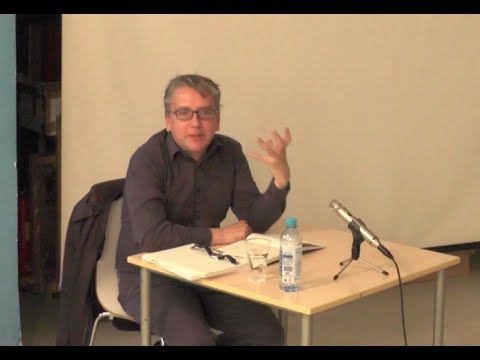
Mark Fisher : The Slow Cancellation Of The Future — MaMa Zagreb

MaMa Zagreb

AI-assisted summary of Mark Fisher : The Slow Cancellation Of The Future — original source. Check the original for full context.

Source published:

Key ideas

  • Mark Fisher argues that contemporary culture suffers from a 'slow cancellation of the future,' stranding the 21st century in 20th-century aesthetic forms circulated merely via higher-definition screens and faster internet. (3:23)
  • The rapid obsolescence that once defined popular modernism has migrated from cultural forms to consumer tech hardware, reducing the concept of 'futuristic' from a genuine horizon into a static, retro genre preset. (8:03)
  • Neoliberal restructuring—including soaring urban housing costs, the erosion of student maintenance grants, and the rise of unpaid digital streaming—has dismantled the material safety nets that previously insulated experimental cultural production. (19:02)
  • Under digital semiocapitalism, the Fordist crisis of industrial boredom has been supplanted by an insomniac regime of permanent anxiety, leaving subjects perpetually distracted by digital commands and unable to experience unpressured, open-ended time. (37:10)
  • Fisher advocates for 'politicized melancholia' over depressive naturalization, urging a refusal to accommodate contemporary cultural stagnation by maintaining fidelity to the unrealized futures projected in the 20th century. (42:58)

Detailed notes

## Background This lecture by cultural theorist Mark Fisher, titled "The Slow Cancellation Of The Future," was published on YouTube by the channel MaMa Zagreb on May 22, 2014. According to the description, the talk took place on May 21, 2014, in Zagreb as part of the event "Everything Comes Down to Aesthetics and Political Economy," organized through the project Prošireni estetički odgoj.

## TL;DR Drawing from his books *Capitalist Realism* and *Ghosts of My Life*, Mark Fisher diagnoses a pervasive temporal malaise in 21st-century culture, wherein the capacity to produce genuinely new aesthetic forms has stalled. He argues that under communicative capitalism and neoliberal precarity—such as exorbitant housing costs, the erosion of public funding, and the ubiquitous distraction of smartphones—everyday life has accelerated while culture itself has slowed down into endless retro revivals and pastiche. Rather than passively accepting this stagnation through depressive naturalization, Fisher advocates for a "politicized melancholia" that maintains fidelity to the lost, unfulfilled futures imagined by 20th-century popular modernism.

## Atmosphere & style The presentation carries Fisher's signature blend of bleak, dark humor and urgent cultural critique, setting an intellectually charged yet accessible tone as he admits he is merely bringing "the bad news that you already know." His delivery is conversational, analytical, and grounded in relatable musical touchstones, yet shadowed by an underlying sense of exhaustion regarding the claustrophobic rhythms of digital life. As the talk progresses from diagnostic thought experiments to an ethical defense of politicized melancholia, the mood shifts from weary resignation to a quiet, defiant call to refuse adjustment to cultural stagnation.

## Bulletin - [03:23](https://www.youtube.com/watch?v=aCgkLICTskQ&t=203s) Mark Fisher argues that contemporary culture suffers from a 'slow cancellation of the future,' stranding the 21st century in 20th-century aesthetic forms circulated merely via higher-definition screens and faster internet. - [08:03](https://www.youtube.com/watch?v=aCgkLICTskQ&t=483s) The rapid obsolescence that once defined popular modernism has migrated from cultural forms to consumer tech hardware, reducing the concept of 'futuristic' from a genuine horizon into a static, retro genre preset. - [19:02](https://www.youtube.com/watch?v=aCgkLICTskQ&t=1142s) Neoliberal restructuring—including soaring urban housing costs, the erosion of student maintenance grants, and the rise of unpaid digital streaming—has dismantled the material safety nets that previously insulated experimental cultural production. - [37:10](https://www.youtube.com/watch?v=aCgkLICTskQ&t=2230s) Under digital semiocapitalism, the Fordist crisis of industrial boredom has been supplanted by an insomniac regime of permanent anxiety, leaving subjects perpetually distracted by digital commands and unable to experience unpressured, open-ended time. - [42:58](https://www.youtube.com/watch?v=aCgkLICTskQ&t=2578s) Fisher advocates for 'politicized melancholia' over depressive naturalization, urging a refusal to accommodate contemporary cultural stagnation by maintaining fidelity to the unrealized futures projected in the 20th century.

## Key takeaways - [00:01](https://www.youtube.com/watch?v=aCgkLICTskQ&t=1s) A pervasive waning of historicity, combined with the dispersed attentional demands of communicative capitalism, prevents subjects from grasping their current historical moment. - [03:23](https://www.youtube.com/watch?v=aCgkLICTskQ&t=203s) Franco 'Bifo' Berardi's phrase 'the slow cancellation of the future' names the gradual erosion of cultural horizons rather than a sudden apocalyptic rupture. - [08:03](https://www.youtube.com/watch?v=aCgkLICTskQ&t=483s) Cultural time has fragmented into Marc Augé-style 'non-times,' where recent calendar years lack distinct sonic or stylistic identities compared to past decades. - [13:07](https://www.youtube.com/watch?v=aCgkLICTskQ&t=787s) Beaming 2014 music back to 1994 would cause little shock or incomprehension, contrasting starkly with the radical aesthetic ruptures seen between 1954 and 1974 or 1974 and 1994. - [15:09](https://www.youtube.com/watch?v=aCgkLICTskQ&t=909s) Retro has become universalized and invisible, allowing modern pastiches by artists like Amy Winehouse and Arctic Monkeys to be marketed as cutting-edge contemporary culture. - [19:02](https://www.youtube.com/watch?v=aCgkLICTskQ&t=1142s) The 21st century has proven economically catastrophic for musicians by decommodifying recorded audio while hyper-commodifying basic necessities like urban housing. - [22:06](https://www.youtube.com/watch?v=aCgkLICTskQ&t=1326s) Smartphones serve as continuous portals into 'capital cyberspace,' ensuring daily life accelerates while cultural innovation grinds to a halt. - [25:00](https://www.youtube.com/watch?v=aCgkLICTskQ&t=1500s) British popular music historically flourished not through direct state patronage, but via the indirect welfare infrastructure of social democracy, including grants, council housing, and unemployment benefits. - [29:15](https://www.youtube.com/watch?v=aCgkLICTskQ&t=1755s) The marketization and tuition fee increases of higher education dismantled the art school incubator, extinguishing 'popular modernism' and re-bourgeoisifying cultural production. - [34:05](https://www.youtube.com/watch?v=aCgkLICTskQ&t=2045s) The Situationist concept of boredom as a catalytic existential void ('boredom 1.0') has been replaced by low-level digital distraction, summarized as 'no one is bored, everything is boring.' - [37:10](https://www.youtube.com/watch?v=aCgkLICTskQ&t=2230s) Post-Fordist capitalism solved the Fordist ailment of monotonous factory boredom by trapping workers in an inescapable state of precarity and chronic anxiety. - [39:03](https://www.youtube.com/watch?v=aCgkLICTskQ&t=2343s) A vital metaphysical struggle exists over qualitative time, opposing the urgent, fragmented temporal demands of capital with open, fugitive, unpressured temporality. - [40:47](https://www.youtube.com/watch?v=aCgkLICTskQ&t=2447s) Effective cultural critique must evaluate the present not against an idealized actual past, but against the radical virtual futures envisioned by 20th-century culture that never arrived. - [42:58](https://www.youtube.com/watch?v=aCgkLICTskQ&t=2578s) Politicized melancholia demands an active maladjustment to cultural exhaustion, resisting the depressive temptation to normalize stagnation and anachronism.

## Detailed walkthrough ### [00:01](https://www.youtube.com/watch?v=aCgkLICTskQ&t=1s) The Waning of Historicity and Communicative Capitalism

Mark Fisher opens his talk by connecting the themes of his book *Ghosts of My Life* to his earlier work *Capitalist Realism*. While *Capitalist Realism* diagnosed the total subsumption of the economy, culture, and the human psyche by capital, *Ghosts of My Life* interrogates what was thwarted by that process—the lingering traces of an "outside" and the stubborn persistence of exteriority within a completely dominated world. He frames his task with bleak humor: “what I'm really what I'm going to do today really is bring you the bad news that you already know.” Using music culture, particularly within the UK, as his primary symptom, Fisher outlines a profound temporal pathology or temporal malaise operating on two interdependent levels: the structural level of history itself, and the phenomenological experience of time in daily life.

At the level of history, Fisher identifies a widespread "waning of historicity," invoking Fredric Jameson’s 1980s theorization of postmodernity. Fisher notes that what Jameson analyzed in the 1980s as an emergent, somewhat marginal phenomenon has today become so ubiquitous as to be practically invisible. Concurrently, our daily phenomenological sense of time has been completely overtaken by what Jodi Dean terms "communicative capitalism" and Franco "Bifo" Berardi calls "semiocapitalism." Fisher posits as his central thesis that as our lives become saturated by the urgent rhythms, dispersed attention, and hyper-stimulation of communicative capitalism, we lose the capacity to register, comprehend, or grasp the historical moment in which we actually exist.

```mermaid flowchart TD accTitle: The Two Levels of Temporal Malaise accDescr: Diagram illustrating how communicative capitalism erodes historical consciousness. subgraph DailyLife["Everyday Phenomenology"] A["Communicative Capitalism / Semiocapitalism<br/>(Jodi Dean / Franco Berardi)"] --> B["Dispersed Attentional Economies & Constant Urgency"] end subgraph HistoricalConsciousness["Historical Level"] C["Waning of Historicity<br/>(Fredric Jameson)"] --> D["Disappearance of the Sense of the Historical Present"] end B -->|"erodes capacity to grasp"| D ```

- **Core Books in Dialogue**: *Capitalist Realism* (total cultural and psychic enclosure by capital) and *Ghosts of My Life* (interrupted futures and surviving traces of exteriority). - **Key Theorists**: Fredric Jameson on the waning of historicity in postmodernism; Jodi Dean on communicative capitalism; Franco "Bifo" Berardi on semiocapitalism.

[03:23](https://www.youtube.com/watch?v=aCgkLICTskQ&t=203s) Marooned in the 20th Century: The Slow Cancellation of the Future

Turning to what the "bad news" concretely looks like, Fisher argues that the cultural dimension of the future has quietly vanished. Instead of arriving in an authentic 21st century, society remains stranded in the 20th century: “what is it to be in a 21st century is to have 2 20th century culture on higher definition screens uh or or you know 20th century culture distributed by high-speed internet actually.” Cultural time has slowed down, flattened out, or even regressed into blocked loops of repetition. Fisher clarifies that he is not mourning a simple narrative of linear "progress"—he is not suggesting that 1990s jungle music was somehow superior to or "progressed above" Robert Johnson. Rather, what has evaporated is the sense of temporal difference, the specificity of culture belonging organically to a distinct historical moment.

This loss has produced an environment populated by "zombie forms" and endless revivals where nothing is ever permitted to die. Society displays an excessive tolerance for the archaic; yet, because our shared historical compass has atrophied, it is nearly impossible to identify anything as archaic anymore when practically everything feels uniformly old. To describe this gradual cultural and political evaporation, Fisher borrows a phrase from Franco Berardi: “the slow cancellation of the future.” This cancellation is neither sudden nor apocalyptic; rather, it is a slow withering and draining away of dynamic possibility. In the UK music scene, Fisher dates the conspicuous emergence of this phenomenon to roughly a decade prior (around 2003–2004). Since then, listeners' expectations have steadily declined, naturalizing the temporal plateau. Audiences no longer anticipate radical artistic breaks from the past; instead, culture offers only subtle remodulations, tiny reconfigurations, and minor stylistic tweaks legible only to specialized initiates and aficionados.

- **The Slow Cancellation of the Future**: Franco "Bifo" Berardi's concept capturing both the terminal and gradual erosion of modern cultural and political horizons. - **The 21st Century Reality**: 20th-century forms preserved and circulated through high-definition screens and high-speed broadband. - **Shrinking Horizons**: The shift from massive, universally recognizable aesthetic ruptures to minuscule micro-variations discernible only to niche cultural connoisseurs.

[08:03](https://www.youtube.com/watch?v=aCgkLICTskQ&t=483s) Non-Times, Lost Landmarks, and "Futuristic" as a Font

Fisher reflects on the experience of growing up from the late 1960s and 1970s onward, when time was punctuated by musical landmarks in the same way geographical space is marked by physical landmarks. In that era, popular culture provided an everyday, visceral experience of modernity as described by Marshall Berman—a world where "all that is solid melts into air," characterized by the rapid supersession of genres, techniques, and methodologies, where styles were periodized not merely by decades or years, but month by month. Today, that experience of rapid obsolescence has migrated entirely from culture to consumer hardware: people experience modernity through smartphones and iPhones, while culture itself has lost any functional criteria for obsolescence.

Because contemporary culture lacks an active, defining sense of the present against which the archaic can be measured, Fisher draws an analogy to Marc Augé’s concept of "non-places"—the interchangeable transit hubs, retail parks, and airports of late capitalism. Time itself has become a series of "non-times." While anyone can easily summon the distinctive sonic identity of 1975 (even if they were not alive then), individual years of the 21st century like 2005 or 2008 bleed into one another without distinct sonic or stylistic contours. Even the concept of the "futuristic" has ceased to point toward an actual or virtual future impinging on reality; instead, it has congealed into a nostalgic retro signifier: “the futuristic when we use the word futuristic with it's almost the same as the word gothic it it refers to an already existing and established set of gen generic protocols it's like a font like Gothic font futuristic means it sounds a bit like craft work or something like that.” Unlike the genuine shock of 1990s jungle—which sounded radically unprecedented, as if the future were actively rushing in—contemporary "futurism" merely recycles established signifiers like Kraftwerk. To prove this cultural freeze, Fisher concludes this section by proposing a simple thought experiment: what would happen if 21st-century music were beamed back into the past?

- **Marc Augé’s Non-Places applied to Chronology**: Temporal intervals (e.g., 2005 vs. 2008) become interchangeable "non-times," lacking unique stylistic markers. - **Migration of Modernity**: The sensation of relentless forward obsolescence has shifted from aesthetic forms (music, art) to consumer technology (iPhone upgrades). - **The "Futuristic" Aesthetic**: Reduced from a genuine vector of anticipation to an aesthetic preset or genre font referencing 1970s and 1980s electronic templates like Kraftwerk.

[13:07](https://www.youtube.com/watch?v=aCgkLICTskQ&t=787s) The Thought Experiment: Beaming 2014 Music Back to 1994

Fisher sets up a comparative thought experiment using 1994, deliberately choosing it because it marks exactly twenty years prior to the talk, even if “it's hard for some of us to accept that 1994 is 20 years ago.” He asks the audience to imagine what would happen if music recorded in 2014 were beamed back in time to 1994:

```mermaid flowchart LR accTitle: Two-Decade Sonic Comparisons accDescr: Diagram contrasting rapid 20-year sonic mutations from 1954 to 1994 with sonic stagnation from 1994 to 2014.

subgraph RapidMutation["Rapid Sonic Mutation (Pre-1994)"] A["1954"] -->|"Vast new genres"| B["1974"] B -->|"Birth & death of sonic worlds"| C["1994"] end

subgraph TemporalFlattening["Flattening of Time (Post-1994)"] C -.->|"Extrapolations & simulation"| D["2014"] end ```

Would listeners in 1994 be shocked, baffled, and repulsed, crying out that it was unrecognizable or not even music? Fisher argues that the exact opposite would occur: “If you beam back music from 2014 to 1994, people are going to say, ‘Are you serious? This is coming from 20 years in the future? This doesn't sound that different from what we've got today.’” This starkly contrasts with earlier twenty-year leaps: - Between 1974 and 1994, an extraordinary series of mutations occurred, with entirely new sonic universes being born and dying in rapid succession. - Between 1954 and 1974, an equivalent explosion of new sensations and sounds reshaped culture.

By contrast, the period from 1994 to 2014 exhibits a severe flattening of cultural time. It is not that literally nothing occurred, but rather that almost nothing produced in those twenty years was sonically unimaginable in 1994; instead, contemporary tracks represent merely logical extrapolations of preexisting methodologies and templates.

[15:09](https://www.youtube.com/watch?v=aCgkLICTskQ&t=909s) The Universalization of Retro: Amy Winehouse and Arctic Monkeys

Because stylistic innovation has stalled, the very concept of "retro" has paradoxically disappeared through its universalization. While popular music has always possessed retro tendencies, Fisher points out that in the contemporary landscape there is no longer any non-retro alternative against which to contrast it: “Now we can ask the question: retro compared to what? What is not retro now?”

Fisher illustrates this through two personal encounters from the mid-2000s—a decade he refuses to call the "noughties," despite dryly remarking that "in many ways, it's a decade which deserves such a horrible name":

- **Amy Winehouse's cover of "Valerie":** Walking through a shop in Marylebone, Fisher heard the Mark Ronson-produced cover of the Zutons' track "Valerie." On a casual listen, he experienced a reverse temporality, assuming the song was original 1960s soul and that the Zutons had recorded an indie cover of it. While a closer listen reveals modern production quirks, the fact that a track released four decades later could easily pass as authentic 1960s music exposes the profound collapse of historical distance. - **Arctic Monkeys and "I Bet You Look Good on the Dancefloor":** When Fisher first saw the music video for the band's breakout single, he genuinely believed it was an unreleased post-punk relic from 1980 that had recently been unearthed. The clothing, the camera work, the visual textures, and the performance itself conspired to produce a perfect simulation of 1980. Fisher remarks with dark humor that the Arctic Monkeys “have subsequently become even more boring than they were when they started off, which is some achievement.”

Rather than being classified and marketed as explicit period retro, both acts were presented as the definitive cutting edge of contemporary music, raising the question of what "contemporary" even means when it simply accommodates pastiche that could comfortably fit into decades past.

[19:02](https://www.youtube.com/watch?v=aCgkLICTskQ&t=1142s) The 21st Century as a Disaster for Musicians

Turning toward political economy, Fisher argues that the twenty-first century has been a structural catastrophe for working musicians. The primary technological transformations of the digital era have focused almost entirely on the distribution and consumption of music rather than on its sonic production.

Fisher does not romanticize the twentieth-century music industry as a golden age, yet he notes that in retrospect, the traditional record-label model looks vastly superior to the present day: “Paradoxically, in some ways, big record companies, you know, insulated some musicians from market pressure, actually.” Major-label advances and the ability to earn revenue from recorded music treated recordings as commodities that provided artists with material security and creative autonomy.

Today, that economic balance has collapsed: - **Decommodification of Cultural Work:** Music has effectively been decommodified and priced at zero through file-sharing and streaming networks. - **Hyper-Commodification of Basic Survival:** Musicians must still pay market rates for gas, electricity, and, most crucially, shelter. Fisher highlights the exorbitant cost of housing—particularly in a city like London—as a primary material driver of cultural stagnation, stripping young artists of the time and space required to experiment. - **Sonic Inaudibility of New Technology:** While earlier tools like wah-wah pedals, synthesizers, and samplers instantly generated novel sonic sensations that transformed the actual audio, twenty-first-century communication tech merely facilitates circulation without introducing new sonic textures.

[22:06](https://www.youtube.com/watch?v=aCgkLICTskQ&t=1326s) The Internet, Cyberspace, and the Phenomenology of Time

To diagnose this malaise, Fisher engages with Simon Reynolds’s thesis in *Retromania*. Reynolds argues that the rise of the ubiquitous internet—which began dominating everyday life around a decade prior—burdened culture with the oppressive weight and instant availability of the entire recorded past, suffocating the emergence of the new.

Fisher finds Reynolds's historical diagnosis partially correct, but points to another, more acute observation made by Reynolds: “Everyday life has sped up, but culture slowed down.” This introduces the second core dimension of Fisher’s critique: the phenomenology of everyday time.

Fisher differentiates between the early internet and contemporary "cyberspace." In the pre-smartphone era, using the internet was a discrete, deliberate activity: people sat down at a computer to "go online," a setup that now feels as distant and genteel as "the Jane Austen world." The introduction of smartphones fundamentally transformed this dynamic: - Smartphones should not be understood as mere objects or gadgets we carry around. - Rather, they function as permanent portals into cyberspace. - Because we carry these portals at all times, we live continuously inside cyberspace, constantly trapped in a state of fractured attention and habituated distraction.

[25:00](https://www.youtube.com/watch?v=aCgkLICTskQ&t=1500s) Capital Cyberspace and the Exhaustion of the City

The reflex behaviors of contemporary life require a deliberate, conscious effort to step outside of. Fisher emphasizes that the emergence and ubiquity of cyberspace cannot be understood in isolation; it must be grasped strictly in the context of neoliberalization and the rise of post-Fordist capitalist realism. Rather than merely speaking of "cyberspace," Fisher insists on a more accurate term: “I think what we're inside is capital cyberspace.” In a country like the United Kingdom, this shift directly coincided with the final eclipse of social democracy and the destruction of the indirect public funding that had historically sustained radical cultural production.

```mermaid flowchart TD accTitle: Transition from Social Democracy to Capital Cyberspace accDescr: Diagram tracing how the dismantling of social democratic safety nets and the rise of networked capital cyberspace create nervous exhaustion and cultural stagnation.

subgraph SD["Social Democratic Infrastructure (Pre-Neoliberal)"] A["Indirect State Support<br/>(Student Grants, Cheap Housing, Dole)"] B["Radical Unpressured Time<br/>& Spatial Autonomy"] A --> B end

subgraph CC["Capital Cyberspace (Neoliberal Realism)"] C["High Rents & Precarity<br/>(London Real Estate Crisis)"] D["Ubiquitous Digital Commands<br/>(Smartphones, Constant Urgency)"] C --> E["Nervous System Strain<br/>& Creative Exhaustion"] D --> E end

B -->|"Dismantling of Welfare State"| C E --> F["Cultural Stagnation<br/>Loss of the New"] ```

While exceptional state-backed bodies like the BBC Radiophonic Workshop operated under direct public service broadcasting remits, the vast majority of groundbreaking British popular music was never directly funded by the state. Instead, it was secretly nurtured by the machinery of social democracy itself: student grants, unemployment benefits, housing benefit, and accessible social housing. Taking London as a case study, Fisher argues that the city's housing crisis is sufficient on its own to account for the current creative inertia:

- **The high cost of living** strips culture of an unstressed, unpressured energy, leaving the metropolis exhausted on a literal and imaginative level. - **The condition of perpetual busyness** and inescapable urgency is exponentially aggravated by cyberspace. - **The historic shift from Debord’s spectacle**: in the 1960s, Guy Debord’s spectacle required turning on a television set or confronting a billboard to feel capitalism’s urgencies; now, people carry them on their bodies at all times. - **The weight of digital commands**: citing Gilles Deleuze's formulation that communication is fundamentally a command, Fisher observes: “When we open up we look at our smartphones essentially being commanded and this is a a weight on our nervous system that wasn't previously there.”

[29:15](https://www.youtube.com/watch?v=aCgkLICTskQ&t=1755s) Art Schools and the Collapse of Popular Modernism

A premier institutional engine of post-war British music culture was the art school system, which nurtured musicians from The Beatles and The Who up through the post-punk movement. These institutions did not explicitly teach students how to form bands or produce pop records; rather, they provided an open, semi-autonomous space defined by a potent class dynamic. Art schools served as an incubator where working-class youth directly collided with the avant-garde traditions, experimental techniques, and high-culture aesthetic theories. Neoliberalism dismantled this productive friction by thoroughly re-bourgeoisifying higher education.

In past decades, a working-class adolescent whose parents objected that art school was a useless waste of time could simply rely on full maintenance grants and zero tuition fees to walk out the door and enroll anyway. The introduction and continuous escalation of university tuition fees erased that crucial sphere of independence, handing art academies back over to the affluent. This dismantling has induced a severe re-stratification of British culture:

- **Popular Modernism**: Fisher uses this concept to describe the period from the early 1960s through the late 1990s, when popular music functioned not merely as disposable entertainment, but as a portal into radical literature, cinema, philosophy, and experimental techniques. - **Bifurcation of culture**: the death of popular modernism has split cultural production into two sterile extremes—an ossified, kitsch high culture incapable of generating genuine novelty, and a demoralized, lumpen mass culture. - **Political dismantling**: under New Labour, the degradation of the welfare apparatus began in earnest, but conditions escalated under the post-2010 Conservative-led coalition government, which Fisher notes systematically targeted the remnants of social democracy. - **The criminalization of squatting**: the destruction of social housing and the criminalization of squatting directly rule out the emergence of movements like punk, which was entirely dependent on affordable urban living: “Punk is unimaginable in London today because of the housing situation really.”

[34:05](https://www.youtube.com/watch?v=aCgkLICTskQ&t=2045s) Embattled Time and the Tyranny of Boredom 2.0

The ultimate casualty of neoliberal precarity is the experience of open-ended time. In the historical art school environment, students enjoyed periods freed from the discipline of wage labor to pursue aesthetic projects wherever their imminent logic led them, unrestricted by demands of immediate economic utility. In contrast, modern university students find themselves deeply indebted, juggling multiple wage-labor jobs to survive, and stripped of unhurried temporal autonomy.

Alongside this compressed temporality comes the death of boredom. Looking back at the dialectics of boredom formulated by the Situationist International and lived out through punk rock, Fisher re-evaluates historic boredom as an almost utopian state. In that older paradigm—which he terms "boredom 1.0"—boredom functioned as a severe, empty existential challenge. It mirrored the blankness of death and acted as an urgent injunction that compelled the subject to go out and make something happen. That blank canvas has been eliminated in favor of a constant deluge of digital micro-stimuli:

> “My slogan for this would be: no one is bored, everything is boring.”

People no longer experience the raw agony of boredom at a bus stop because the smartphone is instantly hauled out to paper over any quiet fissure of empty time. Yet this relentless digital absorption does not make the world interesting; instead, it generates a persistent state of low-level distraction, leaving subjects perpetually trapped between curiosity and numbness as they drift insomniacs through nighttime social media feeds.

[37:10](https://www.youtube.com/watch?v=aCgkLICTskQ&t=2230s) From the Boredom of Fordism to the Universal Anxiety of Cyberspace

Mark Fisher elaborates on what he means by stating that “no one is bored anymore.” The issue is not that culture has suddenly become fascinating, but rather that we are deprived of the freedom to experience boredom. Subjected to the endless urgencies of cyberspace, people are kept in a state of idiotic compulsion—simultaneously fascinated, distracted, and tethered to communication feeds. Drawing on the work of Franco “Bifo” Berardi, Fisher points out that the nervous system is relentlessly inundated by stimuli, plunging society into an insomniac condition in which it is no longer even possible to dream.

Fisher references an insightful post published on the Plan C website by an anonymous group called the Institute for Precarious Consciousness, which diagnosed a structural shift from an age of boredom to an age of anxiety. Under the dominant Fordist regime of industrial capitalism, the core experiential problem was boredom: spending forty years on an assembly line in a factory was dull and soul-crushing, and workers naturally resisted it. Yet capitalism resolved this complaint with the malevolent irony of a fairy-tale genie granting a wish. As Fisher puts it:

> “Capitalism solved that problem; it solved it in a way that always solves everything by via kind of the fairy tale genie solution, which is: ‘Okay, you don't want to be bored? I'll make sure you're not bored: you'll be anxious forever.’”

This pervasive, universal anxiety occupies the mind so relentlessly that access to boredom is entirely cut off. Even though contemporary cultural production remains fundamentally dull, nobody has the unburdened mental space required to actually register that boredom.

- **Franco "Bifo" Berardi’s diagnosis**: Continuous sensory inundation generates a collective insomniac state that destroys the capacity to dream. - **The Institute for Precarious Consciousness**: Outlined the epochal transition where Fordism’s signature pathology (monotonous factory boredom) was replaced by post-Fordism’s signature pathology (precarity and chronic anxiety). - **The paradox of distraction**: We are perpetually preoccupied by digital demands, meaning culture remains boring, yet no one has the stillness or downtime to experience that boredom directly.

---

[39:03](https://www.youtube.com/watch?v=aCgkLICTskQ&t=2343s) The Metaphysical Struggle Over Time

This diagnosis calls directly for a dedicated “politics of time” capable of registering different qualitative experiences of temporality. Capitalist domination over modern life functions primarily as an assault on open, unpressured, and unstressed time that is free from arbitrary urgencies. Fisher frames this clash almost as a metaphysical battle between two competing attractors. On one side stands the dominant force: a regime demanding permanently fragmented attention, constant anxiety, and endless dispersion. On the other side is a fugitive, expansive, and open temporality that has become extraordinarily difficult to access or preserve.

Fisher illustrates this temporal enclosure through the lived texture of London. The city functions as a physical manifestation of cyberspace: overcrowded, prohibitively expensive, and logistically choked, where daily movement is an exhausting ordeal. Overlaid onto this urban friction is the digital layer itself, where commuters stay glued and entranced by their smartphones—using their devices as an escape from the oppressive physical environment, while simultaneously reinforcing and perpetuating the very cycle of digital capture that drains their attention.

```mermaid flowchart TD accTitle: The Temporal Regimes of Capitalism accDescr: Diagram illustrating the shift from Fordist boredom to post-Fordist anxiety and the resulting struggle over time.

subgraph HistoricalShift["Historical Regime Shift"] F["Fordist Factory Regime<br/>Problem: Boredom"] -->|"Genie's Curse Solution"| PF["Post-Fordist Digital Regime<br/>Problem: Chronic Anxiety"] end

subgraph MetaphysicalStruggle["Metaphysical Struggle Over Time"] PF --> D["Dominant Attractor<br/>Fragmented attention & constant urgency"] PF -.->|"Radically fugitive"| R["Alternative Attractor<br/>Unpressured, open, expansive time"] end

subgraph Embodiment["Spatial & Digital Enclosure"] D --> L["London Urban Space<br/>Choked, expensive, overcrowded"] D --> CS["Cyberspace & Phones<br/>Tethered escape that perpetuates capture"] end ```

---

[40:47](https://www.youtube.com/watch?v=aCgkLICTskQ&t=2447s) Challenging the Present: Lost Futures vs. Nostalgia

Turning to the core question of his book, Fisher asks what can be done when the future has been canceled and nothing genuinely new seems capable of happening. He warns against falling into a facile, uncritical nostalgia that simply asserts that music and culture were great in the 1970s, 1980s, or 1990s and terrible today. While nostalgia is routinely critiqued in contemporary discourse, Fisher contends that its polar opposite is far more dangerous: a naive, credulous acceptance of the present. Driven by the colossal weight of public relations, advertising, and corporate branding, late capitalism deliberately manufactures what Fredric Jameson termed the “waning of historicity.”

Fisher explains that the true flaw of culpable nostalgia is overrating the past; however, the contemporary disease is systematically overrating the present while repressing our deep dissatisfaction with it. The valid reference point for cultural critique is therefore not an idealized, actually existing past, but rather the alternative futures that 20th-century culture projected. The critical friction emerges from the staggering chasm between the radical possibilities that previous generations imagined would happen and the stagnant reality that ultimately materialized.

> “The point from which we can criticize the current moment, the point at which it can be found wanting, is in terms of the futures that were projected from the 20th century, not the actual existing past.”

---

[42:58](https://www.youtube.com/watch?v=aCgkLICTskQ&t=2578s) Politicized Melancholia vs. Depressive Naturalization

In confronting this cultural impasse, Fisher presents an uncomfortable binary choice: politicized melancholia or naturalized depression. Naturalized depression involves a weary, quietistic acceptance that nothing novel will ever appear again, coupled with an aggressive rationalization that minimizes historical novelty altogether. Under depressive logic, people bargain themselves down, cynical voices insist that the past was never truly original anyway, and culture reconciles itself to endless repetition as an inevitable baseline.

Fisher champions politicized melancholia as an ethical and militant alternative: a resolute refusal to adapt or reconcile oneself to the impoverished state of culture. He shares the personal experience of listening to contemporary radio and acknowledging that while a track might be catchy, it remains unacceptable because it sounds like a stylistic simulation of music from twenty years ago. The problem is no longer confined to conservative rock genres; it has colonized dance and electronic music as well.

Fisher concludes his lecture by arguing that while voluntaristic willpower alone cannot conjure a new cultural era out of thin air—given how thoroughly the material conditions that fostered futurity have been dismantled—one can maintain fidelity to the unresolved yearnings for a different horizon:

> “Politicized melancholia would be a refusal to adjust to the present moment, refusal to adjust to this, to say: ‘I can't accept this.’”

- **Politicized Melancholia**: A stubborn maladjustment that treats the current stagnation as abnormal and intolerable, insisting that anachronism in art should never be accommodated. - **Naturalized Depression**: A defensive psychic capitulation that justifies cultural exhaustion by declaring that past innovations were overrated illusions. - **Fidelity to Lost Yearnings**: An authentic modern stance that mourns the compromised future and guards the longing for genuine transformation against cynical accommodation.

## Notable quotes > [40:47](https://www.youtube.com/watch?v=aCgkLICTskQ&t=2447s) The point from which we can criticize the current moment, the point at which it can be found wanting, is in terms of the futures that were projected from the 20th century, not the actual existing past. — Mark Fisher

> [29:15](https://www.youtube.com/watch?v=aCgkLICTskQ&t=1755s) Punk is unimaginable in London today because of the housing situation really. — Mark Fisher

## Mentioned Mark Fisher, Ghosts of My Life, Capitalist Realism, Fredric Jameson, Jodi Dean, Franco "Bifo" Berardi, Robert Johnson, Marshall Berman, Marc Augé, Kraftwerk, Amy Winehouse, Mark Ronson, The Zutons, Arctic Monkeys, Simon Reynolds, Retromania, BBC Radiophonic Workshop, Guy Debord, Gilles Deleuze, The Beatles, The Who, Situationist International, Plan C, Institute for Precarious Consciousness

## Video description *** MaMa, Zagreb @ May 21, 2014 ***

--- talk held within the event "Everything Comes Down to Aesthetics and Political Economy"

http://mi2.hr/2014/05/sve-se-svodi-na-estetiku-i-politicku-ekonomiju/

**************

Predavanje je dio projekta Prošireni estetički odgoj, tj. suradnje organizacija Berliner Gazette, Kontrapunkt, Kuda.org, Multimedijalni institut i Mute, uz podršku programa Kultura 2007-2013 Europske komisije.

Podržali: Ministarstvo kulture RH, Gradski ured za obrazovanje, kulturu i sport Grada Zagreba.

http://www.aestheticeducation.net

[Source](https://www.youtube.com/watch?v=aCgkLICTskQ)

中文简报

马克·费舍:未来的缓慢消亡 马克·费舍结合其著作《资本主义现实主义》与《我生命中的幽灵》,对21世纪文化中普遍存在的时代弊病进行了诊断,指出产生真正新审美形式的能力已经停滞。他认为,在传播资本主义与新自由主义不稳定状态下——例如高昂的住房成本、公共资金的削减以及智能手机带来的普遍分心——日常生活在加速,而文化本身却放慢脚步,陷入无休止的复古翻新与拼贴杂糅之中。费舍主张采取一种“政治化的忧郁”,保持对20世纪大众现代主义所构想的那些迷失且未实现的未来的忠诚,而不是通过抑郁式的合理化去消极接受这种停滞。 马克·费舍认为,当代文化正遭受“未来的缓慢消亡”,使21世纪滞留在仅凭更高清屏幕和更快互联网传播的20世纪审美形式中。 (3:23) 曾经定义了大众现代主义的快速更迭已从文化形式转向消费级科技硬件,从而将“未来主义”的概念从真正的远景贬低为一种静态的、复古的风格预设。 (8:03) 新自由主义的重组——包括城市住房成本的飙升、学生生活补助的削减以及无偿数字流媒体的兴起——瓦解了以往为实验性文化生产提供保障的物质安全网。 (19:02) 在数字符号资本主义下,福特主义时期的工业枯燥危机已被一种持续焦虑的失眠体制所取代,使人们不断被数字指令分散注意力,无法体验毫无压力且开放的时间。 (37:10) 费舍倡导以“政治化的忧郁”对抗抑郁式的合理化,呼吁保持对20世纪所展望的未实现未来的忠诚,拒绝向当代的文化停滞妥协。 (42:58)

Reading summary

Mark Fisher argues that contemporary culture is gripped by a 'slow cancellation of the future,' characterized by the exhaustion of aesthetic novelty and the endless recycling of twentieth-century forms. He attributes this temporal malaise to the rise of communicative capitalism, digital distraction, and the neoliberal dismantling of the material conditions that once fostered experimental art. Cultural Flattening and the Universalization of Retro (3:23) Fisher contends that cultural time has stalled, stranding society in twentieth-century templates distributed across high-definition screens and high-speed broadband. Drawing on Fredric Jameson’s concept of the 'waning of historicity,' Fisher observes that audiences have been conditioned to accept subtle stylistic modulations rather than genuine ruptures. He demonstrates this through a thought experiment: while earlier twenty-year leaps (1954 to 1974, or 1974 to 1994) introduced radically unprecedented sonic forms, music from 2014 beamed back to 1994 would register merely as recognizable extrapolations of preexisting styles. As innovation has slowed, retro aesthetics have paradoxically disappeared through their universalization. Citing Amy Winehouse’s 1960s soul pastiche on 'Valerie' and the Arctic Monkeys' simulation of 1980 post-punk, Fisher notes that contemporary culture lacks a non-retro baseline against which revivals can be measured. Furthermore, concepts of the 'futuristic' no longer point toward an incoming horizon; instead, they have congealed into an aesthetic preset or genre font referencing 1970s and 1980s electronic templates such as Kraftwerk. Neoliberal Precarity and the Destruction of Cultural Incubators (19:02) Fisher grounds this aesthetic plateau in political economy, describing the twenty-first century as a structural catastrophe for musicians. Digital distribution platforms decommodified recorded music to a market price of zero, while musicians' basic survival necessities—including heat, electricity, and urban housing—became hyper-commodified. In cities like London, prohibitive living costs have eliminated the unpressured time and space required to experiment, rendering movements like punk impossible today. This dynamic dismantled postwar British 'popular modernism,' an era when popular music functioned as a conduit for avant-garde techniques, radical literature, and theory. That ecosystem was indirectly funded by social democracy: tuition-free art schools, full maintenance grants, unemployment benefits, and accessible social housing. By escalating student debt, eliminating grants, and criminalizing squatting, neoliberal policy re-bourgeoisified higher education, splitting culture into sterile high-art kitsch and demoralized mass consumption. Digital Hyper-Stimulation and the Displacement of Boredom (34:05) Engaging with Simon Reynolds’s observation that everyday life has accelerated while culture has slowed down, Fisher diagnoses the phenomenology of 'capital cyberspace.' Rather than serving as neutral gadgets, smartphones act as permanent bodily portals into cyberspace, inundating subjects with constant digital commands and fragmented attention. Citing the Institute for Precarious Consciousness, Fisher contrasts the signature pathology of Fordist industrial capitalism—assembly-line boredom—with post-Fordism’s regime of chronic, universal anxiety. Where historical boredom ('boredom 1.0') functioned as an empty, existential challenge that impelled people to create new things, contemporary digital feeds instantly fill every lull with low-level stimulation. Summarizing this condition with the slogan 'no one is bored, everything is boring,' Fisher argues that continuous hyper-stimulation deprives people of the mental stillness needed to register cultural exhaustion or imagine alternatives. Politicized Melancholia Against Depressive Accommodation (40:47) To challenge this impasse, Fisher distinguishes between uncritical nostalgia and an authentic critique of the present. While nostalgia overrates the past, late capitalism’s commercial apparatus enforces an even more deceptive tendency: overrating the present and repressing dissatisfaction with it. The legitimate standard for critique, Fisher asserts, is not an idealized historical past, but the radical alternative futures that twentieth-century culture projected and failed to realize. Faced with this stalled horizon, Fisher outlines two responses: naturalized depression and politicized melancholia. Naturalized depression quietly capitulates, cynically insisting that past culture was never truly original anyway and accepting repetition as an inevitable baseline. In contrast, Fisher advocates politicized melancholia as an ethical refusal to adapt to an impoverished present, maintaining fidelity to unrealized possibilities for genuine transformation. Fisher concludes that individual willpower alone cannot restart cultural momentum while the material infrastructure that sustained futurity remains dismantled. The unresolved problem is whether a dedicated politics of time and renewed public resources can liberate open, unpressured temporality from the grip of capital cyberspace.

精炼阅读摘要

Mark Fisher 认为,在晚期资本主义与通信资本主义的主导下,文化领域经历着“未来的缓慢消逝”,社会不仅丧失了历史纵深与美学创新,还被困在对20世纪形式的高清重放与无尽焦虑之中。 历史感的消褪与时间的平坦化 (0:01) Fisher 借用 Fredric Jameson 论述的“历史感消褪”指出,21世纪并非一个具有突破性异质感的新时代,而仅仅是用高画质屏幕与高速宽带重新分发20世纪的文化产品。过去在1954年至1974年、或1974年至1994年间,流行音乐经历过激烈的范式转换与新风格诞生;但在1994年至2014年这二十年间,时间被极度平坦化。Fisher 提出思想实验称,若将2014年的音乐传回1994年,听众不会感到震惊或难以辨认,只会觉得那是既有模板的合理外推。这种停滞导致“复古”因全面泛滥而失去参照系,例如 Amy Winehouse 翻唱的《Valerie》被误认为1960年代的原声,Arctic Monkeys 早期录像则直接完美拟真1980年代的后朋克风格。 时间感进而退化为 Marc Augé 所称的“非场所”(non-places)式的“非时间”(non-times)。1970年代的流行文化能够清晰标记时代坐标,如今如2005年与2008年等年份之间已无鲜明的美学界限。科技硬件(如智能手机迭代)吸纳了人们对现代性淘汰周期的体验,而“未来主义”本身则沦为类似 Kraftwerk 风格的复古设计预设或美学字体,彻底丧失了通向未知现实的冲力。 资本赛博空间与公共支持的瓦解 (19:02) 这一文化困境根植于新自由主义与后福特制资本主义的物质重组。Fisher 指出,数字技术的发展主要集中于分发与消费渠道,而非听觉生产本身;音乐通过流媒体与文件共享被非商品化、价格归零,但生存必需品(尤其是住房与水电)却高度商品化。昔日的大型唱片公司预付款体制在客观上保护了创作者免受直接市场压力的挤压,而如今高昂的生活成本——尤其是伦敦的房租危机——彻底剥夺了青年艺术家实验所需的充裕时间与空间。随着占屋运动被定罪,像朋克这类依赖廉价城市生存条件的运动在当下已无法重现。 二战后英国的艺术院校系统曾是“大众现代主义”(popular modernism)的孵化器,免学费与生活补助让工人阶级青年能够接触前卫理念,促成高阶美学与流行文化的碰撞。随着新自由主义推行大学学费制度并削弱福利国家机制,高等教育被重新资产阶级化,直接摧毁了这种阶级张力,导致文化分化为僵化媚俗的高雅艺术与士气低落的大众娱乐。与此同时,智能手机充当了随身携带的资本赛博空间入口,让人们时刻承受 Gilles Deleuze 所说的数字化命令,造成普遍的神经耗竭。 从福特制无聊到后福特制焦虑 (34:05) 在日常现象学层面,Fisher 借用 Simon Reynolds 的观点指出,日常生活不断加速,但文化却在放缓。传统福特制工业时代的核心痛苦是流水线装配的枯燥与空虚(无聊1.0),这种如死水般的空白曾迫使人们主动行动并孕育出反叛文化;而资本主义以“童话精灵实现愿望”般的恶意讽刺解决了无聊:它赋予了大众永恒的焦虑。援引“不稳定意识研究所”(Institute for Precarious Consciousness)与 Franco “Bifo” Berardi 的论断,后福特制下的感官过载让神经系统陷入普遍的失眠状态,甚至剥夺了做梦的能力。 当下社会呈现出“无人感到无聊,万物皆极其无聊”(no one is bored, everything is boring)的悖论。人们在任何空闲缝隙(例如等公交车时)都会掏出智能手机,用琐碎的数字微刺激填补时间,陷入介于好奇与麻木之间的低水平分心状态。资本主义对时间的控制表现为一种形而上层面的争夺:占据统治地位的是碎片化的注意力、慢性焦虑与无休止的紧急状态,而从容、无压迫且开放的经验时间已变成极为罕见的逃逸形态。 政治化忧郁与反抗顺从 (40:47) 面对被取消的未来,Fisher 警告不要滑向廉价的复古怀旧,但更不能陷入晚期资本主义由公关与广告体系所合谋推动的“对当下的轻信与过高评价”。他主张批判当下维度的合理支点,并非去美化某个切实存在过的过去,而是去打捞20世纪文化所投射出的、最终未能兑现的“替代性未来”(lost futures)。批判的力量恰恰来源于昔日激烈想象与当下停滞现实之间的巨大断裂。 面对无法凭意志立即重构物质条件的僵局,Fisher 提出了两种心理政治立场的抉择:一种是“自然化抑郁”,即疲倦地接受文化停滞为必然规律,甚至犬儒地声称过去从未有过真正的创新;另一种则是他倡导的“政治化忧郁”(politicized melancholia)。这是一种坚决不与当下和解、拒绝适应美学时代错乱的抗争姿态。它通过顽强坚守对异质可能性的未竟渴望,维持对文化现状的不可接受感。 Fisher 承认,在支撑大众创新的社会民主福利与空间条件被彻底拆解之后,单凭唯意志论无法凭空召唤新的文化时代;然而,拒绝向停滞现实妥协的“政治化忧郁”构成了抵御资本现实主义同化的伦理防线,保留了指向不同历史可能性的潜在张力。

Source quotes

[40:47] Mark Fisher: The point from which we can criticize the current moment, the point at which it can be found wanting, is in terms of the futures that were projected from the 20th century, not the actual existing past. [29:15] Mark Fisher: Punk is unimaginable in London today because of the housing situation really.

Original transcript

[0:01] okay yeah so I'm going to talk today [0:03] then about [0:04] um some of the main ideas uh in my new [0:09] book goost of my life uh which really in [0:12] some ways runs parallel to or is the [0:15] other side of the kind of ideas that I [0:18] deal with in in capitalist realism [0:20] really um if capitalist realism was [0:23] about [0:24] the the [0:27] complete um takeover of capital of not [0:30] of culture and economy but also the [0:32] psyche um then Ghost Of My Life deals [0:34] with what was thwarted by that the [0:37] traces of the traces of the outside um [0:41] the persistences of uh of of exteriority [0:46] in this in this world completely uh [0:48] dominated by [0:50] Capital [0:51] um but what I'm really what I'm going to [0:54] do today really is bring you the bad [0:55] news that you already know um which is [0:59] uh I'm going to you know talk about [1:01] music culture and perhaps UK music [1:04] culture um especially as a symptom of [1:12] uh [1:13] temporal uh pathology or a temporal [1:17] malaise um [1:20] which can be understood at at least two [1:22] levels one is a a the level of History [1:25] itself and the sense of [1:28] historicity um [1:30] a newly [1:32] ubiquitous um sense of the waning of [1:36] historicity to use a phrase from [1:38] Frederick [1:39] Jameson uh you know Jameson's [1:42] theorizations of the postmodern which [1:45] developed in the 80s I think now look [1:47] increasingly prophetic and you know what [1:51] was [1:53] uh what Jameson theorizing in the ' 80s [1:56] uh is still a somewhat marginal [1:58] phenomenon still an ENT phenomenon uh is [2:01] now ubiquitous to the point of almost [2:04] the point of invisibility I I would [2:06] suggest um got to come back to [2:09] that [2:12] um what is the bad news you that you [2:14] already know well that it's that's the [2:17] future has disappeared um the dimension [2:21] of of oh sorry that I meant to go to the [2:23] second um the second uh aspect of this [2:28] temporal m [2:30] is the experience of time itself uh the [2:33] phenomenological sense of time uh in [2:36] everyday life and I think I guess my big [2:39] thesis the relationship between these [2:41] two things uh the more that um our [2:46] everyday life is taken over by the [2:49] urgencies of what jod Dean calls commun [2:53] communicative capitalism what Franco [2:55] baradi B focals Samuel capitalism the [2:58] more that that these these The [3:00] rhythms and the disp dispersed [3:03] attentional economies uh of communic [3:07] capitalism take over our life uh the [3:09] more that there is this [3:12] uh difficulty uh [3:15] in grasping a sense of the historical [3:19] moment in which we [3:21] live [3:23] um so yeah what sorry so what to come [3:26] back then so what is the what is the bad [3:27] news we already know is that the the [3:29] dimension of the future has [3:31] disappeared um that in some ways that [3:33] when marooned we're trapped in the 20th [3:36] century [3:37] still um that what is it to be in a 21st [3:41] century is to have 2 20th century [3:44] culture on higher definition [3:47] screens uh or or you know 20th century [3:50] culture distributed by high-speed [3:51] internet [3:53] actually um so there's a strange I mean [3:57] what ought to be a strange sense of [3:59] repetition [4:00] of a clotted or blocked time uh a time [4:04] that's in many respects slowed down or [4:07] flattened or gone backwards um [4:11] where the sense of a a for forward [4:13] momentum of culture which which isn't [4:16] the same as a progress I'm not arguing [4:18] that what has disappeared as a sense of [4:20] the Progressive in culture as if [4:22] somehow um you know '90s jungle [4:26] was progressed above Robert Johnson I [4:29] not arguing that um what I'm arguing is [4:32] that uh the thing that's disappeared is [4:34] a sense of difference or a sense of the [4:38] specificity uh the sense of culture [4:40] belonging to a specific moment that is [4:42] what has [4:43] disappeared um in the 21st [4:46] century um so there now a feeling that [4:49] nothing ever really dies but that's not [4:51] good that means that we are um assailed [4:54] on all sides by kind of zombie forms [4:57] which persist forever uh by revivals [5:00] anything can come back um anything [5:04] anything can come back there's there's a [5:07] kind of what you we might say an [5:08] excessive tolerance for um the archaic [5:12] but the but part of the problem is um [5:16] we in since that the uh the sense of [5:19] historicity has waned has declined it's [5:22] difficult to characterize anything as [5:24] archaic anymore what does it mean to say [5:26] something archaic in a situation when [5:28] practically every feels [5:31] old um the phrase that captured this for [5:34] me and which I used at the start of uh [5:38] ghost of my life from Franco baradi is [5:41] the slow cancellation of the future the [5:43] slow cancellation of the future I think [5:45] which captures um not only that sense of [5:49] termination but the gradual nature of it [5:52] of course it's not that the the future [5:54] in culture disappears [5:56] overnight um you know it it uh it [6:00] Withers it drains [6:02] away [6:04] um but it's at least in terms of music [6:07] culture and in the UK context I think I [6:12] think we can we can say that this [6:14] um this this [6:16] waning this disappearance this [6:18] cancellation of the future started to [6:21] become evident about a decade ago uh and [6:25] has uh intensified since then and I [6:28] think in that time [6:29] [Music] [6:30] uh our expectations of [6:34] Music um which I'm treating as as I say [6:38] symptomatic uh symptomatic and as the [6:40] most obvious example of this but it's [6:42] not as if this only applies to music um [6:45] our expectations have [6:47] declined uh and this [6:51] uh flatting out of [6:53] time uh has become more [6:56] naturalized uh I don't I don't think we [6:58] any more EXP expect music to sound like [7:01] a radical break from the past we expect [7:04] music now and culture more broadly to be [7:09] a um you know quite subtle if it's [7:13] different it'll be a a subtle [7:17] remodulation a subtle [7:19] reconfiguration that is available you [7:21] know that is available and [7:23] understandable accessible uh only to [7:26] initiates an officient nardos largely uh [7:29] it won't be some gross Sensational shift [7:33] which uh is is is is readily apparent to [7:36] to [7:37] anybody um for baradi the slow [7:40] cancellation of the future uh clearly is [7:42] not just a cultural thing it's also a [7:44] political thing and of course the the [7:46] the the sense of The Disappearance of [7:48] political future the sense of a uh a [7:52] future [7:54] which um would be radically different in [7:57] political terms from today is is is also [7:59] part of this [8:03] um but it's also [8:06] about [8:08] um The Disappearance then of [8:13] uh a a certain linear sense of time I [8:16] think a certain Narrative of time um [8:20] with [8:24] uh where you know time is marked in the [8:27] same way that space is marked there's a [8:29] kind of time marks in the way that there [8:31] are landmarks um I think this is you [8:34] know this was how those of us born at a [8:37] you know in the the same [8:40] period you know from the late 60s 70s [8:43] onwards uh you know experienced time as [8:47] marked by music in certain ways that [8:50] there was a strong connection between [8:53] particular periods and and music and it [8:56] was you know one could periodize music [8:59] um not only by the year but often by the [9:03] month um and that's and the sense of a [9:07] rapid supersession of styles genres [9:10] techniques methodologies which went [9:12] along with that the sense that uh [9:17] um the sense that uh you know and uh it [9:21] was really experience of of modernity um [9:24] uh through popular [9:26] culture you know a modernity [9:29] as theorized by someone like Marshall [9:31] bman has this sense of Perman [9:33] impermanence has this sense uh that uh [9:36] you know all the solid melts into air [9:38] that any particular form uh will uh it's [9:44] is temporary evanescent it will be [9:46] overcome it will be placed it will [9:47] become [9:48] obsolete um I I think the way in which [9:50] we experienced that not now in culture [9:52] but in terms of Technology you know we [9:54] exper we the experience of modernity is [9:57] now in in terms of of smartphones or [10:00] iPhones that's where we have the sense [10:01] of permanent [10:02] obsolesence uh in terms of culture we [10:04] have the almost opposite now nothing is [10:07] there there's no criteria for [10:08] obsolescence in culture uh there's [10:11] there's uh as I said before an [10:13] accommodation towards the um what would [10:17] previously will be characterized as as [10:19] as the archaic um but you know part of [10:22] the problem is there's no uh effective [10:26] sense of the Contemporary by which one [10:28] could you know to which one could [10:29] compare the the archaic now and that you [10:32] that's as I said I think been in place [10:35] for about a decade so one of the phrases [10:38] I use is there there are non- times as [10:40] well as [10:41] non-places Marco J's theory of the [10:43] non-place as this you know the space of [10:45] circulation of late capitalism which are [10:47] effectively IND distinguishable one from [10:49] another um you know airports retail [10:52] Parks etc etc I think um years time has [10:57] become like the non-place uh that you [11:00] know what is what was the sound of [11:03] 2005 what is the sound of [11:06] 2008 uh these These Years seem to go [11:09] seem to fade into one another now uh if [11:11] I ask you what a sound of 1975 was even [11:13] if you weren't alive you probably got [11:16] you probably got a sense of what it is [11:18] actually um but and I think what's [11:20] characteristic of the 21st century [11:21] increasingly especially since around [11:23] 2003 is is that disappearance of that [11:26] sense of um uh of specificity of [11:30] cultural [11:31] time um and you know one of the the lack [11:34] of distinguishing marks that is to say [11:36] of a particular [11:40] period and a sense of the futuristic now [11:42] belongs to the Past um it has not been [11:45] updated since the uh since the '90s [11:49] really you know uh in the '90s [11:52] with um you know genres like jungle you [11:57] you felt radically [11:59] unprecedented um they felt like um [12:02] there's nothing you could you you'd [12:03] heard before nor could you have heard it [12:05] before and there was a feeling that know [12:07] the future rushing in towards us and we [12:11] um uh being caught up in it I I think [12:13] that's almost entirely gone now the the [12:16] you know the futuristic when we use the [12:18] word futuristic with it's almost the [12:21] same as the word gothic it it refers to [12:23] an already existing and established set [12:26] of gen generic protocols it's like a [12:28] font like Gothic font futuristic means [12:31] it sounds a bit like craft work or [12:32] something like that it's not actually [12:34] futuristic it doesn't refer to an actual [12:35] future or indeed a virtual future that [12:37] is impinging on the present it refers to [12:40] a um set of ass all the existing [12:42] associations um which uh you know are [12:47] now been [12:49] internalized the way to establish a lot [12:51] of what I'm saying I think is um is a [12:53] simple kind of time travel experiment [12:56] which is if you imagine beaming back [13:01] anything any music produced in the 21st [13:04] century into [13:07] 1994 um I picked 1994 deliberately [13:11] because it's 20 years ago and it's hard [13:12] for some of us to accept the 1994 20 [13:15] years ago but if if beaming it back to [13:17] 1994 what would happen if people heard [13:21] that music in [13:23] 1994 um would they go my God this is [13:27] this is inexplicable I've never heard [13:28] anything like this this isn't even music [13:31] um I don't think anyone's going to do [13:33] that I don't think anyone would do that [13:36] actually I think the the the reverse [13:38] will be the case if you beam back music [13:40] from 2014 to 1994 people are going to [13:43] say you serious this has coming from 20 [13:45] years in the future this this doesn't [13:48] sound that different from what we've got [13:50] today um and if we and I think that's of [13:53] you know thinking of that 20e period uh [13:57] illustrates the the kind of slowing down [13:59] a flattening of time that I'm that I'm [14:01] referring to because if you think back [14:02] of 1994 to [14:05] 1974 the vast Sonic worlds that had that [14:09] had been born and died in that period [14:12] the enormous kind of series of mutations [14:14] that had occurred between 74 and 94 or [14:17] again between 54 and and 74 the the [14:21] speed the rapidity the the um the the [14:25] efflorescence of of of different sounds [14:27] different Sensations [14:29] um that emerged in that period since [14:31] 1994 I don't think you know I think that [14:34] that's flattened out it's not that [14:37] nothing at all has happened but I I [14:39] think it's hard to make the the case [14:42] that [14:44] um almost anything that that that has [14:47] been produced in it 20 years [14:49] subsequently was sonically unimaginable [14:51] in [14:52] 1994 I think um it's you know it's a [14:57] whole series of Fairly logical extra [14:58] rations of [15:02] um of propositions of of of of [15:04] methodologies that were already in [15:06] place and part of that means then The [15:09] Disappearance of of retro I think or The [15:12] Disappearance of of the concept of retro [15:15] in the very um in the very [15:18] universalization of [15:20] retro um I mean there's always been as [15:22] long as there been popular music there's [15:24] always been retro Dimension to popular [15:26] music that's there's nothing new about [15:28] that um I think what is new about the [15:31] the current moment then is really that [15:32] the there's no the the the failure of [15:35] any alternative to what would have [15:37] previously been considered retro now we [15:39] can ask the question retro compared to [15:41] what what is not retro now I think that [15:44] just that really I guess follows from [15:45] what I've been arguing so far far [15:49] um I guess this became apparent to me in [15:52] the mid [15:54] 2000s um which I refused to call the [15:56] nautis although in many ways there a [15:58] decade which deserves such a horrible [16:01] name but [16:03] um was you know was when when I was [16:05] walking through um I was walking through [16:06] a Sho in Mar and I heard the Amy win [16:08] housee cover of [16:10] um uh a Valerie um by the Indie plots [16:16] the zutons um and when I first heard it [16:20] a casual listen I thought it I genuinely [16:22] thought that this was a a 60s record you [16:25] know I thought that so I reversed the [16:27] temporality in my mind [16:29] what I what I you know I thought that [16:32] the zoons was a cover of this 60s song [16:35] you know it's a production by Mark [16:36] Ronson Mark Ronson um specializes in [16:39] those kind of um refurbished sound of [16:41] the 60s of course if you listen to it [16:43] closely you know you realized that it's [16:45] not actually it's not 60 sold it [16:46] couldn't be nevertheless um that uh that [16:51] initial response sort of indicates this [16:53] kind of flattening of of of of cultural [16:55] time that has occurred so it's something [16:58] which had come out um 40 years later [17:02] uh could sound like you know that could [17:06] sound sufficiently like something from [17:08] that earlier period [17:11] um similar thing happened when I first [17:13] heard the Arctic Monkeys who have [17:15] subsequently become even more boring [17:17] than they were when they started off [17:18] which is which is some achievement but [17:20] you know when I first heard the Arctic [17:21] Monkeys I saw the it's actually the [17:23] video for that track you know bet you [17:25] looks good on the dance floor that when [17:27] I first saw that I actually did believe [17:30] that it had come from [17:31] 1980 um that uh it was some Post Punk [17:36] group that I hadn't actually heard um at [17:38] the time but had somehow been [17:40] rediscovered and almost everything about [17:43] the way the video look the way it was [17:45] shot the clothes they were wearing and [17:47] of course the music itself um conspired [17:49] in that kind of conspired to construct [17:52] that appearance that [17:54] simulation um and again I think if we if [17:56] we if we if we actually imag imagine it [17:58] being played in 1980 that record no [18:01] problem it could it could it could very [18:03] well have existed then there's um um [18:06] there's nothing to prevent it being [18:08] absorbed into actual [18:10] 1980 um and I I guess the reason I [18:13] mentioned these things is that for me [18:15] that that these should obviously been [18:17] classified as retro these are OB [18:19] something which s sounds like it could [18:21] have come out 30 years ago uh or 40 [18:24] years ago ought to be classified as [18:25] retro yet they weren they were they were [18:27] they were CED to us as if they were as [18:31] as if they were you know part of [18:32] contemporary music but what is [18:34] contemporary music then if they if it [18:35] can accomodate music which um it's not [18:39] influenced by the past but which sounds [18:41] like it really could have come from a [18:43] you know a historical moment of long ago [18:47] long ago I mean 1980 in you know in in [18:53] um 2005 2006 that ought to have been a [18:56] very very long time ago um [19:02] I think part of the reason for this is [19:04] that uh we can see the 21st century in [19:07] many ways as a disaster for musicians [19:09] actually that um a lot of the [19:14] developments uh of the key developments [19:16] in kind of music culture of the 21st [19:18] century are not have not been good for [19:22] musicians [19:23] ultimately the um the key technological [19:26] shifts you could say [19:29] uh to do with consumption and [19:31] distribution of Music rather than [19:33] production of Music [19:36] um now it's not like again it's not that [19:38] 20th century was [19:40] a an ideal situation for musicians it's [19:43] not that you know the days of record [19:44] companies um advances Etc was uh was a [19:48] houseum period but in retrospect it it's [19:51] looking better and better [19:53] actually than now [19:57] um because paradoxically in some ways [19:59] big Recco [20:01] companies [20:03] um you know insulated some musicians [20:06] from Market pressure actually they gave [20:08] them um you know the fact that they were [20:10] record company advances that they could [20:12] make money from recorded music the fact [20:13] that um recorded music was a commodity [20:16] that could actually um yield [20:20] remuneration um you know this this gave [20:22] this gave musicians some autonomy and [20:24] autonomy I think which they increasingly [20:25] lack in in the current moment [20:29] um I mean part of the problem is uh we [20:32] could say that um a lot of cultural [20:35] production has been effectively [20:36] decommodified [20:38] or [20:40] um has become a commodity effectively [20:43] priced at zero whereas uh cultural [20:47] producers uh the things that cultural [20:49] producers rely on have been hyper [20:51] commodified you could say you know they [20:53] still need gas electricity and housing [20:56] um just which I return to perhaps the [20:59] housing is perhaps the principal thing [21:00] in in a city like London which you can [21:02] explain um this this this sense of of [21:06] Malay [21:09] um but I I think the other dimension of [21:12] this um in relation to technology is [21:15] that this new technology doesn't yield [21:19] Sensations you could say um in the way [21:23] that previous forms of technology were [21:25] music culture um music culture you know [21:28] when you've got [21:30] um a Wawa pedal whatever you could you [21:33] could obviously hear that you could when [21:35] you had Samplers you could hear the [21:37] effects of Samplers when you had [21:38] synthesizers you one could hear them um [21:41] 21st century uh as I say music uh [21:44] technology has certainly mutated music [21:46] culture but it hasn't mutated it in the [21:49] level of what you what one is actually [21:51] hearing you can't really hear this [21:53] communicative culture um it just [21:56] facilitates um the distribution the cir [21:59] the circulation of Music it doesn't [22:01] change the actual sound of what is [22:04] produced [22:06] um so developing this kind of thought [22:10] then about why this has happened um why [22:14] we're in this kind of uh temporal Mala [22:18] uh why in particular it's kind of music [22:20] culture that uh that exemplifies [22:23] this [22:25] um the first and obvious explanation [22:28] then will be the emergence of the [22:29] internet and that's you know that that [22:31] kind of neatly coincides I think with um [22:35] the time I'm suggesting when when the [22:37] future definitively disappeared uh in [22:42] round about a decade ago you know when [22:44] the the internet became ubiquitous of [22:46] course the internet was there before but [22:48] the [22:49] the uh the domination of of Our Lives by [22:53] the internet really only started a [22:54] decade [22:55] ago and and this is essentially the [22:57] argument of Simon Reynolds in in [23:00] retromania um and for Simon the key [23:03] thing is the inter what the internet [23:05] provides is oppressive weight of the [23:08] past the you know the accessibility [23:10] since the uh with the with the weight of [23:13] the past on a uh so easily available uh [23:17] to [23:19] us um this makes it harder for for for [23:23] the new to [23:26] emerge [23:28] I think that's partially true that's [23:30] partially true but it's not it's not [23:31] enough to explain everything um another [23:35] I remark of Simons I think is is perhaps [23:37] more more telling which is uh where he [23:40] says that what's happened in the last [23:42] few years is that everyday life has sped [23:44] up but culture slowed down um and it's [23:48] this I think it's this dimension of [23:50] speeding up that um speeding up and [23:54] here's where we come to uh what I said [23:56] this the outset this this second [23:58] dimension of this temporal pathology [24:02] which is you know the the experience of [24:03] time and everyday life um the [24:06] phenomenology of time [24:11] um you know it's this uh it it for me [24:15] and this is not so much just the [24:17] internet but I think cyberspace which is [24:19] different uh it's really in the last [24:21] only the last few years with smartphones [24:23] that we're were inside cyberspace you [24:25] could say uh you know [24:28] in until smartphones we went to the [24:31] internet which we accessed through [24:33] computers that already seems like a [24:35] gentile age of the uh Jane Austin World [24:38] a lot far distant from us now um as soon [24:42] as you know the I think smartphones are [24:45] not shouldn't be thought of as objects [24:47] which we have but as portals into [24:49] cyberspace which mean that we are that [24:52] when we carry them around we're always [24:54] inside cyberspace and we uh which [24:57] induces whole set of habituated [25:00] reflex reflexes um which we have to make [25:04] a you know deliberate effort to step [25:07] outside [25:08] of [25:10] um but again that we can't we can't just [25:13] see this um this uh emergence of [25:18] cyberspace uh the ubiquity of [25:20] cyberspace uh on its own we have to see [25:23] in the context of [25:25] um neoliberalization [25:28] uh and the combination of NE [25:30] liberalization and post foris like [25:32] capitalist realism really [25:37] um and so what I'd rather talk about [25:39] rather than cyberspace is capital [25:41] cyberspace I think what we're inside is [25:43] capital cyers space [25:46] um and this you this then has coincided [25:50] in a country like the UK with the final [25:53] eclipse of um of social democracy [26:01] and with it I mean what what does that [26:02] mean it means um [26:05] the end of indirect funding I think um [26:09] for something like music [26:11] culture uh you know a lot of the uh [26:14] major developments of music culture in [26:16] the UK weren't directly funded by the [26:19] state it's hard to think of well there [26:21] are some examples actually that that [26:24] um but in terms of uh you know popular [26:27] music there there was no there wasn't it [26:28] wasn't direct funding by the state that [26:30] made it possible but it certainly but [26:32] indirect funding was certainly uh a key [26:35] factor the example of direct funding by [26:38] the state would be things like BBC [26:40] radiophonic Workshop Etc which um where [26:43] you know they were a part of a kind of [26:46] Public Service public um service [26:48] broadcasting [26:49] remit um but of indirect funding means [26:53] the Machinery of social democracy itself [26:55] would mean um things like like you know [26:58] student [26:59] grants [27:01] um unemployment benefit um housing [27:05] benefit social housing and you know I [27:08] said earlier probably if you're looking [27:09] at a city like London as a as a as a [27:13] particularly powerful case study here um [27:17] the situation with housing is probably [27:18] sufficient in itself to explain almost [27:20] everything I've talked about so far the [27:22] fact that you know it's so expensive to [27:24] live in the city um [27:28] deprives deprives the culture of energy [27:31] I think deprives the culture of an [27:32] unstressed or unpressured energy um that [27:36] you know the the city is exhausted on [27:38] lots of levels um you know on a fairly [27:42] literal level but then as a consequence [27:44] of that exhaustion as a consequence of [27:47] that U Perpetual kind of business [27:50] busyness um that um inescapability of uh [27:55] the ubiquity of urgencies [27:58] um something which you know is [28:00] intensified via the cyers spatial [28:03] environment I think that we again [28:06] uh we can look back to the G period gab [28:10] the 60s the spectacle again it seems [28:13] like some Gentile period you had to put [28:15] put TV on then or um you know see an [28:18] advertising billboard in order to be uh [28:21] commanded or have your nervous system [28:24] assailed by um the urgencies of [28:26] capitalism now we now we carry them we [28:29] carry them around at all times with us [28:32] um and you know it's important to [28:34] remember you know and [28:36] Del describes [28:39] communication communication is a command [28:42] you know this is when when we open up we [28:46] look at our smartphones essentially [28:48] being [28:49] commanded and this is a a weight on our [28:53] nervous system that wasn't previously [28:55] there I think we're facing these um [29:00] uh hundreds of commands every day uh [29:04] which we may well ignore them of [29:05] obviously we have to ignore them we [29:06] can't possibly follow them all um [29:09] nevertheless the strain on our nervous [29:11] systems it you know must be telling at [29:13] some [29:15] level um but to come back to then to [29:19] this uh social democracy and indirect [29:22] funding for culture I mean I think one [29:25] one particularly important example of [29:27] this in the UK will be art [29:28] schools um the role of art schools in [29:33] um lot of the major develops of Music [29:36] certainly [29:37] from the Beatles The Who up to um Post [29:41] Punk in a the art school was a major [29:44] institution there again it wasn't [29:45] teaching this stuff directly uh it [29:48] wasn't teaching people to be in groups [29:49] and make music it wasn't about that um [29:52] but the the the institution um [29:56] facilitated us that it and which was had [29:59] a particular kind of class Dimension to [30:01] it really art schools in in that period [30:05] were zones where you know working class [30:08] could go and there was an encounter [30:10] between um the working class and the [30:13] kind of established High culture [30:15] avangard or experimental [30:18] um experimental art scene and you know [30:21] that culture was that encounter was [30:24] highly productive for um for for uh for [30:28] music culture for for popular music [30:31] culture uh and really the with the rise [30:33] of neoliberalism we've seen the [30:35] dismantling of that of that culture and [30:38] its conditions really the reimon of art [30:42] schools uh I guess is what I'm talking [30:44] about there [30:47] um um you know I guess what you know [30:49] what would once have happened was you [30:51] know if you were workingclass kid and [30:53] you said to your parents I've going to [30:54] Art School they' say no you're not [30:58] you're not wasting your time doing that [31:00] could do something useful uh but uh you [31:02] you know the kid the student had a full [31:04] Grant had no fees to pay so he said I'm [31:06] going anyway uh you know with the [31:09] introduction of high fees and [31:10] increasingly High fees that that's then [31:13] that space of autonomy is not there um [31:16] which with the result that art schools [31:17] are now once again as I said dominated [31:19] by the bouri uh in the UK and you know I [31:23] think result of what I'm talking about [31:25] or uh one another time of what I'm [31:27] talking about is the the stra [31:30] restratification of culture really um [31:34] one of the things I'm interested in the [31:35] why I think music culture was [31:37] significant in in the period you know [31:40] from the the especially from the early [31:42] 60s up to the end of the '90s [31:45] um was as a space for what I would call [31:48] popular modernism and with you know that [31:50] this Art School encounter as a kind of [31:52] engine of [31:54] that where you know experimental [31:56] technique [31:57] um methodologies [32:00] preoccupations [32:03] um were disseminated extended um and [32:08] furthered um and popularized you know [32:11] via VIA music I think that's why that's [32:14] part of the reason that music was [32:16] important um because music wasn't music [32:19] wasn't just music music was a um a [32:22] threshold a portal into a whole other [32:25] you know set of cultural resources [32:27] really um and that um that circuit has [32:31] closed down that possibility of popular [32:33] modernism has closed down um and instead [32:36] we have a return really to a kind of Kit [32:38] High culture which is uh it's kit in the [32:41] sense that it's it's still there it [32:43] persists um but it's no longer capable [32:46] of um of generating uh novelty um of [32:51] producing the new and a return to a kind [32:54] of of lumpin mass culture um and you [32:58] know that space where the these two [33:00] Fields were uh were disarticulated and [33:03] no no longer exist in any significant [33:06] way [33:08] um you know so with the with the with [33:11] the decline of the def final decline of [33:13] final tax on on social democracy and um [33:16] you know it's bad enough under new labor [33:18] in the UK but uh you know in the UK we [33:21] fell into the uh fell into the illusion [33:23] of thinking nothing can be worse than [33:24] new [33:25] labor until we had the uh old [33:28] conservatives come back and we found [33:30] yeah something can be worse than new [33:31] labor and what's happened with the the [33:33] coalition government since 2010 is uh [33:35] the um the the picking off almost [33:38] systematic picking off of of of of the [33:41] last remaining elements of um of social [33:44] democracy that the the uh you know tax [33:47] on social housing tax on squatting as [33:49] well as squatting um the possibility of [33:52] squatting in a state like London was [33:54] very important to something like Punk it [33:55] wouldn't it wouldn't have been possible [33:56] POS for for Punk is unimaginable in [33:59] London today because of the housing [34:01] situation really [34:05] um so I think the result of all this [34:07] then is this embattled sense of time [34:10] that uh the everyday level the key thing [34:14] was you know when I think the key thing [34:16] of something like art school um [34:19] experiment at that time was that you [34:21] know that people were there's a space in [34:23] the culture where people were freed up [34:25] from the pressures of work where they [34:27] could pursue uh projects um where they [34:31] were going to lead but where the where [34:33] their imminent logic um LED them not [34:38] um which which was which was radically [34:41] open [34:45] um you know those those those kind of [34:48] spaces in culture those those those [34:50] those times um that kind of [34:53] SpaceTime has radically atrii now you [34:56] know the experience of what what is to [34:57] be a student in the UK is to be you know [35:00] as as elsewhere massively indebted um [35:04] and you know often working lots of jobs [35:06] working more than one job so that you [35:09] know that's effectively closed out then [35:11] this space of freedom from work and [35:13] freedom from the the the immediate [35:15] pressured [35:16] time [35:18] um I think what this also meant is um [35:23] the end of boredom I think it's perhaps [35:25] significant like the um [35:29] uh we might look up back upon boredom as [35:32] somewhat utopian proposition now in in [35:34] many ways that the dialectics of boredom [35:36] coming out the situationist and going [35:38] into punk you know what are the politics [35:40] of boredom the idea of boredom as a kind [35:42] of existential challenge the boredom [35:44] presents us with the blankness of death [35:47] the the the the the ne necessity for us [35:51] to actually do something it's a kind of [35:53] existential injunction um that that's [35:57] that's been eliminated now uh that's [36:00] boredom boredom 1.0 no longer exists um [36:04] uh I'd say we're now in a period My [36:07] slogan for this would be no one is Bored [36:09] everything is boring that [36:13] um why there's no what do I mean by that [36:15] well no one is bored because we're all [36:17] inundated by micro stimuli and which [36:20] seamless micro stimuli so the point of a [36:23] bus stop where you previously would have [36:25] been bored where [36:27] uh now uh what the first thing we do we [36:29] reach for our phones in order to cover [36:31] over that the kind of Terror of boredom [36:33] it doesn't really get rid of that [36:34] doesn't that gets rid of our experience [36:37] of boredom but it doesn't stop things [36:38] being boring um you know I think the [36:40] particular lure of um of a lot of 21st [36:43] century culture is this mixture of [36:45] curiosity and boredom at the same time [36:47] we're sort of bored even as we're [36:49] curious about things [36:50] actually is that that kind of engine of [36:54] um you know as we as we're kind of in [36:56] sically drifting through social media uh [37:00] um at night we're kind of with some [37:03] level we're bored even while we're kind [37:05] of curious um but since there's since [37:10] there's no uh reprieve from the the the [37:13] urgencies of cyberspace that's what I [37:15] mean by no one is Bored we we don't have [37:17] the freedom to be bored anymore because [37:19] on another level we're we're tethered in [37:21] we're kind of um we're fascinated even [37:24] as we are bored and we're distracted [37:26] from from our own boredom from We're [37:28] distracted from the boring nature of [37:29] things by the fact that we're always [37:31] kind of we're subject to these kind of [37:33] uh idiotic [37:35] compulsion and um again I think that [37:38] this the a lot of beos work on this it's [37:41] very important inundation of the nervous [37:43] system by stimuli um the uh producing [37:48] this Insomniac State um of uh where [37:53] where it's no longer possible to dream [37:55] anymore and actually a a quite an [37:58] interesting post on the the plan C [38:00] website from this anonymous group called [38:03] The Institute of precarious [38:04] Consciousness or something like that [38:05] where they argue we've really shifted [38:07] from an age of of of boredom you know uh [38:10] to an Age of Anxiety that with fordism [38:14] the you know the the the previous regime [38:18] dominant regime in capitalism presented [38:20] the problem of boredom um you know [38:22] you're in a factory for 40 [38:24] years that's boring you don't want to do [38:26] it um capitalism solved that problem it [38:29] solved it in a way that always solves [38:30] everything by via kind of the uh fairy [38:34] tale geny solution which is okay you [38:36] don't want to be bored and make sure [38:37] you're not bored you'll be anxious [38:39] forever and this this the kind of um [38:42] that that's uh that you know that's this [38:45] sense of kind of universal [38:48] anxiety um I think is another thing [38:50] which prevents us from um from [38:52] experiencing boredom anymore which [38:53] doesn't stop culture being boring [38:55] culture is boring but but there's no one [38:57] who isn't preoccupied all the time who [38:59] can access this boredom [39:03] um so I think what this this calls for [39:06] then is [39:08] um you know a politics of of time and um [39:13] understanding you know these different [39:14] quantitative experiences of time and how [39:17] they um and how you know this is the [39:20] attack um on that unpressured unstressed [39:23] um that time free of urgencies um [39:27] uh is part of the uh is part of the [39:31] domination of capitalism over over [39:32] culture at the moment and what can [39:34] almost POS this is a metaphysical level [39:36] struggle there's you know there's one [39:37] there's a set of forces that want us to [39:39] be permanently anxious permanently uh [39:43] have our attention permanently [39:44] fragmented um permanently dispersed [39:49] um and that that is definitely winning [39:51] that is that that's the that's that's [39:52] the dominant Force at the moment against [39:55] another kind of uh sense of time another [39:58] kind of attractor which is you know [40:00] where towards this um unpressured [40:04] expansive um more open sense of time [40:07] which is now kind of radically fugitive [40:09] I think it's very very hard to get hold [40:11] of that uh in in particular in in a city [40:14] like in a city like London which I think [40:17] London is a kind of doubling that like [40:19] everything's block clotted um Anyway by [40:22] the fact that everything's um so [40:24] difficult overcrowded um [40:27] expensive um it's like you know it's [40:29] like cyberspace in physical form in lots [40:31] of [40:31] ways and then on top of that you've got [40:33] the actual experience of cyberspace and [40:35] everyone [40:37] um tethered and transed by their by by [40:39] their phones as a means to escape it but [40:41] also to kind of perpetuate it [40:44] um so you [40:47] know one of the things that I I sort of [40:49] posit then in the book then is what what [40:52] what do what do leave us with in sens in [40:54] a situation where it seem that nothing [40:56] new can ever really happen anymore um [41:00] what what do we do where the future is [41:02] terminated uh what do we do um the [41:06] important things to stress here then is [41:08] not to take [41:10] um is is not to adopt a too easy too [41:14] easily nostalgic [41:16] perspective um where we say well yes [41:18] everything was great 70s ' 80s 90s now [41:20] things are really bad um although I [41:23] think you know Nostalgia is easily [41:25] criticized um [41:27] when uh the opposite is far less [41:29] criticized which is you know a [41:33] credulous certain credulousness about [41:35] the present actually it seems to me more [41:37] of a problem than Nostalgia actually uh [41:40] is the is the and you know given the [41:43] immense weight of the kind of PR [41:45] industry branding Etc um and their role [41:49] in in [41:51] deliberately producing this waning of [41:53] historicity I think it can't be under [41:57] underestimated um you know they uh they [42:00] this Force which guess you know the [42:02] problem with Nostalgia the C in a [42:04] culpable sense would be that makes us [42:06] overrate the past but I think that the [42:09] problem we've got is overrating the [42:10] present in lots of ways and underrating [42:12] our own dissatisfaction with it which [42:14] we're invited to do which we're [42:16] pressurized to do in lots of different [42:18] ways [42:20] um so what rather than invoking an [42:24] actually existent past and comparing it [42:26] with with the present I think it's I [42:28] think the the point of from which we can [42:30] criticize the current moment the point [42:32] at which it can be found wanting is by [42:35] the is in terms of the Futures that were [42:38] projected from the 20th century not the [42:40] actual existing past you know that it's [42:43] the the shocking difference between uh [42:46] what we thought might have happened um [42:50] and what what actually has happened [42:52] which can be revealed by that experiment [42:54] suggested what we be back something in [42:55] time [42:58] um and in the face of that I think we're [43:01] almost off but it's an opposition [43:04] between a certain kind of politicized [43:07] Melancholia and uh depression actually [43:10] it's not not necessarily not that nice a [43:13] choice at the moment but I mean okay [43:15] what I mean by politicized Melancholia [43:16] politicized Melancholia would be a [43:19] refusal to adjust to the the present [43:22] moment refusal to adjust to this to say [43:24] I can't accept this fundamentally what I [43:26] feel when I turn on the radio actually I [43:28] turn it on I I sort of quite like this [43:31] you know whatever track it is sort of [43:32] quite like it but it's not acceptable [43:34] you know this uh this uh this I can't [43:38] adjust to the fact that this sounds like [43:39] it could have come up 20 years ago it [43:41] isn't just boring rock music now it's [43:43] dance music as well whatever that [43:46] um I you know you can't adjust to it and [43:49] uh even if it's going to carry on [43:50] forever I think uh I'm gonna refuse to [43:54] adjust to a uh refuse to adjust to a [43:57] time when it's when it's acceptable for [44:01] um for things to be so anistic the [44:04] alternative to that I think is is is a [44:06] kind of just depression is a kind of [44:08] naturalized depression where we just [44:11] accept that um nothing new is ever going [44:13] to happen but it's not a problem [44:14] anymore um and and you know and often [44:17] the this logic of depression uh takes [44:19] over where not even people say well you [44:21] know nothing new is going to happen now [44:23] so what did anything new ever happen in [44:25] the past anyway you know it's kind of [44:27] overrated things weren't really that new [44:30] ever before we start bargaining [44:32] ourselves down not only about the [44:34] present but about anything that's ever [44:35] happened before so I you know I just [44:38] this is you know that then that's part [44:40] of the overrating of the present [44:41] actually in C in certain ways is that [44:43] that those Tendencies um so one of the [44:46] things I explore in the book then is [44:47] these um strange of of [44:51] melancholic [44:52] maladjustment um as as one strategy for [44:55] this ref refusal of a present which is [44:58] not really a present a refusal of the [45:00] failure of the future uh and you know [45:04] one of the threads that I try and pull [45:06] on is this is this longing this yearning [45:09] for a future in conditions where the [45:11] future can't be delivered um and you [45:14] know and what I guess I think that is [45:16] that is the authentic articulation in [45:18] the present is not one can't by force of [45:21] will alone create a sense of the future [45:24] um we have to accept that conditions [45:26] which allowed a sense of Futurity you [45:29] know have really been attacked and it's [45:33] voluntaristic [45:35] um action can't put that right have [45:37] really been attacked they really [45:38] radically [45:39] deteriorated [45:41] um yet uh you know if we're not to aede [45:44] if we're not to completely submit to [45:45] this this present where the future has [45:47] disappeared um you know what remains is [45:50] is a certain set of longings um [45:52] yearnings Etc and it's a kind of [45:54] fidelity to those yearnings and longings [45:56] that is one of the things that I track [45:58] in in in the book really um okay we I'll [46:02] leave it there if uh [46:05] that seems a point good point to end [46:08] that's okay okay well thanks [46:10] [Applause] [46:13] everybody