Appleby Uses Rigged Polling to Derail Hacker's National Service Plan
BBC Comedy Greats
Public opinion polls can be engineered to produce opposite outcomes through leading questions, allowing the civil service to manufacture contradictory data and bureaucratic traps that derail executive policy.
AI-assisted summary of For and Against National Service | Yes, Prime Minister | Comedy Greats — original source. Check the original for full context.
Source published:
Key ideas
- Sir Humphrey Appleby demonstrates how opinion polls can be systematically rigged to produce contradictory outcomes on the same issue by selectively leading respondents with primed questions. (0:00)
- Survey manipulation relies on human psychology: respondents want to impress the interviewer, avoid inconsistency, and dodge looking foolish, while pollsters publish only the final question and suppress the preamble. (0:00)
- To derail Prime Minister Hacker's 'Grand Design' policy, Sir Humphrey orders Bernard Woolley to commission a counter-poll through the Ministry of Defence showing public opposition to National Service. (0:00)
- Sir Humphrey engineers a bureaucratic ambush by compressing Hacker's broadcast timetable to 11 days, exploiting ministerial vanity and relying on civil service departmental briefs to overturn Cabinet ministers' personal political support. (2:13)
Detailed notes
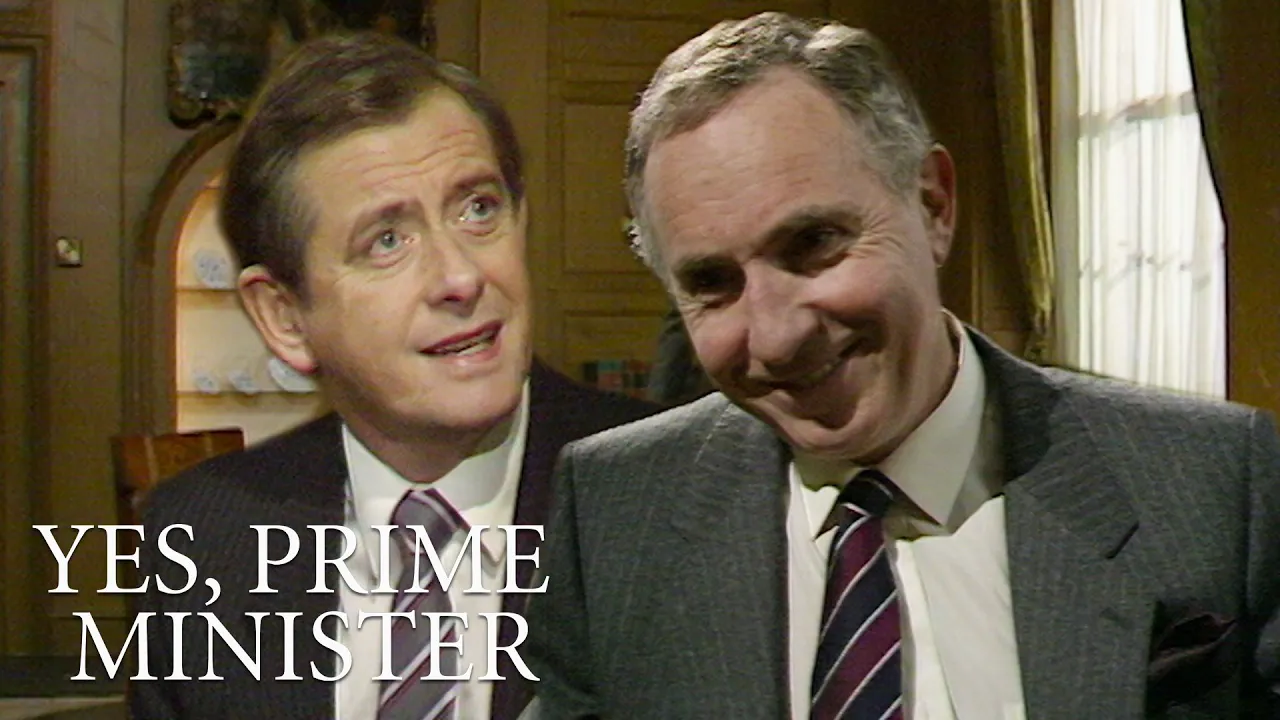
## Background This clip was published on YouTube by the official BBC Comedy Greats channel on September 27, 2021. According to the page description, it features Sir Humphrey Appleby, incensed by Prime Minister Jim Hacker's push for his “Grand Design,” delivering a masterclass in how to conduct and manipulate a government opinion poll.
## TL;DR Alarmed that Prime Minister Jim Hacker plans to reinstate National Service based on a favorable party opinion poll, Sir Humphrey Appleby demonstrates to Bernard Woolley how easily polling data can be rigged. By questioning Bernard with two carefully curated sequences of leading questions, Humphrey manipulates him into expressing strong support for National Service before immediately guiding him to voice absolute opposition to it. Humphrey then orders a conflicting poll on behalf of the Ministry of Defence to cancel out the Prime Minister's data. Finally, he outlines a tactical bureaucratic ambush, manipulating broadcast schedules and committee timetables to force Hacker into relying on skeptical departmental briefs from civil servants.
## Atmosphere & style The scene crackles with razor-sharp satirical wit and intellectual condescension, epitomizing the classic power dynamic between cynical master bureaucrat and naive subordinate. Nigel Hawthorne plays Sir Humphrey with effortless, imperious precision, moving seamlessly between mock-flirtatious roleplay and cold political calculation. Watching Bernard's growing realization as he is steered into self-contradiction creates a brilliant comic rhythm, combining the lighthearted humor of a parlor trick with a delightfully cynical critique of democratic research and civil service gamesmanship.
## Bulletin - [00:00](https://www.youtube.com/watch?v=ahgjEjJkZks&t=0s) Sir Humphrey Appleby demonstrates how opinion polls can be systematically rigged to produce contradictory outcomes on the same issue by selectively leading respondents with primed questions. - [00:00](https://www.youtube.com/watch?v=ahgjEjJkZks&t=0s) Survey manipulation relies on human psychology: respondents want to impress the interviewer, avoid inconsistency, and dodge looking foolish, while pollsters publish only the final question and suppress the preamble. - [00:00](https://www.youtube.com/watch?v=ahgjEjJkZks&t=0s) To derail Prime Minister Hacker's 'Grand Design' policy, Sir Humphrey orders Bernard Woolley to commission a counter-poll through the Ministry of Defence showing public opposition to National Service. - [02:13](https://www.youtube.com/watch?v=ahgjEjJkZks&t=133s) Sir Humphrey engineers a bureaucratic ambush by compressing Hacker's broadcast timetable to 11 days, exploiting ministerial vanity and relying on civil service departmental briefs to overturn Cabinet ministers' personal political support.
## Key takeaways - [00:00](https://www.youtube.com/watch?v=ahgjEjJkZks&t=0s) Sir Humphrey dismisses prime ministerial enthusiasm as an insufficient force for political change, quipping that Neville Chamberlain was equally keen on peace. - [00:00](https://www.youtube.com/watch?v=ahgjEjJkZks&t=0s) Jim Hacker pushes forward with the 'Grand Design' believing a party opinion poll in favor of National Service guarantees an electoral triumph. - [00:00](https://www.youtube.com/watch?v=ahgjEjJkZks&t=0s) Sir Humphrey counters that Bernard Woolley can simply commission an opposing poll, arguing that public opinion is inherently malleable. - [00:00](https://www.youtube.com/watch?v=ahgjEjJkZks&t=0s) A pollster can steer a respondent into supporting National Service by first securing agreement on youth unemployment, teenage crime, school discipline, and the need for authority. - [00:00](https://www.youtube.com/watch?v=ahgjEjJkZks&t=0s) By concealing the sequence of priming questions and publishing only the final response, pollsters can misrepresent public sentiment to serve specific agendas. - [00:00](https://www.youtube.com/watch?v=ahgjEjJkZks&t=0s) A pollster can reverse the outcome entirely by framing questions around the dangers of war, arms buildup, and compelling young people to kill against their will. - [00:00](https://www.youtube.com/watch?v=ahgjEjJkZks&t=0s) Poll respondents are vulnerable to priming because of a natural desire to impress the interviewer and maintain consistency across consecutive answers. - [00:00](https://www.youtube.com/watch?v=ahgjEjJkZks&t=0s) Sir Humphrey labels Bernard's contradictory answers 'the perfect balanced sample' and directs him to commission a survey for the Ministry of Defence. - [02:13](https://www.youtube.com/watch?v=ahgjEjJkZks&t=133s) Sir Humphrey manipulates the broadcast calendar to force Hacker into an 11-day deadline rather than the planned month-long window. - [02:13](https://www.youtube.com/watch?v=ahgjEjJkZks&t=133s) Hacker's vanity is leveraged by presenting an impending Opposition broadcast, knowing he will not tolerate rivals delivering the premier political address before him. - [02:13](https://www.youtube.com/watch?v=ahgjEjJkZks&t=133s) The compressed 11-day schedule restricts Hacker to a single Overseas Policy and Defence Committee meeting to seek formal Cabinet endorsement. - [02:13](https://www.youtube.com/watch?v=ahgjEjJkZks&t=133s) A critical administrative distinction exists between ministers supporting a policy politically as individuals versus officially as departmental heads advised by the permanent civil service.
## Detailed walkthrough ### [00:00](https://www.youtube.com/watch?v=ahgjEjJkZks&t=0s) The Fallacy of Opinion Polls and the Leading Question
Sir Humphrey Appleby is exasperated to discover that the Prime Minister is forging ahead with his controversial “Grand Design,” a policy Bernard Woolley was expressly supposed to prevent. When Bernard attempts to defend Jim Hacker by explaining that the Prime Minister is simply very keen on the idea, Sir Humphrey sharply dismisses the notion: “Things don’t happen just because prime ministers are very keen on them. Neville Chamberlain was very keen on peace.” The stakes change instantly once Bernard clarifies that Hacker views the scheme as an electoral triumph backed by hard data: a recent party opinion poll revealed that voters overwhelmingly favor bringing back National Service. Without missing a beat, Sir Humphrey tells Bernard to commission a new poll proving the exact opposite. Bernard protests that the public cannot simultaneously be for and against the same issue, prompting Sir Humphrey to ask if Bernard has ever been surveyed himself—to which Bernard sheepishly admits that only his house has been surveyed.
Sir Humphrey then conducts a live demonstration to expose how easily opinion research can be rigged through psychological priming. Assuming the persona of an attractive young pollster whom a respondent wishes to impress, he guides Bernard through a deliberately curated sequence of civic concerns: youth unemployment, teenage crime rates, poor discipline in comprehensive schools, and the instinctive desire of young people for authority and challenges. Caught in the logical momentum of five consecutive affirmative answers, Bernard finds it impossible to reject the ultimate proposition. Sir Humphrey explains that unscrupulous pollsters suppress the preamble entirely: “So they don’t mention the first five questions and they publish the last one.” To complete the lesson, Sir Humphrey immediately runs the exercise in reverse using pacifist premises—focusing on the perils of global warfare, arms proliferation, arming teenagers to kill, and compulsory military service. Bernard obligingly answers “yes” to every prompt, concluding with an unequivocal endorsement of opposing National Service.
```mermaid flowchart TD accTitle: Opinion Poll Leading Questions accDescr: Flowchart contrasting how two different series of leading questions produce opposite survey outcomes on National Service.
subgraph PRO["Pro-National Service Poll"] A1["Concerned about youth unemployment? (Yes)"] --> A2["Worried by teenage crime? (Yes)"] A2 --> A3["Lack of discipline in schools? (Yes)"] A3 --> A4["Youth need authority & challenge? (Yes)"] A4 --> A5["In favour of National Service? (YES)"] end
subgraph CON["Anti-National Service Poll"] B1["Worried about the danger of war? (Yes)"] --> B2["Concerned by arms buildup? (Yes)"] B2 --> B3["Danger in teaching youth to kill? (Yes)"] B3 --> B4["Wrong to force arms against will? (Yes)"] B4 --> B5["Oppose National Service? (YES)"] end ```
- Sir Humphrey’s rationale for voter compliance: respondents naturally want to make a favorable impression on the interviewer and avoid looking foolish. - While Bernard wonders if legitimate firms engage in such manipulation, Sir Humphrey dryly remarks that reputable pollsters do not, “but there aren't many of those.” - Declaring Bernard’s conflicting answers to be “the perfect balanced sample,” Sir Humphrey instructs him to arrange an opposing survey on behalf of the Ministry of Defence.
---
[02:13](https://www.youtube.com/watch?v=ahgjEjJkZks&t=133s) Bureaucratic Maneuvers and the Broadcasting Timetable
Turning his attention from public sentiment to executive action, Sir Humphrey inquires about the Prime Minister's planned broadcast announcing the policy. Hearing that Hacker expects to deliver it sometime the following month, Humphrey unilaterally decides the broadcast must take place in just 11 days' time. Bernard questions whether this compressed timeline is feasible and asks how they will handle Hacker if he refuses. Humphrey outlines a calculated diplomatic pressure tactic: Bernard must inform Hacker that the Joint Broadcasting Committee has scheduled an Opposition party political broadcast in 18 days, which grants the Prime Minister official priority to deliver a ministerial address first. Humphrey calculates that Hacker's vanity will not permit his political rivals to secure the airwaves before him: “Of course, if he wishes the first political broadcast of his premiership to be given by the Opposition that’s fine.”
When Bernard cautiously asks whether this scheduling conflict is actually true, Humphrey coolly replies that it will become true if Bernard waits until tomorrow to bring it up. This tight 11-day window leaves Hacker with only a single scheduled meeting of the Cabinet’s Overseas Policy and Defence Committee to secure formal policy approval. Bernard points out that Hacker’s Cabinet colleagues are already broadly supportive of the Grand Design, but Humphrey draws a sharp constitutional and administrative distinction between party sentiment and departmental responsibility: “Yes, but only personally, Bernard. Only politically. But are they in favour officially? As responsible departmental ministers?” Bernard immediately grasps the trap, realizing that the ministers' official endorsements will hinge entirely on the negative departmental briefs prepared for them by the permanent civil service.
## Notable quotes > [00:00](https://www.youtube.com/watch?v=ahgjEjJkZks&t=0s) Things don’t happen just because prime ministers are very keen on them. Neville Chamberlain was very keen on peace. — Sir Humphrey Appleby
## Mentioned Sir Humphrey Appleby, Jim Hacker, Bernard Woolley, Neville Chamberlain, Ministry of Defence, Joint Broadcasting Committee, Cabinet Overseas Policy and Defence Committee, National Service, Yes, Prime Minister
## Video description Sir Humphrey, incensed that Hacker is pushing ahead with his “Grand Design”, delivers a masterclass in how to conduct a government opinion poll. Subscribe: http://bit.ly/BBCComedyGreats
WATCH MORE: Yes, Prime Minister: https://bit.ly/CGYesPrimeMinister Yes, Minister: https://bit.ly/CGYesMinister Blackadder: http://bit.ly/ComedyGreatsBlackadder Fawlty Towers: http://bit.ly/2L9FRYH
Welcome to BBC Comedy Greats, home to the best comedy from the BBC! Whether you're a fan of the classics or if stand up comedy is more up your street then check out our hand picked playlists full of the funniest clips by the best performers. From Only Fools and Horses to Live at the Apollo we can guarantee plenty of awesome Comedy Greats.
Want to share your views with the team? Join our BBC Studios Voice: https://www.bbcstudiosvoice.com/register
This is a commercial channel from BBC Studios. Service & Feedback https://www.bbcstudios.com/contact/contact-us/
#Comedy #YesPrimeMinister
[Source](https://www.youtube.com/watch?v=ahgjEjJkZks)