Dutch Bicycle Roads Eliminate Car Conflicts Through Grade Separation
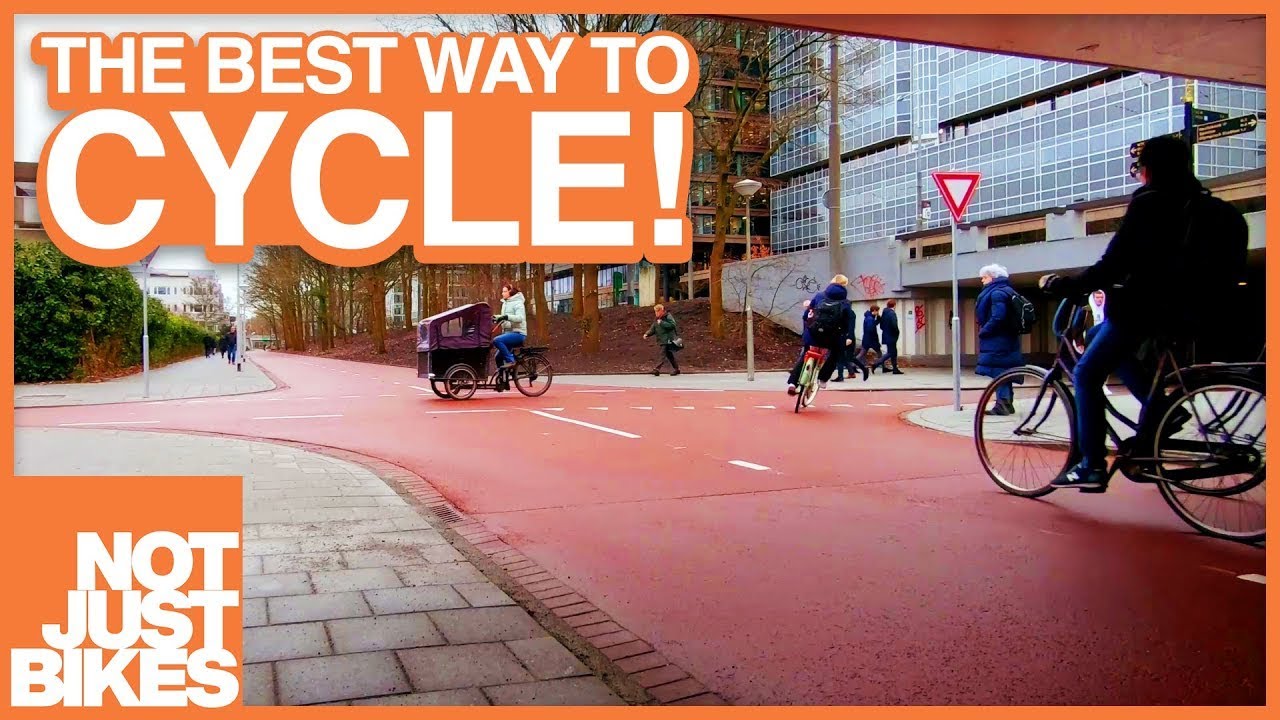
Not Just Bikes
Grade-separated bicycle corridors turn cycling into the fastest and lowest-stress transit mode by eliminating traffic signals and motor vehicle conflicts entirely.
AI-assisted summary of The Best Kind of Dutch Cycling Infrastructure — original source. Check the original for full context.
Source published:
Key ideas
- Unlike opportunistic multi-use trails built along abandoned rail corridors or through parks in other global cities, Dutch bicycle roads are deliberately planned utility networks connecting essential destinations like schools, hospitals, and transit hubs. (0:02)
- Dutch cycle highways adhere to strict technical specifications, incorporating seamless red asphalt, generous lane widths, windbreaks, and extensive grade separation to maintain continuous cyclist movement. (2:12)
- By eliminating automobile interaction, traffic lights, and stop signs, bicycle roads remove the constant cognitive stress of defensive cycling, turning routine commuting into an effortless leisure experience. (2:40)
- The convenience and tranquility of bicycle roads frequently shift route selection, prompting riders to take longer paths just to enjoy quiet corridors that even serve as direct frontages for residential housing. (4:10)
Detailed notes
## Background Published on YouTube on June 15, 2020, by the channel Not Just Bikes, this video explores the uniquely transformative nature of Dutch bicycle-only roads. According to the video description, discovering these dedicated corridors after moving to the Netherlands completely changed cycling for the creator, transforming it from a mere necessity into a genuinely enjoyable way to travel long distances without automobile interference.
## TL;DR The video highlights how Dutch bicycle-only roads differ fundamentally from recreational trails or painted lanes elsewhere, acting as direct utility corridors linking vital destinations like schools, hospitals, and transit hubs. Designed to rigorous standards with wide red asphalt, gentle curves, wind protection, and grade-separated crossings over or under car traffic, they allow riders to maintain momentum without traffic lights or stop signs. This seamless infrastructure eliminated the creator's constant vigilance around cars, shifting his view of cycling from a utilitarian chore to an effortless, peaceful commute. The host concludes by reminding viewers not to take such deliberate, high-quality urban engineering for granted.
## Atmosphere & style The presentation is candid, analytical, and quietly enthusiastic, punctuated by the host's trademark dry humor and pointed critiques of foreign infrastructure like London's 'Cycle Superhighways.' There is an emotional arc of rediscovered appreciation, as the creator actively pushes past the everyday complacency of living in Amsterdam to rekindle his initial awe of the Dutch transit network. Watching it feels like a calm, restorative glide along a scenic cycle path, offering a stark and compelling contrast to the high-stress vigilance usually associated with urban commuting.
## Bulletin - [00:02](https://www.youtube.com/watch?v=bMJaMy-0ChA&t=2s) Unlike opportunistic multi-use trails built along abandoned rail corridors or through parks in other global cities, Dutch bicycle roads are deliberately planned utility networks connecting essential destinations like schools, hospitals, and transit hubs. - [02:12](https://www.youtube.com/watch?v=bMJaMy-0ChA&t=132s) Dutch cycle highways adhere to strict technical specifications, incorporating seamless red asphalt, generous lane widths, windbreaks, and extensive grade separation to maintain continuous cyclist movement. - [02:40](https://www.youtube.com/watch?v=bMJaMy-0ChA&t=160s) By eliminating automobile interaction, traffic lights, and stop signs, bicycle roads remove the constant cognitive stress of defensive cycling, turning routine commuting into an effortless leisure experience. - [04:10](https://www.youtube.com/watch?v=bMJaMy-0ChA&t=250s) The convenience and tranquility of bicycle roads frequently shift route selection, prompting riders to take longer paths just to enjoy quiet corridors that even serve as direct frontages for residential housing.
## Key takeaways - [00:02](https://www.youtube.com/watch?v=bMJaMy-0ChA&t=2s) Bicycle-only roads were the primary infrastructure highlight that inspired the creator's channel upon moving to the Netherlands, though their ubiquity in Amsterdam eventually made them feel routine. - [00:30](https://www.youtube.com/watch?v=bMJaMy-0ChA&t=30s) The Dutch CROW design manual officially designates these paths as 'bicycle highways' (snelfietsroutes), though the creator uses the term 'bicycle roads' for urban routes. - [00:55](https://www.youtube.com/watch?v=bMJaMy-0ChA&t=55s) London's branded 'Cycle Superhighways' are largely comparable to ordinary Dutch roadside bike paths rather than fully segregated, car-free trunk routes. - [01:20](https://www.youtube.com/watch?v=bMJaMy-0ChA&t=80s) In most global cities, bike trails are constructed opportunistically wherever land is easy to acquire, whereas Dutch bicycle roads directly link major utilitarian hubs. - [02:12](https://www.youtube.com/watch?v=bMJaMy-0ChA&t=132s) Design standards require wide lanes of at least one meter in each direction, seamless red asphalt, sweeping turns, and natural windbreaks to shelter riders from headwinds. - [02:40](https://www.youtube.com/watch?v=bMJaMy-0ChA&t=160s) Even protected on-street cycle tracks force riders to watch for driveways, turning vehicles, and delivery vans, whereas bicycle roads remove automobile conflicts entirely. - [03:10](https://www.youtube.com/watch?v=bMJaMy-0ChA&t=190s) Engineers prioritize vertical grade separation at crossings, routing car traffic onto overpasses while cyclists pass smoothly underneath. - [03:35](https://www.youtube.com/watch?v=bMJaMy-0ChA&t=215s) Intersections between cycle roads rely on simple yield controls rather than traffic lights and stop signs, which primarily exist to regulate automobile conflicts. - [02:30](https://www.youtube.com/watch?v=bMJaMy-0ChA&t=150s) Eliminating stops and car-related hazards shifts cycling from a tense, utilitarian chore into a genuinely relaxing, momentum-driven commute. - [04:10](https://www.youtube.com/watch?v=bMJaMy-0ChA&t=250s) Bicycle roads link seamlessly into major public transit hubs, offering direct approaches to central train stations and massive bicycle parking facilities. - [04:30](https://www.youtube.com/watch?v=bMJaMy-0ChA&t=270s) Residential homes in some neighborhoods front directly onto bicycle roads, replacing street noise and parked cars with a quiet, motor-free front yard environment. - [04:45](https://www.youtube.com/watch?v=bMJaMy-0ChA&t=285s) Cyclists frequently detour to use bicycle roads over shorter mixed-traffic routes because the peaceful, continuous ride outweighs the extra distance.
## Detailed walkthrough ### [00:02](https://www.youtube.com/watch?v=bMJaMy-0ChA&t=2s) Introduction to Bicycle-Only Roads in Amsterdam
When compiling an initial list of topics to cover on the channel after moving to the Netherlands, the creator made bicycle-only roads the absolute first entry. Even after visiting the country half a dozen times and regularly watching videos from channels like *Bicycle Dutch*, he was still genuinely surprised by how remarkable this infrastructure turned out to be in everyday life. However, after living in Amsterdam for an extended period, the novelty gradually wore off to the point where the topic almost felt too mundane to cover. Because he rides along these dedicated corridors multiple times a week and expects them everywhere he goes, the video serves as an effort to recapture the excitement he originally felt before they simply blended into his daily routine.
The Dutch CROW design manual officially classifies these paths as "bicycle highways" (*snelfietsroutes* or cycle highways). Because that term is typically reserved for long intercity routes rather than urban corridors, he opts to use the informal label "bicycle roads" instead, joking that viewers can register their terminology complaints in the comments section. He highlights that while nearly every city he has ever lived in features recreational or multi-use trails, Dutch bicycle roads are fundamentally different. They also differ substantially from London's branded "Cycle Superhighways," which he dismisses as "the stupidest name for any bicycle infrastructure ever," noting that London's iterations are essentially identical to ordinary Dutch roadside cycle paths rather than truly segregated thoroughfares.
```mermaid flowchart TD accTitle: Recreational Paths vs. Dutch Bicycle Roads accDescr: Diagram comparing typical opportunistic paths in other cities with intentionally planned Dutch bicycle roads.
subgraph OtherCities["Typical Multi-Use Trails Elsewhere"] A["Built where convenient"] --> B["Former rail lines & parks"] B --> C["Disconnected from everyday utility"] end
subgraph DutchNetwork["Dutch Bicycle Roads"] D["Integrated direct network"] --> E["Built intentionally between destinations"] E --> F["Schools, hospitals, arenas, transit"] end ```
- In other global cities, bike paths are typically built opportunistically where construction is simple, such as through public parks or along abandoned rail corridors. - Dutch bicycle roads are deliberately engineered as a coherent utility network connecting places people genuinely need to reach, such as schools, sports arenas, parks, swimming pools, and hospitals. - Because of their direct routing, these paths serve as the fastest, most practical transport option rather than merely recreational trails.
[02:12](https://www.youtube.com/watch?v=bMJaMy-0ChA&t=132s) Design Standards and the Shift from Utility to Enjoyment
Dutch bicycle roads are built to the highest possible technical specifications. They feature a generous width of at least one meter in each direction, laid with seamless red asphalt, and designed without barriers or sharp turns. Planners even account for environmental factors like windbreaks along the corridors to shelter cyclists from heavy headwinds. These stringent design rules make the infrastructure remarkably safe, even when judged against already high Dutch traffic standards.
This infrastructure completely altered the narrator's personal relationship with cycling. Having always preferred trains and trams over riding a bike, he never identified as a cycling enthusiast; in other cities, he only cycled out of utility to escape public transit trapped in gridlock. In Amsterdam, while cycling remains the quickest way to get around, the experience on dedicated bicycle roads turns into genuine leisure. As Not Just Bikes explains:
> “I never realized how much of my time cycling was spent worrying about cars.”
Even on standard protected cycle lanes, riders must constantly anticipate hazards like side streets, private driveways, junctions, and double-parked delivery vans. On an uninterrupted bicycle road, cyclists can travel between destinations without ever crossing paths with motor vehicles. When these cycle routes encounter automobile traffic, grade separation is prioritized: cars are frequently routed onto overpasses while cyclists glide underneath without conflict.
```mermaid flowchart LR accTitle: Grade-Separated Bicycle Junction accDescr: Flow diagram showing how cars and bikes are separated vertically at intersections.
subgraph GradeSeparation["Vertical Route Separation"] Car["Automobile Traffic"] -->|"Rerouted via"| Bridge["Overpass"] Bike["Cycle Path"] -->|"Continuous glide"| Underpass["Underneath Overpass"] end ```
- When intersecting another bicycle road, junction control is minimal, typically requiring nothing more than a simple yield sign. - The absence of stop signs and traffic lights—which the host stresses exist purely to manage automobile conflicts—allows cyclists to sustain continuous momentum over long distances without stopping.
[04:10](https://www.youtube.com/watch?v=bMJaMy-0ChA&t=250s) Everyday Integration and Valuing Dutch Urban Engineering
In addition to acting as arterial trunk routes across long distances, bicycle roads are intentionally lined with practical destinations and amenities. Some routes connect directly into primary railway stations or provide straightforward access to high-capacity bicycle parking facilities. In other areas, residential houses front directly onto the bicycle road, replacing noisy automobile lanes with a tranquil, motor-free front yard environment.
This level of comfort frequently alters route choices: the host often goes out of his way to ride on a bicycle road instead of taking a slightly shorter street route simply because the ride is so peaceful and effortless. Reflecting on this convenience, he resolves never to take the infrastructure for granted again, emphasizing the deliberate planning that underpins it. As Not Just Bikes concludes:
> “And when I ride on them, I’m going to appreciate the hard work of the Dutch planners and engineers who have gone out of their way to make my everyday trips as easy and stress-free as possible.”
## Notable quotes > [02:12](https://www.youtube.com/watch?v=bMJaMy-0ChA&t=132s) I never realized how much of my time cycling was spent worrying about cars. — Not Just Bikes
## Mentioned Not Just Bikes, Bicycle Dutch, CROW, Amsterdam, London
## Video description Watch this video ad-free on Nebula: https://nebula.tv/videos/not-just-bikes-the-best-way-to-cycle-bicycle-only-roads-in-the-netherlands
When we first moved to the Netherlands, the most amazing thing to us was bicycle-only roads. Using these, we could go long distances in and out of the city without ever needing to stop, and with almost no interaction with cars.
This kind of road totally changed cycling for me, making me actually enjoy cycling, instead of just doing it because it was the fastest way to get around.
Sign up to Nebula and watch ad-free and sponsor-free: https://go.nebula.tv/notjustbikes
Patreon: https://patreon.com/notjustbikes Twitter: https://twitter.com/notjustbikes Reddit: https://reddit.com/r/notjustbikes One-time donations: https://notjustbikes.com/donate
NJB Live (my bicycle livestream channel): https://www.youtube.com/channel/UC9v57F4xz46KaDsvWfCv8yw
Subtitles by Casper de With
[Source](https://www.youtube.com/watch?v=bMJaMy-0ChA)