Asteroid Strike Peels Earth Crust, Vaporizes Life Within 24 Hours
Anselmo La Manna
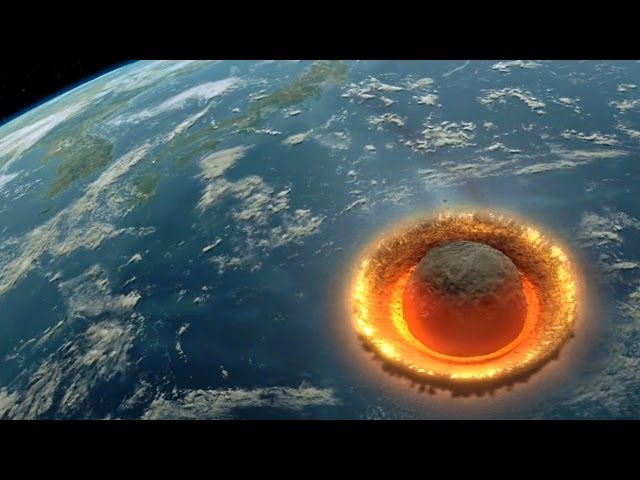
A 500-kilometer asteroid impact in the Pacific Ocean blasts crust into orbit before raining debris down to ignite a global firestorm, repeating a cataclysm that geological evidence shows has already struck Earth at least six times.
AI-assisted summary of Discovery Channel - Large Asteroid Impact Simulation — original source. Check the original for full context.
Source published:
Key ideas
- A simulated collision with a 500-kilometer-wide asteroid in the Pacific Ocean instantly peels away 10 kilometers of Earth's crust and unleashes hypersonic shockwaves across the globe. (1:17)
- Ejecta blasted into low Earth orbit re-enters the atmosphere, triggering a planet-encircling firestorm that vaporizes all exposed life. (1:53)
- The entire surface of the planet is rendered completely uninhabitable within 24 hours of the initial impact event. (3:34)
- Geological evidence shows that cataclysmic mega-impacts of this scale have occurred at least six times throughout Earth's planetary history. (4:19)
Detailed notes
## Background Published by Anselmo La Manna on YouTube on March 8, 2011, this video showcases a 2008 Discovery Channel simulation demonstrating the catastrophic consequences of a 500-kilometer asteroid impact. According to the page description, the scenario illustrates how such cataclysmic collisions shaped Earth's early history and evolution, tracing the planetary devastation caused by an oceanic strike set to Pink Floyd's track 'The Great Gig in the Sky.'
## TL;DR The simulation outlines the cataclysmic sequence of events that unfold when a massive 500-kilometer-wide asteroid impacts the Pacific Ocean. Upon collision, the strike tears 10 kilometers of crust directly off the planet's surface and propels hypersonic shockwaves across the globe. Debris blasted into low Earth orbit re-enters the atmosphere, unleashing a worldwide firestorm that incinerates terrestrial life and leaves the entire surface uninhabitable within 24 hours. The simulation concludes by noting that geological evidence indicates this level of total destruction has occurred at least six times in Earth's history.
## Atmosphere & style The presentation delivers a chilling, awe-inspiring, and deeply fatalistic mood as viewers witness extinction unfolding on an incomprehensible planetary scale. Watching the smooth, unstoppable progression—from the initial deep-ocean rupture to a global curtain of fire—creates an overwhelming sense of dread and helplessness. The stark visual pacing emphasizes the utter fragility of terrestrial life against the violent, cyclical mechanisms of the cosmos.
## Bulletin - [01:17](https://www.youtube.com/watch?v=bU1QPtOZQZU&t=77s) A simulated collision with a 500-kilometer-wide asteroid in the Pacific Ocean instantly peels away 10 kilometers of Earth's crust and unleashes hypersonic shockwaves across the globe. - [01:53](https://www.youtube.com/watch?v=bU1QPtOZQZU&t=113s) Ejecta blasted into low Earth orbit re-enters the atmosphere, triggering a planet-encircling firestorm that vaporizes all exposed life. - [03:34](https://www.youtube.com/watch?v=bU1QPtOZQZU&t=214s) The entire surface of the planet is rendered completely uninhabitable within 24 hours of the initial impact event. - [04:19](https://www.youtube.com/watch?v=bU1QPtOZQZU&t=259s) Geological evidence shows that cataclysmic mega-impacts of this scale have occurred at least six times throughout Earth's planetary history.
## Key takeaways - [00:12](https://www.youtube.com/watch?v=bU1QPtOZQZU&t=12s) The simulation assesses the catastrophic global impact of a celestial body measuring 500 kilometers in diameter. - [00:47](https://www.youtube.com/watch?v=bU1QPtOZQZU&t=47s) The Pacific Ocean serves as the primary impact site for the incoming mega-asteroid. - [01:17](https://www.youtube.com/watch?v=bU1QPtOZQZU&t=77s) The immense kinetic energy of the impact strips 10 kilometers of the Earth's crust from the surface. - [01:28](https://www.youtube.com/watch?v=bU1QPtOZQZU&t=88s) Hypersonic shockwaves radiate outward across the ocean and atmosphere in the immediate wake of the collision. - [01:53](https://www.youtube.com/watch?v=bU1QPtOZQZU&t=113s) Monumental volumes of pulverized mantle and rock are blasted beyond the atmosphere into low Earth orbit. - [02:11](https://www.youtube.com/watch?v=bU1QPtOZQZU&t=131s) Gravitational pull forces orbital debris to re-enter the atmosphere, raining destructive fallout across the entire planet. - [02:55](https://www.youtube.com/watch?v=bU1QPtOZQZU&t=175s) Atmospheric re-entry of debris ignites an unstoppable global firestorm that encircles the planet. - [03:05](https://www.youtube.com/watch?v=bU1QPtOZQZU&t=185s) Thermal radiation from the firestorm vaporizes all biological organisms and surface life caught in its path. - [03:34](https://www.youtube.com/watch?v=bU1QPtOZQZU&t=214s) Within a 24-hour timeframe, planetary conditions deteriorate until the Earth's surface is entirely uninhabitable. - [04:19](https://www.youtube.com/watch?v=bU1QPtOZQZU&t=259s) Geological records demonstrate that Earth has previously endured and recovered from at least six comparable impact events.
## Detailed walkthrough ### [00:12](https://www.youtube.com/watch?v=bU1QPtOZQZU&t=12s) The Approaching Threat and Pacific Ocean Impact
The simulation outlines the catastrophic mechanics of a mega-impact event of apocalyptic proportions. The impending celestial body is an asteroid measuring 500 kilometers in diameter, bearing down directly on planet Earth with a calculated impact point in the Pacific Ocean. As the simulation notes, “An asteroid with a diameter of 500 km” makes its way toward the planet, setting off an unstoppable chain of planetary devastation upon collision with the water and seafloor.
When the massive object strikes the ocean, the sheer kinetic energy instantly breaches the ocean depths and displaces the rocky foundation beneath. The force of the strike is so profound that the narrator states, “The impact peels the 10 km crust off the surface.” In the immediate aftermath of this colossal geological rupture, a massive shockwave propagates outward across the globe, tearing through atmosphere and ocean at hypersonic speeds.
```mermaid flowchart TD accTitle: Sequence of Asteroid Impact and Initial Blast accDescr: Diagram illustrating the initial asteroid collision in the Pacific Ocean through the peeling of the Earth's crust and generation of hypersonic shockwaves.
subgraph Collision ["Initial Collision"] A["500 km Asteroid"] --> B["Impact at Pacific Ocean"] end
subgraph Rupture ["Planetary Destruction"] B --> C["10 km Crust Peeled Off"] C --> D["Hypersonic Shockwaves Propagate"] end ```
- Target body: Asteroid measuring 500 km in diameter - Impact site: The Pacific Ocean - Immediate structural impact: 10 km of Earth's crust peeled away - Wave velocity: Shockwave travels at hypersonic speeds
---
[01:53](https://www.youtube.com/watch?v=bU1QPtOZQZU&t=113s) Orbital Debris, Global Firestorm, and Total Sterilization
As the initial cratering excavation reaches its peak, monumental amounts of pulverized mantle and rock are expelled violently outward. The simulation notes that “Debris is blasted across into low Earth orbit,” where it is cast beyond the upper atmosphere before gravity pulls it back down. As this material rains down upon re-entry, the narration highlights that it “returns to destroy the surface of the Earth.” This widespread thermal fallout ignites the atmosphere, transforming the entire globe into a raging furnace.
The resulting catastrophic thermal radiation sweeps across every continent, leaving no sanctuary for terrestrial organisms. A relentless firestorm encircles the globe, incinerating vegetation, boiling oceans, and thoroughly vaporizing all living matter caught in its trajectory. The progression is mercilessly rapid: “Within one day, the surface of the Earth is uninhabitable.” Despite the sheer finality of such an extinction-level catastrophe, geological and planetary records show that this is not merely a theoretical exercise. The simulation concludes by underscoring Earth's violent past, reminding viewers that “The evidence shows that this has happened at least six times in Earth's history.”
```mermaid flowchart TD accTitle: Global Destruction and Aftermath Sequence accDescr: Diagram tracing the blast debris into low Earth orbit through re-entry, the planetary firestorm, and ultimate surface sterilization.
subgraph Orbit ["Orbital Ejecta"] E["Debris Blasted into Low Earth Orbit"] --> F["Debris Re-enters Atmosphere"] end
subgraph Devastation ["Global Sterilization"] F --> G["Encompassing Firestorm"] G --> H["Surface Rendered Uninhabitable within 24 Hours"] end ```
- Orbital ejection: Rock and ejecta propelled into low Earth orbit - Surface bombardment: Re-entering debris rains fire across the entire planet - Thermal catastrophe: Incinerating firestorm vaporizes all life in its path - Time to total devastation: Entire surface rendered uninhabitable within 24 hours - Historical frequency: Planetary evidence reveals at least six identical impact events have occurred throughout Earth's history
## Mentioned Discovery Channel, Earth, Pacific Ocean, Pink Floyd, The Great Gig in the Sky, Anselmo La Manna
## Video description ● Discovery Channel - Large Asteroid Impact Simulation (2008).
Earth was born as a result of repeated asteroid collisions, the moon was created by a single giant impact event. Then, Earth's size attracted huge meteorites, which slammed into it, causing super-high-temperature rock vapour to cover the entire surface and evaporate all ocean water. The earliest life-forms survived such infernal events by escaping deep into the ground, miraculously emerging again and again. The Earth has gone through innumerable catastrophic events, and life has survived by acquiring new abilities to live through each crisis. Humans are part of the grand history of life's evolution, which has been closely intertwined with repeated cataclysmic events.
Learn what would happen if an asteroid hit the Earth with this detailed "Large Asteroid Impact Simulation". An asteroid with a diameter of 500 km. Destination: The Pacific Ocean. The impact peels the 10 km crust off the surface. The shockwave travels at hypersonic speeds. Debris is blasted across into low Earth orbit, and returns to destroy the surface of the Earth. The firestorm encircles the Earth, vaporizing all life in its way. Within one day, the surface of the Earth is uninhabitable. The evidence shows that this has happened at least six times in Earth's history. Music of Pink Floyd "The Great Gig in the Sky" (1973).
0:12 An asteroid with a diameter of 500 km. 0:47 Destination: The Pacific Ocean. 1:17 The impact peels the 10 km crust off the surface. 1:28 The shockwave travels at hypersonic speeds. 1:53 Debris is blasted across into low Earth orbit, 2:11 and returns to destroy the surface of the Earth. 2:55 The firestorm encircles the Earth, 3:05 vaporizing all life in its way. 3:34 Within one day, the surface of the Earth is uninhabitable. 4:19 The evidence shows that this has happened at least six times in Earth's history.
● Discovery Channel - Simulazione di impatto con un asteroide di grandi dimensioni (2008).
La Terra è nata a seguito di ripetute collisioni di asteroidi, la luna è stata creata da un singolo impatto gigantesco. Poi, le dimensioni della Terra hanno attratto enormi meteoriti, che si sono schiantate su di essa, causando vapori di roccia ad altissima temperatura che hanno ricoperto l'intera superficie e fatto evaporare tutta l'acqua dell'oceano. Le prime forme di vita sono sopravvissute a tali eventi infernali fuggendo in profondità nel terreno, emergendo miracolosamente ancora e ancora. La Terra è passata attraverso innumerevoli eventi catastrofici, e la vita è sopravvissuta attraverso l'acquisizione di nuove capacità per vivere attraverso ogni crisi. Gli esseri umani sono parte della grande storia dell'evoluzione della vita, che è stata strettamente intrecciata con ripetuti eventi catastrofici.
Apprendi che cosa accadrebbe se un asteroide colpisse la Terra, con questa dettagliata "Simulazione di impatto con un asteroide di grandi dimensioni". Un asteroide con un diametro di 500 km. Destinazione: l'Oceano Pacifico. L'impatto spella i 10 km di crosta via dalla superficie. L'onda d'urto viaggia a velocità ipersonica. I detriti vengono scagliati tutti in orbita terrestre bassa, e ritornano per distruggere la superficie della Terra. La tempesta di fuoco circonda la Terra, vaporizzando tutta la vita in questo modo. Entro un giorno, la superficie della Terra è inabitabile. Le prove dimostrano che questo è avvenuto almeno sei volte nella storia della Terra. Musica dei Pink Floyd "The Great Gig in the Sky" (1973).
0:12 Un asteroide con un diametro di 500 km. 0:47 Destinazione: l'Oceano Pacifico. 1:17 L'impatto spella i 10 km di crosta via dalla superficie. 1:28 L'onda d'urto viaggia a velocità ipersonica. 1:53 I detriti vengono scagliati tutti in orbita terrestre bassa, 2:11 e ritornano per distruggere la superficie della Terra. 2:55 La tempesta di fuoco circonda la Terra, 3:05 vaporizzando tutta la vita in questo modo. 3:34 Entro un giorno, la superficie della Terra è inabitabile. 4:19 Le prove dimostrano che questo è avvenuto almeno sei volte nella storia della Terra.
I miei link: ● E-mail: anselmolamanna@live.it ● Microsoft Teams: https://teams.live.com/l/invite/FEAQKm9HmtX5nXnKAY ● WhatsApp: https://wa.me/393662441754 ● Telegram: https://t.me/anselmolamanna ● Facebook: https://www.facebook.com/anselmolamanna ● X: https://x.com/anselmolamanna ● YouTube: https://www.youtube.com/@anselmolamanna ● LinkedIn: https://www.linkedin.com/in/anselmolamanna ● Instagram: https://www.instagram.com/anselmolamanna ● TikTok: https://www.tiktok.com/@anselmolamanna ● WordPress: https://anselmolamanna.wordpress.com ● ArchiLovers: https://www.archilovers.com/anselmolamanna ● EdilPortale: https://www.edilportale.com/anselmolamanna ● Gravatar: https://it.gravatar.com/anselmolamanna ● Social Blade: https://socialblade.com/youtube/handle/anselmolamanna
[Source](https://www.youtube.com/watch?v=bU1QPtOZQZU)