The Missile Knows Where It Is...
Jeff7181
AI-assisted summary of The Missile Knows Where It Is... — original source. Check the original for full context.
Source published:
Key ideas
- The missile continuously establishes its real-time location via negative elimination by subtracting where it is from where it isn't, or vice versa, to obtain a deviation. (0:02)
- The guidance subsystem translates calculated deviations into corrective commands, systematically driving the missile toward the position where it isn't. (0:02)
- When transit discrepancies occur, the system identifies a variation between where the missile is and where it wasn't, which can be compensated for by the Guidance Electronic Assembly (GEA). (0:43)
- To resolve positional ambiguity, the system integrates historical telemetry and calculates overall error by differentiating spatial discrepancies with the algebraic sum of where it shouldn't be and where it was. (0:43)
Detailed notes
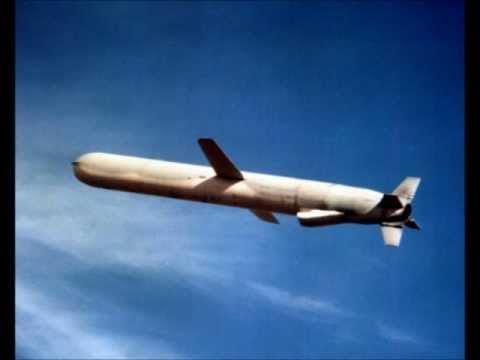
## Background Published on YouTube by channel Jeff7181 on August 11, 2012, this video has amassed millions of views without any provided description or show notes. It presents a vintage technical voiceover explaining the navigation logic of an airborne missile guidance system.
## TL;DR The video breaks down the paradoxical, circular logic of missile navigation: the missile knows where it is by continuously knowing where it isn't. By calculating the mathematical difference between its current position and non-current coordinates, the guidance subsystem derives a deviation to steer the weapon toward where it wasn't. When deviations lead to unintended locations, the system registers a variation handled by the Guidance Electronic Assembly (GEA). To rectify corrupted telemetry, the onboard computer factors in historical coordinates of where it was alongside where it shouldn't be, differentiating these values to calculate a unified corrective metric known as error.
## Atmosphere & style The audio delivers an intensely dry, authoritative mid-century military training cadence that treats absurdly circular, ontological phrasing with utmost scientific seriousness. Listening to it feels hypnotic and deadpan, as technical jargon rapidly twists into a dizzying semantic labyrinth of 'where it is' and 'where it isn't.' The relentless, unblinking delivery creates a uniquely surreal and humorous contrast between rigorous military precision and utter linguistic bewilderment.
## Bulletin - [00:02](https://www.youtube.com/watch?v=bZe5J8SVCYQ&t=2s) The missile continuously establishes its real-time location via negative elimination by subtracting where it is from where it isn't, or vice versa, to obtain a deviation. - [00:02](https://www.youtube.com/watch?v=bZe5J8SVCYQ&t=2s) The guidance subsystem translates calculated deviations into corrective commands, systematically driving the missile toward the position where it isn't. - [00:43](https://www.youtube.com/watch?v=bZe5J8SVCYQ&t=43s) When transit discrepancies occur, the system identifies a variation between where the missile is and where it wasn't, which can be compensated for by the Guidance Electronic Assembly (GEA). - [00:43](https://www.youtube.com/watch?v=bZe5J8SVCYQ&t=43s) To resolve positional ambiguity, the system integrates historical telemetry and calculates overall error by differentiating spatial discrepancies with the algebraic sum of where it shouldn't be and where it was.
## Key takeaways - [00:02](https://www.youtube.com/watch?v=bZe5J8SVCYQ&t=2s) The core premise of the guidance logic is that the missile knows where it is at all times because it knows where it isn't. - [00:02](https://www.youtube.com/watch?v=bZe5J8SVCYQ&t=2s) Positional discrepancies, designated as deviations or differences, are calculated by subtracting where the missile is from where it isn't (or vice versa, depending on which value is greater). - [00:02](https://www.youtube.com/watch?v=bZe5J8SVCYQ&t=2s) The guidance subsystem utilizes derived deviations to formulate corrective flight commands. - [00:02](https://www.youtube.com/watch?v=bZe5J8SVCYQ&t=2s) Corrective maneuvers guide the missile from its present position to a target coordinate space that it does not currently occupy. - [00:02](https://www.youtube.com/watch?v=bZe5J8SVCYQ&t=2s) Arrival at a new position triggers a continuous state transition: the position where it wasn't becomes where it is, and where it was becomes where it isn't. - [00:43](https://www.youtube.com/watch?v=bZe5J8SVCYQ&t=43s) A variation is defined as the mathematical difference between where the missile currently is and where it wasn't supposed to be. - [00:43](https://www.youtube.com/watch?v=bZe5J8SVCYQ&t=43s) Significant variations acting as flight factors are compensated for and corrected by the Guidance Electronic Assembly (GEA). - [00:43](https://www.youtube.com/watch?v=bZe5J8SVCYQ&t=43s) Accurate navigation requires telemetry of historical positions, establishing that the missile must also know where it was. - [00:43](https://www.youtube.com/watch?v=bZe5J8SVCYQ&t=43s) When variations obscure exact coordinates, the missile falls back on knowing where it was and, within reason, where it isn't. - [00:43](https://www.youtube.com/watch?v=bZe5J8SVCYQ&t=43s) The unified metric known as error is derived by differentiating the difference of where it should be and where it wasn't from the algebraic sum of where it shouldn't be and where it was.
## Detailed walkthrough ### [00:02](https://www.youtube.com/watch?v=bZe5J8SVCYQ&t=2s) The Logic of Deviations and Corrective Guidance
The operational logic of the guidance subsystem hinges on an exhaustive, circular deduction of positional states. The narrator explains with dry, authoritative military cadence that the missile maintains continuous awareness of its location through a process of negative elimination: “The missile knows where it is at all times it knows this because it knows where it isn't.” By performing mathematical operations on its current and non-current states—specifically subtracting where it is from where it isn't, or where it isn't from where it is, depending on which value is greater—the system calculates an absolute numerical discrepancy designated as a difference or deviation.
```mermaid flowchart TD accTitle: Missile Guidance Deviation Loop accDescr: Logic flow of guidance subsystem subtracting positions to derive deviation and generate corrective commands. subgraph PosCalc ["Position Calculation"] A["Where it is"] B["Where it isn't"] A ---|"Subtract whichever is greater"| B B --> C["Deviation / Difference"] end subgraph Guidance ["Corrective Maneuver"] C --> D["Guidance Subsystem"] D --> E["Generate Corrective Commands"] E --> F["Drive missile to position where it isn't"] F --> G["Position where it wasn't is now where it is"] end ```
Once this deviation is derived, the guidance subsystem translates the error value into actionable steering commands. These corrective commands steer the missile out of its current physical location and drive it toward a target coordinates space that it currently does not inhabit. This traversal causes a continuous ontological shift: once the missile arrives at the target position where it previously was not, that location immediately ceases to be where it wasn't and becomes where it is. Consequently, the previous coordinates where the missile used to be automatically transform into the position where it isn't.
- Primary calculation: subtracting where the missile is from where it isn't (or vice versa, selecting whichever value is greater). - Operational objective: generating corrective steering commands to relocate the missile from where it is to where it isn't. - Dynamic state update: upon arrival, the position where it wasn't becomes where it is, and where it was becomes where it isn't.
---
[00:43](https://www.youtube.com/watch?v=bZe5J8SVCYQ&t=43s) Managing Variations, Past Positions, and Error Calculation
The calculation becomes increasingly complex when spatial discrepancies arise during transit. Should the missile arrive at coordinates that fail to match the intended position where it wasn't, the guidance unit registers an anomaly classified as a variation. The narrator defines this variation as the precise mathematical gap between where the missile currently resides and where it wasn't supposed to be. If this variation grows large enough to be deemed a significant flight factor, it can be compensated for and corrected by the GEA (Guidance Electronic Assembly).
To resolve this ambiguity, the onboard computer must integrate historical telemetry, operating under the principle that the system cannot solely rely on present and absent states: “However the missile must also know where it was.” When an uncorrected variation corrupts the telemetry data, leaving the missile unsure of its exact coordinates, it falls back on reliable parameters: it knows where it was in the past, and within reason, it remains certain of where it isn't. The guidance computer then executes an advanced algebraic reconciliation: it subtracts where it should be from where it wasn't (or vice versa) and differentiates that result from the algebraic sum of where it shouldn't be and where it was. Through this differentiation, the system isolates both the deviation and its associated variation, yielding the unified flight metric known simply as error.
- Definition of variation: the recorded difference between where the missile is and where it wasn't. - Corrective authority: the GEA handles significant variations to stabilize trajectory. - Fallback telemetry: when variation clouds positional certainty, the missile relies on knowing where it was and where it isn't within reason. - Error formula: differentiating the difference between where it should be and where it wasn't from the algebraic sum of where it shouldn't be and where it was.
## Notable quotes > [00:02](https://www.youtube.com/watch?v=bZe5J8SVCYQ&t=2s) The missile knows where it is at all times it knows this because it knows where it isn't. — Narrator
## Mentioned GEA (Guidance Electronic Assembly)
[Source](https://www.youtube.com/watch?v=bZe5J8SVCYQ)