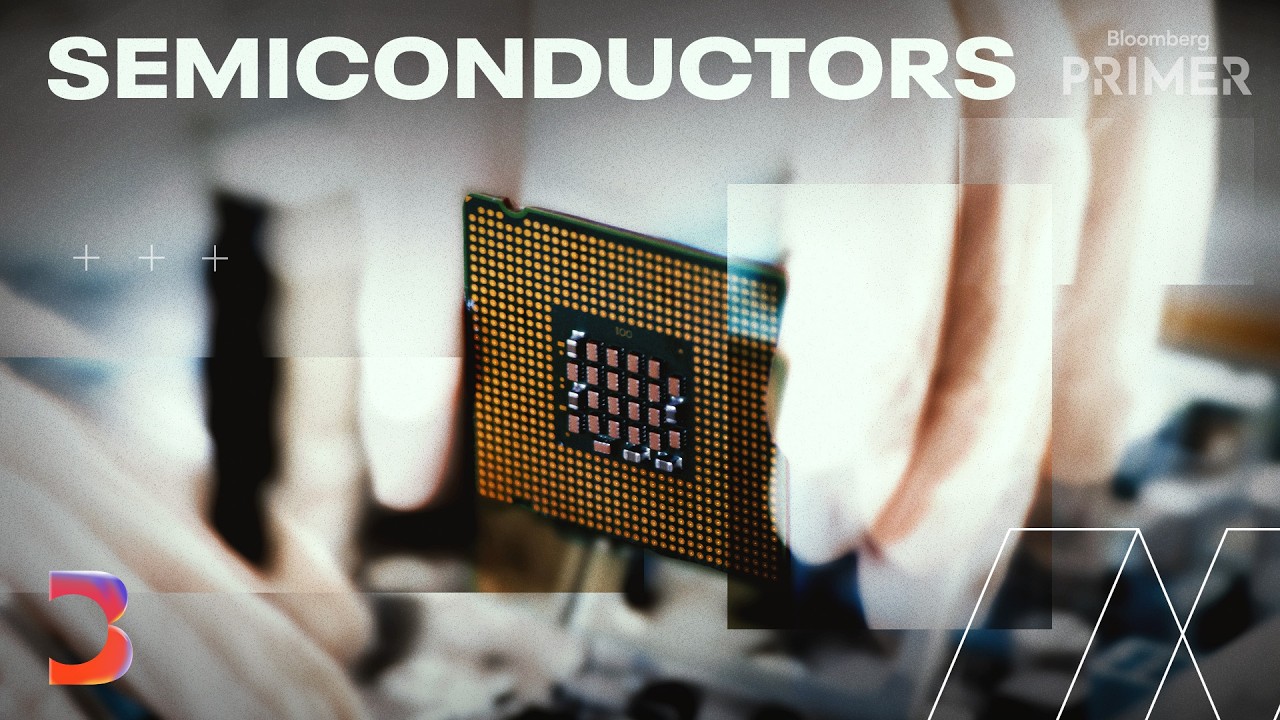
AI Infrastructure Shift Drives $1 Trillion Chip Supply Chain Overhaul
Bloomberg Originals
Exploding artificial intelligence demand and geopolitical chokepoints are forcing global governments and tech giants to spend hundreds of billions to overhaul advanced and foundational semiconductor manufacturing.
## Background
Published by Bloomberg Originals on YouTube on May 6, 2026, this video examines how the global semiconductor industry is approaching a $1 trillion valuation while facing intense strain. The accompanying description highlights how rising demand and geopolitical tensions are forcing governments and corporations to fundamentally rethink chip manufacturing and supply chains.
## TL;DR
The video provides a comprehensive exploration of the global semiconductor supply chain, tracing its journey from advanced Dutch EUV lithography machines to Taiwanese manufacturing gigafabs and American domestic expansion. It examines how the explosion of AI infrastructure is reshaping market dynamics and accelerating global capital expenditure. Additionally, the walkthrough details China's push for domestic semiconductor self-reliance alongside massive US reshoring initiatives like Arizona's Silicon Desert and Texas Instruments' 300 mm mega-sites. Ultimately, it illustrates how microchips have evolved from hidden consumer electronics components into the defining foundation of modern global geopolitics and infrastructure.
## Atmosphere & style
The production carries a sleek, cinematic, and authoritative documentary tone, blending high-stakes economic journalism with clear technical explanations. Moving from the ultra-clean, whisper-quiet environments of semiconductor cleanrooms to expansive industrial construction sites, it conveys both the staggering scale and microscopic precision of modern chipmaking. The dynamic host-led walkthroughs create an immersive experience, balancing the tense reality of global supply chain vulnerabilities with genuine awe at human engineering and industrial innovation.
## Key takeaways
- [00:00](https://www.youtube.com/watch?v=VdcD6qX8Xrc&t=0s) The semiconductor industry is on track to become a $1 trillion global market by 2026, driven by high-end advanced chips costing over $30,000 each and featuring microscopic structures 50,000 times smaller than a human hair.
- [01:58](https://www.youtube.com/watch?v=VdcD6qX8Xrc&t=118s) ASML holds a global monopoly on photolithography machines, including $400 million Extreme Ultraviolet (EUV) systems essential for producing modern leading-edge microprocessors.
- [04:46](https://www.youtube.com/watch?v=VdcD6qX8Xrc&t=286s) AI chips require specialized packaging that integrates multiple active compute dies with stacks of High Bandwidth Memory (HBM) up to 12 layers high to maximize processing speeds and reduce power consumption.
- [08:10](https://www.youtube.com/watch?v=VdcD6qX8Xrc&t=490s) Driven by a multi-year AI infrastructure buildout projected to exceed $1 trillion in capital expenditure, AI chip sales represented over 25% of semiconductor revenues in 2025 and are expected to top 50% by 2029.
- [09:10](https://www.youtube.com/watch?v=VdcD6qX8Xrc&t=550s) The global semiconductor supply chain is extremely fragile and centralized, with TSMC in Taiwan manufacturing over 90% of the world's most advanced chips, creating a vulnerability that Bloomberg Economics estimates could cost $10 trillion in the event of a conflict.
- [12:34](https://www.youtube.com/watch?v=VdcD6qX8Xrc&t=754s) In response to US trade sanctions, China launched a massive domestic reshoring campaign backed by a $50 billion state chip fund and corporate backing, attempting to build an independent supply chain despite Western export limits on EUV machinery.
- [16:01](https://www.youtube.com/watch?v=VdcD6qX8Xrc&t=961s) To reduce dependence on Asian manufacturing, the United States passed the $52 billion CHIPS Act, prompting major projects like TSMC's $165 billion multi-fab complex in Arizona's "Silicon Desert."
- [18:56](https://www.youtube.com/watch?v=VdcD6qX8Xrc&t=1136s) Texas Instruments is investing $60 billion to transition its analog chip manufacturing from 200 mm to 300 mm wafers, multiplying available surface area by 2.3 times to significantly lower unit production costs.
- [21:06](https://www.youtube.com/watch?v=VdcD6qX8Xrc&t=1266s) Texas Instruments' 5.5-million-square-foot mega-site in Sherman, Texas, will feature 15 miles of automated ceiling tracks and produce hundreds of millions of essential supporting chips daily to supply the booming AI server market.
- [22:43](https://www.youtube.com/watch?v=VdcD6qX8Xrc&t=1363s) Semiconductors have evolved from background electronic components into the foundational infrastructure defining modern geopolitical power, national defense, and artificial intelligence.
## Detailed walkthrough
### [00:00](https://www.youtube.com/watch?v=VdcD6qX8Xrc&t=0s) Introduction to the Semiconductor Ecosystem
Inside the ultra-clean environment of a modern semiconductor fabrication plant, a single stray skin cell is enough to destroy a chip during manufacturing. The physical scale of these components is mind-boggling: today's smallest logic features are roughly 50,000 times smaller than the width of a human hair—smaller even than a biological virus. Despite their microscopic scale and extreme fragility, high-end chips sell for upwards of $30,000 each and are often moved under heavy security in armored vehicles. These tiny devices serve as the lucrative, high-stakes engine powering the entire global economy.
Over one trillion semiconductor devices are shipped globally every year, which translates to roughly one hundred chips for every person on Earth. Driven largely by the boom in artificial intelligence infrastructure, the chip industry is on track to cross $1 trillion in annual revenue in 2026. However, the world's most complex manufacturing process is running into hard physical limitations across physics, chemistry, software, and hardware design. Furthermore, the supply chain suffers from severe geopolitical chokepoints—most notably centered on Taiwan—leading experts to warn that the modern economy would effectively face collapse if production there were disrupted.
- Global semiconductor shipments reach approximately 1,000,000,000,000 (1 trillion) units per year.
- Projected global semiconductor revenue is set to hit $1 trillion by 2026.
- Advanced chips sell for $30,000+ each and feature physical structures 50,000 times smaller than the width of a human hair.
Tucked away among the windmills and canals of Veldhoven in the Netherlands sits ASML, Europe's most valuable technology company. ASML does not make microchips directly; instead, it builds the photolithography machines that make chips possible—equipment so complex that no other company on Earth has managed to replicate it. Lithography works by shining precise beams of light through mirrors, lenses, and photomasks to etch electrical blueprints onto silicon wafers, shrinking circuits down to nanoscopic proportions to build complex electrical pathways. Every manufacturer of cutting-edge microprocessors across the globe relies on ASML's technology.
To push circuit density further, ASML created Extreme Ultraviolet (EUV) lithography, generating a specific wavelength of light that does not naturally exist on the surface of the Earth. An EUV machine is roughly the size of a double-decker bus, weighs as much as a blue whale, and carries a price tag of $400 million per unit. The machines achieve extraordinary throughput by utilizing massive motors that drive the reticle stage at accelerations up to $20\text{ g}$—four times the acceleration of a modern fighter jet—allowing the pattern to be repeatedly flashed onto a wafer hundreds of thousands of times in a matter of 12 seconds.
- ASML's High-NA EUV lithography systems cost approximately $400 million per machine.
- The machine's reticle stage moves at accelerations up to $20\text{ g}$, outstepping top-tier fighter jets.
- Lithography tools can copy intricate circuit patterns onto silicon wafers hundreds of thousands of times within ~12 seconds.
---
[04:46](https://www.youtube.com/watch?v=VdcD6qX8Xrc&t=286s) AMD and the Basics of Chip Architecture
At Advanced Micro Devices (AMD), a chip designer valued at over $300 billion, engineers work on high-performance compute architectures that drive everything from cloud supercomputers and global network switches to home gaming consoles. Chips rely on billions of microscopic switches called transistors, which act like sub-microscopic light switches to control the flow of electrical current, creating the binary zeros and ones underlying all digital data. Semiconductors have become ubiquitous across everyday consumer goods, powering everything from smartphone biometrics and robotic vacuums to Wi-Fi-connected coffee makers.
During a hands-on walk-through, an AMD representative demonstrates a raw 300 mm silicon wafer, which yields roughly 300 to 400 individual dies after being cut ("singulated") into distinct chips. While basic analog chips act as simple sensors or power switches, advanced central processing units (CPUs) and graphics processing units (GPUs) execute complex calculations. Specialized AI processors require vastly more silicon footprint: modern AI accelerators stitch together multiple active compute dies alongside 12-layer-high stacks of High Bandwidth Memory (HBM) chiplets onto a single package, drastically reducing power consumption while accelerating data processing.
- AMD market capitalization stands at over $300 billion.
- A single 300 mm raw silicon wafer typically yields around 300 to 400 individual PC-class processor dies.
- Advanced AI packages integrate multiple logic dies with HBM memory modules stacked up to 12 layers high.
---
[08:10](https://www.youtube.com/watch?v=VdcD6qX8Xrc&t=490s) The Explosive Growth of AI Infrastructure
The rapid expansion of artificial intelligence has fundamentally shifted semiconductor market dynamics. In 2025, AI-specific chips accounted for more than 25% of all semiconductor sales, and that share is projected to top 50% by 2029. Historically, chip sales followed a cyclical upgrade pattern tied to corporate PC refresh cycles or annual smartphone releases. Today, the massive buildout of AI data centers has created a sustained, multi-year growth wave, with global capital expenditure on AI infrastructure projected to surpass $1 trillion.
- AI chips represented over 25% of all global semiconductor sales in 2025.
- The AI share of total chip revenue is projected to exceed 50% by 2029.
- Cumulative global investment in AI data center infrastructure is expected to cross $1 trillion.
---
[09:10](https://www.youtube.com/watch?v=VdcD6qX8Xrc&t=550s) TSMC and the Vulnerabilities of the Global Supply Chain
Semiconductor manufacturing is often described as the most complex supply chain and manufacturing process on the planet, functioning like an intricate global house of cards. Chip design primarily takes place in the United States, raw silicon wafers originate in Japan and Taiwan, critical lithography and processing equipment come from the Netherlands, South Korea, and the US, and specialized optical components are supplied by Germany. All of these inputs converge at semiconductor fabrication plants ("fabs"), which are heavily concentrated in Taiwan. Taiwan Semiconductor Manufacturing Company (TSMC) single-handedly manufactures over 90% of the world's most advanced microchips out of its massive "gigafabs."
This concentration forms a massive structural bottleneck. Fabs rely on dense geographic "clusters" because bringing up a new facility operational requires vast localized expertise and logistics. However, this model leaves the global economy dangerously exposed to localized shocks, such as natural disasters, pandemic disruptions, or military conflict. A February 2026 Bloomberg Economics analysis estimated that a major conflict over Taiwan could inflict a $10 trillion shock on the global economy. Consequently, world governments view semiconductor manufacturing as a vital national security priority, recognizing that advanced military hardware, satellite communication, and defense systems depend on specialized radiation-hardened chips.
- TSMC manufactures over 90% of the world's most advanced semiconductors.
- A February 2026 Bloomberg Economics report estimates a conflict over Taiwan could cost the global economy $10 trillion.
---
[12:34](https://www.youtube.com/watch?v=VdcD6qX8Xrc&t=754s) China’s Push for Domestic Chip Independence
In response to US trade sanctions imposed in 2019 that restricted access to critical Western components, China initiated an aggressive domestic reshoring push. Historically, China produced less than 10% of its domestic chip needs using older-generation processes, despite being the world's largest consumer market for electronics. To overcome these limitations, Chinese telecommunications champion Huawei worked in secret to build local manufacturing ecosystems, establishing covert fab sites deep in Guangdong province.
Building modern semiconductor facilities requires vast amounts of capital, with leading-edge fabs costing at least $30 billion each. Despite Western export controls that block ASML from selling its advanced EUV lithography tools to Chinese firms, Huawei stunned the industry in 2023 by releasing a smartphone featuring a advanced, domestically produced chip. To back this drive, Beijing launched a $50 billion state chip fund, supplemented by domestic tech giants like Alibaba and Tencent, with Chinese authorities evaluating up to $70 billion in additional government incentives. While China has successfully established dominance in legacy analog chip production, its advanced chip progress continues to battle regulatory headwinds and machinery blockades.
- Building a single leading-edge semiconductor fab requires an investment of at least $30 billion.
- China established a $50 billion national fund to subsidize domestic chipmakers, with another $70 billion in potential incentives under consideration.
- Prior to its self-reliance push, domestic Chinese firms supplied less than 10% of China's chip consumption.
---
[16:01](https://www.youtube.com/watch?v=VdcD6qX8Xrc&t=961s) Reshoring and the Rise of Arizona’s "Silicon Desert"
Recognizing its own vulnerability—having seen its share of global chip manufacturing fall from nearly 40% in 1990 down to roughly 10% in 2024—the United States government launched a massive reshoring effort. Armed with $52 billion in direct subsidies from the 2022 CHIPS Act, the US aims to rebuild domestic production despite higher labor costs and regulatory burdens compared to East Asia.
A primary beneficiary of this push is Arizona's "Silicon Desert," where expansive industrial clusters are rapidly transforming former desert land into highly automated fab complexes. The desert environment provides low atmospheric humidity and minimal risk of earthquakes or severe flooding. TSMC has committed $165 billion toward its multi-fab Arizona site, supported by $6.6 billion in direct funding under the CHIPS Act, marking a historic expansion of foreign advanced manufacturing onto American soil.
- US share of global semiconductor manufacturing dropped from ~40% in 1990 to ~10% in 2024.
- The 2022 US CHIPS Act allocated $52 billion in direct funding to subsidize domestic fab construction.
- TSMC has committed $165 billion to its Arizona fab site, supported by $6.6 billion in CHIPS Act grants.
---
[18:03](https://www.youtube.com/watch?v=VdcD6qX8Xrc&t=1083s) Texas Instruments and Foundational Chips
While flashier AI processors dominate headlines, legacy analog and embedded chips remain the indispensable foundation of modern technology. Legacy giant Texas Instruments (TI)—famous for inventing the integrated circuit as well as its iconic classroom graphing calculators—operates 15 manufacturing facilities worldwide. TI manufactures the foundational chips that manage power distribution, signal processing, and sensor controls across almost every electronic device that plugs into a wall or runs on a battery, shipping tens of billions of components to global clients every year.
- Texas Instruments operates 15 manufacturing sites globally.
- TI ships tens of billions of foundational analog and embedded chips every year to global customers.
[18:56](https://www.youtube.com/watch?v=VdcD6qX8Xrc&t=1136s) Texas Instruments and the Volume Economics of Analog Chips
Texas Instruments operates on a massive global scale, managing a portfolio of roughly 80,000 products serving 100,000 customers. Unlike companies focusing solely on cutting-edge processors, TI specializes in essential analog chips—the foundational components that handle critical base-level tasks like sensing temperature to prevent overheating or regulating power distribution across devices. Success in this segment relies heavily on "volume economics," where victory comes down to producing immense quantities of chips as cheaply as possible and maximizing profit margins. Because some of these chips sell for only a few cents each, the traditional playbook often relies on legacy or hand-me-down manufacturing equipment to keep costs low.
However, TI is defying standard industry practice by committing a massive $60 billion investment into advanced manufacturing technology. Visiting the subfab—just beneath where the future cleanroom operates—highlights the physical transition behind this strategy: shifting from traditional 200 mm silicon wafers to larger 300 mm wafers. Moving to a 300 mm wafer increases the usable surface area by 2.3 times, which directly yields 2.3 times as many chips per wafer. When looking at ultra-small chips—some no larger than a "pepper flake" and visually resembling specks of glitter—that 2.3-fold increase translates to a competitive boost of hundreds of thousands of additional chips per single wafer.
- TI manufactures a high volume of chips globally every single minute to support its vast catalog.
- A 300 mm wafer provides 2.3x the surface area compared to a standard 200 mm wafer used by most analog chipmakers.
[21:06](https://www.youtube.com/watch?v=VdcD6qX8Xrc&t=1266s) The Sherman Mega-Site and AI's Pulling Effect
From a high viewpoint, the sheer scale of TI’s new mega-site in Sherman, Texas, becomes striking. Spanning over 5.5 million square feet, the facility equals the floor space of two Empire State Buildings combined. While Texas Instruments does not design high-end AI processors directly, the explosion in artificial intelligence is driving massive demand for their fundamental components. AI servers and data center infrastructure cannot run on graphics processors alone; they rely on a supporting army of lower-end "nuts and bolts" chips to handle the essential background grunt work.
Preparing to tour the site requires stepping into full protective "bunny suits"—a chillingly cold experience prior to entering the suit—to tour the pristine environment. The northern section of the first of four planned factories in Sherman showcases an ultra-modern design: it is planned to be 100% automated, utilizing over 15 miles of automated tracks installed on the ceiling where overhead cars transport silicon wafers across the facility floor. Once fully operational, TI projects this advanced 300 mm site will produce hundreds of millions of chips every single day, reinforcing its position as the top global supplier of analog chips.
- The Sherman, Texas mega-site spans over 5.5 million square feet (equivalent to two Empire State Buildings) across four planned factories.
- The site features over 15 miles of automated ceiling tracks for material transport.
- Projected output for the site reaches hundreds of millions of chips per day.
[22:43](https://www.youtube.com/watch?v=VdcD6qX8Xrc&t=1363s) The Changing Infrastructure and Future of Semiconductors
The semiconductor industry is undergoing a structural shift. A couple of decades ago, microchips operated quietly behind the scenes, but today they define global infrastructure—shaping modern telecommunications, transportation, national defense, and artificial intelligence. While headlines often focus on political friction, supply disruptions, and geopolitical tensions, companies are intensely focused on the fundamental work of engineering: investing in new product designs, cutting production costs, and driving manufacturing innovation.
For years, the chip industry was viewed as a brutal, low-margin trudge driven by unforgiving economics. Today, the rapid advancement of AI and the global push to redesign supply chains have brought new excitement to the sector. Chips are no longer just viewed as hidden components; they have taken center stage in public debate and global strategy, transforming what was once a quiet supply chain into one of the most dynamic and high-stakes industries in the world.
- "A couple of decades ago, chips in general were servicing behind the scenes. Today, I would say chips actually define infrastructure."
- "For years, this industry was mired in this win or loss brutal economics trudged towards the future. And now we're seeing all kinds of excitement of people talking about chips in a new way."
## Notable quotes
> [22:43](https://www.youtube.com/watch?v=VdcD6qX8Xrc&t=1363s) A couple of decades ago, chips in general were servicing behind the scenes. Today, I would say chips actually define infrastructure.
> [22:43](https://www.youtube.com/watch?v=VdcD6qX8Xrc&t=1363s) For years, this industry was mired in this win or loss brutal economics trudged towards the future. And now we're seeing all kinds of excitement of people talking about chips in a new way.
The explosive expansion of artificial intelligence infrastructure is driving the semiconductor industry toward $1 trillion in annual revenue by 2026, while exposing severe physical, technological, and geopolitical bottlenecks across its supply chain. As compute requirements escalate, the sector faces hard engineering limits, extreme dependence on isolated manufacturing monopolies, and an urgent need to scale foundational analog components alongside cutting-edge processors.
The AI Buildout and Architecture Shifts (8:10)
The rapid expansion of artificial intelligence has shifted semiconductor economics away from traditional consumer replacement cycles and toward massive, multi-year data center construction. Cumulative capital expenditure on AI infrastructure is projected to surpass $1 trillion, with AI-specific processors rising from over 25% of total semiconductor sales in 2025 to a projected share exceeding 50% by 2029. This sustained demand is accelerating the industry toward $1 trillion in annual revenue by 2026, built on annual global shipments of roughly one trillion semiconductor devices.
To satisfy intensifying computational and efficiency requirements, chip designers such as AMD—valued at more than $300 billion—are moving beyond single-die silicon architectures. Advanced AI packages increasingly combine multiple compute dies with 12-layer-high stacks of High Bandwidth Memory (HBM) on a single substrate. These integrated architectures reduce latency and power consumption, but their large physical footprints place severe demands on silicon wafer capacity and advanced packaging logistics.
Extreme Fabrication and the ASML Bottleneck (1:58)
Modern semiconductor fabrication has reached physical limits where logic features are roughly 50,000 times smaller than the width of a human hair. Manufacturing at this scale requires extreme precision; a single skin cell can ruin a wafer, leading-edge fabrication facilities cost at least $30 billion to build, and specialized AI chips sell for upwards of $30,000 each.
This nanoscopic manufacturing depends on photolithography equipment manufactured exclusively by Dutch company ASML. ASML holds an effective global monopoly on Extreme Ultraviolet (EUV) lithography systems, which cost approximately $400 million per unit and utilize non-natural light wavelengths. The machines accelerate reticle stages at up to 20 g—four times the acceleration of a fighter jet—to project patterns onto wafers within seconds. Because no competitor has duplicated this technology, every leading-edge chip manufacturer worldwide remains tethered to ASML's production capacity.
Geographic Vulnerability and the Reshoring Race (9:10)
The global semiconductor supply chain operates with acute geographic concentration. Taiwan Semiconductor Manufacturing Company (TSMC) manufactures over 90% of the world's most advanced microchips, creating a single point of failure for the broader economy. A February 2026 Bloomberg Economics analysis estimated that a major military conflict over Taiwan could inflict a $10 trillion shock on global output.
This exposure has triggered aggressive state-backed reshoring efforts. After US export controls cut access to advanced Western technology in 2019, China launched a $50 billion state chip fund to boost a domestic ecosystem that historically met less than 10% of its chip demand, culminating in Huawei releasing an advanced domestically produced smartphone processor in 2023. Concurrently, the US responded to its manufacturing share falling from roughly 40% in 1990 to 10% in 2024 by passing the $52 billion CHIPS Act, which catalyzed major domestic projects including TSMC's $165 billion fab commitment in Arizona.
Scaling Foundational Analog Infrastructure (18:03)
While leading-edge compute chips capture strategic attention, legacy analog and embedded semiconductors remain the indispensable backbone of modern electronics. These foundational chips manage power distribution, thermal sensing, and signal processing across devices, including AI server racks that require basic components to function. Texas Instruments, which ships tens of billions of foundational chips annually across an 80,000-part catalog, is defying the legacy-equipment standard by investing $60 billion into modern fabrication.
TI's strategy centers on transitioning production from 200 mm to 300 mm silicon wafers, which provides 2.3 times the usable surface area and multiplies die yields by hundreds of thousands of components per wafer. At TI's 5.5-million-square-foot Sherman, Texas mega-site, four planned automated factories with 15 miles of ceiling tracks are projected to manufacture hundreds of millions of chips daily. The expansion underscores that sustaining AI infrastructure requires scaling high-volume, low-cost commodity components alongside advanced processors.
The semiconductor industry has evolved from a background supplier of commodity components into the decisive geopolitical and economic infrastructure of the modern era. While massive public subsidies and corporate capital expenditures aim to diversify production, the sector remains bounded by atomic-scale physical limits, single-supplier machinery bottlenecks, and an acute reliance on concentrated manufacturing clusters that will take years to balance.
Detailed notes — zh
## Background
该视频由彭博旗下频道 Bloomberg Originals 于 2026 年 5 月 21 日发布在 YouTube 平台。根据页面简介,全球半导体产业正加速迈向 1 万亿美元市场规模并支撑着从人工智能到日常电子设备的一切运转,但随着地缘政治紧张局势与激增的需求交织,各大企业与政府正被迫重构芯片制造逻辑与供应链版图。
## TL;DR
本片系统性拆解了 AI 浪潮下全球半导体供应链所承受的物理极限与地缘重压。全片从 ASML 突破物理极限的 EUV 光刻机和 AMD 的先进算力封装切入,揭示了台积电掌控全球超 90% 先进制程所带来的极致效率与极端集中度。面对台海地缘隐忧与潜在的 10 万亿美元经济震荡,中美两国正分别通过大基金自主突围与《芯片法案》推动亚利桑那“硅基沙漠”及德州仪器 300 毫米晶圆超级基地建设。半导体由此彻底摆脱了过去单纯的周期性幕后配件角色,跃升为直接定义现代文明与国家安全底座的核心战略引擎。
## Atmosphere & style
整部纪录片洋溢着彭博标志性的冷峻工业质感与宏大叙事张力,镜头穿梭于科幻级超净车间、阿斯麦精密母机与沙漠超级晶圆厂之间。讲述基调兼具深入微观物理极限的极客狂热与审视跨国供应链危机的地缘悬疑感,节奏紧凑且充满压迫感。在严肃严谨的技术与资本博弈之中,穿插着液氮给芯片降温的硬核生动细节以及结尾将芯片形容为“性感”的幽默对谈,营造出见证历史转折点般兼具震撼与兴奋的观影体验。
## Bulletin
- [08:10](https://www.youtube.com/watch?v=VdcD6qX8Xrc&t=490s) 全球半导体行业预计在2026年正式跨入1万亿美元市场门槛;在AI基础设施投资爆发的带动下,AI专用芯片占全球半导体销售比重将从2025年的25%跃升至2029年的50%以上。
- [09:10](https://www.youtube.com/watch?v=VdcD6qX8Xrc&t=550s) 尖端制程高度依赖极度狭窄的供应链咽喉:ASML垄断了单台售价4亿美元的EUV光刻机,而台积电则掌控全球90%以上的先进制程晶圆代工,形成了高效但脆弱的超级集群。
- [11:34](https://www.youtube.com/watch?v=VdcD6qX8Xrc&t=694s) 地缘政治与供应安全成为各国核心考量,彭博经济研究测算台海潜在冲突或致全球蒙受10万亿美元经济损失,直接促使中美等超级大国出资数百亿美元强推制造业本土化。
- [18:00](https://www.youtube.com/watch?v=VdcD6qX8Xrc&t=1080s) 模拟芯片龙头德州仪器投资600亿美元豪赌300毫米晶圆制造,利用单片晶圆可用面积比传统200毫米扩大2.3倍的几何红利,大幅压低海量电源与传感器芯片的单颗生产成本。
## Key takeaways
- [00:00](https://www.youtube.com/watch?v=VdcD6qX8Xrc&t=0s) 半导体产业年出货量突破1万亿颗,最小晶体管结构仅为人类头发丝的五万分之一,成为维系现代全球经济运转的核心硬件命脉。
- [01:58](https://www.youtube.com/watch?v=VdcD6qX8Xrc&t=118s) 荷兰阿斯麦(ASML)垄断全球EUV极紫外光刻机,其重若蓝鲸的4亿美元旗舰设备能在掩膜台承受20G加速度下实现纳米级高精度曝光。
- [04:46](https://www.youtube.com/watch?v=VdcD6qX8Xrc&t=286s) 顶级AI加速芯片采用复杂的Chiplet多硅片堆叠与12层高带宽内存(HBM)三维互连技术,设计与制造复杂度远超传统PC芯片。
- [08:10](https://www.youtube.com/watch?v=VdcD6qX8Xrc&t=490s) 半导体驱动逻辑发生结构性巨变,从受制于手机和PC换代节奏的消费周期,转向由万亿美元级AI数据中心基础设施主导的长期刚需。
- [09:10](https://www.youtube.com/watch?v=VdcD6qX8Xrc&t=550s) 芯片制造需要跨国高度协同,但先进制程最终高度汇聚于台积电的台湾晶圆厂集群,使其成为现代工业体系中最极端的单一供应链瓶颈。
- [11:34](https://www.youtube.com/watch?v=VdcD6qX8Xrc&t=694s) 彭博经济研究测算台海若爆发冲突将造成全球10万亿美元的经济崩塌,尖端武器与国防卫星的特种芯片需求推动大国加速芯片自主与回流。
- [12:36](https://www.youtube.com/watch?v=VdcD6qX8Xrc&t=756s) 面对制裁封锁与不足10%的初始本土自给率,中国通过超千亿美元规模的“大基金”与政策激励,加速在模拟芯片及先进制程领域推进自主替代。
- [16:02](https://www.youtube.com/watch?v=VdcD6qX8Xrc&t=962s) 美国本土半导体制造全球占比从1990年的近40%骤降至2024年的约10%,正依托520亿美元《芯片法案》补贴在亚利桑那沙漠平地重建先进晶圆厂。
- [18:00](https://www.youtube.com/watch?v=VdcD6qX8Xrc&t=1080s) 德州仪器在谢尔曼打造超550万平方英尺的超级基地,全面转向300毫米晶圆制造,以单片芯片产出增加2.3倍的规模优势抢占底层芯片市场。
- [22:41](https://www.youtube.com/watch?v=VdcD6qX8Xrc&t=1361s) 芯片已从早期在后台默默支撑的元器件,彻底跃升为直接定义全球通信网络、人类出行、国防安全和人工智能的现代关键基础设施。
- [22:41](https://www.youtube.com/watch?v=VdcD6qX8Xrc&t=1361s) 半导体行业正摆脱昔日粗放残酷的大起大落周期叙事,在AI技术革命与全社会重度依赖下,成为备受资本与公众瞩目的战略核心产业。
## Detailed walkthrough
### [00:00](https://www.youtube.com/watch?v=VdcD6qX8Xrc&t=0s) 纳米奇迹:支撑全球经济的脆弱心脏
走进全球最洁净的半导体制造车间,空气中几乎不容许存在任何微观杂质。现场工程师直言,人类脱落的一颗肉眼不可见的皮肤细胞,就足以彻底报废一颗正在精密加工中的芯片。如今最先进芯片上的基础组件尺寸早已超越了微观极限——比病毒还要微小,大约仅有人类头发丝直径的五万分之一。然而,正是这些脆弱到极致的硅片,单颗售价可飙升至三万美元以上,甚至在出厂押运时享受装甲运钞车护送的安保待遇。半导体已然成为支撑现代全球经济高速运转的庞大且利润丰厚的“心脏跳动”。
这一庞大体系每年向全球交付高达一万亿颗半导体器件,平均摊到地球上的每个人头上足足有一百颗。随着人工智能(AI)浪潮的席卷,半导体行业从原本鲜少被大众关注的科技偏门领域,一夜之间跃升为整个时代的技术聚光灯中心,预计将在2026年达成一万亿美元的年营收里程碑。但硬币的另一面是,这套被公认为人类历史上最复杂的制造流程正在逼近物理与化学的现实极限,面临前所未有的供应链瓶颈。尤其是在全球先进制程高度依赖台湾生态系统的前提下,业内人士甚至发出警告:"一旦台湾的芯片生态发生变故,现代经济很可能瞬间陷入瘫痪。"
- 全球每年出货约1万亿颗半导体器件,相当于地球人均拥有100颗。
- 芯片上的最小晶体管结构比病毒还小,仅为人类头发丝宽度的五万分之一左右。
- 先进芯片单价可突破30,000美元,需使用装甲车进行运输保障。
- 半导体行业预计在2026年正式跨入“万亿美元市场”俱乐部。
```mermaid
flowchart TD
accTitle: 半导体全球协作供应链流向图
accDescr: 展示从芯片设计、材料、核心设备制造到晶圆制造封装的跨国依赖关系
subgraph Design ["前端设计与材料"]
US_Des["美国:芯片架构设计"]
JP_Mat["日本/台湾:高纯度硅晶圆"]
US_Des --> Fab
JP_Mat --> Fab
end
subgraph Equip ["核心设备与精密组件"]
ASML_Mach["荷兰:ASML 光刻机"]
Optics["德国/日本/美国:极紫外光学与精密电机"]
Optics --> ASML_Mach
ASML_Mach --> Fab
end
subgraph Fab ["制造超级瓶颈(台湾 Gigafab)"]
TSMC_Fab["TSMC 晶圆代工制造:掌控 90% 以上全球先进制程"]
end
subgraph Output ["终端应用市场"]
AI_DC["AI 数据中心与超级计算机"]
Consumer["消费电子与汽车工业"]
TSMC_Fab --> AI_DC
TSMC_Fab --> Consumer
end
```
### [01:58](https://www.youtube.com/watch?v=VdcD6qX8Xrc&t=118s) 荷兰风车旁的科技霸主:ASML 与光刻极限
在荷兰充满田园诗意的运河与风车之间,掩映着欧洲市值最高的科技巨擘——阿斯麦(ASML)。ASML 本身并不制造任何消费级芯片,它做的是“制造芯片的机器”,并垄断了全球没有任何一家公司能够复制的核心设备。光刻(Lithography)本质上是一套将设计蓝图微缩投射至硅片上的光学过程:光源通过精密反射镜组、透镜以及掩膜版,在晶圆表面雕刻出纳米级的导电电路线路,形成赋予芯片运算功能的微观“电灯开关”。业内现实是残酷而单一的:全球所有生产顶尖制程芯片的制造商,无论是否对外公开,无一例外都在使用或即将使用 ASML 的设备。
为了打印出更加紧凑微小的纳米图案,ASML 研发出了自然界在地表并不存在的全新波长光源——极紫外光(EUV)。这样一台高精尖设备在物理体型上却无比庞大:体型堪比一辆双层巴士,重量等同一头成年蓝鲸,每台造价高达4亿美元。机器内部的物理构造更是突破了常规工程想象:为了追求更高的打印分辨率,光学透镜的开角必须做得更大,从而收集更多的光学信息压印到芯片表面;而为了确保生产节拍,工作台必须在约12秒内往复完成数十万次图案扫描。其掩膜台的瞬时加速度高达 20G,足足是当今全球最先进战斗机机动过载极限的4倍,必须依赖强悍的巨型电机全力驱动。
- ASML 旗舰级 EUV 光刻机单台售价高达4亿美元,体积堪比双层巴士,重若蓝鲸。
- 设备晶圆/掩膜扫描运动台的加速度可达 20G,是顶级战斗机极限过载(约 9G)的四倍以上。
- 光刻机能在约12秒的时间内,在晶圆上完成成百上千次的高精度图案套刻复制。
- 芯片制造呈现出一种极致悖论:想要芯片做得越小、结构越复杂,背后的光刻制造母机就必须变得越庞大、越昂贵。
### [04:46](https://www.youtube.com/watch?v=VdcD6qX8Xrc&t=286s) 算力引擎:AMD 芯片设计与百亿美元 AI 淘金热
如果说 ASML 提供了工业母机,那么像 AMD(超威半导体)这样的设计公司则负责描绘顶层算力的建筑蓝图。这家市值超3000亿美元的芯片设计先驱内部充满着硬核极客气息——工程师们甚至会随手用保温杯盛装液氮来给高频芯片暴力降温,芯片上电瞬间滋滋作响。芯片内部的实质是海量充当微观开关的晶体管(Transistor),通过开合控制微电流,生成构成一切数字信息的“0”与“1”。半导体早已渗透进现代社会的毛细血管,从手机的人脸识别、扫地机器人的建图导航,再到连上一台有时掉线的智能 Wi-Fi 咖啡机,任何带插头或装电池的现代物品都离不开它们。
资本市场对半导体设计商的追捧更是进入了狂热状态,高管形容市场情绪简直是"神圣的罗宾,蝙蝠侠(Holy moly, Batman),AI 大牛市和抢芯风暴彻底打响了"。在展示的硅晶圆(Wafer)实物上,单张晶圆通过光刻和蚀刻切分成三四百颗独立的裸晶(Die),经过切割分离(Singulate)后成为可封装的芯片——这正是“芯片(Chip)”一词的本源。普通芯片按功能分为偏基础的模拟传感器或电源开关芯片;而先进芯片如 CPU 和 GPU 则承担复杂的通用与图形计算。
专门为 AI 打造的加速芯片则是另一个维度的工程奇迹:
- 普通 PC 芯片只包含单片硅片。
- 服务器芯片尺寸明显变大。
- 顶级 AI 芯片的硅面积则呈现爆发式增加:中间核心区域由多颗精密硅片层叠堆叠而成,外围环绕着8颗独立的 Chiplet 模块,每颗模块内部垂直堆叠了多达12层的高带宽内存(HBM),通过高度集成的三维互连技术,实现超低延迟与极高的能效比。
### [08:10](https://www.youtube.com/watch?v=VdcD6qX8Xrc&t=490s) 结构性剧变:万亿级 AI 基础设施需求爆发
AI 芯片的爆发式增长正在彻底颠覆半导体行业的增长规律。在2025年,AI 专用芯片的销售额已经占据全球芯片总销售规模的四分之一以上;按照行业增长曲线测算,到2029年这一比重将进一步攀升至50%以上。过去数十年来,芯片行业的景气循环往往受制于消费级终端的换代节奏——比如消费者是否为苹果新一代 iPhone 彻夜排队,或者英特尔推出新一代 CPU 促使全球用户集中升级个人电脑,呈现出明显的周期性盛衰波动。
如今,这一周期逻辑被巨额的 AI 资本开支完全改写。科技巨头们竞相投建支撑 AI 模型部署与海量训练的超级数据中心,相关基础设施投资总额正迅速向1万亿美元大关迈进。这意味着对先进制程芯片的渴求不再是消费端的一时兴起,而是演变成了长周期、高强度且持续的刚性采购需求。然而,这种近乎贪婪的算力胃口,也让整个行业撞上了供应链高度集中的结构性高墙。
- 2025年 AI 芯片销售额已占整个半导体市场的25%以上。
- 行业预计到2029年,AI 芯片市场份额将突破整体芯片市场的50%。
- 面向 AI 数据中心的基础设施投资规模正迅速逼近1万亿美元级别。
- 半导体需求动力正式从“消费级PC/手机驱动的周期性市场”转向“AI数据中心建设驱动的结构性持久繁荣”。
### [09:10](https://www.youtube.com/watch?v=VdcD6qX8Xrc&t=550s) TSMC 与全球供应链的空中楼阁:不可替代的超级集群
在彩球挥舞、烟雾升腾的年度“运动日(Sports Day)”背后,台积电(TSMC)扮演着掌控全球科技命脉的角色。芯片的跨国制造如同一场极其脆弱的“万人叠纸牌游戏”,需要数千名分布在不同大洲的顶尖团队步调高度一致:
- 芯片架构在美国设计完成;
- 高纯度单晶硅晶圆主要在台湾与日本拉晶成型;
- 顶级光刻机来自荷兰阿斯麦,其他关键薄膜沉积与刻蚀设备来自美国与韩国;
- 光学元件与精密化学材料则跨洋采买自德国、日本与美国。
最终,这套汇聚全球智慧的精密接力棒,几乎全部交到了集中在台湾本土的巨型晶圆厂(Gigafabs)手中。台积电凭借其首创的纯晶圆代工模式——"你只需专心设计,把图纸交给我们,我们来造最好的芯片"——吃下了全球90%以上最先进制程芯片的生产份额。这种极致的产业分工使它成为了现代工业中“瓶颈中的瓶颈(Bottleneck of all bottlenecks)”。
新建并调优一座晶圆厂(业内称为 bringing up a fab)需要耗费难以想象的工程试错与经验积累。为了降低巨额试错成本、最大化产能输出并压低综合成本,台积电采取了“复制邻厂”的集群模式(Clusters),将庞大的生产基地紧密地并排建设在一起。这种产业集群虽然实现了无与伦比的高效运转与无缝协作,却也将全球最核心的科技产能紧紧捆绑在极其狭窄且地缘敏感的区域之内,形成了一座精密却极度危殆的空中楼阁。
### [11:34](https://www.youtube.com/watch?v=VdcD6qX8Xrc&t=694s) 地缘政治断层线:台海局势与万亿美元供应链危机
半导体生态系统极为脆弱,任何局部动荡都会沿供应链引发剧烈的连锁反应。从台湾遭遇25年来最强地震,到新冠疫情引发全球“芯片荒”,各种突发事件已反复验证了这一点。更为严峻的是,全球先进制程代工龙头台积电(TSMC)恰恰坐落于长达数十年的地缘政治对峙中心。北京方面不断加大军事演练规模,坚定主张台湾是中国领土不可分割的一部分;而台湾则维持现状,这种僵局让整个产业链始终笼罩在不确定性之中。
美国科技企业对未来获取高端芯片的渠道深感忧虑,唯恐地缘冲突切断供应脉络。彭博行业研究(Bloomberg Economics)的一份报告测算,一旦台海爆发冲突,全球经济可能承受高达10万亿美元的惊人损失。面对悬于一线的供应链安全,全球各大超级大国纷纷将半导体提升至国家战略与国家安全的高度,尤其是在国防军工领域,卫星、战斗机等尖端装备必须仰赖能够抵御太空辐射等极端环境的特种芯片,这直接驱使各国下决心将芯片制造产能拉回本土。
- **潜在经济震荡**:彭博经济研究测算,台海若发生冲突,给全球经济造成的损失将高达10万亿美元。
- **国防安全驱动**:军事卫星与尖端飞行器对耐辐射等高性能芯片具备硬性需求,推动多国政府将芯片本土制造视作国防生命线。
---
### [12:36](https://www.youtube.com/watch?v=VdcD6qX8Xrc&t=756s) 中国的芯片自主突围与“大基金”布局
中国深知无法依赖美国供应链,因而坚定践行技术自立与自主创新的路线。作为中国硬件创新的标杆企业,华为在2019年遭遇美国严厉制裁,关键零部件供应被全面切断,外界一度认为其陷入了绝境。彼时中国的芯片制造业起步较晚,本土企业供应的芯片不足国内市场总需求的10%,且技术水准明显落后于海外巨头。然而,中国坐拥全球最庞大的中产消费群体和电子产品市场,巨大的内需纵深为本土芯片生态的自我循环提供了坚实底座。
为了突破封锁,中国在半导体领域展开了极为坚决却又低调隐秘的布局。行业分析人员曾追踪到华为在广东腹地秘密建设的三座晶圆厂,亲赴现场后对其建设规模深感震撼。通常而言,建设一座先进制程晶圆厂至少需要300亿美元的天文数字投入。然而在2023年,华为凭借搭载国产先进制程芯片的新品震撼了全球半导体界,展现出超预期的研发与制造突围速度。尽管中国已跃升为全球最大的模拟芯片生产国,但在先进制程领域,ASML尖端光刻机等核心设备的断供与美国不断波动的出口管制,依旧制约着其向更高制程迈进。为此,中国政府先后成立了500亿美元的国家集成电路产业投资基金(大基金),并酝酿额外追加高达700亿美元的激励扶持,阿里巴巴、腾讯等本土科技巨头也倾注海量资金支持初创团队。
- **自给率起点极低**:在制裁初期,中国本土公司供应的芯片占比不足10%,与全球最大芯片消费市场的地位极不匹配。
- **先进制程投资门槛**:新建一座顶级先进制程晶圆厂的资本门槛至少在300亿美元以上。
- **资金扶持规模**:除前期500亿美元芯片专项基金外,中国还考虑推出总值高达700亿美元的新一轮激励政策。
---
### [16:02](https://www.youtube.com/watch?v=VdcD6qX8Xrc&t=962s) 美国“芯片法案”与亚利桑那“硅基沙漠”
面对流向亚洲的制造业版图,美国同样掀起了一场激进的“制造业回流”(Reshoring)浪潮。回顾1990年,全球近40%的芯片由美国本土制造;而到了2024年,这一比例已暴跌至10%左右。尽管美国在高昂的人工成本和繁重的监管合规下从未成为“最便宜的制造基地”,但拜登政府通过总额达520亿美元的《芯片与科学法案》(CHIPS Act),以真金白银的巨额补贴扭转产业外流。
在距台积电台湾超级晶圆厂约7,000英里的亚利桑那州,一片被冠以“硅基沙漠”(Silicon Desert)之名的制造基地正拔地而起。低湿度、无地震与洪涝隐患、地价低廉并伴随税收优惠,使这里成为晶圆厂的理想选址,但这也意味着所有配套产业基础设施必须平地起高楼。台积电已承诺向亚利桑那工厂投资高达数千亿美元,并计划获得《芯片法案》提供的66亿美元直接资金补贴。数年之前这里还是一片荒芜的沙漠,如今正迅速蜕变为高度自动化、宛如科幻电影般的现代化晶圆超级工厂。
```mermaid
flowchart TD
accTitle: 美国半导体回流与硅基沙漠架构
accDescr: 展示美国通过芯片法案推动制造业回流及台积电亚利桑那沙漠晶圆厂的建设模式
subgraph Policy ["政策驱动层"]
A["1990年本土制造占比 40%<br>降至 2024年仅约 10%"] --> B["《芯片法案》启动<br>520亿美元联邦补贴"]
end
subgraph TSMC_Project ["亚利桑那“硅基沙漠”"]
B --> C["台积电巨额投资入驻<br>获66亿美元直接资助"]
D["地理优势:低湿度 / 无地震洪水 / 廉价土地"] --> E["自动化超级晶圆厂矩阵<br>平地重建供应链基建"]
C --> E
end
```
- **本土制造份额暴跌**:美国半导体制造占全球比例从1990年的近40%滑落至2024年的约10%。
- **联邦政策注入**:2022年通过的《芯片法案》划拨520亿美元专款补贴回流项目。
- **台积电赴美布局**:台积电亚利桑那项目获得6.6亿美元直接联邦资助,正逐步建起高度自动化的晶圆超级基地。
---
### [18:00](https://www.youtube.com/watch?v=VdcD6qX8Xrc&t=1080s) 德州仪器:模拟芯片底座与300毫米晶圆的规模豪赌
在大众印象中,集成电路发明者德州仪器(Texas Instruments, TI)常被误认为只是一家“做计算器的公司”,但事实上,几乎“只要插电或装有电池的设备,里面就大概率有一颗德州仪器的芯片”。德州仪器在全球拥有15座制造基地,每分钟向全球输出数万颗芯片,年交付芯片数以百亿计,服务客户超10万家、覆盖8万多种产品。这类芯片负责感知温度防止过热、管理电能流动等基础而关键的任务,是保障现代电子设备平稳运行的技术底座。模拟芯片的竞争法则是典型的“规模经济学”:在单颗芯片售价仅数美分的微利赛道中,“以尽可能低的成本制造最多芯片并卖出合理价格,就是致胜之道”。
传统模拟芯片普遍沿用200毫米(8英寸)晶圆及成熟旧设备,但德州仪器却逆势做出战略豪赌——投资高达600亿美元布局先进制造技术,全面转向300毫米(12英寸)晶圆生产。从200毫米升级至300毫米,单片晶圆的可用表面积激增2.3倍,意味着同等工艺下单片产出的芯片数量也是2.3倍。面对那些微小如黑胡椒碎粒、拿在指尖几乎不可见的微型芯片,2.3倍的产出倍率转化为了数十万颗芯片的成本与产能优势。
```mermaid
flowchart LR
accTitle: 200毫米与300毫米晶圆面积与产出对比
accDescr: 展现从200mm升级到300mm晶圆带来的2.3倍面积提升与显著的规模经济效益
subgraph Comparison ["晶圆规格效能跃迁"]
direction TB
W200["200毫米晶圆<br>主流模拟芯片工艺标准"]
W300["300毫米晶圆<br>德仪600亿美元豪赌方向"]
W200 -->|"表面积扩大 2.3 倍"| W300
end
subgraph Economics ["规模经济优势"]
W300 --> Yield["单片产出芯片数增加 2.3 倍<br>(单片增加数十万颗芯片)"]
Yield --> CostAdvantage["单颗极低成本优势<br>牢固确立全球模拟芯片霸主地位"]
end
```
在得克萨斯州谢尔曼(Sherman),德州仪器正在打造占地超550万平方英尺的超级基地,总建筑面积相当于两座帝国大厦。尽管现场尚未安装完设备的洁净室冷气逼人、需要裹紧防尘服,但这第一座厂房的自动化规格已极其震撼:天花板上铺设了超过15英里的自动化轨道车运输网络,全厂实现100%全自动物料运转。虽然德州仪器不生产GPU等尖端AI芯片,但AI数据中心服务器里同样充斥着大量承担基础“杂活”的模拟与电源管理芯片。该基地未来全面投产后,预计每天将制造数以亿计的芯片,进一步拉大德州仪器在全球模拟芯片领域的领先身位。
- **超凡制造吞吐量**:TI在全球布局15处制造工厂,每分钟向外输送数万颗芯片,支撑着全球10万家客户与8万类产品。
- **2.3倍几何红利**:晶圆尺寸由200毫米增至300毫米,表面积扩充2.3倍,使每片晶圆的可用裸片数量呈几何级数跃升。
- **谢尔曼超级基地**:占地超550万平方英尺,规模比肩两座帝国大厦,天花板内嵌15英里自动化物料轨道,投产后单日产能可达数亿颗。
### [22:41](https://www.youtube.com/watch?v=VdcD6qX8Xrc&t=1361s) 芯片定义的全新世界:从幕后支撑到重塑现代基础设施
从最小巧的模拟芯片到最尖端的先进制程,半导体制造的价值与内涵正在被全面刷新。回顾数十年前的科技版图,芯片在绝大多数时候仅仅是在“幕后默默服务”(servicing behind the scenes)的隐形支撑角色;然而在今天,芯片的定位已发生根本跃迁——它直接“定义了现代基础设施”(define infrastructure)。无论是全球通信网络、大众日常出行与交通、国防安全防线,还是如日中天的人工智能(AI),其运转命脉与物理极限都由芯片所决定。从驱动各种日常电子设备的微小芯片,到拔地而起的巨型晶圆厂(fabs),整个半导体行业正在经历一场全面而深刻的巨变。由 AI 引爆的爆发式算力需求,叠加整个人类社会对前沿技术日益加深的依赖,正倒逼全球彻底重构半导体这一现代文明的底层积木。
面对当下纷繁复杂的宏观环境,地缘政治冲突与供应链扰动频频成为新闻舆论的绝对焦点。但业内人士指出,真正决定产业走向的,依然是企业在底层创新上的专注度:只要走在正确的商业与工程逻辑上,企业就会竭尽全力押注于全新产品研发、架构设计迭代以及降本增效的制造工艺。“创新始终在发生”,这是行业穿越周期的根本动力。在过去漫长的发展史中,半导体产业曾长期深陷于“赢者通吃、非生即死的残酷经济规律”(mired in this win or loss brutal economics)之中,在沉重的资本开支与大起大落的下行周期中艰难跋涉;而今,这一底色正在被前所未有的行业热情与公众关注所取代。
面对历史性的转折点,芯片行业正迅速蜕变以迎接属于它的高光时刻。大众不再将半导体视为冰冷生硬的后台硬件,而是以全新的眼光与热情审视它的核心战略价值。在节目的尾声,对话在一句生动而幽默的互动中迎来高潮:当对谈者甚至有些迟疑地发问“我可以用‘性感’(sexy)这个词来形容它吗?”时,另一方毫不犹豫地确认:“当然可以,你绝对可以说它性感。”这句风趣的评语恰如其分地概括了半导体行业的当代转向——它不仅是地缘博弈的战略高地与技术革命的算力引擎,更彻底蜕变为了全球科技舞台上最具吸引力、最炙手可热的核心焦点。
- **基础设施地位确立**:半导体已从早期的“幕后服务器件”彻底跃升为直接定义通信网络、人类移动出行、国防工业和人工智能的底层支柱。
- **创新对抗外部噪音**:尽管地缘政治博弈频繁占据舆论头条,优秀芯片企业依然将核心资源牢牢锚定在产品架构突破、先进制程创新以及成本结构优化上。
- **告别残酷周期叙事**:产业正在摆脱过去单纯依赖资本密集硬抗与大起大落的“非生即死”粗放周期,凭借 AI 爆发与全社会技术重塑,芯片行业迎来了极具吸引力(“sexy”)的全新黄金时代。
## Notable quotes
> [00:00](https://www.youtube.com/watch?v=VdcD6qX8Xrc&t=0s) 一旦台湾的芯片生态发生变故,现代经济很可能瞬间陷入瘫痪。
> [04:46](https://www.youtube.com/watch?v=VdcD6qX8Xrc&t=286s) 神圣的罗宾,蝙蝠侠(Holy moly, Batman),AI 大牛市和抢芯风暴彻底打响了
> [09:10](https://www.youtube.com/watch?v=VdcD6qX8Xrc&t=550s) 你只需专心设计,把图纸交给我们,我们来造最好的芯片
> [09:10](https://www.youtube.com/watch?v=VdcD6qX8Xrc&t=550s) 瓶颈中的瓶颈(Bottleneck of all bottlenecks)
> [18:00](https://www.youtube.com/watch?v=VdcD6qX8Xrc&t=1080s) 只要插电或装有电池的设备,里面就大概率有一颗德州仪器的芯片
> [18:00](https://www.youtube.com/watch?v=VdcD6qX8Xrc&t=1080s) 以尽可能低的成本制造最多芯片并卖出合理价格,就是致胜之道
> [22:41](https://www.youtube.com/watch?v=VdcD6qX8Xrc&t=1361s) 幕后默默服务(servicing behind the scenes)
> [22:41](https://www.youtube.com/watch?v=VdcD6qX8Xrc&t=1361s) 定义了现代基础设施(define infrastructure)
> [22:41](https://www.youtube.com/watch?v=VdcD6qX8Xrc&t=1361s) 创新始终在发生
> [22:41](https://www.youtube.com/watch?v=VdcD6qX8Xrc&t=1361s) 赢者通吃、非生即死的残酷经济规律(mired in this win or loss brutal economics)
> [22:41](https://www.youtube.com/watch?v=VdcD6qX8Xrc&t=1361s) 当然可以,你绝对可以说它性感。
## Mentioned
ASML(阿斯麦), TSMC(台积电), AMD(超威半导体), Texas Instruments(德州仪器), 华为, 英特尔, 苹果, 阿里巴巴, 腾讯, 彭博经济研究(Bloomberg Economics), 极紫外光刻机(EUV), 高带宽内存(HBM), 《芯片与科学法案》(CHIPS Act), 国家集成电路产业投资基金(大基金), 亚利桑那“硅基沙漠”, 德克萨斯州谢尔曼基地
## Video description
The global semiconductor industry powers everything from artificial intelligence to everyday electronics, and is on track to become a $1 trillion market. But its supply chain is under growing strain, as geopolitical tensions and rising demand force companies and governments to rethink how chips are made and where they come from.
0:00 Introduction
1:58 ASML’s Lithography Machine
4:46 AMD & Chip Design
8:10 AI Demand
9:10 TSMC & The Global Supply Chain
12:34 China’s Reshoring Efforts
16:01 USA’s Silicon Desert
18:03 Texas Instruments Big Bet
22:41 Conclusion
--------
Like this video? Subscribe: http://www.youtube.com/Bloomberg?sub_confirmation=1
Get unlimited access to Bloomberg.com for just $1.99 your first month: https://www.bloomberg.com/subscriptions?in_source=YoutubeOriginals
Bloomberg Originals offers bold takes for curious minds on today’s biggest topics. Hosted by experts covering stories you haven’t seen and viewpoints you haven’t heard, you’ll discover cinematic, data-led shows that investigate the intersection of business and culture. Exploring every angle of climate change, technology, finance, sports and beyond, Bloomberg Originals is business as you’ve never seen it.
Subscribe for business news, but not as you've known it: exclusive interviews, fascinating profiles, data-driven analysis, and the latest in tech innovation from around the world.
Visit our partner channel Bloomberg News for global news and insight in an instant.
[Source](https://www.youtube.com/watch?v=VdcD6qX8Xrc)
Source quotes
[0:00] 一旦台湾的芯片生态发生变故,现代经济很可能瞬间陷入瘫痪。
[4:46] 神圣的罗宾,蝙蝠侠(Holy moly, Batman),AI 大牛市和抢芯风暴彻底打响了
[9:10] 你只需专心设计,把图纸交给我们,我们来造最好的芯片
[9:10] 瓶颈中的瓶颈(Bottleneck of all bottlenecks)
[18:00] 只要插电或装有电池的设备,里面就大概率有一颗德州仪器的芯片
[18:00] 以尽可能低的成本制造最多芯片并卖出合理价格,就是致胜之道
[22:41] 幕后默默服务(servicing behind the scenes)
[22:41] 定义了现代基础设施(define infrastructure)
[22:41] 创新始终在发生
[22:41] 赢者通吃、非生即死的残酷经济规律(mired in this win or loss brutal economics)
[22:41] 当然可以,你绝对可以说它性感。
Source quotes
[22:43] A couple of decades ago, chips in general were servicing behind the scenes. Today, I would say chips actually define infrastructure.
[22:43] For years, this industry was mired in this win or loss brutal economics trudged towards the future. And now we're seeing all kinds of excitement of people talking about chips in a new way.
Original transcript
[0:00] - We're entering the
first of four factories.
[0:02] - This is one of the cleanest
factories in the world.
[0:05] - How clean is clean?
[0:07] - Even a single skin cell
can actually kill one
[0:09] of our chips that we make here.
[0:11] - Chips like these.
[0:12] The smallest components on
today's chips are smaller than
[0:15] the size of a virus,
[0:17] approximately 50,000 times
smaller than the width
[0:21] of a human hair.
[0:23] And fragile as they may be,
today's most expensive chips
[0:26] sell for upwards of $30,000 each
[0:29] and are reportedly transported
in armored vehicles.
[0:32] We're talking about the massive,
[0:34] highly lucrative heartbeat
powering the global economy.
[0:37] - A trillion semiconductor
devices are shipped every year.
[0:40] That's a hundred devices
for every person on Earth.
[0:44] - They're the foundation
of economic growth
[0:45] around the world, and it brings
together the best scientific
[0:48] minds to push progress forward.
[0:50] - The chip industry is projected
[0:52] to hit $1 trillion in revenue in 2026,
[0:56] and thanks to AI,
[0:59] everyone is talking about it.
[1:01] - Artificial intelligence boom.
[1:02] - My beat went from obscure backwater
[1:04] that people had sort of heard of
[1:06] to being the center of technology.
[1:08] - What is widely considered
[1:09] to be the most complex
manufacturing process on Earth is
[1:13] facing the limitations
of our physical world.
[1:16] - We are pushing the envelope
[1:17] of technology in multiple
directions: software, hardware,
[1:20] chemistry, physics in all dimensions.
[1:22] - Unprecedented market conditions.
[1:25] - Demand for AI infrastructure
is absolutely massive.
[1:28] It appears to be insatiable right now.
[1:31] - Vulnerable choke points.
[1:32] - The modern economy is likely to collapse
[1:35] if something happens
to Taiwanese chip ecosystem.
[1:39] - So just how resilient is the industry
[1:41] that requires this many layers of clothing
[1:43] to function?
[1:45] Right this way.
[2:01] Nestled among windmills
[2:02] and canals, surrounded by
charming cottages and cyclists,
[2:06] you will find Europe's most
valuable tech firm,
[2:09] well known for
[2:10] - Lithography.
[2:11] - Lithography.
[2:12] - The lithography tools
that they create are some
[2:14] of the most fabulously complex
[2:16] and difficult to perfect
machines in the world.
[2:20] - ASML doesn't make chips.
[2:22] It makes machines that make chips
[2:25] and offers tech that no
other company has been
[2:27] able to recreate.
[2:29] Lithography is a process that
directs light through a series
[2:32] of mirrors, lenses
[2:33] and a special blueprint
[2:35] to transfer patterns onto silicon wafers.
[2:38] Essentially shrinking chip
designs down to sizes invisible
[2:42] to the human eye and creating
the electrical pathways
[2:45] that give a chip its function.
[2:47] - All of the manufacturers
[2:48] of the most advanced chip in the world,
[2:50] whether they say it publicly
or not, use ASML's machines
[2:53] or are about to use ASML's machines.
[2:57] - The nano patterning machine is one
[2:59] of the most critical steps
in the semiconductor making.
[3:02] People buy new phones
[3:03] because you get more
capabilities for the same money.
[3:06] So you must find a way to
print much smaller features,
[3:10] but at much higher productivity.
[3:12] - In order to make the next generation
[3:14] of chips even more intricate,
[3:16] ASML literally had to develop
a way to generate a type
[3:19] of light that does not naturally
occur on earth's surface
[3:23] called EUV, extreme ultraviolet.
[3:27] The system is as big as a double
decker bus, weighs as much
[3:30] as a blue whale
[3:32] and will run customers
$400 million per machine.
[3:39] - That's a, that's a good question.
[3:44] First of all, as you want to
print smaller resolution,
[3:47] you make the opening
angle of the lens bigger.
[3:50] - Bigger lenses can
collect more information
[3:52] to squeeze onto the surface of the chips.
[3:55] - The second reason is in order
[3:57] to have the speed, you need
very fast moving stages.
[4:00] - Litho machines can repeatedly
copy a pattern onto a wafer
[4:04] hundreds of thousands of
times within about 12 seconds.
[4:07] - The reticle stage can move
about 20G, four times more
[4:12] acceleration than the
most advanced fighter
[4:14] jets in the world.
[4:15] In order to have that power to accelerate
[4:17] that fast, you need big motors.
[4:20] - The smaller or more complex the chip,
[4:22] the bigger the machine needs to be.
[4:25] There's no avoiding it.
[4:29] All of the world's most advanced
litho machines
[4:32] come from ASML.
[4:34] It is one hyper specialized
link in this highly concentrated
[4:37] supply chain that is under
more pressure than ever before.
[4:41] All eyes are on the companies at the top
[4:44] and whether they're up for the challenge.
[4:49] - We design the semiconductor products
[4:52] that really drive the
leading edge of compute.
[4:55] - This is AMD.
[4:58] Advanced Micro Devices.
[5:00] Worth more than $300 billion,
[5:02] it's a place where
engineers fill their thermoses
[5:04] with liquid nitrogen, where
stock prices have been known
[5:07] to triple. AI is hot.
[5:10] - You hear it sizzle all of a sudden.
[5:12] - And occasionally employees
appear out of thin air.
[5:15] - Oh, you guys are getting
firsthand view of how this works.
[5:19] We're delivering server chips
[5:21] that go into supercomputers,
networking chips
[5:24] that connect the world together,
on down to the consoles
[5:28] that you use to play your latest games.
[5:30] But the common theme in all
[5:32] of them is they require
certain compute capabilities
[5:36] and energy efficiency.
[5:39] - The switches and chips
are called transistors.
[5:41] They're sort of like
nanoscopic light switches
[5:44] that control the flow of electricity
[5:45] and generate the classic ones
[5:47] and zeros that ultimately
make up every piece
[5:50] of digital information
[5:51] in our modern devices.
[5:53] Chips are everywhere.
[5:55] It's how your phone
unlocks, your robot vacuum navigates,
[5:57] and how your coffee maker somehow connects
[5:59] to wifi.
[6:01] Sometimes.
[6:02] - When you think about
the modern economy, right,
[6:05] and you think about how
goods are produced today,
[6:08] what you recognize is that
chips have become ubiquitous.
[6:11] It's very difficult to find
anything that you can plug in
[6:14] or that runs on a battery that
doesn't have a semiconductor
[6:18] of some form in it.
[6:20] - The stock market loves chips.
[6:22] Sorry, I may be underselling this a bit.
[6:25] The stock market is
going absolutely bonkers.
[6:28] - The latest blockbuster AI
chips deal with AMD soar.
[6:32] - I mean, holy moly, Batman, the AI rally
[6:34] and the chip grab, it is on in a big way.
[6:37] - And AMD has turned the demand
[6:39] for AI chips into a new multi-billion
[6:42] dollar part of its business.
[6:45] - All right, so this is a wafer.
[6:47] This is how we build our products.
[6:50] You can see where all
[6:51] of the various individual
chips are printed.
[6:54] So this wafer probably has
around three or 400 chips printed
[6:58] and after you singulate them,
[7:00] - A fancy way of saying wafers are chipped
[7:04] into individual chips,
which is actually the origin
[7:07] of the term "chip".
[7:08] - You have products such
as this, this is a chip
[7:11] that would run your PC.
[7:14] - Basic chips are called
analog or essential,
[7:17] and they quite simply have
more basic functions as sensors
[7:21] or power switches.
[7:22] More advanced chips are
referred to as, well, advanced.
[7:26] This could be your run of the mill CPU
[7:28] or GPU, the brains of the
computer that are computing
[7:31] and performing more elaborate tasks.
[7:34] The most specialized AI chips
are designed to not only run
[7:38] but create software to process droves
[7:41] of data in a matter of milliseconds.
[7:45] - Just to see a contrast,
you know, this is a PC,
[7:49] this is a server, this is AI,
[7:52] and the amount of silicon
is immensely higher.
[7:55] This central region here
is actually many chips
[7:59] with some stacked on top of the other,
[8:01] and then the eight
individual chiplets on the
[8:04] outside are our memory
stacked 12 layers high,
[8:07] and so we're able to get more
energy efficient AI compute.
[8:11] - Of course, AI is booming.
[8:15] AI chips accounted for
more than one quarter
[8:17] of all chips sold in 2025.
[8:19] That figure is expected to
reach more than half by 2029.
[8:24] Chip demand is no longer
dictated by which new iPhone
[8:27] or PC will have customers lining up.
[8:30] - What has changed over the
years in the semiconductor
[8:32] industry is since we're seeing
such a surge in the need
[8:36] to build data centers for AI deployment
[8:39] and applications, we're
seeing a more sustained growth
[8:42] period in semiconductors as opposed
[8:44] to the old fashioned cyclical,
[8:46] when we used to have
Intel come out with chips
[8:48] that everybody had to
upgrade their computer for.
[8:51] - Spending on AI infrastructure
like data centers is
[8:54] projected to soon cross
the $1 trillion mark.
[8:57] So the demand for these chips is there.
[9:00] There's just one maybe
not so nanoscopic problem.
[9:04] How concentrated is too
concentrated for this supply chain?
[9:21] Behind those pompoms
[9:22] and smoke machines are employees
for the chip giant, TSMC.
[9:26] Taiwan's Semiconductor
Manufacturing Company.
[9:29] As fun as the annual
company Sports Day looks,
[9:32] TSMC's role in the industry
is serious business.
[9:35] - Creating semiconductors
is the most complicated
[9:40] manufacturing process in the world.
[9:43] - To be fair, it does require
a bit of choreography.
[9:46] Making a chip is like
building a house of cards
[9:51] with thousands of people
located on multiple continents.
[9:55] Everyone must place
their card exactly right,
[9:57] delicately balanced at the perfect time
[9:59] or well, you know what happens.
[10:02] The majority of chip
design happens in the US.
[10:06] Raw silicon wafers are primarily
made in Japan and Taiwan,
[10:10] but a few other places as well.
[10:12] A lot of chip making machinery
comes from the Netherlands,
[10:15] of course, the US and South Korea.
[10:17] Components within those
machines are sourced
[10:20] from places like Germany,
Japan, and the US.
[10:23] Then, all of those things join
forces from manufacturing
[10:27] magic within fabrication facilities,
[10:30] FABS for short, heavily
concentrated in Taiwan.
[10:34] TSMC manufactures over 90%
[10:37] of the world's most advanced
chips, almost entirely out
[10:40] of its Taiwan based gigafabs.
[10:42] - A gigafab is a massive chip making site.
[10:45] It maximizes its output
and optimizes its cost.
[10:50] - It created this idea of we
can outsource manufacturing,
[10:53] give us your designs and
we'll make the best chips.
[10:56] Doesn't matter who's designing
them, you're going to TSMC
[10:58] and you're saying,
please make this for me.
[11:01] - It's basically the bottleneck
of all bottlenecks.
[11:05] Smack dab in the middle of
a very complex supply chain
[11:08] with no simple alternative.
[11:10] - What's called bringing up a fab,
[11:12] which is basically making a new factory
[11:15] or a new production line
[11:16] operational requires a lot of
experience and so guess what?
[11:20] If you've got one next door
[11:21] that's already working, why not copy that?
[11:23] The logistics are very much
favor building these things in
[11:27] what are called clusters and
close proximity to each other.
[11:30] - These clever clusters are
also, let's say, precarious.
[11:34] - There are a lot of ways
that the supply chain
[11:36] for semiconductors and its
broader ecosystem
[11:39] can be destabilized.
[11:40] Taiwan's strongest
earthquake in 25 years.
[11:43] - Disruptive side effects
of the COVID pandemic,
[11:46] there is now a global
shortage of computer chips.
[11:49] - A supply chain disruption
in one place can cause
[11:52] repercussions in the
industry far down the line.
[11:55] - To top it off, TSMC
is located at the center
[11:58] of a decades long geopolitical standoff.
[12:01] - Beijing has been ratcheting
up pressure staging its most
[12:04] expansive military drills in decades.
[12:07] - China claims Taiwan
is a Chinese territory,
[12:11] but Taiwan maintains its independence,
[12:13] and that doesn't make things
feel particularly stable.
[12:17] - There are some concerns about
China's plans for the future
[12:20] of Taiwan and whether that
could constrain the ability
[12:23] of United States companies
to get those chips.
[12:26] - A February 2026 Bloomberg
economics report estimates
[12:29] that the world economy could
lose $10 trillion if a conflict
[12:33] were to erupt.
[12:36] With Taiwan hanging in the balance,
[12:37] global superpowers are making moves.
[12:40] - The government of the
United States has said,
[12:42] hey, guess what?
[12:43] This is strategically important to us.
[12:45] It has massive security implications.
[12:48] - The defence industry needs
very highly advanced chips
[12:53] that are impervious, for
example, to space radiation,
[12:56] to power satellites and
planes and things like this.
[12:58] So there's a defence industry
motivation for governments
[13:02] to make sure that there are the right kind
[13:05] of semiconductors produced
within their country's borders.
[13:09] - China doesn't feel that
it can depend on the US.
[13:13] It believes in self-reliance
[13:15] and technological supremacy as well,
[13:19] but basically, it
doesn't want to be left out.
[13:22] So it wants to develop its
own homegrown chip industry.
[13:27] - Well, Huawei is China's
national tech champion.
[13:30] It's a company that's known for
it's hardware prowess.
[13:33] Back in 2019,
[13:34] the US had imposed sanctions
on Huawei basically cutting off
[13:38] its ability to get the components it needs
[13:39] to make its products.
[13:41] And there was a feeling that
Huawei was in a lot of trouble.
[13:45] - At the time,
[13:46] China was a late start
into chip manufacturing.
[13:49] Less than 10% of the country's
chips were being supplied
[13:51] by Chinese companies
[13:52] with less advanced tech than
foreign firms, which is at odds
[13:56] with the fact that China
is also the world's largest
[13:59] market for chips.
[14:00] - China has a massive
middle class consumer base
[14:03] that it can sell electronics to.
[14:05] So if it could make
[14:07] and develop these capabilities
in the chip industry, then
[14:10] it's almost supportable
on a domestic basis.
[14:14] - But China has been notoriously secretive
[14:16] about its chip industry.
[14:18] - No one really knew where China stood.
[14:21] We had heard
[14:22] that Huawei was building some
chip factories in secret.
[14:26] We identified three factories
[14:28] deep in the bowels of Guangdong,
[14:30] and I got the location
[14:32] and when I got there, I was surprised.
[14:34] - The site was evidence
[14:35] of China's major domestic
manufacturing efforts underway
[14:39] to skirt US sanctions.
[14:41] - We all thought that this wasn't possible
[14:43] because you need so much money in order
[14:45] to build these chip plants.
[14:47] - Estimates suggest building
a leading-edge chip plant
[14:50] requires at least $30 billion in capital.
[14:53] Nonetheless, in 2023,
Huawei shocked the industry
[14:57] with the debut of a
China-made advanced chip
[15:00] that proved an unexpectedly rapid
[15:02] development and capability.
[15:03] China has also become the
world's biggest producer
[15:06] of analog chips,
[15:07] but Chinese progress in
advanced chip making has been
[15:10] stalled by fluctuating US regulation
[15:13] around access to state-of-the-art
[15:15] Western chips and chip technology.
[15:17] ASML's highly coveted advanced
lithography machines are
[15:21] among the technologies blocked from being
[15:23] sold to Chinese companies.
[15:24] - China's advantages, their spending
[15:26] and investing a lot of money
in creating their own chips.
[15:31] The Chinese government launched
a $50 billion chip fund
[15:34] allowing a lot of these local chip makers
[15:36] to tap into in order
[15:38] to develop their chip making capabilities.
[15:41] They also have all these
big private tech companies,
[15:44] Alibaba, Tencent, also providing money
[15:48] and support, backing a
lot of these startups.
[15:52] - Money is the name of the game.
[15:55] The Chinese government is
considering incentives valuing up
[15:58] to an additional $70 billion
[16:00] to support domestic chip making.
[16:02] Meanwhile, the US is still
doling out money from the Biden
[16:05] administration's $52 billion
2022 Chips Act in a major
[16:10] reshoring effort of its own.
[16:12] - Reshoring means bringing factories back
[16:15] to a certain country so
that the physical ability
[16:18] to manufacture semiconductors
resides in that country.
[16:21] - In 1990, nearly 40%
[16:23] of the world's chips were
manufactured in the US. In 2024,
[16:27] it was only about 10%.
[16:29] So the US has ambitions to send
[16:31] that percentage climbing again.
[16:33] - The United States has
never been the cheapest place
[16:35] to produce semiconductor components.
[16:38] Our labor costs are high, our
regulatory burden, it is high,
[16:42] but there is an incentive
now under the current
[16:45] administration and another prior one,
[16:47] which involves subsidizing the creation
[16:50] of more manufacturing
here in the United States.
[16:56] - About 7,000 miles from the
TSMC gigafabs in Taiwan,
[17:01] there is a site or collection of sites
[17:03] that have earned a name inspired
[17:05] by none other than the
birthplace of chip innovation.
[17:09] Welcome to the Silicon Desert.
[17:13] - This place a few years
ago, it used to be desert
[17:16] and in a few years we will have
a little city here of fabs.
[17:21] Everything will start being
like a science fiction,
[17:25] highly automated producing
thousands of wafers very soon.
[17:31] - On the one hand, the
desert is good for chip fabs,
[17:34] low humidity, decreased
risk of earthquakes
[17:36] and floods, cheap land,
[17:37] and, of course, some tax
incentives.
[17:40] On the other,
[17:41] the chip infrastructure has
[17:42] to be built up from scratch.
[17:44] To date, TSMC is committed
[17:46] to investing $165 billion
in the Arizona fabs
[17:50] and is scheduled to receive
$6.6 billion in direct
[17:54] funding from the CHIPS Act.
[17:55] As TSMC makes a splash
[17:57] with its first operations on
US soil,
[18:00] major expansion efforts
[18:01] are also underway by the
OG American chip company.
[18:04] Do you know the one? Think back
[18:06] to your high school backpack.
[18:08] - There's a better way for
everyone. From the company
[18:11] that invented the integrated
circuit, Texas Instruments.
[18:14] The better way keeps getting better.
[18:17] - Everybody says, oh, the
calculator company writes.
[18:20] And the reality is we do
so much more than that.
[18:23] Our foundational chips are the backbone
[18:26] of essentially all modern
technology as we know it.
[18:30] - Okay, so the calculators are cool,
[18:32] but this Texas Instrument story is about a
[18:34] different equation.
[18:36] - If it plugs into the wall
[18:37] or has a battery, it very
likely has one TI chip in it.
[18:41] We have 15 manufacturing sites globally
[18:44] and these manufacturing sites
work together to provide tens
[18:49] of billions of chips every
year globally to our customers.
[18:53] And for perspective,
that's tens of thousands
[18:56] of chips coming out of TI
globally every single minute.
[19:00] - That is a whopping 100,000
customers and 80,000 products.
[19:05] TI makes the kind of chips
[19:07] that perform more simple
tasks like sensing temperature
[19:09] to prevent overheating
[19:11] or managing power as it moves
through a device, the chips
[19:14] that keep our technology
safe and running smoothly.
[19:17] - One of the most important
things about the industry
[19:19] that you have to understand
is its volume economics.
[19:24] Making a lot of chips as cheap as you can
[19:27] and selling them for as much
[19:29] as you can is the way towards victory.
[19:33] - Some of TI's chips sell
for just a few cents each.
[19:36] They're cheaper and easier
[19:37] to make than today's leading advanced
[19:39] and AI chips, meaning it's cost effective
[19:42] to utilize lower tier
[19:44] or even hand-me-down production equipment.
[19:46] But the company has made
the countercurrent decision
[19:49] to invest $60 billion in
advanced chip manufacturing tech.
[19:53] - We're actually in the subfab.
[19:56] The clean room will be just above us.
[19:59] - The details all come
back to those shiny wafers.
[20:02] - Maybe you can come here and
help me hold this, please?
[20:05] - This is a 200 millimeter
wafer, the size used
[20:08] by most analog chip companies.
[20:10] This is a 300 millimeter
wafer, primarily used
[20:14] for more advanced chip manufacturing.
[20:17] These are TI's big bet.
[20:20] - So going from 200
[20:21] to 300 millimeter increases
the surface area on the wafer
[20:26] by 2.3 times.
[20:28] - Meaning 2.3 times the number of chips.
[20:32] - So when you look here,
there's kind of a collection
[20:34] of different chips
[20:36] and you can see everything from, you know,
[20:39] really big products here all the way
[20:41] to the very small tiny ones.
[20:43] Pause. Let that sink in.
[20:45] Those are chips.
[20:47] - Yeah, it's quite amazing, isn't it?
[20:49] I think if I picked it up, you
wouldn't be able to see it.
[20:51] I think it's about the
size of a pepper flake
[20:53] and yeah, in fact, very glittery.
[20:56] - At that scale,
[20:57] 2.3 times the number
[20:59] of chips could mean a
competitive advantage of hundreds
[21:02] of thousands more chips per wafer.
[21:06] - So from this vantage
point, you can get a sense
[21:07] of scale of this site.
[21:09] This will be TI's
largest mega site over five
[21:11] and a half million square feet.
[21:13] The same square footage as two
Empire State buildings.
[21:16] - Wow.
[21:17] - It's a huge site, mega site.
[21:19] - While TI doesn't make AI chips,
[21:21] it's hoping the current
landscape propels demand
[21:24] for its essential chip business.
[21:26] - I think what we're seeing
in terms of the growth
[21:29] and expansion of the whole
industry is a mixture.
[21:31] We always have the nuts and bolts: chips,
[21:34] but we also have AI
pulling along those nuts
[21:37] and bolts chips too,
[21:38] because you can't build a server
[21:40] for a data center without
some lower end cheaper chips
[21:43] that do some of the
grunt work if you like.
[21:46] - I'm bloody freezing.
[21:49] - Alright, get into
those warm bunny suits.
[21:54] - So we're going into the
first part of the clean room
[21:56] that hasn't had equipment
installed yet, is that correct?
[22:00] - We're entering into
the north side of the first
[22:03] of four factories here in Sherman, Texas.
[22:05] This factory is 100%
automated. On the ceiling,
[22:09] we will have over 15
miles of automated track.
[22:13] Each one of those cars carries
material around the factory.
[22:17] Bringing up a 300 millimeter
factory has the most advanced
[22:21] manufacturing equipment in the world.
[22:24] - Texas Instruments projects
this site will soon produce
[22:26] hundreds of millions of
chips every single day.
[22:30] If all of this investment
pays off in the margins,
[22:33] TI will increase its lead as
the number one global supplier
[22:36] of analog chips, improve advanced
manufacturing's value
[22:40] for even the tiniest ones.
[22:43] - A couple of decades ago,
[22:44] chips in general were servicing
behind the scenes.
[22:47] Today, I would say chips actually
define infrastructure.
[22:50] They define communications
or people mobility
[22:53] or defense or AI.
[22:56] - From the chips powering our devices
[22:58] to the fabs where they're made,
[23:00] the industry is experiencing
pervasive change.
[23:03] The demand from AI
[23:05] and our ever more technologically
dependent world is forcing
[23:08] a global rethink of the
fundamental building blocks.
[23:12] But one thing is for certain:
innovation is underway.
[23:16] - We might be looking at the news
[23:18] and seeing politics take center stage
[23:20] or other disruptions, be
aware that companies are going
[23:25] to be focused on investing
in the new product,
[23:28] in the new design, in
how to save on costs.
[23:32] They're going to be
focused on innovation if
[23:34] they're doing things correctly.
[23:35] - For years, this industry
was mired in this win
[23:38] or loss brutal economics
trudged towards the future.
[23:41] And now we're seeing
all kinds of excitement
[23:44] of people talking about
chips in a new way.
[23:46] - Plain and simple, the
chip industry is evolving
[23:49] to meet the moment and it's,
[23:51] - Am I allowed to say the word sexy?
[23:53] - Why yes. You absolutely are.