Valley Invaders Slay Mountain Folk for Gold, Uncover 'Peace on Earth'
Soheil Koushan
Greed and sanctified self-justification drive societies to slaughter peaceful neighbors for material wealth, only to discover that bloodshed destroys the very peace they sought.
AI-assisted summary of One Tin Soldier - The Original Caste [Original] — original source. Check the original for full context.
Source published:
Key ideas
- The song frames an ancient parable of valley dwellers waging a bloody war against peaceful mountain people to claim a legendary mountain treasure. (0:00)
- Despite the mountain folk offering to freely share all their riches and secrets in brotherhood, the valley people launch an armed massacre to take it by force. (0:00)
- Upon slaughtering the inhabitants and overturning the stone, the conquerors discover the treasure is not gold, but a simple inscription reading 'Peace on Earth.' (0:00)
- The recurring chorus delivers a biting anti-war critique, condemning how atrocities and neighborly betrayal are rationalized in the name of heaven. (0:00)
Detailed notes
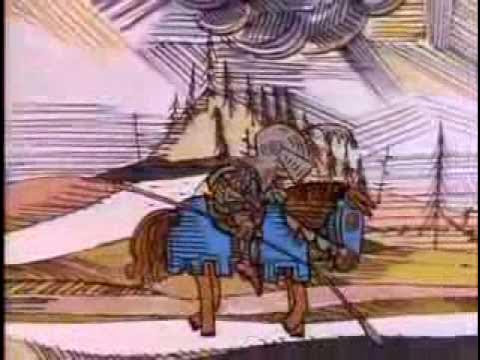
## Background Published on YouTube by Soheil Koushan on June 6, 2008, this video features the anti-war folk song "One Tin Soldier" performed by its original group, The Original Caste. The description notes that the creator paired The Original Caste's musical track—which they considered the finest version—with the animated cartoon video originally produced for Cher.
## TL;DR The song recounts a tragic fable about valley dwellers who violently covet a hidden treasure buried beneath a stone atop a nearby mountain. Though the mountain folk respond to demands for gold by offering to share their kingdom and wealth in peaceful brotherhood, the valley people react with fury, slaughtering them in an armed assault. Upon turning over the stone to claim their prize, the conquerors discover no riches, but only the carved message "Peace on Earth." Framing the narrative is a biting, ironic refrain that exposes humanity's hypocrisy in justifying cruelty and war in the name of heaven.
## Atmosphere & style The presentation evokes the timeless, sobering feel of an ancient folk parable, beginning like a traditional fireside tale before pivoting into sharp moral satire. Its driving musical momentum stands in stark, poignant contrast to the grim depictions of slaughter and religious self-justification. The experience leaves the listener with a heavy sense of tragic futility, climaxing in the quiet devastation of the final revelation and the haunting image of a solitary tin soldier riding away across the carnage.
## Bulletin - [00:00](https://www.youtube.com/watch?v=cTBx-hHf4BE&t=0s) The song frames an ancient parable of valley dwellers waging a bloody war against peaceful mountain people to claim a legendary mountain treasure. - [00:00](https://www.youtube.com/watch?v=cTBx-hHf4BE&t=0s) Despite the mountain folk offering to freely share all their riches and secrets in brotherhood, the valley people launch an armed massacre to take it by force. - [00:00](https://www.youtube.com/watch?v=cTBx-hHf4BE&t=0s) Upon slaughtering the inhabitants and overturning the stone, the conquerors discover the treasure is not gold, but a simple inscription reading 'Peace on Earth.' - [00:00](https://www.youtube.com/watch?v=cTBx-hHf4BE&t=0s) The recurring chorus delivers a biting anti-war critique, condemning how atrocities and neighborly betrayal are rationalized in the name of heaven.
## Key takeaways - [00:00](https://www.youtube.com/watch?v=cTBx-hHf4BE&t=0s) The song opens in the form of an ancient fable directed at children about a hidden treasure buried beneath a stone atop a mountain. - [00:00](https://www.youtube.com/watch?v=cTBx-hHf4BE&t=0s) The people living in the valley below covet the mountain treasure and swear to claim it for themselves. - [00:00](https://www.youtube.com/watch?v=cTBx-hHf4BE&t=0s) The satirical chorus urges listeners ironically to hate their neighbor and cheat their friend, highlighting how violence is rationalized in the name of heaven. - [00:00](https://www.youtube.com/watch?v=cTBx-hHf4BE&t=0s) The lyrics warn that judgment day brings no glorious redemption, leaving only a solitary tin soldier riding away on the bloody morning after battle. - [00:00](https://www.youtube.com/watch?v=cTBx-hHf4BE&t=0s) The valley dwellers issue an ultimatum demanding the buried gold, declaring their willingness to kill to obtain it. - [00:00](https://www.youtube.com/watch?v=cTBx-hHf4BE&t=0s) The mountain people respond with unconditional generosity, offering to share their kingdom, secrets, and treasure peacefully with their brothers. - [00:00](https://www.youtube.com/watch?v=cTBx-hHf4BE&t=0s) Rather than accepting peace, the valley leaders are enraged by the offer, ordering their forces to draw swords and mount horses. - [00:00](https://www.youtube.com/watch?v=cTBx-hHf4BE&t=0s) The valley army assaults the summit, wiping out the peaceful mountain community in an unprovoked massacre. - [00:00](https://www.youtube.com/watch?v=cTBx-hHf4BE&t=0s) Upon overturning the heavy stone, the conquerors find no material wealth, uncovering only the carved words 'Peace on Earth.' - [00:00](https://www.youtube.com/watch?v=cTBx-hHf4BE&t=0s) The narrative concludes by reiterating the bitter futility of war, warning that no trumpets will blow to celebrate the destructive conquest.
## Detailed walkthrough ### [00:00](https://www.youtube.com/watch?v=cTBx-hHf4BE&t=0s) The Parable of the Mountain Treasure and the Tragedy of War
The song opens in the style of an ancient folk fable, calling listeners to gather round: “Listen, children, to a story that was written long ago.” In this tale, a magnificent treasure lies hidden away on top of a mountain, buried deep beneath an unassuming stone. Down below, the covetous people of the valley look up with envy and greed, swearing that they will claim the treasure for their very own. Instead of preaching virtue directly, the narrative launches into its biting, ironic refrain that exposes the hypocrisy of sanctified violence: “Go ahead and hate your neighbor, go ahead and cheat a friend.” The chorus scathingly notes that people will commit atrocities and “do it in the name of heaven, you can justify it in the end,” warning of the ultimate reckoning when judgment day arrives and, on the bloody morning after the carnage, only a solitary tin soldier rides away.
Determined to seize the riches, the valley people dispatch an ultimatum up the mountainside, demanding the buried treasure and making clear that there are tons of gold for which they are willing to kill. Yet the mountain folk respond not with hostility or defiance, but with unconditional generosity, declaring that they will gladly share the kingdom with their brothers alongside all the secrets and wealth buried within the peak. Rather than placating the valley dwellers, this peaceful offer only infuriates them. Consumed by suspicion and bloodlust, the valley leaders cry out in anger, “Mount your horses, draw your sword!” They march up the mountain, slaughtering the peaceful inhabitants to win what they believe is their rightful prize.
Standing victorious upon the blood-soaked summit, the conquerors finally reach the legendary prize. They overturn the heavy stone and peer beneath it to uncover the long-sought fortune, only to discover that the coveted treasure was never gold or material riches at all—an inscription reading “Peace on Earth” was all it said. The song returns once more to its driving, tragic chorus, hammering home the bitter futility of war and human rationalization, cautioning that no triumphant trumpets will sound on judgment day as the lone tin soldier rides across the devastation. The performance concludes with brief, polite words of appreciation to the audience: “Thank you. Bye.”
```mermaid flowchart TD accTitle: Narrative Arc of One Tin Soldier accDescr: A flowchart tracking the progression from the hidden mountain treasure to the valley's violent conquest and the final revelation of Peace on Earth. subgraph S1["The Coveted Treasure"] A["Treasure buried beneath mountain stone"] --> B["Valley people swear to claim it"] B --> C["Valley demands tons of gold"] end subgraph S2["The Offer and the Slaughter"] C --> D["Mountain folk offer to share all riches peacefully"] D --> E["Valley reacts with rage and draws swords"] E --> F["Mountain people are massacred"] end subgraph S3["The Bitter Realization"] F --> G["Stone is overturned on blood-stained summit"] G --> H["Carving revealed: 'Peace on Earth'"] H --> I["Lone tin soldier rides away in silence"] end ```
- **The Mythic Premise**: An ancient parable concerning a mountain treasure concealed under a stone, coveted by the neighboring valley dwellers. - **The Mountain's Response**: An open-hearted pledge of brotherhood and shared wealth, offering all mountain secrets freely. - **The Valley's Aggression**: An armed mounted assault spurred by greed, wiping out the mountain inhabitants. - **The Revelation**: The overturned stone reveals no hoard of gold, only the carved message: “Peace on Earth.” - **The Moral Critique**: A scathing condemnation of religious self-justification, war, and neighborly betrayal, symbolized by the surviving tin soldier riding away on the bloody morning after battle.
## Mentioned Cher, One Tin Soldier, Soheil Koushan, The Original Caste
## Video description A video of one tin soldier by its original singers, the original caste. I think they sang it the best. I took the music from the original caste, and synced it with cher's cartoon video.
[Source](https://www.youtube.com/watch?v=cTBx-hHf4BE)