Richard Box Lights 300 Unwired Fluorescent Tubes Under 400 kV Lines
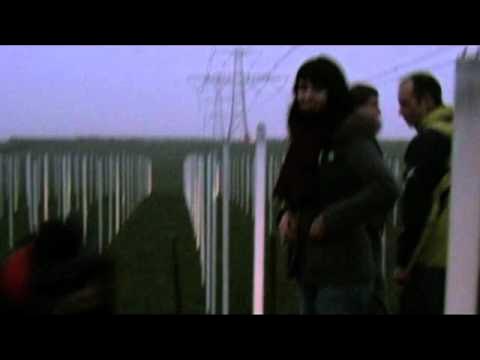
Fluorescent Lights under High Voltage Power Lines! — emfhomesafety

emfhomesafety

Overhead 400-kilovolt transmission lines generate ambient electric fields strong enough to illuminate fluorescent tubes wirelessly across a 60-meter footprint, but upright observers extinguish the glow by shunting displacement current into the ground.

AI-assisted summary of Fluorescent Lights under High Voltage Power Lines! — original source. Check the original for full context.

Source published:

Key ideas

  • Artist Richard Box deployed hundreds of fluorescent tubes under 400 kV overhead power lines, illuminating them purely via ambient capacitive electric fields without any wired connections or external power supplies. (0:50)
  • The installation revealed an effective lighting boundary of approximately 60 meters in diameter, beyond which field intensity dropped below the threshold required to excite the phosphor coating. (3:07)
  • Standing observers unintentionally extinguished nearby tubes because the human body acts as a taller grounding conductor that diverts displacement current away from the glass. (5:07)
  • The array was laid out in a strict equilateral triangular grid spaced wider than tube lengths to prevent cascading falls and ensure uniform energy distribution across the field. (7:22)

Detailed notes

## Background Published on YouTube by the channel emfhomesafety on April 28, 2011, this video highlights an art installation created by Richard Box. According to the page description, the project visually demonstrates the electromagnetic fields produced beneath high-voltage transmission lines.

## TL;DR Artist Richard Box brought an electrical urban legend to life by planting hundreds of unconnected fluorescent tubes upright in a field beneath 400-kilovolt transmission lines. Powered entirely by the ambient capacitive electric field without wires or generators, the tubes illuminated reliably within a 60-meter diameter, arranged in an equilateral triangular grid. Observers walking through the installation acted as grounded conduits, inadvertently turning off individual lights simply by standing taller than the tubes and restoring them when ducking. The piece evolved into a striking public spectacle that made the invisible electromagnetic radiation of the power grid tangible and visible to astonished visitors.

## Atmosphere & style The presentation carries an eerie, contemplative, and wonderstruck tone that bridges casual folklore with practical physics. Richard Box reflects thoughtfully on the trial-and-error construction, capturing the quiet magic of standing in a dark, glowing pasture surrounded by buzzing 400 kV infrastructure. Watching his recollections feels intimate and revelatory, evoking the shared disbelief and childlike excitement of local crowds encountering an uncanny, responsive electrical playground.

## Bulletin - [00:50](https://www.youtube.com/watch?v=cXhZvyGtMrk&t=50s) Artist Richard Box deployed hundreds of fluorescent tubes under 400 kV overhead power lines, illuminating them purely via ambient capacitive electric fields without any wired connections or external power supplies. - [03:07](https://www.youtube.com/watch?v=cXhZvyGtMrk&t=187s) The installation revealed an effective lighting boundary of approximately 60 meters in diameter, beyond which field intensity dropped below the threshold required to excite the phosphor coating. - [05:07](https://www.youtube.com/watch?v=cXhZvyGtMrk&t=307s) Standing observers unintentionally extinguished nearby tubes because the human body acts as a taller grounding conductor that diverts displacement current away from the glass. - [07:22](https://www.youtube.com/watch?v=cXhZvyGtMrk&t=442s) The array was laid out in a strict equilateral triangular grid spaced wider than tube lengths to prevent cascading falls and ensure uniform energy distribution across the field.

## Key takeaways - [00:50](https://www.youtube.com/watch?v=cXhZvyGtMrk&t=50s) The art installation originated from an electrical folklore myth that fluorescent tubes could glow unsupported beneath high-voltage lines. - [01:22](https://www.youtube.com/watch?v=cXhZvyGtMrk&t=82s) Ambient alternating electric fields excite gas within the commercial tubes, emitting ultraviolet light that stimulates the internal phosphor powder into a visible glow. - [03:07](https://www.youtube.com/watch?v=cXhZvyGtMrk&t=187s) Initial setup involved staking 300 tubes in a single day, drawing from a total stock of over 1,100 tubes. - [03:35](https://www.youtube.com/watch?v=cXhZvyGtMrk&t=215s) Variations in line sag cause significant field gradient changes, with stronger fields under mid-span drops and weaker fields near taller pylons. - [04:02](https://www.youtube.com/watch?v=cXhZvyGtMrk&t=242s) The outer perimeter of the illuminated installation reached approximately 60 meters in diameter, marking the practical threshold where field strength failed to sustain ionization. - [05:07](https://www.youtube.com/watch?v=cXhZvyGtMrk&t=307s) The overhead transmission cables operated at 400 kilovolts (400,000 volts), generating massive capacitive coupling across the pasture. - [05:35](https://www.youtube.com/watch?v=cXhZvyGtMrk&t=335s) An upright person taller than the tubes intercepts field lines and shunts the electric potential straight to the ground, causing nearby tubes to switch off. - [05:52](https://www.youtube.com/watch?v=cXhZvyGtMrk&t=352s) Crouching or ducking below the height of a tube immediately restores its illumination by removing the body from the primary path of the displacement current. - [06:35](https://www.youtube.com/watch?v=cXhZvyGtMrk&t=395s) Dense crowds of visitors inadvertently extinguished entire sections of the installation simultaneously by moving through the field. - [07:22](https://www.youtube.com/watch?v=cXhZvyGtMrk&t=442s) Tubes were arranged into an equilateral triangular pattern with spacing exceeding the length of a single tube to prevent domino-effect collapses. - [07:45](https://www.youtube.com/watch?v=cXhZvyGtMrk&t=465s) Consistent geometric placement ensured balanced field drawing, preventing localized tube clusters from monopolizing available electrical energy. - [08:30](https://www.youtube.com/watch?v=cXhZvyGtMrk&t=510s) The installation functioned safely as a participatory nocturnal playground, letting children and families interact dynamically with invisible electromagnetic forces. - [10:27](https://www.youtube.com/watch?v=cXhZvyGtMrk&t=627s) The sculpture ran entirely on ambient power losses from the electrical grid without generators, batteries, or hidden circuitry. - [10:55](https://www.youtube.com/watch?v=cXhZvyGtMrk&t=655s) The central artistic achievement of the project was described as 'making the invisible visible' to the general public. - [11:18](https://www.youtube.com/watch?v=cXhZvyGtMrk&t=678s) Spectators routinely expressed shock and skepticism that stray electromagnetic fields could light large numbers of bulbs directly out of thin air.

## Detailed walkthrough ### [00:50](https://www.youtube.com/watch?v=cXhZvyGtMrk&t=50s) The Myth and Physics Behind the Glowing Tubes

The inspiration for the installation came from word of mouth—an urban myth passed along by a friend who described witnessing fluorescent tubes illuminating beneath high-voltage transmission pylons. While the underlying phenomenon is treated as common folklore in electrical and physics circles, almost no one actually ventures out into the countryside to test it at scale. Tracking down an accessible, functional site beneath a high-voltage line where the field was strong enough proved to be a challenging endeavor.

Inside a standard fluorescent tube, an electrical discharge excites gases that emit invisible ultraviolet radiation, which then strikes the phosphor coating on the glass interior to produce visible white light. Richard Box notes that manufacturers rarely advertise the exact proprietary gas mixes or proportions used inside their commercial tubes. Regardless of the precise chemistry, placing the tube in a strong ambient alternating electric field is enough to energize the gas and excite the phosphor without any wired physical connection or external power supply, resulting in an eerie, stable glow in the dark.

- The idea originated as a whispered rumor and urban myth passed along by friends before being scouted and confirmed in the field. - The artist noted the rarity of people testing the concept firsthand: “There is a commonly known fact that this thing happened, it's kind of commonly found, I don't actually know many people have actually been out to do it.” - The tubes rely on ambient electric fields exciting the internal gas mixture, emitting ultraviolet light that strikes the white powder coating to produce visible light.

---

[03:07](https://www.youtube.com/watch?v=cXhZvyGtMrk&t=187s) Laying Out the Installation and Testing Boundaries

Setting up the installation required planting hundreds of tubes upright across the open field. Having set up 300 tubes in a single day, with an inventory of another 800 tubes on hand, Box tested the limits of the field's reach. Weather played an immediate role; windy nights destabilized the array, while still, clear conditions allowed for steady observations. Because the high-voltage lines sag lower toward the center of a span and rise higher as they approach the pylons, the strength of the field varies dramatically across the landscape.

To determine the boundaries of the artwork, Box mapped the threshold of the field outward. By the time the installation reached roughly 60 meters in diameter, the tubes along the perimeter began to flicker and dim. This established the functional perimeter of the piece—not the physical edge of the electromagnetic field itself, but the practical boundary where the field gradient ceases to be intense enough to sustain visible illumination in the gas.

```mermaid flowchart TD accTitle: Electric Field Interaction Diagram accDescr: Shows how high-voltage transmission lines power the fluorescent tubes and how human presence diverts the current to earth.

subgraph PowerSource["High-Voltage Transmission"] Lines["400 kV Overhead Power Lines"] end

subgraph FieldArray["Installation Zone"] Field["Ambient Alternating Electric Field"] Tube["Fluorescent Tube (Phosphor Glows)"] Person["Observer Standing Upright"] end

subgraph EarthGround["Ground"] Earth["Earth Ground"] end

Lines --> Field Field -->|"charges tube"| Tube Tube --> Earth Field -->|"intercepted by taller body"| Person Person -->|"shunts charge away"| Earth ```

- Three hundred tubes were erected in a single session, with 800 additional tubes available in reserve. - The effective lighting perimeter extended to approximately 60 meters in diameter from the center. - As the transmission lines climb higher near the pylons, field strength drops below the threshold required to strike the tubes. - Regarding the outer perimeter, Box observed: “By the time I got to 60 meters in diameter, the outside lines were not lighting very well and also reached the—it's not the edge of the electric, the outer limit, basically the electric field being powerful enough to light a fluorescent tube.”

---

[05:07](https://www.youtube.com/watch?v=cXhZvyGtMrk&t=307s) Human Interference and the Grounding Effect

Once the tubes were standing, an unexpected interactive phenomenon emerged whenever people approached them. If an observer walked directly up to an illuminated tube, the light abruptly went out. When the person crouched or ducked below the height of the tube, the glow snapped back on. The overhead lines operated at 400 kilovolts (400,000 volts), generating a massive capacitive field between the conductors and the earth.

Because the human body is conductive, an upright person standing next to a tube acts as a preferred grounding path. Standing taller than the tube intercepts the local electric field lines, shunting the displacement current directly down through the body into the soil before it can energize the tube. When large crowds and families with children arrived at the installation, their presence inadvertently extinguished entire clusters of the artwork simply by walking through the grid.

- Overhead cables carried 400 kV (400,000 volts), creating the massive capacitive field across the open pasture. - Approaching a tube upright extinguishes it; ducking down low immediately restores illumination. - Observers act as lightning rods for the displacement current, routing the potential directly to earth. - Explaining the phenomenon, Box said: “You're higher, your head is higher than the tube, so you're taking the electricity down through you.” - As Box described the impact of crowds: “When a lot of people turned up and there's a lot of people in the piece, there wasn't very many tubes there, people were interrupting the electric field and because most people—the kids were kind of taller than the tubes—they were taking the energy through them down to earth.”

---

[07:22](https://www.youtube.com/watch?v=cXhZvyGtMrk&t=442s) Geometry, Spacing, and the Community Experience

To prevent the tubes from interfering with one another or distorting the field unevenly, Box laid them out with deliberate geometric precision. The tubes were staked in an equilateral triangular grid, with the distance between adjacent tubes measured to be longer than the length of an individual tube. This ensured that if high winds or accidents caused a tube to fall over, it would not trigger a domino effect across the field. The uniform height and spacing also guaranteed an equal distribution of energy across the installation, avoiding localized voltage drains.

The installation quickly evolved from an isolated physical experiment into a community gathering. Families and local residents traveled out to the site after dark, bringing children who treated the illuminated meadow as a glowing labyrinth. While touching high-voltage equipment is lethal, wandering through the capacitive field under the lines was safe, creating the uncanny sensation of walking through an open-air electrical playground where lights reacted dynamically to human movement.

- Tubes were arranged in a strict equilateral triangle pattern at consistent heights. - Spacing between tubes deliberately exceeded the physical length of a tube to prevent domino collapses if any fell. - Box described his methodology: “I just try to sort of make it sort of kind of scientific so that um just there was no bunching up and there was no sort pulling power down to one point.” - Local visitors brought their children, turning the installation into an impromptu science lesson and a glowing nocturnal playground.

---

[10:27](https://www.youtube.com/watch?v=cXhZvyGtMrk&t=627s) Making the Invisible Visible

For Richard Box, the installation stood as the largest and most ambitious sculptural work he had ever constructed—an artwork that functioned as an autonomous, living entity powered entirely by ambient loss from the National Grid. Rather than relying on hidden generators or batteries, the meadow drew its entire presence from the invisible electromagnetic fields that continuously envelop high-voltage infrastructure.

The reaction from visitors was one of complete astonishment. People arriving at the site routinely stopped dead in their tracks, struggling to comprehend how hundreds of unconnected glass tubes could burn brightly in the middle of a dark pasture. Observers frequently ran back to Box demanding an explanation, initially refusing to believe that stray capacitive coupling from overhead transmission lines could generate such power out of thin air.

- The project represented Box’s largest physical installation and operated with zero self-contained wiring or power sources. - A friend of the artist captured the core essence of the work in a single sentence: “A friend of mine summed up quite nicely, he just said, ‘What you've done is you've made the invisible visible.’” - Box recounted the public's disbelief: “My favorite memories are of people just being amazed by it and stopped in their tracks and running back to me going hang on, what, how, why, and what's how are these lighting, what's going on, and people not believing me that it was down to the power loss from this power line.”

## Mentioned Richard Box, National Grid, emfhomesafety

## Video description An amazing art installation by Richard Box highlighting the EMF fields caused by high voltage power lines.

[Source](https://www.youtube.com/watch?v=cXhZvyGtMrk)

中文简报

理查德·博克斯在400千伏输电线下方点亮300根无连线荧光灯管 架空400千伏输电线路产生的环境电场足以在60米范围内无线点亮荧光灯管,但站立的观察者会因将位移电流导入地面而导致荧光熄灭。 艺术家理查德·博克斯(Richard Box)通过将数百根未接线的荧光灯管直立插在400千伏输电线路下方的田野中,让一个电气都市传说变成了现实。这些灯管按等边三角形网格排列,在没有电线或发电机的情况下,完全依靠周围的电容电场在60米直径范围内稳定发光。在装置中行走的观察者则充当了接地导体,仅仅因为站立高度超过灯管,就会无意中熄灭个别灯光,而蹲下时灯光又会恢复。该作品演变成一场引人注目的公共奇观,让惊叹不已的参观者真切直观地看到了电网中原本无形的电磁辐射。 艺术家理查德·博克斯在400千伏架空输电线路下布置了数百根荧光灯管,在没有任何电线连接或外部电源的情况下,完全利用环境电容电场将其点亮。 (0:50) 该装置揭示出大约60米直径的有效照明范围边界,超出该范围后,电场强度便会降至激发荧光粉涂层所需的阈值以下。 (3:07) 站立的观察者会无意中熄灭附近的灯管,因为人体充当了更高的接地导体,将位移电流从灯管导走。 (5:07) 整个阵列按照严格的等边三角形网格排列,间距大于灯管长度,以防止发生连锁倒塌,并确保电场能量在田野中均匀分布。 (7:22)

Reading summary

Artist Richard Box confirmed a long-standing piece of electrical folklore by arranging hundreds of unconnected fluorescent tubes beneath 400-kilovolt transmission lines, powering them entirely with stray alternating electric fields. The resulting installation exposed the physical dimensions of transmission line radiation while demonstrating how grounded human bodies interact with ambient electromagnetic fields. Physics of Wireless Illumination (0:50) The installation originated from an urban myth regarding fluorescent tubes illuminating beneath high-voltage transmission pylons—a concept widely recognized in physics folklore but rarely demonstrated at scale in the field. Inside a standard fluorescent tube, an electric discharge excites internal gases to emit invisible ultraviolet radiation, which strikes a phosphor coating on the glass interior to generate visible white light. Box observed that commercial manufacturers rarely disclose the precise gas mixtures inside their products, yet the ambient alternating electric field beneath the power lines energized the tubes reliably without any physical connection or battery. Field Boundaries and Grid Geometry (3:07) To map the reach of the lines, Box erected 300 tubes in a single day, maintaining an inventory of 800 additional tubes in reserve. Because overhead conductors sag lowest midway between pylons and rise near the towers, field intensity fluctuated across the landscape. The functional perimeter of the installation reached approximately 60 meters in diameter; past this boundary, the electric field gradient fell below the threshold required to strike the gas, causing the perimeter tubes to flicker and dim. To ensure consistent power distribution and prevent localized voltage drains, Box arranged the tubes at uniform heights in an equilateral triangular grid. The spacing between adjacent stakes was deliberately measured to exceed the length of a single tube. This precise scientific layout prevented falling tubes from causing a cascading domino collapse during high winds, while maintaining an even draw across the ambient field. Human Body as an Electrical Shunt (5:07) Once the array was erected, human interaction produced an unexpected grounding effect. When an observer walked up to a glowing tube, the light extinguished, only to reignite immediately if the person crouched or ducked below the tube's height. The 400-kilovolt (400,000-volt) overhead lines generated a continuous capacitive field between the cables and the earth. Because the human body is conductive, an upright person standing taller than a tube acts as a preferred path to earth. By intercepting the displacement current and routing it directly into the soil, visitors bypassed the tube's electrical field. When large crowds and families walked among the arrays, their presence inadvertently turned off entire clusters of tubes across the field. Public Response to Invisible Infrastructure (10:27) Operating without batteries, wired hookups, or concealed generators, the meadow stood as Box's largest sculptural work, powered solely by ambient losses from the National Grid. The array transformed the pasture into a nocturnal public gathering, where visitors safely navigated the glowing grid while discovering how their movements altered the lights. The initial reaction among attendees was profound astonishment, with many struggling to accept that stray capacitive coupling from overhead cables could power unconnected light fixtures in an open field. Box recalled onlookers stopping dead in their tracks and demanding explanations, validating a peer's observation that the installation had succeeded in 'making the invisible visible.' The installation demonstrated that high-voltage transmission lines generate functional displacement currents in the surrounding air, while revealing that the field's capacity to illuminate unconnected tubes is constrained by line height, a roughly 60-meter operational radius, and the disruptive grounding presence of human observers.

精炼阅读摘要

艺术家理查德·鲍克斯(Richard Box)通过在高压输电线下方竖立数百根未接通电线的荧光灯管,将口耳相传的物理传说转化为实地装置艺术,利用空间交变电场激发荧光粉发光,直观展现了电网周围无形的环境电磁能量。 高压电容场激发气体发光的物理机制 (0:50) 该装置艺术最初源于朋友转述的都市传言与电气圈内的物理常识,即高压输电塔下的荧光灯管无需接线即可发光。标准商用荧光灯管内部填充了特定气体混合物,内壁涂有荧光粉涂层。当灯管置于高压线产生的高强度环境交变电场中时,管内气体受到电场激发产生放电现象,释放出不可见的紫外线辐射,紫外线进一步撞击灯管内壁的白色粉末涂层,从而激发出肉眼可见的稳定白光。鲍克斯指出,尽管制造商通常对其商业灯管内的气体配比保密,但在足够强的电场中,任何标准灯管都能在没有物理连线或外部独立电源的情况下持续发光。 输电线路弛度与六十米发光边界测绘 (3:07) 为了探索电场强度的实际覆盖极限,鲍克斯在单日内架设了300根灯管,并备有800根作为储备。实际观测显示,灯管的发光稳定性受到天气与地形的直接影响:无风且晴朗的夜晚发光稳定,而大风天气容易破坏阵列结构的平稳。由于400千伏(40万伏)高压导线在两座铁塔跨度中央由于重力自然下垂(弛度最低),而在靠近两端输电铁塔时逐渐升高,地面附近的环境电场强度在整片草地上呈现出剧烈的梯度差异。 通过向外逐步布设灯管进行边界测定,鲍克斯发现当阵列扩展到直径约60米时,外围区域的灯管开始出现闪烁并逐渐熄灭。这一范围确立了该作品的功能边界。鲍克斯强调,这60米直径并非电磁场本身的物理终点,而是电场强度降低至无法维持管内气体电离激发荧光粉的临界阈值边界;在更靠近铁塔、导线悬挂更高的区域,场强同样会降至点亮阈值之下。 人体导电性导致的位移电流接地拦截 (5:07) 当装置在田野中矗立后,现场显现出一种出乎预料的动态交互现象:当观察者径直走向一根明亮的灯管时,该灯管会瞬间熄灭;而当人蹲下或弯腰使其身体高度低于灯管顶端时,灯管随即重新亮起。这种现象根源于人体自身的导电特性以及400千伏高压导线与大地之间形成的巨大电容场。人体在地面直立时,相当于一根接入大地的优选导电通路或避雷针。 由于直立成年人甚至儿童的头部高度通常超过灯管,人体会优先拦截局部的电场线,将本应穿过并激发灯管的位移电流直接经由身体导入土壤,从而切断了灯管的能量来源。鲍克斯指出,当大量观众和带着孩子的家庭同时走进灯管阵列时,密集走动的人群会在无意中大面积遮蔽电场,导致整片区域的灯管成群熄灭,形成了灯光随人体移动而动态明灭的连锁反应。 等边三角阵列工程与公众互动体验 (7:22) 为确保整套阵列在物理和电气层面保持稳定,鲍克斯采用严谨的几何结构进行规划,将所有灯管排列为规则的等边三角形网格。相邻灯管之间的距离被严格设定为大于单根灯管的自身长度,这种间距设计既能防止大风或意外导致灯管倾倒时引发多米诺骨牌式的连环倒塌,又能实现能量在整片场地上的均匀分布,避免灯管因距离过近而产生局部电场争夺与功率下拉。 虽然直接接触高压电力设备具有致命危险,但在高压线下方开阔的电容场中穿行本身是安全的。该装置因此迅速从单一的物理验证转变为社区公共事件,当地居民携家带口在夜间前来参观。孩子们将发光的草地当作夜间迷宫穿行玩耍,装置在客观上变成了一堂生动的露天科学互动课,使抽象的电磁场物理机制以极具沉浸感的方式呈现给公众。 电网无形损耗的可视化艺术转化 (10:27) 该项目成为鲍克斯职业生涯中规模最大、最具雄心的雕塑装置,其独特性在于整套系统完全不依赖任何发电机、隐藏电线或自带电池,而是作为一个自主实体,直接利用国家电网(National Grid)高压基础设施向周边空间持续散逸的无形电磁损耗维持运转。 现场参观者面对黑夜草地中数百根完全独立、明亮发光的玻璃灯管,普遍表现出难以置信的震惊,甚至反复向艺术家核实是否存在隐蔽电源。鲍克斯的朋友对此评价称,该作品的核心价值在于“将无形的存在转化为肉眼可见”。装置通过直观的视觉冲击打破了公众对电能传输形态的固有认知,证明了高压电力线周围弥散性电容耦合现象的真实存在与能量强度。 该装置成功证实了高压输电线路下方空间电磁损耗足以激发荧光放电,并将这种看不见的物理环境转化成了兼具交互性与公共教育意义的视觉艺术。但现场记录也表明,该系统的有效发光严格受制于导线离地高度、气象条件以及人群密集导致的接地屏蔽效应,其发光效能存在明显的空间临界范围。

Detailed notes — zh

## Background 该视频由 YouTube 频道 emfhomesafety 于 2011 年 4 月 28 日发布。页面简介指出,这是一件由理查德·鲍克斯(Richard Box)创作的惊人艺术装置,旨在通过艺术手段具象化展示高压输电线路所产生的电磁场(EMF)。 ## TL;DR 艺术家理查德·鲍克斯在 400 千伏高压输电线下插下数百根荧光灯管,利用空气中强大的垂直交变电场激发管内气体和荧光粉,从而在无任何外部接线的情况下点亮灯管。布展过程中团队进行了电场边界与环境影响的测试,并采用等边三角形几何点阵排列以防碰撞并维持均一电荷。夜间现场还出现了一个引人注目的互动现象:站立的人体会阻断电场使灯管熄灭,而蹲下则能让灯管重新发光。整件装置将原本不可见的电磁辐射转化为旷野中震撼的视觉发光景观,吸引了大量观众驻足探索与反思。 ## Atmosphere & style 视频散发着一种融合了野外科学实验与大地艺术探索的奇妙氛围,宁静幽微中带着强烈的探究欲。随着夜色降临,原本空旷漆黑的农田在一根根荧光灯管的冷光中苏醒,伴随着观众与孩童在田野间弯腰起立互动时的纯粹惊叹,情绪逐渐由严谨的物理实证转向对自然隐匿能量的敬畏。整体观感如同一场在夜幕下展开的宁静启蒙,令观者直观感受到将“不可见之物”具象化的诗意震撼。 ## Bulletin - [00:50](https://www.youtube.com/watch?v=cXhZvyGtMrk&t=50s) 艺术家理查德·鲍克斯(Richard Box)在 400 千伏高压电线下布设了多达 800 根荧光灯管,利用空气中泄漏的电磁场使灯管在无物理连线的情况下自发荧光。 - [03:07](https://www.youtube.com/watch?v=cXhZvyGtMrk&t=187s) 现场测试表明电场有效激发直径约为 60 米,且靠近电塔线缆较高处以及边缘区域由于场强较弱,发光亮度显著衰减。 - [04:48](https://www.youtube.com/watch?v=cXhZvyGtMrk&t=288s) 当观众站立靠近灯管时,人体头部高于灯管会充当接地导体切断垂直电场导致灯管熄灭,而弯腰蹲下使高度低于灯管后灯管即可重新点亮。 - [07:22](https://www.youtube.com/watch?v=cXhZvyGtMrk&t=442s) 装置采用等边三角形几何点阵布局,间距大于单根灯管长度以防止倒伏碰撞,同时保证各灯管处于平等的感应场强下。 ## Key takeaways - [00:50](https://www.youtube.com/watch?v=cXhZvyGtMrk&t=50s) 装置灵感源于关于高压电塔附近荧光灯管自发光的都市传说与常识,理查德·鲍克斯首次将其转化为大规模户外艺术实验。 - [01:12](https://www.youtube.com/watch?v=cXhZvyGtMrk&t=72s) 荧光灯的发光机制为高压电场激发管内气体释放不可见的紫外光,随后撞击管壁的白色荧光粉涂层转化为肉眼可见的白光。 - [03:07](https://www.youtube.com/watch?v=cXhZvyGtMrk&t=187s) 现场共准备了 800 根同规格荧光灯管,布展当天首先插下了约 300 根进行实地电场边界摸索。 - [03:30](https://www.youtube.com/watch?v=cXhZvyGtMrk&t=210s) 根据实测光效,装置在直径约 60 米的范围外亮度明显减弱,外围不亮代表局部电场强度已不足以激发荧光管发光。 - [03:52](https://www.youtube.com/watch?v=cXhZvyGtMrk&t=232s) 高压输电线的垂弧效应使靠近电塔处线缆距地面更高,导致电塔附近场强不足以让灯管获得理想光效。 - [04:08](https://www.youtube.com/watch?v=cXhZvyGtMrk&t=248s) 环境气象条件对发光表现有直接影响,干燥多风的天气对灯管发光构成了不利干扰。 - [04:48](https://www.youtube.com/watch?v=cXhZvyGtMrk&t=288s) 400 千伏输电线路产生的垂直电场极易被站立的人体阻断,人体作为导体将原本激发气体的电荷直接导入大地。 - [05:55](https://www.youtube.com/watch?v=cXhZvyGtMrk&t=355s) 观众必须降低身体高度(将头放低至灯管顶端以下),以避免‘抢走’灯管上方的垂直电荷,灯管才能恢复发光。 - [07:22](https://www.youtube.com/watch?v=cXhZvyGtMrk&t=442s) 阵列设计严格控制间距大于单管长度,并采用等边三角形点阵,防止倒伏连锁损坏并避免局部过度吸走电场能量。 - [08:18](https://www.youtube.com/watch?v=cXhZvyGtMrk&t=498s) 这一艺术装置在农田形成了一个兼具美感与公众互动的科学现场,吸引了周边家庭将其作为户外科普游乐场。 - [10:27](https://www.youtube.com/watch?v=cXhZvyGtMrk&t=627s) 作品的核心艺术价值在于‘让不可见之物显形’,成功将原本抽象且不可见的电磁场能量通过大范围视觉光影具象化。 ## Detailed walkthrough ### [00:50](https://www.youtube.com/watch?v=cXhZvyGtMrk&t=50s) 艺术灵感与荧光灯发光原理 艺术家理查德·鲍克斯(Richard Box)回顾了他最初构思这件艺术装置的契机。这一现象最初源于一个传闻或都市传说,他的一位朋友曾提到在高压电塔周围荧光灯管会自行发光。为了找到合适的场地,理查德花了相当长的时间去寻找适合布展的高压输电线路。虽然高压线下荧光管能发光在理论上是一个常识,但在现实中,几乎没有人真正跑到野外实地布置过这样的大型装置。 谈到荧光管的发光机制时,理查德解释了管内气体与发光材料的作用。商业荧光灯通常不会大肆宣传其内部填充的具体气体成分混合比例,但基本原理是管内气体受电场激发产生肉眼不可见的紫外线,紫外线击中灯管内壁涂抹的白色荧光粉涂层,荧光粉便释放出肉眼可见的明亮白光。 ```mermaid flowchart LR accTitle: 荧光灯发光原理示意图 accDescr: 展示高压电场激发灯管内部气体产生紫外线并转化为可见光的流动过程。 subgraph S1["高压电场感应"] A["高压电线电场 (EMF)"] --> B["激发管内惰性气体"] end subgraph S2["光能转换"] B --> C["产生不可见紫外光 (UV)"] C --> D["击中管壁白色荧光粉涂层"] D --> E["释放肉眼可见白光"] end ``` ### [03:07](https://www.youtube.com/watch?v=cXhZvyGtMrk&t=187s) 现场布设与电场边界测试 装置的布展工作量十分庞大,当天团队已经插下了约 300 根灯管。理查德提到自己一共准备了多达 800 根同规格的荧光灯管,并且在现场根据实际光效进行了电场边界的摸索。他最初试图确定电场的有效外围极限:当装置范围扩展到直径约 60 米时,外圈的灯管亮度明显减弱。 输电线路由于垂弧效应,在靠近电塔处线缆位置更高,离地面越远电场强度越弱,因此靠近电塔周围的灯管发光并不理想。当晚的风力较大,而干燥的天气也对发光造成了不利影响。理查德指出,外围灯管不亮并不意味着电场彻底消失,而是“这里的电场强度已经不足以点亮一根荧光灯管”(“the electric field being powerful enough to light a fluorescent tube”)。 - 现场当天安装了 300 根荧光灯管,总共备有 800 根。 - 电场测试直径达到约 60 米,边缘区域亮度显著衰减。 - 天气极为干燥且有风,环境湿度和气象条件对灯管的发光表现有直接影响。 ### [04:48](https://www.youtube.com/watch?v=cXhZvyGtMrk&t=288s) 人体导电与电场遮挡现象 在夜间观察时,现场出现了一个非常奇特且引人注目的物理互动现象:当观众走近发光的灯管时,灯管会突然熄灭;而一旦观众弯下腰或者蹲下身体,灯管又会重新亮起。这种现象的原因在于高达 400 千伏(400 kV)的高压输电线路所产生的强大垂直电场。 理查德详细解释了这一机制:当一个站立的人走近灯管时,人体的头部高度超过了插在地面的灯管顶端。人体本身是导体,站在地上就相当于将上方的电场阻断,把原本会穿过灯管激发气体的电荷直接顺着身体导入大地。当大批观众(包括个子比灯管高的小孩)涌入装置区域时,人群会大面积干扰电场,导致许多灯管熄灭。理查德提醒参观者:“你必须把头放低”(“You've got to get your head lower”),只要人体的物理高度低于灯管,就不会“抢走”灯管上方的电荷,灯管就能维持发光。 ```mermaid flowchart TD accTitle: 人体对垂直电场的旁路接地效应 accDescr: 说明站立与弯腰姿态对荧光灯管发光状态的影响。 subgraph Stand["观众站立姿态"] A1["高压电线 (400 kV)"] --> B1["人体头部(高于灯管)"] B1 --> C1["电流直接经人体入地"] C1 --> D1["灯管电场被切断:灯管熄灭"] end subgraph Crouch["观众蹲下/弯腰姿态"] A2["高压电线 (400 kV)"] --> B2["荧光灯管顶端(高于人体)"] B2 --> C2["电场正常激发管内气体"] C2 --> D2["灯管正常发光"] end ``` ### [07:22](https://www.youtube.com/watch?v=cXhZvyGtMrk&t=442s) 几何阵列设计与公众体验 为了保证装置的视觉美感与物理测量的一致性,理查德在布设灯管时采用了严谨的几何规律。灯管之间的间距被严格设定为大于单根灯管本身的长度,以确保即使某根灯管意外倒下,也不会砸到相邻的灯管。同时,所有灯管按照等边三角形点阵排列,并尽可能保持相同的离地高度。这种设计不仅使整体布局呈现出科学严谨的规整感,也避免了灯管扎堆聚集导致电场能量被局部过度吸走。 这件原本带有实验性质的作品吸引了周边大量家庭前去参观。家长们带着孩子来到这片农田,现场就像一个奇妙的“疯狂游乐场”(mad playground)。孩子们对这种灯管不用插电就能发光的现象表现出了极强的好奇心和参与感,这也成为了一堂生动的野外科学实践课。尽管有人会担心高压电辐射是否危险,但现场展现出的是纯粹的探索乐趣。 - 灯管间距大于灯管长度,防止倒伏产生连锁碰撞损坏。 - 采用等边三角形点阵布局,确保各灯管处于平等的感应场强下,防止电荷局部集中。 - 农田转变为集艺术与科学教育为一体的互动现场。 ### [10:27](https://www.youtube.com/watch?v=cXhZvyGtMrk&t=627s) 将无形变为有形:“让不可见之物显形” 对理查德·鲍克斯而言,这件作品是他艺术生涯中体量最大的一件雕塑装置。高压电线泄漏在空气中的电磁场平时完全无法被人类肉眼察觉,而这件装置通过数百根荧光灯管在夜色中的自发荧光,将这种隐匿的能量以视觉形式展现了出来。一位朋友对此做出了极为精辟的总结:“理查德的一位朋友评价道:‘你所做的一切,就是让不可见之物显形’”(“A friend of mine summed up quite nicely, he just said 'what you've done is you've made the invisible visible'”)。 理查德最珍贵的回忆是看到观众们被眼前的景象彻底震撼。人们在夜色中漫步,原本不相信这些灯管完全没有电线连接,纷纷停下脚步跑回来追问其中的奥秘:“这到底是怎么点亮的?究竟发生了什么?”当夜幕降临、电场中的灯管一根接一根在旷野中散发出幽幽白光的那一瞬间,整个现场充满了惊叹与敬畏之情。 ## Notable quotes > [10:27](https://www.youtube.com/watch?v=cXhZvyGtMrk&t=627s) 你所做的一切,就是让不可见之物显形 — 理查德·鲍克斯的朋友 ## Mentioned 理查德·鲍克斯 (Richard Box), emfhomesafety ## Video description An amazing art installation by Richard Box highlighting the EMF fields caused by high voltage power lines. [Source](https://www.youtube.com/watch?v=cXhZvyGtMrk)

Source quotes

[10:27] 理查德·鲍克斯的朋友: 你所做的一切,就是让不可见之物显形

Original transcript

[0:50] find out about that [0:53] I [0:55] um a rumor an urban myth friend found [0:58] out about this phenomenon friend us to [1:00] go in got pil by [1:03] House St [1:06] Wars around it took me quite a while to [1:09] find a power line where the CH there is [1:10] a commonly known fact that this thing [1:12] happened it's kind of Comm found I don't [1:14] actually know many people have actually [1:15] been out to do [1:28] it [1:51] [Music] [1:56] just the kind of gas is [1:58] inside um does that make a difference I [2:03] couldn't tell you what this one's got in [2:04] what mix are used they put what makes [2:06] the tubes light [2:09] the% um commercially I don't think they [2:13] like to advertise what they've got in [2:19] them the ultraviolet light that you [2:22] can't [2:24] see white powder that releases the white [2:27] light that you can see they look kind of [2:29] bright kind of [2:32] [Music] [2:58] stable [3:07] so done [3:10] today 300 today it's quite exciting I [3:13] mean I remember when I was [3:14] here got [3:16] three nice night last night four days T [3:19] more tubes out we should get about seem [3:22] to be as many it was windy and I've got [3:24] an emergency plan as well if um it [3:26] wasn't as still as the at first wanted [3:28] to find the edge didn't seem to be [3:32] um and if I don't in the time I'm just [3:33] going to start wondering if now there's [3:35] [Music] [3:37] more go to a point so I can get more wi [3:41] in without many [3:43] sh nice I like it getting close to these [3:46] Hedges that's good bu the [3:50] [Music] [3:51] f I had more tubes I've got another 800 [3:54] of the same 5 I was prepared to put them [3:56] all out um did some experiments to see [3:59] the top it got close to the pylon and I [4:01] wasn't getting much light the lines get [4:03] higher and I did imagine it would big by [4:06] the time I got to 60 m in diameter um [4:09] the outside lines were not lighting very [4:12] well and also reached the it's not the [4:14] edge of the electric the outer limit the [4:15] Ed Bas the electric field being powerful [4:18] enough to light to light a fluorescent [4:28] tune [4:48] not they won't like if you walk up to sh [4:50] they go [4:56] out go blow [4:58] head [5:01] yeah it is nice is nice but I prefer [5:03] more [5:07] to unfortunately there's not going to be [5:09] many lit tonight because the [5:12] weather's perfectly dry and [5:28] L [5:30] turn on or off but if you go down low [5:34] they come back on see it [5:45] w see [5:48] F do all of them in the [5:51] world 400 k [5:56] 4 halfway down half it affects the [6:00] production of so the electricity if I'm [6:03] taller than the I'm taking the yeah but [6:07] if you when you're standing next to one [6:09] and it goes off you're blocking yeah [6:13] you're high your your head is higher [6:15] than the tube so you're taking the [6:18] electricity down through [6:20] yoube if you were to walk up if you were [6:23] to go go up to it lower than the tube it [6:25] wouldn't go out when a lot of people [6:27] turned up and there's a lot of people in [6:29] the piece there wasn't very many tubes [6:31] there people were were interrupting the [6:34] the electric field and CU most people [6:37] the kids were kind of taller than the [6:39] they were taking the energy through them [6:42] down to [6:51] earth [6:53] 400,000 on the Creator [6:58] field the [7:00] studio [7:06] sleep you've got to get your head you [7:09] got to get your head [7:10] lower [7:12] dry that's [7:22] it definitely have K so beyond any [7:27] experience clearly you had to be [7:30] around hello distance being longer than [7:34] the distance of the tube so if they fell [7:36] over [7:37] they actually measur but also so that um [7:42] they've all got an equal [7:47] chance try to get the same height as [7:52] well equal [7:55] triangle equal triangle so I just try to [7:58] sort of make it sort of kind of [8:00] scientific so that um just there was no [8:02] bunching up and there was no sort [8:04] pulling power down to one [8:06] point [8:11] [Music] [8:23] it I didn't really know what this piece [8:26] was going to be like or who was going to [8:27] come and see it and um [8:32] the country brought their kids along my [8:34] kids are do few did [8:36] it sort of teaching sort of experience [8:39] for them I don't [8:42] know they never [8:44] seen and they were they were probably [8:47] more into it than [8:54] the up fun things perfect Danger really [9:00] no you know um it's just a mad [9:02] playground Bally was ABS [9:06] [Music] [9:11] brilant what happens if it's sort of you [9:14] know [9:19] blowing you get Elric blow D when the [9:24] tub apparently yeah you can if Dennis [9:27] was telling me the day go out got things [9:30] to do when are they going to come [9:33] on and looking going they're on now just [9:36] got just go out there and spend spend a [9:38] bit of time with [9:58] it [9:59] [Music] [10:19] [Music] [10:27] could around for me it was [10:29] the chance to make it the biggest piece [10:31] of sculpture that I've ever made and as [10:33] I was saying to make something that is [10:36] own [10:38] thing A friend of mine summed up quite [10:40] quite nicely he just said what you've [10:41] done is youve made um The Invisible [10:44] visible yeah that is [10:47] really good my favorite memories are of [10:51] people um just being Amazed by it and [10:53] and and yeah stopped in their tracks and [10:55] running back to me going hang on what [10:58] how why and what what's how are these [11:00] lighting what's going on and and people [11:02] not believing me that it was down to the [11:04] the the power loss from this power line [11:06] it was a great a great sense of of sort [11:09] of a and excitement um out there when [11:12] you know that that moment when they do [11:13] come on and people are just [11:27] like [11:37] [Music] [11:58] [Music]