Mozart Defies Emperor Joseph Over Royal Demand to Cut Opera Notes
prestoagitato2
Mozart rejects Emperor Joseph II's demand to trim his score for listener endurance, insisting the work contains neither more nor fewer notes than required.
AI-assisted summary of Amadeus - "There are simply too many notes." — original source. Check the original for full context.
Source published:
Key ideas
- Emperor Joseph II commends Mozart's composition for introducing novelty to the court, but hedges his praise by claiming the work feels overdone. (0:00)
- Director of the Imperial Opera Count Orsini-Rosenberg supplies the Emperor with the specific phrase 'too many notes' to articulate the court's dissatisfaction. (0:00)
- Mozart rejects the Emperor's critique, insisting his composition contains the exact number of notes required, neither more nor less. (0:00)
- Court Composer Antonio Salieri offers cautious agreement to support the Emperor's claim about the limits of an audience's musical endurance. (0:00)
- When urged by the Emperor to cut a few notes to make the piece perfect, Mozart retorts by asking which specific notes the monarch would eliminate. (0:00)
Detailed notes
## Background This video was published on YouTube by prestoagitato2 on November 10, 2008. In the description, the uploader notes that the clip showcases a scene from their favorite movie of all time, quoting the dialogue regarding cutting a few notes to make the piece perfect.
## TL;DR Following a musical performance, Emperor Joseph II compliments Wolfgang Amadeus Mozart's ingenuity but struggles to articulate a lingering critique until Count Orsini-Rosenberg offers the verdict of 'too many notes.' Embracing the phrase, the Emperor asserts that the human ear can only absorb a finite number of notes in an evening, with Court Composer Antonio Salieri quietly endorsing the critique. Mozart vigorously defends his work, insisting it possesses neither more nor less notes than required and labeling the criticism absurd. The exchange culminates in Mozart challenging royal authority by asking the Emperor precisely which notes he believes should be removed.
## Atmosphere & style The scene crackles with comedic yet tense courtly friction, pitting pure creative genius against polished aristocratic superficiality. The Emperor's genial condescension and Salieri's guarded, politic sycophancy create an environment of stifling royal pretension. Watching it feels delightfully awkward and sharp as Mozart's incredulous artistic indignation punctures the court's polite decorum with biting comedic timing.
## Bulletin - [00:00](https://www.youtube.com/watch?v=dCud8H7z7vU&t=0s) Emperor Joseph II commends Mozart's composition for introducing novelty to the court, but hedges his praise by claiming the work feels overdone. - [00:00](https://www.youtube.com/watch?v=dCud8H7z7vU&t=0s) Director of the Imperial Opera Count Orsini-Rosenberg supplies the Emperor with the specific phrase 'too many notes' to articulate the court's dissatisfaction. - [00:00](https://www.youtube.com/watch?v=dCud8H7z7vU&t=0s) Mozart rejects the Emperor's critique, insisting his composition contains the exact number of notes required, neither more nor less. - [00:00](https://www.youtube.com/watch?v=dCud8H7z7vU&t=0s) Court Composer Antonio Salieri offers cautious agreement to support the Emperor's claim about the limits of an audience's musical endurance. - [00:00](https://www.youtube.com/watch?v=dCud8H7z7vU&t=0s) When urged by the Emperor to cut a few notes to make the piece perfect, Mozart retorts by asking which specific notes the monarch would eliminate.
## Key takeaways - [00:00](https://www.youtube.com/watch?v=dCud8H7z7vU&t=0s) Emperor Joseph II frames Mozart's composition as an exceptional and novel effort before qualifying his approval. - [00:00](https://www.youtube.com/watch?v=dCud8H7z7vU&t=0s) Mozart actively seeks royal validation, pressing the Emperor to confirm whether he truly enjoyed the work. - [00:00](https://www.youtube.com/watch?v=dCud8H7z7vU&t=0s) Struggling to articulate his critique, the Emperor relies on Count Orsini-Rosenberg to describe the music as having 'too many notes.' - [00:00](https://www.youtube.com/watch?v=dCud8H7z7vU&t=0s) Mozart reacts defensively to the assessment, arguing for the exactness and necessity of every note in his score. - [00:00](https://www.youtube.com/watch?v=dCud8H7z7vU&t=0s) The Emperor rationalizes his critique by asserting that listener endurance limits how many notes an ear can absorb in an evening. - [00:00](https://www.youtube.com/watch?v=dCud8H7z7vU&t=0s) The court establishment demonstrates institutional alignment as Salieri murmurs assent to validate the Emperor's musical judgment. - [00:00](https://www.youtube.com/watch?v=dCud8H7z7vU&t=0s) Mozart openly dismisses the royal premise of note saturation as entirely absurd. - [00:00](https://www.youtube.com/watch?v=dCud8H7z7vU&t=0s) The Emperor attempts to soften his criticism while maintaining authority, suggesting that minor cuts would yield perfection. - [00:00](https://www.youtube.com/watch?v=dCud8H7z7vU&t=0s) Mozart delivers an incredulous challenge to the Emperor's musical competence by asking which specific notes should be excised.
## Detailed walkthrough ### [00:00](https://www.youtube.com/watch?v=dCud8H7z7vU&t=0s) The Emperor's Critique: "Too Many Notes"
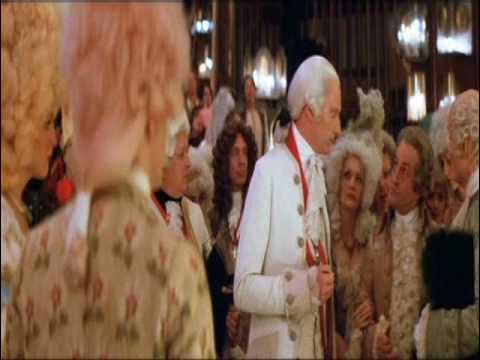
Following a performance, Emperor Joseph II offers his royal assessment to Wolfgang Amadeus Mozart, framing the piece as an exceptional effort that introduced something undeniably novel to the court. Mozart eagerly presses for reassurance, asking if the sovereign genuinely enjoyed the work. While the Emperor insists that he did, he immediately hedges his praise, struggling to articulate a vague dissatisfaction with the composition by remarking that on occasion it felt somewhat overdone. Unable to find the exact phrasing himself, the Emperor turns to the Director of the Imperial Opera, Count Orsini-Rosenberg, who promptly supplies the critique: “Too many notes, Your Majesty.” Seizing upon the phrase with relief, the Emperor repeats the verdict, leaving Mozart visibly bewildered and defensive. Mozart counters directly, insisting, “There are just as many notes, Majesty, as I require, neither more nor less.”
Unaccustomed to being challenged, the Emperor patronizingly explains that human endurance has its limits, asserting that there are only so many musical notes a listener’s ear can absorb in the course of an evening. Looking for validation from the musical establishment, he appeals to Court Composer Antonio Salieri, asking if his assessment holds true. Salieri cautiously agrees with the monarch, murmuring assent to support the Emperor’s stance. Mozart dismisses the entire premise out of hand, declaring, “This is absurd.” Attempting to soften the blow while maintaining royal authority, the Emperor urges Mozart not to take the criticism too harshly, assuring him of the high quality and ingenuity of his craft while reiterating the royal prescription: “And there are simply too many notes. That’s all. Just cut a few and it'll be perfect.” Undaunted and utterly unconvinced, Mozart delivers a sharp, incredulous retort, asking the Emperor, “Which few did you have in mind, Majesty?”
- The Emperor characterises the production as an ingenious, quality effort that introduced something entirely new, but maintains that the listener's ear can only process a finite number of notes in an evening. - Count Orsini-Rosenberg provides the Emperor with the specific phrase “Too many notes,” which the Emperor adopts as his primary critique. - Court Composer Salieri backs the Emperor's musical judgment when called upon for support. - Mozart firmly defends his artistic precision, maintaining that his composition contains neither a single note too many nor one too few.
## Notable quotes > [00:00](https://www.youtube.com/watch?v=dCud8H7z7vU&t=0s) There are just as many notes, Majesty, as I require, neither more nor less. — Wolfgang Amadeus Mozart
## Mentioned Wolfgang Amadeus Mozart, Emperor Joseph II, Count Orsini-Rosenberg, Antonio Salieri, Imperial Opera, Amadeus
## Video description "Just cut a few and it'll be perfect." "Which few did you have in mind?" A scene from my favorite movie of all time.
[Source](https://www.youtube.com/watch?v=dCud8H7z7vU)