Steve Cutts Animation Traps Rodent in Repetitive Consumer Rut
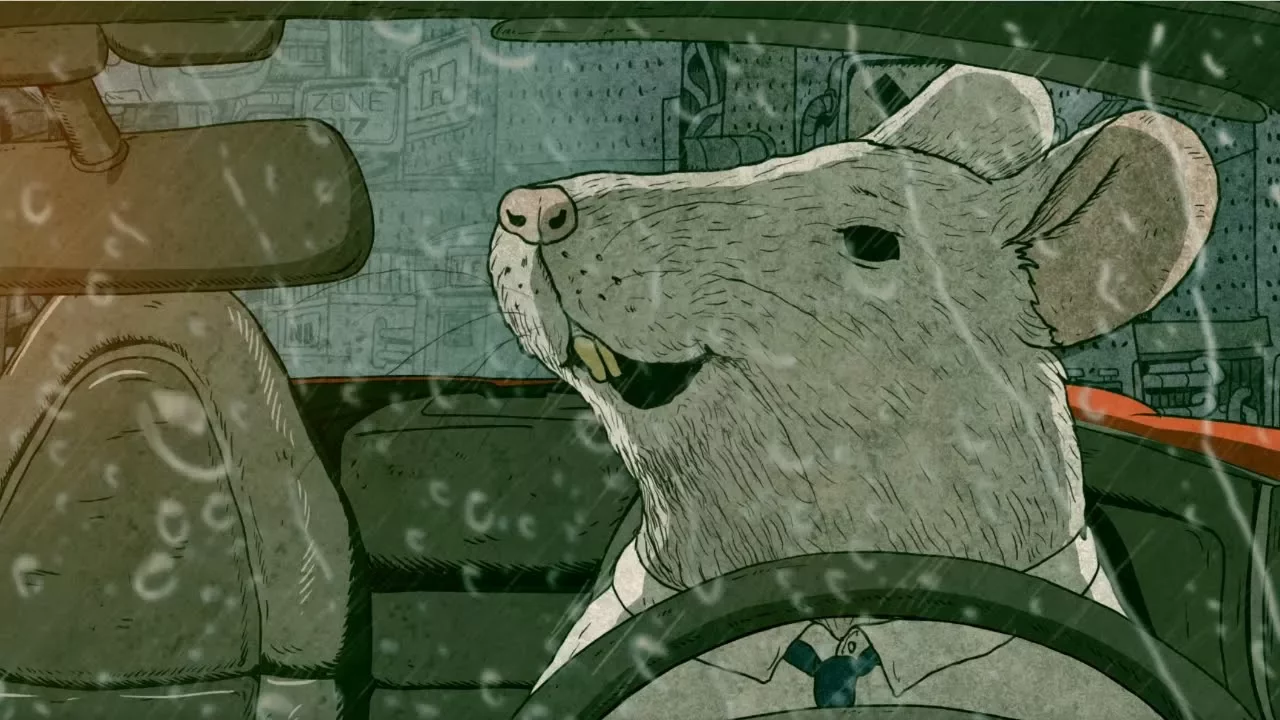
Steve Cutts
Hyper-consumerist routines reduce the pursuit of personal fulfillment to an inescapable loop of automated transactions and societal noise.
AI-assisted summary of Happiness — original source. Check the original for full context.
Source published:
Key ideas
- Steve Cutts' animated short 'Happiness' portrays a rodent's unrelenting pursuit of fulfillment within a hyper-consumerist modern rat race. (0:00)
- The short utilizes classical orchestrations—Edvard Grieg's 'Morning Mood' and Georges Bizet's 'Habanera'—to drive its narrative cadence in place of traditional exposition. (0:00)
- The soundscape relies on fragmented commercial transactions, automated courtesies, and environmental noise to emphasize the mechanical cycle of modern existence. (0:00)
Detailed notes
## Background Published on YouTube by animator Steve Cutts on November 24, 2017, the animated short depicts the unrelenting quest of a rodent searching for happiness and fulfillment.
## TL;DR The short film follows a rodent trapped in the grinding momentum of a hyper-consumerist rat race in search of personal fulfillment. Without conventional dialogue, the narrative unfolds through a repetitive soundscape of ambient crowd noise, commercial transactions, and automated pleasantries. Driven by the orchestral backdrops of Edvard Grieg's 'Morning Mood' and Georges Bizet's 'Habanera,' the journey cycles through sensory overload, brief moments of shock, and persistent transactional refrains before arriving at its conclusion.
## Atmosphere & style The piece carries a frantic, mechanical, and cynical tone, evoking the relentless sensory overload and claustrophobia of modern commercial routines. The striking contrast between grand classical compositions and hollow, looping pleasantries creates a rhythm that feels both dizzyingly intense and numbingly repetitive.
## Bulletin - [00:00](https://www.youtube.com/watch?v=e9dZQelULDk&t=0s) Steve Cutts' animated short 'Happiness' portrays a rodent's unrelenting pursuit of fulfillment within a hyper-consumerist modern rat race. - [00:00](https://www.youtube.com/watch?v=e9dZQelULDk&t=0s) The short utilizes classical orchestrations—Edvard Grieg's 'Morning Mood' and Georges Bizet's 'Habanera'—to drive its narrative cadence in place of traditional exposition. - [00:00](https://www.youtube.com/watch?v=e9dZQelULDk&t=0s) The soundscape relies on fragmented commercial transactions, automated courtesies, and environmental noise to emphasize the mechanical cycle of modern existence.
## Key takeaways - [00:00](https://www.youtube.com/watch?v=e9dZQelULDk&t=0s) The narrative centers on a rodent navigating a relentless quest for happiness in a modern societal setting. - [00:00](https://www.youtube.com/watch?v=e9dZQelULDk&t=0s) Hyper-consumerism and the metaphor of the 'rat race' form the core thematic foundation of the short. - [00:00](https://www.youtube.com/watch?v=e9dZQelULDk&t=0s) Edvard Grieg's pastoral work 'Morning Mood' provides a structured musical backdrop to the opening environment. - [00:00](https://www.youtube.com/watch?v=e9dZQelULDk&t=0s) Georges Bizet's dramatic, rhythmic 'Habanera' underscores the unfolding momentum of the protagonist's journey. - [00:00](https://www.youtube.com/watch?v=e9dZQelULDk&t=0s) Conventional dialogue and traditional exposition are eschewed in favor of ambient sound design and classical music. - [00:00](https://www.youtube.com/watch?v=e9dZQelULDk&t=0s) The audio environment is dominated by repetitive, fragmented customer-service exchanges and transient vocalizations. - [00:00](https://www.youtube.com/watch?v=e9dZQelULDk&t=0s) Crowd congestion and everyday transit sequences illustrate the overwhelming sensory pressures of contemporary life. - [00:00](https://www.youtube.com/watch?v=e9dZQelULDk&t=0s) Recurring automated pleasantries and hurried departures emphasize the hollow, transactional nature of daily interactions. - [00:00](https://www.youtube.com/watch?v=e9dZQelULDk&t=0s) Auditory cues such as chimes and cash register sounds mark commercial checkpoints throughout the cycle. - [00:00](https://www.youtube.com/watch?v=e9dZQelULDk&t=0s) The film concludes on a cyclical rhythm, highlighting that the pursuit of fulfillment remains an endless loop.
## Detailed walkthrough ### [00:00](https://www.youtube.com/watch?v=e9dZQelULDk&t=0s) The Rodent's Quest for Fulfillment and the Ambient Cycle of Modern Life
Steve Cutts’ animated short *Happiness* presents the story of a rodent’s unrelenting quest for happiness and fulfillment within the grinding momentum of a hyper-consumerist rat race. The narrative unfolds against a structured musical landscape featuring Edvard Grieg's pastoral classic “Morning Mood” and Georges Bizet’s dramatic, rhythmic “Habanera.” Rather than relying on traditional exposition or conventional dialogue, the soundscape reflects the mechanical, repetitive atmosphere of everyday transit, commercial transactions, and social routines, punctuated by fragmented customer-service exchanges and transient vocalizations.
The audio registers an ongoing flurry of courtesy formulas, transactional courtesies, and environmental commotion. As the rat navigates crowds and societal pressures, recurring automated pleasantries and hurried goodbyes loop incessantly in the background. In moments of sudden shock or overwhelming sensory input, an exclamation cuts through the noise: “Oh, my God.” The barrage of ambient interaction immediately resumes, cycling through successive refrains of gratitude and casual departures as someone offers a brief “Bye.” The relentless cadence pauses only briefly around a distinct auditory cue marked by a chime or cash register sound, followed by further rounds of gratitude, before arriving at the title card marking “The End” amid the continued, cyclical rhythm of the soundtrack.
- **Musical Score**: Features orchestral arrangements of Edvard Grieg's “Morning Mood” and Georges Bizet's “Habanera.” - **Thematic Focus**: Illustrates the unrelenting modern search for fulfillment, trapped within consumerism and routine. - **Audio Texture**: Dominated by repetitive transactional refrains (“Thank you”), ambient bells (*Ding*), reflective vocal pauses (“Hmm”), and parting remarks (“Bye”).
## Mentioned Steve Cutts, Happiness, Edvard Grieg, Morning Mood, Georges Bizet, Habanera
## Video description The story of a rodent's unrelenting quest for happiness and fulfillment.
Music:
'Habanera' by Bizet
'Morning Mood' by Edvard Grieg
www.stevecutts.com
https://www.facebook.com/SteveCuttsArt https://www.instagram.com/steve_cutts_official https://twitter.com/Steve_Cutts
[Source](https://www.youtube.com/watch?v=e9dZQelULDk)