The Netherlands Is Not 'Holland.' It Never Was.
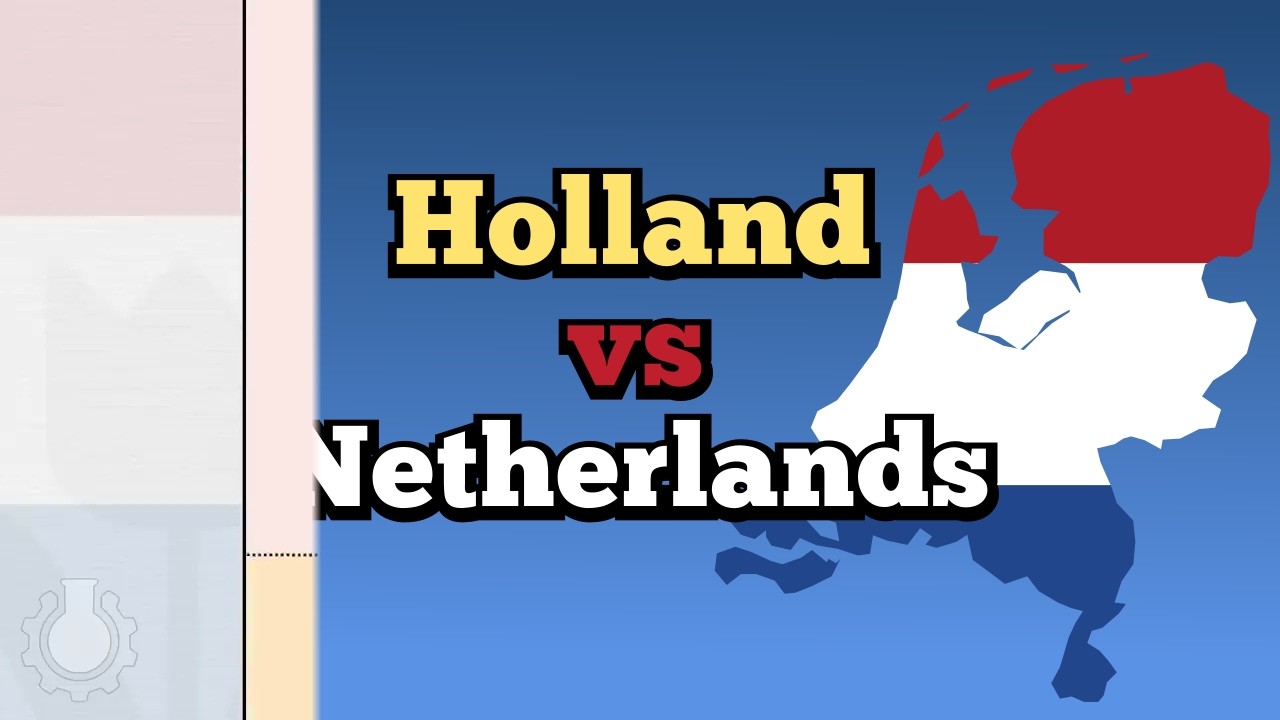
CGP Grey
AI-assisted summary of The Netherlands Is Not 'Holland.' It Never Was. — original source. Check the original for full context.
Source published:
Key ideas
- "Holland" is not a sovereign nation, but merely two of the twelve provinces—North Holland and South Holland—that make up the European country of the Netherlands. (0:00)
- The Dutch government uses Holland.com as its official tourism portal to align with popular tourist search behavior, reinforcing brand confusion around the country's name. (0:00)
- The sovereign Kingdom of the Netherlands consists of four distinct constituent countries: the Country of the Netherlands, Aruba, Curaçao, and Sint Maarten. (1:48)
- Three Caribbean islands—Bonaire, Sint Eustatius, and Saba—are integrated directly into the Country of the Netherlands as special municipalities, voting in Dutch elections while utilizing the US dollar. (1:48)
Detailed notes
## Background Published by educational creator CGP Grey on YouTube on December 22, 2012, this animated explainer tackles common misconceptions regarding Dutch geography and political terminology. The minimal video description provides a direct link to his official website.
## TL;DR The video clarifies that "Holland" is not a country, but rather designates two economic powerhouse provinces—North Holland and South Holland—out of the twelve that make up the European nation of the Netherlands. CGP Grey untangles linguistic confusions regarding why the country's language and people are known as "Dutch" in English before dissecting the wider sovereign entity known as the Kingdom of the Netherlands. This overarching monarchy encompasses four constituent countries—the Netherlands, Aruba, Curaçao, and Sint Maarten—alongside three Caribbean special municipalities: Bonaire, Sint Eustatius, and Saba. In total, the explanation reconciles a geopolitical puzzle comprising six Caribbean islands, four countries, twelve provinces, two Hollands, two Netherlands, and one sovereign kingdom.
## Atmosphere & style Delivered with CGP Grey's signature brisk, rapid-fire cadence, the video maintains a dryly humorous, didactic, and intellectually playful tone. Grey navigates bureaucratic complexities with sharp wit, using eccentric analogies—like comparing the use of "Holland" to calling the United States "Dakota"—to highlight the absurdity of international naming conventions. The pacing feels energetic and punchy, turning what could be dry administrative trivia into a satisfying, cascading reveal of historical and geographic quirks.
## Bulletin - [00:00](https://www.youtube.com/watch?v=eE_IUPInEuc&t=0s) "Holland" is not a sovereign nation, but merely two of the twelve provinces—North Holland and South Holland—that make up the European country of the Netherlands. - [00:00](https://www.youtube.com/watch?v=eE_IUPInEuc&t=0s) The Dutch government uses Holland.com as its official tourism portal to align with popular tourist search behavior, reinforcing brand confusion around the country's name. - [01:48](https://www.youtube.com/watch?v=eE_IUPInEuc&t=108s) The sovereign Kingdom of the Netherlands consists of four distinct constituent countries: the Country of the Netherlands, Aruba, Curaçao, and Sint Maarten. - [01:48](https://www.youtube.com/watch?v=eE_IUPInEuc&t=108s) Three Caribbean islands—Bonaire, Sint Eustatius, and Saba—are integrated directly into the Country of the Netherlands as special municipalities, voting in Dutch elections while utilizing the US dollar.
## Key takeaways - [00:00](https://www.youtube.com/watch?v=eE_IUPInEuc&t=0s) The correct official name for the tulip-growing, windmill-building European nation is the Netherlands, not Holland. - [00:00](https://www.youtube.com/watch?v=eE_IUPInEuc&t=0s) The mainland Country of the Netherlands is partitioned into twelve distinct administrative provinces, including Zeeland, Friesland, Utrecht, and Gelderland. - [00:00](https://www.youtube.com/watch?v=eE_IUPInEuc&t=0s) Calling the entire Netherlands "Holland" is geographically equivalent to referring to the United States as "Dakota." - [00:00](https://www.youtube.com/watch?v=eE_IUPInEuc&t=0s) North Holland and South Holland drive international name recognition because they house the nation's key economic engines and tourist hubs, including Amsterdam and Keukenhof. - [00:00](https://www.youtube.com/watch?v=eE_IUPInEuc&t=0s) English linguistic mismatches led to citizens of the Netherlands being labeled "Dutch," despite native speakers identifying as Nederlands in Nederland. - [00:00](https://www.youtube.com/watch?v=eE_IUPInEuc&t=0s) The German self-designation Deutsche led English speakers to mistakenly name German immigrants in North America the "Pennsylvania Dutch." - [01:48](https://www.youtube.com/watch?v=eE_IUPInEuc&t=108s) The overarching Kingdom of the Netherlands contains four autonomous constituent countries: the Netherlands, Aruba, Curaçao, and Sint Maarten. - [01:48](https://www.youtube.com/watch?v=eE_IUPInEuc&t=108s) The Kingdom of the Netherlands shares a direct land border with the French Republic on the Caribbean island of Saint Martin / Sint Maarten. - [01:48](https://www.youtube.com/watch?v=eE_IUPInEuc&t=108s) Seventeenth-century Dutch maritime exploration left historical namesakes worldwide, including New Amsterdam (New York City), New Netherland, New Zealand, and New Holland (Australia). - [01:48](https://www.youtube.com/watch?v=eE_IUPInEuc&t=108s) Bonaire, Sint Eustatius, and Saba (the BES islands) operate as special municipal extensions of the Country of the Netherlands rather than sovereign territories or provincial lands. - [01:48](https://www.youtube.com/watch?v=eE_IUPInEuc&t=108s) Despite participating in Dutch national elections, residents of the Caribbean special municipalities use the United States dollar rather than the Euro. - [01:48](https://www.youtube.com/watch?v=eE_IUPInEuc&t=108s) Due to the Kingdom's membership in the European Union, residents across all six Dutch Caribbean islands hold Dutch nationality and European Union citizenship.
## Detailed walkthrough ### [00:00](https://www.youtube.com/watch?v=eE_IUPInEuc&t=0s) Holland vs. the Netherlands and the Twelve Provinces
CGP Grey introduces a familiar landscape of windmills, blooming tulips, chocolatey breakfasts, industrious citizens, and constant battles against an encroaching sea—a place casually known to much of the world as "Holland." However, that designation is technically incorrect. As Grey emphasizes: “The correct name for this tulip growing, windmill building hagelslag eating, container ship moving, ocean conquering nation is the Netherlands.” Part of the widespread naming confusion stems from history, as the surrounding region has cycled through various monikers over the past millennium, including the Dutch Republic, the United States of Belgium, and the Kingdom of Holland.
Beyond its shifting historical labels, the administrative geography of the Netherlands fuels the misunderstanding. The European nation is divided into twelve distinct provinces: Groningen, Drenthe, Overijssel, Gelderland, Limburg, Brabant, Zeeland (the namesake that made New Zealand "New"), Friesland (notable for having little hearts on its flag), Flevoland, Utrecht, and finally, North Holland (*Noord-Holland*) and South Holland (*Zuid-Holland*). Because North and South Holland represent only two of the twelve regional divisions, using "Holland" to describe the entire country is fundamentally flawed. Grey illustrates this mismatch with an American comparison: “These provinces make calling the Netherlands 'Holland' like calling the United States 'Dakota'.” Yet unlike North and South Dakota, which Grey jokes are mostly barren landscapes populated by the occasional jackalope, the two Hollands are the economic and demographic powerhouses of the Netherlands. They house the nation's most famous landmarks, including the capital city of Amsterdam and the sprawling tulip grounds of Keukenhof. As a result, if an outsider has heard of a Dutch destination, it almost certainly lies within one of the two Hollands. The Dutch government even leans into this brand confusion by maintaining `Holland.com` as its official tourism portal—nominally because it sounds more welcoming, but realistically because that is the search term tourists use.
The terminology grows even more tangled when examining language and demonyms. While residents of the two specific provinces are Hollanders, all citizens of the wider country are known in English as "Dutch," and their language is also called "Dutch." In their native tongue, however, the populace describes themselves as *Nederlands sprekende Nederlanders in Nederland*, which sounds remarkably like they would prefer English speakers to call them "Netherlanders" speaking "Netherlandish." Simultaneously, just across the eastern border, German citizens refer to themselves as *Deutsche sprechen Deutsch in Deutschland*, which ironically sounds far closer to the English word "Dutch." This exact linguistic misunderstanding is what caused English-speaking Americans to dub German settlers the "Pennsylvania Dutch." To set the record straight, Grey delivers a quick baseline summary: the nation is the Netherlands, its language and people are Dutch, there is no sovereign country called Holland, and North and South Holland are merely two provinces within the whole.
- **The Twelve Provinces:** Groningen, Drenthe, Overijssel, Gelderland, Limburg, Brabant, Zeeland, Friesland, Flevoland, Utrecht, North Holland, and South Holland. - **Top Attractions in the Hollands:** The urban center of Amsterdam and the world-renowned Keukenhof gardens. - **The Tourism Website Irony:** The Dutch government hosts its official travel site at `Holland.com` to cater to the terms people actually search. - **Linguistic Mismatches:** - *Nederlands sprekende Nederlanders in Nederland* (Dutch speakers in the Netherlands). - *Deutsche sprechen Deutsch in Deutschland* (German speakers in Germany, misapplied in the US to create "Pennsylvania Dutch").
---
[01:48](https://www.youtube.com/watch?v=eE_IUPInEuc&t=108s) The Kingdom, the Empire, and the Dutch Caribbean
Just as the domestic definitions are sorted out, the political reality becomes vastly more complex because the country of the Netherlands belongs to an overarching sovereign state sharing the exact same name: the Kingdom of the Netherlands, headed by the Dutch monarch. Sailing away from the cold North Sea and across the Atlantic into the Caribbean reveals three additional constituent countries within this Kingdom: Aruba, Curaçao, and Sint Maarten. These islands are not subordinate colonies or mere external territories; they operate as self-governing, autonomous countries complete with their own separate governments and independent currencies. This dynamic produces a curious geopolitical trivia point regarding Sint Maarten, which encompasses only the southern half of a tiny island whose northern territory is held by France. As Grey notes: “So despite being separated by Belgium on the European map, The Kingdom of the Netherlands and the French Republic share a border on the other side of the world on an island so nice they named it thrice.”
```mermaid flowchart TD accTitle: Structure of the Kingdom of the Netherlands accDescr: A hierarchy chart showing the Kingdom of the Netherlands dividing into four constituent countries, with the Country of the Netherlands containing European provinces and Caribbean special municipalities.
subgraph Kingdom ["The Kingdom of the Netherlands (Monarchy)"] direction TB K_NL["Country of the Netherlands"] K_AW["Aruba"] K_CW["Curaçao"] K_SX["Sint Maarten"] end
subgraph NetherlandsComponents ["Components of the Country of the Netherlands"] direction TB Provinces["12 European Provinces<br>(including North & South Holland)"] BES["3 Caribbean Special Municipalities<br>(Bonaire, Sint Eustatius, Saba)"] end
K_NL --> Provinces K_NL --> BES ```
The historical engine behind this far-flung distribution was the Dutch maritime empire of the seventeenth century, driven by merchants eager to control global commerce and trade hubs. During the 1600s, the Dutch established New Netherland along the East Coast of North America with its capital at New Amsterdam (modern-day New York City), charted New Zealand, and even mapped the Australian continent under the name New Holland. While the formal colonial empire faded, the Caribbean connections endured. The entanglement goes even further: beyond the three self-governing island countries, the *country* of the Netherlands directly incorporates three additional Caribbean islands—Bonaire, Sint Eustatius, and Saba (often grouped as the BES islands or Caribbean Netherlands). These three islands are not separate nations in the Kingdom; they are integrated special municipalities ("cities") of the Country of the Netherlands proper.
Residents living on Bonaire, Sint Eustatius, and Saba vote directly in national Dutch elections alongside mainland Hollanders. Yet despite being direct municipal extensions of the Netherlands, they belong to no province whatsoever, and they do not spend the European Dutch currency of Euros; instead, they conduct commerce in United States dollars. Grey compares this arrangement to a bizarre hypothetical where the island of Hawaii is stripped of statehood, turned into an administrative enclave of the District of Columbia, and forced to use Japanese Yen. Taken together, all six territories—the three constituent countries and the three special municipalities—make up the Dutch Caribbean. Because the Kingdom of the Netherlands is a member state of the European Union, all Dutch Caribbean residents hold Dutch nationality and are officially European citizens. Grey closes by summing up the intricate political puzzle: “So in the end, there are 6 Caribbean islands, four countries, twelve provinces, two Hollands, two Netherlands and one kingdom, all Dutch.”
| Classification | Territory / Entity | Political Status | Currency | |:--- |:--- |:--- |:--- | | **Constituent Countries** | Aruba, Curaçao, Sint Maarten | Autonomous countries within the Kingdom of the Netherlands | Independent local currencies | | **Special Municipalities** | Bonaire, Sint Eustatius, Saba | Direct municipal extensions ("cities") of the Country of the Netherlands | United States Dollar (USD) | | **European Mainland** | 12 Provinces (including North & South Holland) | Core continental territory of the Country of the Netherlands | Euro (EUR) |
- **Imperial Namesakes:** New Amsterdam (New York City), New Netherland, New Zealand, and New Holland (Australia). - **The Island Named Thrice:** The shared Caribbean island known as Saint Martin, Saint-Martin (French collectivity), and Sint Maarten (Dutch country). - **EU Citizenship:** Because the Kingdom of the Netherlands is an EU member, all residents across the six Caribbean islands hold Dutch and European Union citizenship.
## Notable quotes > [00:00](https://www.youtube.com/watch?v=eE_IUPInEuc&t=0s) The correct name for this tulip growing, windmill building hagelslag eating, container ship moving, ocean conquering nation is the Netherlands. — CGP Grey
## Mentioned CGP Grey, The Netherlands, Kingdom of the Netherlands, Dutch Republic, United States of Belgium, Kingdom of Holland, North Holland, South Holland, Groningen, Drenthe, Overijssel, Gelderland, Limburg, Brabant, Zeeland, Friesland, Flevoland, Utrecht, Amsterdam, Keukenhof, Holland.com, Germany, United States, Aruba, Curaçao, Sint Maarten, France, Belgium, Bonaire, Sint Eustatius, Saba, European Union, New Netherland, New Amsterdam, New York City, New Zealand, New Holland
## Video description http://www.cgpgrey.com/
[Source](https://www.youtube.com/watch?v=eE_IUPInEuc)