Billy Joel - We Didn't Start The Fire (Official HD Video)
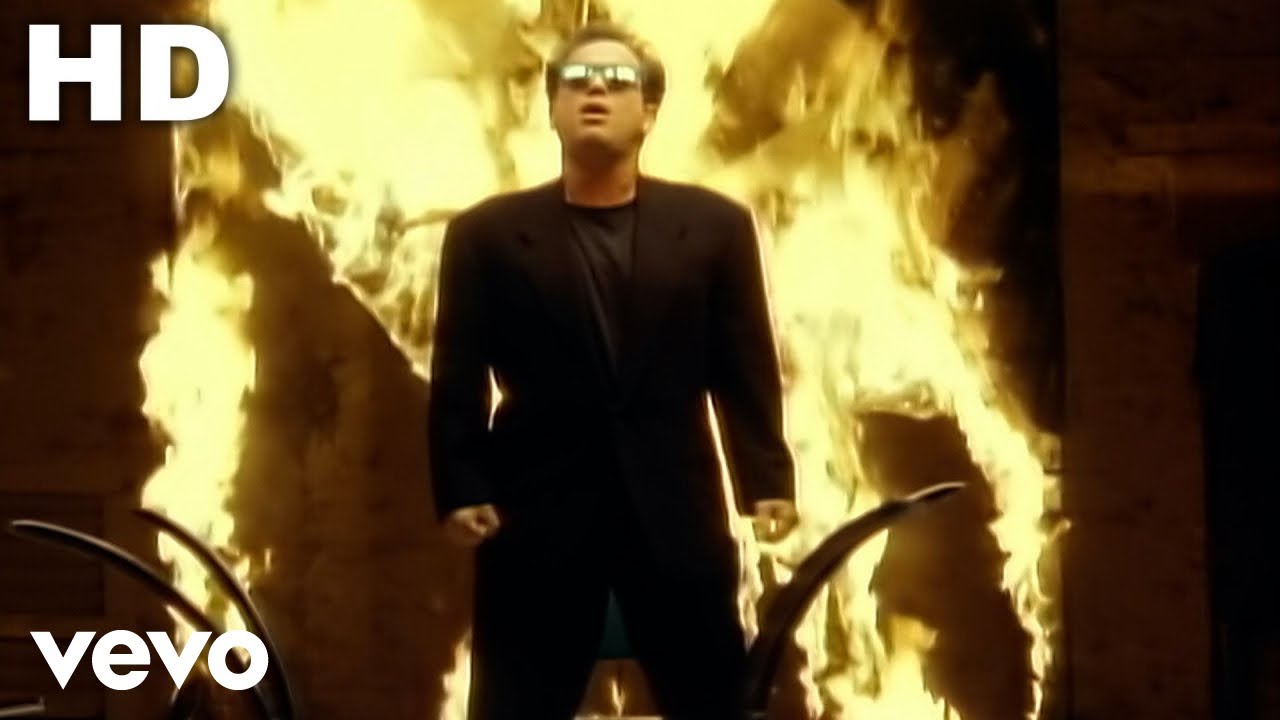
Billy Joel
AI-assisted summary of Billy Joel - We Didn't Start The Fire (Official HD Video) — original source. Check the original for full context.
Source published:
Key ideas
- Billy Joel's 1989 anthem 'We Didn't Start the Fire' presents a relentless chronological inventory of 40 years of 20th-century headlines, politics, and culture spanning from 1949 to 1989. (0:00)
- The narrative progresses from early Cold War tensions and 1950s cultural milestones into the Space Race, civil rights struggles, and the profound generational trauma of JFK's assassination. (1:40)
- Covering modern crises from Watergate and the Iranian Revolution to the AIDS epidemic and the Tiananmen Square crackdown, the song concludes that human chaos will outlast every living generation. (2:56)
Detailed notes
## Background Published on YouTube by Billy Joel on October 3, 2009, this official HD music video features the hit song "We Didn't Start the Fire" from his 1989 album Storm Front. The video description highlights the album's commercial success as a quadruple-platinum Billboard 200 chart-topper and details Joel's legacy as a six-time Grammy Award winner who has sold over 150 million records worldwide.
## TL;DR The song delivers a fast-paced chronological catalog of major historical, political, and cultural events spanning from 1949 through the late 1980s. Starting with postwar Cold War tensions, early civil rights milestones, and 1950s pop culture icons, the narrative rushes into the 1960s with the Space Race, Beatlemania, and the trauma of John F. Kennedy's assassination. It progresses through the counterculture, the Vietnam War era, Watergate, and the complex geopolitical crises and domestic epidemics of the 1970s and 1980s. Through its central refrain, Joel insists that his generation did not ignite the world's chaos, concluding with a stark warning that human turmoil is a perpetual fire that will outlast them all.
## Atmosphere & style The track generates a breathless, relentless momentum, firing off dense lists of historical headlines at a driving tempo that induces an overwhelming sense of sensory overload. Its emotional arc shifts from the brisk, nostalgic energy of mid-century Americana into heightened exasperation and distress as assassinations, wars, and social crises accumulate. Joel's vocal delivery grows increasingly strained and urgent, transforming a history lesson into a frantic, fatalistic outcry about humanity's enduring and unresolved conflicts.
## Bulletin - [00:00](https://www.youtube.com/watch?v=eFTLKWw542g&t=0s) Billy Joel's 1989 anthem 'We Didn't Start the Fire' presents a relentless chronological inventory of 40 years of 20th-century headlines, politics, and culture spanning from 1949 to 1989. - [01:40](https://www.youtube.com/watch?v=eFTLKWw542g&t=100s) The narrative progresses from early Cold War tensions and 1950s cultural milestones into the Space Race, civil rights struggles, and the profound generational trauma of JFK's assassination. - [02:56](https://www.youtube.com/watch?v=eFTLKWw542g&t=176s) Covering modern crises from Watergate and the Iranian Revolution to the AIDS epidemic and the Tiananmen Square crackdown, the song concludes that human chaos will outlast every living generation.
## Key takeaways - [00:00](https://www.youtube.com/watch?v=eFTLKWw542g&t=0s) The song opens in 1949, juxtaposing nascent Cold War friction and McCarthyism with mid-century American entertainment figures like Doris Day, Walter Winchell, and Joe DiMaggio. - [00:00](https://www.youtube.com/watch?v=eFTLKWw542g&t=0s) Pervasive nuclear anxiety and global conflict mark the early 1950s through the Korean War, the Rosenberg executions, H-bomb testing, and the Korean armistice talks at Panmunjom. - [00:00](https://www.youtube.com/watch?v=eFTLKWw542g&t=0s) The core chorus delivers the anthem's primary thesis: the underlying chaos of human history was not created by the current generation, though they actively tried to fight it. - [00:00](https://www.youtube.com/watch?v=eFTLKWw542g&t=0s) The mid-1950s section illustrates simultaneous cultural and geopolitical transformations, from the rise of Elvis Presley and Disneyland to the fall of Dien Bien Phu and the Suez Crisis. - [01:40](https://www.youtube.com/watch?v=eFTLKWw542g&t=100s) The late 1950s capture the birth of the Space Age with Sputnik and the deepening domestic struggle for civil rights during the Little Rock Nine desegregation crisis. - [01:40](https://www.youtube.com/watch?v=eFTLKWw542g&t=100s) Cold War flashpoints accelerate around the turn of the decade with Fidel Castro's takeover in Cuba, the U-2 spy plane incident, and the 1960 presidential election of John F. Kennedy. - [01:40](https://www.youtube.com/watch?v=eFTLKWw542g&t=100s) Early 1960s turbulence merges cultural milestones like Beatlemania and Bob Dylan with critical events like the construction of the Berlin Wall and the Bay of Pigs invasion. - [01:40](https://www.youtube.com/watch?v=eFTLKWw542g&t=100s) The assassination of John F. Kennedy brings an abrupt, exasperated pause to the catalog of early 1960s headlines with the lyric 'JFK blown away, what else do I have to say.' - [02:56](https://www.youtube.com/watch?v=eFTLKWw542g&t=176s) The track navigates late-1960s and 1970s shifts, including the birth control pill, the Apollo 11 moon landing, Woodstock, and the constitutional crisis of Watergate. - [02:56](https://www.youtube.com/watch?v=eFTLKWw542g&t=176s) Middle Eastern turmoil and late Cold War escalations emerge prominently, spotlighting the Iranian Revolution under Ayatollah Khomeini and the Soviet invasion of Afghanistan. - [02:56](https://www.youtube.com/watch?v=eFTLKWw542g&t=176s) The 1980s are depicted through an intense convergence of crises, including the AIDS epidemic, the crack cocaine wave, homeless Vietnam veterans, and medical waste on beaches. - [02:56](https://www.youtube.com/watch?v=eFTLKWw542g&t=176s) A sense of consumerist exhaustion and state violence closes out the verse, referencing corporate 'cola wars' and Beijing's martial law during student protests before Joel declares, 'I can't take it anymore.' - [02:56](https://www.youtube.com/watch?v=eFTLKWw542g&t=176s) The outro warns that global chaos is self-perpetuating and will continue burning long after the present generation passes away.
## Detailed walkthrough ### [00:00](https://www.youtube.com/watch?v=eFTLKWw542g&t=0s) The Early Postwar Era and 1950s Cultural Flashpoints
The track opens with an upbeat, driving tempo as Billy Joel unleashes a rapid-fire inventory of post-World War II headlines, politics, and popular culture beginning in 1949. The opening verses catalog the geopolitical friction of the nascent Cold War alongside American entertainment icons, tracking Harry Truman's presidency, Doris Day's rise, the communist takeover of mainland China under Mao Zedong, the emotional crooning of Johnnie Ray, and the Broadway debut of *South Pacific*. Gossip columnist Walter Winchell and baseball legend Joe DiMaggio appear in the same breath as Senator Joe McCarthy’s anti-communist crusades, Richard Nixon’s political emergence, the classic automobile manufacturer Studebaker, the mass proliferation of domestic television sets, the outbreak of the Korean War, and the sex-symbol ascendancy of Marilyn Monroe. Joel captures the pervasive nuclear anxiety and high-stakes drama of the early 1950s with the execution of Julius and Ethel Rosenberg, the testing of the hydrogen bomb, Sugar Ray Robinson's boxing dominance, and the Korean armistice talks at Panmunjom. The cultural landscape shifts rapidly between Marlon Brando, the Broadway triumph of *The King and I*, J.D. Salinger's seminal novel *The Catcher in the Rye*, Dwight D. Eisenhower's administration, the Jonas Salk polio vaccine, the coronation of Queen Elizabeth II, undefeated heavyweight champion Rocky Marciano, the flamboyance of Liberace, and the death of philosopher George Santayana.
Moving into the core philosophical refrain, Joel presents the defining thesis of the anthem, singing, “We didn't start the fire, it was always burning since the world's been turning.” He pairs this with the immediate generational defense: “No, we didn't light it, but we tried to fight it.” From there, the narrative barrels through the middle years of the decade. Following the death of Joseph Stalin, the shifting Soviet leadership is marked by Georgy Malenkov alongside Egyptian president Gamal Abdel Nasser and the passing of composer Sergei Prokofiev. Domestic and international figures collide with Nelson Rockefeller, Brooklyn Dodgers catcher Roy Campanella, the consolidation of the Communist Bloc, Red Scare attorney Roy Cohn, Argentine leader Juan Perón, maestro Arturo Toscanini, and the introduction of synthetic Dacron fabric. Joel marks a major military milestone with the French defeat at Dien Bien Phu, immediately offset by Bill Haley & His Comets igniting rock and roll with "Rock Around the Clock." The verse culminates in the intellectual and teenage revolution: Albert Einstein's final days, James Dean's tragic death, the Brooklyn Dodgers finally winning the World Series, the craze for Davy Crockett coonskin caps, Walt Disney's *Peter Pan*, the breakthrough of Elvis Presley, and the grand opening of Disneyland. The mid-1950s close out with Brigitte Bardot, the brutal suppression of the Hungarian Revolution in Budapest, the civil rights movement sparked in Alabama, the rhetoric of Nikita Khrushchev, Grace Kelly becoming Princess of Monaco, the scandalous best-seller *Peyton Place*, and the international standoff during the Suez Crisis.
```mermaid flowchart TD accTitle: Historical Progression from 1949 to 1956 accDescr: Flowchart illustrating the cultural and geopolitical events spanning 1949 to 1956 covered in the opening verses of the song. subgraph Early1950s["1949 to 1952: Postwar Tension & Mass Media"] A["Truman & Cold War Politics"] --> B["Korean War & McCarthyism"] B --> C["H-Bomb & Nuclear Anxiety"] end subgraph Mid1950s["1953 to 1956: Culture & Civil Rights"] C --> D["Stalin's Death & Khrushchev"] D --> E["Rock & Roll, Elvis, Disneyland"] E --> F["Budapest, Montgomery, Suez Crisis"] end ```
- Early Cold War and political milestones: Harry Truman, Red China, Joe McCarthy, Richard Nixon, North and South Korea, the Rosenbergs, the H-bomb, Panmunjom, and Dwight D. Eisenhower. - Popular culture and entertainment: Doris Day, Johnnie Ray, *South Pacific*, Walter Winchell, Joe DiMaggio, Marilyn Monroe, Marlon Brando, *The King and I*, and *The Catcher in the Rye*. - Mid-1950s global conflict and societal shifts: Joseph Stalin, Georgy Malenkov, Gamal Abdel Nasser, the fall of Dien Bien Phu, the Hungarian Revolution in Budapest, and the Suez Crisis. - Mid-century Americana: The Brooklyn Dodgers' 1955 championship, Dacron, Davy Crockett merchandise, Elvis Presley, Disneyland, *Peyton Place*, and the rise of television.
---
[01:40](https://www.youtube.com/watch?v=eFTLKWw542g&t=100s) The Space Race, Countercultural Stirrings, and the Fall of Camelot
The tempo remains relentless as the song navigates the late 1950s, marked by racial confrontation and the start of the Space Age. Joel references the integration crisis of the Little Rock Nine, the censorship and Nobel Prize controversy of Boris Pasternak's *Doctor Zhivago*, the batting feats of Mickey Mantle, and Jack Kerouac’s Beat generation touchstone *On the Road*. Geopolitical rivalry surges into orbit with the launch of the Soviet satellite Sputnik, alongside diplomacy with Zhou Enlai, the cinematic acclaim of *The Bridge on the River Kwai*, the 1958 Lebanon crisis, Charles de Gaulle's return to power in France, and the seismic shift in American sports when the Dodgers and Giants relocated to California. The darker, grimmer realities of modern society emerge with the teenage thrill-killing spree of Charles Starkweather and the global birth-defect tragedy caused by thalidomide.
The turn of the decade brings pop milestones and political upheavals: the tragic plane crash that killed Buddy Holly, the cinematic grandeur of *Ben-Hur*, the launch of primates like Able and Baker into space, and the law-enforcement spotlight on the Apalachin mafia meeting. Trends and blunders are captured through the nationwide hula hoop craze, Fidel Castro seizing power in Cuba, and the monumental commercial flop of the Ford Edsel. Cold War tensions flare intensely with the shootdown of the American U-2 spy plane, the resignation of South Korean president Syngman Rhee, the music industry’s Payola radio scandal, and the historic presidential election of John F. Kennedy. Joel pairs this momentum with Chubby Checker popularizing the twist, Alfred Hitchcock terrorizing cinema with *Psycho*, and the violent decolonization crisis involving the Belgians in the Congo.
The song then moves directly into the turbulent early 1960s, juxtaposing the suicide of Ernest Hemingway and the trial of Nazi war criminal Adolf Eichmann with Robert A. Heinlein's science fiction classic *Stranger in a Strange Land*. The escalating confrontation of the Cold War materializes in Bob Dylan's folk anthems, the construction of the Berlin Wall, and the disastrous Bay of Pigs invasion. Cinematic scale and musical revolution collide with David Lean's *Lawrence of Arabia* and the explosion of British Beatlemania across the globe. Domestically, the struggle for racial equality reaches a boiling point during the integration riots at Ole Miss, while John Glenn orbits the Earth and Sonny Liston knocks out Floyd Patterson. The era grows increasingly radicalized and turbulent with the election of Pope Paul VI, the fierce oratory of Malcolm X, the scandalous British Profumo affair ("British politician sex"), and ultimately the trauma of November 22, 1963. Joel punctuates this overwhelming historical shock with the exasperated declaration, “JFK blown away, what else do I have to say.”
- Late 1950s civil rights and space race: Desegregation at Little Rock, the launch of Sputnik, and the space primates. - Turn-of-the-decade events: The death of Buddy Holly, Fidel Castro's Cuban revolution, the commercial collapse of the Edsel, the U-2 incident, and the election of John F. Kennedy. - Cultural phenomena: Chubby Checker’s twist, Hitchcock’s *Psycho*, Bob Dylan, *Lawrence of Arabia*, and the global arrival of Beatlemania. - Early 1960s climaxes: The Berlin Wall, the Bay of Pigs, James Meredith enrolling at Ole Miss, the Profumo affair, and the assassination of JFK in Dallas.
---
[02:56](https://www.youtube.com/watch?v=eFTLKWw542g&t=176s) The Counterculture, Late Cold War Crises, and Modern Tumult
The final movement of the track launches directly into the late 1960s, a period defined by sexual revolution, foreign wars, and political resurgence. Joel rattles off the widespread adoption of the birth control pill, the North Vietnamese leadership of Ho Chi Minh, and Richard Nixon staging an extraordinary political comeback to win the White House. The optimism of the Apollo 11 moon landing and the counterculture peak of Woodstock are quickly swallowed by the constitutional crisis of Watergate and the raw, aggressive emergence of punk rock music. Geopolitical flashpoints intensify through the late 1970s and 1980s, highlighting Israeli Prime Minister Menachem Begin, the presidency of Ronald Reagan, the Israeli-Palestinian conflict, the rise of international airline hijackings, the rise of Ayatollah Khomeini during the Iranian Revolution, and the Soviet invasion of Afghanistan.
The 1980s unfold as an overwhelming sensory overload of consumerism, media, and domestic crises. Television culture is exemplified by the runaway popularity of *Wheel of Fortune*, while Sally Ride makes history as the first American woman in space. Simultaneously, Joel touches on dark subcultural panics surrounding heavy metal suicide lawsuits, runaway foreign debts, the neglect of homeless Vietnam veterans, the devastating onset of the AIDS epidemic, the crack cocaine wave, and the controversial vigilante subway shooting by Bernhard Goetz. The closing run of headlines exposes environmental degradation and authoritarian violence, from medical waste washing up on New Jersey and New York beaches ("hypodermics on the shore") to the bloody military crackdown on pro-democracy student demonstrators in Beijing under martial law. Between commercial absurdity and systemic exhaustion, Joel references the battle between mega-corporations with the line, “Rock and roller, cola wars, I can't take it anymore.”
The song surges into its climactic outro, abandoning its list of historical specifics to confront the relentless, self-perpetuating nature of global chaos. Billy Joel repeats the central chorus with heightened vocal urgency, emphasizing that the burden of human history is neither unique to his generation nor likely to extinguish itself. He warns future generations that history will outlast everyone alive: “But when we are gone it will still burn on and on, and on, and on, and on, and on, and on, and on.” With repeated, fading chants of the chorus asserting that humanity did not ignite the blaze but remains permanently caught in its flames, the track drives to an abrupt, unresolved stop.
- Counterculture and late 1960s/1970s politics: The birth control pill, Ho Chi Minh, Richard Nixon's revival and Watergate resignation, Apollo 11, Woodstock, and punk rock. - Late Cold War and Middle Eastern conflicts: Menachem Begin, Ronald Reagan, Palestinian tensions, airline hijackings, the Iranian Revolution under Ayatollah Khomeini, and the Soviet-Afghan War. - 1980s domestic and global turmoil: Sally Ride, *Wheel of Fortune*, the AIDS crisis, crack epidemic, Bernhard Goetz, medical waste on shorelines, and China's martial law during the Tiananmen Square protests. - Climax of consumer exhaustion: The "cola wars" marketing battle between Coca-Cola and Pepsi, leading to the warning that human turmoil will burn indefinitely after present generations pass away.
## Notable quotes > [00:00](https://www.youtube.com/watch?v=eFTLKWw542g&t=0s) We didn't start the fire, it was always burning since the world's been turning. — Billy Joel
## Mentioned Billy Joel, Harry Truman, Doris Day, Mao Zedong, Johnnie Ray, South Pacific, Walter Winchell, Joe DiMaggio, Joe McCarthy, Richard Nixon, Studebaker, Marilyn Monroe, Julius and Ethel Rosenberg, Sugar Ray Robinson, Marlon Brando, The King and I, J.D. Salinger, The Catcher in the Rye, Dwight D. Eisenhower, Jonas Salk, Queen Elizabeth II, Rocky Marciano, Liberace, George Santayana, Joseph Stalin, Georgy Malenkov, Gamal Abdel Nasser, Sergei Prokofiev, Nelson Rockefeller, Roy Campanella, Roy Cohn, Juan Perón, Arturo Toscanini, Dacron, Bill Haley & His Comets, Rock Around the Clock, Albert Einstein, James Dean, Brooklyn Dodgers, Davy Crockett, Walt Disney, Peter Pan, Elvis Presley, Disneyland, Brigitte Bardot, Nikita Khrushchev, Grace Kelly, Peyton Place, Little Rock Nine, Boris Pasternak, Doctor Zhivago, Mickey Mantle, Jack Kerouac, On the Road, Sputnik, Zhou Enlai, The Bridge on the River Kwai, Charles de Gaulle, Charles Starkweather, Buddy Holly, Ben-Hur, Able and Baker, Ford Edsel, Fidel Castro, Syngman Rhee, John F. Kennedy, Chubby Checker, Alfred Hitchcock, Psycho, Ernest Hemingway, Adolf Eichmann, Robert A. Heinlein, Stranger in a Strange Land, Bob Dylan, David Lean, Lawrence of Arabia, The Beatles, James Meredith, John Glenn, Sonny Liston, Floyd Patterson, Pope Paul VI, Malcolm X, Ho Chi Minh, Menachem Begin, Ronald Reagan, Ayatollah Khomeini, Wheel of Fortune, Sally Ride, Bernhard Goetz, Coca-Cola, Pepsi
## Video description Official HD Music Video for "We Didn't Start the Fire" by Billy Joel
In 1989, Billy Joel released his album Storm Front, a successful album that hit #1 on the Billboard 200 charts and went quadruple platinum. Listen to Billy Joel: https://billyjoel.lnk.to/listenYD Watch more Billy Joel videos: https://billyjoel.lnk.to/listenYC/youtube Subscribe to the Billy Joel YouTube Channel: https://billyjoel.lnk.to/subscribe
Follow Billy Joel: Facebook: https://billyjoel.lnk.to/followFI Instagram: https://billyjoel.lnk.to/followII Twitter: https://billyjoel.lnk.to/followTI Website: https://billyjoel.lnk.to/followWI Spotify: https://billyjoel.lnk.to/followSI YouTube: https://billyjoel.lnk.to/subscribe
Lyrics: We didn't start the fire It was always burning Since the world's been turning We didn't start the fire No, we didn't light it But we tried to fight it
Billy Joel's official YouTube channel features music videos, live performances, interviews, TV appearances and more. Best known for his first hit song, 'Piano Man', in 1973, Billy has written and recorded thirty-three Top 40 hits in the United States. He is a six-time Grammy Award winner, a 23-time Grammy nominee and one of the world's best-selling artists of all time, having sold over 150 million records worldwide. Billy Joel is the sixth-best-selling recording artist and the third-best-selling solo artist in the United States.
#BillyJoel #WeDidntStartTheFire #OfficialHDVideo #StormFront
[Source](https://www.youtube.com/watch?v=eFTLKWw542g)