US Moves to Break China's Rare Earth Grip With $10 Billion Cash Injection
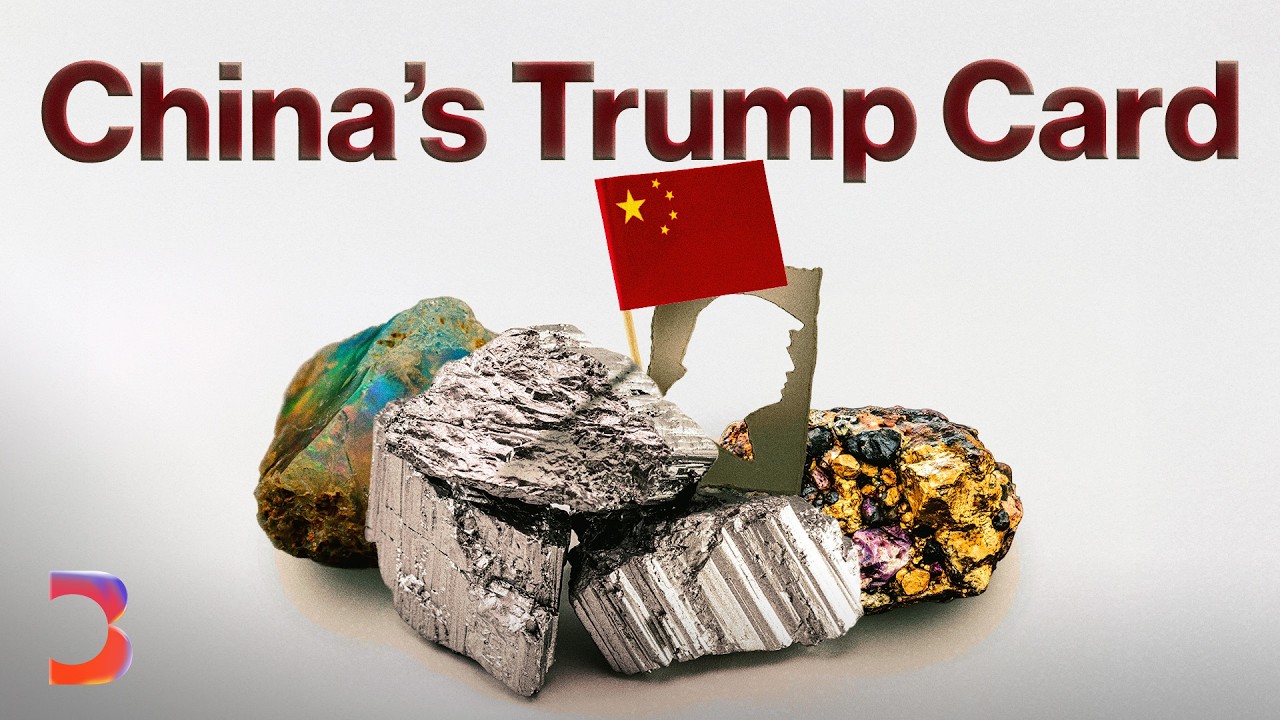
The $10 Billion Hunt for the Rocks That Power the World — Bloomberg Originals

Bloomberg Originals

Western nations are pouring billions into non-Chinese processing plants to safeguard defense and tech manufacturing, but replacing Beijing's dominant magnet supply chain will take decades.

AI-assisted summary of The $10 Billion Hunt for the Rocks That Power the World — original source. Check the original for full context.

Source published:

Detailed notes

## Background Published on May 15, 2026, by Bloomberg Originals on YouTube, this video addresses how rare earths form the backbone of modern technology and examines China's control over more than 80% of the global supply. It explores whether other nations can break Beijing's dominant grip as China uses its market power for geopolitical leverage.

## TL;DR China currently dominates up to 90% of global rare earth refining and permanent magnet production, leaving Western automotive, technology, and defense sectors highly vulnerable to supply disruptions. Following 2025 export restrictions during the US-China trade war and severe military stockpile depletion from the Iran war, Western nations are mounting a $10 billion effort to build an independent supply chain. Key initiatives include Australian firm Lynas producing non-Chinese heavy rare earths, US-backed operations at MP Materials, and new ionic clay developments in Brazil by Meteoric Resources. Although full independence remains decades away, international investments aim to shift towards a more balanced global supply split by 2030.

## Atmosphere & style The video carries an urgent, high-stakes tone that frames rare earth elements as a vital geopolitical flashpoint. It balances stark economic realities with cinematic, data-driven analysis, emphasizing the dramatic contrast between Western dependency and China's industrial strategy. Viewing it feels like an analytical deep dive into a modern industrial crisis, evoking a sense of strategic vulnerability and industrial determination.

## Key takeaways - [00:00](https://www.youtube.com/watch?v=d2dgJGkw5p0&t=0s) China controls 80% to 90% of global rare earth production and refining capabilities, creating a critical vulnerability for international tech and defense industries. - [00:00](https://www.youtube.com/watch?v=d2dgJGkw5p0&t=0s) Permanent magnets are essential for EV motors, wind turbines, smartphones, and defense systems, with Detroit automotive leaders warning factory shutdowns would occur without Chinese imports. - [01:30](https://www.youtube.com/watch?v=d2dgJGkw5p0&t=90s) In response to 145% US tariffs in April 2025, Beijing enacted strict export controls on rare earths, forcing a temporary pause in the trade war. - [02:19](https://www.youtube.com/watch?v=d2dgJGkw5p0&t=139s) China holds a critical near-monopoly on heavy rare earths—the rarest elements required for high-temperature magnet performance—whereas the US has almost no domestic heavy reserves. - [03:46](https://www.youtube.com/watch?v=d2dgJGkw5p0&t=226s) Western nations historically outsourced rare earth processing to China due to the intense pollution and toxic, radioactive waste generated during chemical separation. - [03:46](https://www.youtube.com/watch?v=d2dgJGkw5p0&t=226s) Although the US led rare earth production from the 1950s through the 1980s, Chinese industrial scaling undercut global prices and drove Western competitors out of business. - [04:41](https://www.youtube.com/watch?v=d2dgJGkw5p0&t=281s) Beijing established a precedent for weaponizing rare earths in 2010 when it cut off exports to Japan during a maritime territorial dispute. - [06:32](https://www.youtube.com/watch?v=d2dgJGkw5p0&t=392s) Australian firm Lynas Rare Earths broke China's monopoly on separated heavy rare earths in May 2025, becoming the only commercial-scale producer of both light and heavy separated rare earths outside China. - [06:32](https://www.youtube.com/watch?v=d2dgJGkw5p0&t=392s) A severe human capital gap hampers Western efforts, with the US graduating only 350 mining engineers last year compared to 35,000 lawyers. - [08:03](https://www.youtube.com/watch?v=d2dgJGkw5p0&t=483s) The conflict in Iran severely depleted US defense stockpiles, consuming over half of its pre-war inventory of key precision munitions that rely on rare earth magnets. - [08:03](https://www.youtube.com/watch?v=d2dgJGkw5p0&t=483s) Western governments are backing new projects in Brazil (Meteoric Resources) and the US (MP Materials) to establish non-Chinese ionic clay mining and domestic separation capacity. - [10:10](https://www.youtube.com/watch?v=d2dgJGkw5p0&t=610s) Western governments are deploying over $10 billion in public funds in 2026 to backstop alternative projects and prevent China from intentionally crashing prices to squeeze out new competitors. - [10:10](https://www.youtube.com/watch?v=d2dgJGkw5p0&t=610s) Breaking China's market dominance is a multi-decade effort; analysts project that reaching a 50/50 or 60/40 non-Chinese sourcing split will take until at least 2030.

## Detailed walkthrough ### [00:00](https://www.youtube.com/watch?v=d2dgJGkw5p0&t=0s) The Monopoly on Modern Technology

The global tech supply chain faces a stark reality: no matter what products companies manufacture, they remain bound to Beijing. Rare earth elements are the literal backbone of modern technology, with China holding 80% to 90% of global production and refining capabilities. Because China controls nearly every stage of processing, it holds the entire international high-tech equipment market in a geopolitical vise.

The critical application of rare earths lies in manufacturing high-performance permanent magnets, a sector where China’s industrial capacity completely dwarfs the rest of the world. When Donald Trump returned to the White House in 2025 and reignited the US-China trade war, Beijing leveraged its dominance by enacting strict export controls on rare earths. This move sent shockwaves through Western manufacturing and exposed just how deeply dependent the West remains on Chinese supply chains. Detroit automotive CEOs reacted with immediate alarm, openly stating, "We are going to have to shut down factories if we cannot get these permanent magnets." This economic shock ignited a frantic global race to construct a independent supply chain stretching from mine to magnet, ensuring one nation can no longer hold all the cards.

[01:30](https://www.youtube.com/watch?v=d2dgJGkw5p0&t=90s) The Rare Earth Weapon in the US-China Trade War

The strategic power of rare earths was demonstrated vividly during the trade war escalation. In April 2025, after President Donald Trump imposed massive 145% tariffs on Chinese imports, neither country was willing to back down or make the first move to negotiate. Beijing broke the stalemate by pulling out its "rare earth bazooka."

Chinese leadership successfully identified the exact vulnerability of the US economy. Facing an immediate supply cliff, automotive leaders rushed to Washington to warn that American manufacturing would ground to a halt without Chinese-supplied permanent magnets. This forced a temporary pause in the broader trade conflict, illustrating how a group of obscure, overlooked metals can dictate global economic policy.

[02:19](https://www.youtube.com/watch?v=d2dgJGkw5p0&t=139s) What Are Rare Earths and Why China Controls Them

Rare earths consist of 17 chemically similar metallic elements. While their names can sound obscure, their role in the modern economy is essential. They enable the creation of powerful, heat-resistant magnets that make electronic components lighter, smaller, and vastly more efficient. They are critical components in electric vehicle motors, wind turbines, smartphones, and precision-guided defense systems.

China holds the world's largest known rare earth deposits, but its crucial advantage lies in heavy rare earths—the rarest, most expensive elements required to keep high-performance magnets from demagnetizing under intense heat. While the US possesses modest light rare earth deposits, it has virtually no heavy rare earth reserves.

Beyond mining, the real structural bottleneck is chemical processing and refinement: - China controls roughly 90% of global rare earth refining capacity. - China controls approximately 90% of global permanent magnet manufacturing.

[03:46](https://www.youtube.com/watch?v=d2dgJGkw5p0&t=226s) Pollution, Power, and the Historical Shift

Mining raw ore is only the first step; the true difficulty lies in the complex chemical separation required to isolate each element. Historically, Western nations were content to outsource this work because the refining process generates immense volumes of toxic and radioactive waste. Facilities like the massive production complex in Baotou, Inner Mongolia, allowed China to assume the environmental burdens of global production while Western nations avoided them.

This status quo was built over decades. From the 1950s through the 1980s, the United States was actually the world's leading rare earths producer. China entered the industry later but scaled up rapidly through deliberate industrial planning. Former Chinese leader Deng Xiaoping famously remarked: "The Middle East has its oil, but China has its rare earths."

As Chinese production scaled, flooded markets, and lowered prices, Western operators were forced out by razor-thin margins, high labor costs, and environmental compliance overhead. For decades, global consumers enjoyed a cheap, steady supply of Chinese magnets, ignoring the geopolitical risks until China demonstrated its willingness to weaponize the market.

[04:41](https://www.youtube.com/watch?v=d2dgJGkw5p0&t=281s) The 2010 Japanese Precedent

The Trump administration's shock at Beijing's trade tactics ignored clear historical precedent. Fifteen years earlier, China deployed the exact same playbook against Japan during a 2010 territorial dispute over disputed islands.

Beijing abruptly restricted rare earth exports to Japan, threatening its automotive and high-tech manufacturing sectors. Although that embargo lasted only weeks, it served as the market's first major warning sign regarding China's willingness to use its supply dominance for political leverage.

[06:32](https://www.youtube.com/watch?v=d2dgJGkw5p0&t=392s) Breaking the Monopoly: Lynas and the Human Capital Deficit

Outside of China, the largest operational rare earth processing facility is run by the Australian mining firm Lynas Rare Earths. Backed by a $96 million contract with the US Department of Defense, Lynas has spearheaded efforts to rebuild a non-Chinese supply chain. In May 2025, Lynas achieved a major milestone by breaking China's monopoly on separated heavy rare earths, making it the only commercial-scale producer of both light and heavy separated rare earths outside China. The company aims to process over 10,000 tons of rare earth oxides annually.

However, rebuilding industrial capacity requires human capital that the West currently lacks: - The United States graduated roughly 35,000 lawyers last year, but only 350 mining engineers. - China operates dedicated mining and engineering universities with single campuses housing over 25,000 undergraduate students.

[08:03](https://www.youtube.com/watch?v=d2dgJGkw5p0&t=483s) Military Urgency: Defense Stockpiles and Global Reserves

The push to secure alternative rare earth supplies has taken on military urgency due to active conflict. Prolonged US support in the Iran war severely depleted Pentagon stockpiles of advanced precision munitions—systems that rely heavily on rare earth magnets. A report by the Center for Strategic and International Studies (CSIS) estimated that during the Iran conflict, the US military burned through more than half of its pre-war inventory for key high-tech munitions.

To secure long-term alternative supplies, Western nations are backing new exploration targets: - **Brazil:** Holds roughly one-quarter of the world's known rare earth deposits according to the USGS. - **Meteoric Resources:** An Australian developer operating in Southeastern Brazil with US support. Its clay deposit is estimated at 1.5 billion tons of rare earth-bearing ionic clay, targeting the production of rare earth carbonates and sustainable separation technology. - **MP Materials:** The primary US home-grown hope, operating with Pentagon backing. Following a $400 million US Department of Defense investment in 2025, MP Materials aims to achieve full domestic separation of heavy rare earths.

[10:10](https://www.youtube.com/watch?v=d2dgJGkw5p0&t=610s) The $10 Billion Challenge and the Long Road Ahead

Despite capital injections, new ventures face an asymmetrical fight. China possesses the scale and market power to artificially crash prices and flush new competitors out of the market before they achieve financial sustainability. To prevent this, Western governments are stepping in as financial backstops. A Bloomberg Intelligence report estimates that over $10 billion in public funds will be deployed into non-Chinese rare earth ventures in 2026 alone.

``` +-------------------------------------------------------------------+ | ESTIMATED RARE EARTH SUPPLY TIMELINE | +-------------------------------------------------------------------+ | 1950s - 1980s: US dominates global supply | | 1990s - 2020s: China achieves ~90% refining & magnet monopoly | | 2010: China restricts exports to Japan (1st warning) | | 2025: US-China trade war reboot; export bans trigger | | global supply chain push | | 2026: $10B in public funds deployed outside China | | 2030+: Realistic target for 40-50% non-Chinese supply | +-------------------------------------------------------------------+ ```

Replacing China's dominant position remains a slow, multi-decade process. After 15 years of concerted effort following the 2010 crisis, Japan only succeeded in lowering its dependence on Chinese rare earths from 90% down to around 60–70%. Analysts suggest that realistic goals for Western companies by 2030 involve achieving a 50/50 or 60/40 split between Chinese and non-Chinese sourcing. While China's core monopoly will not be completely broken within five years, commercial-scale magnet production across the US, Australia, Brazil, Japan, South Korea, and France represents a significant strategic shift.

## Notable quotes > [00:00](https://www.youtube.com/watch?v=d2dgJGkw5p0&t=0s) We are going to have to shut down factories if we cannot get these permanent magnets.

> [03:46](https://www.youtube.com/watch?v=d2dgJGkw5p0&t=226s) The Middle East has its oil, but China has its rare earths. — Deng Xiaoping

## Mentioned Beijing, Bloomberg Intelligence, Brazil, Center for Strategic and International Studies, China, Deng Xiaoping, Detroit, Donald Trump, France, Iran, Japan, Lynas Rare Earths, Meteoric Resources, MP Materials, South Korea, US Department of Defense, United States, USGS

[Source](https://www.youtube.com/watch?v=d2dgJGkw5p0)

中文简报

美国斥资百亿美元力图打破中国稀土掌控 西方国家正向非中国加工厂注资数十亿美元以保障国防与科技制造业,但要取代北京占主导地位的磁体供应链仍需数十年时间。 中国目前主导着全球高达90%的稀土提炼和永磁体生产,使西方汽车、科技和国防部门在供应链中断面前显得极为脆弱。随着2025年中美贸易战期间的出口管制以及伊朗战争导致的军备库存严重消耗,西方国家正发起一项斥资100亿美元的行动以建立独立的供应链。核心举措包括澳大利亚Lynas公司生产非中国重稀土、美国支持MP Materials开展相关业务,以及Meteoric Resources在巴西开发新的离子黏土矿。尽管实现完全独立仍需数十年,但国际投资旨在到2030年前推动全球供应格局走向更加平衡。 中国控制着全球80%至90%的稀土生产与精炼产能;2025年4月美国加征关税后,北京对稀土实施严格出口管制,暴露出西方汽车制造等关键工业对中国永磁体的高度依赖。 (1:30) 中国利用稀土作为地缘政治杠杆早有先例,曾在2010年中日领土争议期间切断对日稀土出口,以此打击日本的高科技及汽车供应链。 (4:41) 澳大利亚企业莱纳斯(Lynas Rare Earths)于2025年5月打破中国在重稀土分离领域的垄断,成为中国以外唯一具备轻、重稀土商业化分离能力的生产商。 (6:32) 预计2026年将有超100亿美元公共资金投入非中国稀土供应链,但分析指出要实现40%至50%的非中国供应比例,仍需要到2030年以后。 (10:10)

Reading summary

China's consolidation of rare earth refining and permanent magnet manufacturing has turned 17 critical metals into decisive geopolitical leverage, compelling Western governments to finance independent supply chains to avert severe industrial and military vulnerabilities. Geopolitical Leverage and the Magnet Chokepoint (0:00) China controls between 80% and 90% of global rare earth production and refining, alongside approximately 90% of global permanent magnet manufacturing. In April 2025, after the United States imposed 145% tariffs on Chinese imports, Beijing leveraged this concentration by enforcing strict rare earth export controls. The restrictions prompted Detroit automotive chief executives to warn Washington that domestic vehicle plants faced immediate shutdowns without Chinese-supplied heat-resistant magnets, forcing a temporary pause in trade escalation. This supply restriction followed an established precedent. In 2010, during a maritime territorial dispute, Beijing halted rare earth exports to Japan for several weeks, threatening Japan's automotive and electronic manufacturers in the market's first high-profile demonstration of rare earths as an instrument of statecraft. Refining Bottlenecks and Environmental Externalities (2:19) While raw rare earth ores exist globally, the primary structural barrier is the chemical separation process required to isolate individual elements. The modern economy depends heavily on heavy rare earths, which prevent high-performance magnets from demagnetizing under high temperatures in electric vehicles, wind turbines, and guided missiles. Although the United States possesses modest light rare earth deposits, it maintains virtually no domestic heavy rare earth reserves. From the 1950s through the 1980s, the United States served as the world's primary producer. Production shifted abroad as Western operators succumbed to environmental compliance costs, low margins, and Chinese industrial planning, crystallized by Deng Xiaoping’s remark that 'the Middle East has its oil, but China has its rare earths.' China absorbed the ecological burdens of separation, managing vast quantities of toxic and radioactive processing waste at industrial hubs such as Baotou, Inner Mongolia, while Western firms largely exited the sector. Defense Munitions Depletion and Allied Countermeasures (8:03) The drive to establish alternative supply chains expanded into a defense priority following protracted military commitments. A report by the Center for Strategic and International Studies (CSIS) calculated that prolonged US engagement in the Iran conflict consumed more than half of the Pentagon's pre-war stockpiles of precision-guided munitions, which depend on rare earth components. To restore industrial resilience, Western defense agencies are backing non-Chinese producers. In May 2025, Australian firm Lynas Rare Earths—supported by a $96 million US Department of Defense contract—became the first commercial-scale processor outside China to separate heavy rare earths, targeting over 10,000 tons of rare earth oxides annually. Concurrently, the Pentagon allocated $400 million in 2025 to American miner MP Materials to establish domestic heavy separation. Western governments have also directed resources toward Brazil, which the USGS estimates holds one-quarter of global reserves, supporting developers like Meteoric Resources on a 1.5-billion-ton ionic clay deposit. Capital Backstops and Structural Skill Deficits (10:10) Alternative ventures face structural market manipulation risks, as Chinese state-backed suppliers can lower commodity prices to render newly capitalized Western facilities insolvent. To counteract price volatility, Bloomberg Intelligence estimates that over $10 billion in public funding will be deployed globally into non-Chinese rare earth ventures in 2026 alone. Industrial execution remains constrained by an engineering deficit in the West. While the United States produced roughly 35,000 legal graduates and only 350 mining engineers last year, China maintains specialized mining and engineering institutions with individual campuses educating upwards of 25,000 undergraduates. Diversifying away from Chinese dominance remains an incremental process: after 15 years of dedicated policy following the 2010 crisis, Japan reduced its Chinese import reliance from 90% to roughly 60–70%. Analysts anticipate that realistic diversification targets by 2030 will center on a 50/50 or 60/40 sourcing split between Chinese and non-Chinese suppliers rather than complete self-sufficiency.

精炼阅读摘要

彭博社(Bloomberg Originals)指出,中国在全球稀土开采、分离提炼及高性能永磁体制造领域占据主导地位,并已将这一工业瓶颈转化为对美博弈的关键筹码。随着地缘冲突与贸易战爆发,西方国家正通过政府资助和多国合作紧急重建去中国化的稀土供应链,但受制于环境代价、技术门槛和人才短缺,短期内难以彻底摆脱对华依赖。 贸易战博弈与中国的稀土控制力 (0:00) 稀土元素是现代高科技产业的支柱,中国掌控着全球80%至90%的稀土提炼能力以及约90%的高性能永磁体制造产能。2025年唐纳德·特朗普重返白宫并对中国商品征收145%的高额关税后,北京方面动用稀土出口管制予以反击。由于高性能永磁体对现代工业至关重要,底特律汽车高管随即向美国政府发出预警,称若缺乏永磁体供应将被迫关闭工厂,该供应链危机直接促成了贸易争端的阶段性暂停。这种策略早有先例,早在2010年中日岛屿争端期间,中国就曾对日本实施稀土禁运,显露了其将关键矿产用作政治筹码的意图。 提炼技术壁垒与重稀土结构短缺 (2:19) 稀土由17种化学性质相似的金属元素组成,主要用于制造耐高温的高性能永磁体,是电动汽车电机、风力涡轮机、智能手机及精确制导武器不可或缺的组件。尽管美国拥有少量轻稀土储量,但在防止磁体在高温下消磁所必需的“重稀土”方面几乎没有任何储量。更为关键的瓶颈在于化学分离与提纯:稀土提炼过程会产生大量有毒及放射性废物。从20世纪50年代至80年代,美国曾是全球最大稀土生产国,但由于西方国家不愿承担环保合规成本与微薄利润,提炼环节被大量外包给中国,中国则依托内蒙古包头等大型基地与国家产业规划,逐步建立起全产业链的垄断优势。 国防短缺驱动的跨国替代链布局 (8:03) 地缘军事冲突加剧了西方建立替代供应链的紧迫性。战略与国际研究中心(CSIS)的报告评估显示,美军在持久支援伊朗冲突期间,消耗了关键高科技弹药战前库存的一半以上,而精确制导武器系统高度依赖稀土永磁体。为填补国防储备并规避风险,美国国防部向澳大利亚莱纳斯(Lynas Rare Earths)提供9600万美元合同,推动该公司于2025年5月实现中国以外首次商业规模分离重稀土,目标年产能超过1万吨稀土氧化物。此外,美国国防部向本土企业MP Materials注资4亿美元以推进国内重稀土分离,并与巴西合作支持澳大利亚Meteoric Resources开发其储量达15亿吨的离子型黏土矿。 资本与人才制约下的多元化前景 (10:10) 为防止中国凭借规模优势压低市场价格击垮西方新兴企业,西方政府开始提供财政托底。彭博行业研究(Bloomberg Intelligence)估计,仅在2026年就将有超过100亿美元公共资金部署于非中国稀土项目。然而,工业能力的重建受到严重的人才短缺限制:美国去年培养了约3.5万名律师,却仅有350名采矿工程师毕业;而中国仅单所专业采矿工程大学的在校本科生就超过2.5万人。从日本在2010年危机后耗费15年仅将对华依赖度从90%降至60%–70%的历史经验来看,分析师预计西方到2030年较为现实的目标是实现非中国采购占比40%至50%,全面打破垄断仍需数十年时间。 西方国家通过政府干预和百亿美元资金扶持,正加速在澳大利亚、美国、巴西等地建立独立的稀土与永磁体制造产能。然而,面对中国在重稀土资源、环境成本消化能力、工程技术人才储备以及市场定价权上的显著优势,西方供应链多元化进程在未来数年内仍将处于缓慢且脆弱的过渡阶段。

Detailed notes — zh

## Background 该视频由彭博原创(Bloomberg Originals)于2026年5月21日发布在YouTube平台。视频简介指出,稀土是现代高科技产业的基石,而中国控制着全球超过80%的稀土开采与加工产能;随着中国将这一主导地位作为地缘政治杠杆,该节目聚焦西方国家是否以及如何打破这一绝对垄断。 ## TL;DR 视频深度揭示了在中美贸易战升级背景下,中国凭借对全球约90%稀土提炼精炼及永磁体制造产能的绝对垄断,施加出口管制从而给西方汽车与军工制造带来致命冲击。西方在稀土供应链突围上面临着环境成本高昂、工业经验缺失以及采矿工程人才严重断层等多重阻碍。为此,美西方政府彻底打破自由市场信条,由五角大楼等国家力量直接向澳大利亚莱纳斯(Lynas)、美国MP Materials及巴西流星资源(Meteoric Resources)等项目注资兜底以对抗中国的价格挤压策略。尽管百亿美元国家资本正加速入场,但短期内西方完全脱钩并不现实,其务实目标是在未来十年内逐步实现供应链的多元化对半平衡。 ## Atmosphere & style 全片基调冷静严峻、张力十足,兼具商业深度报道的扎实与地缘战略交锋的紧迫感。叙事从底特律车企高管奔赴白宫告急、美军防空弹药库存告罄切入,生动营造出西方先进制造业命脉被彻底卡死的刺痛感。随着对工厂提炼细节、矿山钻探与人才数据断层的层层剖析,节目既毫不避讳地指出了西方重工业肌肉萎缩的现实尴尬,又展现出国家资本巨额下注背后的决绝与漫长持久战的沉重。 ## Bulletin - [00:00](https://www.youtube.com/watch?v=d2dgJGkw5p0&t=0s) 中国掌控着全球80%至90%的稀土生产、精炼及磁铁制造产能,在贸易战中作为反制杠杆甚至一度引发美国汽车业因断供风险面临停产威胁。 - [10:08](https://www.youtube.com/watch?v=d2dgJGkw5p0&t=608s) 针对重稀土与军工断粮危机,西方各国打破自由市场惯例,仅2026年单年预计就有超100亿美元公共补贴与国家投资涌向中国境外的稀土供应链重构。 - [06:32](https://www.youtube.com/watch?v=d2dgJGkw5p0&t=392s) 澳大利亚莱纳斯(Lynas)于2025年5月实现中国以外首次规模化分离轻重稀土,五角大楼亦斥资4亿美元入股本土MP Materials以加速脱钩进程。 - [06:32](https://www.youtube.com/watch?v=d2dgJGkw5p0&t=392s) 西方重建稀土工业面临严重人才断层:全美年均采矿工程师毕业生仅350人,而中国仅单所矿业大学在读本科生就超2.5万人。 ## Key takeaways - [00:00](https://www.youtube.com/watch?v=d2dgJGkw5p0&t=0s) 稀土是智能手机、电动汽车驱动电机和精确制导导弹等高科技硬件的核心材料,中国在全产业链拥有压倒性控制权。 - [00:00](https://www.youtube.com/watch?v=d2dgJGkw5p0&t=0s) 面对美国关税,中国祭出稀土出口管制反制,导致底特律汽车高管紧急游说白宫警告工厂停工风险,迫使经贸对抗暂缓踩刹车。 - [02:20](https://www.youtube.com/watch?v=d2dgJGkw5p0&t=140s) 稀土包含17种化学元素,其中最具战略价值且耐高温的重稀土资源绝大部分富集于中国,美国本土几无相关富矿沉淀。 - [02:20](https://www.youtube.com/watch?v=d2dgJGkw5p0&t=140s) 稀土供应链的关键卡脖子瓶颈在于后段高难度的溶剂萃取分离与高性能永磁体加工,这两个环节中国均控制着全球约90%的产能。 - [02:20](https://www.youtube.com/watch?v=d2dgJGkw5p0&t=140s) 西方过去因严苛环保法规、强酸毒性废水及伴生放射性污染等成本问题主动放弃冶炼环节,最终导致全球先进制造陷入单向依赖。 - [04:41](https://www.youtube.com/watch?v=d2dgJGkw5p0&t=281s) 早在2010年中日海上争端期间,中国即曾通过切断对日稀土供应展示地缘杠杆,敲响了西方制造业脆弱性的首记警钟。 - [04:41](https://www.youtube.com/watch?v=d2dgJGkw5p0&t=281s) 美国曾在冷战时期主导稀土产业,但中国随后凭借国家长期战略扶持与成本优势彻底击垮西方竞争者,迫使其产线相继破产关停。 - [06:32](https://www.youtube.com/watch?v=d2dgJGkw5p0&t=392s) 澳大利亚莱纳斯(Lynas)获美国防部近亿美元订单,并在2025年5月打破中国在轻重稀土规模化商业分离领域的绝对垄断。 - [06:32](https://www.youtube.com/watch?v=d2dgJGkw5p0&t=392s) 西方重构稀土供应链正遭遇严峻的工程人才结构断层,在采矿与材料冶金领域的学术储备和实践积累远落后于中国体系。 - [08:03](https://www.youtube.com/watch?v=d2dgJGkw5p0&t=483s) 在与伊朗军事冲突消耗下,美军高精尖弹药库存消耗过半,促使五角大楼将稀土供应链自主权提升至最高战备安全级别。 - [08:03](https://www.youtube.com/watch?v=d2dgJGkw5p0&t=483s) 西方资本正密集开辟海外富矿,流星资源(Meteoric Resources)在储量占全球近四分之一的巴西全速推进15亿吨级黏土型稀土矿开发。 - [08:03](https://www.youtube.com/watch?v=d2dgJGkw5p0&t=483s) 美国国防部直接出资4亿美元入股加州芒廷帕斯矿山运营商MP Materials,全力扶植本土重稀土分离提炼产能落地。 - [10:08](https://www.youtube.com/watch?v=d2dgJGkw5p0&t=608s) 针对中国可能利用边际成本优势通过降价扼杀新生对手的风险,西方多国政府打破信条直接下场注资充当兜底后盾。 - [10:08](https://www.youtube.com/watch?v=d2dgJGkw5p0&t=608s) 参考日本历经15年仅将对华稀土依赖度从90%压缩至60%-70%的经验,西方产业链在短期内全面脱离中国并不具备现实可行性。 - [10:08](https://www.youtube.com/watch?v=d2dgJGkw5p0&t=608s) 西方现阶段务实目标是在2030年前后构建40%到50%的非中国供应链配额,逐步削弱因单一地缘风险带来的致命断供威胁。 ## Detailed walkthrough ### [00:00](https://www.youtube.com/watch?v=d2dgJGkw5p0&t=0s) 贸易战再起:致命的磁铁与汽车业危机 表面上看,这些矿石灰暗粗糙、平平无奇,但它们却是西方世界竭尽全力试图追赶中国的终极奖赏。稀土被公认为现代科技的绝对支柱,不仅驱动着智能手机、风力涡轮机,更是电动汽车电机和精密导弹导引系统的核心。然而,放眼全球,整个稀土产业链从源头开采、化学分离、金属提纯到最终的高性能磁铁制造,几乎完全围绕着北京运转。中国不仅拥有得天独厚的矿藏,更掌握着全球80%至90%的生产与加工能力,在磁铁制造产能上更是对全球形成碾压之势。业内人士直言:“无论你怎么折腾,最终都绕不开中国;在这个牌局里,中国就是唯一的庄家。” 当唐纳德·特朗普重返白宫并重启对华贸易战后,稀土这一战略底牌再次被推向风口浪尖。面对美方高达145%的高额关税制裁,北京直接祭出“稀土火箭筒”进行出口管制反击。这一精准制导的反制措施迅速击中了西方制造业的软肋,甚至直接迫使双方在贸易战中紧急踩下刹车。来自底特律的汽车巨头高管们几乎是蜂拥而至挤进白宫,神情严峻地向特朗普当面发出警告:“如果我们拿不到制造永磁体所需的稀土供应,美国各大汽车工厂就不得不全面停运关门。”汽车业的恐慌不仅揭开了西方先进制造业对中国依赖之深的遮羞布,也彻底点燃了一场由西方各国政府牵头、耗资数十亿美元建立全新“矿山至磁铁”脱钩供应链的突围战。 ```mermaid flowchart LR accTitle: 稀土供应链卡脖子关键环节 accDescr: 展示从矿石开采到精炼、磁铁制造及终端应用的关键流向,凸显中国在提炼与磁铁加工环节的垄断地位。 subgraph Upstream["上游开采"] A["稀土矿石开采"] end subgraph Chokepoints["关键卡脖子环节(中国垄断约90%)"] B["化学分离与精炼提纯"] C["高性能永磁体加工"] end subgraph Downstream["下游关键应用"] D["电动汽车与消费电子"] E["国防军工与先进导弹"] end A --> B B --> C C --> D C --> E ``` ### [02:20](https://www.youtube.com/watch?v=d2dgJGkw5p0&t=140s) 什么是稀土:元素特性与中国在提炼加工上的绝对锁喉 稀土并不是某种单一稀有矿物,而是化学性质极其相似的17种金属元素的统称。对于普通大众而言,这些元素的名字生僻晦涩,但它们在材料物理学中的作用却不可替代。稀土元素的核心威力在于能合成极具磁力且极其耐高温的高性能永久磁铁;正是它们的存在,让现代电动机和电子零件变得体积更小、重量更轻、功率却呈几何级爆发。从日常携带的智能手机,到巨型海上风电机组,再到决定大国威慑力的精密巡航导弹,内部无一不深嵌着稀土磁铁的心脏。这也意味着,整个全球高科技经济命脉,实际上全系于单一国家的决策之间。 更致命的差距在于资源类型与产业链中游。稀土分为轻稀土与重稀土两大类,其中重稀土最为昂贵、极为稀缺,且是赋予磁铁耐热抗退磁特性的关键物质。中国拥有全球迄今发现的最大规模稀土矿藏,尤其在重稀土储量上具有近乎垄断的天然优势,而美国本土的相关重稀土沉积物储量则微乎其微。更为关键的瓶颈在于中游加工环节:把矿石挖出地面仅仅是长征的第一步,真正的工业魔鬼隐藏在极其繁琐的化工分离阶段——需要成百上千次的溶剂萃取将各元素逐一剥离纯化。中国不仅掌控着全球约90%的稀土分离精炼产能,连下游将提纯稀土制成磁铁的环节也同样垄断了大约90%。 长期以来,西方国家之所以心甘情愿将这一庞大产业全盘拱手让给中国,很大程度上是因为稀土加工极为肮脏且成本高昂。稀土冶炼分离会产生巨量的强酸废水、有毒化学废液,并伴随放射性伴生矿渣(如钍和铀),对生态环境具有严重破坏性。位于内蒙古的包头作为中国最大的稀土生产基地,承载了巨量的工业污染与提炼重担,而西方国家此前因环境法规严苛、劳工成本高昂以及微薄的利润空间,乐于坐享来自中国的稳定、廉价永磁体供应。正是这种安于现状的惰性,导致如今全球任何一家高端制造厂商,在供应链的某一环上都必然受制于中国产出。 ### [04:41](https://www.youtube.com/watch?v=d2dgJGkw5p0&t=281s) 历史前车之鉴:从日本中招到全球产业链的东移 中国运用稀土优势作为地缘政治制衡杠杆,对于敏锐的观察家而言绝非新鲜事,早在15年前就已经上演过一次预演。2010年,因中日海上领土争端,中国迅速对其关键稀土对日出口施加限制。当时中国直接敲打东京,切断了日本汽车及高精尖制造业急需的永磁体原材料供应。尽管那场出口限制实际上仅仅持续了数周时间,但在全球市场上掀起了一场前所未有的剧烈海啸,彻底暴露了日本高端制造在稀土上的脆弱防线,也给西方世界敲响了第一记警钟。 然而回溯工业历史,稀土霸权并非自古属于东方。在20世纪50年代至80年代的冷战鼎盛期,美国曾是全球稀土行业绝对的领军者与技术掌控者。中国起步极晚,却凭借国家层面的战略定力与工业布局,实现了惊人的后发制人。已故中国最高领导人邓小平曾留下一句掷地有声的名言:“中东有石油,中国有稀土。”中国政府将稀土视作至关重要的国家战略命脉,不惜代价在全产业链各环节大力投资并扶植产能。 伴随着中国稀土生产规模的几何级膨胀,其巨大的成本优势彻底摧毁了西方同行的竞争空间。在西方世界,稀土企业不仅面临极薄的边际利润、飞涨的劳动力开支,更深陷环保诉讼与民众抵制肮脏冶炼的泥潭,导致欧美本土运营商相继倒闭破产或被迫关停。全球终端采购商长期沉浸在便宜优质的中国磁铁供给中,直至地缘博弈的阴云再度笼罩,各国才骤然意识到过度依赖特定供应方的致命隐患,不得不硬着头皮开启各自艰难的“供应链自救”。 ### [06:32](https://www.youtube.com/watch?v=d2dgJGkw5p0&t=392s) 莱纳斯突围与西方“重工业肌肉”的人才断层 在当前这场脱离对华依赖的重构大潮中,坐落于澳大利亚和马来西亚之间的莱纳斯(Lynas Rare Earths)成为了西方阵营当之无愧的领头羊。该公司运营着中国本土之外全球规模最大的稀土加工厂,更获得了来自美国国防部高达9600万美元的重金采购合同,专门向美军保障重稀土原料供应。莱纳斯并非一蹴而就,他们早在十多年前就着手布局,经历了长达数年的技术摸索和产能爬坡泥潭,如今工厂的目标是达到年产超过1万吨稀土氧化物的规模。 最让西方工业界振奋的是,莱纳斯成功打破了中国在重稀土分离提纯领域的绝对垄断地位。公司自豪地宣布,他们在2025年5月实现了这一历史性转折,成为中国以外全球唯一一家兼具规模化分离轻稀土与重稀土能力的矿产化工巨头。 但要重建一条高度专精的工业产业链,所缺的绝不仅仅是厂房与资金,更在于深层的工业技能积淀、实践经验以及整个社会的工程师人才储备: - **工程人才结构断层**:去年全美培养输送了多达35,000名法学毕业生,但全美大学培养出的采矿工程师却仅仅只有区区350名。 - **中国专业体系的持续碾压**:相比之下,中国仅一所专门的矿业科技类大学,就有超过25,000名全日制本科生在读。 - **产业学习曲线的差距**:数十年间,中国已经在稀土冶炼、化学工程与材料加工领域建立了深厚的知识壁垒与经验护城河,生产效率每一天都在迭代精进,这种“工业肌肉”的重塑绝非西方靠印钞票就能在一夜之间补齐。 ### [08:03](https://www.youtube.com/watch?v=d2dgJGkw5p0&t=483s) 军工弹药告急、巴西新希望与五角大楼的本土下注 随着美国卷入与伊朗的直接军事冲突,五角大楼重建稀土供应链的迫切感被提升到了最高战备级别。现代高精尖防区外弹药、导弹制导雷达以及高科技防空反导系统在实战中被急速消耗,而制造这些精密国防硬件的每一个电子元器件都极度渴望稀土。尽管美军的具体稀土需求量属于高级国家机密,但华盛顿智库战略与国际问题研究中心(CSIS)发布的一份重磅报告敲响了警钟:在与伊朗的战争消耗中,美军部分极其昂贵的高精度弹药库存已经消耗了超过战前总量的一半以上,补充军火库成了火烧眉毛的战略危机。 面对军备断粮的威胁,西方国家意识到单纯建造工厂远远不够,必须在全球地理版图上锁定全新的上游富矿,而南美最大经济体巴西成为了各方争抢的“新大陆”。据美国地质调查局(USGS)数据,巴西蕴藏着全球近四分之一的稀土储量。在巴西东南部郁郁葱葱的山丘中,另一家受到美国强力资助的澳大利亚矿业勘探商——流星资源(Meteoric Resources)正在全速推进项目。这片矿区号称蕴藏着高达15亿吨高品位的离子吸附型稀土黏土矿: - 该公司的核心目标是尽快实现商业化投产,成为全球下一家能够大规模供应混合稀土碳酸盐的生产商,并自主开发后续分离提炼工艺。 - 项目负责人特别强调,巴西团队希望采取与传统中国冶炼截然不同的绿色环保分离方案,因为若想在未来的西方供应链中生存,产品必须打上符合可持续发展标准的绿色标签。 与此同时,美国国防部也把重注押在本土企业身上。五角大楼最寄予厚望的本土支柱是MP材料公司(MP Materials)。2025年,美国国防部甚至直接入股、出资4亿美元收购其关键股份,力推其位于加州的芒廷帕斯矿山实现产业链延伸,并预期将在年内攻克本土分离重稀土的技术难关。 ### [10:08](https://www.youtube.com/watch?v=d2dgJGkw5p0&t=608s) 抵御价格挤压:百亿美元国家资本重塑供应链的长跑 然而,所有试图打破中国垄断的西方挑战者都不得不面对同一个致命的商业阴影:中国庞大的产业体量赋予了其随意调控全球现货价格的能力。历史经验表明,中国可以在极低边际成本下释放产能压低价格,在西方新兴对手立足未稳、现金流尚未转正之前将其扼杀在摇篮里。为了防止这种商业清算再次发生,美欧各国政府彻底打破了以往不干预自由市场的信条,选择充当企业的兜底人:“西方世界正在以前所未有的资本规模介入干预,直接为企业注入资金,以实质合伙人的身份向市场放出信号——无论中国使出怎样的降价策略试图将你们挤出赛道,国家意志都会为你们兜底护航。” 虽然北京方面在此后逐步松绑了部分针对民用汽车与工业消费领域的对美稀土出口配额,但在对美军工企业和武器系统的稀土封锁上,中方始终寸步不让,划定了绝对不可逾越的红线。建立自主供应链的残酷现实证明,这是一场以十年为周期的漫长持久战: - **日本的十五年突围经验**:自2010年中日稀土危机爆发以来,日本历经整整15年的政策扶持与海外投资布局,其对中国稀土的进口依赖度也仅是从当年的90%艰难缩减至目前的60%到70%左右。 - **现实可行的阶段目标**:对于大部分西方下游终端制造企业而言,指望在短期内100%同中国脱钩是不切实际的幻想。到2030年乃至下一个十年初期,能够实现“40%非中国供应 + 60%中国供应”或者达到“对半平分(50/50)”的多元采购格局,才是一个具有操作性的务实胜利。 - **资本浪潮与长远终局**:彭博行业研究(Bloomberg Intelligence)的数据预测,仅在2026年一年之内,全球流入中国境外稀土产业链的公共财政补贴与国家投资基金就将突破100亿美元大关。 在未来五年内,中国在稀土领域的超级垄断地位几乎不可能被彻底瓦解。但包括美国、澳大利亚、巴西、日本、韩国以及法国在内的一批西方国家,都将在未来数年内陆续形成商业化规模的稀土开采与永磁体量产能力。如果五年后重新审视这盘棋局,这些摆脱对华完全依赖的永磁体能够稳定地走出工厂大门、交付到核心制造商手中,这场旷日持久的百亿资源突围战就已经赢下了最关键的第一仗。 ## Notable quotes > [00:00](https://www.youtube.com/watch?v=d2dgJGkw5p0&t=0s) 无论你怎么折腾,最终都绕不开中国;在这个牌局里,中国就是唯一的庄家。 > [00:00](https://www.youtube.com/watch?v=d2dgJGkw5p0&t=0s) 如果我们拿不到制造永磁体所需的稀土供应,美国各大汽车工厂就不得不全面停运关门。 — 汽车巨头高管 > [04:41](https://www.youtube.com/watch?v=d2dgJGkw5p0&t=281s) 中东有石油,中国有稀土。 — 邓小平 > [10:08](https://www.youtube.com/watch?v=d2dgJGkw5p0&t=608s) 西方世界正在以前所未有的资本规模介入干预,直接为企业注入资金,以实质合伙人的身份向市场放出信号——无论中国使出怎样的降价策略试图将你们挤出赛道,国家意志都会为你们兜底护航。 ## Mentioned 中国, 北京, 美国, 唐纳德·特朗普 (Donald Trump), 邓小平, 内蒙古包头, 日本, 东京, 莱纳斯 (Lynas Rare Earths), 澳大利亚, 马来西亚, 美国国防部 (五角大楼), 伊朗, 战略与国际问题研究中心 (CSIS), 巴西, 美国地质调查局 (USGS), 流星资源 (Meteoric Resources), MP材料公司 (MP Materials), 加州芒廷帕斯矿山 (Mountain Pass), 韩国, 法国, 彭博行业研究 (Bloomberg Intelligence) ## Video description Rare earths are the backbone of modern technology, and China has cornered the global market for the commodity. The country produces and processes more than 80% of the world’s supply. As it uses that dominance as geopolitical leverage, can other countries break its grip? Read more on Bloomberg.com: Why Rare Earths Are China’s Trump Card in Trade War https://www.bloomberg.com/news/articles/2026-05-14/how-xi-is-using-rare-earths-against-trump-in-the-us-china-trade-war 00.00 Intro 01.30 Rare Earth Leverage 02.20 What are Rare Earths 03.00 China’s Dominance 03.46: Pollution and Power 04.41: China targets Japan 05.31: History 06.32 Lynas 08.03 Iran War 08.52 Meteoric Resources 09.43 MP Materials 10.10 Western Support 10.26 Long Term Investment #Trump #XI #rareearths #trade war #China #Tariffs -------- Like this video? Subscribe: http://www.youtube.com/Bloomberg?sub_confirmation=1 Get unlimited access to Bloomberg.com for just $1.99 your first month: https://www.bloomberg.com/subscriptions?in_source=YoutubeOriginals Bloomberg Originals offers bold takes for curious minds on today’s biggest topics. Hosted by experts covering stories you haven’t seen and viewpoints you haven’t heard, you’ll discover cinematic, data-led shows that investigate the intersection of business and culture. Exploring every angle of climate change, technology, finance, sports and beyond, Bloomberg Originals is business as you’ve never seen it. Subscribe for business news, but not as you've known it: exclusive interviews, fascinating profiles, data-driven analysis, and the latest in tech innovation from around the world. Visit our partner channel Bloomberg News for global news and insight in an instant. [Source](https://www.youtube.com/watch?v=d2dgJGkw5p0)

Source quotes

[0:00] 无论你怎么折腾,最终都绕不开中国;在这个牌局里,中国就是唯一的庄家。 [0:00] 汽车巨头高管: 如果我们拿不到制造永磁体所需的稀土供应,美国各大汽车工厂就不得不全面停运关门。 [4:41] 邓小平: 中东有石油,中国有稀土。 [10:08] 西方世界正在以前所未有的资本规模介入干预,直接为企业注入资金,以实质合伙人的身份向市场放出信号——无论中国使出怎样的降价策略试图将你们挤出赛道,国家意志都会为你们兜底护航。

Source quotes

[0:00] We are going to have to shut down factories if we cannot get these permanent magnets. [3:46] Deng Xiaoping: The Middle East has its oil, but China has its rare earths.

Original transcript

[0:00] It doesn't look like much, [0:02] but this is the prize for the rest of the world in trying to catch up with [0:06] China. [0:09] We need rare earths. [0:11] China owns them, processes them, refines them and sells them. [0:15] The entire supply chain is built around Beijing. [0:17] No matter what you do, you're always kind of beholden to China. [0:22] Rare earths are really the backbone of modern technology. [0:26] China's the ballgame. [0:27] There are 80 to 90% of production and processing of rare earths that go into all [0:32] equipment around the world. [0:34] And China's shown it will use that dominance as geopolitical leverage. [0:38] The main use of rare earths are in these powerful high performance magnets. [0:43] China's capacity for magnets is vast compared to the rest of the world. [0:47] When Donald Trump returned to the White House in 2025 and rebooted the US-China [0:52] trade war, [0:53] China responded with export controls on rare earths that expose just how [0:58] much Western manufacturing still depends on China's supply. [1:03] The automotive industry came out and not so quietly said, [1:06] "We are going to have to shut down factories if we cannot get these permanent [1:10] magnets.". [1:10] That shock set off a broader scramble to build a new supply chain from [1:15] mine to magnet. [1:16] This is a story about not letting one country hold all the [1:21] chips on what is a very important supply chain. [1:30] The US-China trade war has begun. [1:33] In case you'd forgotten how influential rare earths are, [1:37] it was little more than a year ago that they forced a pause in the US-China [1:41] trade war. [1:41] We have 145% tariff on Chinese goods, [1:44] neither one wants to be the one to pick up the phone first. [1:47] In April 2025, [1:48] US President Donald Trump slapped huge tariffs on Chinese imports. [1:53] Beijing fought back, pulling out its rare earth bazooka. [1:57] The automotive CEOs from Detroit were all showing up telling Donald Trump, [2:01] "If you do not get those permanent magnets, [2:04] which are made from the rare earths moving back into the United States, [2:07] we're going to have to start shutting factories.". [2:10] Beijing had located the weak spot and at the center of it was a group of [2:15] metals most people never think about. [2:19] Rare earths are a group of 17 metallic elements that are chemically very [2:24] similar. [2:24] They can seem obscure, but the important thing is what they do. [2:29] They help create powerful heat resistant magnets. [2:32] They're used in most of our modern technologies, [2:36] especially in electric motors. They make our gadgets smaller, lighter, [2:41] and more powerful. [2:42] From phones and wind turbines to electric vehicles and missile systems, [2:47] rare earth magnets sit inside much of modern technology. [2:53] And that means the global high-tech economy relies on one country. [2:58] China's home to the world's largest rare earth deposit that's been discovered so [3:02] far and specifically it has deposits of heavy rare earths, [3:08] whereas the US has very, very little. [3:11] Heavy rare earths are the most expensive and sought after. [3:15] They allow high performance magnets to resist heat and demagnetization. [3:20] The real choke point is the processing stage. [3:23] China controls 90% of the refining process and then it goes [3:28] to magnet production, [3:29] which is a process of making rare earth metals into magnets [3:34] and China controls about 90% of that as well. [3:39] Mining the ore is only the start. The real work is in the chemistry, [3:44] separating and refining each element into something magnet makers can use. [3:49] The production is so costly and also environmentally very damaging [3:54] because the processing stage produces a lot of toxic waste including [3:59] radioactive materials. So a lot of Western countries, [4:02] they're happy to let China take over. [4:08] And you can see why. This is Baotou in Inner Mongolia, [4:12] home to China's largest rare earth production site. [4:18] Wherever you are in the world at some level of that supply chain, [4:22] you are probably reliant on Chinese products. [4:26] With China holding such a dominant position, [4:29] why did it come as such a shock to the Trump administration when they chose to [4:33] use it? [4:34] Really shouldn't have been because China used the exact leverage 15 years ago. [4:41] Perhaps because last time it wasn't the US in the crosshairs, it was Japan. [4:46] China first used its dominance over rare earth as a geopolitical [4:51] weapon in 2010 when it restricted exports to Japan because [4:56] of a territorial dispute. [4:58] China said, "Okay, [4:59] we are going to restrict the exports of our rare earths that you need Japan [5:04] to turn into the permanent magnets that go into your automotive industry and [5:08] other industries." This was the first kind of shock to the market. [5:12] It lasted only weeks. Even so, [5:15] it exposed Japan's vulnerability and offered an early warning of how much [5:20] leverage China had built. To understand how that happened, [5:24] we have to rewind. [5:30] Actually, the US was the biggest player in rare earth all the way from the [5:36] 1950s to the 1980s. China is a lakecomer in the industry, [5:40] but it caught up really fast. [5:42] This was not an accident. [5:43] Beijing treated rare earths as a strategic industry and built capacity [5:49] all the way down the chain. [5:50] China's late paramount leader, Deng Xiaoping, [5:53] has said famously that the Middle East has its oil, [5:56] but China has its rare earths. [5:58] As China scaled up, [6:00] it became cheaper to buy from there than to make it anywhere else. In the West, [6:04] thin margins, [6:05] high labor costs and dirty processing pushed many operators out. [6:10] Consumers were happy with the status quo because they got a steady flow of [6:14] cheap, reliable supplies of magnets from China for many, [6:18] many years. [6:20] But now the risks of relying so much on China are clear, [6:24] forcing countries to make their own rare earth plays. [6:31] This is the largest rare earth processing site outside of China. [6:36] It's run by the Australian mining company, Lynas, [6:39] which has a $96 million contract to supply heavy rare earths [6:44] to the US Department of Defense. [6:47] Lynas is really the leader in the wave of companies now trying to rebuild the [6:52] rare earth supply chain outside of China. They started more than a decade ago, [6:58] took them a long time to start ramping up production. [7:01] Lynas aims to produce over 10,000 tons of rare earth's oxides per year from [7:06] this site, but most importantly, [7:08] it's worked out how to produce heavy rare earths. [7:12] We broke the monopoly on separated heavy rare earths last year in May [7:17] 2025. [7:18] We are the only producer at scale of both separated [7:22] lights and separated heavies outside of. [7:25] China. [7:25] Rebuilding a supply chain this specialized also means rebuilding skills, [7:30] experience, and industrial muscle. [7:33] Last year in the US they graduated 35,000 lawyers. [7:38] They graduated 350 mining engineers. [7:41] Meanwhile, China has a dedicated mining and engineering university with [7:47] 25,000 undergraduate students. [7:49] China has invested in developing competence in the rare earth's [7:54] market and getting better and being more efficient every [7:59] day. [8:03] And the urgency for the US has only grown as its war with Iran has [8:08] depleted the Pentagon's advanced weapon stocks. [8:12] We've seen the US burning through its stockpiles of defense systems and weapon [8:16] systems really quickly and the US will need to replenish these stockpiles and to [8:21] make weapons a defense systems, it requires rare earth. [8:25] The US military's exact demand is classified, [8:29] but a recent report by the Center for Strategic and International Studies [8:33] estimates during the Iran war, [8:36] the US has used more than half of its pre-war inventory of some [8:41] very expensive munitions. [8:43] There is definitely a sense of urgency and it's not just the United States. [8:46] It is the Western world. [8:50] If countries want an alternative to China, they need more than new factories. [8:55] They also need new deposits and Brazil is one of the main bets. [9:00] Latin America's biggest economy is home to roughly a quarter of the world's rare [9:05] earths according to the US geological survey. [9:08] This site in Southeastern Brazil is run by another Australian developer, [9:12] Meteoric Resources that's also receiving backing from the US. [9:17] The company says there are 1.5 billion tons of rare earth clay in these [9:22] hills. [9:23] Our main objective right now is to put the project in production to be the next [9:27] to the world to produce the mix of rare earth carbonates and to develop the [9:31] technology to do the separation. [9:34] And we can do that differently as China does right now. [9:37] If want to be sustainable, have to buy from a sustainable market. [9:42] And the US is also investing at home. [9:44] Their biggest hope is the Pentagon-backed MP materials. [9:48] The Department of Defense bought a $400 million steak in the company in 2025. [9:54] It expects to be able to separate heavy rare earths later this year. [10:00] But the problem for every would- be challenger, [10:02] China's big enough to squeeze margins long before new competitors are [10:07] secure. [10:08] The Western world are intervening in saying that they're willing to put up money [10:12] to build out these companies, to effectively be a partner that says, [10:16] "We're going to backstop any chance that China takes to flush you out [10:21] of the market.". [10:25] China's restrictions on rare earth exports to the US have been relaxing, [10:29] but its ban on exports for use in US weapons is a red line. [10:44] I think the main lesson we can draw is that building up the supply chain takes [10:48] time and a lot of efforts. [10:50] Japan's dependence on China only reduced from 90% in [10:55] 2010 to about 60 to 70% now. [10:59] So you can tell that the 15-year process is long and it's slow. [11:04] If you're a company that wants 60% from China or 40% from the rest of the world [11:09] or fifty fifty, [11:10] that's a more realizable goal up to 2030 and into the early next [11:14] decade. [11:15] A Bloomberg Intelligence Report estimates $10 billion of public funds will be [11:20] invested in rare earth ventures outside of China in 2026. [11:25] That's a big turnaround. [11:26] The monopoly is not going to be broken within the next five years, but the US, [11:30] Australia, Brazil, Japan, South Korea, [11:34] France will all begin producing some commercial scale [11:39] of permanent magnets of rare earths. [11:41] And if you're sitting here five years from now and those nations are all [11:45] producing stuff that actually goes out the door to major buyers, [11:49] then that's a win.