Musk Wagers Zip2 Buyout on X.com to Disrupt Global Banking
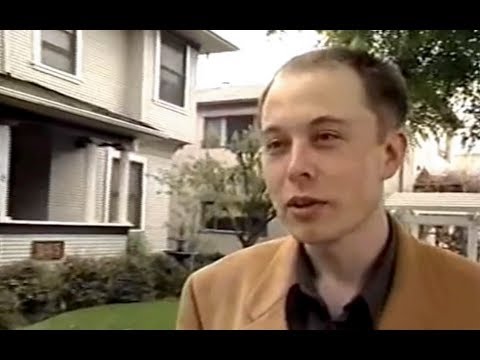
Elon Musk best videos
Fresh off a $400 million software exit, Elon Musk risks his entire windfall on digital finance because tech founders view sudden wealth as poker chips and walking away as unthinkable.
AI-assisted summary of Young Elon Musk featured in documentary about millionaires (1999) — original source. Check the original for full context.
Source published:
Key ideas
- At age 28, following the $400 million cash sale of his first venture Zip2, Elon Musk took delivery of a $1 million McLaren F1 supercar, one of only 62 street-legal models in the world. (0:03)
- Musk experienced an extreme socioeconomic shift in just three years, moving from sleeping on his office floor and showering at the YMCA to multi-millionaire status in Silicon Valley. (0:03)
- Rejecting passive retirement, Musk reinvested nearly all of his proceeds into X.com to disrupt banking and mutual funds via the internet. (1:36)
- Operating under a high-stakes poker mindset, Musk targeted the global financial sector—the world's largest economic market—viewing entrepreneurial departure as an existential death. (1:36)
Detailed notes
## Background Published on YouTube by the channel 'Elon Musk best videos' on October 24, 2015, this video presents an archival segment from a 1999 documentary profiling millionaires. As noted in the description, the clip highlights a twenty-eight-year-old Elon Musk in the immediate aftermath of his first major tech exit.
## TL;DR The video follows twenty-eight-year-old Elon Musk in 1999 as he takes delivery of a rare $1 million McLaren F1 supercar following the $400 million cash acquisition of Zip2. Contemplating his sudden fortune after years of sleeping on office floors and showering at the YMCA, Musk admits to anxieties about becoming spoiled or losing perspective. Rather than cashing out to retire on a private island, he wagers nearly all his capital on X.com to target the global banking industry. Comparing his entrepreneurial path to carrying chips into higher-stakes poker games, Musk explains his refusal to walk away from building companies.
## Atmosphere & style The piece carries the quintessential, nostalgic sheen of late-nineties Silicon Valley dot-com optimism, blending surreal consumer extravagance with nervous, boyish energy. Musk appears both disarmingly reflective about the absurdity of his sudden wealth and relentlessly driven, pacing outside in the morning chill and treating multi-million-dollar transactions as casual poker chips. Grounded by lighthearted banter from his fiancée and bewildered onlookers on the street, the footage feels like an unvarnished time capsule documenting a founder caught between genuine disbelief at his fortune and the compulsive need to bet it all over again.
## Bulletin - [00:03](https://www.youtube.com/watch?v=eb3pmifEZ44&t=3s) At age 28, following the $400 million cash sale of his first venture Zip2, Elon Musk took delivery of a $1 million McLaren F1 supercar, one of only 62 street-legal models in the world. - [00:03](https://www.youtube.com/watch?v=eb3pmifEZ44&t=3s) Musk experienced an extreme socioeconomic shift in just three years, moving from sleeping on his office floor and showering at the YMCA to multi-millionaire status in Silicon Valley. - [01:36](https://www.youtube.com/watch?v=eb3pmifEZ44&t=96s) Rejecting passive retirement, Musk reinvested nearly all of his proceeds into X.com to disrupt banking and mutual funds via the internet. - [01:36](https://www.youtube.com/watch?v=eb3pmifEZ44&t=96s) Operating under a high-stakes poker mindset, Musk targeted the global financial sector—the world's largest economic market—viewing entrepreneurial departure as an existential death.
## Key takeaways - [00:03](https://www.youtube.com/watch?v=eb3pmifEZ44&t=3s) At age 28, Elon Musk marked his Silicon Valley breakthrough by purchasing a rare $1 million McLaren F1, the fastest production car in the world. - [00:03](https://www.youtube.com/watch?v=eb3pmifEZ44&t=3s) Musk fully committed to internet entrepreneurship in 1995, a period when the web was widely considered an unprofitable fad by the public. - [00:03](https://www.youtube.com/watch?v=eb3pmifEZ44&t=3s) Just three years prior to his windfall, Musk bootstrapped Zip2 in severe austerity, sleeping on his office floor and utilizing local YMCA showers. - [00:03](https://www.youtube.com/watch?v=eb3pmifEZ44&t=3s) The buyout of Zip2 for $400 million in cash provided Musk with his initial fortune after enabling traditional newspapers to publish content online. - [00:03](https://www.youtube.com/watch?v=eb3pmifEZ44&t=3s) Musk openly expressed concern over the corrupting influence of sudden wealth, fearing that he and his peers might lose perspective and become spoiled. - [01:36](https://www.youtube.com/watch?v=eb3pmifEZ44&t=96s) Instead of retiring to an island retreat, Musk immediately founded X.com to modernize global banking infrastructure and mutual funds. - [01:36](https://www.youtube.com/watch?v=eb3pmifEZ44&t=96s) The late-1990s tech environment enabled rapid capital acquisition, allowing founders with successful exits to line up $50 million rounds over simple phone calls. - [01:36](https://www.youtube.com/watch?v=eb3pmifEZ44&t=96s) Musk framed his financial strategy as a continuous, high-stakes poker game, declining to cash out and instead carrying all his chips into his next venture. - [01:36](https://www.youtube.com/watch?v=eb3pmifEZ44&t=96s) The decision to target retail finance was driven by market size, as banking represented the largest sector of the global economy and offered multi-billion-dollar potential. - [01:36](https://www.youtube.com/watch?v=eb3pmifEZ44&t=96s) Observers noted that young dot-com moguls viewed their fortunes as abstract tokens, driven by an obsessive impulse where walking away from company creation felt like death. - [01:36](https://www.youtube.com/watch?v=eb3pmifEZ44&t=96s) Beyond technological disruption, Musk harbored contemporary pop-culture ambitions, expressing a desire to appear on the cover of Rolling Stone magazine.
## Detailed walkthrough ### [00:03](https://www.youtube.com/watch?v=eb3pmifEZ44&t=3s) Delivery of the McLaren F1 and Life After Zip2
At seven o'clock in the morning, twenty-eight-year-old Elon Musk waits outside for the arrival of his ultimate reward for paying his dues in Silicon Valley: a McLaren F1 supercar. Costing a million dollars, the vehicle represents an astonishing milestone for the young South African entrepreneur. Musk readily acknowledges the indulgence of the purchase, noting that only 62 street-legal McLaren F1s exist in the entire world. The documentary contrasts this extravagance with his beginnings; Musk sold his first computer program at age twelve, and in 1995, when the general public still dismissed the internet as a temporary fad and virtually no one was turning a profit online, he committed himself entirely to the web.
Watching the flatbed truck deliver the exotic sports car, Musk is visibly struck by how drastically his circumstances have transformed in a matter of years. Just three years prior, he was showering at the local YMCA and sleeping on the floor of his office while bootstrapping his business. Looking at the silver supercar rolled out in front of him, he admits to harboring a genuine anxiety about the psychological pitfalls of sudden, overwhelming wealth. As he examines the vehicle, Musk remarks on the raw reality of the buyout that made it possible—the acquisition of his software company Zip2, which allowed newspapers to publish content online, sold for $400 million in cash.
Musk sums up his perspective on his newfound fortunes and character: “My fear is that we become spoiled brats, that we lose a sense of appreciation and perspective.”
- **The Prize Vehicle**: A $1 million McLaren F1, celebrated as the fastest production car in the world and one of only 62 ever manufactured. - **Bootstrapping Contrast**: Just three years before the delivery, Musk lived out of his office, sleeping on the floor and using YMCA facilities to shower. - **Zip2 Exit**: Sold one year prior for $400 million in cash, which Musk dryly describes as simply an enormous stack of Ben Franklins.
```mermaid flowchart TD accTitle: Elon Musk's Capital Reinvestment Flow (1995–1999) accDescr: Diagram illustrating how Elon Musk channeled his software sale proceeds into luxury and new financial ventures. subgraph EarlyVentures["Early Venture & Exit"] A["1995: Bootstrapping Zip2<br>(Sleeping on office floor, YMCA showers)"] B["1998: Zip2 Acquired<br>($400M cash sale)"] A --> B end
subgraph Allocation["Allocation of Wealth (1999)"] C["Personal Indulgence<br>($1M McLaren F1)"] D["Next Venture: X.com<br>(Online banking & mutual funds)"] B --> C B --> D end
subgraph Goal["Strategic Ambition"] E["Target Largest Economic Sector<br>(Multi-billion dollar bonanza)"] D --> E end ```
[01:36](https://www.youtube.com/watch?v=eb3pmifEZ44&t=96s) Founding X.com and Doubling Down on the Next Game
Rather than taking his fortune to purchase a private Caribbean retreat—joking that he could easily buy an island in the Bahamas and turn it into a personal fief—Musk is consumed by the drive to build another company. He sets his sights on disrupting global finance with his new online venture, X.com, designed to modernize banking and mutual funds via the internet. Standing beside an automated teller machine, he makes it clear that he neither looks nor acts like a traditional banker. In the booming late-nineties tech climate, capital follows him effortlessly; in his office, his assistant handles calls for a funding round where raising $50 million requires little more than making a few phone calls.
Musk has wagered almost all of his newly acquired wealth on X.com, convinced that targeting the banking sector—the largest piece of the global economy—could yield a multi-billion-dollar bonanza. When a passerby stops on the street in utter shock at the sight of the McLaren F1, Musk draws an analogy between his entrepreneurial career and high-stakes poker, explaining that he refuses to walk away from the table with his chips. His fiancée playfully challenges his elevated rhetoric, reminding him that beyond the pure satisfaction of creating businesses, owning the supercar is undeniably fun. An observer notes the unique mindset of young Silicon Valley moguls: to them, the money feels unreal, and quitting the game is unthinkable because walking away feels like death. Looking forward, Musk shares a youthful cultural aspiration: “I'd like to be on the cover of Rolling Stone, that would be cool.”
Musk makes his financial philosophy clear when comparing his career to a series of poker matches: “It's sort of like a series of poker games, and now I've gone on to a more high-stake poker game and just carry those chips with me, and I haven't gone and taken my winnings and spent a big chunk, but I've just really put almost all of it back into the new game.”
- **The Next Venture**: X.com, established to replace traditional banking infrastructure and mutual funds over the internet. - **Easy Capital**: Musk observes that securing $50 million in venture funding has become a straightforward matter of making several phone calls. - **High-Stakes Reinvestment**: Musk sunk the vast majority of his personal net worth into X.com rather than retiring or preserving his liquidity. - **Psychology of Young Founders**: Early tech millionaires treat the windfall as abstract funny money; their refusal to stop working stems not from vesting clauses or handcuffs, but from an existential dread that ceasing to build is death.
## Notable quotes > [00:03](https://www.youtube.com/watch?v=eb3pmifEZ44&t=3s) My fear is that we become spoiled brats, that we lose a sense of appreciation and perspective. — Elon Musk
## Mentioned Elon Musk, McLaren F1, Zip2, X.com, Silicon Valley, YMCA, Rolling Stone
## Video description Young Elon Musk featured in documentary about millionaires (1999)
[Source](https://www.youtube.com/watch?v=eb3pmifEZ44)