Ted Nelson Names Mathematician Shinichi Mochizuki as Bitcoin Creator
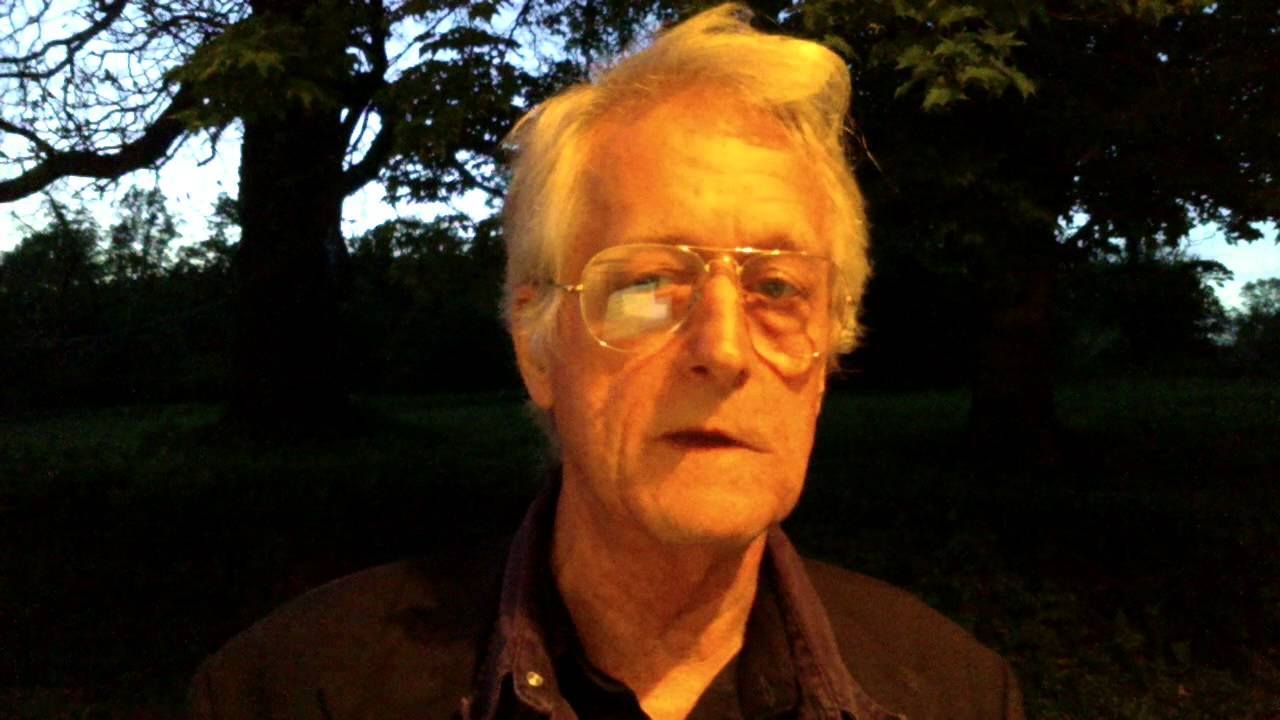
TheTedNelson
Kyoto University mathematician Shinichi Mochizuki is Satoshi Nakamoto because his direct online release of the ABC conjecture proof mirrors Bitcoin's signature pattern of publishing radical systems and withdrawing from public debate.
AI-assisted summary of I Think I Know Who Satoshi Is — original source. Check the original for full context.
Source published:
Key ideas
- Ted Nelson identifies Kyoto University mathematics professor Shinichi Mochizuki as the true individual behind Bitcoin creator Satoshi Nakamoto. (7:16)
- The identification hinges on a shared behavioral pattern dubbed 'doing the Satoshi': dropping a massive theoretical framework directly onto the web and vanishing without engaging in debate, exemplified by Mochizuki's 2012 ABC conjecture proof. (4:36)
- Nelson counters doubts about Satoshi's idiomatic English by noting Mochizuki moved to the US as a child, entered Princeton at age 16, and graduated as class salutatorian. (9:18)
- Nelson advocates awarding Mochizuki the Nobel Memorial Prize in Economic Sciences and urges him to apply his systems design genius to existential global challenges like nuclear proliferation and pollution. (11:47)
Detailed notes
## Background Published on YouTube by Ted Nelson on the channel TheTedNelson on May 18, 2013, the video is described simply as an exploration of who Nelson thinks created Bitcoin and the reasons behind his conclusion. Recording at twilight shortly after Bitcoin's early valuation milestones, Nelson seeks to unmask the pseudonymous Satoshi Nakamoto through deductive reasoning and behavioral profiling.
## TL;DR Ted Nelson argues that the elusive creator of Bitcoin, Satoshi Nakamoto, is actually Shinichi Mochizuki, a renowned mathematics professor at Kyoto University. Rather than looking among conventional cryptographers and mailing lists, Nelson profiles Satoshi as an isolated genius whose signature modus operandi is inventing an entire conceptual universe, posting it directly to the internet without institutional review, and vanishing into the background. Pointing to Mochizuki's August 2012 release of a 500-page claimed proof of the ABC conjecture as an identical behavioral match, Nelson addresses doubts about English fluency by highlighting Mochizuki's education as Princeton's salutatorian. The presentation concludes with an earnest personal appeal imploring 'Mochizuki Sensei' to apply his holistic systems-engineering talents to tackle humanity's greatest existential crises, from pollution to nuclear proliferation.
## Atmosphere & style The video carries an intimate, eccentric, and theatrical mood, unfolding like an intellectual fireside monologue delivered at twilight. Nelson alternates between playful Holmesian detective roleplay and deeply personal reflections on the solitary agony and ecstasy of holding ideas the establishment rejects. The delivery feels simultaneously conspiratorial, reverent, and cinematic, escalating from a cerebral guessing game into a heartfelt, dramatic plea to a reclusive superhero of mathematics.
## Bulletin - [07:16](https://www.youtube.com/watch?v=emDJTGTrEm0&t=436s) Ted Nelson identifies Kyoto University mathematics professor Shinichi Mochizuki as the true individual behind Bitcoin creator Satoshi Nakamoto. - [04:36](https://www.youtube.com/watch?v=emDJTGTrEm0&t=276s) The identification hinges on a shared behavioral pattern dubbed 'doing the Satoshi': dropping a massive theoretical framework directly onto the web and vanishing without engaging in debate, exemplified by Mochizuki's 2012 ABC conjecture proof. - [09:18](https://www.youtube.com/watch?v=emDJTGTrEm0&t=558s) Nelson counters doubts about Satoshi's idiomatic English by noting Mochizuki moved to the US as a child, entered Princeton at age 16, and graduated as class salutatorian. - [11:47](https://www.youtube.com/watch?v=emDJTGTrEm0&t=707s) Nelson advocates awarding Mochizuki the Nobel Memorial Prize in Economic Sciences and urges him to apply his systems design genius to existential global challenges like nuclear proliferation and pollution.
## Key takeaways - [00:01](https://www.youtube.com/watch?v=emDJTGTrEm0&t=1s) Nelson defines Bitcoin as 'electronic gold' because of its decentralized verification, computationally intensive mining, and capped supply that increases purchasing power over time. - [00:01](https://www.youtube.com/watch?v=emDJTGTrEm0&t=1s) Bitcoin's launch represents a Lone Ranger-style event, leaving behind a resilient open-source 'silver bullet' complete with aligned incentives and an internal scripting language. - [00:01](https://www.youtube.com/watch?v=emDJTGTrEm0&t=1s) The escalating real-world value of Bitcoin is highlighted by the early 10,000 BTC commercial pizza transaction, worth $1.15 million by May 2013. - [03:08](https://www.youtube.com/watch?v=emDJTGTrEm0&t=188s) Nelson draws a parallel between Satoshi and Sir Isaac Newton, reflecting on the intellectual isolation, stubbornness, and perceived paranoia of visionary outsiders. - [03:08](https://www.youtube.com/watch?v=emDJTGTrEm0&t=188s) Journalistic investigations, including efforts by The New Yorker, failed because they searched conventional cryptographic circles rather than looking for a solitary mind operating in the 'long grass.' - [04:36](https://www.youtube.com/watch?v=emDJTGTrEm0&t=276s) Framing the investigation through a Holmesian lens, Nelson treats Satoshi not as a criminal, but as a relentless 'serial benefactor' defined by an identifiable behavioral signature. - [04:36](https://www.youtube.com/watch?v=emDJTGTrEm0&t=276s) The signature caper, 'doing the Satoshi,' entails inventing a vast conceptual cosmos from scratch, publishing it directly to the web, and walking away without seeking academic accolades or engaging in downstream debate. - [07:16](https://www.youtube.com/watch?v=emDJTGTrEm0&t=436s) In August 2012, Shinichi Mochizuki uploaded a 500-page, four-part treatise to the web claiming a proof of the ABC conjecture using novel frameworks like inter-universal Teichmüller theory and frobenioids. - [07:16](https://www.youtube.com/watch?v=emDJTGTrEm0&t=436s) Mochizuki declined speaking engagements and explanations after publishing his ABC conjecture proof, closely mirroring Satoshi Nakamoto's sudden 2011 withdrawal from Bitcoin development. - [09:18](https://www.youtube.com/watch?v=emDJTGTrEm0&t=558s) Doubts regarding Mochizuki's command of English are dismissed by his biography: he was raised in the US, attended high school in New Hampshire, and graduated as Princeton salutatorian at age 19. - [09:18](https://www.youtube.com/watch?v=emDJTGTrEm0&t=558s) Nelson acknowledges he lacks definitive mathematical proof ('Q.E.D.'), but asserts he has established an undeniable 'existence proof' matching Satoshi's intellect, work ethic, and presentation style. - [09:18](https://www.youtube.com/watch?v=emDJTGTrEm0&t=558s) Nelson outlines multiple motivations for publicizing his theory, including bringing honor to Kyoto University and advocating for Mochizuki to receive the Nobel Prize in Economic Sciences. - [11:47](https://www.youtube.com/watch?v=emDJTGTrEm0&t=707s) Addressing Mochizuki directly as 'Sensei,' Nelson appeals to him to apply his holistic design methodology to urgent global crises, including nuclear weapons, terrorism, and environmental pollution.
## Detailed walkthrough ### [00:01](https://www.youtube.com/watch?v=emDJTGTrEm0&t=1s) Bitcoin as Electronic Gold and the Lone Ranger of Software
Speaking at twilight on May 17, 2013, Ted Nelson announces his intention to reveal the true identity of Satoshi Nakamoto, the mysterious creator of Bitcoin. Nelson observes that while the public and the media commonly label Bitcoin a “virtual currency,” he prefers to call it “electronic gold.” Much like physical gold, Bitcoin functions without any central authority; anyone with the proper tools can verify and test it, anyone with sufficient computational resources can mine it, and its strictly capped supply ensures that its purchasing power will naturally climb over time. Beyond its economic structure, Nelson marvels at the system's sheer engineering elegance. It features a multi-tiered cryptographic backbone, carefully calibrated incentive structures that motivate builders, node operators, and users from every angle, and an integrated scripting language designed to govern complex, multi-party contracts. Half a decade after its initial rollout, the entire construct has proven remarkably resilient.
Nelson highlights the mythic, cinematic nature of Bitcoin’s launch, comparing its pseudonymous author to a legendary masked hero: “As many know, Bitcoin was created by an anonymous individual or individuals who, like the Lone Ranger, went away unidentified and left only the silver bullet of the extraordinary software that runs it—open-source, clever, and deep.” The saga began in 2008 when an article outlining a non-centralized cryptographic cash system was published under the name Satoshi Nakamoto. Shortly thereafter, the software was published and the genesis block of 50 bitcoins was mined, igniting a modern digital gold rush. Nelson playfully points out the rapid escalation of Bitcoin’s real-world purchasing power by revisiting the famous early commercial transaction: two pizzas bought for 10,000 bitcoins, a sum that, by May 2013, carried a retroactive market value of $1,150,000.
- **Launch Timeline**: White paper published in 2008; software launched and first 50 bitcoins mined shortly after. - **The First Commercial Transaction**: 10,000 BTC spent on pizza, valued retroactively at $1.15 million at the time of Nelson's recording. - **Structural Properties**: Fixed maximum supply, decentralized validation, multi-party transaction scripting, and aligned operational incentives.
---
[03:08](https://www.youtube.com/watch?v=emDJTGTrEm0&t=188s) Kinship, Paranoia, and Searching in the Long Grass
Nelson turns his attention to the character and psychological profile of the creator, drawing a historical parallel to Sir Isaac Newton—a scientific colossus who, coincidentally, also spent part of his career overseeing the Royal Mint. Nelson confesses an immediate, profound emotional kinship with Satoshi. While disclaiming any parity in intellectual raw power, Nelson emphasizes that he intimately understands the loneliness of working far beyond the boundaries of accepted consensus. He describes the paradoxical ecstasy and bitterness of holding a profound insight that nobody else recognizes while the academic establishment scoffs. Paraphrasing Woody Allen’s quip that posterity is the religion of the intellectuals, Nelson notes that working in total intellectual isolation takes an uncommon blend of stubbornness, vision, and sheer chutzpah that an ordinary clinical observer might mistake for paranoia.
Critiquing earlier journalistic and online attempts to unmask Satoshi, including investigations mounted by *The New Yorker*, Nelson argues that everyone has been searching under the streetlights. They combed through obvious suspects, circulating names within standard cryptographer circles and prominent cyber-libertarian mailing lists. To Nelson, Satoshi was never going to be found in a conventional academic lineup because he operates in the long grass, playing a patient, long-horizon game. To discover his real identity, one had to look away from ordinary suspects and understand how an unconventional, solitary mind moves through the world.
> “I know how it feels to be the only person in the world who understands something—both the ecstasy and bitterness of it, being all alone amongst beautiful stuff, having no one to share it with, and others sneering.” — Ted Nelson
---
[04:36](https://www.youtube.com/watch?v=emDJTGTrEm0&t=276s) The Holmesian Method: Spotting the Serial Benefactor
To deduce Satoshi’s identity, Nelson adopts the persona and methodology of Sherlock Holmes in an imaginary dialogue with Dr. John Watson. Nelson frames the creator not as a rogue criminal, but as an elusive, repeat actor: a cunning, determined, and relentless “serial benefactor.” Watson questions how a detective could ever identify a suspect from a single isolated occurrence like the release of Bitcoin. Nelson’s Holmes glibly replies that Sir Arthur Conan Doyle always permitted him to invent correct hypotheses from thin air because the author already knew the conclusion in advance—and since Nelson already knows the answer, he can happily reconstruct the deduction.
The key to unmasking the benefactor lies in decoding his distinctive operational signature, what Nelson terms “doing the Satoshi.” Satoshi's signature caper is not to seek conventional peer review, academic accolades, or conference applause. Instead, his modus operandi is to conjure an entire intellectual cosmos from scratch, toss it directly onto the open internet for posterity to grapple with, and then politely bow out, refusing to engage in downstream debate while slipping away on tiptoes toward his next grand obsession. Nelson concludes that if this same figure ever struck again under his own legal name, he would execute the exact same dramatic pattern: dropping a massive, paradigm-shifting theoretical framework on the world outside standard institutional channels, leaving the leading specialists bewildered, and instantly stepping aside.
```mermaid flowchart TD accTitle: The Satoshi Modus Operandi accDescr: Flowchart illustrating Ted Nelson's theory of Satoshi Nakamoto's behavioral pattern of releasing major works.
subgraph ModusOperandi["'Doing the Satoshi' Caper"] A["Conceive New Theoretical Cosmos"] --> B["Bypass Academic Journals & Publish Direct to Web"] B --> C["Leave Field Specialists Flabbergasted"] C --> D["Refuse Debate, Disengage, and Tiptoe Away"] end
subgraph Case1["Bitcoin (2008-2011)"] E["Cryptographic Digital Currency"] --> F["Pseudonym: Satoshi Nakamoto"] F --> G["Vanishes in 2011 ('Moved on to other things')"] end
subgraph Case2["ABC Conjecture Proof (2012)"] H["500-Page Inter-Universal Teichmüller Theory"] --> I["True Identity: Shinichi Mochizuki"] I --> J["Declines Lectures & Vanishes into Work"] end
ModusOperandi -.-> Case1 ModusOperandi -.-> Case2 ```
> “What will give him away is what he gives away.” — Ted Nelson
---
[07:16](https://www.youtube.com/watch?v=emDJTGTrEm0&t=436s) Solving the Puzzle: Shinichi Mochizuki and the ABC Conjecture
Channeling the game show *Wheel of Fortune*, Nelson officially announces his candidate: the true identity behind Satoshi Nakamoto is Shinichi Mochizuki, a distinguished research professor of mathematics at Kyoto University’s Research Institute for Mathematical Sciences (RIMS). Nine months prior to Nelson’s talk, in August 2012, Mochizuki performed what Nelson identifies as the quintessential Satoshi caper. Without submitting his work to established peer-reviewed mathematical journals, Mochizuki quietly uploaded a monumental 500-page, four-part treatise to the internet claiming a complete proof of number theory’s famous ABC conjecture.
The mathematical community was left gasping in astonishment. To tackle the problem, Mochizuki had not merely extended existing techniques; he invented an entirely new vocabulary and conceptual universe, introducing foundational concepts such as “inter-universal Teichmüller theory” and mathematical objects he dubbed “frobenioids.” Despite the world's leading number theorists pleading for lectures, seminars, and accessible explanations to help them decipher the hundreds of pages of alien mathematics, Mochizuki declined speaking engagements and withdrew into the background, stating that he had nothing further to add. To Nelson, this exact retreat mirrored Satoshi’s farewell note in 2011 when he announced he had moved on to other projects.
- **Candidate**: Shinichi Mochizuki (Mochizuki Shinichi), Research Professor of Mathematics at Kyoto University. - **The Second Caper (August 2012)**: 500-page claimed proof of the ABC conjecture posted directly online. - **Novel Frameworks**: Inter-universal Teichmüller theory and "frobenioids." - **Behavioral Parallels**: Bypassed standard academic journals, refused to tour or lecture to explain the work, and disengaged immediately after publication.
> “I declare that the true identity of Satoshi Nakamoto—the great economist, the great social engineer, the great computer scientist, and the dance-away genius—is none other than Shinichi Mochizuki, research professor of mathematics at Kyoto University.” — Ted Nelson
---
[09:18](https://www.youtube.com/watch?v=emDJTGTrEm0&t=558s) Fluency, Motives, and the Case for Public Recognition
Nelson confronts the primary objection raised by skeptics: how could an individual with an unmistakably Japanese name author the Satoshi white paper and forum posts in such subtle, polished, and idiomatic British-leaning English? Calling such skepticism “ethnocentric cluckery,” Nelson points to Mochizuki’s documented biography on Wikipedia. Mochizuki moved to the United States as a child, attended high school in New Hampshire, entered Princeton University at age 16, and graduated in just three years as the class salutatorian before completing his doctorate under Gerd Faltings. Graduating as Princeton's salutatorian at an accelerated pace guarantees exceptional command of English prose. Combining this extraordinary intellect with a relentless Japanese work ethic, Mochizuki produces what would amount to a lifetime of research for ordinary academics every few years, maintaining an official university homepage written entirely in English despite working in the historic heart of Japan.
Nelson clarifies that while he cannot claim a formal mathematical "Q.E.D.," he has produced an undeniable "existence proof" of an individual possessing the identical genius, cross-disciplinary brilliance, and signature "Lone Ranger" delivery style. Anticipating criticism for outing a man who clearly values solitude, Nelson outlines four distinct personal justifications:
1. **Preempting the Inevitable**: Satoshi always knew his anonymity was temporary; Nelson believes outing him first ensures that the credit goes to someone who understands his character. 2. **Bringing Honor**: Nelson wants to bestow overdue public honor and appreciation upon Mochizuki, Kyoto University, and Japan, cutting through a traditional personal modesty that prevents Mochizuki from seeking public acclaim. 3. **The Nobel Prize**: Nelson firmly believes Mochizuki deserves the Nobel Memorial Prize in Economic Sciences for designing Bitcoin's revolutionary monetary architecture. 4. **Direct Address**: Nelson wants to break through the veil and communicate with the creator directly.
> “I cannot say Q.E.D. to that, because I have not proven it; but I have presented an existence proof that there exists a very similar man with very similar brilliance and a very similar style of Lone Ranger delivery of big, big stuff, who has recently given the world another extraordinary universe they're not ready to understand, and has moved on, like Satoshi, to his next task.” — Ted Nelson
[11:47](https://www.youtube.com/watch?v=emDJTGTrEm0&t=707s) An Appeal to Mochizuki Sensei to Solve Humanity’s Crises
Ted Nelson shifts his tone into a direct, reverent appeal to the man he believes created Bitcoin—mathematician Shinichi Mochizuki. Addressing him with profound respect, Nelson praises his rare intellectual ability to synthesize complex, disparate domains into elegant, working systems. He highlights how Bitcoin was not just raw computer code or pure mathematics, but an intricate fusion that balanced human incentives, political dynamics, and underlying technical mechanisms. Nelson marvels at this holistic genius and challenges him to apply those exact same talents beyond the realm of digital currency.
Looking toward the future, Nelson implores Mochizuki to step outside the realm of pure abstraction and confront the existential dilemmas that threaten civilization. Whether he chooses to act in his daylight identity as a Kyoto academic or secretly behind his pseudonymous persona, Nelson expresses confidence that Mochizuki could once again engineer an ingenious solution to problems that currently appear intractable. As Nelson urges him: “Sensei with your great and allseeing mind and your ability to craft multi-level and multifaceted Solutions of motivation and politics and mechanism as you did with Bitcoin I ask you to turn your thoughts and perhaps some of your next great projects to the compelling and less abstract problems of mankind nuclear weapons or terrorism or pollution.” He envisions Mochizuki donning his “superhero cape” as Satoshi to deliver yet another miraculous breakthrough—a new structural “silver bullet” or an enduring “system of gold”—before wishing him well with the iconic blessing: “and May the force be with you.”
- **The Unique Power of the Bitcoin Design**: Nelson emphasizes Mochizuki’s rare capacity to intertwine structure, human motivation, game theory, and technical mechanism into a unified architecture. - **Urgent Real-World Challenges**: Nelson specifically asks him to direct his intellect toward concrete global threats: - Nuclear weapons proliferation - Global terrorism - Environmental pollution - **The Dual Persona**: Nelson invites him to contribute either openly as Mochizuki Sensei or in secret behind his metaphorical “superhero cape” under the name Satoshi.
## Notable quotes > [07:16](https://www.youtube.com/watch?v=emDJTGTrEm0&t=436s) I declare that the true identity of Satoshi Nakamoto—the great economist, the great social engineer, the great computer scientist, and the dance-away genius—is none other than Shinichi Mochizuki, research professor of mathematics at Kyoto University. — Ted Nelson
> [03:08](https://www.youtube.com/watch?v=emDJTGTrEm0&t=188s) I know how it feels to be the only person in the world who understands something—both the ecstasy and bitterness of it, being all alone amongst beautiful stuff, having no one to share it with, and others sneering. — Ted Nelson
## Mentioned ABC conjecture, Arthur Conan Doyle, Bitcoin, frobenioids, Gerd Faltings, Inter-universal Teichmüller theory, John Watson, Kyoto University, Lone Ranger, Nobel Memorial Prize in Economic Sciences, Princeton University, Research Institute for Mathematical Sciences, Royal Mint, Satoshi Nakamoto, Sherlock Holmes, Shinichi Mochizuki, Sir Isaac Newton, Ted Nelson, The New Yorker, Wheel of Fortune, Wikipedia, Woody Allen
## Video description The creator of Bitcoin-- who I think he is, and why.
[Source](https://www.youtube.com/watch?v=emDJTGTrEm0)