Levandowski Dumps LiDAR at Pronto, Calls Prediction Real AV Barrier
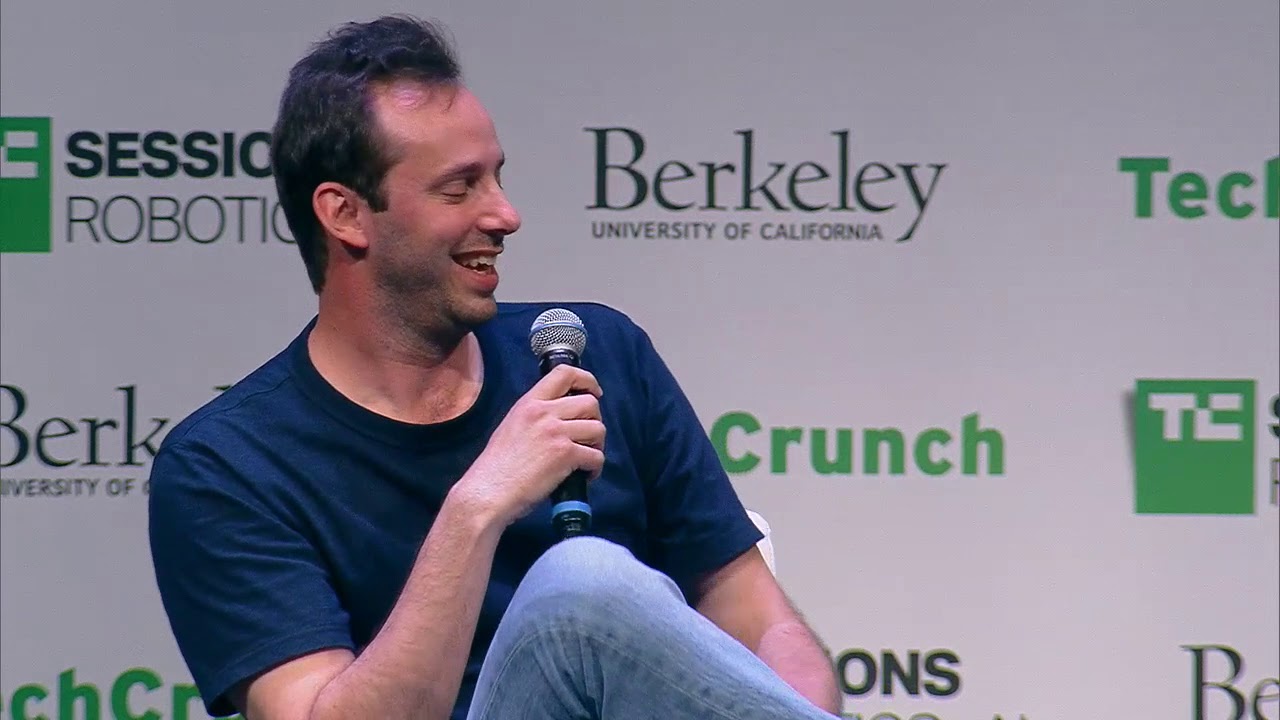
TechCrunch
Autonomous vehicle disengagements stem from software failing to forecast human behavior rather than sensor deficits, making direct-to-Level 4 moonshots unviable compared to iterative commercial deployment.
AI-assisted summary of Anthony Levandowski on lessons learned at TC Sessions: Robotics+AI — original source. Check the original for full context.
Source published:
Key ideas
- Anthony Levandowski has dropped LiDAR at his startup Pronto, citing behavioral prediction and motion forecasting—not sensor hardware—as the primary bottleneck in autonomous vehicle development. (0:00)
- Disengagement data from mature autonomous driving programs reveals that hardware failures account for virtually zero percent of disengagements, which stem almost entirely from software misunderstandings and miscommunications. (2:00)
- Levandowski rejects the direct 'moonshot' path to Level 4 autonomy, arguing that an iterative, evolutionary rollout in consumer hands is the only pragmatic route to ensure safety. (4:33)
- Dismissing extreme AI doom narratives that equate machine learning to weapons of mass destruction, Levandowski contends technological progress is inevitable and urges society to build without fear. (6:41)
Detailed notes
## Background Published on YouTube by TechCrunch on April 22, 2019, this video captures an interview with former star Google engineer Anthony Levandowski at TC Sessions: Robotics+AI. Following his involvement in the high-profile Waymo v. Uber trade secrets lawsuit, Levandowski sits down to discuss autonomous vehicle development and his new startup, Pronto.ai.
## TL;DR Anthony Levandowski explains why his startup Pronto deliberately avoids LiDAR, admitting past errors and arguing that the primary autonomous bottleneck has shifted from sensor hardware to behavioral prediction and software communication. Reflecting on his departure from corporate friction, he describes how a forced clean slate gave him the perspective to discard legacy assumptions. He dismisses the moonshot approach of leaping straight to Level 4 autonomy, advocating instead for an evolutionary deployment model where driver-assist systems iteratively learn and prove safety in the wild. Finally, addressing wider anxieties about artificial intelligence, Levandowski pushes back against apocalyptic panic, urging developers and society to approach inevitable progress without fear.
## Atmosphere & style The session has an engaging, candid, and slightly self-deprecating atmosphere, with Levandowski noticeably relaxed as he eats 'humble pie' regarding his previous dogmatic defense of LiDAR. The dynamic between the interviewer and guest is playful yet incisive, freely touching on past controversies like his AI-focused church and high-stakes legal battles, which Levandowski meets with chuckles and historical analogies. Listening to the exchange feels like watching a chastened pioneer who has traded Silicon Valley moonshot hype for hard-won, pragmatic engineering realism.
## Bulletin - [00:00](https://www.youtube.com/watch?v=fNgEG5rCav4&t=0s) Anthony Levandowski has dropped LiDAR at his startup Pronto, citing behavioral prediction and motion forecasting—not sensor hardware—as the primary bottleneck in autonomous vehicle development. - [02:00](https://www.youtube.com/watch?v=fNgEG5rCav4&t=120s) Disengagement data from mature autonomous driving programs reveals that hardware failures account for virtually zero percent of disengagements, which stem almost entirely from software misunderstandings and miscommunications. - [04:33](https://www.youtube.com/watch?v=fNgEG5rCav4&t=273s) Levandowski rejects the direct 'moonshot' path to Level 4 autonomy, arguing that an iterative, evolutionary rollout in consumer hands is the only pragmatic route to ensure safety. - [06:41](https://www.youtube.com/watch?v=fNgEG5rCav4&t=401s) Dismissing extreme AI doom narratives that equate machine learning to weapons of mass destruction, Levandowski contends technological progress is inevitable and urges society to build without fear.
## Key takeaways - [00:00](https://www.youtube.com/watch?v=fNgEG5rCav4&t=0s) Pronto's decision to forgo LiDAR is a technical choice rather than a legal constraint from the Waymo v. Uber lawsuit. - [00:35](https://www.youtube.com/watch?v=fNgEG5rCav4&t=35s) The primary technical hurdle in autonomous driving has shifted from range sensing and mapping to behavioral understanding and motion forecasting. - [00:52](https://www.youtube.com/watch?v=fNgEG5rCav4&t=52s) Autonomous systems must predict not only what other actors will do, but also model what those actors expect the autonomous vehicle to do. - [01:25](https://www.youtube.com/watch?v=fNgEG5rCav4&t=85s) Levandowski concedes his previous position as LiDAR's champion, agreeing with Elon Musk's assessment that LiDAR acts as a crutch. - [02:00](https://www.youtube.com/watch?v=fNgEG5rCav4&t=120s) Hardware components such as fail-operational steering and braking account for virtually 0.0% of autonomous vehicle disengagements. - [03:33](https://www.youtube.com/watch?v=fNgEG5rCav4&t=213s) Stepping away from major corporate environments gave Levandowski a clean slate to reassess technical assumptions without internal political friction. - [04:33](https://www.youtube.com/watch?v=fNgEG5rCav4&t=273s) Safety is the sole metric that determines when autonomous vehicles will successfully deploy commercially. - [04:58](https://www.youtube.com/watch?v=fNgEG5rCav4&t=298s) Skipping straight to Level 4 moonshot autonomy is unrealistic because solving every rare edge case upfront takes too long. - [05:15](https://www.youtube.com/watch?v=fNgEG5rCav4&t=315s) The Silicon Valley analogy that 'a ladder cannot reach the moon' fails because driving to the corner store is an evolutionary, grounded task rather than a moonshot. - [07:00](https://www.youtube.com/watch?v=fNgEG5rCav4&t=420s) Attempting to halt or cage AI development out of fear is counterproductive; progress is inevitable and must be actively guided. - [07:15](https://www.youtube.com/watch?v=fNgEG5rCav4&t=435s) Society should approach machine intelligence as a beneficial tool for connection rather than comparing it to nuclear weapons.
## Detailed walkthrough ### [00:00](https://www.youtube.com/watch?v=fNgEG5rCav4&t=0s) Abandoning LiDAR and Re-Evaluating the Autonomous Bottleneck
The interviewer opens by pointing out that Anthony Levandowski is widely known for his pioneer work on LiDAR, yet his new startup, Pronto, is deliberately not using it. She asks whether this decision is due to legal restrictions stemming from the Waymo v. Uber lawsuit or another technical reason. Levandowski clarifies that while he has no legal constraints preventing him from using LiDAR, he holds a strict personal rule: “I do have restriction personally of not doing things that I know aren’t going to work.” He recalls that around 2009 or 2010, early LiDAR units lacked the necessary range and performance for autonomous software to react safely. However, he argues that the fundamental challenge today is no longer about sensing further or mapping more accurately. Instead, the real technical deficit lies in behavioral understanding and motion forecasting—predicting not only what surrounding vehicles and pedestrians will do, but also understanding what other actors expect your own vehicle to do.
Levandowski openly concedes his past stance, admitting he was once LiDAR's biggest champion and believed it was the secret sauce for autonomous driving. Acknowledging that Elon Musk had faced public ridicule for dismissing the technology, Levandowski concurs: “A wiser person than me, and I’ll eat some humble pie here, said that LiDAR is a crutch.” He stresses that his departure from LiDAR is not out of inability to build it, but because it misses where value is generated. Looking at autonomous vehicle disengagement data across mature companies, he highlights that hardware failures—such as lack of redundant steering or brakes—account for virtually zero percent of disengagements. Instead, failures stem almost exclusively from software misunderstandings and miscommunications with surrounding actors. Comparing the shifting consensus to Galileo overturning geocentrism (joking that he can relate to facing an "Inquisition"), he summarizes the core pivot: the industry's bottleneck is no longer sensor hardware, but prediction.
```mermaid flowchart TD accTitle: Autonomous Vehicle Failure Analysis accDescr: Diagram contrasting sensor and hardware factors with behavioral prediction failures.
subgraph Hardware["Perceived Hardware Issues (0.0% Real Bottleneck)"] A["Sensor Range & Accuracy (LiDAR)"] B["Fail-Operational Steering / Brakes"] end
subgraph Software["Actual Autonomous Bottleneck"] C["Behavioral Perception"] D["Predicting Surrounding Actor Motion"] E["Modeling What Others Expect You to Do"] end
Hardware -.->|"Not the real cause of disengagements"| F["System Failure"] Software ==>|"True source of miscommunications & disengagements"| F ```
[03:33](https://www.youtube.com/watch?v=fNgEG5rCav4&t=213s) Clean Slates, Level 4 Realities, and Evolutionary Deployment
The discussion moves to whether the high-profile Waymo v. Uber lawsuit served as a blessing in disguise by forcing Levandowski to discard assumptions he had pursued for over a decade. He reflects that when an engineer is entirely consumed within an organization, day-to-day internal friction and team politics obscure the broader picture: “It’s very difficult to get perspective and see like you think you’re there, but actually you’re missing this other path that’s going to block you completely.” Stepping away allowed him time for personal reflection and a clean-slate reassessment of the problem. When the interviewer jokingly brings up his controversial AI-focused church (Way of the Future), he clarifies with a laugh that the church was actually founded earlier, in 2015 while he was still at Google.
Turning to the broader industry landscape, the interviewer asks if Levandowski has abandoned the belief that Level 4 autonomy is achievable in the near term, given that dozens of competitors are still pursuing it directly. Levandowski emphasizes that safety—not the choice of sensors, car manufacturers, or software vendors—is the sole criterion for when autonomous vehicles will actually deploy. He rejects the moonshot, "straight to Level 4" approach as unrealistic in the short term because resolving every edge case upfront takes too long. Addressing the popular silicon valley counterargument that "building a ladder doesn't get you to the moon," Levandowski counters: “The thing is that we’re not going to the moon, we’re just trying to drive to the corner store and back.” He contends that an evolutionary path, where consumer systems iteratively improve in the wild, is the only pragmatic way to gather lessons, chip away at safety problems, and achieve true reliability.
- Safety serves as the only real metric dictating when commercial AV deployment occurs. - Developing incremental, evolving driver-assist products uncovers operational insights that direct-to-Level 4 development pipelines miss.
[06:41](https://www.youtube.com/watch?v=fNgEG5rCav4&t=401s) AI Anxiety and the Path to the Singularity
To close the session, the interviewer humorously asks what humanity should do to appease its future artificial intelligence overlords ahead of an impending singularity apocalypse. Levandowski plays along, quipping that people can enroll in a Udacity course or similar online classes to understand the technology better.
Shifting to a serious note, he argues that technological progress cannot be stopped and that panic is counterproductive. He pushes back against extreme doom-mongering narratives that equate machine learning to weapons of mass destruction: “Progress is an inevitable, and you know you want to make sure that you help create the progress and understand where that’s going as opposed to deny it or try to cage it up or you know, say that it’s more dangerous than nuclear weapons.” He concludes that society has a choice between engineering AI from a place of bias and fear or building it as a beneficial tool for human connection, boiling his philosophy down to a direct three-word takeaway: “Don't be scared.”
## Notable quotes > [03:33](https://www.youtube.com/watch?v=fNgEG5rCav4&t=213s) The thing is that we’re not going to the moon, we’re just trying to drive to the corner store and back. — Anthony Levandowski
## Mentioned Anthony Levandowski, Elon Musk, Galileo Galilei, Google, Pronto.ai, TechCrunch, Uber, Udacity, Way of the Future, Waymo
## Video description Anthony Levandowski, the former star Google engineer and serial entrepreneur who was at the center of a trade secrets lawsuit between Uber and Waymo, is back with a new startup. TechCrunch sits down with Levandowski for a wide-ranging discussion on autonomous vehicles and his new startup Pronto.ai
[Source](https://www.youtube.com/watch?v=fNgEG5rCav4)