Cirrus Pilot Survives Pacific Ditching Using Airframe Parachute
AIRBOYD
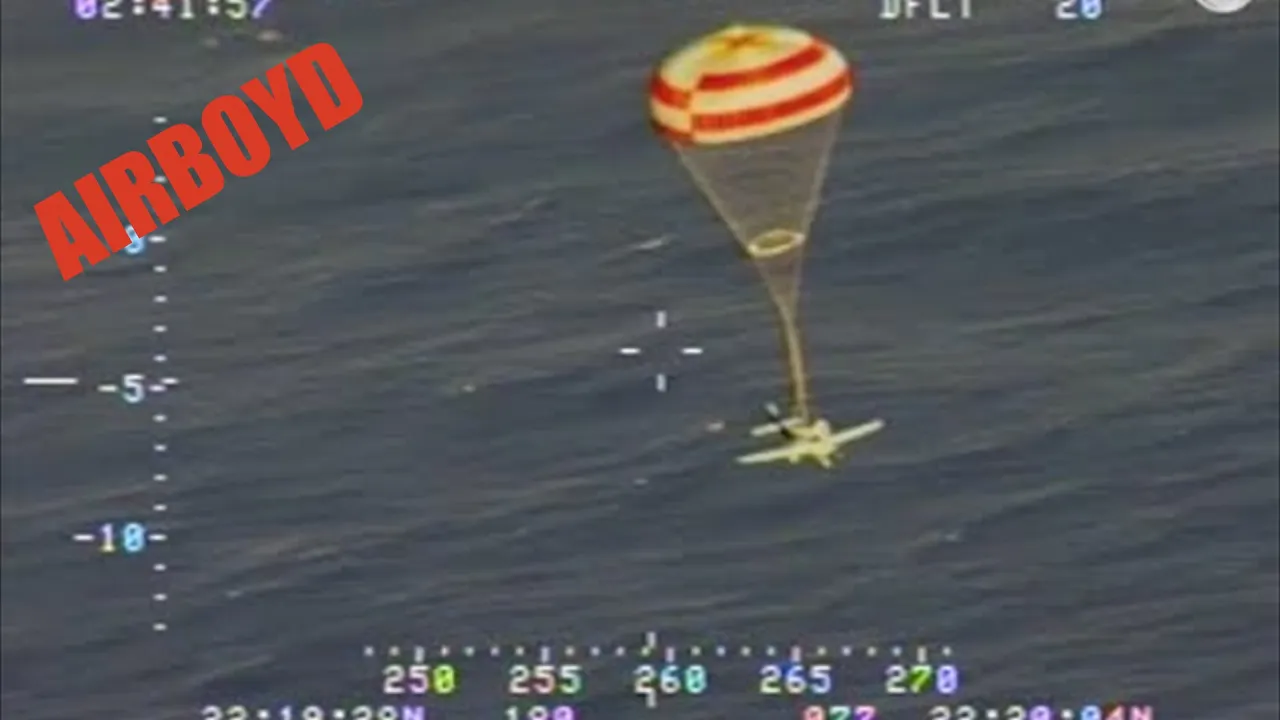
The deployment of an emergency airframe parachute enabled an out-of-fuel Cirrus SR-22 pilot to survive ditching into the Pacific Ocean and evacuate into a life raft.
AI-assisted summary of Cirrus Airframe Parachute System (CAPS) In Action — original source. Check the original for full context.
Source published:
Key ideas
- A single-engine Cirrus SR-22 successfully ditched 253 miles northeast of Maui, Hawaii, following mid-flight fuel exhaustion. (0:00)
- The pilot deployed the aircraft's Cirrus Airframe Parachute System (CAPS) at approximately 4:44 p.m., enabling a controlled ocean descent. (0:00)
- Following touchdown on the water, the pilot safely exited the airframe and deployed an emergency life raft. (0:00)
- The incident and subsequent survival response were captured on archival footage released by U.S. Coast Guard District 14 Hawaii. (0:00)
Detailed notes
## Background Published on YouTube by AIRBOYD on January 26, 2015, this video features archival footage credited to U.S. Coast Guard District 14 Hawaii showcasing the Cirrus Airframe Parachute System (CAPS). According to the description, the clip captures an emergency ditching 253 miles northeast of Maui after a single-engine Cirrus SR-22 ran out of fuel, allowing the pilot to parachute down and safely exit into a life raft.
## TL;DR The footage documents an aerial rescue scenario involving a Cirrus SR-22 aircraft that suffered fuel exhaustion over the Pacific Ocean. At roughly 4:44 p.m., the pilot deploys the aircraft's onboard airframe parachute system 253 miles northeast of Maui, Hawaii. The plane descends steadily under the canopy until it splashes down into the ocean. Immediately following the ditching, the pilot safely evacuates the cabin and climbs into an emergency life raft.
## Atmosphere & style The presentation carries a stark, clinical tension typical of operational surveillance footage, recording a life-or-death emergency from a steady, detached vantage point. With the audio consisting purely of repeated, automated acknowledgments stating 'Thank you,' the viewing experience feels surreal, tense, and strangely quiet. Watching the aircraft drift under its canopy into the open sea creates a suspenseful, high-stakes mood that resolves into quiet relief once the pilot emerges into the raft.
## Bulletin - [00:00](https://www.youtube.com/watch?v=gBCUQlF3MMU&t=0s) A single-engine Cirrus SR-22 successfully ditched 253 miles northeast of Maui, Hawaii, following mid-flight fuel exhaustion. - [00:00](https://www.youtube.com/watch?v=gBCUQlF3MMU&t=0s) The pilot deployed the aircraft's Cirrus Airframe Parachute System (CAPS) at approximately 4:44 p.m., enabling a controlled ocean descent. - [00:00](https://www.youtube.com/watch?v=gBCUQlF3MMU&t=0s) Following touchdown on the water, the pilot safely exited the airframe and deployed an emergency life raft. - [00:00](https://www.youtube.com/watch?v=gBCUQlF3MMU&t=0s) The incident and subsequent survival response were captured on archival footage released by U.S. Coast Guard District 14 Hawaii.
## Key takeaways - [00:00](https://www.youtube.com/watch?v=gBCUQlF3MMU&t=0s) The incident involved a single-engine Cirrus SR-22 that ran out of fuel while flying over the Pacific. - [00:00](https://www.youtube.com/watch?v=gBCUQlF3MMU&t=0s) The ditching occurred at an open-water location approximately 253 miles northeast of Maui, Hawaii. - [00:00](https://www.youtube.com/watch?v=gBCUQlF3MMU&t=0s) At roughly 4:44 p.m., the pilot activated the onboard Cirrus Airframe Parachute System (CAPS) to arrest the aircraft's descent. - [00:00](https://www.youtube.com/watch?v=gBCUQlF3MMU&t=0s) CAPS supported the full weight of the airframe, allowing it to descend under canopy into the ocean. - [00:00](https://www.youtube.com/watch?v=gBCUQlF3MMU&t=0s) The pilot successfully evacuated the floating or sinking aircraft into a life raft post-impact. - [00:00](https://www.youtube.com/watch?v=gBCUQlF3MMU&t=0s) Emergency monitoring and visual documentation of the ditching were conducted by U.S. Coast Guard District 14 Hawaii. - [00:00](https://www.youtube.com/watch?v=gBCUQlF3MMU&t=0s) The event highlights the utility of airframe-level ballistic parachutes as an operational safety net during unrecoverable fuel exhaustion events. - [00:00](https://www.youtube.com/watch?v=gBCUQlF3MMU&t=0s) The video's audio track consists solely of repeated automated acknowledgments stating 'Thank you.'
## Detailed walkthrough ### [00:00](https://www.youtube.com/watch?v=gBCUQlF3MMU&t=0s) Cirrus SR-22 CAPS Deployment and Ocean Ditching
The audio transcript for this release consists solely of repeated automated acknowledgments stating, “Thank you.” In the accompanying archival footage provided courtesy of U.S. Coast Guard District 14 Hawaii, the operational event documents a single-engine Cirrus SR-22 ditching approximately 253 miles northeast of Maui, Hawaii, after running out of fuel. At approximately 4:44 p.m., the pilot activates the Cirrus Airframe Parachute System (CAPS), allowing the aircraft to descend under the parachute canopy into the Pacific Ocean, where the pilot safely evacuates into a life raft.
- **Aircraft involved:** Single-engine Cirrus SR-22. - **Incident cause:** Fuel exhaustion en route. - **Location:** 253 miles northeast of Maui, Hawaii. - **Time of parachute deployment:** Approximately 4:44 p.m. - **Safety equipment deployed:** Cirrus Airframe Parachute System (CAPS) and an emergency life raft. - **Footage source:** U.S. Coast Guard District 14 Hawaii.
## Mentioned Cirrus Airframe Parachute System (CAPS), Cirrus SR-22, Maui, Hawaii, Pacific Ocean, U.S. Coast Guard District 14 Hawaii, AIRBOYD
## Video description For more on the Cirrus Airframe Parachute System (CAPS) http://cirrusaircraft.com/innovation/?item=parachute#innovation
The pilot of a single engine Cirrus SR-22 aircraft that ran out of fuel is safe after ditching his aircraft 253 miles northeast of Maui, Hawaii Sunday. At approximately 4:44 p.m. the pilot was able to deploy the aircraft’s airframe parachute system and safely exit the aircraft into a life raft.
Courtesy Video U.S. Coast Guard District 14 Hawaii
#AIRBOYD #AvGeek #cirrusaircraft
[Source](https://www.youtube.com/watch?v=gBCUQlF3MMU)