Nick Lane Traces Complex Life to Single Mitochondrial Energy Surge
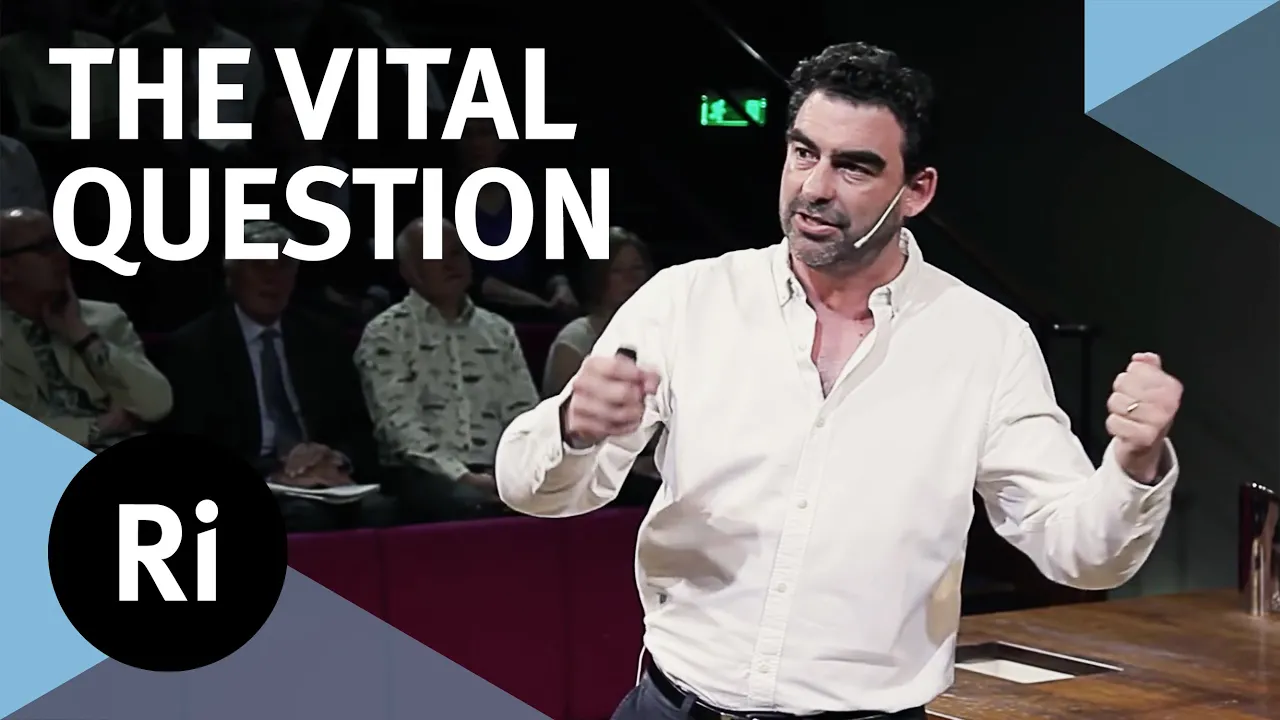
The Royal Institution
Eukaryotic complexity emerged only once in four billion years because internalizing mitochondria and shedding redundant genes overcame a bioenergetic bottleneck that permanently confines bacteria and archaea.
AI-assisted summary of Why is Life the Way it Is? with Nick Lane — original source. Check the original for full context.
Source published:
Key ideas
- All complex life on Earth shares a single eukaryotic common ancestor that arose only once in four billion years through a singular endosymbiotic merger between an archaeal host and a bacterial endosymbiont. (8:29)
- By shedding over 99% of their ancestral genes, internal mitochondrial populations liberated vast amounts of ATP, granting eukaryotes three to four orders of magnitude more power per gene than bacteria. (24:16)
- Proton-motive gradients across membranes are near-universal across life and likely originated in primordial alkaline hydrothermal vents, where natural proton differentials of 3 to 4 pH units preceded biological membranes. (19:37)
- A mysterious 10-micron deep-sea microbe discovered off Japan possesses internal endosymbionts and a single-membrane nucleus, hinting at a rare, independent recapitulation of eukaryotic-like evolution. (31:15)
Detailed notes
## Background This lecture was published on YouTube by The Royal Institution on September 2, 2015, based on Nick Lane's book 'The Vital Question: Why is life the way it is?'. According to the page description, evolutionary biochemist Nick Lane teams up in this event series to unravel the tangled history of life, exploring why Earth's living forms are structured the way they are and how complex life first arose.
## TL;DR Nick Lane investigates one of biology's deepest paradoxes: why prokaryotes remained morphologically elementary for four billion years, while all complex life stems from a single, unrepeated eukaryotic ancestor. He demonstrates that while natural selection easily evolves complex structures like eyes dozens of times, eukaryotic architecture required a rare endosymbiosis where an archaeon internalized a bacterium that became the mitochondrion. By shedding over 99 percent of their genes, these internalized powerhouses supplied vast energetic surpluses that enabled dramatic genomic and structural expansion. Furthermore, resolving the resulting intracellular conflicts between host and endosymbionts drove the evolution of hallmark eukaryotic adaptations such as sex, two mating types, and dedicated germlines.
## Atmosphere & style The presentation carries the hallmarks of an erudite, engaging academic address delivered with wry British humor and sharp intellectual clarity. Lane guides the audience through dense biochemical concepts and mathematical thought experiments using vivid analogies—comparing cellular respiration to hydroelectric dams and lateral gene transfer to loose change. It feels intellectually exhilarating and grounded, balancing rigorous evolutionary theory with candid scientific humility as Lane openly acknowledges the speculative boundaries of his models and the enduring mysteries of deep-sea discoveries.
## Bulletin - [08:29](https://www.youtube.com/watch?v=gLcWfecmZhE&t=509s) All complex life on Earth shares a single eukaryotic common ancestor that arose only once in four billion years through a singular endosymbiotic merger between an archaeal host and a bacterial endosymbiont. - [24:16](https://www.youtube.com/watch?v=gLcWfecmZhE&t=1456s) By shedding over 99% of their ancestral genes, internal mitochondrial populations liberated vast amounts of ATP, granting eukaryotes three to four orders of magnitude more power per gene than bacteria. - [19:37](https://www.youtube.com/watch?v=gLcWfecmZhE&t=1177s) Proton-motive gradients across membranes are near-universal across life and likely originated in primordial alkaline hydrothermal vents, where natural proton differentials of 3 to 4 pH units preceded biological membranes. - [31:15](https://www.youtube.com/watch?v=gLcWfecmZhE&t=1875s) A mysterious 10-micron deep-sea microbe discovered off Japan possesses internal endosymbionts and a single-membrane nucleus, hinting at a rare, independent recapitulation of eukaryotic-like evolution.
## Key takeaways - [00:05](https://www.youtube.com/watch?v=gLcWfecmZhE&t=5s) Francis Crick's 1958 concept of 'protein taxonomy' anticipated modern molecular phylogenetics, which was first demonstrated in 1962 by Linus Pauling and Émile Zuckerkandl through the hemoglobin molecular clock. - [02:36](https://www.youtube.com/watch?v=gLcWfecmZhE&t=156s) Carl Woese used highly conserved small subunit ribosomal RNA (SSU rRNA) to uncover the Archaea and construct the three-domain tree of life, demonstrating that multicellular kingdoms form only a minor branch. - [05:58](https://www.youtube.com/watch?v=gLcWfecmZhE&t=358s) Despite four billion years of evolution and vast population sizes, bacteria and archaea remained morphologically elementary while developing extensive biochemical complexity. - [05:58](https://www.youtube.com/watch?v=gLcWfecmZhE&t=358s) Single-celled eukaryotes display internal architectures and gene counts rivaling multicellular human cells, with roughly 3,000 novel gene families marking the transition to eukaryotes. - [08:29](https://www.youtube.com/watch?v=gLcWfecmZhE&t=509s) While complex adaptations like eyes evolved independently dozens of times, the eukaryotic cell type arose only once, indicating a unique evolutionary bottleneck rather than standard convergent selection. - [12:27](https://www.youtube.com/watch?v=gLcWfecmZhE&t=747s) Eukaryotic genomes are chimeric mosaics consisting of an archaeal informational core and a bacterial metabolic network, unified at the root in what Jim Lake termed the 'Ring of Life'. - [17:30](https://www.youtube.com/watch?v=gLcWfecmZhE&t=1050s) Cellular respiration operates across specialized inner membranes where electron transport drives directional proton pumping, powering the rotary turbine of ATP synthase. - [19:37](https://www.youtube.com/watch?v=gLcWfecmZhE&t=1177s) Peter Mitchell and Jennifer Moyle established chemiosmotic coupling, demonstrating that cells harness an inward proton flux across membranes as their primary power source. - [19:37](https://www.youtube.com/watch?v=gLcWfecmZhE&t=1177s) Alkaline hydrothermal vents served as inorganic electrochemical flow reactors, providing natural proton gradients between alkaline vent fluids and mildly acidic Hadean oceans before cellular membranes evolved. - [24:16](https://www.youtube.com/watch?v=gLcWfecmZhE&t=1456s) Endosymbiosis broke prokaryotic energetic limits because endosymbionts jettisoned non-essential metabolic genes, saving massive amounts of ATP that host cells could redirect toward complex structures like the cytoskeleton. - [29:33](https://www.youtube.com/watch?v=gLcWfecmZhE&t=1773s) Managing genomic conflict and maintaining quality control among internal mitochondrial populations likely drove the evolution of sexual reproduction, two sexes, and the segregation of germline and soma. - [31:15](https://www.youtube.com/watch?v=gLcWfecmZhE&t=1875s) A deep-sea organism found off Japan displays a 10-micron body, endosymbionts, and a nucleus containing ribosomes, offering possible evidence of an independent bacterial lineage attempting an evolutionary leap toward complexity.
## Detailed walkthrough ### [00:05](https://www.youtube.com/watch?v=gLcWfecmZhE&t=5s) The Birth of Molecular Phylogenetics and the Molecular Clock
Picking up where Matthew Cobb left off on the concept of biological information, Nick Lane highlights how Francis Crick’s insights reached far beyond deciphering the genetic code to the very foundations of evolutionary biology. Back in 1958, Crick presciently observed: “Biologists should realize that before long we shall have a subject which might be called protein taxonomy... the study of amino acid sequences of proteins of an organism and the comparison of them between species. It can be argued that these sequences are the most delicate expression possible of the phenotype of an organism and that vast amounts of evolutionary information may be hidden away within them.” While contemporary researchers compare DNA sequences rather than proteins, Crick’s formulation marked the true birth of modern phylogenetics.
The first researchers to translate this theoretical framework into practice were physical chemist Linus Pauling and Émile Zuckerkandl in 1962. By comparing the amino acid sequences of the hemoglobin beta chain across species, they discovered that human and gorilla hemoglobin differed by only a single amino acid, whereas human and horse hemoglobin differed by 20 amino acids. Combining these differences with fossil evidence suggesting that horses and humans diverged roughly 160 million years ago, they formulated the concept of the “molecular clock,” calculating an evolutionary rate of replacement of roughly one amino acid change every 12 million years.
- **Francis Crick (1958)**: Conceived "protein taxonomy" based on sequencing and comparing amino acid chains across organisms. - **Linus Pauling & Émile Zuckerkandl (1962)**: Compared hemoglobin beta chains: - Gorilla vs. Human: 1 amino acid difference. - Horse vs. Human: 20 amino acid differences. - Estimated divergence: ~160 million years ago, yielding a replacement rate of ~12 million years per amino acid.
[02:36](https://www.youtube.com/watch?v=gLcWfecmZhE&t=156s) Carl Woese and the Three Domains of Life
Because hemoglobin is confined to animals, reaching back to the deepest origins of life requires examining molecules shared universally by all living things. The universal process shared across life is protein synthesis: reading genetic instructions from DNA, producing an RNA transcript, and translating that transcript on ribosomes. In the late 1960s, Carl Woese focused on a fundamental structural component of this cellular machine—small subunit ribosomal RNA (SSU rRNA)—which is remarkably conserved in everything from baker's yeast and humans to *Escherichia coli*.
Comparing these sequences allowed Woese to construct the famous three-domain Tree of Life: Bacteria, Archaea, and Eukaryota. Lane notes that although this tree appears in every modern biology textbook, “it's basically—it's wrong actually and I'll explain why, but it was shocking at the time and it's still important now.” The revelation exposed an entirely unsuspected domain—the Archaea. Morphologically indistinguishable from bacteria, Archaea had been observed unknowingly for centuries (methanogens were first noted by Alessandro Volta 400 years ago), yet their ribosomal RNA branches were exceptionally deep. The branch lengths reflected vast amounts of sequence divergence, revealing that animals, plants, and fungi occupied only a trivial, tightly clustered corner of the tree compared to the immense evolutionary experimentation within bacteria and archaea.
Modern ribosomal RNA trees, by contrast, frequently suffer from severe human sampling bias. Lane points out that because researchers obsessively sequence animals and plants, macroscopic eukaryotes often visually dominate large contemporary diagrams, compressing the vastly older Bacteria and Archaea into vanishingly small slivers.
```mermaid flowchart TD accTitle: Classical Three Domains Tree of Life accDescr: Diagram illustrating Carl Woese's three-domain model splitting from a root into Bacteria, Archaea, and Eukaryotes. Root["Universal Ancestor"] --> Bacteria["Bacteria"] Root --> Archaea["Archaea"] Root --> Eukaryota["Eukaryota (Animals, Plants, Fungi)"] ```
- **Volta's early sighting**: Alessandro Volta discovered methanogens centuries before their distinct molecular identity was recognized. - **SSU rRNA conservation**: Core structural machine part shared across all life, enabling global phylogenetic mapping. - **Tree asymmetry**: Sequence divergence revealed that the eukaryotic multicellular kingdoms (animals, plants, fungi) are evolutionary newcomers compared to the deep divergence between Archaea and Bacteria.
[05:58](https://www.youtube.com/watch?v=gLcWfecmZhE&t=358s) Morphological Stagnation vs. Eukaryotic Complexity
The profound puzzle raised by deep phylogenetics is what Lane identifies as the central question: why prokaryotes experienced four billion years of evolution with virtually infinite population sizes, yet remained morphologically elementary. While bacteria and archaea attained astonishing biochemical complexity, their physical architecture barely changed. As Lane summarizes the dilemma: “In their biochemistry, they're amazingly complex, but in in terms of their appearance, their structure, their morphology, they're shockingly simple.”
The disparity becomes striking when comparing single-celled organisms to scale. A standard single-celled alga such as *Euglena* dwarfs typical bacteria, possessing complex internal architecture, chloroplasts, a distinct nucleus, and thousands of novel gene families. In fact, roughly 3,000 distinct gene families originated with the eukaryotes, and eukaryotic genome sizes can be up to 100,000 times larger than that of the largest known bacterium. Lane demonstrates this structural gap by placing a single-celled *Paramecium* alongside a human pancreatic acinar cell: their internal complexities and endomembrane systems look practically indistinguishable. *Paramecium* even possesses around 40,000 genes—roughly double the protein-coding gene count of a human being.
- **Prokaryotic scale**: ~4 billion years of evolutionary time and massive populations produced minimal structural variation. - **Eukaryotic genome expansion**: Eukaryote genomes reach up to 100,000 times the size of the largest bacterial genomes. - **Gene richness**: The single-celled ciliate *Paramecium* contains roughly 40,000 genes, compared to ~20,000 in humans. - **Novel gene families**: Approximately 3,000 new gene families accompanied the transition to eukaryotes.
[08:29](https://www.youtube.com/watch?v=gLcWfecmZhE&t=509s) The Evolutionary Paradox of Natural Selection
This morphological divide exposes a profound paradox at the heart of evolutionary theory. Standard natural selection dictates that complex adaptations arise incrementally, with each step offering a marginal fitness advantage. If features like the nucleus, complex compartmentalization, and sexual reproduction evolved through such gradual steps, it is puzzling why neither bacteria nor archaea ever evolved along similar lines. While certain bacteria possess slight approximations—such as membrane-bound nucleoid compartments—none cross the morphological gulf seen in eukaryotes.
All complex life on Earth, from single-celled amoebae and paramecia to trees and humans, is made of this single eukaryotic cell type, sharing hundreds to thousands of intricate cellular traits that trace back to a solitary common ancestor. Emphasizing the singular nature of this event, Lane states: “All the complex life we know and that includes amoebae and and paramecia and so on is composed of this one cell type and all those cells are essentially the same... it only arose once.”
To demonstrate why this is such an anomaly under natural selection, Lane compares it to other complex adaptations. Convergent structures like the eye have evolved independently between 60 and 70 distinct times across diverse lineages, originating from basic ancestral light-sensitive pigment spots. The origin of eukaryotic complexity, by contrast, occurred exactly once in four billion years, pointing to a unique evolutionary bottleneck rather than standard convergent selection.
[10:04](https://www.youtube.com/watch?v=gLcWfecmZhE&t=604s) The Paradox of Morphological Divergence vs. Eukaryotic Singularity
Natural selection predictably generates wildly distinct morphological solutions when confronted with different environments. Eyes, for instance, arose repeatedly across deep time. While they share some underlying regulatory genes, different lineages independently recruited entirely distinct structural and functional genes to build optical systems. Blind shrimps clustering around hydrothermal vents rely on naked eye flaps; scallops feature dozens of intricate eyes; single-celled algae like *Euglena* possess primitive eyespots; and ancient trilobites bore rigid calcite lenses. In stark contrast, defining eukaryotic innovations—such as sexual reproduction, the nucleus, and the capacity for phagocytosis—did not evolve independently over and over again. They appeared in just one singular lineage.
```mermaid flowchart TD accTitle: The Singularity of Eukaryotic Origins accDescr: Contrast between the polyphyletic evolution of eyes and the singular origin of eukaryotes through endosymbiosis.
subgraph Eyes["Polyphyletic Evolution: Eyes"] A["Environmental Pressures"] --> B["Hydrothermal Vent Shrimps (Flaps)"] A --> C["Scallops (Mirrored Eyes)"] A --> D["Euglena (Algal Eyespots)"] A --> E["Trilobites (Calcite Lenses)"] end
subgraph Eukaryotes["Monophyletic Origin: Eukaryotes"] F["Archaeon Host Cell"] --> H["Single Endosymbiosis Event"] G["Bacterial Endosymbiont"] --> H H --> I["Last Eukaryotic Common Ancestor (LECA)"] I --> J["All Modern Eukaryotic Supergroups"] end ```
When comparing modern genomes across the eukaryotic realm, the conventional textbook split of plants, animals, and fungi falls apart into vast supergroups like Chromalveolata, Unikonta, and Rhizaria. Nick Lane highlights this disconnect: “Have you ever heard of Chromalveolata or Unikonts or Rhizaria? Most biologists haven't either. I mean these are, these are only evolutionary biologists care and only people who care about the evolution of eukaryotes care about these terms.”
Genomic comparisons yield a "star tree" configuration rather than a gradual hierarchy. A dramatic early radiation occurred where ancestor lineages barely differed from one another before explosive internal diversification took place within each group. At the heart of this star tree sits a figurative black hole: the common ancestor of all eukaryotes already possessed every defining trait—the nucleus, organelles, complex internal membranes, and sexual recombination—with zero surviving evolutionary intermediates linking it back to simple prokaryotes.
- The common ancestor of all eukaryotes possessed the entire suite of eukaryotic complex machinery; intermediate proto-eukaryotes are completely absent in the living fossil record. - Purported "missing links" like *Lokiarchaeota* remain fundamentally prokaryotic in overall morphology and organizational architecture.
---
[12:27](https://www.youtube.com/watch?v=gLcWfecmZhE&t=747s) The Chimeric Genome and the Ring of Life
Analyzing the genetic core of eukaryotes reveals an evolutionary mosaic: roughly 40% of eukaryotic genes match prokaryotic sequences, drawn in nearly equal measure from bacteria and archaea. Ribosomal RNA and informational genes typically cluster with Archaea, whereas metabolic genes trace back to Bacteria. Crucially, these bacterial-like genes do not reflect sporadic acquisitions throughout evolutionary history; every eukaryotic branch possesses largely the same set, indicating they were integrated right at the start. Yet because these genes resemble wildly different bacterial phyla, reconstructing the event has vexed evolutionary biologists for decades.
Lynn Margulis’s Serial Endosymbiosis Theory (SET) posits that organelles were acquired sequentially over long periods, but extensive searches over three to four decades have failed to turn up the intermediate organisms predicted by that pathway. On the other end of the debate, W. Ford Doolittle challenged traditional taxonomy by "taking an axe to the tree of life," arguing that ubiquitous lateral gene transfer among bacteria makes standard vertical trees meaningless. Lane explains that bacteria treat genes like fluid currency: “Bacteria pass genes around between themselves as if it's loose change.”
Assuming the ancestral prokaryotic genome contained roughly 4,000 genes, widespread lateral gene transfer among free-living bacteria before and after a merger explains why eukaryotic metabolic genes seem to originate from disparate bacterial lineages today. James Lake resolved this dilemma by proposing the "Ring of Life"—a framework where an archaeon host engulfed a bacterium in a single, unrepeated endosymbiotic union. As Lane notes regarding the concept's impact: “It's what Jim Lake called The Ring of Life, and I'm told he sent a paper to *Nature* entitled 'One Ring to Rule Them All', and unfortunately, well, they accepted the paper, but not the title, sadly.”
- Approximately 40% of eukaryotic genes share recognizable homology with prokaryotes, splitting into an archaeal informational core and a bacterial metabolic network. - Modern analogues of internal associations exist without phagocytosis; for example, intact non-phagotrophic cyanobacteria containing internal cells surrounded by thylakoid membranes demonstrate that microbes can penetrate walled hosts through unknown mechanisms.
---
[17:30](https://www.youtube.com/watch?v=gLcWfecmZhE&t=1050s) Bioblasts, Respiration, and the Membrane Dam
The bacterial endosymbiont within that archaeon host ultimately evolved into the mitochondrion. Mitochondria were first systematically characterized in 1895 by Richard Altmann, who treated cells with osmium tetroxide stains that dissolved the surrounding cytoplasm and left only the organelles and the nucleus behind. Altmann dubbed these structures "bioblasts," regarding them as elementary living units while dismissing the cell nucleus as little more than a food store. Lane remarks humorously on Altmann’s career: “He had a great job title: Extraordinary Professor of Anatomy. I’d love to get a job title like that one day.”
Far from being evolutionary side notes, mitochondria represent an astronomical biological success story. A human body harbors on the order of 500 trillion mitochondria—massively outnumbering even the human microbiome. By total mass, humans are roughly 40% mitochondrial tissue. Within these bacterial remnants, the fundamental energetic transactions of life unfold across specialized inner membranes. Cellular respiration operates like an electrical grid running across an impermeable barrier:
Lane summarizes the core physical mechanism powering complex life: “In a nutshell, we're stripping electrons from food—hydrogen really from food—the electrons are flowing down this wire of proteins, so there's a current of electrons to oxygen... and the protons are pumped across the membrane.”
This directional proton pumping mimics a macroscopic hydroelectric installation, creating a dense reservoir of positive electrical charge on one side of the inner membrane. The controlled fall of these protons back through the rotating turbine of ATP synthase drives the synthesis of ATP, life’s universal chemical fuel—a counterintuitive, membrane-bound mechanism that baffled early biochemists because no one anticipated living things would run on proton-powered batteries.
[19:37](https://www.youtube.com/watch?v=gLcWfecmZhE&t=1177s) The Mystery of Chemiosmotic Coupling and Alkaline Vents
Over the last several decades, structural biology has achieved a triumph in deciphering the molecular machinery of cellular energetics down to the atomic scale. Researchers now understand in extraordinary detail how respiratory complexes pump protons across membranes and how the rotary motor of ATP synthase operates. Yet knowing the physical mechanisms does not explain why life chose such a bizarre system in the first place. That very question drove Peter Mitchell when he first conceived chemiosmosis: rather than merely asking how respiration works, Mitchell asked how bacteria keep their interior composition fundamentally distinct from the outside world. He realized that establishing such a difference allows outside matter to flow back in, harnessing that inward flux as a versatile power source. Mitchell developed these radical concepts, while Jennifer Moyle carried out the crucial laboratory experiments that proved them. Mitchell was ultimately awarded the Nobel Prize, while Moyle was not—a disparity reflecting longstanding debates about how scientific credit is allocated between theorists and experimentalists.
```mermaid flowchart LR accTitle: Chemiosmotic Gradient Analogy accDescr: Comparison of proton gradients across an inorganic barrier in alkaline hydrothermal vents versus across a modern bacterial membrane.
subgraph Vent["Alkaline Hydrothermal Vent"] direction LR V_In["Alkaline fluid<br>(Low proton concentration)"] V_Mem["Thin inorganic barrier<br>(Microporous labyrinth)"] V_Out["Acidic Hadean ocean<br>(High proton concentration)"] V_Out -->|"Natural proton gradient"| V_Mem --> V_In end
subgraph Cell["Bacterial Cell"] direction LR C_In["Bacterial cytoplasm<br>(Low proton concentration)"] C_Mem["Phospholipid membrane<br>(Orders of magnitude thinner)"] C_Out["Extracellular space<br>(High proton concentration)"] C_In -->|"Active proton pumping"| C_Mem --> C_Out end ```
The concept of pumping protons across an insulating membrane to generate energy was met with immense resistance because it was deeply counterintuitive. Nick Lane invokes origin-of-life chemist Leslie Orgel to underscore just how radical it was: “Not since Darwin has biology come up with an idea as counterintuitive as those of, say, Einstein, Heisenberg, and Schrödinger.” Unlike the double helix, which James Watson recalled was so aesthetically pretty that it simply had to be true, chemiosmotic coupling struck contemporaries as awkward and ugly, burdened with a name that few could easily remember. Yet across life, proton gradients are as near-universal as the genetic code itself; the rare organisms that do not utilize them are specialized, recently derived groups adapted to peculiar niches. Because proton pumping is universally conserved across both bacteria and archaea, it must have originated at the very dawn of life, pointing back to the geochemical environment from which the first cells arose.
Geochemist Mike Russell spent decades arguing that the cradle of life was not a violent, smoke-belching black smoker, but mild alkaline hydrothermal vents—such as the systems discovered at the bottom of the Atlantic Ocean only fifteen years prior. Over four billion years ago, these alkaline vents would have been widespread, operating as vast, inorganic electrochemical flow reactors honeycombed with a labyrinth of microporous channels. Warm, alkaline fluids rich in hydroxide ions wound their way through these mineral pores into a mildly acidic primordial ocean packed with dissolved protons. The thin inorganic barriers separating the two fluids established a natural proton gradient of three to four pH units—an exact energetic analogue to the active proton-motive force maintained across contemporary bacterial membranes.
[24:16](https://www.youtube.com/watch?v=gLcWfecmZhE&t=1456s) Endosymbiosis, Gene Loss, and the Energetic Leap to Eukaryotes
While all prokaryotes remain strictly constrained by the need to pump protons across their outer surface membranes, the emergence of eukaryotes broke through this energetic bottleneck through endosymbiosis. When an archaeal host cell internalized an endosymbiotic bacterium—destined to become the mitochondrion—the relationship introduced a population of cells living inside another cell. Within this internal population, individual endosymbionts were subject to intense selective competition: whichever organelles replicated faster were better represented in the next generation. As a consequence, the endosymbionts systematically jettisoned redundant genes they no longer needed inside the safe, nutrient-rich confines of the host, shedding cell walls and independent metabolic functions to rely on host pathways. Human mitochondria, for instance, have whittled their original bacterial genomes down to a mere 37 or 38 genes, retaining only the minimal core necessary to exert local redox control over respiration.
| Evolutionary Stage / Model | Endosymbionts / Copy Number | Genome Size / Loss | ATP Cost Savings / Power Output | |:--- |:--- |:--- |:--- | | **Bacterial Baseline** | Single free-living cell | ~4,000 genes (~4 Mb) | Baseline energy investment per gene | | **5% Gene Loss Thought Experiment** | 100 endosymbionts per cell | Lost 200 genes (5% of 4,000) | Saves ~50 billion ATPs per 24-hr cycle (~580,000 ATP/s) | | **Actual Eukaryotes (e.g., Protists / Amoebae)** | Up to 300,000 mitochondria | Lost ~99% of original bacterial genes | 3 to 4 orders of magnitude ($1,000\times$ to $10,000\times$) more energy per gene |
To illustrate the sheer scale of the resulting metabolic windfall, Lane outlines a conservative thought experiment. Consider a host cell containing 100 endosymbionts, each possessing a standard bacterial genome of roughly 4,000 genes (4 megabases). If each endosymbiont discards just 5 percent of its genome—200 genes formerly dedicated to processes like cell wall biosynthesis: - Each bacterial gene produces an average of 2,000 protein copies per cell cycle. - An average protein consists of approximately 250 amino acids linked by peptide bonds. - The chemical cost to synthesize a single peptide bond is about 5 ATPs. - Eliminating those 200 non-essential genes across 100 endosymbionts saves roughly 50 billion ATPs over a 24-hour cell division cycle, liberating a surplus of 580,000 ATPs per second.
If the host cell redirected that conserved energy into building a dynamic eukaryotic cytoskeleton, it could assemble actin filaments at an astonishing rate. Each actin monomer spans 2.9 nanometers, meaning 35 monomers form a micron-long filament; each monomer comprises 374 amino acids, demanding 131,000 ATPs per micron of polymer. The 580,000 ATPs saved every second could fund the *de novo* synthesis of over 4 microns of fresh actin per second—vastly exceeding the biosynthetic capacity of any known bacterium. In reality, mitochondria did not shed a mere 5 percent of their genes; they eliminated over 99 percent. Furthermore, large cells like giant amoebae can harbor as many as 300,000 mitochondria rather than just 100. Even when compared to giant, polyploid bacteria that carry thousands of copies of their own chromosome across half-millimeter bodies, eukaryotes command three to four orders of magnitude more power per gene. Lane emphasizes that this fundamental energetic liberation enabled evolutionary innovation: “The actual energetic advantage that eukaryotes have as a result of gene loss in their endosymbionts, which have always retained a few to keep control over respiration, it's absolutely huge, and I think that's what made that difference.” To constrain how this transition unfolded from an initial partnership rather than through traditional selection across an immense, free-living population, Lane's department at UCL, including recent doctoral graduate Zena Hadjivasiliou, turned to mathematical models of population genetics.
[29:33](https://www.youtube.com/watch?v=gLcWfecmZhE&t=1773s) Mitochondrial Selection, Evolutionary Pressure, and the Emergence of Eukaryotic Traits
Having a population of mitochondria inside a host cell introduces a complex evolutionary dilemma. Because individual mitochondria within a single cell can mutate in different ways and segregate unevenly across cell divisions, maintaining organelle quality control presents a serious challenge for the host organism. As Nick Lane notes, addressing these internal conflicts likely drove the evolution of core eukaryotic innovations: “In fact the mechanisms are almost certainly things like having two sexes, having sex at all, having a germline, all of these can be shown that they actually improve the quality of mitochondria.” While the intricate evolutionary mechanics are detailed further in his book, Lane points out that these bioenergetic pressures offer a unifying framework capable of explaining major transitions in life—from the establishment of germlines all the way to the Cambrian explosion and the rise of complex multicellular animals.
```mermaid flowchart TD accTitle: Internal Endosymbiont Selection Pressures accDescr: Flowchart illustrating how internal mitochondrial mutation and conflict drive complex eukaryotic evolutionary adaptations.
subgraph Conflict ["Internal Organellar Dynamics"] A["Mitochondrial population within host cell"] --> B["Diverse mutations & uneven segregation"] B --> C["Intracellular genomic conflict"] end
subgraph Adaptations ["Evolutionary Resolutions"] C --> D["Origin of sex & two mating types / sexes"] C --> E["Segregation of germline vs. soma"] C --> F["Cellular quality control systems"] end
subgraph Outcome ["Macroevolutionary Result"] D & E & F --> G["Cambrian explosion & emergence of complex animal life"] end ```
Lane acknowledges the speculative frontier of these evolutionary models, underscoring the nature of scientific inquiry: “As always with science these are neat ideas, they may not be true, they may be complete rubbish, but at least we can test them or we can try and find ways of testing.” Reflecting on the broader evolutionary trajectory of Earth, Lane reviews the central conclusions: complex eukaryotic cells arose only once in four billion years. Severe energy constraints on free-living bacteria meant that a leap in complexity required a singularly rare endosymbiosis between prokaryotes. Once that internal partnership was established, the internal friction and selection dynamics inevitably channeled cell populations down specific pathways, explaining why all modern eukaryotes share such a conserved suite of cellular traits.
- Complex eukaryotic cells originated just once in 4 billion years of Earth's history. - Resolving genomic conflicts between host cells and internal endosymbionts demanded major structural adaptations, including sexual reproduction, distinct mating types (two sexes), and dedicated germlines. - Energy constraints inherent to bacteria make such endosymbioses exceedingly rare, channeling all descendants toward universally shared eukaryotic features.
---
[31:15](https://www.youtube.com/watch?v=gLcWfecmZhE&t=1875s) The Deep-Sea Enigma: Recapitulating Eukaryotic Evolution?
To counter the pessimistic view that the emergence of complex life is an unrepeatable fluke confined to a single ancient event, Nick Lane highlights an astonishing deep-sea discovery made roughly five years earlier off the coast of Japan. Described in a paper cautiously titled *"A unique organism from the deep sea: Prokaryote or eukaryote?"*, this mysterious specimen measures approximately 10 microns long—drastically larger than average bacteria. At first glance through the microscope, it bears the hallmark architecture of a standard eukaryote: a distinct nucleus-like compartment, potential endosymbionts (perhaps analogous to hydrogenosomes), a plasma membrane, and an outer cell wall.
``` +-----------------------------------+-----------------------------------+ | Eukaryotic Features | Deep-Sea Enigma (Japan) | +-----------------------------------+-----------------------------------+ | Double nuclear membrane | Single membrane around nucleus | | ~30 nm diameter chromosomes | ~2 nm bacterial-like filaments | | Ribosomes excluded from nucleus | Ribosomes inside and outside | | Endoplasmic reticulum network | Unmatched internal membranes | +-----------------------------------+-----------------------------------+ ```
A closer inspection of its ultrastructure, however, reveals fundamental differences that confound conventional biological classifications. The nuclear structure is surrounded by only a single membrane rather than the universal eukaryotic double membrane. Its genetic material consists of fine bacterial-like filaments roughly 2 nanometers wide, lacking the 30-nanometer-diameter chromosome organization seen across eukaryotes. Most surprisingly, ribosomes appear directly inside the nuclear space, defying the foundational eukaryotic rule that segregates translation from the nucleus. Lane summarizes the biological mystery: “I would say that what this is, is a bacterium that acquired endosymbionts and which is recapitulating eukaryotic evolution; it's become larger, it's accumulating genes, it's got a nucleus, it's going through the whole thing all over again.” Unfortunately, because the researchers fully sectioned the sole specimen collected, no genomic sequence was obtained, and fifteen years of searching have failed to uncover a second individual, leaving researchers to wait for future discoveries.
- Specimen size: roughly 10 microns in length, substantially larger than standard bacteria. - Nuclear envelope: single membrane, contrasting sharply with the universal double membrane of eukaryotic nuclei. - Genetic filaments: approximately 2 nanometers wide, unlike the 30-nanometer chromatin fibers standard in eukaryotes. - Translation location: ribosomes are situated both inside and outside the nuclear enclosure, violating normal eukaryotic transcription/translation separation. - Status: only one single specimen was ever recovered and sectioned, precluding genome sequencing while field searches continue.
## Notable quotes > [12:27](https://www.youtube.com/watch?v=gLcWfecmZhE&t=747s) Bacteria pass genes around between themselves as if it's loose change. — Nick Lane
> [24:16](https://www.youtube.com/watch?v=gLcWfecmZhE&t=1456s) The actual energetic advantage that eukaryotes have as a result of gene loss in their endosymbionts, which have always retained a few to keep control over respiration, it's absolutely huge, and I think that's what made that difference. — Nick Lane
> [08:29](https://www.youtube.com/watch?v=gLcWfecmZhE&t=509s) All the complex life we know and that includes amoebae and and paramecia and so on is composed of this one cell type and all those cells are essentially the same... it only arose once. — Nick Lane
## Mentioned Nick Lane, Matthew Cobb, Francis Crick, Linus Pauling, Émile Zuckerkandl, Carl Woese, Alessandro Volta, Lynn Margulis, W. Ford Doolittle, James Lake, Richard Altmann, Peter Mitchell, Jennifer Moyle, Leslie Orgel, James Watson, Mike Russell, Zena Hadjivasiliou, The Royal Institution, University College London, Nature, The Vital Question: Why is life the way it is?, Life Ascending
## Video description The vital question: Earth teems with life but why is it the way it is, and how did it begin in the first place? Nick Lane unravels the tangled history of life. Subscribe for regular science videos: http://bit.ly/RiSubscRibe
Nick's book "The Vital Question: Why is life the way it is?" is available to buy now - https://geni.us/JjoZRx
Nick Lane and Matthew Cobb came together to tell the story of life. Watch Matthew Cobb’s take on the tale here: https://www.youtube.com/watch?v=MYxASuEqMlY And watch the Q&A here: https://www.youtube.com/watch?v=L4N6ws1YTEk
Nick Lane is an evolutionary biochemist in the Department of Genetics, Evolution and Environment, University College London. His work focuses on the origin of life, and the origin and evolution of eukaryotes. He is also author of prize-winning popular science books, including 'Life ascending'.
Subscribe for regular science videos: http://bit.ly/RiSubscRibe
The Ri is on Twitter: http://twitter.com/ri_science and Facebook: http://www.facebook.com/royalinstitution and Tumblr: http://ri-science.tumblr.com/ Our editorial policy: http://www.rigb.org/home/editorial-policy Subscribe for the latest science videos: http://bit.ly/RiNewsletter
Product links on this page may be affiliate links which means it won't cost you any extra but we may earn a small commission if you decide to purchase through the link. #LifePhilosophy, #NickLane, #ExistentialQuestions, #WhyIsLife, #UnderstandingLife
[Source](https://www.youtube.com/watch?v=gLcWfecmZhE)