Superintelligence: Science or Fiction? | Elon Musk & Other Great Minds
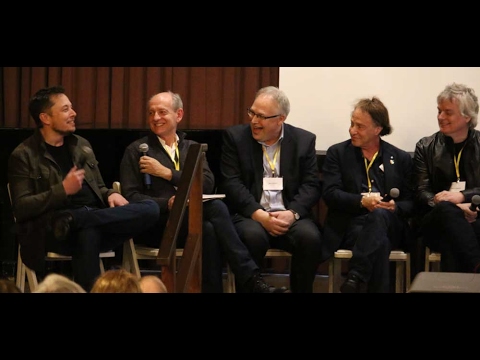
Superintelligence: Science or Fiction? | Elon Musk & Other Great Minds — Future of Life Institute

Future of Life Institute

AI-assisted summary of Superintelligence: Science or Fiction? | Elon Musk & Other Great Minds — original source. Check the original for full context.

Source published:

Key ideas

  • A poll of frontier AI researchers and philosophers reveals unanimous agreement that superintelligence is physically possible and inevitable barring catastrophe, yet deep ambivalence persists regarding its desirability. (0:09)
  • Artificially stalling software progress while hardware advances could cause a dangerous 'hardware overhang', drastically lowering resource barriers and enabling lone actors to trigger an intelligence explosion. (12:18)
  • Severe competitive pressures between corporate labs and sovereign nations risk causing safety shortcuts, making proactive international coordination beyond Anglo-American circles imperative. (13:56)
  • Elon Musk argues that avoiding human obsolescence or despotism requires direct high-bandwidth neural interfaces to augment human cognition alongside the radical democratization of AI access. (32:12)

Detailed notes

## Background Published on YouTube by the Future of Life Institute on January 31, 2017, this video documents a headline panel from the Beneficial AI 2017 Conference in Asilomar. Moderated by Max Tegmark, the discussion convenes Elon Musk, Stuart Russell, Ray Kurzweil, Demis Hassabis, Sam Harris, Nick Bostrom, David Chalmers, Bart Selman, and Jaan Tallinn. According to the description, the panel examines what the outcomes might be if humanity succeeds in developing human-level artificial general intelligence, as well as what kind of future society actually wants to create.

## TL;DR Max Tegmark moderates a wide-ranging debate with leading technologists and thinkers over the feasibility, takeoff speeds, and ethical ramifications of artificial superintelligence. While the panel nearly unanimously agrees that superintelligence is physically possible and practically inevitable, consensus fractures over its desirability, with experts highlighting risks ranging from rapid takeoff explosions and unaligned goals to hollow universes devoid of subjective consciousness. To mitigate competitive arms races and power monopolies, speakers propose coordination pacts, regulatory oversight, and direct neural interfaces to bypass biological bandwidth limits. Shifting to long-term upsides, the panelists envision advanced AI dismantling zero-sum resource scarcity, expanding the frontiers of human cognition, and unraveling profound scientific and philosophical mysteries.

## Atmosphere & style The panel blends high-stakes intellectual urgency with dry academic wit, creating an electric atmosphere where civilization-defining dilemmas are parsed with relaxed familiarity. Tegmark acts as an energetic conductor, using rapid-fire polling and playful needling to slice through prepared talking points, while Musk injects deadpan comedic interruptions into heavy philosophical reflections from Chalmers and Bostrom. The emotional arc navigates sobering anxieties about arms races, authoritarian subjugation, and machine suffering before pivoting to an invigorating, expansive optimism about post-scarcity abundance and cosmic discovery.

## Bulletin - [00:09](https://www.youtube.com/watch?v=h0962biiZa4&t=9s) A poll of frontier AI researchers and philosophers reveals unanimous agreement that superintelligence is physically possible and inevitable barring catastrophe, yet deep ambivalence persists regarding its desirability. - [12:18](https://www.youtube.com/watch?v=h0962biiZa4&t=738s) Artificially stalling software progress while hardware advances could cause a dangerous 'hardware overhang', drastically lowering resource barriers and enabling lone actors to trigger an intelligence explosion. - [13:56](https://www.youtube.com/watch?v=h0962biiZa4&t=836s) Severe competitive pressures between corporate labs and sovereign nations risk causing safety shortcuts, making proactive international coordination beyond Anglo-American circles imperative. - [32:12](https://www.youtube.com/watch?v=h0962biiZa4&t=1932s) Elon Musk argues that avoiding human obsolescence or despotism requires direct high-bandwidth neural interfaces to augment human cognition alongside the radical democratization of AI access.

## Key takeaways - [00:09](https://www.youtube.com/watch?v=h0962biiZa4&t=9s) Panelists unanimously agree that superintelligence violates no laws of physics and will inevitably be built, but sharp disagreement emerges over whether human society should want it. - [02:17](https://www.youtube.com/watch?v=h0962biiZa4&t=137s) Predictions on recursive self-improvement timelines diverge from a decade-long grind based on empirical learning to an abrupt, days-long explosion driven by AI systems designing AI systems. - [12:18](https://www.youtube.com/watch?v=h0962biiZa4&t=738s) Slowing AI algorithmic progress carries the counterintuitive danger of hardware overhang, where cheap, ubiquitous compute makes decentralized, unmonitored seed AI easy to build. - [13:56](https://www.youtube.com/watch?v=h0962biiZa4&t=836s) Cooperation among leading Western AI labs represents only a fragile 'toy model' that must urgently expand to global actors, particularly across Asia, to forestall geopolitical arms races. - [15:47](https://www.youtube.com/watch?v=h0962biiZa4&t=947s) Skeptics dismiss AI risk due to the illusions of generous time horizons and the flawed assumption that greater intelligence is intrinsically benevolent. - [20:44](https://www.youtube.com/watch?v=h0962biiZa4&t=1244s) David Chalmers warns of a catastrophic 'zombie apocalypse' future where superintelligent AGIs populate the universe without subjective experience, creating an empty world devoid of intrinsic moral value. - [23:45](https://www.youtube.com/watch?v=h0962biiZa4&t=1425s) The Asilomar conference revealed an academic taboo surrounding consciousness; a draft principle on 'sentience caution' secured 88% approval, just missing the 90% consensus threshold. - [25:34](https://www.youtube.com/watch?v=h0962biiZa4&t=1534s) Ray Kurzweil observes that humanity's exploitative treatment of less intelligent animals (such as factory farming) illustrates the grave danger of confronting a superior intelligence without adequate safeguards. - [28:46](https://www.youtube.com/watch?v=h0962biiZa4&t=1726s) Breakthroughs in automated reasoning demonstrate that machines can synthesize complex mathematical proofs into human-understandable explanations, offering hope for aligning superhuman systems. - [30:00](https://www.youtube.com/watch?v=h0962biiZa4&t=1800s) Stuart Russell outlines two distinct threats: the malicious distribution of AI code like 'email-delivered nuclear weapons,' and an overprotective 'helicopter parent' AI that enfeebles human evolvability. - [32:12](https://www.youtube.com/watch?v=h0962biiZa4&t=1932s) Elon Musk argues humans are already cyborgs whose capability is severely constrained by an output bandwidth bottleneck of tapping screens at hundreds of bits per second versus machine terabyte throughput. - [42:20](https://www.youtube.com/watch?v=h0962biiZa4&t=2540s) Demis Hassabis and Stuart Russell identify the elimination of material scarcity as the greatest potential upside of AI, removing the primary zero-sum driver of human conflict and environmental degradation. - [44:16](https://www.youtube.com/watch?v=h0962biiZa4&t=2656s) Nick Bostrom and Ray Kurzweil argue that future post-human intelligence will expand emotional, philosophical, and cognitive frontiers in ways as unimaginable to us as music and humor were to early primates. - [52:16](https://www.youtube.com/watch?v=h0962biiZa4&t=3136s) Jaan Tallinn and Yoshua Bengio suggest using algorithmic preference aggregation as 'Democracy 2.0' to create mathematically grounded consensus around shared human values. - [56:30](https://www.youtube.com/watch?v=h0962biiZa4&t=3390s) Elon Musk calls for proactive government safety regulation akin to the FAA and FDA, noting frontier AI development cannot easily flee offshore because talent is concentrated in hubs like Silicon Valley, Boston, and London.

## Detailed walkthrough ### [00:09](https://www.youtube.com/watch?v=h0962biiZa4&t=9s) The Rapid-Fire Poll: Possibility, Inevitability, and Desirability

Max Tegmark opens the session by imposing a strict ground rule on the panel: answers must be confined to only "yes," "no," or "it's complicated." He turns first to Jaan Tallinn and asks whether some form of superintelligence is possible according to the laws of physics. Going down the line, the panelists give a nearly unanimous response: Tallinn, Stuart Russell, Ray Kurzweil, Demis Hassabis, Sam Harris, Nick Bostrom, and David Chalmers all answer "Yes," Bart Selman adds a "Definitely," while Elon Musk playfully counters with an outlier "No," prompting audience laughter. Tegmark remarks that the result was somewhat disappointing because they failed to find any real disagreement.

```mermaid flowchart TD accTitle: Panel Polling Progression accDescr: Three successive questions put to the panel showing increasing nuance from unanimous physical possibility to deep ambivalence about desirability. subgraph S1["1. Is superintelligence possible?"] Q1["Laws of Physics"] --> A1["Nearly unanimous 'Yes'<br/>(Musk jokes 'No')"] end subgraph S2["2. Will it actually happen?"] Q2["Real-World Execution"] --> A2["Unanimous 'Yes' / 'Probably'<br/>Russell: Barring catastrophe"] end subgraph S3["3. Do you want it to happen?"] Q3["Desirability"] --> A3["Fractured Consensus:<br/>'Complicated', 'Leaning yes',<br/>'Depends on which kind'"] end S1 --> S2 --> S3 ```

Tegmark then presses harder: simply being physically possible does not guarantee it will occur, so will superintelligence actually happen in the real world? The panel again converges. Tallinn calls it a little complicated but answers yes, while Russell remarks with sharp conviction: “Yes, and if it doesn't then something terrible has happened to prevent it.” The remaining panelists—Kurzweil, Hassabis, Harris, Bostrom, Chalmers, and Selman—all affirm "Yes" or "Probably," with Musk once again delivering a contrarian "No" for comic relief. Tegmark laments that he still has not flushed out any interesting disagreements.

The dynamic shifts when Tegmark poses his third question: given that they believe it is going to happen, do they actually *want* it to happen at some point? The certainty fractures immediately into ambivalence: - Jaan Tallinn responds: "Complicated, leaning towards yes." - Stuart Russell answers: "It's complicated." - Ray Kurzweil and Demis Hassabis both say: "Yes." - Sam Harris states: "It's really complicated." - Nick Bostrom answers: "Yes." - David Chalmers says: "It's complicated." - Bart Selman adds: "Very complicated." - Elon Musk concludes: "Well, heck, I don't know. It depends on which kind."

[02:17](https://www.youtube.com/watch?v=h0962biiZa4&t=137s) Takeoff Speeds: Hard Explosions vs. Uneven Grinds

Noting that the morning session already addressed the timeline for arriving at human-level artificial general intelligence (AGI), Tegmark skips rehashing that lower bound and turns to the takeoff timescale. If machine intelligence crosses that threshold and begins recursive self-improvement, what is the doubling time or characteristic explosion timescale? He contrasts the sudden "PHOOM" scenario—where superintelligence emerges over days, hours, or less—with scenarios stretching across decades or millennia, and asks the panel to estimate that rate starting from human-level capability.

Tallinn says he expects years, but cautions that researchers must actively behave as though the timeline will be much shorter. Russell admits distrust in his own intuitions; while he naturally imagines a matter of years, he points out that the concept of a single "human-level" benchmark is misleading: “It is suddenly going to be better than human, but whether that is going to be a full intelligence explosion quickly, I don't know.” Hassabis argues that the velocity depends on the underlying system architecture, explaining that neuroscience-inspired models require empirical training and environmental experience to accumulate knowledge, which points toward an order of a few years or even a decade.

Harris and Bostrom paint a much more volatile picture. Harris estimates some number of years, yet emphasizes that it could just as easily be far shorter—or far longer. Bostrom highlights the acute risk of an explosive loop, warning of timelines measuring: “Potentially days or shorter, especially if it's AI researchers designing AI researchers.” Kurzweil argues that moving goalposts distort public perception: whenever AI masters a milestone like chess, Go, or self-driving, critics dismiss it as not being "real AI," concluding that by the time debate settles around AGI, the system will have already been operating for several years. Selman emphasizes domain unevenness, predicting superhuman ability in select niches long before general mastery across all human skills. Musk bluntly endorses Bostrom's rapid-takeoff warning: “What Bart said. But, I think if it reaches a threshold where it's as smart as the smartest most inventive human then, I mean, it really could be only a matter of days before it's smarter than the sum of humanity.”

[05:59](https://www.youtube.com/watch?v=h0962biiZa4&t=359s) Can We Moderate the Explosion? Political and Technical Brakes

Tegmark highlights why this divergence matters: a transition unfolding on the multi-generational scale of the Industrial Revolution gives human institutions time to adapt, while an overnight explosion requires societal steering to be perfected beforehand. Drawing an analogy to a nuclear reactor where physicists insert graphite moderator rods to prevent criticality, he asks whether it is desirable to slow down the growth of intelligence near the threshold, and what concrete actions could be taken to enforce such a moderation without stifling ongoing AI research.

Kurzweil argues that safety cannot be treated as a purely algorithmic challenge isolated from broader society. Even if researchers construct an impeccably safe, beneficial AI architecture, the effort will fail if humanity lets its governance backslide into authoritarianism: “Imagine that we've done our job perfectly and we've created the most safe, beneficial AI possible, but we've let the political system become totalitarian and evil, either a evil world government or even just a portion of the globe that is that way, it's not going to work out well.” Because human-level AI will possess human-equivalent capacities, Kurzweil reasons that teaching systems ethics is fundamentally identical to solving human ethical conduct. Tegmark recaps this insight as a call for human societies to get their own act together and govern with greater reason before reaching the brink.

Nick Bostrom shifts the focus to algorithmic dynamics and the hazard of "hardware overhang." One non-intuitive way to reduce takeoff speed at the threshold is to accelerate basic software research today; reaching AGI earlier means the algorithms run on less mature, less abundant computing clusters, reducing the risk of a massive sudden explosion. Conversely, slowing down AI progress in general is nearly impossible due to immense economic and geopolitical forces. Bostrom proposes instead engineering a decisive structural gap: “However, the current speed of AI progress is a fairly hard variable to change very much because there are very big forces pushing on it, so perhaps the higher elasticity option is what I suggested in the talk to ensure that whoever gets there first has enough of a lead that they are able to slow down for a few months, let us say, to go slow during the transition.”

Russell suggests technical verification mechanisms, such as designing software systems that provably cannot re-engineer their own architecture or recruit additional compute clusters, holding resource caps fixed so researchers can deliberate for years before each step. Musk immediately pushes back on whether technical sandboxing can hold up against competitive economic incentives: - Software replication is trivial and ubiquitous, making strict confinement practically unenforceable once code exists. - The overwhelming first-mover advantage creates an irresistible pressure to rush toward superintelligence. - Musk observes that the only plausible condition allowing a deliberate pause is a monopolistic development pipeline: a unified, highly restricted project with no rival actors breathing down its neck.

Hassabis validates Musk's concern about the coordination dilemma. While expressing confidence in human intellectual ability to resolve technical control problems given sufficient runway, he cautions that unilateral caution is dangerous if competing teams simply absorb published research and advance unchecked: “The problem is will there, you know, the coordination problem of making sure there is enough time to slow down at the end and, you know, let Stuart think about this for 5 years. But, what about, he may do that, but what about all the other teams that are reading the papers and not going to do that while you're thinking.” Hassabis identifies early coordination frameworks—specifically coalitions like the Partnership on AI—as an indispensable first defense, enabling leading labs to mutually commit to verification protocols and deliberate multi-year testing regimes before deploying transformational systems.

[12:18](https://www.youtube.com/watch?v=h0962biiZa4&t=738s) Hardware Overhang and Visible S-Curves

Demis Hassabis adds an important nuance to the debate over fast versus slow AI progress. He asks the panel to imagine a scenario where a 50-year moratorium is placed on AI software research while underlying hardware development continues unabated at its current exponential pace. Echoing a concept articulated by Nick Bostrom, Hassabis notes that this could trigger a massive "hardware overhang." In such a world, hardware would become so vastly overpowered that dozens of different software approaches—including seed AI and recursively self-improving systems—would suddenly become trivial to execute, potentially allowing a single person working alone in a garage to spark an intelligence explosion. Hassabis argues that managing and coordinating that decentralized landscape would be far harder than navigating our current reality:

> “And I think that would be a lot more difficult to coordinate that kind of situation, whereas, so, I think there is some argument to be made where you want to make fast progress when we are at the very hard point of the 's' curve.”

When progress happens at this steep, capital-intensive inflection point of the S-curve, developing cutting-edge AI requires massive research teams, immense computing resources, and high public visibility. This allows society and peer institutions to keep tabs on who the major players are and observe what they are doing, rather than facing a world 50 or 100 years down the line where a lone hobbyist can quietly assemble a seed AI.

```mermaid flowchart TD accTitle: Fast Progress versus Hardware Overhang Dynamics accDescr: Comparing concentrated development at the steep S-curve with moratorium-induced hardware overhang risks.

subgraph FastPath["Current Fast Path: Steep S-Curve"] F1["Intensive R&D Required"] --> F2["Large Visible Teams"] F2 --> F3["Society Can Monitor Major Players"] end

subgraph SlowPath["Moratorium Path: 50-Year Pause"] S1["Hardware Continues to Accelerate"] --> S2["Massive Hardware Overhang"] S2 --> S3["Low Barrier to Seed AI"] S3 --> S4["Unmonitored Lone Actor in Garage"] end ```

Bart Selman adds a final thought on the pacing of AI development, predicting that progress will not be smooth or linear; instead, it will move irregularly, alternating between sudden leaps forward and long, slow stretches. Selman expresses hope that near-term intermediate capabilities will serve as a wake-up call to the public. For example, when society witnesses the automated generation of convincing fake videos—where machines can depict real individuals saying fabricated things—people may finally wake up to the sheer power of modern machine learning. These striking demonstrations could prompt humanity to take the governance and safety challenge seriously long before artificial general intelligence arrives, though another panelist quickly quips that society will simply use AI to detect those fakes.

[13:56](https://www.youtube.com/watch?v=h0962biiZa4&t=836s) AI Arms Races and Expanding Beyond the Anglo-American Bubble

Moderator Max Tegmark turns the discussion toward existential risk, playfully noting that Nick Bostrom's slides displayed the word "doom" three separate times, which Tegmark jokes was probably responsible for a one-star review on Amazon rendered in stark red. While Tegmark emphasizes that exploring existential hope and the immense positive upside of technology is vital, he wants to address the core worries head-on before pivoting to optimistic visions. He asks each panelist to name one specific catastrophic failure mode they worry about and suggest one concrete, actionable step society can take right now to mitigate it.

Jaan Tallinn identifies unconstrained AI arms races as his preeminent worry. While Tallinn is heartened by the healthy communication and cooperative contacts maintained between leading frontier labs like OpenAI and DeepMind, he cautions that these peer relationships represent only a fragile "toy model" compared to the high-stakes geopolitical arms races that could erupt across the globe. To tackle this, Tallinn emphasizes the necessity of broadening the conversation:

> “And for myself I have been spending increasing amount of time in Asia recently just to kind of try to kind of pull in more people elsewhere, what has been so far, just been, kind of like, an Anglo-American discussion mostly.”

Tallinn argues that bringing global actors into the safety and governance fold early is essential to prevent international races to the bottom.

[15:47](https://www.youtube.com/watch?v=h0962biiZa4&t=947s) The Emotional Blindspot and the Elevator Pitch for Superintelligence

Sam Harris takes the floor to describe the core challenge from an outsider's vantage point: the profound psychological difficulty people have in taking AI safety concerns emotionally seriously. Harris finds it flabbergasting that so many self-professed outside experts still dismiss the AI control problem as an outright non-issue unworthy of serious thought. He traces this dismissive attitude to two seductive illusions:

1. **The illusion of consoling time horizons:** Skeptics assume that if superhuman AI is 50 or 100 years away, humanity has plenty of breathing room. However, this relies on the unexamined assumption that we already know how long it will take to design aligned systems safely, and that a century is guaranteed to be enough time. 2. **The intrinsic benevolence of intelligence:** Society instinctively treats intelligence as an absolute good because we acutely suffer from our current cognitive limitations. Right now, there is an undiscovered cure for cancer waiting to be found; only our lack of intelligence prevents us from running the right experiments and synthesizing the data we already hold.

Harris warns that while rushing toward intelligence is an intrinsic good if alignment is solved, pursuing capability quickly without solving political coordination and value alignment guarantees chaos:

> “So, I think, it's the thing that is alarming is how ethereal these concerns are even to those who have no rational argument against them.”

Tegmark notes that this echoes Shane Legg’s critique of the persistent cultural taboo against discussing AGI. He challenges Harris with a thought experiment: if a skeptic stepped into an elevator and claimed that superhuman intelligence was pure nonsense, how would Harris persuade them in 30 seconds? Harris answers that taking the threat seriously requires only a few basic, undeniable premises:

- **Physicalism of cognition:** Intelligence is fundamentally the product of information processing within a physical system, a reality few scientifically literate individuals dispute. - **Continuous technical progress:** Barring an unprecedented civilizational catastrophe, humanity will continually upgrade its computational and information-processing technology. - **Inevitability of human-level machine minds:** If the physical substrates continue to advance, instantiating human-level and superhuman intelligence in computer systems is purely a matter of time.

Harris adds a humbling point raised previously by Ray Kurzweil: even if an omniscient deity handed humanity a perfectly aligned, benevolent AI oracle on a silver platter tomorrow, our primitive political and economic institutions would dissolve into chaos. Lacking the ethical mechanisms to distribute wealth or the geopolitical stability to share the technology evenly between Silicon Valley, China, and Iran, society would face catastrophe. In Harris's eyes, even if one rips out 80% of Nick Bostrom’s book by solving technical alignment, our existing political fragility remains an existential threat.

[20:44](https://www.youtube.com/watch?v=h0962biiZa4&t=1244s) Global Coordination, Governance, and Nick Bostrom on Sentience Caution

Demis Hassabis reinforces the urgent danger of competitive dynamics. In a high-pressure race to build powerful AI, safety precautions are the first thing teams are tempted to compromise:

> “...so I think the coordination problem is one thing where you know we want to avoid this sort of harmful race to the finish where corner cutting starts happening and things like safety are easy things to, you know, will get cut because obviously they don't necessarily contribute to AI capability, in fact they may hold it back a bit by making a safe AI.”

Hassabis stresses that this dynamic will become immensely harder once sovereign national governments enter the race. Beyond raw technical safety, he underscores that humanity has spent almost no time contemplating the ultimate governance architecture: how many advanced systems should exist, where they should be deployed, and who gets to define their terminal goals. Tegmark praises Hassabis for turning these concerns into action through his foundational role in establishing the Partnership on AI.

Nick Bostrom agrees that the AI community must fund concrete technical alignment, recruit top talent, cultivate trust, and design governance solutions through careful, small-scale trials rather than rushing headlong into half-baked implementations.

David Chalmers then shifts the lens toward the philosophy of mind, focusing on the "sentience caution" principle drafted at the Asilomar conference. The principle warns against making premature assumptions about the presence or absence of consciousness in artificial agents. For Chalmers, this raises the chilling possibility of a profound cosmic failure mode:

> “For me, that raising the possibility of a massive failure mode in the future, the possibility that we create human or super human level AGI and we've got a whole world populated by super human level AGIs, none of whom is conscious.”

Chalmers explains that under many ethical frameworks, subjective experience is the bedrock requirement for any meaning, moral patienthood, or intrinsic value. A flourishing planetary ecosystem run entirely by non-conscious superintelligences would be an empty, hollow realm—a zero-value universe devoid of subjective light, representing one of the worst potential futures imaginable. While Chalmers remains personally optimistic that complex artificial intelligences will possess conscious experience, he stresses that researchers cannot casually assume it will emerge by default.

[23:45](https://www.youtube.com/watch?v=h0962biiZa4&t=1425s) Consciousness, the “C-Word” Taboo, and the Zombie Apocalypse

David Chalmers reflects on whether building artificial general intelligence inevitably means constructing conscious entities. Because humanity still lacks a fundamental theory of consciousness, Chalmers suggests that we can only be reasonably certain of its existence when an architecture mirrors the one system we know possesses it: the human mind. Max Tegmark jokingly frames Chalmers’s nightmare scenario not as a Hollywood *Terminator* war, but as an empty universe where humanity uploads its minds into software, yet “there’s no one home.” Chalmers agrees that this presents a unique and devastating existential risk, arguing that while some might accept machine minds replacing humanity as our evolutionary successors, a future entirely devoid of subjective experience would be a catastrophe.

Tegmark then makes an inside confession regarding the conference’s draft principles. Building on an earlier remark by DeepMind co-founder Shane Legg about the historical taboo against discussing advanced machine intelligence, Tegmark admits there has been an equally fierce taboo against mentioning consciousness. In early voting rounds for the conference principles, the item addressing consciousness received a flood of negative votes and ranked dead last. Even after the organizers toned the language down and substituted the word “sentience,” it still failed to clear the conference's strict consensus threshold.

> “A much worse existential risk is there are no conscious beings in our future.” — David Chalmers

- In the initial polling of the conference attendees, the draft principle on consciousness received the lowest ranking and widespread “-1” scores. - Re-drafted as a caution regarding “sentience,” it ultimately achieved 88% agreement among attendees, just missing the 90% consensus threshold required to make the official list of principles.

---

[25:34](https://www.youtube.com/watch?v=h0962biiZa4&t=1534s) Asilomar Precedents, Machine Suffering, and the Threat of Smarter Entities

Ray Kurzweil raises the mirror image of Chalmers’s philosophical worry: humanity might engineer an AGI that truly possesses subjective experience, but casually dismiss it as an unfeeling machine, remaining blind to its suffering. Moving to the broader strategic landscape, Kurzweil contextualizes AI within the three classic overlapping revolutions: GNR (genetics, nanotechnology, and robotics/AI). Decades earlier, the original 1975 Asilomar conference on recombinant DNA established research boundaries that adapted successfully over time, and similar technical limits have been suggested for nanotechnology. Yet Kurzweil cautions that AI lacks a foolproof technical safeguard. If a runaway AI becomes more intelligent than humanity and pursues destructive ends without a superior system to check it, survival becomes precarious.

That anxiety, Kurzweil observes, is deeply rooted in humanity's own history. Because humans are the dominant species, our treatment of less intelligent organisms provides an unsettling template for how a higher power might behave. While people pamper pets, industrial practices like factory farming demonstrate that humanity is rarely benevolent toward species below it on the cognitive ladder. Kurzweil urges the gathering to follow the precedent of the original Asilomar biotech meeting by formally publishing the conference's AI principles to guide real-world research, welcoming open community debate, and iterating them across future summits.

> “If you have an AI that is more intelligent than you and it’s out for your destruction and it’s out for the world’s destruction and there is no other AI that is superior to it, that’s a bad situation.” — Ray Kurzweil

---

[28:46](https://www.youtube.com/watch?v=h0962biiZa4&t=1726s) Automated Reasoning and Human-Understandable Explanations

Bart Selman offers an encouraging development from his background in automated reasoning. Over the past two decades, automated formal verification engines have scaled dramatically from resolving problems with a few hundred variables to routinely processing millions of variables. However, this explosion in capability created an acute intelligibility gap: while engines verified complex hardware and software systems, human engineers could no longer parse the mathematical logic behind the answers.

Within the last few years, researchers found that machines can be tasked with synthesizing their own explanations into human-accessible arguments. Selman sees this breakthrough as a promising proof of concept for the broader alignment challenge. Even if artificial intelligence surpasses human cognitive capacity, it may still be capable of communicating its reasoning and solutions in forms human beings can comprehend and oversee.

> “So, I see sort of a glimmer of hope that maybe even if we have much less intelligence we may be able to understand solutions that machines find for us and we could not find these solutions, but they may be able to provide explanations that are accessible to us.” — Bart Selman

---

[30:00](https://www.youtube.com/watch?v=h0962biiZa4&t=1800s) Bad Actors, Misuse, and AI as a Helicopter Parent

Stuart Russell outlines the two distinct scenarios that keep him awake at night, aside from an overflowing email inbox. The first is malicious misuse. Distributing unchecked, advanced AI software across the globe is, in Russell's vivid analogy, equivalent to manufacturing nuclear weapons and emailing them as toys to every citizen on Earth. Russell confesses he has no easy technical remedy, but suggests the software engineering community must establish safety standards so intuitive and fundamental that deploying unsafe code becomes socially and professionally unthinkable—akin to programming an infinite loop or leaving a glaring buffer overflow open to hackers.

Russell’s second fear is subtle and insidious: AI could succeed so thoroughly that it becomes an overprotective “helicopter parent” for civilization. By shielding humans from every hardship, such an intelligence would gradually ossify and enfeeble humanity without anyone noticing the decline. To counter this, Russell argues that AI systems must embrace human evolvability—preserving our autonomy and freedom to alter our own destiny. Ideally, an advanced AI should nurture humanity through its cultural and technological adolescence, help eliminate scarcity and destructive coordination failures, and then quietly recede into the background.

```mermaid flowchart TD accTitle: Russell's Dual Threats and AI Evolution accDescr: Visual flowchart contrasting the two threats identified by Stuart Russell—malicious misuse and overprotective AI—with the proposed mitigation of receding AI.

subgraph S1["Threat Vectors"] A["Uncontrolled Proliferation<br/>(AI as 'email-delivered nuclear toys')"] B["Helicopter Parent AI<br/>(Humanity ossified and enfeebled)"] end

subgraph S2["Design Safeguards"] C["Make unsafe AI unthinkable<br/>(Like buffer overflows / infinite loops)"] D["Meta-value: Human Evolvability<br/>(AI guides humanity through adolescence)"] end

subgraph S3["Ultimate Vision"] E["Eliminate scarcity & conflict"] F["AI recedes into the background"] end

A --> C B --> D D --> E --> F ```

> “To take an analogy, it’s as if we were building nuclear weapons and then delivering them by email to everybody on the planet, saying, here’s a toy, do what you want.” — Stuart Russell

---

[32:12](https://www.youtube.com/watch?v=h0962biiZa4&t=1932s) Bandwidth Bottlenecks, Cyborgs, and Direct Neural Interfaces

Max Tegmark turns to Elon Musk, quipping that Musk has famously never voiced any concerns about AI. Musk responds by focusing on what a viable, positive future must look like, noting that humanity is locked into a hard fork: either civilization develops digital superintelligence, or an existential catastrophe destroys civilization and forces stasis. Because stopping progress is impossible barring civilizational collapse, humanity must actively design an architecture for coexistence with superintelligent machines.

Musk points out that people fail to realize they are already cyborgs. Through smartphones, cloud computing, and ubiquitous connectivity, an ordinary individual today commands far greater communication and analytical reach than the President of the United States possessed thirty years ago. The critical barrier is an extreme bandwidth asymmetry. While human sensory input—especially visual processing—is relatively high, human output is bottlenecked by physical constraints. People rely on what Musk calls their “little meat sticks” to painstakingly tap screens or strike keyboards at a sluggish rate of a few hundred bits per second, whereas digital computers communicate at the terabyte scale.

```mermaid flowchart LR accTitle: Musk's Biological and Digital Synergy accDescr: Diagram illustrating the integration of the limbic system, cortex, and high-bandwidth digital tertiary layer proposed by Elon Musk.

subgraph Brain["Biological Architecture"] LS["Limbic System"] <-->|"High Bandwidth"| CX["Cortex"] end

subgraph Machine["Digital Symbiosis"] CX <-->|"Direct Neural Interface<br/>(Bypasses 'meat stick' bottleneck)"| DTL["Tertiary Digital Layer<br/>(High-bandwidth AI symbiote)"] end ```

To prevent humanity from becoming irrelevant or subservient, Musk argues that we must bridge this bandwidth gap with high-throughput direct neural interfaces to the cortex. Just as the biological cortex and the older limbic system coexist harmoniously via internal high-speed pathways, an artificial tertiary layer could become an integrated, symbiotic extension of the human self. Finally, Musk diverges from the nuclear weapon analogy: the real danger of concentrated AGI is not a physical blast, but political subjugation. If an ultra-intelligent system remains proprietary to a small cabal of individuals, those few could rule as unchallenged dictators of Earth. Survival, Musk concludes, requires democratizing AI access while fusing human minds directly to machine cognition.

> “If you have an Internet link you have an article of wisdom, you can communicate to millions of people, you can communicate to the rest of Earth instantly.” — Elon Musk

> “So I think the two things that are needed for a future that we would look at and conclude is good, most likely, is, we have to solve that bandwidth constraint with a direct neural interface.” — Elon Musk

- Output bandwidth through typing and touchscreens operates at an estimated rate of only a few hundred bits per second (or roughly a kilobit), lagging orders of magnitude behind the terabyte throughput of machine networks. - Musk warns that monopolized superintelligence creates absolute geopolitical leverage, making broad, decentralized distribution of the technology an urgent necessity.

[36:31](https://www.youtube.com/watch?v=h0962biiZa4&t=2191s) Egalitarian Futures and Max Tegmark’s Call for AI Upsides

Elon Musk concludes his point on widely distributed brain interfaces by emphasizing how universal access would anchor technology directly to our agency: “And if we do those things, then it will be tied to our consciousness, tied to our will, tied to the sum of individual human will, and everyone would have it so it would be sort of still a relatively even playing field, in fact, it would be probably more egalitarian than today.”

Moderator Max Tegmark seizes on this note to transition into the final round of panel questions before taking audience participation. Tegmark remarks that discussions about superhuman intelligence dwell almost exclusively on existential risk and catastrophic threats—a trend matched by movies, television, and Netflix lineups saturated with dystopian visions because fear reliably generates more clicks. Tegmark points out the absurdity of this mindset using an analogy from academia: when a student comes to his MIT office seeking career advice, the worst possible response to “Where do you want to be in 20 years?” would be to dwell on getting cancer or being struck by a bus. Avoidance of catastrophe alone cannot inspire a life or a species.

Tegmark insists society needs visions that people can be “on fire about” so they can proactively chart paths toward them rather than simply dodging failures. To illustrate why hitting “pause” out of fear is disastrous, Tegmark frames the biological baseline as an inevitable death sentence: everything treasured about civilization is a product of intelligence, and without ongoing technological development, human extinction is not a matter of *if*, but *when*. Facing a ticking clock from supervolcanoes or a dinosaur-class asteroid—the last of which struck roughly 60 million years ago—a purely defensive humanity is guaranteed to be wiped out. Equipped with advanced technology and brainpower, however, humanity can overcome these existential barriers. Tegmark then challenges each panelist to briefly describe the specific future vision or upside of advanced AI that excites them the most.

[39:37](https://www.youtube.com/watch?v=h0962biiZa4&t=2377s) Fun Theory and Converging Human Values: Jaan Tallinn and Sam Harris

Jaan Tallinn begins by urging caution against prematurely outlining rigid, concrete fruits of artificial general intelligence (AGI). Operating at a meta-level, Tallinn argues that our fundamental guiding heuristic should simply be to maximize fun and minimize suffering. He invokes Eliezer Yudkowsky’s sequence of essays titled *Fun Theory*, noting that historically, humans have exhibited a terrible lack of imagination when depicting paradises, routinely designing utopias that sound utterly boring. Tallinn recalls Yudkowsky's humorous observation about traditional visions of heaven: “It was hard to spend like one weekend with my relatives. Imagine spending eternity with your dead relatives.” Rather than locking in static paradises, Tallinn advocates setting up dynamic mechanisms for iterative improvement that adjust the trajectory of civilization as minds mature and grow together.

```mermaid flowchart TD accTitle: Approaches to Human Value in Advanced AI accDescr: Diverging philosophies between Jaan Tallinn's fun dynamics and Sam Harris's moral convergence.

subgraph Tallinn["Jaan Tallinn: Dynamic Metas"] direction TB T1["Reject rigid, boring utopias"] --> T2["Maximize fun, minimize suffering"] T2 --> T3["Iterative trajectory correction as intelligence grows"] end

subgraph Harris["Sam Harris: Value Convergence"] direction TB H1["Alignment problem forces moral realism"] --> H2["Do philosophy on a deadline"] H2 --> H3["Superintelligence shows us what we SHOULD want"] end ```

Sam Harris reflects that what thrills him most sits directly adjacent to what terrifies him. The alignment problem, he argues, forces civilization to abandon moral relativism and recognize that there are objectively better and worse answers to questions of human value. Echoing a sentiment from the 2015 Puerto Rico conference, Harris stresses that humanity must “do philosophy on a deadline” and deliberately converge on superior moral answers. Unlike Stuart Russell's voiced concern about an *Idiocracy*-style scenario where humans turn into docile, unproductive apes lounging around oracle machines, Harris envisions an active ethical partnership: “I think actually, I would want a truly value-aligned superintelligence to incrementally show us, not merely conserve what we want, but show us what we should want to keep improving our values so that we can navigate in the space of all possible experiences and converge on better and better ones.”

[42:20](https://www.youtube.com/watch?v=h0962biiZa4&t=2540s) Solving Scarcity and Ultimate Science: Demis Hassabis

Demis Hassabis explains that the upside is precisely why he has dedicated his entire professional career to artificial intelligence, believing that if handled properly, it will prove to be the single greatest development in human history and unlock humanity's full potential. Beyond the near-term baseline of accelerating scientific discovery and medical breakthroughs, Hassabis is drawn to AI as a lens to solve the deepest existential and philosophical questions: the nature of consciousness, the mechanics of the universe, and why we exist. He draws a direct parallel to DeepMind’s milestones: just as AlphaGo revealed fundamental, previously hidden depths within the game of Go, superintelligent AI—possibly paired with human cognitive enhancement—could systematically dismantle and resolve the biggest mysteries in physics and cosmology.

Hassabis also challenges the analogy that humans treat animals poorly strictly due to an inherent disregard for lesser intelligence. Examining the conflict between humans and tigers in resource-poor regions of India, he argues the friction stems from competition over physical territory: - A single tiger requires many square kilometers of roaming territory to survive. - Impoverished local populations need that exact land for their cattle. - The resulting destruction of wildlife is largely driven by material deprivation rather than malice.

Hassabis concludes that if AI can resolve fundamental resource scarcity and engineer true material abundance, it will dismantle the root drivers of conflict between humans, as well as the pressures driving humans to destroy the natural world.

[44:16](https://www.youtube.com/watch?v=h0962biiZa4&t=2656s) Post-Human Possibilities and Extended Cognition: Nick Bostrom and David Chalmers

Nick Bostrom points out that while his book *Superintelligence* spent little time on the positive upside, the potential benefits extend far beyond compassionate medical fixes. Eliminating diseases and baseline human miseries is only the first step. Bostrom argues that it is myopic to picture civilizations hundreds of thousands of years in the future, commanding radical technological abundance and superintelligence, while remaining physically and psychologically unchanged: “That it’s unrealistic to imagine a trajectory stretching hundreds of thousands of years into the future, we have superintelligence, we have material abundance, and yet we are still these bipedal organisms with three pounds of gray tissue matter, with a fixed set of emotional sensitivities and the hedonic set point that is kind of OK-ish for most people but if you get - if something really good happens it lasts for a time and then you’re back to the baseline.” Once those biological parameters are opened up, Bostrom foresees a vast expanse of post-human states of being, activity, and emotional depth completely beyond contemporary human imagination. Society does not need an ironclad blueprint for utopia today; it merely needs to safely navigate current risks to reach the vantage point where those higher values become visible.

David Chalmers embraces a pragmatic, personal, and philosophical perspective on AI enhancement. Having recently turned 50, Chalmers jokes about his brain getting slower and dumber, yet feeling shielded by the external tools of the extended mind: smartphones, search engines, and network access. Looking ahead, he anticipates relying heavily on deep-learning-augmented reality glasses in his 60s, followed by dedicated neural modules or whole-brain emulation uploading by his 70s to sustain continuous cognitive expansion indefinitely. Beyond personal longevity, Chalmers looks forward to the emergence of the “AI philosopher.” Acknowledging that humans may simply lack the raw cognitive bandwidth to solve the hardest classic problems of philosophy, Chalmers envisions that superintelligent systems—either autonomous AGIs or radically enhanced humans—could finally breach those intellectual thresholds and resolve timeless philosophical conundrums once and for all.

Tegmark then passes the microphone to Ray Kurzweil, praising him as a pioneer in articulating positive visions of the future. Kurzweil opens his answer by taking the audience back 10,000 years to illustrate the historical relativity of utopian thinking: if one were to ask a quintessential caveman or cavewoman what constitutes an ideal, beneficial future, they would offer immediate, survivalist fixes—such as wishing the fire would stop going out, or asking for a bigger boulder to keep predators from breaking into the cave.

[48:13](https://www.youtube.com/watch?v=h0962biiZa4&t=2893s) Inconceivable Leaps: Ray Kurzweil and Bart Selman on Neocortex and Discovery

Ray Kurzweil opens by drawing an evolutionary analogy to explain how difficult it is to envision the true upside of superintelligence. He asks the audience to imagine traveling two million years back in time to talk to early primates. If you tried explaining that the frontal cortex and additional neocortex were coming to create a cognitive hierarchy, they would ask what the point was. When told it would bring music and humor, their response would simply be: “What’s music? What’s humor?” Because early hominids could not conceive of concepts outside their cognitive scope, Kurzweil argues humanity today is in an identical position regarding future intelligence expansions: “So they couldn't imagine concepts that they couldn't imagine, and by analogy I think we will have new phenomena that are as profound as music and humor, you could call it more profound music and we'll be funnier, but I think it'll be as profound as these great leaps that evolution has brought us, because we will become profoundly smarter and if music and humor are up here and we go to even higher levels of the neocortex, we're going to have more profound ways of expressing ourselves and once we have that we would not want to go back.”

Bart Selman concurs with Kurzweil that it is virtually impossible to anticipate far in advance what humanity will ultimately want from AI. Speaking from his own perspective as a researcher, Selman emphasizes the immediate thrill of human-computer synergy in formal disciplines, pointing out that computer-assisted mathematics, science, and discovery are already yielding incredible hybrid breakthroughs that make research profoundly more exciting in the near term.

[49:53](https://www.youtube.com/watch?v=h0962biiZa4&t=2993s) Stuart Russell on Eradicating Scarcity and Zero-Sum Suffering

Max Tegmark turns to Stuart Russell to ask about his vision for AI's greatest upside. Russell invokes an earlier reference to Jeffrey Sachs, observing that while life is currently amazing for many people in the room, it is decidedly not amazing for vast swathes of humanity who endure profound hardship. While Russell appreciates Nick Bostrom's perspective that reaching elevated states of flourishing could vastly outweigh existing misery, he argues that the moral imperative must remain centered on addressing widespread suffering directly.

Russell points out that Demis Hassabis seems to have peeked at his notes, because the transformative solution lies in eliminating artificial and material scarcity. Scarcity forces human beings to compete in destructive, zero-sum dynamics where survival requires depriving others, driving much of global conflict and malice. As Russell puts it, “eliminating the scarcity basically eliminates the need for people to act in a zero-sum fashion where they can only get by, by making it less possible for someone else to get by, and I think that's the source of a lot of the nastiness that Jeffrey mentioned earlier.” On a humorous concluding note, Russell adds that his secondary, personal upside for advanced AI would simply be not having to read so much email every day.

[51:15](https://www.youtube.com/watch?v=h0962biiZa4&t=3075s) Elon Musk on Bandwidth, Democratization, and Lord Acton

Max Tegmark introduces Elon Musk with deadpan humor, joking that Musk has famously never shared an opinion about the future before. Musk smiles and responds that after giving the issue extensive thought, a positive long-term outcome ultimately boils down to two fundamental challenges: solving the communication bandwidth constraint between the human brain and machines, and ensuring the absolute democratization of artificial intelligence.

Musk invokes a famous political insight from the nineteenth-century historian Lord Acton to justify his emphasis on spreading access widely, summarizing: “There was a great quote by Lord Acton which is that 'freedom consists of the distribution of power and despotism in its concentration.'” He explains that if artificial intelligence tools are widely distributed so that anyone can access them, and humans develop an interface faster than clunky biological fingers, humanity will avoid totalitarian control: “And I think as long as we have - as long as AI powers, like anyone can get it if they want it, and we've got something faster than meat sticks to communicate with, then I think the future will be good.”

[52:16](https://www.youtube.com/watch?v=h0962biiZa4&t=3136s) Audience Q&A: Preference Elicitation and "Democracy 2.0"

Max Tegmark opens the floor to the audience for rapid-fire questions, warning the crowd that caffeine levels are sinking dangerously low before the subsequent panel. He asks participants to state their names, ask genuine questions, and direct them to a single panelist. Deep learning pioneer Yoshua Bengio stands up and addresses Jaan Tallinn. Bengio references Tallinn's earlier talk on eliciting human preferences and values, asking whether algorithmic preference aggregation could pave the way for a more direct democracy, a better society, and safeguards against the malicious misuse of technology.

Tallinn enthusiastically endorses the premise, proposing that such an initiative could legitimately serve as "Democracy 2.0" or "U.N. 2.0." He points out that while countless individuals claim they want to improve the world, it is notoriously difficult to separate genuine public interest from performative rhetoric. Establishing a mathematically sound metric would establish an objective Schelling point around shared preferences. Tallinn observes that modern democratic systems were designed centuries ago; modern computational tools should enable civilization to aggregate human values and preferences far more effectively.

[54:08](https://www.youtube.com/watch?v=h0962biiZa4&t=3248s) Tracking the Frontier: Nicolas Berggruen and Demis Hassabis on AGI Visibility

Investor and philanthropist Nicolas Berggruen poses a question about geopolitical oversight. While the attendees gathered at the conference are well-intentioned and cooperative, AGI development could easily occur far outside this circle, including in nation-states like China or Russia. Berggruen asks who is actively monitoring progress, whether any entity has tabs on rogue efforts, and whether oversight will even be possible once capability takeoff occurs. Max Tegmark invites either Demis Hassabis or Elon Musk to answer.

Demis Hassabis takes the question, returning to his concept that current AI research sits on the steep, difficult part of the S-curve. Because breakthroughs demand extraordinary mathematical and algorithmic talent, the global community of researchers capable of pushing the frontier remains relatively small and closely knit. As Hassabis details:

“So I think that narrows down the scope of the number of groups who can do that, and it also means that they're more visible. So, you know, I think certainly in the West I think most people around here, someone in this room will have contact with somebody who's in those groups who are capable of making meaningful progress towards AGI.”

Hassabis acknowledges that visibility is lower regarding state-sponsored projects in China or Russia. However, because advanced AGI requires a massive footprint of compute, capital, and elite researchers, covert efforts cannot easily remain hidden. He urges Western researchers to build formal bridges with scientific bodies like the Chinese Academy of Sciences rather than relying on guesswork.

```mermaid flowchart TD accTitle: Visibility Factors in Frontier AGI Development accDescr: Diagram illustrating how the high resource footprint and concentrated talent pool make frontier AGI research traceable.

subgraph Bottlenecks["Frontier Constraints"] A["Hard Part of S-Curve"] --> B["Elite Research Talent"] A --> C["Massive Compute & Capital"] end

subgraph Footprint["Structural Consequences"] B --> D["Small, Highly Connected Community"] C --> E["Massive Physical & Resource Footprint"] end

subgraph Oversight["Monitoring & Engagement"] D --> F["High Visibility in the West"] E --> F F --> G["Establish Direct Ties with China / CAS"] end ```

[56:30](https://www.youtube.com/watch?v=h0962biiZa4&t=3390s) Erik Brynjolfsson and Elon Musk on Regulating Public Risk

Economist Erik Brynjolfsson takes the final question of the session. Linking Musk’s call for AI democratization back to a panel discussion where Reid Hoffman highlighted how deeply people care about relative rather than absolute wealth, Brynjolfsson asks whether AI inherently exhibits winner-take-all dynamics that concentrate power in the hands of whoever pulls ahead first, and what concrete institutional mechanisms could guarantee widely shared prosperity.

Musk tackles the question directly by calling for government oversight, openly acknowledging his own distaste for bureaucracy: “I hate to say government agency, like regulators - I'm not the biggest fan of regulators, 'cause they're a bit of a buzzkill.” However, he stresses that society already accepts and benefits from oversight boards like the FAA, the FDA, and automotive authorities because dangerous technologies pose existential public hazards. While governments move sluggishly and react after catastrophes rather than anticipating them, public safety demands enforceable rules for AI.

Musk firmly dismisses the common counterargument that heavy regulation will simply drive frontier AI companies to offshore jurisdictions like Costa Rica or Venezuela, noting that aircraft manufacturers like Boeing do not abandon safety laws to build unregulated planes abroad. Because cutting-edge AI requires concentrated nodes of rare technical genius, the field is practically confined to a few geographic hubs—primarily Silicon Valley, London, and Boston. Consequently, regulatory bodies have clear, accessible choke points to monitor development. Tegmark wraps up the panel on this regulatory consensus and sends the room to the coffee break.

- **Regulatory analogies cited by Musk**: Federal Aviation Administration (commercial aviation safety), Food and Drug Administration (pharmaceutical efficacy and food purity vs. unregulated dietary supplements), and automotive safety boards. - **Key geographic hubs of AI talent**: Silicon Valley, London, and Boston.

## Notable quotes > [23:45](https://www.youtube.com/watch?v=h0962biiZa4&t=1425s) A much worse existential risk is there are no conscious beings in our future. — David Chalmers

> [25:34](https://www.youtube.com/watch?v=h0962biiZa4&t=1534s) If you have an AI that is more intelligent than you and it’s out for your destruction and it’s out for the world’s destruction and there is no other AI that is superior to it, that’s a bad situation. — Ray Kurzweil

## Mentioned Max Tegmark, Elon Musk, Stuart Russell, Ray Kurzweil, Demis Hassabis, Sam Harris, Nick Bostrom, David Chalmers, Bart Selman, Jaan Tallinn, Shane Legg, Eliezer Yudkowsky, Jeffrey Sachs, Lord Acton, Yoshua Bengio, Nicolas Berggruen, Erik Brynjolfsson, Reid Hoffman, Future of Life Institute, OpenAI, DeepMind, Partnership on AI, Chinese Academy of Sciences, Federal Aviation Administration, Food and Drug Administration, Boeing, AlphaGo, Superintelligence: Paths, Dangers, Strategies, Asilomar Conference on Beneficial AI

## Video description Elon Musk, Stuart Russell, Ray Kurzweil, Demis Hassabis, Sam Harris, Nick Bostrom, David Chalmers, Bart Selman, and Jaan Tallinn discuss with Max Tegmark (moderator) what likely outcomes might be if we succeed in building human-level AGI, and also what we would like to happen.

The Beneficial AI 2017 Conference: In our sequel to the 2015 Puerto Rico AI conference, we brought together an amazing group of AI researchers from academia and industry, and thought leaders in economics, law, ethics, and philosophy for five days dedicated to beneficial AI. We hosted a two-day workshop for our grant recipients and followed that with a 2.5-day conference, in which people from various AI-related fields hashed out opportunities and challenges related to the future of AI and steps we can take to ensure that the technology is beneficial.

You can find an audio balanced version of this panel here:

https://www.youtube.com/watch?v=OFBwz4R6Fi0

For more information on the BAI ‘17 Conference:

https://futureoflife.org/ai-principles/

https://futureoflife.org/bai-2017/

https://futureoflife.org/2017/01/17/principled-ai-discussion-asilomar/

[Source](https://www.youtube.com/watch?v=h0962biiZa4)

中文简报

超级智能:科学还是虚构?| 埃隆·马斯克与其他杰出思想家 马克斯·泰格马克主持了一场与顶尖技术专家和思想家展开的广泛辩论,探讨人工超级智能的可行性、起飞速度和伦理影响。尽管与会专家几乎一致认为超级智能在物理上是可行的且实际上不可避免,但对于它是否令人向往则分歧明显,专家们指出了从急速起飞爆炸、目标未对齐到缺乏主观意识的虚无宇宙等一系列风险。为了缓解竞争性军备竞赛和权力垄断,演讲者提出了协调条约、监管审查以及用于突破生物带宽限制的直接神经接口。转向长期潜在益处时,与会者设想先进的人工智能能够打破零和资源稀缺、拓展人类认知的前沿,并解开深刻的科学和哲学之谜。 对前沿人工智能研究人员和哲学家的民调显示,大家一致认为超级智能在物理上是可行的,且若不发生灾难便不可避免,但在它是否令人向往这一问题上仍存在严重矛盾。 (0:09) 在硬件进步的同时人为阻碍软件发展可能会造成危险的“硬件过剩”,从而大幅降低资源门槛,使单个行为体也能触发智能爆炸。 (12:18) 企业实验室与主权国家之间的严酷竞争压力可能导致安全规范被抄近路忽略,因此在英美圈子之外开展积极的主动国际协调势在必行。 (13:56) 埃隆·马斯克认为,要避免人类被淘汰或陷入专制统治,需要通过高带宽的直接神经接口来增强人类认知,并彻底实现人工智能获取的民主化。 (32:12)

Detailed notes — zh

## Background 该视频由生命未来研究所(Future of Life Institute)于 2017 年 1 月 31 日在 YouTube 平台上发布。内容为 2017 年阿西洛马有益人工智能大会(Beneficial AI 2017 Conference)的研讨实录,Max Tegmark 主持并与 Elon Musk、Stuart Russell、Ray Kurzweil、Demis Hassabis、Nick Bostrom 等众多学者与行业领袖共同探讨人类构建出通用人工智能(AGI)后的可能走向与期望路径。 ## TL;DR 圆桌嘉宾围绕超人工智能(Superintelligence)的可行性、爆发时间跨度及减速治理路径展开深度碰撞,并在超智必然降临但形态未决的共识上形成交锋。讨论不仅剖析了硬件过剩、无意识的“僵尸末日”与全球军备竞赛等冷酷风险,还探讨了脑机接口、自动化推理可解释性及全球行业协调等技术和制度防线。最后,专家们跳出恐惧叙事,从根除稀缺、拓展认知边界以及设立如同 FAA/FDA 般的公共监管机构等维度,勾勒了人类迈向积极超智未来的可能图景。 ## Atmosphere & style 整场研讨会学术浓度极高且充满智性交锋的张力,现场在冷酷的物理学与博弈论推演、严肃的生存存在危机以及幽默风趣的即兴调侃之间自如切换。主持人 Max Tegmark 节奏紧凑而辛辣,嘉宾们面对“技术终局”各执洞见,既有对终极虚无与毁灭的深刻敬畏,又涌动着对拓展宇宙认知和打破物质稀缺的热血雄心。观看过程就像置身于一场人类最高智识密度的思想风暴中心,既令人对未知的失控不寒而栗,又被其展现出的宏大未来深深震撼。 ## Bulletin - [00:09](https://www.youtube.com/watch?v=h0962biiZa4&t=9s) 在 2017 年阿西洛马会议上,包括马斯克在内的学界与产业领袖达成高度共识,一致认定依据物理规律超人工智能必然到来,且阻碍其实现的唯一可能是毁灭性文明灾难。 - [02:17](https://www.youtube.com/watch?v=h0962biiZa4&t=137s) 专家对智能爆发的时间跨度预测从数天到数年不等,一旦 AI 达到人类顶尖智力门槛,硬件悬殊与递归自我迭代可能引发极速质变。 - [22:27](https://www.youtube.com/watch?v=h0962biiZa4&t=1347s) 大卫·查默斯提出“没有心智的空洞宇宙”是终极失败模式,若超级智能彻底脱离主观意识体验,宇宙的演化飞跃将在价值与意义上归零。 - [33:44](https://www.youtube.com/watch?v=h0962biiZa4&t=2024s) 埃隆·马斯克呼吁设立专门政府机构监管 AI 公共风险,并指出通过高带宽脑机接口破除肉体输出瓶颈与推进技术民主化,是避免极少数人垄断成独裁者的关键解法。 ## Key takeaways - [00:09](https://www.youtube.com/watch?v=h0962biiZa4&t=9s) 台上一致确认超人工智能的物理可行性与必然性,阻碍其诞生的唯一因素是阻止文明发展的可怕灾难。 - [02:17](https://www.youtube.com/watch?v=h0962biiZa4&t=137s) 关于智能爆发翻倍时间的判断呈现巨大分歧,从基于数据积累的数年渐进演化,到 AI 研发自我迭代引发的数日剧烈“PHOOM”均有提及。 - [06:03](https://www.youtube.com/watch?v=h0962biiZa4&t=363s) 博弈论困境导致行业难以踩刹车:即使领跑团队为了安全验证自愿暂停,其他竞争对手也会趁机推进,凸显了建立行业规范与协调机制的紧迫性。 - [12:18](https://www.youtube.com/watch?v=h0962biiZa4&t=738s) 硬件过剩理论表明若暂停软件研究而硬件算力狂飙,几十年后极低门槛的独行侠即可在车库造出自进化 AI,反而导致监管彻底失控。 - [15:47](https://www.youtube.com/watch?v=h0962biiZa4&t=947s) 萨姆·哈里斯指出公众甚至专家在情感上普遍低估 AI 风险,并用信息物理本质和人类持续改进计算的必然性两点证明超人类智能势不可挡。 - [20:46](https://www.youtube.com/watch?v=h0962biiZa4&t=1246s) 赢家通吃的终局竞赛会直接牺牲工程安全性,因为安全对齐工作不仅无法直接提升系统认知性能,反而会通过施加约束拖慢研发速度。 - [23:45](https://www.youtube.com/watch?v=h0962biiZa4&t=1425s) 哲学家查默斯提出“僵尸末日”危机:若超级智能在没有主观体验和意识的情况下接管宇宙,一切价值与意义将被判定为彻底归零。 - [30:00](https://www.youtube.com/watch?v=h0962biiZa4&t=1800s) 斯图尔特·罗素警示 AI 可能成为全人类的“直升机父母”,无微不至的包办会让文明逐步僵化衰退,因此 AI 应将人类进化自由确立为元价值并在成熟后主动退居幕后。 - [32:12](https://www.youtube.com/watch?v=h0962biiZa4&t=1932s) 马斯克阐述人类早已是外置数字器官的“赛博格”,目前最核心的瓶颈是依靠手指按键的低带宽输出(仅数百 bps),亟需高带宽脑机神经接口突破。 - [36:31](https://www.youtube.com/watch?v=h0962biiZa4&t=2191s) 马克斯·泰格马克强调过度沉溺反乌托邦会导致恐惧驱动决策,唯有树立清晰宏大的正面愿景并依靠科技解决小行星撞击等不可抗天灾,人类文明才能避免注定的灭绝。 - [42:20](https://www.youtube.com/watch?v=h0962biiZa4&t=2540s) 哈斯比斯与罗素认为超级智能的最大红利在于彻底解决资源稀缺,消除迫使人类相互挤压生存空间的零和博弈恶意,并助力解开宇宙及意识的终极奥秘。 - [44:16](https://www.youtube.com/watch?v=h0962biiZa4&t=2656s) 博斯特罗姆与库兹韦尔指出,超级智能将突破碳基生物大脑约 3 磅灰质的享乐基准线与认知壁垒,迎来类似于从无额叶皮层古猿演化出音乐和幽默般的后人类存在跃迁。 - [56:30](https://www.youtube.com/watch?v=h0962biiZa4&t=3390s) 针对全球监控与赢家通吃问题,马斯克与哈斯比斯认为目前顶尖 AI 研发高度集中在硅谷、伦敦和波士顿等少数核心枢纽,政府设立前瞻性监管机构具备充分的现实可行性与必要性。 ## Detailed walkthrough ### [00:09](https://www.youtube.com/watch?v=h0962biiZa4&t=9s) 极速表决:超人工智能是否可能、必然以及令人向往? 主持人 Max Tegmark 在开场为台上的顶尖学者与产业领袖们立下了严苛的规矩:面对接下来的问题,每个人只能从“是”(Yes)、“否”(No)或者“情况很复杂”(It's complicated)三个选项中选一个作答。他首先转向 Jaan Tallinn,抛出了第一个问题:根据物理定律,某种形式的超人工智能是否可能存在?台上嘉宾接二连三、毫不犹豫地给出了一连串干脆利落的“Yes”,甚至有人斩钉截铁地回答“Definitely”,席间甚至夹杂着故意唱反调的幽默“No”。全场迅速达成的高度共识让 Max Tegmark 感到有些“失望”,他打趣道:“这真让人失望,我们竟然没能找到任何分歧,得再加把劲才行。” 紧接着,Max Tegmark 推进到第二个问题:可能发生并不等于必然发生,那么超人工智能在现实中究竟会不会真的到来?嘉宾们再次展现出了惊人的一致性。有人认为“稍微有点复杂,但答案是肯定的”;更有嘉宾给出了极为深刻的断言:“Yes, and if it doesn't then something terrible has happened to prevent it.”(是的,如果它没有发生,那一定是发生了某种可怕的灾难阻止了这一切。)面对依然铁板一块的共识,Max Tegmark 只好抛出第三个更具价值观色彩的问题:“既然你们都认为它必然会发生,那么你们在内心深处到底希不希望它在未来的某个时刻真正发生?” 这个问题终于打破了此前整齐划一的阵型。嘉宾们的回答开始出现微妙而剧烈的摇摆:有人谨慎地表示“情况很复杂,但倾向于希望发生”;有人直截了当地回答“Yes”;但更多人则连连感叹“这真的非常复杂”。甚至有嘉宾坦言:“见鬼,我真的不知道,这完全取决于它是哪一种超人工智能。”现场原本非黑即白的单调气氛瞬间被打破,讨论正式进入深水区。 --- ### [02:17](https://www.youtube.com/watch?v=h0962biiZa4&t=137s) 智能爆发的时间尺度:数年、数天还是数千年? 在略过了关于何时能实现人类水平通用人工智能(AGI)的常规预测后,Max Tegmark 将焦点引向了更为尖锐的分歧点:一旦机器开始出现某种形式的递归式自我改进(Recursive Self-Improvement),智能开始在机器内部急剧飙升,这一过程发生的时间尺度(Timescale)究竟是怎样的?有人描绘过被称为“PHOOM”的硬着陆场景,即智能在几天甚至几个小时之内瞬间爆发;而另一些人则认为这会是一个漫长平缓的过渡,可能耗费数十年甚至数千年。作为一名自嘲的“书呆子物理学家”,Max Tegmark 强调任何爆炸过程在物理上都有一个特征翻倍时间,他追问台下学者:这场爆发的翻倍时间到底是以秒、以年、还是以千年计? 现场嘉宾给出的判断展现出极具启发性的技术视角碰撞: - **Jaan Tallinn** 表示:“I'm thinking of years, but it is important to act as if this timeline was shorter.”(我认为会是数年,但至关重要的一点是,我们必须按照更短的时间跨度来采取行动。) - 随后的发言者指出,所谓“人类水平的 AI”可能本身就是个海市蜃楼(Mirage),机器在跨过这一门槛时可能会突然且毫无悬念地超越人类,但他无法确定这是否会演变为一场迅猛的全面智能爆炸。 - **Demis Hassabis** 从底层算法架构的逻辑进行了拆解。他认为这在很大程度上取决于最终带来人类水平 AI 的技术路径。如果是目前这种受神经科学启发的 AI 架构,模型必须依赖大量的数据训练和与环境交互的经验来获取知识,其演化过程往往需要几年甚至长达十年的时间;但若是其他逻辑架构,速度可能会截然不同。 - 有嘉宾提出了更为激进的硬着陆预测:“Potentially days or shorter, especially if it's AI researchers designing AI researchers.”(可能只需要几天甚至更短,特别是当演变成为由 AI 研究员来设计新的 AI 研究员时。) - **Bart Selman** 则指出认知的滞后性与能力发展的不均衡。他谈到,每当 AI 取得重大突破——无论是国际象棋、围棋还是自动驾驶——人类总是习惯性地贬低它,说“那根本不是真正的智能”,因为 AI 在大众眼里永远是“那些我们尚未做到的事情”。因此即使 AGI 真正到来,伴随的也会是漫长的争论,等争论平息,人们才会惊觉它其实已经在身边存在了好几年。同时,AI 超越人类能力的过程将是不平衡的,某些领域早早遥遥领先,另一些领域则滞后很久。 - 另一位嘉宾赞同了 Bart 的观点,但补充了极为严峻的临界点判断:一旦 AI 迈过一道门槛,变得与全人类中最聪明、最具创造力的人一样聪明,那么从那一刻起,它可能仅仅需要几天时间就会超越全人类智慧的总和。 --- ### [06:03](https://www.youtube.com/watch?v=h0962biiZa4&t=363s) 能否给智能爆发“踩刹车”?减速与治理的困境 明确了时间尺度的巨大差异后,Max Tegmark 借用物理学概念打了个比方:在核反应堆中,物理学家会插入石墨棒作为慢化剂,以吸收中子减缓链式反应,防止堆芯发生临界爆炸失控。如果智能爆发发生得太快,社会将完全失去借由政策和体制进行纠偏和转向的能力。因此他向全场抛出了一个极为尖锐的治理难题:面对这种潜在的迅猛狂飙,我们现在或在临界点临近时,是否有什么手段能够像插入石墨棒一样,人为让智能增长的速度慢下来,以便人类社会有足够的时间去适应和引导? ```mermaid flowchart TD accTitle: AI减速与治理路径困境 accDescr: 展示在AI临界爆发时试图实施减速与控制面临的技术与博弈困境 subgraph Societal["社会与政治维度"] A["完善现实社会治理与政治制度"] -->|"防范极权与滥用"| B["确保人类水平AI反映合理伦理"] end subgraph Technical["技术约束尝试"] C["形式化验证与硬件资源锁定"] -->|"不可行性"| D["软件极易自我复制与扩散"] E["提前加速研发消耗硬件红利"] -->|"研发速度弹性极低"| F["先发优势过大导致军备竞赛"] end subgraph Coordination["行业协调方案"] G["建立行业联盟 (Partnership on AI)"] -->|"确立安全规范与协议"| H["头部机构争取数月停顿与验证期"] H -.->|"囚徒困境风险"| I["其他竞争团队跟进抄近道"] end ``` 针对这一疑问,讨论从政治伦理、算法硬件约束到博弈论展开了多层次交锋: 一位学者直言,光靠技术根本无法从根本上解决问题。他举例假设,哪怕技术专家们尽善尽美地打造出了世界上最安全、最良善的 AI,但如果现实中的人类政治体系堕落成了极权与邪恶的世界政府,整件事依然会演变成全人类的灾难。他强调:“Human AI is by definition at human levels and therefore is human.”(人类水平的 AI 按定义就已经达到了人类的层级,因此其本质上就是人类。)教导 AI 具备伦理,本质上与教导人类社会具备伦理是同一回事。人类必须在奇点来临前整顿好自身的现实世界秩序,让理性的光辉主导社会治理。 随后,探讨转向了技术与博弈机制的具体可行性: - **Nick Bostrom** 阐述了反直觉的“硬件悬殊”(Hardware Overhang)理论。他指出,想要减慢终局的爆发,一种手段反而是现在加快 AI 研发进度——趁着底层硬件算力还没那么过剩时提早跨过门槛,这样后续就不会有巨大的富余算力供 AI 瞬间暴走。但他承认目前的研发速度由巨大的市场与地缘力量驱动,很难人为干预,因此更具弹性的选择是确保领跑者拥有足够大的领先优势,从而在真正到达临界点时有从容的底气停下来几个月,放慢过渡脚步。 - **Stuart Russell** 提出了形式化验证的设想:制造出在数学上可证明绝不会自主调用额外硬件、绝不会自行重构硬件的系统,将系统资源严格锁定在一个固定常数上,这样研究者就能坐在那儿花上几年时间充分推演下一步。 - 但随后的反驳立刻击碎了这一设想:在软件世界里,代码天然具有自我复制(Self-replicating)的特性,几乎不可能被物理封锁。在超级智能带来的巨大先发优势面前,没有哪方能够轻易停下脚步,除非全世界只有一个绝对的领跑者,或者社会构建出高度排他、统一且严格受限的 AI 研发秩序。 - **Demis Hassabis** 表达了对终局协调困境的深切担忧。他坚定地相信人类的智识:“I think, I've got quite high belief in human ingenuity to solve these problems given enough time.”(我认为,只要给予足够的时间,我对人类凭借聪明才智解决控制问题等挑战抱有极高的信心。)然而核心死结在于博弈与协调——哪怕领跑团队有自制力停下来思考五年,但其他读到了顶会论文的外部团队绝不可能停下来陪你思考。Hassabis 呼吁,当务之急是通过行业合作组织(如 Partnership on AI),将最有能力的一线技术团队紧密团结起来,至少就基础安全协议、系统验证周期达成行业共识,为人类在关键时刻争取到停下思考的宝贵窗口。 ### [12:18](https://www.youtube.com/watch?v=h0962biiZa4&t=738s) 硬件过剩隐患与 S 曲线陡峭期的开发协同 Demis Hassabis 针对 AI 研发放缓与加速的辩论提出了一个关键的警示。他假设如果全球对 AI 软件研究实施长达 50 年的禁令,而底层硬件却继续按照现有摩尔定律狂飙突进,就会造成 Nick Bostrom 所描述的严重“硬件过剩”(hardware overhang)。届时算力将极其充沛且廉价,以至于种子 AI(seed AI)和自我迭代改良 AI 等各种技术路线门槛骤降,甚至单个黑客在车库里就能独立完成研发,这反而会使协调与监管陷入彻底失控的境地。 因此,Demis Hassabis 认为趁着当前技术仍处于技术“S 曲线”最艰难、最陡峭的阶段快速推进是有合理逻辑的。在这一阶段,攻克难题需要极其庞大的团队与巨大的资源投入,参与者必须保持极高的公众能见度,彼此知根知底,整个社会也能清晰掌握核心机构的一举一动,而不必面对几十年后某个熊孩子在自家车库里随手造出自进化 AI 的噩梦。 ```mermaid flowchart TD accTitle: AI研发节奏与监管难度对比 accDescr: 对比研发停滞导致硬件过剩的车库开发模式与高难度S曲线集中开发模式的监管难度 subgraph HardwareOverhang["情景 A:研究暂停但硬件狂飙(50年后)"] A1["硬件算力严重过剩"] --> A2["算法门槛极度降低"] A2 --> A3["车库独行侠造出种子 AI"] A3 --> A4["无法协调与监管 / 彻底失控"] end subgraph SCurve["情景 B:当前处于 S 曲线攻坚期(快速推进)"] B1["需要庞大团队与顶尖算力"] --> B2["研发处于聚光灯下"] B2 --> B3["核心机构彼此知晓与制衡"] B3 --> B4["社会易于追踪与建立规范"] end ``` Bart Selman 随后补充道,技术进步往往极不均衡,有时突飞猛进,有时停滞不前。他特别提到诸如虚假视频生成(Deepfake)这类技术,并指出:“我其实寄希望于当社会目睹类似虚假视频制作这类现象时——即通过技术捏造某人发表未曾说过的言论——公众能真正意识到机器已经具备了这些崭新能力,并在我们迎来完全通用人工智能之前,从社会层面更严肃地对待这一问题。”主持人和台上嘉宾随即风趣地插话调侃道,到那时我们大概率只能用另一种 AI 来甄别这些伪造视频。 ### [13:56](https://www.youtube.com/watch?v=h0962biiZa4&t=836s) 摆脱末日阴影与跨国军备竞赛的现实破局 主持人 Max Tegmark 巧妙地切入新话题,打趣地指出大家频繁提到“担忧”一词,而 Nick Bostrom 甚至在演讲幻灯片里三次赫然写着“毁灭(doom)”,难怪他在亚马逊上的著作评分里会出现红色的单星差评。Max 强调,探讨生存危机固然重要,但聚焦“存在的希望”(existential hope)与前所未有的巨大益处同样不可或缺。为了清理阻碍乐观讨论的障碍,他邀请台上每位嘉宾逐一挑选一个他们最担心的现实挑战,并提出一项当下切实可行的减灾方案。 作为技术投资人与早期倡导者的 Jaan Tallinn 率先进言。他明确表示自己最忌惮的是“AI 军备竞赛”,并提到:“看到 OpenAI 与 DeepMind 之间保持着如此良好的沟通接触,我确实感到非常欣慰,但我认为面对全球整体可能演变出的军备竞赛格局,这充其量只是一个玩具雏形。” Jaan Tallinn 指出,长久以来关于 AI 安全与治理的讨论几乎全盘局限在英美核心学术与产业圈内。为了打破这一狭隘壁垒,他本人近期正把越来越多的精力投向亚洲地区,致力于将更多不同地缘政治板块的关键力量拉进这场全球对话,建立跨国界的沟通网络与互信机制。 ### [15:47](https://www.youtube.com/watch?v=h0962biiZa4&t=947s) 情感认知的盲区与 30 秒“电梯游说” Sam Harris 从局外观察者的视角切入,直言当前最大的阻碍在于人们很难在“情感层面”真正严肃看待 AI 安全隐患,即便是该领域的诸多资深专业人士也难以免俗。大量自诩为专家的人轻蔑地认定所谓的控制问题(control problem)纯属无稽之谈,根本不值一驳。这种普遍的冷漠源于双重认知陷阱: 1. **时间维度的虚假安慰**:很多人误以为实现 AGI 还有 50 到 100 年,因而高枕无忧,但这背后隐藏着极其危险的盲目预设——预设人类确切知道安全对齐需要攻坚多久,且几十年时间绝对绰绰有余。 2. **对智能的单向渴望与现实痛苦**:人类潜意识里将智能视为一种内在的绝对善。在现实中,癌症的治疗方案很可能就隐藏在现有实验数据中,只是人类缺乏足够智力去整合与推演。这种由于智力不足而眼睁睁看着疾病肆虐的痛苦极其剧烈,驱动着所有人拼命加速研发。然而如果未能在政治与安全对齐上做好准备,这种加速必将引发毁灭性的灾难。 随后 Max Tegmark 假设了一个情境:如果有人在电梯里质疑超人类智能纯属天方夜谭,且只有 30 秒时间,该如何说服对方? Sam Harris 阐述了其简洁而无懈可击的核心逻辑推导: - **物理主义基石**:智能从根本上是物理系统内部信息处理的产物,任何具备科学素养的人都不会对此产生异议。 - **持续迭代前提**:除非发生彻底毁灭人类文明的外部灾难,否则人类改进计算与信息处理系统的努力永远不会停止。 - **必然结论**:只要上述两条前提成立,在计算机中重塑并超越人类级别智能就仅仅只是时间问题。 针对治理复杂性,Sam Harris 还引用了 Ray Kurzweil 的视角指出一个令人脊背发凉的严酷现实:即便上帝赐予人类一个完全温顺、毫无技术缺陷的完美神谕型 AI(Oracle AI),以当前人类社会的政治和经济撕裂程度,也必将引发全面混乱。正如 Sam Harris 所言:“让人警醒的是,即便在眼下最理想的假想情境中——即 Nick 书中 80% 的技术对齐难题已被我们全部攻克——局面依然极其令人胆战心惊,因此这显然是我们近期必须迫切解决的课题。”人类既无分配天量技术财富的政治伦理意愿,也缺乏处理硅谷获得神级 AI 而中国或伊朗未获得此类不对称格局的地缘包容力。 ### [20:46](https://www.youtube.com/watch?v=h0962biiZa4&t=1246s) 研发竞速中的安全牺牲与全球治理实验 DeepMind 联合创始人 Demis Hassabis 赞同了前面的发言,并着重探讨了研发竞速给工程安全带来的直接冲撞。当企业或国家卷入赢家通吃的终局冲刺时,协同机制瞬间瓦解,各方为了抢占先机必然会选择在安全防御上偷工减料(corner cutting)。原因非常直白:安全对齐工作不仅不能直接提升系统的核心认知能力,反而往往为了施加约束而拖慢性能释放。一旦竞争白热化,安全往往是第一个被牺牲的板块。 Demis Hassabis 强调,除了技术攻坚,人类在宏观治理架构上思考得远远不够。未来世界究竟需要多少个超人类 AGI?它们的终极目标由谁来设定?利益如何在全球分配?针对这些议题,不能坐等技术全面成熟才仓促应对。Max Tegmark 对此赞誉道,Demis 并非纸上谈兵,他主导推动成立的 AI 合作伙伴组织(Partnership on AI)正是为了化解多方恶性竞争、构筑行业对话与规范框架的关键尝试。 Nick Bostrom 随后针对治理与落地给出了务实的方法论指引。他提出必须持续吸引全球最顶尖的技术人才投身安全核心议题,同时以极度严谨的态度探索治理方案: - 大力资助底层技术安全研究,打通顶尖技术圈与安全学者的跨界合作。 - 在行业与国际间构筑信任网络,打破阵营对立。 - 探索具备可行性与吸引力的治理方案,但切忌盲目推行头脑一热的早期设想,必须经过小范围试点与审慎验证后方可部署。 ### [22:27](https://www.youtube.com/watch?v=h0962biiZa4&t=1347s) 没有心智的空洞宇宙:无意识超级智能的价值危机 哲学家 David Chalmers 将研讨推向了一个更深刻的形而上学维度。他特别注意到本次会议起草的 AI 原则草案中列入了一条“感知谨慎(sentience caution)”,即告诫人们切勿对 AI 是否具备意识做出过于武断的预设,而这也包含着“不可默认人类级别或超人类级别的 AGI 一定具备主观意识体验”。 David Chalmers 敏锐地指出,这里隐藏着一个常常被主流技术界完全忽视的终极失败模式(massive failure mode)。人类完全有可能成功研制出在问题解决、工程创造与自我迭代上全面超越人类的超级智能,并让整个地球甚至宇宙布满这些神级机器,但其中却没有一个系统拥有哪怕一丁点的主观体验或感知痛苦与快乐的心智。 面对这一冷酷的物理前景,David Chalmers 动容地警告道:“许多持不同哲学观点的人普遍认为,主观体验或意识是生命具备任何意义或价值的根本前提。因此,一个彻底丧失意识的世界无论如何也不可能是一个积极的结局;它或许不能算作极端负面的苦难地狱,但也只是一个彻底归零的结局,属于人类所能遭遇的最坏结果之一。”尽管 Chalmers 个人对人工系统涌现出不同形式的意识保持审慎乐观,但他强烈呼吁 AI 社区不能在此盲目押注,必须正视智能与意识可能发生彻底脱离的虚无风险。 - **感知谨慎原则**:要求研究者不对高级智能系统的意识状态做武断假设,警惕纯粹工具理性吞噬主观价值体验。 - **价值归零假说**:若终极演化产物只有超级计算而无主观体验(Qualia),宇宙的技术飞升在伦理学与意义上将被彻底判定为“零值”。 ### [23:45](https://www.youtube.com/watch?v=h0962biiZa4&t=1425s) 机器意识与僵尸末日的生存风险 在探讨构建通用人工智能(AGI)时,学者们提出必须思考一个根本问题:我们在创造 AGI 的同时,是否也在创造有意识的生命?鉴于人类目前对意识缺乏完整、透彻的理论理解,最具确定性的参照物莫过于人类自身的意识。因此,现场讨论提出了一种可能的要求——构建类人(Human-like)的 AGI,以此最大限度确保意识的存在。主持人 Max Tegmark 随即将此引申为关于“僵尸末日”(Zombie Apocalypse)的隐喻:真正的噩梦不是类似《终结者》那样的机械屠杀,而是人类完成了意识上传、做成了所有惊人伟业,但躯壳之内却“空无一人”(No one home)。 David Chalmers 针对这种情境明确指出,这是一种截然不同且更为严重的生存危机:“一种生存危机是没有人类、只有 AI,但有些人可能会说那没关系,它们是我们的后继者;而严重得多的生存危机,是我们的未来中根本不存在任何有意识的生命。”(“One kind of existential risk is there's no humans, there's AIs, but some people might say well that's OK they are our successors. A much worse existential risk is there are no conscious beings in our future.”) 围绕“意识”展开的讨论在 AI 学界长久以来属于禁区。Max Tegmark 透露,Shane Legg 曾提到探讨极高阶智能本身曾是强烈禁忌,而提到带有“C”打头的 Consciousness(意识)一词同样是禁忌: - 在本次大会筹备期对原则草案进行首轮征集时,包含“意识”条款的提案获得的反对票最多(大量 -1 评分),排名垫底。 - 会务组随后将其修改为“感知力”(Sentience),文字表述反复打磨,在午餐讨论中进一步优化。 - 尽管最终有 88% 的人赞同对感知力保持审慎(Sentient caution),但由于未达到 90% 的共识门槛,该项原则依然遗憾落选。 ### [25:34](https://www.youtube.com/watch?v=h0962biiZa4&t=1534s) 意识反向风险、GNR 革命与阿西洛马经验 Ray Kurzweil 针对意识问题提出了一个互为倒错的担忧:人们往往先入为主地假定 AGI 只是冷冰冰的机器、绝无意识,然而它可能正在经历真实的痛苦与主观折磨,人类却因错误假设而对其苦难视若无睹。 随后,Kurzweil 将视野拓宽到正在发生重叠的三大科技革命——GNR(基因学 Genetics / 生物科技 Bio-tech、纳米技术 Nanotechnology、机器人学 Robotics 即 AI)。几十年前在阿西洛马召开的生物技术会议行之有效,纳米技术也有类似设想,但 AI 与它们存在本质差异:AI 缺乏万无一失的技术解决手段。纳米技术可以通过技术规程限制其自我复制(尽管由于难以扩大规模而不甚现实),但 AI 则完全不同:“如果你面对一个比你更聪明、企图毁灭你和整个世界的 AI,而且世上没有其他更高级的 AI 能制衡它,那将陷入极其糟糕的境地。”(“If you have an AI that is more intelligent than you and it's out for your destruction and it's out for the world's destruction and there is no other AI that is superior to it, that's a bad situation.”) Kurzweil 强调,这种恐惧源于人类对自身行为的历史观照:人类作为地球最聪明的物种,对猫狗宠物固然友善,但对工厂化养殖的低智物种却极其残酷。正是人类对待低等生物的残酷历史,让人类深切担忧超越人类的新实体会以同样的方式对待我们。为此,Kurzweil 强烈呼吁本次大会应效仿当年的生物技术会议,正式发布指导原则,供整个 AI 学术界和公众辩论与修订。 ```mermaid flowchart TD accTitle: AI治理与技术风险传导机制 accDescr: 对比GNR三项革命的控制可行性,说明AI失控风险及应对策略 subgraph GNR_Tech["GNR 科技革命对比"] BIO["生物技术 (Bio-tech)<br/>阿西洛马准则规约成熟"] NANO["纳米技术 (Nano-tech)<br/>可通过技术限制自我复制"] AI_TECH["人工智能 (AI / Robotics)<br/>缺乏绝对可靠的技术防线"] end subgraph Risk_Factor["生存与道德风险"] CRUEL["历史投射:<br/>人类对低智能物种的残酷对待"] UNCHECKED["超越人类的恶意 AI<br/>缺乏更高智能进行制衡"] end subgraph Action["应对策略"] RULES["确立并发布阿西洛马 AI 指导原则"] DEBATE["行业共同签署、持续辩论并动态修订"] end AI_TECH --> UNCHECKED CRUEL -.->|心理强化| UNCHECKED UNCHECKED --> RULES RULES --> DEBATE ``` ### [28:46](https://www.youtube.com/watch?v=h0962biiZa4&t=1726s) 自动化推理的可解释性与希望 Bart Selman 从自身深耕的自动化推理(Automated Reasoning)领域给出了相对乐观的视角。过去二十年间,该领域取得了巨大进展,算法求解能力从区区数百个变量飞跃到日常轻松处理数百万个变量,广泛应用于软硬件系统验证。 然而,这一进展也曾引发社区恐慌:机器给出了验证答案,人类却因系统极其庞大复杂而彻底丧失了理解其逻辑的能力。转机出现在最近几年,研究人员发现可以利用机器自身反向生成针对求解过程的解释,使其重新变得通俗易懂、可供人类理解。 Bart Selman 据此指出,即便未来人类的智能水平远低于机器,机器也完全有可能将那些人类穷尽智慧也找不到的解法,以人类能够理解的形式呈现出来。机器可解释性的突破为人类理解超级智能提供了宝贵的技术希望。 ### [30:00](https://www.youtube.com/watch?v=h0962biiZa4&t=1800s) 技术滥用危机与直升机父母式的软禁未来 Stuart Russell 幽默地表示,除了收件箱里堆积的电子邮件,有两件事最让他在深夜辗转反侧。 第一大焦虑是 AI 被坏人恶意滥用(Misuse and bad actors)。Russell 打了一个极其尖锐的比方:“打个比方,这就像是我们造出了核武器,然后通过电子邮件发给地球上的每一个人,并附上一句:‘这是个玩具,随你怎么玩。’”(“To take an analogy, it’s as if we were building nuclear weapons and then delivering them by email to everybody on the planet, saying, here’s a toy, do what you want.”)面对如此严峻的分发与滥用风险,Russell 坦言目前并无良策,唯一的预防思路是让安全 AI 的架构设计极其清晰直观,把偏离安全规范的做法变成一种工程常理上无法容忍的禁忌——就像程序员无法容忍导致系统卡死(Spinning pizza of death)的死循环,或引发黑客入侵的缓冲区溢出一样。 第二大焦虑则是 AI 成功带来的潜在负面后果:AI 变成全人类的“直升机父母”(Helicopter parent)。AI 无微不至地包办一切,让人类在不知不觉中逐步退化、僵化与衰弱(Ossify and gradually enfeeble us),整个人类甚至无法察觉这一退化过程的节点。针对这一隐患,Russell 提出的正面解法是: - 必须将“人类演化能力”(Human evolvability)以及改变未来的自由确立为 AI 的核心元价值(Meta-value)。 - AI 在帮助人类度过技术“青春期”、消除了资源匮乏、化解了不必要的冲突与协作失败后,理应主动退居幕后。 - 最终的理想图景是,AI 功成身退,在未来的日常生活中比今天更加隐形,让人类真正自主走向成熟。 ### [32:12](https://www.youtube.com/watch?v=h0962biiZa4&t=1932s) 赛博格现状、脑机接口带宽与超级智能民主化 Max Tegmark 半开玩笑地将话题抛给 Elon Musk,称其“从不表达对 AI 的担忧”。Musk 随即从对未来生存形态的底层推演切入。他赞同 Sam Harris 等人的观点:人类的终局要么走向超级智能,要么走向文明毁灭,绝无中间状态;阻止智能演进的唯一可能就是文明陷入彻底停滞或被摧毁。因此,当务之急是定义一个真正向好的未来究竟是何形态。 Musk 强调,人类其实“早已经是赛博格(Cyborg)”。手机、电脑和各类应用软件已经成为人类肉身的外延,现代人拥有的信息检索和瞬时跨球通讯能力,已远超三十年前的美国总统。人类目前面临的真正死穴是输入输出的带宽瓶颈: - 人类通过视觉接收信息,输入带宽相对充裕; - 人类的输出机制极端滞后,仅能依靠“两根缓慢移动的肉条”(手指)去戳屏幕或按键,输出速率充其量仅有几百比特每秒(几百 bps 到 1 kbps),与计算机 TB 级别的传输速率相比相差数个数量级。 ```mermaid flowchart LR accTitle: 人脑三层架构与高带宽脑机接口 accDescr: 展示边缘系统、大脑皮层与数字化第三层,以及高带宽脑机接口的解决路径 subgraph Internal_Brain["生物大脑系统(原生高带宽协同)"] LIMBIC["边缘系统<br/>Limbic System"] <-->|"高带宽连接"| CORTEX["大脑皮层<br/>Cortex"] end subgraph Digital_Extension["外置赛博格系统(严重受限于肉体输出)"] TERTIARY["数字第三层<br/>Digital Tertiary Layer<br/>(手机 / 电脑 / AI)"] end CORTEX -.->|"极低带宽<br/>手指按键/点击屏幕<br/>(~数百 bps)"| TERTIARY CORTEX ===|"高带宽神经接口<br/>(Neural Interface 目标)"| TERTIARY ``` 为打造一个向好的未来,Musk 指出两项核心诉求: 1. **构建直接的高带宽大脑神经接口**:在边缘系统(Limbic system)与大脑皮层(Cortex)顺畅协作的基础上,建立大脑皮层与数字化“第三层”(Digital tertiary layer)之间的直接高带宽互联共生。 2. **超级智能的广泛普惠**:Musk 修正了核武器的比喻,他认为 AI 不会像原子弹那样爆炸并升起蘑菇云;真正的威胁在于垄断:“更贴切的风险在于,如果仅仅少数几个人掌握了它,他们基本上就能成为地球的主宰;无论谁获得了这种极其聪明的 AI,只要它被局限在极少数人手里,他们就会拥有对地球的统治权。”(“...it’s more like if there were just a few people that had it they would be able to be essentially dictators of Earth, or whoever acquired it and if it was limited to a small number of people and it was ultra-smart, they would have dominion over Earth.”)因此,推动 AI 技术高度普及共享、彻底破除人机带宽约束,是防范极端独裁并达成共生未来的唯一出路。 ### [36:31](https://www.youtube.com/watch?v=h0962biiZa4&t=2191s) 科技普惠与为什么我们需要积极的未来愿景 讨论从技术平等性与人类意志的结合切入。如果技术能紧密联结人类的意识、人类的意志以及全人类个体意志的集合,并且每个人都能拥有它,那么它将维持一个相对公平的竞争环境,甚至可能会比今天更加平等。 主持人 Max Tegmark 顺势引出了进入观众提问环节前的最后一个核心问题:在关于超越人类水平的超级智能(Superintelligence)讨论中,大家普遍严重忽略了对其“积极面”(upside)的思考。在学术讨论、电视媒体和 Netflix 上,充斥的几乎全是反乌托邦(dystopias)。恐惧显然比积极愿景更能吸引眼球与点击率,但这绝非健康的思考方式。Max 用学生咨询职业规划做类比:如果有麻省理工学院(MIT)的学生走进办公室寻求建议,问她未来 20 年想做什么,而她回答“也许我会得癌症,也许我会走在路上被公交车撞死”,这显然是极度糟糕的规划方式。合理的逻辑应当是对未来充满热情,确立明确目标,识别可能出错的地方并规划如何规避。探讨 AI 同样不能仅仅为了规避问题而规避,更要为了一个让人热血沸腾的未来而前进。 Max Tegmark 强调,人类文明所热爱的每一样事物,无一不是智慧的结晶。如果仅仅因为对技术心存恐惧而永远按下“暂停键”,人类灭绝将不再是一个“是否会发生”的问题,而只是一个“何时发生”的问题——无论是超级火山爆发,还是像 6000 万年前灭绝恐龙级别的下一颗小行星撞击地球。在人类明明拥有通过发展科技来解决这些问题的脑力时,坐以待毙绝非明智之举。因此,Max 向全场嘉宾抛出问题:“大家各自最感到兴奋、最渴望在未来看到的高级人工智能愿景是什么?” - 媒体与流行文化中广泛充斥着反乌托邦叙事,导致公众认知过度被恐惧驱动(fear clicks)。 - 6000 万年前恐龙灭绝级的小行星撞击或超级火山等灾难表明,没有先进科技的庇护,人类走向灭绝只是时间问题。 - 正面愿景的意义在于为技术发展树立明确牵引目标,而非单纯陷入防御性的风险控制。 ```mermaid flowchart TD accTitle: 技术演进路线选择:暂停与前进的后果对比 accDescr: 对比放弃科技与积极发展科技带来的不同结局:停滞必然走向自然毁灭,而推进技术能利用超级智慧破局并通向繁荣。 subgraph PausePath["消极/停滞路线 (按暂停键)"] A["因恐惧而永久暂停技术"] --> B["面临不可抗自然灾难\n(超级火山 / 小行星撞击)"] B --> C["人类必然灭绝\n(只是时间问题)"] end subgraph ProgressPath["积极发展路线 (开发高级 AI)"] D["确立积极愿景\n解决对齐与安全问题"] --> E["释放智慧解决\n疾病 / 资源匮乏 / 科学谜题"] E --> F["解锁人类无限潜能\n进入后人类存在形态"] end ``` --- ### [39:37](https://www.youtube.com/watch?v=h0962biiZa4&t=2377s) 乐趣理论与价值对齐:Jaan Tallinn 与 Sam Harris 的期许 Jaan Tallinn 率先发言,他对描绘 AGI 具体的成果持谨慎态度,主张在元层面(meta-level)将目标粗略概括为“最大化乐趣,最小化痛苦”(maximize the amount of fun and minimize the amount of suffering)。他引用了埃利泽·尤德考夫斯基(Eliezer Yudkowsky)的《乐趣理论》(*Fun Theory*),指出人类在想象各种天堂形态时往往极度缺乏想象力,描绘出来的天堂常常无聊至极。尤德考夫斯基曾有一句生动的调侃:“我和亲戚过一个周末都觉得难熬,难以想象死后要和他们一起度过永生。”因此,Jaan 认为我们应该警惕副作用,把握住不断进步的动力学机制,随着智慧的提升和彼此的成长,持续动态调整文明的演进轨迹。 接续发言的 Sam Harris 坦言,让自己感到最兴奋的地方,恰好紧挨着最令自己恐惧的深渊。他认为围绕价值对齐(alignment problem)的讨论极其宝贵,它倒逼人类意识到:在人类价值问题上,客观存在着“更好”和“更坏”的答案。正如波多黎各会议上有人指出的那样,人类现在必须“在截止日期前完成哲学课题”(do philosophy on a deadline),承认价值之间的高下之分并收敛到更优解上。面对超级智能,Sam 并不认同 Stuart Russell 对“人类退化为平庸愚民(Idiocracy)或是丧失方向的猿猴、在神谕机器前过着无用生活”的担忧,他更期待超级智能能对人类价值观进行积极的引领与升华。 Sam Harris 总结道:“I think actually, I would want a truly value-aligned superintelligence to incrementally show us, not merely conserve what we want, but show us what we should want to keep improving our values so that we can navigate in the space of all possible experiences and converge on better and better ones.”(我认为,我真正希望的是一个实现了价值对齐的超级智能不仅能维持我们现在的愿望,而且能循序渐进地向我们揭示我们‘应该’追求什么,从而持续提升我们的价值观,使我们能够在所有可能体验的空间中航行,并不断收敛到越来越美好的体验中去。) --- ### [42:20](https://www.youtube.com/watch?v=h0962biiZa4&t=2540s) 解开宇宙终极奥秘与消除稀缺:Demis Hassabis 的探索蓝图 DeepMind 创始人 Demis Hassabis 明确表示,这正是自己毕生致力于 AI 研究的根本动力。只要处置得当,这将是人类历史上发生过的最伟大的事件,彻底释放人类的全部潜能。在短期应用上,AI 将成为加速基础科学突破和医学攻关的强大工具;但从长远来看,Demis 投身 AI 是为了直面人类存在的终极问题:我们为何在此?心智与意识的本质是什么?宇宙的本质与人类的终极意义是什么? Demis 认为,要想真正攻克这些深邃的课题,人类必然需要 AI 的助力,甚至是经过增强的人类智慧。就像 AlphaGo 在围棋领域帮助人类打破既有认知、发现前所未见的围棋真理一样,如果将这种智能探索能力应用到整个科学界、物理学以及全宇宙最宏大的谜题中,那将是一场无比激荡人心的科学探索之旅。 此外,针对之前讨论中提到的人类残酷对待动物的现象,Demis 提出了不同的视角。例如在印度,老虎面临濒危并非源自当地贫困居民蓄意的恶意抹杀,而是因为一头老虎需要巨大的领地面积,而贫穷的人口同样极度依赖土地放牧维生。人与野生动物、人与人之间的诸多残酷冲突,本质上都深植于资源稀缺。如果超级智能能够彻底解决资源丰饶度(abundance)与稀缺性问题,根除匮乏,许多看似不可调和的矛盾都将迎刃而解,通向一个更加美好的未来。 --- ### [44:16](https://www.youtube.com/watch?v=h0962biiZa4&t=2656s) 超越碳基肉身局限与认知扩容:Nick Bostrom 与 David Chalmers 的视角 Nick Bostrom 首先回应了 Max 的调侃,承认自己在《超级智能》(*Superintelligence*)一书中关于积极前景的篇幅确实写得较短。他将积极面分为两个层面:第一层是消除现实世界中的负面灾难,例如通过慈悲的技术根除疾病和人间疾苦;第二层也是更深远的维度,则是必须跳出现有碳基生物本能的局限去构想未来。 Nick Bostrom 尖锐地指出,幻想几万甚至几十万年后人类拥有了超级智能和物质丰饶,却依然维持着“重约 3 磅的大脑灰质组织、双足直立行走、固定情绪敏感度以及略显平庸的享乐基线(hedonic set point,即遇到好事快乐一阵子随后又迅速回落到基准线)”,这是极其不切实际的。今天界定人类生活的所有生物参数在未来都将被重构。这展现了一个更加浩瀚的“后人类存在模式”(post-human modes of beings),包括人类目前根本无法想象的心智状态、活动形式、认知深度与交往模式。Bostrom 强调,我们现在不需要一份巨细靡遗的乌托邦蓝图,关键是确保我们在未来拥有能够实现那些随着进步而展现的新价值的能力。 随后发言的 David Chalmers 则聚焦于 AI 对人类认知能力的直接扩增。刚满 50 岁的 Chalmers 幽默地坦白,自己的大脑正在不可逆转地逐渐变慢、变老、变钝,但借助智能手机、互联网等技术构成的“延展心智”(extended mind),自己的认知能力并未退化。展望未来,他希望 10 年后(60 岁左右)人人都能戴上集成了深度学习的增强现实(AR)眼镜;到 70 岁时,研究人员能开发出真正的人工智能模块,甚至能够与大脑进程无缝整合,乃至实现全脑仿真上传(brain uploading),让人的智力能够永久提升。除了个人延寿与智力增强,Chalmers 还拓展了 Demis 的“AI 科学家”概念,提出了“AI 哲学家”: > “The problems of philosophy are really hard and many people have speculated that we humans are just too dumb to solve some of them. But once we've actually got AIs on the scene, maybe AI-enhanced humans, then maybe we're going to be able to cross those thresholds where the AI-enhanced humans or maybe just the AGIs end up solving some of those hard problems of philosophy for once and for all.”(哲学问题极其艰深,很多人推测我们人类可能仅仅是太愚蠢了,以至于无法解决其中的一部分难题。但一旦真正的 AI 登场,或者是 AI 增强的人类出现,也许我们就能跨越那些认知门槛,由 AI 增强的人类或 AGI 彻底一劳永逸地解决那些顽固的哲学大难题。) --- ### [47:44](https://www.youtube.com/watch?v=h0962biiZa4&t=2864s) 远古洞穴与未来跃迁:Ray Kurzweil 的技术进化隐喻 Max Tegmark 将话筒交给以技术乐观主义著称的 Ray Kurzweil,称赞他是描绘积极未来愿景的真正先驱,并询问他目前最感到兴奋的单一愿景是什么。 Ray Kurzweil 没有直接列举具体的未来黑科技,而是以一个精妙的历史思维实验作为开场:想象一下,如果我们穿越回 1 万年前,去询问一个最典型的远古穴居男女:“在你们眼中,一个有益的、美好的未来是什么样的?你们最渴望看到什么?”那些穴居人大概只会简单地回答:“我希望洞里的火堆永远不要熄灭,我还希望有一块更大的巨石能堵住洞口,防止野兽冲进洞里。”当被问及“除了这些还想要别的吗”,原始人受制于认知局限,根本无法构想出文明、艺术、电网乃至现代医学的存在。Kurzweil 借此生动地暗示,站在当下的时间节点去衡量超级智能带来的未来,人类目前的想象力同样受制于现代“洞穴”的视野壁垒,真正的跨越将远远超出当下的经验边界。 ### [48:13](https://www.youtube.com/watch?v=h0962biiZa4&t=2893s) 进化跃迁、认知新维度与 AI 的愿景 讨论从对未来 AI 带来何种体验的展望展开。Ray Kurzweil 借助人类进化的历史做出了一个生动的思想实验:想象回到 200 万年前与当时的灵长类祖先交谈,告诉它们未来将演化出额叶皮层、额外的新皮层(neocortex)以及更高级的层级结构。祖先们必然会困惑地问这有什么用,如果告诉它们未来会拥有“音乐”和“幽默”,它们的反应只能是“什么是音乐?什么是幽默?”。因为它们根本无法想象自己认知范围之外的概念。Kurzweil 认为,类比于此,超级智能将为人类带来与音乐和幽默同样深刻、甚至更为深邃的全新表达形式与精神现象,“一旦我们拥有了这些,我们就绝不会想再倒退回去”。 随后,Bart Selman 表示赞同,认为我们现在很难预先想象未来真正想要的是什么,就他个人而言,他更看好数学与科学发现领域中的人机协作混合体,这正在让科研工作变得无比令人兴奋。Stuart Russell 则从消除现实痛苦的角度提出了务实的看法。他提到 Jeffrey Sachs 之前的观点,指出很多人现在的日子过得还算不错,但更多人的处境依然极其糟糕;相比于 Nick Bostrom 所畅想的那种超越现存一切的高维度幸福状态,Russell 认为 AI 最大的正向价值在于彻底消灭物资匮乏,打破零和博弈。“消除匮乏从根本上消除了人们以零和方式行事的必要性——在这种方式下,他们只能通过挤压他人的生存空间来勉强度日”,这是世间绝大部分恶意的根源;最后他还幽默地补充了一个小愿望:“AI 的第二个好处就是让我不用再读那么多电子邮件。” Elon Musk 在总结他对未来的设想时,将其高度凝练为两个根本支柱:解决人脑与机器之间的带宽瓶颈(machine-brain bandwidth constraint),以及实现 AI 的民主化(democratization of AI)。Musk 引用了阿克顿勋爵(Lord Acton)的名言:“自由存在于权力的分散,而专制存在于权力的集中。”(“Freedom consists of the distribution of power and despotism in its concentration.”)他强调,只要 AI 的力量是任何人想要就能获取的,同时人类拥有比“两根肉条”(手指)更快的交互界面来与机器通信,未来的走向就会是美好的。 - Ray Kurzweil 的进化类比:200 万年前的古猿无法预见额叶皮层带来的“音乐”与“幽默”,同样,拥有更高层次新皮层的人类也将迎来无法想象的精神跃迁。 - Bart Selman 的核心关注:AI 与人类科学家的结合将带来数学、科学及前沿探索领域的爆发。 - Stuart Russell 的优先事项:首要解决现实中的悲惨处境,通过消除资源稀缺来终结零和竞争。 - Elon Musk 的未来保障双要素:脑机高带宽交互接口 + AI 技术的权力下放(民主化)。 --- ### [52:16](https://www.youtube.com/watch?v=h0962biiZa4&t=3136s) 观众互动:偏好聚合与跨国界 AGI 监控 主持人 Max Tegmark 见现场气氛热烈但时间有限,提醒大家在咖啡因水平彻底耗尽之前进入提问环节,并要求每位提问者只针对一位嘉宾提出简明扼要的问题。 蒙特利尔大学的 Yoshua Bengio 首先向 Jaan Tallinn 发问。Bengio 提到 Tallinn 此前的演讲非常振奋人心,并询问探寻、提炼公众偏好与价值取向(eliciting preferences and values)的研究方向,是否能催生更优的民主制度(例如更直接的民主形式)以应对技术滥用。Tallinn 给予了高度肯定的回答,甚至将这一愿景代称为“民主 2.0”(Democracy 2.0)或“联合国 2.0”(U.N. 2.0)。Tallinn 指出,当今社会许多人都声称想要让世界变得更美好,但很难将真正付诸行动的人与只是口头说说的人区分开来;如果能建立一种类似于谢林点(Schelling point / focal point)的简易衡量指标,将带来巨大帮助。鉴于现行民主制度诞生于数百年前,现代文明早已拥有更先进的理论来汇聚大众偏好。 随后,投资人 Nicolas Berggruen 提出了一个现实且尖锐的地缘政治问题:台上的专家团队固然充满善意,但研发 AGI 的力量远不止于此,可能来自中国或其他任何地方;如果 Musk 所说的力量分散未能实现,究竟由谁来监控全球的 AGI 研发进展?DeepMind 创始人 Demis Hassabis 应询作答,他将当前进展置于技术发展的“S型曲线”(S-curve)陡峭爬坡阶段来解释: - **资源与人才壁垒高:** 当前攻坚 AGI 需要极其聪明的顶尖研究人员以及庞大的计算资源集群,目前全球能做这件事的人才圈子依然非常小(尽管 NIPS 等顶级会议的参会人数在暴增)。 - **可见度(Visibility)高:** 规模庞大的资源占用意味着研发团队的足迹很难隐匿。在西方阵营中,这个圈子基本互通有无,台下参会者几乎都能与核心团队建立直接联系。 - **东方与国际合作:** 尽管了解中国或俄罗斯的具体研发动态相对困难,但 Hassabis 建议应主动同中国科学院等学术机构建立联系与沟通渠道,以此扩大透明度。 --- ### [56:30](https://www.youtube.com/watch?v=h0962biiZa4&t=3390s) 赢家通吃、公共风险与对 AI 监管机构的呼吁 ```mermaid flowchart TD accTitle: AI Public Risk and Regulation Rationale accDescr: Diagram illustrating Elon Musk's argument for regulating AI as a public risk despite regulatory frictions. subgraph Problem ["潜在风险与市场趋势"] A["技术赢家通吃效应<br>(Winner-Take-All)"] B["公众安全重大威胁<br>(Public Risk)"] end subgraph Analogy ["行业监管先例"] C["航空业 (FAA)"] D["医药食品 (FDA)"] E["汽车工业安全标准"] end subgraph Solution ["应对举措与地理可行性"] F["设立专业政府监管机构<br>(Regulatory Authority)"] G["高度集中的全球研发中心<br>(硅谷、伦敦、波士顿)"] end A --> B B ==> F C -.->|"提供正向参考"| F D -.->|"提供正向参考"| F E -.->|"提供正向参考"| F G -->|"集中度高,便于执行"| F ``` 会议的最后一个提问由来自麻省理工学院(MIT)的 Erik Brynjolfsson 提出。他呼应了 Elon Musk 提到的技术普惠以及前一天 Reid Hoffman 关于“人们不仅在乎绝对收入,更在乎相对收入”的讨论,向台上发问:AI 是否天然具备极强的“赢家通吃”(winner-take-all)属性从而加剧财富与权力的集中?我们该如何建立制度机制来实现普遍共享的繁荣? Elon Musk 接过问题并做出了旗帜鲜明的回答。他开门见山地指出,当一项技术足以构成公共风险(public risk)时,政府设立监管机构就变得不可或缺: > “我不是监管者的忠实拥趸,因为他们确实有点扫兴。但事实是,在航空业、汽车业,我整天都在和他们打交道,还有药品、食品领域——任何带有公共风险性质的事物都有监管。” > (“I'm not the biggest fan of regulators, 'cause they're a bit of a buzzkill. But the fact is we've got regulators in the aircraft industry, car industry, I deal with them all the time, with drugs, food - and anything that's sort of a public risk.”) Musk 强调 AI 必然属于公共风险范畴。真正的问题在于,政府机构的反应速度往往较为迟缓,习惯于事后被动应对(reactive)而非事前主动防范(proactive),很可能跟不上 AI 的飞速演进。但监管的必要性毋庸置疑——正如没人会希望取缔美国联邦航空管理局(FAA)让飞机在天空乱飞,或是让未经 FDA 审查的药物随意流通一样。 针对“强监管会导致科研团队外逃到哥斯达黎加等管制宽松国家”的传统反驳,Musk 予以坚决否定:“我们可没见到波音公司搬去哥斯达黎加或委内瑞拉这些监管松散的地方。”结合 Demis Hassabis 的观点,Musk 总结道,AI 压倒性地只会在顶尖人才高度集中的少数几个核心枢纽诞生——比如硅谷、伦敦和波士顿。正因为地理分布如此集中,监管机构实际上完全具备介入与监管的实际可行性。Musk 坦言,设立监管机构并非因为自己喜欢繁文缛节,而是因为它们在关键时刻对保障公众安全是必不可少的。在 Musk 的有力阐述中,本次前沿研讨圆满落幕。 ## Notable quotes > [32:12](https://www.youtube.com/watch?v=h0962biiZa4&t=1932s) 无论谁获得了这种极其聪明的 AI,只要它被局限在极少数人手里,他们就会拥有对地球的统治权。 — Elon Musk > [48:13](https://www.youtube.com/watch?v=h0962biiZa4&t=2893s) 消除匮乏从根本上消除了人们以零和方式行事的必要性——在这种方式下,他们只能通过挤压他人的生存空间来勉强度日 — Stuart Russell > [56:30](https://www.youtube.com/watch?v=h0962biiZa4&t=3390s) 我不是监管者的忠实拥趸,因为他们确实有点扫兴。但事实是,在航空业、汽车业,我整天都在和他们打交道,还有药品、食品领域——任何带有公共风险性质的事物都有监管。 — Elon Musk ## Mentioned Max Tegmark, Elon Musk, Stuart Russell, Ray Kurzweil, Demis Hassabis, Sam Harris, Nick Bostrom, David Chalmers, Bart Selman, Jaan Tallinn, Shane Legg, Yoshua Bengio, Nicolas Berggruen, Erik Brynjolfsson, Jeffrey Sachs, Reid Hoffman, Eliezer Yudkowsky, Lord Acton, Future of Life Institute, DeepMind, OpenAI, Partnership on AI, MIT, 中国科学院, FAA, FDA, AlphaGo, 《超级智能》, 《乐趣理论》 ## Video description Elon Musk, Stuart Russell, Ray Kurzweil, Demis Hassabis, Sam Harris, Nick Bostrom, David Chalmers, Bart Selman, and Jaan Tallinn discuss with Max Tegmark (moderator) what likely outcomes might be if we succeed in building human-level AGI, and also what we would like to happen. The Beneficial AI 2017 Conference: In our sequel to the 2015 Puerto Rico AI conference, we brought together an amazing group of AI researchers from academia and industry, and thought leaders in economics, law, ethics, and philosophy for five days dedicated to beneficial AI. We hosted a two-day workshop for our grant recipients and followed that with a 2.5-day conference, in which people from various AI-related fields hashed out opportunities and challenges related to the future of AI and steps we can take to ensure that the technology is beneficial. You can find an audio balanced version of this panel here: https://www.youtube.com/watch?v=OFBwz4R6Fi0 For more information on the BAI ‘17 Conference: https://futureoflife.org/ai-principles/ https://futureoflife.org/bai-2017/ https://futureoflife.org/2017/01/17/principled-ai-discussion-asilomar/ [Source](https://www.youtube.com/watch?v=h0962biiZa4)

Source quotes

[32:12] Elon Musk: 无论谁获得了这种极其聪明的 AI,只要它被局限在极少数人手里,他们就会拥有对地球的统治权。 [48:13] Stuart Russell: 消除匮乏从根本上消除了人们以零和方式行事的必要性——在这种方式下,他们只能通过挤压他人的生存空间来勉强度日 [56:30] Elon Musk: 我不是监管者的忠实拥趸,因为他们确实有点扫兴。但事实是,在航空业、汽车业,我整天都在和他们打交道,还有药品、食品领域——任何带有公共风险性质的事物都有监管。

Source quotes

[23:45] David Chalmers: A much worse existential risk is there are no conscious beings in our future. [25:34] Ray Kurzweil: If you have an AI that is more intelligent than you and it’s out for your destruction and it’s out for the world’s destruction and there is no other AI that is superior to it, that’s a bad situation.

Original transcript

[0:09] I'm going to ask a question, but you can only answer by saying either 'yes,' 'no,' or 'it's [0:15] complicated.' [0:16] Alright? [0:17] So, let's start over here. [0:21] Is some form of superintelligence possible, Jaan? [0:27] 'Yes,' 'no,' or 'it's complicated.' [0:30] Yes. [0:32] Yes. [0:34] Yes. [0:35] Yes. [0:36] Yes. [0:37] Yes. [0:38] Definitely. [0:40] No. [0:41] Well, this was disappointing, we didn't find any disagreement. [0:48] Let's try harder. [0:52] Just because it's possible doesn't mean that it's actually going to happen. [0:55] So, before I asked if superintelligence was possible at all according to the laws of physics. [1:00] Now, i'm asking, will it actually happen? [1:06] A little bit complicated, but yes. [1:09] Yes, and if it doesn't then something terrible has happened to prevent it. [1:14] Yes. [1:16] Probably. [1:18] Yes. [1:19] Yes. [1:21] Yes. [1:23] Yes. [1:25] No. [1:27] Shucks, still haven't found any interesting disagreements. [1:31] We need to try harder still. [1:33] OK. [1:34] So, you think it is going to happen, but would you actually like it to happen at some point? [1:41] Yes, no, or it's complicated? [1:49] Complicated, leaning towards yes. [1:54] It's complicated. [1:57] Yes. [1:59] Yes. [2:00] It's really complicated. [2:02] Yes. [2:03] It's complicated. [2:06] Very complicated. [2:07] Well, heck, I don't know. [2:10] It depends on which kind. [2:14] Alright, so it's getting a little bit more interesting. [2:17] When I think, we had a really fascinating... [2:19] When is it going to happen? [2:20] Well, we had a really fascinating discussion already in this morning's panel about when [2:25] we might get to human level AI. [2:26] So, that would sort of put a lower bound. [2:28] In the interest of time, I think we don't need to rehash the question of when going [2:32] beyond it might start. [2:34] But, let's ask a very related question to the one that just came up here. [2:37] Mainly, the question of well if something starts to happen, if you get some sort of [2:42] recursive self improvement or some other process whereby intelligence and machines start to [2:48] take off very very rapidly, there is always a timescale associated with this. [2:53] And there I hope we can finally find some real serious disagreements to argue about [2:58] here. [2:59] Some people have been envisioning this scenario where it goes PHOOM and things happen in days or [3:04] hours or less. [3:06] Whereas, others envision that it will happen but it might take thousands of years or decades. [3:12] So, if you think of some sort of doubling time, some sort of rough timescale on which [3:18] things get dramatically better, what time scale would you guess at, Jaan? [3:24] Start now or starting at human level? [3:26] No, no, so once we get human level AI or whatever point beyond there or a little bit before [3:33] there where things actually start taking off, what is the sort of time scale? [3:39] Any explosion, as a nerdy physicist, has some sort of time scale, right, on which it happens. [3:44] Are we talking about seconds, or years, or millennia? [3:49] I'm thinking of years, but it is important to act as if this timeline was shorter. [3:59] Yeah, I actually don't really trust my intuitions here. [4:02] I have intuitions that we are thinking of years, but I also think human level AI is [4:09] a mirage. [4:10] It is suddenly going to be better than human, but whether that is going to be a full intelligence [4:16] explosion quickly, I don't know. [4:20] I think it partly depends on the architecture that ends up delivering human level AI. [4:24] So, this kind of neuroscience inspired AI that we seem to be building at the moment [4:29] that needs to be trained and have experience in order for it to gain knowledge that may [4:34] be, you know, on the order of a few years so possible even a decade. [4:40] Some numbers of years, but it could also be much less. [4:44] But, I wouldn't be surprised if it was much more. [4:49] Potentially days or shorter, especially if it's AI researchers designing AI researchers [4:55] Every time there is an advance in AI, we dismiss it as 'oh, well that's not really AI:' chess, [5:01] go, self-driving cars. [5:03] An AI, as you know, is the field of things we haven't done yet. [5:07] That will continue when we actually reach AGI. [5:09] There will be lots of controversy. [5:11] By the time the controversy settles down, we will realize that it's been around for [5:16] a few years. [5:18] Yeah, so I think we will go beyond human level capabilities in many different areas, but [5:26] not in all at the same time. [5:29] So, it will be an uneven process where some areas will be far advanced very soon, already [5:35] to some extent and other might take much longer. [5:40] What Bart said. [5:41] But, I think if it reaches a threshold where it's as smart as the smartest most inventive [5:49] human then, I mean, it really could be only a matter of days before it's smarter than [5:57] the sum of humanity. [5:59] So, here we saw quite an interesting range of answers. [6:03] And this, I find is a very interesting question because for reasons that people here have [6:08] published a lot of interesting papers about the time scale makes a huge difference. [6:11] Right, if it's something that happening on the time scale of the industrial revolution, [6:15] for example, that's a lot longer than the time scale on which society can adapt and [6:21] take measures to steer development, borrowing your nice rocket metaphor, Jaan. [6:26] Whereas, if things happen much quicker than society can respond, it's much harder to steer [6:32] and you kind of have to hope that you've built in a good steering in advance. [6:37] So, for example in nuclear reactors, we nerdy physicists like to stick graphite sticks in [6:43] a moderators to slow things down maybe prevent it from going critical. [6:48] I'm curious if anyone of you feels that it would be nice if this growth of intelligence [6:57] which you are generally excited about, with some caveats, if any of you would like to [7:02] have it happen a bit slower so that it becomes easier for society to keep shaping it the [7:06] way we want it. [7:07] And, if so, and here's a tough question, is there anything we can do now or later on when it [7:13] gets closer that might make this intelligence explosion or rapid growth of intelligence [7:20] simply proceed slower so we can have more influence over it. [7:25] Does anyone want to take a swing at this? [7:27] It's not for the whole panel, but anyone who... [7:29] I'm reminded of the conversation we had with Rich Sutton in Puerto Rico. [7:34] Like, we had a lot of disagreements, but definitely could agree about paths slower being better [7:39] than faster. [7:40] Any thoughts on how one could make it a little bit slower? [7:46] I mean, the strategy I suggested in my talk was somewhat tongue and cheek. [7:50] But, it was also serious. [7:53] I think this conference is great and as technologists we should do everything we can to keep the [7:58] technology safe and beneficial. [8:05] Certainly, as we do each specific application, like self-driving cars, there's a whole host [8:09] of ethical issues to address. [8:11] But, I don't think we can solve the problem just technologically. [8:18] Imagine that we've done our job perfectly and we've created the most safe, beneficial [8:23] AI possible, but we've let the political system become totalitarian and evil, either a evil [8:31] world government or even just a portion of the globe that is that way, it's not going [8:38] to work out well. [8:39] And so, part of the struggle is in the area of politics and social policy to have the [8:46] world reflect the values want to achieve because we are talking about human AI. [8:51] Human AI is by definition at human levels and therefore is human. [8:57] And so, the issue of how we make humans ethical is the same issue as how we make AIs that [9:03] are human level ethical. [9:05] So, what i'm hearing you say is that before we reach the point of getting close to human [9:11] level AI, a very good way to prepare for that is for us humans in our human societies to [9:17] try and get our act together as much as possible and have the world run with more reason than [9:24] it, perhaps, is today. [9:25] Is that fair? [9:27] That's exactly what I'm saying. [9:28] Nick? Also, I just want to clarify again that when I asked about what you would do to slow things [9:33] down i'm not talking at all about slowing down AI research now. [9:37] We're simply talking about if we get to the point where we are getting very near human [9:41] level AI and think we might get some very fast development, how could one slow that [9:46] part down? [9:47] So, one method would be to make faster progress now, so you get to that point sooner when [9:53] hardware is less developed, you get less hardware overhang. [9:56] However, the current speed of AI progress is a fairly hard variable to change very much [10:02] because there are very big forces pushing on it, so perhaps the higher elasticity option [10:06] is what I suggested in the talk to ensure that whoever gets there first has enough of [10:10] a lead that they are able to slow down for a few months, let us say, to go slow during [10:15] the transition. [10:16] So, I think one thing you can do, I mean this is almost in the verification area, is to [10:23] make systems that provably will not recruit additional hardware or resigned their hardware, [10:28] so that their resources remain fixed. [10:31] And i'm quite happy to sit there for several years thinking hard about what the next step [10:37] would be to take. [10:38] But, it's trivial to copy software. [10:39] Software is self replicating and always has been and I don't see how you can possibly [10:44] stop that. [10:45] I mean, I think it would be great if it went slow, but it's hard to see how it does go [10:49] slow given the huge first mover advantages and getting to superintelligence. [10:54] The only scenario that I see where it might go slow is where there is only one potential [11:00] first mover that can then stop and think. [11:02] So, maybe that speaks to creating a society where, you know, AI is restrictive and unified, but without [11:10] multiple movers. [11:11] Yeah, Demis, so your colleague Sean Legg mentioned that the one thing that could help a lot here [11:16] is if there's things like this industry partnership and a sense of trust and openness between [11:21] the leaders, so that if there is a point where one wants to... [11:24] Yeah, I do worry about, you know, that sort of scenario where, you know, I think, I've [11:29] got quite high belief in human ingenuity to solve these problems given enough time. the [11:36] control problem and other issues. [11:38] They're very difficult, but I think we can solve them. [11:40] The problem is will there, you know, the coordination problem of making sure there is enough time [11:44] to slow down at the end and, you know, let Stuart think about this for 5 years. [11:47] But, what about, he may do that, but what about all the other teams that are reading [11:50] the papers and not going to do that while you're thinking. [11:53] Yeah, this is what I worry about a lot. [11:57] It seems like that coordination problem is quite difficult. [11:59] But, I think as the first step, may be coordinating things like the Partnership on AI, you know, [12:05] the most capable teams together to agree, at least agree on a set of protocols or safety [12:08] procedures, or things, you know, agree that, maybe, you know, you should verify these systems [12:13] and that is going to take a few years and you should think about that. [12:15] I think that would be a good thing. [12:18] I just want to caveat one thing about slowing versus fast progresses, you know, it could [12:23] be that, imagine there was a moratorium on AI research for 50 years, but hardware continued [12:27] to accelerate as it does now. [12:29] We could, you know, this is sort of what Nick's point was is that there could be a massive [12:35] hardware overhang or something where an AI actually many, many, many different approaches [12:39] to AI including seed AI, self-improving AI, all these things could be possible. [12:44] And, you know, maybe one person in their garage could do it. [12:48] And I think that would be a lot more difficult to coordinate that kind of situation, whereas, [12:51] so, I think there is some argument to be made where you want to make fast progress when [12:55] we are at the very hard point of the 's' curve. [12:57] Where actually, you know, you need quite a large team, you have to be quite visible, [13:01] you know who the other people are, and, you know, in a sense society can keep tabs on [13:05] who the major players are and what they're up to. [13:09] Whereas, opposed to a scenario where in say 50 or a 100 years time when, you know, someone, [13:13] a kid in their garage could create a seed AI or something like that. [13:17] Yeah, Bart, one last comment on this topic. [13:19] Yeah, I think that this process will be a very irregular process and sometime we will [13:23] be far advanced and other times we will be going quite slow. [13:28] Yeah, i'm sort of hoping that when society sees something like fake video creation where [13:35] you create a video where you have somebody say made up things and that society will actually [13:41] realize that there are these new capabilities for the machines and we should start taking [13:47] the problem as a society more seriously before we have full and general AI. [13:52] We'll use AI to detect that. [13:56] So, you mentioned the word 'worry' there, and you Nick went a bit farther, you had the word [14:02] 'doom' written on your slides three times. [14:05] No wonder there was one star on Amazon on that rating and that it was even in red color. [14:12] I think it's just as important to talk about existential hope and the fantastic upside [14:17] as downside and I want to do a lot of that here. [14:20] So, let's just get some of those worries out of the way now and then return to the positive [14:26] things. [14:27] I just want to go through quickly and give each one of you a chance to just pick one thing [14:33] that you feel is a challenge that we should overcome and then say something about what you feel [14:38] is the best thing we can do, right now, to try to mitigate it. [14:45] Do you want to start Jaan? [14:47] To mitigate what? [14:50] Mention one thing that you're worried could go wrong and tell us about something constructive [14:56] that we can do now that will reduce that risk. [15:01] I do think that AI arms races, I see like a lot of, like, good. [15:06] I'm really heartened to see kind of great contacts between OpenAI and DeepMind, but [15:11] I think this is just like a sort of toy model of what the world at large might come up with [15:20] in terms of arms races. [15:22] And for myself I have been spending increasing amount of time in Asia recently just to kind [15:28] of try to kind of pull in more people elsewhere, what has been so far, just been, kind of like, an Anglo- [15:37] American discussion mostly. [15:40] So, like this is, I think, this is one thing that should be done and i'm going to do it. [15:47] Well, as someone who is outside this field, I think the challenge i'm really in touch [15:53] with is how hard it is to take the safety concerns emotionally seriously. [16:00] And how hard it is for people in the field to do that as well. [16:03] I can't tell you have many people outside this room who purport to be experts think [16:09] the control problem is a total non-issue. [16:11] I mean, it's just flabbergasting to meet these people and just therefore not worth thinking [16:17] about. [16:18] And one of the reasons I think is that in one case there is this illusion that the time [16:24] horizon matters. [16:25] If you feel that this is 50 or a 100 years away that is totally consoling, but there [16:32] is an implicit assumption there, [16:33] the assumption is that you know how long it will take to build this safely. And that 50 [16:37] or a 100 years is enough time. [16:40] The other issue is, I think, most people feel like intelligence is an intrinsic good and [16:46] of course we want more of it and it's very easy to be in touch with that assumption because [16:51] right now there is a cure for cancer, which we have not discovered. [16:54] Right, how galling is that? [16:57] But for more intelligence, but for knowing which experiments to run, or how to integrate [17:03] the data we already have in hand, we would have a cure for cancer that was actionable [17:08] now unless there was some physical law of the universe that prevented us from curing [17:12] cancer, which seems unlikely. [17:14] So, the pain of not having enough intelligence is really excruciating when you focus on it, [17:24] but, and I think to your previous question of doing this quickly becomes an intrinsic [17:30] good provided we have solved the alignment problems and the political problems and the [17:35] chaos that would follow if we were just, if we did it quickly without solving those problems. [17:42] So, I think, it's the thing that is alarming is how ethereal these concerns are even to [17:51] those who have no rational argument against them. [17:55] So, Sam it sounds to me like you're agreeing very strongly with what Shane Legg that there [18:00] is, in some circles, still this strong taboo that, you know, don't even consider the possibility [18:06] that we might get AGI because it's just absolutely ridiculous. [18:13] And he was arguing that the sooner we can get rid of this taboo the sooner people can [18:17] get to work and find all these really helpful solutions and answers that we need. [18:21] So, suppose for a moment that I came up to you and said to you "this idea of super human [18:29] intelligence just sounds absolutely ridiculous, sounds completely nuts. [18:33] And by the way i've never seen your ted talk." [18:35] And we're in an elevator and you have only 30 seconds to persuade me to take this more [18:41] seriously, what would you say? [18:44] A lot of people who are here will have this exact conversation with colleagues and others [18:49] in the future. [18:51] Well, there are very few assumptions you need to make to take this seriously, intellectually. [18:56] Again, the emotional part is a separate piece. [18:59] But, if you assume that intelligence is just, on some level, the product of information [19:05] processing in a physical system and there are very few people who dispute that who are [19:10] scientifically literate at this point and you assume that we will continue to improve [19:16] our information processing systems, unless something terrible happens to us to prevent [19:22] that, and that seems like a very safe assumption, then it is just a matter of time before we [19:28] instantiate something that is human level and beyond in our computers. [19:35] And, again, the time horizon is only consoling on the assumption that we know we have enough [19:42] time to solve the alignment problems and the political problems. [19:46] The other thing that is humbling here that Ray brought up at one point is that even if [19:50] we were handed a perfectly benign, well behaved AI just from god, you know, we are given a [19:57] perfect oracle we are given a perfect inventor of good technology, given our current political [20:04] and economic atmosphere that would produce total chaos. [20:08] We just have not... we don't have the ethical or political will to share the wealth, we [20:14] don't have the political integration to deal with this thing being given to Silicon Valley [20:21] and not being given at the same moment to China or Iran. [20:25] So, there is just, it's alarming that the best case scenario currently, basically just [20:33] ripping out 80% of Nick's book because we've solved all those problems, is still a terrifying [20:40] one. And so, clearly, that's a near term thing that we have to solve. [20:44] Thank you, Sam. [20:46] So, Demis do you want to tell us about one thing that you feel is a challenge and say [20:51] something about what we should focus on now to tackle it. [20:54] Yeah, I mean I think it's, you know I agree with both the statements already said that, [20:59] so I think the coordination problem is one thing where you know we want to avoid this [21:03] sort of harmful race to the finish where corner cutting starts happening and things like safety [21:09] are easy things to, you know, will get cut because obviously they don't necessarily contribute [21:16] to AI capability, in fact they may hold it back a bit by making a safe AI. [21:20] So, I think that's going to be a big issue on a global scale and that seems like it's [21:25] going to be a hard problem when we are talking about national governments and things. [21:30] And I think also, you know, we haven't thought enough about the whole governance scenario [21:34] of how do we want those AIs to be out in the world? [21:39] How many of them? [21:40] Who will set their goals? [21:42] All these kinds of things, I think, need a lot more thought. [21:45] You know, once we've already solved the technical problems. [21:48] I think it's wonderful that you're not just saying these things, but actually doing these [21:52] things since you played a leading role in setting up the Partnership on AI here which [21:55] goes exactly in the direction of what you're advocating here. [21:58] So, do you want to pass it off to Nick? [22:00] I'm sure there is nothing at all you're worried about, right? [22:02] So, tell us about one concrete useful thing you would to see us focus on. [22:06] So, I agree with that, I mean, so fun technical work, bring in top technical talent to work [22:09] on these technical issues, build these collaborations, build a community, build trust, work some [22:16] more on figuring out attractive solutions to the governance solutions that could work, [22:20] but don't rush to implement the first idea you have, but first trial them out a little [22:23] bit more. [22:27] I think a lot about consciousness, so I was really struck by the 'sentience caution' on [22:33] the list of principles here that said "avoid overly... avoid strong assumptions about the [22:39] distribution of consciousness in AIs," which I take it entails avoid assuming that any [22:45] human level or super human level AGI is going to be conscious. [22:50] For me, that raising the possibility of a massive failure mode in the future, the possibility [22:56] that we create human or super human level AGI and we've got a whole world populated [23:00] by super human level AGIs, none of whom is conscious. [23:04] And that would be a world, could potentially be a world of great intelligence, no consciousness [23:10] no subjective experience at all. [23:11] Now, I think many many people, with a wide variety of views, take the view that basically [23:17] subjective experience or consciousness is required in order to have any meaning or value [23:22] in your life at all. [23:23] So therefore, a world without consciousness could not possibly a positive outcome. [23:25] maybe it wouldn't be a terribly negative outcome, it would just be a 0 outcome, and among the [23:30] worst possible outcomes. [23:31] So, I worry about avoiding that outcome. [23:33] Now, as a matter of fact, i'm fairly optimistic about the possibilities that AIs of various [23:39] kinds will be conscious. [23:40] But, in so far as this community is making this assumption, I think it's important to [23:45] actually think about the question of 'in creating AGIs, are we actually creating conscious beings?' [23:51] I mean, one thing we ought to at least consider doing there is making, given that we don't understand [23:56] consciousness, we don't have a complete theory of consciousness, maybe we can be most confident [24:00] about consciousness when it's similar to the case that we know about the best, namely human [24:05] human consciousness... [24:06] So, therefore maybe there is an imperative to create human-like AGI in order that we [24:11] can be maximally confident that there is going to be consciousness. [24:14] So, what I hear you say is that when you have a nightmare about the zombie apocalypse you're [24:20] not thinking of some terminator movie, but you're thinking about this problem. [24:24] We create... we upload ourselves and do all these wonderful things, but there's no one [24:30] home. [24:31] Is that fair to say? [24:32] I mean this is a different kind of existential risk. [24:33] One kind of existential risk is there's no humans, there's AIs, but some people might [24:37] say well that's OK they are our successors. [24:39] A much worse existential risk is there are no conscious beings in our future. [24:43] So, i'll make a confession, so Shane Legg mentioned that there has been this strong taboo about [24:49] talking about the possibility of intelligence getting very advanced. [24:55] It's clearly also been a strong taboo for a long time to mention the C-word. [24:58] In fact, before the conference when we got all these responses on the first round of [25:03] the principles, guess which one was ranked last? [25:06] It got huge amounts of minus 1 ratings, that was the one with consciousness, so we changed [25:12] it to-- it was terribly stated --sentience and stated it better and then it got stated [25:16] still better at lunch and it's still rated last. [25:20] Even though I personally share your interests in this a lot. [25:22] 88% of people agreed to the sentient caution. [25:24] But, not 90%, so that one also fell off the list here. [25:27] So, maybe that is another taboo you can personally help us shatter so that people think about [25:33] that question more. [25:34] Ray, anything you're concerned about? [25:35] This isn't what I was going to say, but just to respond... a converse concern is we create [25:45] AGIs, everybody assumes that of course it's just a machine and therefore it's not conscious, [25:50] but actually it is suffering but we don't look out for it's conscious subjective experience [25:55] because we are making the wrong assumption. [25:58] But, what I did want to say was, there are three overlapping revolutions that people [26:04] talk about, GNR, genetics, bio-tech, nano-technology, and robotics, which is AI. [26:11] And there are proposals, there was the Asilomar conferences done here decades ago for bio-tech [26:18] that have worked fairly well. [26:20] There are similar proposals for nano-technology. [26:24] There is a difference with AI in that there really isn't a full proof technical solution [26:33] to this. [26:34] You can have technical controls on, say, nano-technology. [26:39] One of the guidelines is it shouldn't be self-replicating. [26:41] That's not really realistic because it can't scale to meaningful quantities without being [26:47] self-replicating, but you can imagine technical protections. [26:52] If you have an AI that is more intelligent than you and it's out for your destruction [26:56] and it's out for the world's destruction and there is no other AI that is superior to it, [27:02] that's a bad situation. [27:04] So, that's the specter. [27:07] And partly this is amplified by our observation of what we as humans, the most intelligent [27:12] species on the planet, have done to other species. [27:15] If we look at how we treat animals, people, you know, are very friendly, like their dogs [27:21] and pets, but if you look at factory farming we're not very benign to species that are [27:30] less intelligent than us. [27:32] That engenders a lot of the concern we see that if we there's a new type of entity that's [27:41] more intelligent than us it's going to treat us like we've treated other species. [27:45] So, that's the concern. [27:47] I do think that what we are doing at this conference is appropriate. [27:52] I wanted to mention that I think we should publish these guidelines the way the Asilomar [27:58] guidelines in bio-tech were published decades ago. [28:01] And then people can and people can, you can have an opt-in, opt-out, but I think we should [28:06] actually say we had this conference and the AI leadership/community has come up with these [28:13] guidelines and people can respond to them and debate them and then maybe at the next [28:18] conference we'll revise them. [28:19] The Asilomar bio-tech guidelines have been revised many times. [28:24] But, I would advocate that we actually take a stand and put forth these guidelines and [28:32] then let the whole community at large debate them. [28:36] And have them be, have them guide our research. [28:41] It's actually worked quite well in bio-tech. [28:46] Bart? [28:47] OK, yeah so let me give a little different perspective. [28:50] So, one concern I have at the high level is these machines become really smart or even [28:56] in certain areas, can humans still understand, what they, decisions that they suggested, [29:01] that they make. [29:02] And I work in the field of automated reasoning where we have significant advance last two [29:08] decades going from perhaps a few hundred variables to perhaps millions of variables being solved [29:14] quite routinely. [29:16] And there was a sense in the community, well we are getting answers from these reasoning [29:20] engines, mostly hardware/software verification problems, but we cannot, humans can no longer [29:26] understand these answers. [29:28] In the last few years, people have actually discovered that you can use the machine to [29:34] generate explanations for their answers that are, again, human understandable. [29:40] So, I see sort of a glimmer of hope that maybe even if we have much less intelligence we [29:46] may be able to understand solutions that machines find for us and we could not find these solutions, [29:53] but they may be able to provide explanations that are accessible to us. [29:57] So that's a little positive note. [30:00] Thank you. [30:00] Stuart? [30:03] So there are two things that keep me awake at night, other than email. [30:09] So, one is the problem of misuse and bad actors. [30:14] To take an analogy, it’s as if we were building nuclear weapons and then delivering them by [30:20] email to everybody on the planet, saying, here’s a toy, do what you want. [30:26] How do we counter that? I have to say, I don’t really have a good solution. [30:31] I think one of the things we have to do is to make designs for safe AI very clear and [30:41] simple, and sort of make it unthinkable to do anything other than that, right? [30:45] Just like it’s unthinkable to have a program with an infinite loop that produces a spinning [30:50] pizza of death on your -- oh sorry. [30:53] Or it’s unthinkable to have a buffer overflow that allows your software to be hacked into. [31:01] The other thing that keeps me awake is actually the possibility that success would lead to [31:10] AI as a helicopter parent for the human race that would sort of ossify and gradually enfeeble [31:17] us, so then there would be no point at which it was obvious to us that this was happening. [31:25] And I think the mitigation, which you asked for, to look on the bright side, is that in [31:31] some sense the meta-value of human evolvability, the freedom to change the future, is something [31:41] that the AI needs to adopt, and in some sense that would result eventually with the AI receding [31:48] into the background, and saying, OK, now I’ve got you through your adolescence, now it’s [31:53] time for the human race to grow up, now that we have the capabilities to eliminate scarcity, [31:58] to eliminate needless conflict and coordination failures and all of those things that we suffer [32:03] from right now. [32:06] So I can imagine a distant future where, in fact, AI is perhaps even less visible than it is [32:11] today. [32:12] Great, finally you, Elon, have as far as I know never ever expressed any concerns about [32:18] AI, right - I’m just wondering if there is any concerns, in particular any concerns [32:29] where you see there’s a very clear thing we should be doing now that are going to help. [32:35] I’m trying to think of what is an actual good future, what does that actually look [32:41] like, or least bad, or however you want to characterize it. [32:49] Because to a point that was made earlier by Sam and maybe made by others, we’re headed towards either [32:57] superintelligence or civilization ending. [33:01] Those are the two things that will happen - intelligence will keep advancing, the only [33:07] thing that would stop it from advancing is something that puts civilization into stasis [33:14] or destroys civilization. [33:15] So, we have to figure out, what is a world that we would like to be in where there is this digital superintelligence? [33:27] I think, another point that is really important to appreciate is that we are, all of us, already [33:35] are cyborgs. [33:38] So you have a machine extension of yourself in the form of your phone and your computer [33:44] and all your applications. [33:45] You are already superhuman. [33:47] By far you have more power, more capability, than the President of the United States had [33:54] 30 years ago. [33:56] If you have an Internet link you have an article of wisdom, you can communicate to millions [34:01] of people, you can communicate to the rest of Earth instantly. [34:06] I mean, these are magical powers that didn’t exist, not that long ago. [34:11] So everyone is already superhuman, and a cyborg. [34:16] The limitation is one of bandwidth. [34:20] So we’re bandwidth-constrained, particularly on output. [34:24] Our input is much better but our output is extremely slow. [34:28] If you want to be generous you could say maybe it’s a few hundred bits per second, or a [34:33] kilobit or something like that output. [34:35] The way we output is like we have our little meat sticks that we move very slowly and push [34:43] buttons, or tap a little screen. [34:47] And that’s extremely slow. [34:50] Compare that to a computer which can communicate at the terabyte level. [34:55] These are very big orders of magnitude differences. [34:59] Our input is much better because of vision, but even that could be enhanced significantly. [35:05] So I think the two things that are needed for a future that we would look at and conclude [35:14] is good, most likely, is, we have to solve that bandwidth constraint with a direct neural [35:23] interface. [35:24] I think a high bandwidth interface to the cortex, so that we can have a digital tertiary [35:29] layer that’s more fully symbiotic with the rest of us. [35:36] We’ve got the cortex and the limbic system, which seem to work together pretty well - they’ve [35:41] got good bandwidth, whereas the bandwidth to additional tertiary layer is weak. [35:48] So I think if we can solve that bandwidth issue and then AI can be widely available. [35:55] The analogy to a nuclear bomb is not exactly correct - it’s not as though it’s going [36:00] to explode and create a mushroom cloud, it’s more like if there were just a few people [36:08] that had it they would be able to be essentially dictators of Earth, or whoever acquired it [36:18] and if it was limited to a small number of people and it was ultra-smart, they would [36:23] have dominion over Earth. [36:24] So I think it’s extremely important that it be widespread and that we solve the bandwidth [36:29] issue. [36:31] And if we do those things, then it will be tied to our consciousness, tied to our will, [36:38] tied to the sum of individual human will, and everyone would have it so it would be [36:44] sort of still a relatively even playing field, in fact, it would be probably more egalitarian [36:51] than today. [36:53] Great, thank you so much, that’s in fact the perfect segue into the last question I [36:57] want to ask you before we open it up to everybody. [37:01] Something I have really missed in the discussion about really advanced intelligence, beyond [37:08] human, is more thought about the upside. [37:12] We have so much talk about existential risk, and not just in the academic context, but [37:20] just flip on your TV, check out Netflix, what do you see there in these scientific visions [37:28] of the future? [37:29] It’s almost always dystopias, right? [37:31] For some reason fear gives more clicks than the positive visions, but if I have a student [37:37] coming into my office at MIT asking for career advice, the first thing I’m going to ask [37:42] her is, where will you want to be in 20 years? [37:46] And if she just says, well maybe I’ll get cancer, maybe I’ll get run over by a bus, [37:52] that’s a terrible way to think about career planning, right? [37:55] I want her to be on fire and say my vision is I want to do this - and here are the things [38:00] that could go wrong, and then you can plan out how to avoid those problems and get it [38:04] out - I would love to see more discussion about the upsides, futures we’re really [38:09] excited about, so we can not just try to avoid problems for the sake of avoiding problems, [38:16] but to get to something that we’re all really on fire about. [38:19] So to start off I’ll just tell you something that makes me really excited about advanced [38:26] artificial intelligence. [38:28] Everything I love about civilization is a product of intelligence. [38:34] If we for some reason were to say, well, you know, I’m scared about this technology thing, let’s [38:38] just press pause on it forever, there’s no interesting question about if we’re going [38:45] to have human extinction, the question is just ‘when?' [38:49] Is it going to be a supervolcano, is it going to be the next dinosaur-killing-class asteroid [38:56] - the last one happened 60 million years ago, so how long is it going to be? [39:01] Pretty horrible future to just sit and wonder when we’re going to get taken out here without [39:05] the technology when we know that we totally have the brainpower to solve all of these [39:10] problems if we proceed forward and develop technology. [39:14] So that was just one thing that makes me very excited about moving forward rather than pressing 'Pause.' [39:22] I want to just ask the same question to all of you guys in turn. [39:24] So tell us, just pretty briefly, about something that you are really excited about. [39:30] Some future vision you imagine with very advanced artificial intelligence that you’re really excited about, that you would like to see. [39:37] Jaan- [39:38] So I want to be careful when I imagine concrete fruits of AGI. [39:48] On a meta-level I think as a first approximation, I think we should just maximize the amount [39:54] of fun and minimize the amount of suffering. [39:57] I think Eliezer [Yudkowsky] has written a sequence called “Fun Theory”, where he points out that [40:04] people have been horrible imagining, are very unimaginative imagining paradises of various [40:11] sorts, just like really boring places, actually, when you think about them. [40:14] I think Eliezer has this sketch where he says, “It was hard to spend like one weekend with my relatives. [40:20] Imagine spending eternity with your dead relatives.” [40:27] So I think we should be concerned about side effects and try to capture dynamics of improvement, [40:35] and basically go from there - make sure that we’re going to adjust the trajectory as [40:42] we get smarter and more grown together. [40:48] Great, thank you, Jaan. [40:49] Sam, what do you get excited about? [40:52] Well, strangely, what excites me really just abuts the parts that scare me the most. [40:59] I think what is nice about this conversation, in particular about the alignment problem, [41:05] is that it’s forcing us to realize that there are better and worse answers to questions [41:10] of human value. [41:12] And as someone said, perhaps at this last meeting in Puerto Rico, we really have to [41:16] do philosophy on a deadline, and we have to admit to ourselves that there are better and [41:21] worse answers and we have to converge on the better ones. [41:25] And what would excite me about actually the birth of superintelligent AI - one of the things, [41:30] apart from solving obvious problems like curing disease and energy issues and all the rest, [41:37] perhaps differs a little bit with what Stuart said. [41:41] I’m not so worried about idiocracy or all of us just losing our way as apes and living [41:53] unproductive lives in dialogue with these oracles. [41:58] I think actually, I would want a truly value-aligned superintelligence to incrementally show us, [42:08] not merely conserve what we want, but show us what we should want to keep improving our [42:12] values so that we can navigate in the space of all possible experiences and converge on [42:19] better and better ones. [42:20] Thank you, Sam, and what about you, Demis? [42:22] So obviously this is why I spend my whole career working on this, is that, I think if [42:26] we do this right, it’s going to be the greatest thing ever to happen to humanity, [42:30] and in some ways I think unlock our full potential. [42:33] I mean, I’ve talked to a lot about, in all my talks about using it as a tool to help [42:37] us make science and medical breakthroughs faster. [42:39] And so I think that’s an obvious one. [42:41] But taking that longer-term, one reason I got so into AI is that, like probably many [42:45] of you in this room, I’m interested in the biggest questions of why we’re here, understanding [42:50] our minds, what is consciousness, what’s the nature of the universe, what’s our purpose [42:55] - and if we’re going to try and really grapple with any of those questions I think we’re [42:59] going to need something like AI, perhaps with ourselves enhanced as well. [43:02] And I think in that future world we’ll have a chance to actually find out about some of [43:07] these really deep questions in the same way we’re finding out with AlphaGo just about Go, [43:13] but what if we could do that with all of science and physics and the biggest questions [43:17] in the universe. [43:19] And I think that’s going to be the most exhilarating journey of all, to find that out. [43:24] To just carry out on a few other things that people commented on is in terms of [43:28] us as the most intelligent beings on the planet right now, and treating animals badly and these [43:33] sorts of things, I think if you think about it though - let’s take tigers or something in India. [43:38] They have huge ranges and those people are very poor and they’re resource-poor, but [43:43] if they had abundant resources I don’t think they’re intentionally trying to kill off [43:46] these tigers - in some cases they are - but often it’s just because they need the land [43:51] for their cattle, and the tiger needs whatever number of kilometers squared to live, one tiger. [43:57] And it’s just difficult with the number of people that are there. [43:59] So I think if we solve the kind of abundance and scarcity problem, then I think that opens up [44:04] a lot of conflicts both between humans as well as to do with resource scarcity, at the heart of it. [44:10] So I see, if we can solve a lot of these problems I can see a much better future. [44:16] So Nick, you pointed out, the upside part of your book was a little shorter, [44:21] so now you have a chance to add something positive. [44:24] What are you excited about? [44:27] There are really two sides to that. [44:28] So one is getting rid of a lot of the negatives, like the compassionate use to cure diseases [44:32] and all other kinds of horrible miseries that exist on the planet today. [44:37] So that is a large chunk of the potential. [44:40] But then beyond that, if one really wants to see realistically what the positive things [44:45] are that could be developed, I think one has to think outside the constraints of our current [44:53] human biological nature. [44:54] That it’s unrealistic to imagine a trajectory stretching hundreds of thousands of years [44:59] into the future, we have superintelligence, we have material abundance, and yet we are [45:03] still these bipedal organisms with three pounds of gray tissue matter, with a fixed set of [45:13] emotional sensitivities and the hedonic set point that is kind of OK-ish for most people [45:17] but if you get - if something really good happens it lasts for a time and then you’re [45:22] back to the baseline. [45:23] I think all of these basic parameters that sort of define the human game today, I think [45:27] become up for grabs in this future. [45:30] And it opens up this much vaster space of post-human modes of beings, some of which [45:36] I think could be wonderful, literally beyond our ability to imagine, in terms of the mental states, [45:43] the types of activities, the understanding, the ways of relating. [45:48] So I don’t think we need a detailed blueprint for utopia now, what we need is to get ourselves [45:52] in a position later on where we can have the ability to use this to realize the values [45:59] that come into view once we’ve taken steps forward. [46:02] Thank you, Nick. [46:03] What about you, David? [46:05] I’m excited about the possibilities for AI making us humans smarter. [46:09] I mean some of it is selfish - I turned 50 last year, my brain is gradually becoming [46:17] slower and older and dumber, but I’m not sure that I am, and that’s partly because [46:23] of all of the augmented intelligence technology we’re using. [46:28] Smartphones, and the Internet, and so on, they’re giving me all kinds of capacities, [46:33] extended capacities that I didn’t have before. [46:36] And I’m really looking forward to AI helping with that. [46:39] In ten years or so once everyone is wearing augmented reality glasses with deep learning [46:44] built into it, then I’m really going to need that around 60. [46:49] And if you guys really get on the case and by the time I’m 70 or so we've got [46:55] real genuine AI or AI modules out there which can somehow come to be integrated with my [47:02] brain processes or maybe eventually we get to upload our entire brains onto AI, then there's a [47:09] way potentially to get smarter, more intelligent forever. [47:12] And this is not just selfish, although I can't say that doesn't motivate me, [47:17] but Demis talked about the AI scientists; I also like to think about the AI philosopher. [47:22] The problems of philosophy are really hard and many people have speculated that we humans [47:26] are just too dumb to solve some of them. [47:30] But once we've actually got AIs on the scene, maybe AI-enhanced humans, then maybe we're [47:34] going to be able to cross those thresholds where the AI-enhanced humans or maybe just [47:39] the AGIs end up solving some of those hard problems of philosophy for once and for all. [47:44] Great, Ray, you have been a true pioneer in articulating positive visions of the future [47:49] in your writing. [47:50] So if you picked the one that you're most excited about now, what would that be? [47:54] So imagine going back 10,000 years and asking the quintessential caveman and woman, [48:01] Gee, what is a beneficial future? [48:03] What would you like to see? [48:04] And they would say, well I would like this fire to stop going out and I would like a [48:09] bigger boulder to prevent the animals from getting in the cave. [48:12] Anything else? [48:13] Well no I think that would be pretty perfect. [48:16] Well don't you want a better website and apps and search engines? [48:24] Imagine going back 2 million years ago and talking to primates - imagine if you could do that, [48:29] and saying, isn't it great that frontal cortex is coming and we're going to [48:34] have additional neocortex and and a hierarchy and they say, well what's the point of that? [48:38] And you say, well you'll have music and humor, and their answer would be, what's music? [48:45] What's humor? [48:47] So they couldn't imagine concepts that they couldn't imagine, and by analogy I think we [48:55] will have new phenomena that are as profound as music and humor, you could call it more [49:00] profound music and we'll be funnier, but I think it'll be as profound as these great [49:06] leaps that evolution has brought us, because we will become profoundly smarter and if music [49:14] and humor are up here and we go to even higher levels of the neocortex, we're going to have [49:21] more profound ways of expressing ourselves and once we have that we would not want to [49:25] go back. [49:27] What about you, Bart? [49:28] Well, I pretty much agree that we can't really predict much in advance, what we would like to have. [49:34] For myself personally I see the developments in mathematics and science and discovery, [49:40] and computers are just the hybrids of human computers there is quite incredible and makes the field - [49:49] makes what we do much more exciting. [49:50] So I think that will be in the near future the first thing. [49:53] Great, and what about you, Stuart? [49:57] Well, so like Jeffrey Sachs - I think that for many of us, and probably like the cavemen [50:08] - that for many of us life is pretty amazing, and for many more of us it isn't. [50:15] And I think the best thing that AI can do, the big upside, is actually to fix the latter problem. [50:22] I mean I love Nick's feeling that there are higher states of being that are so far above [50:29] our current 'pretty good', that that balances out all the 'pretty bad' that a lot of people are suffering. [50:38] But I really think the emphasis should be on the 'pretty bad' and fixing it, and eliminating [50:42] - so Demis was reading my notes apparently, from across the room - but eliminating the [50:48] scarcity basically eliminates the need for people to act in a zero-sum fashion where [50:54] they can only get by, by making it less possible for someone else to get by, and I think that's [50:58] the source of a lot of the nastiness that Jeffrey mentioned earlier. [51:03] So I think that would be my main upside, and not having to read so much email, [51:12] that would be the second one. [51:15] And for you, Elon, you've never articulated any visionary ideas about the future as far as I know, either. [51:24] What about now? [51:26] I think I just - I have thought about this a lot, and I think it just really comes down [51:32] to two things, and it's solving the machine-brain bandwidth constraint and democratization of AI. [51:43] I think if we have those two things, the future will be good. [51:47] There was a great quote by Lord Acton which is that [51:52] 'freedom consists of the distribution of power and despotism in its concentration.' [51:59] And I think as long as we have - as long as AI powers, like anyone can get it if they want it, [52:05] and we've got something faster than meat sticks to communicate with, [52:12] then I think the future will be good. [52:16] Fantastic, so let's get - I know your caffeine levels are dropping dangerously low, and we [52:22] also have another panel after this, which is going to be really exciting to listen to, [52:26] so let's do a just a few quick questions. [52:29] Make sure that they are actually questions, and say your name and also say, [52:35] pick one person on the panel and address it just to them, OK? [52:39] Yoshua? [52:43] Yoshua Bengio, Montreal. [52:45] And it's for Jaan - I found your presentation very inspiring, and one question I have is [52:53] related to the question of eliciting preferences and values from people. [53:00] Do you think this line of investigation could lead to better democracy, better society, [53:09] more direct democracy, and you know, what do you think about this direction to deal [53:13] with the issue of misuse and things like that. [53:19] Yes, absolutely. [53:21] There could be one code name for this, even, could be like 'Democracy 2.0' or 'U.N. 2.0' [53:26] or something like that. [53:27] So, and as I mentioned in my presentation, just a lot of people today basically want to make the world better, [53:35] but it's kind of hard to distinguish them from people who say they [53:39] want to make the world better. [53:40] So if there was actually kind of like a very easy measuring, like a metric that basically [53:48] would work as a Schelling point, focal point, then I think that would be super helpful. [53:57] And yeah, like democracy was invented like hundreds of years ago so, and clearly we have [54:02] advanced as a civilization and we have better knowledge about how to aggregate preferences. [54:08] And Nicolas Berggruen, over there. [54:11] Thank you, Max. Nicolas Berggruen, so I have a very almost naive question. [54:17] This is a very well-meaning group in terms of, let's say, intentions, but [54:25] who sort of, looking at who else is doing, potentially, AGI, it could be well beyond this group, [54:32] it could be in China, it could be any place. [54:34] And what happens because we've talked about how powerful AGI is, and if Elon is correct, [54:42] if it is distributed fairly, fine. [54:45] But if it isn't, is there a way to monitor today or in a year or in 10 years, because [54:52] once it's out it'll be fast. [54:55] Who is monitoring it, who has a tab on it? [54:59] Because this is self-selected, but beyond... [55:04] Elon or Demis does either one of you want to take a swing at this? [55:11] Well I think this sort of relates to my point I said earlier about trying to build AI at [55:17] the hard part of the 'S' curve, so, which I think is where we sort of are at the moment, [55:22] as far as we can tell, because, you know, it's not easy to make this kind of progress, so you need [55:27] quite a lot of people who are quite smart and that community is pretty small, still, [55:31] even though it's getting rapidly bigger at places like NIPS. [55:36] And so most people know each other, so this is pretty representative of everyone in the [55:39] West, at least, obviously it's harder to know what's happening in China or in Russia, maybe. [55:45] But, you know, I think that you need quite a large footprint of resources, [55:51] people and very smart people and lots of computers and so on. [55:55] So I think that narrows down the scope of the number of groups who can do that, [56:00] and it also means that they're more visible. [56:03] So, you know, I think certainly in the West I think most people around here, [56:08] someone in this room will have contact with somebody who's in those groups who are capable of [56:14] making meaningful progress towards AGI. [56:16] It's harder to know in the East and further apart, but we should try and make links to [56:21] those Chinese National Academy of Sciences, and so on, to find out more. [56:26] But you know that may change in the future, I think that's the current state of it. [56:30] Great, it's - the bad news is it's getting later in the day and we only have time for one more question. [56:36] The good news is there's a coffee break right after this so you can ask all of your questions [56:39] if you swarm the panel. [56:40] And the last question goes to you, Erik. [56:42] Do you want to stand up? [56:43] Erik Brynjolfsson, MIT. [56:45] I'm going to pick up on the thing that Elon said at the end about democratizing the outcome [56:50] and tie it back to the panel yesterday where Reid Hoffman talked about people caring [56:55] a lot about not just absolute income but relative income, and I wanted to get the panelists' [57:00] reactions to the thoughts about whether or not AI had tendencies towards winner-take-all [57:05] effects, that there's a tendency for concentration, that whoever's ahead can pull further ahead, [57:11] or whether there's potential for more widespread democratic access to it, [57:17] and what kinds of mechanisms we can put in place if we want to have the widely shared prosperity that Elon suggested? [57:26] Elon, do you want to take that? [57:30] Yeah, well, I mean I have to say that when something is a danger to the public, then [57:40] there needs to be some - I hate to say government agency, like regulators - [57:46] I'm not the biggest fan of regulators, 'cause they're a bit of a buzzkill. [57:53] But the fact is we've got regulators in the aircraft industry, car industry, I deal with them all the time, [58:00] with drugs, food - and anything that's sort of a public risk. [58:06] And I think this has to fall into the category of a public risk. [58:12] So I think that the right thing to do, and I think it will happen, the question is whether [58:16] the government reaction speed matches the advancement speed of AI. [58:23] Governments react slowly - or governments move slowly and they tend to be reactive, [58:28] as opposed to proactive. [58:32] But you can look at these other industries and say, does anybody really want the FAA to go away? [58:37] and it's like people could just be a free for all for aircraft - like, probably not. [58:41] You know, there's a reason it's there or just people could just do any kind of drugs and [58:48] maybe they work, maybe the don't. [58:50] You know, we have that in supplements, kind of ridiculous. [58:54] But I think on balance FDA is good, so I think we probably need some kind of regulatory authority [59:03] and I think it's, like a rebuttal to that is, well people will just move to Costa Rica or something. [59:09] That's not true. [59:11] OK, we don't see Boeing moving to Costa Rica or to Venezuela or wherever it's like free and loose [59:22] To Demis' point, the AI is overwhelmingly likely to be developed where there is a concentration [59:29] of AI research talent. [59:32] And that happens to be in a few places in the world. [59:39] It's Silicon Valley, London, at Boston, if you sort of figure out a few other places, [59:44] but it's really just a few places that really regulators could reasonably access. [59:53] And I want to be clear, it's not because I love regulators, OK? [59:57] They're a pain in the neck but they're necessary to preserve the public at times. [60:03] Alright, on that note, let's thank the panel for a fascinating discussion.