## Background
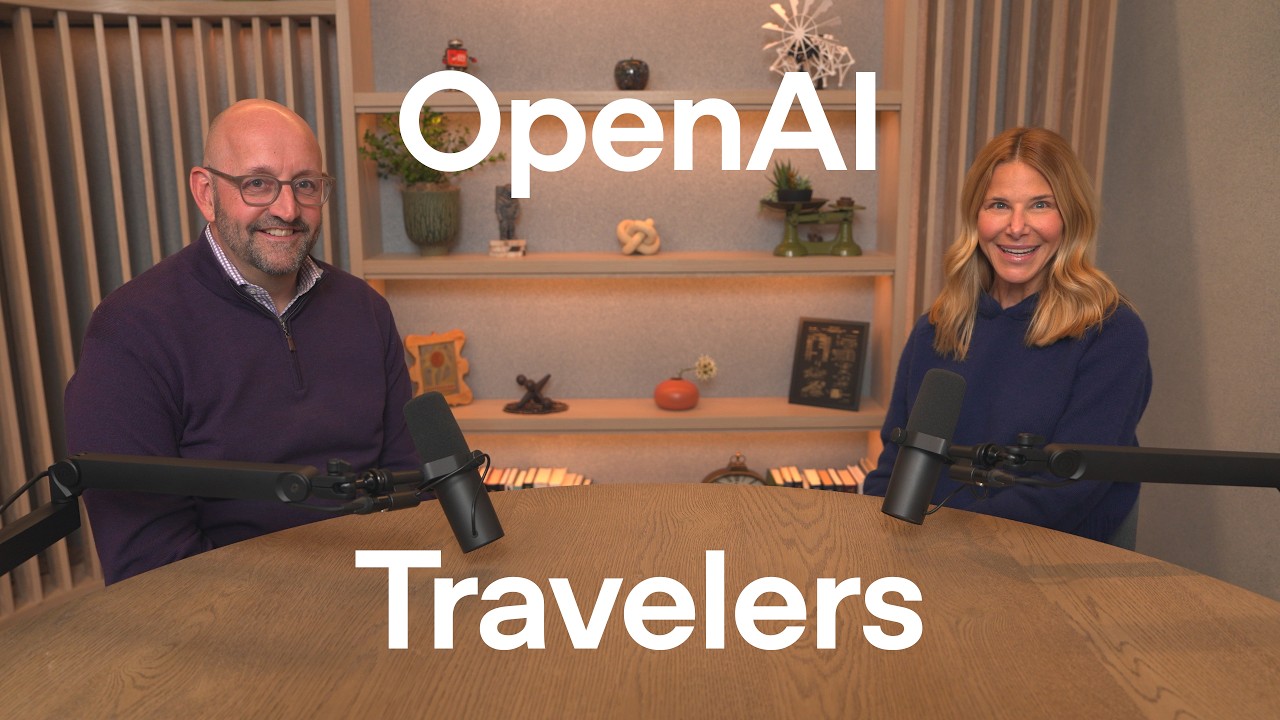
This content was published on YouTube by OpenAI on June 1, 2026. The page description outlines a conversation between Erik Roen, Senior Vice President and CIO of Claim at Travelers, and Denise Dresser, Chief Revenue Officer at OpenAI.
## TL;DR
Travelers Insurance deployed an AI-powered voice assistant for First Notice of Loss (FNOL) across the country to handle approximately 1.5 million annual claims. By leveraging OpenAI's real-time APIs, multi-agent workflows, and synthetic caller testing, Travelers achieved an 80% to 90% completion rate for callers who choose to interact with the AI assistant. The organization transformed its delivery model into a 50/50 collaborative effort between technology and business teams, backed by strict governance, real-time observability through 'Mission Control,' and automated fail-safes. This success has paved the way for roughly 20 additional AI initiatives currently underway across the claim organization.
## Atmosphere & style
The conversation carries a polished, collaborative, and forward-thinking tone, characteristic of an executive fireside chat. Denise Dresser's inviting questions complement Erik Roen's grounded, pragmatic insights, creating an atmosphere of shared pride and strategic clarity. Watching the dialogue feels like a deep dive into modern enterprise transformation, balancing high-tech innovation with a strong emphasis on human-centered change management and corporate responsibility.
## Key takeaways
- [00:00](https://www.youtube.com/watch?v=XwsTXmnB2oI&t=0s) Travelers deployed a voice AI agent for First Notice of Loss (FNOL) to handle fluid customer conversations across 1.5 million annual claims.
- [00:28](https://www.youtube.com/watch?v=XwsTXmnB2oI&t=28s) Early engagement with OpenAI's real-time APIs enabled Travelers to build multi-agent workflows that navigate policy details, evaluate rate impacts, and integrate with legacy systems.
- [00:28](https://www.youtube.com/watch?v=XwsTXmnB2oI&t=28s) The deployment features a loss consultation agent to help callers decide whether to file a claim, while always allowing an immediate transfer to human specialists.
- [06:10](https://www.youtube.com/watch?v=XwsTXmnB2oI&t=370s) Travelers shifted its AI development process to a 50/50 collaborative model split equally between technology teams and business line experts.
- [06:10](https://www.youtube.com/watch?v=XwsTXmnB2oI&t=370s) AI governance and deployment adhere to Travelers' core 'Claim Three Laws' prioritizing paying what is owed, customer experience, and operational efficiency.
- [10:28](https://www.youtube.com/watch?v=XwsTXmnB2oI&t=628s) Travelers expanded its AI claims deployment from an eight-state pilot to full countrywide production in two months.
- [10:28](https://www.youtube.com/watch?v=XwsTXmnB2oI&t=628s) The real-time 'Mission Control' observability platform tracks metrics in 15-minute intervals and allows administrators to disable errant agents within 10 minutes.
- [10:28](https://www.youtube.com/watch?v=XwsTXmnB2oI&t=628s) Automated testing utilizes synthetic callers to simulate thousands of scenarios alongside LLM judges that scan live interactions for hallucinations or unapproved promises.
- [12:55](https://www.youtube.com/watch?v=XwsTXmnB2oI&t=775s) Between 80% and 90% of policyholders who choose the AI assistant complete their claim without needing human intervention.
- [12:55](https://www.youtube.com/watch?v=XwsTXmnB2oI&t=775s) Currently, 35% of overall callers choose to opt out of AI assistance to speak directly with human contact center representatives.
- [14:50](https://www.youtube.com/watch?v=XwsTXmnB2oI&t=890s) Change management programs focused on upskilling, reskilling, and redeploying contact center staff into other claim roles rather than displacing talent.
- [17:00](https://www.youtube.com/watch?v=XwsTXmnB2oI&t=1020s) Travelers is expanding the AI claim assistant across all personal lines while pursuing roughly 20 additional AI initiatives within the claims department alone.
## Detailed walkthrough
### [00:00](https://www.youtube.com/watch?v=XwsTXmnB2oI&t=0s) Rethinking First Notice of Loss with AI
Denise Dresser, Chief Revenue Officer at OpenAI, sits down with Erik Roen, Senior Vice President and CIO of Claim at Travelers Insurance, to discuss how Travelers is deploying AI at scale. Having spent 28 years at Travelers—including 15 years in the claim organization and 7 years overseeing technology—Erik leads overall technology, analytics, and business delivery within claim. The discussion focuses on Travelers' deployment of AI in "first notice of loss" (FNOL), the vital entry point of the entire claims workflow.
When a customer experiences an accident or storm damage, FNOL sets the tone for the entire customer journey. Policyholders are often stressed, confused about coverages, and unsure of their next steps. Operationally, getting accurate data immediately kicks off essential services like claim triaging, adjuster assignment, and self-service repair scheduling. Travelers chose FNOL to launch its voice AI agent because it handles roughly 1.5 million claims annually across all business lines. While the filing process requires specific structured data, customer questions and explanations vary widely, making non-deterministic AI agents ideal for adapting to fluid conversations and guiding callers.
- Erik Roen brings 28 years of tenure at Travelers Insurance to his role as Senior Vice President and CIO of Claim.
- Travelers processes approximately 1.5 million claims per year across all lines of business.
- The initial AI deployment focuses specifically on auto physical damage before scaling across other insurance products.
---
[00:28](https://www.youtube.com/watch?v=XwsTXmnB2oI&t=28s) Early AI Adoption and the Customer Experience
Travelers engaged early with OpenAI, experimenting with real-time APIs even before model features reached general availability (GA). Benchmark testing gave the leadership team confidence that these models could deliver an experience far superior to traditional, rigid chatbots. Historically, peak claim spikes—such as high call volumes following major hurricanes—created long hold times and strained contact centers.
The new system gives calling policyholders an option to opt into an interactive AI claim assistant. Behind the scenes, multiple AI agents collaborate invisibly to interpret intent, clarify policy details, answer complex questions, and enter data into Travelers' legacy systems. A central piece of this architecture is the "loss consultation agent," which handles nuanced inquiries where callers wonder if they should even file a claim, what their deductibles are, how a claim affects future rates, or whether to file through Travelers or another carrier's insurance. Callers retain the freedom to transfer to a human contact center specialist at any point during the interaction.
- Real-time APIs and multi-agent workflows handle customer intent recognition and legacy system updates seamlessly.
- Key customer decisions managed include deductible checks, rate impact evaluations, and fault assessment consultations.
- Customers retain an open option throughout the call to transfer directly to human contact center specialists.
---
[06:10](https://www.youtube.com/watch?v=XwsTXmnB2oI&t=370s) Operationalizing AI as an Enterprise Operating Layer
Treating AI as a fundamental operating layer rather than a simple software application required Travelers to transform its team structure and delivery process. Traditional software development typically follows an 80/20 split, where technology teams build against fixed business requirements before handing off the product for final user acceptance testing (UAT). For AI deployment, Travelers shifted to a 50/50 collaborative model, forming cross-functional teams that bring software engineers, data scientists, architects, legal experts, and business subject matter experts together from day one.
To address widespread skepticism stemming from poor past experiences with basic chatbots, Travelers conducted extensive internal change management. Leadership brought staff across every tier—from executive leadership down to contact center reps—into hands-on sessions to look "under the hood" at agent mechanics, prompt designs, and observability metrics. AI delivery was aligned with Travelers' established governance and its core "Claim Three Laws":
1. Always pay what is owed on every single claim.
2. Provide an outstanding customer and agent experience (provided it does not violate Law 1).
3. Operate efficiently and effectively (provided it does not violate Laws 1 or 2).
- The cross-functional team model balanced workload equally (50/50) between technology specialists and business line experts.
- Continuous development cycles replaced traditional milestones with daily iterations and real-time evaluation feedback.
- AI governance operates on a three-legged framework: the Claim Three Laws, enterprise AI responsibility guidelines, and technical governance standards.
---
[10:28](https://www.youtube.com/watch?v=XwsTXmnB2oI&t=628s) Mission Control, Synthetic Callers, and Countrywide Scaling
Travelers scaled its AI claims deployment from an eight-state pilot to full countrywide production in just two months. To manage this rapid rollout, the team constructed a real-time observability platform termed "Mission Control." Updating in 15-minute intervals, Mission Control tracks live business outcomes, system health, model performance, customer sentiment, and agent intervention metrics.
Testing relies heavily on automated evaluations, including an AI-generated synthetic caller that dials into the Interactive Voice Response (IVR) system to simulate thousands of diverse claim scenarios. On the evaluation side, automated LLM judges judge tone, consistency, and data accuracy. In live production, specialized LLM judges serve as automated fail-safes that scan interactions for hallucinations, inaccuracies, or unapproved promissory commitments. If a fail-safe judge triggers a critical alert, human administrators can shut down an agent within 10 minutes.
- Rollout timeline progressed from eight pilot states to nationwide availability within two months.
- Mission Control monitors streaming telemetry in 15-minute increments across system, model, and operational metrics.
- Automated fail-safes allow administrators to disable an errant AI agent within a 10-minute window.
---
[12:55](https://www.youtube.com/watch?v=XwsTXmnB2oI&t=775s) Customer Adoption Rates and High-Touch Collaboration
Initial adoption metrics revealed that 80% to 90% of customers who opt to interact with the AI claim assistant complete their claim through the automated agent without needing human intervention. Customer sentiment has been remarkably positive, with callers expressing surprise at the natural flow of the conversation. The remaining 35% of overall callers who choose human agents when presented with the option reflect standard behavioral preferences, though Erik expects voice AI adoption to grow as conversational agent experiences become commonplace across everyday life.
The successful implementation relied on deep technical collaboration between OpenAI researchers and Travelers engineers. OpenAI teams worked directly in the development loop, incorporating real-time feedback and edge cases discovered during evaluations into subsequent model refinements. Erik emphasizes that enterprises aiming to succeed with AI must dedicate specialized cross-functional teams to solve concrete problems, embrace a test-and-learn mindset, and leverage automated evaluations to deploy with speed and confidence.
- 80% to 90% of policyholders who choose the AI assistant complete their claim without human escalation.
- 35% of total incoming callers currently opt out of AI assistance to speak directly with human representatives.
- Tight feedback loops between enterprise engineering teams and AI researchers accelerated continuous model optimization.
The Human Element and Change Management
Denise Dresser transitions the discussion from technical evaluations to the broader cultural and human impacts of adopting artificial intelligence. Acknowledging that common anxieties often focus on AI replacing human jobs, she asks Erik Roen how Travelers approaches this concern and shapes its philosophy. Erik explains that change management received as much dedicated focus as the operating model and evals, noting that special care was taken not just within core technical groups but all the way down to contact center employees. He gives high praise to contact center leadership for guiding their teams thoughtfully, ensuring local leaders understood the implications of the shift, and prioritizing upskilling, reskilling, and redeploying talent into other areas of the claim organization. Because leadership views AI as becoming an integral part of every function across Travelers, the entire organization is actively leaning into continuous learning.
* Extensive change management mirrored the effort put into operating models and evaluations.
* Close collaboration with contact center leadership ensured local teams understood upcoming workplace shifts.
* Talent was proactively upskilled, reskinned, and redeployed rather than displaced.
---
Future Horizons and Final Reflections
Looking toward the future, Denise Dresser asks Erik Roen where Travelers plans to go next and how he envisions the broader potential of AI within both the insurance industry and the company at large. Erik shares that Travelers is aggressively continuing its journey by rolling out the AI claim assistant to other lines of business to handle diverse personal lines claims. Beyond that immediate expansion, the company has roughly 20 additional initiatives underway within claims alone, and even more across the broader enterprise, all targeted at fulfilling their core mission to "pay what we owe, provide that great experience and do it in an efficient and effective way." Closing out the conversation, Erik expresses immense excitement over the internal enthusiasm, technical leadership, and collaborative spirit at Travelers, while praising the strong ongoing partnership with OpenAI. Denise closes by thanking Erik for his trust, partnership, and willingness to share such an inspiring story.
* The AI claim assistant is actively expanding to handle all different personal lines claims.
* Approximately 20 distinct AI initiatives are currently underway within the claim department, with even more spread across the wider enterprise.
* The ultimate corporate goals remain focused on paying what is owed, delivering a great customer experience, and maintaining efficiency.
By the way, to unlock the full functionality of all Apps, enable [Gemini Apps Activity](https://myactivity.google.com/product/gemini).
## Notable quotes
> [06:10](https://www.youtube.com/watch?v=XwsTXmnB2oI&t=370s) Always pay what is owed on every single claim.
> [06:10](https://www.youtube.com/watch?v=XwsTXmnB2oI&t=370s) Provide an outstanding customer and agent experience (provided it does not violate Law 1).
> [06:10](https://www.youtube.com/watch?v=XwsTXmnB2oI&t=370s) Operate efficiently and effectively (provided it does not violate Laws 1 or 2).
> pay what we owe, provide that great experience and do it in an efficient and effective way — Erik Roen
## Mentioned
Travelers Insurance, OpenAI, Erik Roen, Denise Dresser, First Notice of Loss (FNOL), Interactive Voice Response (IVR), Mission Control, Claim Three Laws
Travelers在全美部署OpenAI语音智能体处理车险理赔
高达90%的致电者完全通过语音AI完成理赔,自动化评判机制监控交互以便在出错时立即关停。
Travelers保险公司在全美范围内为初步报案(FNOL)部署了AI语音助手,以处理每年约150万起理赔案件。通过利用OpenAI的实时API、多智能体工作流以及合成通话者测试,Travelers使选择与AI助手交互的致电者达到了80%至90%的完成率。该机构将其交付模式转变为技术团队与业务团队各占50%的协同机制,并由严格的治理体系、通过“Mission Control”实现的实时可观测性以及自动化故障防护机制提供保障。这一成功为其理赔部门目前正在开展的约20个其他AI项目铺平了道路。
Travelers 联手 OpenAI 为首期报案(FNOL)上线语音 AI Agent,用于应对全业务线每年约 150 万起理赔中的多变对话,并无缝集成后端遗留系统。 (0:00)
系统集成了损失咨询 Agent,可协助保户评估免赔额及保费影响以决定是否立案,同时通话全程支持随时转接人工专员。 (0:28)
Travelers 将 AI 研发重构为技术与业务专家对半(50/50)的协作机制,并恪守以“足额赔付”、“客户体验”和“运营效率”为先的“理赔三法则”治理准则。 (6:10)
该理赔 AI 在短短两个月内便从 8 个试点州扩展至全美上线,其“Mission Control”平台每 15 分钟监控一次指标,并可在 10 分钟内切断异常 Agent。 (10:28)
上线数据显示,80% 至 90% 选择 AI 助手的客户无需人工介入即可完成报案,目前公司在理赔部门还有约 20 项 AI 举措正在推进。 (12:55)
Reading summary
Travelers Insurance deployed a real-time, multi-agent voice system countrywide to automate first notice of loss across its auto physical damage business, scaling from an eight-state pilot to nationwide production in two months. Erik Roen, Senior Vice President and CIO of Claim, attributes the program's viability to cross-functional operational restructuring, synthetic caller evaluation pipelines, and strict human escalation fail-safes.
Voice Agents for First Notice of Loss (0:00)
First notice of loss (FNOL) serves as the primary entry point for policyholders reporting damage and initiates operational tasks like adjuster assignments and repair scheduling. Across its lines of business, Travelers processes approximately 1.5 million claims annually. Because callers often face stress and uncertainty regarding deductibles or coverage, the carrier deployed real-time conversational agents rather than traditional, scripted interactive voice response trees to accommodate non-deterministic inquiries.
Under this architecture, multiple coordinated models manage intent recognition, interface with legacy core systems, and run consultative dialogues. A dedicated loss consultation agent addresses whether an insured party should file, evaluates deductible options, and assesses rate impact or other carriers' involvement. Policyholders retain an open option to exit the automated flow and transfer directly to a human specialist at any point.
Collaborative Delivery and Claim Governance (6:10)
Integrating AI into core operations required Travelers to replace traditional delivery structures—which historically relied on an 80/20 split between technical development and user acceptance testing—with a 50/50 cross-functional model. Software engineers, data scientists, architects, legal counsel, and business experts worked together from inception in daily iteration cycles.
To counter legacy skepticism surrounding customer-facing bots, leadership introduced hands-on internal sessions exposing prompt mechanics and evaluation data across company tiers. The deployment was anchored to the company's internal 'Claim Three Laws': first, always pay what is owed; second, provide an outstanding customer experience without violating the first law; and third, operate efficiently without compromising the prior two.
Synthetic Testing and Production Fail-Safes (10:28)
Travelers expanded its claims deployment from an eight-state pilot to nationwide availability within two months, relying on an automated testing and monitoring framework. Pre-deployment validation employed synthetic AI callers dialing directly into the telephony system to simulate thousands of diverse loss scenarios, with automated LLM judges grading conversational tone, consistency, and data fidelity.
In production, an observability dashboard called 'Mission Control' aggregates system performance, customer sentiment, and operational interventions on 15-minute refresh cycles. Specialized automated judges continually monitor live conversations for inaccuracies, hallucinations, or unapproved commitments; should a critical anomaly occur, system administrators can disable an underperforming agent within 10 minutes.
Adoption Rates and Contact Center Realignment (12:55)
Initial production metrics show that 80% to 90% of policyholders who choose the AI assistant complete their claim filing without human intervention. Concurrently, 35% of overall callers choose to opt out of the automated agent entirely when presented with the option, opting instead to speak with human representatives. Roen anticipates opt-in rates will climb as conversational systems become standard in consumer interactions.
Addressing workforce concerns regarding automation, Travelers emphasized internal change management and upskilling over staff reductions. Contact center teams were trained to understand underlying model behaviors and were redeployed to complex claims processing functions as automated volume expanded. The company is currently developing approximately 20 additional AI initiatives across its claim organization.
While early metrics show high completion rates among policyholders choosing automated intake, over a third of callers continue to opt out in favor of human representatives. Travelers plans to expand the intake agent across diverse personal insurance lines while managing roughly 20 concurrent AI initiatives under its existing governance framework.
## Background
该内容由 OpenAI 官方 YouTube 频道于 2026 年 6 月 3 日发布。根据页面简介,这是一场 OpenAI 首席营收官 Denise Dresser 与旅行者保险(Travelers)高级副总裁兼理赔 CIO Erik Roen 展开的高管对谈,聚焦生成式 AI 在全美理赔业务中的规模化实战落地。
## TL;DR
对话详细复盘了 Travelers 如何携手 OpenAI,在极度复杂的首次损失通知(FNOL)场景中部署语音与多智能体系统,并在短短两个月内从 8 州试点推广至全美。团队构建了“损失咨询智能体”、基于合成呼叫者的数千次仿真测试,以及 15 分钟级的“任务控制中心”与 LLM 裁判兜底熔断机制,实现了 80% 至 90% 的用户自主报案完成率。在组织层面,Travelers 推翻传统 IT 流程,建立业务与技术 50/50 紧密共创的敏捷体系,并通过技能重塑而非裁员来赋能一线员工。此外,Erik 还透露了公司正围绕理赔全生命周期并行推进的 20 多个全新 AI 创新项目。
## Atmosphere & style
整场对谈专业沉稳、务实高效,洋溢着企业级实战复盘的深厚底蕴与互信默契,两位高管更像是在战壕中共经考验的技术与业务伙伴。Erik 的叙述条理清晰且极具说服力,既有对技术前沿的敏锐洞察,又时刻紧扣保险风控与人文底色,完全避开了空洞的概念炒作。聆听过程带给人一种传统大型金融企业在智能化浪潮下从容变革、严谨求实的确定性与力量感。
## Bulletin
- [00:42](https://www.youtube.com/watch?v=XwsTXmnB2oI&t=42s) Travelers 携手 OpenAI 在全美范围部署 AI 语音理赔助手,聚焦每年约 150 万件的首次损失通知(FNOL),从 8 州试点到全美上线仅耗时 2 个月。
- [12:40](https://www.youtube.com/watch?v=XwsTXmnB2oI&t=760s) 接入 AI 助手的投保人中,自主在线完成报案的比例从首日起即达到 80%–90%,系统支持无感切换多智能体并在后台自动化对接维修厂与租车调度。
- [10:27](https://www.youtube.com/watch?v=XwsTXmnB2oI&t=627s) 通过“任务控制中心”以 15 分钟颗粒度近实时流式监控指标,并利用合成呼叫者(Synthetic Caller)模拟数千种场景,配合 LLM 裁判实现 10 分钟级违规熔断。
- [06:10](https://www.youtube.com/watch?v=XwsTXmnB2oI&t=370s) 组织协作从传统 IT 的 80/20 配比转向技术与业务 50/50 敏捷共创,公司坚持不裁员而是通过转岗重塑技能,目前理赔部门正并行推进 20 余项 AI 项目。
## Key takeaways
- [00:42](https://www.youtube.com/watch?v=XwsTXmnB2oI&t=42s) 首次损失通知(FNOL)是整个理赔链条的基调奠定者,具有年均 150 万件的庞大规模,其既包含结构化立案事实又涉及大量非结构化答疑的特性,是非确定性智能体(Non-deterministic Agents)的理想落地场景。
- [00:42](https://www.youtube.com/watch?v=XwsTXmnB2oI&t=42s) Travelers 极早期便基于 OpenAI 尚未正式发布的 Realtime API 等模型进行基准测试,证实先进语音智能体能彻底打破大众对传统机械 Chatbot 的负面刻板印象。
- [03:29](https://www.youtube.com/watch?v=XwsTXmnB2oI&t=209s) 报案系统采用自愿接入(Opt-in)模式,多智能体在用户无感知状态下协同工作,完成意图倾听、消除疑虑并联动传统核心系统(Legacy Systems)自动完成立案、维修预约与租车排期。
- [03:29](https://www.youtube.com/watch?v=XwsTXmnB2oI&t=209s) 针对车祸后客户普遍存在的顾虑,核心创新的“损失咨询智能体”可针对保单险种、免赔额、未来保费影响及责任归属提供专业建议,并允许客户在任意节点随时无缝切换人工坐席。
- [06:10](https://www.youtube.com/watch?v=XwsTXmnB2oI&t=370s) AI 原生系统的构建推翻了“技术 80%、业务 20%”的传统交付惯例,转变为技术与业务“50/50”紧密捆绑,业务专家必须全流程深度介入模型评估(Evals)与 LLM 裁判的搭建。
- [06:10](https://www.youtube.com/watch?v=XwsTXmnB2oI&t=370s) 创新的制度护栏依托由负责任 AI 治理框架、技术治理流程和“理赔三定律”(准确赔付应赔款项、卓越客户体验、内部高效运营)共同构成的三脚架模式。
- [09:49](https://www.youtube.com/watch?v=XwsTXmnB2oI&t=589s) 告别瀑布式和 UAT 验收等传统线性软件周期,团队转向以天为维度的“测试与学习”(Test and Learn)敏捷模式,业务人员对提示词工程与评估指标实现全民透明化参与。
- [10:27](https://www.youtube.com/watch?v=XwsTXmnB2oI&t=627s) 为支撑全美推广,团队搭建了“任务控制中心”(Mission Control),以 15 分钟为周期流式监控业务指标、系统性能及人工干预率,保障对系统细微表现的精准把控。
- [10:27](https://www.youtube.com/watch?v=XwsTXmnB2oI&t=627s) 测试端使用 AI“合成呼叫者”(Synthetic Caller)自主拨测模拟数千种险情分支;生产端 LLM 裁判严密防范幻觉与越权承诺,提供 10 分钟内一键关停智能体的应急熔断能力。
- [12:40](https://www.youtube.com/watch?v=XwsTXmnB2oI&t=760s) 在前期严格合成测试与评估优化的支持下,AI 理赔助手从试点第一天起就实现了 80%–90% 的端到端自主完成率,大幅降低了上线后的故障积压风险。
- [12:40](https://www.youtube.com/watch?v=XwsTXmnB2oI&t=760s) 在提供选择时仍有约 35% 的客户主动选择等待人工坐席,Erik Roen 认为这属于用户的行为惯性,随着高质量语音智能体的普及,用户心理接受度将自然提升。
- [14:34](https://www.youtube.com/watch?v=XwsTXmnB2oI&t=874s) Travelers 与 OpenAI 构建了高频研产协同飞轮:企业在一线评测集中的具体问题直接反哺 OpenAI 模型调优,企业落地应优先重度依赖 Evals 与可观测性,切忌追求虚妄的“完美确定性”而拖延上线。
- [16:28](https://www.youtube.com/watch?v=XwsTXmnB2oI&t=988s) 针对外界对 AI 剥夺岗位的顾虑,公司坚持“技能重塑、技能提升与转岗”(Upskill, Reskill, and Redeploy)战略,将联络中心员工从重复性立案工作中释放,转向需要高同理心与复杂判断的高阶岗位。
- [17:37](https://www.youtube.com/watch?v=XwsTXmnB2oI&t=1057s) 理赔助手的成功正被快速横向复制至个人保险(Personal Lines)的其他险种,目前理赔生命周期内有 20 余项 AI 创新项目并行推进,在严守“准确赔付”底线的前提下实现全局提效。
## Detailed walkthrough
### [00:00](https://www.youtube.com/watch?v=XwsTXmnB2oI&t=0s) 开场与背景:Erik Roen 在 Travelers 的角色与 AI 布局
OpenAI 首席营收官 Denise Dresser 与 Travelers(旅行者保险)高级副总裁兼理赔部门首席信息官(CIO)Erik Roen 展开对话。回顾自身经历,Erik 表示自己已在 Travelers 工作了 28 年,其中最近 15 年深耕于理赔业务组织内部,而近 7 年则全面负责理赔板块的技术组织。目前,他总体统筹理赔部门的技术、分析与业务交付工作,其中自然涵盖所有与 AI 相关的探索与落地项目。
针对 Travelers 近期在全美范围内加速部署 AI 的举措,Denise 重点引出了其最核心的应用场景——首次损失通知(FNOL,First Notice of Loss),并邀请 Erik 拆解这一保险关键业务流程的核心价值与落地契机。
---
### [00:42](https://www.youtube.com/watch?v=XwsTXmnB2oI&t=42s) 为什么选择首次损失通知(FNOL):业务痛点与非确定性智能体的契机
首次损失通知是整个理赔全流程的基调奠定者。Erik 强调,从客户视角来看,拨打这个电话时往往处于极度焦虑与脆弱的状态——客户可能刚刚遭遇车祸,或者车辆在暴风雨中严重受损。他们心中充满了未知与疑虑,迫切想知道接下来该做什么、究竟该不该报案,以及该如何完成报案。因此,“在最开始就做好这件事至关重要”。而在 Travelers 的运营端,这一步同样具有决定性影响:如果在最前端就能精准、及时地录入事故信息,整个理赔流程的流转就会顺畅得多,能够即刻触发案件分级、分配专属理赔人员、发起直赔或开启前往汽修厂、租车等一系列自动化自助服务。
Travelers 决定从首次损失通知切入的核心原因在于其庞大的业务规模与结构特性:
- **体量巨大**:Travelers 每年处理约 150 万起理赔报案,且报案流程覆盖公司旗下所有的业务险种。尽管当前试点落地首先聚焦于车险物理损坏(Auto Physical Damage),但其经验具备跨险种快速扩展的基础。
- **确定性与多变性并存**:理赔立案所需的基础事实信息是高度结构化的,但客户在犹豫“是否应该报案”时所提出的疑问、顾虑和解释却千差万别。这种场景正是“非确定性智能体(Non-deterministic Agents)”发挥价值的最佳舞台。
智能体能够自适应各种非标准的问题与回答,为客户答疑解惑,引导他们条理清晰地穿过复杂的报案流程。Erik 提到,Travelers 在非常早期就与 OpenAI 展开了合作,甚至在某些模型与实时 API(Realtime API)尚未正式公开发布(GA)前就开展了基准测试与评估。早期测试展现出的强大性能,让团队笃信它能彻底打破大众在过去几年中对传统机械“聊天机器人(Chatbot)”的负面刻板印象,从而坚定了快速投产的信心。
---
### [03:29](https://www.youtube.com/watch?v=XwsTXmnB2oI&t=209s) 全新理赔体验:多智能体协作与关键的“损失咨询智能体”
在上线 AI 理赔助理之前,客户虽然可以通过 Travelers 官网或 App 等数字渠道自助报案,但仍有大量客户选择致电呼叫中心。然而,一旦遭遇飓风等极端灾害天气,报案电话便会在短时间内呈爆发式增长,由于无法针对这种低频但峰值极高的极端负荷维持常态化人力编制,客户往往需要经历极其漫长的排队等待——正如 Denise 所感慨的,“恰恰在客户最需要帮助的时刻被卡住了”。
为了彻底攻坚这一服务瓶颈,Travelers 引入了全新的进线体验:客户拨通电话后,系统会主动提供是否与 AI 理赔助手对话的自选选项(Opt-in)。一旦客户选择进入,后台便会有多个智能体协同运转,并在客户完全感知不到切换痕迹的前提下完成引导:系统实时倾听、理解意图、消除疑虑并给出清晰解释,最终在后台传统核心系统(Legacy Systems)中完成立案,同时自动排期预约维修厂或调度代步租车服务。
```mermaid
flowchart TD
accTitle: Travelers AI 理赔报案流程示意图
accDescr: 展示客户拨打电话后的分流机制、多智能体协同处理与后端核心系统的联动触发
subgraph Inbound["客户接入层"]
A["客户拨打理赔热线"] --> B{"是否同意由 AI 助手提供服务?"}
B -- "拒绝 / 随时请求人工" --> C["转接呼叫中心专业坐席"]
end
subgraph MultiAgent["多智能体协作层"]
B -- "同意接入 (Opt-in)" --> D["语音监听与自然意图识别"]
D <--> E["损失咨询智能体<br/>(解答险种/免赔额/保费影响/责任划分)"]
D --> F["立案信息采集智能体"]
end
subgraph CoreAutomation["核心系统与后端联动"]
F --> G["录入 Travelers 核心业务系统"]
G --> H["自动触发下游服务<br/>(维修厂预约 / 租赁车辆安排 / 案件智能分流)"]
end
```
在这套体系中,最具差异化优势的创新是“损失咨询智能体(Loss Consultation Agent)”。许多客户在报案前充满犹豫:他们不清楚保单涵盖哪些责任范围、自己的免赔额是多少、报案是否会导致下期保费上涨,甚至不确定在责任归属未明的情况下,应该向 Travelers 索赔还是走对方司机的保险公司渠道。该咨询智能体能够极其专业、灵活地应对所有这些复杂的咨询场景。与此同时,系统始终赋予客户完全的控制权——在流程中的任何节点,客户只要提出需求,都可以无缝切换并连线人工客服专家。
---
### [06:10](https://www.youtube.com/watch?v=XwsTXmnB2oI&t=370s) 运营模式变革:从 80/20 到 50/50 的跨职能协同与“理赔三定律”
针对 Denise 提出的“AI 不仅是技术或应用层,更是整个企业的运营层(Operating Layer)”这一观点,Erik 表达了高度认同,并分享了 Travelers 在组织协作与治理模式上的根本性颠覆。
以往传统的软件开发模式往往呈现“80/20”格局:技术团队承担 80% 的工作,业务团队仅占 20%,通常只是在项目初期提出业务需求,并在最终上线前参与验收测试(UAT)。但大语言模型智能体的构建完全推翻了这种模式。Travelers 在早期便建立起全新的协同工作机制,直接将数据工程师、软件工程师、数据科学家、法务专家、系统架构师以及一线业务专家紧密整合在一起,形成“50/50”的技术与业务资源配比。业务专家必须深度介入模型评估(Evals)、构建大模型评测法官(LLM Judges)以及持续的对话迭代循环中。
组织层面推行的另外两大基石是变革管理(Change Management)与严密的治理机制:
- **直面历史偏见的高层与一线培训**:由于几乎所有人都曾遭遇过令人沮丧的传统低幼版聊天机器人,团队直接把从高管层到呼叫中心一线代表的所有利益相关者召集进会议室,让他们亲眼观察智能体底层的真实运转逻辑、体验可观测性(Observability)监控工具,并亲自试听测试。这一做法极大消除了团队的不信任感。
- **理赔“三定律”与责任治理三脚架**:Travelers 理赔部门拥有过去 15 年应用 AI 与机器学习的积累,拥有完备的负责任 AI 治理框架(Responsible AI Framework)。Erik 将创新能够快速且负责任推进的保障归结为“三脚架模式”:负责任 AI 框架、技术治理流程,以及 Travelers 内部奉为圭臬的“理赔三定律”:
1. **第一定律**:针对每一起赔案,始终准确赔付我们应赔的金额(Pay what we owe);
2. **第二定律**:在不违背第一定律的前提下,为客户或代理人提供极佳的交互体验;
3. **第三定律**:在不违背前两条定律的前提下,实现公司内部运营的高效与实效。
Denise 总结道,行业内最成功的 AI 落地案例无一例外都依赖这种高度迭代的模式:给予智能体更丰富的上下文,通过评测与反馈让它持续学习与提升,而全跨职能团队的全程深度介入,正是推动这一闭环持续优化的根本动力。
### [09:49](https://www.youtube.com/watch?v=XwsTXmnB2oI&t=589s) 告别传统交付:AI 原生研发中的敏捷迭代与全民透明度
在谈及开发模式的转变时,对话强调了生成式 AI 落地与传统软件生命周期的根本性差异。在以往的企业 IT 交付中,团队通常遵循极其线性的流程:项目启动、方案设计、会议室原型评审、用户验收测试(UAT),然后正式上线宣布“大功告成”。然而,在由智能体驱动的项目中,这种传统的瀑布式或阶段式交付已完全失效。
取而代之的是高度透明、全员下场的敏捷共创。Erik Roen 指出,在整个过程中,不仅技术团队,业务人员也完全融入了日常构建中:大家对智能体、提示词设计和各项评估体系(evals)都了如指掌。过去业务方可能每周才进一次会议室验收进度,而在现在的“测试与学习”(test and learn)模式下,团队每天都在基于评估结果将变更部署到位,实现了前所未有的高频迭代。
### [10:27](https://www.youtube.com/watch?v=XwsTXmnB2oI&t=627s) 从八州试点到全国推广:“任务控制中心”与 LLM 裁判架构
为了支持从最初的 8 个州试点在短短两个月内闪电般推向全美,Travelers 建立了一套被称为“任务控制中心”(Mission Control)的实时可观测性体系。该系统以 15 分钟为增量周期,近乎实时地流式传输并监控业务结果、系统性能、模型表现、客户体验以及人工干预率,使团队对系统的每一处细微表现都拥有绝对把控。
在质量保障与风控机制上,团队引入了创新的“LLM 裁判”(LLM Judges)和合成测试体系。研发团队先是用 AI 构建了一个“合成呼叫者”(Synthetic Caller),让其自主拨打 IVR 语音交互系统,模拟跑通数千种复杂的理赔通话场景;后端则由多位 LLM 裁判针对通话的语气、回答准确性及信息采集是否到位进行即时评估与打分。在生产和试点环境中,LLM 裁判更充当了安全兜底的熔断开关(fail-safes),严密监视模型是否存在幻觉、生成不准确事实或做出未经授权的承诺性陈述(promissory statements)。一旦触发红线告警,团队能在 10 分钟内一键关停相应智能体,为全美规模化部署构筑了坚实的安全底线。
```mermaid
flowchart TD
accTitle: Travelers 理赔智能体测试与生产监控架构
accDescr: 展示合成呼叫者、生产通话、LLM 裁判、任务控制中心与熔断机制之间的数据流转图
subgraph SIM["自动化仿真评估阶段"]
A["AI 合成呼叫者<br/>(Synthetic Caller)"] -->|"模拟数千种理赔场景"| B["IVR 交互系统"]
B --> C["LLM 测试裁判<br/>(语气、准确性、完整度)"]
C -->|"快速暴露 Bug"| D["提示词与模型日更迭代"]
end
subgraph PROD["生产运行与任务控制中心"]
E["真实客户呼入"] --> F["AI 理赔语音助手"]
F -->|"每 15 分钟近实时流"| G["任务控制中心<br/>(Mission Control)"]
F --> H["LLM 兜底裁判<br/>(监测幻觉与越权承诺)"]
H -->|"触发违规警报"| I["10 分钟应急熔断开关"]
end
```
- **全美推广速度**:从 8 个试点州拓展至全美(countrywide)仅耗时 2 个月。
- **任务控制中心时效**:以 15 分钟为颗粒度流式分析业务结果、系统可用性与客户体验。
- **合成测试规模**:通过 AI 生成客户身份与情绪,在拨测中自动化覆盖数千种险情理赔分支。
- **熔断机制响应时间**:针对幻觉和越权承诺,系统支持在 10 分钟内完成智能体隔离与下线。
### [12:40](https://www.youtube.com/watch?v=XwsTXmnB2oI&t=760s) 高达 80%–90% 的自主完成率与用户心理门槛
Denise Dresser 提到了一个令人瞩目的采用率数据:目前有 80% 到 90% 的用户在接通 AI 理赔助手后,能够完全自主在线完成理赔流程。Erik Roen 透露,这一极高转化率并非后期漫长优化的结果,而是从试点第一天起就达到了这一水平。这完全得益于前期通过合成呼叫者进行的魔鬼式压力测试和精细化评估,在正式面对终端用户前就已把绝大部分体验盲点与积压问题(backlog)彻底扫清。
客户对这一全新体验展现出极高的正面反馈,甚至有投保人打完电话后特意反馈称“我以前从未体验过如此顺畅的服务”。与此同时,数据也反映出一种现实的用户心理现象:在接入时被明确给予“选择 AI 助手还是人工代表”时,仍有约 35% 的客户主动选择排队等待人工座席。Erik Roen 认为这纯粹是一种行为惯性,并非体验问题——当广大消费者在日常生活和各类企业服务中更多地接触到高水平的语音智能体后,大众对这一交互模式的接受度和尝试意愿必将持续攀升。
### [14:34](https://www.youtube.com/watch?v=XwsTXmnB2oI&t=874s) 与 OpenAI 研产协同:给大型企业规模化落地的核心建议
在谈及与 OpenAI 的深度合作时,Erik Roen 表示最初选择 OpenAI 是基于极其严格和广泛的基准评测,但更关键的决定因素是寻找一个愿意“与团队一起在战壕里摸爬滚打、卷起袖子干活”(in the trenches with us, rolling up their sleeves)的合作伙伴。双方团队构建了一种直接的研发飞轮:Travelers 在构建评测集和 LLM 裁判时产生的一线具体反馈,会被 OpenAI 研究员迅速吸收并直接融入下一代模型的调优与迭代中,这种高密度的研产协同让双方都实现了效率倍增。
针对全球其他正在探索 AI 规模化落地的大型企业,Erik Roen 给出了核心建议:
1. **组建专注团队**:必须投入专职人员深度绑定具体业务痛点,与 AI 专家紧密合作,全面拥抱“边测边学”的试验文化。
2. **重度依赖 Evals 与可观测性**:用科学的评估工具(evals)、LLM 裁判和实时监控系统构建心理安全感,以此替代传统项目中对“完美确定性”的虚妄追求。
3. **拒绝过度拖延**:软件与模型永远不可能拥有百分之百的完备信息,切忌让方案在漫长的评审中悬而未决,应尽快推向可控的生产环境接受真实检验。
### [16:28](https://www.youtube.com/watch?v=XwsTXmnB2oI&t=988s) 组织变革与人才重塑:非裁员而是赋能与转岗
面对外界关于“AI 将剥夺客服与联络中心工作岗位”的广泛担忧,Erik Roen 阐述了 Travelers 截然不同的管理哲学。他强调,团队在变革管理(Change Management)上倾注的心力绝不亚于技术研发与评测设计。联络中心的各级管理层发挥了核心领导力,在项目初期便花大量时间深入基层,确保一线主管与团队准确理解 AI 助手的定位与带来的工作性质变化。
Travelers 的核心策略不是削减人力,而是深度的“技能重塑、技能提升与人才重新配置”(upskill, reskill, and redeploy)。通过将重复性的信息采集呼叫分流给 AI 助手,联络中心的员工得以被选拔并转型部署到理赔组织中更复杂、更需要人类同理心与专业判断的岗位中。Erik Roen 坚信,生成式 AI 将会无处不在地融入 Travelers 的每一个业务职能,企业必须通过主动的人才技能升级来拥抱这一浪潮。
### [17:37](https://www.youtube.com/watch?v=XwsTXmnB2oI&t=1057s) 全生命周期纵深推进:20 余项理赔 AI 项目与未来展望
在总结理赔助手的成功后,Erik Roen 分享了 Travelers 紧接着的战略推进蓝图。目前,AI 理赔助手正被快速横向复制推广至个人保险部门(Personal Lines)的其他险种和业务线,以覆盖更广泛的定损与申报场景。
更重要的是,团队正将眼光投向涵盖报案、定损、审核、理算到赔付的整个理赔生命周期(Claim Life Cycle)。仅在理赔部门内部,目前就有约 20 个全新的 AI 创新项目正在并行推进,而在 Travelers 集团层面启动的项目则更为庞大。所有这些技术探索的核心宗旨始终保持一致:依托技术实力与创新文化,确保公司“准确赔付应赔款项”(pay what we owe),在保持极致成本效益与运营效率的同时,为投保人提供卓越、有温度的服务体验。
## Notable quotes
> [00:42](https://www.youtube.com/watch?v=XwsTXmnB2oI&t=42s) 在最开始就做好这件事至关重要 — Erik Roen
> [03:29](https://www.youtube.com/watch?v=XwsTXmnB2oI&t=209s) 恰恰在客户最需要帮助的时刻被卡住了 — Denise Dresser
> [06:10](https://www.youtube.com/watch?v=XwsTXmnB2oI&t=370s) AI 不仅是技术或应用层,更是整个企业的运营层 — Denise Dresser
> [06:10](https://www.youtube.com/watch?v=XwsTXmnB2oI&t=370s) 第一定律:针对每一起赔案,始终准确赔付我们应赔的金额 — Erik Roen
> [06:10](https://www.youtube.com/watch?v=XwsTXmnB2oI&t=370s) 第二定律:在不违背第一定律的前提下,为客户或代理人提供极佳的交互体验 — Erik Roen
> [06:10](https://www.youtube.com/watch?v=XwsTXmnB2oI&t=370s) 第三定律:在不违背前两条定律的前提下,实现公司内部运营的高效与实效 — Erik Roen
> [12:40](https://www.youtube.com/watch?v=XwsTXmnB2oI&t=760s) 我以前从未体验过如此顺畅的服务 — 投保人
> [14:34](https://www.youtube.com/watch?v=XwsTXmnB2oI&t=874s) 与团队一起在战壕里摸爬滚打、卷起袖子干活 — Erik Roen
> [16:28](https://www.youtube.com/watch?v=XwsTXmnB2oI&t=988s) upskill, reskill, and redeploy — Erik Roen
> [17:37](https://www.youtube.com/watch?v=XwsTXmnB2oI&t=1057s) 准确赔付应赔款项 — Erik Roen
## Mentioned
Travelers, OpenAI, Erik Roen, Denise Dresser, 首次损失通知 (FNOL), 车险物理损坏 (Auto Physical Damage), 实时 API (Realtime API), 损失咨询智能体 (Loss Consultation Agent), 任务控制中心 (Mission Control), LLM 裁判 (LLM Judges), 合成呼叫者 (Synthetic Caller), IVR 交互系统, 个人保险部门 (Personal Lines)
## Video description
A conversation between Erik Roen, Travelers Senior Vice President and CIO, Claim and Denise Dresser, OpenAI Chief Revenue Officer.
[Source](https://www.youtube.com/watch?v=XwsTXmnB2oI)
Source quotes
[0:42] Erik Roen: 在最开始就做好这件事至关重要
[3:29] Denise Dresser: 恰恰在客户最需要帮助的时刻被卡住了
[6:10] Denise Dresser: AI 不仅是技术或应用层,更是整个企业的运营层
[6:10] Erik Roen: 第一定律:针对每一起赔案,始终准确赔付我们应赔的金额
[6:10] Erik Roen: 第二定律:在不违背第一定律的前提下,为客户或代理人提供极佳的交互体验
[6:10] Erik Roen: 第三定律:在不违背前两条定律的前提下,实现公司内部运营的高效与实效
[12:40] 投保人: 我以前从未体验过如此顺畅的服务
[14:34] Erik Roen: 与团队一起在战壕里摸爬滚打、卷起袖子干活
[16:28] Erik Roen: upskill, reskill, and redeploy
[17:37] Erik Roen: 准确赔付应赔款项
Source quotes
[6:10] Always pay what is owed on every single claim.
[6:10] Provide an outstanding customer and agent experience (provided it does not violate Law 1).
[6:10] Operate efficiently and effectively (provided it does not violate Laws 1 or 2).
Erik Roen: pay what we owe, provide that great experience and do it in an efficient and effective way
Original transcript
[0:00] Well, hi everybody. I am thrilled to be
[0:02] joined today by Eric Rowan, who's a
[0:04] senior vice president and chief
[0:05] information officer at Travelers
[0:07] Insurance. Eric, great to see you.
[0:09] >> Great to see you, Denise.
[0:10] >> So, let's start out at the highest
[0:11] level. So, maybe just tell us a little
[0:13] bit about your role at Travelers
[0:15] Insurance, what you look after, and then
[0:17] how AI plays a role in that.
[0:19] >> Sure. So, I've been at Travelers 28
[0:21] years.
[0:22] Uh yeah, a long time. Uh last 15 years
[0:24] within the claim organization.
[0:27] Uh and the last 7 years uh also within
[0:29] our technology organization. So, I have
[0:31] overall responsibility for technology,
[0:34] analytics, and business delivery uh
[0:36] within claim, uh which includes all
[0:39] things related to AI, which is why I'm
[0:41] here today.
[0:42] >> So, Eric, Travelers has been moving
[0:44] really quickly to deploy AI at the
[0:46] insurance company, and very specifically
[0:48] in first notice of loss. Which what I
[0:51] was going to ask you to do is just
[0:52] explain for those who maybe don't know,
[0:54] what is first notice of loss? And it And
[0:56] it is a critical workflow.
[0:58] >> Yeah, so first notice of loss really
[1:00] sets the tone for the entire claim
[1:02] process. So, you think about it from a
[1:04] customer perspective,
[1:06] uh they may have just had been in an
[1:07] accident, maybe their car was damaged in
[1:10] a storm. So, they may be stressed, they
[1:13] may have a lot of questions,
[1:15] um and they're calling um really to find
[1:17] out what they should do next, whether
[1:19] they should file the claim, and then how
[1:21] to go about doing it. So, it's really
[1:23] important that we get that right right
[1:24] at the beginning. Uh secondly, for us
[1:27] from a Travelers perspective,
[1:29] operationally,
[1:30] it's so critical. Um if we get that
[1:33] information accurate and timely right up
[1:36] front, it really sets up the claim
[1:38] process to go much more smoothly and to
[1:40] kick off a lot of different uh services,
[1:43] whether it's triaging, whether it's
[1:45] assigning it to a claim professional,
[1:47] maybe it it's setting up self-service
[1:50] capabilities to schedule a body shop or
[1:52] anything like that. The reason we
[1:54] started with first notice of loss was
[1:56] it's high volume.
[1:58] We get about 1.5 million claims a year
[2:01] and it crosses all of our lines of
[2:03] business. So we knew it was something
[2:04] that we'd be able to scale to other
[2:07] lines even though we're starting with
[2:09] auto physical damage right now.
[2:12] It's also it's structured in the sense
[2:16] of what we need to start the claim, but
[2:18] it also varies a lot in terms of the
[2:21] questions and
[2:24] explanations that the customer may need
[2:27] when they're deciding whether they want
[2:29] to file the claim. So it's really a
[2:30] place where non-deterministic agents can
[2:34] really add a lot of value.
[2:36] >> Right.
[2:36] >> Right, they can adapt to different
[2:39] questions and responses. It can provide
[2:41] clarity. It can really help navigate
[2:44] them through that claim filing process.
[2:47] >> Yeah.
[2:47] >> In a variety of ways, which is really
[2:50] cool.
[2:50] >> And I'm just curious, what gave you the
[2:51] confidence that you could bring AI into
[2:53] that process?
[2:55] >> Well, so we we started very early in our
[2:57] in our journey on this with open AI even
[3:01] before some of the models were GA
[3:04] and so these models in the real-time
[3:06] APIs are really powerful and we knew
[3:09] that even in our early evaluations and
[3:13] benchmarking and testing it was going to
[3:15] give us a very different chatbot like
[3:18] experience than what everybody
[3:20] used to experiencing over the past few
[3:22] years and so
[3:23] that gave us a lot of uh a lot of
[3:25] excitement and a lot of confidence.
[3:27] >> and yeah.
[3:28] >> We could kind of pull it off.
[3:29] >> Yeah. Can you just explain a little bit
[3:30] about what what processes exactly were
[3:33] covered in this agent and then what the
[3:34] customer experience feels like?
[3:36] >> Sure. So maybe to start I'll just
[3:38] describe a little bit of what it looked
[3:40] like before we put this capability in
[3:42] place. So
[3:43] customers had a lot of different options
[3:46] to file a claim with us. They could use
[3:48] our digital channels whether that's on
[3:49] our website or our app Uh and a lot of
[3:52] customers did that. Um but we also had a
[3:54] lot of customers that were calling in to
[3:57] file a claim in one of our our contact
[4:00] centers. Uh and depending on
[4:03] um
[4:03] uh the type of event, if we have a
[4:05] hurricane, we have a lot of calls that
[4:07] come in a very short period of time. And
[4:09] so that can be hard for us to staff to
[4:11] that those infrequent peak demands that
[4:14] can sometimes lead to longer hold times
[4:17] to get hold of somebody to actually help
[4:19] with your claim process.
[4:20] >> Right when you need it most. Yeah.
[4:21] >> Exactly. So we really wanted to tackle
[4:24] uh that last opportunity there. So that
[4:26] now when a customer calls in uh to file
[4:30] a claim, they're giving given the option
[4:32] to actually interact with our AI claim
[4:34] assistant to walk through that claim
[4:37] process um and make help them make that
[4:39] determination as to whether they want to
[4:41] file a claim.
[4:41] >> a choice.
[4:42] >> Exactly. And so um when you opt in, uh
[4:45] the way it works is we have multiple
[4:47] agents that are working seamlessly,
[4:50] totally undetectable to the customer, uh
[4:53] walking them through the process. Um
[4:56] the the system is listening. It's
[4:58] understanding intent. It's providing
[5:01] clarity. Uh it's providing them
[5:04] explanations to the questions that may
[5:06] have. Uh and eventually it's actually
[5:08] setting up the claim in our legacy
[5:10] system and kicking off a a lot of other
[5:13] activities uh such as scheduling a body
[5:16] shop or uh scheduling a rental car um or
[5:20] things like that. Uh one of the things
[5:22] that is really differentiating about um
[5:26] the this AI claim assistant is our loss
[5:29] consultation agent. So a lot of times
[5:31] people call in,
[5:33] they're not sure whether they even
[5:34] should file a claim. They don't know
[5:37] what coverage applies. They may not know
[5:39] what their deductible is. They may not
[5:40] be sure uh what the impact may be on
[5:44] their pricing if they file a claim. Um
[5:47] they may not even be sure if they're at
[5:49] fault whether they should file with
[5:51] Travelers or maybe go through the other
[5:53] insurance company. And that loss
[5:55] consultation agent is able to handle all
[5:58] of those different situations and many
[6:00] more.
[6:01] And again, at any time
[6:04] we give the opportunity for the customer
[6:06] to actually speak to one of our contact
[6:09] center specialist if they want to.
[6:10] >> One thing that stands out to me, I think
[6:12] when you think about all the success and
[6:13] your ability to have the confidence to
[6:15] deploy in such critical processes like
[6:17] first notice of loss
[6:18] is that you sort of embraced the
[6:20] philosophy that we see with some of the
[6:22] most successful companies, which is AI
[6:24] is not just a technology or an
[6:25] application layer. It's an operating
[6:28] layer. And you've really leaned into
[6:29] that in the way that you operationalize
[6:31] AI, the governance that you put around
[6:32] it. Can you share a bit about how you've
[6:34] approached that and your philosophy in
[6:36] doing that?
[6:37] >> Sure, that that was huge. So, operating
[6:39] from an operating model perspective,
[6:41] very early on we felt we needed to bring
[6:45] everybody together that was going to be
[6:47] working with the Open AI team. So, the
[6:50] data engineers, the software engineers,
[6:52] the data scientists, our legal folks,
[6:54] our architects, our subject matter
[6:56] experts, we thought it was absolutely
[6:59] critical that they were involved very
[7:01] early on
[7:02] because how we were going to go about
[7:05] building this and testing it and
[7:07] deploying it was going to be very
[7:09] different. If you think about our
[7:11] traditional software application
[7:13] development
[7:14] 80% of the work was mainly on the tech
[7:17] side, 20% was on the business. You kind
[7:19] of get requirements and then you ask
[7:21] them to
[7:22] >> beginning and roughly end with the go
[7:24] live.
[7:25] >> That was kind of just started to
[7:26] >> Exactly. And then you would have some
[7:27] UAT testing in the back end that you'd
[7:29] deploy. This was completely different.
[7:31] And so, we knew that ratio was going to
[7:34] be really 50/50 in terms of how much
[7:38] resource we would need from our business
[7:40] folks.
[7:41] >> Yeah. Part of the Evals, building the
[7:43] LLM judges, iterating through with the
[7:45] team. So, that was absolutely critical.
[7:48] So, getting that operating model right
[7:50] right up front was um was number one.
[7:53] Two, we did a lot of change management.
[7:55] >> Mhm.
[7:55] >> So, going back to my comment earlier
[7:58] about everybody's had a chatbot
[8:00] experience that was probably not ideal.
[8:02] Uh we brought everybody from our senior
[8:05] leadership all the way down to the
[8:06] contact center into into the room to
[8:09] really understand and look under the
[8:11] hood as to how these things were
[8:12] actually working,
[8:13] >> Yeah.
[8:14] >> how the agents worked, how we would do
[8:16] observability, uh and allow them to
[8:18] actually experience what this would look
[8:21] like. And that went a long way as well
[8:23] of getting them comfortable with going
[8:25] in this direction. Um from a governance
[8:27] perspective, um we've been doing AI and
[8:31] machine learning within Claim for the
[8:33] last 15 years. So, we have a a really
[8:36] good responsible AI framework that we've
[8:39] followed. And so, that along with our
[8:41] tech governance process was already in
[8:43] place to make sure we did this
[8:45] responsibly, but we also wanted to make
[8:47] sure it was aligned to what we call our
[8:49] Claim three laws. Uh anything we build
[8:52] and deploy, we want to make sure one, we
[8:54] always pay what we owe on every single
[8:56] claim. Two, we want to provide a great
[8:58] experience to that customer or agent as
[9:01] long as it doesn't violate the first
[9:03] law. And three, we want to do it
[9:05] efficiently and effectively um
[9:08] internally as doesn't violate those
[9:11] other two laws. And so, those three
[9:13] things, the laws, the AI responsible
[9:16] framework, and the tech governance were
[9:18] kind of the three legs of the stool that
[9:20] really allowed us to do and innovate
[9:22] quickly, but also responsibly.
[9:24] >> And the thing that we often see and I it
[9:26] sounds like you had the same experience,
[9:28] it's an iterative process where you have
[9:30] to test and retest and help the agent
[9:33] really perform. You give it context, it
[9:36] learns more, you give it feedback. It
[9:37] learns.
[9:38] >> Right.
[9:38] >> And I think what we've seen with the
[9:40] most successful deployments is when you
[9:41] bring all the cross-functional
[9:43] stakeholders into
[9:45] into the process along the way. You get
[9:47] great feedback. But also, everybody
[9:49] understands what to expect as opposed to
[9:51] in traditional software.
[9:52] >> Yeah.
[9:52] >> You have the kickoff. You do the design.
[9:54] You do the conference room pilot. You do
[9:56] the UAT. You go live. And And then,
[9:58] tada! It's just not that way anymore.
[10:01] >> No, it it again, that transparency of
[10:03] bringing everybody along
[10:05] everybody got really familiar with the
[10:07] agents. Everybody got really familiar
[10:10] with the prompts. They were in there.
[10:12] They were very familiar with the evals.
[10:14] And it allowed us to really iterate
[10:16] through in that test and learn process.
[10:18] We were putting changes in place daily.
[10:20] Where in the past, we may have it may
[10:23] have gotten the business folks in the
[10:24] room maybe once a week to kind of check
[10:26] >> Eric, you mentioned this term LLM
[10:29] judges. And can you tell us a little bit
[10:31] about how that how that concept applied
[10:34] in going from deploying in eight states
[10:36] to truly doing it nationwide?
[10:38] >> Yeah. Um and we did it in a pretty short
[10:40] period of time. And so, we went from
[10:42] piloting in the eight states to
[10:44] countrywide within 2 months, which is
[10:46] pretty incredible.
[10:47] >> So, we had this idea called mission
[10:49] control. So, mission control was
[10:52] something that we wanted to have in
[10:54] place um for all of our testing and then
[10:57] for pilot and then obviously for
[10:58] production that streamed all of our data
[11:02] in near real time. So, 15-minute
[11:04] increments, we were able to see business
[11:07] outcomes, system performance, model
[11:10] performance,
[11:11] >> Wow.
[11:11] >> um customer experience, and intervention
[11:14] monitoring. And so, all of those things
[11:17] were in place and then we had a series
[11:19] of evals that we were doing throughout
[11:22] the entire process. So, one eval that we
[11:25] did was we actually created a synthetic
[11:29] caller with AI
[11:30] >> Mhm. could call into the IVR itself and
[11:34] run through thousands of different
[11:35] scenarios of of claim calls.
[11:39] Um and then we had LLM judges on the
[11:41] back end that were assessing tone,
[11:45] accuracy, was it getting the information
[11:48] right? All of those things just to help
[11:50] us iterate through the testing very
[11:52] quickly.
[11:53] And then again, part of the mission
[11:55] control, we had LLM judges that were
[11:58] really there for fail safes.
[12:00] >> Yeah.
[12:00] >> So once we went to pilot, we wanted to
[12:02] make sure
[12:04] were any of the models or the agents
[12:06] hallucinating?
[12:07] >> Mhm.
[12:07] >> Were they creating um uh inaccurate
[12:11] information? Were they making promissory
[12:14] statements they shouldn't have?
[12:15] >> Mhm.
[12:16] >> And we actually created some of those
[12:18] LLM judges that if any of those things
[12:20] are triggered, the team would actually
[12:22] be alerted.
[12:23] >> Yeah.
[12:23] >> And we could actually turn the agent off
[12:25] within 10 minutes if we ever needed to
[12:27] do so. And so having that observability
[12:31] and that mission control and all of that
[12:33] data at our fingertips really allowed us
[12:36] to continue to move with confidence,
[12:39] with responsibility,
[12:40] >> I mean, I think that's such a great
[12:42] learning for anyone listening is when
[12:43] you think about the changes of moving
[12:45] from just having AI as a technology
[12:47] layer to AI as an operating layer and
[12:49] then what that actually means in
[12:50] practice. I think that's a great
[12:52] tangible example for people to think
[12:53] about how they do this because it really
[12:55] is different. So I think the stat now is
[12:58] you have 89 80 to 90 percent of
[13:01] customers completing their claim through
[13:03] the assistant now. So tell us a little
[13:05] bit about how you got to that level.
[13:06] That's remarkable how you got to that
[13:07] level of adoption and what people can
[13:09] learn from that process.
[13:10] >> Yeah, um so so that adoption was
[13:13] remarkably right from the pilot. Um so
[13:17] we didn't have to ramp too much off of
[13:19] that and I think again, it goes back to
[13:21] the amount of evals and testing that we
[13:24] did going into that. Again, having that
[13:27] that that AI create that synthetic
[13:30] caller to be able to go through that to
[13:32] tell us what maybe the backlog should be
[13:34] in terms of making adjustments.
[13:36] Um that really I think led to a really
[13:39] good experience right out of the gate
[13:41] there.
[13:41] >> Almost obsessing over the user
[13:43] experience is what it sounded like on
[13:44] all angles. You went over say the LLM
[13:47] judge.
[13:48] >> Yeah, and we're having really great um
[13:50] feedback from customers that can't
[13:53] believe how good the experience is. We
[13:55] actually have calls that people call in
[13:56] and say, "I've never experienced
[13:59] something like that before." Now, we
[14:01] still have 35% of folks that aren't when
[14:04] they're given the option
[14:05] >> Yeah.
[14:05] >> to use the AI claim assistant, still
[14:08] want to talk to a person. Um and I think
[14:11] that is really just a behavioral piece
[14:13] that they haven't experienced as
[14:15] something new. And I think as more and
[14:17] more companies start to roll out, and
[14:19] you you're starting to see these uh in
[14:22] maybe even in your personal life, um
[14:25] as you start to experience a a better
[14:28] >> Yes.
[14:28] >> agentic experience with voice, people
[14:31] will be a little bit more open to trying
[14:33] it.
[14:34] >> So, Eric, you you defined this process.
[14:36] It was cross-functional. It was
[14:38] iterative. You have mission control. You
[14:40] have the LLM judges. But, we also worked
[14:42] together in partnership, and you worked
[14:44] very closely with our team. And so, I
[14:46] two questions actually. Um how do you
[14:48] feel the partnership between OpenAI and
[14:51] Travelers ultimately worked well to
[14:53] deliver this outcome? And what more can
[14:56] we be doing to help our customers as we
[14:58] work with so many large enterprises in
[15:00] the all around the world and helping
[15:02] them to really meet this moment?
[15:03] >> Yeah, again, when we when we chose
[15:05] OpenAI, it was through a pretty pretty
[15:09] extensive benchmarking and testing that
[15:11] we we did there, and and OpenAI did a
[15:14] great job there, but
[15:15] we were really looking for a partner
[15:17] that would be in the trenches with us,
[15:19] with the team,
[15:21] um
[15:22] that would roll up their sleeves and
[15:23] that as we were doing the evals, as we
[15:25] were building the judges, as we were
[15:27] actually in there building and testing
[15:29] it,
[15:30] we were looking for a partner that was
[15:32] really hungry for the feedback. And the
[15:34] OpenAI researchers, they loved that
[15:36] feedback because they were able to take
[15:38] a lot of the things that we were seeing
[15:41] and roll it right into the next version
[15:43] of the model, which was super exciting.
[15:45] And it allowed, I think, both of us to
[15:47] go faster um when it was that real
[15:50] concrete feedback. And so, I think to
[15:52] your second question around, um,
[15:54] where can people lean in, I think
[15:57] dedicating the time, I think having
[15:59] dedicated folks that, um, can really
[16:03] pick a problem and work with their
[16:04] OpenAI partners uh to solve that problem
[16:08] and and and be comfortable with a test
[16:10] and learn approach today, right?
[16:12] >> We talked about how different this is.
[16:13] >> And lean on those evals and lean on
[16:15] those LLM judges and lean on that
[16:17] observability to give you the confidence
[16:19] to go faster, um, because you're never
[16:21] going to have perfect information and
[16:23] you know you don't want these things to
[16:25] kind of be hanging out there for too
[16:27] long before you get them into
[16:28] production.
[16:28] >> The other part of the AI conversation,
[16:30] we're talking about all of the
[16:31] incredible work that you've done in
[16:33] changing the customer experience and the
[16:35] employee experience. There's often uh
[16:37] discussion about the concern around AI
[16:39] taking jobs away, but you actually see
[16:42] it very differently. Can you share your
[16:43] philosophy and what you've experienced
[16:45] there?
[16:46] >> Yeah, um, again, similar to how much
[16:48] time we put into the operating model,
[16:51] um, and the evals, we put a lot of time
[16:53] into the change management. Um, not just
[16:56] sort of within the team, but also down
[16:59] to our contact center employees. And I
[17:01] give a lot of credit to our contact
[17:03] center leadership for really leading
[17:07] their organization through this change.
[17:09] Um, they were very thoughtful in taking
[17:11] the time to make sure the local
[17:13] leadership understood what this change
[17:16] was going to mean, but we also were
[17:19] taking a very thoughtful approach to how
[17:21] we could upscale and reskill and
[17:23] redeploy talent.
[17:24] >> Yes.
[17:24] >> Um, into other parts of the claim
[17:26] organization as well. Um, we think AI
[17:29] will be um, part of what all of our
[17:33] functions are at Travelers and so we're
[17:35] all leaning into that upskilling and
[17:37] reskilling.
[17:37] >> Eric, so just to wrap us up, uh, you've
[17:41] accomplished so much. It's an incredible
[17:42] story. It's so inspiring. I'm sure
[17:44] everybody listening is going to feel
[17:46] like they gained some sort of knowledge
[17:47] that they can apply and be inspired by
[17:49] what you've done. So, where do you go
[17:51] from here? Where do you see the
[17:52] potential of AI within the industry
[17:54] itself and at Travelers, of course?
[17:56] >> Yeah, so we're kind of continuing on
[17:59] this journey within claim with what we
[18:01] did with the AI AI claim assistant and
[18:03] we're rolling it out to other lines of
[18:04] business as well. Uh, so we can handle
[18:07] all different claims within our within
[18:09] our personal loss in this way. Um, but
[18:13] we're also leaning in across the entire
[18:15] claim life cycle. So, we have about 20
[18:18] other initiatives underway right now,
[18:20] um, just within claim and even more
[18:22] across Travelers.
[18:23] >> Wow.
[18:24] >> Um, around looking for where AI can
[18:27] really help us to um, again, further
[18:30] make sure we pay what we owe, provide
[18:32] that great experience and do it in an
[18:33] efficient and effective way. And I
[18:36] couldn't be more excited about I think
[18:38] the level of enthusiasm, the thought
[18:40] leadership, the technical leadership
[18:42] that we have uh, within Travelers,
[18:44] within the teams, uh, they're all
[18:46] leaning into that and I think the the
[18:48] partnership with Open AI has been great
[18:50] and we're looking forward to continuing
[18:52] it and expanding it.
[18:53] >> We're really grateful for the
[18:54] partnership. Thank you for the trust.
[18:56] We're very excited for all the work that
[18:57] you've done and we're just so grateful,
[19:00] uh, that you were willing to share your
[19:01] story with us. Thank you so much.