Nio Bets Balance Sheet on EV Battery Swapping as Heavy Losses Mount
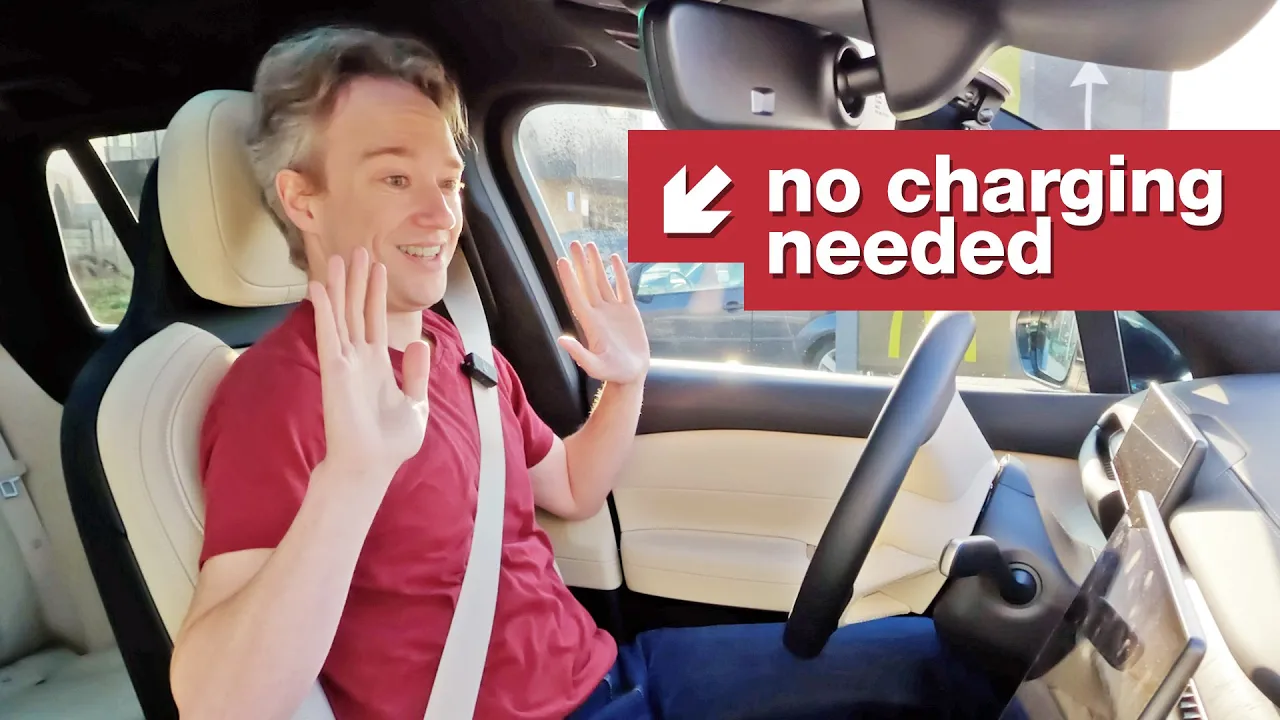
Tom Scott
While automated battery swapping solves urban charging bottlenecks and eases grid strain, front-loading massive debt to build out the proprietary network risks financial ruin unless rival automakers adopt the standard.
AI-assisted summary of A robot just swapped my electric car's battery — original source. Check the original for full context.
Source published:
Key ideas
- Chinese EV manufacturer Nio has deployed an industrial-scale automated battery swapping network, operating over 2,100 stations in China and 30 in Europe that handle upwards of 40,000 daily swaps. (0:00)
- The swapping process is largely autonomous: after driver confirmation, the car reverses itself into the bay while robotic systems unbolt and replace the depleted chassis battery in minutes. (1:14)
- Compared to high-power fast charging hubs, automated swap stations require roughly one-third of the land footprint and one-third of the grid connection capacity while doubling as energy storage for frequency balancing. (1:14)
- Despite strategic partnerships with automakers like Geely and Changan, Nio faces immense capital costs and ongoing financial losses from maintaining physical bays and spare battery inventory. (3:43)
Detailed notes
## Background Published by Tom Scott on YouTube on December 11, 2023, this video examines Chinese automaker Nio's operational alternative to conventional EV charging: swapping out an electric car's depleted battery pack for a fresh one in minutes. According to the description, Scott borrowed one of Nio's vehicles to independently investigate how the automated swapping network functions in practice.
## TL;DR Tom Scott examines Nio's automated Power Swap stations, shifting from initial skepticism toward an infrastructure already operating at industrial scale across China and parts of Europe. Once positioned, the car autonomously reverses into a compact bay where robotic machinery beneath the floor unbolts and exchanges the battery pack in roughly the time it takes to fill a petrol tank. Built around a 'Battery as a Service' leasing model, the system solves charging constraints for dense high-rise city dwellers while placing less peak strain on the electrical grid than traditional fast chargers. However, high capital costs, proprietary vehicle engineering, and ongoing corporate financial risks leave the system's long-term commercial future an unresolved gamble.
## Atmosphere & style The presentation carries Tom Scott’s signature tone of grounded curiosity and thoughtful inquiry, pairing accessible engineering journalism with moments of quiet amazement. There is an engaging emotional contrast between his initial dismissal of the concept as an impractical prototype and the surreal, sci-fi reality of sitting calmly inside the cabin while unseen automated machinery hums and bolts away beneath the chassis. The video balances this tactile sense of wonder with a sober, clear-eyed assessment of business balance sheets and the historically volatile nature of electric vehicle infrastructure.
## Bulletin - [00:00](https://www.youtube.com/watch?v=hNZy603as5w&t=0s) Chinese EV manufacturer Nio has deployed an industrial-scale automated battery swapping network, operating over 2,100 stations in China and 30 in Europe that handle upwards of 40,000 daily swaps. - [01:14](https://www.youtube.com/watch?v=hNZy603as5w&t=74s) The swapping process is largely autonomous: after driver confirmation, the car reverses itself into the bay while robotic systems unbolt and replace the depleted chassis battery in minutes. - [01:14](https://www.youtube.com/watch?v=hNZy603as5w&t=74s) Compared to high-power fast charging hubs, automated swap stations require roughly one-third of the land footprint and one-third of the grid connection capacity while doubling as energy storage for frequency balancing. - [03:43](https://www.youtube.com/watch?v=hNZy603as5w&t=223s) Despite strategic partnerships with automakers like Geely and Changan, Nio faces immense capital costs and ongoing financial losses from maintaining physical bays and spare battery inventory.
## Key takeaways - [00:00](https://www.youtube.com/watch?v=hNZy603as5w&t=0s) Traditional EV fast charging takes approximately 30 minutes to reach 80%, remaining a key friction point compared to 3-4 minute fossil fuel fill-ups. - [00:00](https://www.youtube.com/watch?v=hNZy603as5w&t=0s) Nio's automated battery swapping infrastructure has moved beyond experimental pilot programs into proven commercial scale. - [00:00](https://www.youtube.com/watch?v=hNZy603as5w&t=0s) The network handles more than 40,000 swaps daily in China, scaling to over 60,000 per day during national travel holidays. - [01:14](https://www.youtube.com/watch?v=hNZy603as5w&t=74s) Drivers authorize the swap via touchscreen, after which the vehicle autonomously navigates, steers, and reverses into the docking station. - [01:14](https://www.youtube.com/watch?v=hNZy603as5w&t=74s) The operational architecture relies on Battery as a Service (BaaS), allowing drivers to lease batteries rather than purchase them outright. - [01:14](https://www.youtube.com/watch?v=hNZy603as5w&t=74s) Swap stations recharge inventory slowly and steadily, requiring one-third the physical footprint and one-third the electrical capacity of comparable fast-charging plazas. - [01:14](https://www.youtube.com/watch?v=hNZy603as5w&t=74s) Station battery banks act as distributed grid assets, absorbing surplus power to support grid frequency balancing. - [01:14](https://www.youtube.com/watch?v=hNZy603as5w&t=74s) Battery swapping provides a practical charging alternative for dense urban centers like Shanghai where high-rise residents lack driveways or home chargers. - [03:43](https://www.youtube.com/watch?v=hNZy603as5w&t=223s) The current swap infrastructure is proprietary to Nio vehicles, though partnerships with Changan and Geely aim to establish a shared standard. - [03:43](https://www.youtube.com/watch?v=hNZy603as5w&t=223s) The business model requires massive upfront capital for stations and surplus battery inventory, contributing to ongoing substantial financial losses for Nio. - [03:43](https://www.youtube.com/watch?v=hNZy603as5w&t=223s) Long-term market viability remains uncertain as front-loaded debt strategies in capital-intensive infrastructure carry high risk.
## Detailed walkthrough ### [00:00](https://www.youtube.com/watch?v=hNZy603as5w&t=0s) Rapid Refueling and Proven Scale
One of the persistent arguments against electric vehicles has always been charging time. Even modern DC fast chargers require roughly thirty minutes to bring a battery up to 80% capacity under favorable conditions, whereas filling a conventional fuel tank with petrol or diesel takes merely three to four minutes. Tom Scott admits that upon first hearing of an automaker constructing automated stations where robotic machinery replaces an entire vehicle battery in minutes while the driver remains seated inside, he dismissed it as an impractical, pie-in-the-sky academic prototype. However, arriving in person reveals a fully operational, public commercial installation deployed by Chinese electric car manufacturer Nio. Tom explicitly clarifies that the showcase is not a sponsored advertisement; he reached out to the automaker independently, and they agreed to loan him a vehicle to test the experience firsthand.
Far from being an unproven pilot, the technology operates on an industrial scale across China and is expanding into Europe. A Nio representative explains that the infrastructure has already moved beyond experimental trials into widespread everyday use, managing tens of thousands of automated swaps per day and hitting intense peaks during national travel periods. As the Nio representative points out regarding the network's maturity: “We're not just piloting this, it's already proven at scale.”
- Nio operates more than 2,100 automated swap stations across China, targeting 2,300 operational locations by the end of the year. - The company entered the European market roughly two years prior and currently maintains 30 operational stations there. - In China, the network handles over 40,000 battery swaps every single day—averaging one swap every two seconds—with holiday rush peaks exceeding 60,000 daily swaps.
---
[01:14](https://www.youtube.com/watch?v=hNZy603as5w&t=74s) Automated Parking and Battery as a Service
Executing a swap requires remarkably little manual input from the driver. The motorist simply pulls up in front of the Power Swap station bay and presses the brake pedal as prompted by the car's automated voice interface. Once the driver taps the touchscreen to authorize the operation, the vehicle's onboard autonomous driving system takes full command of the steering, throttle, and alignment, reversing itself neatly into the compact enclosure while advising the occupants to keep all doors closed and stay off the steering wheel. Inside the station, mechanical equipment beneath the floor unbolts the depleted pack and fastens a fully charged replacement directly onto the chassis.
```mermaid flowchart LR accTitle: Nio Power Swap Workflow accDescr: Step-by-step progression from station arrival to completion of the automated battery exchange. subgraph Arrival ["1. Arrival"] A["Drive in front of station"] --> B["Press brake & confirm on screen"] end subgraph Docking ["2. Autonomous Docking"] B --> C["Car takes over steering & throttle"] C --> D["Vehicle reverses into swap bay"] end subgraph Swap ["3. Battery Exchange"] D --> E["Robotic system removes depleted pack"] E --> F["Fresh battery installed & secured"] end ```
Access to this ecosystem centers around an operational model known as "Battery as a Service" (BaaS). Rather than purchasing a battery pack outright as part of the vehicle's retail price, drivers lease the pack, paying an ongoing subscription fee for guaranteed access to fresh, healthy batteries whenever needed. Beyond driver convenience, the station architecture offers significant advantages for urban planning and electrical grids: because packs recharge steadily over time inside the hub rather than through high-surge vehicle plug-ins, the station consumes only one-third of the physical land footprint and one-third of the grid connection capacity compared to an equivalent multi-stall ultra-fast charging hub. Furthermore, the facility serves as a distributed grid asset, soaking up surplus electrical supply to perform frequency balancing when power demands fluctuate.
While Tom notes that long road trips in standard EVs never bothered him personally—since his own desire for driving breaks naturally matches regular charging intervals—the system solves an acute challenge in ultra-dense cities like Shanghai. In high-rise environments with more than 20 million residents, the overwhelming majority lack private driveways, designated garages, or curb space to install wall sockets. Explaining the urban necessity of the service, the Nio representative notes: “Power Swap offers a great opportunity to just leave your home, drive to the station, swap your battery and continue your trip.”
- Customers can purchase the car outright and lease the battery pack, buy both vehicle and battery, or subscribe flexibly to both together under an all-inclusive plan. - The swap station draws power at a steady, lower rate, eliminating high peak loads and allowing it to perform grid-level frequency balancing by absorbing excess renewable energy.
---
[03:43](https://www.youtube.com/watch?v=hNZy603as5w&t=223s) Proprietary Locks, Grid Economics, and Financial Gambles
The primary limitation of the system remains hardware compatibility: the swap infrastructure functions exclusively with vehicles engineered specifically around Nio’s proprietary mechanical and electronic battery architecture. However, the company is actively pursuing wider industry adoption to transform its proprietary network into a universal standard, having already secured strategic collaborative agreements with major Chinese automotive conglomerates Changan and Geely Group. Nio is betting heavily on this model, with its spokesperson asserting: “If you take the whole economics, we do believe that this is better than just selling a car.”
Nevertheless, the long-term viability of battery swapping remains hotly debated among automotive analysts and financial markets. Constructing physical swapping bays loaded with spare multi-thousand-dollar battery inventories requires immense upfront capital, and Nio continues to post staggering financial losses while scaling out its footprint. Tom observes that while front-loading monumental debt to corner an infrastructure market is a playbook that has minted corporate giants in the past, it has ruined just as many. Evaluating the contradictory analyst forecasts, Tom concludes that certainty is impossible in an unpredictable landscape: “Predicting anything about electric vehicles is almost impossible: it's an industry filled with both radical inventions and broken promises.” Regardless of the business outcome, the sheer technological reality of sitting inside an ordinary passenger car while an automated robot silently swaps the entire drivetrain battery underneath remains a striking glimpse into the future.
## Notable quotes > [03:43](https://www.youtube.com/watch?v=hNZy603as5w&t=223s) Predicting anything about electric vehicles is almost impossible: it's an industry filled with both radical inventions and broken promises. — Tom Scott
## Mentioned Tom Scott, Nio, Changan, Geely Group, Power Swap, Battery as a Service, Shanghai, Europe, China
## Video description Nio is a Chinese auto maker that offers an alternative to charging: just swapping out the whole battery whenever you need it. I borrowed one of their cars. ■ Nio: https://www.nio.com/
Camera: Dion Huiskes https://feedbuilders.nl/ Editor: Julian Domanski https://www.juliandomanski.com/
🟥 MORE FROM TOM: https://www.tomscott.com/ (you can find contact details and social links there too) ❓ LATERAL, free weekly podcast: https://lateralcast.com/ https://youtube.com/lateralcast/ 👥 THE TECHNICAL DIFFICULTIES: https://youtube.com/techdif
[Source](https://www.youtube.com/watch?v=hNZy603as5w)