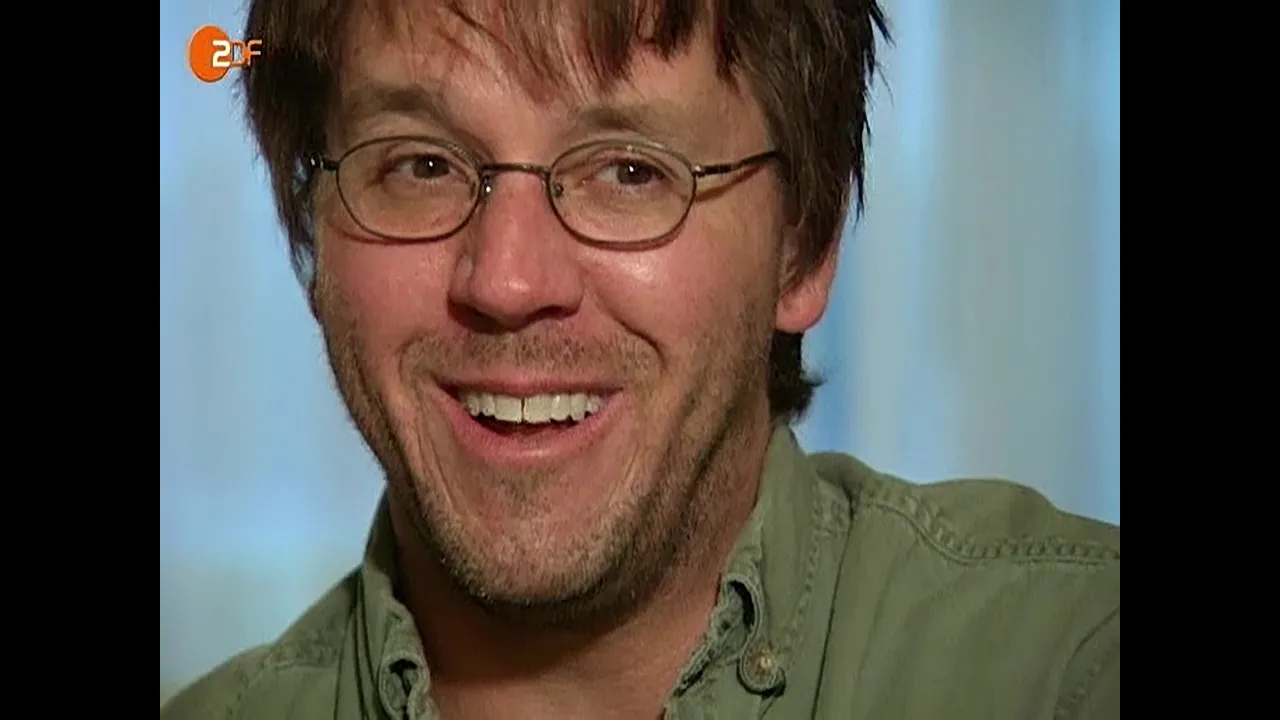
Wallace Warns US Consumer Addiction Enslaves Citizens and Fuels War
Manufacturing Intellect
American commercial capitalism trains citizens to obey every impulse and dread silence, creating an addiction to constant entertainment that erodes democratic engagement and drives destructive foreign policy.
David Foster Wallace identifies modern consumer capitalism as an engine of continuous self-gratification, arguing that viewing impulse satisfaction as life's primary goal produces a visceral dread of quietness and solitude. (29:54)
Addiction functions as misplaced religious worship under modern market logic, catalyzed by a catastrophic psychological shift where individuals mistake what they want for what they need. (38:10)
Literature possesses a singular temporal magic that lets readers leap over the wall of self to inhabit another consciousness, providing an intimate communion impossible through flat broadcast media. (50:02)
In a post-9/11 landscape, Wallace expresses deep concern that domestic comfort and unaddressed fear drive aggressive foreign policy and hyper-individualistic consumption rather than collective solidarity. (75:58)
Detailed notes
## Background
Published on YouTube by the Manufacturing Intellect channel on December 25, 2018, this video presents the full, unedited 2003 interview David Foster Wallace gave to the German television station ZDF. According to the page description, the discussion explores Wallace's literature and broader reflections on modern culture, highlighting his thoughts on the pervasive dread of silence, reading habits, and the relentless pace of contemporary media.
## TL;DR
In this extensive conversation, Wallace examines the core themes of his novel Infinite Jest alongside his critique of American consumer culture, tracing how misplaced worship and the relentless pursuit of instant gratification foster profound spiritual malaise. He unpacks the psychological mechanics of addiction, the anxiety generated by television and remote-control entertainment, and the growing cultural hostility toward quiet, difficult art. Turning toward literature, Wallace describes serious reading as a rare, transformative medium that allows individuals to transcend the wall of self and inhabit another mind. Finally, he reflects on post-9/11 geopolitical anxieties, warning that true rebellion in modern society is not spectacular or cinematic, but rather quiet, solitary practices like disciplined reflection, reduced consumption, and intellectual effort.
## Atmosphere & style
The interview has a strikingly raw, unvarnished, and introspective texture, stripped of conventional broadcast polish. Wallace appears visibly nervous, self-conscious, and physically restless—frequently wiping away sweat, shifting in his seat, and openly worrying about how his complex musings will translate on camera or survive the editing process. His rapport with the German interviewer alternates between playful self-deprecation, dialectical pushback—such as demanding she answer her own question first—and a deep, earnest grappling with existential dread, lending the viewing experience an intense, vulnerable intimacy that feels like eavesdropping on an intellectual in the midst of real-time, agonizing thought.
## Bulletin
- [29:54](https://www.youtube.com/watch?v=iGLzWdT7vGc&t=1794s) David Foster Wallace identifies modern consumer capitalism as an engine of continuous self-gratification, arguing that viewing impulse satisfaction as life's primary goal produces a visceral dread of quietness and solitude.
- [38:10](https://www.youtube.com/watch?v=iGLzWdT7vGc&t=2290s) Addiction functions as misplaced religious worship under modern market logic, catalyzed by a catastrophic psychological shift where individuals mistake what they want for what they need.
- [50:02](https://www.youtube.com/watch?v=iGLzWdT7vGc&t=3002s) Literature possesses a singular temporal magic that lets readers leap over the wall of self to inhabit another consciousness, providing an intimate communion impossible through flat broadcast media.
- [01:15:58](https://www.youtube.com/watch?v=iGLzWdT7vGc&t=4558s) In a post-9/11 landscape, Wallace expresses deep concern that domestic comfort and unaddressed fear drive aggressive foreign policy and hyper-individualistic consumption rather than collective solidarity.
## Key takeaways
- [01:16](https://www.youtube.com/watch?v=iGLzWdT7vGc&t=76s) Irony operates with deep ambiguity in modern culture: while capable of exposing absurdity, it often acts as an anesthetic reconciling subjects to their captivity.
- [05:23](https://www.youtube.com/watch?v=iGLzWdT7vGc&t=323s) All humans possess an innate impulse to worship, and denying spiritual devotion results in surrendering to counterfeit consumer gods such as wealth, fame, drugs, or entertainment.
- [10:37](https://www.youtube.com/watch?v=iGLzWdT7vGc&t=637s) Commercial advertising and ambient culture train individuals into a temple of self-gratification that starves the human need to sacrifice for larger communities.
- [13:35](https://www.youtube.com/watch?v=iGLzWdT7vGc&t=815s) Popularized therapy culture and inner-child narratives risk trapping adults in perpetual emotional arrest and self-pity instead of mature responsibility.
- [16:42](https://www.youtube.com/watch?v=iGLzWdT7vGc&t=1002s) The cultural compulsion to satisfy every immediate impulse constitutes a modern form of slavery that leaves citizens ill-equipped to handle moral life.
- [20:48](https://www.youtube.com/watch?v=iGLzWdT7vGc&t=1248s) Genuine democratic citizenship requires tedious, unglamorous study; replacing boring civic responsibility with entertainment surrenders political power to money and TV ads.
- [29:54](https://www.youtube.com/watch?v=iGLzWdT7vGc&t=1794s) Reading requires sitting alone in a quiet room, a practice increasingly undermined by fast digital technologies and public environments hostile to silence.
- [41:25](https://www.youtube.com/watch?v=iGLzWdT7vGc&t=2485s) Television handheld remotes engineered a perpetual scanning anxiety by convincing viewers that better stimulation is always available elsewhere.
- [53:54](https://www.youtube.com/watch?v=iGLzWdT7vGc&t=3234s) Demanding, confrontational art intentionally disturbs the comfortable, in direct opposition to commercial entertainment that merely pacifies and distracts.
- [58:24](https://www.youtube.com/watch?v=iGLzWdT7vGc&t=3504s) Corporate book tours and media appearances turn serious writers into superficial performers, reducing complex literary thought to brief, unreflective soundbites.
- [01:07:57](https://www.youtube.com/watch?v=iGLzWdT7vGc&t=4077s) Upper-middle-class educated malaise stems not from unprecedented hardship, but from the paradox of receiving humanistic training only to be funneled into hollow corporate roles.
- [01:18:56](https://www.youtube.com/watch?v=iGLzWdT7vGc&t=4736s) Meaningful cultural rebellion in modern America will not be cinematic street theater, but quiet, solitary choices to consume less, turn off screens, and engage in sustained thought.
- [01:20:53](https://www.youtube.com/watch?v=iGLzWdT7vGc&t=4853s) Mass broadcast media must appeal to the lowest common denominator to remain commercially viable, whereas substantive culture requires fragmenting into dedicated niche audiences.
## Detailed walkthrough
### [00:00](https://www.youtube.com/watch?v=iGLzWdT7vGc&t=0s) Humor, Pain, and the Tradition of Black Humor
The interview opens with the interviewer asking whether humor can only truly emerge from sadness. David Foster Wallace pauses to consider the proposition, noting Ludwig Wittgenstein’s view that the deepest existential inquiries can only be approached through comedy: “I know that Wittgenstein believed that the most serious and profound problems and questions and issues could be discussed only in the form of jokes.” Wallace also references the American literary tradition of "black humor" from the 1950s and 1960s, characterizing it as sardonic and mournful.
Weighing the relationship between comedy and suffering, Wallace makes a careful distinction between the different psychological functions laughter can serve. Rather than treating all humor as identical, he observes that certain varieties simply provide an escape from distress, whereas other, more profound forms have the power to transfigure it. Sensing his own nervousness, Wallace notices himself beginning to sweat and asks if they can treat the interview as an open, mutual dialogue rather than a formal interrogation, explaining that a back-and-forth conversation makes it much easier for him to think.
[01:16](https://www.youtube.com/watch?v=iGLzWdT7vGc&t=76s) Thomas Bernhard, Irony, and the Caged Bird
The interviewer responds warmly to Wallace's request for a conversation, mentioning that his own master's thesis focused on the Austrian writer Thomas Bernhard. He describes how Bernhard suffered from chronic lung disease, lived in misery, and despised postwar Austria for what he saw as its pervasive Catholic fascism. Out of that profound bitterness and physical agony, Bernhard developed a musical, dark, and biting wit. The interviewer asks Wallace whether the humor he values in literature similarly originates from such bitterness and pain.
```mermaid
flowchart TD
accTitle: Dual Function of Irony
accDescr: A diagram illustrating Wallace's description of irony acting simultaneously as critique and anesthesia.
A["Irony / Dark Humor"] --> B["Wake-up Call"]
A --> C["Anesthetic"]
B --> D["Pretends to protest"]
C --> E["Reconciles subject to the status quo"]
E --> F["'Song of a bird that has come to love its cage'"]
```
Wallace admits that he cannot definitively answer for himself, though he acknowledges that humor frequently operates as a direct reaction to hardship. In contemporary American culture, however, he sees a troubling ambiguity in how irony operates. While irony can serve as a reductive political response, in popular commercial entertainment it often degenerates into a performative rebellion that conceals total capitulation. Summing up this double-edged nature, Wallace observes: “Someone once called irony the song of a bird that has come to love its cage.” Even while the bird sings about despising captivity, it ultimately enjoys remaining inside. Wallace stresses that irony in the United States has become deeply tricky because it alternates unpredictably between being an awakening wake-up call and a numbing anesthetic.
[03:28](https://www.youtube.com/watch?v=iGLzWdT7vGc&t=208s) The Disconnect Between Writer and Reader: Kafka's Laughter and *Infinite Jest*
When the interviewer asks how this dynamic between sadness and humor applies to Wallace’s own fiction, Wallace confesses that he rarely recognizes how funny his work is while composing it. His intentions often diverge dramatically from audience reception: “In the American version of 'Infinite Jest', I set out to write a sad book.” When readers subsequently embraced the novel and praised it primarily for being hilarious, Wallace was caught entirely off guard.
To illustrate this gulf between an author's internal experience and an audience's perception, Wallace points to his own literature classes, where he teaches Franz Kafka. He recounts the famous anecdote of Kafka laughing hysterically late at night while drafting his most terrifying, grotesque stories—so loudly that his neighbors complained. While there is undeniably comedy buried inside Kafka's nightmarish worlds, almost no reader experiences them with neighbor-waking hilarity. Because of this intrinsic disparity, Wallace suggests that authors are generally poor judges of the emotional tone of their own creations.
[05:23](https://www.youtube.com/watch?v=iGLzWdT7vGc&t=323s) Material Comfort, Peer Suicide, and the Theology of Addiction
Turning to the origins of *Infinite Jest*, Wallace recalls his initial impulse in the early 1990s to write directly about American sadness. He highlights the peculiar spiritual malaise afflicting the young American upper-middle class, where unprecedented material ease coexists alongside a pervasive, gnawing internal emptiness. The project crystallized after several acquaintances his own age died by suicide, making it painfully evident to him that a severe cultural crisis was unfolding.
Wallace explains how this pervasive misery ties into the core ideology of American consumer and media culture, which relentlessly preaches that individual self-interest and personal happiness are the ultimate goods:
> “There's an element in the book in which various people are living out something that, I think, is true, which is that we all worship and we all have a religious impulse. We can choose to an extent what we worship, but the myth that we worship nothing and give ourselves away to nothing simply sets us up to give ourselves away to something different.”
Traced to its Latin root *addicere*—which Wallace notes historically signified religious devotion, like that of novice monks—addiction in the novel reflects a misplaced worship. When society tells individuals that their sole duty is to gratify their own desires, people inevitably surrender themselves to counterfeit gods: narcotics, instant entertainment, wealth, or even the monastic, hyper-individualized discipline of competitive junior tennis.
[09:23](https://www.youtube.com/watch?v=iGLzWdT7vGc&t=563s) Technical Interruption: "Halfway Lucid" and Camera Twitching
As Wallace reaches the crux of his argument about the economy thriving on self-gratification, the shoot is abruptly halted by the sound technician, who announces that a camera battery has died and must be replaced immediately. Wallace groans in mock despair: “Shit, I was halfway lucid for a second there too.” He worries aloud whether his train of thought was lost, but the crew reassures him that the audio caught nearly everything right up to the final question.
A humorous, teasing exchange follows between Wallace and the crew:
- The sound man explains that filming Wallace is challenging because he constantly leans forward and backward out of the frame: “Because you're pontificating... In a very deep, spiritual way.”
- Wallace laughs at the word: “Oh, thank you. There's a nice word.”
- The crew notes that his physical movement comes from being intensely reflective and "twitchy."
- Wallace defends his physical agitation by emphasizing how demanding the interviewer's queries are, particularly when asked to reconstruct the mental state behind a novel he finished seven years earlier.
- Looking at the sound operator holding the gear, Wallace jokes that he would happily trade places with him on the spot.
[10:37](https://www.youtube.com/watch?v=iGLzWdT7vGc&t=637s) The Engine and Temple of Self-Gratification
Once the battery is replaced, the interviewer asks how children internalize the idea that personal gratification is the only metric of a successful life. Wallace clarifies that this lesson is never taught explicitly; parents do not sit their children down and instruct them to be selfish. Rather, it functions as an ambient, insidious drumbeat broadcast through advertising, television, and consumer culture.
Wallace reflects on how the nation presents itself to the rest of the world: “This is one enormous engine and temple of self-gratification and self-advancement.” While the machine functions with extraordinary technical and economic efficiency, Wallace argues that it starves the human spirit, failing to nourish the instinctual human need to sacrifice for and commit to entities larger than the self.
Addressing European perceptions, Wallace observes that foreign critics often reduce America to a simplistic caricature of a gigantic shopping mall populated by mindless credit-card-wielding consumers. Yet, even though that stereotype flattens a complex reality full of paradoxes, Wallace grimly concedes that it captures something fundamentally accurate about the country's prevailing ethos. He notes with visible disappointment that, particularly in light of the federal midterm elections that took place just days earlier on Tuesday, the cultural fixation on hyper-individualism and consumerism appears to be worsening rather than improving.
[13:35](https://www.youtube.com/watch?v=iGLzWdT7vGc&t=815s) Shared Western Paradoxes and Generational Arrest
Wallace and the interviewer reflect on the malaise affecting wealthy Western industrial nations, noting that while the specific symptoms differ—the United States wrestling with deep-seated racial tensions and Germany managing the reunification and absorption of the East—the underlying intellectual and societal stagnation feels shared. Wallace bows out of direct political debate with a laugh, noting that it is simply too upsetting. Turning to the themes of Wallace's fiction, the interviewer recalls an earlier statement where Wallace expressed a desire to write about the specific troubles of his generation. Wallace, noting that he is now forty years old and was born in the early 1960s, explains that his generation persistently views itself as children rather than adults:
> “I think my generation tends to think of itself as children still and as people with parents and I remember wanting to do something about what would be the situation of our children.”
The interviewer connects this perpetual childhood to a story in *Brief Interviews with Hideous Men*, where an aggrieved speaker fixates on themes of women and children. Wallace explains that this rhetorical trope—the wounded inner child, nursing unresolved interior pain—stems from a strain of pop psychology in the United States. He describes it as a popularized Freudianism trapped in its own paradoxical cycle: the more people are trained to inventory, dwell on, and resent childhood deprivations, the more they become locked in perpetual anger and frustration, remaining psychological children indefinitely. The character in that story, Wallace notes, was intended as an embodiment of the most toxic, painful elements of this American self-help culture.
[16:42](https://www.youtube.com/watch?v=iGLzWdT7vGc&t=1002s) The Compulsion to Obey Desires as a Form of Slavery
When the interviewer observes that this refusal to grow up and accept life on its own terms has spread to Europe, Wallace offers a preliminary caveat about the difficulty authors have discussing the themes behind their work directly. He notes that the core ideas in novels are often impossible to articulate in straightforward question-and-answer exchanges without sounding reductive, which is precisely why writers turn to fiction in the first place. He observes that growing up is genuinely difficult and unappealing because it involves duty and self-denial. American culture, meanwhile, subjects young people to fundamentally contradictory imperatives: a traditional streak of moralism praises civic duty, maturity, and family life, while corporate consumerism relentlessly appeals to selfishness and immediate pleasure because that is how merchandise gets sold.
Wallace points out that an economic engine engineered solely to sell products and sustain growth does not translate into a healthy framework for educating children or teaching human beings how to live meaningful lives. Unconstrained indulgence is often mistaken for autonomy, but Wallace views the inability to resist immediate impulses as a trap:
> “That feeling of having to obey every impulse and gratify every desire. It seems to me to be a strange kind of slavery.”
The interviewer agrees, noting that European societies have largely imported the same ethos: individuals are urged to prioritize only their personal gratification, shunning boring people or anyone in need of help. Wallace agrees that while this mechanism functions brilliantly to run an economy and move merchandise off the shelves, its spiritual and relational failure modes are far harder to address in public conversation.
[20:48](https://www.youtube.com/watch?v=iGLzWdT7vGc&t=1248s) The Death of Citizenship and the Irony Trap
Asked to identify where this system fails, Wallace reluctantly invokes the neglected concept of being a "citizen," admitting with some embarrassment that he risks sounding like an old-fashioned grandfather. True citizenship, he argues, requires investing effort to understand national history, analyze how the political apparatus works, and study political candidates through extensive, often boring reading. When citizens abandon that tedious work in pursuit of entertainment, an insidious political feedback loop takes hold: elections are won by whoever raises the most capital for television advertising; victorious candidates become beholden to wealthy benefactors; and the resulting institutional corruption alienates voters even further, dissuading them from civic participation altogether.
```mermaid
flowchart TD
accTitle: The Degradation of Citizenship Cycle
accDescr: A cyclical chart showing how the desire for effortless entertainment erodes democratic participation and drives political corruption.
subgraph PoliticalConsequences["Systemic Corruption"]
B --> C["Candidates with the most<br/>donor money win elections"]
C --> D["Politicians become beholden<br/>to major donors"]
end
subgraph VoterApathy["Disillusionment Loop"]
D --> E["Visible political corruption<br/>disgusts electorate"]
E --> A
end
```
Wallace recalls having a primary school class explicitly titled "citizenship," which taught why voting matters and why citizens should not simply pick the best-looking candidate on television. Voicing these views makes him feel self-conscious, because speaking like a lecturing elder makes one an immediate target for mockery in modern culture:
> “It would be very easy to make fun of what I'm saying and I can hear in my head a voice making fun of this stuff as I'm saying it.”
He identifies this internal cynical voice—the instinctive defense mechanism of whispering that sincere moral conviction is uncool, pointless, and "all bullshit"—as the defining paradox of any reasonably intelligent modern Westerner.
[23:34](https://www.youtube.com/watch?v=iGLzWdT7vGc&t=1414s) Marketing Existential Dread and the Split in Literature
Wallace explains that this internal conflict between knowing what is good and succumbing to easy indulgence generates continuous unease and unhappiness. Yet this very distress feeds the market: advertisers exploit the consumer's inner void by offering commercial products and packaged experiences as immediate cures. In economic terms, Wallace describes this dynamic as an artificially induced inelasticity of demand, where individuals compulsively consume regardless of price to soothe their spiritual vacuum. This insular logic, he adds, extends outward into the American government's arrogant, disdainful posture toward the rest of the world, mirroring the selfish messages the culture feeds itself domestically.
The interviewer asks whether this obsession with passive entertainment has also compromised literature, arguing that serious modern readers demand to be constantly entertained and refuse to endure boredom or intellectual strain. Wallace gently pushes back, noting that while the interviewer recently spoke with Michael Crichton, American literature remains bifurcated:
> “There's a real split in U.S. literature between commercial literature, novels like Crichton writes, Stephen King, Tom Clancy, who are the other big... Grisham.”
Wallace acknowledges that while blockbuster commercial fiction commands enormous sales and is often quite good, there remains a persistent enclave in America—perhaps 500,000 to a million educated readers—who have been trained to appreciate the distinct pleasures of arduous, demanding work in serious literature, art, and music.
- Key commercial bestsellers cited by Wallace: Michael Crichton, Stephen King, Tom Clancy, and John Grisham.
- Estimated audience for demanding, serious literature in the United States: roughly 500,000 to 1,000,000 readers.
[26:51](https://www.youtube.com/watch?v=iGLzWdT7vGc&t=1611s) "Serious Stuff" vs. Mass Culture
David Foster Wallace reflects on his own cultural footprint, noting that he holds very little power or widespread significance in American life. He compares his standing as an author of demanding literature to contemporary classical music: an art form appreciated by a small audience that is either educated for it or personally inclined to put in the requisite mental labor, but one that is effectively nonexistent when weighed against the massive economic, commercial, and cultural clout of rock and roll or hip-hop. He suggests that while past generations of American schooling may have been more rigorous—teaching children that enduring difficult, tedious tasks often leads to deep satisfaction—serious, challenging art has always occupied an isolated fringe.
When asked what might solve this dilemma, Wallace turns the question back around to the interviewer, asking why anyone should care what an author thinks and pointing out that they inhabit the same contemporary cultural climate. The interviewer responds by bringing up Germany's prominent literary figure, Marcel Reich-Ranicki—widely dubbed the "Literary Pope"—who serves as an arbiter of taste on television. The interviewer explains that while Reich-Ranicki is an insightful reader, his overriding commandment is that literature must never, under any circumstances, be boring. The interviewer expresses unease with this premise, worrying that elevating anti-boredom to the supreme virtue is a fundamental cultural error.
Wallace summarizes the enduring plight of demanding art:
> “I think probably American education used to be a little bit better and a little bit more difficult and children had no choice but to realize that there were certain things that were hard and involved a certain amount of drudgery that were actually very satisfying at the end of it, but for the most part I think in the U.S., people who have been doing 'serious stuff' which is harder and stranger, have always played to a much smaller audience.”
---
[29:55](https://www.youtube.com/watch?v=iGLzWdT7vGc&t=1795s) The Dread of Silence and the Hostile Culture
Wallace distinguishes between being mildly bored and a far deeper, existential boredom linked to modern life. Reading requires an individual to sit alone in absolute quiet, a condition that provokes a visceral sense of dread even in intelligent people. He observes that modern American public spaces systematically eradicate stillness by piping in continuous, terrible background music, reflecting a broader refusal to ever experience quiet. Wallace connects this sensory bombardment to a consumerist ethos: when life is framed entirely around immediate self-gratification and relentless motion, the internal human capacity for sustained reflection and quiet goes starved. This starvation manifests physically as an internal anxiety or dread.
```mermaid
flowchart TD
accTitle: The Cycle of Sensory Overstimulation
accDescr: A flowchart illustrating how modern cultural speed and constant gratification suppress our capacity for silence and generate existential dread.
subgraph Culture["Modern Culture of Speed"]
A["Culture of Immediate Gratification & Speed\n(Internet, fast media, continuous motion)"]
B["Eradication of Public Stillness\n(Piped music, 500 TV channels)"]
end
subgraph Psyche["The Internal Impact"]
C["Feeding the Stimulus-Hungry Self"]
D["Starving the Quiet Self\n(Capacity for sustained, deep attention)"]
E["Somatic Dread & Intolerance of Silence\n(Inability to read, look at art, or be alone)"]
end
A --> C
B --> C
C --> D
D --> E
E -->|"Demands more distraction"| A
```
He notes that the rapid rise of computer and internet culture has intensified this hostility toward patience, making it increasingly difficult to ask people to sit with a demanding book, a complex piece of music, or a painting for an hour. While acknowledging the classic idiom "going to hell in a handbasket" and wondering aloud whether every aging generation simply repeats this complaint about cultural decline, he still feels an undeniable acceleration toward impatience.
Describing the internal conflict brought about by constant distraction, Wallace observes:
> “And, to me, I don't, I don't know that I can defend it, but that seems to me to have something to do with when you feel like the purpose of your life is to gratify yourself and get things for yourself and go all the time, there's this other part of you that's the same part that can kind of, is almost hungry for silence and quiet and thinking really hard about the same thing for maybe half an hour instead of thirty seconds, that doesn't get fed at all.”
---
[32:43](https://www.youtube.com/watch?v=iGLzWdT7vGc&t=1963s) The Depressed Person and Parasitic Relationships
The discussion shifts to Wallace's short story "The Depressed Person" from his collection *Brief Interviews with Hideous Men*. Wallace jokes about the interviewer's fixation on that particular piece, confessing with a smile that it is the one story he actively dislikes discussing because he found the main character deeply unlikable. The interviewer shares a personal parallel: a close young female friend who has multiple sclerosis calls him regularly, launching instantly into exhausting, hours-long monologues about her treatments, medications, and hospital visits. The interviewer admits to feeling immediate dread upon seeing her name—secretly lamenting the loss of his free time—and asks Wallace whether feeling such resentment makes him a terrible person.
Wallace assures the interviewer that his reaction is entirely human, sharing a parallel story about a close friend of his who endured a sequence of staggering tragedies: losing her mother, father, and sister to cancer in the span of three years, followed by her best friend dying of AIDS in San Francisco. Wallace admits that his heart sank whenever she called, simply because life is hard and human instinct favors comfort:
> “I'd rather drink my chocolate milk and read a comic book than hear about unpleasant stuff.”
He points out that the fictional protagonist of "The Depressed Person" represents a far more toxic, narcissistic psychological dynamic. Unlike people facing genuine external illnesses who openly share their grief, the depressed protagonist preemptively apologizes for burdening her friends, smothering conversations under an agonizing second layer of self-loathing. She hates herself beforehand to beat the listener to it, locking both parties into an inescapable loop of performative narcissism.
- Wallace confirms that he broke his usual artistic rule of empathizing with his protagonists: "It's usually really bad not to like the main character of a story. And I haven't done many where I didn't, but this one I didn't like."
- He adds that the character's internal logic was airtight: "She would've predicted that I didn't like her."
---
[36:58](https://www.youtube.com/watch?v=iGLzWdT7vGc&t=2218s) Television and the Architecture of Entertainment
The interviewer pivots to Wallace's personal consumption of entertainment and its portrayal in his novel *Infinite Jest*. Wallace reveals that he does not own a television set in his house, making a self-deprecating admission about his lack of willpower: if he has a TV, he will watch it compulsively all day long, so he restricts his viewing to visits at friends' homes.
The interviewer asks whether the lethal, hyper-addictive cartridge "Entertainment" in *Infinite Jest* was intended to mirror contemporary American television. Wallace clarifies that "TV" encompasses an expansive media ecosystem—ranging from network broadcasting, cable, and 500-channel satellite feeds to videotapes and DVDs. In terms of the actual visual material one consumes while staring at a screen, Wallace argues that the fictional world of *Infinite Jest* is not substantially different from reality, but rather an extrapolation of America's increasingly fragmented, highly available entertainment technologies.
Wallace acknowledges his own vulnerability to media addiction:
> “Because if I have a TV, I will watch it all the time. So there's my little confession about how strong I am at resisting stuff.”
[38:10](https://www.youtube.com/watch?v=iGLzWdT7vGc&t=2290s) Drugs, Capitalism, and the Shift from Want to Need
The interviewer revisits the mechanics of entertainment in *Infinite Jest*, noting the setup where material is broadcast or delivered on cartridges, though David Foster Wallace admits with a chuckle that he would have to look back at the text because he wrote it roughly seven years earlier and its economic systems were probably not entirely realistic. The interviewer then suggests a central psychological pattern in the novel: characters pursuing a state of amnesia or self-forgetting. She cites drug users, viewers mesmerized by entertainment cartridges, and a female character who injured herself not out of a desire to inflict pain, but because she simply wanted the internal suffering to stop. Wallace acknowledges that this desire for escape is fundamental:
> “Part of the allure of both drugs and entertainment is escape from my problems and my life and having to be stuck in here.”
While pretending to be James Bond works in the short term, Wallace emphasizes that it fails completely as a permanent way of life. When the interviewer presses him about the prevalence of drug addiction in his fiction, Wallace points out that the book does not glamorize getting high; rather, it primarily focuses on a halfway house where people who have used drugs for a decade try to stop and begin losing their minds precisely because their suppressed feelings are suddenly flooding back.
Expanding on the wider cultural appeal of substances, Wallace links addiction directly to market ideology, explaining that it represents an extreme, logical outcome of consumer culture:
> “It seems to me to be, and this isn’t a very original thing to say, it’s a pretty natural extension of corporate capitalist logic, which is, I want to feel exactly the way I want to feel, which is good for exactly this long and so I will exchange a certain amount of cash for this substance And I will do it, but it’s all of course a lie, because the control gradually goes away and it stops being that I want to do it, it becomes that I feel I need to do it and that shift from, I want something, to, I feel I need it, is a big one.”
Reflecting personally on that distinction, Wallace remarks, “Most of the problems in my life have to do with my confusing what I want and what I need.”
```mermaid
flowchart TD
accTitle: The Logic of Substance and Entertainment Addiction
accDescr: Diagram illustrating the shift from consumer choice to addiction and loss of control.
subgraph MarketPromise["Corporate Capitalist Logic"]
A["Desire for Control:<br>'I want to feel good for X duration'"] --> B["Commercial Exchange:<br>Cash for substance or media"]
end
subgraph Habituation["Loss of Agency"]
B --> C["Temporary Relief / Self-Forgetting"]
C --> D["Erosion of Control"]
D --> E["The Fatal Shift:<br>From 'I want' to 'I need'"]
end
subgraph Reality["The Aftermath (Halfway House)"]
E --> F["Abstinence / Reality Returns"]
F --> G["Resurfaced Pain & Dread"]
end
```
---
[41:25](https://www.youtube.com/watch?v=iGLzWdT7vGc&t=2485s) The Anxiety of the Remote Control and the Trap of Constant Amusement
The interviewer describes the disorientation of watching American television—commercial interruptions, fragmented previews showing material she feels she has already seen, and an ambient pressure that feels maddening. Wallace agrees, tracing this agitation directly to the invention of the handheld remote control. He confesses that he cannot keep a television set in his home because of a compulsive anxiety it triggers:
> “And one of the reasons I can’t own a TV is I’ve started having this thing where I become convinced there’s something really good on another channel and that I’m missing it. And so instead of watching, I’m scanning anxiously back and forth for this thing that I think I want, that I don’t even know what it is.”
He diagnoses the misery of modern viewing as an overwhelming abundance of high-grade entertainment interacting with a “sick little head” convinced that a marginally better experience is waiting on the next channel. The tipping point arrived when changing the feed stopped requiring the physical effort of standing up from the couch: “You just had to move your thumb and change it. That’s when we were screwed.”
After a self-deprecating aside where Wallace jokes that 90% of their conversation will be left on the cutting room floor because it will not make sense, the interviewer asks whether society must actively fight against entertainment. Wallace clarifies that the problem is not that amusement is inherently evil, but rather the underlying philosophical entitlement:
> “But a model of life in which I have a right to be entertained all the time seems to me not to be a promising one.”
Wallace points out the central paradox: modern entertainment is exceptionally compelling. If his own television interview were airing on an American network against Pamela Anderson running along a beach or a hilarious comedy, Wallace admits an audience would obviously choose the latter. This creates an impossible strategic catch-22 for any critique:
- **The Insular Path:** Directing complex arguments only to intellectual viewers who have the patience to listen reaches only those who are not enslaved by mass culture in the first place.
- **The Co-opted Path:** Packaging an attack on entertainment so that it is entertaining in order to attract a mass audience means immediately surrendering to the exact medium being opposed.
---
[45:15](https://www.youtube.com/watch?v=iGLzWdT7vGc&t=2715s) Tennis, Tactical Chess, and Distant Combat
The discussion pivots toward athletics and *Infinite Jest*, which is set largely inside the Enfield Tennis Academy. When the interviewer notes that Wallace was once a skilled player, he modestly corrects her: he was “somewhat good” and played intensely as a kid, but was not truly great. He chose tennis as the novel's backdrop primarily because it was the single sport he understood with enough technical depth to articulate why it is aesthetically beautiful. Moreover, its formal architecture—two strictly bounded physical spaces exchanging an object back and forth across a divide—mirrored the structural themes of the novel.
Wallace describes tennis as an intricate hybrid of intense physical labor and pure mental geometry:
> “Boris Becker didn’t just come up and hit an ace. What Boris Becker — and I think he’d learned this from McEnroe — was really good at hitting the forcing serve that made you hit a weak return that let him come into the net and put the next shot away.”
Like grandmasters in chess, elite tennis players anticipate four or five moves ahead, orchestrating tactical sequences rather than relying on raw force. Yet tennis retains a severe, zero-sum combativeness: “If you and I are playing, if I win, you lose.” Wallace contrasts this dynamic with boxing:
- **Boxing:** Violent physical confrontation where two bodies collide in intimate proximity.
- **Tennis:** Combat waged at a cool, psychological distance. Opponents stand seventy-five feet apart across an empty expanse, channeling their hostility through the flight of a tiny, high-velocity projectile.
When the interviewer brings up the mathematical nature of the game and references a character named Schtitt, Wallace laughs. He confirms that while "Schtitt" sounds vaguely Germanic to American ears, it is certainly not a real German surname, acknowledging dryly that the coach is "not the subtlest character in there."
---
[48:59](https://www.youtube.com/watch?v=iGLzWdT7vGc&t=2939s) Turning the Tables: What Literature Can Do
The interviewer begins to consult her notes to pose a broad philosophical inquiry: "So, what is literature able to do that other—"
Spotting the prompt on her sheet, Wallace abruptly interrupts with a grin, turning the tables on her before she can finish. He playfully demands that she take the question first, challenging her to explain what literature can accomplish that other media cannot. As she hesitates under the pressure, Wallace teases, “It’s not so easy, is it?”
Laughing, the interviewer concedes that it is difficult and defers back to him, joking that he is far more intelligent than she is. She recalls an earlier interview where Wallace suggested that the purpose of genuine art is to make people feel less alone in the world. She confesses that she is deeply hooked on that exact quality in reading—finding solace when a book breaks through personal isolation—and notes that for her, the greatest literature possesses an intensely musical resonance.
[50:02](https://www.youtube.com/watch?v=iGLzWdT7vGc&t=3002s) The Musicality of Literature and Inhabiting Other Minds
The conversation opens with the interviewer reflecting on reading Thomas Bernhard, noting that as Bernhard became sicker throughout his life, his words became simpler, carrying a musical cadence, philosophical weight, and a feeling of not being alone. David Foster Wallace laughs and suggests they simply use her words instead of his own: “Why don't - can we just put that in? That's a better answer to the question than I could have given.” When pressed to give his own response, Wallace agrees that literature has a deeply musical dimension, pointing out that both forms rely on patterns of meaning unfolding linearly through time. Unlike standing before a painting or sculpture—where the viewer actively chooses where to look and for how long—music and film dictate the temporal flow entirely. Reading occupies a peculiar intermediate space: while the reader moves through a linear timeline, they retain internal mobility. If a reader encounters a paragraph they love, they can stop and reread it, navigating time on their own terms.
```mermaid
flowchart TD
accTitle: Comparison of Temporal Agency Across Media
accDescr: Visual flowchart comparing how visual art, film, music, and books manage audience time.
subgraph ScreenMusic["Music & Film"]
C["Linear Directed Time"] --> D["Audience must surrender control"]
end
subgraph Literature["Literature"]
E["Bound by Linear Time"] --> F["Reader Mobility: Pause, Reread, Inhabit"]
end
```
Wallace explains that the true, singular magic of serious reading lies in transcending existential isolation. He gestures around the room, noting that although the four people gathered there seem perfectly pleasant, none of them can truly know what is happening inside another person's mind. For Wallace, genuine literature acts as a vehicle to breach this isolation:
> “There's a way for me - I'm talking more as a reader - that when I'm reading something that's good and that's real I'm able to jump over that wall of self and inhabit somebody else in a way that I can't.”
This connection provides profound reassurance. When a reader discovers a character or author articulating private, terrifying thoughts that the reader feared were uniquely wrong with themselves, it creates an intense communion and empathy. Furthermore, it offers access to the mind of the author in a manner ordinary conversation cannot match. In contrast, while Wallace acknowledges that watching television is far easier, he considers it an inherently lonelier medium. Watching flat images of attractive people on a flat screen can never replicate the miraculous experience of living inside another human being's skin.
---
[53:54](https://www.youtube.com/watch?v=iGLzWdT7vGc&t=3234s) Confrontation, Escapism, and the Value of Difficulty
When the interviewer asks if this literary communion is ultimately about comfort, Wallace pauses to recall an American writer who famously described literature's mission:
> “He said that his job is to comfort the disturbed and to disturb the comfortable.”
Wallace explains that inhabiting another mind is often deeply uncomfortable because the experiences an author explores are frequently the very traumas or neuroses the reader has not yet resolved. In Wallace's view, the fundamental division in art is not between mediums like literature and sculpture, but between art that offers escape from our daily lives and art that forces a direct confrontation with them. While escapism is enjoyable in small doses, confrontational art demands far more from the audience:
- **Demand and Economics**: Confrontational, demanding art is rarely a mass-market commercial success because it is difficult, less pleasant, and mentally taxing.
- **Skill and Cultivation**: Appreciating serious art requires learned skills, education, and effort, which Wallace notes inevitably entangles the issue with complex questions of social class.
- **Intrinsic Worth**: Despite these friction points, Wallace insists that both reading and writing remain deeply worthwhile human activities.
Catching himself sounding elevated, Wallace undercuts his seriousness with self-deprecating humor, joking that his answer sounded lucid for a brief stretch in the middle, but that he essentially spent ten times longer than the interviewer just to parrot back her own Bernhard point with exaggerated hand gestures.
---
[55:39](https://www.youtube.com/watch?v=iGLzWdT7vGc&t=3339s) The Paradox of the "Sweaty American" on Camera
Noticing the rising temperature in the room, Wallace jokes about sweating heavily in his chair. Declining an offer for water, he jokes that he is a "typical American" and proudly declares, “I'm proud to sweat on behalf of the USA.”
The interviewer shifts to a question from a faxed outline regarding a writer's fear of having their work and persona "banalized" or flattened by media promotion. Wallace checks his own copy of the fax, puzzled because his version ended before that section. When the interviewer explains the concept—how a writer's identity and literature are commodified during press cycles—Wallace immediately points out the absurd self-referential trap of the situation:
> “I see a paradox here. I'm going to talk about the difficulties of having to deal with the media, but I'm talking to the media.”
Wallace points out that when the program airs, viewers will simply see a sweaty man on camera whining about how hard it is for an author to be on camera, leading any sensible viewer to ask, "So why is the son of a bitch on camera?" Although the interviewer argues it is a legitimate personal conflict worth examining, Wallace stresses the inherent artificiality of the medium: while both participants pretend to share a private conversation and pretend the cameras are invisible, the glaring presence of the television lens remains the single most dominant, inescapable object in his field of vision.
---
[58:24](https://www.youtube.com/watch?v=iGLzWdT7vGc&t=3504s) Publishing Realities, Book Tours, and Promotional Compromises
Wallace breaks down the structural mechanics behind why authors submit to media promotional tours, outlining the trade-offs of the American publishing landscape:
```mermaid
flowchart TD
accTitle: Trade-offs in American Publishing Models
accDescr: Diagram illustrating the functional differences between non-profit and corporate publishing in the US.
A["Publishing Models in the US"] --> B["Small Non-Profit Presses"]
A --> C["Corporate Publishers"]
B --> D["Specialize in poetry & avant-garde fiction"]
B --> E["Limited budget and regional exposure"]
C --> F["National review coverage & foreign translation"]
C --> G["Literary fiction routinely loses money"]
G --> H["Aggressive author promotion & media rounds"]
H --> I["Free publicity to offset financial losses"]
```
Because literary fiction consistently loses money for corporate conglomerates, publishers send authors on multi-city tours to generate free press. An author flies into a city to read before 200 people at an independent bookstore, but the trip is leveraged to conduct radio, print, and television interviews that amplify awareness.
Wallace articulates two primary personal frustrations with this entire routine:
1. **Material Ill-Suited for Performance**: Wallace insists his prose is not written to "live on the breath." It lacks the pacing and overt punctuation needed for spoken recitation, and he considers himself a poor oral reader.
2. **The Inadequacy of the Q&A Format**: Standard interviews and post-reading Q&A sessions reward trivial, canned questions. Truly meaningful literary questions cannot be resolved in thirty-second soundbites; they require hours over a pot of tea or coffee, leaving him feeling fundamentally fraudulent whenever he participates in rapid public exchanges.
Ultimately, Wallace reveals that his presence on the program comes down to honoring relationships and professional obligations. He feels deeply indebted to his literary agent, to whom he "owes 25,000 favors." Moreover, having work translated abroad is exciting, and he holds the German publishing team in high regard. Despite his worry that his heavily idiomatic American English cannot genuinely translate into German—quipping dryly that this remark makes for a "great advertisement"—he undertakes the discomfort of television interviews simply to help his publishers sell enough copies to avoid taking a financial loss.
[01:02:38](https://www.youtube.com/watch?v=iGLzWdT7vGc&t=3758s) Bookstore Readings, Banalization, and Translation Anxieties
David Foster Wallace reflects on the commercial promotional apparatus surrounding literature, particularly the American phenomenon of bookstore readings. He confesses that while it is difficult to refuse doing them, “the whole going around and reading in bookstores thing, it’s turning writers into kind of penny-ante or cheap versions of celebrities.” Wallace points out that audiences rarely attend just to listen to the prose; instead, “they’re coming out to see what you look like and see whether your voice matches the voices in their head when they read.” He finds the entire performance superficial, calling it “icky” and wondering aloud if a German translation exists for that term.
Turning to the question of whether writing becomes “banal,” Wallace defines banality as something general, simplistic, superficial, and vapid. Choosing to write demanding literature comes with steep trade-offs:
```mermaid
flowchart TD
accTitle: The Literary Trade-off of Serious Fiction
accDescr: Diagram illustrating the drawbacks and specific benefits Wallace identifies when writing demanding literary work.
subgraph Sacrifices["The Commercial Cost"]
A["Write Demanding Work"] --> B["Earn Less Money"]
A --> C["Reach a Smaller Audience"]
end
subgraph Compensations["The Literary Reward"]
A --> D["Intellectually Matched Audience"]
D --> E["Readers who are as smart as the author"]
E --> F["Confidence against distortion or misunderstanding"]
end
```
Wallace explains that he does not worry about his readership banalizing or misunderstanding his work because he assumes they share his intellectual wavelength. He contrasts this dynamic with authors like Michael Crichton—a Harvard M.D. deliberately writing simplified prose for a mass audience—where he feels the author-reader relationship becomes warped.
His genuine anxiety, however, surfaces around foreign translations. As a self-described “control-freak” who wants dominion over every single word, Wallace worries deeply about how his idiom-dense American prose survives foreign rendering. When the interviewer reassures him that the German translators are deeply dedicated, Wallace appreciates the compliment but admits that reading a translation in the one foreign language he can comprehend was so radically disconnected from what he meant that he ultimately decided it is “just better to have it be done in languages I don't know.”
[01:05:21](https://www.youtube.com/watch?v=iGLzWdT7vGc&t=3921s) Existential Loneliness, Art as Communion, and Philosophical Jargon
The interviewer brings up Wallace's past discussion of "existential loneliness," remarking that as a reader, he actively searches for literature that offers testimonies to this condition. Wallace responds with self-conscious hesitation, questioning whether he actually used the phrase “existential loneliness,” though he validates the underlying experience. He describes this state as the fundamental, painful condition of being permanently trapped inside a single body and consciousness that can never, outside of conversation, inhabit anyone else's mind.
Wallace acknowledges that art provides an extraordinary bridge across this divide. While admitting he knows little about music, he notes that musical connoisseurs describe a unique purity through which a listener directly encounters a composer's emotional state. He generalizes this power to all serious art: “Probably, most of kinds of art have this magical thing of, for a moment, there's a kind of reconciliation and communion between you and me that isn't possible in any other way.”
Yet Wallace grows visibly squeamish about framing these ideas in lofty terminology. Having just heard the word "pontificate"—which he defines as speaking pompously about complex, abstruse matters—he notes that modern American culture makes him intensely self-critical:
- Hearing the word “existential” tempts him to roll his eyes and view it as merely a “big sexy philosophical term.”
- It becomes nearly impossible to discuss genuine human isolation openly because “all I can hear is being made fun of for how serious and boring and dull I'm being.”
- As the camera crew halts the conversation to change tapes, Wallace jokes about his self-consciousness, telling the crew, “Good luck editing,” and complimenting the German interviewer's accent over his own.
[01:07:57](https://www.youtube.com/watch?v=iGLzWdT7vGc&t=4077s) Education, the Paradox of Privilege, and Generational Malaise
After the tape change, the interviewer asks Wallace about an existential paralysis common among their educated peers in Germany: having had the best possible conditions and elite schooling, yet feeling incapable of doing anything meaningful with life. Wallace recognizes this identical paradox within the American professional class. In the United States, students attend prestigious institutions where they study liberal arts, classics, and philosophy focused on broadening the mind and honoring the nobility of the human spirit. Yet immediately upon graduation, they funnel into professional pipelines designed to train them to sue people or write marketing copy to convince consumers to purchase specific SUVs.
```mermaid
flowchart LR
accTitle: The Liberal Arts Educational Paradox
accDescr: Process tracing the trajectory of upper-middle-class students from broad humanistic education into narrow corporate roles.
A["Elite Liberal Arts Education<br/>(Philosophy, Classics, Broadening Mind)"] --> B["Specialized Professional Tracking<br/>(Corporate Law, SUV Advertising Copy)"]
B --> C["Material & Financial Success"]
C --> D["Disconnection from Core Humanistic Values"]
```
Wallace appreciates that his own profession, despite being lonely and anxiety-ridden, allows him to engage everything he has ever learned. He acknowledges the unique dilemma of the upper-middle class:
> “I know that there is, at least in America, an entire class of, and now, I'm talking about a very specific class here, I'm talking about upper and upper-middle-class kids whose parents could afford to send them to very good schools where they got very good educations, who are often working in jobs that are financially rewarding, but don't have anything to do with what they got persuasively taught was important and worthwhile in school.”
When prodded for an explanation, Wallace jokingly ties it to the theological concept of original sin in Genesis—the necessity of doing spiritually compromising work merely to earn money and survive as adults—before immediately asking the crew to cut the line for sounding too strange. Addressing the interviewer's invocation of *Infinite Jest* and youth alienation, Wallace clarifies that this is not classical Marxist alienation from the means of production. A factory worker without a college degree is unlikely to feel grateful that he lacks unused humanistic learning; he is likely just as spiritually malnourished by his labor. What truly defines their privileged generation, Wallace concludes, is not novel suffering, but an unprecedented capacity to intellectualize their discontent: “What you and I are part of is a class and generation that can be very articulate about what our complaints are and what we're feeling uneasy about.”
[01:13:46](https://www.youtube.com/watch?v=iGLzWdT7vGc&t=4426s) Post-9/11 Disquiet and American Geopolitics
The conversation turns toward the broader cultural trajectory of the United States. Noting the cultural obsession with entertainment alongside recent geopolitical shocks, the interviewer asks Wallace where he envisions America heading ten or twenty years into the future.
Wallace answers bluntly: “I don't know. I don't know. I'm scared.” He reflects on his youthful assumptions, admitting that he used to believe the political, cultural, and social corrections America needed would be triggered whenever an external cataclysm or misfortune shattered the nation's profound material comfort.
Instead, the events of recent years revealed a chilling reality. Wallace reflects on the emerging realization that American domestic comfort and international policy have cultivated an intense global hostility:
- The nation now faces undeniable proof that its way of life and foreign relationships have driven people abroad to an absolute hatred.
- Wallace observes with mounting dread that these adversaries actively want to kill Americans and possess the genuine capacity to succeed in killing a great many of them, transforming vague theoretical vulnerability into an acute, ongoing national crisis.
[01:15:58](https://www.youtube.com/watch?v=iGLzWdT7vGc&t=4558s) American Fear, Consumption, and the Post-9/11 Mindset
David Foster Wallace reflects on the mythological stories of the Great Depression that shaped his generation's childhood, where the prevailing narrative was that despite severe deprivation and hard times, everybody pulled together. In stark contrast, he observes that the modern American reaction to feelings of fear and insecurity is profoundly individualistic: people go out and buy massive, tank-like Sports Utility Vehicles designed to make the individual feel protected, even though these vehicles get four miles to the gallon. Wallace points out that this occurs in a country where gasoline is priced at perhaps one-fifth of what it realistically ought to be, remarking on the relative sanity in Europe regarding fuel taxation and consumption.
Simultaneously, Americans vote for leaders willing to venture overseas and potentially kill hundreds of thousands of civilians just to eliminate a handful of enemies. What troubles Wallace most is that almost nobody in the public sphere draws the connection between American consumption—such as driving habits—and global geopolitics. Instead, public rhetoric rapidly defaulted to simplistic narratives framing foreign adversaries as evil fanatics who hate American freedom. Rejecting this framing outright, Wallace asks rhetorically who actually hates freedom, arguing that people hate other people, not an abstract concept.
```mermaid
flowchart TD
accTitle: American Fear and Consumption Cycle
accDescr: A diagram illustrating how fear drives American consumption and military policy rather than self-reflection.
subgraph Mindset["Underlying Mindset"]
A["Insecurity and Fear"] --> B["Individualistic Defense: SUVs"]
A --> C["Simplistic Framing: 'They Hate Our Freedom'"]
end
subgraph Consequences["Global and Personal Impact"]
B --> D["Extreme Fuel Consumption"]
C --> E["Aggressive Foreign Policy"]
D --> F["Unacknowledged Global Friction"]
E --> F
end
```
Looking at the state of the nation, Wallace admits to an intense dread he has not felt since he was a young boy worrying about an intercontinental nuclear exchange between the United States and the Soviet Union during the Cold War. He confesses that he finds himself far more frightened of what America might do than of any foreign adversary, a realization he describes as a deeply bleak place to be. While he insists that Americans are not evil people, he argues that generations of sustained material comfort have left citizens entirely unprepared to value anything beyond their own ease, leaving it completely unknown how the public would cope if circumstances ever became genuinely harsh.
- Wallace states plainly: “Not since that, have I been this scared. And this is totally personally, but I'm more scared of us than I am of anybody else.”
- Wallace remarks dryly on his political candor during the interview: “Luckily, not a lot of Americans will see this in Germany.”
---
[01:18:56](https://www.youtube.com/watch?v=iGLzWdT7vGc&t=4736s) Quiet Rebellion vs. Spectacular Resistance
When the interviewer asks whether any avenues of rebellion remain available, Wallace confirms they exist, though not in the cinematic ways people commonly envision. While popular culture imagines rebellion as a dramatic, sexy spectacle—involving activists rappelling down urban buildings or facing clouds of tear gas—Wallace argues that meaningful rebellion in modern America is inherently quiet, solitary, and visually uninteresting.
He describes real resistance as choosing not to buy excessive goods, refusing to derive one's worldview from television broadcasts, and being willing to spend four or five hours independently researching candidates before an election instead of relying on political campaign commercials. Wallace contrasts the seductive, highly visible nature of violence, political corruption, saber-rattling, and the demonization of an entire religious faith with the unglamorous labor of quiet thought. True rebellion, he suggests, is sitting alone in a chair and seriously meditating on how one's everyday choices—such as the car one drives—impact how the rest of the world perceives America. He then deprecatingly brushes off his own analysis, calling himself just an ordinary, frightened writer living in California rather than a political philosopher.
- Wallace summarizes the nature of effective dissent: “My guess is the forms of rebellion that will end up changing anything meaningfully here will be very quiet and very individual.”
---
[01:20:53](https://www.youtube.com/watch?v=iGLzWdT7vGc&t=4853s) Mass Entertainment and the Necessity of Niche Fragmentation
The interviewer follows up by asking whether society can ever break free from its obsession with surface attractiveness and visual spectacle, noting Wallace's point that genuine rebellion is inherently unglamorous. Wallace notes the irony of discussing the tyranny of the visual while sitting in front of television cameras, explaining that there is nothing intrinsically immoral about enjoying things that are attractive or captivating.
Instead, the problem stems from the sheer economic scale of corporate entertainment. Because television and mass media require vast capital investments to produce, they must appeal to audiences of tens of millions to remain profitable. To capture such a colossal audience, media cannot cater to the complex, unique, and idiosyncratic interests that make individuals fully human, because those higher-order tastes vary drastically from person to person. Consequently, mass entertainment must target the lowest common denominator: the crude, basic instincts shared by virtually all human beings.
Wallace identifies these shared mass impulses as physical attractiveness, sex, crude and easy humor, and dramatic spectacle. He emphasizes that he is just as vulnerable to these base appeals as anyone else. Therefore, the only viable escape from the race to the bottom in mass culture is technological and structural fragmentation within the entertainment industry, mirroring the historical trajectory of American print magazines. Rather than relying on a handful of monolithic broadcast networks or magazines with tens of millions of subscribers, Wallace suggests a healthier future lies in a niche marketplace populated by thousands of targeted outlets serving smaller, dedicated communities of a few thousand people, allowing media companies to remain solvent without needing to flatten their content to satisfy the masses.
- Wallace explains the commercial logic of broad appeals: “The only way to get ten or twenty million people all interested in the same thing is to pitch your appeal very very low.”
## Notable quotes
> [01:20:53](https://www.youtube.com/watch?v=iGLzWdT7vGc&t=4853s) The only way to get ten or twenty million people all interested in the same thing is to pitch your appeal very very low. — David Foster Wallace
> [38:10](https://www.youtube.com/watch?v=iGLzWdT7vGc&t=2290s) Most of the problems in my life have to do with my confusing what I want and what I need. — David Foster Wallace
> [41:25](https://www.youtube.com/watch?v=iGLzWdT7vGc&t=2485s) But a model of life in which I have a right to be entertained all the time seems to me not to be a promising one. — David Foster Wallace
## Mentioned
David Foster Wallace, Ludwig Wittgenstein, Thomas Bernhard, Franz Kafka, Infinite Jest, Brief Interviews with Hideous Men, The Depressed Person, Michael Crichton, Stephen King, Tom Clancy, John Grisham, Marcel Reich-Ranicki, James Bond, Pamela Anderson, ZDF, Enfield Tennis Academy, Boris Becker, John McEnroe, Schtitt, Karl Marx, Cold War, Soviet Union, Germany, United States
## Video description
This is the full unedited interview David Foster Wallace gave to the German television station, ZDF, in 2003.
Check out these David Foster Wallace books on Amazon!
Infinite Jest: https://amzn.to/4hMKX7Q
The Life of David Foster Wallace: https://amzn.to/4iXjqBx
Conversations with David Foster Wallace: https://amzn.to/4l4q0Z0
Join us on Patreon! https://www.patreon.com/ManufacturingIntellect
29:54
"No, it's um ... I mean, there's a difference, though, I think, between being mildly bored and but then there's another kind of boredom that I think you're talking about which is um: reading, reading requires sitting alone, by yourself, in a quiet room. And I have friends, intelligent friends, who don't like to read because they get -- it's not just bored -- there's an almost dread that comes up, I think, here about having to be alone and having to be quiet. And you see that when you walk in. When you walk into most public spaces in America it isn't quiet anymore; they pipe music through. And the music's easy to make fun of 'cause it's usually really horrible music. But it seems significant that we don't want things to be quiet, ever, anymore. And, to me, I don't, I don't know that I can defend it, but that seems to me to have something to do with when you feel like the purpose of your life is to gratify yourself and get things for yourself and go all the time, there's this other part of you that's the same part that can kind of, is almost hungry for silence and quiet and thinking really hard about the same thing for maybe half an hour instead of thirty seconds, that doesn't get fed at all. And it makes itself felt in the body in a kind of dread, in here. And I don't know whether that makes a whole lot of sense. But I think it's true that here in the US, every year the culture gets more and more hostile -- and I don't mean hostile like angry -- just, it becomes more and more difficult to ask people to read, or to look at a piece of art for an hour, or to listen, to listen to a piece of music that's complicated and that takes work to understand, because -- well, there are a lot of reasons -- but, particularly now in the computer and internet culture everything's so fast, and the faster things go the more we feed that part of ourselves but don't feed the part of ourselves that likes, that likes quiet, that can live in quiet, you know, that can live without any kind of stimulation. I don't know."
Get Two Books FREE with a Free Audible Trial: https://amzn.to/313yfLe
Checking out the affiliate links above helps me bring even more high quality videos to you by earning me a small commission on your purchase. If you have any suggestions for future content, make sure to subscribe on the Patreon page. Thank you for your support!
In a 2003 interview, author David Foster Wallace argues that American consumer culture promotes an ambient ideology of immediate self-gratification that traps individuals in spiritual emptiness, civic apathy, and existential loneliness. He contends that demanding literature and quiet, solitary reflection offer vital, if unglamorous, alternatives to commercialized mass distraction.
Irony, Self-Gratification, and the Logic of Addiction (1:16)
Wallace identifies a deep ambiguity in contemporary American irony and dark humor, observing that commercialized irony often functions as performative rebellion that merely reconciles people to the status quo—an effect he likens to "the song of a bird that has come to love its cage." He traces this cultural trap to a displaced religious impulse, asserting that humans are wired to worship and that culture's focus on personal happiness leads people to surrender their agency to false gods such as narcotics, constant entertainment, or competitive individual achievement.
Invoking the Latin root addicere, Wallace defines addiction as a logical extension of corporate capitalist ideology: the transactional attempt to purchase a specific feeling for a predetermined duration. However, this dynamic inevitably erodes control, driving a critical shift from "I want" to "I feel I need." Wallace argues that the cultural mandate to obey every personal impulse operates not as genuine autonomy, but as a subtle form of slavery.
Civic Erosion, Privilege, and Post-9/11 Geopolitics (20:48)
The broader social consequence of an entertainment-obsessed culture, Wallace notes, is the degradation of citizenship. Democratic participation requires the tedious, unentertaining work of studying history and evaluating candidates through reading; when voters reject this effort in favor of broadcast television advertisements, elections default to the best-funded candidates, deepening public cynicism and disengagement. Wallace also critiques the educated upper-middle class, noting that students receive elite liberal arts educations focused on humanistic values only to be funneled into commercial roles writing advertising copy or litigating corporate disputes.
Addressing the geopolitical climate following the September 11 attacks, Wallace expresses fear over the American domestic response. Rather than reflecting on global hostility or the geopolitical consequences of cheap domestic gasoline, the culture retreated into individualistic self-protection—such as purchasing tank-like SUVs—and supported aggressive military actions abroad. Wallace observes that decades of unbroken material comfort left the American public ill-equipped to value anything beyond their own ease, admitting that he finds himself more frightened of American domestic reactions than of foreign adversaries.
Confrontational Literature Versus Mass Entertainment (50:02)
Wallace argues that genuine literature addresses the core human predicament of existential isolation, providing a rare mechanism for readers to breach the boundaries of the self and inhabit another mind. Unlike commercial television, which he considers an inherently lonely medium designed around superficial visual appeal, demanding writing requires active participation and cognitive effort. Wallace divides artistic production between escapist diversions and confrontational works that seek to "comfort the disturbed and to disturb the comfortable," though he acknowledges that challenging literature commands an isolated audience of perhaps 500,000 to one million readers in the United States.
Because corporate mass media requires enormous audiences to remain profitable, it inevitably caters to the lowest common denominators of human instinct: spectacle, crude humor, and physical attractiveness. Wallace insists that meaningful rebellion against this sensory overstimulation is inherently solitary and uncinematic. It involves resisting excessive consumption, enduring silence without panic, and dedicating hours to solitary reading and reflection.
Wallace acknowledges that authors of demanding fiction occupy a marginal cultural position akin to contemporary classical music, with little direct influence over mass commercial media. While he remains skeptical of broad political corrections and fears escalating consumer insularity, he views technological niche fragmentation and private, disciplined acts of reading and quiet thought as the primary means to resist cultural passivity.
[80:53] David Foster Wallace: The only way to get ten or twenty million people all interested in the same thing is to pitch your appeal very very low.
[38:10] David Foster Wallace: Most of the problems in my life have to do with my confusing what I want and what I need.
[41:25] David Foster Wallace: But a model of life in which I have a right to be entertained all the time seems to me not to be a promising one.
Original transcript
[0:00] Interviewer: Do you think that is something that is true?
[0:01] That humor can only come out of something sad?
[0:14] I know that Wittgenstein believed that
[0:18] the most serious and profound
[0:24] problems and questions and issues
[0:26] could be discussed only in the form of jokes.
[0:28] I know in U.S. literature
[0:34] there is a tradition from about the 50s and 60s
[0:38] called "black humor",
[0:40] which is a very kind of sardonic sad type of humor.
[0:46] I'm grasping for something interesting to say in response.
[0:50] I think probably sometimes it can be
[0:53] and sometimes it isn't.
[0:55] There are forms of humor that offer
[0:57] escapes from pain.
[1:00] And there are forms of humor
[1:03] that transfigure pain.
[1:06] Interviewer: Because in your books ...
[1:08] Does that make any sense?
[1:09] Interviewer: Yeah. Definitely.
[1:11] Now the perspiration starts. Okay.
[1:16] You know what would help me?
[1:17] Tell me what you think.
[1:19] If we do this as a conversation
[1:21] it will be easier for me.
[1:22] Interviewer: Yeah, sure. And, you know, I wrote my Master's Thesis about
[1:25] Thomas Bernhard.
[1:28] And Thomas Bernhard has a theory that
[1:31] you know, he was very, he had this lung sickness
[1:34] so he couldn't breathe all his life.
[1:37] His life was very hard for him.
[1:39] And also he hated Austria, where he lived.
[1:43] And he thought they were all Nazis.
[1:45] There was all this Catholic fascism.
[1:47] And he was just hating everything,
[1:50] but then out of that he developed this really strange sense of humor.
[1:54] So his novels are very dark,
[1:56] but at the same time, for me, very witty.
[2:00] And also this humor comes
[2:02] some sort of music and all that.
[2:05] And I just wanted to know if you think that is true
[2:09] that the kind of sense of humor that you like
[2:12] comes out of this bitterness and sadness.
[2:22] The answer for myself is I don't know.
[2:25] I know that very often, humor is a response
[2:29] to things that are difficult.
[2:34] In the U.S. there's a strange situation where
[2:36] in some respects, humor and irony are
[2:43] political responses and they're reductive.
[2:46] And in another sense, particularly in
[2:49] popular entertainment, irony and a kind of
[2:53] dark humor can become a way of -
[2:58] It's pretending to protest when it really isn't.
[3:02] Someone once called irony the song of a bird
[3:04] that has come to love its cage.
[3:06] And even though it sings about not liking the cage, it really likes it in there.
[3:14] So that it can be both a wake-up call
[3:19] and an anesthetic.
[3:20] And the difference
[3:23] in the U.S. now is
[3:25] very tricky and very complicated, it seems to me.
[3:28] Interviewer: And what would you think is true for your books?
[3:32] For me, they have very serious questions.
[3:38] And they are often very sad, but at the same time
[3:42] you get the sense of humor in there somehow.
[3:54] I'm not often all that aware
[3:57] of stuff that's really funny in the book.
[3:59] In the American version of "Infinite Jest",
[4:02] I set out to write a sad book.
[4:05] And when people liked it
[4:07] and told me the thing they liked about it
[4:09] was that it was so funny,
[4:10] it was just very surprising.
[4:12] It's the other strange thing about humor.
[4:17] I teach school and I teach literature
[4:19] and some of what I teach is Kafka.
[4:20] And there's a story about Kafka,
[4:22] that in some of Kafka's most horrific stories
[4:25] his neighbors would complain,
[4:28] because he would be laughing so hard late at night,
[4:30] as he wrote these stories.
[4:31] He found them very very funny
[4:32] and there are things in them that are funny,
[4:35] but I don't know that many people would understand
[4:37] laughing so hard that your neighbors would complain.
[4:39] So there's something.
[4:41] It's probably difficult to talk
[4:44] to a writer about the humor or
[4:47] sadness or something in in his or her own work,
[4:50] because our sense of it tends to be very different from readers.
[4:56] Interviewer: Yeah, but there was one interview you gave,
[4:56] Interviewer: Yeah, but there was one interview you gave,
[5:00] I forgot which media it was, but
[5:03] you said, when you began writing, "Infinite Jest",
[5:08] you wanted to write something about sadness.
[5:11] So sadness was something that really belonged to this project.
[5:17] So, could you describe?
[5:23] It was a while ago.
[5:29] The easiest way to talk about it would be
[5:29] The easiest way to talk about it would be
[5:31] that for the upper-middle class
[5:35] in the US, particularly younger people,
[5:38] things are often, materially, very comfortable.
[5:42] And there's also often a great sadness and emptiness.
[5:47] And it's difficult to think about
[5:51] and difficult to come up with answers in the abstract.
[5:57] And I think I had started that book after
[6:01] a couple of people, not close friends,
[6:04] but people I knew who were my age had
[6:07] committed suicide.
[6:12] It just became obvious that something was going on.
[6:18] And so I know that
[6:21] that impulse was part of starting the book.
[6:25] The book is so long though,
[6:26] it took so long to write,
[6:28] that it's almost hard to remember
[6:29] the impulses at the beginning,
[6:30] because everything sort of changes.
[6:33] It's something you live with for years and years,
[6:35] rather than something that you just have an idea or a feeling,
[6:38] and you just do.
[6:39] I think one of the ideas in the book is that there's a particular
[6:45] there's a particular ethos in U.S. culture,
[6:48] especially in entertainment and marketing culture.
[6:52] That very much appeals to people as individuals,
[6:55] that you don't have to be devoted or subservient
[6:59] to anything else.
[7:01] There is no larger good than your own good
[7:04] and your own happiness.
[7:05] And in the book, as best I can recall,
[7:11] Characters who become drug addicts -
[7:14] There is a form, that the root in English
[7:17] of addict is the Latin, "addicere",
[7:19] which means
[7:24] which means religious devotion.
[7:27] It was an attribute of beginning monks, I think.
[7:30] There's an element in the book
[7:33] in which various people are
[7:38] are living out something that, I think, is true,
[7:40] which is that we all worship
[7:42] and we all have a religious impulse.
[7:46] We can choose to an extent what we worship,
[7:50] but the myth that we worship nothing
[7:52] and give ourselves away to nothing
[7:55] simply sets us up to
[7:57] give ourselves away to something different.
[8:00] For instance, pleasure or drugs.
[8:05] or the idea of having a lot of money
[8:07] and being able to buy nice stuff
[8:09] or in the tennis academy,
[8:12] it's somewhat different.
[8:13] It's devotion to an athletic pursuit
[8:16] that requires a certain amount of sacrifice and discipline,
[8:20] but is nevertheless an individual sport
[8:24] and one is trying
[8:26] to get ahead as an individual.
[8:28] I doubt this makes very much sense,
[8:32] but whatever the conditions of hopelessness
[8:35] you're talking about,
[8:38] at least in "Infinite Jest",
[8:40] have to do, I think,
[8:44] with an American idea, and not a universal one,
[8:47] but one that I think kids get exposed to very early.
[8:51] That you are the most important
[8:54] and what you want is the most important
[8:56] and that your job in life is to
[8:58] gratify your own desires.
[9:02] That's a little crude to say it that way,
[9:04] but in fact it's something of the ideology here.
[9:11] And it's certainly the ideology that's perpetrated by
[9:15] television and advertising and entertainment
[9:19] and the economy thrives on it.
[9:21] Interviewer: And what happens when this ideology becomes --
[9:23] Sound Guy: Sorry, sorry.
[9:26] Interviewer: Oh, was there ...
[9:28] Oh, am I? Oh, god, sorry.
[9:30] Sound Guy: I got to switch this battery out.
[9:35] Shit, I was halfway lucid for a second there too.
[9:38] And it probably didn't come through?
[9:40] Sound Guy: No, it was fine.
[9:41] I was feeling lucid.
[9:42] Sound Guy: I promise, it was fine.
[9:43] Sound Guy: Yeah, it went out for just the last question there. Yeah.
[9:47] Sound Guy: But it's kind of hard because he moves in and out.
[9:50] I move in and out?
[9:52] Sound Guy: Oh yeah.
[9:53] Interviewer: You know, the thing is the background is not too pretty.
[9:56] Interviewer: Of course, and that's why we're not showing --
[9:57] I'm sorry.
[9:58] Interviewer and Sound Guy: No, no, no. That's cool. That's okay.
[10:00] Sound Guy: Because you're pontificating.
[10:02] Oh, thank you. There's a nice word.
[10:04] Sound Guy: In a very deep, spiritual way.
[10:06] Thank you.
[10:07] Sound Guy: Okay? Which is completely screwing me.
[10:10] [Laughter from Interviewer and Sound Guy]
[10:12] Sound Guy: Okay? That's a king.
[10:14] Sound Guy: You are, you're just, I can tell, you're very ...
[10:18] Twitchy.
[10:19] I'm sorry?
[10:20] Sound Guy: You're very reflective.
[10:22] Well these are hard questions.
[10:24] Particularly when it's about something you did seven years ago.
[10:27] Sound Guy: Okay. I just shoot the pictures.
[10:29] Yeah.
[10:30] I would trade places with you at this moment.
[10:32] [Laughter]
[10:35] Sound Guy: Any time.
[10:37] Interviewer: What do you think?
[10:37] Interviewer: What do you think?
[10:39] Does this ideology,
[10:45] when children are told from the beginning
[10:48] everything that counts as your own happiness
[10:51] and your own pursuit of satisfaction?
[10:55] Well, of course, nobody tells you.
[10:59] I mean, mom and dad don't sit you down and say this.
[11:02] This is something very subtle
[11:09] and is delivered by a great many messages.
[11:20] Just conversationally, do you get what I'm talking about?
[11:24] I rather doubt that
[11:27] European's idea of America is very different from this.
[11:35] This is one enormous engine and temple
[11:38] of self-gratification and self-advancement.
[11:42] And in some ways it works very very well.
[11:46] In other ways, it doesn't work all that well,
[11:48] because, at least for me,
[11:52] it seems as if there are whole other parts of me
[11:56] that need to worry about things larger than me
[12:01] that don't get nourished in that system.
[12:05] Interviewer: And do you think the Europeans know that?
[12:09] From the Europeans I've talked to, yeah.
[12:14] When I get in arguments with Europeans
[12:18] it's that their view of it sort of exaggerated and simplistic.
[12:21] It's a very complicated thing
[12:24] and full of paradoxes and ironies and all kinds of stuff.
[12:29] And the idea that America is
[12:32] one great big shopping mall
[12:34] and that all anyone wants to do
[12:37] is grasp their credit card and run out and buy stuff
[12:42] is a stereotype and it's a generalization.
[12:45] But as a way to summarize a certain kind of ethos
[12:50] in the U.S., it's pretty accurate.
[12:53] Particularly after the elections we just had on Tuesday.
[12:58] The U.S. is not getting better in this area.
[13:00] It seems like it's getting worse.
[13:03] Interviewer: I've been coming here every year
[13:03] Interviewer: I've been coming here every year
[13:07] over the last couple of years
[13:10] and it seemed, for me,
[13:12] I seemed to see some progress in that.
[13:15] This development.
[13:17] When you go to a department store,
[13:19] people seem more aggressive in trying to sell you stuff.
[13:22] Yeah.
[13:24] Interviewer: On the other hand, I like it here
[13:27] because, I mean, I'm German, it's not that funny too.
[13:31] It's not that what?
[13:31] Interviewer: Not that funny all the time too.
[13:34] Yeah. Yeah.
[13:35] Interviewer: And also an intellectual crisis and everything.
[13:38] It stands still somehow.
[13:40] There are certain paradoxes that go along with being
[13:45] a wealthy Western industrial country
[13:49] and it just seems that they're probably somewhat common.
[13:55] We have our race problems.
[13:57] You have the problems of absorbing East Germany
[14:02] and dealing with all that stuff.
[14:03] I'll stay out of politics.
[14:06] It's too upsetting.
[14:09] [laughter]
[14:10] Interviewer: What's also in this interview I read
[14:14] you said you wanted to write something about a generation.
[14:19] I mean, you weren't sure
[14:22] if you were right about this generation.
[14:24] But you somehow had that feeling
[14:27] that your generation was in that kind of trouble.
[14:32] Well, my memory is, one of the reasons for setting the book in the future
[14:32] Well, my memory is, one of the reasons for setting the book in the future
[14:39] was that ...
[14:41] I'm now 40, so I was born in the early 60s.
[14:45] and to an extent,
[14:46] I think my generation tends to think of itself as children still
[14:52] and as people with parents
[14:56] and I remember wanting to do
[14:57] something about what would be
[14:59] the situation of our children.
[15:01] Kind of in the next generation.
[15:04] Interviewer: And this child like thing
[15:06] also has something.
[15:07] There's one story
[15:09] in "Interviews with Hideous Men",
[15:11] where the oppressed person
[15:13] is always talking about
[15:16] the woman and the child.
[15:17] Is that something that belongs together?
[15:19] Or is this ...
[15:25] Language like that,
[15:27] the wounded inner child,
[15:28] the inner pain is part of
[15:30] a kind of pop psychological movement
[15:33] in the United States that is a sort of
[15:37] popular Freudianism that has its own paradox
[15:42] which is that the more we are taught
[15:46] to list and resent the things of which
[15:50] we were deprived as children,
[15:52] the more we live in that anger and frustration
[15:55] and the more we remain children.
[15:57] That's a very simple way of putting it,
[15:58] but I think the character in that story
[16:01] is sort of a compendium of
[16:03] kind of all the worst and most painful features
[16:07] of the popular psychology movement in the U.S.
[16:11] And I don't know whether there's any analog to that
[16:14] in Western Europe or not.
[16:16] Interviewer: I think there is, actually.
[16:19] And when you said that,
[16:24] I find that too, in Europe, that there is
[16:26] this reluctance to really grow up
[16:30] and to live life on its terms.
[16:34] What should this generation,
[16:37] which is not able to grow up, do about it?
[16:42] Let me insert one thing,
[16:42] Let me insert one thing,
[16:45] which I'll bet you've noticed from talking to writers,
[16:49] is that most of the stuff
[16:52] that we think we're writing about in books
[16:54] is very difficult to talk about straight out.
[16:56] You know, question and answer.
[17:00] In some sense, it probably can't be talked
about directly,
[17:02] and that's why people
make up stories about it.
[17:04] This is all a big defense,
[17:06] because I feel like what I'm saying is so simple and so reductive
[17:16] To the extent that I understand it,
[17:19] being what you call "grown-up"
[17:23] isn't a lot of fun a lot of the time.
[17:25] There are things you have to do.
[17:28] There are things you want to do, that you can't do for a variety of reasons.
[17:35] I think, for young people in America
[17:37] there are very mixed messages from the culture.
[17:42] There's a streak of moralism in American life
[17:42] There's a streak of moralism in American life
[17:45] that extols the virtues
[17:47] of being grown up and having a family and being a
responsible citizen,
[17:49] but there's also the sense of
[17:54] do what you want, gratify your appetites,
[17:58] because when I'm a corporation,
[18:00] appealing to the parts of you that are selfish and self-centered
[18:05] and want to have fun all the time is the best way to sell you things. Right?
[18:14] And the point that emerges from that is ...
[18:24] is that it's, I think, one more example of the American ...
[18:33] American economic and cultural systems that work very well
[18:38] in terms of selling people products
[18:41] and keeping the economy thriving, do not work as well
[18:45] when it comes to educating children or
[18:49] helping us help each other know how to live and be happy.
[18:57] If that word means anything.
[19:00] Clearly it means something different from whatever I want to do.
[19:03] I want to take this cup and throw it right now. I have every right to. I should.
[19:08] We see it with children. That's not happiness.
[19:11] That feeling of having to obey every impulse
[19:14] and gratify every desire.
[19:17] It seems to me to be a strange kind of slavery.
[19:21] Nobody talks about it as such though.
[19:23] It talks about the freedom of choice
[19:25] and you have the right to have things
[19:29] and spend this much money and you can have this stuff.
[19:32] Again, saying it this way, it sounds to me very crude and very simple,
[19:37] but that's sort of the way.
[19:46] Does this make ... does this make any sense
to you?
[19:49] Interviewer: Absolutely. And I'm not lying or something. I would tell you.
[19:49] Interviewer: Absolutely. And I'm not lying or something. I would tell you.
[19:51] But I mean, but you've spent time in the U.S.? Is this something -
[19:56] Interviewer: Yes. But I think it's not only a problem in the U.S.,
[20:00] because everything, you know, that happens here
[20:03] is copied by people in Germany and there is always
[20:07] this impulse that you only have to do what makes you happy
[20:11] and forget about all the others
[20:14] and you don't want to be with boring people, people who need you.
[20:18] And that's not attractive and all that.
[20:21] So it's more or less the same thing, so it makes sense to me of course.
[20:23] And it works very well as a system for
[20:23] And it works very well as a system for
[20:27] running an economy and keeping goods produced and sold.
[20:30] It works wonderfully.
[20:32] The ways in which it doesn't work
[20:34] are much more difficult to talk about.
[20:41] Interviewer: So, speaking of that, where doesn't it work?
[20:48] Once reduced to talking about general terms,
[20:48] Once reduced to talking about general terms,
[20:52] like being grown-up
[21:00] or a term that's rarely used here anymore.
[21:03] And see, now I feel embarrassment,
[21:06] because I'm going to sound like my grandfather or something.
[21:09] But the word, "citizen," the idea of being a citizen,
[21:13] it would be to understand your country's history
[21:17] and the things about it that are good and not so good and how the system works
[21:22] and taking the trouble to learn about candidates for political office,
[21:27] which means often reading stuff which isn't fun.
[21:30] Sometimes it's boring.
[21:35] But when people don't do that, here's what happens:
[21:39] the candidates win who have the most money to buy television advertisements,
[21:43] because television advertisements are all most voters know about the candidates,
[21:46] therefore we get candidates who are beholden to large donors,
[21:52] and become, in some ways, corrupt, which disgusts the voters
[21:58] and makes the voters even less interested in politics,
[22:00] less willing to read and do the work of citizenship.
[22:07] When I was a little boy,
[22:09] there was a class called "citizenship".
[22:13] Here are certain things about America and America's history.
[22:17] Here's why it's important to vote.
[22:19] Here's why it's important not to just go in and vote
[22:22] for who the best looking candidate is.
[22:25] Here's what's really interesting, and I don't know if you can translate this.
[22:28] Talking about this now, I feel ashamed,
[22:31] because my saying all this sounds to me like an older person saying this,
[22:35] like a person lecturing, which in American culture sets me up to be ridiculed.
[22:40] It would be very easy to make fun of what I'm saying.
[22:43] It would be very easy to make fun of what I'm saying
[22:45] and I can hear in my head a voice making fun of this stuff as I'm saying it.
[22:49] And this is the kind of paradox, I think,
[22:54] of what it is to be a halfway intelligent American right now
[23:00] and probably also a Western European.
[23:03] There are things we know are right and good
[23:06] and would be better for us to do, but constantly it's like,
[23:09] yeah, but you know it's so much funnier and nicer to go do something else.
[23:14] And who cares?
[23:15] And it's all bullshit anyway.
[23:17] Sorry.
[23:18] Interviewer: No, but it's the same dilemma actually in Germany,
[23:18] Interviewer: No, but it's the same dilemma actually in Germany,
[23:22] when people are wanting to say something,
[23:25] knowing at the same time, it's this intellectual stereotype
[23:28] but on the other hand, you kind of forget about it.
[23:34] One of the things it causes is tension and unhappiness in people.
[23:34] One of the things it causes is tension and unhappiness in people.
[23:41] I don't think it's very complicated
[23:43] and I don't think I've named the only reason for it.
[23:45] The paradox is that that sort of tension and complication
[23:49] and conflict in people also makes them very easy to market to.
[23:54] Because I can say to you, 'Feeling uneasy? Life feels empty?'
[23:59] 'Well, here's something you can buy or something you can go do.'
[24:06] The economics term is inelasticity of demand.
[24:09] I demand all the time, no matter what the price of it is.
[24:13] And it works really well in an economic way.
[24:19] Emotionally, spiritually, in terms of citizenship,
[24:22] in terms of feeling like a meaningful part, even of this country.
[24:26] Forget the world.
[24:27] I'm sure the US government's
[24:33] arrogance and disdain for the rest of the world is unpleasant,
[24:37] but it's also a natural extension of
[24:42] certain cultural messages we send ourselves about ourselves
[24:46] that work very well in some ways
[24:48] and make us very rich and very powerful.
[24:50] It's all complicated.
[24:53] Interviewer: So we are all somehow addicted to having fun
[24:58] and even so-called serious literature ...
[25:03] it's that you don't want to make this effort anymore.
[25:06] Books who are serious also have to be very entertaining
[25:10] and you don't want to be bored.
[25:14] I think, twenty, thirty years ago, you can still read a book and
[25:19] and it would be this kind of work to do,
[25:22] but you wouldn't think, well I have to be entertained all the time.
[25:27] So how do we get out of this dilemma?
[25:32] Even for intellectuals, it has to be
entertaining and not boring.
[25:37] I don't know that ...
[25:37] I don't know that ...
[25:41] I don't know that I'd agree with the last part of what you said.
[25:44] There's a real split, it's interesting that you went and interviewed Crichton,
[25:47] because there's a real split in U.S. literature
[25:54] between commercial literature, novels like Crichton writes, Stephen King, Tom Clancy,
[26:02] who are the other big ... Grisham.
[26:06] Some of which are really pretty good,
[26:11] and they make a great deal of money and there's a whole lot of demand for them.
[26:15] And then there is still and I think it's probably like this in...
[26:18] well, it's probably not quite ...
[26:21] There's probably more demand for serious books in Europe.
[26:25] But here there's a small pocket of probably, I don't know, half a million...
[26:33] say, a million readers,
[26:35] many of whom were from the upper classes
[26:38] and have good educations and have been taught the pleasures of hard work in reading
[26:43] or music or art and like that.
[26:51] I mean, when you're talking me, you're talking to somebody
[26:55] who doesn't have very much power in the culture
[26:58] and who's not very important except in a fairly small
[27:02] I don't know what the analog would be.
[27:04] It would be something like maybe contemporary classical music in the US,
[27:08] which there are people who enjoy it and listen to it,
[27:11] partly because of training and partly because
[27:14] they are disposed to be willing to do a certain amount more work reading it.
[27:18] But compared to popular music and rock and roll and hip-hop and stuff,
[27:22] classical music is nothing.
[27:25] I mean, economically or commercially or in terms of how many people have heard of it
[27:30] or how much an influence it has on the culture.
[27:39] And, for me, personally, I don't know that it's really ever been all that different.
[27:45] I think probably American education used to be a little bit better
[27:50] and a little bit more difficult
[27:52] and children had no choice but to realize that there were certain things
[27:55] that were hard and involved a certain amount of drudgery
[27:58] that were actually very satisfying at the end of it,
[28:01] but for the most part I think in the U.S., people who have been doing
[28:05] "serious stuff" which is harder and stranger,
[28:09] have always played to a much smaller audience.
[28:14] In terms of what can be done about the dilemma...
[28:21] First of all, I'm wondering who would care what I think
[28:27] and, second, I'm not sure, and, third, what do you think?
[28:30] I mean, you live in the same atmosphere I do.
[28:33] Interviewer: Yeah, I think it's really a problem, of course.
[28:36] In Germany they have this TV literary expert
[28:40] and he's called 'The Literary Pope'.
[28:43] So he's the Pope of Literature.
[28:45] And people think he has a very good view of everything and he really knows,
[28:50] when he says, 'The book was good,' the book is good.
[28:53] Who is this guy?
[28:54] Interviewer: [Laughter] His name is Marcel Reich-Ranicki.
[28:57] Maybe you've heard of him?
[28:59] Uh uh.
[28:59] And he's a very funny guy and he's maybe eight years old something
[29:03] And he has always this verdict on the book,
[29:06] so the book is shit or ...
[29:08] He's part of your show? He's part of ...
[29:10] Interviewer: No no no.
[29:11] But he is just a figure and at the same time
[29:17] He always wants ... what he doesn't want the book to be is boring.
[29:21] By no means boring.
[29:23] And at the same time he really understands a lot about books
[29:26] and he is really a good reader, but by saying all the time,
[29:30] 'Well, things are not supposed to be boring' ...
[29:33] I mean, I think that's really a mistake
[29:36] and it's getting taken for granted
[29:39] and I feel sometimes I also have this feeling that I don't want to be bored
[29:43] but at that the other side, I see that's not an option.
[29:48] I mean, I don't know, you know, it's not right.
[29:51] I somehow have this feeling, even if it sounds stupid.
[29:55] No. It's ...
[29:58] There's a difference though, I think, between being mildly bored
[29:58] There's a difference though, I think, between being mildly bored
[30:01] but then there's another kind of boredom that I think you're talking about.
[30:06] Reading requires sitting alone by yourself in a quiet room
[30:10] and I have friends, intelligent friends, who don't like to read,
[30:14] because they get - it's not just bored - there's an almost dread
[30:19] that comes up, I think, here about having to be alone
[30:26] and having to be quiet.
[30:27] And you see that when you walk into most public spaces in America.
[30:32] It isn't quiet anymore. They pipe music through.
[30:35] And the music is easy to make fun of,
[30:37] because it's usually horrible music,
[30:39] but it seems significant that we don't want things to be quiet ever anymore.
[30:45] And to me, I don't know that I could defend it,
[30:48] but that seems to me to have something to do with
[30:51] when you feel like the purpose of your life is to gratify yourself
[30:56] and get things for yourself and go all the time,
[31:00] there's this other part of you
[31:02] that's the same part that is almost hungry for silence and quiet
[31:07] and thinking really hard about the same thing for maybe half an hour
[31:11] instead of thirty seconds
[31:12] that doesn't get fed at all.
[31:18] It makes itself felt in the body and a kind of dread in here.
[31:23] I don't know whether that makes a lot of sense,
[31:27] but I think it's true that here in the U.S.,
[31:29] every year the culture gets more and more hostile.
[31:34] I don't mean hostile like angry.
[31:36] It becomes more and more difficult to ask people to read
[31:40] or to look at a piece of art for an hour
[31:44] or to listen to a piece of music that's complicated
[31:48] and that takes work to understand,
[31:50] because - well, there are a lot of reasons - but because,
[31:53] particularly now in computer and internet culture,
[31:56] everything is so fast.
[31:59] And the faster things go, the more we feed that part of ourselves,
[32:02] but don't feed the part of ourselves that likes ... that likes quiet.
[32:07] That can live in quiet.
[32:11] That can live without any kind of stimulation.
[32:15] It's an American idiom, "Going to hell in a handbasket".
[32:15] It's an American idiom, "Going to hell in a handbasket".
[32:17] Things are getting worse and worse and worse.
[32:19] When we're saying it, are we just saying exactly
[32:22] what people our age said a hundred years ago?
[32:25] There's no way ever to know how different we are.
[32:28] Things seems different.
[32:31] Interviewer: Yeah, you never get this distance to yourself to really know.
[32:43] Now I don't know what I wanted to ask anymore.
[32:49] So, there was an episode in "Brief Interviews with Hideous Men",
[32:54] where it was also about this depressed person --
[32:59] You like talking about this story, don't you?
[33:02] Interviewer: Yeah, I do, actually.
[33:03] No, it's alright.
[33:04] Interviewer: [Laughter] Is that bad?
[33:06] No, it's fine.
[33:07] Interviewer: And there was something I read that happens to me very often.
[33:11] I have a friend and she has multiple sclerosis.
[33:15] Yeah.
[33:16] Interviewer: And that's a very bad thing for a young woman.
[33:19] That's no fun.
[33:20] Interviewer: No, definitely. And she calls me
[33:22] and as soon as I pick up the phone she instantly begins
[33:28] to talk about her sickness and what she takes
[33:31] and about going to the hospital.
[33:33] Now is this part going to make it on to the interview?
[33:36] Are we going to hear this part?
[33:37] Interviewer: No.
[33:38] No. Okay. That's what I figured. Alright. Keep going.
[33:39] [Camera man and interviewer laugh]
[33:40] Keep going.
[33:41] Interviewer: Everything I say is not going to make it on anyway.
[33:43] Fine. Okay.
[33:44] Interviewer: Don't worry about that.
[33:45] Great. Great... Great great great great.
[33:47] [Camera man and Interviewer derisively laugh at David]
[33:50] Interviewer: But I thought you wanted to have a conversation?
[33:52] Yes. Yes. No, this is fine. I'm just wishing - this is good.
[33:55] Camera Man: I mean, they can hear, but it's not making it to the show.
[33:58] [Interviewer continues cackling]
[33:58] Alright.
[34:00] Interviewer: So, so, she calls me, and in the moment I hear her,
[34:05] I think, oh shit, okay, okay.
[34:07] The next couple of hours are gone, because she's telling me all that stuff.
[34:11] And on one hand, I know she has really got to get that out
[34:15] and it's somehow my duty, because I like her, to hear that.
[34:18] But on the other side, I think of my own free time
[34:23] and I thought, well, I was just sitting here and now I have to hear all that stuff.
[34:28] And afterwards, when it's over, I think, well, it's good that I ... you know.
[34:33] Yeah.
[34:34] Imagine though, if she called you up, late at night,
[34:37] and talked to you for two hours and it was mostly apologizing for bothering you.
[34:41] So that it's just one more layer of frosting,
[34:43] which is just something that goes along with kind of a depressive temperament.
[34:47] So there's a lot of narcissism in self-hatred.
[34:50] Interviewer: Yeah, but what I was thinking is what is so bad about me?
[34:55] What's wrong with me?
[34:56] That I hear her name and I think, oh shit, again.
[35:01] That happened to me. I shouldn't have picked up the phone.
[35:04] And that's, you know, that's also part of the problem.
[35:06] Because, on the other hand, that is something I have to do.
[35:13] Yeah, but it's also. I mean, it's not ...
[35:16] Well, no. Now we're in this conversation
[35:18] and I'm going to be talking about your specific thing.
[35:20] This doesn't get used, right? No, but it's just kind of ...
[35:25] I don't think you're a bad person for ...
[35:28] I have a friend, who's not sick,
[35:31] but lost her mother, sister, father, to cancer, all within three years.
[35:35] And then her best friend died of AIDS in San Francisco.
[35:38] This woman had the most terrible two or three years
[35:42] of anybody I've ever heard of.
[35:43] Pretty good friend of mine.
[35:45] My heart would sink every time ...
[35:47] because it was always painful.
[35:50] And she didn't complain about it.
[35:52] You know, she was she was doing real good,
[35:54] but still I like things to be pleasant.
[35:56] I'd rather drink my chocolate milk and read a comic book
[35:59] than hear about unpleasant stuff.
[36:02] But this ...
[36:06] The depressed person lady just has another has another spin on that.
[36:11] which is that she's so worried about that feeling you have of dread
[36:17] that she's calling, that she's going to try to get in there,
[36:20] and hate herself for it before you can
[36:22] and there's a great deal more narcissism in her.
[36:25] I didn't like her very much.
[36:27] Interviewer: Yeah, I have a feeling ...
[36:29] It's usually really bad not to like the main character of a story.
[36:33] And I haven't done many where I didn't,
[36:35] but this one I didn't like.
[36:37] So it's just why I smiled.
[36:39] Everybody asked me about the story
[36:41] and it's like the one I don't want to talk about. But it's fine.
[36:44] It's fine.
[36:44] Interviewer: No, no. I also found that he didn't like her,
[36:47] but nevertheless the story is --
[36:48] But she didn't like herself either. So.
[36:51] She would've predicted that I didn't like her.
[36:53] Interviewer: Right. [Chuckles uncomfortably] So um.
[36:58] So um, do you still, I mean, do you watch TV?
[36:58] So um, do you still, I mean, do you watch TV?
[37:02] I don't have a TV.
[37:04] Because if I have a TV, I will watch it all the time.
[37:08] So there's my little confession about how strong I am at resisting stuff.
[37:12] I watch TV over at friends houses and stuff sometimes.
[37:15] I don't watch as much as I used to.
[37:17] Interviewer: Yeah, but in "Infinite Jest", the entertainment is not
[37:17] Interviewer: Yeah, but in "Infinite Jest", the entertainment is not
[37:22] coming from TV, directly,
[37:24] but it's coming from the noise.
[37:27] I thought more from those cartridges that you order and get all the time.
[37:34] But is the entertainment in "Infinite Jest" like TV as in America today?
[37:40] Is it somehow similar?
[37:43] I don't know what you mean by TV.
[37:43] I don't know what you mean by TV.
[37:46] There's network TV and there's cable TV and there's satellite TV
[37:50] where we can get 500 channels.
[37:53] Then there are movies and various things available on both tape and DVD
[37:58] and so the phenomenon of TV,
[38:01] the stuff you can look at when looking at a TV
[38:04] is probably not all that dissimilar.
[38:06] My memory in "Infinite Jest" is that there was some complicated
[38:10] setup where they would sometimes broadcast things
[38:13] and then sometimes deliver it to you on a cartridge.
[38:17] You would have to let me go look. I don't remember very well.
[38:20] Interviewer: Yeah, that's right.
[38:21] There are things about the book that are probably not
[38:24] economically all that realistic.
[38:26] Interviewer: Yeah, but, I mean, it's, just, I mean, um, yeah.
[38:33] It seemed to me that all the people in the book
[38:36] wanted to reach a similar state of mind,
[38:40] like something, like amnesia,
[38:43] if people were doing drugs and people who are using the entertainment
[38:48] and there was one woman who did something to herself
[38:54] and she said I didn't want to hurt me,
[38:56] but I didn't want to get hurt anymore.
[38:59] I just wanted all this stuff to stop.
[39:03] Is this a similar something - is this a similar goal
[39:07] which people want you to reach about in similar ways?
[39:14] Sort of amnesia or self-forgetting?
[39:17] Sure, I guess.
[39:23] Part of the allure of both drugs and entertainment
[39:23] Part of the allure of both drugs and entertainment
[39:28] is escape from my problems and my life
[39:33] and having to be stuck in here.
[39:35] I can pretend I'm James Bond or someone.
[39:39] It just seems fine over the short haul.
[39:42] As a way of life, it doesn't work all that well though, no?
[39:47] Interviewer: No, but in your book -
[39:51] I don't ...
[39:52] Interviewer: There are a lot of people doing drugs.
[39:56] Not have to feel those things anymore.
[39:59] Yeah, well, stop me if I'm wrong, but...
[40:04] Because again, like I said, you know I did this thing
[40:07] like seven years ago.
[40:08] Interviewer: You just say what you think about it.
[40:09] Um, no. I don't quite get the question,
[40:12] because it seems to me the parts of the book that have to do with drugs
[40:16] have mostly to do with this halfway house
[40:19] where people who have been doing drugs for ten years
[40:21] kind of stop and then sort of lose their minds
[40:24] because all of a sudden now they are starting to feel some of this stuff.
[40:30] So, if you're talking about the more general allure of drugs
[40:30] So, if you're talking about the more general allure of drugs
[40:34] to the extent that I understand it,
[40:36] which is about as specifically as I'm going to talk about it,
[40:42] It seems to me to be,
[40:44] and this isn't a very original thing to say,
[40:46] it's a pretty natural extension of corporate capitalist logic,
[40:50] which is, I want to feel exactly the way I want to feel, which is good
[40:54] for exactly this long
[40:55] and so I will exchange a certain amount of cash for this substance
[41:00] And I will do it, but it's all of course a lie,
[41:03] because the control gradually goes away
[41:05] and it stops being that I want to do it,
[41:08] it becomes that I feel I need to do it
[41:11] and that shift from, I want something, to, I feel I need it, is a big one.
[41:16] Yes? I mean ...
[41:19] Most of the problems in my life
[41:20] have to do with my confusing what I want and what I need.
[41:25] Interviewer: I was just having this very,
[41:25] Interviewer: I was just having this very,
[41:28] I have to admit, very simplistic notion.
[41:33] Interviewer: What we want to reach,
[41:36] what most people want to reach is this state of flawlessness,
[41:41] not having to think anymore.
[41:43] And I just wanted to know if there are several ways
[41:48] to reach this state of mind
[41:50] and, you know, watching entertainment all the time and ...
[41:54] Are you talking about entertainment in general
[41:57] or the entertainment in the book?
[41:58] Interviewer: In the book and also
[42:00] when I turn the TV on here
[42:02] it really drives me crazy
[42:04] because it's always, I see a little piece, and then it's commercial break,
[42:07] and then they show me something
[42:09] and then I'm supposed to watch the longer part,
[42:12] but I've already seen the longer part,
[42:13] so there's no use in doing that.
[42:15] So it drives me somehow mad.
[42:16] Yeah.
[42:17] Interviewer: This all creates this kind of state of
[42:19] if I do it every day and so now it may be ...
[42:22] Well, particularly if you have a remote control.
[42:22] Well, particularly if you have a remote control.
[42:25] See, when that happens, you go to a different channel
[42:27] and if you don't like that channel, you go to a different channel.
[42:29] And one of the reasons I can't own a TV
[42:32] is I've started having this thing where I become convinced
[42:34] there's something really good on another channel and that I'm missing it.
[42:37] And so instead of watching,
[42:39] I'm scanning anxiously back and forth for this thing
[42:42] that I think I want, that I don't even know what it is.
[42:45] And so, I don't know whether German ...
[42:47] Well, this is probably not a good thing to say on television,
[42:50] but I don't know whether a similar thing happens in Germany,
[42:52] but it's very stressful now.
[42:54] And what it is, is too much good stuff
[42:56] combined with my sick little head
[42:58] that thinks there's always something a little better on the next ...
[43:02] And all you have to do.
[43:03] You don't have to get up now to change it.
[43:05] That was the problem, when it became easy.
[43:08] You just had to move your thumb and change it.
[43:10] That's when we were screwed.
[43:14] Interviewer: So do you think it's ...
[43:15] Ninety-percent of this is going to be cut out, right?
[43:18] Interviewer: Yeah, sure.
[43:19] Yes? Okay.
[43:20] [Awkward interviewer laughter]
[43:21] Interviewer: I mean, not because I like it,
[43:21] Interviewer: I mean, not because I like it,
[43:23] but because, you know --
[43:24] Because it's not going to make any sense. Yes, right. Right.
[43:27] Interviewer: Yeah. So, do you think that entertainment...
[43:32] Is entertainment something we have to fight against?
[43:38] See, it's a strange question,
[43:38] See, it's a strange question,
[43:40] because who would say entertainment is bad?
[43:43] I mean, I wouldn't say entertainment is bad.
[43:48] But a model of life in which
[43:54] I have a right to be entertained all the time
[43:57] seems to me not to be a promising one. Right?
[44:07] And this won't translate, but of course
[44:10] one of the insidious about it is that
[44:13] entertainment is so god damn entertaining.
[44:16] Imagine this show were running on American TV
[44:20] and I were sitting in this hotel watching it.
[44:22] Okay, we get this pointy-headed nerdy guy talking about this stuff
[44:25] or I've got, you know, Pamela Anderson running on a beach
[44:29] or hilarious comedy.
[44:30] Which one am I going to watch?
[44:33] You know, there's no ...
[44:37] If fighting against entertainment
[44:40] is even required, how does one do it, unless
[44:45] Well, there are two options:
[44:47] One is you direct the attack
[44:49] only to people who are willing to listen to the complexity.
[44:52] But those aren't the people who are enslaved by entertainment anyway.
[44:55] Or you find some way to make the attack on entertainment entertaining
[45:00] in which case you've been captured by the very thing you're fighting against.
[45:03] It's very very strange.
[45:05] Interviewer: Yeah, that's exactly the dilemma.
[45:07] Yes.
[45:08] Interviewer: That's exactly it.
[45:15] This is different, the topic is different now.
[45:20] "Infinite Jest" takes place in a tennis academy
[45:25] and you have been, I read, a tennis player.
[45:29] A quite good tennis player.
[45:32] A somewhat good tennis player, not a quite good ...
[45:35] No, I played a lot as a kid. Yes.
[45:37] Interviewer: And then you said once,
[45:41] 'Well tennis was a little bit like chess and like boxing.'
[45:45] I don't know if it's a combination of the two.
[45:47] But you somehow related the three together, tennis, boxing, and chess.
[45:52] What makes tennis so special?
[45:57] Well, if you're asking why it's in the book,
[46:00] the reason it's in the book is it's the one sport I knew well enough
[46:03] to be able to try to talk about why it was beautiful.
[46:07] And it's also a sport that has to do with
[46:09] two very bounded spaces
[46:11] and sending stuff back and forth between them
[46:13] which has other stuff to do with the book.
[46:17] I think tennis is a very very beautiful sport,
[46:21] because it's very abstract and geometrical
[46:25] and tactical like chess.
[46:27] And it's also very physical.
[46:29] There's a lot of running.
[46:31] You get very tired playing.
[46:33] I don't know about the boxing thing
[46:35] unless that it's just usually one person against another person.
[46:38] Interviewer: And chess?
[46:42] Well, if you're really interested,
[46:46] really good tennis players, like really good chess players,
[46:49] are always thinking four or five moves ahead.
[46:53] Actually, this was something that ...
[46:59] that some of the German players who were superstars in the nineties
[47:03] were very good at doing.
[47:06] Boris Becker didn't just come up and hit an ace.
[47:10] What Boris Becker - and I think he'd learned this from McEnroe -
[47:13] was really good at hitting the forcing serve
[47:16] that made you hit a weak return that let him come into the net
[47:18] and put the next shot away.
[47:21] So that everything is being thought of ahead,
[47:24] but it's also very combative.
[47:27] But if you and I are playing, if I win, you lose.
[47:30] I'm trying to beat you very individually.
[47:32] I don't feel like this is making any sense at all.
[47:33] Interviewer: It does.
[47:34] Okay. Okay.
[47:35] Interviewer: I'm sorry, but -
[47:36] No, no. Okay, fine.
[47:39] Well, you can run some sort of editing magic.
[47:42] Interviewer: Yeah, sure, but I don't have to.
[47:44] But there's also something about -
[47:46] It's also combat at a distance.
[47:49] In boxing, the two bodies are very close to each other.
[47:52] There's something a little colder about tennis,
[47:55] which is, I'm trying to beat you,
[47:58] but you're 75 feet away from me
[48:00] and what's traveling between us is just this small thing.
[48:03] There's something more abstract about it
[48:04] which is a little bit more like chess.
[48:06] Interviewer: And you also said it's more mathematical, right?
[48:11] There was ... I think there was ...
[48:15] Are you talking about the essay that talks about calculus and tennis?
[48:20] Interviewer: No. Maybe I didn't understand it,
[48:24] Hal talks - no, was it Mario who talks to this guy?
[48:30] His name is Schtitt?
[48:32] Schtitt!
[48:33] Schtitt? Yeah. I think he says that.
[48:36] A German, as I recall.
[48:38] Interviewer: Yeah. But that's not a German name, actually.
[48:40] No, of course it isn't.
[48:41] What it is, is a vaguely Germanic sounding name to Americans.
[48:46] Yeah, he's not the subtlest character in there.
[48:52] Well, the angles are mathematical. So I don't know.
[48:59] Interviewer: So, what is literature able to do that other -
[48:59] Interviewer: So, what is literature able to do that other -
[49:04] I saw this on the sheet of paper.
[49:06] Interviewer: Yeah, because I had to ...
[49:08] Good. Good. So let me ask you first, and then I'll ...
[49:11] What is it that literature can do that other things can't do?
[49:16] It's not so easy, is it?
[49:18] Interviewer: No, no. Not at all.
[49:20] But I thought that, you know, you're more intelligent than I am.
[49:27] Well, actually, I read in this interview
[49:32] and you said something,
[49:34] That good art somehow is able to not make you feel alone.
[49:41] That is something actually that I'm very addicted to.
[49:45] Because, simple as I am, I'm very happy
[49:51] when I don't feel so lonesome when I read something.
[49:56] And also, good literature?
[50:00] Literature is something very musical to me.
[50:02] I had that with Bernhard very much,
[50:05] because the sicker he got in his life,
[50:09] the easier the words became.
[50:12] And it was like some kind of music.
[50:15] So, for me, the beauty of the words and also this musical thing about it,
[50:20] and also something philosophical and not feeling alone.
[50:25] Why don't - can we just put that in?
[50:27] That's a better answer to the question than I could have given.
[50:30] Interviewer: No, no. First I had to answer.
[50:34] Well, play back the tape of what she said, and I'll just - no.
[50:42] It's a heavy question.
[50:50] There's something musical about it,
[50:53] because it has to do with patterns of meaning that develop over time.
[50:59] There's stuff, for me, about reading
[51:04] that isn't like looking at a piece of art,
[51:07] because, there, I choose how long I look and what I look at.
[51:11] I'm being directed through a linear flow of time.
[51:13] But in a piece of music or in a movie, that flow is directed for me.
[51:17] I've really got no choice, but to follow it.
[51:19] Whereas books, it's weird.
[51:22] I'm moving through time, through this thing,
[51:25] but I can also, I don't know whether you do it or not,
[51:27] but if I've read a paragraph I like a lot, I go back and I read it over again.
[51:32] So I'm trapped in time, but I've got more mobility within that time.
[51:37] And then I think ...
[51:42] There's other writers I've talked to about this
[51:45] and most of us who end up doing this like to read as kids,
[51:48] probably for the same reason you did.
[51:53] I'm trying to think of a way to say it
[51:56] where it doesn't just sound stupid and simple,
[51:58] but it goes without saying that ...
[52:02] There are four of us in this room.
[52:05] I'm sure we all seem fairly pleasant.
[52:09] There are big limits on what we'll ever know
[52:13] Like I don't know what's in your mind, right now.
[52:15] God knows I don't know what's in his mind right now.
[52:18] There's a way for me -
[52:20] I'm talking more as a reader -
[52:22] that when I'm reading something that's good and that's real
[52:26] I'm able to jump over that wall of self
[52:33] and inhabit somebody else in a way that I can't.
[52:38] You know, that we can't in regular life.
[52:42] And when I do inhabit that other person,
[52:45] very often what they're thinking or saying or feeling are things very much the way I do,
[52:51] but I'm scared there's something wrong with me that I do and nobody else does.
[52:54] There's a tremendous reassurance about that kind of
[53:00] communion and empathy.
[53:03] And then it gets more complicated,
[53:05] because I'm also getting access to the mind of the author
[53:09] in a way that we don't have access to each other talking this way.
[53:17] Most of the friends I've got,
[53:19] and most of my friends don't like to read.
[53:20] Most of the friends I've got who don't like to read
[53:22] find it, A) boring, and B) just kind of lonely and slow.
[53:27] And I just don't get it.
[53:27] because watching television for me,
[53:30] although it's easier, is much lonelier.
[53:32] Watching in flat images on a flat screen doing interesting things
[53:36] and often they're very easy to look at
[53:38] is very different from knowing what it's like to be inside somebody else's skin
[53:44] or knowing what it's like to be able to spend two hours with an author
[53:48] who somehow can make me feel like I know what it is.
[53:51] I mean, it just seems like a form of magic to me.
[53:54] Interviewer: And is it also comfort?
[53:59] I can't remember which American writer it was ...
[54:02] I heard him speaking.
[54:04] He said that his job is to comfort the disturbed and to disturb the comfortable.
[54:10] And so that, there's something comforting ...
[54:15] There's something comforting about being able to inhabit somebody else,
[54:18] but there's something also very uncomfortable about it,
[54:22] because usually the experiences that person is having
[54:25] are just the ones that I don't like
[54:28] or that I haven't worked out.
[54:30] And it seems to me that the biggest split isn't
[54:34] between music and literature or music and sculpture, whatever.
[54:38] They're forms of art that offer us escapes from ourselves and our daily lives.
[54:42] And I think that's fun in small doses.
[54:45] And then there are kinds of art that offer us more confrontation
[54:49] with our own lives.
[54:52] I don't think it's surprising that there isn't as much demand
[54:55] or as much money in the latter,
[54:57] because it's more difficult and less pleasant sometimes.
[55:01] It takes skill and education to get good enough at reading or listening
[55:06] to be able to derive pleasure from it.
[55:09] There's class stuff involved here that gets very tricky.
[55:15] But I think it's worthwhile.
[55:19] I think reading and writing are both worthwhile.
[55:21] That's very profound.
[55:22] [Laughter]
[55:23] I did good for awhile in the middle there.
[55:25] That was lucid.
[55:28] All I did was parrot back what you said -
[55:30] Interviewer: No, you didn't.
[55:31] But I took like ten times as long
[55:32] And I did this [hand gestures] a lot more.
[55:39] Boy, is it hot in here now.
[55:40] Interviewer: Yes, it is. [Laughter]
[55:42] Camera Man: Oh yeah.
[55:46] Interviewer: So we are right into something that I actually have ...
[55:51] Do you want me to get you some water or something?
[55:53] No, I'm fine. I'll just be sweating here in my chair.
[55:56] It's fine. Not a problem.
[55:57] Interviewer: The typical American.
[55:59] Yes, the sweaty American.
[56:00] I'm proud to sweat on behalf of the USA.
[56:03] [Laughter]
[56:06] Interviewer: So we were just in the middle of a question
[56:09] that I put on this paper
[56:11] which was somehow faxed.
[56:14] And which I received.
[56:16] Interviewer: That's good to know.
[56:20] The fear of the writer.
[56:21] That his work and his persona, somehow,
[56:24] made banal, be flattened, and abused,
[56:29] as soon as the media -
[56:30] I don't recall that. Where's that written down there?
[56:33] Interviewer: Here.
[56:33] Banal?
[56:34] Interviewer: Yeah, I don't know if that's -
[56:36] Oh. Okay.
[56:37] Interviewer: "Banalized". I think I made this word up?
[56:39] How interesting.
[56:40] See, mine stopped here.
[56:42] Interviewer: Really?
[56:42] Yeah. There wasn't any of this stuff.
[56:44] Interviewer: Oh my God.
[56:44] No, it's fine.
[56:51] So, we're talking about the marketing of writing stuff?
[56:55] Interviewer: No, but. I mean ...
[56:57] The fear of the writer that his work and his persona
[57:01] are somehow made into banal, well not only, but, it belongs to promoting.
[57:09] The work and his persona are the same thing?
[57:12] Interviewer: No, no, no.
[57:14] But they're both made ...
[57:16] Interviewer: Yeah, but, you know, when you're out there for the media.
[57:22] What happens then?
[57:24] I see a paradox here.
[57:25] I'm going to talk about the difficulties
[57:28] of having to deal with the media,
[57:30] but I'm talking to the media.
[57:32] See, I'll pretend I'm talking to you,
[57:34] but when this shows, you're going to have this face,
[57:37] sweaty face,
[57:38] on camera, talking about how difficult it is, as a writer, to be on camera,
[57:43] in which case, if I were the viewer, I would go,
[57:46] 'So why is the son of a bitch on camera?'
[57:49] So, how do you suggest I handle this?
[57:50] Interviewer: Yeah. No. It's a paradox, but at the same time I think it's very ...
[57:55] I mean, it's a legitimate fear to have.
[58:00] I think about these things all the time.
[58:03] I think, well, I like literature, but at the same time,
[58:05] why am I doing this?
[58:07] And how am I doing this?
[58:09] And how can I try to preserve these things?
[58:12] So, you know, it's a paradox for me too.
[58:17] So, for this reason I think it's something you can think about.
[58:22] Sure.
[58:24] Well, there are a number of trade-offs.
[58:29] In the United States, there's another division between corporate publishers
[58:34] and non-profit publishers,
[58:36] who are often very small and do a lot of poetry and avant-garde fiction.
[58:40] If you are "lucky",
[58:44] these are square quotes,
[58:45] if you are lucky enough to be published by a corporate publisher,
[58:49] you get more exposure,
[58:53] you get reviewed in the New York Times instead of just your local newspaper,
[58:58] you get translated into other languages.
[59:04] But literary stuff loses money for corporate publishers
[59:08] almost all the time.
[59:09] And one of the ways they try to keep from losing money is marketing this stuff.
[59:14] And for reasons that everyone has tried to explain to me,
[59:18] but I still don't understand it,
[59:20] having the author go around and talk and read -
[59:24] The thing they most like to do is send you to a bookstore
[59:27] and you give a reading at a bookstore
[59:29] and there's maybe 200 people there,
[59:31] but, while you're in town to do the reading for the bookstore,
[59:34] you talk to the local newspaper and you maybe do something like this.
[59:38] And that generates free advertising for the book.
[59:48] My problems with it are the following:
[59:51] my stuff, I don't feel like, is meant to be read out loud.
[59:56] It's not supposed to live on the breath.
[59:59] There isn't enough punctuation in it.
[60:02] And I don't feel like I read it out loud very well, A).
[60:05] And B) , I find ...
[60:13] When there's a question and answer, like you and I are having,
[60:17] although you and I are having a much more lengthy one,
[60:21] but particularly with a newspaper reporter
[60:24] or a question-and-answer at the end of a reading,
[60:29] the question is easy to answer if it's dull or stupid.
[60:32] The good questions are questions that can't be answered
[60:36] in a Q-and-A format, right?
[60:37] They're ones where you would have to sit down with a pot of tea
[60:40] or a pot of coffee.
[60:42] There are things that can be answered only in conversation
[60:46] between two people.
[60:47] And so I always feel vaguely
[60:51] fraudulent.
[60:54] There's a thing about doing this
[60:56] where you're helping me.
[60:57] We're pretending we're having a conversation.
[60:59] And I'm also pretending that there aren't cameras all over here,
[61:03] but in fact this is all on TV,
[61:04] and I know that I'm supposed to ignore,
[61:06] I'm not supposed to look at the camera,
[61:08] because that doesn't make for a good interview.
[61:10] But trust me, when I'm sitting here,
[61:13] the camera is the thing I really see.
[61:15] It's all very strange.
[61:16] And so ...
[61:18] So why do I do it at all?
[61:21] I make a variety of deals.
[61:23] And I do a few things.
[61:26] I know some writers who like this.
[61:30] And there are things about it - it's very flattering.
[61:33] You guys came.
[61:37] It makes me nervous and it makes me ...
[61:41] it makes me self-conscious to try to talk about stuff
[61:44] that I find almost impossible to talk about.
[61:46] Or else just to go, 'So, how long are you in town?' 'Oh, three days.'
[61:56] But I have an agent whom I owe 25,000 favors to.
[62:00] He's done all of these nice things for me.
[62:02] And it's also exciting for a writer
[62:04] to get his work published in another country, so she says.
[62:10] This German publisher is really good.
[62:15] They're going to publish the book well,
[62:17] even though I don't think my English can really be translated into German
[62:21] because it's very idiomatic.
[62:24] Great advertisement, I'm sure.
[62:30] And all they need,
[62:31] they need this one thing from you to help them sell enough books
[62:36] maybe so that they don't lose money on it.
[62:38] It then becomes very difficult to say, no.
[62:41] On the other hand, I don't think it's very good,
[62:45] I don't think it's good.
[62:46] Maybe a show like this?
[62:49] There's no analog for this in the U.S.,
[62:51] but the whole going around and reading in bookstores thing,
[62:55] it's turning writers into kind of
[62:59] penny-ante or cheap versions of celebrities.
[63:03] People aren't usually coming out to hear you read,
[63:07] they're coming out to see what you look like
[63:09] and see whether your voice matches the voices in their head when they read.
[63:12] And none of it's important.
[63:14] It's icky.
[63:16] I don't know if there's a German translation for "icky".
[63:20] In terms of "banal", I don't know.
[63:24] "Banal", to me, means,
[63:26] general and simplistic and superficial and vapid.
[63:34] If you do work like this, you pay certain prices.
[63:37] You don't make as much money.
[63:38] Not as many people read your stuff.
[63:40] But people who are reading it and are interested in it,
[63:43] you're pretty sure ...
[63:45] The thing that I like about doing this kind of stuff is that I'm pretty sure
[63:48] my readers are about as smart as I am.
[63:51] I think if you're somebody like Crichton
[63:54] or someone who's a Harvard M.D., but you're writing for a mass audience,
[63:57] things get very strange.
[63:59] I don't worry that people who are reading my stuff are misunderstanding it.
[64:05] Or "banalizing" it
[64:09] any more than it's already banal.
[64:11] I do worry, weirdly, about when it's translated into languages that I don't know.
[64:17] I worry that I don't know what's in there.
[64:21] There are so many American idioms in there
[64:24] that I don't know whether they can be translated or not.
[64:27] Interviewer: That's very hard to do, to translate it, actually.
[64:31] The people who did it, who translated your work in German,
[64:35] are really people who are very much into it, you know.
[64:39] I know some of them.
[64:42] Oh, no. I mean, that's good to hear.
[64:44] And you can understand, I can believe you,
[64:45] and still, there's this weird ...
[64:47] there's this weird ...
[64:49] Because, one of the things about ...
[64:51] You're probably like this about your work too.
[64:53] The term is, "control-freak".
[64:54] You know, I want to control every single word that's on there.
[65:00] And so, it's just tough.
[65:02] The one language I can read, I read the translation,
[65:06] and it was just so different from anything I meant,
[65:08] that I've decided that it was just better
[65:12] to have it be done in languages I don't know.
[65:15] Is that any kind of answer to the question?
[65:18] Interviewer: Yeah, sure. Sure.
[65:21] One thing that also very much appealed to me
[65:21] One thing that also very much appealed to me
[65:26] is when you spoke in an interview about existential loneliness.
[65:34] I said the word, "existential loneliness"?
[65:37] Interviewer: Yeah. Something like that.
[65:38] Okay.
[65:39] Interviewer: You know, I'm German. Somethings I get things right and wrong.
[65:43] No, no, no. Okay ...
[65:47] Interviewer: And that's something very much I like to hear an author say,
[65:52] because, in the things I read, that's one thing I'm searching for,
[65:59] these testimonies of existential loneliness.
[66:04] So, is that something you still relate to? Or ...
[66:08] Well, yeah. If I understand your question,
[66:11] this is the stuff we were talking about two questions ago.
[66:14] There's something painful about being stuck in a body and a consciousness
[66:18] that can't ever, except through conversation,
[66:23] can't ever be inside anybody else's.
[66:26] And there is a magic about ...
[66:29] Except, see, I don't know that much about music.
[66:32] People who do say that there is a purity with which
[66:35] the composer's emotional state can be felt by the listener
[66:38] that can't be approached by anything else either.
[66:40] Probably, most of kinds of art have this magical thing
[66:45] of, for a moment, there's a kind of reconciliation and communion
[66:50] between you and me that isn't possible in any other way.
[66:55] But it's also the sort of thing that's so weighty and so general,
[66:59] that, especially after he used the word, "pontificate", I feel ...
[67:03] Interviewer: What does it mean? I have never heard it.
[67:05] The word, "pontificate"?
[67:06] To speak pompously about very complex abstruse matters.
[67:12] It's a little bit pejorative.
[67:14] But he meant it in a funny way.
[67:15] But it's, I mean, it's ...
[67:17] This is something else about being an American.
[67:20] When I hear the word, "existential", now,
[67:23] half of me rolls my eyes,
[67:24] 'Oh, what a big sexy philosophical term.'
[67:29] And it becomes hard to speak seriously about it,
[67:33] because all I can hear is being made fun of
[67:37] for how serious and boring and dull I'm being.
[67:40] If that makes any sense.
[67:41] Good luck editing.
[67:42] Camera Man: We're switching tapes.
[67:44] You're German accent's much better than mine.
[67:47] How surprising.
[67:48] Interviewer: Yeah, really.
[67:57] Interviewer: In Germany, when I'm talking about my generation,
[68:02] people in my profession,
[68:06] most of the time they have really good educations,
[68:11] and all this.
[68:14] There's also the feeling of not being able to do anything with it.
[68:21] You have pretty good conditions to start with,
[68:24] and then after that you think, well, what's next?
[68:28] What am I doing with this?
[68:32] Maybe it's not reality, but you have the feeling of not doing anything with your life.
[68:40] And what do you think about that?
[68:45] I know that there's a paradox in the U.S. of,
[68:50] the people who get powerful jobs,
[68:54] tend to go to really good schools,
[68:57] and often in school you study the liberal arts,
[68:59] philosophy, classical stuff, languages.
[69:02] And it's all very much about the nobility of the human spirit
[69:07] and broadening the mind.
[69:08] And from that, you go to a specialized school
[69:12] to learn how to sue people
[69:15] or to figure out how to write copy that will make people buy a certain kind of SUV.
[69:18] And yeah ...
[69:31] I don't know what I think about it other than that ...
[69:39] I'm not sure really that it's ever been all that different.
[69:39] I'm not sure really that it's ever been all that different.
[69:47] because very few of us,
[69:51] and there are things about my job I don't like,
[69:53] but this is one of them that I do like,
[69:56] is that I get to use ...
[69:59] I get to use pretty much everything I've ever learned or think about.
[70:04] It's actually something that goes a long way when I bitch and moan.
[70:09] Sometimes it's lonely work
[70:10] and sometimes you worry it's not very good.
[70:13] I know that there is, at least in America,
[70:16] an entire class of,
[70:18] and now, I'm talking about a very specific class here,
[70:21] I'm talking about upper and upper-middle-class kids
[70:25] whose parents could afford to send them to very good schools
[70:29] where they got very good educations,
[70:31] who are often working in jobs that are financially rewarding,
[70:38] but don't have anything to do with what they got persuasively taught
[70:43] was important and worthwhile in school.
[70:47] And that is - I've never taught about it in those stark terms -
[70:51] that's a bit of a paradox, isn't it?
[70:53] When you guys talk about it, what do you conclude from it?
[70:58] Interviewer: That's the thing, I don't know what to conclude from it.
[71:03] I don't know if it's a phenomenon that has to do with a certain generation.
[71:11] A friend of yours, your age, who you were in school with,
[71:13] who's a business man now, would say that you are better off than he,
[71:18] because you're at least getting to use a lot of the stuff that you studied
[71:21] in your actual work, right?
[71:23] Interviewer: Right.
[71:28] You know what? We could talk about it for a long time.
[71:31] I don't know that I could say anything about it that would be interesting.
[71:36] From an on-camera point of view,
[71:39] my suspicion is that this has got something to do with
[71:44] with something that was explained by original sin, in Genesis,
[71:48] which is that,
[71:51] as we get older, we have to do things to get money, to stay alive,
[71:55] and there are things about that that often feel very wrong to us.
[72:07] It would be very nice if you cut that out, because that just sounds weird.
[72:13] I don't know.
[72:16] Interviewer: Maybe this alienation is just part of it, you know?
[72:19] In your book, in "Infinite Jest", there are also people who,
[72:25] they don't want to grow up.
[72:28] And they feel alienated from what they started.
[72:32] And they say, well, we have done this and that.
[72:36] Well, we're not talking a Marxist alienation.
[72:39] We're not talking about alienation from the means of production.
[72:46] The thing of it is, though, at least in the U.S., this would be my guess,
[72:50] I doubt that somebody who went only to high school,
[72:55] which is the secondary school, and is working in a factory,
[73:01] I doubt he wakes up and goes,
[73:03] 'Well, by gosh, at least I don't have all this humanistic learning I'm not using.'
[73:07] I don't imagine he's any more satisfied
[73:13] or nourished inside by his job either.
[73:16] What you and I are part of
[73:18] is a class and generation that can be very articulate
[73:21] about what our complaints are
[73:23] and what we're feeling uneasy about.
[73:26] I think if there's something that characterizes our generation,
[73:29] is not that we've come up with new problems
[73:32] or brilliant new solutions to them,
[73:34] but that we're endlessly verbal about it.
[73:37] Which is probably a start, at least being able to talk about it.
[73:46] Interviewer: Talking about this dilemma,
[73:52] wanting to be entertained
[73:55] and you just mentioned there was this big thing in America, a couple of days ago,
[74:04] and also this movement in a certain direction.
[74:07] And you asked me what I thought it was in ten, twenty years from now.
[74:11] So what do you think it will be like in a couple of decades from now in America?
[74:20] I mean, how will this go on?
[74:23] I don't know.
[74:24] I don't know. I'm scared.
[74:30] I don't know that I could say anything about the last couple years
[74:34] that anybody else couldn't say.
[74:46] When I was younger, I used to ...
[74:46] When I was younger, I used to ...
[74:51] There's a way in which we in America are very comfortable.
[74:57] And I used to think that some of the political and social answers
[75:05] that I thought should be ...
[75:10] Some of the political and social corrections that I thought should be brought about
[75:15] would happen when there was some sort of cataclysm
[75:17] or misfortune, where we weren't as comfortable any more.
[75:24] The fact that ...
[75:28] that we now have clear evidence that the way we live
[75:33] and the relationships we have with various other countries
[75:39] are causing some people to hate us so much that they want to kill us,
[75:45] and may succeed in killing a great many of us,
[75:48] frightens me only because ...
[75:58] When I was growing up,
[76:00] one of the mythological periods for us growing up is the Great Depression.
[76:07] Weimar era.
[76:09] Where the story goes, everyone pulled together.
[76:12] There were hard times, and no one had enough,
[76:15] but everyone pulled together.
[76:18] It seems to me now,
[76:23] that the country's reaction to feeling frightened and insecure
[76:27] is to buy Sports Utility Vehicles that are large and massive and tank-like
[76:32] and make individual people feel safer,
[76:34] but also get four miles-to-the-gallon
[76:37] in a country where gasoline is probably one-fifth as expensive as it ought to be.
[76:44] There's a sanity in Europe about gasoline prices and fuel consumption
[76:49] that there isn't here yet.
[76:50] And yet, are voting for people who are deciding to go over
[76:55] and very possibly kill hundreds of thousands of civilians
[77:00] in order to kill a few enemies.
[77:03] None of which is important,
[77:05] but the fact that no one here is talking about the connection between
[77:09] how we live and what we drive
[77:14] and the things that are happening.
[77:16] The speed with which it's become,
[77:18] those bad people, those bad fanatics, they're evil,
[77:23] what they really hate is our freedom and our way of life,
[77:27] which is just hard to swallow, right? Who hates freedom?
[77:29] People hate people, not freedom.
[77:37] I now don't know what's going to happen.
[77:42] And I am, as an American, as scared ...
[77:48] Not since I was a little boy and I worried about the U.S. and the Soviet Union
[77:51] having an intercontinental -
[77:53] Not since that, have I been this scared.
[77:57] And this is totally personally, but I'm more scared of us
[78:01] than I am of anybody else.
[78:03] That's a bleak place to be.
[78:05] I'm not sure how I feel about ...
[78:08] Well, you're going to use it if you want.
[78:11] I don't think this is an evil country.
[78:14] I don't think American people are evil.
[78:16] I think we've had it very ...
[78:19] I think we've had it very easy, materially, for a long time,
[78:22] and we've gotten very little help in understanding
[78:27] things that are important besides being comfortable.
[78:29] I don't think anybody knows how we will react if things get really hard here.
[78:36] The fact that we're strong militarily and economically is a good thing,
[78:40] but it's also a frightening thing.
[78:44] To some of us, as Americans.
[78:51] Luckily, not a lot of Americans will see this in Germany.
[78:56] Interviewer: Are there any means of rebellion?
[78:56] Interviewer: Are there any means of rebellion?
[79:01] Sure.
[79:03] Interviewer: So, what would it be?
[79:08] Well, there are people doing it all over the place.
[79:14] I don't know about people rappelling down buildings and getting tear gassed and stuff.
[79:22] The people I know who are rebelling meaningfully
[79:24] don't buy a lot of stuff.
[79:31] And don't get their view of the world from television.
[79:36] And are willing to spend four or five hours researching an election
[79:41] rather than going by commercials.
[79:43] The thing about it is that
[79:45] in America, we think of rebellion as this very sexy thing
[79:48] and it involves action and force and looks good.
[79:52] My guess is the forms of rebellion that will end up changing anything meaningfully here
[79:57] will be very quiet and very individual.
[80:01] And probably not all that interesting to look at from the outside.
[80:05] I'm now hoping for less interesting, rather than more interesting.
[80:10] Violence is interesting
[80:12] and horrible corruption and scandals
[80:15] and rattling sabers and talking about war
[80:18] and demonizing a billion people of a different faith in the world.
[80:21] Those are all interesting.
[80:22] Sitting in a chair and really thinking about what this means
[80:26] and why the fact that what I drive might have something to do with
[80:30] how people in other parts of the world feel about me
[80:34] isn't interesting to anybody else.
[80:37] That was very close to the truth, but I don't think it's going to make much sense.
[80:40] And plus, it's a little silly. I'm a writer.
[80:43] I'm not a politician or a political thinker or whatever.
[80:47] Just a scared little American.
[80:50] Living in California.
[80:53] Interviewer: Just one more question.
[80:53] Interviewer: Just one more question.
[80:55] Do you think there is a chance that
[81:00] we might get rid of this love for attractiveness?
[81:09] It's this visual thing.
[81:13] And you said rebellion is supposed to be attractive.
[81:16] People think, well, it's attractive to take your gun and be this rebel.
[81:21] But the true rebellion is not supposed to be attractive,
[81:25] because it just isn't.
[81:27] So how do we get rid of all this visual ...
[81:33] It's weird to be saying this on television.
[81:33] It's weird to be saying this on television.
[81:36] There's something about ... there's nothing wrong ...
[81:42] It's not that there's anything wrong
[81:45] with being interested in stuff that's interesting and attractive.
[81:47] What it seems to be like here is ...
[81:52] Television and corporate entertainment,
[81:57] because it's so expensive, in order to make money,
[82:00] it has to appeal to a very wide audience.
[82:01] Which means it has to find things that a lot of people have in common.
[82:06] And I don't know about you, but here, I think,
[82:09] what most of us have in common here
[82:13] are our very most base, uninteresting, selfish, stupid interests.
[82:19] Physical attractiveness. Sex. A certain kind of easy humor. Vivid spectacle.
[82:26] That's stuff that I will immediately look at, and so will you, and so will you.
[82:33] So it's in our very most base and childish interests that we are a mass.
[82:40] The things that make us interesting and unique and human,
[82:43] those interests tend to be wildly different between different people.
[82:49] So, my guess is ...
[82:54] In terms of American mass culture, as a mass,
[82:57] for things to get significantly different,
[83:00] what it's going to involve is fragmentation in the entertainment industry.
[83:06] Something like what's happened in the American magazine industry,
[83:10] where instead of three or four magazines with millions of subscribers,
[83:15] you have thousands of magazines, each with a few thousand.
[83:18] That is, if entertainment can get more niche -
[83:22] N, I, C, H, E, is the English word -
[83:27] it's possible that these companies that put this stuff out
[83:31] can stay alive and make money without having to appeal to ten, twenty million people.
[83:36] Because I don't think that it's evil. It's just the way that it works.
[83:41] The only way to get ten or twenty million people all interested in the same thing
[83:45] is to pitch your appeal very very low.
[83:48] Because maybe you're not interested in any of the things that I named,
[83:52] you know, just immediately, but I am.
[83:54] I'm no different than anybody else. I'm not, really.