Bailey Deploys Personal Cash to Halt Run, Foil Potter Buyout Bid
Hoosiertown
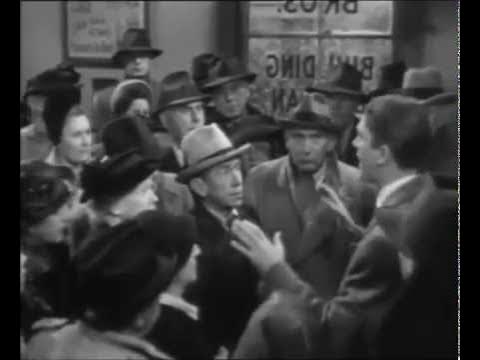
Bailey Brothers Building & Loan survived a catastrophic bank run after George Bailey deployed $2,000 of his own honeymoon savings to fund minimal bridge loans, preventing rival financier Henry Potter from acquiring community shares at 50 cents on the dollar.
AI-assisted summary of It's A Wonderful Life Bank Run — original source. Check the original for full context.
Source published:
Key ideas
- A sudden bank run hits Bedford Falls, driving anxious shareholders to Bailey Brothers Building and Loan demanding immediate cash redemptions. (0:03)
- Mr. Potter attempts an opportunistic hostile takeover, offering 50 cents on the dollar for Building and Loan shares to expand his local monopoly. (1:24)
- George Bailey pledges his and Mary's personal $2,000 honeymoon savings to provide emergency subsistence cash until commercial banks reopen. (2:48)
- Community restraint allows the institution to successfully survive the run, closing the business day with two dollars remaining in the till. (2:48)
Detailed notes
## Background Published on YouTube by the channel Hoosiertown on December 7, 2014, this video features the famous bank run scene from the classic film 'It's A Wonderful Life'. The brief page description simply repeats the title, documenting the clip's four-minute excerpt of community panic and financial resilience.
## TL;DR When a financial panic strikes Bedford Falls, George Bailey rushes into the Bailey Brothers Building and Loan to calm a crowd of anxious shareholders demanding their cash deposits. George explains that their money is actively invested in their neighbors' homes rather than locked in a vault, pleading with them not to surrender to Mr. Potter's predatory buyout offer of 50 cents on the dollar. Putting up his personal $2,000 honeymoon fund, George distributes modest sums to cover families' basic weekly necessities as neighbors show restraint and community solidarity. The institution manages to stay open until the final closing chime, miraculously surviving the bank run with just two dollars remaining in the till.
## Atmosphere & style The scene opens with tense, claustrophobic desperation as panicked townspeople swarm the counter, creating a sharp atmosphere of existential dread and economic fragility. George Bailey's passionate, sweat-soaked appeals shift the tone from frantic self-preservation to collective empathy, grounding high-stakes financial theory in intimate, vulnerable human interactions. The nail-biting countdown to the closing bell mounts with unbearable suspense before breaking into breathless, jubilant relief as Uncle Billy and George celebrate keeping the doors open.
## Bulletin - [00:03](https://www.youtube.com/watch?v=iPkJH6BT7dM&t=3s) A sudden bank run hits Bedford Falls, driving anxious shareholders to Bailey Brothers Building and Loan demanding immediate cash redemptions. - [01:24](https://www.youtube.com/watch?v=iPkJH6BT7dM&t=84s) Mr. Potter attempts an opportunistic hostile takeover, offering 50 cents on the dollar for Building and Loan shares to expand his local monopoly. - [02:48](https://www.youtube.com/watch?v=iPkJH6BT7dM&t=168s) George Bailey pledges his and Mary's personal $2,000 honeymoon savings to provide emergency subsistence cash until commercial banks reopen. - [02:48](https://www.youtube.com/watch?v=iPkJH6BT7dM&t=168s) Community restraint allows the institution to successfully survive the run, closing the business day with two dollars remaining in the till.
## Key takeaways - [00:03](https://www.youtube.com/watch?v=iPkJH6BT7dM&t=3s) Ernie the cab driver alerts George Bailey to a full-blown bank run spreading across Bedford Falls. - [00:03](https://www.youtube.com/watch?v=iPkJH6BT7dM&t=3s) George clarifies the cooperative nature of community lending, explaining that depositors' funds are tied up in their neighbors' homes rather than sitting idle in a vault. - [00:03](https://www.youtube.com/watch?v=iPkJH6BT7dM&t=3s) The Building and Loan charter includes a mandatory 60-day notice period for share withdrawals to protect against sudden liquidity drains. - [00:03](https://www.youtube.com/watch?v=iPkJH6BT7dM&t=3s) Tom disregards appeals to community solidarity, demanding the immediate withdrawal of his entire $242 balance. - [01:24](https://www.youtube.com/watch?v=iPkJH6BT7dM&t=84s) Mr. Potter exploits the panic by offering immediate cash buyouts of Building and Loan shares at 50 cents on the dollar. - [01:24](https://www.youtube.com/watch?v=iPkJH6BT7dM&t=84s) George warns the crowd that capitulating to Potter will surrender Bedford Falls entirely to his monopoly over housing, transit, and retail. - [01:24](https://www.youtube.com/watch?v=iPkJH6BT7dM&t=84s) George reminds members like Joe and Ed of the institution's leniency during past financial hardships compared to Potter's ruthless slumlord practices. - [01:24](https://www.youtube.com/watch?v=iPkJH6BT7dM&t=84s) George analyzes the market dynamic of the crisis, noting that Potter is actively buying depressed assets while ordinary citizens panic. - [02:48](https://www.youtube.com/watch?v=iPkJH6BT7dM&t=168s) George Bailey deploys his own $2,000 honeymoon fund to disburse temporary bridge loans to cover basic living expenses. - [02:48](https://www.youtube.com/watch?v=iPkJH6BT7dM&t=168s) Shareholder solidarity stabilizes the cash pool, as Ed takes only $20 of his $300 balance and Mrs. Davis asks for just $17.50. - [02:48](https://www.youtube.com/watch?v=iPkJH6BT7dM&t=168s) Uncle Billy and George celebrate keeping the doors open through the final countdown, surviving the panic with two dollars remaining in the cash drawer.
## Detailed walkthrough ### [00:03](https://www.youtube.com/watch?v=iPkJH6BT7dM&t=3s) Panic at the Bank and the Nature of the Building and Loan
On the street outside, Ernie the cab driver alerts George Bailey that trouble is brewing across town, observing that there is something funny going on across the street at the bank with all the earmarks of a full-blown bank run. Rushing into the Bailey Brothers Building and Loan, George tries to reassure the agitated crowd gathered in the lobby that the crisis is not as bleak as it appears. He announces that he just spoke with old man Potter, who has guaranteed cash payments to the commercial bank, ensuring it will reopen the following week. However, the crowd's anxiety remains unappeased. When Charlie demands to know if Potter extended the same financial backing to the Building and Loan, George admits he did not even ask, insisting that the institution does not need Potter. Unconvinced, Charlie demands his cash immediately.
George attempts to defuse the panic by explaining the cooperative reality of fractional-reserve community banking to shareholders who mistakenly imagine piles of currency resting in a vault. He explains that their capital is not locked away in a safe, but is actively invested in their neighbors' homes: Joe’s house next door, the Kennedy house, Mrs. Macklin’s house, and a hundred others across town. The shareholders provided the funds to build those homes, and the borrowers will repay them as best they can over time. Challenging their instinct to panic, George asks: “Now, what are you going to do? Foreclose on them?” Tom remains unmoved by the appeal to community solidarity, bluntly stating that he has $242 in the institution and withdrawing it will not break anybody. George offers Tom the contractual withdrawal form to sign, reminding him that the charter requires a 60-day waiting period, exactly as agreed upon when the shares were purchased.
```mermaid flowchart TD accTitle: Building and Loan Capital Distribution Flow accDescr: Flow diagram illustrating how depositors' funds are invested into community homes rather than held as idle cash in a vault.
subgraph Deposits ["Depositor Share Capital"] D1["Shareholders (Charlie, Tom, Ed)"] end
subgraph Institution ["Bailey Brothers Building & Loan"] BL["Community Capital Pool"] end
subgraph Community ["Community Mortgages"] H1["Joe's House"] H2["Kennedy House"] H3["Mrs. Macklin's House"] H4["100+ Local Homes"] end
D1 -->|"Purchased shares / savings"| BL BL -->|"Construction lending"| H1 BL -->|"Construction lending"| H2 BL -->|"Construction lending"| H3 BL -->|"Construction lending"| H4 H1 -.->|"Repayments over time"| BL H2 -.->|"Repayments over time"| BL H3 -.->|"Repayments over time"| BL H4 -.->|"Repayments over time"| BL ```
- **Withdrawal requirements**: The standard share agreement mandates a 60-day notice period for members demanding cash redemptions. - **Tom's total balance**: $242 on deposit at the Building and Loan.
---
[01:24](https://www.youtube.com/watch?v=iPkJH6BT7dM&t=84s) Potter’s Offer and George Bailey’s Plea to the Town
The tension spikes when Randall enters the lobby to announce that Mr. Potter has stepped in to exploit the run, offering immediate cash payments of 50 cents on the dollar for any Building and Loan shares. With the crowd beginning to desert the institution, Tom prepares to follow, and Randall defends the capitulation by saying: “Better to get half than nothing.” Desperate to halt a stampede that would permanently ruin the community, George pleads with the crowd to stop and look at the bigger picture. He warns them that if Potter gains control of the Building and Loan, there will never be another decent, affordable home built in Bedford Falls. Potter already controls the commercial bank, the bus transit line, and the department stores, and he is coming after the Building and Loan specifically because it challenges his monopoly and frees families from paying exorbitant rents in his dilapidated slums.
George points directly to the personal experiences of the people in the room to remind them of the institution’s mercy. He calls out Joe, asking if he has forgotten what Potter used to charge him to live in a broken-down shack. Turning to Ed, George reminds him that when hard times hit the previous year and he could not make his mortgage payments, the Building and Loan allowed him to keep his home—something Potter never would have tolerated. George explains the economic predatory game unfolding right before their eyes, warning: “Potter isn't selling. Potter's buying. And why? Because we're panicky and he's not.” He implores the room that survival depends on mutual trust and solidarity: “We've got to stick together, though. We've got to have faith in each other.” Yet the members reply with the desperate realities of everyday life: husbands out of work for over a year, mounting doctor bills, and the basic need for grocery money to survive until the banks reopen.
- **Potter's buyout offer**: 50 cents on the dollar in immediate cash for Building and Loan shares. - **Potter's town monopolies**: The local bank, the transit bus line, the department stores, and local tenement housing.
---
[02:48](https://www.youtube.com/watch?v=iPkJH6BT7dM&t=168s) The Honeymoon Cash and the Final Countdown
With the crowd facing immediate financial hardship that faith alone cannot satisfy, George steps up with his and Mary's personal honeymoon savings, holding up a thick wad of bills and announcing: “Here's $2,000. This will tide us over into the bank reopens.” Rather than liquidating the institution, he offers to disburse cash loans to cover each family's bare-minimum living expenses until the commercial bank reopens the following week. He turns back to Tom, urging him to take only what is needed to get by, but Tom insists on taking the full $242. George counts out the currency, informing Tom that the payout is technically a loan and that his account remains open.
The mood immediately softens as the other townsfolk display remarkable restraint and generosity: - **Ed**: Despite having $300 in his account, Ed asks for only $20 to see him through the week, prompting an enthusiastic reaction from George: “$20. Now you're talking.” - **Mrs. Thompson**: Reluctant to take George’s personal funds, she accepts just $20, and George assures her that she does not even need to sign paperwork, trusting her to pay it back whenever she can. - **Mrs. Davis**: Sheepishly asks if she might have $17.50, earning a warm kiss on the cheek from George, who gladly counts out the odd change.
As the clock ticks down toward the close of business, Uncle Billy watches the wall clock with growing excitement, counting down the final seconds: five, four, three, two, one. At the chime of the closing bell, the doors are officially locked with the institution having survived the run without defaulting or shutting its doors early. Uncle Billy shouts with jubilation: “Bingo, we made it! Look, look, we're still in business! We still got two bucks left!” Triumphant and exhausted, George and Uncle Billy celebrate holding off Potter with two dollars remaining in the till.
## Notable quotes > [01:24](https://www.youtube.com/watch?v=iPkJH6BT7dM&t=84s) Potter isn't selling. Potter's buying. And why? Because we're panicky and he's not. — George Bailey
## Mentioned It's A Wonderful Life, Bailey Brothers Building and Loan, Bedford Falls, George Bailey, Mary Bailey, Mr. Potter, Uncle Billy, Ernie, Charlie, Tom, Randall, Ed, Mrs. Thompson, Mrs. Davis, Joe, Mrs. Macklin
## Video description It's A Wonderful Life Bank Run
[Source](https://www.youtube.com/watch?v=iPkJH6BT7dM)