ISMO Decodes How English Articles Invert Meaning of 'Shit'
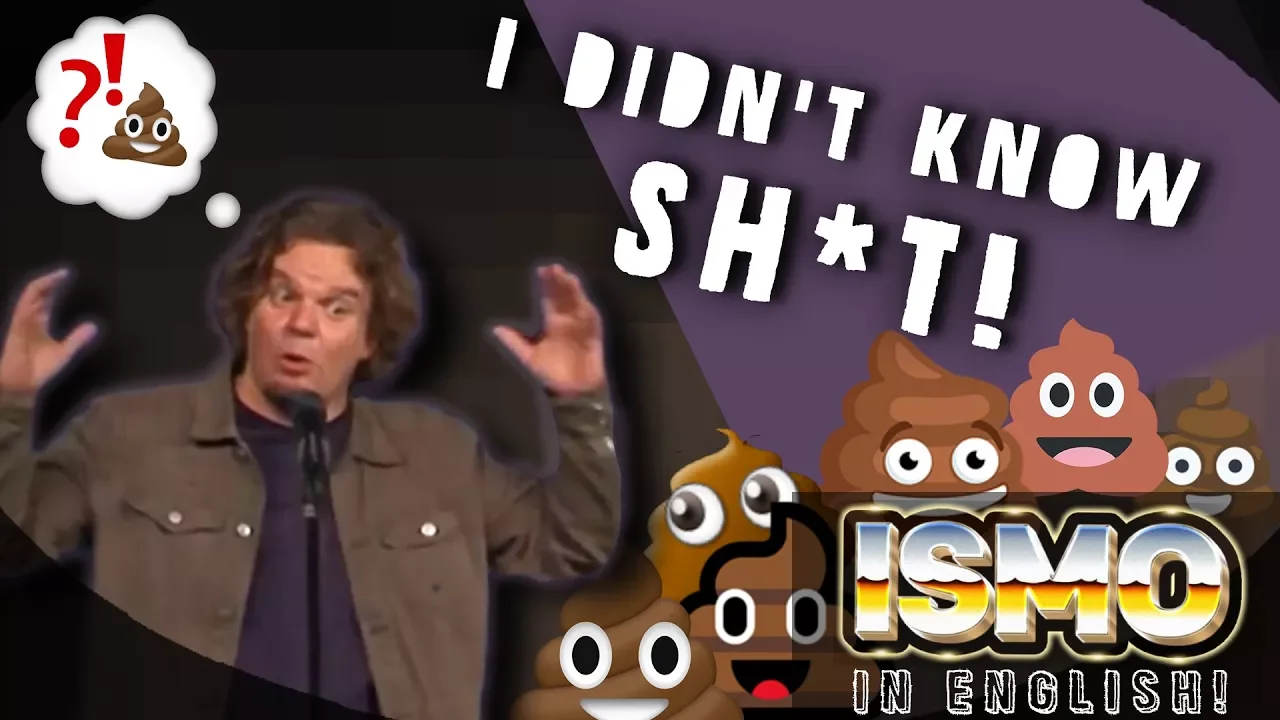
ISMO
Grammatical articles and possessive pronouns dictate opposite meanings for the expletive, where adding 'the' converts an insult into high praise and personal ownership turns unwanted clutter into prized possessions.
AI-assisted summary of ISMO | I Didn't Know Sh*t 💩💩💩 — original source. Check the original for full context.
Source published:
Key ideas
- Comedian ISMO argues that 'shit' is the most complicated word in the English language due to how articles and grammar invert its meaning from bad to exceptionally good. (0:00)
- Grammatical articles create opposing meanings in idioms: 'give shit' means scolding, whereas 'give a shit' means caring; similarly, 'take shit' refers to enduring abuse, while 'take a shit' refers to using the restroom. (0:00)
- Possessive pronouns dictate the emotional valence of the word, reserving 'my shit' as valued property while treating everyone else's shit as an annoying mess or burden. (0:00)
- Everyday expressions showcase linguistic absurdities, such as 'have shit to do' covering every task except the literal bathroom act, and 'a giant piece of shit' worsening an insult rather than scaling up into the complimentary 'the shit'. (1:51)
Detailed notes
## Background Published on YouTube by stand-up comedian ISMO on February 24, 2018, this performance clip features his comedic analysis of American English. In the video description, ISMO asserts that he has identified the single most complicated word in the English language: 'SH!T.'
## TL;DR In this stand-up routine, ISMO humorously dissects the contradictory and multifaceted uses of the word 'shit' in English. He demonstrates how small grammatical shifts alter definitions entirely, showing that while 'shit' is bad, 'the shit' is fantastic, and adding 'a' changes 'give shit' (scolding) into 'give a shit' (caring). He points out the possessive rule where one's own 'shit' is prized while everyone else's is a burden, as well as the irony that 'shit to do' encompasses every activity except using the bathroom. ISMO concludes by examining empty filler phrases like 'and shit' and the mathematical absurdity of how a person can scale up into a 'giant piece of shit' without ever becoming 'the shit.'
## Atmosphere & style The performance carries a deadpan, intellectually curious atmosphere rooted in an outsider's bewildered encounter with English idioms. ISMO adopts an earnest, faux-academic delivery, analyzing profanity as though presenting a serious linguistic dissertation. The routine feels breezy and universally relatable, generating escalating waves of audience laughter as everyday colloquialisms are broken down with literal, razor-sharp logic.
## Bulletin - [00:00](https://www.youtube.com/watch?v=igh9iO5BxBo&t=0s) Comedian ISMO argues that 'shit' is the most complicated word in the English language due to how articles and grammar invert its meaning from bad to exceptionally good. - [00:00](https://www.youtube.com/watch?v=igh9iO5BxBo&t=0s) Grammatical articles create opposing meanings in idioms: 'give shit' means scolding, whereas 'give a shit' means caring; similarly, 'take shit' refers to enduring abuse, while 'take a shit' refers to using the restroom. - [00:00](https://www.youtube.com/watch?v=igh9iO5BxBo&t=0s) Possessive pronouns dictate the emotional valence of the word, reserving 'my shit' as valued property while treating everyone else's shit as an annoying mess or burden. - [01:51](https://www.youtube.com/watch?v=igh9iO5BxBo&t=111s) Everyday expressions showcase linguistic absurdities, such as 'have shit to do' covering every task except the literal bathroom act, and 'a giant piece of shit' worsening an insult rather than scaling up into the complimentary 'the shit'.
## Key takeaways - [00:00](https://www.youtube.com/watch?v=igh9iO5BxBo&t=0s) ISMO found the English word 'shit' surprisingly difficult to master despite initially thinking he understood its meaning. - [00:00](https://www.youtube.com/watch?v=igh9iO5BxBo&t=0s) Without an article, 'shit' denotes something low quality or bad, whereas 'the shit' flips into high praise meaning something amazing. - [00:00](https://www.youtube.com/watch?v=igh9iO5BxBo&t=0s) The phrase 'give shit' means scolding or reprimanding someone, while adding an indefinite article to 'give a shit' signifies genuine concern or caring. - [00:00](https://www.youtube.com/watch?v=igh9iO5BxBo&t=0s) Using 'take shit' describes tolerating bullying or mistreatment, whereas inserting 'a' ('take a shit') denotes the physical act of defecation. - [00:00](https://www.youtube.com/watch?v=igh9iO5BxBo&t=0s) First-person possessive usage ('my shit') frames items as precious possessions that others must not touch. - [00:00](https://www.youtube.com/watch?v=igh9iO5BxBo&t=0s) Second- and third-person possessives ('your shit', 'his shit', 'her shit') exclusively describe unwanted clutter, drama, or problems. - [01:51](https://www.youtube.com/watch?v=igh9iO5BxBo&t=111s) The phrase 'have shit to do' conventionally refers to every conceivable human task except for literal restroom use. - [01:51](https://www.youtube.com/watch?v=igh9iO5BxBo&t=111s) ISMO intentionally exploits the ambiguity of 'shit to do' by using it literally when excusing himself to use the toilet. - [01:51](https://www.youtube.com/watch?v=igh9iO5BxBo&t=111s) The conversational phrase 'and shit' carries no semantic weight and functions strictly to pad short lists to sound longer. - [01:51](https://www.youtube.com/watch?v=igh9iO5BxBo&t=111s) Fractional phrasing like 'a piece of shit' is applied to inferior objects, bad movies, or selfish people. - [01:51](https://www.youtube.com/watch?v=igh9iO5BxBo&t=111s) Scaling the fraction up to 'a giant piece of shit' magnifies the insult, yet it never logically crosses over into the whole ('the shit'), which remains positive.
## Detailed walkthrough ### [00:00](https://www.youtube.com/watch?v=igh9iO5BxBo&t=0s) The Nuance of Articles and Possessives with the Word "Shit"
ISMO introduces his struggle with the English language, explaining that while there are countless challenging words in America, the single hardest word he encountered is "shit." Originally, he assumed it was straightforward and that he understood its definition, but he quickly realized the reality: “I thought it's easy... that I know what 'shit' means, but it turns out, I didn't know shit!” He points out the absurdity of how the word functions in opposites. If something is bad, it is described simply as "shit," but if something is exceptionally good, it becomes "the shit." Baffled by this contradiction, he remarks that he had to dedicate time to studying the mechanics of the word.
He explains that grammatical articles completely alter the definition of the word. For instance, if you "give shit" to someone, it means you are scolding or reprimanding them, but if you insert the indefinite article and "give a shit," it means you actually care. A similar shift occurs with taking: if you "take shit," it means you tolerate being bullied or mistreated, but if you "take a shit," it means you are using the restroom. Furthermore, ISMO discovered that possessive pronouns dictate the emotional valence of the word. While "my shit" is universally positive and protective, anyone else's shit is inherently negative. People constantly complain that they cannot deal with her shit, must put up with his shit, or demand that you clean up your shit, but they will firmly warn you never to touch their shit.
```mermaid flowchart TD accTitle: Meaning Shifts of the Word Shit accDescr: Diagram illustrating how articles and pronouns invert the meaning of the word shit in English.
subgraph Articles["Impact of Articles"] A["No Article: 'Shit'"] -->|"Negative"| A1["Bad quality / Abuse"] B["Definite: 'The Shit'"] -->|"Positive"| B1["Really good / Amazing"] C["Indefinite: 'A Shit'"] -->|"Action/Care"| C1["'Give a shit' = Care<br/>'Take a shit' = Bathroom"] end
subgraph Possessives["Impact of Possessives"] D["First Person: 'My shit'"] -->|"Positive"| D1["Valuable possessions"] E["Others: 'Your / His / Her shit'"] -->|"Negative"| E1["Annoying drama / Mess"] end ```
- "Give shit" means berating or telling someone off, whereas "give a shit" signifies concern or caring. - "Take shit" means enduring mistreatment or bullying, whereas "take a shit" denotes the physical act of defecation. - Possessive usage splits strictly along personal lines: "my shit" is valued and off-limits to others, while "your shit," "his shit," and "her shit" refer to unwanted burdens or clutter.
---
[01:51](https://www.youtube.com/watch?v=igh9iO5BxBo&t=111s) "Shit to Do," Empty Phrases, and the Scale of a "Piece of Shit"
Moving beyond articles, ISMO examines common colloquial phrases involving the word. He observes that when an American claims they "have shit to do," the phrase can legitimately refer to every single conceivable activity in the world except for the literal one: “Nobody says that, when they're going to the bathroom.” ISMO admits that he deliberately subverts this rule himself because he enjoys the literal ambiguity. Whenever he needs to excuse himself to use the restroom, he announces, "I have to go. I have shit to do," and when asked what he is going to do, he deadpans, "I have already told you."
Next, ISMO breaks down the conversational filler "and shit," concluding that it carries no semantic meaning whatsoever. Rather than adding information, people tack it onto the end of a sentence simply to pad their statements and make a short list sound significantly longer. For example, if someone states, "Oh, I like to travel, and shit," listeners should understand that the speaker has no additional hobbies and only likes to travel.
Finally, ISMO analyzes the mathematical and conceptual oddity of dividing shit into fractions. Something can be labeled "a piece of shit," which denotes a low-quality movie, a broken-down car, or an inconsiderate person. Curiously, a piece of shit can expand in scale without ever transitioning into the whole: “And if I'm a GIANT piece of shit, I'm even more selfish! But if I'm THE shit, I'm great!” He closes out his set to audience laughter and applause, thanking the crowd, introducing himself as ISMO, and reminding viewers to subscribe and share the video online.
## Mentioned ISMO
## Video description I think I have found the most complicated word in the English language. That word is SH!T. 💩
WEB: http://www.ismo.fun FACEBOOK: http://www.ismo.fun/facebook INSTAGRAM: http://www.ismo.fun/instagram TWITTER: http://www.ismo.fun/twitter
[Source](https://www.youtube.com/watch?v=igh9iO5BxBo)