Jerry Seinfeld Spends Two Years Drafting Single Pop-Tart Joke
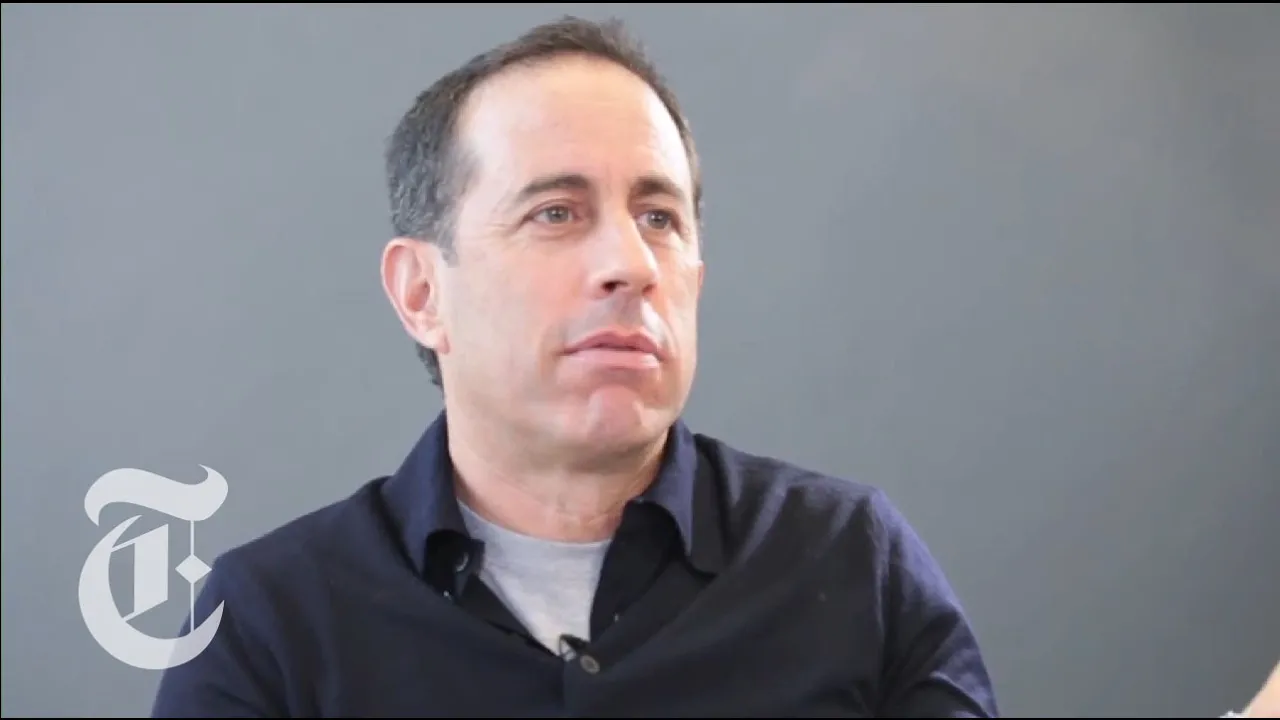
The New York Times
Seinfeld asserts that effective comedy requires spending inappropriate amounts of time on trivial subjects, using microscopic syllable-counting to engineer the perfect punchline.
AI-assisted summary of Jerry Seinfeld Interview: How to Write a Joke | The New York Times — original source. Check the original for full context.
Source published:
Key ideas
- Jerry Seinfeld details an intensive two-year writing process dedicated to refining a single stand-up routine about Pop-Tarts, contrasting it with his typical turnaround of just a few days. (0:05)
- Seinfeld rejects digital drafting entirely, handwriting all material—including every episode of the sitcom Seinfeld—on legal pads using a Bic clear barrel blue ballpoint pen to avoid the pressure of a blinking screen cursor. (0:05)
- The mechanics of comedy writing are likened to songwriting and jigsaw puzzles, requiring syllable counting and trimming individual letters to ensure rapid, seamless transitions. (2:19)
- Long-form comedic architecture demands that the strongest laugh occur at the very end of a routine, culminating in his closing punchline that Pop-Tarts cannot go stale because they were never fresh. (3:49)
Detailed notes
## Background Published on YouTube by The New York Times on December 20, 2012, this video features comedian Jerry Seinfeld. According to the page description, Seinfeld breaks down the anatomy and longhand writing process of his Pop-Tart stand-up routine, which was still a work in progress.
## TL;DR Jerry Seinfeld deconstructs the meticulous, two-year writing process behind crafting a single stand-up routine about Pop-Tarts. Working exclusively on legal pads with a classic blue Bic ballpoint pen to avoid the sterile pressure of a computer screen, he explains how he structures a joke like a song. Seinfeld details how he built a grim portrait of 1960s breakfast misery to heighten the absurd arrival of the toaster pastry, shaved syllables for comedic rhythm, and searched for a definitive closing punchline. Ultimately, he frames stand-up as the disciplined craft of dedicating absurd amounts of time and serious effort to completely trivial ideas.
## Atmosphere & style The interview possesses an intimate, analytical, and slightly conspiratorial vibe, as Seinfeld admits to feeling self-conscious about revealing an otherwise secretive and solitary creative process. He speaks with deadpan earnestness, dissecting ridiculous imagery—like wood-chipper cereal and primitive chimps—with the rigorous, mathematical precision of an architect or composer. The result feels playfully cerebral and ironic, balancing the journalistic gravitas of The New York Times against an obsessive deconstruction of a breakfast pastry.
## Bulletin - [00:05](https://www.youtube.com/watch?v=itWxXyCfW5s&t=5s) Jerry Seinfeld details an intensive two-year writing process dedicated to refining a single stand-up routine about Pop-Tarts, contrasting it with his typical turnaround of just a few days. - [00:05](https://www.youtube.com/watch?v=itWxXyCfW5s&t=5s) Seinfeld rejects digital drafting entirely, handwriting all material—including every episode of the sitcom Seinfeld—on legal pads using a Bic clear barrel blue ballpoint pen to avoid the pressure of a blinking screen cursor. - [02:19](https://www.youtube.com/watch?v=itWxXyCfW5s&t=139s) The mechanics of comedy writing are likened to songwriting and jigsaw puzzles, requiring syllable counting and trimming individual letters to ensure rapid, seamless transitions. - [03:49](https://www.youtube.com/watch?v=itWxXyCfW5s&t=229s) Long-form comedic architecture demands that the strongest laugh occur at the very end of a routine, culminating in his closing punchline that Pop-Tarts cannot go stale because they were never fresh.
## Key takeaways - [00:05](https://www.youtube.com/watch?v=itWxXyCfW5s&t=5s) Comedy writing remains a highly secretive, guarded craft that performers rarely expose to audiences. - [00:05](https://www.youtube.com/watch?v=itWxXyCfW5s&t=5s) A comedian's job is to spend absurd amounts of time on trivial matters so audiences can enjoyably squander theirs. - [00:05](https://www.youtube.com/watch?v=itWxXyCfW5s&t=5s) Seinfeld refuses to type routines on computers because he perceives the blinking cursor as intimidating and judgmental. - [00:05](https://www.youtube.com/watch?v=itWxXyCfW5s&t=5s) Every episode of the television series Seinfeld was handwritten on legal pads by Jerry Seinfeld and Larry David using Bic clear barrel blue pens. - [00:49](https://www.youtube.com/watch?v=itWxXyCfW5s&t=49s) Opening joke lines require immediate laughs and extreme specificity, exemplified by only the back of his head blowing off when Pop-Tarts were invented. - [00:49](https://www.youtube.com/watch?v=itWxXyCfW5s&t=49s) Effective joke setups establish dramatic contrast, such as depicting 1960s breakfasts as bleak, violent ordeals with frozen juice and Shredded Wheat. - [02:19](https://www.youtube.com/watch?v=itWxXyCfW5s&t=139s) The introduction of the Pop-Tart is framed as an alien technological arrival reducing consumers to chimps playing with sticks in the dirt. - [02:19](https://www.youtube.com/watch?v=itWxXyCfW5s&t=139s) High comedic density relies on inherent word phonetics; in a seven-word image, four specific words were chosen purely because they are funny. - [02:19](https://www.youtube.com/watch?v=itWxXyCfW5s&t=139s) Joke construction mirrors songwriting, demanding syllable counting and shaving letters to maintain precise comedic timing. - [03:49](https://www.youtube.com/watch?v=itWxXyCfW5s&t=229s) Extended stand-up bits fail if the peak laugh lands in the beginning or middle rather than at the very finish. - [03:49](https://www.youtube.com/watch?v=itWxXyCfW5s&t=229s) The definitive punchline resolved months of drafting by observing that Pop-Tarts cannot go stale because they were never fresh. - [03:49](https://www.youtube.com/watch?v=itWxXyCfW5s&t=229s) Seinfeld operates on the comedic philosophy that the wronger an obsession feels, the righter it is to pursue on stage.
## Detailed walkthrough ### [00:05](https://www.youtube.com/watch?v=itWxXyCfW5s&t=5s) The Secretive Art of Writing Stand-Up Comedy
Jerry Seinfeld opens by acknowledging the strange irony of dissecting his creative craft on camera, remarking that while the interviewers believe viewers will find it fascinating, audiences usually do not care about the mechanics behind a routine. He displays his handwritten legal pads, explaining that he has spent two full years obsessively polishing a single stand-up bit about Pop-Tarts, whereas a typical routine usually takes him only a couple of days to draft. To him, comedy writing remains an intensely private, sheltered discipline that comedians rarely expose to the public, admitting he feels somewhat uneasy laying out his unvarnished process for outsiders to inspect.
Seinfeld explains that his comedic mission centers on dedicating absurd amounts of energy to matters of complete triviality. In his view, audiences effectively hire him to squander his own hours so he can return to the stage and entertainingly squander theirs. When asked about his writing habits, he confirms that he writes strictly longhand on paper and has never embraced typing out comedy on a computer screen. He despises the blank screen's blinking cursor, finding its rhythmic pulsing unnerving and judgmental, as if it were staring back and demanding what material he actually has to offer.
Instead, he works exclusively with physical paper and a specific writing instrument: the classic Bic clear barrel blue ballpoint pen. He reveals that every single episode of the television series *Seinfeld* was written by hand using that exact pen model, sitting down with co-creator Larry David to draft the scripts word for word on legal pads.
- **Development timeline:** Two full years invested into refining a single bit about a toaster pastry, far exceeding his usual turnaround of a few days. - **Preferred writing tool:** The Bic clear barrel blue pen, the same tool he and Larry David used to handwrite every episode of *Seinfeld*. - **Aversion to digital drafting:** Avoids word processors entirely due to the pressure of the blinking cursor confronting the writer.
> “Comedy writing is something you don't see people doing it's a secretive thing I've never shown anybody this stuff I feel a little funny about it right now to tell you the truth.” — Jerry Seinfeld
---
[00:49](https://www.youtube.com/watch?v=itWxXyCfW5s&t=49s) Constructing the World: The 1960s Breakfast Nightmare
In stand-up comedy, the writing process starts with finding a subject that strikes the comedian as inherently amusing, and Seinfeld notes that "Pop-Tart" is fundamentally satisfying simply to say out loud. He believes the initial line of a routine needs to produce an immediate laugh to hook the audience right away. His opening hook establishes a precise physical exaggeration: when Pop-Tarts hit the market during his childhood, the back of his head blew completely off. He emphasizes that comedy thrives on specificity—it was not his entire head that exploded, but explicitly the back part.
To make the arrival of the Pop-Tart feel monumental, Seinfeld constructs a vivid, bleak depiction of mid-1960s American breakfast food to serve as the backdrop. Morning meals at the time were miserable, functional, and dull. Families had toast, but they also faced frozen concentrated orange juice that had been stored on ice years in advance, requiring a kid to vigorously stab and hack at the frozen block with a kitchen knife just to dislodge a few drops of liquid, an ordeal that felt less like preparing breakfast and more like committing a homicide before catching the morning school bus.
He then targets Shredded Wheat cereal, comparing the tactile experience of eating it to wrapping one's lips around the spinning blades of an industrial wood chipper. In Seinfeld's telling, finishing a bowl of breakfast meant enduring severe oral trauma, forcing a child to take two subsequent days off simply for the mouth scars to heal enough to speak again.
> “When I was a kid and they invented the poptart the back of my head blew right off and that that got the whole thing started that a specific part of my head blew off not just my head but just the back.” — Jerry Seinfeld
---
[02:19](https://www.youtube.com/watch?v=itWxXyCfW5s&t=139s) Rhythm, Word Choice, and the Chimp Analogy
Against that bleak, hopeless landscape of morning misery, Seinfeld introduces the sudden arrival of the Pop-Tart on supermarket shelves, portraying it as an otherworldly object. The kids in the grocery aisle stood paralyzed, staring at the packaging as though an extraterrestrial spacecraft had just landed. In that moment of utter bewilderment, humans were reduced to primitive beings, behaving like chimps sitting in the dirt playing with sticks.
Seinfeld deconstructs the linguistic efficiency of that comparison: within a seven-word sentence, four of the words ("chimps," "dirt," "playing," "sticks") are inherently funny words on their own, anchored by the fact that chimps are universally comic. He follows this image with the child's perspective of corporate design, questioning how Kellogg's scientists figured out the public had an urgent, unmet need for a frosted, fruit-filled, heatable rectangle designed in the exact shape and possessing the exact nutritional value of the cardboard box it was shipped in.
Bridging these separate punchlines requires meticulous structural editing, which Seinfeld describes as creating a tight, seamless jigsaw puzzle connection. The comedian must constantly look for the connective tissue between ideas. If a transition drags by even a fraction of a second, the rhythm collapses; the writer must shave individual letters off words and count syllables to achieve microscopic precision, a process he likens directly to songwriting.
```mermaid flowchart TD accTitle: Anatomy of the Pop-Tart Joke Structure accDescr: Flowchart illustrating Jerry Seinfeld's comedic architecture for his Pop-Tart routine from setup to closing punchline.
subgraph WorldBuilding ["1. Establish the Grim Reality"] A["Bleak 1960s Breakfast<br/>(Murderous frozen OJ & wood-chipper cereal)"] B["Opening Hook:<br/>'Back of my head blew right off'"] A --> B end
subgraph TheArrival ["2. The Alien Intervention"] C["Kellogg's Pop-Tart appears in store<br/>(Alien spacecraft landing)"] D["Seven-word imagery:<br/>'Chimps in the dirt playing with sticks'"] B --> C C --> D end
subgraph Optimization ["3. Songwriting & Compression"] E["Syllable Counting & Shaving Letters<br/>(Seamless jigsaw puzzle connective tissue)"] D --> E end
subgraph Climax ["4. The Payoff"] F["Product Logic:<br/>2 pastries, 2 toaster slots"] G["Terminal Punchline:<br/>'Can't go stale because they were never fresh'"] E --> F F --> G end ```
- **Linguistic density:** In the line "chimps in the dirt playing with sticks," four out of the seven words are selected purely for their comedic phonetics and imagery. - **Syllabic economy:** If a transitional phrase is even a split-second too long, Seinfeld trims syllables and deletes letters until the line locks together like interlocking puzzle pieces. - **Audience signaling:** Introducing the official brand name "the Kellogg's Pop-Tart" signals to the crowd that a narrative journey has begun, earning an anticipatory laugh before the punchline even arrives.
> “What makes that joke is you got chimps dirt playing and sticks in seven words four of them are funny.” — Jerry Seinfeld
---
[03:49](https://www.youtube.com/watch?v=itWxXyCfW5s&t=229s) Landing the Punchline and the Virtue of Wasted Time
Resolving an extended routine presents the hardest challenge in stand-up comedy, because the architecture of a long joke demands that its biggest laugh land squarely at the very end. Having the peak reaction occur in the middle or the beginning deflates the routine, leaving the performer with nowhere to go. Seinfeld found crafting this final payoff daunting, as he needed a punchline that addressed the product's sheer illogical dominance over everyday culture.
He worked through the absurdity of the packaging: once the Pop-Tart existed, eating any other form of food seemed pointless. The design dictated reality: two pastries packed inside each foil wrapper and two matching slots in standard toasters. One pastry was never enough, while three was far too many. After months of wrestling with how to stick the landing, he finally arrived at the definitive closing observation: Pop-Tarts can never go stale, because they were never fresh to begin with.
Seinfeld embraces the inherent ridiculousness of spending years obsessing over a breakfast pastry joke. While recognizing that the finished bit sounds like nothing of consequence, he adheres to a counterintuitive comedic guiding principle: the more wrong an obsession feels, the righter it is for comedy. He contrasts his work directly with *The New York Times*, noting that while serious journalists spend appropriate amounts of time investigating deserving subjects, he chooses to spend completely inappropriate amounts of time scrutinizing utterly undeserving subjects.
> “If you have a long bit the biggest laugh has to be at the end it has to be it can't be in the middle or the beginning and this was very daunting.” — Jerry Seinfeld
> “In my world the wronger something feels the righter it is so to waste this much time on something this stupid is that's that felt good to me.” — Jerry Seinfeld
## Notable quotes > [03:49](https://www.youtube.com/watch?v=itWxXyCfW5s&t=229s) If you have a long bit the biggest laugh has to be at the end it has to be it can't be in the middle or the beginning — Jerry Seinfeld
> [03:49](https://www.youtube.com/watch?v=itWxXyCfW5s&t=229s) In my world the wronger something feels the righter it is — Jerry Seinfeld
## Mentioned Jerry Seinfeld, Larry David, Pop-Tarts, Kellogg's, Bic, Shredded Wheat, Seinfeld (TV series), The New York Times
## Video description Jerry Seinfeld describes the anatomy of his Pop-Tart joke, still a work in progress, and shows his longhand writing process.
Subscribe on YouTube: http://bit.ly/U8Ys7n
---------------------------------------------------------------
Want more from The New York Times?
Watch more videos at: http://nytimes.com/video
Facebook: https://www.facebook.com/nytvideo
Twitter: https://twitter.com/nytvideo
Instagram: http://instagram.com/nytvideo
Whether it's reporting on conflicts abroad and political divisions at home, or covering the latest style trends and scientific developments, New York Times video journalists provide a revealing and unforgettable view of the world. It's all the news that's fit to watch. On YouTube.
Jerry Seinfeld Interview: How to Write a Joke | The New York Times http://www.youtube.com/user/TheNewYorkTimes
[Source](https://www.youtube.com/watch?v=itWxXyCfW5s)